Rigveda 9.85: To Soma
Introduction
Rigveda 9.85 is a hymn of 12 verses addressed to Soma. It stands in book (maṇḍala) 9, the hymns to Soma Pavamāna. The Rigveda is the oldest collection of Sanskrit hymns, composed in the second half of the second millennium BCE and handed down orally for many centuries before it was written down.
The manuscript shown is Penn Ms. Coll. 390 Item 41 (University of Pennsylvania), an undated paper manuscript of the padapāṭha (the word-by-word recitation text, in which every word is written separately and compounds are split) of the whole Ṛgveda in Devanāgarī, 884 leaves in fascicles, 7-9 lines to the page, accents in red; this hymn stands on fol. 711r-712v. Each section below gives the verses that end on one page; the page boundaries were read on the images (the opening words of every page), not counted out. Where the manuscript is a padapāṭha (the word-by-word recitation text), the section shows Aufrecht's continuous (saṃhitā) text first and, as the edition text, the padapāṭha of the same verses, which is the form written on the page.
How was this verified? (Provenance)
Where on the image
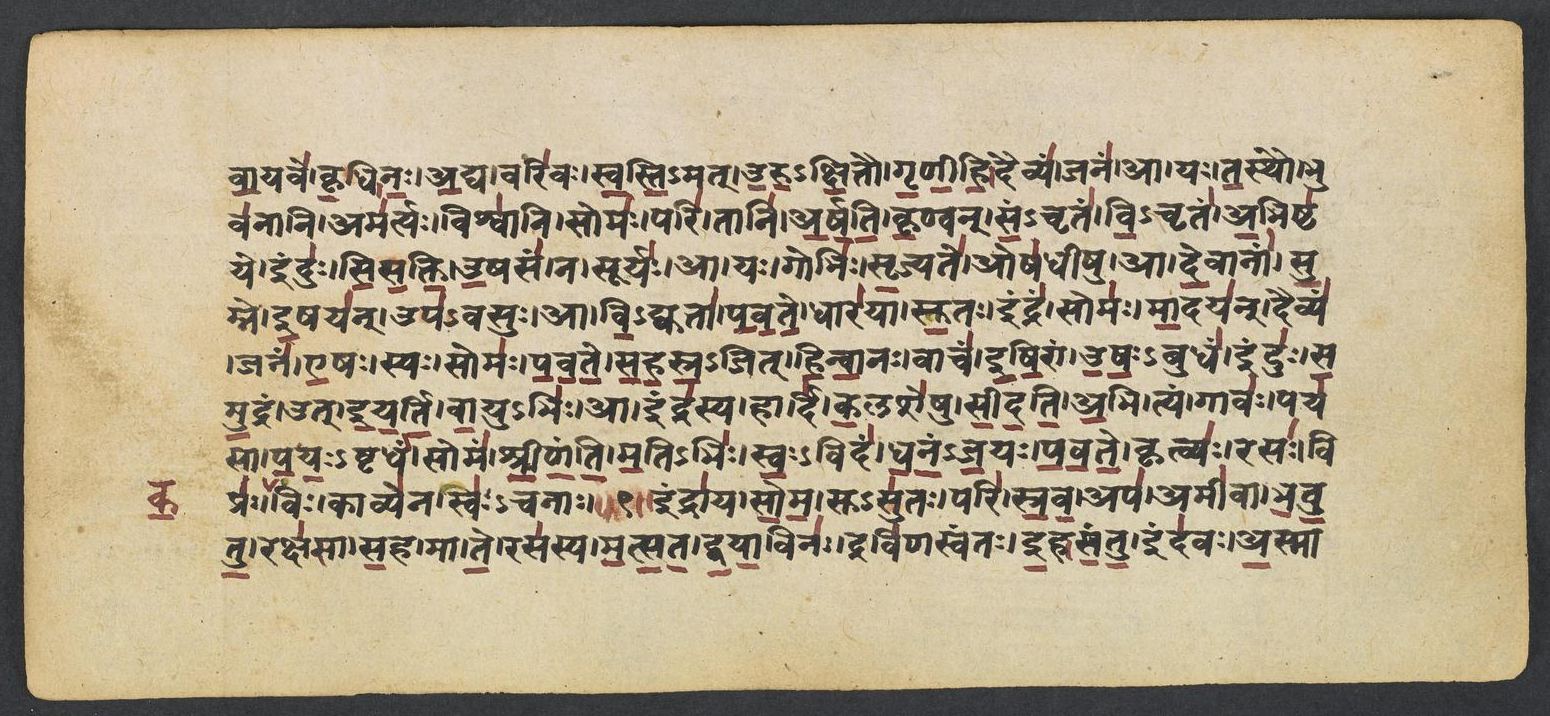
Penn Ms. Coll. 390 Item 41, fol. 711r (numbered 28r by the scribe) (OPenn image 711, lower leaf). Checked on the image: the Rigveda text on this page begins in RV 9.84.1 ‹vāyave kṛdhi naḥ adya›. The next page with Rigveda text, fol. 711v (numbered 28v by the scribe), begins in RV 9.85.2 ‹-asmān sa-marye pavamāna codaya›. Verse 9.85.1 ends on this page.
1indrā̍ya soma̱ suṣu̍ta̱ḥ pari̍ sra̱vāpāmī̍vā bhavatu̱ rakṣa̍sā sa̱ha | mā te̱ rasa̍sya matsata dvayā̱vino̱ dravi̍ṇasvanta i̱ha sa̱ntv inda̍vaḥ ||
Compare: Padapāṭha (word-by-word text written in the manuscript; Sansknet e-text via GRETIL)
1indrāya | soma | su-sutaḥ | pari | srava | apa | amīvā | bhavatu | rakṣasā | saha | mā | te | rasasya | matsata | dvayāvinaḥ | draviṇasvantaḥ | iha | santu | indavaḥ
1FLOW on to Indra, Soma, carefully effused: let sickness stay afar together with the fiends. Let not the double-tongued delight them with thy juice. here be thy flowing drops laden with opulence.
Where on the image
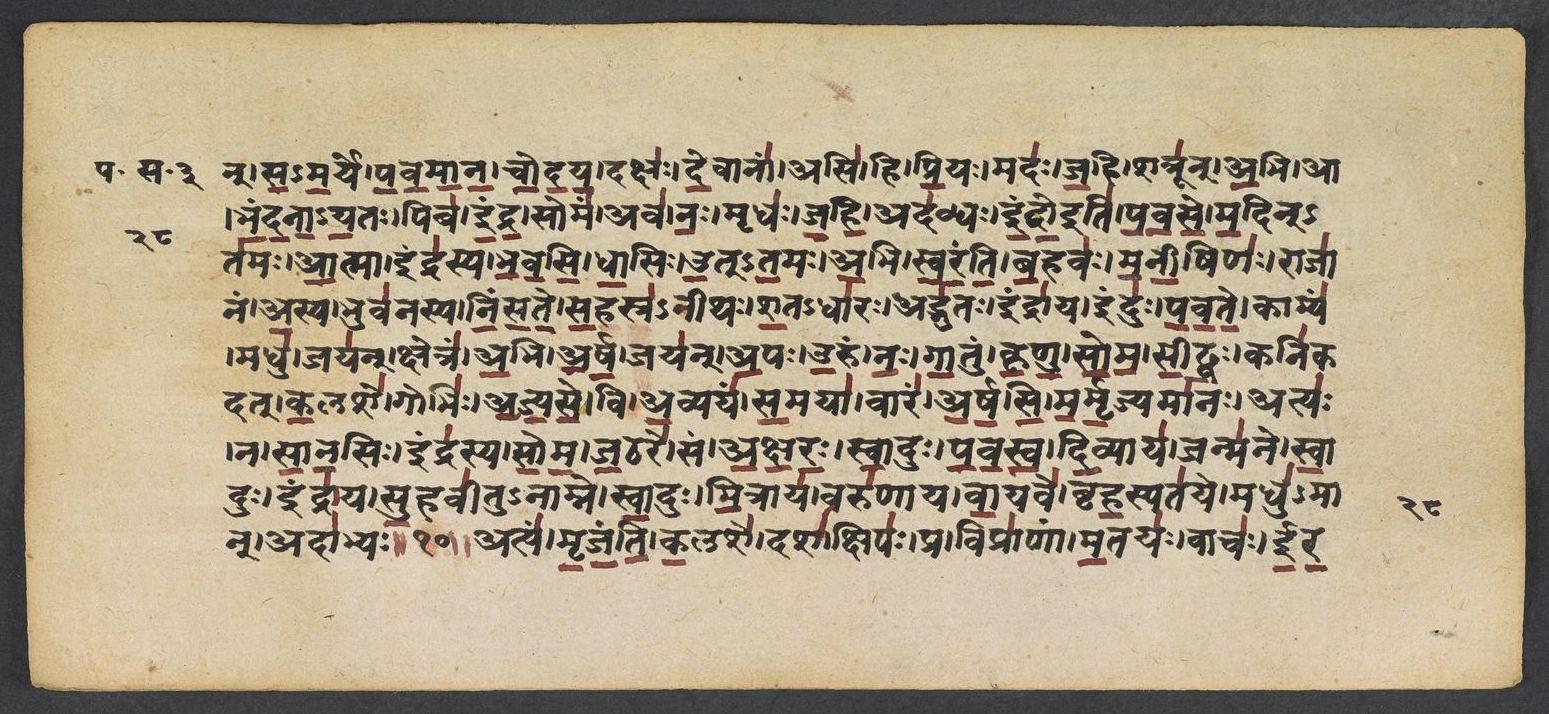
Penn Ms. Coll. 390 Item 41, fol. 711v (numbered 28v by the scribe) (OPenn image 712, upper leaf). Checked on the image: the Rigveda text on this page begins in RV 9.85.2 ‹-asmān sa-marye pavamāna codaya›. The next page with Rigveda text, fol. 712r (numbered 29r by the scribe), begins in RV 9.85.7 ‹-īrate pavamānāḥ abhi arṣanti›. Verses 9.85.2-6 end on this page; 9.85.2 begins on fol. 711r (numbered 28r by the scribe).
2a̱smān sa̍ma̱rye pa̍vamāna codaya̱ dakṣo̍ de̱vānā̱m asi̱ hi pri̱yo mada̍ḥ | ja̱hi śatrū̍m̐r a̱bhy ā bha̍ndanāya̱taḥ pibe̍ndra̱ soma̱m ava̍ no̱ mṛdho̍ jahi ||
3ada̍bdha indo pavase ma̱dinta̍ma ā̱tmendra̍sya bhavasi dhā̱sir u̍tta̱maḥ | a̱bhi sva̍ranti ba̱havo̍ manī̱ṣiṇo̱ rājā̍nam a̱sya bhuva̍nasya niṁsate ||
4sa̱hasra̍ṇīthaḥ śa̱tadhā̍ro̱ adbhu̍ta̱ indrā̱yendu̍ḥ pavate̱ kāmya̱m madhu̍ | jaya̱n kṣetra̍m a̱bhy a̍rṣā̱ jaya̍nn a̱pa u̱ruṁ no̍ gā̱tuṁ kṛ̍ṇu soma mīḍhvaḥ ||
5kani̍kradat ka̱laśe̱ gobhi̍r ajyase̱ vy a1̱̍vyaya̍ṁ sa̱mayā̱ vāra̍m arṣasi | ma̱rmṛ̱jyamā̍no̱ atyo̱ na sā̍na̱sir indra̍sya soma ja̱ṭhare̱ sam a̍kṣaraḥ ||
6svā̱duḥ pa̍vasva di̱vyāya̱ janma̍ne svā̱dur indrā̍ya su̱havī̍tunāmne | svā̱dur mi̱trāya̱ varu̍ṇāya vā̱yave̱ bṛha̱spata̍ye̱ madhu̍mā̱m̐ adā̍bhyaḥ ||
Compare: Padapāṭha (word-by-word text written in the manuscript; Sansknet e-text via GRETIL)
2asmān | sa-marye | pavamāna | codaya | dakṣaḥ | devānām | asi | hi | priyaḥ | madaḥ | jahi | śatrūn | abhi | ā | bhandanāyataḥ | piba | indra | somam | ava | naḥ | mṛdhaḥ | jahi
3adabdhaḥ | indo iti | pavase | madin-tamaḥ | ātmā | indrasya | bhavasi | dhāsiḥ | ut-tamaḥ | abhi | svaranti | bahavaḥ | manīṣiṇaḥ | rājānam | asya | bhuvanasya | niṃsate
4sahasra-nīthaḥ | śata-dhāraḥ | adbhutaḥ | indrāya | induḥ | pavate | kāmyam | madhu | jayan | kṣetram | abhi | arṣa | jayan | apa | urum | naḥ | gātum | kṛṇu | soma | mīḍhavaḥ
5kanikradat | kalaśe | gobhiḥ | ajyase | vi | avyayam | samayā | vāram | arṣasi | marmṛjyamānaḥ | atyaḥ | na | sānasiḥ | indrasya | soma | jaṭhare | sam | akṣaraḥ
6svāduḥ | pavasva | divyāya | janmane | svāduḥ | indrāya | suhavītu-nāmne | svāduḥ | mitrāya | varuṇāya | vāyave | bṛhaspataye | madhu-mān | adābhyaḥ
2O Pavamâna, urge us forward in the fight thou art the vigour of the Gods, the well-loved drink. Smite thou our enemies who raise the shout of joy: Indra, drink Soma juice, and drive away our foes.
3Unharmed, best Cheerer, thou, O Indu, flowest on: thou, even thou thyself, art Indra's noblest food. Full many a wise man lifts to thee the song of praise, and hails thee with a kiss as Sovran of this world.
4Wondrous, with hundred streams, hymned in a thousand songs, Indu pours out for Indra his delightful meath. Winning us land and waters, flow thou hitherward: Rainer of bounties, Soma, make broad way for us.
5Roaring within the beaker thou art balmed with milk: thou passest through the fleecy filter all at once. Carefully cleansed and decked like a prizewinning steed, O Soma, thou hast flowed down within Indra's throat.
6Flow onward sweet of flavour for the Heavenly Race, for Indra sweet, whose name is easily invoked: Flow sweet for Mitra, Varuṇa, and Vâyu, rich in meath, inviolable for Br̥ihaspati.
Where on the image
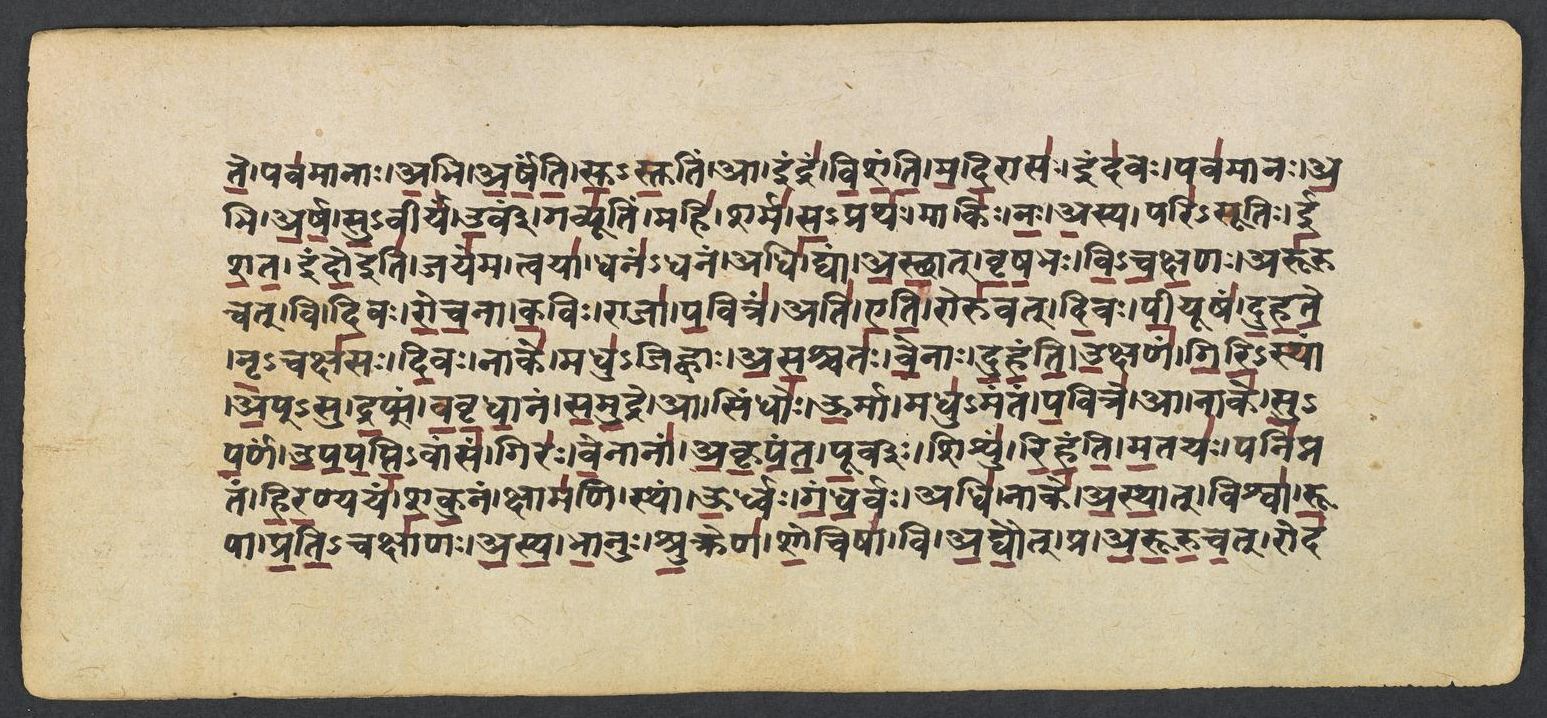
Penn Ms. Coll. 390 Item 41, fol. 712r (numbered 29r by the scribe) (OPenn image 712, lower leaf). Checked on the image: the Rigveda text on this page begins in RV 9.85.7 ‹-īrate pavamānāḥ abhi arṣanti›. The next page with Rigveda text, fol. 712v (numbered 29v by the scribe), begins in RV 9.85.12 ‹-rodasī iti mātarā śuciḥ›. Verses 9.85.7-11 end on this page; 9.85.7 begins on fol. 711v (numbered 28v by the scribe).
7atya̍m mṛjanti ka̱laśe̱ daśa̱ kṣipa̱ḥ pra viprā̍ṇām ma̱tayo̱ vāca̍ īrate | pava̍mānā a̱bhy a̍rṣanti suṣṭu̱tim endra̍ṁ viśanti madi̱rāsa̱ inda̍vaḥ ||
8pava̍māno a̱bhy a̍rṣā su̱vīrya̍m u̱rvīṁ gavyū̍ti̱m mahi̱ śarma̍ sa̱pratha̍ḥ | māki̍r no a̱sya pari̍ṣūtir īśa̱tendo̱ jaye̍ma̱ tvayā̱ dhana̍ṁ-dhanam ||
9adhi̱ dyām a̍sthād vṛṣa̱bho vi̍cakṣa̱ṇo 'rū̍ruca̱d vi di̱vo ro̍ca̱nā ka̱viḥ | rājā̍ pa̱vitra̱m aty e̍ti̱ roru̍vad di̱vaḥ pī̱yūṣa̍ṁ duhate nṛ̱cakṣa̍saḥ ||
10di̱vo nāke̱ madhu̍jihvā asa̱ścato̍ ve̱nā du̍hanty u̱kṣaṇa̍ṁ giri̱ṣṭhām | a̱psu dra̱psaṁ vā̍vṛdhā̱naṁ sa̍mu̱dra ā sindho̍r ū̱rmā madhu̍mantam pa̱vitra̱ ā ||
11nāke̍ supa̱rṇam u̍papapti̱vāṁsa̱ṁ giro̍ ve̱nānā̍m akṛpanta pū̱rvīḥ | śiśu̍ṁ rihanti ma̱taya̱ḥ pani̍pnataṁ hira̱ṇyaya̍ṁ śaku̱naṁ kṣāma̍ṇi̱ sthām ||
Compare: Padapāṭha (word-by-word text written in the manuscript; Sansknet e-text via GRETIL)
7atyam | mṛjanti | kalaśe | daśa | kṣipaḥ | pra | viprāṇām | matayaḥ | vācaḥ | īrate | pavamānāḥ | abhi | arṣanti | su-stutim | ā | indram | viśanti | madirāsaḥ | indavaḥ
8pavamānaḥ | abhi | arṣa | su-vīryam | urvīm | gavyūtim | mahi | śarma | sa-prathaḥ | mākiḥ | naḥ | asya | pari-sūtiḥ | īśata | indo iti | jayema | tvayā | dhanam-dhanam
9adhi | dyām | asthāt | vṛṣabhaḥ | vi-cakṣaṇaḥ | arūrucāt | vi | divaḥ | rocanā | kaviḥ | rājā | pavitram | ati | eti | roruvat | divaḥ | pīyūṣam | duhate | nṛ-cakṣasaḥ
10divaḥ | nāke | madhu-jihvāḥ | asaścataḥ | venāḥ | duhanti | ukṣaṇam | giri-sthām | ap-su | drapsam | vavṛdhānam | samudre | ā | sindhoḥ | ūrmā | madhu-mantam | pavitre | ā
11nāke | su-parṇam | upapapti-vāṃsam | giraḥ | venānām | akṛpanta | pūrvīḥ | śiśum | rihanti | matayaḥ | panipnatam | hiraṇyayam | śakunam | kṣāmaṇi | sthām
7Ten rapid fingers deck the Courser in the jar: with hymns the holy singers send their voices forth. The filtering juices hasten to their eulogy, the drops that gladden find their way to Indra's heart.
8While thou art purified pour on us hero strength, great, far-extended shelter, spacious pasturage. Let no oppression master this our holy work: may we, O Indu, gain all opulence through thee.
9The Steer who sees afar hath risen above the sky: the Sage hath caused the lights of heaven to give their shine. The. King is passing through the filter with a roar: they drain the milk of heaven from him who looks on men.
10High in the vault of heaven, unceasing, honey-tongued, the Loving Ones drain out the mountainhaunting Steer,– The drop that hath grown great in waters, in the lake meath-rich, in the stream's wave and in the cleansing sieve.
11The Loving Ones besought with many voices the Eagle who had flown away to heaven. Hymns kiss the Youngling worthy of laudation, resting on earth, the Bird of golden colour.
Where on the image
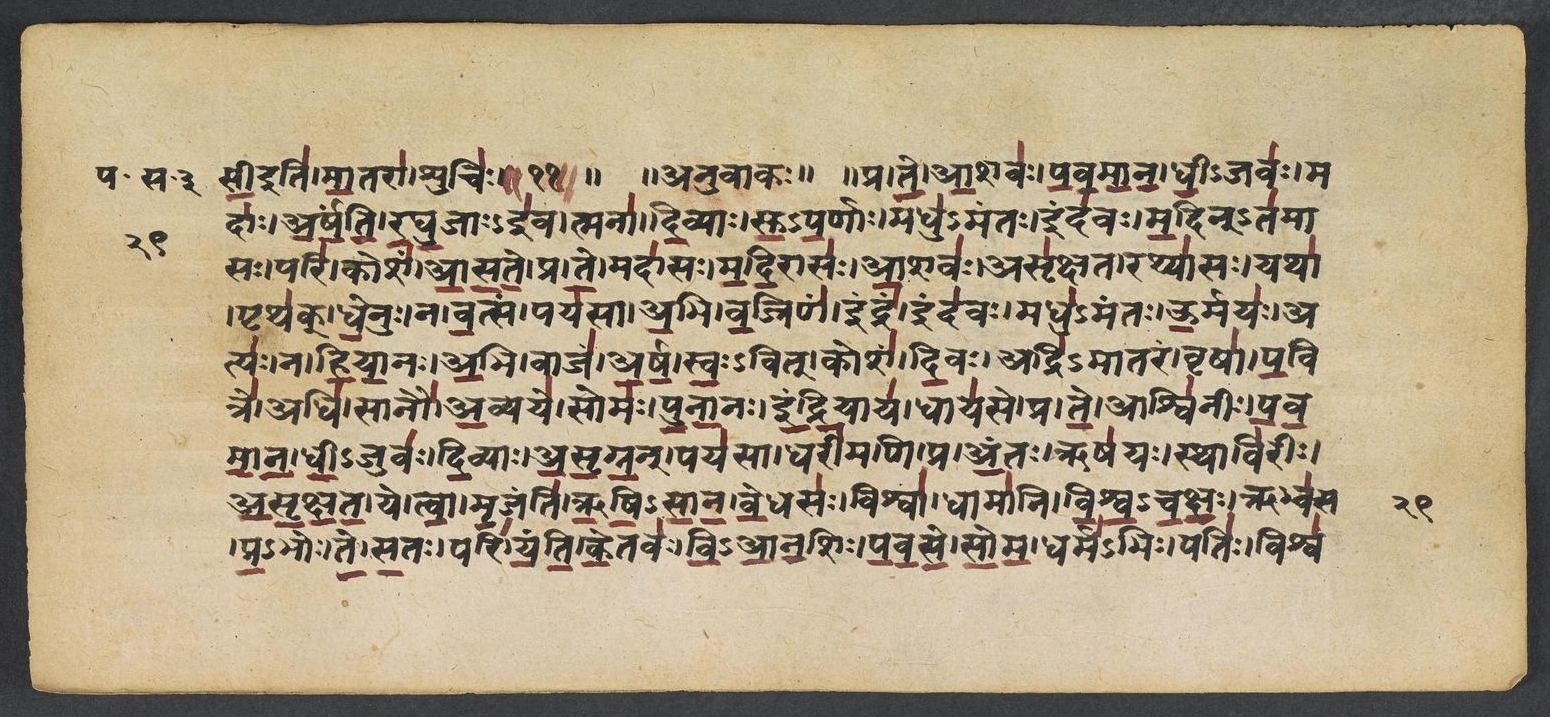
Penn Ms. Coll. 390 Item 41, fol. 712v (numbered 29v by the scribe) (OPenn image 713, upper leaf). Checked on the image: the Rigveda text on this page begins in RV 9.85.12 ‹-rodasī iti mātarā śuciḥ›. The next page with Rigveda text, fol. 713r (numbered 30r by the scribe), begins in RV 9.86.5 ‹-viśvasya bhuvanasya rājasi›. Verse 9.85.12 ends on this page; 9.85.12 begins on fol. 712r (numbered 29r by the scribe).
12ū̱rdhvo ga̍ndha̱rvo adhi̱ nāke̍ asthā̱d viśvā̍ rū̱pā pra̍ti̱cakṣā̍ṇo asya | bhā̱nuḥ śu̱kreṇa̍ śo̱ciṣā̱ vy a̍dyau̱t prārū̍ruca̱d roda̍sī mā̱tarā̱ śuci̍ḥ ||
Compare: Padapāṭha (word-by-word text written in the manuscript; Sansknet e-text via GRETIL)
12ūrdhvaḥ | gandharvaḥ | adhi | nāke | asthāt | viśvā | rūpā | prcati-cakṣāṇaḥ | asya | bhānuḥ | śukreṇa | śociṣā | vi | adyaut | pra | arūrucat | rodasī iti | mātarā | śuciḥ
12High to heaven's vault hath the Gandharva risen, beholding all his varied forms and figures. His ray hath shone abroad with gleaming splendour: pure, he hath lighted both the worlds, the Parents.
Notes
- Sanskrit: Aufrecht's edition (1877) with the Vedic accents, as entered by van Nooten and Holland (GRETIL).
- English: Ralph T. H. Griffith, The Hymns of the Rigveda (1889-1892; 2nd ed. 1896-1897), from the VedaWeb digital text; OCR slips in that text were corrected against the printed 2nd edition (data/sources/rigveda/griffith_errata.json).
- Padapāṭha (edition text): Sansknet e-text via GRETIL (CC BY-NC-SA 4.0).
Cite
Sources
- Source: Penn Ms. Coll. 390 Item 41 (undated (catalogued with Penn's 18th-19th c. Vedic manuscripts)), OPenn, Public Domain Mark + Aufrecht's accented text (GRETIL) + Griffith's English (VedaWeb) (holding institution)
- Critical edition: Aufrecht (1877), accented e-text via GRETIL
← previous · → next · v cycle view · l back to library