Rigveda 9.95: To Soma
Introduction
Rigveda 9.95 is a hymn of 5 verses addressed to Soma. It stands in book (maṇḍala) 9, the hymns to Soma Pavamāna. The Rigveda is the oldest collection of Sanskrit hymns, composed in the second half of the second millennium BCE and handed down orally for many centuries before it was written down.
The manuscript shown is Penn Ms. Coll. 390 Item 41 (University of Pennsylvania), an undated paper manuscript of the padapāṭha (the word-by-word recitation text, in which every word is written separately and compounds are split) of the whole Ṛgveda in Devanāgarī, 884 leaves in fascicles, 7-9 lines to the page, accents in red; this hymn stands on fol. 722r-722v. Each section below gives the verses that end on one page; the page boundaries were read on the images (the opening words of every page), not counted out. Where the manuscript is a padapāṭha (the word-by-word recitation text), the section shows Aufrecht's continuous (saṃhitā) text first and, as the edition text, the padapāṭha of the same verses, which is the form written on the page.
How was this verified? (Provenance)
Where on the image
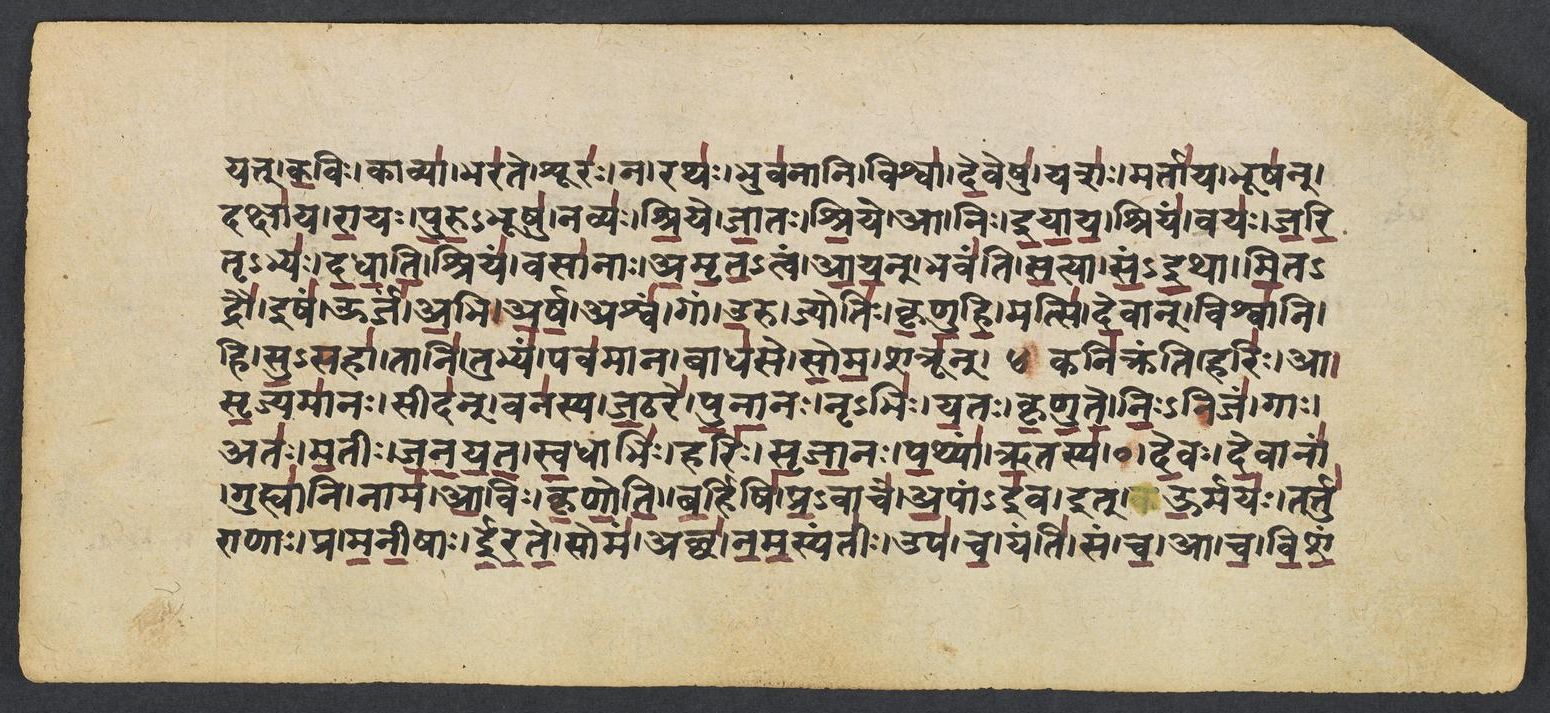
Penn Ms. Coll. 390 Item 41, fol. 722r (numbered 39r by the scribe) (OPenn image 722, lower leaf). Checked on the image: the Rigveda text on this page begins in RV 9.94.3 ‹yat kaviḥ kāvyā bharate›. The next page with Rigveda text, fol. 722v (numbered 39v by the scribe), begins in RV 9.95.3 ‹-viśanti uśatīḥ uśantam›. Verses 9.95.1-2 end on this page.
1kani̍kranti̱ hari̱r ā sṛ̱jyamā̍na̱ḥ sīda̱n vana̍sya ja̱ṭhare̍ punā̱naḥ | nṛbhi̍r ya̱taḥ kṛ̍ṇute ni̱rṇija̱ṁ gā ato̍ ma̱tīr ja̍nayata sva̱dhābhi̍ḥ ||
2hari̍ḥ sṛjā̱naḥ pa̱thyā̍m ṛ̱tasyeya̍rti̱ vāca̍m ari̱teva̱ nāva̍m | de̱vo de̱vānā̱ṁ guhyā̍ni̱ nāmā̱viṣ kṛ̍ṇoti ba̱rhiṣi̍ pra̱vāce̍ ||
Compare: Padapāṭha (word-by-word text written in the manuscript; Sansknet e-text via GRETIL)
1kanikranti | hariḥ | ā | sṛjyamānaḥ | sīdan | vanasya | jaṭhare | punānaḥ | nṛ-bhiḥ | yataḥ | kṛṇute | niḥ-nijam | gāḥ | ataḥ | matīḥ | janayata | svadhābhiḥ
2hariḥ | sṛjānaḥ | pathyām | ṛtasya | iyarti | vācam | aritā-iva | nāvam | devaḥ | devānām | guhyāni | nāma | āviḥ | kṛṇoti | barhiṣi | pra-vāce
1Loud neighs the Tawny Steed when started, settling deep in the wooden vessel while they cleanse him. Led by the men he takes the milk for raiment: then shall he, through his powers, engender praisesongs.
2As one who rows drives on his boat, he, Gold-hued, sends forth his voice, loosed on the path of Order. As God, the secret names of Gods he utters, to be declared on sacred grass more widely.
Where on the image
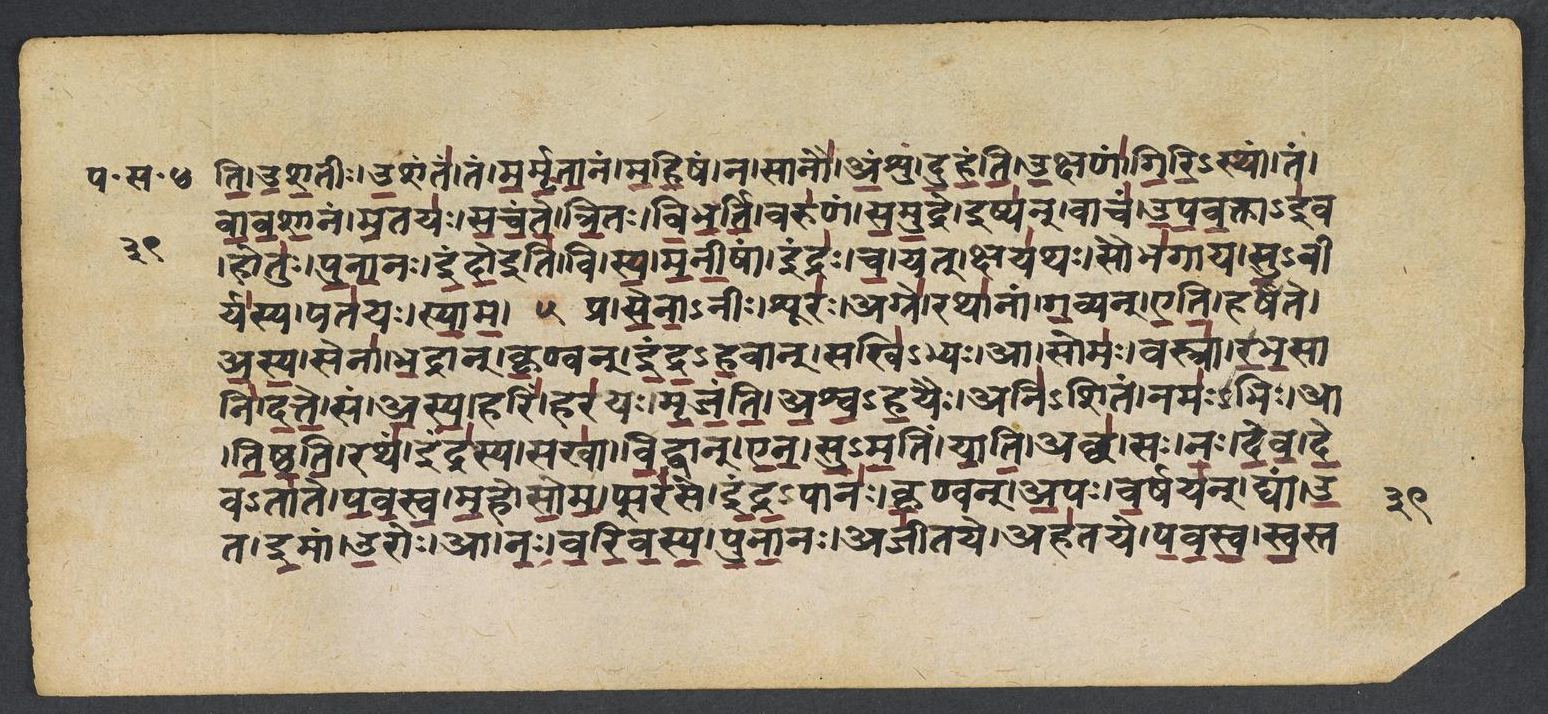
Penn Ms. Coll. 390 Item 41, fol. 722v (numbered 39v by the scribe) (OPenn image 723, upper leaf). Checked on the image: the Rigveda text on this page begins in RV 9.95.3 ‹-viśanti uśatīḥ uśantam›. The next page with Rigveda text, fol. 723r (numbered 40r by the scribe), begins in RV 9.96.4 ‹-svastaye sarva-tātaye bṛhate tat›. Verses 9.95.3-5 end on this page; 9.95.3 begins on fol. 722r (numbered 39r by the scribe).
3a̱pām i̱ved ū̱rmaya̱s tartu̍rāṇā̱ḥ pra ma̍nī̱ṣā ī̍rate̱ soma̱m accha̍ | na̱ma̱syantī̱r upa̍ ca̱ yanti̱ saṁ cā ca̍ viśanty uśa̱tīr u̱śanta̍m ||
4tam ma̍rmṛjā̱nam ma̍hi̱ṣaṁ na sānā̍v a̱ṁśuṁ du̍hanty u̱kṣaṇa̍ṁ giri̱ṣṭhām | taṁ vā̍vaśā̱nam ma̱taya̍ḥ sacante tri̱to bi̍bharti̱ varu̍ṇaṁ samu̱dre ||
5iṣya̱n vāca̍m upava̱kteva̱ hotu̍ḥ punā̱na i̍ndo̱ vi ṣyā̍ manī̱ṣām | indra̍ś ca̱ yat kṣaya̍tha̱ḥ saubha̍gāya su̱vīrya̍sya̱ pata̍yaḥ syāma ||
Compare: Padapāṭha (word-by-word text written in the manuscript; Sansknet e-text via GRETIL)
3apām-iva | it | ūrmayaḥ | tarturāṇāḥ | pra | manīṣāḥ | īrate | somam | accha | namasyantīḥ | upa | ca | yanti | sam | ca | ā | ca | viśanti | uśatīḥ | uśantam
4tam | marmṛjānam | mahiṣam | na | sānau | aṃśum | duhanti | ukṣaṇam | giri-sthām | tam | vāvaśānam | matayaḥ | sacante | tritaḥ | bibharti | varuṇam | samudre
5iṣyan | vācam | upavaktā-iva | hotuḥ | punānaḥ | indo iti | vi | sya | manīṣām | indraḥ | ca | yat | kṣayathaḥ | saubhagāya | su-vīryasya | patayaḥ | syāma
3Hastening onward like the waves of waters, our holy hymns are pressing nigh to Soma. To him they come with lowly adoration, and, longing, enter him who longs to meet them.
4They drain the stalk, the Steer who dwells on mountains, even as a Bull who decks him on the upland. Hymns follow and attend him as he bellows: Trita bears Varuṇa aloft in ocean.
5Sending thy voice out as Director, loosen the Invoker's thought, O Indu, as they cleanse thee. While thou and Indra rule for our advantage, may we be masters of heroic vigour.
Notes
- Sanskrit: Aufrecht's edition (1877) with the Vedic accents, as entered by van Nooten and Holland (GRETIL).
- English: Ralph T. H. Griffith, The Hymns of the Rigveda (1889-1892; 2nd ed. 1896-1897), from the VedaWeb digital text; OCR slips in that text were corrected against the printed 2nd edition (data/sources/rigveda/griffith_errata.json).
- Padapāṭha (edition text): Sansknet e-text via GRETIL (CC BY-NC-SA 4.0).
Cite
Sources
- Source: Penn Ms. Coll. 390 Item 41 (undated (catalogued with Penn's 18th-19th c. Vedic manuscripts)), OPenn, Public Domain Mark + Aufrecht's accented text (GRETIL) + Griffith's English (VedaWeb) (holding institution)
- Critical edition: Aufrecht (1877), accented e-text via GRETIL
← previous · → next · v cycle view · l back to library