Rigveda 9.96: To Soma
Introduction
Rigveda 9.96 is a hymn of 24 verses addressed to Soma. It stands in book (maṇḍala) 9, the hymns to Soma Pavamāna. The Rigveda is the oldest collection of Sanskrit hymns, composed in the second half of the second millennium BCE and handed down orally for many centuries before it was written down.
The manuscript shown is Penn Ms. Coll. 390 Item 41 (University of Pennsylvania), an undated paper manuscript of the padapāṭha (the word-by-word recitation text, in which every word is written separately and compounds are split) of the whole Ṛgveda in Devanāgarī, 884 leaves in fascicles, 7-9 lines to the page, accents in red; this hymn stands on fol. 722v-724v. Each section below gives the verses that end on one page; the page boundaries were read on the images (the opening words of every page), not counted out. Where the manuscript is a padapāṭha (the word-by-word recitation text), the section shows Aufrecht's continuous (saṃhitā) text first and, as the edition text, the padapāṭha of the same verses, which is the form written on the page.
How was this verified? (Provenance)
Where on the image
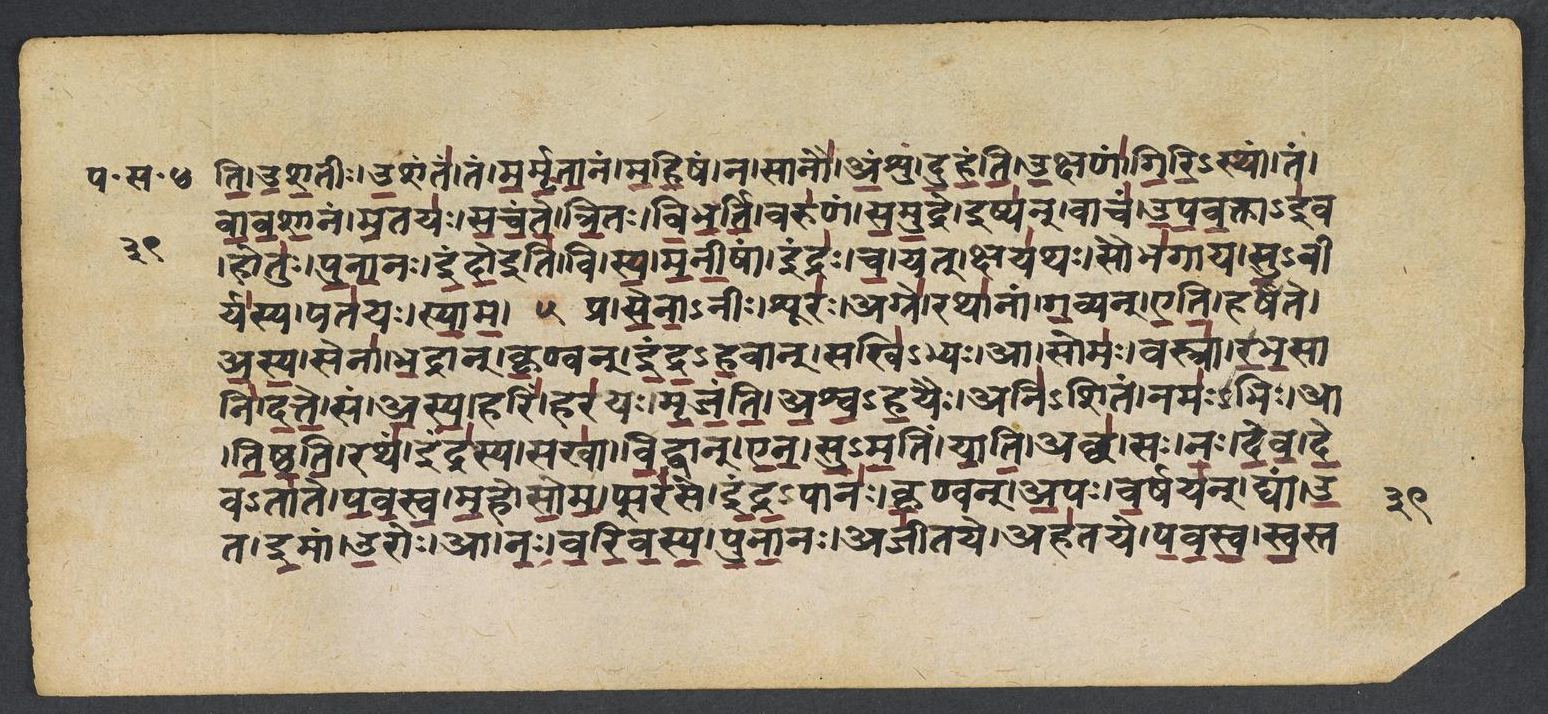
Penn Ms. Coll. 390 Item 41, fol. 722v (numbered 39v by the scribe) (OPenn image 723, upper leaf). Checked on the image: the Rigveda text on this page begins in RV 9.95.3 ‹-viśanti uśatīḥ uśantam›. The next page with Rigveda text, fol. 723r (numbered 40r by the scribe), begins in RV 9.96.4 ‹-svastaye sarva-tātaye bṛhate tat›. Verses 9.96.1-3 end on this page.
1pra se̍nā̱nīḥ śūro̱ agre̱ rathā̍nāṁ ga̱vyann e̍ti̱ harṣa̍te asya̱ senā̍ | bha̱drān kṛ̱ṇvann i̍ndraha̱vān sakhi̍bhya̱ ā somo̱ vastrā̍ rabha̱sāni̍ datte ||
2sam a̍sya̱ hari̱ṁ hara̍yo mṛjanty aśvaha̱yair ani̍śita̱ṁ namo̍bhiḥ | ā ti̍ṣṭhati̱ ratha̱m indra̍sya̱ sakhā̍ vi̱dvām̐ e̍nā suma̱tiṁ yā̱ty accha̍ ||
3sa no̍ deva de̱vatā̍te pavasva ma̱he so̍ma̱ psara̍sa indra̱pāna̍ḥ | kṛ̱ṇvann a̱po va̱rṣaya̱n dyām u̱temām u̱ror ā no̍ varivasyā punā̱naḥ ||
Compare: Padapāṭha (word-by-word text written in the manuscript; Sansknet e-text via GRETIL)
1pra | senānīḥ | śūraḥ | agre | rathānām | gavyan | eti | harṣate | asya | senā | bhadrān | kṛṇvan | indra-havān | sakhi-bhyaḥ | ā | somaḥ | vastrā | rabhasāni | datte
2sam | asya | harim | harayaḥ | mṛjanti | aśva-hayaiḥ | asni-śitam | namaḥ-bhiḥ | ā | tiṣṭhati | ratham | indrasya | sakhā | vidvān | ena | su-matim | yāti | accha
3saḥ | naḥ | deva | deva-tāte | pavasva | mahe | soma | psarase | indra-pānaḥ | kṛṇvan | apaḥ | varṣayan | dyām | uta | imām | uroḥ | ā | naḥ | varivasya | punānaḥ
1IN forefront of the cars forth goes the Hero, the Leader, winning spoil: his host rejoices. Soma endues his robes of lasting colours, and blesses, for his friends, their calls on Indra.
2Men decked with gold adorn his golden tendril, incessantly with steed-impelling homage. The Friend of Indra mounts his car well-knowing, he comes thereon to meet the prayer we offer.
3O God, for service of the Gods flow onward, for food sublime, as Indra's drink, O Soma. Making the floods, bedewing earth and heaven, come from the vast, comfort us while we cleanse thee
Where on the image
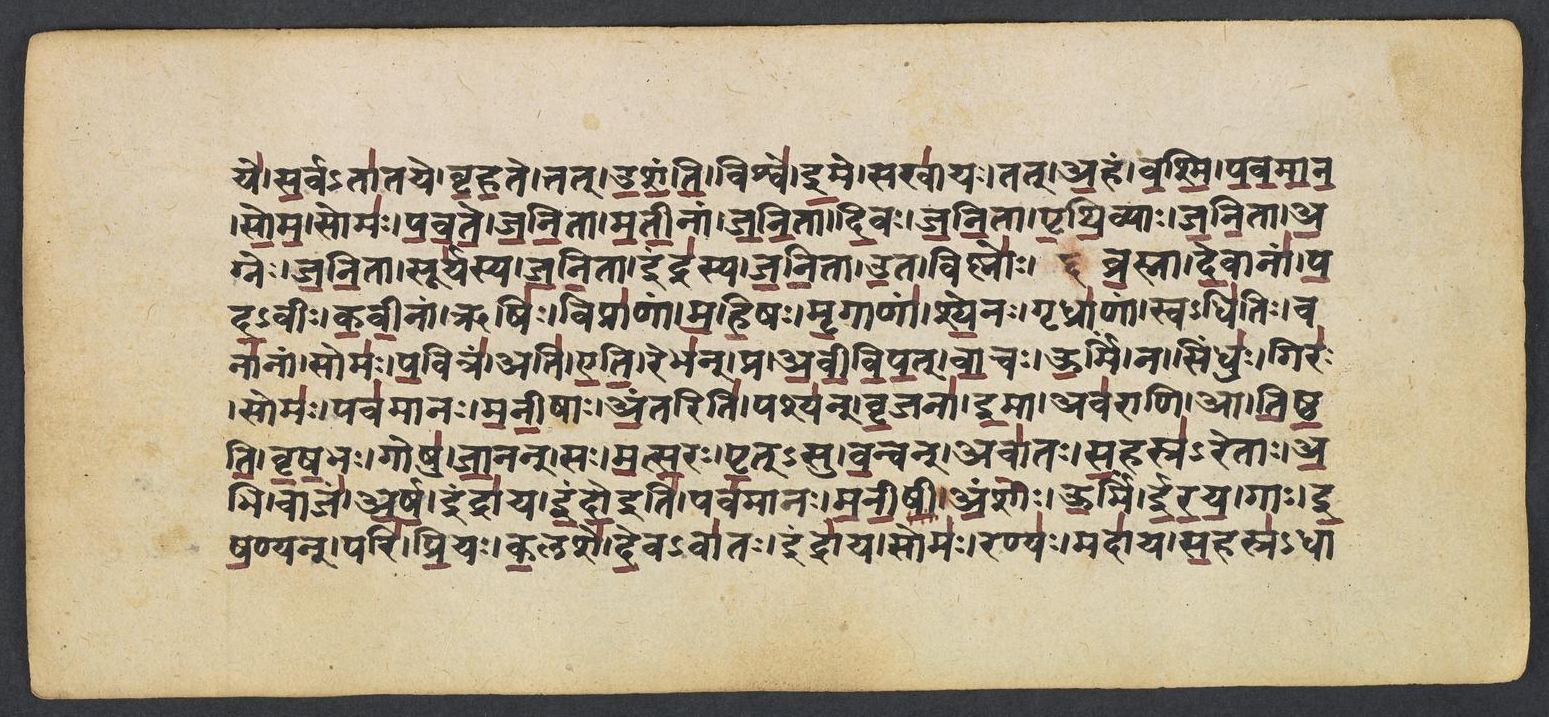
Penn Ms. Coll. 390 Item 41, fol. 723r (numbered 40r by the scribe) (OPenn image 723, lower leaf). Checked on the image: the Rigveda text on this page begins in RV 9.96.4 ‹-svastaye sarva-tātaye bṛhate tat›. The next page with Rigveda text, fol. 723v (numbered 40v by the scribe), begins in RV 9.96.9 ‹-sahasra-dhāraḥ śata-vājaḥ induḥ vājī›. Verses 9.96.4-8 end on this page; 9.96.4 begins on fol. 722v (numbered 39v by the scribe).
4ajī̍ta̱ye 'ha̍taye pavasva sva̱staye̍ sa̱rvatā̍taye bṛha̱te | tad u̍śanti̱ viśva̍ i̱me sakhā̍ya̱s tad a̱haṁ va̍śmi pavamāna soma ||
5soma̍ḥ pavate jani̱tā ma̍tī̱nāṁ ja̍ni̱tā di̱vo ja̍ni̱tā pṛ̍thi̱vyāḥ | ja̱ni̱tāgner ja̍ni̱tā sūrya̍sya jani̱tendra̍sya jani̱tota viṣṇo̍ḥ ||
6bra̱hmā de̱vānā̍m pada̱vīḥ ka̍vī̱nām ṛṣi̱r viprā̍ṇām mahi̱ṣo mṛ̱gāṇā̍m | śye̱no gṛdhrā̍ṇā̱ṁ svadhi̍ti̱r vanā̍nā̱ṁ soma̍ḥ pa̱vitra̱m aty e̍ti̱ rebha̍n ||
7prāvī̍vipad vā̱ca ū̱rmiṁ na sindhu̱r gira̱ḥ soma̱ḥ pava̍māno manī̱ṣāḥ | a̱ntaḥ paśya̍n vṛ̱jane̱māva̍rā̱ṇy ā ti̍ṣṭhati vṛṣa̱bho goṣu̍ jā̱nan ||
8sa ma̍tsa̱raḥ pṛ̱tsu va̱nvann avā̍taḥ sa̱hasra̍retā a̱bhi vāja̍m arṣa | indrā̍yendo̱ pava̍māno manī̱ṣy a1̱̍ṁśor ū̱rmim ī̍raya̱ gā i̍ṣa̱ṇyan ||
Compare: Padapāṭha (word-by-word text written in the manuscript; Sansknet e-text via GRETIL)
4ajītaye | ahataye | pavasva | svastaye | sarva-tātaye | bṛhate | tat | uśanti | viśve | ime | sakhāyaḥ | tat | aham | vaśmi | pavamāna | soma
5somaḥ | pavate | janitā | matīnām | janitā | divaḥ | janitā | pṛthivyāḥ | janitā | agneḥ | janitā | sūryasya | janitā | indrasya | janitā | uta | viṣṇoḥ
6brahmā | devānām | pada-vīḥ | kavīnām | ṛṣiḥ | viprāṇām | mahiṣaḥ | mṛgāṇām | śyenaḥ | gṛdhrāṇām | sva-dhitiḥ | vanānām | somaḥ | pavitram | ati | eti | rebhan
7pra | avīvipat | vācaḥ | ūrmim | na | sindhuḥ | giraḥ | somaḥ | pavamānaḥ | manīṣāḥ | antariti | paśyan | vṛjanā | imā | avarāṇi | ā | tiṣṭhati | vṛṣabhaḥ | goṣu | jānan
8saḥ | matsaraḥ | pṛt-su | vanvan | avātaḥ | sahasra-retāḥ | abhi | vājam | arṣa | indrāya | indo iti | pavamānaḥ | manīṣī | aṃśoḥ | ūrmim | īraya | gāḥ | iṣaṇyan
4Flow for prosperity and constant Vigour, flow on for happiness and high perfection. This is the wish of these friends assembled: this is my wish, O Soma Pavamâna.
5Father of holy hymns, Soma flows onward the Father of the earth, Father of heaven: Father of Agni, Sûrya's generator, the Father who begat Indra and Vishṇu.
6Brahman of Gods, the Leader of the poets, R̥ishi of sages, Bull of savage creatures, Falcon amid the vultures, Axe of forests, over the cleansing sieve goes Soma singing.
7He, Soma Pavamâna, like a river, hath stirred the wave of voice, our songs and praises. Beholding these inferior powers in cattle, he rests among them as a Steer well-knowing.
8As Gladdener, Warrior never harmed in battle, with thousand genial streams, pour strength and vigour. As thoughtful Pavamâna, urge O Indu, speeding the kine, the plant's wave on to Indra.
Where on the image
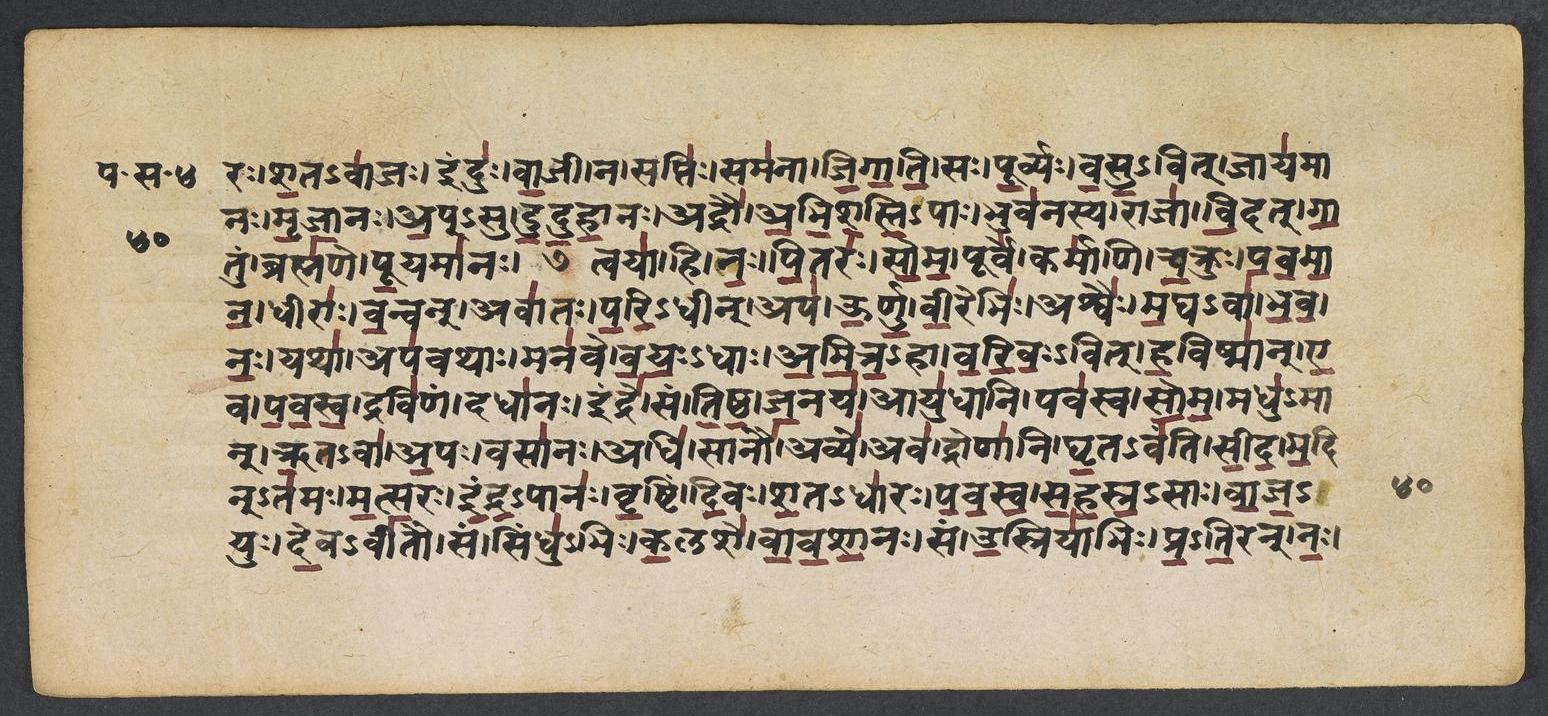
Penn Ms. Coll. 390 Item 41, fol. 723v (numbered 40v by the scribe) (OPenn image 724, upper leaf). Checked on the image: the Rigveda text on this page begins in RV 9.96.9 ‹-sahasra-dhāraḥ śata-vājaḥ induḥ vājī›. The next page with Rigveda text, fol. 724r (numbered 41r by the scribe), begins in RV 9.96.14 ‹āyuḥ›. Verses 9.96.9-13 end on this page; 9.96.9 begins on fol. 723r (numbered 40r by the scribe).
9pari̍ pri̱yaḥ ka̱laśe̍ de̱vavā̍ta̱ indrā̍ya̱ somo̱ raṇyo̱ madā̍ya | sa̱hasra̍dhāraḥ śa̱tavā̍ja̱ indu̍r vā̱jī na sapti̱ḥ sama̍nā jigāti ||
10sa pū̱rvyo va̍su̱vij jāya̍māno mṛjā̱no a̱psu du̍duhā̱no adrau̍ | a̱bhi̱śa̱sti̱pā bhuva̍nasya̱ rājā̍ vi̱dad gā̱tum brahma̍ṇe pū̱yamā̍naḥ ||
11tvayā̱ hi na̍ḥ pi̱tara̍ḥ soma̱ pūrve̱ karmā̍ṇi ca̱kruḥ pa̍vamāna̱ dhīrā̍ḥ | va̱nvann avā̍taḥ pari̱dhīm̐r apo̍rṇu vī̱rebhi̱r aśvai̍r ma̱ghavā̍ bhavā naḥ ||
12yathāpa̍vathā̱ mana̍ve vayo̱dhā a̍mitra̱hā va̍rivo̱vid dha̱viṣmā̍n | e̱vā pa̍vasva̱ dravi̍ṇa̱ṁ dadhā̍na̱ indre̱ saṁ ti̍ṣṭha ja̱nayāyu̍dhāni ||
13pava̍sva soma̱ madhu̍mām̐ ṛ̱tāvā̱po vasā̍no̱ adhi̱ sāno̱ avye̍ | ava̱ droṇā̍ni ghṛ̱tavā̍nti sīda ma̱dinta̍mo matsa̱ra i̍ndra̱pāna̍ḥ ||
Compare: Padapāṭha (word-by-word text written in the manuscript; Sansknet e-text via GRETIL)
9pari | priyaḥ | kalaśe | deva-vātaḥ | indrāya | somaḥ | raṇyaḥ | madāya | sahasra-dhāraḥ | śata-vājaḥ | induḥ | vājī | na | saptiḥ | samanā | jigāti
10saḥ | pūrvyaḥ | vasu-vit | jāyamānaḥ | mṛjānaḥ | ap-su | duduhānaḥ | adrau | abhiśasti-pāḥ | bhuvanasya | rājā | vidat | gātum | brahmaṇe | pūyamānaḥ
11tvayā | hi | naḥ | pitaraḥ | soma | pūrve | karmāṇi | cakruḥ | pavamāna | dhīrāḥ | vanvan | avātaḥ | pari-dhīn | apa | ūrṇu | vīre-bhiḥ | aśvaiḥ | magha-vā | bhava | naḥ
12yathā | apavathāḥ | manave | vayaḥ-dhāḥ | amitra-hā | varivaḥ-vit | haviṣmān | eva | pavasva | draviṇam | dadhānaḥ | indre | sam | tiṣṭha | janaya | āyudhāni
13pavasva | soma | madhu-mān | ṛta-vā | apaḥ | vasānaḥ | adhi | sānau | avye | ava | droṇāni | ghṛta-vanti | sīda | madin-tamaḥ | matsaraḥ | indra-pānaḥ
9Dear, grateful to the Gods, on to the beaker moves Soma, sweet to Indra, to delight him. With hundred powers, with thousand currents, Indu, like a strong car-horse, goes to the assembly.
10Born in old time as finder-out of treasures, drained with the stone, decking himself in waters, Warding off curses, King of all existence, he shall find way for prayer the while they cleanse him.
11For our sage fathers, Soma Pavamâna, of old performed, by thee, their sacred duties. Fighting unvanquished, open the enclosures: enrich us with large gifts of steeds and heroes.
12As thou didst flow for Manu Life-bestowing, Foe-queller, Comforter, rich in oblations, Even thus flow onward now conferring riches: combine with Indra, and bring forth thy weapons.
13Flow onward, Soma, rich in sweets and holy,. enrobed in waters on the fleecy summit. Settle in vessels that are full of fatness, as cheering and most gladdening drink for Indra.
Where on the image
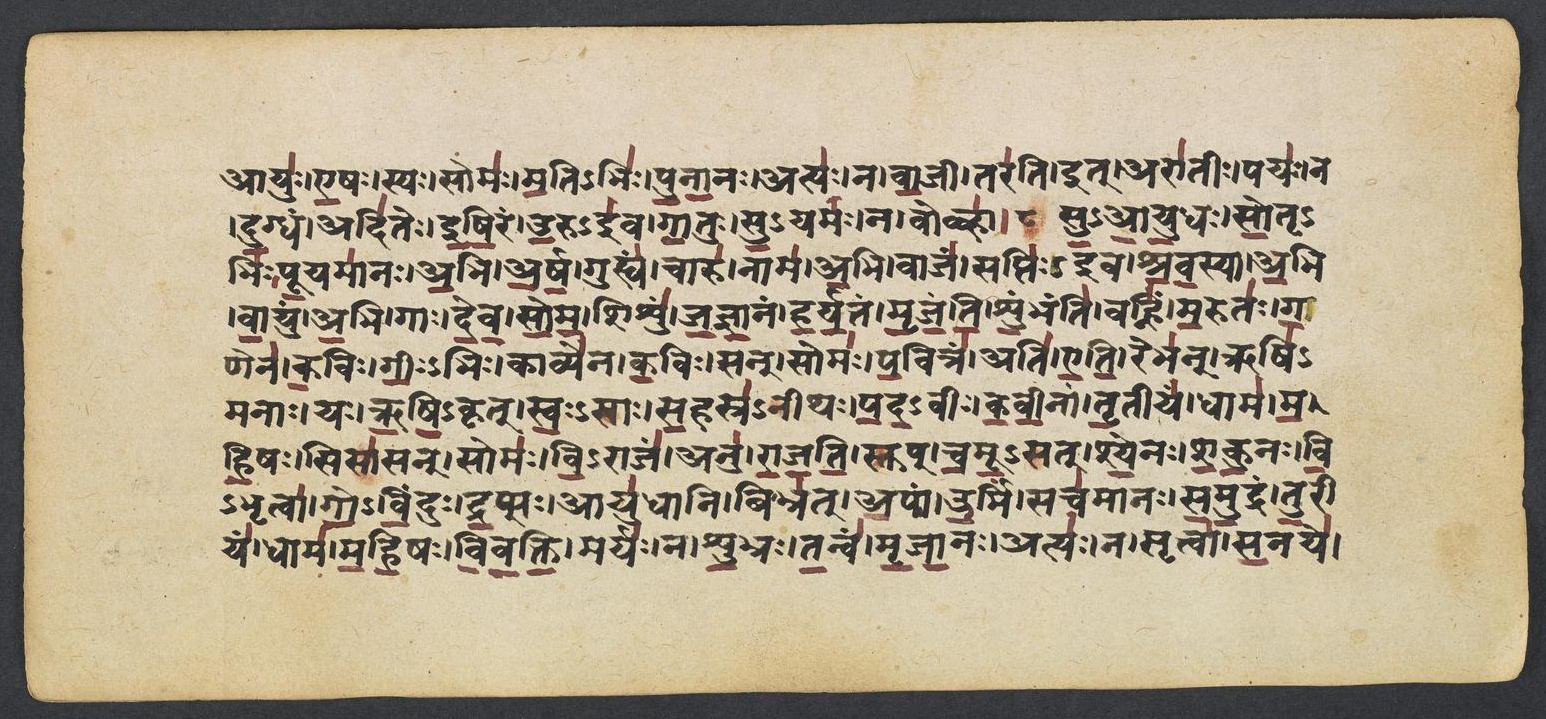
Penn Ms. Coll. 390 Item 41, fol. 724r (numbered 41r by the scribe) (OPenn image 724, lower leaf). Checked on the image: the Rigveda text on this page begins in RV 9.96.14 ‹āyuḥ›. The next page with Rigveda text, fol. 724v (numbered 41v by the scribe), begins in RV 9.96.20 ‹dhanānām vṛṣā-iva yūthā pari›. Verses 9.96.14-19 end on this page; 9.96.14 begins on fol. 723v (numbered 40v by the scribe).
14vṛ̱ṣṭiṁ di̱vaḥ śa̱tadhā̍raḥ pavasva sahasra̱sā vā̍ja̱yur de̱vavī̍tau | saṁ sindhu̍bhiḥ ka̱laśe̍ vāvaśā̱naḥ sam u̱sriyā̍bhiḥ prati̱ran na̱ āyu̍ḥ ||
15e̱ṣa sya somo̍ ma̱tibhi̍ḥ punā̱no 'tyo̱ na vā̱jī tara̱tīd arā̍tīḥ | payo̱ na du̱gdham adi̍ter iṣi̱ram u̱rv i̍va gā̱tuḥ su̱yamo̱ na voḻhā̍ ||
16svā̱yu̱dhaḥ so̱tṛbhi̍ḥ pū̱yamā̍no̱ 'bhy a̍rṣa̱ guhya̱ṁ cāru̱ nāma̍ | a̱bhi vāja̱ṁ sapti̍r iva śrava̱syābhi vā̱yum a̱bhi gā de̍va soma ||
17śiśu̍ṁ jajñā̱naṁ ha̍rya̱tam mṛ̍janti śu̱mbhanti̱ vahni̍m ma̱ruto̍ ga̱ṇena̍ | ka̱vir gī̱rbhiḥ kāvye̍nā ka̱viḥ san soma̍ḥ pa̱vitra̱m aty e̍ti̱ rebha̍n ||
18ṛṣi̍manā̱ ya ṛ̍ṣi̱kṛt sva̱rṣāḥ sa̱hasra̍ṇīthaḥ pada̱vīḥ ka̍vī̱nām | tṛ̱tīya̱ṁ dhāma̍ mahi̱ṣaḥ siṣā̍sa̱n somo̍ vi̱rāja̱m anu̍ rājati̱ ṣṭup ||
19ca̱mū̱ṣac chye̱naḥ śa̍ku̱no vi̱bhṛtvā̍ govi̱ndur dra̱psa āyu̍dhāni̱ bibhra̍t | a̱pām ū̱rmiṁ saca̍mānaḥ samu̱draṁ tu̱rīya̱ṁ dhāma̍ mahi̱ṣo vi̍vakti ||
Compare: Padapāṭha (word-by-word text written in the manuscript; Sansknet e-text via GRETIL)
14vṛṣṭim | divaḥ | śata-dhāraḥ | pavasva | sahasra-sāḥ | vāja-yuḥ | deva-vītau | sam | sindhu-bhiḥ | kalaśe | vāvaśānaḥ | sam | usriyābhiḥ | pra-tiran | naḥ | āyuḥ
15eṣaḥ | syaḥ | somaḥ | mati-bhiḥ | punānaḥ | atyaḥ | na | vājī | tarati | it | arātīḥ | payaḥ | na | dugdham | aditeḥ | iṣiram | uru-iva | gātuḥ | su-yamaḥ | na | voḷhā
16su-āyudhaḥ | sotṛ-bhiḥ | pūyamānaḥ | abhi | arṣa | guhyam | cāru | nāma | abhi | vājam | saptiḥ-iva | śravasyā | abhi | vāyum | abhi | gāḥ | deva | soma
17śiśum | jajñānam | haryatam | mṛjanti | śumbhanti | vahnim | marutaḥ | gaṇena | kaviḥ | gīḥ-bhiḥ | kāvyena | kaviḥ | san | somaḥ | pavitram | ati | eti | rebhan
18ṛṣi-manāḥ | yaḥ | ṛṣi-kṛt | svaḥ-sāḥ | sahasra-nīthaḥ | pada-vīḥ | kavīnām | tṛtīyam | dhāma | mahiṣaḥ | sisāsan | somaḥ | vi-rājam | anu | rājati | stup
19camū-sat | śyenaḥ | śakunaḥ | vi-bhṛtvā | go-vinduḥ | drapsaḥ | āyudhāni | bibhrat | apām | ūrmim | sacamānaḥ | samudram | turīyam | dhāma | mahiṣaḥ | vivakti
14Pour, hundred-streamed, winner of thousands, mighty at the Gods' banquet, Pour the rain of heaven, While thou with rivers roarest in the beaker, and blent with milk prolongest our existence.
15Purified with our holy hymns, this Soma o'ertakes malignities like some strong charger, Like fresh milk poured by Aditi, like passage in ample room, or like a docile car-horse.
16Cleansed by the pressers, armed with noble weapons, stream to us the fair secret name thou bearest. Pour booty, like a horse, for love of glory God, Soma, send us kine, and send us Vâyu.
17They deck him at his birth, the lovely Infant, the Maruts with their troop adorn the Car-horse. By songs a Poet and a Sage by wisdom, Soma goes singing through the cleansing filter.
18Light-winner, R̥ishi-mindcd, R̥ishi-maker, hymned in a thousand hymns, Leader of sages, A Steer who strives to gain his third form, Soma is, like Virâj, resplendent as a Singer.
19Hawk seated in the bowls, Bird wide-extended, the Banner seeking kine and wielding weapons, Following close the sea, the wave of waters, the great Bull tells his fourth form and declares it.
Where on the image
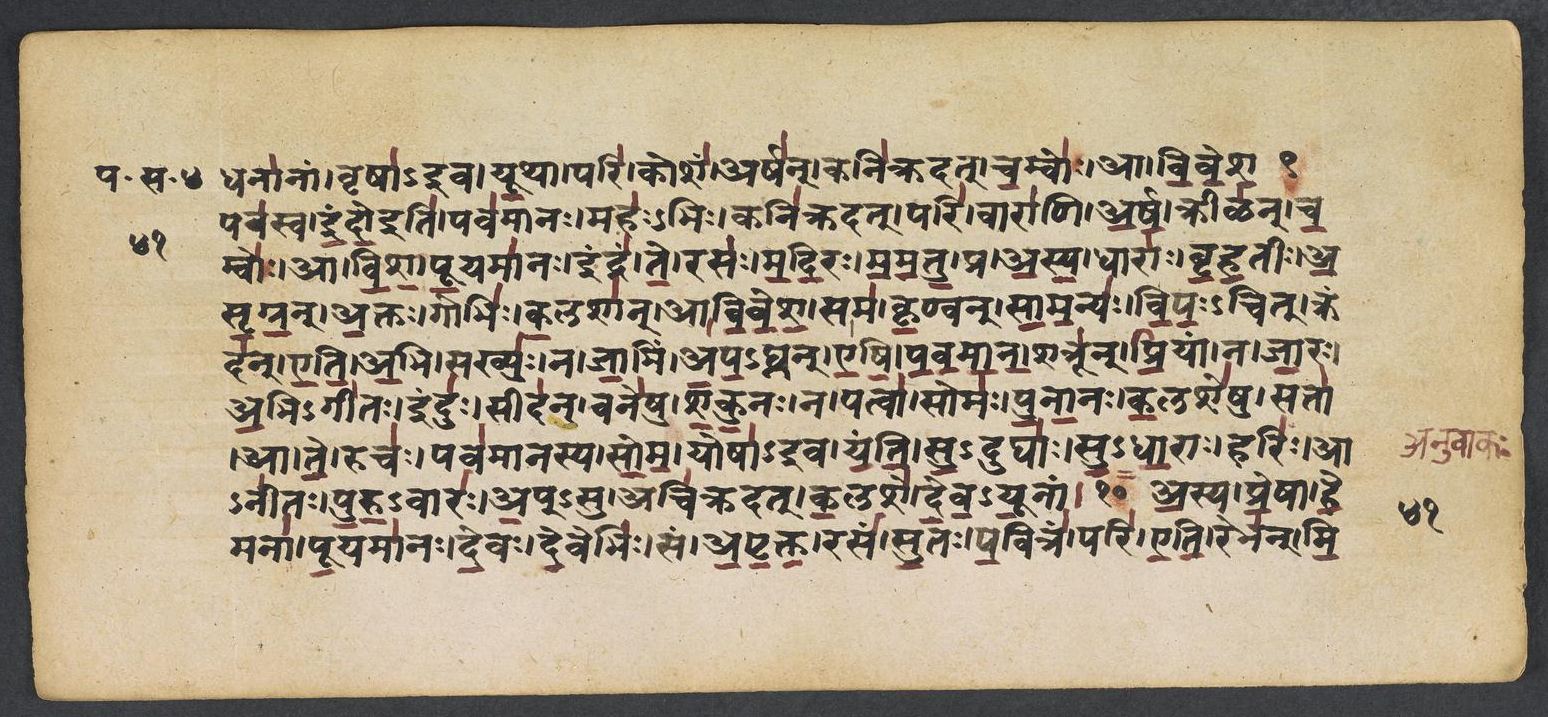
Penn Ms. Coll. 390 Item 41, fol. 724v (numbered 41v by the scribe) (OPenn image 725, upper leaf). Checked on the image: the Rigveda text on this page begins in RV 9.96.20 ‹dhanānām vṛṣā-iva yūthā pari›. The next page with Rigveda text, fol. 725r (numbered 42r by the scribe), begins in RV 9.97.1 ‹-mitā-iva sadma paśu-manti hotā›. Verses 9.96.20-24 end on this page; 9.96.20 begins on fol. 724r (numbered 41r by the scribe).
20maryo̱ na śu̱bhras ta̱nva̍m mṛjā̱no 'tyo̱ na sṛtvā̍ sa̱naye̱ dhanā̍nām | vṛṣe̍va yū̱thā pari̱ kośa̱m arṣa̱n kani̍kradac ca̱mvo̱3̱̍r ā vi̍veśa ||
21pava̍svendo̱ pava̍māno̱ maho̍bhi̱ḥ kani̍krada̱t pari̱ vārā̍ṇy arṣa | krīḻa̍ñ ca̱mvo̱3̱̍r ā vi̍śa pū̱yamā̍na̱ indra̍ṁ te̱ raso̍ madi̱ro ma̍mattu ||
22prāsya̱ dhārā̍ bṛha̱tīr a̍sṛgrann a̱kto gobhi̍ḥ ka̱laśā̱m̐ ā vi̍veśa | sāma̍ kṛ̱ṇvan sā̍ma̱nyo̍ vipa̱ścit kranda̍nn ety a̱bhi sakhyu̱r na jā̱mim ||
23a̱pa̱ghnann e̍ṣi pavamāna̱ śatrū̍n pri̱yāṁ na jā̱ro a̱bhigī̍ta̱ indu̍ḥ | sīda̱n vane̍ṣu śaku̱no na patvā̱ soma̍ḥ punā̱naḥ ka̱laśe̍ṣu̱ sattā̍ ||
24ā te̱ ruca̱ḥ pava̍mānasya soma̱ yoṣe̍va yanti su̱dughā̍ḥ sudhā̱rāḥ | hari̱r ānī̍taḥ puru̱vāro̍ a̱psv aci̍kradat ka̱laśe̍ devayū̱nām ||
Compare: Padapāṭha (word-by-word text written in the manuscript; Sansknet e-text via GRETIL)
20maryaḥ | na | śubhraḥ | tanvam | mṛjānaḥ | atyaḥ | na | sṛtvā | sanaye | dhanānām | vṛṣā-iva | yūthā | pari | kośam | arṣan | kanikradat | camvoḥ | ā | viveśa
21pavasva | indo iti | pavamānaḥ | mahaḥ-bhiḥ | kanikradat | pari | vārāṇi | arṣa | krīḷan | camvoḥ | ā | viśa | pūyamānaḥ | indram | te | rasaḥ | madiraḥ | mamattu
22pra | asya | dhārāḥ | bṛhatīḥ | asṛgran | aktaḥ | gobhiḥ | kalaśān | ā | viveśa | sāma | kṛṇvan | sāmanyaḥ | vipaḥ-cit | krandan | eti | abhi | sakhyuḥ | na | jāmim
23apa-ghnan | eṣi | pavamāna | śatrūn | priyām | na | jāraḥ | abhi-gītaḥ | induḥ | sīdan | vaneṣu | śakunaḥ | na | patvā | somaḥ | punānaḥ | kalaśeṣu | sattā
24ā | te | rucaḥ | pavamānasya | soma | yoṣā-iva | yanti | su-dughāḥ | su-dhārāḥ | hariḥ | ānītaḥ | puru-vāraḥ | ap-su | acikradat | kalaśe | deva-yūnām
20Like a fair youth who decorates his body, a courser rushing to the gain of riches, A steer to herds, so, flowing to the pitcher, he with a roar hath passed into the beakers.
21Flow on with might as Pavamâna, Indu flow loudly roaring through the fleecy filter. Enter the beakers sporting, as they cleanse thee, and let thy gladdening juice make Indra joyful.
22His streams have been effused in all their fulness, and he hath entered, balmed with milk, the goblets. Singing his psalm, well-skilled in song, a Chanter, be comes as 'twere to his friend's sister roaring.
23Chasing our foes thou comest, Pavamâna Indu, besting, as lover to his darling. As a bird flies and settles in the forest, thus Soma settles, purified, in goblets.
24With full stream and abundant milk, O Soma, thy beams come, like a woman, as they cleanse thee. He, gold-hued, rich in boons, brought to the waters, hath roared within the goblet of the pious.
Notes
- Sanskrit: Aufrecht's edition (1877) with the Vedic accents, as entered by van Nooten and Holland (GRETIL).
- English: Ralph T. H. Griffith, The Hymns of the Rigveda (1889-1892; 2nd ed. 1896-1897), from the VedaWeb digital text; OCR slips in that text were corrected against the printed 2nd edition (data/sources/rigveda/griffith_errata.json).
- Padapāṭha (edition text): Sansknet e-text via GRETIL (CC BY-NC-SA 4.0).
Cite
Sources
- Source: Penn Ms. Coll. 390 Item 41 (undated (catalogued with Penn's 18th-19th c. Vedic manuscripts)), OPenn, Public Domain Mark + Aufrecht's accented text (GRETIL) + Griffith's English (VedaWeb) (holding institution)
- Critical edition: Aufrecht (1877), accented e-text via GRETIL
← previous · → next · v cycle view · l back to library