Rigveda 9.97: To Soma
Introduction
Rigveda 9.97 is a hymn of 58 verses addressed to Soma. It stands in book (maṇḍala) 9, the hymns to Soma Pavamāna. The Rigveda is the oldest collection of Sanskrit hymns, composed in the second half of the second millennium BCE and handed down orally for many centuries before it was written down.
The manuscript shown is Penn Ms. Coll. 390 Item 41 (University of Pennsylvania), an undated paper manuscript of the padapāṭha (the word-by-word recitation text, in which every word is written separately and compounds are split) of the whole Ṛgveda in Devanāgarī, 884 leaves in fascicles, 7-9 lines to the page, accents in red; this hymn stands on fol. 724v-730r. Each section below gives the verses that end on one page; the page boundaries were read on the images (the opening words of every page), not counted out. Where the manuscript is a padapāṭha (the word-by-word recitation text), the section shows Aufrecht's continuous (saṃhitā) text first and, as the edition text, the padapāṭha of the same verses, which is the form written on the page.
How was this verified? (Provenance)
Where on the image
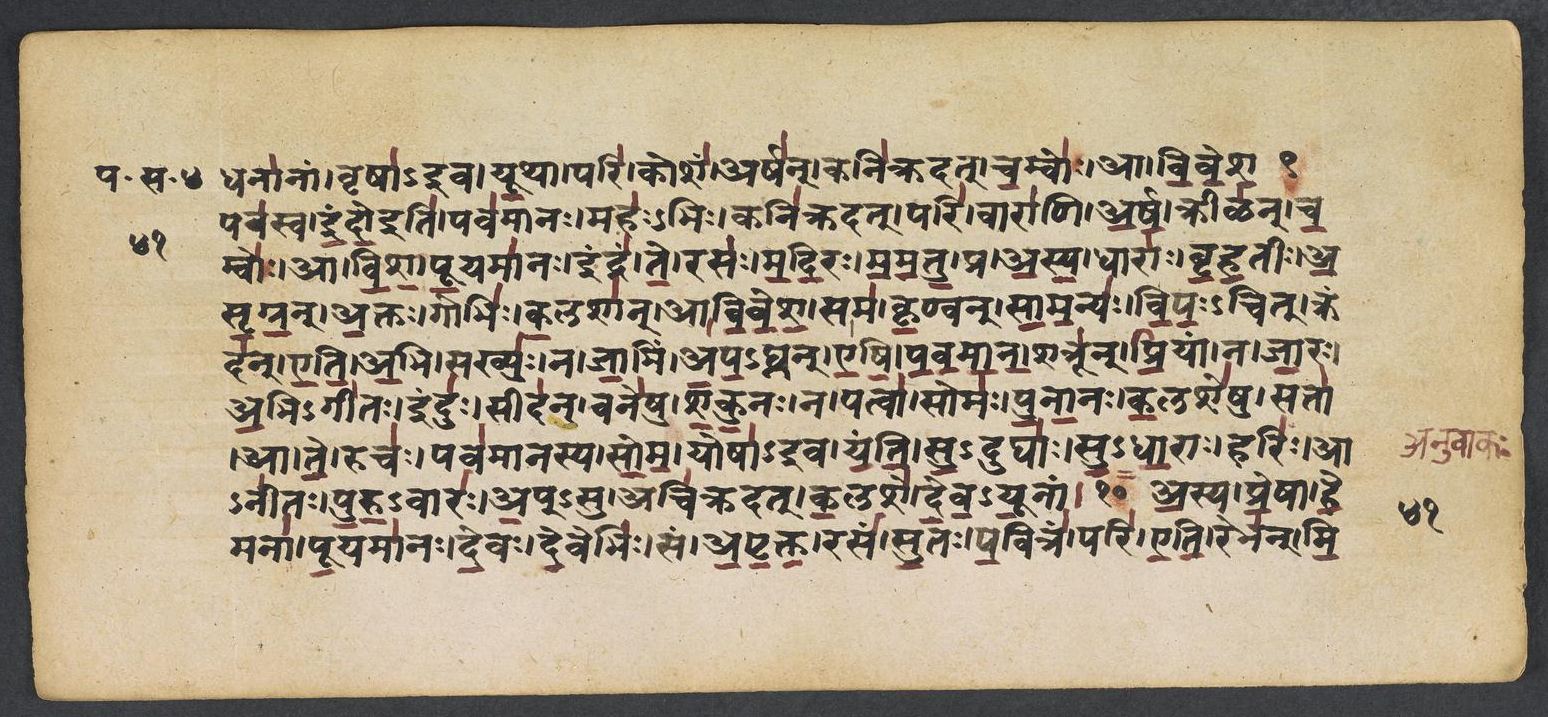
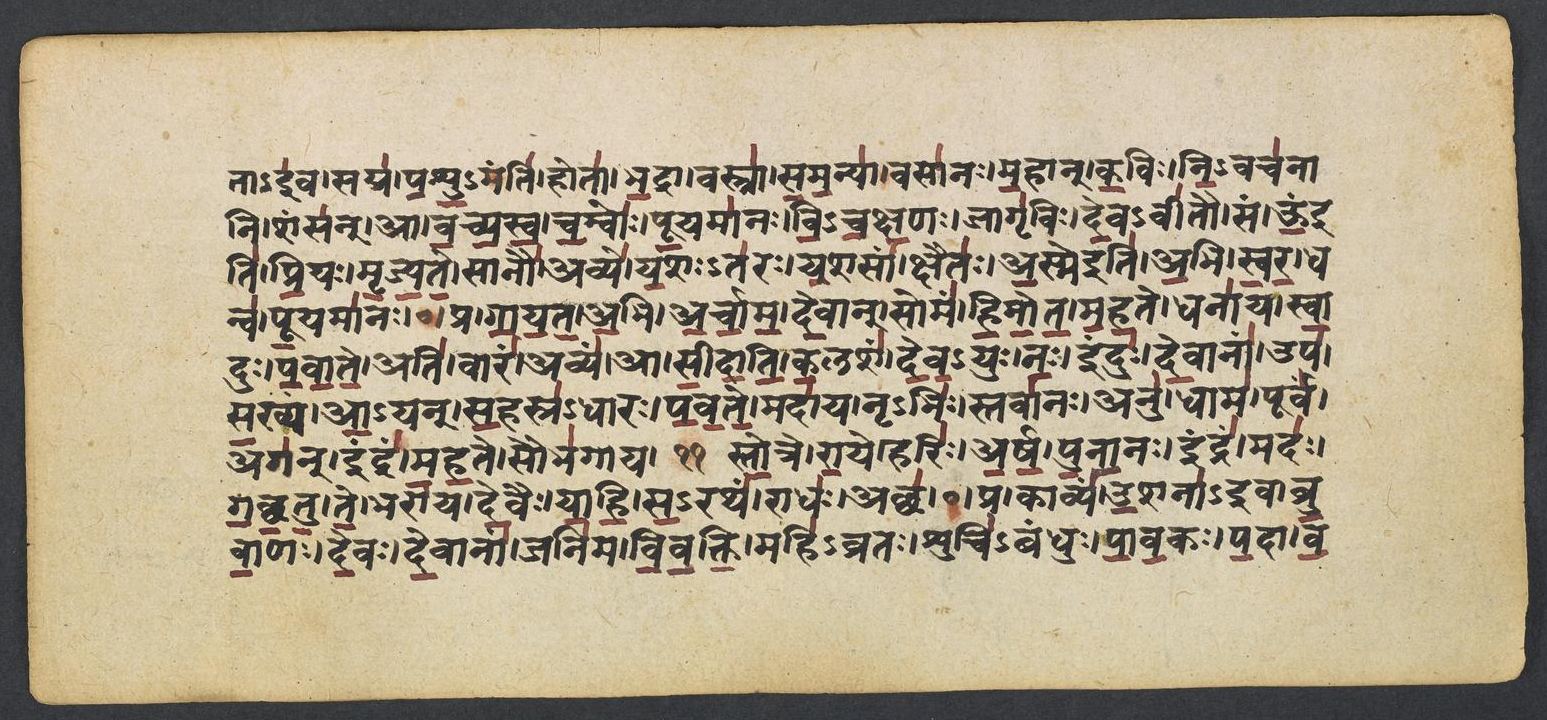
Penn Ms. Coll. 390 Item 41, fol. 725r (numbered 42r by the scribe) (OPenn image 725, lower leaf). Checked on the image: the Rigveda text on this page begins in RV 9.97.1 ‹-mitā-iva sadma paśu-manti hotā›. The next page with Rigveda text, fol. 725v (numbered 42v by the scribe), begins in RV 9.97.7 ‹-varāhaḥ abhi eti rebhan›. Verses 9.97.1-6 end on this page; 9.97.1 begins on fol. 724v (numbered 41v by the scribe).
1a̱sya pre̱ṣā he̱manā̍ pū̱yamā̍no de̱vo de̱vebhi̱ḥ sam a̍pṛkta̱ rasa̍m | su̱taḥ pa̱vitra̱m pary e̍ti̱ rebha̍n mi̱teva̱ sadma̍ paśu̱mānti̱ hotā̍ ||
2bha̱drā vastrā̍ sama̱nyā̱3̱̍ vasā̍no ma̱hān ka̱vir ni̱vaca̍nāni̱ śaṁsa̍n | ā va̍cyasva ca̱mvo̍ḥ pū̱yamā̍no vicakṣa̱ṇo jāgṛ̍vir de̱vavī̍tau ||
3sam u̍ pri̱yo mṛ̍jyate̱ sāno̱ avye̍ ya̱śasta̍ro ya̱śasā̱ṁ kṣaito̍ a̱sme | a̱bhi sva̍ra̱ dhanvā̍ pū̱yamā̍no yū̱yam pā̍ta sva̱stibhi̱ḥ sadā̍ naḥ ||
4pra gā̍yatā̱bhy a̍rcāma de̱vān soma̍ṁ hinota maha̱te dhanā̍ya | svā̱duḥ pa̍vāte̱ ati̱ vāra̱m avya̱m ā sī̍dāti ka̱laśa̍ṁ deva̱yur na̍ḥ ||
5indu̍r de̱vānā̱m upa̍ sa̱khyam ā̱yan sa̱hasra̍dhāraḥ pavate̱ madā̍ya | nṛbhi̱ḥ stavā̍no̱ anu̱ dhāma̱ pūrva̱m aga̱nn indra̍m maha̱te saubha̍gāya ||
6sto̱tre rā̱ye hari̍r arṣā punā̱na indra̱m mado̍ gacchatu te̱ bharā̍ya | de̱vair yā̍hi sa̱ratha̱ṁ rādho̱ acchā̍ yū̱yam pā̍ta sva̱stibhi̱ḥ sadā̍ naḥ ||
Compare: Padapāṭha (word-by-word text written in the manuscript; Sansknet e-text via GRETIL)
1asya | preṣā | hemanā | pūyamānaḥ | devaḥ | devebhiḥ | sam | apṛkta | rasam | sutaḥ | pavitram | pari | eti | rebhan | mitā-iva | sadma | paśu-manti | hotā
2bhadrā | vastrā | samanyā | vasānaḥ | mahān | kaviḥ | ni-vacanāni | śaṃsan | ā | vacyasva | camvoḥ | pūyamānaḥ | vi-cakṣaṇaḥ | jāgṛviḥ | deva-vītau
3sam | oṃ iti | priyaḥ | mṛjyate | sānau | avye | yaśaḥ-taraḥ | yaśasām | kṣaitaḥ | asme iti | abhi | svara | dhanva | pūyamānaḥ | yūyam | pāta | svasti-bhiḥ | sadā | naḥ
4pra | gāyata | abhi | arcāma | devān | somam | hinota | mahate | dhanāya | svāduḥ | pavāte | ati | vāram | avyam | ā | sīdāti | kalaśam | deva-yuḥ | naḥ
5induḥ | devānām | upa | sakhyam | āyan | sahasra-dhāraḥ | pavate | madāya | nṛ-bhiḥ | stavānaḥ | anu | dhāma | pūrvam | agan | indram | mahate | saubhagāya
6stotre | rāye | hariḥ | arṣa | punānaḥ | indram | madaḥ | gacchatu | te | bharāya | devaiḥ | yāhi | sa-ratham | rādhaḥ | accha | yūyam | pāta | svasti-bhiḥ | sadā | naḥ
1MADE pure by this man's urgent zeal and impulse the God hath to the Gods his juice imparted. He goes, effused and singing, to the filter, like priest to measured seats supplied with cattle.
2Robed in fair raiment meet to wear in battle, a mighty Sage pronouncing invocations. Roll onward to the beakers as they cleanse thee, far-seeing at the feast of Gods, and watchful.
3Dear, he is brightened on the fleecy summit, a Prince among us, nobler than the noble. Roar out as thou art purified, run forward. Do ye preserve us evermore with blessings.
4Let us sing praises to the Gods: sing loudly, send ye the Soma forth for mighty riches. Let him flow, sweetly-flavoured, through the filter, and let our pious one rest in the pitcher.
5Winning the friendship of the Deities, Indu flows in a thousand streams to make them joyful. Praised by the men after the ancient statute, he hath come nigh, for our great bliss, to Indra.
6Flow, Gold-hued, cleansing thee, to enrich the singer: let thy juice go to Indra to support him. Come nigh, together with the Gods, for bounty. Do ye preserve us evermore with blessings.
Where on the image
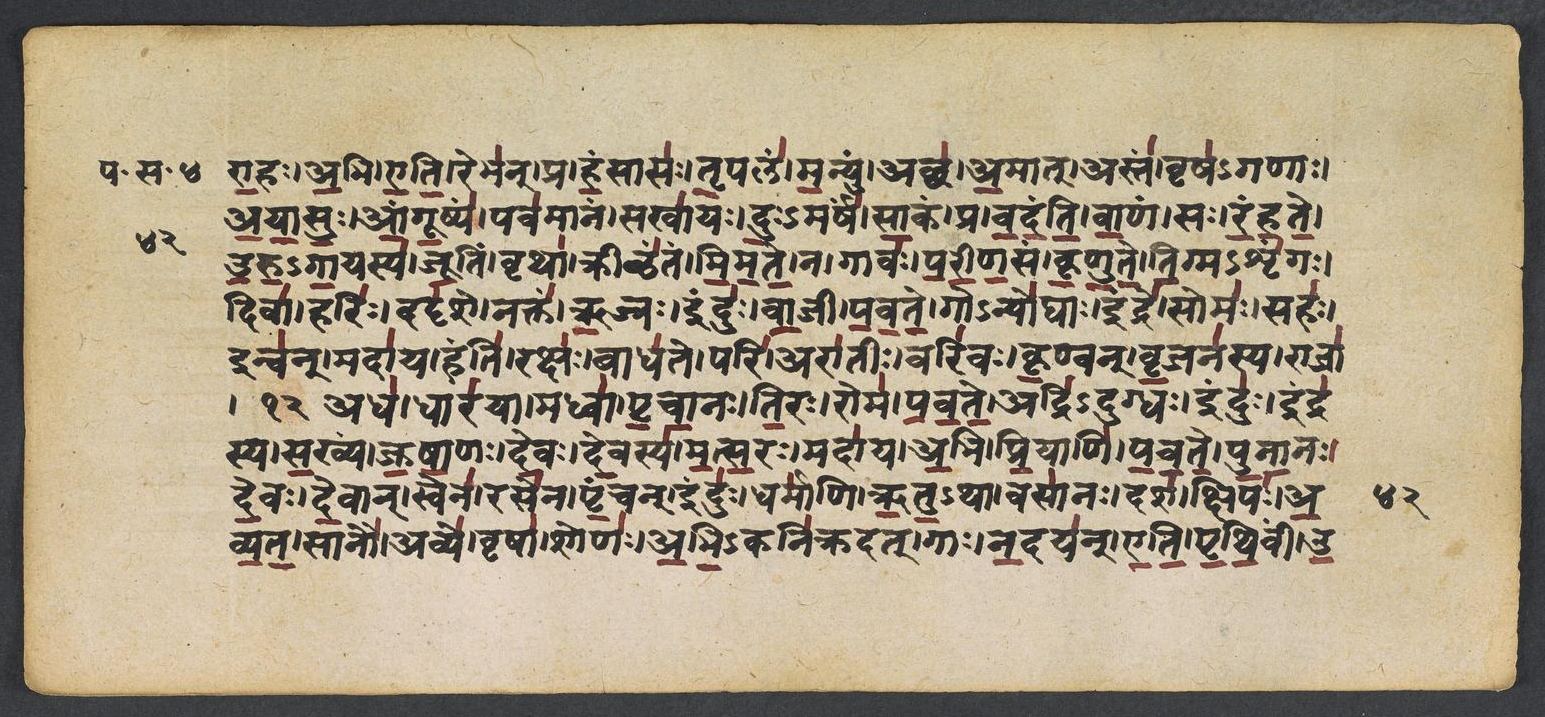
Penn Ms. Coll. 390 Item 41, fol. 725v (numbered 42v by the scribe) (OPenn image 726, upper leaf). Checked on the image: the Rigveda text on this page begins in RV 9.97.7 ‹-varāhaḥ abhi eti rebhan›. The next page with Rigveda text, fol. 726r (numbered 43r by the scribe), begins in RV 9.97.13 ‹-uta dyām indrasya-iva vagnuḥ›. Verses 9.97.7-12 end on this page; 9.97.7 begins on fol. 725r (numbered 42r by the scribe).
7pra kāvya̍m u̱śane̍va bruvā̱ṇo de̱vo de̱vānā̱ṁ jani̍mā vivakti | mahi̍vrata̱ḥ śuci̍bandhuḥ pāva̱kaḥ pa̱dā va̍rā̱ho a̱bhy e̍ti̱ rebha̍n ||
8pra ha̱ṁsāsa̍s tṛ̱pala̍m ma̱nyum acchā̱mād asta̱ṁ vṛṣa̍gaṇā ayāsuḥ | ā̱ṅgū̱ṣya1̱̍m pava̍māna̱ṁ sakhā̍yo du̱rmarṣa̍ṁ sā̱kam pra va̍danti vā̱ṇam ||
9sa ra̍ṁhata urugā̱yasya̍ jū̱tiṁ vṛthā̱ krīḻa̍ntam mimate̱ na gāva̍ḥ | pa̱rī̱ṇa̱saṁ kṛ̍ṇute ti̱gmaśṛ̍ṅgo̱ divā̱ hari̱r dadṛ̍śe̱ nakta̍m ṛ̱jraḥ ||
10indu̍r vā̱jī pa̍vate̱ gonyo̍ghā̱ indre̱ soma̱ḥ saha̱ inva̱n madā̍ya | hanti̱ rakṣo̱ bādha̍te̱ pary arā̍tī̱r vari̍vaḥ kṛ̱ṇvan vṛ̱jana̍sya̱ rājā̍ ||
11adha̱ dhāra̍yā̱ madhvā̍ pṛcā̱nas ti̱ro roma̍ pavate̱ adri̍dugdhaḥ | indu̱r indra̍sya sa̱khyaṁ ju̍ṣā̱ṇo de̱vo de̱vasya̍ matsa̱ro madā̍ya ||
12a̱bhi pri̱yāṇi̍ pavate punā̱no de̱vo de̱vān svena̱ rase̍na pṛ̱ñcan | indu̱r dharmā̍ṇy ṛtu̱thā vasā̍no̱ daśa̱ kṣipo̍ avyata̱ sāno̱ avye̍ ||
Compare: Padapāṭha (word-by-word text written in the manuscript; Sansknet e-text via GRETIL)
7pra | kāvyam | uśanā-iva | bruvāṇaḥ | devaḥ | devānām | janima | vivakti | mahi-vrataḥ | śuci-bandhuḥ | pāvakaḥ | padā | varāhaḥ | abhi | eti | rebhan
8pra | haṃsāsaḥ | tṛpalam | manyum | accha | amāt | astam | vṛṣa-gaṇāḥ | ayāsuḥ | āṅgūṣyam | pavamānam | sakhāyaḥ | duḥ-marṣam | sākam | pra | vadanti | vāṇam
9saḥ | raṃhate | uru-gāyasya | jūtim | vṛthā | krīḷantam | mimate | na | gāvaḥ | parīṇasam | kṛṇute | tigma-śṛṅgaḥ | divā | hariḥ | dadṛśe | naktam | ṛjraḥ
10induḥ | vājī | pavate | go-nyoghāḥ | indre | somaḥ | saha | invan | madāya | hanti | rakṣaḥ | bādhate | pari | arātīḥ | varivaḥ | kṛṇvan | vṛjanasya | rājā
11adha | dhārayā | madhvā | pṛcānaḥ | tiraḥ | roma | pavate | adri-dugdhaḥ | induḥ | indrasya | sakhyam | juṣāṇaḥ | devaḥ | devasya | matsaraḥ | madāya
12abhi | priyāṇi | pavate | punānaḥ | devaḥ | devān | svena | rasena | pṛñcan | induḥ | dharmāṇi | ṛtu-thā | vasānaḥ | daśa | kṣipaḥ | avyata | sānau | avye
7The God declares the Deities' generations, like Uṣanâ, proclaiming lofty wisdom. With brilliant kin, far-ruling, sanctifying, the Boar advances, singing, to the places.
8The Swans, the Vr̥ishagaṇas from anear us have brought their restless spirit to our dwelling. Friends come to Pavamâna meet for praises, and sound in concert their resistless music.
9He follows the Wide-strider's rapid movement: cows low, as 'twere, to him who sports at pleasure. He with the sharpened horns brings forth abundance: the Silvery shines by night, by day the Golden.
10Strong Indu, bathed in milk, flows on for Indra, Soma exciting strength, to make him joyful. He quells malignities and slays the demons, the King of mighty power who brings us comfort.
11Then in a stream he flows, milked out with press-stones, mingled with sweetness, through the fleecy filter- Indu rejoicing in the love of Indra, the God who gladdens, for the God's enjoyment.
12As he is purified he pours out treasures, a God bedewing Gods with his own juices. Indu hath, wearing qualities by seasons, on the raised fleece engaged, the ten swift fingers.
Where on the image
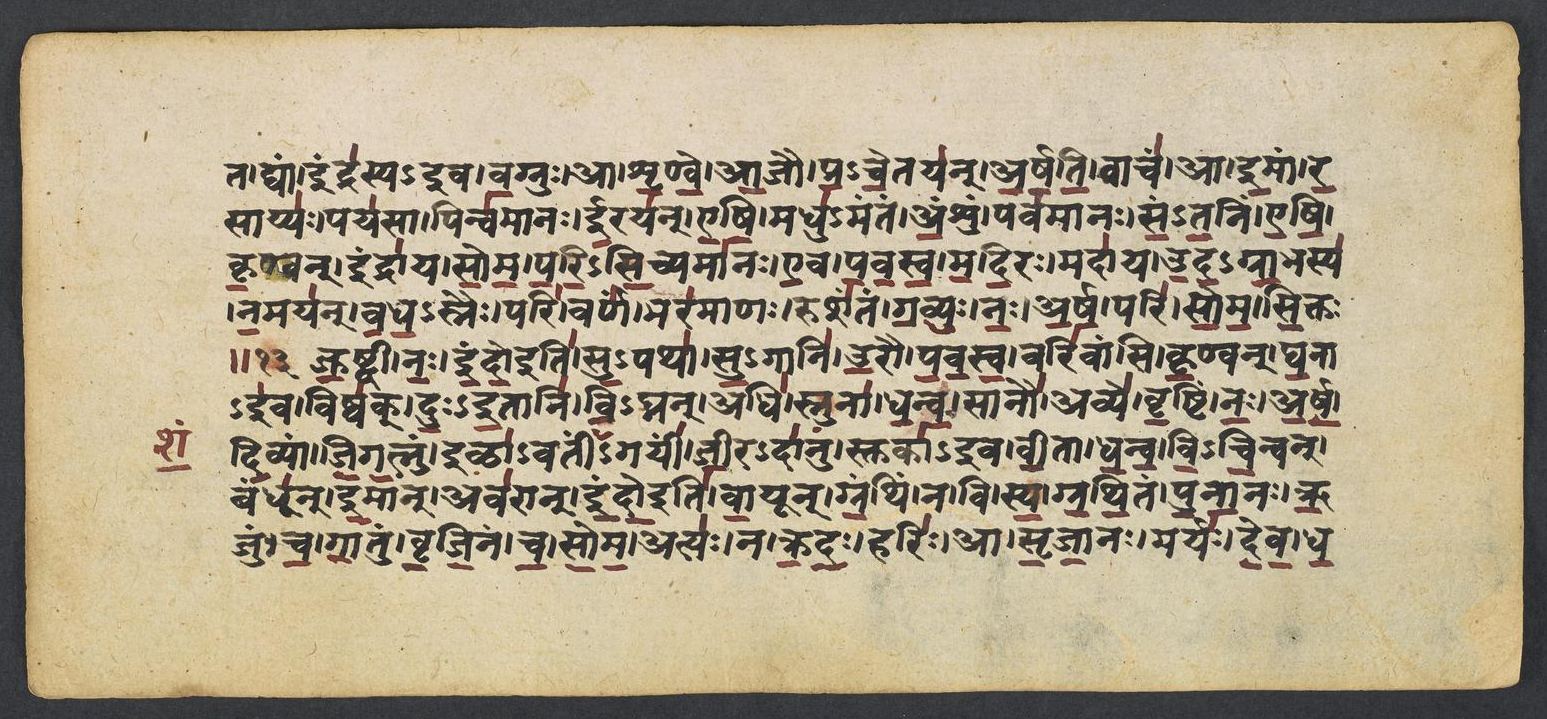
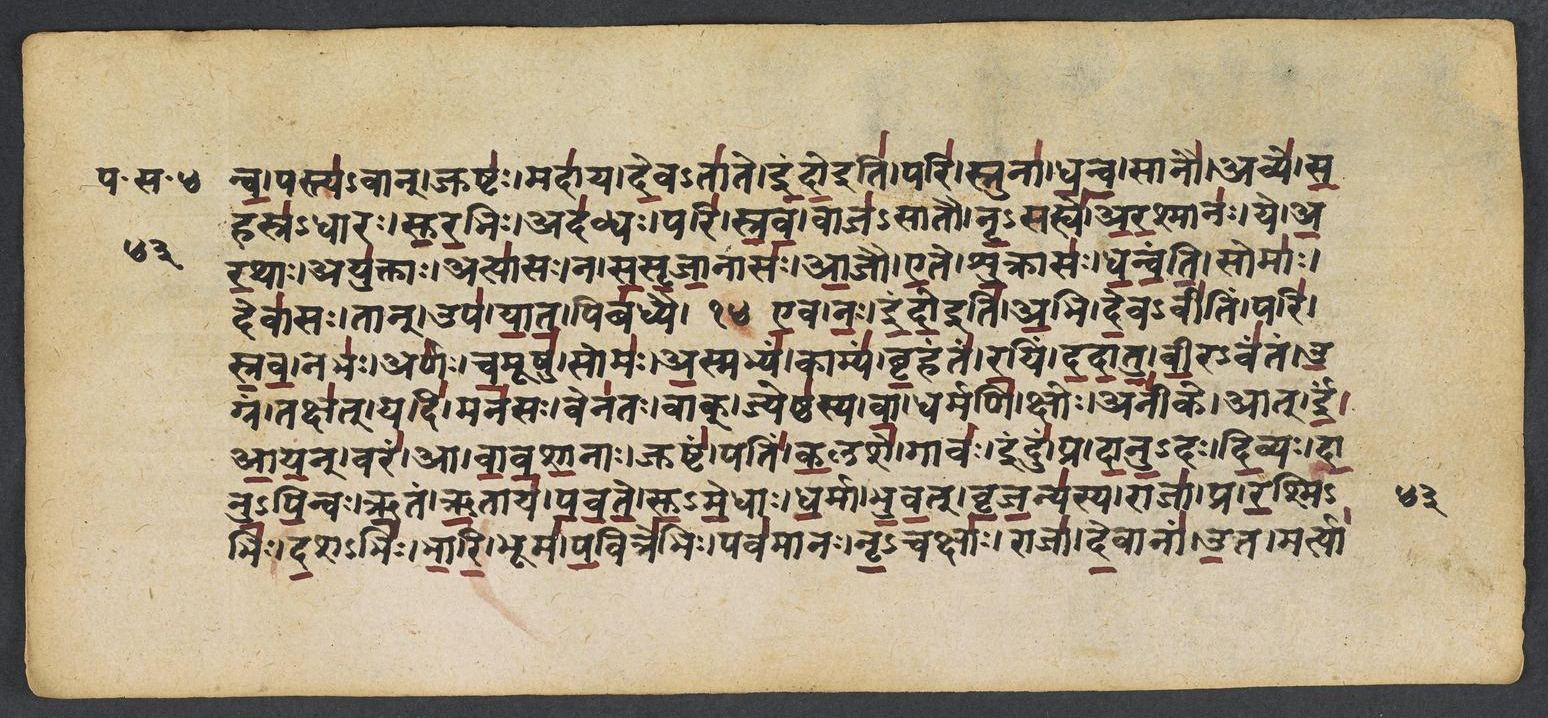
Penn Ms. Coll. 390 Item 41, fol. 726r (numbered 43r by the scribe) (OPenn image 726, lower leaf). Checked on the image: the Rigveda text on this page begins in RV 9.97.13 ‹-uta dyām indrasya-iva vagnuḥ›. The next page with Rigveda text, fol. 726v (numbered 43v by the scribe), begins in RV 9.97.18 ‹pastya-vān›. Verses 9.97.13-17 end on this page; 9.97.13 begins on fol. 725v (numbered 42v by the scribe).
13vṛṣā̱ śoṇo̍ abhi̱kani̍krada̱d gā na̱daya̍nn eti pṛthi̱vīm u̱ta dyām | indra̍syeva va̱gnur ā śṛ̍ṇva ā̱jau pra̍ce̱taya̍nn arṣati̱ vāca̱m emām ||
14ra̱sāyya̱ḥ paya̍sā̱ pinva̍māna ī̱raya̍nn eṣi̱ madhu̍mantam a̱ṁśum | pava̍mānaḥ saṁta̱nim e̍ṣi kṛ̱ṇvann indrā̍ya soma pariṣi̱cyamā̍naḥ ||
15e̱vā pa̍vasva madi̱ro madā̍yodagrā̱bhasya̍ na̱maya̍n vadha̱snaiḥ | pari̱ varṇa̱m bhara̍māṇo̱ ruśa̍ntaṁ ga̱vyur no̍ arṣa̱ pari̍ soma si̱ktaḥ ||
16ju̱ṣṭvī na̍ indo su̱pathā̍ su̱gāny u̱rau pa̍vasva̱ vari̍vāṁsi kṛ̱ṇvan | gha̱neva̱ viṣva̍g duri̱tāni̍ vi̱ghnann adhi̱ ṣṇunā̍ dhanva̱ sāno̱ avye̍ ||
17vṛ̱ṣṭiṁ no̍ arṣa di̱vyāṁ ji̍ga̱tnum iḻā̍vatīṁ śa̱ṁgayī̍ṁ jī̱radā̍num | stuke̍va vī̱tā dha̍nvā vici̱nvan bandhū̍m̐r i̱mām̐ ava̍rām̐ indo vā̱yūn ||
Compare: Padapāṭha (word-by-word text written in the manuscript; Sansknet e-text via GRETIL)
13vṛṣā | śoṇaḥ | abhi-kanikradat | gāḥ | nadayan | eti | pṛthivīm | uta | dyām | indrasya-iva | vagnuḥ | ā | śṛṇve | ājau | pra-cetayan | arṣati | vācam | ā | imām
14rasāyyaḥ | payasā | pinvamānaḥ | īrayan | eṣi | madhu-mantam | aṃśum | pavamānaḥ | sam-tanim | eṣi | kṛṇvan | indrāya | soma | pari-sicyamānaḥ
15eva | pavasva | madiraḥ | madāya | uda-grābhasya | namayan | vadha-snaiḥ | pari | varṇam | bharamāṇaḥ | ruśantam | gavyuḥ | naḥ | arṣa | pari | soma | siktaḥ
16juṣṭavī | naḥ | indo iti | su-pathā | su-gāni | urau | pavasva | varivāṃsi | kṛṇvan | ghanā-iva | viṣvak | duḥ-itāni | vi-ghnan | adhi | snunā | dhanva | sānau | avye
17vṛṣṭim | naḥ | arṣa | divyām | jigatnum | iḷāvatīm | śam-gayīm | jīra-dānum | stukā-iva | vītā | dhanva | vi-cinvan | bandhūn | imān | avarān | indo iti | vāyūn
13The Red Bull bellowing to the kine advances, causing the heavens and earth to roar and thunder. Well is he beard like Indra's shout in battle: letting this voice be known he hastens hither.
14Swelling with milk, abounding in sweet flavours, urging the meath-rich plant thou goest onward. Raising a shout thou flowest as they cleanse thee, when thou, O Soma, art effused for Indra.
15So flow thou on inspiriting, for rapture, aiming death-shafts at him who stays the waters, Flow to us wearing thy resplendent colour, effused and eager for the kine, O Soma.
16Pleased with us, Indu, send us as thou flowest good easy paths in ample space and comforts. Dispelling, as 'twere with a club, misfortunes, run o'er the height, run o'er the fleecy summit.
17Pour on us rain celestial, quickly streaming, refreshing, fraught with health and ready bounty. Flow, Indu, send these Winds thy lower kinsmen, setting them free like locks of hair unbraided.
Where on the image
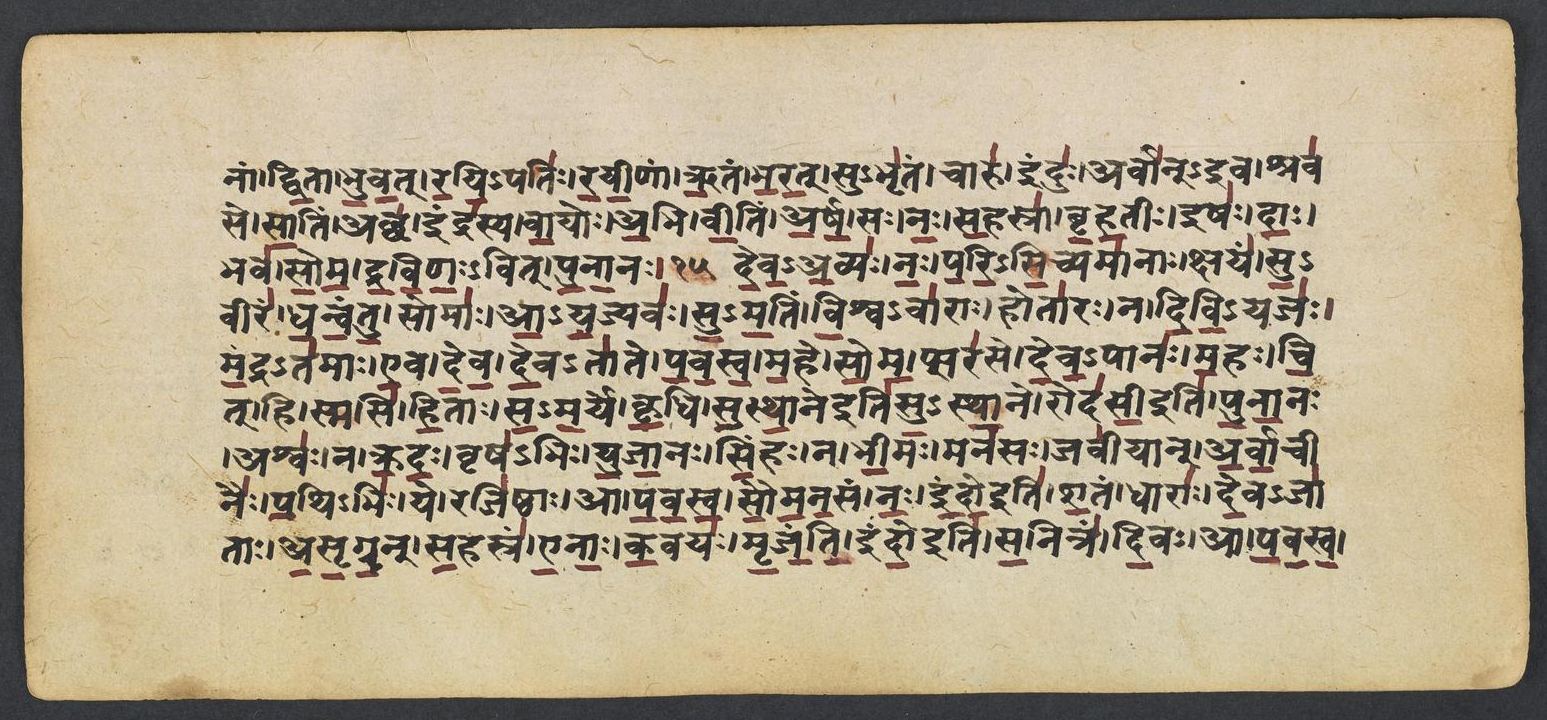
Penn Ms. Coll. 390 Item 41, fol. 726v (numbered 43v by the scribe) (OPenn image 727, upper leaf). Checked on the image: the Rigveda text on this page begins in RV 9.97.18 ‹pastya-vān›. The next page with Rigveda text, fol. 727r (numbered 44r by the scribe), begins in RV 9.97.24 ‹-martyānām dvitā bhuvat rayi-patiḥ›. Verses 9.97.18-23 end on this page; 9.97.18 begins on fol. 726r (numbered 43r by the scribe).
18gra̱nthiṁ na vi ṣya̍ grathi̱tam pu̍nā̱na ṛ̱juṁ ca̍ gā̱tuṁ vṛ̍ji̱naṁ ca̍ soma | atyo̱ na kra̍do̱ hari̱r ā sṛ̍jā̱no maryo̍ deva dhanva pa̱styā̍vān ||
19juṣṭo̱ madā̍ya de̱vatā̍ta indo̱ pari̱ ṣṇunā̍ dhanva̱ sāno̱ avye̍ | sa̱hasra̍dhāraḥ sura̱bhir ada̍bdha̱ḥ pari̍ srava̱ vāja̍sātau nṛ̱ṣahye̍ ||
20a̱ra̱śmāno̱ ye̍ 'ra̱thā ayu̍ktā̱ atyā̍so̱ na sa̍sṛjā̱nāsa̍ ā̱jau | e̱te śu̱krāso̍ dhanvanti̱ somā̱ devā̍sa̱s tām̐ upa̍ yātā̱ piba̍dhyai ||
21e̱vā na̍ indo a̱bhi de̱vavī̍ti̱m pari̍ srava̱ nabho̱ arṇa̍ś ca̱mūṣu̍ | somo̍ a̱smabhya̱ṁ kāmya̍m bṛ̱hanta̍ṁ ra̱yiṁ da̍dātu vī̱rava̍ntam u̱gram ||
22takṣa̱d yadī̱ mana̍so̱ vena̍to̱ vāg jyeṣṭha̍sya vā̱ dharma̍ṇi̱ kṣor anī̍ke | ād ī̍m āya̱n vara̱m ā vā̍vaśā̱nā juṣṭa̱m pati̍ṁ ka̱laśe̱ gāva̱ indu̍m ||
23pra dā̍nu̱do di̱vyo dā̍nupi̱nva ṛ̱tam ṛ̱tāya̍ pavate sume̱dhāḥ | dha̱rmā bhu̍vad vṛja̱nya̍sya̱ rājā̱ pra ra̱śmibhi̍r da̱śabhi̍r bhāri̱ bhūma̍ ||
Compare: Padapāṭha (word-by-word text written in the manuscript; Sansknet e-text via GRETIL)
18granthim | na | vi | sya | grathitam | punānaḥ | ṛjum | ca | gātum | vṛjinam | ca | soma | atyaḥ | na | kradaḥ | hariḥ | ā | sṛjānaḥ | maryaḥ | deva | dhanva | pastya-vān
19juṣṭaḥ | madāya | deva-tāte | indo iti | pari | snunā | dhanva | sānau | avye | sahasra-dhāraḥ | su-rabhiḥ | adabdhaḥ | pari | srava | vāja-sātau | nṛ-sahye
20araśmānaḥ | ye | arathāḥ | ayuktāḥ | atyāsaḥ | na | sasṛjānāsaḥ | ājau | ete | śukrāsaḥ | dhanvanti | somāḥ | devāsaḥ | tān | upa | yāta | pibadhyai
21eva | naḥ | indo iti | abhi | deva-vītim | pari | srava | nabhaḥ | arṇaḥ | camūṣu | somaḥ | asmabhyam | kāmyam | bṛhantam | rayim | dadātu | vīra-vantam | ugram
22takṣat | yadi | manasaḥ | venataḥ | vāk | jyeṣṭhasya | vā | dharmaṇi | kṣoḥ | anīke | āt | īm | āyan | varam | ā | vāvaśānāḥ | juṣṭam | patim | kalaśe | gāvaḥ | indum
23pra | dānu-daḥ | divyaḥ | dānu-pinvaḥ | ṛtam | ṛtāya | pavate | su-medhāḥ | dharmā | bhuvat | vṛjanyasya | rājā | pra | rāsmi-bhiḥ | daśa-bhiḥ | bhāri | bhūma
18Part, like a knotted tangle, while they cleanse thee, O Soma, righteous and unrighteous conduct. Neigh like a tawny courser who is loosened, come like a youth, O God, a house-possessor.
19For the God's service, for delight, O Indu, run o'er the height, run o'ver the fleecy summit. With thousand streams, inviolate, sweet-scented, flow on for gain of strength that conquers heroes.
20Without a car, without a rein to guide them, unyoked, like coursers started in the contest, These brilliant drops of Soma juice run forward. Do ye, O Deities, come nigh to drink them.
21So for our banquet of the Gods, O Indu, pour down the rain of heaven into the vessels. May Soma grant us riches sought with longing, mighty, exceeding strong, with store of heroes.
22What time the loving spirit's word had formed him Chief of all food, by statute of the Highest, Then loudly lowing came the cows to Indu, the chosen, well-loved Master in the beaker.
23The Sage, Celestial, liberal, raining bounties, pours as he flows the Genuine for the Truthful. The King shall be effectual strength's upholder: he by the ten bright reins is mostly guided.
Where on the image
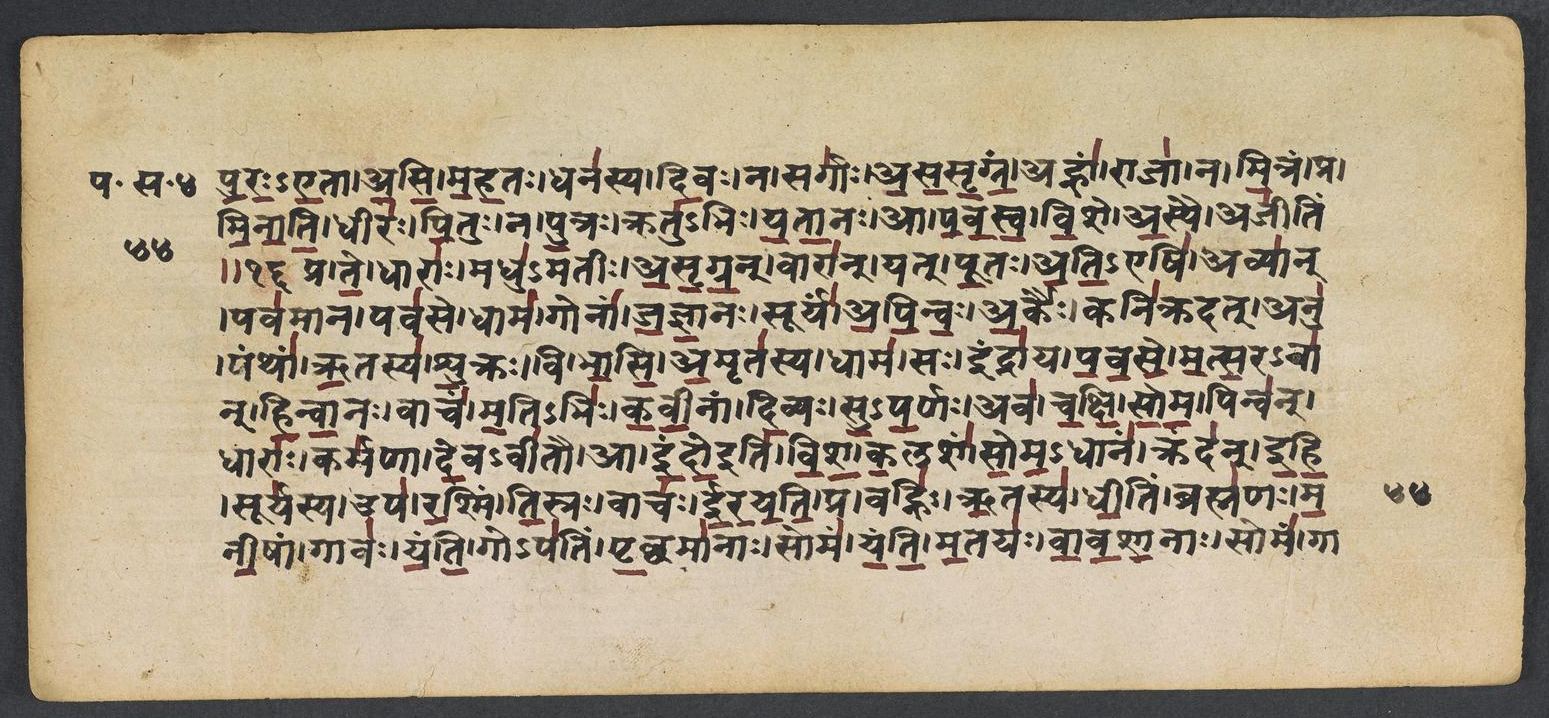
Penn Ms. Coll. 390 Item 41, fol. 727r (numbered 44r by the scribe) (OPenn image 727, lower leaf). Checked on the image: the Rigveda text on this page begins in RV 9.97.24 ‹-martyānām dvitā bhuvat rayi-patiḥ›. The next page with Rigveda text, fol. 727v (numbered 44v by the scribe), begins in RV 9.97.29 ‹puraḥ-etā asi mahataḥ dhanasya›. Verses 9.97.24-28 end on this page; 9.97.24 begins on fol. 726v (numbered 43v by the scribe).
24pa̱vitre̍bhi̱ḥ pava̍māno nṛ̱cakṣā̱ rājā̍ de̱vānā̍m u̱ta martyā̍nām | dvi̱tā bhu̍vad rayi̱patī̍ rayī̱ṇām ṛ̱tam bha̍ra̱t subhṛ̍ta̱ṁ cārv indu̍ḥ ||
25arvā̍m̐ iva̱ śrava̍se sā̱tim acchendra̍sya vā̱yor a̱bhi vī̱tim a̍rṣa | sa na̍ḥ sa̱hasrā̍ bṛha̱tīr iṣo̍ dā̱ bhavā̍ soma draviṇo̱vit pu̍nā̱naḥ ||
26de̱vā̱vyo̍ naḥ pariṣi̱cyamā̍nā̱ḥ kṣaya̍ṁ su̱vīra̍ṁ dhanvantu̱ somā̍ḥ | ā̱ya̱jyava̍ḥ suma̱tiṁ vi̱śvavā̍rā̱ hotā̍ro̱ na di̍vi̱yajo̍ ma̱ndrata̍māḥ ||
27e̱vā de̍va de̱vatā̍te pavasva ma̱he so̍ma̱ psara̍se deva̱pāna̍ḥ | ma̱haś ci̱d dhi ṣmasi̍ hi̱tāḥ sa̍ma̱rye kṛ̱dhi su̍ṣṭhā̱ne roda̍sī punā̱naḥ ||
28aśvo̱ na kra̍do̱ vṛṣa̍bhir yujā̱naḥ si̱ṁho na bhī̱mo mana̍so̱ javī̍yān | a̱rvā̱cīnai̍ḥ pa̱thibhi̱r ye raji̍ṣṭhā̱ ā pa̍vasva saumana̱saṁ na̍ indo ||
Compare: Padapāṭha (word-by-word text written in the manuscript; Sansknet e-text via GRETIL)
24pavitrebhiḥ | pavamānaḥ | nṛ-cakṣā | rājā | devānām | uta | martyānām | dvitā | bhuvat | rayi-patiḥ | rayīṇām | ṛtam | bharat | su-bhṛtam | cāru | induḥ
25arvān-iva | śravase | sātim | accha | indrasya | vāyoḥ | abhi | vītim | arṣa | saḥ | naḥ | sahasrā | bṛhatīḥ | iṣaḥ | dāḥ | bhava | soma | draviṇaḥ-vit | punānaḥ
26deva-avyaḥ | naḥ | pari-sicyamānāḥ | kṣayam | su-vīram | dhanvantu | somāḥ | āyajyavaḥ | su-matim | viśva-vārāḥ | hotāraḥ | na | divi-yajaḥ | mandra-tamāḥ
27eva | deva | deva-tāte | pavasva | mahe | soma | psarase | deva-pānaḥ | mahaḥ | cit | hi | smasi | hitāḥ | sa-marye | kṛdhi | su-sthāne | rodasī iti | punānaḥ
28aśvaḥ | na | kradaḥ | vṛṣa-bhiḥ | yujānaḥ | siṃhaḥ | na | bhīmaḥ | manasaḥ | javīyān | arvācīnaiḥ | pathi-bhiḥ | ye | rajiṣṭhāḥ | ā | pavasva | saumanasam | naḥ | indo iti
24He who beholds mankind, made pure with filters, the King supreme of Deities and mortals, From days of old is Treasure-Lord of riches: he, Indu, cherishes fair well-kept Order.
25Haste, like a steed, to victory for glory, to Indra's and to Vâyu's entertainment. Give us food ample, thousandfold: be, Soma, the finder-out of riches when they cleanse thee.
26Effused by us let God-delighting Somas bring as they flow a home with noble heroes. Rich in all boons like priests acquiring favour, the worshippers of heaven, the best of Cheerers.
27So, God, for service of the Gods flow onward, flow, drink of Gods, for ample food, O Soma. For we go forth to war against the mighty make heaven and earth well stablished by thy cleansing.
28Thou, yoked by strong men, neighest like a courser, swifter than thought is, like an awful lion. By paths directed hitherward, the straightest, send thou us happiness, Indu, while they cleanse thee.
Where on the image
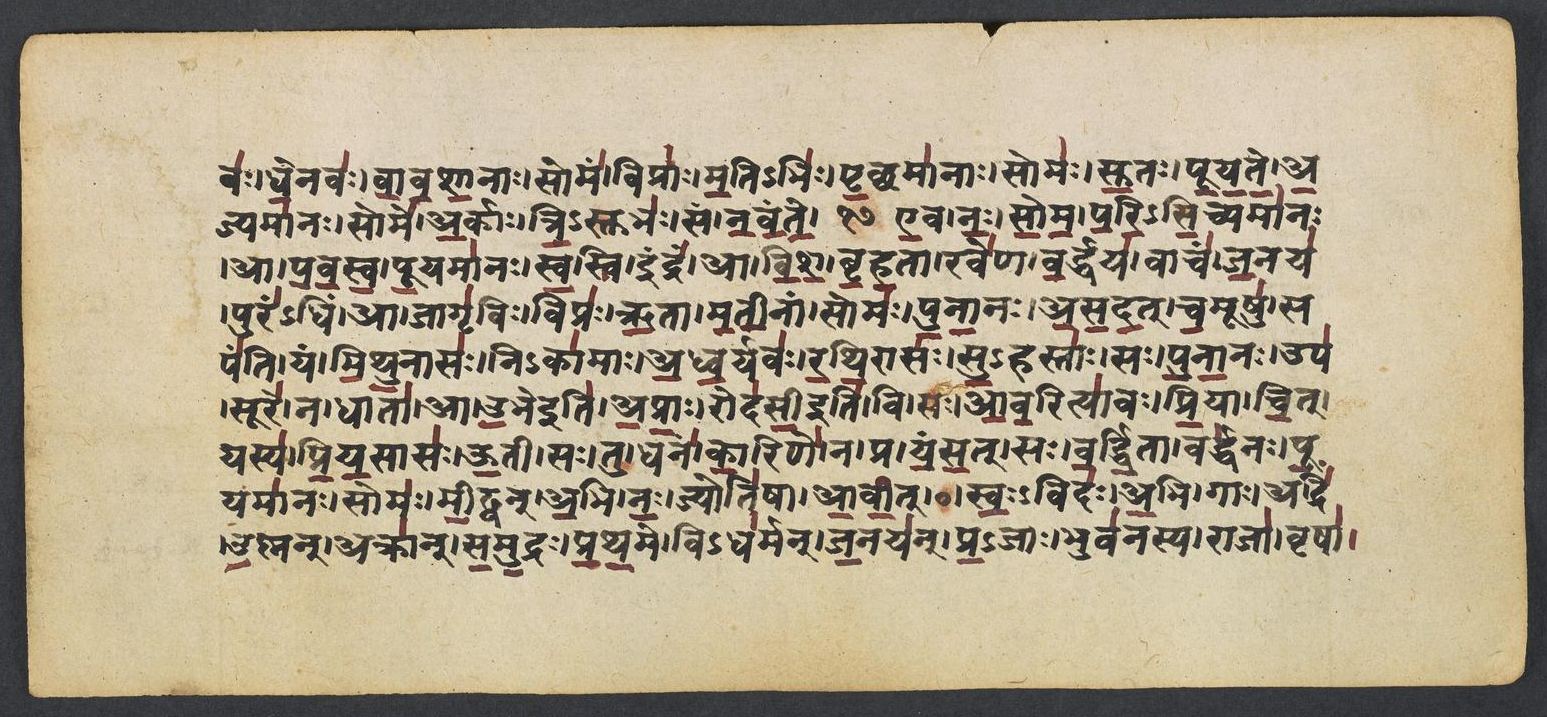
Penn Ms. Coll. 390 Item 41, fol. 727v (numbered 44v by the scribe) (OPenn image 728, upper leaf). Checked on the image: the Rigveda text on this page begins in RV 9.97.29 ‹puraḥ-etā asi mahataḥ dhanasya›. The next page with Rigveda text, fol. 728r (numbered 45r by the scribe), begins in RV 9.97.35 ‹-gāvaḥ dhenavaḥ vāvaśānāḥ somam›. Verses 9.97.29-34 end on this page; 9.97.29 begins on fol. 727r (numbered 44r by the scribe).
29śa̱taṁ dhārā̍ de̱vajā̍tā asṛgran sa̱hasra̍m enāḥ ka̱vayo̍ mṛjanti | indo̍ sa̱nitra̍ṁ di̱va ā pa̍vasva purae̱tāsi̍ maha̱to dhana̍sya ||
30di̱vo na sargā̍ asasṛgra̱m ahnā̱ṁ rājā̱ na mi̱tram pra mi̍nāti̱ dhīra̍ḥ | pi̱tur na pu̱traḥ kratu̍bhir yatā̱na ā pa̍vasva vi̱śe a̱syā ajī̍tim ||
31pra te̱ dhārā̱ madhu̍matīr asṛgra̱n vārā̱n yat pū̱to a̱tyeṣy avyā̍n | pava̍māna̱ pava̍se̱ dhāma̱ gonā̍ṁ jajñā̱naḥ sūrya̍m apinvo a̱rkaiḥ ||
32kani̍krada̱d anu̱ panthā̍m ṛ̱tasya̍ śu̱kro vi bhā̍sy a̱mṛta̍sya̱ dhāma̍ | sa indrā̍ya pavase matsa̱ravā̍n hinvā̱no vāca̍m ma̱tibhi̍ḥ kavī̱nām ||
33di̱vyaḥ su̍pa̱rṇo 'va̍ cakṣi soma̱ pinva̱n dhārā̱ḥ karma̍ṇā de̱vavī̍tau | endo̍ viśa ka̱laśa̍ṁ soma̱dhāna̱ṁ kranda̍nn ihi̱ sūrya̱syopa̍ ra̱śmim ||
34ti̱sro vāca̍ īrayati̱ pra vahni̍r ṛ̱tasya̍ dhī̱tim brahma̍ṇo manī̱ṣām | gāvo̍ yanti̱ gopa̍tim pṛ̱cchamā̍nā̱ḥ soma̍ṁ yanti ma̱tayo̍ vāvaśā̱nāḥ ||
Compare: Padapāṭha (word-by-word text written in the manuscript; Sansknet e-text via GRETIL)
29śatam | dhārāḥ | deva-jātāḥ | asṛgran | sahasram | enāḥ | kavayaḥ | mṛjanti | indo iti | sanitram | divaḥ | ā | pavasva | puraḥ-etā | asi | mahataḥ | dhanasya
30divaḥ | na | sargāḥ | asasṛgram | ahnām | rājā | na | mitram | pra | mināti | dhīraḥ | pituḥ | na | putraḥ | kratu-bhiḥ | yatānaḥ | ā | pavasva | viśe | asyai | ajītim
31pra | te | dhārāḥ | madhu-matīḥ | asṛgran | vārān | yat | pūtaḥ | ati-eṣi | avyān | pavamāna | pavase | dhāma | gonām | jajñānaḥ | sūryam | apinvaḥ | arkaiḥ
32kanikradat | anu | panthām | ṛtasya | śukraḥ | vi | bhāsi | amṛtasya | dhāma | saḥ | indrāya | pavase | matsara-vān | hinvānaḥ | vācam | mati-bhiḥ | kavīnām
33divyaḥ | su-parṇaḥ | ava | cakṣi | soma | pinvan | dhārāḥ | karmaṇā | deva-vītau | ā | indo iti | viśa | kalaśam | soma-dhānam | krandan | ihi | sūryasya | upa | raśmim
34tisraḥ | vācaḥ | īrayati | pra | vahniḥ | ṛtasya | dhītim | brahmaṇaḥ | manīṣām | gāvaḥ | yanti | go-patim | pṛcchamānāḥ | somam | yanti | matayaḥ | vāvaśānāḥ
29Sprung from the Gods, a hundred streams, a thousand, have been effused: sages prepare and purge them. Bring us from heaven the means of winning, Indu; thou art-forerunnner of abundant riches.
30The streams of days, were poured as 'twere from heaven: the wise King doth not treat his friend unkindly. Like a son following his father's wishes, grant to this family success and safety.
31Now are thy streams poured forth with all their sweetness, when, purified. thou goest through the filter. The race of kine is thy gift, Pavarridna: when born thou madest Sûrya rich with brightness.
32Bright, bellowing along the path of Order, thou shinest as the form of life eternal. Thou flowest on as gladdening drink for Indra, sending thy voice out with the hymns of sages.
33Pouring out streams at the Gods' feast with service, thou, Soma, lookest down, a heavenly Eagle. Enter the Soma-holding beaker, Indu, and with a roar approach the ray of Sarya.
34Three are the voices that the Courser utters: he speaks the thought of prayer, the law of Order. To the Cow's Master come the Cows inquiring: the hymns with eager longing come to Soma.
Where on the image
Penn Ms. Coll. 390 Item 41, fol. 728r (numbered 45r by the scribe) (OPenn image 728, lower leaf). Checked on the image: the Rigveda text on this page begins in RV 9.97.35 ‹-gāvaḥ dhenavaḥ vāvaśānāḥ somam›. The next page with Rigveda text, fol. 728v (numbered 45v by the scribe), begins in RV 9.97.40 ‹pavitre adhi sānau avye›. Verses 9.97.35-39 end on this page; 9.97.35 begins on fol. 727v (numbered 44v by the scribe).
35soma̱ṁ gāvo̍ dhe̱navo̍ vāvaśā̱nāḥ soma̱ṁ viprā̍ ma̱tibhi̍ḥ pṛ̱cchamā̍nāḥ | soma̍ḥ su̱taḥ pū̍yate a̱jyamā̍na̱ḥ some̍ a̱rkās tri̱ṣṭubha̱ḥ saṁ na̍vante ||
36e̱vā na̍ḥ soma pariṣi̱cyamā̍na̱ ā pa̍vasva pū̱yamā̍naḥ sva̱sti | indra̱m ā vi̍śa bṛha̱tā rave̍ṇa va̱rdhayā̱ vāca̍ṁ ja̱nayā̱ pura̍ṁdhim ||
37ā jāgṛ̍vi̱r vipra̍ ṛ̱tā ma̍tī̱nāṁ soma̍ḥ punā̱no a̍sadac ca̱mūṣu̍ | sapa̍nti̱ yam mi̍thu̱nāso̱ nikā̍mā adhva̱ryavo̍ rathi̱rāsa̍ḥ su̱hastā̍ḥ ||
38sa pu̍nā̱na upa̱ sūre̱ na dhātobhe a̍prā̱ roda̍sī̱ vi ṣa ā̍vaḥ | pri̱yā ci̱d yasya̍ priya̱sāsa̍ ū̱tī sa tū dhana̍ṁ kā̱riṇe̱ na pra ya̍ṁsat ||
39sa va̍rdhi̱tā vardha̍naḥ pū̱yamā̍na̱ḥ somo̍ mī̱ḍhvām̐ a̱bhi no̱ jyoti̍ṣāvīt | yenā̍ na̱ḥ pūrve̍ pi̱tara̍ḥ pada̱jñāḥ sva̱rvido̍ a̱bhi gā adri̍m u̱ṣṇan ||
Compare: Padapāṭha (word-by-word text written in the manuscript; Sansknet e-text via GRETIL)
35somam | gāvaḥ | dhenavaḥ | vāvaśānāḥ | somam | viprāḥ | mati-bhiḥ | pṛcchamānāḥ | somaḥ | sutaḥ | pūyate | ajyamānaḥ | some | arkāḥ | tri-stubhaḥ | sam | navante
36eva | naḥ | soma | pari-sicyamānaḥ | ā | pavasva | pūyamānaḥ | svasti | indram | ā | viśa | bṛhatā | raveṇa | vardhaya | vācam | janaya | puram-dhim
37ā | jāgṛviḥ | vipraḥ | ṛtā | matīnām | somaḥ | punānaḥ | asadat | camūṣu | sapanti | yam | mithunāsaḥ | ni-kāmāḥ | adhvaryavaḥ | rathirāsaḥ | su-hastāḥ
38saḥ | punānaḥ | upa | sūre | na | dhātā | ā | ubhe iti | aprāḥ | rodasī iti | vi | saḥ | āvar ity āvaḥ | priyā | cit | yasya | priyasāsaḥ | ūtī | saḥ | tu | dhanam | kāriṇe | na | pra | yaṃsat
39saḥ | vardhitā | vardhanaḥ | pūyamānaḥ | somaḥ | mīḍhavān | abhi | naḥ | jyotiṣā | āvīt | yena | naḥ | pūrve | pitaraḥ | pada-jñāḥ | svaḥ-vidaḥ | abhi | gāḥ | adrim | uṣṇan
35To Soma come the Cows, the Milch-kine longing, to Soma sages with their hymns inquiring. Soma, effused, is purified and blended our hymns and Trishṭup songs unite in Soma.
36Thus, Soma, as we pour thee into vessels, while thou art purified flow for our welfare. Pass into Indra with a mighty roaring make the voice swell, and generate abundance.
37Singer of true songs, ever-watchful, Soma hath settled in the ladles when they cleanse him. Him the Adhvaryus, paired and eager, follow, leaders of sacrifice and skilful-handed.
38Cleansed near the Sun as 'twere he as Creator hath filled full heaven and earth, and hath disclosed them. He by whose dear help men gain all their wishes shall yield the precious meed as to a victor.
39He, being cleansed, the Strengthener and Increaser, Soma the Bounteous, helped us with his lustre, Wherewith our sires of old who knew the footsteps found light and stole the cattle from the mountain.
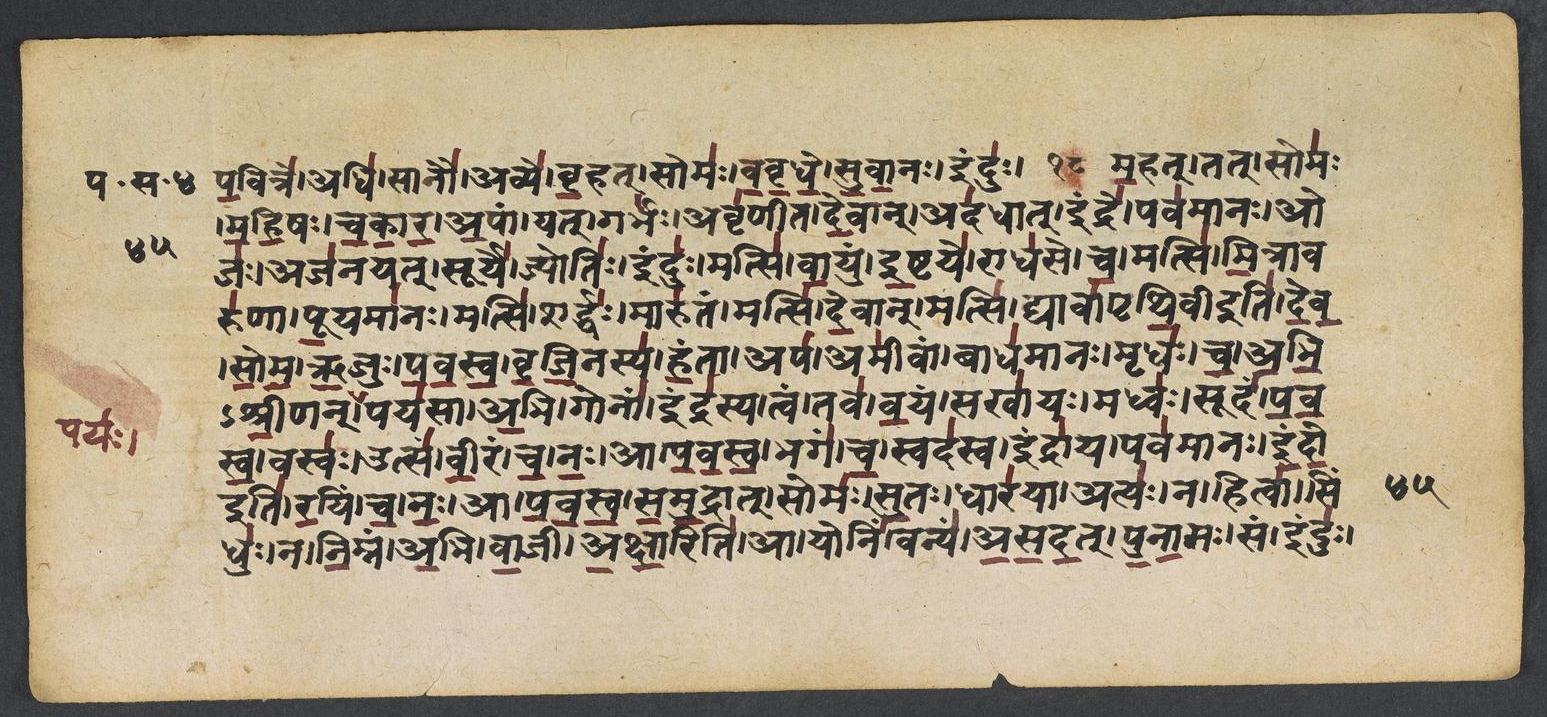
Where on the image
Penn Ms. Coll. 390 Item 41, fol. 728v (numbered 45v by the scribe) (OPenn image 729, upper leaf). Checked on the image: the Rigveda text on this page begins in RV 9.97.40 ‹pavitre adhi sānau avye›. The next page with Rigveda text, fol. 729r (numbered 46r by the scribe), begins in RV 9.97.45 ‹gobhiḥ asarat sam at-bhiḥ›. Verses 9.97.40-44 end on this page; 9.97.40 begins on fol. 728r (numbered 45r by the scribe).
40akrā̍n samu̱draḥ pra̍tha̱me vidha̍rmañ ja̱naya̍n pra̱jā bhuva̍nasya̱ rājā̍ | vṛṣā̍ pa̱vitre̱ adhi̱ sāno̱ avye̍ bṛ̱hat somo̍ vāvṛdhe suvā̱na indu̍ḥ ||
41ma̱hat tat somo̍ mahi̱ṣaś ca̍kārā̱pāṁ yad garbho 'vṛ̍ṇīta de̱vān | ada̍dhā̱d indre̱ pava̍māna̱ ojo 'ja̍naya̱t sūrye̱ jyoti̱r indu̍ḥ ||
42matsi̍ vā̱yum i̱ṣṭaye̱ rādha̍se ca̱ matsi̍ mi̱trāvaru̍ṇā pū̱yamā̍naḥ | matsi̱ śardho̱ māru̍ta̱m matsi̍ de̱vān matsi̱ dyāvā̍pṛthi̱vī de̍va soma ||
43ṛ̱juḥ pa̍vasva vṛji̱nasya̍ ha̱ntāpāmī̍vā̱m bādha̍māno̱ mṛdha̍ś ca | a̱bhi̱śrī̱ṇan paya̱ḥ paya̍sā̱bhi gonā̱m indra̍sya̱ tvaṁ tava̍ va̱yaṁ sakhā̍yaḥ ||
44madhva̱ḥ sūda̍m pavasva̱ vasva̱ utsa̍ṁ vī̱raṁ ca̍ na̱ ā pa̍vasvā̱ bhaga̍ṁ ca | svada̱svendrā̍ya̱ pava̍māna indo ra̱yiṁ ca̍ na̱ ā pa̍vasvā samu̱drāt ||
Compare: Padapāṭha (word-by-word text written in the manuscript; Sansknet e-text via GRETIL)
40akrān | samudraḥ | prathame | vi-dharman | janayan | pra-jāḥ | bhuvanasya | rājā | vṛṣā | pavitre | adhi | sānau | avye | bṛhat | somaḥ | vavṛdhe | suvānaḥ | induḥ
41mahat | tat | somaḥ | mahiṣaḥ | cakāra | apām | yat | garbhaḥ | avṛṇīta | devān | adadhāt | indre | pavamānaḥ | ojaḥ | ajanayat | sūrye | jyotiḥ | induḥ
42matsi | vāyum | iṣṭaye | rādhase | ca | matsi | mitrāvaruṇā | pūyamānaḥ | matsi | śardhaḥ | mārutam | matsi | devān | matsi | dyāvāpṛthivī iti | deva | soma
43ṛjuḥ | pavasva | vṛjinasya | hantā | apa | amīvām | bādhamānaḥ | mṛdhaḥ | ca | abhi-śrīṇan | payaḥ | payasā | abhi | gonām | indrasya | tvam | tava | vayam | sakhāyaḥ
44madhvaḥ | sūdam | pavasva | vasvaḥ | utsam | vīram | ca | naḥ | ā | pavasva | bhagam | ca | svadasva | indrāya | pavamānaḥ | indo iti | rayim | ca | naḥ | ā | pavasva | samudrāt
40In the first vault of heaven loud roared the Ocean, King of all being, generating creatures. Steer, in the filter, on the fleecy summit, Soma, the Drop effused, hath waxen mighty.
41Soma the Steer, in that as Child of Waters he chose the Gods, performed that great achievement. He, Pavamâna, granted strength to Indra; he, Indu, generated light in Sûrya.
42Make Vâyu glad,, for furtherance and bounty: cheer Varuṇa and Mitra, as they cleanse thee. Gladden the Gods, gladden the host of Maruts: make Heaven and Earth rejoice, O God, O Soma.
43Flow onward righteous slayer of the wicked, driving away our enemies and sickness, Blending thy milk with milk which cows afford us. We are thy friends, thou art the Friend of Indra.
44Pour us a fount of meath, a spring of treasure; send us a hero son and happy fortune. Be sweet to Indra when they cleanse thee, Indu, and pour down riches on us from the ocean.
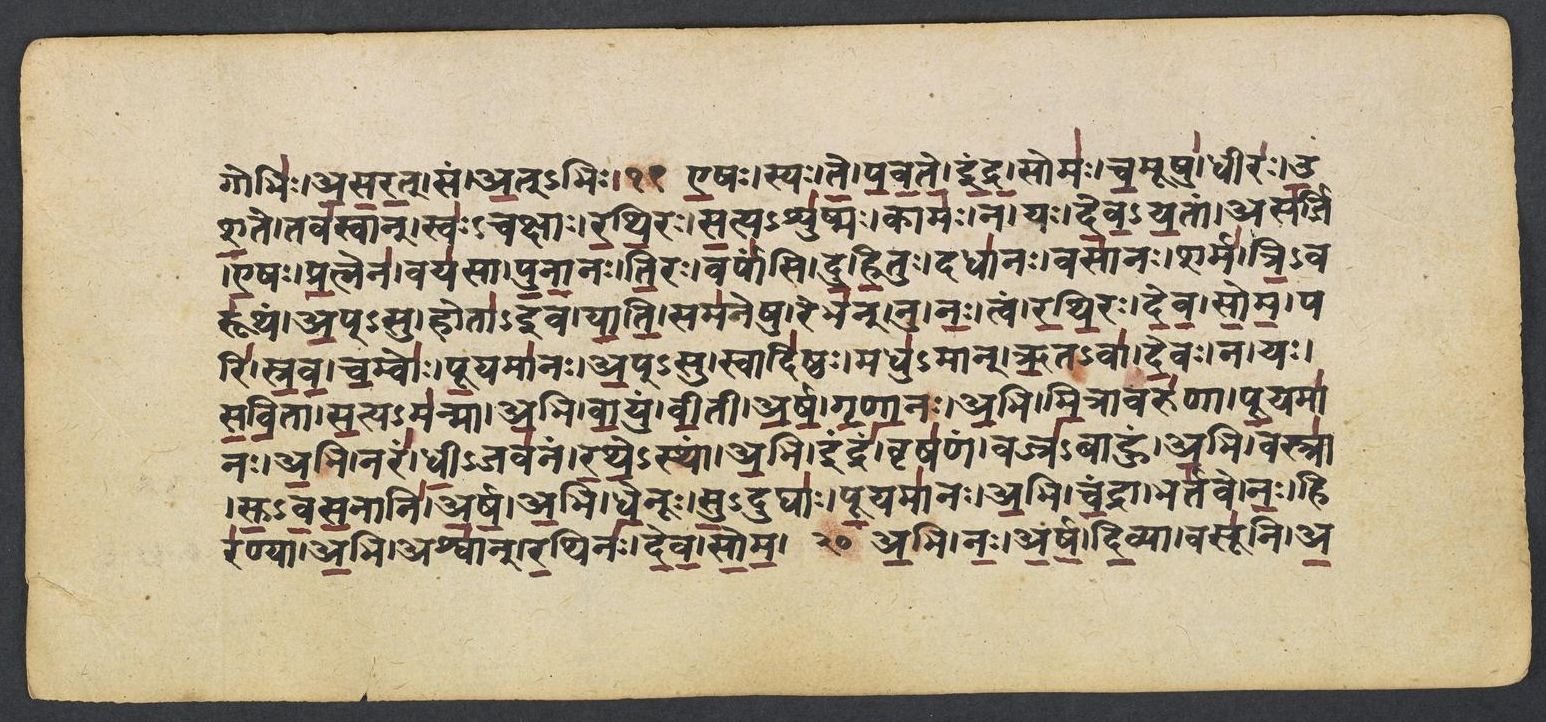
Where on the image
Penn Ms. Coll. 390 Item 41, fol. 729r (numbered 46r by the scribe) (OPenn image 729, lower leaf). Checked on the image: the Rigveda text on this page begins in RV 9.97.45 ‹gobhiḥ asarat sam at-bhiḥ›. The next page with Rigveda text, fol. 729v (numbered 46v by the scribe), begins in RV 9.97.51 ‹-abhi viśvā pārthivā pūyamānaḥ›. Verses 9.97.45-50 end on this page; 9.97.45 begins on fol. 728v (numbered 45v by the scribe).
45soma̍ḥ su̱to dhāra̱yātyo̱ na hitvā̱ sindhu̱r na ni̱mnam a̱bhi vā̱jy a̍kṣāḥ | ā yoni̱ṁ vanya̍m asadat punā̱naḥ sam indu̱r gobhi̍r asara̱t sam a̱dbhiḥ ||
46e̱ṣa sya te̍ pavata indra̱ soma̍ś ca̱mūṣu̱ dhīra̍ uśa̱te tava̍svān | sva̍rcakṣā rathi̱raḥ sa̱tyaśu̍ṣma̱ḥ kāmo̱ na yo de̍vaya̱tām asa̍rji ||
47e̱ṣa pra̱tnena̱ vaya̍sā punā̱nas ti̱ro varpā̍ṁsi duhi̱tur dadhā̍naḥ | vasā̍na̱ḥ śarma̍ tri̱varū̍tham a̱psu hote̍va yāti̱ sama̍neṣu̱ rebha̍n ||
48nū na̱s tvaṁ ra̍thi̱ro de̍va soma̱ pari̍ srava ca̱mvo̍ḥ pū̱yamā̍naḥ | a̱psu svādi̍ṣṭho̱ madhu̍mām̐ ṛ̱tāvā̍ de̱vo na yaḥ sa̍vi̱tā sa̱tyama̍nmā ||
49a̱bhi vā̱yuṁ vī̱ty a̍rṣā gṛṇā̱no̱3̱̍ 'bhi mi̱trāvaru̍ṇā pū̱yamā̍naḥ | a̱bhī nara̍ṁ dhī̱java̍naṁ rathe̱ṣṭhām a̱bhīndra̱ṁ vṛṣa̍ṇa̱ṁ vajra̍bāhum ||
50a̱bhi vastrā̍ suvasa̱nāny a̍rṣā̱bhi dhe̱nūḥ su̱dughā̍ḥ pū̱yamā̍naḥ | a̱bhi ca̱ndrā bharta̍ve no̱ hira̍ṇyā̱bhy aśvā̍n ra̱thino̍ deva soma ||
Compare: Padapāṭha (word-by-word text written in the manuscript; Sansknet e-text via GRETIL)
45somaḥ | sutaḥ | dhārayā | atyaḥ | na | hitvā | sindhuḥ | na | nimnam | abhi | vājī | akṣāriti | ā | yonim | vanyam | asadat | punānaḥ | sam | induḥ | gobhiḥ | asarat | sam | at-bhiḥ
46eṣaḥ | syaḥ | te | pavate | indra | somaḥ | camūṣu | dhīraḥ | uśate | tavasvān | svaḥ-cakṣāḥ | rathiraḥ | satya-śuṣmaḥ | kāmaḥ | na | yaḥ | deva-yatām | asarji
47eṣaḥ | pratnena | vayasā | punānaḥ | tiraḥ | varpāṃsi | duhituḥ | dadhānaḥ | vasānaḥ | śarma | tri-varūtham | ap-su | hotā-iva | yāti | samaneṣu | rebhan
48nu | naḥ | tvam | rathiraḥ | deva | soma | pari | srava | camvoḥ | pūyamānaḥ | ap-su | svādiṣṭhaḥ | madhu-mān | ṛta-vā | devaḥ | na | yaḥ | savitā | satya-manmā
49abhi | vāyum | vītī | arṣa | gṛṇānaḥ | abhi | mitrāvaruṇā | pūyamānaḥ | abhi | naram | dhī-javanam | rathe-sthām | abhi | indram | vṛṣaṇam | vajra-bāhum
50abhi | vastrā | su-vasanāni | arṣa | abhi | dhenūḥ | su-dughāḥ | pūyamānaḥ | abhi | candrā | bhartave | naḥ | hiraṇyā | abhi | aśvān | rathinaḥ | deva | soma
45Strong Soma, pressed, like an impetuous courser, hath flowed in stream as a flood speeding downward. Cleansed, he hath settled in his wooden dwelling: Indu hath flowed with milk and with the waters.
46Strong, wise, for thee who longest for his coming this Soma here flows to the bowls, O Indra. He, chariot-borne, sun-bright, and truly potent, was poured forth like the longing of the pious.
47He, purified with ancient vital vigour, pervading all his Daughter's forms and figures, Finding his threefold refuge in the waters, goes singing, as a priest, to the assemblies.
48Now, chariot-borne, flow unto us, God Soma, as thou art purified flow to the saucers, Sweetest in waters, rich in meath, and holy, as Savitar the God is, truthfulminded.
49To feast him, flow mid song and hymn, to Vâyu, flow purified to Varuṇa and Mitra. Flow to the song-inspiring car-borne Hero, to mighty Indra, him who wields the thunder.
50Pour on us garments that shall clothe us meetly, send, purified, miIch-kine, abundant yielders. God Soma, send us chariot-drawing horses that they may bring us treasures bright and golden.
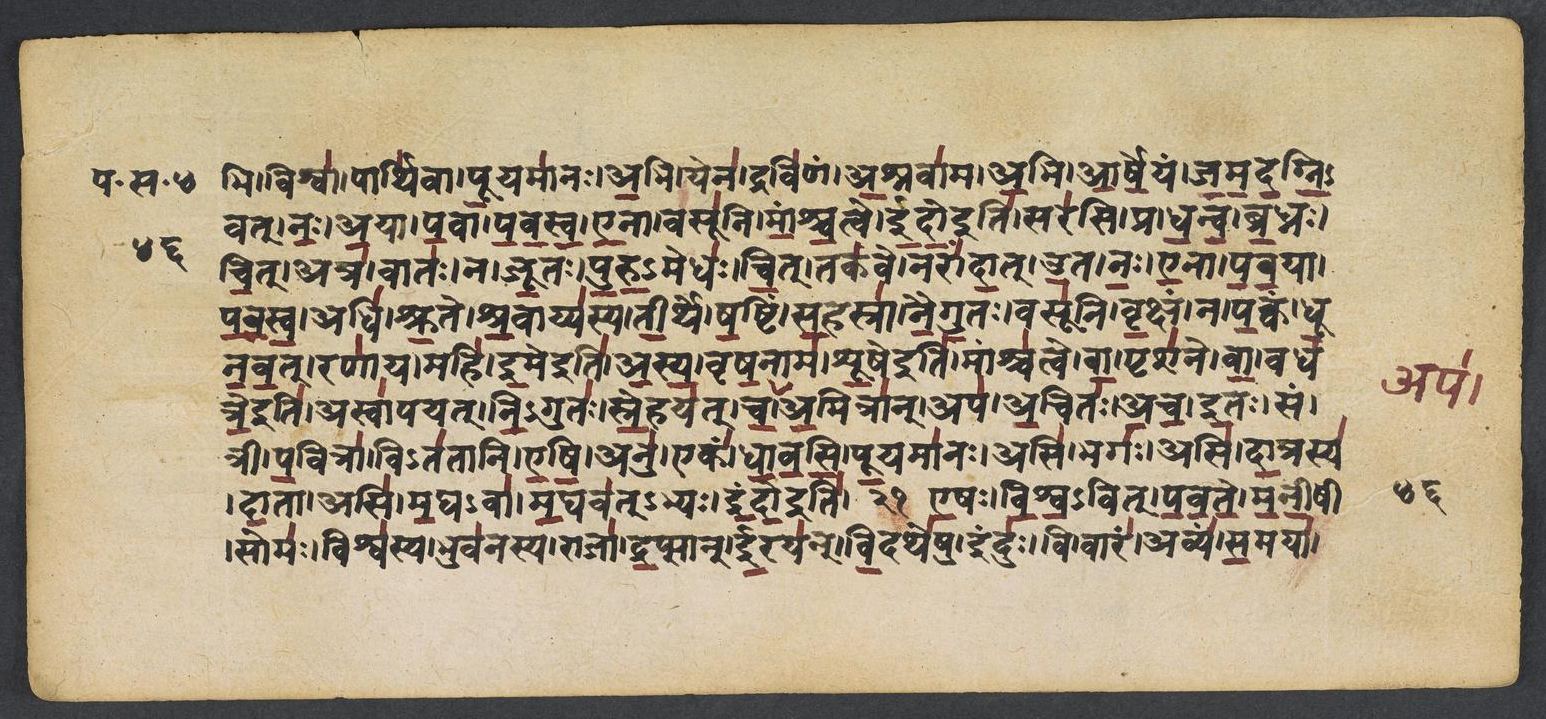
Where on the image
Penn Ms. Coll. 390 Item 41, fol. 729v (numbered 46v by the scribe) (OPenn image 730, upper leaf). Checked on the image: the Rigveda text on this page begins in RV 9.97.51 ‹-abhi viśvā pārthivā pūyamānaḥ›. The next page with Rigveda text, fol. 730r (numbered 47r by the scribe), begins in RV 9.97.56 ‹ati yāti›. Verses 9.97.51-55 end on this page; 9.97.51 begins on fol. 729r (numbered 46r by the scribe).
51a̱bhī no̍ arṣa di̱vyā vasū̍ny a̱bhi viśvā̱ pārthi̍vā pū̱yamā̍naḥ | a̱bhi yena̱ dravi̍ṇam a̱śnavā̍mā̱bhy ā̍rṣe̱yaṁ ja̍madagni̱van na̍ḥ ||
52a̱yā pa̱vā pa̍vasvai̱nā vasū̍ni mām̐śca̱tva i̍ndo̱ sara̍si̱ pra dha̍nva | bra̱dhnaś ci̱d atra̱ vāto̱ na jū̱taḥ pu̍ru̱medha̍ś ci̱t taka̍ve̱ nara̍ṁ dāt ||
53u̱ta na̍ e̱nā pa̍va̱yā pa̍va̱svādhi̍ śru̱te śra̱vāyya̍sya tī̱rthe | ṣa̱ṣṭiṁ sa̱hasrā̍ naigu̱to vasū̍ni vṛ̱kṣaṁ na pa̱kvaṁ dhū̍nava̱d raṇā̍ya ||
54mahī̱me a̍sya̱ vṛṣa̱nāma̍ śū̱ṣe mām̐śca̍tve vā̱ pṛśa̍ne vā̱ vadha̍tre | asvā̍payan ni̱guta̍ḥ sne̱haya̱c cāpā̱mitrā̱m̐ apā̱cito̍ ace̱taḥ ||
55saṁ trī pa̱vitrā̱ vita̍tāny e̱ṣy anv eka̍ṁ dhāvasi pū̱yamā̍naḥ | asi̱ bhago̱ asi̍ dā̱trasya̍ dā̱tāsi̍ ma̱ghavā̍ ma̱ghava̍dbhya indo ||
Compare: Padapāṭha (word-by-word text written in the manuscript; Sansknet e-text via GRETIL)
51abhi | naḥ | arṣa | divyā | vasūni | abhi | viśvā | pārthivā | pūyamānaḥ | abhi | yena | draviṇam | aśnavāma | abhi | ārṣeyam | jamadagni-vat | naḥ
52ayā | pavā | pavasva | enā | vasūni | māṃścatve | indo iti | sarasi | pra | dhanva | bradhnaḥ | cit | atra | vātaḥ | na | jūtaḥ | puru-medhaḥ | cit | takave | naram | dāt
53uta | naḥ | enā | pavayā | pavasva | adhi | śrute | śravāyyasya | tīrthe | ṣaṣṭim | sahasrā | naigutaḥ | vasūni | vṛkṣam | na | pakvam | dhūnavat | raṇāya
54mahi | ime iti | asya | vṛṣanāma | śūṣe iti | māṃścatve | vā | pṛśane | vā | vadhatreiti | asvāpayat | ni-gutaḥ | snehayat | ca | apa | amitrān | apa | acitaḥ | aca | itaḥ
55sam | trī | pavitrā | vi-tatāni | eṣi | anu | ekam | dhāvasi | pūyamānaḥ | asi | bhagaḥ | asi | dātrasya | dātā | asi | magha-vā | maghavat-bhyaḥ | indo iti
51Send to us in a stream celestial riches, send us, when thou art cleansed, what earth containeth, So that thereby we may acquire possessions and R̥ishihood in Jamadagni's manner.
52Pour forth this wealth with this purification: flow onward to the yellow lake, O Indu. Here, too, the Ruddy, wind-swift, full of wisdom, Shall give a son to him who cometh quickly.
53Flow on for us with this purification to the famed ford of thee whose due is glory. May the Foe-queller shake us down, for triumph, like a tree's ripe fruit, sixty thousand treasures.
54Eagerly do we pray for those two exploits, at the blue lake and Pr̥iṣana, wrought in battle. He sent our enemies to sleep and slew them, and turned away the foolish and unfriendly.
55Thou comest unto three extended filters, and hasteriest through each one as they cleanse thee. Thou art the giver of the gift, a Bhaga, a Maghavan for liberal lords, O Indu.
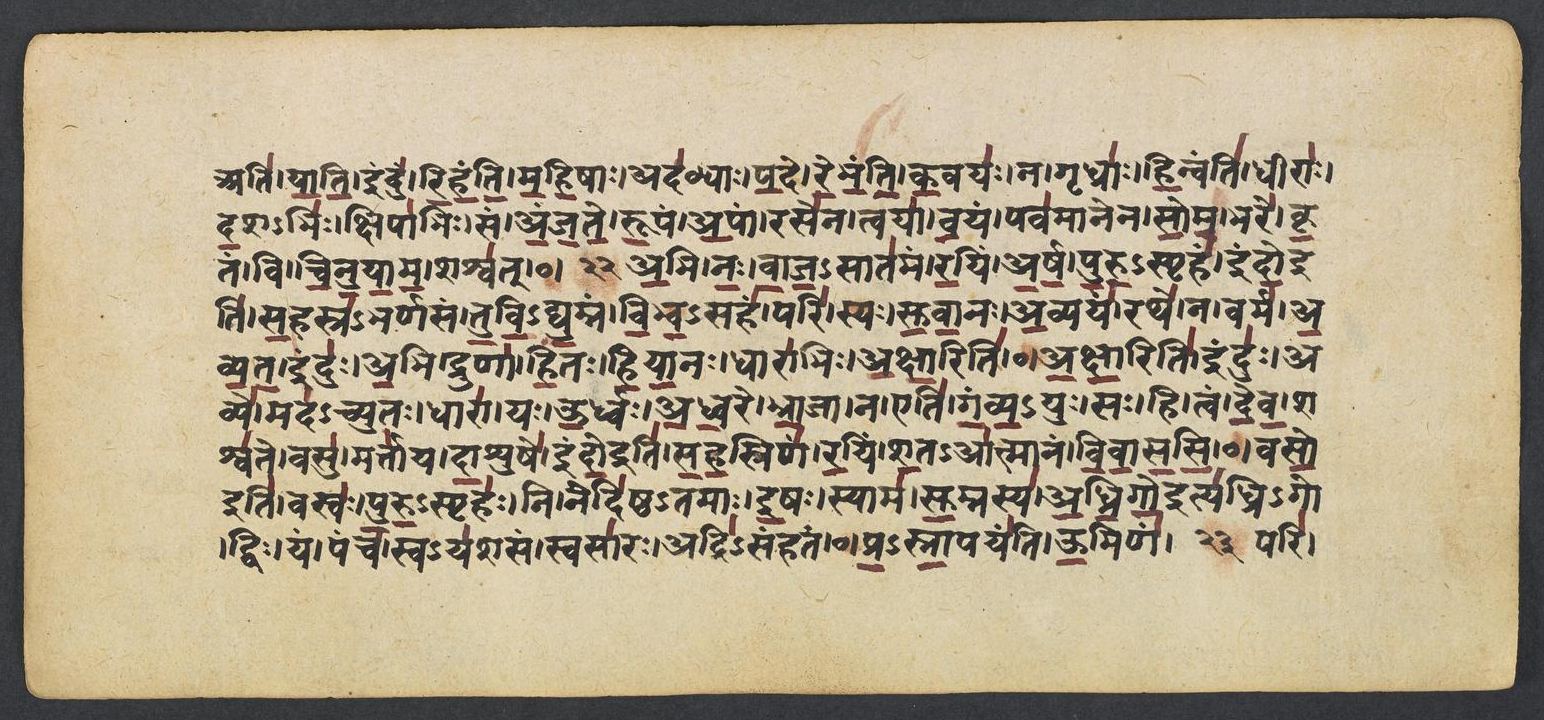
Where on the image
Penn Ms. Coll. 390 Item 41, fol. 730r (numbered 47r by the scribe) (OPenn image 730, lower leaf). Checked on the image: the Rigveda text on this page begins in RV 9.97.56 ‹ati yāti›. The next page with Rigveda text, fol. 730v (numbered 47v by the scribe), begins in RV 9.98.7 ‹tyam haryatam harim babhrum›. Verses 9.97.56-58 end on this page; 9.97.56 begins on fol. 729v (numbered 46v by the scribe).
56e̱ṣa vi̍śva̱vit pa̍vate manī̱ṣī somo̱ viśva̍sya̱ bhuva̍nasya̱ rājā̍ | dra̱psām̐ ī̱raya̍n vi̱dathe̱ṣv indu̱r vi vāra̱m avya̍ṁ sa̱mayāti̍ yāti ||
57indu̍ṁ rihanti mahi̱ṣā ada̍bdhāḥ pa̱de re̍bhanti ka̱vayo̱ na gṛdhrā̍ḥ | hi̱nvanti̱ dhīrā̍ da̱śabhi̱ḥ kṣipā̍bhi̱ḥ sam a̍ñjate rū̱pam a̱pāṁ rase̍na ||
58tvayā̍ va̱yam pava̍mānena soma̱ bhare̍ kṛ̱taṁ vi ci̍nuyāma̱ śaśva̍t | tan no̍ mi̱tro varu̍ṇo māmahantā̱m adi̍ti̱ḥ sindhu̍ḥ pṛthi̱vī u̱ta dyauḥ ||
Compare: Padapāṭha (word-by-word text written in the manuscript; Sansknet e-text via GRETIL)
56eṣaḥ | viśva-vit | pavate | manīṣī | somaḥ | viśvasya | bhuvanasya | rājā | drapsān | īrayan | vidatheṣu | induḥ | vi | vāram | avyam | samayā | ati | yāti
57indum | rihanti | mahiṣāḥ | adabdhāḥ | pade | rebhanti | kavayaḥ | na | gṛdhrāḥ | hinvanti | dhīrāḥ | daśa-bhiḥ | kṣipābhiḥ | sam | āñjate | rūpam | apām | rasena
58tvayā | vayam | pavamānena | soma | bhare | kṛtam | vi | cinuyāma | śaśvat | tat | naḥ | mitraḥ | varuṇaḥ | mamahantām | aditiḥ | sindhuḥ | pṛthivī | uta | dyauḥ
56This Soma here, the Wise, the All-obtainer, flows on his way as King of all existence. Driving the drops at our assemblies, Indu completely traverses the fleecy filter.
57The Great Inviolate are kissing Indu, and singing in his place like eager sages. The wise men send him forth with ten swift fingers, and balm his form with essence of the waters.
58Soma, may we, with thee as Pavamâna, pile up together all our spoil in battle. This boon vouchsafe us Varuṇa and Mitra, and Aditi and Sindhu, Earth and Heaven.
Notes
- Sanskrit: Aufrecht's edition (1877) with the Vedic accents, as entered by van Nooten and Holland (GRETIL).
- English: Ralph T. H. Griffith, The Hymns of the Rigveda (1889-1892; 2nd ed. 1896-1897), from the VedaWeb digital text; OCR slips in that text were corrected against the printed 2nd edition (data/sources/rigveda/griffith_errata.json).
- Padapāṭha (edition text): Sansknet e-text via GRETIL (CC BY-NC-SA 4.0).
Cite
Sources
- Source: Penn Ms. Coll. 390 Item 41 (undated (catalogued with Penn's 18th-19th c. Vedic manuscripts)), OPenn, Public Domain Mark + Aufrecht's accented text (GRETIL) + Griffith's English (VedaWeb) (holding institution)
- Critical edition: Aufrecht (1877), accented e-text via GRETIL
← previous · → next · v cycle view · l back to library