Sanchuniathon: the first generations and the inventors of the arts (Eusebius, Praeparatio evangelica 1.10.9-14)
Introduction
Philo of Byblos, a Phoenician grammarian writing in Greek around 100 AD, claimed to have translated the Phoenician History of Sanchuniathon of Berytus, a priestly writer said to have lived before the Trojan War, who drew on the city records and the temple inscriptions of Phoenicia and on the writings of Taautus (Thoth). Philo's work survives only in the long quotations that Eusebius of Caesarea copied into book 1 of his Preparation for the Gospel (c. 313 AD), taken partly through the philosopher Porphyry. It is the fullest account of Phoenician myth in Greek, and since the discovery of the Ugaritic tablets (14th-13th c. BCE) several of its gods and stories, such as El, Dagon, the succession of divine kings and the castration of the sky god, are known to go back to Bronze Age Canaan.
The manuscript shown is Paris, Bibliothèque nationale de France, grec 451, written in 914 AD by the scribe Baanes for Arethas, archbishop of Caesarea in Cappadocia; it is the oldest manuscript of books 1-5 of the Preparation. The passage runs from fol. 204v to fol. 213v. Each section is one of Dindorf's numbered sections and points at the page(s) that carry it; the page breaks were read on the images and are recorded in each note.
This entry covers sections 1.10.9 to 1.10.14, on fols. 207v to 208v.
How was this verified? (Provenance)
Where on the image
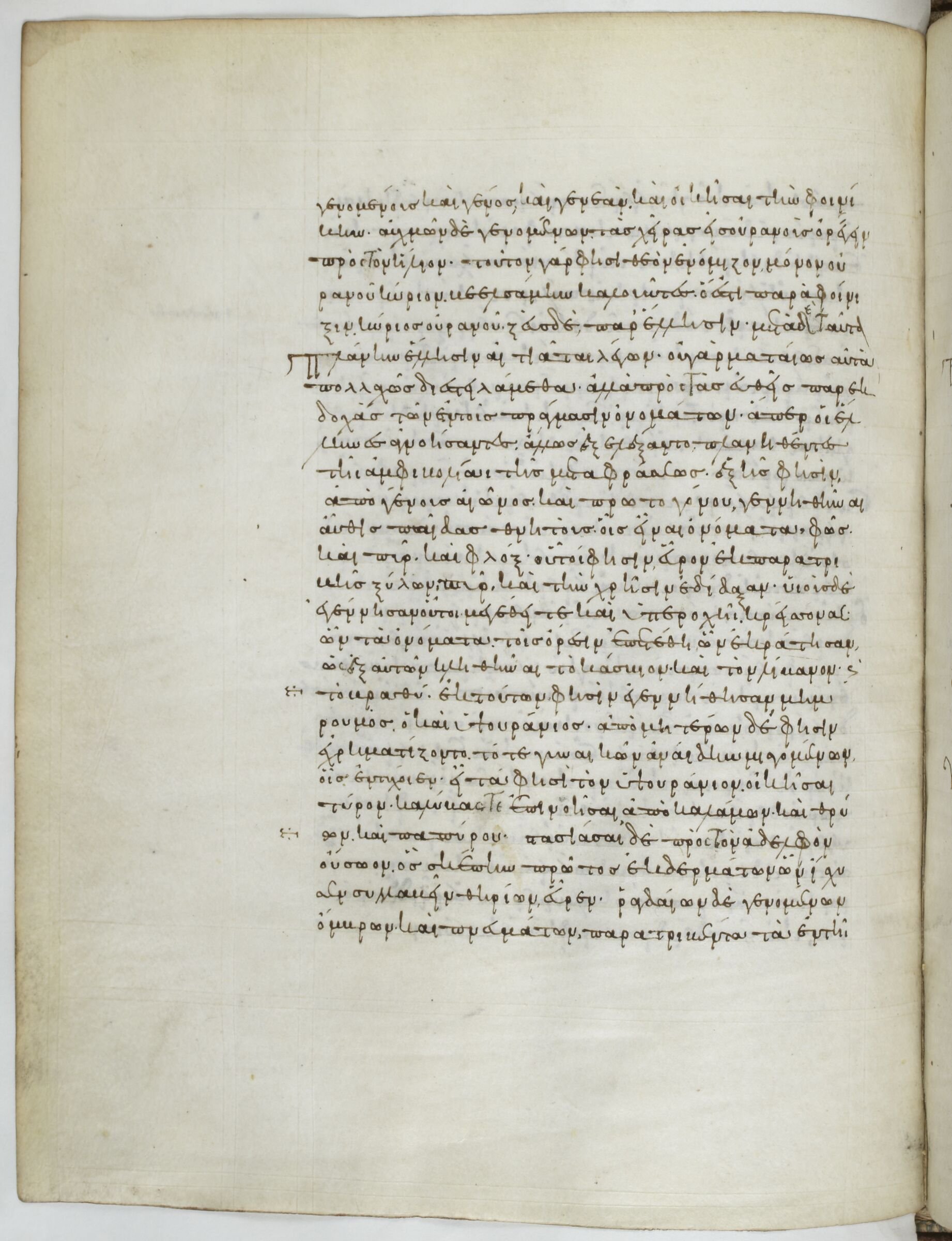
1.10.9 is on fol. 207v. Fol. 207v: begins 'γενομένους' with 'Γένος καὶ Γενεὰν καὶ οἰκῆσαι τὴν Φοινίκην' (1.10.7) and ends in 1.10.10 '...ῥαγδαίων δὲ γενομένων ὄμβρων καὶ πνευμάτων παρατριβέντα τὰ ἐν τῇ'. Checked on the image. Viewer: https://gallica.bnf.fr/ark:/12148/btv1b84701396/f420.item
10.9Ἑξῆς φησιν “Ἀπὸ Γένους Αἰῶνος καὶ Πρωτογόνου γεννηθῆναι αὖθις παῖδας θνητοὺς, οἷς εἶναι ὀνόματα Φῶς καὶ Πῦρ καὶ Φλόξ. οὗτοι (φησὶν) ἐκ παρατριβῆς ξύλων εὗρον πῦρ καὶ τὴν χρῆσιν ἐδίδαξαν. υἱοὺς δὲ ἐγέννησαν οὗτοι μεγέθει τε καὶ ὑπεροχῇ κρείσσονας, ὧν τὰ ὀνόματα τοῖς ὄρεσιν ἐπετέθη ὧν ἐκράτησαν, ὡς ἐξ αὐτῶν κληθῆναι τὸ Κάσσιον, καὶ τὸν Λίβανον, καὶ τὸν Ἀντιλίβανον, καὶ τὸ Βραθύ. ἐκ τούτων (φησὶν) ἐγεννήθη Σαμημροῦμος, ὁ καὶ Ὑψουράνιος, καὶ Οὔσωος· ἀπὸ μητέρων δὲ (φησὶν) ἐχρημάτιζον, τῶν τότε γυναικῶν ἀνέδην μισγομένων οἷς ἂν ἐντύχοιεν.”
10.9Afterwards he says: 'From Genos, son of Aeon and Protogonus, were begotten again mortal children, whose names are Light, and Fire, and Flame. These, says he, discovered fire from rubbing pieces of wood together, and taught the use of it. And they begat sons of surpassing size and stature, whose names were applied to the mountains which they occupied: so that from them were named mount Cassius, and Libanus, and Antilibanus, and Brathy. From these, he says, were begotten Memrumus and Hypsuranius; and they got their names, he says, from their mothers, as the women in those days had free intercourse with any whom they met.'
Where on the image
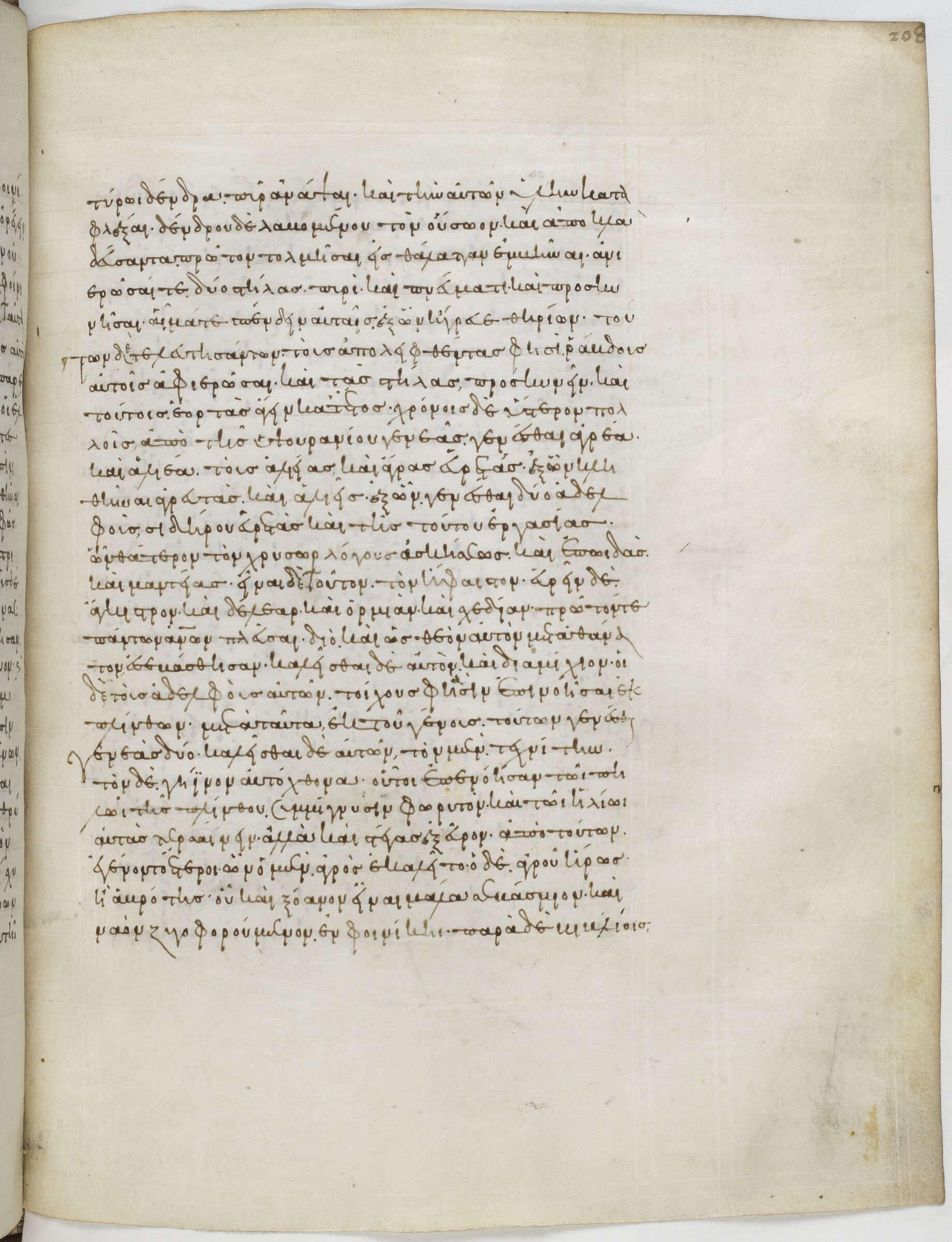
1.10.10 runs from fol. 207v to fol. 208r. Fol. 207v: begins 'γενομένους' with 'Γένος καὶ Γενεὰν καὶ οἰκῆσαι τὴν Φοινίκην' (1.10.7) and ends in 1.10.10 '...ῥαγδαίων δὲ γενομένων ὄμβρων καὶ πνευμάτων παρατριβέντα τὰ ἐν τῇ'. Fol. 208r: begins 'Τύρῳ δένδρα πῦρ ἀνάψαι καὶ τὴν αὐτόθι ὕλην καταφλέξαι' (1.10.10) and ends in 1.10.12 '...ναὸν ζυγοφορούμενον ἐν Φοινίκῃ· παρὰ δὲ Βυβλίοις'. Checked on the image. Viewer: https://gallica.bnf.fr/ark:/12148/btv1b84701396/f420.item
10.10Εἶτά φησι “Τὸν Ὑψουράνιον οἰκῆσαι Τύρον, καλύβας τε ἐπινοῆσαι ἀπὸ καλάμων καὶ θρύων καὶ παπύρου, στασιάσαι δὲ πρὸς τὸν ἀδελφὸν Οὔσωον, ὃς σκέπην τῷ σώματι πρῶτος ἐκ δερμάτων ὧν ἴσχυσε συλλαβεῖν θηρίων εὗρε. ῥαγδαίων δὲ γενομένων ὄμβρων καὶ πνευμάτων παρατριβέντα τὰ ἐν τῇ Τύρῳ δένδρα πῦρ ἀνάψαι καὶ τὴν αὐτόθι ὕλην καταφλέξαι. δένδρου δὲ λαβόμενον τὸν Οὔσωον καὶ ἀποκλαδεύσαντα πρῶτον τολμῆσαι εἰς θάλατταν ἐμβῆναι· ἀνιερῶσαι δὲ δύο στήλας πυρὶ καὶ πνεύματι, καὶ προσκυνῆσαι, αἷμά τε σπένδειν αὐταῖς ἐξ ὧν ἤγρευε θηρίων.
10.10Then he says: 'Hypsuranius inhabited Tyre, and contrived huts out of reeds and rushes and papyrus: and he quarrelled with his brother Ousöus, who first invented a covering for the body from skins of wild beasts which he was strong enough to capture. And when furious rains and winds occurred, the trees in Tyre were rubbed against each other and caught fire, and burnt down the wood that was there. And Ousöus took a tree, and, having stripped off the branches, was the first who ventured to embark on the sea; and he consecrated two pillars to fire and wind, and worshipped them, and poured libations of blood upon them from the wild beasts which he took in hunting.
Where on the image
1.10.11 is on fol. 208r. Fol. 208r: begins 'Τύρῳ δένδρα πῦρ ἀνάψαι καὶ τὴν αὐτόθι ὕλην καταφλέξαι' (1.10.10) and ends in 1.10.12 '...ναὸν ζυγοφορούμενον ἐν Φοινίκῃ· παρὰ δὲ Βυβλίοις'. Checked on the image. Viewer: https://gallica.bnf.fr/ark:/12148/btv1b84701396/f421.item
10.11τούτων δὲ τελευτησάντων τοὺς ἀπολειφθέντας φησὶ ῥάβδους αὐτοῖς ἀφιερῶσαι, καὶ τὰς στήλας προσκυνεῖν, καὶ τούτοις ἑορτὰς ἄγειν κατ’ ἔτος. χρόνοις δὲ ὕστερον πολλοῖς ἀπὸ τῆς Ὑψουρανίου γενεᾶς γενέσθαι Ἀγρέα καὶ Ἁλιέα, τοὺς ἄγρας καὶ ἁλείας εὑρετὰς, ἐξ ὧν κληθῆναι ἀγρευτὰς καὶ ἁλιεῖς· ἐξ ὧν γενέσθαι δύο ἀδελφοὺς σιδήρου εὑρετὰς καὶ τῆς τούτου ἐργασίας, ὧν θάτερον τὸν Χρυσὼρ λόγους ἀσκῆσαι καὶ ἐπῳδὰς καὶ μαντείας· εἶναι δὲ τοῦτον τὸν Ἥφαιστον, εὑρεῖν δὲ καὶ ἄγκιστρον καὶ δέλεαρ καὶ ὁρμιὰν καὶ σχεδίαν, πρῶτόν τε πάντων ἀνθρώπων πλεῦσαι· διὸ καὶ ὡς θεὸν αὐτὸν μετὰ θάνατον ἐσεβάσθησαν.
10.11'But when Hypsuranius and Ousöus were dead, those who were left, he says, consecrated staves to them, and year by year worshipped their pillars and kept festivals in their honour. But many years afterwards from the race of Hypsuranius were born Agreus and Halieus, the inventors of hunting and fishing, from whom were named huntsmen and fishermen: and from them were born two brethren, discoverers of iron and the mode of working it; the one of whom, Chrysor, practised oratory, and incantations, and divinations: and that he was Hephaestus, and invented the hook, and bait, and line, and raft, and was the first of all men to make a voyage: wherefore they reverenced him also as a god after his death.
Where on the image
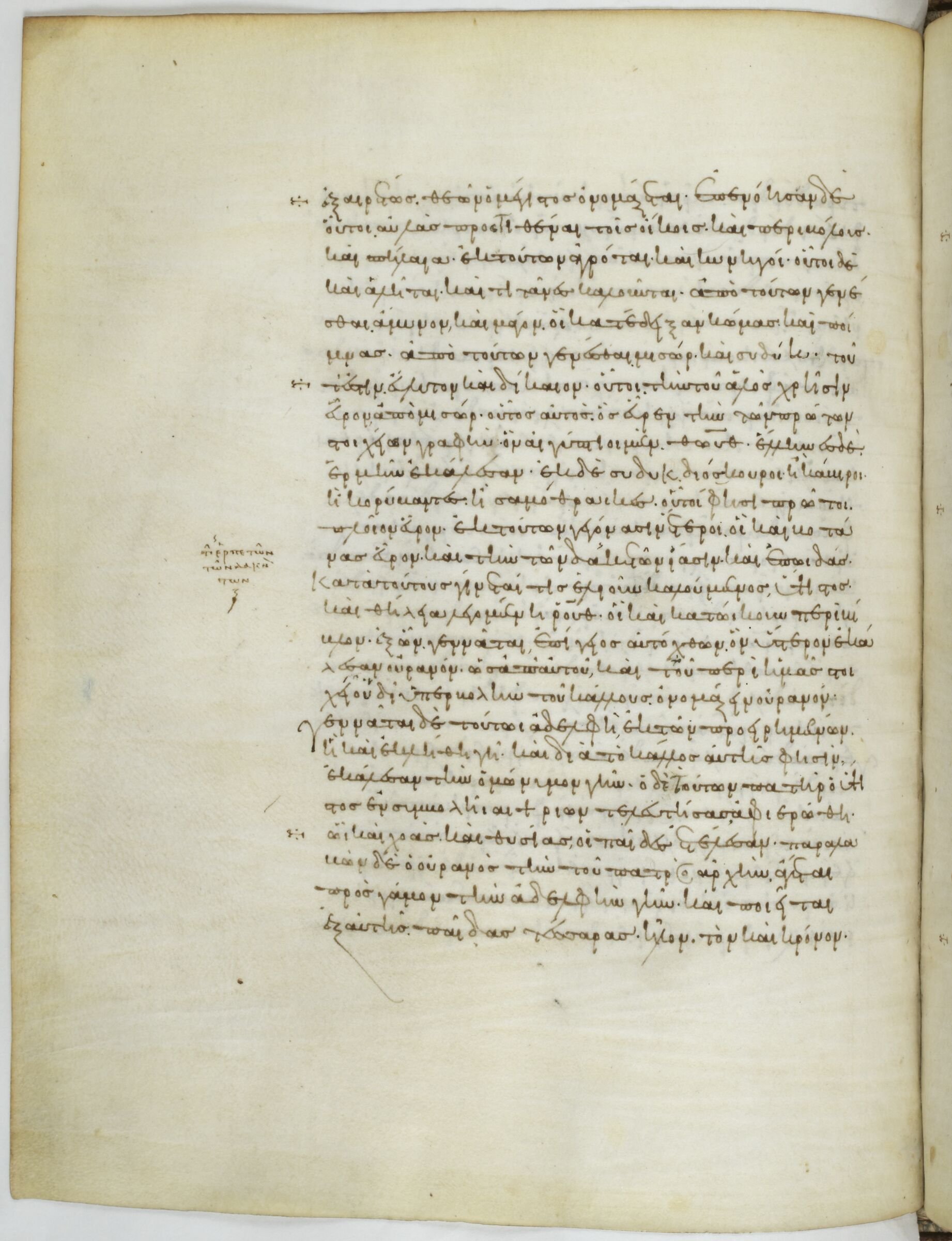
1.10.12 runs from fol. 208r to fol. 208v. Fol. 208r: begins 'Τύρῳ δένδρα πῦρ ἀνάψαι καὶ τὴν αὐτόθι ὕλην καταφλέξαι' (1.10.10) and ends in 1.10.12 '...ναὸν ζυγοφορούμενον ἐν Φοινίκῃ· παρὰ δὲ Βυβλίοις'. Fol. 208v: begins 'ἐξαιρέτως θεῶν ὁ μέγιστος ὀνομάζεται' (end of 1.10.12) and ends in 1.10.16 '...ποιεῖται ἐξ αὐτῆς παῖδας τέσσαρας, Ἦλον τὸν καὶ Κρόνον'. Checked on the image. Viewer: https://gallica.bnf.fr/ark:/12148/btv1b84701396/f421.item
10.12καλεῖσθαι δὲ αὐτὸν καὶ Δία μειλίχιον· οἱ δὲ τοὺς ἀδελφοὺς αὐτοῦ τοίχους φασὶν ἐπινοῆσαι ἐκ πλίνθων. μετὰ ταῦτ’ ἐκ τοῦ γένους τούτων γενέσθαι νεανίας δύο, καλεῖσθαι δὲ αὐτῶν τὸν μὲν Τεχνίτην, τὸν δὲ Γήϊνον αὐτόχθονα. οὗτοι ἐπενόησαν τῷ πηλῷ τῆς πλίνθου συμμιγνύειν φορυτὸν καὶ τῷ ἡλίῳ αὐτὰς τερσαίνειν, ἀλλὰ καὶ στέγας ἐξεῦρον. ἀπὸ τούτων ἐγένοντο ἕτεροι, ὧν ὁ μὲν Ἀγρὸς ἐκαλεῖτο, ὁ δὲ Ἀγρούηρος ἢ Ἀγρότης, οὗ καὶ ξόανον εἶναι μάλα σεβάσμιον καὶ ναὸν ζυγοφορούμενον ἐν Φοινίκῃ· παρὰ δὲ Βυβλίοις ἐξαιρέτως θεῶν ὁ μέγιστος ὀνομάζεται.
10.12And he was also called Zeus Meilichios. And some say that his brothers invented walls of brick. Afterwards there sprang from their race two youths, one of whom was called Technites (Artificer), and the other Geinos Autochthon (Earth-born Aboriginal). These devised the mixing of straw with the clay of bricks, and drying them in the sun, and moreover invented roofs. From them others were born, one of whom was called Agros, and the other Agruëros or Agrotes; and of the latter there is in Phoenicia a much venerated statue, and a shrine drawn by yokes of oxen; and among the people of Byblos he is named pre-eminently the greatest of the gods.
Where on the image
1.10.13 is on fol. 208v. Fol. 208v: begins 'ἐξαιρέτως θεῶν ὁ μέγιστος ὀνομάζεται' (end of 1.10.12) and ends in 1.10.16 '...ποιεῖται ἐξ αὐτῆς παῖδας τέσσαρας, Ἦλον τὸν καὶ Κρόνον'. Checked on the image. Viewer: https://gallica.bnf.fr/ark:/12148/btv1b84701396/f422.item
10.13ἐπενόησαν δὲ οὗτοι αὐλὰς προστιθέναι τοῖς οἴκοις καὶ περιβόλαια καὶ σπήλαια. ἐκ τούτων ἀγρόται καὶ κυνηγοί. οὗτοι δὲ καὶ Ἀλῆται καὶ Τιτᾶνες καλοῦνται. ἀπὸ τούτων γενέσθαι Ἄμυνον καὶ Μάγον, οἳ κατέδειξαν κώμας καὶ ποίμνας. ἀπὸ τούτων γενέσθαι Μισὼρ καὶ Συδὺκ, τουτέστιν εὔλυτον καὶ δίκαιον. οὗτοι τὴν τοῦ ἁλὸς χρῆσιν εὗρον.
10.13'These two devised the addition to houses of courts, and enclosures, and caves. From them came husbandmen and huntsmen. They are also called Aletae and Titans. From these were born Amynos and Magus, who established villages and sheepfolds. From them came Misor and Suduc, that is to say "Straight " and "Just": these discovered the use of salt.
Where on the image
1.10.14 is on fol. 208v. Fol. 208v: begins 'ἐξαιρέτως θεῶν ὁ μέγιστος ὀνομάζεται' (end of 1.10.12) and ends in 1.10.16 '...ποιεῖται ἐξ αὐτῆς παῖδας τέσσαρας, Ἦλον τὸν καὶ Κρόνον'. Checked on the image. Viewer: https://gallica.bnf.fr/ark:/12148/btv1b84701396/f422.item
10.14ἀπὸ Μισὼρ Τάαυτος, ὃς εὗρε τὴν τῶν πρώτων στοιχείων γραφήν· ὃν Αἰγύπτιοι μὲν Θωὺθ, Ἀλεξανδρεῖς δὲ Θὼθ, Ἕλληνες δὲ Ἑρμῆν ἐκάλεσαν. ἐκ δὲ τοῦ Συδὺκ Διόσκουροι, ἢ Κάβειροι, ἢ Κορύβαντες, ἢ Σαμοθρᾷκες. οὗτοι (φησὶ) πρῶτοι πλοῖον εὗρον. ἐκ τούτων γεγόνασιν ἕτεροι, οἳ καὶ βοτάνας εὗρον καὶ τὴν τῶν δακετῶν ἴασιν καὶ ἐπῳδάς. κατὰ τούτους γίνεταί τις Ἐλιοῦν καλούμενος Ὕψιστος, καὶ θήλεια λεγομένη Βηρούθ· οἱ καὶ κατῴκουν περὶ Βύβλον.
10.14'From Misor was born Taautus, who invented the first written alphabet; the Egyptians called him Thöyth, the Alexandrians Thoth, and the Greeks Hermes. 'From Suduc came the Dioscuri, or Cabeiri, or Corybantes, or Samothraces: these, he says, first invented a ship. From them have sprung others, who discovered herbs, and the healing of venomous bites, and charms. In their time is born a certain Elioun called "the Most High," and a female named Beruth, and these dwelt in the neighbourhood of Byblos.
Notes
- Greek: W. Dindorf's Teubner edition (1867), from the First1KGreek digital text, proofread against the printed pages. The manuscript's wording differs from the edition in small details; the Greek shown is the edition, not a transcription of the page.
- English: E. H. Gifford's translation (Oxford, 1903). Where a Greek section begins in the middle of an English sentence, the English is divided at the corresponding clause.
- Asterisks mark a gap that Dindorf indicates in the Greek of 1.10.36; Gifford marks it with dots.
Cite
Sources
- Source: Paris gr. 451 (Arethas codex, 914 AD) via Gallica + Dindorf Greek (First1KGreek, proofread) + Gifford English (1903) (holding institution)
- Critical edition: W. Dindorf, Eusebii Caesariensis opera I (Teubner 1867), First1KGreek, proofread
← previous · → next · v cycle view · l back to library