Sanchuniathon: Uranus, Ge and the reign of Kronos (Eusebius, Praeparatio evangelica 1.10.15-30)
Introduction
Philo of Byblos, a Phoenician grammarian writing in Greek around 100 AD, claimed to have translated the Phoenician History of Sanchuniathon of Berytus, a priestly writer said to have lived before the Trojan War, who drew on the city records and the temple inscriptions of Phoenicia and on the writings of Taautus (Thoth). Philo's work survives only in the long quotations that Eusebius of Caesarea copied into book 1 of his Preparation for the Gospel (c. 313 AD), taken partly through the philosopher Porphyry. It is the fullest account of Phoenician myth in Greek, and since the discovery of the Ugaritic tablets (14th-13th c. BCE) several of its gods and stories, such as El, Dagon, the succession of divine kings and the castration of the sky god, are known to go back to Bronze Age Canaan.
The manuscript shown is Paris, Bibliothèque nationale de France, grec 451, written in 914 AD by the scribe Baanes for Arethas, archbishop of Caesarea in Cappadocia; it is the oldest manuscript of books 1-5 of the Preparation. The passage runs from fol. 204v to fol. 213v. Each section is one of Dindorf's numbered sections and points at the page(s) that carry it; the page breaks were read on the images and are recorded in each note.
This entry covers sections 1.10.15 to 1.10.30, on fols. 208v to 210r.
How was this verified? (Provenance)
Where on the image
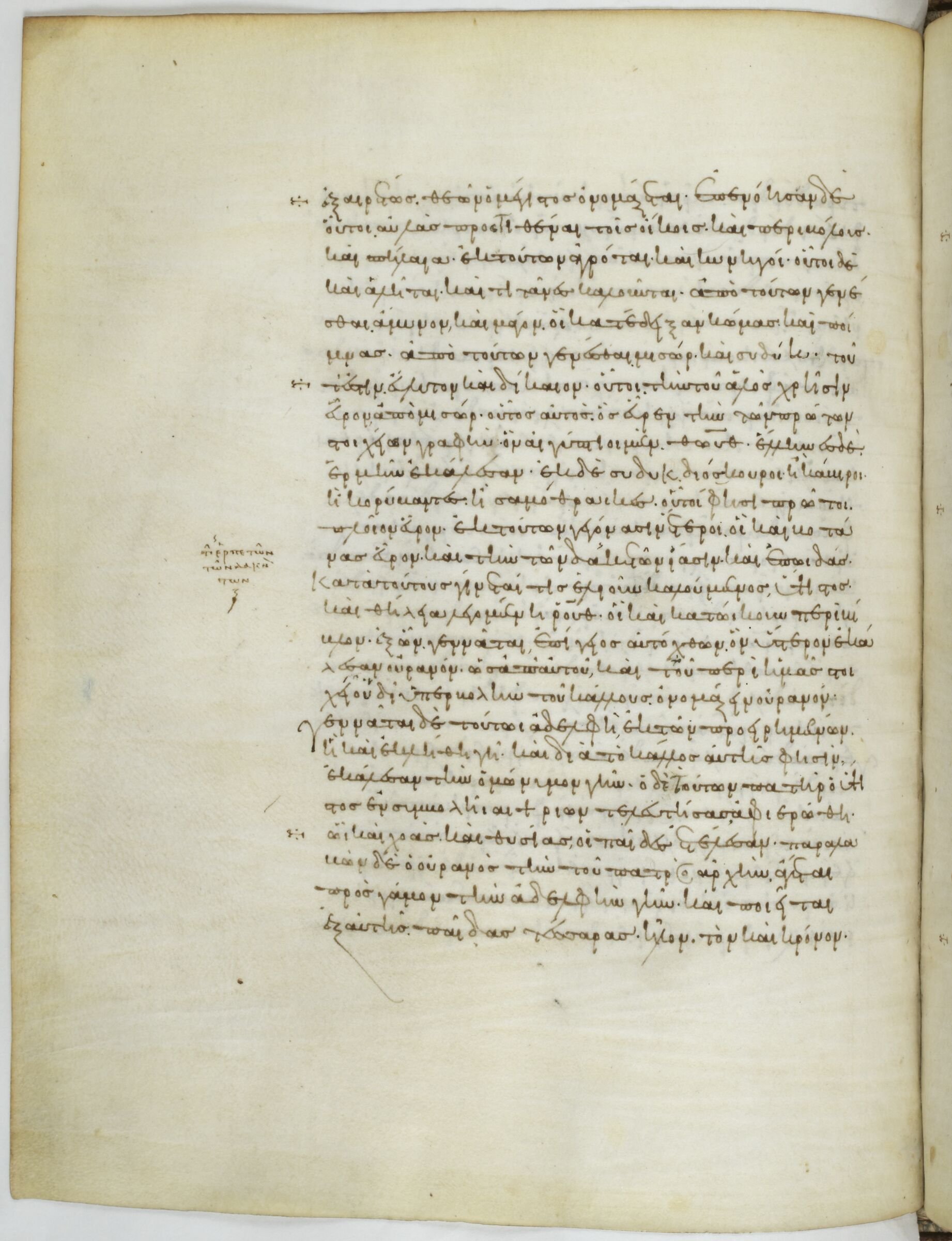
1.10.15 is on fol. 208v. Fol. 208v: begins 'ἐξαιρέτως θεῶν ὁ μέγιστος ὀνομάζεται' (end of 1.10.12) and ends in 1.10.16 '...ποιεῖται ἐξ αὐτῆς παῖδας τέσσαρας, Ἦλον τὸν καὶ Κρόνον'. Checked on the image. Viewer: https://gallica.bnf.fr/ark:/12148/btv1b84701396/f422.item
10.15ἐξ ὧν γεννᾶται Ἐπίγειος αὐτόχθων, ὃν ὕστερον ἐκάλεσαν Οὐρανόν· ὡς ἀπ’ αὐτοῦ καὶ τὸ ὑπὲρ ἡμᾶς στοιχεῖον δι’ ὑπερβολὴν τοῦ κάλλους ὀνομάζειν οὐρανόν. γεννᾶται δὲ τούτῳ ἀδελφὴ ἐκ τῶν προειρημένων, ἣ καὶ ἐκλήθη Γῆ. καὶ διὰ τὸ κάλλος αὐτῆς (φησὶν) ἐκάλεσαν τὴν ὁμώνυμον γῆν. ὁ δὲ τούτων πατὴρ ὁ Ὕψιστος ἐν συμβολῇ θηρίων τελευτήσας ἀφιερώθη, ᾧ χοὰς καὶ θυσίας οἱ παῖδες ἐτέλεσαν.
10.15'And from them is born Epigeius or Autochthon, whom they afterwards called Uranus; so that from him they named the element above us Uranus because of the excellence of its beauty. And he has a sister born of the aforesaid parents, who was called Gé (earth), and from her, he says, because of her beauty, they called the earth by the same name. And their father, the Most High, died in an encounter with wild beasts, and was deified, and his children offered to him libations and sacrifices.
Where on the image
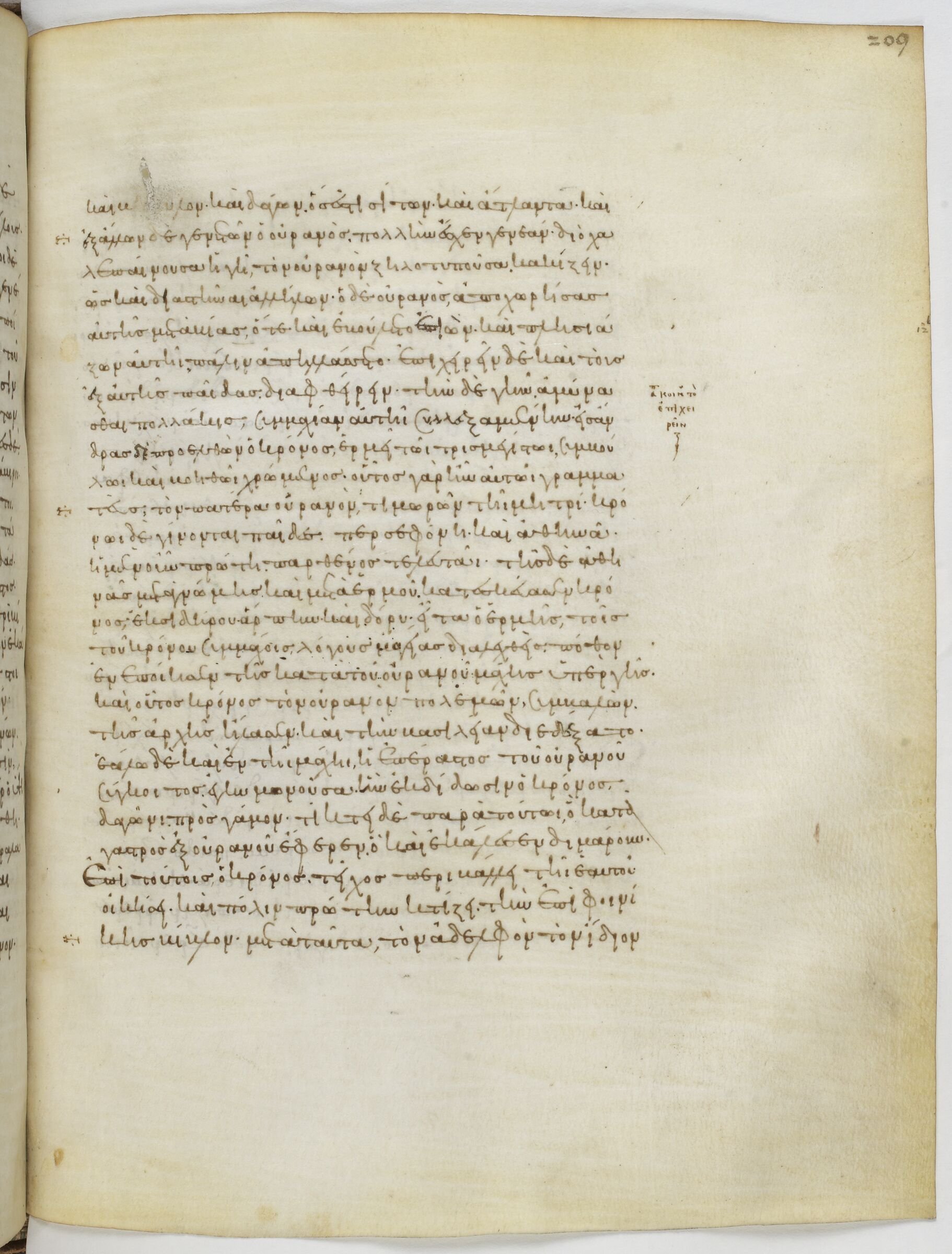
1.10.16 runs from fol. 208v to fol. 209r. Fol. 208v: begins 'ἐξαιρέτως θεῶν ὁ μέγιστος ὀνομάζεται' (end of 1.10.12) and ends in 1.10.16 '...ποιεῖται ἐξ αὐτῆς παῖδας τέσσαρας, Ἦλον τὸν καὶ Κρόνον'. Fol. 209r: begins 'καὶ Βαίτυλον καὶ Δαγὼν, ὅς ἐστι Σίτων, καὶ Ἄτλαντα' (1.10.16) and ends at the start of 1.10.20 'μετὰ ταῦτα τὸν ἀδελφὸν τὸν ἴδιον'. Checked on the image. Viewer: https://gallica.bnf.fr/ark:/12148/btv1b84701396/f422.item
10.16παραλαβὼν δὲ ὁ Οὐρανὸς τὴν τοῦ πατρὸς ἀρχὴν ἄγεται πρὸς γάμον τὴν ἀδελφὴν Γῆν, καὶ ποιεῖται ἐξ αὐτῆς παῖδας τέσσαρας, Ἦλον, τὸν καὶ Κρόνον, καὶ Βαίτυλον καὶ Δαγὼν, ὅς ἐστι Σίτων, καὶ Ἄτλαντα. καὶ ἐξ ἄλλων δὲ γαμετῶν ὁ Οὐρανὸς πολλὴν ἔσχε γενεάν. διὸ χαλεπαίνουσα ἡ Γῆ τὸν Οὐρανὸν ζηλοτυποῦσα ἐκάκιζεν, ὡς καὶ διαστῆναι ἀλλήλων.
10.16'And Uranus, having succeeded to his father's rule, takes to himself in marriage his sister Gé, and gets by her four sons, Elus who is also Kronos, and Baetylus, and Dagon who is Siton, and Atlas. Also by other wives Uranus begat a numerous progeny; on which account Gé was angry, and from jealousy began to reproach Uranus, so that they even separated from each other.
Where on the image
1.10.17 is on fol. 209r. Fol. 209r: begins 'καὶ Βαίτυλον καὶ Δαγὼν, ὅς ἐστι Σίτων, καὶ Ἄτλαντα' (1.10.16) and ends at the start of 1.10.20 'μετὰ ταῦτα τὸν ἀδελφὸν τὸν ἴδιον'. Checked on the image. Viewer: https://gallica.bnf.fr/ark:/12148/btv1b84701396/f423.item
10.17ὁ δὲ Οὐρανὸς ἀποχωρήσας αὐτῆς, μετὰ βίας ὅτε καὶ ἐβούλετο ἐπιὼν καὶ πλησιάζων αὐτῇ, πάλιν ἀπηλλάττετο· ἐπεχείρει δὲ καὶ τοὺς ἐξ αὐτῆς παῖδας διαφθείρειν· τὴν δὲ Γῆν ἀμύνασθαι πολλάκις, συμμαχίαν αὐτῇ συλλεξαμένην· εἰς ἄνδρας δὲ προελθὼν ὁ Κρόνος Ἑρμῇ τῷ τρισμεγίστῳ συμβούλῳ καὶ βοηθῷ χρώμενος, οὗτος γὰρ ἦν αὐτῷ γραμματεὺς, τὸν πατέρα Οὐρανὸν ἀμύνεται, τιμωρῶν τῇ μητρί.
10.17'But Uranus, after he had left her, used to come upon her with violence, whenever he chose, and consort with her, and go away again; he used to try also to destroy his children by her; but Gé repelled him many times, having gathered to herself allies. And when Kronos had advanced to manhood, he, with the counsel and help of Hermes Trismegistus (who was his secretary), repels his father Uranus, and avenges his mother.
Where on the image
1.10.18 is on fol. 209r. Fol. 209r: begins 'καὶ Βαίτυλον καὶ Δαγὼν, ὅς ἐστι Σίτων, καὶ Ἄτλαντα' (1.10.16) and ends at the start of 1.10.20 'μετὰ ταῦτα τὸν ἀδελφὸν τὸν ἴδιον'. Checked on the image. Viewer: https://gallica.bnf.fr/ark:/12148/btv1b84701396/f423.item
10.18Κρόνῳ δὲ γίνονται παῖδες Περσεφόνη καὶ Ἀθηνᾶ. ἡ μὲν οὖν πρώτη παρθένος ἐτελεύτα, τῆς δὲ Ἀθηνᾶς γνώμῃ καὶ Ἑρμοῦ κατεσκεύασε Κρόνος ἐκ σιδήρου ἅρπην καὶ δόρυ. εἶτα ὁ Ἑρμῆς τοῖς τοῦ Κρόνου συμμάχοις λόγους μαγείας διαλεχθεὶς πόθον ἐνεποίησε τῆς κατὰ τοῦ Οὐρανοῦ μάχης ὑπὲρ τῆς Γῆς. καὶ οὕτω Κρόνος τὸν Οὐρανὸν πολέμῳ συμβαλὼν τῆς ἀρχῆς ἤλασε καὶ τὴν βασιλείαν διεδέξατο. ἑάλω δὲ καὶ ἐν τῇ μάχῃ ἡ ἐπέραστος τοῦ Οὐρανοῦ σύγκοιτος ἐγκύμων οὖσα, ἣν ἐκδίδωσιν ὁ Κρόνος Δαγῶνι πρὸς γάμον.
10.18'To Kronos are born children, Persephone and Athena. The former died a virgin: but by the advice of Athena and Hermes Kronos made a sickle and a spear of iron. Then Hermes talked magical words to the allies of Kronos, and inspired them with a desire of fighting against Uranus on behalf of Gé. And thus Kronos engaged in war, and drove Uranus from his government, and succeeded to the kingdom. Also there was taken in the battle the beloved concubine of Uranus, being great with child, whom Kronos gave in marriage to Dagon.
Where on the image
1.10.19 is on fol. 209r. Fol. 209r: begins 'καὶ Βαίτυλον καὶ Δαγὼν, ὅς ἐστι Σίτων, καὶ Ἄτλαντα' (1.10.16) and ends at the start of 1.10.20 'μετὰ ταῦτα τὸν ἀδελφὸν τὸν ἴδιον'. Checked on the image. Viewer: https://gallica.bnf.fr/ark:/12148/btv1b84701396/f423.item
10.19τίκτει δὲ παρὰ τούτῳ ὃ κατὰ γαστρὸς ἐξ Οὐρανοῦ ἔφερεν, ὅ καὶ ἐκάλεσε Δημαροῦν. ἐπὶ τούτοις ὁ Κρόνος τεῖχος περιβάλλει τῇ ἑαυτοῦ οἰκήσει, καὶ πόλιν πρώτην κτίζει τὴν ἐπὶ Φοινίκης Βύβλον.
10.19And in his house she gave birth to the child begotten of Uranus, which she named Demarûs. ' After this Kronos builds a wall round his own dwelling, and founds the first city, Byblos in Phoenicia.
Where on the image
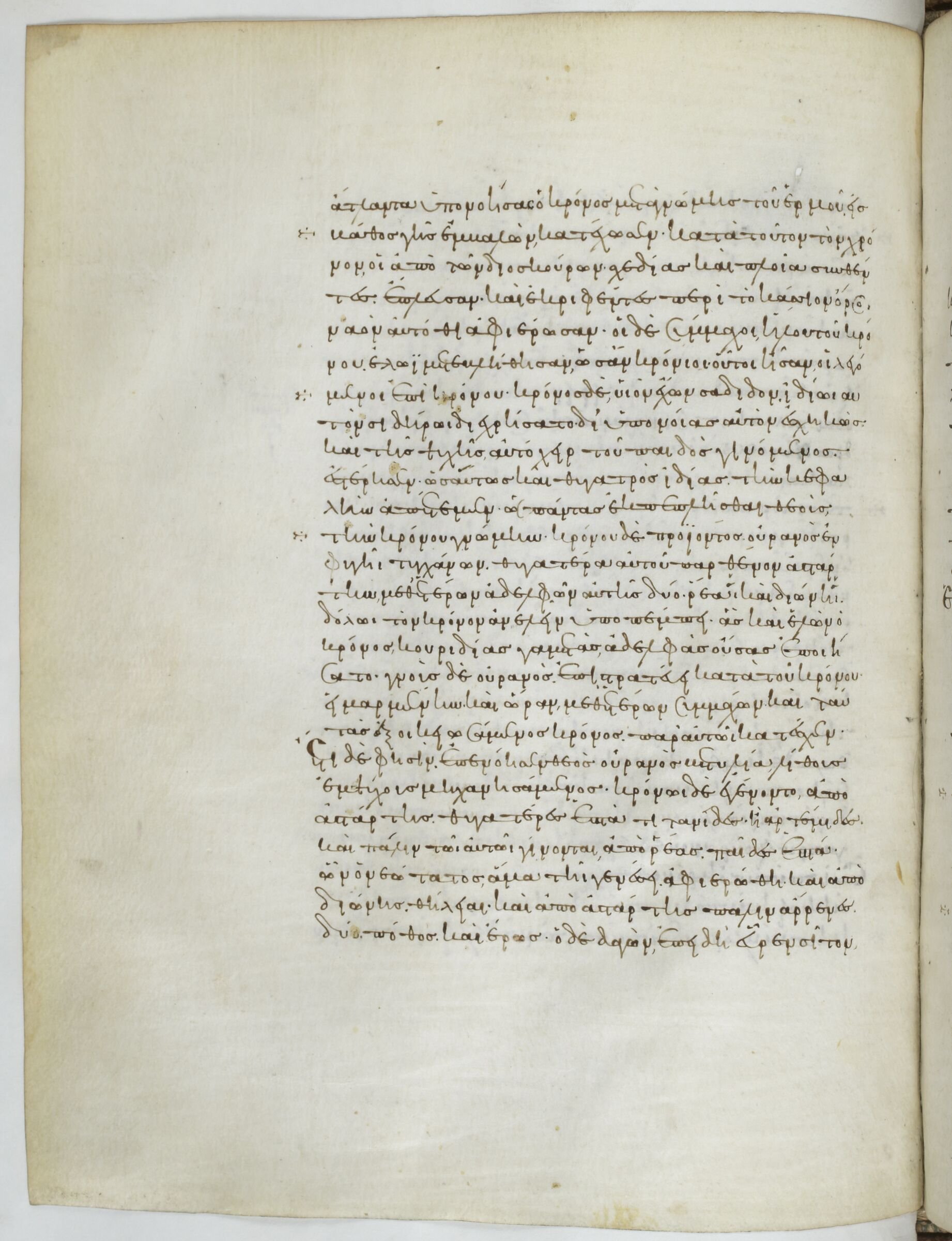
1.10.20 runs from fol. 209r to fol. 209v. Fol. 209r: begins 'καὶ Βαίτυλον καὶ Δαγὼν, ὅς ἐστι Σίτων, καὶ Ἄτλαντα' (1.10.16) and ends at the start of 1.10.20 'μετὰ ταῦτα τὸν ἀδελφὸν τὸν ἴδιον'. Fol. 209v: begins 'Ἄτλαντα ὑπονοήσας ὁ Κρόνος μετὰ γνώμης τοῦ Ἑρμοῦ' (1.10.20) and ends at the start of 1.10.25 'ὁ δὲ Δαγὼν, ἐπειδὴ εὗρε σῖτον'. Checked on the image. Viewer: https://gallica.bnf.fr/ark:/12148/btv1b84701396/f423.item
10.20μετὰ ταῦτα τὸν ἀδελφὸν τὸν ἴδιον Ἄτλαντα ὑπονοήσας ὁ Κρόνος μετὰ γνώμης τοῦ Ἑρμοῦ εἰς βάθος γῆς ἐμβαλὼν κατέχωσε. κατὰ τοῦτον τὸν χρόνον οἱ ἀπὸ τῶν Διοσκούρων σχεδίας καὶ πλοῖα συνθέντες ἔπλευσαν, καὶ ἐκριφέντες περὶ τὸ Κάσσιον ὄρος ναὸν αὐτόθι ἀφιέρωσαν. οἱ δὲ σύμμαχοι Ἤλου τοῦ Κρόνου Ἐλωεὶμ ἐπεκλήθησαν, ὡς ἂν Κρόνιοι οὗτοι ἦσαν οἱ λεγόμενοι ἐπὶ Κρόνου.
10.20'Soon after this he became suspicious of his own brother Atlas, and, with the advice of Hermes, threw him into a deep pit and buried him. At about this time the descendants of the Dioscuri put together rafts and ships, and made voyages; and, being cast ashore near Mount Cassius, consecrated a temple there. And the allies of Elus, who is Kronos, were surnamed Eloim, as these same, who were surnamed after Kronos, would have been called Kronii.
Where on the image
1.10.21 is on fol. 209v. Fol. 209v: begins 'Ἄτλαντα ὑπονοήσας ὁ Κρόνος μετὰ γνώμης τοῦ Ἑρμοῦ' (1.10.20) and ends at the start of 1.10.25 'ὁ δὲ Δαγὼν, ἐπειδὴ εὗρε σῖτον'. Checked on the image. Viewer: https://gallica.bnf.fr/ark:/12148/btv1b84701396/f424.item
10.21Κρόνος δὲ υἱὸν ἔχων Σάδιδον ἰδίῳ αὐτὸν σιδήρῳ διεχρήσατο, δι’ ὑπονοίας αὐτὸν ἐσχηκὼς, καὶ τῆς ψυχῆς, αὐτόχειρ τοῦ παιδὸς γενόμενος, ἐστέρησεν· ὡσαύτως καὶ θυγατρὸς ἰδίας τὴν κεφαλὴν ἀπέτεμεν, ὡς πάντας ἐκπεπλῆχθαι θεοὺς τὴν Κρόνου γνώμην.
10.21'And Kronos, having a son Sadidus, dispatched him with his own sword, because he regarded him with suspicion, and deprived him of life, thus becoming the murderer of his son. In like manner he cut off the head of a daughter of his own; so that all the gods were dismayed at the disposition of Kronos.
Where on the image
1.10.22 is on fol. 209v. Fol. 209v: begins 'Ἄτλαντα ὑπονοήσας ὁ Κρόνος μετὰ γνώμης τοῦ Ἑρμοῦ' (1.10.20) and ends at the start of 1.10.25 'ὁ δὲ Δαγὼν, ἐπειδὴ εὗρε σῖτον'. Checked on the image. Viewer: https://gallica.bnf.fr/ark:/12148/btv1b84701396/f424.item
10.22χρόνου δὲ προϊόντος Οὐρανὸς ἐν φυγῇ τυγχάνων θυγατέρα αὐτοῦ παρθένον Ἀστάρτην μεθ’ ἑτέρων ἀδελφῶν αὐτῆς δύο, Ῥέας καὶ Διώνης, δόλῳ τὸν Κρόνον ἀνελεῖν ὑπομέμπει· ἃς καὶ ἑλὼν ὁ Κρόνος κουριδίας γαμετὰς ἀδελφὰς οὔσας ἐποιήσατο.
10.22'But as time went on Uranus, being in banishment, secretly sends his maiden daughter Astarte with two others her sisters, Rhea and Dione, to slay Kronos by craft. But Kronos caught them, and though they were his sisters, made them his wedded wives.
Where on the image
1.10.23 is on fol. 209v. Fol. 209v: begins 'Ἄτλαντα ὑπονοήσας ὁ Κρόνος μετὰ γνώμης τοῦ Ἑρμοῦ' (1.10.20) and ends at the start of 1.10.25 'ὁ δὲ Δαγὼν, ἐπειδὴ εὗρε σῖτον'. Checked on the image. Viewer: https://gallica.bnf.fr/ark:/12148/btv1b84701396/f424.item English corrected against the 1903 printing: the online transcription reads 'against Kronos. and these', the printed book 'against Kronos, and these', which also matches the Greek ('κατὰ τοῦ Κρόνου ... συμμάχων, καὶ ταύτας'), one sentence.
10.23γνοὺς δὲ Οὐρανὸς ἐπιστρατεύει κατὰ τοῦ Κρόνου Εἱμαρμένην καὶ Ὥραν μεθ’ ἑτέρων συμμάχων, καὶ ταύτας ἐξοικειωσάμενος ὁ Κρόνος παρ’ ἑαυτῷ κατέσχεν. ἔτι δὲ (φησὶν) ἐπενόησε θεὸς Οὐρανὸς βαιτύλια, λίθους ἐμψύχους μηχανησάμενος. Κρόνῳ δὲ ἐγένοντο ἀπὸ Ἀστάρτης θυγατέρες ἑπτὰ Τιτανίδες ἢ Ἀρτέμιδες.
10.23And when Uranus knew it, he sent Eimarmene and Hora with other allies on an expedition against Kronos, and these Kronos won over to his side and kept with him. 'Further, he says, the god Uranus devised the Baetylia, having contrived to put life into stones. And to Kronos there were born of Astarte seven daughters, Titanides or Artemides:
Where on the image
1.10.24 is on fol. 209v. Fol. 209v: begins 'Ἄτλαντα ὑπονοήσας ὁ Κρόνος μετὰ γνώμης τοῦ Ἑρμοῦ' (1.10.20) and ends at the start of 1.10.25 'ὁ δὲ Δαγὼν, ἐπειδὴ εὗρε σῖτον'. Checked on the image. Viewer: https://gallica.bnf.fr/ark:/12148/btv1b84701396/f424.item
10.24καὶ πάλιν τῷ αὐτῷ γίνονται ἀπὸ Ῥέας παῖδες ἑπτὰ, ὧν ὁ νεώτατος ἅμα τῇ γενέσει ἀφιερώθη· καὶ ἀπὸ Διώνης θήλειαι, καὶ ἀπὸ Ἀστάρτης πάλιν ἄρρενες δύο, Πόθος καὶ Ἔρως.
10.24and again to the same there were born of Rhea seven sons, of whom the youngest was deified at his birth; and of Dione females, and of Astarte again two males, Desire and Love.
Where on the image
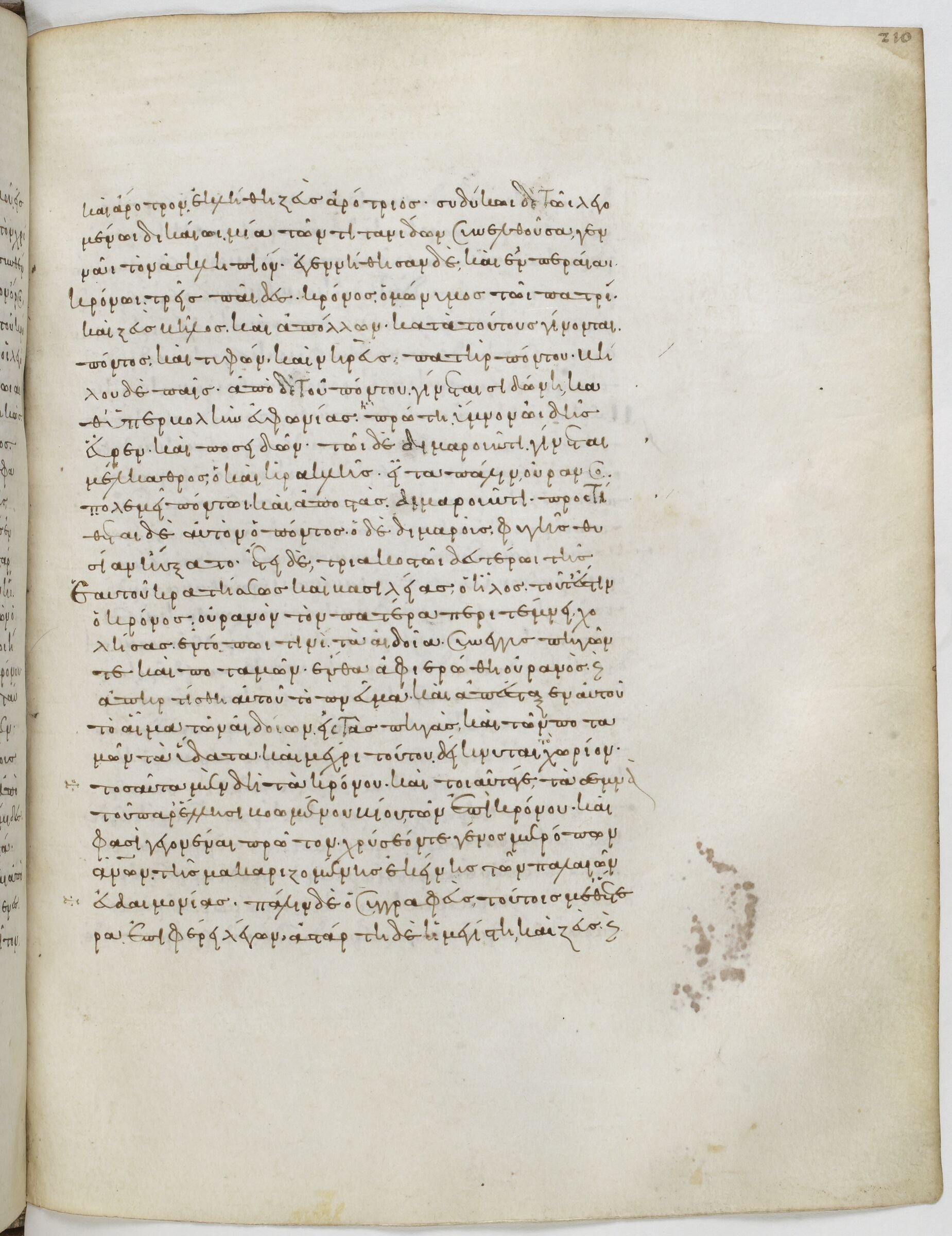
1.10.25 runs from fol. 209v to fol. 210r. Fol. 209v: begins 'Ἄτλαντα ὑπονοήσας ὁ Κρόνος μετὰ γνώμης τοῦ Ἑρμοῦ' (1.10.20) and ends at the start of 1.10.25 'ὁ δὲ Δαγὼν, ἐπειδὴ εὗρε σῖτον'. Fol. 210r: begins 'καὶ ἄροτρον, ἐκλήθη Ζεὺς Ἀρότριος' (1.10.25) and ends at the start of 1.10.31 'Ἀστάρτη δὲ ἡ μεγίστη καὶ Ζεὺς'. Checked on the image. Viewer: https://gallica.bnf.fr/ark:/12148/btv1b84701396/f424.item
10.25ὁ δὲ Δαγὼν, ἐπειδὴ εὗρε σῖτον καὶ ἄροτρον, ἐκλήθη Ζεὺς Ἀρότριος. Συδύκῳ δὲ, τῷ λεγομένῳ δικαίῳ, μία τῶν Τιτανίδων συνελθοῦσα γεννᾷ τὸν Ἀσκληπιόν.
10.25And Dagon, after he discovered corn and the plough, was called Zeus Arotrios. 'And one of the Titanides united to Suduc, who is named the Just, gives birth to Asclepius.
Where on the image
1.10.26 is on fol. 210r. Fol. 210r: begins 'καὶ ἄροτρον, ἐκλήθη Ζεὺς Ἀρότριος' (1.10.25) and ends at the start of 1.10.31 'Ἀστάρτη δὲ ἡ μεγίστη καὶ Ζεὺς'. Checked on the image. Viewer: https://gallica.bnf.fr/ark:/12148/btv1b84701396/f425.item
10.26ἐγεννήθησαν δὲ καὶ ἐν Περαίᾳ Κρόνῳ τρεῖς παῖδες, Κρόνος ὁμώνυμος τῷ πατρὶ καὶ Ζεὺς Βῆλος καὶ Ἀπόλλων. κατὰ τούτους γίνονται Πόντος καὶ Τυφὼν καὶ Νηρεὺς, πατὴρ Πόντου.
10.26'In Peraea also there were born to Kronos three sons, Kronos of the same name with his father, and Zeus Belus, and Apollo. In their time are born Pontus, and Typhon, and Nereus father of Pontus and son of Belus.
Where on the image
1.10.27 is on fol. 210r. Fol. 210r: begins 'καὶ ἄροτρον, ἐκλήθη Ζεὺς Ἀρότριος' (1.10.25) and ends at the start of 1.10.31 'Ἀστάρτη δὲ ἡ μεγίστη καὶ Ζεὺς'. Checked on the image. Viewer: https://gallica.bnf.fr/ark:/12148/btv1b84701396/f425.item
10.27ἀπὸ δὲ τοῦ Πόντου γίνεται Σιδῶν, ἣ καθ’ ὑπερβολὴν εὐφωνίας πρώτη ὕμνον ᾠδῆς εὗρε, καὶ Ποσειδῶν. τῷ δὲ Δημαροῦντι γίνεται Μέλκαθρος, ὁ καὶ Ἡρακλῆς.
10.27'And from Pontus is born Sidon (who from the exceeding sweetness of her voice was the first to invent musical song) and Poseidon. And to Demarus is born Melcathrus, who is also called Hercules.
Where on the image
1.10.28 is on fol. 210r. Fol. 210r: begins 'καὶ ἄροτρον, ἐκλήθη Ζεὺς Ἀρότριος' (1.10.25) and ends at the start of 1.10.31 'Ἀστάρτη δὲ ἡ μεγίστη καὶ Ζεὺς'. Checked on the image. Viewer: https://gallica.bnf.fr/ark:/12148/btv1b84701396/f425.item
10.28εἶτα πάλιν Οὐρανὸς πολεμεῖ Πόντῳ, καὶ ἀποστὰς Δημαροῦντι προστίθεται, ἔπεισί τε Πόντῳ ὁ Δημαροῦς, τροποῦταί τε αὐτὸν ὁ Πόντος, ὁ δὲ Δημαροῦς φυγῆς θυσίαν ηὔξατο.
10.28'Then again Uranus makes war against Pontus, and after revolting attaches himself to Demarus, and Demarus attacks Pontus, but Pontus puts him to flight; and Demarus vowed an offering if he should escape.
Where on the image
1.10.29 is on fol. 210r. Fol. 210r: begins 'καὶ ἄροτρον, ἐκλήθη Ζεὺς Ἀρότριος' (1.10.25) and ends at the start of 1.10.31 'Ἀστάρτη δὲ ἡ μεγίστη καὶ Ζεὺς'. Checked on the image. Viewer: https://gallica.bnf.fr/ark:/12148/btv1b84701396/f425.item
10.29ἔτει δὲ τριακοστῷ δευτέρῳ τῆς ἑαυτοῦ κρατήσεως καὶ βασιλείας ὁ Ἦλος, τοῦτ’ ἔστιν ὁ Κρόνος, Οὐρανὸν τὸν πατέρα λοχήσας ἐν τόπῳ τινὶ μεσογείῳ καὶ λαβὼν ὑποχείριον ἐκτέμνει αὐτοῦ τὰ αἰδοῖα, σύνεγγυς πηγῶν τε καὶ ποταμῶν. ἔνθα ἀφιερώθη Οὐρανὸς, καὶ ἀπηρτίσθη αὐτοῦ τὸ πνεῦμα, καὶ ἀπέσταξεν αὐτοῦ τὸ αἷμα τῶν αἰδοίων εἰς τὰς πηγὰς καὶ τῶν ποταμῶν τὰ ὕδατα, καὶ μέχρι τούτου δείκνυται τὸ χωρίον.”
10.29'And in the thirty-second year of his power and kingdom Elus, that is Kronos, having waylaid his father Uranus in an inland spot, and got him into his hands, emasculates him near some fountains and rivers. There Uranus was deified: and as he breathed his last, the blood from his wounds dropped into the fountains and into the waters of the rivers, and the spot is pointed out to this day.'
Where on the image
1.10.30 is on fol. 210r. Fol. 210r: begins 'καὶ ἄροτρον, ἐκλήθη Ζεὺς Ἀρότριος' (1.10.25) and ends at the start of 1.10.31 'Ἀστάρτη δὲ ἡ μεγίστη καὶ Ζεὺς'. Checked on the image. Viewer: https://gallica.bnf.fr/ark:/12148/btv1b84701396/f425.item
10.30Τοσαῦτα μὲν δὴ τὰ τοῦ Κρόνου, καὶ τοιαῦτά γε τὰ σεμνὰ τοῦ παρ’ Ἕλλησι βοωμένου βίου τῶν ἐπὶ Κρόνου, οὓς καί φασι γεγονέναι πρῶτον χρύσεόν τε γένος μερόπων ἀνθρώπων, τῆς μακαριζομένης ἐκείνης τῶν παλαιῶν εὐδαιμονίας. πάλιν δὲ ὁ συγγραφεὺς τούτοις μεθ’ ἕτερα ἐπιφέρει λέγων
10.30This, then, is the story of Kronos, and such are the glories of the mode of life, so vaunted among the Greeks, of men in the days of Kronos, whom they also affirm to have been the first and 'golden race of articulate speaking men,' that blessed happiness of the olden time! Again, the historian adds to this, after other matters:
Notes
- Greek: W. Dindorf's Teubner edition (1867), from the First1KGreek digital text, proofread against the printed pages. The manuscript's wording differs from the edition in small details; the Greek shown is the edition, not a transcription of the page.
- English: E. H. Gifford's translation (Oxford, 1903). Where a Greek section begins in the middle of an English sentence, the English is divided at the corresponding clause.
- Asterisks mark a gap that Dindorf indicates in the Greek of 1.10.36; Gifford marks it with dots.
Cite
Sources
- Source: Paris gr. 451 (Arethas codex, 914 AD) via Gallica + Dindorf Greek (First1KGreek, proofread) + Gifford English (1903) (holding institution)
- Critical edition: W. Dindorf, Eusebii Caesariensis opera I (Teubner 1867), First1KGreek, proofread
← previous · → next · v cycle view · l back to library