4 Maccabees, Chapter 2
Introduction
This entry meets the strict three-criteria standard of the Theosis Library:
- Manuscript scan: The actual folio(s) of Codex Sinaiticus containing this chapter, from the Codex Sinaiticus Project (codexsinaiticus.org). Each section links to the specific folio holding its verses.
- Original text: The Codex Sinaiticus Project's verbatim transcription of the folio shown (uncial letters, lunate sigma, nomina sacra preserved).
- English translation: Brenton's Septuagint (1851), public domain, retrieved verbatim from ebible.org eng-Brenton USFM.
How was this verified? (Provenance)
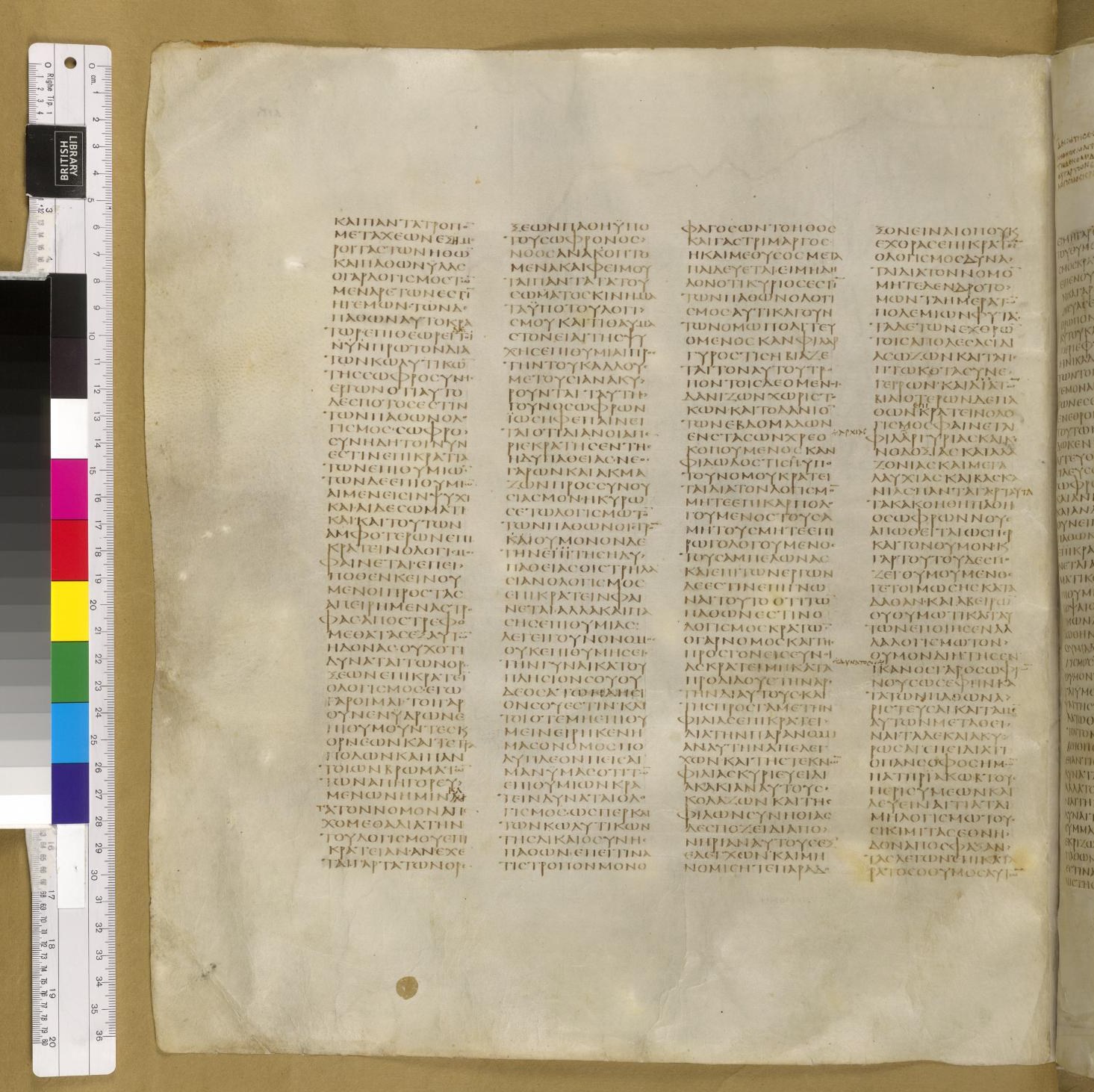
1και τι θαυμαϲτον ει αι τηϲ ψυχηϲ επιθυμιαι προϲ την του καλλουϲ μετουϲιαν ακυ>ρουνται 2ταυτη > γουν ο ϲωφρων ϊωϲηφ επαινειται οτι διανοια περιεκρατηϲεν τηϲ ηδυπαθειαϲ · 3νεοϲ γαρ ων και ακμαζων προϲ ϲυνουϲιαϲμον · ηκυρωϲε τω λογιϲμω το των παθων οιϲτρο 4και ου μονον δε την επι τηϲ ηδυ>παθειαϲ οιϲτρηλαϲιαν ο λογιϲμοϲ επικρατειν φαινεται · αλλα και παϲηϲ επιθυμιαϲ : 5λεγει γουν ο νομοϲ ουκ επιθυμηϲειϲ την γυναικα του πληϲιον ϲου ουδε οϲα τω πληϲιον ϲου εϲτιν ˙ 6καιτοι οτε μη επιθυμειν ειρηκεν ημαϲ ο νομοϲ πολυ πλεον πειϲαιμ αν ϋμαϲ οτι τω επιθυμιων κρατειν δυναται ο λογιϲμοϲ . ωϲπερ και των κωλυτικων τηϲ δικαιοϲυνηϲ παθων · 7επει τινα τιϲ τροπον μονοφαγοϲ ων το ηθοϲ και γαϲτριμαργοϲ · η και μεθυϲοϲ μεταπαιδευεται · ει μη δηλον οτι κυριοϲ εϲτι των παθων ο λογιϲμοϲ · 8αυτικα γουν τω νομω πολιτευομενοϲ καν φιλαργυροϲ τιϲ η βιαζεται τον αυτου τροπον τοιϲ δεομενοιϲ δανιζων χωριϲ τοκων · και το δανιο των εβδομαδων ενϲταϲων χρεοκοπουμενοϲ
1And what wonder? if the lusts of the soul, after participation with what is beautiful, are frustrated, 2on this ground, therefore, the temperate Joseph is praised in that by reasoning, he subdued, on reflection, the indulgence of sense. 3For, although young, and ripe for sexual intercourse, he abrogated by reasoning the stimulus of his passions. 4And it is not merely the stimulus of sensual indulgence, but that of every desire, that reasoning is able to master. 5For instance, the law says, Thou shalt not covet thy neighbour's wife, nor anything that belongs to thy neighbour. 6Now, then, since it is the law which has forbidden us to desire, I shall much the more easily persuade you, that reasoning is able to govern our lusts, just as it does the affections which are impediments to justice. 7Since in what way is a solitary eater, and a glutton, and a drunkard reclaimed, unless it be clear that reasoning is lord of the passions? 8A man, therefore, who regulates his course by the law, even if he be a lover of money, straightway puts force upon his own disposition; lending to the needy without interest, and cancelling the debt of the incoming sabbath.
9καν φιδωλοϲ τιϲ ῆ . ϋπο του νομου κρατειται δια τον λογιϲμο μητε επικαρπολογουμενοϲ τουϲ αμητουϲ μητε επιρωγολογουμενοϲ τουϲ αμπελωναϲ και επι των εργων δε εϲτιν επιγνωναι τουτο οτι τω παθων εϲτιν ο λογιϲμοϲ κρατω · 10ο γαρ νομοϲ και τηϲ προϲ γονειϲ ευνοιαϲ κρατει μη καταπροδιδουϲ την αρετην δι αυτουϲ · 11και τηϲ προϲ γαμετην φιλιαϲ επικρατει > δια την παρανομιαν αυτην απελεγχων · 12και τηϲ τεκνω φιλιαϲ κυριευει δια κακιαν αυτουϲ > κολαζων 13και τηϲ φιλων ϲυνηθιαϲ δεϲποζει δια πο>νηριαν αυτουϲ εξʼελεγχων ˙ 14και μη νομιϲητε παραδοξον ειναι οπου κ(αι) εχθραϲ επικρατει ο λογιϲμοϲ δυνα>ται δια τον νομο μητε δενδροτο>μων τα ημερα τω πολεμιων φυτα : τα δε των εχθρω τοιϲ απολεϲαϲι διαϲωζων και τα πεπτωκοτα ϲυνε>γειρων ˙ 15και δια τω βιαιοτερων δε παθων κρατειν ο λογιϲμοϲ φαινεται φιλαργυριαϲ και κενοδοξιαϲ και αλαζονιαϲ και μεγαλαυχιαϲ και βαϲκανιαϲ ˙ 16παντα γαρ ταυτα κακοηθη παθη ο ϲωφρων νουϲ απωθειται ωϲπερ και τον θυμον · κ(αι) γαρ τουτου δεϲποζει ˙
9And should a man be parsimonious, he is ruled by the law acting through reasoning; so that he does not glean his harvest crops, nor vintage: and in reference to other points we may perceive that it is reasoning that conquers his passions. 10For the law conquers even affection toward parents, not surrendering virtue on their account. 11And it prevails over marriage love, condemning it when transgressing law. 12And it lords it over the love of parents toward their children, for they punish them for vice; and it domineers over the intimacy of friends, reproving them when wicked. 13And think it not a strange assertion that reasoning can in behalf of the law conquer even enmity. 14It alloweth not to cut down the cultivated herbage of an enemy, but preserveth it from the destroyers, and collecteth their fallen ruins. 15And reasoning appears to be master of the more violent passions, as love of empire and empty boasting, and arrogance, and loud boasting, and slander. 16For the temperate understanding repels all these malignant passions, as it does wrath: for it masters even this.
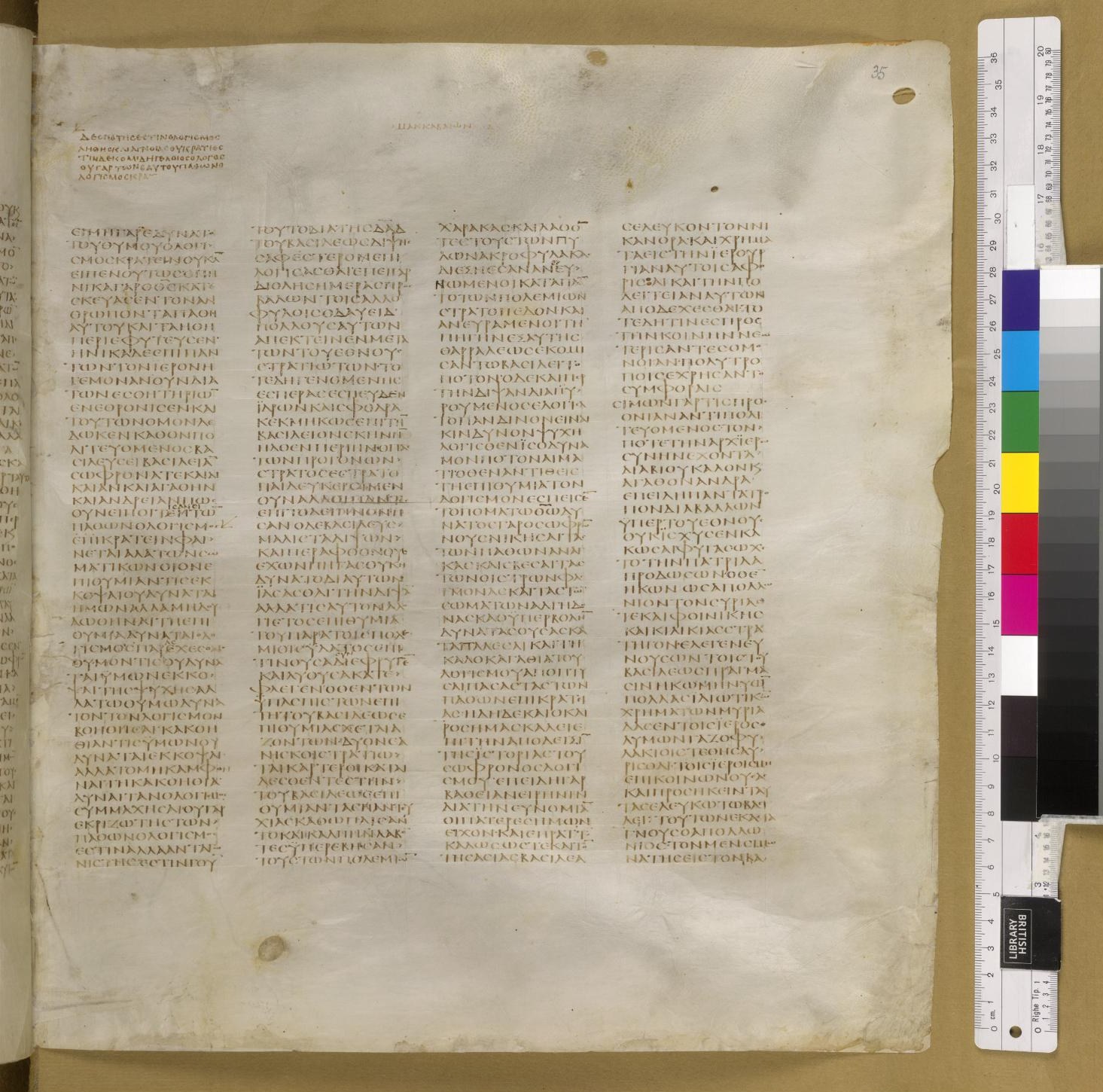
17θυμουμενοϲ γε τοι μωϲηϲ κατα δαθαν · και αβειρω ου θυμω τι κατ αυτων εποιηϲεν αλλα λογιϲμω τον > θυμον διητηϲεν ˙ 18ϊκανοϲ γαρ ο ϲωφρω νουϲ ωϲ εφην κατα των παθων α>ριϲτευϲαι και τα με αυτων μεταθει>ναι · τα δε και ακυ>ρωϲαι ˙ 19επει δια τι ο πανϲοφοϲ ημω πατηρ ϊακωβ τουϲ περι ϲυμεων και λευειν αιτιαται μη λογιϲμω τουϲ ϲικιμιταϲ εθνη>δον αποϲφαξαν>ταϲ λεγων ˙ επικαταρατοϲ ο θυμοϲ αυτω 20ει μη γαρ εδυνατο του θυμου ο λογι>ϲμοϲ κρατειν ουκ α ειπεν ουτωϲ ˙ 21οπηνικα γαρ ο θϲ κατεϲκευαϲεν τον ανθρωπον τα παθη αυτου και τα ηθη περιεφυτευϲεν ˙ 22ηνικα δε επι παντων τον ϊερον ηγεμονα νουν δια των εϲθητηριω ενεθρονιϲεν · 23και τουτω νομον δεδωκεν καθ ον πολιτευομενοϲ βαϲιλευϲει βαϲιλεια ϲωφρονα τε και δικαιαν και αγαθην και ανδρειαν ˙ 24πωϲ ουν ειποιτε η τω παθων ο λογιϲμοϲ
17Thus Moses, when angered against Dathan and Abiram, did nothing to them in wrath, but regulated his anger by reasoning. 18For the temperate mind is able, as I said, to be superior to the passions, and to transfer some, and destroy others. 19For why, else, does our most wise father Jacob blame Simeon and Levi for having irrationally slain the whole race of the Shechemites, saying, Cursed be their anger. 20For if reasoning did not possess the power of subduing angry affections, he would not have spoken thus. 21For at the time when God created man, He implanted within him his passions and moral nature. 22And at that time He enthroned above all the holy leader mind, through the medium of the senses. 23And He gave a law to this mind , by living according to which it will maintain a temperate, and just, and good, and manly reign. 24How, then, a man may say, if reasoning be master of the passions, has it no control over forgetfulness and ignorance?
Cite
Source & Cross-References
- Source text: Codex Sinaiticus folio + transcription (codexsinaiticus.org) + Brenton's Septuagint (1851) — view original
- Critical edition: Tischendorf 8th edition (1869) / Codex Sinaiticus transcription
← previous · → next · v cycle view · l back to library