4 Maccabees, Chapter 3
Introduction
This entry meets the strict three-criteria standard of the Theosis Library:
- Manuscript scan: The actual folio(s) of Codex Sinaiticus containing this chapter, from the Codex Sinaiticus Project (codexsinaiticus.org). Each section links to the specific folio holding its verses.
- Original text: The Codex Sinaiticus Project's verbatim transcription of the folio shown (uncial letters, lunate sigma, nomina sacra preserved).
- English translation: Brenton's Septuagint (1851), public domain, retrieved verbatim from ebible.org eng-Brenton USFM.
How was this verified? (Provenance)
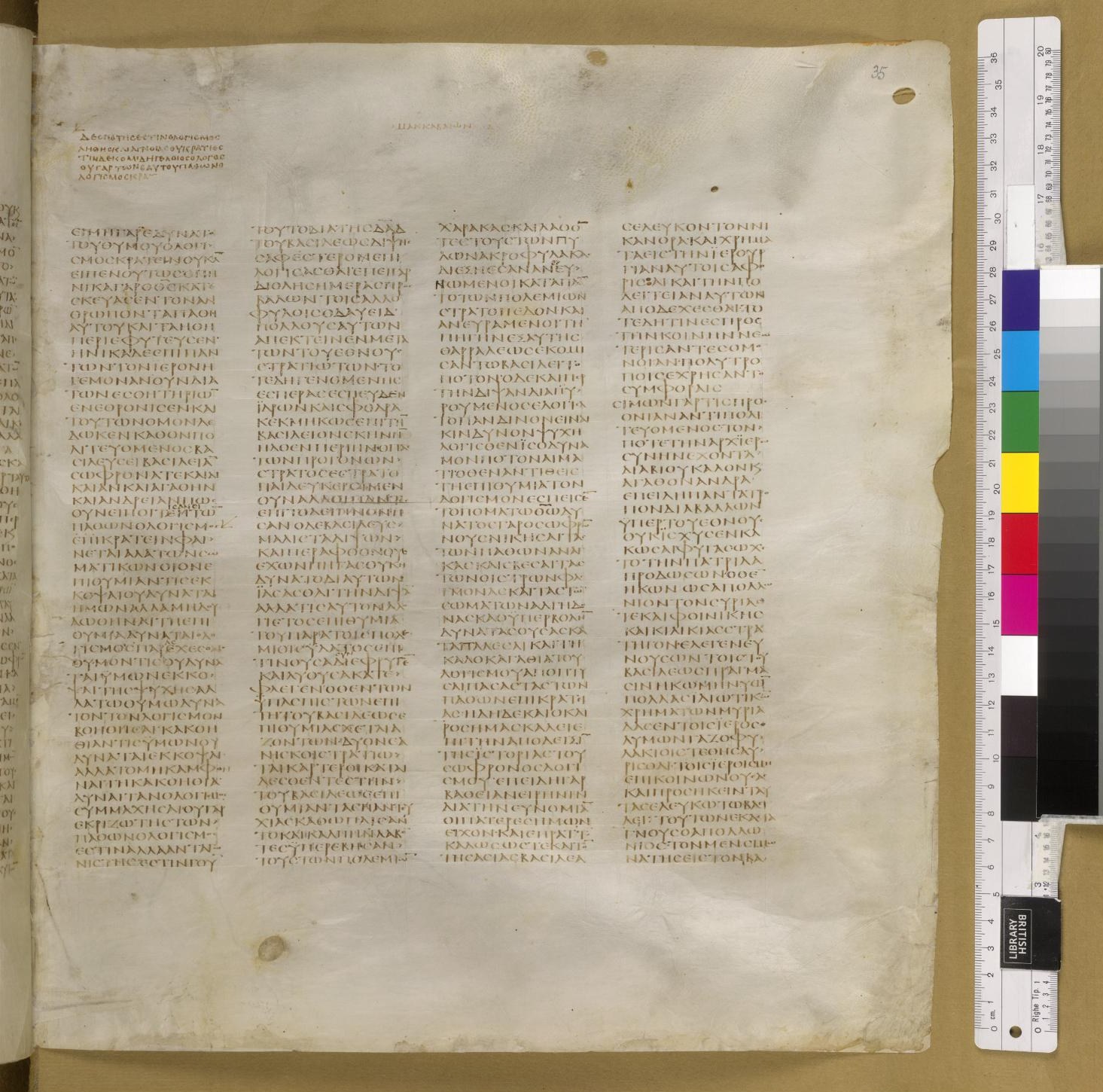
1επικρατειν φαι>νεται αλα των ϲωματικων 2οιον επιθυμιαν τιϲ εκκοψαι ου δυναται ημων αλλα μη δουλωθηναι τη επιθυμια δυναται ο λογιϲμοϲ παρεχεϲθαι · 3θυμον τιϲ ου δυναται ϋμων εκκο>ψαι τηϲ ψυχηϲ · αλλα τω θυμω δυνατον τον λογιϲμον βοηθηϲαι ˙ 4κακοηθιαν τιϲ ϋμων ου δυναται εκκοψαι · αλλα το μη καμφθηναι τη κακοηθια ˙ δυναιτ αν ο λογιϲμοϲ ϲυμμαχηϲαι · 5ου γαρ εκριζωτηϲ των > παθων ο λογιϲμοϲ εϲτιν αλλα ανταγωνιϲτηϲ ˙ 6εϲτιν γου τουτο δια τηϲ δαδ του βαϲιλεωϲ διψηϲ ϲαφεϲτερον επιλογιϲαϲθαι ˙ 7επει γαρ δι οληϲ ημεραϲ προϲβαλων τοιϲ αλλοφυλοιϲ ο δαυειδʼ πολλουϲ αυτων απεκτεινεν μετα των του εθνουϲ ϲτρατιωτων · 8τοτε δη γενομενηϲ εϲπεραϲ εϲπευδεν ϊδρων και ϲφοδρα κεκμηκωϲ επι τη βαϲιλειον ϲκηνη ηλθεν περι ην ο παϲ των προγονων > ϲτρατοϲ εϲτρατοπαιδευκει ˙
1The argument is exceedingly ridiculous: for reasoning does not appear to bear sway over its own affections, but over those of the body, 2in such a way as that any one of you may not be able to root out desire, but reasoning will enable you to avoid being enslaved to it. 3One may not be able to root out anger from the soul, but it is possible to withstand anger. 4Any one of you may not be able to eradicate malice, but reasoning has force to work with you to prevent your yielding to malice. 5For reasoning is not an eradicator, but an antagonist of the passions. 6And this may be more clearly comprehended from the thirst of King David. 7For after David had been attacking the Philistines the whole day, he with the soldiers of his nation slew many of them; 8then when evening came, sweating and very weary, he came to the royal tent, about which the entire host of our ancestors was encamped.
9οι μεν ουν αλλοι παντεϲ επι το δειπνον ηϲαν 10ο δε βαϲιλευϲ > μαλιϲτα διψων > καιπερ αφθονου εχων πηγαϲ ουκ ηδυνατο δι αυτων ϊαϲαϲθαι την διψα 11αλλα τιϲ αυτον αλογιϲτοϲ επιθυμια του παρα τοιϲ πολεμιοιϲ ϋδατοϲ επιτινουϲα διεφρυγε και λυουϲα κατε>φλεγεν ˙ 12οθεν των ϋπαϲπιϲτων επι τη του βαϲιλεωϲ επιθυμια ϲχετλιαζοντων · δυο νεανιϲκοι ϲτρατιω>ται καρτεροι καταιδεϲθεντεϲ την > του βαϲιλεωϲ επιθυμιαν ταϲ παντευχιαϲ καθωπλιϲαντο και καλπην λαβοτεϲ ϋπερεβηϲαν > τουϲ των πολεμιω χαρακαϲ · 13και λαθοτεϲ τουϲ των πυλων ακροφυλακαϲ διεξηεϲαν ανευ>ρωμενοι κατα πα το των πολεμιων ϲτρατοπεδον · 14και ανευραμενοι τη πηγην εξ αυτηϲ θαρραλεωϲ εκομιϲαν τω βαϲιλει το ποτον ˙ 15ο δε καιπερ την διψαν διαπυ>ρουμενοϲ ελογιϲατο πανδινον ειναι κινδυνον ψυχη λογιϲθεν ϊϲοδυναμον ποτον αιματι ˙ 16οθεν αντιθειϲ τη επιθυμια τον λογιϲμον εϲπειϲε το πομα τω θω
9Now all the rest of them were at supper; 10but the king, being very much athirst, although he had numerous springs, could not by their means quench his thirst; 11but a certain irrational longing for the water in the enemy's camp grew stronger and fiercer upon him, and consumed him with languish. 12Wherefore his body-guards being troubled at this longing of the king, two valiant young soldiers, reverencing the desire of the king, put on their panoplies, and taking a pitcher, got over the ramparts of the enemies: 13and unperceived by the guardians of the gate, they went throughout the whole camp of the enemy in quest. 14And having boldly discovered the fountain, they filled out of it the draught for the king. 15But he, though parched up with thirst, reasoned that a draught reputed of equal value to blood, would be terribly dangerous to his soul. 16Wherefore, setting up reasoning in opposition to his desire, he poured out the draught to God.
17δυνατοϲ γαρ ο ϲωφρω νουϲ νικηϲαι ταϲ των παθων αναγκαϲ και ϲβεϲαι ταϲ των οιϲτρων φλεγμοναϲ 18και ταϲ τω ϲωματων αλγηδοναϲ καθ ϋπερβολη δυναταϲ ουϲαϲ καταπαλεϲαι και τη καλοκαγαθια του λογιϲμου αποπτυϲαι παϲαϲ ταϲ των παθων επικρατειαϲ : 19ηδη δε και ο καιροϲ ημαϲ καλει επι την αποδειξι τηϲ ϊϲτοριαϲ του ϲωφρονοϲ λογιϲμου ˙ 20επειδη γαρ βαθειαν ειρηνην δια την ευνομια οι πατερεϲ ημων ειχον · και επρατʼτο καλωϲ ωϲτε και το τηϲ αϲιαϲ βαϲιλεα ϲελευκον τον νικανορα ˙ και χρηματα ειϲ την ϊερουργιαν αυτοιϲ αφοριϲαι και την πολειτειαν αυτων αποδεχεϲθαι · 21τοτε δη τινεϲ προϲ την κοινην νεωτεριϲαντεϲ ομονοιαν · πολυτροποιϲ εχρηϲαντο ϲυμφοραιϲ
17For the temperate mind has power to conquer the pressure of the passions, and to quench the fires of excitement, 18and to wrestle down the pains of the body, however excessive; and, through the excellency of reasoning, to abominate all the assaults of the passions. 19But the occasion now invites us to give an illustration of temperate reasoning from history. 20For at a time when our fathers were in possession of undisturbed peace through obedience to the law, and were prosperous, so that Seleucus Nicanor, the king of Asia, both assigned them money for divine service, and accepted their form of government, 21then certain persons, bringing in new things contrary to the general unanimity, in various ways fell into calamities.
Cite
Source & Cross-References
- Source text: Codex Sinaiticus folio + transcription (codexsinaiticus.org) + Brenton's Septuagint (1851) — view original
- Critical edition: Tischendorf 8th edition (1869) / Codex Sinaiticus transcription
← previous · → next · v cycle view · l back to library