Sirach (Ecclesiasticus), Chapter 22
Introduction
This entry meets the strict three-criteria standard of the Theosis Library:
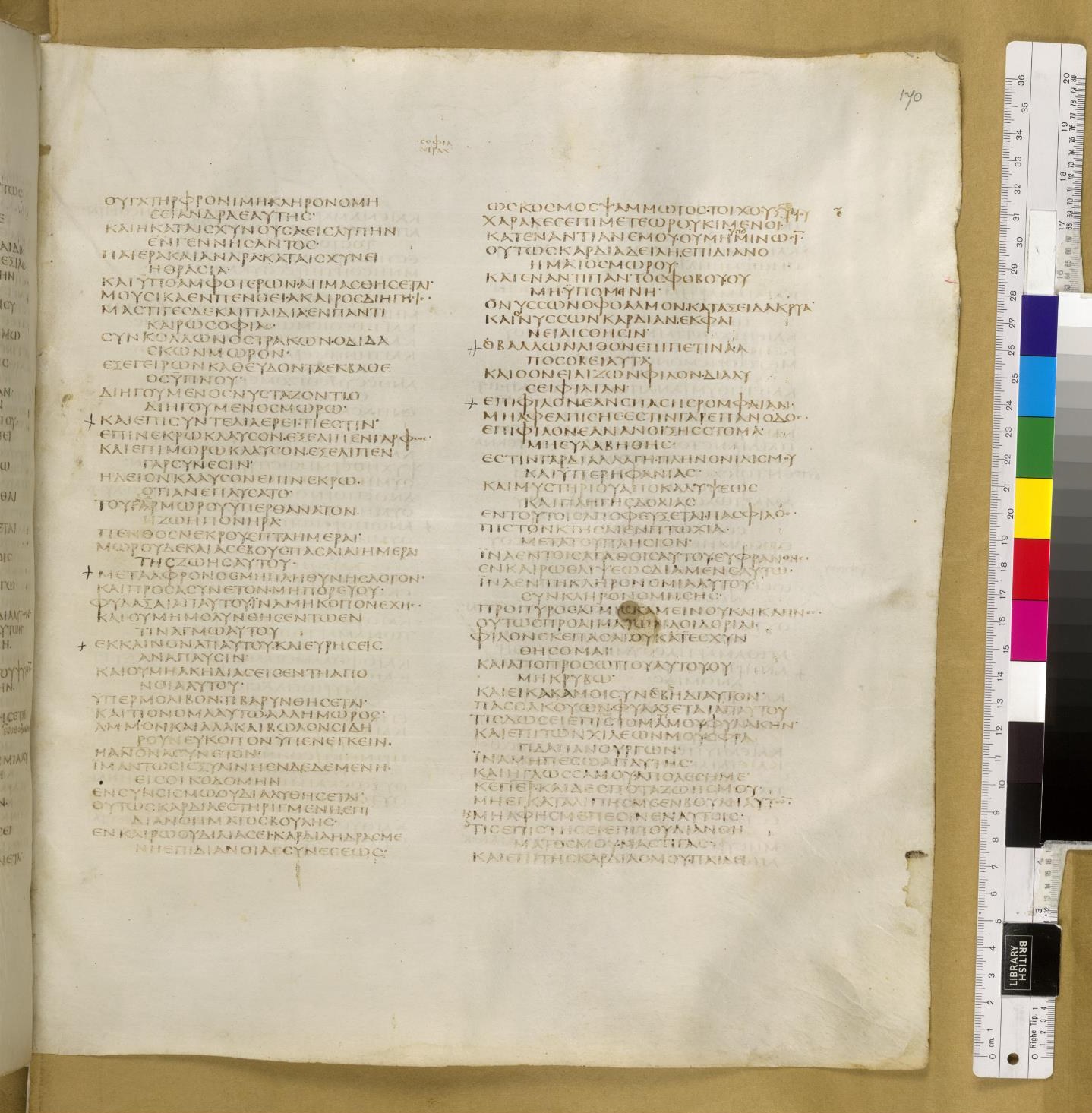
- Manuscript scan: The actual folio(s) of Codex Sinaiticus containing this chapter, from the Codex Sinaiticus Project (codexsinaiticus.org). Each section links to the specific folio holding its verses.
- Original text: The Codex Sinaiticus Project's verbatim transcription of the folio shown (uncial letters, lunate sigma, nomina sacra preserved).
- English translation: King James Version Apocrypha (1611; 1769 text), public domain, retrieved verbatim from ebible.org eng-kjv USFM (KJV with Apocrypha).
Numbering: Verse numbering of Sirach differs between the Greek manuscripts, Rahlfs, and the KJV in many chapters. Compare by content rather than by number.
Numbering: English verses 7, 8 have no Greek under that number in the codex as transcribed. Compare by content.
How was this verified? (Provenance)
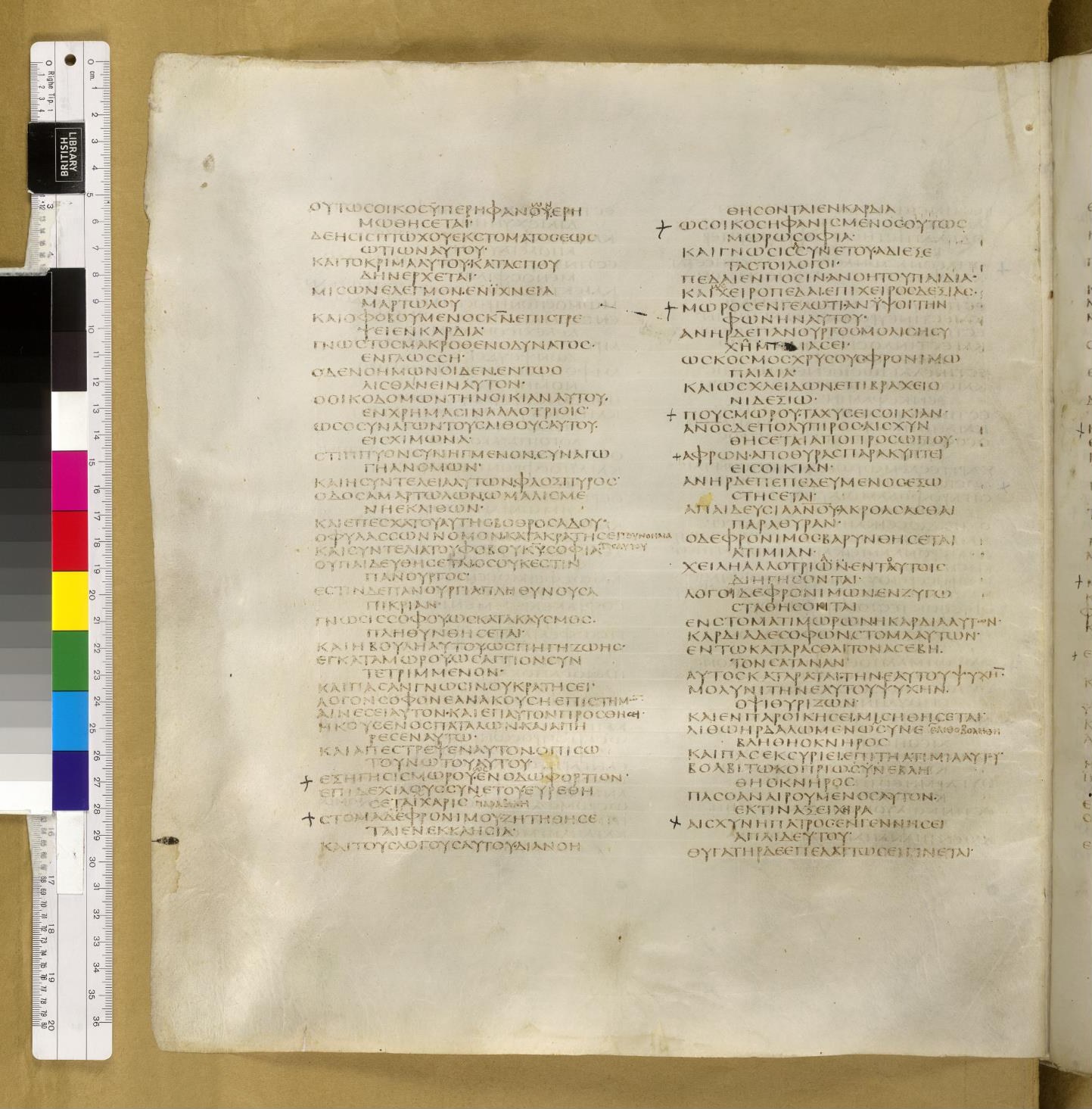
1λιθω ηρδαλωμενω ϲυνεβληθη οκνηροϲ και παϲ εκϲυριει . επι τη ατιμια αυτου ˙ 2βολβιτω · κοπριω . ϲυνεβληθη οκνηροϲ παϲ ο αναιρουμενοϲ αυτον . εκτιναξει χιρα 3αιϲχυνη πατροϲ · εν γεννηϲει απαιδευτου ˙ θυγατηρ δε · επ ελαττωϲει γινεται ˙ 4θυγατηρ φρονιμη · κληρονομηϲει ανδρα εαυτηϲ ˙ και η καταιϲχυνουϲα · ειϲ λυπην εν γεννηϲαντοϲ · 5πατερα και ανδρα · καταιϲχυνει η θραϲια · και υπο αμφοτερων · ατιμαϲθηϲεται ˙ 6μουϲικα εν πενθει · ακαιροϲ διηγηϲιϲ · μαϲτιγεϲ δε και παιδια · εν παντι καιρω ϲοφια ·
1A slothful man is compared to a filthy stone, and every one will hiss him out to his disgrace. 2A slothful man is compared to the filth of a dunghill: every man that takes it up will shake his hand. 3An evilnurtured man is the dishonour of his father that begat him: and a foolish daughter is born to his loss. 4A wise daughter shall bring an inheritance to her husband: but she that liveth dishonestly is her father’s heaviness. 5She that is bold dishonoureth both her father and her husband, but they both shall despise her. 6A tale out of season is as musick in mourning: but stripes and correction of wisdom are never out of time. 7Whoso teacheth a fool is as one that glueth a potsherd together, and as he that waketh one from a sound sleep. 8He that telleth a tale to a fool speaketh to one in a slumber: when he hath told his tale, he will say, What is the matter?
9ϲυνκολλων οϲτρακων · ο διδαϲκων μωρον · εξεγειρων καθευδοντα · εκ βαθεοϲ υπνου ˙ 10διηγουμενοϲ νυϲταζοντι . ο διηγουμενοϲ μωρω ˙ και επι ϲυντελια ερει · τι εϲτιν ˙ 11επι νεκρω κλαυϲον . εξελιπεν γαρ φωϲ · και επι μωρω κλαυϲον . εξελιπεν γαρ ϲυνεϲιν · ηδειον κλαυϲον επι νεκρω . οτι ανεπαυϲατο ˙ του γαρ μωρου υπερ θανατον . η ζωη πονηρα · 12πενθοϲ νεκρου . επτα ημεραι ˙ μωρου δε και αϲεβουϲ · παϲαι αι ημεραι τηϲ ζωηϲ αυτου · 13μετα αφρονοϲ · μη πληθυνηϲ λογον · και προϲ αϲυνετον · μη πορευου · φυλαξαι απ αυτου . ϊνα μη κοπον εχηϲ · και ου μη μολυνθηϲ · εν τω εντιναγμω αυτου εκκλινον απ αυτου · και ευρηϲειϲ αναπαυϲιν ˙ και ου μη ακηδιαϲειϲ · εν τη απονοια αυτου ˙ 14ϋπερ μολιβον . τι βαρυνθηϲεται ˙ και τι ονομα αυτω · αλλ η μωροϲ ˙ 15αμμον και αλα και βωλον ϲιδηρουν ευκοπον υπενεγκειν . η ανον αϲυνετον · 16ϊμαντωϲιϲ ξυλινη ενδεδεμενη · ειϲ οικοδομην εν ϲυνϲιϲμω . ου διαλυθηϲεται ˙ ουτωϲ καρδια εϲτηριγμενη . επι διανοηματοϲ βουληϲ · εν καιρω ου διλιαϲει ·
9If children live honestly, and have wherewithal, they shall cover the baseness of their parents. 10But children, being haughty, through disdain and want of nurture do stain the nobility of their kindred. 11Weep for the dead, for he hath lost the light: and weep for the fool, for he wanteth understanding: make little weeping for the dead, for he is at rest: but the life of the fool is worse than death. 12Seven days do men mourn for him that is dead; but for a fool and an ungodly man all the days of his life. 13Talk not much with a fool, and go not to him that hath no understanding: beware of him, lest thou have trouble, and thou shalt never be defiled with his fooleries: depart from him, and thou shalt find rest, and never be disquieted with madness. 14What is heavier than lead? and what is the name thereof, but a fool? 15Sand, and salt, and a mass of iron, is easier to bear, than a man without understanding. 16As timber girt and bound together in a building cannot be loosed with shaking: so the heart that is stablished by advised counsel shall fear at no time.
17καρδια ηδραϲμενη επι διανοιαϲ ϲυνεϲεωϲ · ωϲ κοϲμοϲ ψαμμωτοϲ · τοιχου ξυϲτου 18χαρακεϲ επι μετεωρου κιμενοι · κατεναντι ανεμου · ου μη μινωϲι · ουτωϲ καρδια δειλη . επι διανοηματοϲ μωρου ˙ κατεναντι παντοϲ φοβου · ου μη · ϋπομινη ˙ 19ο νυϲϲων οφθαλμον . καταξει δακρυα ˙ και νυϲϲων καρδιαν . εκφαινει αιϲθηϲιν ˙ 20ο βαλλων λιθον επι πετινα · αποϲοβει αυτα ˙ και ο ονειδιζων φιλον · διαλυϲει φιλιαν · 21επι φιλον . εαν ϲπαϲηϲ ρομφαιαν · μη αφελπιϲηϲ · εϲτιν γαρ επανοδοϲ · 22επι φιλον · εαν ανοιξηϲ ϲτομα · μη ευλαβηθηϲ · εϲτιν γαρ διαλλαγη · πλην ονιδιϲμου και ϋπερηφανιαϲ · και μυϲτηριου αποκαλυψεωϲ και πληγηϲ δολιαϲ εν τουτοιϲ αποφευξεται · παϲ φιλοϲ · 23πιϲτον κτηϲαι εν πτωχια · μετα του πληϲιον · ϊνα εν τοιϲ αγαθοιϲ αυτου · ευφρανθηϲ · εν καιρω θλιψεωϲ · διαμενε αυτω · ϊνα εν τη κληρονομια αυτου · ϲυνκληρονομηϲηϲ · 24προ πυροϲ · ατμιϲ καμεινου και καπνοϲ · ουτωϲ προ αιματων · λοιδοριαι ·
17A heart settled upon a thought of understanding is as a fair plaistering on the wall of a gallery. 18Pales set on an high place will never stand against the wind: so a fearful heart in the imagination of a fool cannot stand against any fear. 19He that pricketh the eye will make tears to fall: and he that pricketh the heart maketh it to shew her knowledge. 20Whoso casteth a stone at the birds frayeth them away: and he that upbraideth his friend breaketh friendship. 21Though thou drewest a sword at thy friend, yet despair not: for there may be a returning to favour . 22If thou hast opened thy mouth against thy friend, fear not; for there may be a reconciliation: except for upbraiding, or pride, or disclosing of secrets, or a treacherous wound: for for these things every friend will depart. 23Be faithful to thy neighbour in his poverty, that thou mayest rejoice in his prosperity: abide stedfast unto him in the time of his trouble, that thou mayest be heir with him in his heritage: for a mean estate is not always to be contemned: nor the rich that is foolish to be had in admiration. 24As the vapour and smoke of a furnace goeth before the fire; so reviling before blood.
25φιλον ϲκεπαϲαι . ου κατεϲχυνθηϲομαι · και απο προϲωπου αυτου . ου μη κρυβω ˙ 26και ει κακα μοι ϲυνεβη δι αυτον ˙ παϲ ο ακουων · φυλαξεται απ αυτου 27τιϲ δωϲει επι ϲτομα μου · φυλακην ˙ και επι των χιλεων μου · ϲφραγιδα πανουργων ˙ ϊνα μη πεϲω απ αυτηϲ ˙ και η γλωϲϲα μου · απολεϲη με ˙
25I will not be ashamed to defend a friend; neither will I hide myself from him. 26And if any evil happen unto me by him, every one that heareth it will beware of him. 27Who shall set a watch before my mouth, and a seal of wisdom upon my lips, that I fall not suddenly by them, and that my tongue destroy me not?
Cite
Source & Cross-References
- Source text: Codex Sinaiticus folio + transcription (codexsinaiticus.org) + King James Version Apocrypha (1611; 1769 text) — view original
- Critical edition: Tischendorf 8th edition (1869) / Codex Sinaiticus transcription
← previous · → next · v cycle view · l back to library