Wisdom of Solomon, Chapter 14
Introduction
This entry meets the strict three-criteria standard of the Theosis Library:
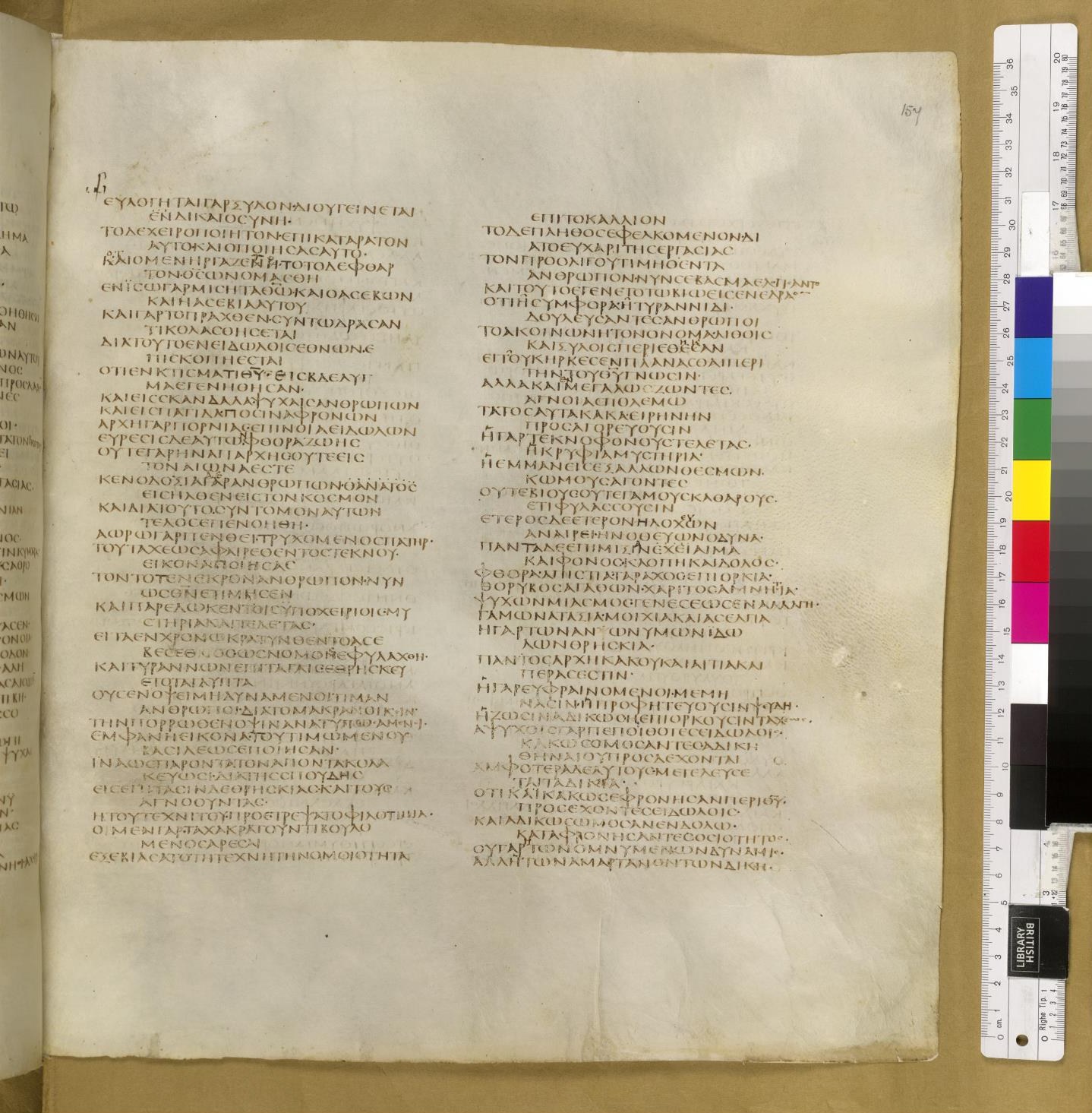
- Manuscript scan: The actual folio(s) of Codex Sinaiticus containing this chapter, from the Codex Sinaiticus Project (codexsinaiticus.org). Each section links to the specific folio holding its verses.
- Original text: The Codex Sinaiticus Project's verbatim transcription of the folio shown (uncial letters, lunate sigma, nomina sacra preserved).
- English translation: King James Version Apocrypha (1611; 1769 text), public domain, retrieved verbatim from ebible.org eng-kjv USFM (KJV with Apocrypha).
How was this verified? (Provenance)
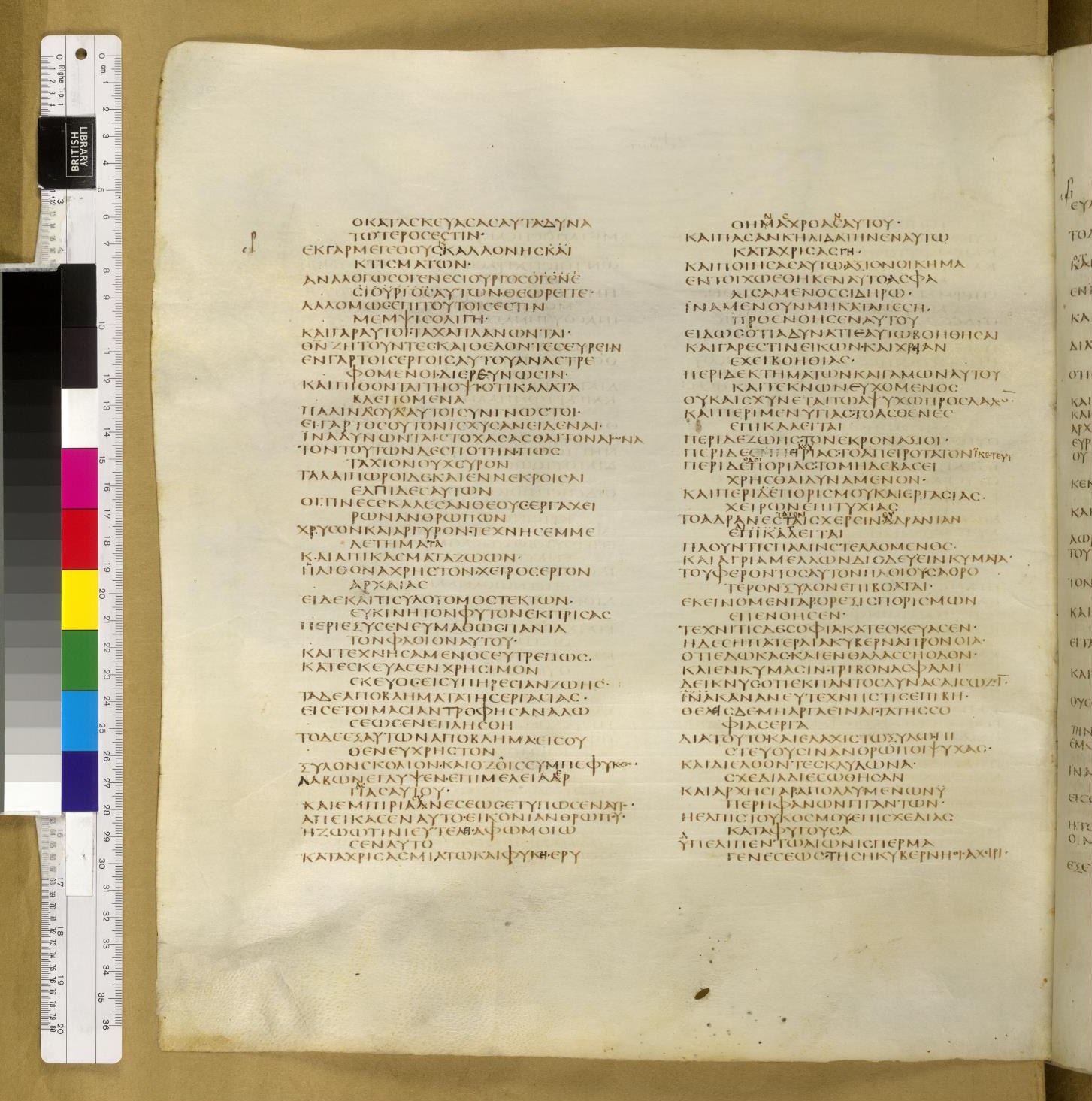
1πλουν τιϲ παλιν ϲτελλομενοϲ · και αγρια μελλων διοδευειν κυματα · του φεροντοϲ αυτον πλοιου · ϲαθροτερον ξυλον επιβοαται · 2εκεινο μεν γαρ . ορεξιϲ ποριϲμων επενοηϲεν · τεχνιτιϲ δε · ϲοφια κατεϲκευαϲεν · 3η δε ϲη πατερ διακυβερνα προνοια · οτι εδωκαϲ · και εν θαλαϲϲη οδον · και εν κυμαϲιν · τριβον αϲφαλη 4δεικνυϲ · οτι εκ παντοϲ δυναϲαι ϲωζει · ϊνα καν ανευ τεχνηϲ τιϲ επιβη · 5θελιϲ δε · μη αργα ειναι · τα τηϲ ϲοφιαϲ εργα δια τουτο · και ελαχιϲτω ξυλω · πιϲτευουϲιν ανθρωποι ψυχαϲ · και διελθοντεϲ κλυδωνα · ϲχεδια διεϲωθηϲαν 6και αρχηϲ γαρ . απολλυμενων ϋπερηφανων γιγαντων · η ελπιϲ του κοϲμου · επι ϲχεδιαϲ καταφυγουϲα ϋπελιπεν τω αιωνι ϲπερμα γενεϲεωϲ · τη ϲη κυβερνηθιϲα χειρι · 7ευλογηται γαρ ξυλον · δι ου γεινεται εν δικαιοϲυνη · 8το δε χειροποιητον · επικαταρατον αυτο · και ο ποιηϲαϲ αυτο · και ο μεν ηργαζενητο · το δε φθαρτον · θϲ ωνομαϲθη
1Again, one preparing himself to sail, and about to pass through the raging waves, calleth upon a piece of wood more rotten than the vessel that carrieth him. 2For verily desire of gain devised that, and the workman built it by his skill. 3But thy providence, O Father, governeth it: for thou hast made a way in the sea, and a safe path in the waves; 4Shewing that thou canst save from all danger: yea, though a man went to sea without art. 5Nevertheless thou wouldest not that the works of thy wisdom should be idle, and therefore do men commit their lives to a small piece of wood, and passing the rough sea in a weak vessel are saved. 6For in the old time also, when the proud giants perished, the hope of the world governed by thy hand escaped in a weak vessel, and left to all ages a seed of generation. 7For blessed is the wood whereby righteousness cometh. 8But that which is made with hands is cursed, as well it, as he that made it: he, because he made it; and it, because, being corruptible, it was called god.
9εν ϊϲω γαρ μιϲητα θω · και ο αϲεβων και η αϲεβια αυτου 10και γαρ το πραχθεν · ϲυν τω δραϲαντι κολαϲθηϲεται 11δια τουτο εν ειδωλοιϲ εθνων . επιϲκοπη εϲται οτι εν κτιϲματι θυ εν ιϲ βδελυγμα εγενηθηϲαν · και ειϲ ϲκανδαλα · ψυχαιϲ ανθρωπων και ειϲ παγιδα · ποϲιν αφρονων 12αρχη γαρ πορνιαϲ · επινοια ειδωλων ευρεϲιϲ δε αυτω . φθορα ζωηϲ 13ουτε γαρ ην απ αρχηϲ · ουτε ειϲ τον αιωνα εϲτε 14κενοδοξια γαρ ανθρωπων · θανατοϲ ειϲηλθεν ειϲ τον κοϲμον και δια τουτο . ϲυντομον αυτων τελοϲ επενοηθη · 15αωρω γαρ πενθει · τρυχομενοϲ πατηρ · του ταχεωϲ αφαιρεθεντοϲ τεκνου · εικονα ποιηϲαϲ τον τοτε νεκρον ανθρωπον · νυν ωϲ θν ετιμηϲεν και παρεδωκεν τοιϲ ϋποχειριοιϲ · μυϲτηρια και τελεταϲ · 16ειτα εν χρονω κρατυνθεν το αϲεβεϲ εθνοϲ · ωϲ νομον εφυλαχθη ·
9For the ungodly and his ungodliness are both alike hateful unto God. 10For that which is made shall be punished together with him that made it. 11Therefore even upon the idols of the Gentiles shall there be a visitation: because in the creature of God they are become an abomination, and stumblingblocks to the souls of men, and a snare to the feet of the unwise. 12For the devising of idols was the beginning of spiritual fornication, and the invention of them the corruption of life. 13For neither were they from the beginning, neither shall they be for ever. 14For by the vain glory of men they entered into the world, and therefore shall they come shortly to an end. 15For a father afflicted with untimely mourning, when he hath made an image of his child soon taken away, now honoured him as a god, which was then a dead man, and delivered to those that were under him ceremonies and sacrifices. 16Thus in process of time an ungodly custom grown strong was kept as a law, and graven images were worshipped by the commandments of kings.
17και τυραννων επιταγαιϲ · εθρηϲκευετο τα γλυπτα ουϲ εν οψει μη δυναμενοι τιμαν ανθρωποι · δια το μακραν οικειν ˙ την πορρωθεν οψιν ανατυπωϲαμενοι · εμφανη εικονα · του τιμωμενου βαϲιλεωϲ εποιηϲαν · ϊνα ωϲ παροντα τον αποντα κολακευωϲι · δια τηϲ ϲπουδηϲ 18ειϲ επιταϲιν δε θρηϲκιαϲ · και τουϲ αγνοουνταϲ · η του τεχνιτου · προετρεψατο φιλοτιμια · 19οι μεν γαρ · ταχα κρατουντι βουλομενοϲ αρεϲαι εξεβιαϲατο τη τεχνη την ομοιοτητα επι το καλλιον 20το δε πληθοϲ εφελκομενον · δια το ευχαρι τηϲ εργαϲιαϲ τον προ ολιγου τιμηθεντα ανθρωπον · νυν ϲεβαϲμα ελογιϲαντο 21και τουτο εγενετο τω βιω ειϲ ενεδρα οτι η ϲυμφορα · η τυραννιδι · δουλευϲαντεϲ ανθρωποι το ακοινωνητον ονομα · λιθοιϲ και ξυλοιϲ περιεθεϲαν 22ειτ ουκ ηρκεϲεν πλαναϲθαι περι την του θυ γνωϲιν · αλλα και μεγαλωϲ ζωντεϲ . αγνοιαϲ πολεμω τα τοϲαυτα κακα · ειρηνην προϲαγορευουϲιν 23η γαρ τεκνοφονουϲ τελεταϲ · η κρυφια μυϲτηρια · η εμμανειϲ εξαλλων θεϲμων . κωμουϲ αγοντεϲ 24ουτε βιουϲ · ουτε γαμουϲ καθαρουϲ . ετι φυλαϲϲουϲιν ετεροϲ δε ετερον · η λοχων αναιρει · η νοθευων οδυνα ·
17Whom men could not honour in presence, because they dwelt far off, they took the counterfeit of his visage from far, and made an express image of a king whom they honoured, to the end that by this their forwardness they might flatter him that was absent, as if he were present. 18Also the singular diligence of the artificer did help to set forward the ignorant to more superstition. 19For he, peradventure willing to please one in authority, forced all his skill to make the resemblance of the best fashion. 20And so the multitude, allured by the grace of the work, took him now for a god, which a little before was but honoured. 21And this was an occasion to deceive the world: for men, serving either calamity or tyranny, did ascribe unto stones and stocks the incommunicable name. 22Moreover this was not enough for them, that they erred in the knowledge of God; but whereas they lived in the great war of ignorance, those so great plagues called they peace. 23For whilst they slew their children in sacrifices, or used secret ceremonies, or made revellings of strange rites; 24They kept neither lives nor marriages any longer undefiled: but either one slew another traiterously, or grieved him by adultery.
25παντα δε επιμιξιν εχει αιμα και φονοϲ · κλοπη και δολοϲ · φθορα · απιϲτια · ταραχοϲ · επιορκια · 26θορυβοϲ αγαθων · χαριτοϲ αμνηϲια · ψυχων μιαϲμοϲ · γενεϲεωϲ εναλλαγη · γαμων αταξια · μοιχια και αϲελγια 27η γαρ των ανυωνυμων ϊδωλων θρηϲκια · παντοϲ αρχη κακου και αιτια και περαϲ εϲτιν · 28η γαρ ευφραινομενοι · μεμηναϲιν · η προφητευουϲιν ψευδη · η ζωϲιν αδικωϲ · η επιορκουϲιν ταχεωϲ 29αψυχοιϲ γαρ πεποιθοτεϲ ειδωλοιϲ · κακωϲ ομοϲαντεϲ · αδικηθηναι ου προϲδεχονται 30αμφοτερα δε αυτουϲ · μετελευϲεται τα δικια · οτι και κακωϲ εφρονηϲαν περι θυ · προϲεχοντεϲ ειδωλοιϲ · και αδικωϲ ωμοϲαν εν δολω · καταφρονηϲαντεϲ οϲιοτητοϲ · 31ου γαρ των ομνυμενων δυναμιϲ · αλλ η των αμαρτανοντων δικη · επεξερχεται αει την των αδικων παραβαϲιν
25So that there reigned in all men without exception blood, manslaughter, theft, and dissimulation, corruption, unfaithfulness, tumults, perjury, 26Disquieting of good men, forgetfulness of good turns, defiling of souls, changing of kind, disorder in marriages, adultery, and shameless uncleanness. 27For the worshipping of idols not to be named is the beginning, the cause, and the end, of all evil. 28For either they are mad when they be merry, or prophesy lies, or live unjustly, or else lightly forswear themselves. 29For insomuch as their trust is in idols, which have no life; though they swear falsely, yet they look not to be hurt. 30Howbeit for both causes shall they be justly punished: both because they thought not well of God, giving heed unto idols, and also unjustly swore in deceit, despising holiness. 31For it is not the power of them by whom they swear: but it is the just vengeance of sinners, that punisheth always the offence of the ungodly.
Cite
Source & Cross-References
- Source text: Codex Sinaiticus folio + transcription (codexsinaiticus.org) + King James Version Apocrypha (1611; 1769 text) — view original
- Critical edition: Tischendorf 8th edition (1869) / Codex Sinaiticus transcription
← previous · → next · v cycle view · l back to library