Katha Upanishad, Adhyaya I, Valli 1
Introduction
The Katha Upanishad belongs to the Black Yajurveda. It tells how the boy Naciketas, given to Death by his father, waits three nights at Death's house and is granted three wishes; the third, to know what happens to a man after death, leads to Death's teaching on the Self. The text has two adhyayas of three vallis each. This entry gives valli 1 of 6 (adhyaya I, valli 1).
The page images come from a single paper manuscript in the University of Pennsylvania Libraries, Ms. Coll. 390 Item 869, catalogued as 'Six early upanisads'. It has 16 leaves (13 x 27 cm) written in Devanagari, 11 to 13 lines to a side, and is undated (the library assigns it to the 18th or 19th century). It contains the Isa, Kena, Katha, Prasna, Mundaka and Mandukya Upanisads in that order; its title page names a set of ten. Leaves are numbered in the right margin of each verso and carry abbreviated titles in the upper left margin.
The Katha runs from fol. 3v to fol. 8v of the manuscript. The scribe closes each valli with a colophon (for example 'iti prathamādhyāye prathamavallī'), which makes the valli boundaries visible on the pages. Each section below holds the verses that end on one page; a verse that begins at the foot of the previous page is shown with both pages.
How was this verified? (Provenance)
Where on the image
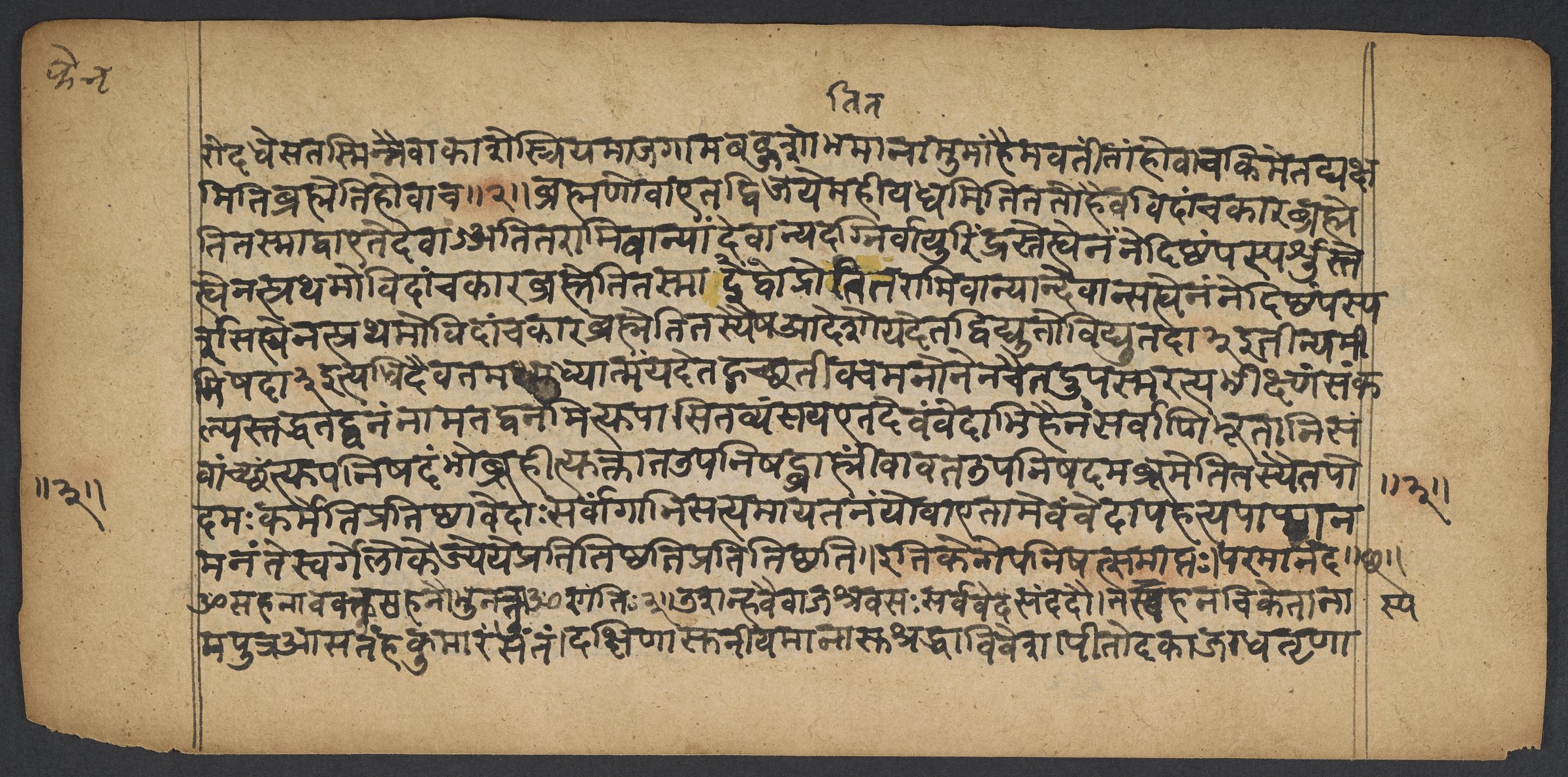
Penn Ms. Coll. 390 Item 869, fol. 3v. fol. 3v line 11: after the Kena colophon and the invocation 'oṃ saha nāv avatu ... śāntiḥ 3', verse 1 begins ‹uśan ha vai vājaśravasaḥ›; verse 2 ‹taṃ ha kumāraṃ santaṃ› in line 12. The manuscript omits the closing words of verse 2, 'so 'manyata'. Checked on the image; readings logged in data/sources/upanishads/mapping_notes_869.txt.
1uśan ha vai vājaśravasaḥ sarvavedasaṃ dadau /
tasya ha naciketā nāma putra āsa //
2taṃ ha kumāraṃ santaṃ dakṣiṇāsu nīyamānāsu śraddhāviveśa /
so 'manyata //
1Vâgasravasa, desirous (of heavenly rewards), surrendered (at a sacrifice) all that he possessed. He had a son of the name of Nakiketas.
2When the (promised) presents were being given (to the priests), faith entered into the heart of Nakiketas, who was still a boy, and he thought:
Where on the image
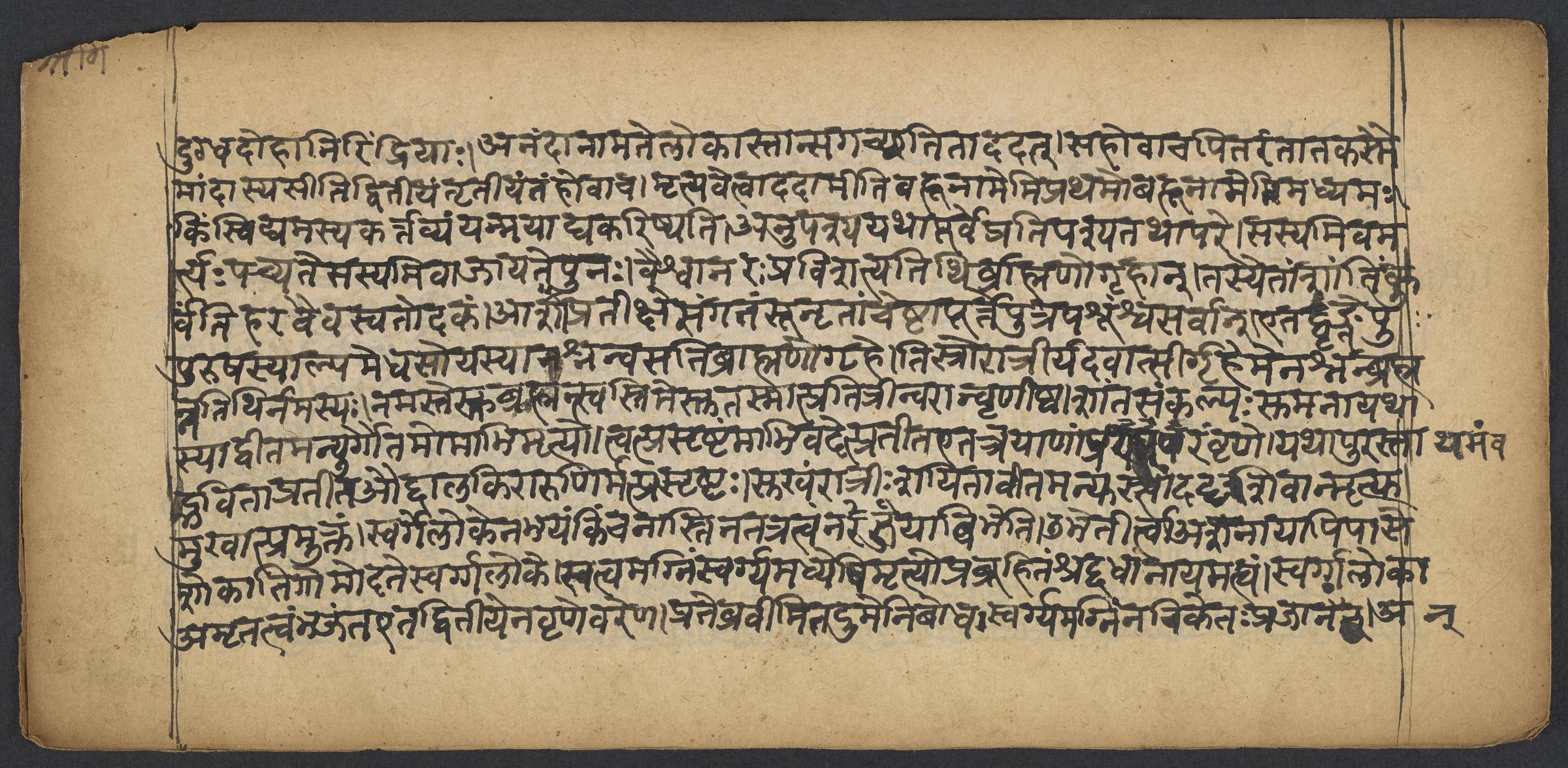
Penn Ms. Coll. 390 Item 869, fol. 3v, fol. 4r. Verse 3 begins at the end of fol. 3v line 12 ‹pītodakā jagdhatṛṇā› and ends at fol. 4r line 1 ‹nirindriyāḥ ... tā dadat›; verses 4-13 follow on fol. 4r to line 12 ‹etad dvitīyena vṛṇe vareṇa›. Checked on the image; readings logged in data/sources/upanishads/mapping_notes_869.txt.
3pītodakā jagdhatṛṇā dugdhadohā nirindriyāḥ /
anandā nāma te lokās tān sa gacchati tā dadat //
4sa hovāca pitaraṃ tata kasmai māṃ dāsyasīti /
dvitīyaṃ tṛtīyam /
taṃ hovāca mṛtyave tvā dadāmīti //
5bahūnām emi prathamo bahūnām emi madhyamaḥ /
kiṃ svid yamasya kartavyaṃ yan mayādya kariṣyati //
6anupaśya yathā pūrve pratipaśya tathāpare /
sasyam iva martyaḥ pacyate sasyam ivājāyate punaḥ //
7vaiśvānaraḥ praviśati atithir brāhmaṇo gṛhān /
tasyaitāṃ śāntiṃ kurvanti hara vaivasvatodakam //
8āśāpratīkṣe saṃgataṃ sūnṛtāṃ ca iṣṭāpūrte putrapaśūṃś ca sarvān /
etad vṛṅkte puruṣasyālpamedhaso yasyānaśnan vasati brāhmaṇo gṛhe //
9tisro rātrīr yad avatsīr gṛhe me anaśnan brahmann atithir namasyaḥ /
namas te 'stu brahman svasti me 'stu tasmāt prati trīn varān vṛṇīṣva //
10śāntasaṅkalpaḥ sumanā yathā syād vītamanyur gautamo mābhi mṛtyo /
tvatprasṛṣṭaṃ mābhivadet pratīta etat trayāṇāṃ prathamaṃ varaṃ vṛṇe //
11yathā purastād bhavitā pratīta auddālakir āruṇir matprasṛṣṭaḥ /
sukhaṃ rātrīḥ śayitā vītamanyus tvāṃ dadṛśivān mṛtyumukhāt pramuktam //
12svarge loke na bhayaṃ kiṃcanāsti na tatra tvaṃ na jarayā bibheti /
ubhe tīrtvā aśanāyāpipāse śokātigo modate svargaloke //
13sa tvam agniṃ svargyam adhyeṣi mṛtyo prabrūhi taṃ śraddadhānāya mahyam /
svargalokā amṛtatvaṃ bhajanta etad dvitīyena vṛṇe vareṇa //
3"Unblessed, surely, are the worlds to which a man goes by giving (as his promised present at a sacrifice) cows which have drunk water, eaten hay, given their milk, and are barren."
4He (knowing that his father had promised to give up all that he possessed, and therefore his son also) said to his father: "Dear father, to whom wilt thou give me?" He said it a second and a third time. Then the father replied (angrily): "I shall give thee unto Death." (The father, having once said so, though in haste, had to be true to his word and to sacrifice his son.)
5The son said: "I go as the first, at the head of many (who have still to die); I go in the midst of many (who are now dying). What will be the work of Yama (the ruler of the departed) which to-day he has to do unto me?
6Look back how it was with those who came before, look forward how it will be with those who come hereafter. A mortal ripens like corn, like corn he springs up again." (Nakiketas enters into the abode of Yama Vaivasvata, and there is no one to receive him. Thereupon one of the attendants of Yama is supposed to say:)
7"Fire enters into the houses, when a Brâhmana enters as a guest. That fire is quenched by this peace-offering; — bring water, O Vaivasvata!
8A Brâhmana that dwells in the house of a foolish man without receiving food to eat, destroys his hopes and expectations, his possessions, his righteousness, his sacred and his good deeds, and all his sons and cattle." (Yama, returning to his house after an absence of three nights, during which time Nakiketas had received no hospitality from him, says:)
9"O Brâhmana, as thou, a venerable guest, hast dwelt in my house three nights without eating, therefore choose now three boons. Hail to thee! and welfare to me!"
10Nakiketas said: "O Death, as the first of the three boons I choose that Gautama, my father, be pacified, kind, and free from anger towards me; and that he may know me and greet me, when I shall have been dismissed by thee."
11Yama said: "Through my favour Auddâlaki Âruni, thy father, will know thee, and be again towards thee as he was before. He shall sleep peacefully through the night, and free from anger, after having seen thee freed from the mouth of death."
12Nakiketas said: "In the heaven-world there is no fear; thou art not there, O Death, and no one is afraid on account of old age. Leaving behind both hunger and thirst, and out of the reach of sorrow, all rejoice in the world of heaven.
13Thou knowest, O Death, the fire-sacrifice which leads us to heaven; tell it to me, for I am full of faith. Those who live in the heaven-world reach immortality,- this I ask as my second boon."
Where on the image
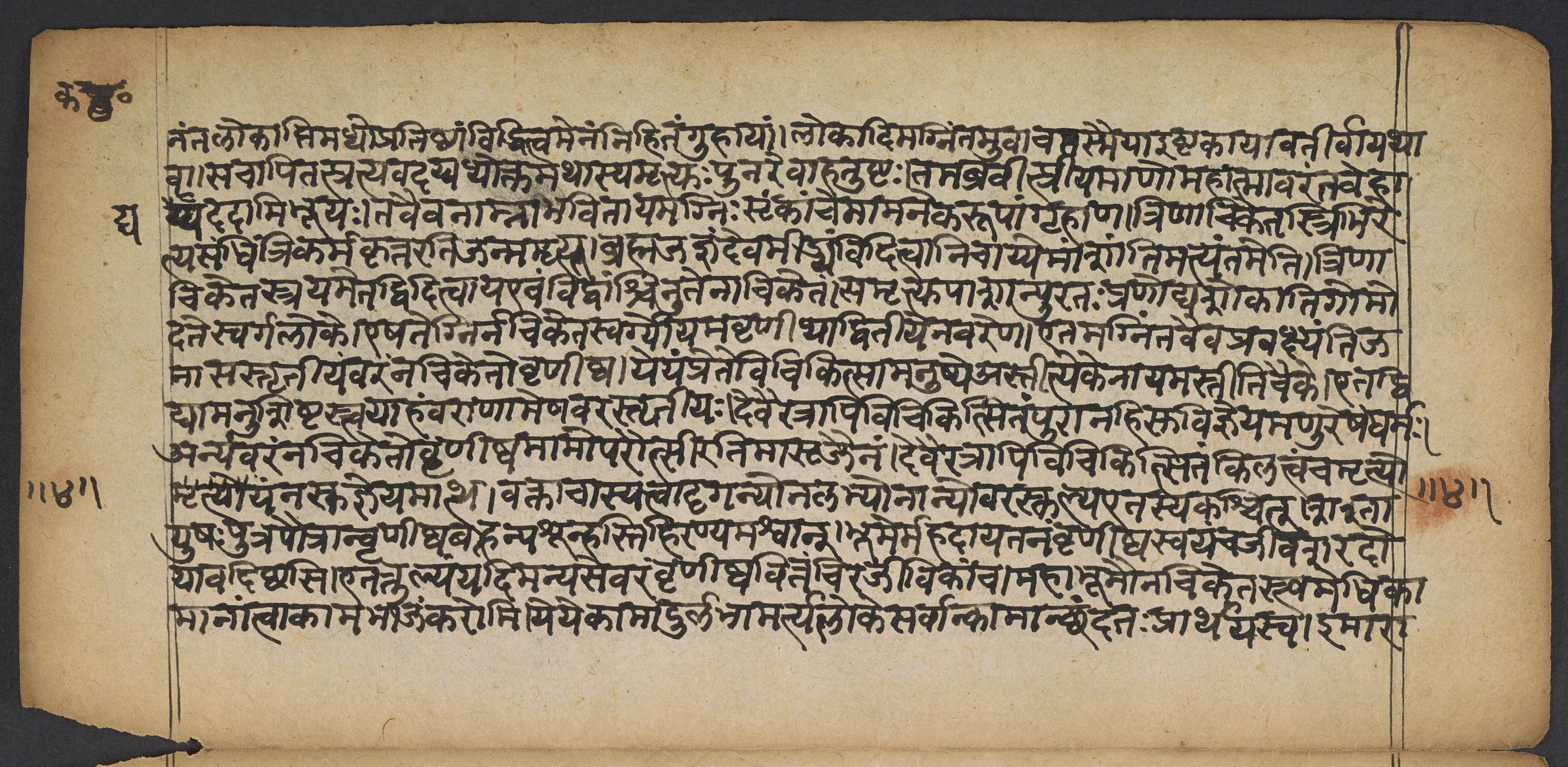
Penn Ms. Coll. 390 Item 869, fol. 4r, fol. 4v. Verse 14 begins at the end of fol. 4r line 12 ‹pra te bravīmi› and ends at fol. 4v line 1 ‹nihitaṃ guhāyām›; verses 15-24 follow on fol. 4v to line 13 ‹kāmabhājaṃ karomi›. Checked on the image; readings logged in data/sources/upanishads/mapping_notes_869.txt.
14pra te bravīmi tad u me nibodha svargyam agniṃ naciketaḥ prajānan /
anantalokāptim atho pratiṣṭhāṃ viddhi tvam etaṃ nihitaṃ guhāyām //
15lokādim agniṃ tam uvāca tasmai yā iṣṭakā yāvatīr vā yathā vā /
sa cāpi tat pratyavadad yathoktam athāsya mṛtyuḥ punar āha tuṣṭaḥ //
16tam abravīt prīyamāṇo mahātmā varaṃ tavehādya dadāmi bhūyaḥ /
tavaiva nāmnā bhavitāyam agniḥ sṛṅkāṃ cemām anekarūpāṃ gṛhāṇa //
17triṇāciketas tribhir etya sandhiṃ trikarmakṛt tarati janmamṛtyū /
brahmajajñaṃ devam īḍyaṃ viditvā nicāyyemāṃ śāntim atyantam eti //
18triṇāciketas trayam etad viditvā ya evaṃ vidvāṃś cinute nāciketam /
sa mṛtyupāśān purataḥ praṇodya śokātigo modate svargaloke //
19eṣa te 'gnir naciketaḥ svargyo yam avṛṇīthā dvitīyena vareṇa /
etam agniṃ tavaiva pravakṣyanti janāsas tṛtīyaṃ varaṃ naciketo vṛṇīṣva //
20yeyaṃ prete vicikitsā manuṣye astīty eke nāyam astīti caike /
etad vidyām anuśiṣṭas tvayāhaṃ varāṇām eṣa varas tṛtīyaḥ //
21devair atrāpi vicikitsitaṃ purā na hi sujñeyam aṇur eṣa dharmaḥ /
anyaṃ varaṃ naciketo vṛṇīṣva mā moparotsīr ati mā sṛjainam //
22devair atrāpi vicikitsitaṃ kila tvaṃ ca mṛtyo yan na sujñeyam āttha /
vaktā cāsya tvādṛg anyo na labhyo nānyo varas tulya etasya kaścit //
23śatāyuṣaḥ putrapautrān vṛṇīṣva bahūn paśūn hastihiraṇyam aśvān /
bhūmer mahad āyatanaṃ vṛṇīṣva svayaṃ ca jīva śarado yāvad icchasi //
24etat tulyaṃ yadi manyase varaṃ vṛṇīṣva vittaṃ cirajīvikāṃ ca /
mahābhūmau naciketas tvam edhi kāmānāṃ tvā kāmabhājaṃ karomi //
14Yama said: "I tell it thee, learn it from me, and when thou understandest that fire-sacrifice which leads to heaven, know, O Nakiketas, that it is the attainment of the endless worlds, and their firm support, hidden in darkness."
15Yama then told him that fire-sacrifice, the beginning of all the worlds, and what bricks are required for the altar, and how many, and how they are to be placed. And Nakiketas repeated all as it had been told to him. Then Mrityu, being pleased with him, said again:
16The generous, being satisfied, said to him: "I give thee now another boon; that fire-sacrifice shall be named after thee, take also this many-coloured chain.
17He who has three times performed this Nâkiketa-rite and has been united with the three (father, mother, and teacher), and has performed the three duties (study, sacrifice, almsgiving) overcomes birth and death. When he has learnt and understood this fire, which knows (or makes us know) all that is born of Brahman, which is venerable and divine, then he obtains everlasting peace.
18He who knows the three Nâkiketa fires, and knowing the three, piles up the Nâkiketa sacrifice, he, having first, thrown off the chains of death, rejoices in the world of heaven, beyond the reach of grief.
19This, O Nakiketa, is thy fire which leads to heaven, and which thou hast chosen as thy second boon. That fire all men will proclaim. Choose now, O Nakiketa, thy third boon."
20Nakiketa said: "There is that doubt, when a man is dead, — some saying, he is; others, he is not. This I should like to know, taught by thee; this is the third of my boons."
21Death said: "On this point even the gods have doubted formerly; it is not easy to understand. That subject is subtle. Choose another boon, O Nakiketas, do not press me, and let me off that boon."
22Nakiketas said: "On this point even the gods have doubted indeed, and thou, Death, hast declared it to be not easy to understand, and another teacher like thee is not to be found: — surely no other boon is like unto this."
23Death said: "Choose sons and grandsons who shall live a hundred years, herds of cattle, elephants, gold, and horses. Choose the wide abode of the earth, and live thyself as many harvests as thou desirest.
24If you can think of any boon equal to that, choose wealth, and long life. Be (king), Nakiketas, on the wide earth. I make thee the enjoyer of all desires.
Where on the image
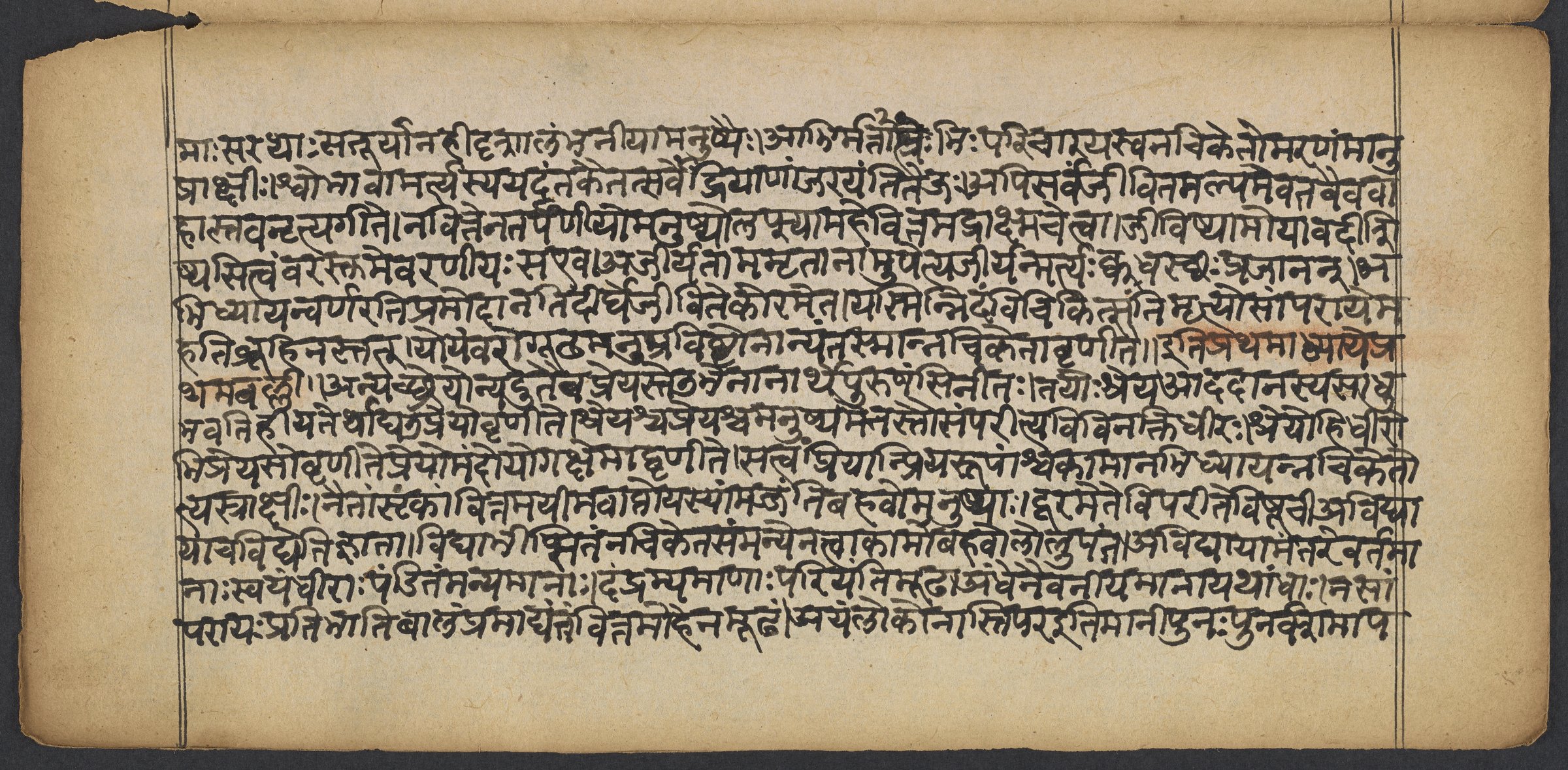
Penn Ms. Coll. 390 Item 869, fol. 4v, fol. 5r. Verse 25 begins at the end of fol. 4v line 13 ‹ye ye kāmā durlabhā› and ends at fol. 5r line 2 ‹maraṇaṃ mānuprākṣīḥ›; verses 26-29 follow, and the red colophon ‹iti prathamādhyāye prathamavallī› stands in fol. 5r lines 6-7. Checked on the image; readings logged in data/sources/upanishads/mapping_notes_869.txt.
25ye ye kāmā durlabhā martyaloke sarvān kāmāṃś chandataḥ prārthayasva /
imā rāmāḥ sarathāḥ satūryā na hīdṛśā lambhanīyā manuṣyaiḥ /
ābhir matprattābhiḥ paricārayasva naciketo maraṇaṃ mānuprākṣīḥ //
26śvobhāvā martyasya yad antakaitat sarvendriyāṇāṃ jarayanti tejaḥ /
api sarvaṃ jīvitam alpam eva tavaiva vāhās tava nṛtyagīte //
27na vittena tarpaṇīyo manuṣyo lapsyāmahe vittam adrākṣma cet tvā /
jīviṣyāmo yāvad īśiṣyasi tvaṃ varas tu me varaṇīyaḥ sa eva //
28ajīryatām amṛtānām upetya jīryan martyaḥ kvadhaḥsthaḥ prajānan /
abhidhyāyan varṇaratipramodān atidīrghe jīvite ko rameta //
29yasminn idaṃ vicikitsanti mṛtyo yat sāmparāye mahati brūhi nas tat /
yo 'yaṃ varo gūḍham anupraviṣṭo nānyaṃ tasmān naciketā vṛṇīte //
25Whatever desires are difficult to attain among mortals, ask for them according to thy wish; — these fair maidens with their chariots and musical instruments, — such are indeed not to be obtained by men, — be waited on by them whom I give to thee, but do not ask me about dying."
26Nakiketas said: "These things last till tomorrow, O Death, for they wear out this vigour of all the senses. Even the whole of life is short. Keep thou thy horses, keep dance and song for thyself.
27No man can be made happy by wealth. Shall we possess wealth, when we see thee? Shall we live, as long as thou rulest? Only that boon (which I have chosen) is to be chosen by me.
28What mortal, slowly decaying here below, and knowing, after having approached them, the freedom from decay enjoyed by the immortals, would delight in a long life, after he has pondered on the pleasures which arise from beauty and love?
29No, that on which there is this doubt, O Death, tell us what there is in that great Hereafter. Nakiketas does not choose another boon but that which enters into the hidden world."
Notes
- Sanskrit: GRETIL, Kathopanisad, input by the Vienna University student team after P. Olivelle, The Early Upanisads (1998). Verse numbers follow the edition; the manuscript has none.
- English: F. Max Müller, 'Katha-upanishad', The Upanishads part II, Sacred Books of the East 15 (1884), from the proofread English Wikisource transcription. Müller numbers the vallis of the second adhyaya IV-VI; his verse numbers agree with the Sanskrit. Footnotes are not reproduced.
- Four slips in the Wikisource transcription are corrected to the printed page (SBE 15 pp. 4, 11, 13, 23): I.1.13 'fire-sacrificef', I.2.23 'can be can gained', I.3.13 'whichs', II.3.15 'Whean'. The transcription also numbers I.3.15-17 as 18-20; the book has 15-17.
- Müller ends the sixth valli with a 19th paragraph, the closing prayer 'May He protect us both!' (saha nāv avatu). It is not part of the edited Sanskrit text and is not shown; in the manuscript this prayer stands on fol. 8v line 11 as the opening invocation of the Prasna.
Cite
Sources
- Source: Penn Ms. Coll. 390 Item 869 (OPenn, public domain) + GRETIL Sanskrit + F. Max Müller (1884) English (holding institution)
- Critical edition: GRETIL Sanskrit e-texts (Isa, Katha, Prasna, Mandukya, Aitareya, Taittiriya, Svetasvatara, Chandogya); Nirnaya Sagar edition of 1925, transcribed (Kena, Mundaka)
← previous · → next · v cycle view · l back to library