Katha Upanishad, Adhyaya I, Valli 2
Introduction
The Katha Upanishad belongs to the Black Yajurveda. It tells how the boy Naciketas, given to Death by his father, waits three nights at Death's house and is granted three wishes; the third, to know what happens to a man after death, leads to Death's teaching on the Self. The text has two adhyayas of three vallis each. This entry gives valli 2 of 6 (adhyaya I, valli 2).
The page images come from a single paper manuscript in the University of Pennsylvania Libraries, Ms. Coll. 390 Item 869, catalogued as 'Six early upanisads'. It has 16 leaves (13 x 27 cm) written in Devanagari, 11 to 13 lines to a side, and is undated (the library assigns it to the 18th or 19th century). It contains the Isa, Kena, Katha, Prasna, Mundaka and Mandukya Upanisads in that order; its title page names a set of ten. Leaves are numbered in the right margin of each verso and carry abbreviated titles in the upper left margin.
The Katha runs from fol. 3v to fol. 8v of the manuscript. The scribe closes each valli with a colophon (for example 'iti prathamādhyāye prathamavallī'), which makes the valli boundaries visible on the pages. Each section below holds the verses that end on one page; a verse that begins at the foot of the previous page is shown with both pages.
How was this verified? (Provenance)
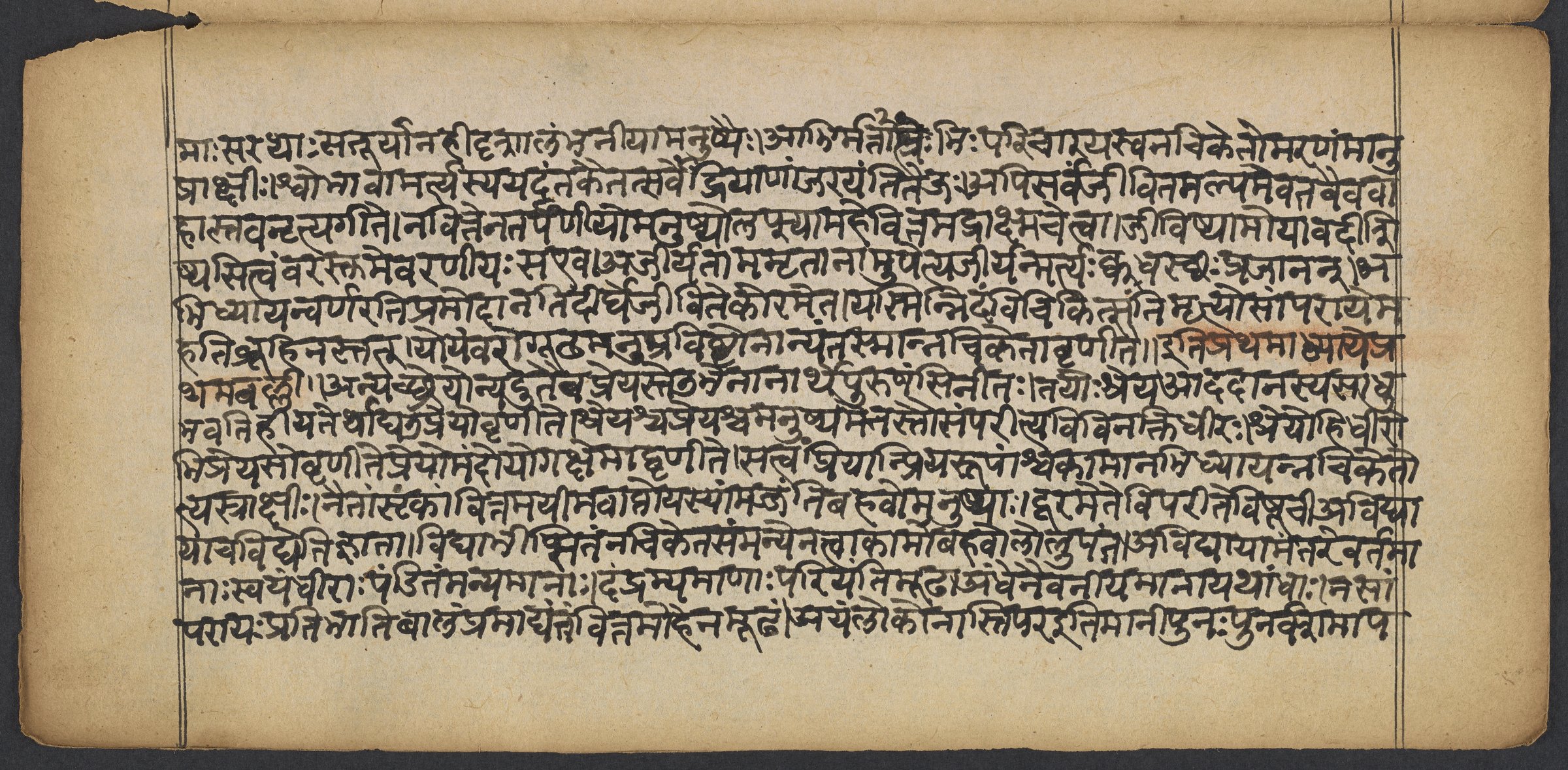
Where on the image
Penn Ms. Coll. 390 Item 869, fol. 5r. fol. 5r line 7: after the colophon of the first vallī, verse 1 begins ‹anyac chreyo 'nyad utaiva preyaḥ›; verse 5 ends in line 12 ‹andhenaiva nīyamānā yathāndhāḥ›. Checked on the image; readings logged in data/sources/upanishads/mapping_notes_869.txt.
1anyac chreyo 'nyad utaiva preyas te ubhe nānārthe puruṣaṃ sinītaḥ /
tayoḥ śreya ādadānasya sādhu bhavati hīyate 'rthād ya u preyo vṛṇīte //
2śreyaś ca preyaś ca manuṣyam etas tau saṃparītya vivinakti dhīraḥ /
śreyo hi dhīro 'bhi preyaso vṛṇīte preyo mando yogakṣemād vṛṇīte //
3sa tvaṃ priyān priyarūpāṃś ca kāmān abhidhyāyan naciketo 'tyasrākṣīḥ /
naitāṃ sṛṅkāṃ vittamayīm avāpto yasyāṃ majjanti bahavo manuṣyāḥ //
4dūram ete viparīte viṣūcī avidyā yā ca vidyeti jñātā /
vidyābhīpsinaṃ naciketasaṃ manye na tvā kāmā bahavo 'lolupanta //
5avidyāyām antare vartamānāḥ svayaṃ dhīrāḥ paṇḍitaṃ manyamānāḥ /
dandramyamāṇāḥ pariyanti mūḍhā andhenaiva nīyamānā yathāndhāḥ //
1Death said: "The good is one thing, the pleasant another; these two, having different objects, chain a man. It is well with him who clings to the good; he who chooses the pleasant, misses his end.
2The good and the pleasant approach man: the wise goes round about them and distinguishes them. Yea, the wise prefers the good to the pleasant, but the fool chooses the pleasant through greed and avarice.
3Thou, O Nakiketas, after pondering all pleasures that are or seem delightful, hast dismissed them all. Thou hast not gone into the road that leadeth to wealth, in which many men perish.
4Wide apart and leading to different points are these two, ignorance, and what is known as wisdom. I believe Nakiketas to be one who desires knowledge, for even many pleasures did not tear thee away.
5Fools dwelling in darkness, wise in their own conceit, and puffed up with vain knowledge, go round and round, staggering to and fro, like blind men led by the blind.
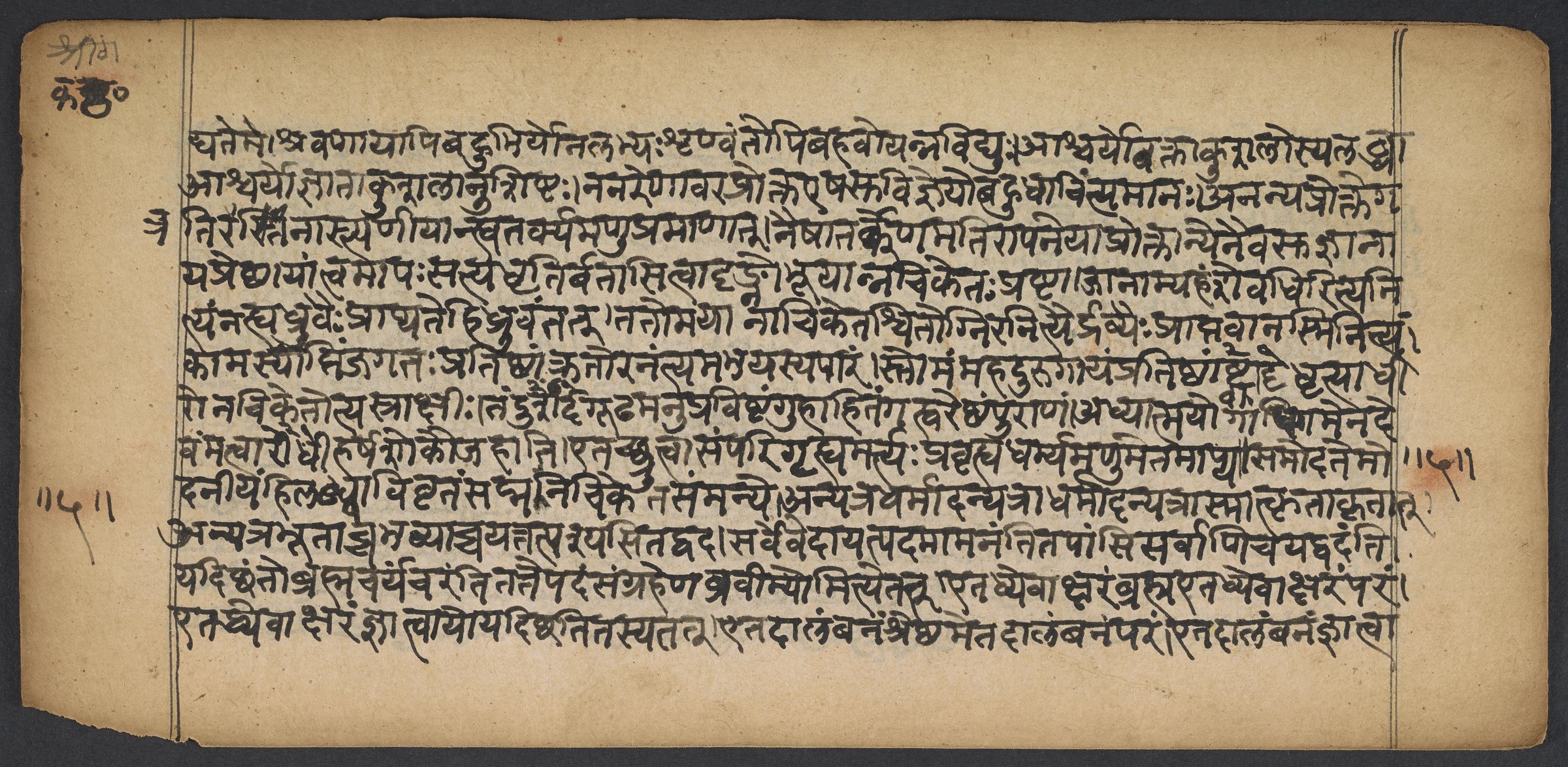
Where on the image
Penn Ms. Coll. 390 Item 869, fol. 5r, fol. 5v. Verse 6 begins at the end of fol. 5r line 12 ‹na sāṃparāyaḥ› and ends at fol. 5v line 1 ‹-dyate me›; verses 7-16 follow on fol. 5v to line 12 ‹yo yad icchati tasya tat›. Checked on the image; readings logged in data/sources/upanishads/mapping_notes_869.txt.
6na sāmparāyaḥ pratibhāti bālaṃ pramādyantaṃ vittamohena mūḍham /
ayaṃ loko nāsti para iti mānī punaḥ punar vaśam āpadyate me //
7śravaṇāyāpi bahubhir yo na labhyaḥ śṛṇvanto 'pi bahavo yaṃ na vidyuḥ /
āścaryo vaktā kuśalo 'sya labdhā āścaryo jñātā kuśalānuśiṣṭaḥ //
8na nareṇāvareṇa prokta eṣa suvijñeyo bahudhā cintyamānaḥ /
ananyaprokte gatir atra nāsty aṇīyān hy atarkyam aṇupramāṇāt //
9naiṣā tarkeṇa matir āpaneyā proktānyenaiva sujñānāya preṣṭha /
yāṃ tvam āpaḥ satyadhṛtir batāsi tvādṛṅ no bhūyān naciketaḥ preṣṭā //
10jānāmy ahaṃ śevadhir ity anityaṃ na hy adhruvaiḥ prāpyate hi dhruvaṃ tat /
tato mayā nāciketaś cito 'gnir anityair dravyaiḥ prāptavān asmi nityam //
11kāmasya āptiṃ jagataḥ pratiṣṭhāṃ krator anantyam abhayasya pāram /
stomamahad urugāyaṃ pratiṣṭhāṃ dṛṣṭvā dhṛtyā dhīro naciketo 'tyasrākṣīḥ //
12taṃ durdarśaṃ gūḍham anupraviṣṭaṃ guhāhitaṃ gahvareṣṭhaṃ purāṇam /
adhyātmayogādhigamena devaṃ matvā dhīro harṣaśokau jahāti //
13etac chrutvā saṃparigṛhya martyaḥ pravṛhya dharmyam aṇum etam āpya /
sa modate modanīyaṃ hi labdhvā vivṛtaṃ sadma naciketasaṃ manye //
14anyatra dharmād anyatrādharmād anyatrāsmāt kṛtākṛtāt /
anyatra bhūtāc ca bhavyāc ca yat tat paśyasi tad vada //
15sarve vedā yat padam āmananti tapāṃsi sarvāṇi ca yad vadanti /
yad icchanto brahmacaryaṃ caranti tat te padaṃ saṃgraheṇa bravīmi //
om ity etat //
16etad dhy evākṣaraṃ brahma etad dhy evākṣaraṃ param /
etad dhy evākṣaraṃ jñātvā yo yad icchati tasya tat //
6The Hereafter never rises before the eyes of the careless child, deluded by the delusion of wealth. "This is the world," he thinks, "there is no other;" — thus he falls again and again under my sway.
7He (the Self) of whom many are not even able to hear, whom many, even when they hear of him, do not comprehend; wonderful is a man, when found, who is able to teach him (the Self); wonderful is he who comprehends him, when taught by an able teacher.
8That (Self), when taught by an inferior man, is not easy to be known, even though often thought upon; unless it be taught by another, there is no way to it, for it is inconceivably smaller than what is small.
9That doctrine is not to be obtained by argument, but when it is declared by another, then, O dearest, it is easy to understand. Thou hast obtained it now; thou art truly a man of true resolve. May we have always an inquirer like thee!"
10Nakiketas said: "I know that what is called a treasure is transient, for that eternal is not obtained by things which are not eternal. Hence the Nâkiketa fire(sacrifice) has been laid by me (first); then by means of transient things, I have obtained what is not transient (the teaching of Yama)."
11Yama said: "Though thou hadst seen the fulfilment of all desires, the foundation of the world, the endless rewards of good deeds, the shore where there is no fear, that which is magnified by praise, the wide abode, the rest, yet being wise thou hast with firm resolve dismissed it all.
12The wise who, by means of meditation on his Self, recognises the Ancient, who is difficult to be seen, who has entered into the dark, who is hidden in the cave, who dwells in the abyss, as God, he indeed leaves joy and sorrow far behind."
13A mortal who has heard this and embraced it, who has separated from it all qualities, and has thus reached the subtle Being, rejoices, because he has obtained what is a cause for rejoicing. The house (of Brahman) is open, I believe, O Nakiketas."
14Nakiketas said: "That which thou seest as neither this nor that, as neither effect nor cause, as neither past nor future, tell me that."
15Yama said: "That word (or place) which all - the Vedas record, which all penances proclaim, which men desire when they live as religious students, that word I tell thee briefly, it is Om.
16That (imperishable) syllable means Brahman, that syllable means the highest (Brahman); he who knows that syllable, whatever he desires,is his.
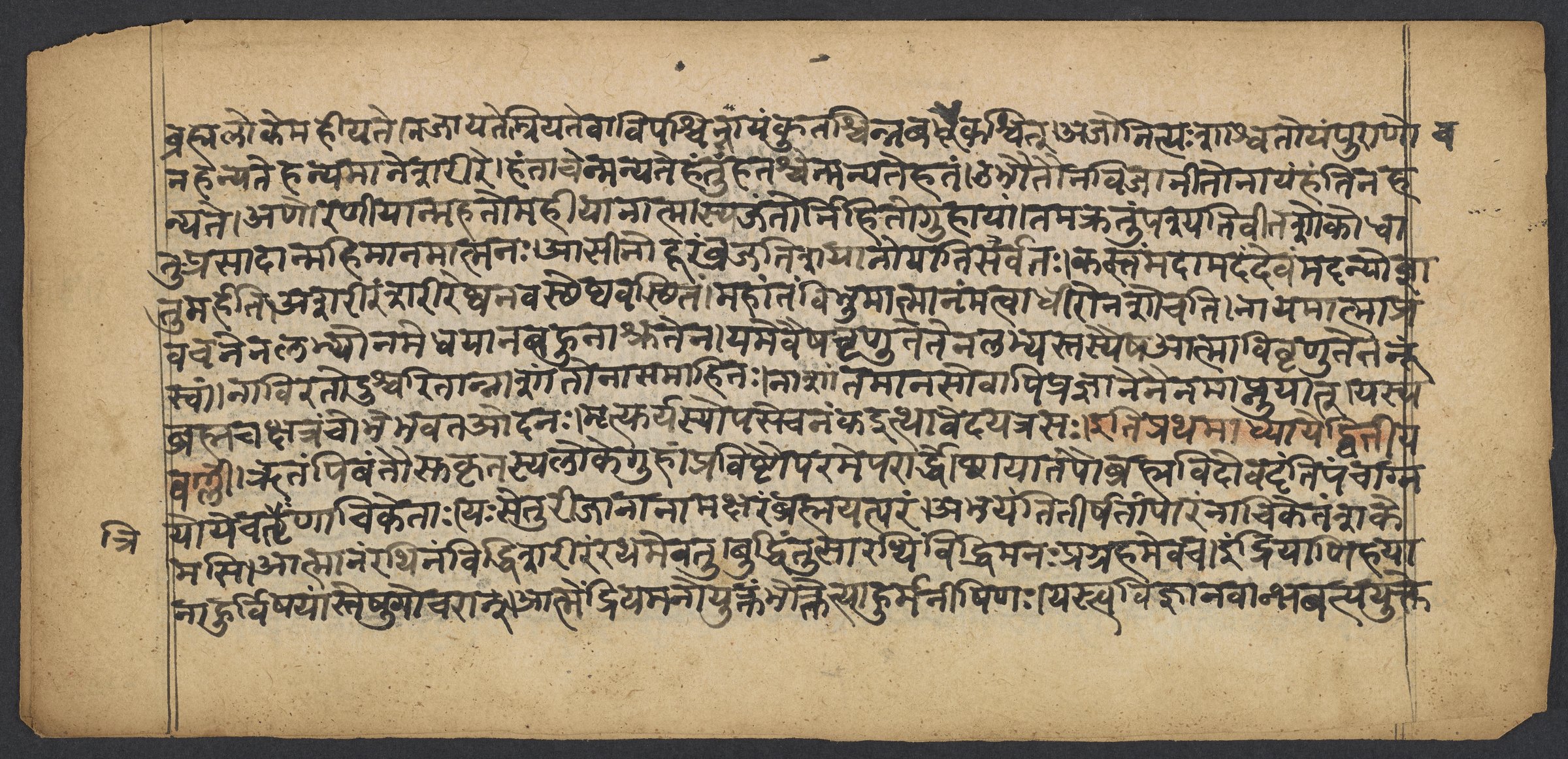
Where on the image
Penn Ms. Coll. 390 Item 869, fol. 5v, fol. 6r. Verse 17 begins at the end of fol. 5v line 12 ‹etad ālambanam› and ends at fol. 6r line 1 ‹brahmaloke mahīyate›; verses 18-25 follow, and the red colophon ‹iti prathamādhyāye dvitīyavallī› stands in fol. 6r lines 8-9. Checked on the image; readings logged in data/sources/upanishads/mapping_notes_869.txt.
17etad ālambanaṃ śreṣṭham etad ālambanaṃ param /
etad ālambanaṃ jñātvā brahmaloke mahīyate //
18na jāyate mriyate vā vipaścin nāyaṃ kutaścin na babhūva kaścit /
ajo nityaḥ śāśvato 'yaṃ purāṇo na hanyate hanyamāne śarīre //
19hantā cen manyate hantuṃ hataś cen manyate hatam /
ubhau tau na vijānīto nāyaṃ hanti na hanyate //
20aṇor aṇīyān mahato mahīyān ātmāsya jantor nihito guhāyām /
tam akratuḥ paśyati vītaśoko dhātuprasādān mahimānam ātmanaḥ //
21āsīno dūraṃ vrajati śayāno yāti sarvataḥ /
kas taṃ madāmadaṃ devaṃ mad anyo jñātum arhati //
22aśarīraṃ śarīreṣu anavastheṣv avasthitam /
mahāntaṃ vibhum ātmānaṃ matvā dhīro na śocati //
23nāyam ātmā pravacanena labhyo na medhayā na bahunā śrutena /
yam evaiṣa vṛṇute tena labhyas tasyaiṣa ātmā vivṛṇute tanūṃ svām //
24nāvirato duścaritān nāśānto nāsamāhitaḥ /
nāśāntamānaso vāpi prajñānenainam āpnuyāt //
25yasya brahma ca kṣatraṃ ca ubhe bhavata odanaḥ /
mṛtyur yasyopasecanaṃ ka itthā veda yatra saḥ //
17This is the best support, this is the highest support; he who knows that support is magnified in the world of Brahmâ.
18The knowing (Self) is not born, it dies not; it sprang from nothing, nothing sprang from it. The Ancient is unborn, eternal, everlasting; he is not killed, though the body is killed.
19If the killer thinks that he kills, if the killed thinks that he is killed, they do not understand; for this one does not kill, nor is that one killed.
20The Self, smaller than small, greater than great, is hidden in the heart of that creature. A man who is free from desires and free from grief, sees the majesty of the Self by the grace of the Creator.
21Though sitting still, he walks far; though lying down, he goes everywhere. Who, save myself, is able to know that God who rejoices and rejoices not?
22The wise who knows the Self as bodiless within the bodies, as unchanging among changing things, as great and omnipresent, does never grieve.
23That Self cannot be gained by the Veda, nor by understanding, nor by much learning. He whom the Self chooses, by him the Self can be gained. The Self chooses him (his body) as his own.
24But he who has not first turned away from his wickedness, who is not tranquil, and subdued, or whose mind is not at rest, he can never obtain the Self (even) by knowledge.
25Who then knows where He is, He to whom the Brahmans and Kshatriyas are (as it were) but food, and death itself a condiment?"
Notes
- Sanskrit: GRETIL, Kathopanisad, input by the Vienna University student team after P. Olivelle, The Early Upanisads (1998). Verse numbers follow the edition; the manuscript has none.
- English: F. Max Müller, 'Katha-upanishad', The Upanishads part II, Sacred Books of the East 15 (1884), from the proofread English Wikisource transcription. Müller numbers the vallis of the second adhyaya IV-VI; his verse numbers agree with the Sanskrit. Footnotes are not reproduced.
- Four slips in the Wikisource transcription are corrected to the printed page (SBE 15 pp. 4, 11, 13, 23): I.1.13 'fire-sacrificef', I.2.23 'can be can gained', I.3.13 'whichs', II.3.15 'Whean'. The transcription also numbers I.3.15-17 as 18-20; the book has 15-17.
- Müller ends the sixth valli with a 19th paragraph, the closing prayer 'May He protect us both!' (saha nāv avatu). It is not part of the edited Sanskrit text and is not shown; in the manuscript this prayer stands on fol. 8v line 11 as the opening invocation of the Prasna.
Cite
Sources
- Source: Penn Ms. Coll. 390 Item 869 (OPenn, public domain) + GRETIL Sanskrit + F. Max Müller (1884) English (holding institution)
- Critical edition: GRETIL Sanskrit e-texts (Isa, Katha, Prasna, Mandukya, Aitareya, Taittiriya, Svetasvatara, Chandogya); Nirnaya Sagar edition of 1925, transcribed (Kena, Mundaka)
← previous · → next · v cycle view · l back to library