Mundaka Upanishad, Mundaka 1 (the higher and the lower knowledge)
Introduction
The Mundaka Upanishad belongs to the Atharvaveda. In three chapters (mundakas) of two sections (khandas) each, the sage Angiras answers the householder Saunaka, who has asked what it is that, once known, makes everything known. This entry gives chapter 1. The first mundaka gives the line of teachers from Brahma to Angiras, Saunaka's question 'what is that through which, when it is known, everything else becomes known?', and the answer: there are two kinds of knowledge, the lower (the four Vedas and the six auxiliary sciences) and the higher, by which the imperishable is apprehended. It then describes the fire sacrifice and its seven tongues of flame and warns that sacrifices are frail boats; the wise go to a teacher, fuel in hand, to learn of Brahman.
The page images come from a single paper manuscript in the University of Pennsylvania Libraries, Ms. Coll. 390 Item 869, catalogued as 'Six early upanisads'. It has 16 leaves (13 x 27 cm) written in Devanagari, 11 to 13 lines to a side, and is undated (the library assigns it to the 18th or 19th century). It contains the Isa, Kena, Katha, Prasna, Mundaka and Mandukya Upanisads in that order; its title page names a set of ten. Leaves are numbered in the right margin of each verso and carry abbreviated titles in the upper left margin.
The Mundaka follows the Prasna in the manuscript and runs from fol. 12v line 7 to fol. 15v line 12; this chapter stands on fol. 12v-13v. The scribe numbers the khandas continuously (||1|| to ||6||, the fourth written below the last line of fol. 14v) and closes the second and third chapters with colophons. Each section below holds the verses of one khanda that end on one page; a verse that begins at the foot of the previous page is shown with both pages.
No openly licensed digital text of the Sanskrit Mundaka was found, so the Sanskrit here was typed from the page images of a printed edition of 1925 and transliterated.
How was this verified? (Provenance)
Where on the image
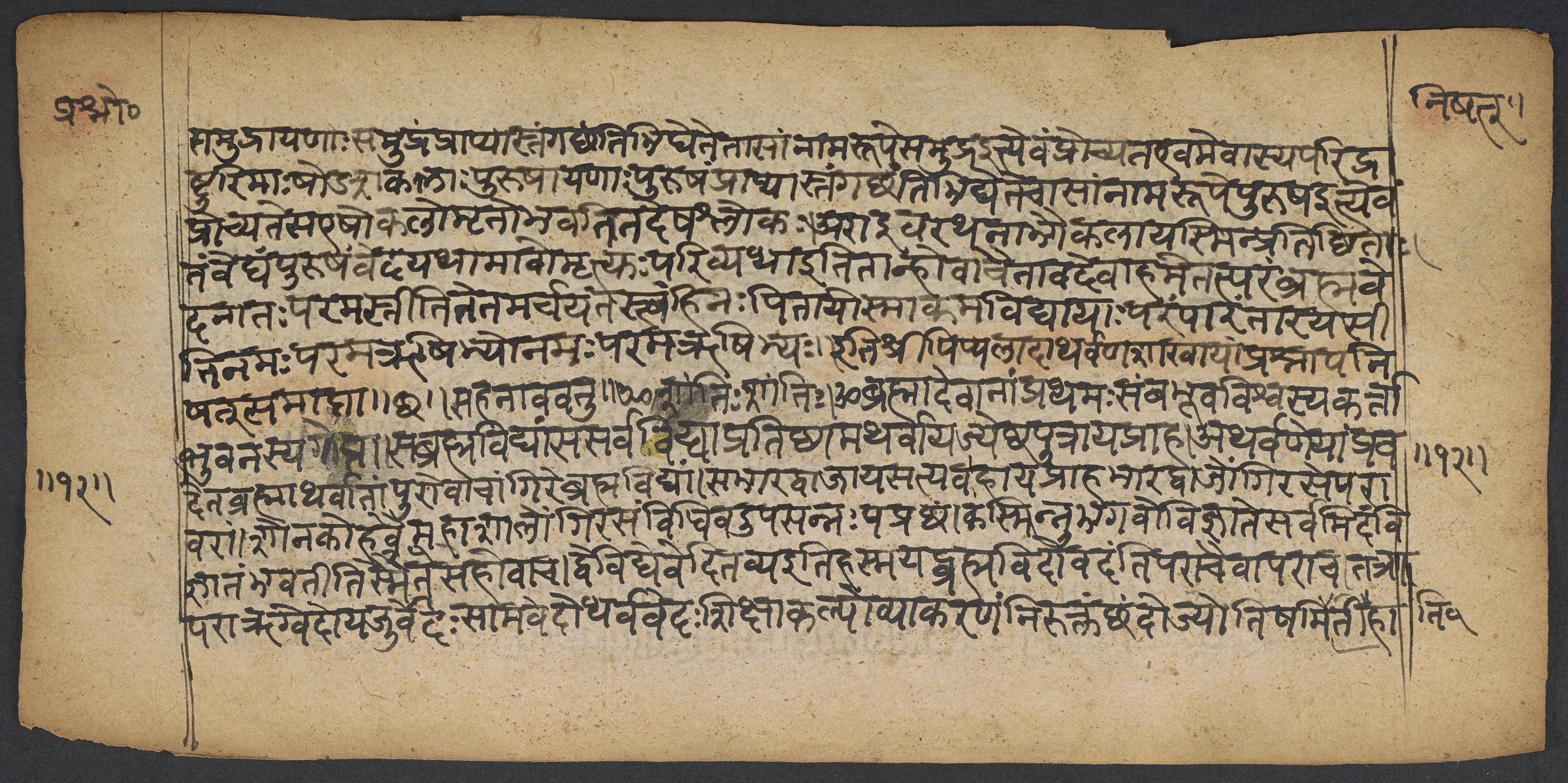
Penn Ms. Coll. 390 Item 869, fol. 12v. fol. 12v (12 lines) line 7: after the colophon of the Prasna and the invocation ‹saha nāv avatu ... oṃ śāntiḥ›, 1.1.1 begins ‹oṃ brahmā devānāṃ prathamaḥ saṃbabhūva›; 1.1.4 ends in line 11 ‹parā caivāparā ca›. Checked on the image; readings logged in data/sources/upanishads/mapping_notes_869.txt.
1.1.1oṃ brahmā devānāṃ prathamaḥ saṃbabhūva viśvasya kartā bhuvanasya goptā ||
sa brahmavidyāṃ sarvavidyāpratiṣṭhāmatharvāya jyeṣṭhaputrāya prāha ||
1.1.2atharvaṇe yāṃ pravadeta brahmātharvā tāṃ purovācāṅgire brahmavidyām ||
sa bhāradvājāya satyavāhāya prāha bhāradvājo'ṅgirase parāvarām ||
1.1.3śaunako ha vai mahāśālo'ṅgirasaṃ vidhivadupasannaḥ papraccha ||
kasminnu bhagavo vijñāte sarvamidaṃ vijñātaṃ bhavatīti ||
1.1.4tasmai sa hovāca ||
dve vidye veditavye iti ha sma yadbrahmavido vadanti parā caivāparā ca ||
1.1.1Brahmâ was the first of the Devas, the maker of the universe, the preserver of the world. He told the knowledge of Brahman, the foundation of all knowledge, to his eldest son Atharva.
1.1.2Whatever Brahmâ told Atharvan, that knowledge of Brahman Atharvan formerly told to Angir; he told it to Satyavâha Bhâradvâga, and Bhâradvâga told it in succession to Angiras.
1.1.3Saunaka, the great householder, approached Angiras respectfully and asked: "Sir, what is that through which, if it is known, everything else becomes known?"
1.1.4He said to him: "Two kinds of knowledge must be known, this is what all who know Brahman tell us, the higher and the lower knowledge."
Where on the image
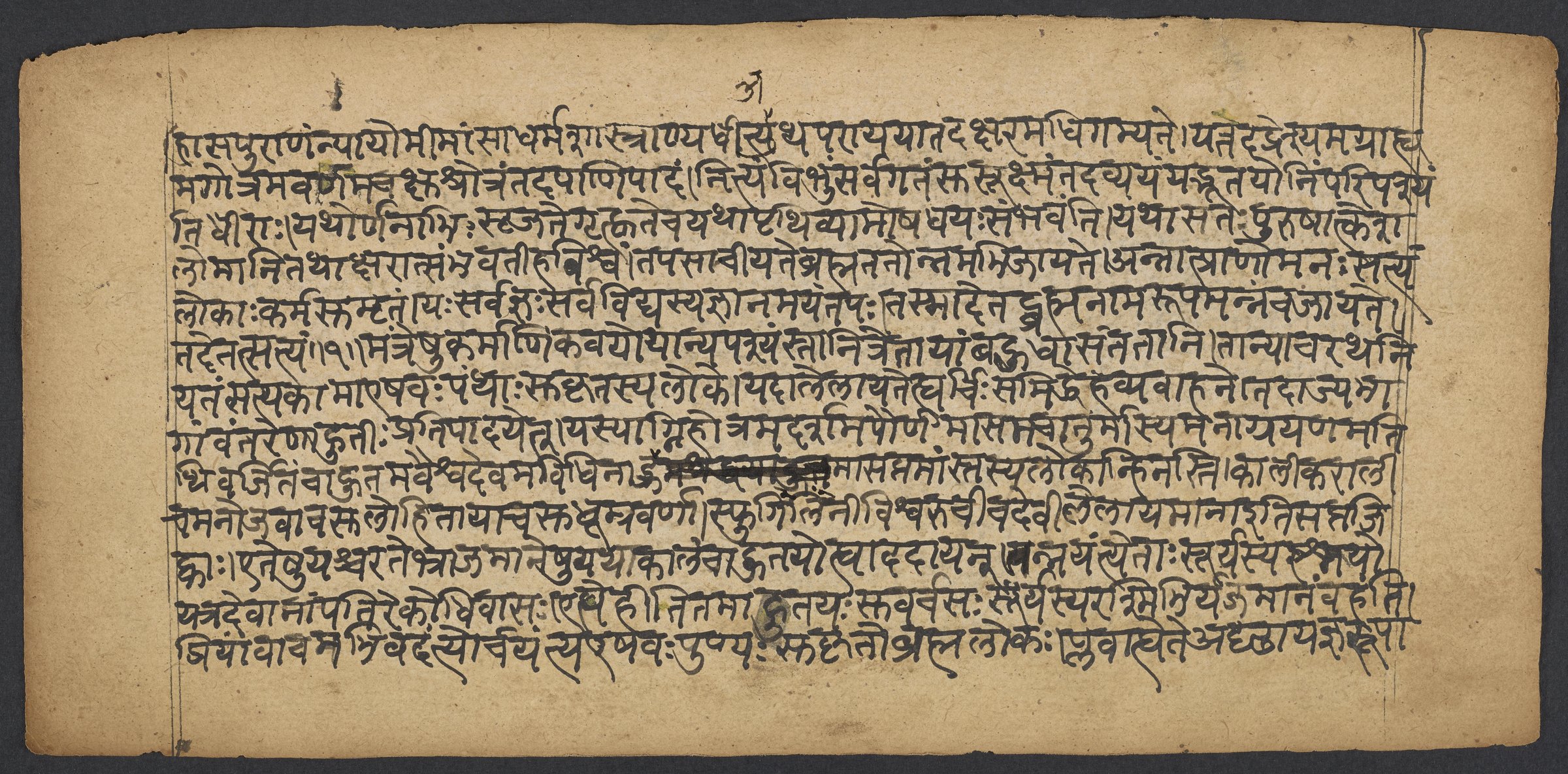
Penn Ms. Coll. 390 Item 869, fol. 12v, fol. 13r. 1.1.5 begins at the end of fol. 12v line 11 ‹tatrāparā› and ends at fol. 13r line 1 ‹tad akṣaram adhigamyate›; the scribe adds itihāsa, purāṇa, nyāya, mīmāṃsā and dharmaśāstra to the list of lower sciences. 1.1.6-1.1.9 follow to line 5 ‹nāma rūpam annaṃ ca jāyate›; line 6 has ‹tad etat satyaṃ ||1||›, the words with which the printed text opens 1.2.1. Checked on the image; readings logged in data/sources/upanishads/mapping_notes_869.txt.
1.1.5tatrāparā ṛgvedo yajurvedaḥ sāmavedo'tharvavedaḥ śikṣā kalpo vyākaraṇaṃ niruktaṃ chando jyotiṣamiti ||
atha parā yayā tadakṣaramadhigamyate ||
1.1.6yattadadreśyamagrāhyamagotramavarṇamacakṣuḥśrotraṃ tadapāṇipādaṃ nityaṃ vibhuṃ sarvagataṃ susūkṣmaṃ tadavyayaṃ tadbhūtayoniṃ paripaśyanti dhīrāḥ ||
1.1.7yathorṇanābhiḥ sṛjate gṛhṇate ca yathā pṛthivyāmoṣadhayaḥ saṃbhavanti ||
yathā sataḥ puruṣātkeśalomāni tathākṣarātsaṃbhavatīha viśvam ||
1.1.8tapasā cīyate brahma tato'nnamabhijāyate ||
annātprāṇo manaḥ satyaṃ lokāḥ karmasu cāmṛtam ||
1.1.9yaḥ sarvajñaḥ sarvavidyasya jñānamayaṃ tapaḥ ||
tasmādetadbrahma nāma rūpamannaṃ ca jāyate ||
1.1.5"The lower knowledge is the Rig-veda, Yagur-veda, Sâma-veda, Atharva-veda, Sikshâ (phonetics), Kalpa (ceremonial), Vyâkarana (grammar), Nirukta (etymology), Khandas (metre), Gyotisha (astronomy); but the higher knowledge is that by which the Indestructible (Brahman) is apprehended."
1.1.6That which cannot be seen, nor seized, which has no family and no caste, no eyes nor ears, no hands nor feet, the eternal, the omnipresent (all-pervading), infinitesimal, that which is imperishable, that it is which the wise regard as the source of all beings."
1.1.7As the spider sends forth and draws in its thread, as plants grow on the earth, as from every man hairs spring forth on the head and the body, thus does everything arise here from the Indestructible.
1.1.8The Brahman swells by means of brooding (penance); hence is produced matter (food); from matter breath, mind, the true, the worlds (seven), and from the works (performed by men in the worlds), the immortal (the eternal effects, rewards, and punishments of works).
1.1.9From him who perceives all and who knows all, whose brooding (penance) consists of knowledge, from him (the highest Brahman) is born that Brahman, name, form, and matter (food)."
Where on the image
Penn Ms. Coll. 390 Item 869, fol. 13r. fol. 13r line 6: 1.2.1 goes on ‹mantreṣu karmāṇi kavayo›; 1.2.6 ends in line 13 ‹sukṛto brahmalokaḥ›. In line 9 a few words of 1.2.3 are struck through by the scribe. Checked on the image; readings logged in data/sources/upanishads/mapping_notes_869.txt.
1.2.1tadetatsatyaṃ mantreṣu karmāṇi kavayo yānyapaśyaṃstāni tretāyāṃ bahudhā saṃtatāni ||
tānyācaratha niyataṃ satyakāmā eṣa vaḥ panthāḥ sukṛtasya loke ||
1.2.2yadā lelāyate hyarciḥ samiddhe havyavāhane ||
tadājyabhāgāvantareṇāhutīḥ pratipādayecchraddhayā hutam ||
1.2.3yasyāgnihotramadarśamapaurṇamāsamacāturmāsyamanāgrayaṇamatithivarjitaṃ ca ||
ahutamavaiśvadevamavidhinā hutamāsaptamāṃstasya lokānhinasti ||
1.2.4kālī karālī ca manojavā ca sulohitā yā ca sudhūmravarṇā ||
sphuliṅginī viśvarucī ca devī lelāyamānā iti saptajihvāḥ ||
1.2.5eteṣu yaścarate bhrājamāneṣu yathākālaṃ cāhutayo hyādadāyan ||
tannayantyetāḥ sūryasya raśmayo yatra devānāṃ patireko'dhivāsaḥ ||
1.2.6ehyehīti tamāhutayaḥ suvarcasaḥ sūryasya raśmibhiryajamānaṃ vahanti ||
priyāṃ vācamabhivadantyo'rcayantya eṣa vaḥ puṇyaḥ sukṛto brahmalokaḥ ||
1.2.1This is the truth: the sacrificial works which they (the poets) saw in the hymns (of the Veda) have been performed in many ways in the Tretâ age. Practise them diligently, ye lovers of truth, this is your path that leads to the world of good works!
1.2.2When the fire is lighted and the flame flickers, let a man offer his oblations between the two portions of melted butter, as an offering with faith.
1.2.3If a man's Agnihotra sacrifice is not followed by the new-moon and full-moon sacrifices, by the four-months' sacrifices, and by the harvest sacrifice, if it is unattended by guests, not offered at all, or without the Vaisvadeva ceremony, or not offered according to rule, then it destroys his seven worlds.
1.2.4Kâlî (black), Karâlî (terrific), Manogavâ (swift as thought), Sulohitâ (very red), Sudhûmravarnâ (purple), Sphulinginî (sparkling), and the brilliant Visvarûpî (having all forms), all these playing about are called the seven tongues (of fire).
1.2.5If a man performs his sacred works when these flames are shining, and the oblations follow at the right time, then they lead him as sun-rays to where the one Lord of the Devas dwells.
1.2.6Come hither, come hither! the brilliant oblations say to him, and carry the sacrificer on the rays of the sun, while they utter pleasant speech and praise him, saying: "This is thy holy Brahma-world (Svarga), gained by thy good works."
Where on the image
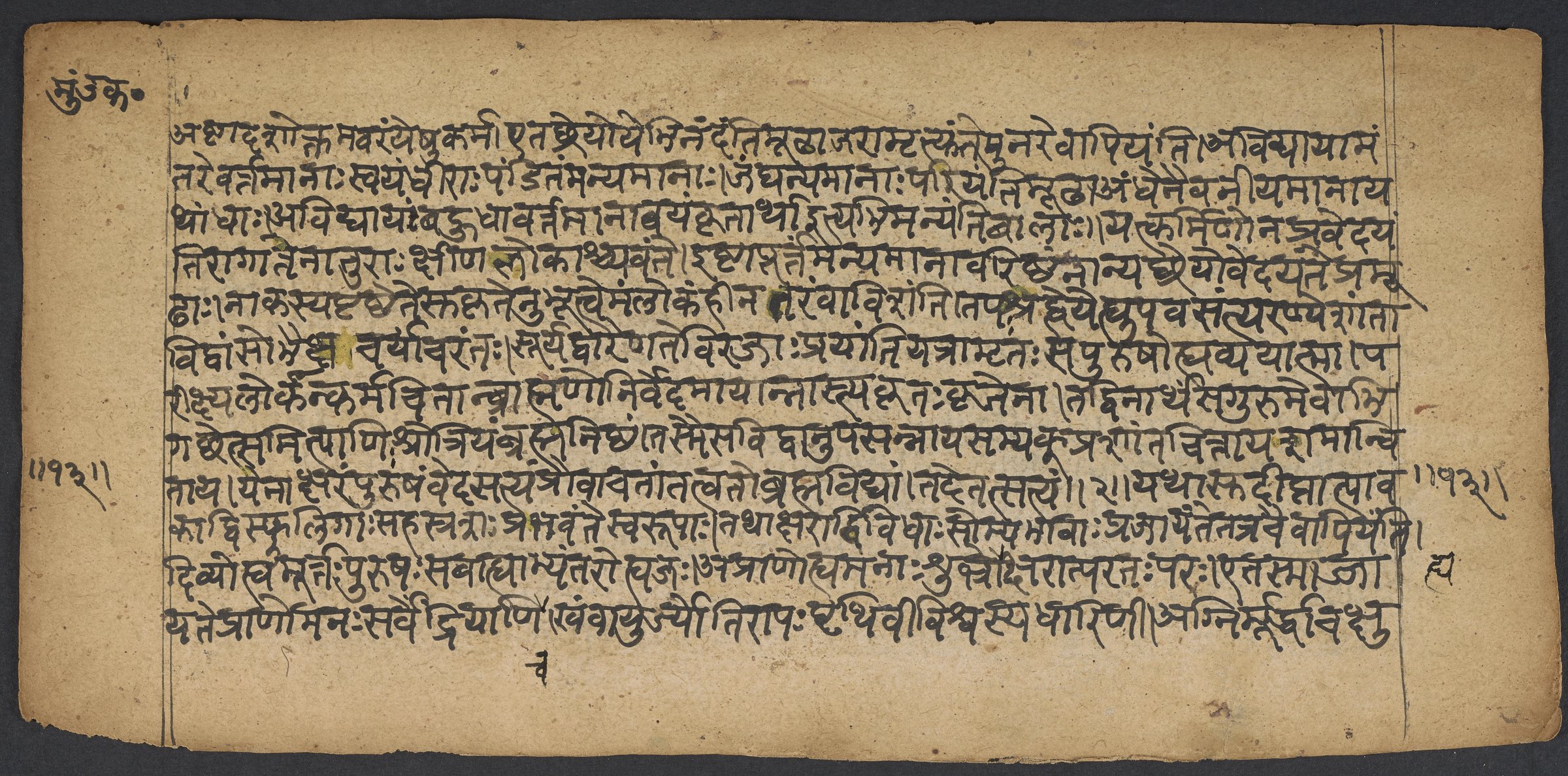
Penn Ms. Coll. 390 Item 869, fol. 13r, fol. 13v. 1.2.7 begins at fol. 13r line 13 ‹plavā hy ete adṛḍhā yajñarūpā› and ends at fol. 13v line 1 ‹punar evāpi yanti›; 1.2.8-1.2.13 follow to line 9 ‹tattvato brahmavidyāṃ›, then ‹tad etat satyaṃ ||2||›. Checked on the image; readings logged in data/sources/upanishads/mapping_notes_869.txt.
1.2.7plavā hyete adṛḍhā yajñarūpā aṣṭādaśoktamavaraṃ yeṣu karma ||
etacchreyo ye'bhinandanti mūḍhā jarāmṛtyuṃ te punarevāpiyanti ||
1.2.8avidyāyāmantare vartamānāḥ svayaṃ dhīrāḥ paṇḍitaṃmanyamānāḥ ||
jaṅghanyamānāḥ pariyanti mūḍhā andhenaiva nīyamānā yathāndhāḥ ||
1.2.9avidyāyāṃ bahudhā vartamānā vayaṃ kṛtārthā ityabhimanyanti bālāḥ ||
yatkarmiṇo na pravedayanti rāgāttenāturāḥ kṣīṇalokāścyavante ||
1.2.10iṣṭāpūrtaṃ manyamānā variṣṭhaṃ nānyacchreyo vedayante pramūḍhāḥ ||
nākasya pṛṣṭhe te sukṛte'nubhūtvemaṃ lokaṃ hīnataraṃ vā viśanti ||
1.2.11tapaḥśraddhe ye hyupavasantyaraṇye śāntā vidvāṃso bhaikṣacaryāṃ carantaḥ ||
sūryadvāreṇa te virajāḥ prayānti yatrāmṛtaḥ sa puruṣo hyavyayātmā ||
1.2.12parīkṣya lokānkarmacitānbrāhmaṇo nirvedamāyānnāstyakṛtaḥ kṛtena ||
tadvijñānārthaṃ sa gurumevābhigacchetsamitpāṇiḥ śrotriyaṃ brahmaniṣṭham ||
1.2.13tasmai sa vidvānupasannāya samyak praśāntacittāya śamānvitāya ||
yenākṣaraṃ puruṣaṃ veda satyaṃ provāca tāṃ tattvato brahmavidyām ||
1.2.7But frail, in truth, are those boats, the sacrifices, the eighteen, in which this lower ceremonial has been told. Fools who praise this as the highest good, are subject again and again to old age and death.
1.2.8Fools dwelling in darkness, wise in their own conceit, and puffed up with vain knowledge, go round and round staggering to and fro, like blind men led by the blind.
1.2.9Children, when they have long lived in ignorance, consider themselves happy. Because those who depend on their good works are, owing to their passions, improvident, they fall and become miserable when their life (in the world which they had gained by their good works) is finished.
1.2.10Considering sacrifice and good works as the best, these fools know no higher good, and having enjoyed (their reward) on the height of heaven, gained by good works, they enter again this world or a lower one.
1.2.11But those who practise penance and faith in the forest, tranquil, wise, and living on alms, depart free from passion through the sun to where that immortal Person dwells whose nature is imperishable.
1.2.12Let a Brâhmana, after he has examined all these worlds which are gained by works, acquire freedom from all desires. Nothing that is eternal (not made) can be gained by what is not eternal (made). Let him, in order to understand this, take fuel in his hand and approach a Guru who is learned and dwells entirely in Brahman.
1.2.13To that pupil who has approached him respectfully, whose thoughts are not troubled by any desires, and who has obtained perfect peace, the wise teacher truly told that knowledge of Brahman through which he knows the eternal and true Person.
Notes
- Sanskrit: Isadyastottarasatopanisadah (108 Upanishads), ed. V. L. Sharma Panshikar (Bombay: Nirnaya Sagar Press, 1925), pp. 14-18, typed for this collection from the page images of the archive.org copy and transliterated from Devanagari into IAST letter by letter (data/sources/upanishads/ns1925/mundaka.txt). GRETIL has no Mundaka of its own and points to TITUS, whose files may not be republished; the Sanskrit Wikisource text has many misprints. Words are divided as in the print, which writes Sanskrit with sandhi and joins words in the usual Devanagari way; its sign for anusvara before a sibilant or h is given as ṃ. The printed verse numbers and colophons are left out.
- Readings of this printing that differ from most editions are kept as printed, among them 2.1.8 praṇā (prāṇā), 2.1.9 rasāś ca (rasaś ca; the manuscript also has rasāś ca) and 3.2.6 parāmṛtāt (parāmṛtāḥ).
- English: F. Max Müller, 'Mundaka-upanishad', The Upanishads part II, Sacred Books of the East 15 (1884), pp. 27-42, from the English Wikisource transcription, compared word by word with the archive.org OCR of the printed book (copy p2upanishads00mluoft). Three transcription slips are corrected to the printed page (checked on the page images, pp. 27, 31, 37): 1.1.1 'knowlede', 1.2.4 'Visvarutpi' (printed Visvarupi), 2.2.9 'the light of light' (printed 'the light of lights'). Footnotes are not reproduced.
Cite
Sources
- Source: Penn Ms. Coll. 390 Item 869 (OPenn, public domain) + Nirnaya Sagar 1925 Sanskrit + F. Max Müller (1884) English (holding institution)
- Critical edition: GRETIL Sanskrit e-texts (Isa, Katha, Prasna, Mandukya, Aitareya, Taittiriya, Svetasvatara, Chandogya); Nirnaya Sagar edition of 1925, transcribed (Kena, Mundaka)
← previous · → next · v cycle view · l back to library