Mundaka Upanishad, Mundaka 2 (the imperishable Person and the bow of Om)
Introduction
The Mundaka Upanishad belongs to the Atharvaveda. In three chapters (mundakas) of two sections (khandas) each, the sage Angiras answers the householder Saunaka, who has asked what it is that, once known, makes everything known. This entry gives chapter 2. The second mundaka teaches that all things come forth from the imperishable Person as sparks from a fire, describes the cosmic body of that Person, and compares meditation to archery: the Upanishad is the bow, Om the bow-string, the self the arrow, Brahman the target.
The page images come from a single paper manuscript in the University of Pennsylvania Libraries, Ms. Coll. 390 Item 869, catalogued as 'Six early upanisads'. It has 16 leaves (13 x 27 cm) written in Devanagari, 11 to 13 lines to a side, and is undated (the library assigns it to the 18th or 19th century). It contains the Isa, Kena, Katha, Prasna, Mundaka and Mandukya Upanisads in that order; its title page names a set of ten. Leaves are numbered in the right margin of each verso and carry abbreviated titles in the upper left margin.
The Mundaka follows the Prasna in the manuscript and runs from fol. 12v line 7 to fol. 15v line 12; this chapter stands on fol. 13v-14v. The scribe numbers the khandas continuously (||1|| to ||6||, the fourth written below the last line of fol. 14v) and closes the second and third chapters with colophons. Each section below holds the verses of one khanda that end on one page; a verse that begins at the foot of the previous page is shown with both pages.
No openly licensed digital text of the Sanskrit Mundaka was found, so the Sanskrit here was typed from the page images of a printed edition of 1925 and transliterated.
How was this verified? (Provenance)
Where on the image
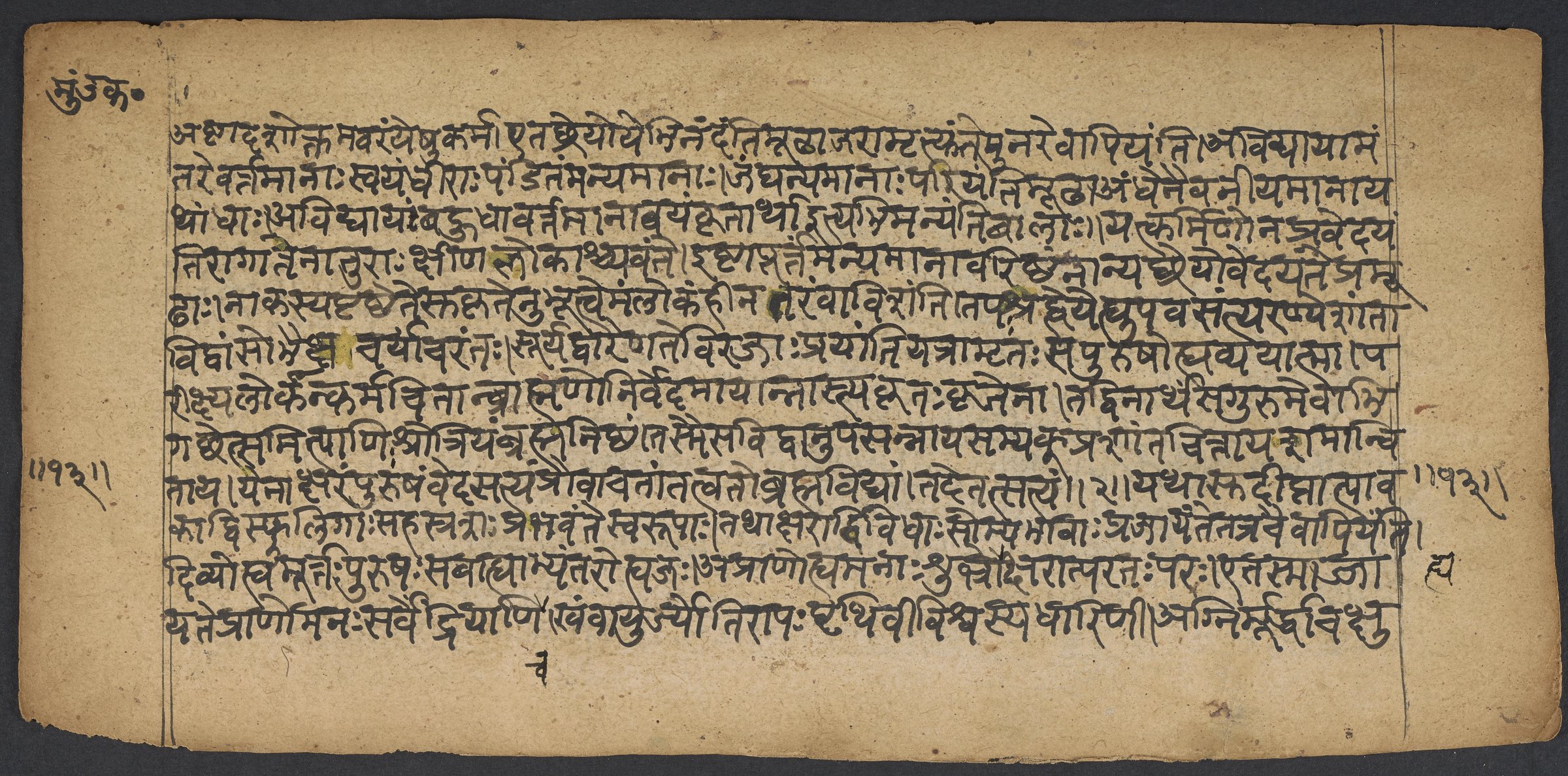
Penn Ms. Coll. 390 Item 869, fol. 13v. fol. 13v line 9: 2.1.1 begins ‹yathā sudīptāt pāvakād› (after ‹tad etat satyaṃ ||2||›); 2.1.3 ends in line 12 ‹viśvasya dhāriṇī›. Checked on the image; readings logged in data/sources/upanishads/mapping_notes_869.txt.
2.1.1tadetatsatyaṃ yathā sudīptātpāvakādvisphuliṅgāḥ sahasraśaḥ prabhavante sarūpāḥ ||
tathākṣarādvividhāḥ somya bhāvāḥ prajāyante tatra caivāpiyanti ||
2.1.2divyo hyamūrtaḥ puruṣaḥ sabāhyābhyantaro hyajaḥ ||
aprāṇo hyamanāḥ śubhro hyakṣarātparataḥ paraḥ ||
2.1.3etasmājjāyate prāṇo manaḥ sarvendriyāṇi ca ||
khaṃ vāyurjyotirāpaḥ pṛthivī viśvasya dhāriṇī ||
2.1.1This is the truth. As from a blazing fire sparks, being like unto fire, fly forth a thousandfold, thus are various beings brought forth from the Imperishable, my friend, and return thither also.
2.1.2That heavenly Person is without body, he is both without and within, not produced, without breath and without mind, pure, higher than the high Imperishable.
2.1.3From him (when entering on creation) is born breath, mind, and all organs of sense, ether, air, light, water, and the earth, the support of all.
Where on the image
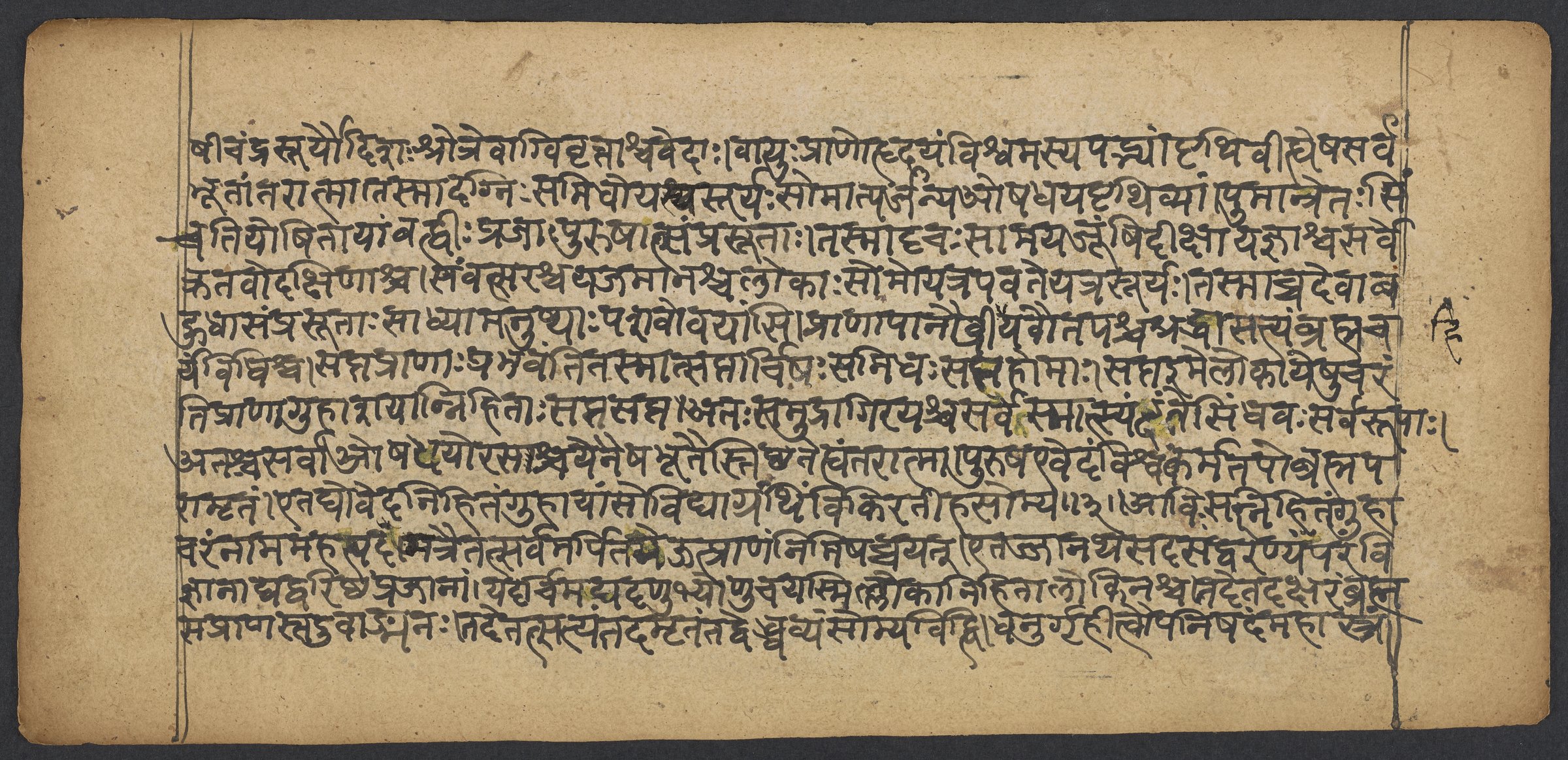
Penn Ms. Coll. 390 Item 869, fol. 13v, fol. 14r. 2.1.4 begins at the end of fol. 13v line 12 ‹agnir mūrdhā cakṣu-› and ends at fol. 14r line 2 ‹sarvabhūtāntarātmā›; 2.1.5-2.1.10 follow to line 9 ‹vikiratīha somya ||3||›. In 2.1.9 (line 8) the manuscript reads ‹rasāś ca›, as does the printed text shown. Checked on the image; readings logged in data/sources/upanishads/mapping_notes_869.txt.
2.1.4agnirmūrdhā cakṣuṣī candrasūryau diśaḥ śrotre vāgvivṛtāśca vedāḥ ||
vāyuḥ prāṇo hṛdayaṃ viśvamasya padbhyāṃ pṛthivī hyeṣa sarvabhūtāntarātmā ||
2.1.5tasmādagniḥ samidho yasya sūryaḥ somātparjanya oṣadhayaḥ pṛthivyām ||
pumān retaḥ siñcati yoṣitāyāṃ bahvīḥ prajāḥ puruṣātsaṃprasūtāḥ ||
2.1.6tasmādṛcaḥ sāma yajūṃṣi dīkṣā yajñāśca sarve kratavo dakṣiṇāśca ||
saṃvatsaraśca yajamānaśca lokāḥ somo yatra pavate yatra sūryaḥ ||
2.1.7tasmācca devā bahudhā saṃprasūtāḥ sādhyā manuṣyāḥ paśavo vayāṃsi ||
prāṇāpānau vrīhiyavau tapaśca śraddhā satyaṃ brahmacaryaṃ vidhiśca ||
2.1.8sapta prāṇāḥ prabhavanti tasmātsaptārciṣaḥ samidhaḥ sapta homāḥ ||
sapta ime lokā yeṣu caranti praṇā guhāśayā nihitāḥ sapta sapta ||
2.1.9ataḥ samudrā girayaśca sarve'smātsyandante sindhavaḥ sarvarūpāḥ ||
ataśca sarvā oṣadhayo rasāśca yenaiṣa bhūtaistiṣṭhate hyantarātmā ||
2.1.10puruṣa evedaṃ viśvaṃ karma tapo brahma parāmṛtam ||
etadyo veda nihitaṃ guhāyāṃ so'vidyāgranthiṃ vikiratīha somya ||
2.1.4Fire (the sky) is his head, his eyes the sun and the moon, the quarters his ears, his speech the Vedas disclosed, the wind his breath, his heart the universe; from his feet came the earth; he is indeed the inner Self of all things.
2.1.5From him comes Agni (fire), the sun being the fuel; from the moon (Soma) comes rain (Parganya); from the earth herbs; and man gives seed unto the woman. Thus many beings are begotten from the Person (purusha).
2.1.6From him come the Rik, the Sâman, the Yagush, the Dîkshâ (initiatory rites), all sacrifices and offerings of animals, and the fees bestowed on priests, the year too, the sacrificer, and the worlds, in which the moon shines brightly and the sun.
2.1.7From him the many Devas too are begotten, the Sâdhyas (genii), men, cattle, birds, the up and down breathings, rice and corn (for sacrifices), penance, faith, truth, abstinence, and law.
2.1.8The seven senses (prâna) also spring from him, the seven lights (acts of sensation), the seven kinds of fuel (objects by which the senses are lighted), the seven sacrifices (results of sensation), these seven worlds (the places of the senses, the worlds determined by the senses) in which the senses move, which rest in the cave (of the heart), and are placed there seven and seven.
2.1.9Hence come the seas and all the mountains, from him flow the rivers of every kind; hence come all herbs and the juice through which the inner Self subsists with the elements.
2.1.10The Person is all this, sacrifice, penance, Brahman, the highest immortal; he who knows this hidden in the cave (of the heart), he, O friend, scatters the knot of ignorance here on earth.
Where on the image
Penn Ms. Coll. 390 Item 869, fol. 14r. fol. 14r line 9: 2.2.1 begins ‹āviḥ saṃnihitaṃ guhācaraṃ›; 2.2.2 ends in line 12 ‹tad veddhavyaṃ somya viddhi›. Checked on the image; readings logged in data/sources/upanishads/mapping_notes_869.txt.
2.2.1āviḥ saṃnihitaṃ guhācarannāma mahatpadamatraitatsamarpitam ||
ejatprāṇannimiṣacca yadetajjānatha sadasadvareṇyaṃ paraṃ vijñānādyadvariṣṭhaṃ prajānām ||
2.2.2yadarcimadyadaṇubhyo'ṇu ca yasmim̐llokā nihitā lokinaśca ||
tadetadakṣaraṃ brahma sa prāṇastadu vāṅmanaḥ ||
tadetatsatyaṃ tadamṛtaṃ tadveddhavyaṃ somya viddhi ||
2.2.1Manifest, near, moving in the cave (of the heart) is the great Being. In it everything is centred which ye know as moving, breathing, and blinking, as being and not-being, as adorable, as the best, that is beyond the understanding of creatures.
2.2.2That which is brilliant, smaller than small, that on which the worlds are founded and their inhabitants, that is the indestructible Brahman, that is the breath, speech, mind; that is the true, that is the immortal. That is to be hit. Hit it, O friend!
Where on the image
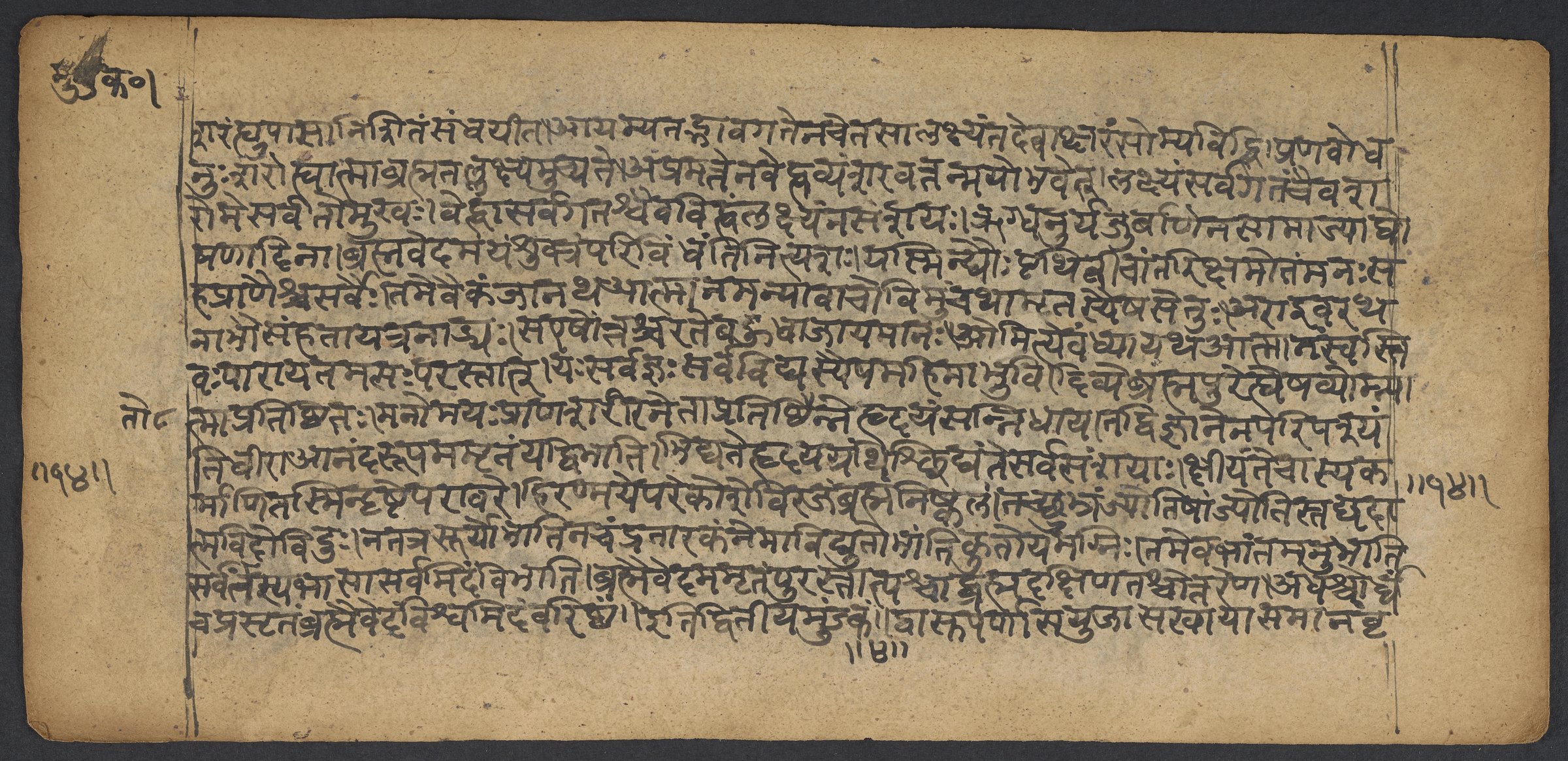
Penn Ms. Coll. 390 Item 869, fol. 14r, fol. 14v. 2.2.3 begins at fol. 14r line 12 ‹dhanur gṛhītvaupaniṣadaṃ mahāstraṃ› and ends at fol. 14v line 1 ‹somya viddhi›; 2.2.4 ‹praṇavo dhanuḥ› follows in lines 1-2. In lines 2-4 the scribe adds two verses that are not in the printed text (‹lakṣyaṃ sarvagataṃ caiva śarīre sarvatomukhaḥ ...› and ‹ṛg dhanur yajur bāṇena ...›); 2.2.5 ‹yasmin dyauḥ› begins in line 4, and 2.2.11 ends in line 13 ‹viśvam idaṃ variṣṭhaṃ›, followed by the colophon ‹iti dvitīyamuṇḍakaṃ›. Checked on the image; readings logged in data/sources/upanishads/mapping_notes_869.txt.
2.2.3dhanurgṛhītvaupaniṣadaṃ mahāstraṃ śaraṃ hyupāsāniśitaṃ saṃdhayīta ||
āyamya tadbhāvagatena cetasā lakṣyaṃ tadevākṣaraṃ somya viddhi ||
2.2.4praṇavo dhanuḥ śaro hyātmā brahma tallakṣyamucyate ||
apramattena veddhavyaṃ śaravattanmayo bhavet ||
2.2.5yasmindyauḥ pṛthivī cāntarikṣamotaṃ manaḥ saha prāṇaiśca sarvaiḥ ||
tamevaikaṃ jānatha ātmānamanyā vāco vimuñcathāmṛtasyaiṣa setuḥ ||
2.2.6arā iva rathanābhau saṃhatā yatra nāḍyaḥ |
sa eṣo'ntaścarate bahudhā jāyamānaḥ ||
omityevaṃ dhyāyatha ātmānaṃ svasti vaḥ pārāya tamasaḥ parastāt ||
2.2.7yaḥ sarvajñaḥ sarvavidyasyaiṣa mahimā bhuvi ||
divye brahmapure hyeṣa vyomnyātmā pratiṣṭhitaḥ ||
manomayaḥ prāṇaśarīranetā pratiṣṭhito'nne hṛdayaṃ saṃnidhāya ||
tadvijñānena paripaśyanti dhīrā ānandarūpamamṛtaṃ yadvibhāti ||
2.2.8bhidyate hṛdayagranthiśchidyante sarvasaṃśayāḥ ||
kṣīyante cāsya karmāṇi tasmindṛṣṭe parāvare ||
2.2.9hiraṇmaye pare kośe virajaṃ brahma niṣkalam ||
tacchubhraṃ jyotiṣāṃ jyotistadyadātmavido viduḥ ||
2.2.10na tatra sūryo bhāti na candratārakaṃ nemā vidyuto bhānti kuto'yamagniḥ ||
tameva bhāntamanubhāti sarvaṃ tasya bhāsā sarvamidaṃ vibhāti ||
2.2.11brahmaivedamamṛtaṃ purastādbrahma paścādbrahma dakṣiṇataścottareṇa ||
adhaścordhvaṃ ca prasṛtaṃ brahmaivedaṃ viśvamidaṃ variṣṭham ||
2.2.3Having taken the Upanishad as the bow, as the great weapon, let him place on it the arrow, sharpened by devotion! Then having drawn it with a thought directed to that which is, hit the mark, O friend, viz. that which is the Indestructible!
2.2.4Om is the bow, the Self is the arrow. Brahman is called its aim. It is to be hit by a man who is not thoughtless; and then, as the arrow (becomes one with the target), he will become one with Brahman.
2.2.5In him the heaven, the earth, and the sky are woven, the mind also with all the senses. Know him alone as the Self, and leave off other words! He is the bridge of the Immortal.
2.2.6He moves about becoming manifold within the heart where the arteries meet, like spokes fastened to the nave. Meditate on the Self as Om! Hail to you, that you may cross beyond (the sea of) darkness!
2.2.7He who understands all and who knows all, he to whom all this glory in the world belongs, the Self, is placed in the ether, in the heavenly city of Brahman (the heart). He assumes the nature of mind, and becomes the guide of the body of the senses. He subsists in food, in close proximity to the heart. The wise who understand this, behold the Immortal which shines forth full of bliss.
2.2.8The fetter of the heart is broken, all doubts are solved, all his works (and their effects) perish when He has been beheld who is high and low (cause and effect).
2.2.9In the highest golden sheath there is the Brahman without passions and without parts. That is pure, that is the light of lights, that is it which they know who know the Self.
2.2.10The sun does not shine there, nor the moon and the stars, nor these lightnings, and much less this fire. When he shines, everything shines after him; by his light all this is lighted.
2.2.11That immortal Brahman is before, that Brahman is behind, that Brahman is right and left. It has gone forth below and above; Brahman alone is all this, it is the best.
Notes
- Sanskrit: Isadyastottarasatopanisadah (108 Upanishads), ed. V. L. Sharma Panshikar (Bombay: Nirnaya Sagar Press, 1925), pp. 14-18, typed for this collection from the page images of the archive.org copy and transliterated from Devanagari into IAST letter by letter (data/sources/upanishads/ns1925/mundaka.txt). GRETIL has no Mundaka of its own and points to TITUS, whose files may not be republished; the Sanskrit Wikisource text has many misprints. Words are divided as in the print, which writes Sanskrit with sandhi and joins words in the usual Devanagari way; its sign for anusvara before a sibilant or h is given as ṃ. The printed verse numbers and colophons are left out.
- Readings of this printing that differ from most editions are kept as printed, among them 2.1.8 praṇā (prāṇā), 2.1.9 rasāś ca (rasaś ca; the manuscript also has rasāś ca) and 3.2.6 parāmṛtāt (parāmṛtāḥ).
- English: F. Max Müller, 'Mundaka-upanishad', The Upanishads part II, Sacred Books of the East 15 (1884), pp. 27-42, from the English Wikisource transcription, compared word by word with the archive.org OCR of the printed book (copy p2upanishads00mluoft). Three transcription slips are corrected to the printed page (checked on the page images, pp. 27, 31, 37): 1.1.1 'knowlede', 1.2.4 'Visvarutpi' (printed Visvarupi), 2.2.9 'the light of light' (printed 'the light of lights'). Footnotes are not reproduced.
Cite
Sources
- Source: Penn Ms. Coll. 390 Item 869 (OPenn, public domain) + Nirnaya Sagar 1925 Sanskrit + F. Max Müller (1884) English (holding institution)
- Critical edition: GRETIL Sanskrit e-texts (Isa, Katha, Prasna, Mandukya, Aitareya, Taittiriya, Svetasvatara, Chandogya); Nirnaya Sagar edition of 1925, transcribed (Kena, Mundaka)
← previous · → next · v cycle view · l back to library