Mundaka Upanishad, Mundaka 3 (the two birds; truth alone conquers)
Introduction
The Mundaka Upanishad belongs to the Atharvaveda. In three chapters (mundakas) of two sections (khandas) each, the sage Angiras answers the householder Saunaka, who has asked what it is that, once known, makes everything known. This entry gives chapter 3. The third mundaka opens with the two birds on one tree, one eating the fruit and one looking on, and contains the line 'truth alone conquers, not untruth' (satyam eva jayate, 3.1.6), now the national motto of India. It ends with the sage freed from name and form as rivers lose name and form in the sea.
The page images come from a single paper manuscript in the University of Pennsylvania Libraries, Ms. Coll. 390 Item 869, catalogued as 'Six early upanisads'. It has 16 leaves (13 x 27 cm) written in Devanagari, 11 to 13 lines to a side, and is undated (the library assigns it to the 18th or 19th century). It contains the Isa, Kena, Katha, Prasna, Mundaka and Mandukya Upanisads in that order; its title page names a set of ten. Leaves are numbered in the right margin of each verso and carry abbreviated titles in the upper left margin.
The Mundaka follows the Prasna in the manuscript and runs from fol. 12v line 7 to fol. 15v line 12; this chapter stands on fol. 14v-15v. The scribe numbers the khandas continuously (||1|| to ||6||, the fourth written below the last line of fol. 14v) and closes the second and third chapters with colophons. Each section below holds the verses of one khanda that end on one page; a verse that begins at the foot of the previous page is shown with both pages.
No openly licensed digital text of the Sanskrit Mundaka was found, so the Sanskrit here was typed from the page images of a printed edition of 1925 and transliterated.
How was this verified? (Provenance)
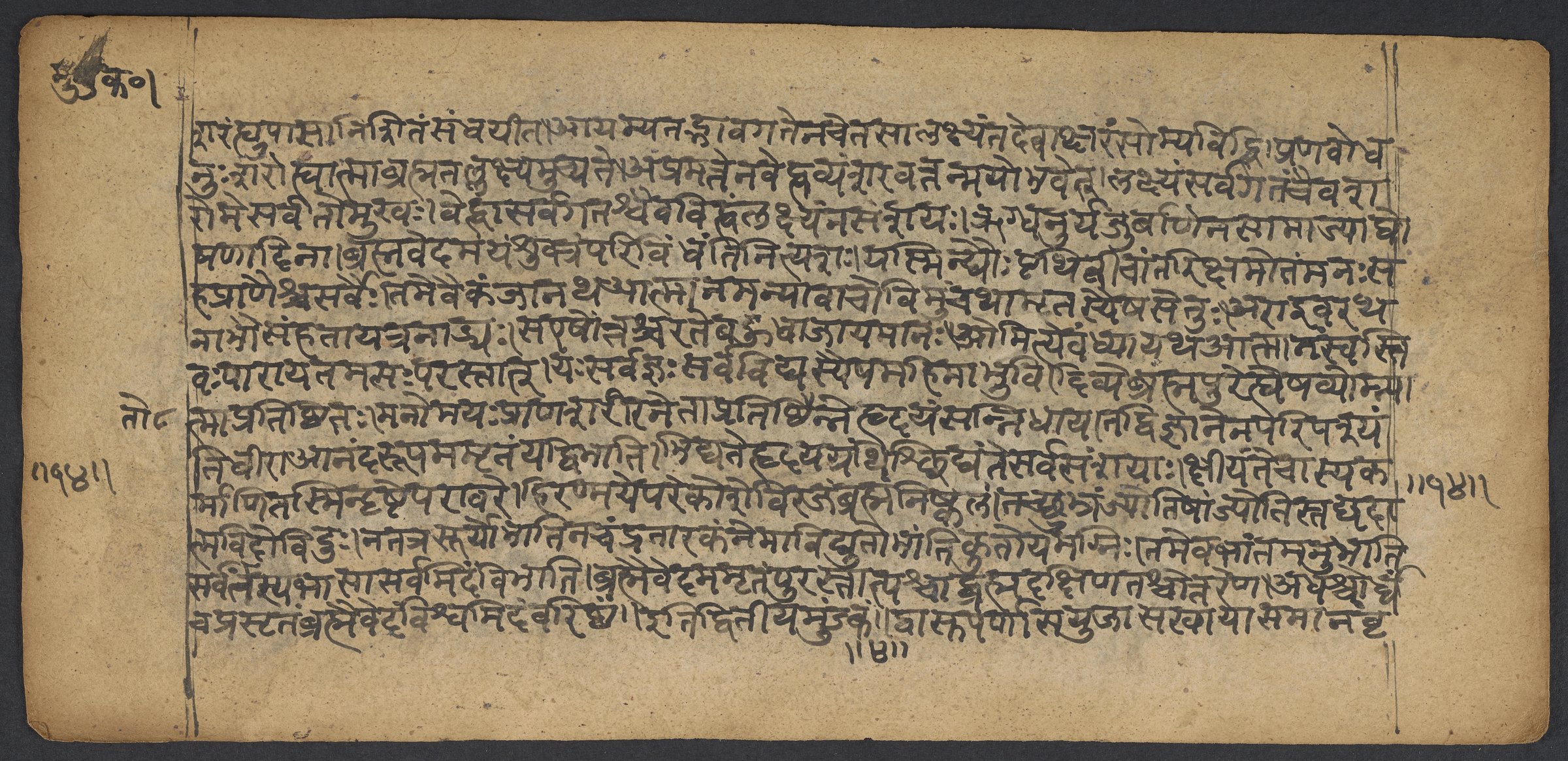
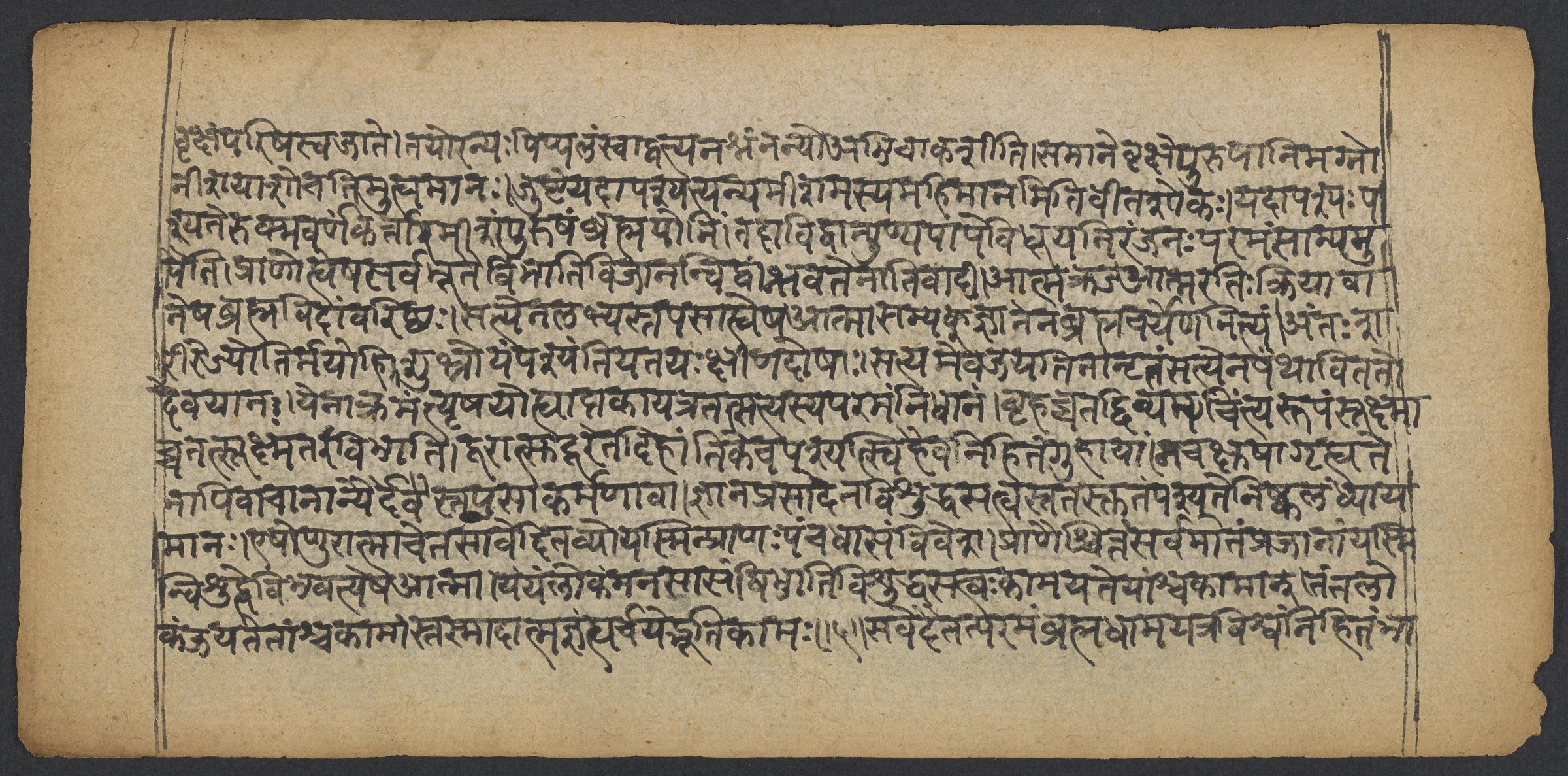
Where on the image
Penn Ms. Coll. 390 Item 869, fol. 14v, fol. 15r. 3.1.1 begins at the end of fol. 14v line 13 ‹dvā suparṇā sayujā sakhāyā samānaṃ vṛ-› and ends at fol. 15r line 1 ‹anyo abhicākaśīti›; 3.1.2-3.1.10 follow to line 12 ‹arcayed bhūtikāmaḥ ||5||›. Checked on the image; readings logged in data/sources/upanishads/mapping_notes_869.txt.
3.1.1dvā suparṇā sayujā sakhāyā samānaṃ vṛkṣaṃ pariṣasvajāte ||
tayoranyaḥ pippalaṃ svādvattyanaśnannanyo abhicākaśīti ||
3.1.2samāne vṛkṣe puruṣo nimagno'nīśayā śocati muhyamānaḥ ||
juṣṭaṃ yadā paśyatyanyamīśamasya mahimānamiti vītaśokaḥ ||
3.1.3yadā paśyaḥ paśyate rukmavarṇaṃ kartāramīśaṃ puruṣaṃ brahmayonim ||
tadā vidvānpuṇyapāpe vidhūya nirañjanaḥ paramaṃ sāmyamupaiti ||
3.1.4prāṇo hyeṣa yaḥ sarvabhūtairvibhāti vijānanvidvānbhavate nātivādī ||
ātmakrīḍa ātmaratiḥ kriyāvāneṣa brahmavidāṃ variṣṭhaḥ ||
3.1.5satyena labhyastapasā hyeṣa ātmā samyagjñānena brahmacaryeṇa nityam ||
antaḥśarīre jyotirmayo hi śubhro yaṃ paśyanti yatayaḥ kṣīṇadoṣāḥ ||
3.1.6satyameva jayate nānṛtaṃ satyena panthā vitato devayānaḥ ||
yenākramantyṛṣayo hyāptakāmā yatra tatsatyasya paramaṃ nidhānam ||
3.1.7bṛhacca taddivyamacintyarūpaṃ sūkṣmācca tatsūkṣmataraṃ vibhāti ||
dūrātsudūre tadihāntike ca paśyatsvihaiva nihitaṃ guhāyām ||
3.1.8na cakṣuṣā gṛhyate nāpi vācā nānyairdevaistapasā karmaṇā vā ||
jñānaprasādena viśuddhasattvastatastu taṃ paśyate niṣkalaṃ dhyāyamānaḥ ||
3.1.9eṣo'ṇurātmā cetasā veditavyo yasminprāṇaḥ pañcadhā saṃviveśa ||
prāṇaiścittaṃ sarvamotaṃ prajānāṃ yasminviśuddhe vibhavatyeṣa ātmā ||
3.1.10yaṃ yaṃ lokaṃ manasā saṃvibhāti viśuddhasattvaḥ kāmayate yāṃśca kāmān ||
taṃ taṃ lokaṃ jayate tāṃśca kāmāṃstasmādātmajñaṃ hyarcayedbhūtikāmaḥ ||
3.1.1Two birds, inseparable friends, cling to the same tree. One of them eats the sweet fruit, the other looks on without eating.
3.1.2On the same tree man sits grieving, immersed, bewildered by his own impotence (an-îsâ). But when he sees the other lord (îsa) contented and knows his glory, then his grief passes away.
3.1.3When the seer sees the brilliant maker and lord (of the world) as the Person who has his source in Brahman, then he is wise, and shaking off good and evil, he reaches the highest oneness, free from passions;
3.1.4For he is the Breath shining forth in all beings, and he who understands this becomes truly wise, not a talker only. He revels in the Self, he delights in the Self, and having performed his works (truthfulness, penance, meditation, &c.) he rests, firmly established in Brahman, the best of those who know Brahman.
3.1.5By truthfulness, indeed, by penance, right knowledge, and abstinence must that Self be gained; the Self whom spotless anchorites gain is pure, and like a light within the body.
3.1.6The true prevails, not the untrue; by the true the path is laid out, the way of the gods (devayânah), on which the old sages, satisfied in their desires, proceed to where there is that highest place of the True One.
3.1.7That (true Brahman) shines forth grand, divine, inconceivable, smaller than small; it is far beyond what is far and yet near here, it is hidden in the cave (of the heart) among those who see it even here.
3.1.8He is not apprehended by the eye, nor by speech, nor by the other senses, not by penance or good works. When a man's nature has become purified by the serene light of knowledge, then he sees him, meditating on him as without parts.
3.1.9That subtle Self is to be known by thought (ketas) there where breath has entered fivefold; for every thought of men is interwoven with the senses, and when thought is purified, then the Self arises.
3.1.10Whatever state a man whose nature is purified imagines, and whatever desires he desires (for himself or for others), that state he conquers and those desires he obtains. Therefore let every man who desires happiness worship the man who knows the Self.
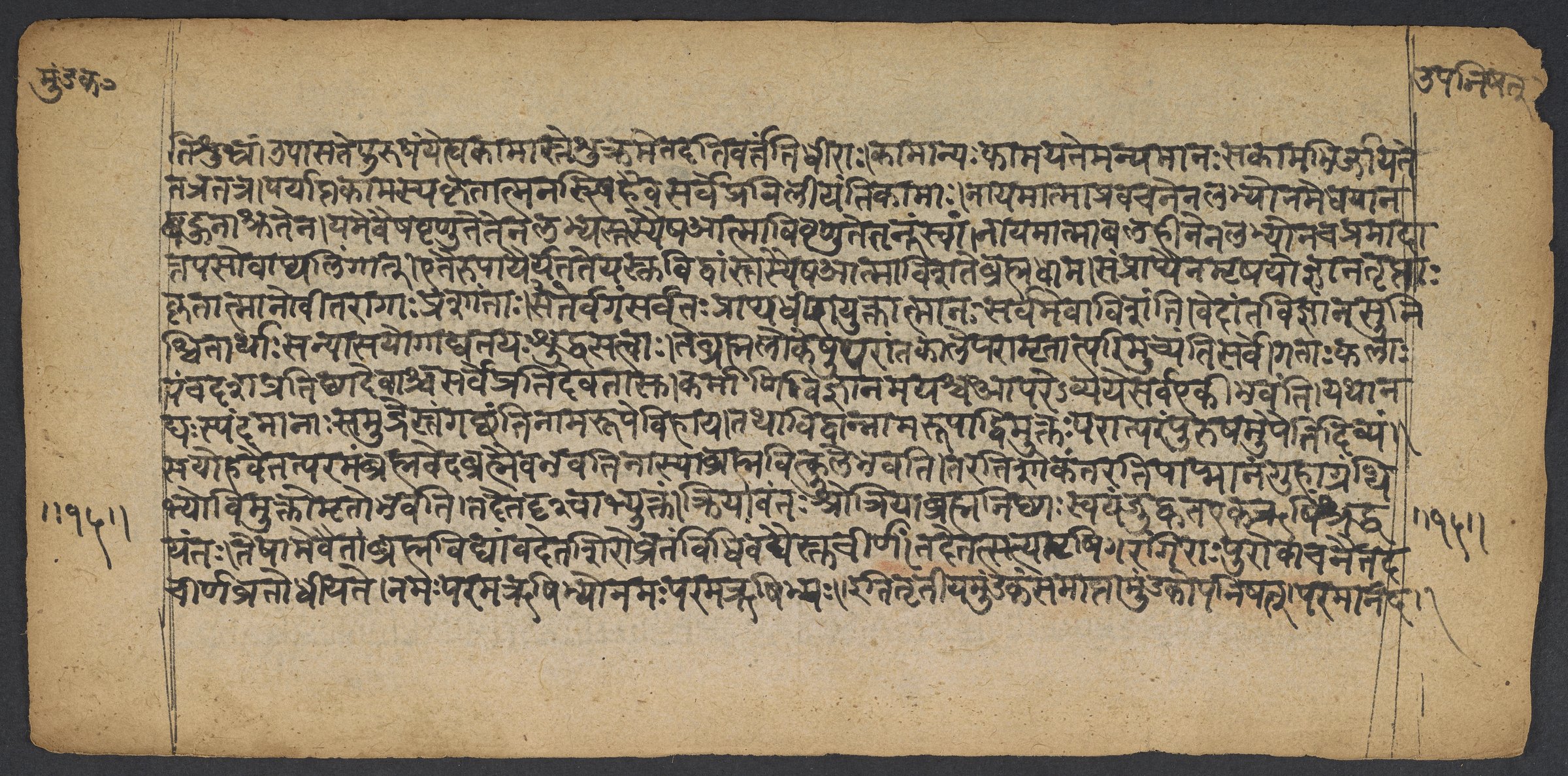
Where on the image
Penn Ms. Coll. 390 Item 869, fol. 15r, fol. 15v. 3.2.1 begins at fol. 15r line 12 ‹sa vedaitat paramaṃ brahma dhāma› and ends at fol. 15v line 1 ‹ativartanti dhīrāḥ›; 3.2.2-3.2.11 follow to line 12 ‹namaḥ paramaṛṣibhyaḥ›, then the colophon ‹iti tṛtīyamuṇḍake samāptā muṇḍakopaniṣat paramānanda›. Checked on the image; readings logged in data/sources/upanishads/mapping_notes_869.txt.
3.2.1sa vedaitatparamaṃ brahma dhāma yatra viśvaṃ nihitaṃ bhāti śubhram ||
upāsate puruṣaṃ ye hyakāmāste śukrametadativartanti dhīrāḥ ||
3.2.2kāmānyaḥ kāmayate manyamānaḥ sa kāmabhirjāyate tatra tatra ||
paryāptakāmasya kṛtātmanastu ihaiva sarve pravilīyanti kāmāḥ ||
3.2.3nāyamātmā pravacanena labhyo na medhayā na bahunā śrutena ||
yamevaiṣa vṛṇute tena labhyastasyaiṣa ātmā vivṛṇute tanūṃ svām ||
3.2.4nāyamātmā balahīnena labhyo na ca pramādāttapaso vāpyaliṅgāt ||
etairupāyairyatate yastu vidvāṃstasyaiṣa ātmā viśate brahmadhāma ||
3.2.5saṃprāpyainamṛṣayo jñānatṛptāḥ kṛtātmāno vītarāgāḥ praśāntāḥ ||
te sarvagaṃ sarvataḥ prāpya dhīrā yuktātmānaḥ sarvamevāviśanti ||
3.2.6vedāntavijñānasuniścitārthāḥ saṃnyāsayogādyatayaḥ śuddhasattvāḥ ||
te brahmalokeṣu parāntakāle parāmṛtātparimucyanti sarve ||
3.2.7gatāḥ kalāḥ pañcadaśa pratiṣṭhā devāśca sarve pratidevatāsu ||
karmāṇi vijñānamayaśca ātmā pare'vyaye sarve ekībhavanti ||
3.2.8yathā nadyaḥ syandamānāḥ samudre'staṃ gacchanti nāmarūpe vihāya ||
tathā vidvānnāmarūpādvimuktaḥ parātparaṃ puruṣamupaiti divyam ||
3.2.9sa yo ha vai tatparamaṃ brahma veda brahmaiva bhavati nāsyābrahmavitkule bhavati tarati śokaṃ tarati pāpmānaṃ guhāgranthibhyo vimukto'mṛto bhavati ||
3.2.10tadetadṛcā'bhyuktaṃ ||
kriyāvantaḥ śrotriyā brahmaniṣṭhāḥ svayaṃ juhvata ekarṣiṃ śraddhayantaḥ ||
teṣāmevaitāṃ brahmavidyāṃ vadeta śirovrataṃ vidhivadyaistu cīrṇam ||
3.2.11tadetatsatyamṛṣiraṅgirāḥ purovāca naitadacīrṇavrato'dhīte namaḥ paramaṛṣibhyo namaḥ paramaṛṣibhyaḥ ||
3.2.1He (the knower of the Self) knows that highest home of Brahman, in which all is contained and shines brightly. The wise who, without desiring happiness, worship that Person, transcend this seed, (they are not born again.)
3.2.2He who forms desires in his mind, is born again through his desires here and there. But to him whose desires are fulfilled and who is conscious of the true Self (within himself) all desires vanish, even here on earth.
3.2.3That Self cannot be gained by the Veda, nor by understanding, nor by much learning. He whom the Self chooses, by him the Self can be gained. The Self chooses him (his body) as his own.
3.2.4Nor is that Self to be gained by one who is destitute of strength, or without earnestness, or without right meditation. But if a wise man strives after it by those means (by strength, earnestness, and right meditation), then his Self enters the home of Brahman.
3.2.5When they have reached him (the Self), the sages become satisfied through knowledge, they are conscious of their Self, their passions have passed away, and they are tranquil. The wise, having reached Him who is omnipresent everywhere, devoted to the Self, enter into him wholly.
3.2.6Having well ascertained the object of the knowledge of the Vedânta, and having purified their nature by the Yoga of renunciation , all anchorites, enjoying the highest immortality, become free at the time of the great end (death) in the worlds of Brahmâ.
3.2.7Their fifteen parts enter into their elements, their Devas (the senses) into their (corresponding) Devas. Their deeds and their Self with all his knowledge become all one in the highest Imperishable.
3.2.8As the flowing rivers disappear in the sea, losing their name and their form, thus a wise man, freed from name and form, goes to the divine Person, who is greater than the great.
3.2.9He who knows that highest Brahman, becomes even Brahman. In his race no one is born ignorant of Brahman. He overcomes grief, he overcomes evil; free from the fetters of the heart, he becomes immortal.
3.2.10And this is declared by the following Rik-verse: "Let a man tell this science of Brahman to those only who have performed all (necessary) acts, who are versed in the Vedas, and firmly established in (the lower) Brahman, who themselves offer as an oblation the one Rishi (Agni), full of faith, and by whom the rite of (carrying fire on) the head has been performed, according to the rule (of the Âtharvanas)."
3.2.11The Rishi Angiras formerly told this true (science); a man who has not performed the (proper) rites, does not read it. Adoration to the highest Rishis! Adoration to the highest Rishis!
Notes
- Sanskrit: Isadyastottarasatopanisadah (108 Upanishads), ed. V. L. Sharma Panshikar (Bombay: Nirnaya Sagar Press, 1925), pp. 14-18, typed for this collection from the page images of the archive.org copy and transliterated from Devanagari into IAST letter by letter (data/sources/upanishads/ns1925/mundaka.txt). GRETIL has no Mundaka of its own and points to TITUS, whose files may not be republished; the Sanskrit Wikisource text has many misprints. Words are divided as in the print, which writes Sanskrit with sandhi and joins words in the usual Devanagari way; its sign for anusvara before a sibilant or h is given as ṃ. The printed verse numbers and colophons are left out.
- Readings of this printing that differ from most editions are kept as printed, among them 2.1.8 praṇā (prāṇā), 2.1.9 rasāś ca (rasaś ca; the manuscript also has rasāś ca) and 3.2.6 parāmṛtāt (parāmṛtāḥ).
- English: F. Max Müller, 'Mundaka-upanishad', The Upanishads part II, Sacred Books of the East 15 (1884), pp. 27-42, from the English Wikisource transcription, compared word by word with the archive.org OCR of the printed book (copy p2upanishads00mluoft). Three transcription slips are corrected to the printed page (checked on the page images, pp. 27, 31, 37): 1.1.1 'knowlede', 1.2.4 'Visvarutpi' (printed Visvarupi), 2.2.9 'the light of light' (printed 'the light of lights'). Footnotes are not reproduced.
Cite
Sources
- Source: Penn Ms. Coll. 390 Item 869 (OPenn, public domain) + Nirnaya Sagar 1925 Sanskrit + F. Max Müller (1884) English (holding institution)
- Critical edition: GRETIL Sanskrit e-texts (Isa, Katha, Prasna, Mandukya, Aitareya, Taittiriya, Svetasvatara, Chandogya); Nirnaya Sagar edition of 1925, transcribed (Kena, Mundaka)
← previous · → next · v cycle view · l back to library