Taittiriya Upanishad, Siksha Valli (on pronunciation)
Introduction
The Taittiriya Upanishad belongs to the Taittiriya school of the Black Yajurveda, where it forms chapters 7-9 of the Taittiriya Aranyaka. It has three chapters (vallīs), each divided into lessons (anuvākas).
The first vallī (chapter) is a manual for the Vedic student: it opens with prayers for the teacher and pupil, explains the 'great combinations' (mahāsaṃhitā) of the worlds, lights, knowledge, offspring and body, teaches the sacred interjections bhūḥ, bhuvaḥ, suvaḥ and mahaḥ and the syllable Om, and ends with the teacher's charge to the departing pupil ('Say what is true! Do thy duty! ... Let thy mother be to thee like unto a god!').
The page images come from University of Pennsylvania Libraries, Ms. Coll. 390 Item 868, a paper manuscript of ten leaves (13 x 28 cm) in Devanagari, 10 to 12 lines to a side, with red accent marks and double red margin lines, undated (catalogued 18th or 19th century). The scribe closes each anuvāka with its number and a short summary line naming its first words and its number of sentences, so every anuvāka could be found on the pages; each section below is one anuvāka, shown with the page or pages that carry it.
How was this verified? (Provenance)
Where on the image
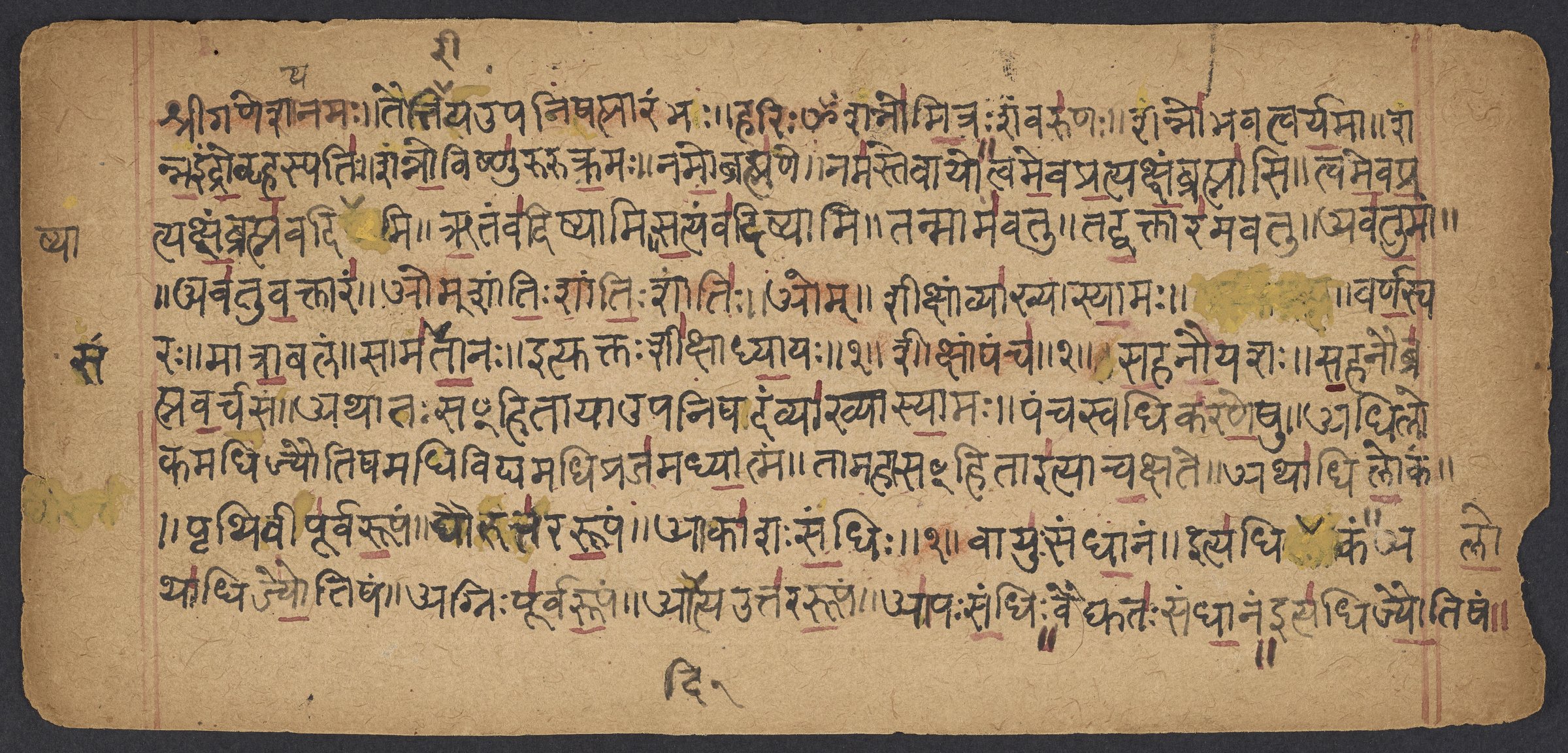
Penn Ms. Coll. 390 Item 868, fol. 1r. fol. 1r, first line: ‹śrīgaṇeśāya namaḥ || taittirīya upaniṣat prāraṃbhaḥ || hariḥ oṃ śaṃ no mitraḥ śaṃ varuṇaḥ›; the anuvāka ends in line 4 ‹avatu vaktāram || oṃ śāntiḥ śāntiḥ śāntiḥ›. Checked on the image; readings logged in data/sources/upanishads/mapping_notes_868.txt.
1oṃ śaṃ no mitraḥ śaṃ varuṇaḥ / śaṃ no bhavatvaryamā / śaṃ na indro bṛhaspatiḥ / śaṃ no viṣṇururukramaḥ / namo brahmaṇe / namaste vāyo / tvameva pratyakṣaṃ brahmāsi / tvāmevapratyakṣaṃ brahma vadiṣyāmi / ṛtaṃ vadiṣyāmi / satyaṃ vadiṣyāmi / tanmāmavatu / tadvaktāramavatu / avatu mām / avatu vaktāram // oṃ śāntiḥ śāntiḥ śāntiḥ //
1Harih, Om! May Mitra be propitious to us, and Varuna, Aryaman also, Indra, Brihaspati, and the wide-striding Vishnu.
Adoration to Brahman! Adoration to thee, O Vâyu (air)! Thou indeed art the visible Brahman. I shall proclaim thee alone as the visible Brahman. I shall proclaim the right. I shall proclaim the true (scil. Brahman).
(1-5) May it protect me! May it protect the teacher! yes, may it protect me, and may it protect the teacher! Om! Peace! peace! peace!
Where on the image
Penn Ms. Coll. 390 Item 868, fol. 1r. fol. 1r lines 4-5: ‹śīkṣāṃ vyākhyāsyāmaḥ || varṇaḥ svaraḥ || mātrā balam || sāma saṃtānaḥ || ityuktaḥ śīkṣādhyāyaḥ›, followed by the summary ‹śīkṣāṃ pañca ||2||›. Checked on the image; readings logged in data/sources/upanishads/mapping_notes_868.txt.
1oṃ śīkṣāṃ vyākhyāsyāmaḥ / varṇaḥ svaraḥ / mātrā balam / sāma santānaḥ / ityuktaḥ śīkṣādhyāyaḥ //
1Om! Let us explain Sîkshâ, the doctrine of pronunciation, viz. letter, accent, quantity, effort (in the formation of letters), modulation, and union of letters (sandhi). This is the lecture on Sîkshâ.
Where on the image
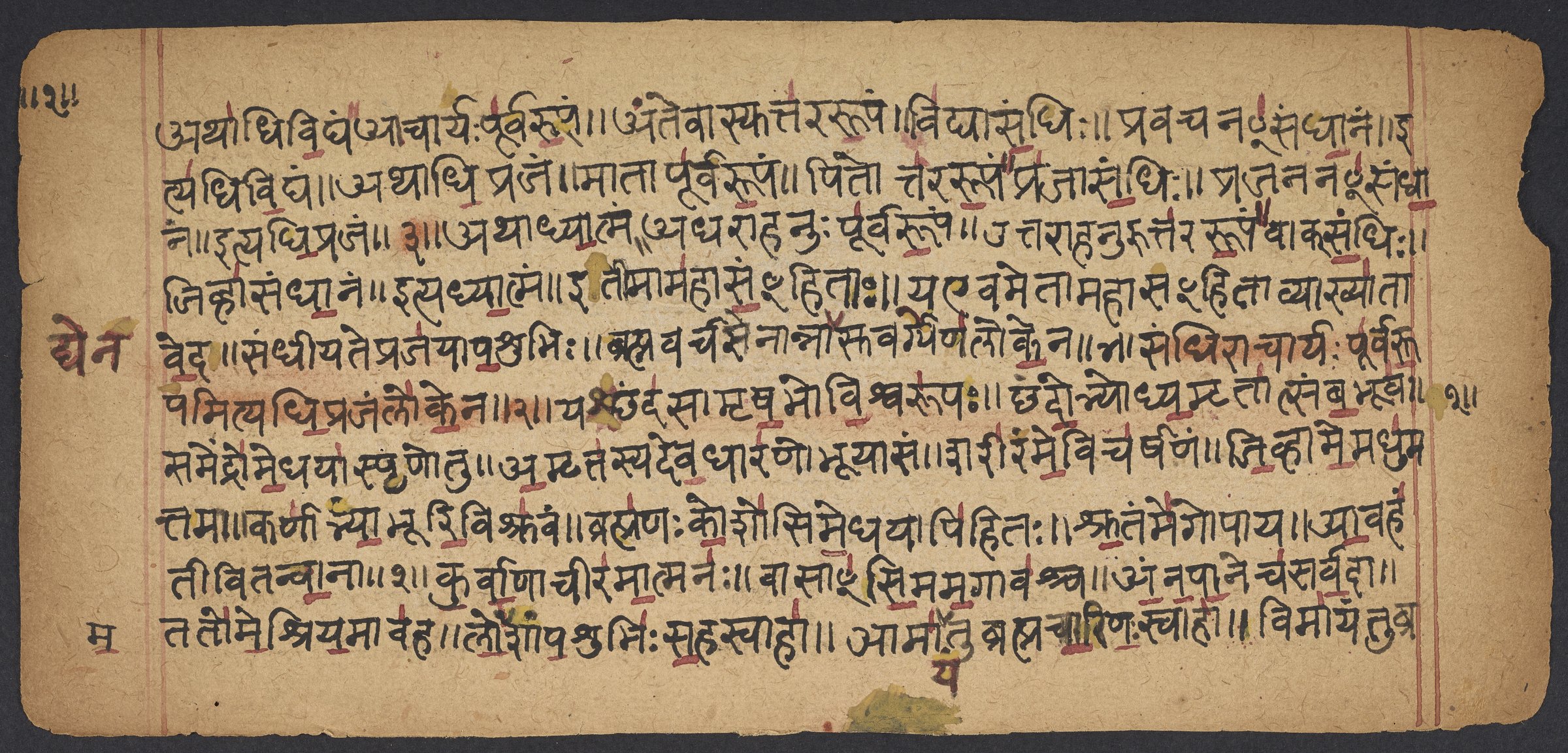
Penn Ms. Coll. 390 Item 868, fol. 1r, fol. 1v. begins fol. 1r line 5 ‹saha nau yaśaḥ || saha nau brahmavarcasam›; fol. 1r ends ‹āpaḥ saṃdhiḥ || vaidyutaḥ saṃdhānam ity adhijyautiṣam›; fol. 1v begins ‹athādhividyam || ācāryaḥ pūrvarūpam›; the anuvāka ends on fol. 1v ‹brahmavarcasenānnādyena suvargyeṇa lokena›. Checked on the image; readings logged in data/sources/upanishads/mapping_notes_868.txt.
1saha nau yaśaḥ / saha nau brahmavarcasam / athātaḥ saṃhitāyā upaniṣidaṃ vyākhyāsyāmaḥ / pañcasvadhikaraṇeṣu / adhilokamadhijyautiṣamadhividyamadhiprajamadhyātmam / tā mahāsaṃhitāyā ityācakṣate / athādhilokam / pṛthivī pūrvarūpam / dyauruttararūpam / ākāśaḥ sandhiḥ //
2vāyuḥ sandhānam / ityadhilokam / athādhijautiṣam / agniḥ pūrvarūpam / āditya uttararūpam / āpaḥ sandhiḥ / vaidyutaḥ sandhānam / ityadhijyautiṣam / athādhividyam / ācāryaḥ pūrvarūpam //
3antevāsyuttararūpam / vidyā sandhiḥ / pravacanaṃ sandhānam / ityadhividyam / athādhiprajam / mātā pūrvarūpam / pitottararūpam / prajā sandhiḥ / prajananaṃ sandhānam / ityadhiprajam //
4athādhyātmam / adharā hanuḥ pūrvarūpam / uttarā hanuruttara rūpam / vāksandhiḥ / jihvāsandhānam / ityadhyātmam / itīmā mahāsaṃhitāḥ / ya evametā mahāsaṃhitā vyākhyātā veda / sandhīyate prajayā paśubhiḥ / brahmavarcasenānnādyena suvargyeṇa lokena //
1May glory come to both of us (teacher and pupil) together! May Vedic light belong to both of us!
Now let us explain the Upanishad (the secret meaning) of the union (samhitâ), under five heads, with regard to the worlds, the heavenly lights, knowledge, offspring, and self (body). People call these the great Samhitâs.
First, with regard to the worlds. The earth is the former element, heaven the latter, ether their union;
2That union takes place through Vâyu (air). So much with regard to the worlds.
Next, with regard to the heavenly lights. Agni (fire) is the former element, Âditya (the sun) the latter, water their union. That union takes place through lightning. So much with regard to the heavenly lights.
Next, with regard to knowledge. The teacher is the former element,
3The pupil the latter, knowledge their union. That union takes place through the recitation of the Veda. So much with regard to knowledge.
Next, with regard to offspring. The mother is the former element, the father the latter, offspring their union. That union takes place through procreation. So much with regard to offspring.
4Next, with regard to the self (body). The lower jaw is the former element, the upper jaw the latter, speech their union. That union takes place through speech. So much with regard to the Self. These are the great Samhitâs. He who knows these Samhitâs (unions), as here explained, becomes united with offspring, cattle, Vedic light, food, and with the heavenly world.
Where on the image
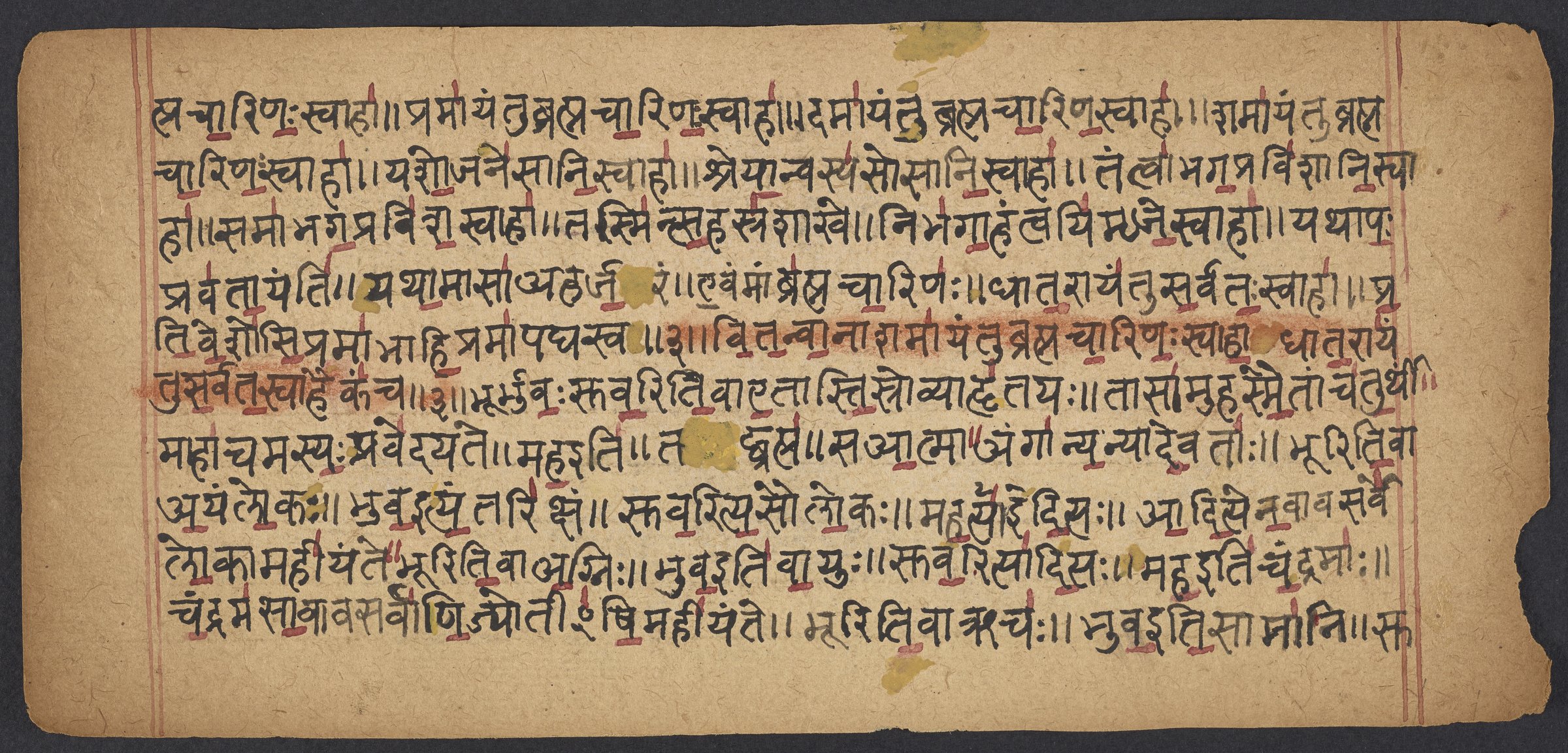
Penn Ms. Coll. 390 Item 868, fol. 1v, fol. 2r. begins fol. 1v ‹yaś chandasām ṛṣabho viśvarūpaḥ›; fol. 1v ends ‹ā mā yantu brahmacāriṇaḥ svāhā || vi mā yantu brahma-›; fol. 2r begins ‹-cāriṇaḥ svāhā || pra mā yantu›; the anuvāka ends on fol. 2r ‹prativeśo 'si pra mā bhāhi pra mā padyasva›, followed by its summary. Checked on the image; readings logged in data/sources/upanishads/mapping_notes_868.txt.
1yaśchandasāmṛṣabho viśvarūpaḥ / chandobhyo 'dhyamṛtātsaṃbabhūva / sa mendro medhayā spṛṇotu / amṛtasya deva dhāraṇo bhūyāsam / śarīraṃ me vicarṣaṇam / jihvā me madhumattamā / karṇābhyāṃ bhūri viśruvam / brahmaṇaḥ kośo 'si medhayā pihitaḥ / śrutaṃ me gopāya //
2āvahantī vitanvānā kurvāṇācīramātmanaḥ / vāsāṃsi mama gāvaśca / annapāne ca sarvadā / tato me śriyamāvaha / lomaśāṃ paśubhiḥ saha svāhā / āmāyantu brahmacāriṇaḥ svāhā / vimāyantu brahmacāriṇaḥ svāhā / pramayantu brahmacāriṇaḥ svāhā / damāyantu brahmacāriṇaḥ svāhā / śamāyantu brahmacāriṇaḥ svāhā // śāmāyantu brahmacāriṇaḥ svāhā //
3yaśo jane 'sāni svāhā / śreyān vasyaso 'sāni svāhā / taṃ tvā bhaga praviśāni svāhā / sa mā bhaga praviśa svāhā / tasmin sahasraśākhe nibhagāhaṃ tvayi mṛje svāhā / yathāpaḥ pravatā yanti yathā māsā aharjaram / evaṃ māṃ brahmacāriṇaḥ / dhātarāyantu sarvataḥ svāhā / prativeśo 'si pra mā bhāhi pra mā padyasva //
1May he who is the strong bull of the Vedas, assuming all forms, who has risen from the Vedas, from the Immortal, may that Indra (lord) strengthen me with wisdom! May I, O God, become an upholder of the Immortal!
May my body be able, my tongue sweet, may I hear much with my ears! Thou (Om) art the shrine (of Brahman), covered by wisdom. Guard what I have learnt.
She (Srî, happiness) brings near and spreads,
2And makes, without delay, garments for herself, cows, food, and drink at all times; therefore bring that Srî (happiness) hither to me, the woolly, with her cattle! Svâhâ! May the Brahman-students come to me, Svâhâ! May they come from all sides, Svâhâ! May they come forth to me, Svâhâ! May they practise restraint, Svâhâ! May they enjoy peace, Svâhâ!
3May I be a glory among men, Svâhâ! May I be better than the richest, Svâhâ! May I enter into thee, O treasure (Om), Svâhâ! Thou, O treasure, enter into me, Svâhâ! In thee, consisting of a thousand branches, in thee, O treasure, I am cleansed, Svâhâ! As water runs downward, as the months go to the year, so, O preserver of the world, may Brahman-students always come to me from all sides, Svâhâ!
(1) Thou art a refuge! Enlighten me! Take possession of me!
Where on the image
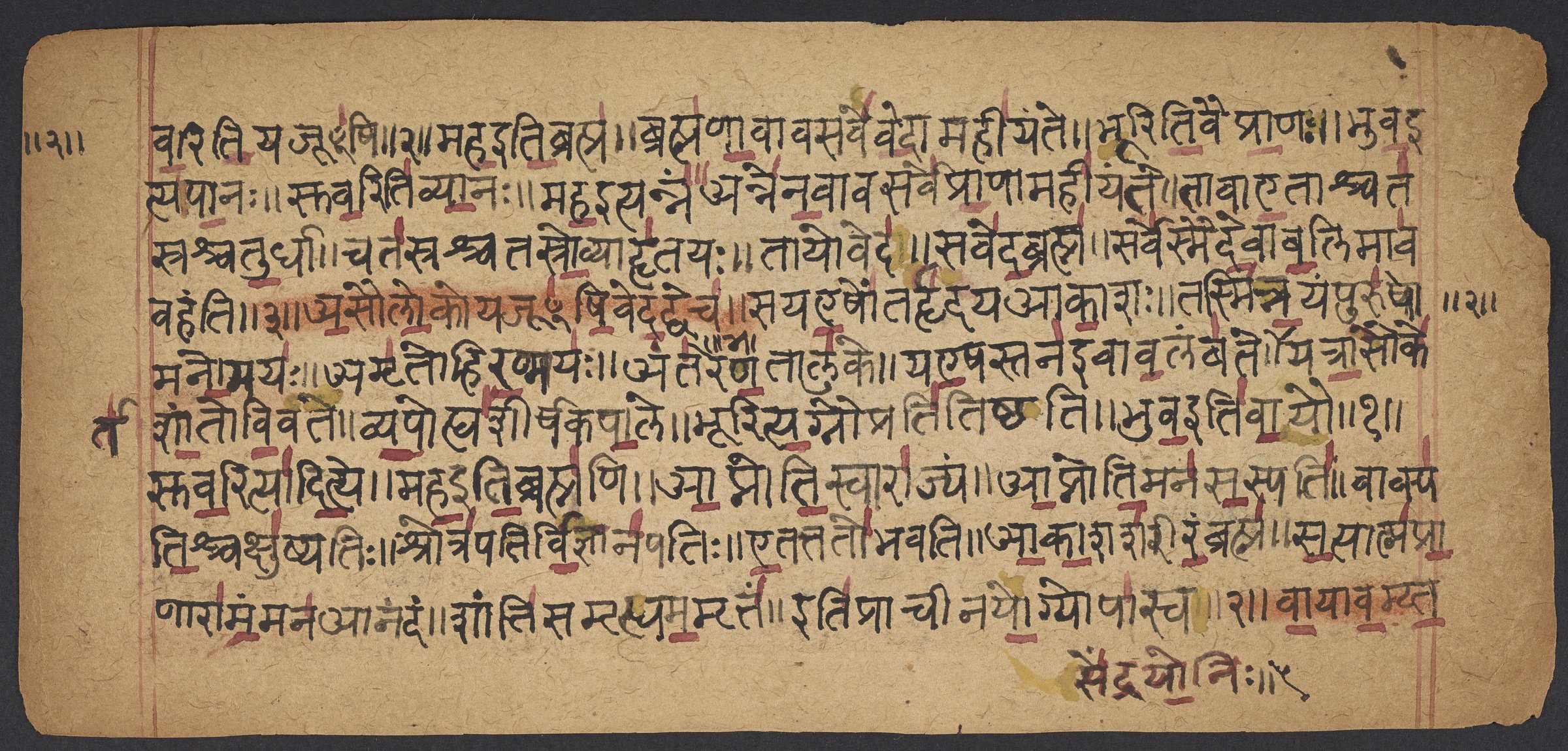
Penn Ms. Coll. 390 Item 868, fol. 2r, fol. 2v. begins fol. 2r ‹bhūr bhuvaḥ suvar iti vā etās tisro vyāhṛtayaḥ›; fol. 2r ends ‹bhūr iti vā ṛcaḥ || bhuva iti sāmāni || su-›; fol. 2v begins ‹-var iti yajūṃṣi ||3|| maha iti brahma›; the anuvāka ends on fol. 2v ‹sarve 'smai devā balim āvahanti ||4||›. Checked on the image; readings logged in data/sources/upanishads/mapping_notes_868.txt.
1bhūrbhuvaḥ suvariti vā etāstisro vyāhṛtayaḥ / tāsāmu ha smaitāṃ caturthīm / māhācamasyaḥ pravedayate / maha iti / tat brahma / sa ātmā / aṅgānyanyā devatāḥ / bhūriti vā ayaṃ lokaḥ / bhuva ityantarikṣam / suvarityasau lokaḥ //
2maha ityādityaḥ / ādityena vāva sarve loka mahīyante / bhūriti vā agniḥ / bhuva iti vāyuḥ / suvarityādityaḥ / maha iti candramāḥ / candramasā vāva sarvāṇi jyotiṃṣi mahīyante / bhūriti vā ṛcaḥ / bhuva iti sāmāni / suvariti yajūṃṣi //
3maha iti brahma / brahmaṇā vāva sarve vedā mahīyante / bhūriti vai prāṇaḥ / bhuva ityapānaḥ / suvariti vyānaḥ / maha ityannam / annena vāva sarve prāṇa mahīyante / tā vā etāścatasraścaturdha / catasraścatasro vyāhṛtayaḥ / tā yo veda / sa veda brahma / sarve 'smai devā balimāvahanti //
1Bhû, Bhuvas, Suvas, these are the three sacred interjections (vyâhriti). Mâhâkamasya taught a fourth, viz. Mahas, which is Brahman, which is the Self. The others (devatâs) are its members.
Bhû is this world, Bhuvas is the sky, Suvas is the other world.
2Mahas is the sun. All the worlds are increased by the sun. Bhû is Agni (fire), Bhuvas is Vâyu (air), Suvas is Âditya (sun). Mahas is the moon. All the heavenly lights are increased by the moon. Bhû is the Rik-verses, Bhuvas is the Sâman-verses, Suvas is the Yagus-verses.
3Mahas is Brahman. All the Vedas are increased by the Brahman.
(1-2) Bhû is Prâna (up-breathing), Bhuvas is Apâna (down-breathing), Suvas is Vyâna (back-breathing). Mahas is food. All breathings are increased by food.
Thus there are these four times four, the four and four sacred interjections. He who knows these,
(1-2) Knows the Brahman. All Devas bring offerings to him.
Where on the image
Penn Ms. Coll. 390 Item 868, fol. 2v. fol. 2v from ‹sa ya eṣo 'ntarhṛdaya ākāśaḥ› to the last line ‹iti prācīnayogyopāssva ||2||›; a marginal note below the last line reads ‹sendrayoniḥ› (a word of 1.6.1). The summary line ‹vāyāv amṛtam ... ekaṃ ca ||6||› runs on to the head of fol. 3r. Checked on the image; readings logged in data/sources/upanishads/mapping_notes_868.txt.
1sa ya eṣo 'ntarahṛdaya ākāśaḥ / tasminnayaṃ puruṣo manomayaḥ / amṛto hiraṇmayaḥ / antareṇa tāluke / ya eṣa stana ivāvalaṃbate / sendrayoniḥ / yatrāsau keśānto vivartate / vyapohya śīrṣakapāle / bhūrityagnau pratitiṣṭhati / bhuva iti vāyau //
2suvarityāditye / maha iti brahmaṇi / āpnoti svārājyam / āpnoti manasaspatim / vākpatiścakṣuṣpatiḥ / śrotraptirvijñānapatiḥ / etattato bhavati / ākāśaśarīraṃ brahma / satyātma prāṇārāmaṃ mana ānandam / śānti samṛddhamamṛtam / iti prācīnayogyopāssva //
1There is the ether within the heart, and in it there is the Person (purusha) consisting of mind, immortal, golden.
Between the two palates there hangs the uvula, like a nipple—that is the starting-point of Indra (the lord). Where the root of the hair divides, there he opens the two sides of the head, and saying Bhû, he enters Agni (the fire); saying Bhuvas, he enters Vâyu (air);
2Saying Suvas, he enters Âditya (sun); saying Mahas, he enters Brahman. He there obtains lordship, he reaches the lord of the mind. He becomes lord of speech, lord of sight, lord of hearing, lord of knowledge. Nay, more than this. There is the Brahman whose body is ether, whose nature is true, rejoicing in the senses (prâna), delighted in the mind, perfect in peace, and immortal.
(1) Worship thus, O Prâkînayogya!
Where on the image
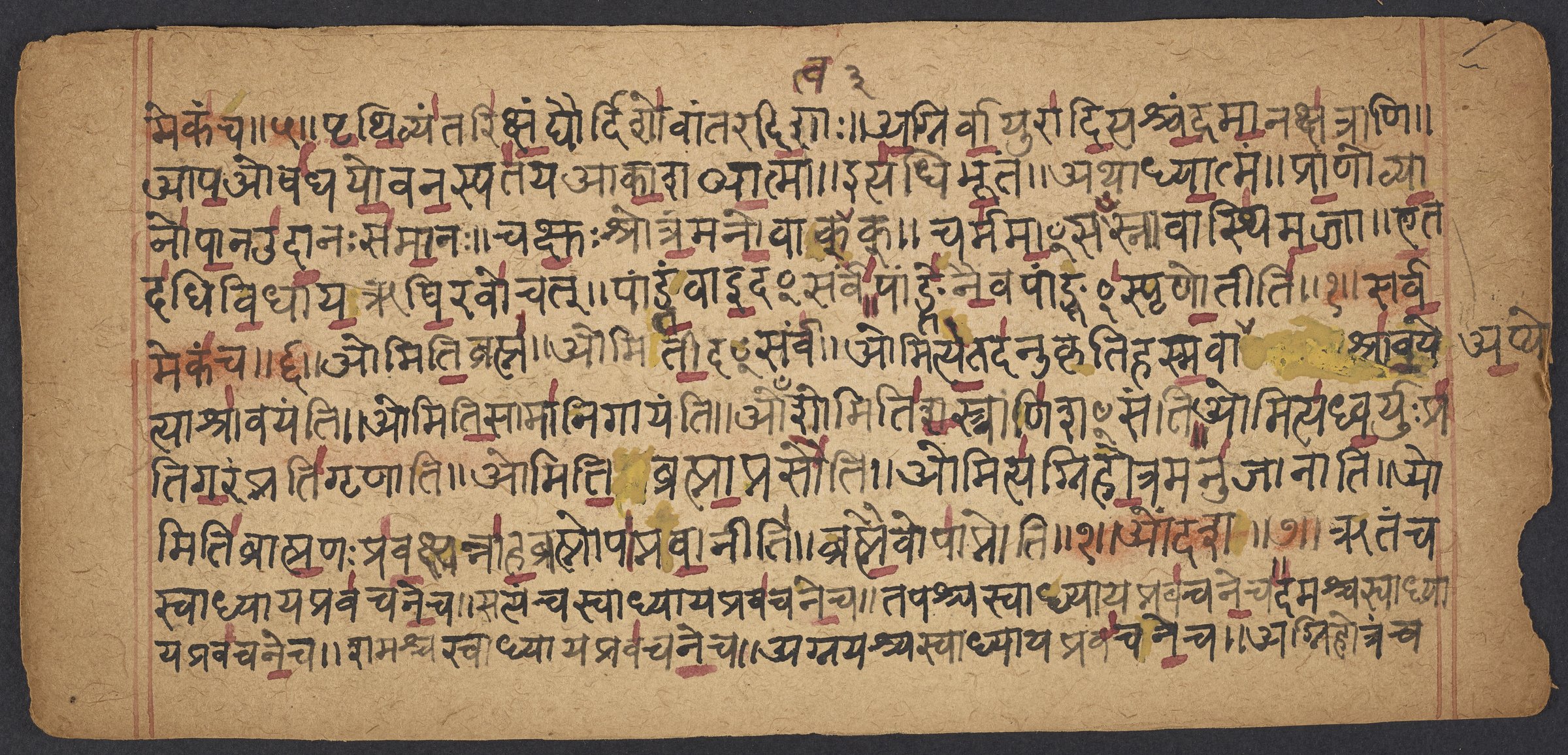
Penn Ms. Coll. 390 Item 868, fol. 3r. fol. 3r from ‹pṛthivy antarikṣaṃ dyaur diśo 'vāntaradiśāḥ› to ‹pāṅktenaiva pāṅktaṃ spṛṇotīti ||1||›, followed by ‹sarvam ekaṃ ca ||7||›. Checked on the image; readings logged in data/sources/upanishads/mapping_notes_868.txt.
1pṛthivyantarikṣaṃ dyaurdiśo 'vāntaradiśāḥ / agnirvāyurādityaścandramā nakṣatrāṇi / āpa oṣadhayo vanaspataya ākāśa ātmā / ityadhibhūtam / athādhyātmam / prāṇo vyāno 'pāna udānaḥ samānaḥ / cakṣuḥ śrotraṃ mano vāk tvak / carma māṃsaṃ snāvāsthi majjā / etadadhividhāya ṛṣiravocat / pāṅktaṃ vā idaṃ sarvam / pāṅktenaiva pāṅktaṃ spṛṇotīti //
1'The earth, the sky, heaven, the four quarters, and the intermediate quarters,'—'Agni (fire), Vâyu (air), Âditya (sun), Kandramas (moon), and the stars,'—'Water, herbs, trees, ether, the universal Self (virâg),'—so much with reference to material objects (bhûta).
Now with reference to the self (the body): 'Prâna (up-breathing), Apâna (down-breathing), Vyâna (back-breathing), Udâna (out-breathing), and Samâna (on-breathing),'—'The eye, the ear, mind, speech, and touch,'—'The skin, flesh, muscle, bone, and marrow.' Having dwelt on this (fivefold arrangement of the worlds, the gods, beings, breathings, senses, and elements of the body), a Rishi said: 'Whatever exists is fivefold (pâṅkta).'
(1) By means of the one fivefold set (that referring to the body) he completes the other fivefold set.
Where on the image
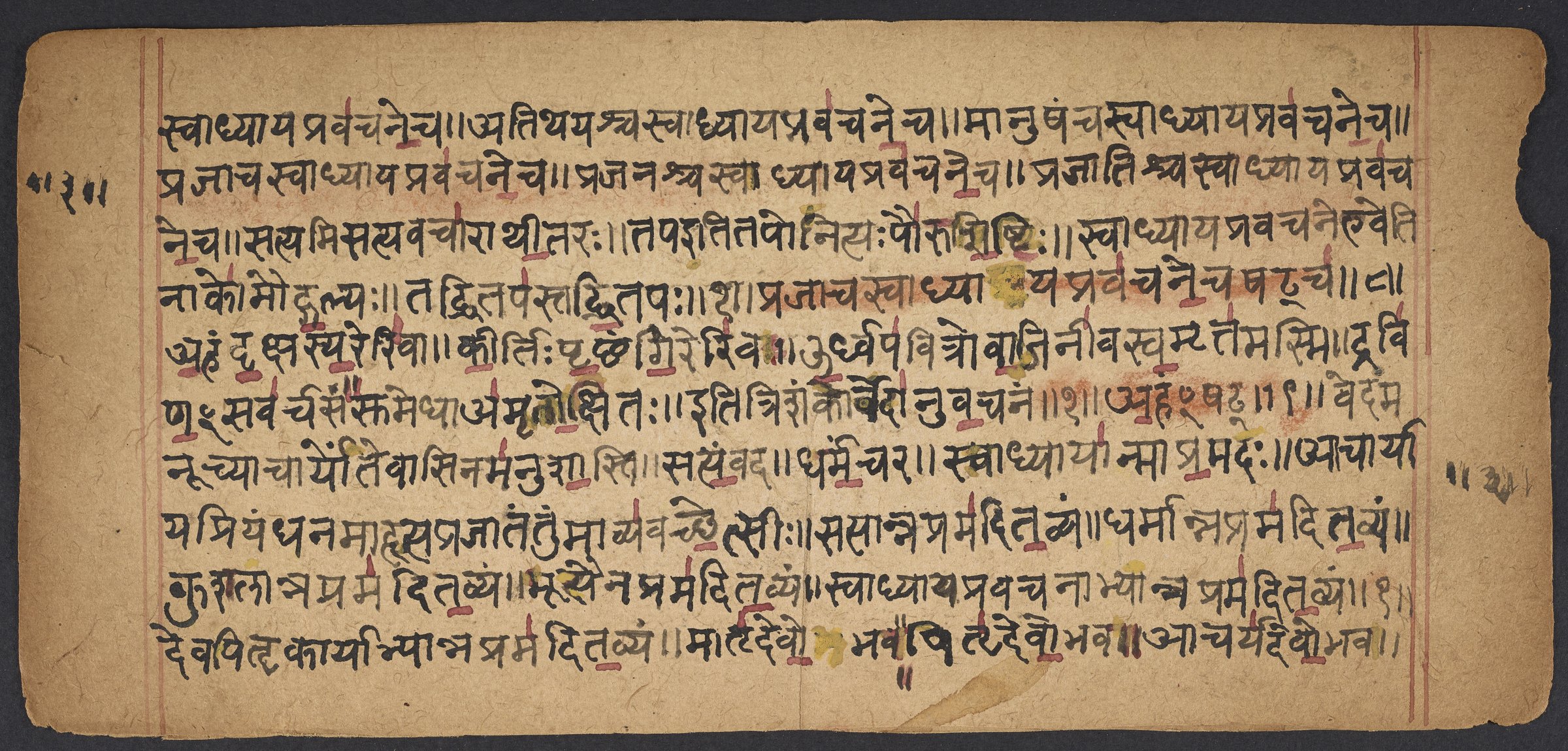
Penn Ms. Coll. 390 Item 868, fol. 3r. fol. 3r from ‹om iti brahma || om itīdaṃ sarvam› to ‹brahmaivopāpnoti ||1||›, followed by ‹oṃ daśa ||8||›. Checked on the image; readings logged in data/sources/upanishads/mapping_notes_868.txt.
1omiti brahma / omitīdaṃ sarvam / omityetadanukṛtirha sma vā apyo śrāvayetyāśrāvayanti / omiti sāmāni gāyanti / oṃśomiti śastrāṇi śaṃsanti / omityadhvaryuḥ pratigaraṃ pratigṛṇāti / omiti brahmā prasauti / omityagnihotramanujānāti / omiti brāhmaṇaḥ pravakṣyannāha brahmopāpnavānīti / brahmaivopāpnoti //
1Om means Brahman. 2. Om means all this. 3. Om means obedience. When they have been told, 'Om, speak,' they speak. 4. After Om they sing Sâmans. 5. After Om they recite hymns. 6. After Om the Adhvaryu gives the response. 7. After Om the Brahman-priest gives orders. 8. After Om he (the sacrificer) allows the performance of the Agnihotra. 9. When a Brâhmana is going to begin his lecture, he says, 10. 'Om, may I acquire Brahman (the Veda).' He thus acquires the Veda.
Where on the image
Penn Ms. Coll. 390 Item 868, fol. 3r, fol. 3v. begins in the last lines of fol. 3r ‹ṛtaṃ ca svādhyāyapravacane ca›; fol. 3r ends ‹agnihotraṃ ca›; fol. 3v begins ‹svādhyāyapravacane ca || atithayaś ca›; the anuvāka ends on fol. 3v ‹tad dhi tapas tad dhi tapaḥ ||1||›, followed by ‹... ṣaṭ ca ||9||›. Checked on the image; readings logged in data/sources/upanishads/mapping_notes_868.txt.
1ṛtaṃ ca svādhyāyapravacane ca / satyaṃ ca svādhyāyapravacane ca / tapaśca svādhyāyapravacane ca / damaśca svādhyāyapravacane ca / śamaśca svādhyāyapravacane ca / agnayaśca svādhyāyapravacane ca / agnihotraṃ ca svādhyāyapravacane ca / atithayaśca svādhyāyapravacane ca / mānuṣaṃ ca svādhyāyapravacane ca / prajā ca svādhyāyapravacane ca / prajanaśca svādhyāyapravacane ca / prajātiśca svādhyāyapravacane ca / satyamiti satyavacā rāthītaraḥ / tapa iti taponityaḥ pauruśiṣṭiḥ / svādhyāyapravacane eveti nāko maudagalyaḥ / taddhi tapastaddhi tapaḥ //
1(What is necessary?) The right, and learning and practising the Veda. The true, and learning and practising the Veda. Penance, and learning and practising the Veda. Restraint, and learning and practising the Veda. Tranquillity, and learning and practising the Veda. The fires (to be consecrated), and learning and practising the Veda. The Agnihotra sacrifice, and learning and practising the Veda. Guests (to be entertained), and learning and practising the Veda. Man's duty, and learning and practising the Veda. Children, and learning and practising the Veda.
(1-6) Marriage, and learning and practising the Veda. Children's children, and learning and practising the Veda.
Satyavakas Râthîtara thinks that the true only is necessary. Taponitya Paurasishti thinks that penance only is necessary. Nâka Maudgalya thinks that learning and practising the Veda only are necessary,—for that is penance, that is penance.
Where on the image
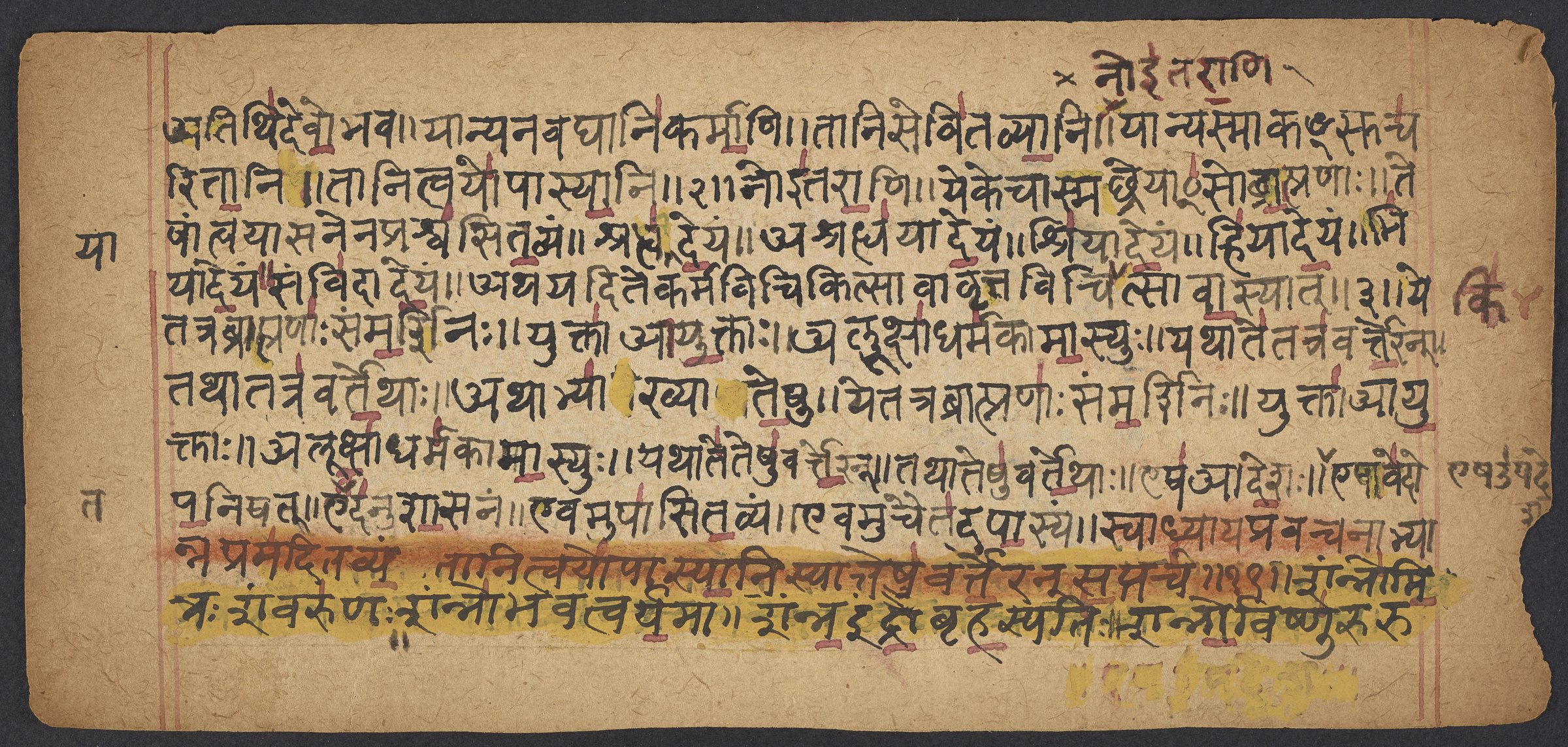
Penn Ms. Coll. 390 Item 868, fol. 3v. fol. 3v from ‹ahaṃ vṛkṣasya rerivā› to ‹iti triśaṅkor vedānuvacanam ||1||›, followed by ‹ahaṃ ṣaṭ ||10||›. Checked on the image; readings logged in data/sources/upanishads/mapping_notes_868.txt.
1ahaṃ vṛkṣasya rerivā / kīrtiḥ pṛṣṭhaṃ gireriva / ūrdhvapavitro vājinīva svamṛtamasmi / draviṇaṃ savarcasam / sumedha amṛtokṣitaḥ / iti triśaṅkorvedānuvacanam //
1'I am he who shakes the tree (i.e. the tree of the world, which has to be cut down by knowledge). 2. My glory is like the top of a mountain. 3. I, whose pure light (of knowledge) has risen high, am that which is truly immortal, as it resides in the sun. 4. I am the brightest treasure. 5. I am wise, immortal, imperishable.' 6. This is the teaching of the Veda, by the poet Trisaṅku.
Where on the image
Penn Ms. Coll. 390 Item 868, fol. 3v, fol. 4r. begins fol. 3v ‹vedam anūcyācāryo 'ntevāsinam anuśāsti || satyaṃ vada || dharmaṃ cara›; fol. 3v ends ‹mātṛdevo bhava || pitṛdevo bhava || ācāryadevo bhava›; fol. 4r begins ‹atithidevo bhava› (the omitted ‹no itarāṇi› is written above the first line); the anuvāka ends on fol. 4r ‹evam u caitad upāsyam ||4||›, followed by its summary ending ‹||11||›. Checked on the image; readings logged in data/sources/upanishads/mapping_notes_868.txt.
1vedamanūcyācāryontevāsinamanuśāsti / satyaṃ vada / dharmaṃ cara / svādhyāyānmā pramadaḥ / ācāryāya priyaṃ dhanamāhṛtya prajātantuṃ mā vyavacchetsīḥ / satyānna pramaditavyam / dharmānna pramaditavyam / kuśalānna pramaditavyam / bhūtyaina pramaditavyam / svādhyāyapravacanābhyāṃ na pramaditavyam //
2devapitṛkāryābhyāṃ na pramaditavyam / mātṛdevo bhava / pitṛdevo bhava / ācāryadevo bhava / atithidevo bhava / yānyanavadyāni karmāṇi / tāni sevitavyāni / no itarāṇi / yānyasmākaṃ sucaritāni / tāni tvayopāsyāni //
3no itarāṇi / ye ke cārumacchreyāṃso brāhmaṇāḥ / teṣāṃ tvayāsanena praśvasitavyam / śraddhayā deyam / aśraddhayādeyam / śriyā deyam / hriyā deyam / bhiyā deyam / saṃvidā deyam / atha yadi te karmavicikitsā vā vṛttavicikitsā vā syāt //
4ye tatra brāhmaṇāḥ saṃmarśinaḥ / yuktā āyuktāḥ / alūkṣā dharmakāmāḥ syuḥ / yathā te tatra varteran / tathā tatra vartethāḥ / athābhyākhyāteṣu / ye tatra brāhmaṇāḥ saṃmarśinaḥ / yuktā āyuktāḥ / alūkṣā dharmakāmāḥ syuḥ / yathā te teṣu varteran / tathā teṣu vartethāḥ / eṣa ādeśaḥ / eṣa upadeśaḥ / eṣā vedopaniṣat / etadanuśāsanam / evamupāsitavyam / evamu caitadupāsyam //
1After having taught the Veda, the teacher instructs the pupil: 'Say what is true! Do thy duty! Do not neglect the study of the Veda! After having brought to thy teacher his proper reward, do not cut off the line of children! Do not swerve from the truth! Do not swerve from duty! Do not neglect what is useful! Do not neglect greatness! Do not neglect the learning and teaching of the Veda!
2'Do not neglect the (sacrificial) works due to the Gods and Fathers! Let thy mother be to thee like unto a god! Let thy father be to thee like unto a god! Let thy teacher be to thee like unto a god! Let thy guest be to thee like unto a god! Whatever actions are blameless, those should be regarded, not others. Whatever good works have been performed by us, those should be observed by thee,—
3'Not others. And there are some Brâhmanas better than we. They should be comforted by thee by giving them a seat. Whatever is given should be given with faith, not without faith,—with joy, with modesty, with fear, with kindness. If there should be any doubt in thy mind with regard to any sacred act or with regard to conduct,—
4'In that case conduct thyself as Brâhmanas who possess good judgment conduct themselves therein, whether they be appointed or not, as long as they are not too severe, but devoted to duty. And with regard to things that have been spoken against, as Brâhmanas who possess good judgment conduct themselves therein, whether they be appointed or not, as long as they are not too severe, but devoted to duty,
(1-7) Thus conduct thyself. 'This is the rule. This is the teaching. This is the true purport (Upanishad) of the Veda. This is the command. Thus should you observe. Thus should this be observed.'
Where on the image
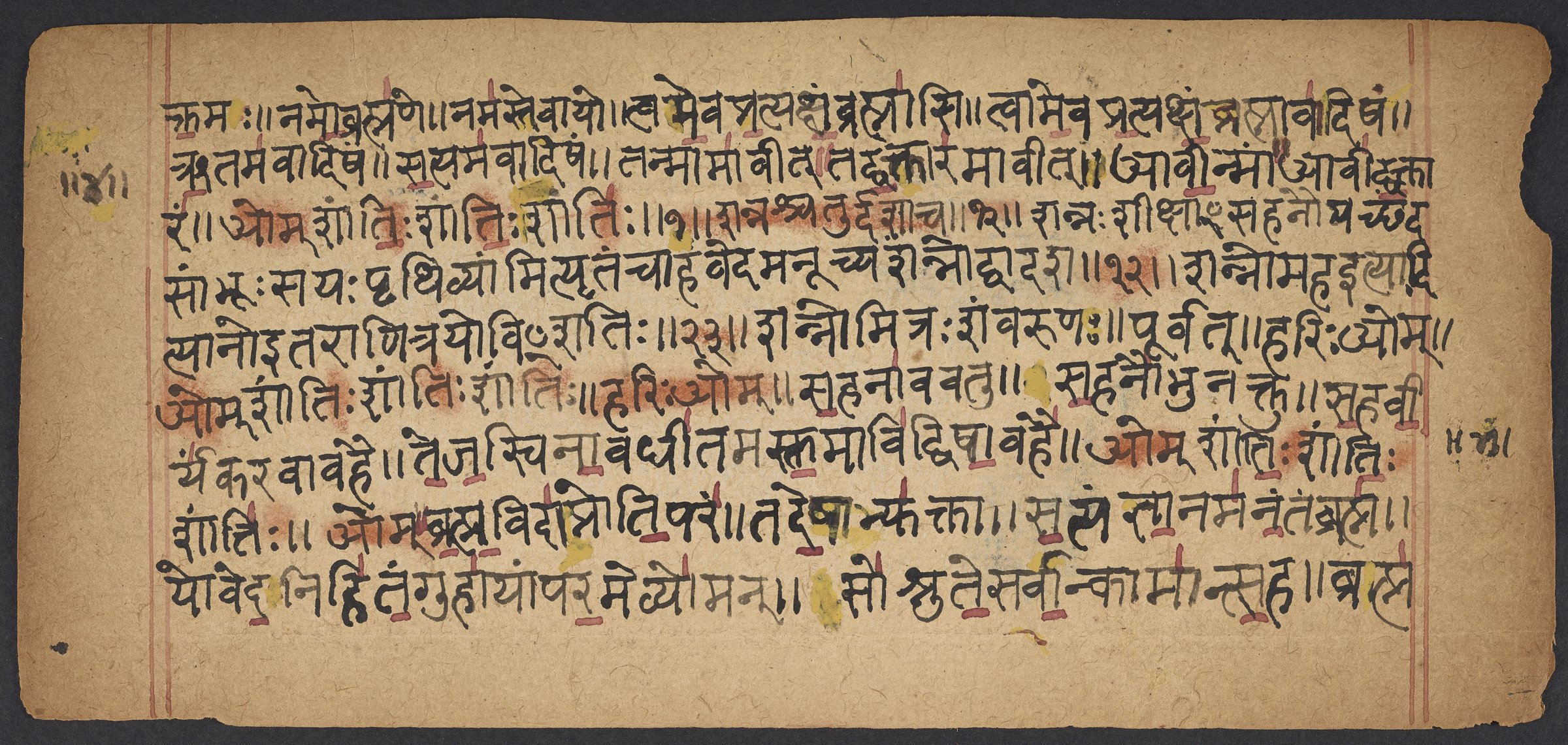
Penn Ms. Coll. 390 Item 868, fol. 4r, fol. 4v. begins in the last lines of fol. 4r ‹śaṃ no mitraḥ śaṃ varuṇaḥ›; fol. 4r ends ‹śaṃ no viṣṇur uru-›; fol. 4v begins ‹-kramaḥ || namo brahmaṇe || namas te vāyo›; the anuvāka ends on fol. 4v ‹āvīd vaktāram || oṃ śāntiḥ śāntiḥ śāntiḥ ||1||›, followed by the summaries of the vallī. Checked on the image; readings logged in data/sources/upanishads/mapping_notes_868.txt.
1śaṃ no mitraḥ śaṃ varuṇaḥ / śaṃ no bhavatvaryamā / śaṃ na indro bṛhaspatiḥ / śaṃ no viṣṇururukramaḥ / namo brahmaṇe / namaste vāyo / tvameva pratyakṣaṃ brahmāsi / tvāmeva pratyakṣaṃ brahmāvādiṣam / ṛtamavādiṣam / satyamavādiṣam / tanmāmāvīt / tadvaktāramāvīt / āvīnmām / āvīt vaktāram / oṃ śāntiḥ śāntiḥ śāntiḥ //
1May Mitra be propitious to us, and Varuna, Aryaman also, Indra, Brihaspati, and the wide-striding Vishnu! Adoration to Brahman! Adoration to thee, O Vâyu! Thou indeed art the visible Brahman. I proclaimed thee alone as the visible Brahman.
(1-5) I proclaimed the right. I proclaimed the true. It protected me. It protected the teacher. Yes, it protected me, it protected the teacher. Om! Peace! peace! peace!
Notes
- Sanskrit: GRETIL, Taittirīya-Upaniṣad with Śaṃkarabhāṣya (data entry Ivan Andrijanić, after Ten Principal Upaniṣads with Śaṅkarabhāṣya, Motilal Banarsidass 1964), the text of the Upanishad only, paragraph numbers vallī.anuvāka.paragraph. The edition's closing words for anuvākas 1 and 2 of the first vallī ('iti ... 'nuvākaḥ') are left out. The Sanskrit shown is the edition text, not a transcription of the manuscript; the manuscript's summary lines and invocations are not shown.
- English: F. Max Müller, 'Taittirîyaka-upanishad', The Upanishads part II, Sacred Books of the East 15 (1884), pp. 45-69. No proofread transcription exists online, so the text was transcribed for this collection from the page images of the archive.org copy p2upanishads00mluoft and checked word by word against the OCR of that copy; every difference was looked up on the page images (data/sources/upanishads/english/muller1884_taittiriya.txt). Footnotes are not reproduced. Müller's parenthesized numbers such as '(1-5)' count the short sentences of the anuvāka and are kept as printed.
Cite
Sources
- Source: Penn Ms. Coll. 390 Item 868 (OPenn, public domain) + GRETIL Sanskrit + F. Max Müller (1884) English (holding institution)
- Critical edition: GRETIL Sanskrit e-texts (Isa, Katha, Prasna, Mandukya, Aitareya, Taittiriya, Svetasvatara, Chandogya); Nirnaya Sagar edition of 1925, transcribed (Kena, Mundaka)
← previous · → next · v cycle view · l back to library