Taittiriya Upanishad, Bhrigu Valli
Introduction
The Taittiriya Upanishad belongs to the Taittiriya school of the Black Yajurveda, where it forms chapters 7-9 of the Taittiriya Aranyaka. It has three chapters (vallīs), each divided into lessons (anuvākas).
The third vallī tells how Bhṛgu, son of Varuṇa, learned by penance (tapas) that Brahman is food, then breath, mind, understanding, and at last bliss, and closes with rules about food and the song of the one who has reached the Self ('I am food, I am food, I am food!').
The page images come from University of Pennsylvania Libraries, Ms. Coll. 390 Item 868, a paper manuscript of ten leaves (13 x 28 cm) in Devanagari, 10 to 12 lines to a side, with red accent marks and double red margin lines, undated (catalogued 18th or 19th century). The scribe closes each anuvāka with its number and a short summary line naming its first words and its number of sentences, so every anuvāka could be found on the pages; each section below is one anuvāka, shown with the page or pages that carry it.
How was this verified? (Provenance)
Where on the image
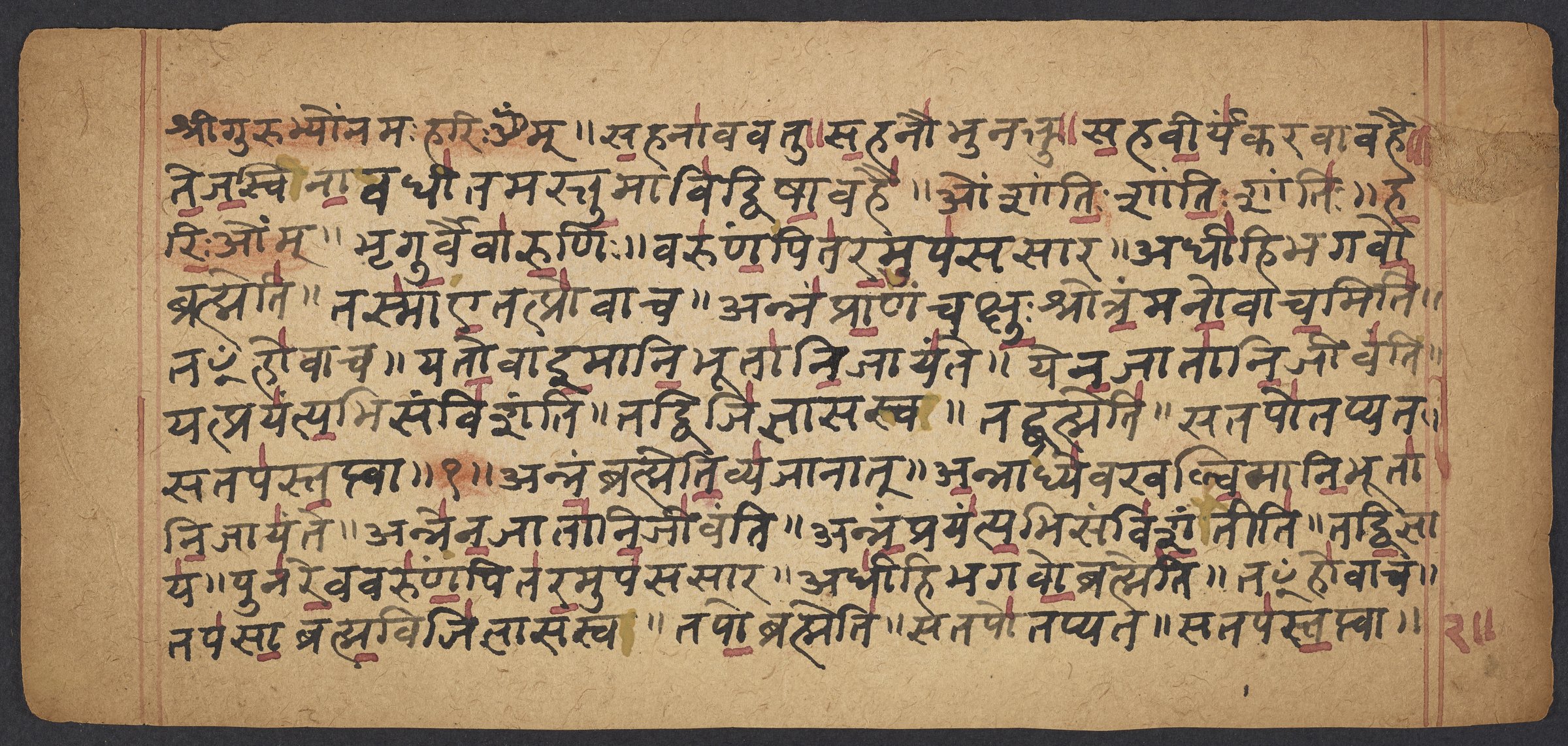
Penn Ms. Coll. 390 Item 868, fol. 8r. fol. 8r: after ‹śrīgurubhyo namaḥ hariḥ om› and the invocation ‹saha nāv avatu ... oṃ śāntiḥ śāntiḥ śāntiḥ›, the vallī begins ‹hariḥ om || bhṛgur vai vāruṇiḥ || varuṇaṃ pitaram upasasāra›; the anuvāka ends ‹sa tapo 'tapyata || sa tapas taptvā ||1||›. The invocation on this page (‹saha nāv avatu›) is not in the Sanskrit text used and its English is not shown. Checked on the image; readings logged in data/sources/upanishads/mapping_notes_868.txt.
1bhṛgurvai vāruṇiḥ / varuṇaṃ pitaramupasasāra / adhīhi bhagavo brahmeti / tasmā etatprovāca / annaṃ prāṇaṃ cakṣuḥ śrotraṃ mano vācamiti / taṃ hovāca / yato vā imāni bhūtāni jāyante / yena jātāni jīvanti / yatprayanyabhisaṃviśanti / tadvijijñāsasva / tadbrahmeti / sa tapo 'tapyata / sa tapastaptvā //
Bhrigu Vâruni went to his father Varuna, saying: 'Sir, teach me Brahman.' He told him this, viz. Food, breath, the eye, the ear, mind, speech.
Then he said again to him: 'That from whence these beings are born, that by which, when born, they live, that into which they enter at their death, try to know that. That is Brahman.'
He performed penance. Having performed penance—
Where on the image
Penn Ms. Coll. 390 Item 868, fol. 8r. fol. 8r from ‹annaṃ brahmeti vyajānāt› to the end of the page ‹sa tapas taptvā›, numbered 2 in the right margin. Checked on the image; readings logged in data/sources/upanishads/mapping_notes_868.txt.
1annaṃ brahmeti vyajānāt / annādadhyeva khalvimāni bhutāni jāyante / annena jātāni jīvanti / annaṃ prayantyabhisaṃviśantīti / tadvijñāya / punareva varuṇaṃ pitaramupasasāra / adhīhi bhagavo brahmeti / taṃ hovāca / tapasā brahma vijijñāsasva / tapo brahmeti / sa tapo 'tapyata / sa tapastaptvā //
He perceived that food is Brahman, for from food these beings are produced; by food, when born, they live; and into food they enter at their death.
Having perceived this, he went again to his father Varuna, saying: 'Sir, teach me Brahman.' He said to him: 'Try to know Brahman by penance, for penance is (the means of knowing) Brahman.'
He performed penance. Having performed penance—
Where on the image
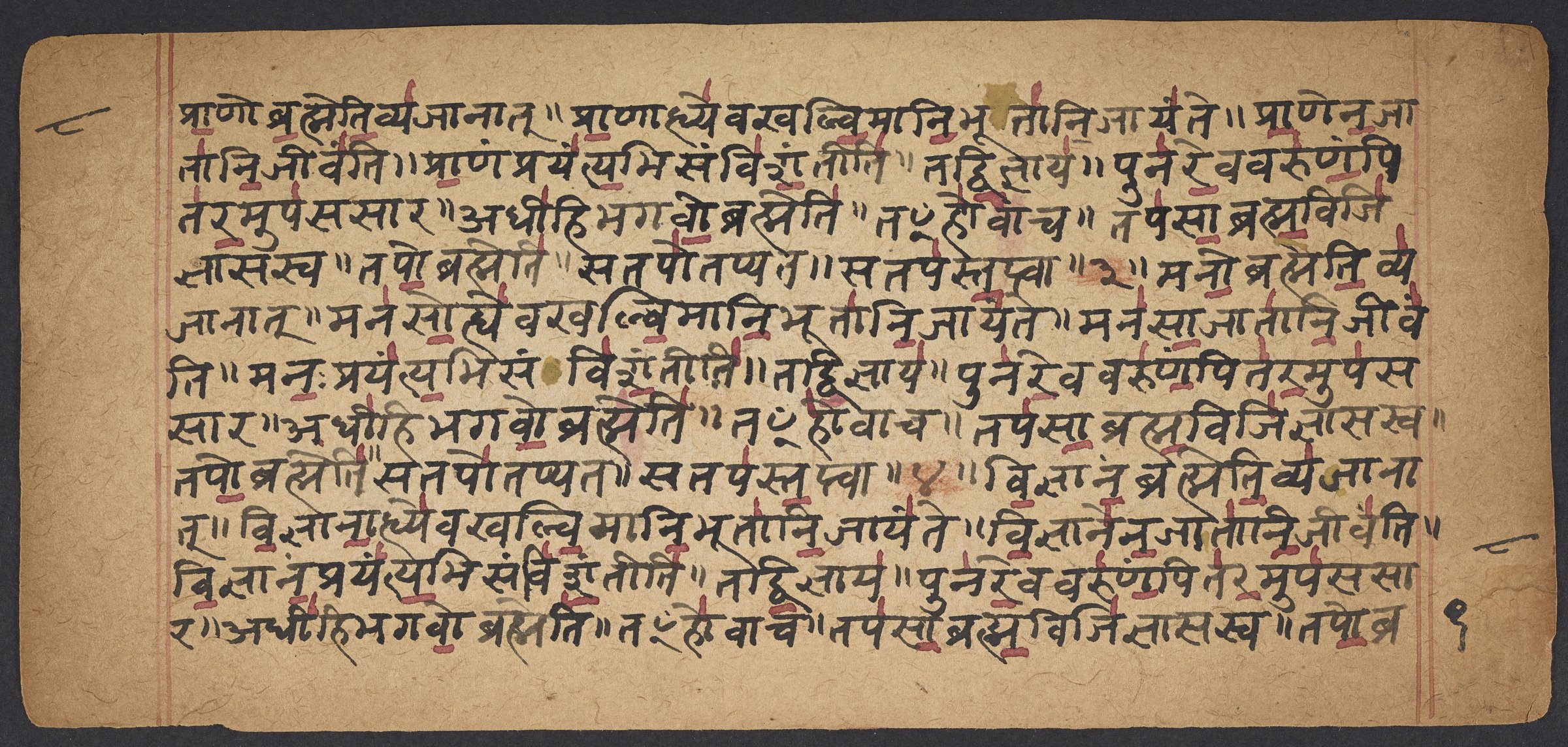
Penn Ms. Coll. 390 Item 868, fol. 8v. fol. 8v, first line ‹prāṇo brahmeti vyajānāt›, to ‹sa tapas taptvā ||3||›. Checked on the image; readings logged in data/sources/upanishads/mapping_notes_868.txt.
1prāṇo brahmeti vyajānāt / prāṇādadhyeva khalvimāni bhūtāni jāyante / prāṇena jātāni jīvanti / prāṇaṃ prayantyabhisaṃviśantīti / tadvijñāya / punareva varuṇaṃ pitaramupasasāra / adhīhi bhagavo brahmeti / taṃ hovāca / tapasā brahma vijijñāsasva / tapo brahmeti / sa tapo 'tapyata / sa tapastaptvā //
He perceived that breath is Brahman, for from breath these beings are born; by breath, when born, they live; into breath they enter at their death.
Having perceived this, he went again to his father Varuna, saying: 'Sir, teach me Brahman.' He said to him: 'Try to know Brahman by penance, for penance is (the means of knowing) Brahman.'
He performed penance. Having performed penance—
Where on the image
Penn Ms. Coll. 390 Item 868, fol. 8v. fol. 8v from ‹mano brahmeti vyajānāt› to ‹sa tapas taptvā ||4||›. Checked on the image; readings logged in data/sources/upanishads/mapping_notes_868.txt.
1mano brahmeti vyajānāt / manaso hyeva khalvimāni bhūtāni jāyante / manasā jātāni jīvanti / manaḥ prayantyabhisaṃviśantīti / tadvijñāya / punareva varuṇaṃ pitaramupasasāra / adhīhi bhagavo brahmeti / taṃ hovāca / tapasā brahma vijijñāsasva / tapo brahmeti / sa tapo 'tapyata / sa tapastaptvā //
He perceived that mind (manas) is Brahman, for from mind these beings are born; by mind, when born, they live; into mind they enter at their death.
Having perceived this, he went again to his father Varuna, saying: 'Sir, teach me Brahman.' He said to him: 'Try to know Brahman by penance, for penance is (the means of knowing) Brahman.'
He performed penance. Having performed penance—
Where on the image
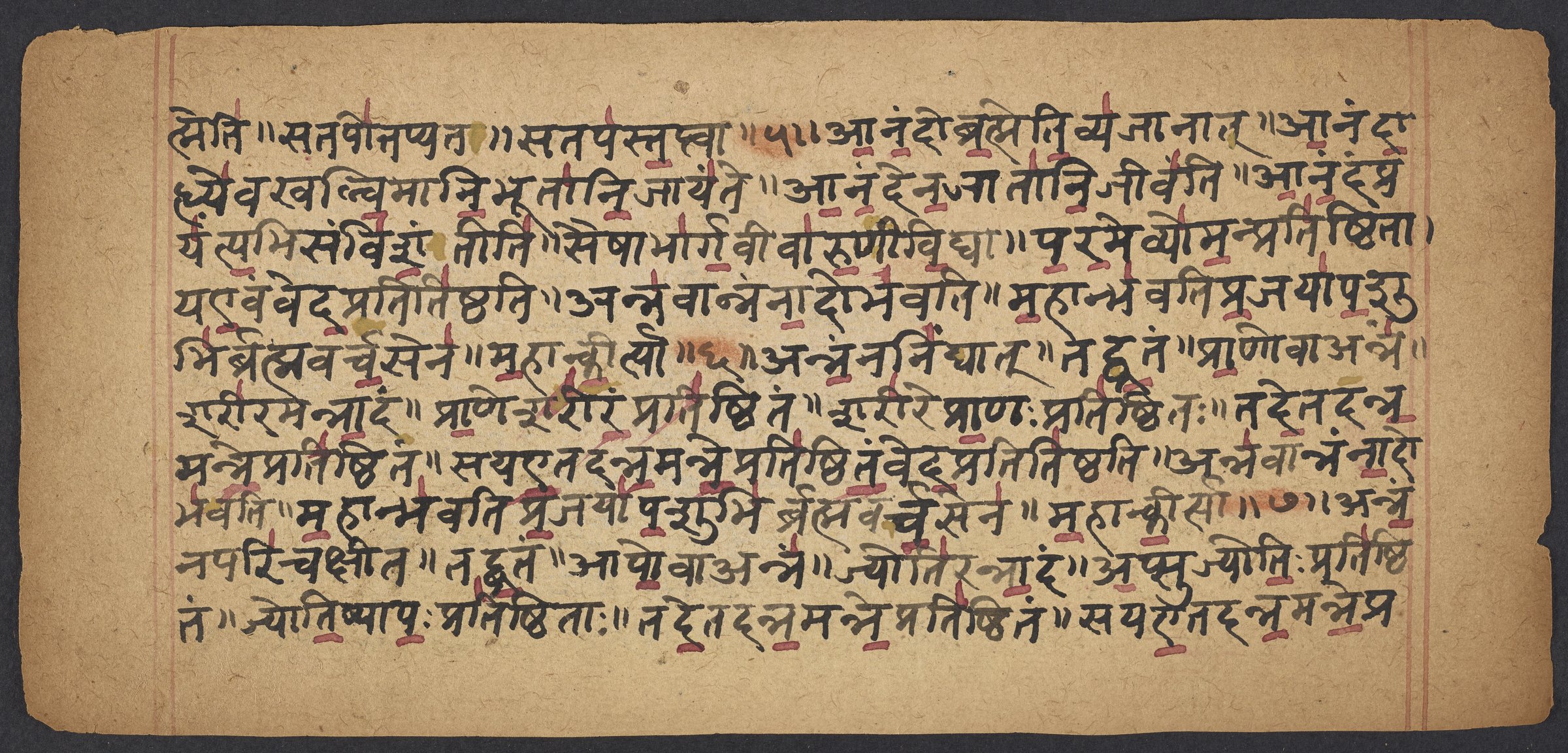
Penn Ms. Coll. 390 Item 868, fol. 8v, fol. 9r. begins fol. 8v ‹vijñānaṃ brahmeti vyajānāt›; fol. 8v ends ‹tapo bra-›; the anuvāka ends in the first line of fol. 9r ‹-hmeti || sa tapo 'tapyata || sa tapas taptvā ||5||›. Checked on the image; readings logged in data/sources/upanishads/mapping_notes_868.txt.
1vijñānaṃ brahmeti vyajānāt / vijñānādadhyeva khalvimāni bhūtāni jāyante / vijñānena jātāni jīvanti / vijñānaṃ prayantyabhisaṃviśantīti / tadvijñāya / punareva varuṇaṃ pitaramupasasāra / adhīhi bhagavo brahmeti / taṃ hovāca / tapasā brahma vijijñāsasva / tapo brahmeti / sa tapo 'tapyata / sa tapastaptvā //
He perceived that understanding (vigñâna) was Brahman, for from understanding these beings are born; by understanding, when born, they live; into understanding they enter at their death.
Having perceived this, he went again to his father Varuna, saying: 'Sir, teach me Brahman.' He said to him: 'Try to know Brahman by penance, for penance is (the means of knowing) Brahman.'
He performed penance. Having performed penance—
Where on the image
Penn Ms. Coll. 390 Item 868, fol. 9r. fol. 9r from ‹ānando brahmeti vyajānāt› to ‹mahān kīrtyā ||6||›. Checked on the image; readings logged in data/sources/upanishads/mapping_notes_868.txt.
1ānando brahmeti vyajānāt / ānandādhyeva khalvimāni bhūtāni jāyante / ānandena jātāni jīvanti / ānandaṃ prayantyabhisaṃviśantīti / saiṣā bhārgavī vāruṇī vidyā / parame vyomanpratiṣṭhitā / sa ya evaṃ veda pratitiṣṭhati / annavānannādo bhavati / mahānbhavati prajayā paśubhirbrahmavarcasena / mahān kīrtyā //
He perceived that bliss is Brahman, for from bliss these beings are born; by bliss, when born, they live; into bliss they enter at their death.
This is the knowledge of Bhrigu and Varuna, exalted in the highest heaven (in the heart). He who knows this becomes exalted, becomes rich in food, and able to eat food (healthy), becomes great by offspring, cattle, and the splendour of his knowledge (of Brahman), great by fame.
Where on the image
Penn Ms. Coll. 390 Item 868, fol. 9r. fol. 9r from ‹annaṃ na nindyāt› to ‹mahān kīrtyā ||7||›. Checked on the image; readings logged in data/sources/upanishads/mapping_notes_868.txt.
1annaṃ na nindyāt / tadavratam / prāṇo vā annam / śarīramannādam / prāṇe śarīraṃ pratiṣṭhitam / śarīre prāṇaḥ pratiṣṭhitaḥ / tadetadannmanne pratiṣṭhitam / sa ya etadannamanne pratiṣṭhitaṃ veda pratitiṣṭhati / annavānannādo bhavati / mahānbhavati prajayā paśubhirbrahmavarcasena / mahān kīrtyā //
Let him never abuse food, that is the rule.
Breath is food, the body eats the food. The body rests on breath, breath rests on the body. This is the food resting on food. He who knows this food resting on food, rests exalted, becomes rich in food, and able to eat food (healthy), becomes great by offspring, cattle, and the splendour of his knowledge (of Brahman), great by fame.
Where on the image
Penn Ms. Coll. 390 Item 868, fol. 9r, fol. 9v. begins fol. 9r ‹annaṃ na paricakṣīta›; fol. 9r ends ‹sa ya etad annam anne pra-›; the anuvāka ends on fol. 9v ‹mahān kīrtyā ||8||›. Checked on the image; readings logged in data/sources/upanishads/mapping_notes_868.txt.
1annaṃ na paricakṣīta / tadavratam / āpo vā annam / jyotirannādam / apsu jyotiḥ pratiṣṭhitam / jyotiṣyāpaḥ pratiṣṭhitāḥ / tadetadannamanne pratiṣṭhitam /sa ya etadannamanne pratiṣṭhitaṃ veda pratitiṣṭhati / annavānannādo bhavati / mahānbhavati prajayā paśubhirbrahmavarcasena / mahān kīrtyā //
Let him never shun food, that is the rule. Water is food, the light eats the food. The light rests on water, water rests on light. This is the food resting on food. He who knows this food resting on food, rests exalted, becomes rich in food, and able to eat food (healthy), becomes great by offspring, cattle, and the splendour of his knowledge (of Brahman), great by fame.
Where on the image
Penn Ms. Coll. 390 Item 868, fol. 9v. fol. 9v from ‹annaṃ bahu kurvīta› to ‹mahān kīrtyā ||9||›. Checked on the image; readings logged in data/sources/upanishads/mapping_notes_868.txt.
1annaṃ bahu kurvīta / tadavratam / pṛthivī vā annam / ākāśo 'nnādaḥ / pṛthivyāmākāśaḥ pratiṣṭhitaḥ / ākāśe pṛthivī pratiṣṭhitā / tadetadannamanne pratiṣṭhitam / sa ya etadannamanne pratiṣṭhitaṃ veda pratitiṣṭhati / annavānannādo bhavati / mahānbhavati prajayā paśubhirbrahmavarcasena / mahānkīrtyā //
Let him acquire much food, that is the rule. Earth is food, the ether eats the food. The ether rests on the earth, the earth rests on the ether. This is the food resting on food. He who knows this food resting on food, rests exalted, becomes rich in food, and able to eat food (healthy), becomes great by offspring, cattle, and the splendour of his knowledge (of Brahman), great by fame.
Where on the image
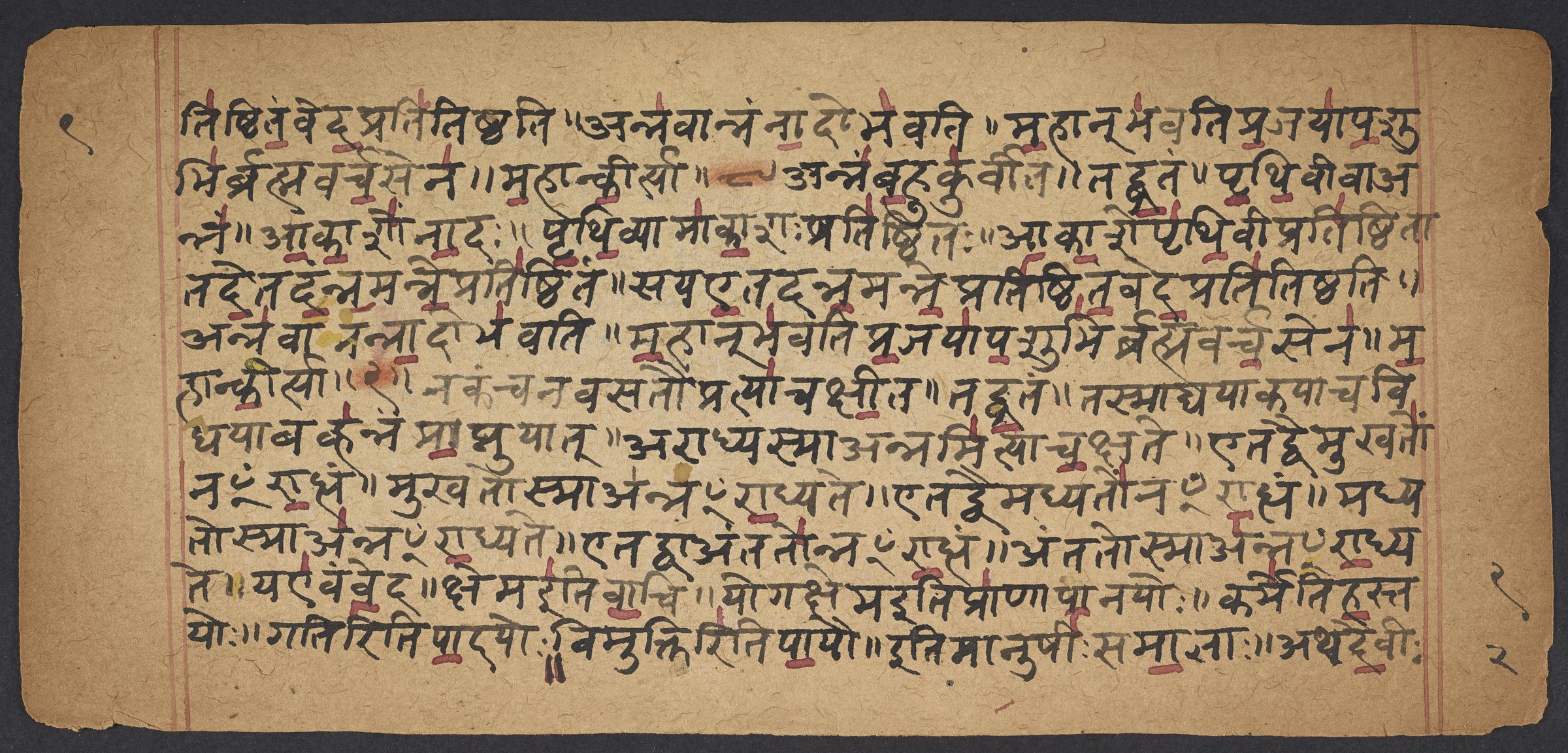
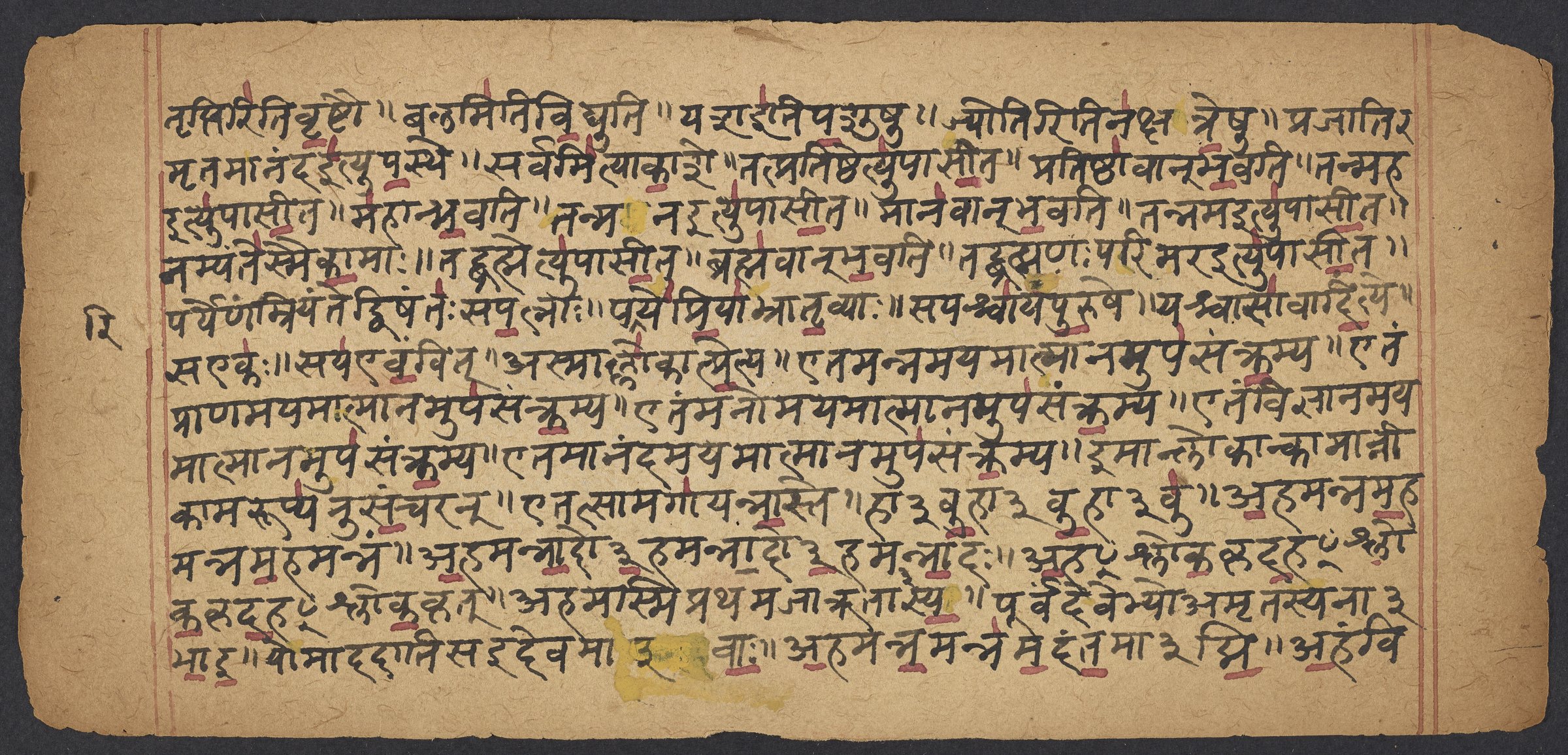
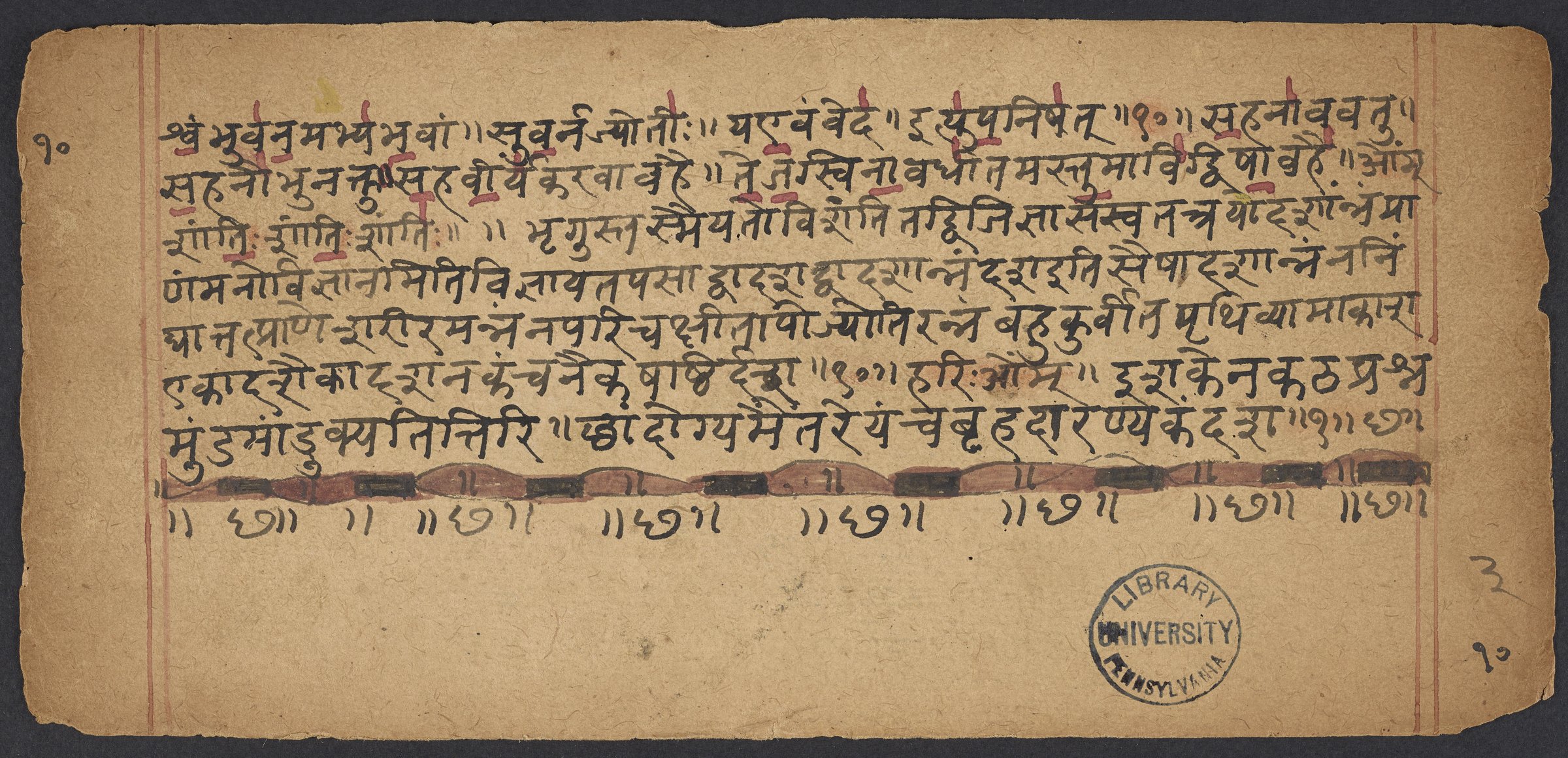
Penn Ms. Coll. 390 Item 868, fol. 9v, fol. 10r, fol. 10v. begins fol. 9v ‹na kaṃcana vasatau pratyācakṣīta›; fol. 9v ends ‹iti mānuṣīḥ samājñāḥ || atha daivīḥ›; fol. 10r runs from ‹tṛptir iti vṛṣṭau› to ‹aham annam annam adantam ā3dmi || ahaṃ vi-›; fol. 10v begins ‹-śvaṃ bhuvanam abhyabhavām || suvarṇa jyotīḥ || ya evaṃ veda || ity upaniṣat ||10||›, followed by the invocation, the summary of the vallī and a verse naming the ten Upanishads (‹īśā kena kaṭha praśna ...›). The manuscript has ‹ya evaṃ veda› before ‹kṣema iti vāci›, which the Sanskrit text used does not print. Checked on the image; readings logged in data/sources/upanishads/mapping_notes_868.txt.
1na kañcana vasatau pratyācakṣīta / tadavratam / tasmādyayā kayā ca vidhayā bahvannaṃ prāpnuyāt / arādhyasmā annamityācakṣate / etadvai mukhato 'naṃ rāddham / mukhato 'smā annaṃ rādhyate / etadvai madhyato 'naṃ rāddham / madhyato 'smā annaṃ rādhyate / edadvai antato 'nnaṃ rāddham / antato 'smā annaṃ rādhyate //
2kṣema iti vāci / yogakṣema iti prāṇāpānayoḥ / karmeti hastayoḥ / gatiriti pādayoḥ / vimuktiriti pāyau / iti mānuṣīḥ samājñāḥ / atha daivīḥ / tṛptiriti vṛṣṭau / balamiti vidyuti //
3yaśa iti paśuṣu / jyotiriti nakṣatreṣu / prajātiramṛtamānanda ityupasthe / sarvamityākāśe / tatpratiṣṭhetyupāsīta / pratiṣṭhāvān bhavati / tanmaha ityupāsīta / mahānbhavati / tanmana ityupāsīta / mānavānbhavati //
4tannama ityupāsīta / namyante 'smai kāmāḥ / tadabrahmetyupāsīta / brahmavānbhavati / tadabrahmaṇaḥ parimara ityupāsīta / paryeṇaṃ mriyante dviṣantaḥ sapatnāḥ / pari ye 'priyā bhrātṛvyāḥ / sa yaścāyaṃ puruṣe / yaścāsāvāditye / sa ekaḥ //
5sa ya evaṃvit / asmāllokātpretya / etamannamayamātmānamupasaṅkramya /etaṃ prāṇamayamātmānamupasaṅkramya / etaṃ manomayamātmānamupasaṅkramya / etaṃ vijñānamayamātmānamupasaṅkramya / etamānandamayamātmānamupasaṅkramya / imāṃllokankāmānnī kāmarūpyanusañcaran / etat sāma gāyannāste / hā3vu hā3vu hā3vu //
6ahamannamahamannamahamannam / ahamannādo3 'hamannādo3 'hamannādaḥ / ahaṃ ślokakṛdahaṃ ślokakṛdahaṃ ślokakṛt / ahamasmi prathamajā ṛtā3sya / pūrvaṃ devebhyo 'mṛtasya nā3bhāyi / yo mā dadāti sa ideva mā3vāḥ / ahamannamannamadantamā3dmi / ahaṃ viśvaṃ bhuvanamabhyabhavā3m / suvarna jyotiḥ / ya evaṃ veda / ityupaniṣat //
1Let him never turn away (a stranger) from his house, that is the rule. Therefore a man should by all means acquire much food, for (good) people say (to the stranger): 'There is food ready for him.' If he gives food amply, food is given to him amply. If he gives food fairly, food is given to him fairly. If he gives food meanly, food is given to him meanly.
2He who knows this, (recognises and worships Brahman) as possession in speech, as acquisition and possession in up-breathing (prâna) and down-breathing (apâna); as action in the hands; as walking in the feet; as voiding in the anus. These are the human recognitions (of Brahman as manifested in human actions). Next follow the recognitions (of Brahman) with reference to the Devas, viz. as satisfaction in rain; as power in lightning;
3As glory in cattle; as light in the stars; as procreation, immortality, and bliss in the member; as everything in the ether. Let him worship that (Brahman) as support, and he becomes supported. Let him worship that (Brahman) as greatness (mahah), and he becomes great. Let him worship that (Brahman) as mind, and he becomes endowed with mind.
4Let him worship that (Brahman) as adoration, and all desires fall down before him in adoration. Let him worship that (Brahman) as Brahman, and he will become possessed of Brahman. Let him worship this as the absorption of the gods in Brahman, and the enemies who hate him will die all around him, all around him will die the foes whom he does not love.
He who is this (Brahman) in man, and he who is that (Brahman) in the sun, both are one.
5He who knows this, when he has departed this world, after reaching and comprehending the Self which consists of food, the Self which consists of breath, the Self which consists of mind, the Self which consists of understanding, the Self which consists of bliss, enters and takes possession of these worlds, and having as much food as he likes, and assuming as many forms as he likes, he sits down singing this Sâman (of Brahman): 'Hâvu, hâvu, hâvu!
6'I am food (object), I am food, I am food! I am the eater of food (subject), I am the eater of food, I am the eater of food! I am the poet (who joins the two together), I am the poet, I am the poet! I am the first-born of the Right (rita). Before the Devas I was in the centre of all that is immortal. He who gives me away, he alone preserves me: him who eats food, I eat as food.
'I overcome the whole world, I, endowed with golden light. He who knows this, (attains all this).' This is the Upanishad.
Notes
- Sanskrit: GRETIL, Taittirīya-Upaniṣad with Śaṃkarabhāṣya (data entry Ivan Andrijanić, after Ten Principal Upaniṣads with Śaṅkarabhāṣya, Motilal Banarsidass 1964), the text of the Upanishad only, paragraph numbers vallī.anuvāka.paragraph. The edition's closing words for anuvākas 1 and 2 of the first vallī ('iti ... 'nuvākaḥ') are left out. The Sanskrit shown is the edition text, not a transcription of the manuscript; the manuscript's summary lines and invocations are not shown.
- English: F. Max Müller, 'Taittirîyaka-upanishad', The Upanishads part II, Sacred Books of the East 15 (1884), pp. 45-69. No proofread transcription exists online, so the text was transcribed for this collection from the page images of the archive.org copy p2upanishads00mluoft and checked word by word against the OCR of that copy; every difference was looked up on the page images (data/sources/upanishads/english/muller1884_taittiriya.txt). Footnotes are not reproduced. Müller's parenthesized numbers such as '(1-5)' count the short sentences of the anuvāka and are kept as printed.
- Müller prints an invocation ('Harih, Om! May it (the Brahman) protect us both ...') before the first anuvāka of this vallī and does not count it as an anuvāka. The Sanskrit text used does not include it, so it is not shown; the manuscript has it before the vallī.
Cite
Sources
- Source: Penn Ms. Coll. 390 Item 868 (OPenn, public domain) + GRETIL Sanskrit + F. Max Müller (1884) English (holding institution)
- Critical edition: GRETIL Sanskrit e-texts (Isa, Katha, Prasna, Mandukya, Aitareya, Taittiriya, Svetasvatara, Chandogya); Nirnaya Sagar edition of 1925, transcribed (Kena, Mundaka)
← previous · → next · v cycle view · l back to library