The Iliad, Book 11
Introduction
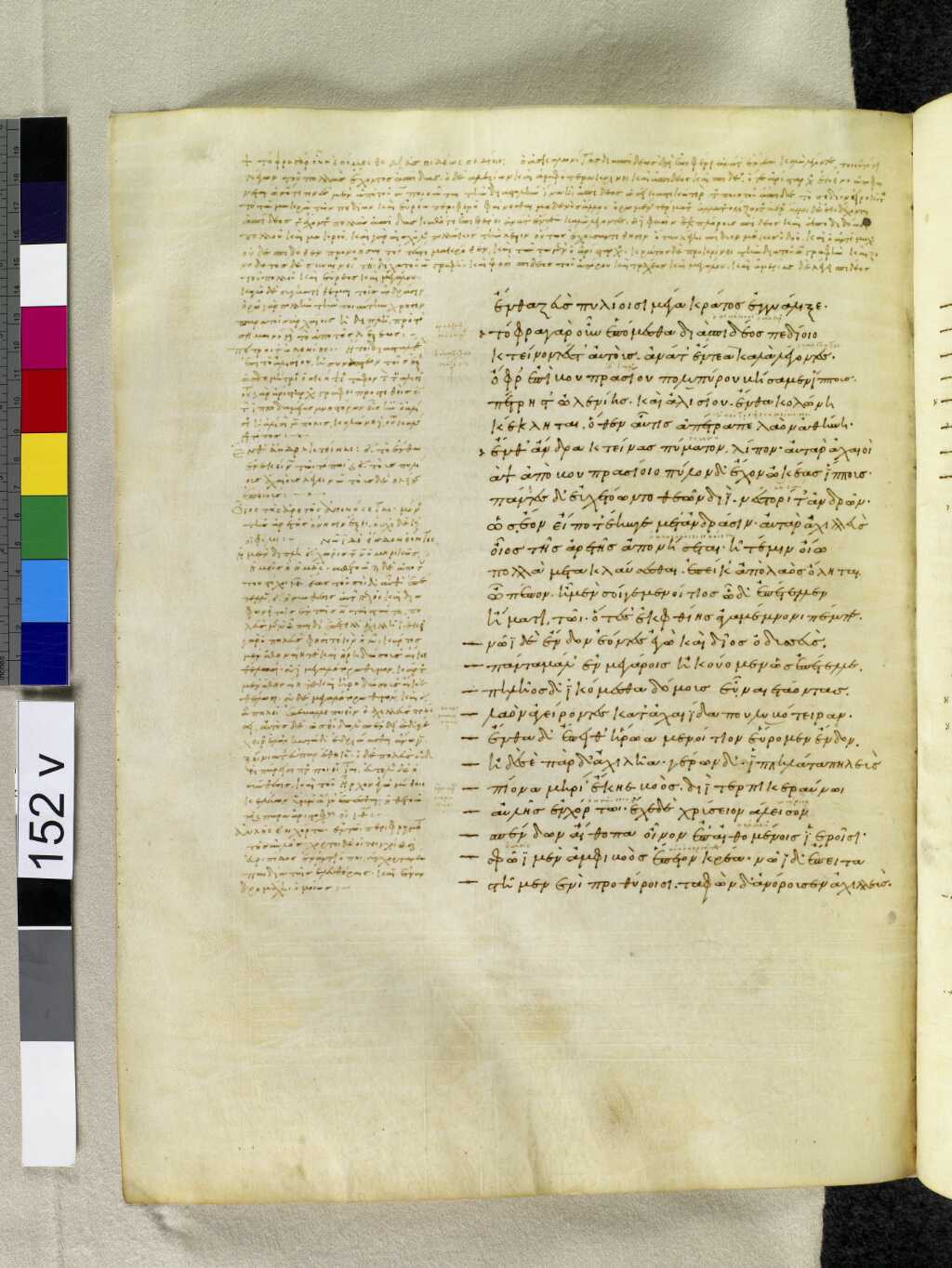
Book 11 of the Iliad with 34 sections, each linked to its specific folio in Venetus A (Marcianus Graecus 454, 10th c.). The Homer Multitext Project provides line-level folio mappings, ensuring every section of text corresponds to the exact manuscript page where it appears.
How was this verified? (Provenance)
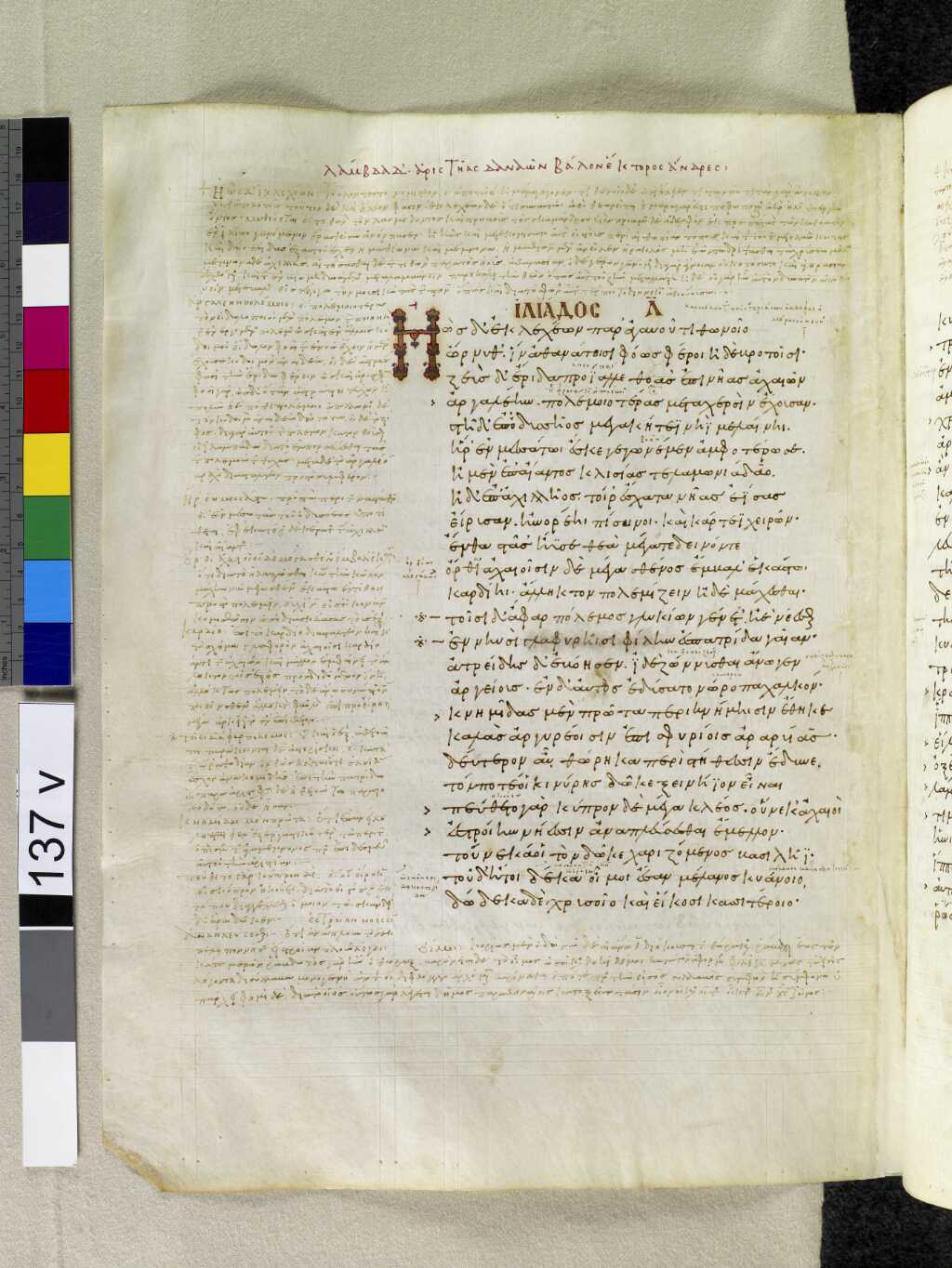
1Ἠὼς δʼ ἐκ λεχέων παρʼ ἀγαυοῦ Τιθωνοῖο 2ὄρνυθʼ, ἵνʼ ἀθανάτοισι φόως φέροι ἠδὲ βροτοῖσι· 3Ζεὺς δʼ Ἔριδα προΐαλλε θοὰς ἐπὶ νῆας Ἀχαιῶν 4ἀργαλέην, πολέμοιο τέρας μετὰ χερσὶν ἔχουσαν. 5στῆ δʼ ἐπʼ Ὀδυσσῆος μεγακήτεϊ νηῒ μελαίνῃ, 6ἥ ῥʼ ἐν μεσσάτῳ ἔσκε γεγωνέμεν ἀμφοτέρωσε, 7ἠμὲν ἐπʼ Αἴαντος κλισίας Τελαμωνιάδαο 8ἠδʼ ἐπʼ Ἀχιλλῆος, τοί ῥʼ ἔσχατα νῆας ἐΐσας 9εἴρυσαν ἠνορέῃ πίσυνοι καὶ κάρτεϊ χειρῶν 10ἔνθα στᾶσʼ ἤϋσε θεὰ μέγα τε δεινόν τε 11ὄρθιʼ, Ἀχαιοῖσιν δὲ μέγα σθένος ἔμβαλʼ ἑκάστῳ 12καρδίῃ ἄληκτον πολεμίζειν ἠδὲ μάχεσθαι. 13τοῖσι δʼ ἄφαρ πόλεμος γλυκίων γένετʼ ἠὲ νέεσθαι 14ἐν νηυσὶ γλαφυρῇσι φίλην ἐς πατρίδα γαῖαν. 15Ἀτρεΐδης δʼ ἐβόησεν ἰδὲ ζώννυσθαι ἄνωγεν 16Ἀργείους· ἐν δʼ αὐτὸς ἐδύσετο νώροπα χαλκόν. 17κνημῖδας μὲν πρῶτα περὶ κνήμῃσιν ἔθηκε 18καλὰς ἀργυρέοισιν ἐπισφυρίοις ἀραρυίας· 19δεύτερον αὖ θώρηκα περὶ στήθεσσιν ἔδυνε, 20τόν ποτέ οἱ Κινύρης δῶκε ξεινήϊον εἶναι. 21πεύθετο γὰρ Κύπρον δὲ μέγα κλέος οὕνεκʼ Ἀχαιοὶ 22ἐς Τροίην νήεσσιν ἀναπλεύσεσθαι ἔμελλον· 23τοὔνεκά οἱ τὸν δῶκε χαριζόμενος βασιλῆϊ. 24τοῦ δʼ ἤτοι δέκα οἶμοι ἔσαν μέλανος κυάνοιο, 25δώδεκα δὲ χρυσοῖο καὶ εἴκοσι κασσιτέροιο·
In the forenoon the fight is equal, but Agamemnon turns the fortune of the day towards the Achaeans until he gets wounded and leaves the field—Hector then drives everything before him till he is wounded by Diomed—Paris wounds Diomed—Ulysses, Nestor, and Idomeneus perform prodigies of valour—Machaon is wounded—Nestor drives him off in his chariot—Achilles sees the pair driving towards the camp and sends Patroclus to ask who it is that is wounded—This is the beginning of evil for Patroclus—Nestor makes a long speech.
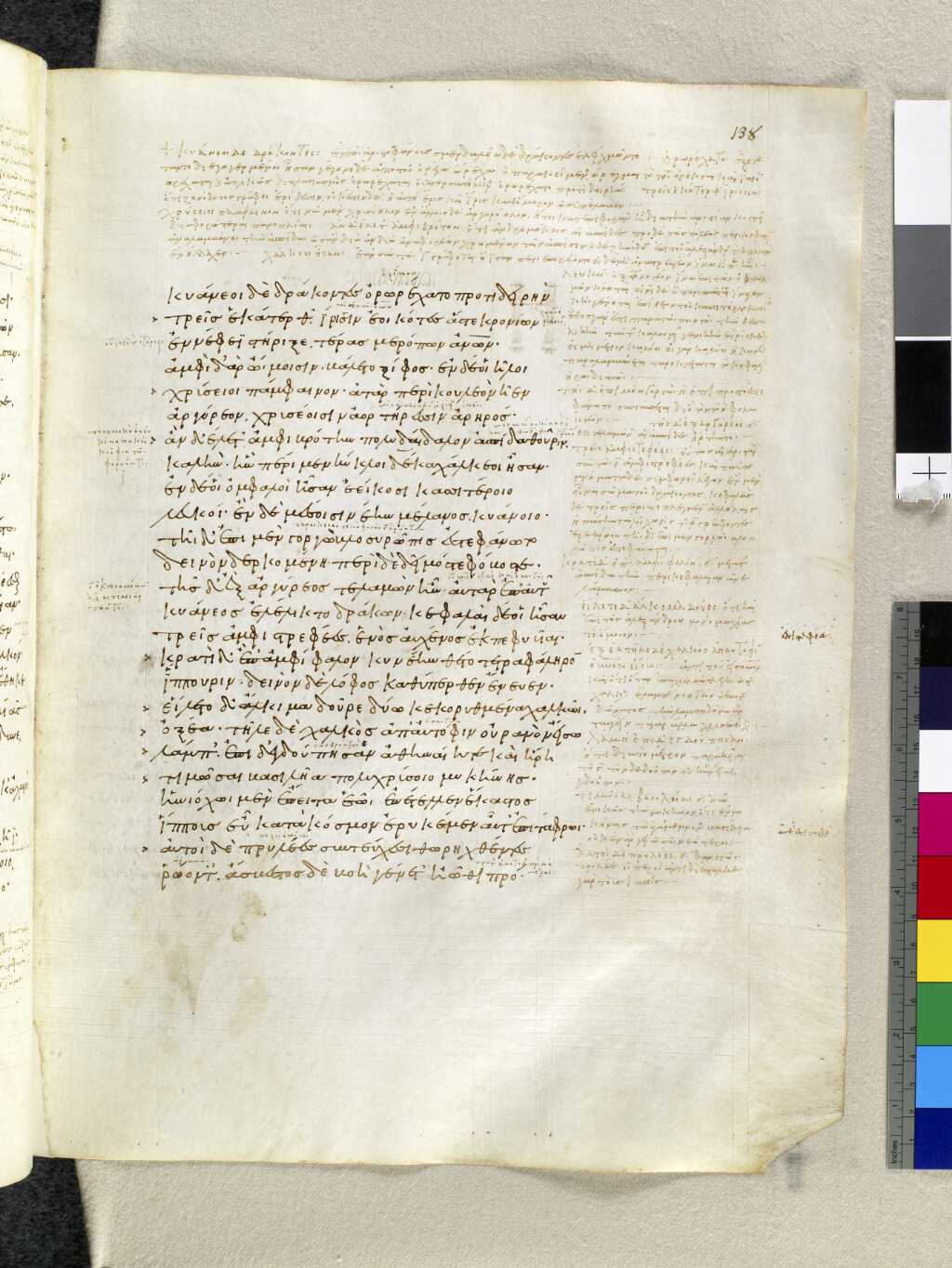
26κυάνεοι δὲ δράκοντες ὀρωρέχατο προτὶ δειρὴν 27τρεῖς ἑκάτερθʼ ἴρισσιν ἐοικότες, ἅς τε Κρονίων 28ἐν νέφεϊ στήριξε, τέρας μερόπων ἀνθρώπων. 29ἀμφὶ δʼ ἄρʼ ὤμοισιν βάλετο ξίφος· ἐν δέ οἱ ἧλοι 30χρύσειοι πάμφαινον, ἀτὰρ περὶ κουλεὸν ἦεν 31ἀργύρεον χρυσέοισιν ἀορτήρεσσιν ἀρηρός. 32ἂν δʼ ἕλετʼ ἀμφιβρότην πολυδαίδαλον ἀσπίδα θοῦριν 33καλήν, ἣν πέρι μὲν κύκλοι δέκα χάλκεοι ἦσαν, 34ἐν δέ οἱ ὀμφαλοὶ ἦσαν ἐείκοσι κασσιτέροιο 35λευκοί, ἐν δὲ μέσοισιν ἔην μέλανος κυάνοιο. 36τῇ δʼ ἐπὶ μὲν Γοργὼ βλοσυρῶπις ἐστεφάνωτο 37δεινὸν δερκομένη, περὶ δὲ Δεῖμός τε Φόβος τε. 38τῆς δʼ ἐξ ἀργύρεος τελαμὼν ἦν· αὐτὰρ ἐπʼ αὐτοῦ 39κυάνεος ἐλέλικτο δράκων, κεφαλαὶ δέ οἱ ἦσαν 40τρεῖς ἀμφιστρεφέες ἑνὸς αὐχένος ἐκπεφυυῖαι. 41κρατὶ δʼ ἐπʼ ἀμφίφαλον κυνέην θέτο τετραφάληρον 42ἵππουριν· δεινὸν δὲ λόφος καθύπερθεν ἔνευεν. 43εἵλετο δʼ ἄλκιμα δοῦρε δύω κεκορυθμένα χαλκῷ 44ὀξέα· τῆλε δὲ χαλκὸς ἀπʼ αὐτόφιν οὐρανὸν εἴσω 45λάμπʼ· ἐπὶ δʼ ἐγδούπησαν Ἀθηναίη τε καὶ Ἥρη 46τιμῶσαι βασιλῆα πολυχρύσοιο Μυκήνης. 47ἡνιόχῳ μὲν ἔπειτα ἑῷ ἐπέτελλεν ἕκαστος 48ἵππους εὖ κατὰ κόσμον ἐρυκέμεν αὖθʼ ἐπὶ τάφρῳ, 49αὐτοὶ δὲ πρυλέες σὺν τεύχεσι θωρηχθέντες 50ῥώοντʼ· ἄσβεστος δὲ βοὴ γένετʼ ἠῶθι πρό.
And now as Dawn rose from her couch beside Tithonus, harbinger of light alike to mortals and immortals, Jove sent fierce Discord with the ensign of war in her hands to the ships of the Achaeans. She took her stand by the huge black hull of Ulysses’ ship which was middlemost of all, so that her voice might carry farthest on either side, on the one hand towards the tents of Ajax son of Telamon, and on the other towards those of Achilles—for these two heroes, well assured of their own strength, had valorously drawn up their ships at the two ends of the line. There she took her stand, and raised a cry both loud and shrill that filled the Achaeans with courage, giving them heart to fight resolutely and with all their might, so that they had rather stay there and do battle than go home in their ships.
The son of Atreus shouted aloud and bade the Argives gird themselves for battle while he put on his armour. First he girded his goodly greaves about his legs, making them fast with ankle-clasps of silver; and about his chest he set the breastplate which Cinyras had once given him as a guest-gift. It had been noised abroad as far as Cyprus that the Achaeans were about to sail for Troy, and therefore he gave it to the king. It had ten courses of dark cyanus, twelve of gold, and ten of tin. There were serpents of cyanus that reared themselves up towards the neck, three upon either side, like the rainbows which the son of Saturn has set in heaven as a sign to mortal men. About his shoulders he threw his sword, studded with bosses of gold; and the scabbard was of silver with a chain of gold wherewith to hang it. He took moreover the richly-dight shield that covered his body when he was in battle—fair to see, with ten circles of bronze running all round it. On the body of the shield there were twenty bosses of white tin, with another of dark cyanus in the middle: this last was made to show a Gorgon’s head, fierce and grim, with Rout and Panic on either side. The band for the arm to go through was of silver, on which there was a writhing snake of cyanus with three heads that sprang from a single neck, and went in and out among one another. On his head Agamemnon set a helmet, with a peak before and behind, and four plumes of horse-hair that nodded menacingly above it; then he grasped two redoubtable bronze-shod spears, and the gleam of his armour shot from him as a flame into the firmament, while Juno and Minerva thundered in honour of the king of rich Mycene.
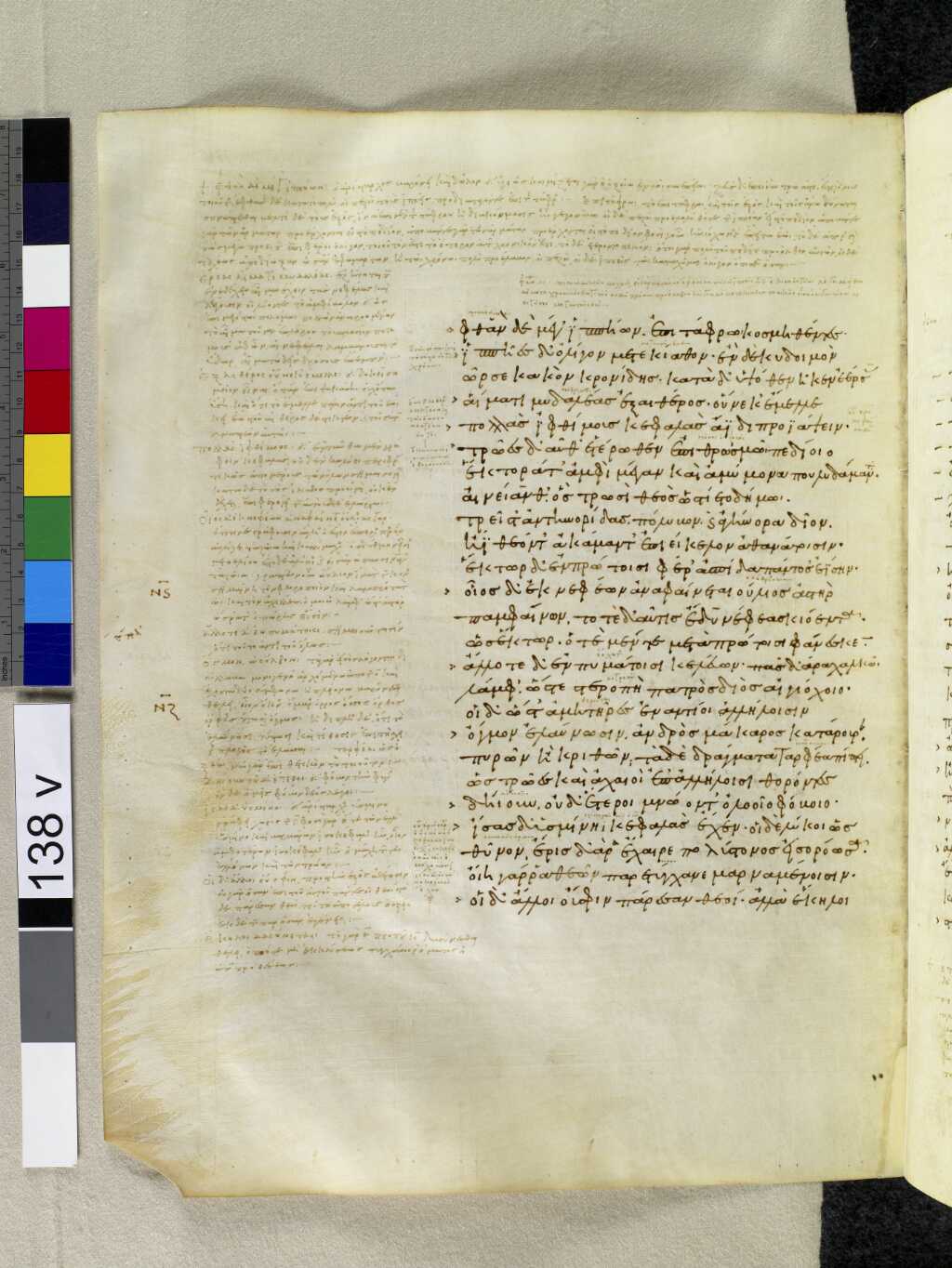
51φθὰν δὲ μέγʼ ἱππήων ἐπὶ τάφρῳ κοσμηθέντες, 52ἱππῆες δʼ ὀλίγον μετεκίαθον· ἐν δὲ κυδοιμὸν 53ὦρσε κακὸν Κρονίδης, κατὰ δʼ ὑψόθεν ἧκεν ἐέρσας 54αἵματι μυδαλέας ἐξ αἰθέρος, οὕνεκʼ ἔμελλε 55πολλὰς ἰφθίμους κεφαλὰς Ἄϊδι προϊάψειν. 56Τρῶες δʼ αὖθʼ ἑτέρωθεν ἐπὶ θρωσμῷ πεδίοιο 57Ἕκτορά τʼ ἀμφὶ μέγαν καὶ ἀμύμονα Πουλυδάμαντα 58Αἰνείαν θʼ, ὃς Τρωσὶ θεὸς ὣς τίετο δήμῳ, 59τρεῖς τʼ Ἀντηνορίδας Πόλυβον καὶ Ἀγήνορα δῖον 60ἠΐθεόν τʼ Ἀκάμαντʼ ἐπιείκελον ἀθανάτοισιν. 61Ἕκτωρ δʼ ἐν πρώτοισι φέρʼ ἀσπίδα πάντοσʼ ἐΐσην, 62οἷος δʼ ἐκ νεφέων ἀναφαίνεται οὔλιος ἀστὴρ 63παμφαίνων, τοτὲ δʼ αὖτις ἔδυ νέφεα σκιόεντα, 64ὣς Ἕκτωρ ὁτὲ μέν τε μετὰ πρώτοισι φάνεσκεν, 65ἄλλοτε δʼ ἐν πυμάτοισι κελεύων· πᾶς δʼ ἄρα χαλκῷ 66λάμφʼ ὥς τε στεροπὴ πατρὸς Διὸς αἰγιόχοιο. 67οἳ δʼ, ὥς τʼ ἀμητῆρες ἐναντίοι ἀλλήλοισιν 68ὄγμον ἐλαύνωσιν ἀνδρὸς μάκαρος κατʼ ἄρουραν 69πυρῶν ἢ κριθῶν· τὰ δὲ δράγματα ταρφέα πίπτει· 70ὣς Τρῶες καὶ Ἀχαιοὶ ἐπʼ ἀλλήλοισι θορόντες 71δῄουν, οὐδʼ ἕτεροι μνώοντʼ ὀλοοῖο φόβοιο. 72ἴσας δʼ ὑσμίνη κεφαλὰς ἔχεν, οἳ δὲ λύκοι ὣς 73θῦνον· Ἔρις δʼ ἄρʼ ἔχαιρε πολύστονος εἰσορόωσα· 74οἴη γάρ ῥα θεῶν παρετύγχανε μαρναμένοισιν, 75οἳ δʼ ἄλλοι οὔ σφιν πάρεσαν θεοί, ἀλλὰ ἕκηλοι
Every man now left his horses in charge of his charioteer to hold them in readiness by the trench, while he went into battle on foot clad in full armour, and a mighty uproar rose on high into the dawning. The chiefs were armed and at the trench before the horses got there, but these came up presently. The son of Saturn sent a portent of evil sound about their host, and the dew fell red with blood, for he was about to send many a brave man hurrying down to Hades.
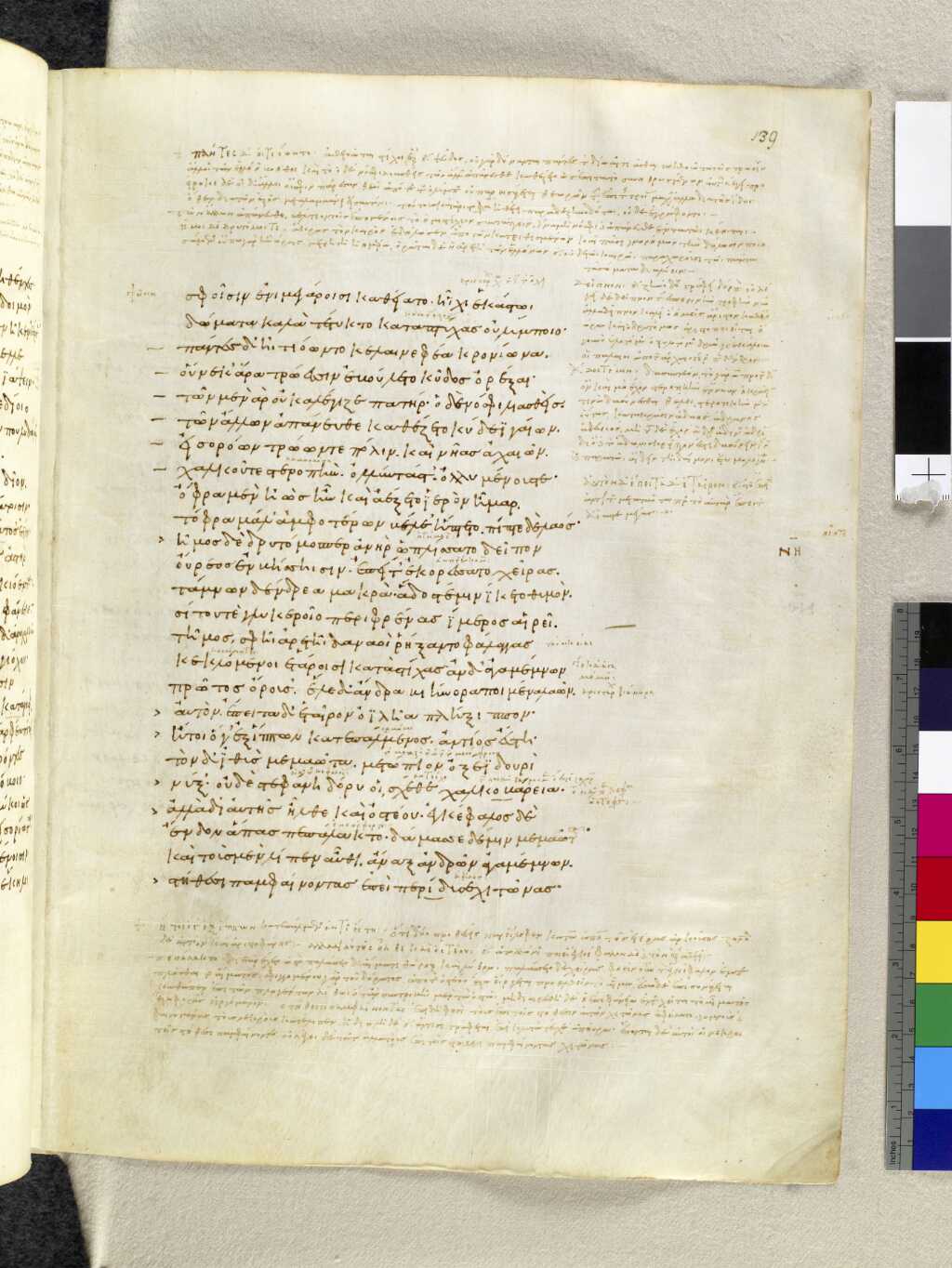
76σφοῖσιν ἐνὶ μεγάροισι καθήατο, ἧχι ἑκάστῳ 77δώματα καλὰ τέτυκτο κατὰ πτύχας Οὐλύμποιο. 78πάντες δʼ ᾐτιόωντο κελαινεφέα Κρονίωνα 79οὕνεκʼ ἄρα Τρώεσσιν ἐβούλετο κῦδος ὀρέξαι. 80τῶν μὲν ἄρʼ οὐκ ἀλέγιζε πατήρ· ὃ δὲ νόσφι λιασθεὶς 81τῶν ἄλλων ἀπάνευθε καθέζετο κύδεϊ γαίων 82εἰσορόων Τρώων τε πόλιν καὶ νῆας Ἀχαιῶν 83χαλκοῦ τε στεροπήν, ὀλλύντάς τʼ ὀλλυμένους τε. 84ὄφρα μὲν ἠὼς ἦν καὶ ἀέξετο ἱερὸν ἦμαρ, 85τόφρα μάλʼ ἀμφοτέρων βέλεʼ ἥπτετο, πῖπτε δὲ λαός· 86ἦμος δὲ δρυτόμος περ ἀνὴρ ὁπλίσσατο δεῖπνον 87οὔρεος ἐν βήσσῃσιν, ἐπεί τʼ ἐκορέσσατο χεῖρας 88τάμνων δένδρεα μακρά, ἅδος τέ μιν ἵκετο θυμόν, 89σίτου τε γλυκεροῖο περὶ φρένας ἵμερος αἱρεῖ, 90τῆμος σφῇ ἀρετῇ Δαναοὶ ῥήξαντο φάλαγγας 91κεκλόμενοι ἑτάροισι κατὰ στίχας· ἐν δʼ Ἀγαμέμνων 92πρῶτος ὄρουσʼ, ἕλε δʼ ἄνδρα Βιάνορα ποιμένα λαῶν 93αὐτόν, ἔπειτα δʼ ἑταῖρον Ὀϊλῆα πλήξιππον. 94ἤτοι ὅ γʼ ἐξ ἵππων κατεπάλμενος ἀντίος ἔστη· 95τὸν δʼ ἰθὺς μεμαῶτα μετώπιον ὀξέϊ δουρὶ 96νύξʼ, οὐδὲ στεφάνη δόρυ οἱ σχέθε χαλκοβάρεια, 97ἀλλὰ διʼ αὐτῆς ἦλθε καὶ ὀστέου, ἐγκέφαλος δὲ 98ἔνδον ἅπας πεπάλακτο· δάμασσε δέ μιν μεμαῶτα. 99καὶ τοὺς μὲν λίπεν αὖθι ἄναξ ἀνδρῶν Ἀγαμέμνων 100στήθεσι παμφαίνοντας, ἐπεὶ περίδυσε χιτῶνας·
The Trojans, on the other side upon the rising slope of the plain, were gathered round great Hector, noble Polydamas, Aeneas who was honoured by the Trojans like an immortal, and the three sons of Antenor, Polybus, Agenor, and young Acamas beauteous as a god. Hector’s round shield showed in the front rank, and as some baneful star that shines for a moment through a rent in the clouds and is again hidden beneath them; even so was Hector now seen in the front ranks and now again in the hindermost, and his bronze armour gleamed like the lightning of aegis-bearing Jove.
And now as a band of reapers mow swathes of wheat or barley upon a rich man’s land, and the sheaves fall thick before them, even so did the Trojans and Achaeans fall upon one another; they were in no mood for yielding but fought like wolves, and neither side got the better of the other. Discord was glad as she beheld them, for she was the only god that went among them; the others were not there, but stayed quietly each in his own home among the dells and valleys of Olympus. All of them blamed the son of Saturn for wanting to give victory to the Trojans, but father Jove heeded them not: he held aloof from all, and sat apart in his all-glorious majesty, looking down upon the city of the Trojans, the ships of the Achaeans, the gleam of bronze, and alike upon the slayers and on the slain.
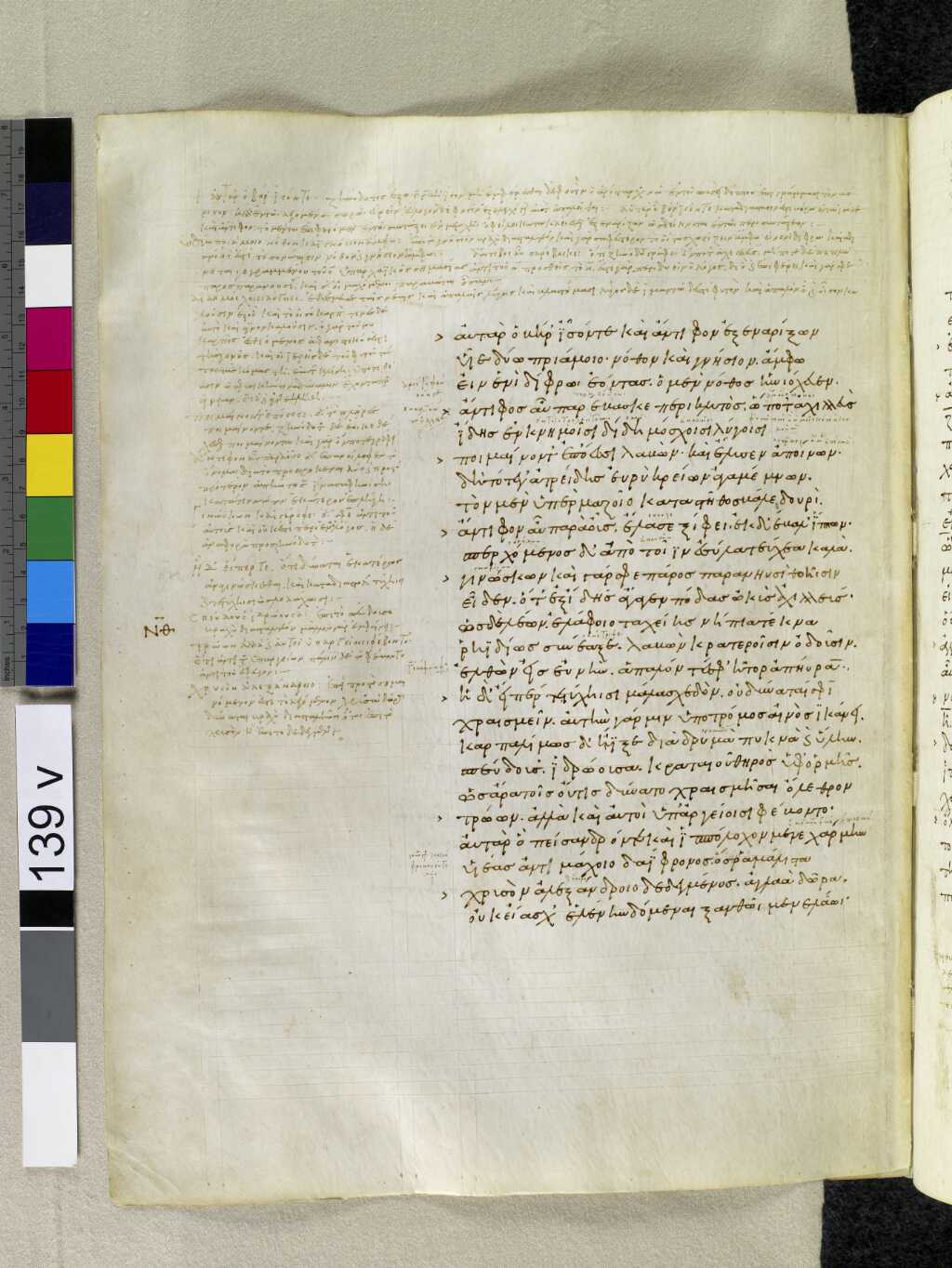
101αὐτὰρ ὃ βῆ Ἶσόν τε καὶ Ἄντιφον ἐξεναρίξων 102υἷε δύω Πριάμοιο νόθον καὶ γνήσιον ἄμφω 103εἰν ἑνὶ δίφρῳ ἐόντας· ὃ μὲν νόθος ἡνιόχευεν, 104Ἄντιφος αὖ παρέβασκε περικλυτός· ὥ ποτʼ Ἀχιλλεὺς 105Ἴδης ἐν κνημοῖσι δίδη μόσχοισι λύγοισι, 106ποιμαίνοντʼ ἐπʼ ὄεσσι λαβών, καὶ ἔλυσεν ἀποίνων. 107δὴ τότε γʼ Ἀτρεΐδης εὐρὺ κρείων Ἀγαμέμνων 108τὸν μὲν ὑπὲρ μαζοῖο κατὰ στῆθος βάλε δουρί, 109Ἄντιφον αὖ παρὰ οὖς ἔλασε ξίφει, ἐκ δʼ ἔβαλʼ ἵππων. 110σπερχόμενος δʼ ἀπὸ τοῖιν ἐσύλα τεύχεα καλὰ 111γιγνώσκων· καὶ γάρ σφε πάρος παρὰ νηυσὶ θοῇσιν 112εἶδεν, ὅτʼ ἐξ Ἴδης ἄγαγεν πόδας ὠκὺς Ἀχιλλεύς. 113ὡς δὲ λέων ἐλάφοιο ταχείης νήπια τέκνα 114ῥηϊδίως συνέαξε λαβὼν κρατεροῖσιν ὀδοῦσιν 115ἐλθὼν εἰς εὐνήν, ἁπαλόν τέ σφʼ ἦτορ ἀπηύρα· 116ἣ δʼ εἴ πέρ τε τύχῃσι μάλα σχεδόν, οὐ δύναταί σφι 117χραισμεῖν· αὐτὴν γάρ μιν ὑπὸ τρόμος αἰνὸς ἱκάνει· 118καρπαλίμως δʼ ἤϊξε διὰ δρυμὰ πυκνὰ καὶ ὕλην 119σπεύδουσʼ ἱδρώουσα κραταιοῦ θηρὸς ὑφʼ ὁρμῆς· 120ὣς ἄρα τοῖς οὔ τις δύνατο χραισμῆσαι ὄλεθρον 121Τρώων, ἀλλὰ καὶ αὐτοὶ ὑπʼ Ἀργείοισι φέβοντο. 122αὐτὰρ ὃ Πείσανδρόν τε καὶ Ἱππόλοχον μενεχάρμην 123υἱέας Ἀντιμάχοιο δαΐφρονος, ὅς ῥα μάλιστα 124χρυσὸν Ἀλεξάνδροιο δεδεγμένος ἀγλαὰ δῶρα 125οὐκ εἴασχʼ Ἑλένην δόμεναι ξανθῷ Μενελάῳ,
Now so long as the day waxed and it was still morning, their darts rained thick on one another and the people perished, but as the hour drew nigh when a woodman working in some mountain forest will get his midday meal—for he has felled till his hands are weary; he is tired out, and must now have food—then the Danaans with a cry that rang through all their ranks, broke the battalions of the enemy. Agamemnon led them on, and slew first Bienor, a leader of his people, and afterwards his comrade and charioteer Oileus, who sprang from his chariot and was coming full towards him; but Agamemnon struck him on the forehead with his spear; his bronze visor was of no avail against the weapon, which pierced both bronze and bone, so that his brains were battered in and he was killed in full fight.
Agamemnon stripped their shirts from off them and left them with their breasts all bare to lie where they had fallen. He then went on to kill Isus and Antiphus two sons of Priam, the one a bastard, the other born in wedlock; they were in the same chariot—the bastard driving, while noble Antiphus fought beside him. Achilles had once taken both of them prisoners in the glades of Ida, and had bound them with fresh withes as they were shepherding, but he had taken a ransom for them; now, however, Agamemnon son of Atreus smote Isus in the chest above the nipple with his spear, while he struck Antiphus hard by the ear and threw him from his chariot. Forthwith he stripped their goodly armour from off them and recognized them, for he had already seen them at ships when Achilles brought them in from Ida. As a lion fastens on the fawns of a hind and crushes them in his great jaws, robbing them of their tender life while he on his way back to his lair—the hind can do nothing for them even though she be close by, for she is in an agony of fear, and flies through the thick forest, sweating, and at her utmost speed before the mighty monster—so, no man of the Trojans could help Isus and Antiphus, for they were themselves flying in panic before the Argives.
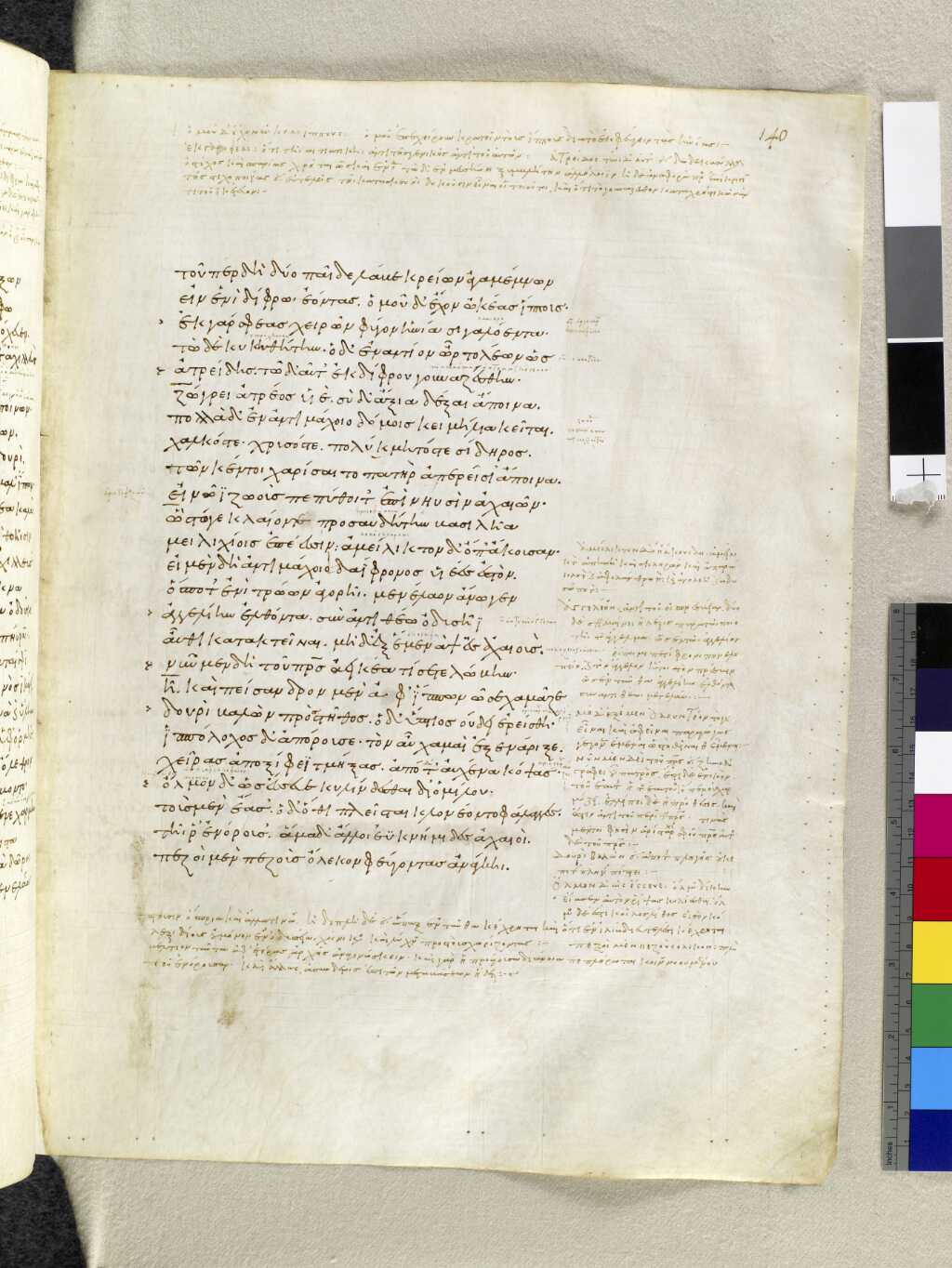
126τοῦ περ δὴ δύο παῖδε λάβε κρείων Ἀγαμέμνων 127εἰν ἑνὶ δίφρῳ ἐόντας, ὁμοῦ δʼ ἔχον ὠκέας ἵππους· 128ἐκ γάρ σφεας χειρῶν φύγον ἡνία σιγαλόεντα, 129τὼ δὲ κυκηθήτην· ὃ δʼ ἐναντίον ὦρτο λέων ὣς 130Ἀτρεΐδης· τὼ δʼ αὖτʼ ἐκ δίφρου γουναζέσθην· 131ζώγρει Ἀτρέος υἱέ, σὺ δʼ ἄξια δέξαι ἄποινα· 132πολλὰ δʼ ἐν Ἀντιμάχοιο δόμοις κειμήλια κεῖται 133χαλκός τε χρυσός τε πολύκμητός τε σίδηρος, 134τῶν κέν τοι χαρίσαιτο πατὴρ ἀπερείσιʼ ἄποινα, 135εἰ νῶϊ ζωοὺς πεπύθοιτʼ ἐπὶ νηυσὶν Ἀχαιῶν. 136ὣς τώ γε κλαίοντε προσαυδήτην βασιλῆα 137μειλιχίοις ἐπέεσσιν· ἀμείλικτον δʼ ὄπʼ ἄκουσαν· 138εἰ μὲν δὴ Ἀντιμάχοιο δαΐφρονος υἱέες ἐστόν, 139ὅς ποτʼ ἐνὶ Τρώων ἀγορῇ Μενέλαον ἄνωγεν 140ἀγγελίην ἐλθόντα σὺν ἀντιθέῳ Ὀδυσῆϊ 141αὖθι κατακτεῖναι μηδʼ ἐξέμεν ἂψ ἐς Ἀχαιούς, 142νῦν μὲν δὴ τοῦ πατρὸς ἀεικέα τίσετε λώβην. 143ἦ, καὶ Πείσανδρον μὲν ἀφʼ ἵππων ὦσε χαμᾶζε 144δουρὶ βαλὼν πρὸς στῆθος· ὃ δʼ ὕπτιος οὔδει ἐρείσθη. 145Ἱππόλοχος δʼ ἀπόρουσε, τὸν αὖ χαμαὶ ἐξενάριξε 146χεῖρας ἀπὸ ξίφεϊ τμήξας ἀπό τʼ αὐχένα κόψας, 147ὅλμον δʼ ὣς ἔσσευε κυλίνδεσθαι διʼ ὁμίλου. 148τοὺς μὲν ἔασʼ· ὃ δʼ ὅθι πλεῖσται κλονέοντο φάλαγγες, 149τῇ ῥʼ ἐνόρουσʼ, ἅμα δʼ ἄλλοι ἐϋκνήμιδες Ἀχαιοί. 150πεζοὶ μὲν πεζοὺς ὄλεκον φεύγοντας ἀνάγκῃ,
Then King Agamemnon took the two sons of Antimachus, Pisander and brave Hippolochus. It was Antimachus who had been foremost in preventing Helen’s being restored to Menelaus, for he was largely bribed by Alexandrus; and now Agamemnon took his two sons, both in the same chariot, trying to bring their horses to a stand—for they had lost hold of the reins and the horses were mad with fear. The son of Atreus sprang upon them like a lion, and the pair besought him from their chariot. “Take us alive,” they cried, “son of Atreus, and you shall receive a great ransom for us. Our father Antimachus has great store of gold, bronze, and wrought iron, and from this he will satisfy you with a very large ransom should he hear of our being alive at the ships of the Achaeans.”
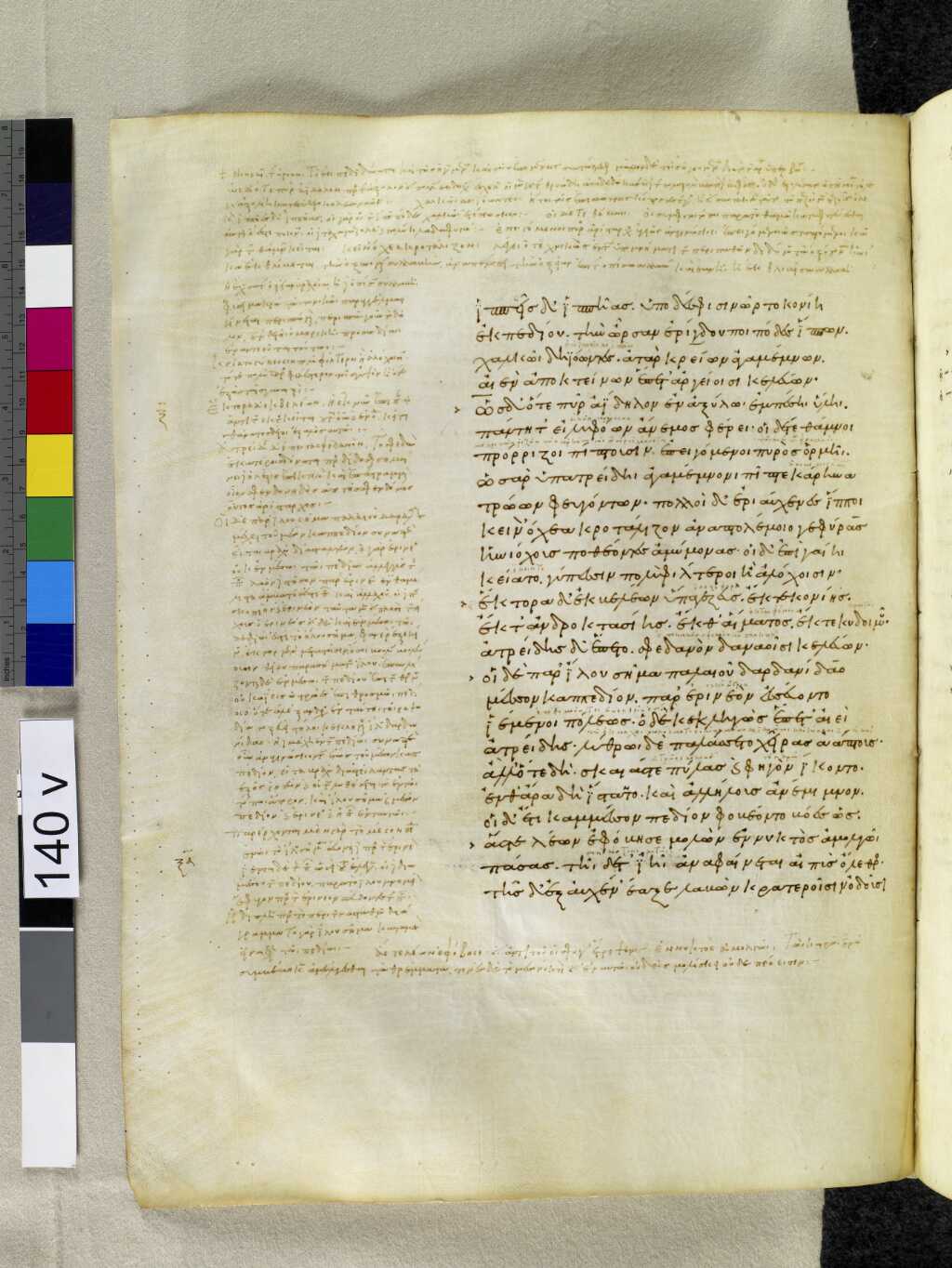
151ἱππεῖς δʼ ἱππῆας· ὑπὸ δέ σφισιν ὦρτο κονίη 152ἐκ πεδίου, τὴν ὦρσαν ἐρίγδουποι πόδες ἵππων 153χαλκῷ δηϊόωντες· ἀτὰρ κρείων Ἀγαμέμνων 154αἰὲν ἀποκτείνων ἕπετʼ Ἀργείοισι κελεύων. 155ὡς δʼ ὅτε πῦρ ἀΐδηλον ἐν ἀξύλῳ ἐμπέσῃ ὕλῃ, 156πάντῃ τʼ εἰλυφόων ἄνεμος φέρει, οἳ δέ τε θάμνοι 157πρόρριζοι πίπτουσιν ἐπειγόμενοι πυρὸς ὁρμῇ· 158ὣς ἄρʼ ὑπʼ Ἀτρεΐδῃ Ἀγαμέμνονι πῖπτε κάρηνα 159Τρώων φευγόντων, πολλοὶ δʼ ἐριαύχενες ἵπποι 160κείνʼ ὄχεα κροτάλιζον ἀνὰ πτολέμοιο γεφύρας 161ἡνιόχους ποθέοντες ἀμύμονας· οἳ δʼ ἐπὶ γαίῃ 162κείατο, γύπεσσιν πολὺ φίλτεροι ἢ ἀλόχοισιν. 163Ἕκτορα δʼ ἐκ βελέων ὕπαγε Ζεὺς ἔκ τε κονίης 164ἔκ τʼ ἀνδροκτασίης ἔκ θʼ αἵματος ἔκ τε κυδοιμοῦ· 165Ἀτρεΐδης δʼ ἕπετο σφεδανὸν Δαναοῖσι κελεύων. 166οἳ δὲ παρʼ Ἴλου σῆμα παλαιοῦ Δαρδανίδαο 167μέσσον κὰπ πεδίον παρʼ ἐρινεὸν ἐσσεύοντο 168ἱέμενοι πόλιος· ὃ δὲ κεκλήγων ἕπετʼ αἰεὶ 169Ἀτρεΐδης, λύθρῳ δὲ παλάσσετο χεῖρας ἀάπτους. 170ἀλλʼ ὅτε δὴ Σκαιάς τε πύλας καὶ φηγὸν ἵκοντο, 171ἔνθʼ ἄρα δὴ ἵσταντο καὶ ἀλλήλους ἀνέμιμνον. 172οἳ δʼ ἔτι κὰμ μέσσον πεδίον φοβέοντο βόες ὥς, 173ἅς τε λέων ἐφόβησε μολὼν ἐν νυκτὸς ἀμολγῷ 174πάσας· τῇ δέ τʼ ἰῇ ἀναφαίνεται αἰπὺς ὄλεθρος· 175τῆς δʼ ἐξ αὐχένʼ ἔαξε λαβὼν κρατεροῖσιν ὀδοῦσι
With such piteous words and tears did they beseech the king, but they heard no pitiful answer in return. “If,” said Agamemnon, “you are sons of Antimachus, who once at a council of Trojans proposed that Menelaus and Ulysses, who had come to you as envoys, should be killed and not suffered to return, you shall now pay for the foul iniquity of your father.”
As he spoke he felled Pisander from his chariot to the earth, smiting him on the chest with his spear, so that he lay face uppermost upon the ground. Hippolochus fled, but him too did Agamemnon smite; he cut off his hands and his head—which he sent rolling in among the crowd as though it were a ball. There he let them both lie, and wherever the ranks were thickest thither he flew, while the other Achaeans followed. Foot soldiers drove the foot soldiers of the foe in rout before them, and slew them; horsemen did the like by horsemen, and the thundering tramp of the horses raised a cloud of dust from off the plain. King Agamemnon followed after, ever slaying them and cheering on the Achaeans. As when some mighty forest is all ablaze—the eddying gusts whirl fire in all directions till the thickets shrivel and are consumed before the blast of the flame—even so fell the heads of the flying Trojans before Agamemnon son of Atreus, and many a noble pair of steeds drew an empty chariot along the highways of war, for lack of drivers who were lying on the plain, more useful now to vultures than to their wives.
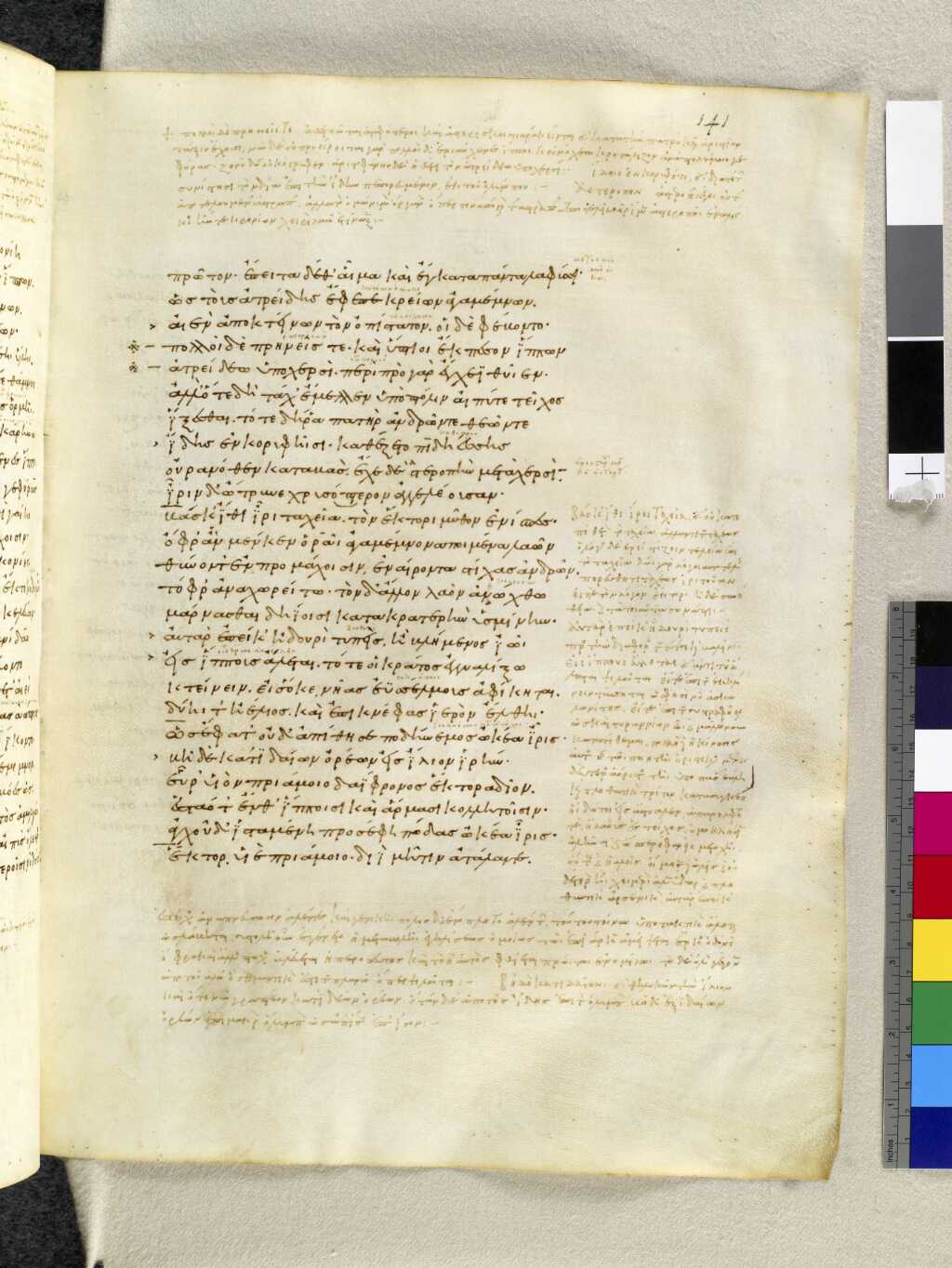
176πρῶτον, ἔπειτα δέ θʼ αἷμα καὶ ἔγκατα πάντα λαφύσσει· 177ὣς τοὺς Ἀτρεΐδης ἔφεπε κρείων Ἀγαμέμνων 178αἰὲν ἀποκτείνων τὸν ὀπίστατον· οἳ δʼ ἐφέβοντο. 179πολλοὶ δὲ πρηνεῖς τε καὶ ὕπτιοι ἔκπεσον ἵππων 180Ἀτρεΐδεω ὑπὸ χερσί· περὶ πρὸ γὰρ ἔγχεϊ θῦεν. 181ἀλλʼ ὅτε δὴ τάχʼ ἔμελλεν ὑπὸ πτόλιν αἰπύ τε τεῖχος 182ἵξεσθαι, τότε δή ῥα πατὴρ ἀνδρῶν τε θεῶν τε 183Ἴδης ἐν κορυφῇσι καθέζετο πιδηέσσης 184οὐρανόθεν καταβάς· ἔχε δʼ ἀστεροπὴν μετὰ χερσίν. 185Ἶριν δʼ ὄτρυνε χρυσόπτερον ἀγγελέουσαν· 186βάσκʼ ἴθι Ἶρι ταχεῖα, τὸν Ἕκτορι μῦθον ἐνίσπες· 187ὄφρʼ ἂν μέν κεν ὁρᾷ Ἀγαμέμνονα ποιμένα λαῶν 188θύνοντʼ ἐν προμάχοισιν ἐναίροντα στίχας ἀνδρῶν, 189τόφρʼ ἀναχωρείτω, τὸν δʼ ἄλλον λαὸν ἀνώχθω 190μάρνασθαι δηΐοισι κατὰ κρατερὴν ὑσμίνην. 191αὐτὰρ ἐπεί κʼ ἢ δουρὶ τυπεὶς ἢ βλήμενος ἰῷ 192εἰς ἵππους ἅλεται, τότε οἱ κράτος ἐγγυαλίξω 193κτείνειν εἰς ὅ κε νῆας ἐϋσσέλμους ἀφίκηται 194δύῃ τʼ ἠέλιος καὶ ἐπὶ κνέφας ἱερὸν ἔλθῃ. 195ὣς ἔφατʼ, οὐδʼ ἀπίθησε ποδήνεμος ὠκέα Ἶρις, 196βῆ δὲ κατʼ Ἰδαίων ὀρέων εἰς Ἴλιον ἱρήν. 197εὗρʼ υἱὸν Πριάμοιο δαΐφρονος Ἕκτορα δῖον 198ἑσταότʼ ἔν θʼ ἵπποισι καὶ ἅρμασι κολλητοῖσιν· 199ἀγχοῦ δʼ ἱσταμένη προσέφη πόδας ὠκέα Ἶρις· 200Ἕκτορ υἱὲ Πριάμοιο Διὶ μῆτιν ἀτάλαντε
Jove drew Hector away from the darts and dust, with the carnage and din of battle; but the son of Atreus sped onwards, calling out lustily to the Danaans. They flew on by the tomb of old Ilus, son of Dardanus, in the middle of the plain, and past the place of the wild fig-tree making always for the city—the son of Atreus still shouting, and with hands all bedrabbled in gore; but when they had reached the Scaean gates and the oak tree, there they halted and waited for the others to come up. Meanwhile the Trojans kept on flying over the middle of the plain like a herd of cows maddened with fright when a lion has attacked them in the dead of night—he springs on one of them, seizes her neck in the grip of his strong teeth and then laps up her blood and gorges himself upon her entrails—even so did King Agamemnon son of Atreus pursue the foe, ever slaughtering the hindmost as they fled pell-mell before him. Many a man was flung headlong from his chariot by the hand of the son of Atreus, for he wielded his spear with fury.
But when he was just about to reach the high wall and the city, the father of gods and men came down from heaven and took his seat, thunderbolt in hand, upon the crest of many-fountained Ida. He then told Iris of the golden wings to carry a message for him. “Go,” said he, “fleet Iris, and speak thus to Hector—say that so long as he sees Agamemnon heading his men and making havoc of the Trojan ranks, he is to keep aloof and bid the others bear the brunt of the battle, but when Agamemnon is wounded either by spear or arrow, and takes to his chariot, then will I vouchsafe him strength to slay till he reach the ships and night falls at the going down of the sun.”
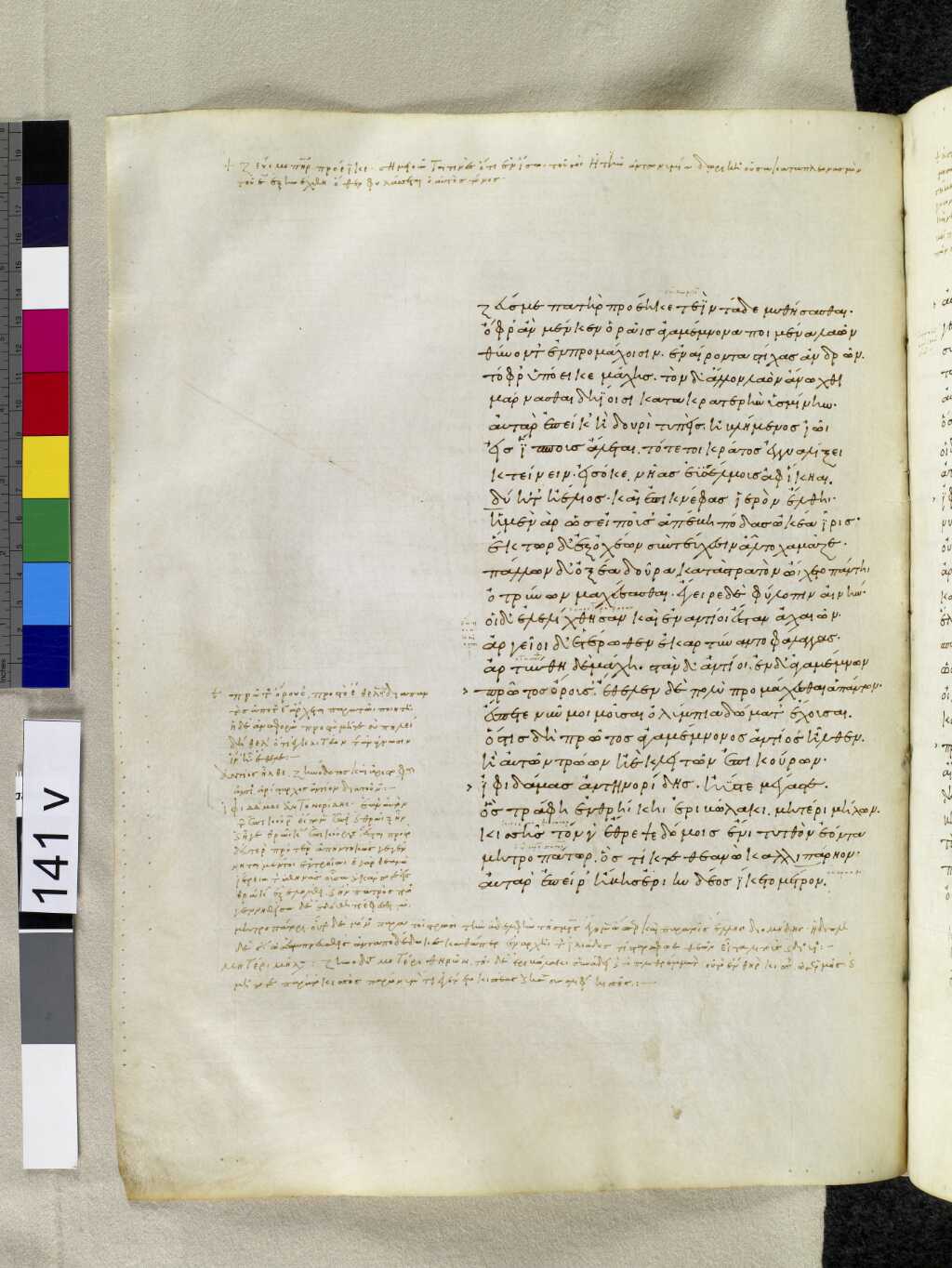
201Ζεύς με πατὴρ προέηκε τεῒν τάδε μυθήσασθαι. 202ὄφρʼ ἂν μέν κεν ὁρᾷς Ἀγαμέμνονα ποιμένα λαῶν 203θύνοντʼ ἐν προμάχοισιν, ἐναίροντα στίχας ἀνδρῶν, 204τόφρʼ ὑπόεικε μάχης, τὸν δʼ ἄλλον λαὸν ἄνωχθι 205μάρνασθαι δηΐοισι κατὰ κρατερὴν ὑσμίνην. 206αὐτὰρ ἐπεί κʼ ἢ δουρὶ τυπεὶς ἢ βλήμενος ἰῷ 207εἰς ἵππους ἅλεται, τότε τοι κράτος ἐγγυαλίξει 208κτείνειν, εἰς ὅ κε νῆας ἐϋσσέλμους ἀφίκηαι 209δύῃ τʼ ἠέλιος καὶ ἐπὶ κνέφας ἱερὸν ἔλθῃ. 210ἣ μὲν ἄρʼ ὣς εἰποῦσʼ ἀπέβη πόδας ὠκέα Ἶρις, 211Ἕκτωρ δʼ ἐξ ὀχέων σὺν τεύχεσιν ἆλτο χαμᾶζε, 212πάλλων δʼ ὀξέα δοῦρα κατὰ στρατὸν ᾤχετο πάντῃ 213ὀτρύνων μαχέσασθαι, ἔγειρε δὲ φύλοπιν αἰνήν. 214οἳ δʼ ἐλελίχθησαν καὶ ἐναντίοι ἔσταν Ἀχαιῶν, 215Ἀργεῖοι δʼ ἑτέρωθεν ἐκαρτύναντο φάλαγγας. 216ἀρτύνθη δὲ μάχη, στὰν δʼ ἀντίοι· ἐν δʼ Ἀγαμέμνων 217πρῶτος ὄρουσʼ, ἔθελεν δὲ πολὺ προμάχεσθαι ἁπάντων. 218ἔσπετε νῦν μοι Μοῦσαι Ὀλύμπια δώματʼ ἔχουσαι 219ὅς τις δὴ πρῶτος Ἀγαμέμνονος ἀντίον ἦλθεν 220ἢ αὐτῶν Τρώων ἠὲ κλειτῶν ἐπικούρων. 221Ἰφιδάμας Ἀντηνορίδης ἠΰς τε μέγας τε 222ὃς τράφη ἐν Θρῄκῃ ἐριβώλακι μητέρι μήλων· 223Κισσῆς τόν γʼ ἔθρεψε δόμοις ἔνι τυτθὸν ἐόντα 224μητροπάτωρ, ὃς τίκτε Θεανὼ καλλιπάρῃον· 225αὐτὰρ ἐπεί ῥʼ ἥβης ἐρικυδέος ἵκετο μέτρον,
Iris hearkened and obeyed. Down she went to strong Ilius from the crests of Ida, and found Hector son of Priam standing by his chariot and horses. Then she said, “Hector son of Priam, peer of gods in counsel, father Jove has sent me to bear you this message—so long as you see Agamemnon heading his men and making havoc of the Trojan ranks, you are to keep aloof and bid the others bear the brunt of the battle, but when Agamemnon is wounded either by spear or arrow, and takes to his chariot, then will Jove vouchsafe you strength to slay till you reach the ships, and till night falls at the going down of the sun.”
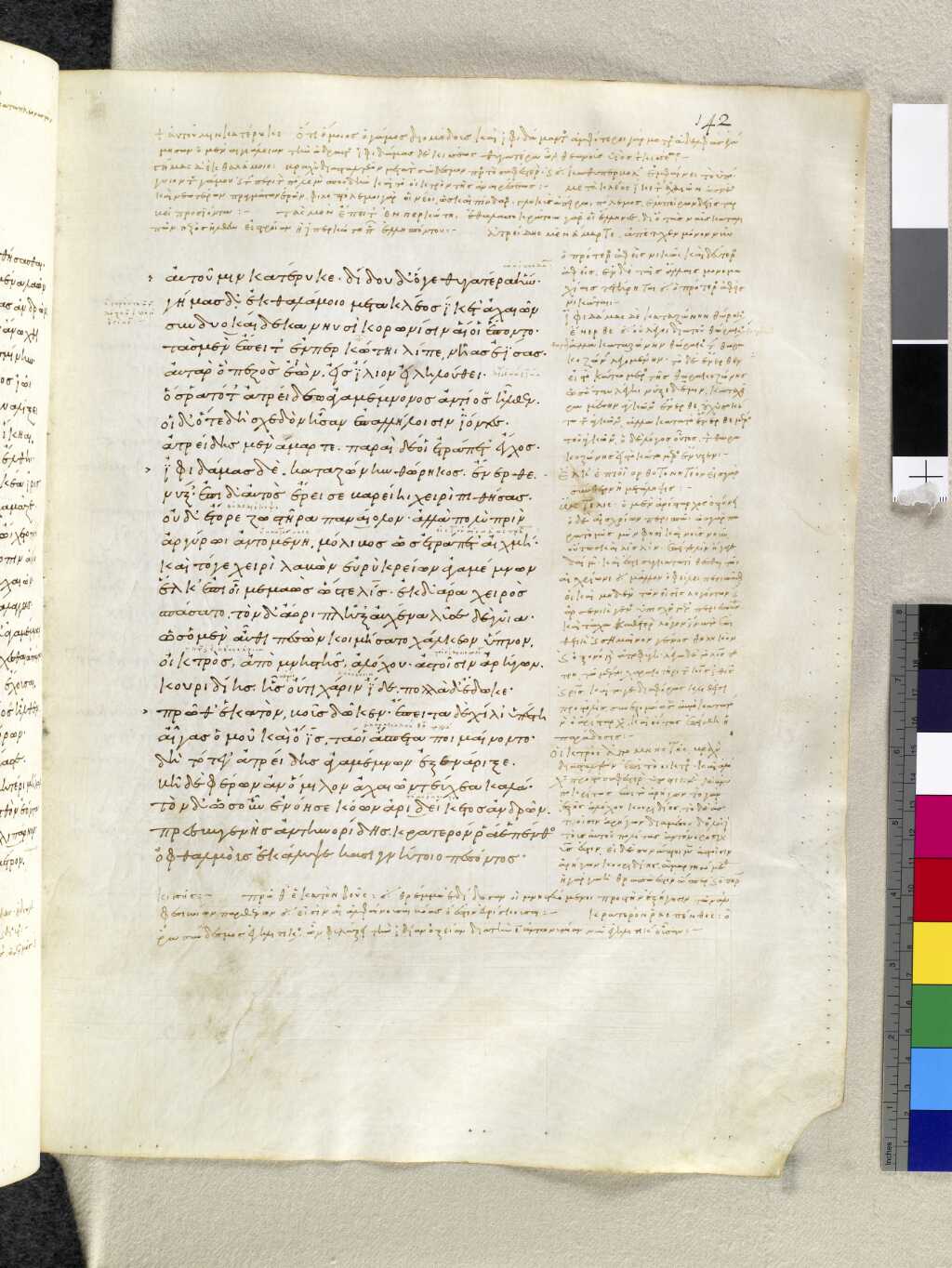
226αὐτοῦ μιν κατέρυκε, δίδου δʼ ὅ γε θυγατέρα ἥν· 227γήμας δʼ ἐκ θαλάμοιο μετὰ κλέος ἵκετʼ Ἀχαιῶν 228σὺν δυοκαίδεκα νηυσὶ κορωνίσιν, αἵ οἱ ἕποντο. 229τὰς μὲν ἔπειτʼ ἐν Περκώτῃ λίπε νῆας ἐΐσας, 230αὐτὰρ ὃ πεζὸς ἐὼν ἐς Ἴλιον εἰληλούθει· 231ὅς ῥα τότʼ Ἀτρεΐδεω Ἀγαμέμνονος ἀντίον ἦλθεν. 232οἳ δʼ ὅτε δὴ σχεδὸν ἦσαν ἐπʼ ἀλλήλοισιν ἰόντες, 233Ἀτρεΐδης μὲν ἅμαρτε, παραὶ δέ οἱ ἐτράπετʼ ἔγχος, 234Ἰφιδάμας δὲ κατὰ ζώνην θώρηκος ἔνερθε 235νύξʼ, ἐπὶ δʼ αὐτὸς ἔρεισε βαρείῃ χειρὶ πιθήσας· 236οὐδʼ ἔτορε ζωστῆρα παναίολον, ἀλλὰ πολὺ πρὶν 237ἀργύρῳ ἀντομένη μόλιβος ὣς ἐτράπετʼ αἰχμή. 238καὶ τό γε χειρὶ λαβὼν εὐρὺ κρείων Ἀγαμέμνων 239ἕλκʼ ἐπὶ οἷ μεμαὼς ὥς τε λίς, ἐκ δʼ ἄρα χειρὸς 240σπάσσατο· τὸν δʼ ἄορι πλῆξʼ αὐχένα, λῦσε δὲ γυῖα. 241ὣς ὃ μὲν αὖθι πεσὼν κοιμήσατο χάλκεον ὕπνον 242οἰκτρὸς ἀπὸ μνηστῆς ἀλόχου, ἀστοῖσιν ἀρήγων, 243κουριδίης, ἧς οὔ τι χάριν ἴδε, πολλὰ δʼ ἔδωκε· 244πρῶθʼ ἑκατὸν βοῦς δῶκεν, ἔπειτα δὲ χίλιʼ ὑπέστη 245αἶγας ὁμοῦ καὶ ὄϊς, τά οἱ ἄσπετα ποιμαίνοντο. 246δὴ τότε γʼ Ἀτρεΐδης Ἀγαμέμνων ἐξενάριξε, 247βῆ δὲ φέρων ἀνʼ ὅμιλον Ἀχαιῶν τεύχεα καλά. 248τὸν δʼ ὡς οὖν ἐνόησε Κόων ἀριδείκετος ἀνδρῶν 249πρεσβυγενὴς Ἀντηνορίδης, κρατερόν ῥά ἑ πένθος 250ὀφθαλμοὺς ἐκάλυψε κασιγνήτοιο πεσόντος.
When she had thus spoken Iris left him, and Hector sprang full armed from his chariot to the ground, brandishing his spear as he went about everywhere among the host, cheering his men on to fight, and stirring the dread strife of battle. The Trojans then wheeled round, and again met the Achaeans, while the Argives on their part strengthened their battalions. The battle was now in array and they stood face to face with one another, Agamemnon ever pressing forward in his eagerness to be ahead of all others.
Tell me now ye Muses that dwell in the mansions of Olympus, who, whether of the Trojans or of their allies, was first to face Agamemnon? It was Iphidamas son of Antenor, a man both brave and of great stature, who was brought up in fertile Thrace, the mother of sheep. Cisses, his mother’s father, brought him up in his own house when he was a child—Cisses, father to fair Theano. When he reached manhood, Cisses would have kept him there, and was for giving him his daughter in marriage, but as soon as he had married he set out to fight the Achaeans with twelve ships that followed him: these he had left at Percote and had come on by land to Ilius. He it was that now met Agamemnon son of Atreus. When they were close up with one another, the son of Atreus missed his aim, and Iphidamas hit him on the girdle below the cuirass and then flung himself upon him, trusting to his strength of arm; the girdle, however, was not pierced, nor nearly so, for the point of the spear struck against the silver and was turned aside as though it had been lead: King Agamemnon caught it from his hand, and drew it towards him with the fury of a lion; he then drew his sword, and killed Iphidamas by striking him on the neck. So there the poor fellow lay, sleeping a sleep as it were of bronze, killed in the defence of his fellow-citizens, far from his wedded wife, of whom he had had no joy though he had given much for her: he had given a hundred head of cattle down, and had promised later on to give a thousand sheep and goats mixed, from the countless flocks of which he was possessed. Agamemnon son of Atreus then despoiled him, and carried off his armour into the host of the Achaeans.
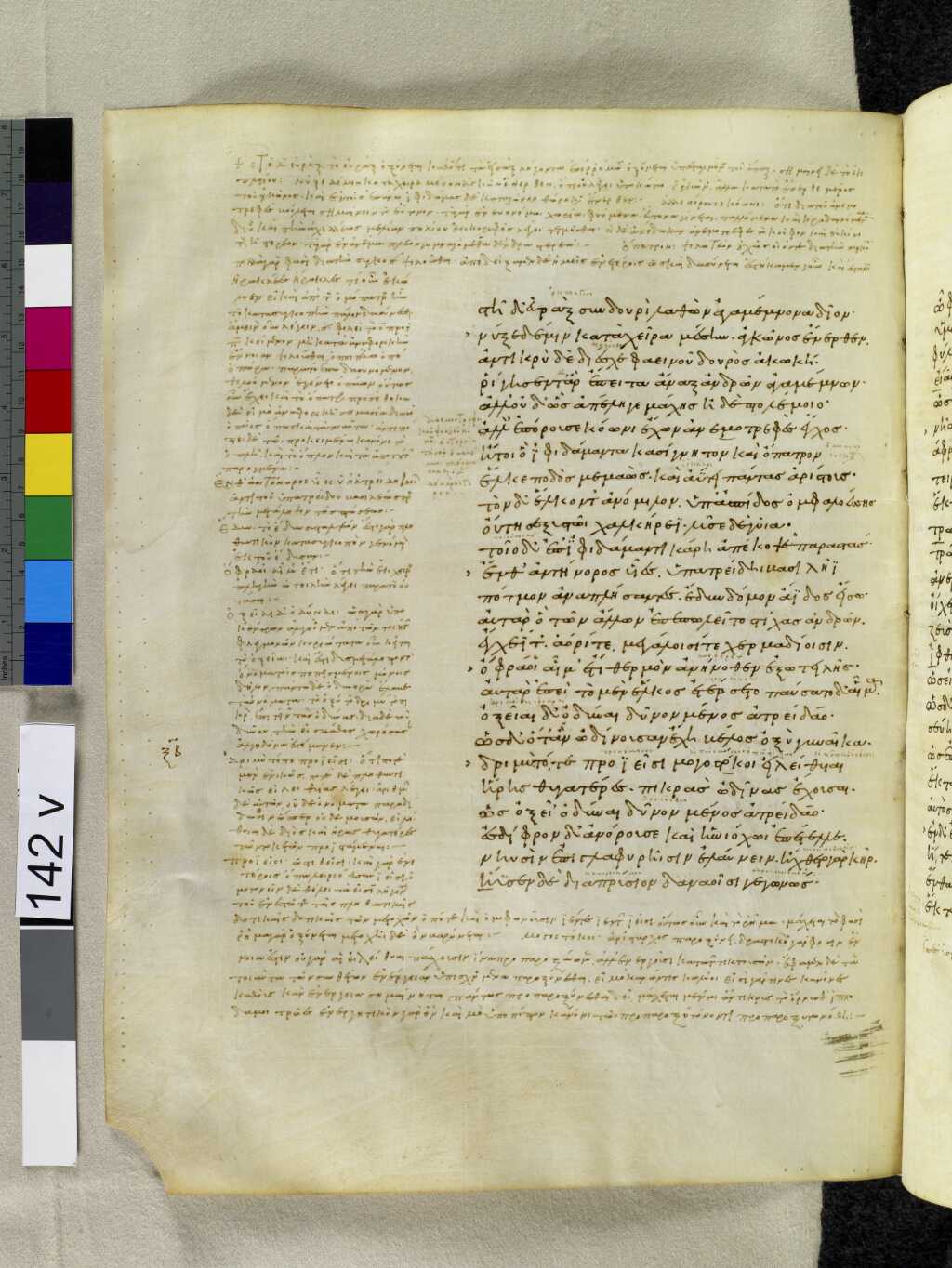
251στῆ δʼ εὐρὰξ σὺν δουρὶ λαθὼν Ἀγαμέμνονα δῖον, 252νύξε δέ μιν κατὰ χεῖρα μέσην ἀγκῶνος ἔνερθε, 253ἀντικρὺ δὲ διέσχε φαεινοῦ δουρὸς ἀκωκή. 254ῥίγησέν τʼ ἄρʼ ἔπειτα ἄναξ ἀνδρῶν Ἀγαμέμνων· 255ἀλλʼ οὐδʼ ὧς ἀπέληγε μάχης ἠδὲ πτολέμοιο, 256ἀλλʼ ἐπόρουσε Κόωνι ἔχων ἀνεμοτρεφὲς ἔγχος. 257ἤτοι ὃ Ἰφιδάμαντα κασίγνητον καὶ ὄπατρον 258ἕλκε ποδὸς μεμαώς, καὶ ἀΰτει πάντας ἀρίστους· 259τὸν δʼ ἕλκοντʼ ἀνʼ ὅμιλον ὑπʼ ἀσπίδος ὀμφαλοέσσης 260οὔτησε ξυστῷ χαλκήρεϊ, λῦσε δὲ γυῖα· 261τοῖο δʼ ἐπʼ Ἰφιδάμαντι κάρη ἀπέκοψε παραστάς. 262ἔνθʼ Ἀντήνορος υἷες ὑπʼ Ἀτρεΐδῃ βασιλῆϊ 263πότμον ἀναπλήσαντες ἔδυν δόμον Ἄϊδος εἴσω. 264αὐτὰρ ὃ τῶν ἄλλων ἐπεπωλεῖτο στίχας ἀνδρῶν 265ἔγχεΐ τʼ ἄορί τε μεγάλοισί τε χερμαδίοισιν, 266ὄφρά οἱ αἷμʼ ἔτι θερμὸν ἀνήνοθεν ἐξ ὠτειλῆς. 267αὐτὰρ ἐπεὶ τὸ μὲν ἕλκος ἐτέρσετο, παύσατο δʼ αἷμα, 268ὀξεῖαι δʼ ὀδύναι δῦνον μένος Ἀτρεΐδαο. 269ὡς δʼ ὅτʼ ἂν ὠδίνουσαν ἔχῃ βέλος ὀξὺ γυναῖκα 270δριμύ, τό τε προϊεῖσι μογοστόκοι Εἰλείθυιαι 271Ἥρης θυγατέρες πικρὰς ὠδῖνας ἔχουσαι, 272ὣς ὀξεῖʼ ὀδύναι δῦνον μένος Ἀτρεΐδαο. 273ἐς δίφρον δʼ ἀνόρουσε, καὶ ἡνιόχῳ ἐπέτελλε 274νηυσὶν ἔπι γλαφυρῇσιν ἐλαυνέμεν· ἤχθετο γὰρ κῆρ. 275ἤϋσεν δὲ διαπρύσιον Δαναοῖσι γεγωνώς·
When noble Coon, Antenor’s eldest son, saw this, sore indeed were his eyes at the sight of his fallen brother. Unseen by Agamemnon he got beside him, spear in hand, and wounded him in the middle of his arm below the elbow, the point of the spear going right through the arm. Agamemnon was convulsed with pain, but still not even for this did he leave off struggling and fighting, but grasped his spear that flew as fleet as the wind, and sprang upon Coon who was trying to drag off the body of his brother—his father’s son—by the foot, and was crying for help to all the bravest of his comrades; but Agamemnon struck him with a bronze-shod spear and killed him as he was dragging the dead body through the press of men under cover of his shield: he then cut off his head, standing over the body of Iphidamas. Thus did the sons of Antenor meet their fate at the hands of the son of Atreus, and go down into the house of Hades.
As long as the blood still welled warm from his wound Agamemnon went about attacking the ranks of the enemy with spear and sword and with great handfuls of stone, but when the blood had ceased to flow and the wound grew dry, the pain became great. As the sharp pangs which the Eilithuiae, goddesses of childbirth, daughters of Juno and dispensers of cruel pain, send upon a woman when she is in labour—even so sharp were the pangs of the son of Atreus. He sprang on to his chariot, and bade his charioteer drive to the ships, for he was in great agony. With a loud clear voice he shouted to the Danaans, “My friends, princes and counsellors of the Argives, defend the ships yourselves, for Jove has not suffered me to fight the whole day through against the Trojans.”
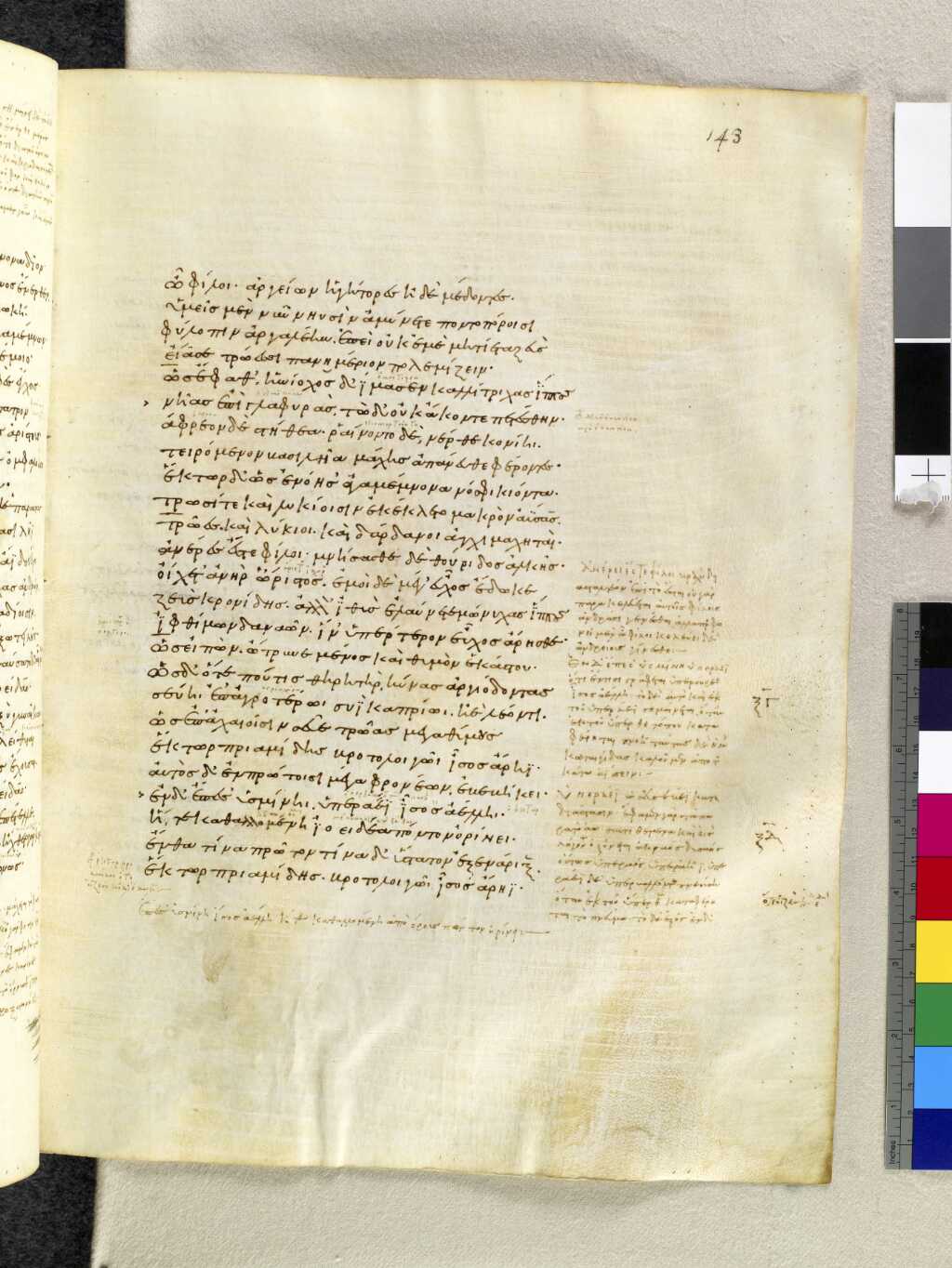
276ὦ φίλοι Ἀργείων ἡγήτορες ἠδὲ μέδοντες 277ὑμεῖς μὲν νῦν νηυσὶν ἀμύνετε ποντοπόροισι 278φύλοπιν ἀργαλέην, ἐπεὶ οὐκ ἐμὲ μητίετα Ζεὺς 279εἴασε Τρώεσσι πανημέριον πολεμίζειν. 280ὣς ἔφαθʼ, ἡνίοχος δʼ ἵμασεν καλλίτριχας ἵππους 281νῆας ἔπι γλαφυράς· τὼ δʼ οὐκ ἀέκοντε πετέσθην· 282ἄφρεον δὲ στήθεα, ῥαίνοντο δὲ νέρθε κονίῃ 283τειρόμενον βασιλῆα μάχης ἀπάνευθε φέροντες. 284Ἕκτωρ δʼ ὡς ἐνόησʼ Ἀγαμέμνονα νόσφι κιόντα 285Τρωσί τε καὶ Λυκίοισιν ἐκέκλετο μακρὸν ἀΰσας· 286Τρῶες καὶ Λύκιοι καὶ Δάρδανοι ἀγχιμαχηταὶ 287ἀνέρες ἔστε φίλοι, μνήσασθε δὲ θούριδος ἀλκῆς. 288οἴχετʼ ἀνὴρ ὤριστος, ἐμοὶ δὲ μέγʼ εὖχος ἔδωκε 289Ζεὺς Κρονίδης· ἀλλʼ ἰθὺς ἐλαύνετε μώνυχας ἵππους 290ἰφθίμων Δαναῶν, ἵνʼ ὑπέρτερον εὖχος ἄρησθε. 291ὣς εἰπὼν ὄτρυνε μένος καὶ θυμὸν ἑκάστου. 292ὡς δʼ ὅτε πού τις θηρητὴρ κύνας ἀργιόδοντας 293σεύῃ ἐπʼ ἀγροτέρῳ συῒ καπρίῳ ἠὲ λέοντι, 294ὣς ἐπʼ Ἀχαιοῖσιν σεῦε Τρῶας μεγαθύμους 295Ἕκτωρ Πριαμίδης βροτολοιγῷ ἶσος Ἄρηϊ. 296αὐτὸς δʼ ἐν πρώτοισι μέγα φρονέων ἐβεβήκει, 297ἐν δʼ ἔπεσʼ ὑσμίνῃ ὑπεραέϊ ἶσος ἀέλλῃ, 298ἥ τε καθαλλομένη ἰοειδέα πόντον ὀρίνει. 299ἔνθα τίνα πρῶτον, τίνα δʼ ὕστατον ἐξενάριξεν 300Ἕκτωρ Πριαμίδης, ὅτε οἱ Ζεὺς κῦδος ἔδωκεν;
With this the charioteer turned his horses towards the ships, and they flew forward nothing loth. Their chests were white with foam and their bellies with dust, as they drew the wounded king out of the battle.
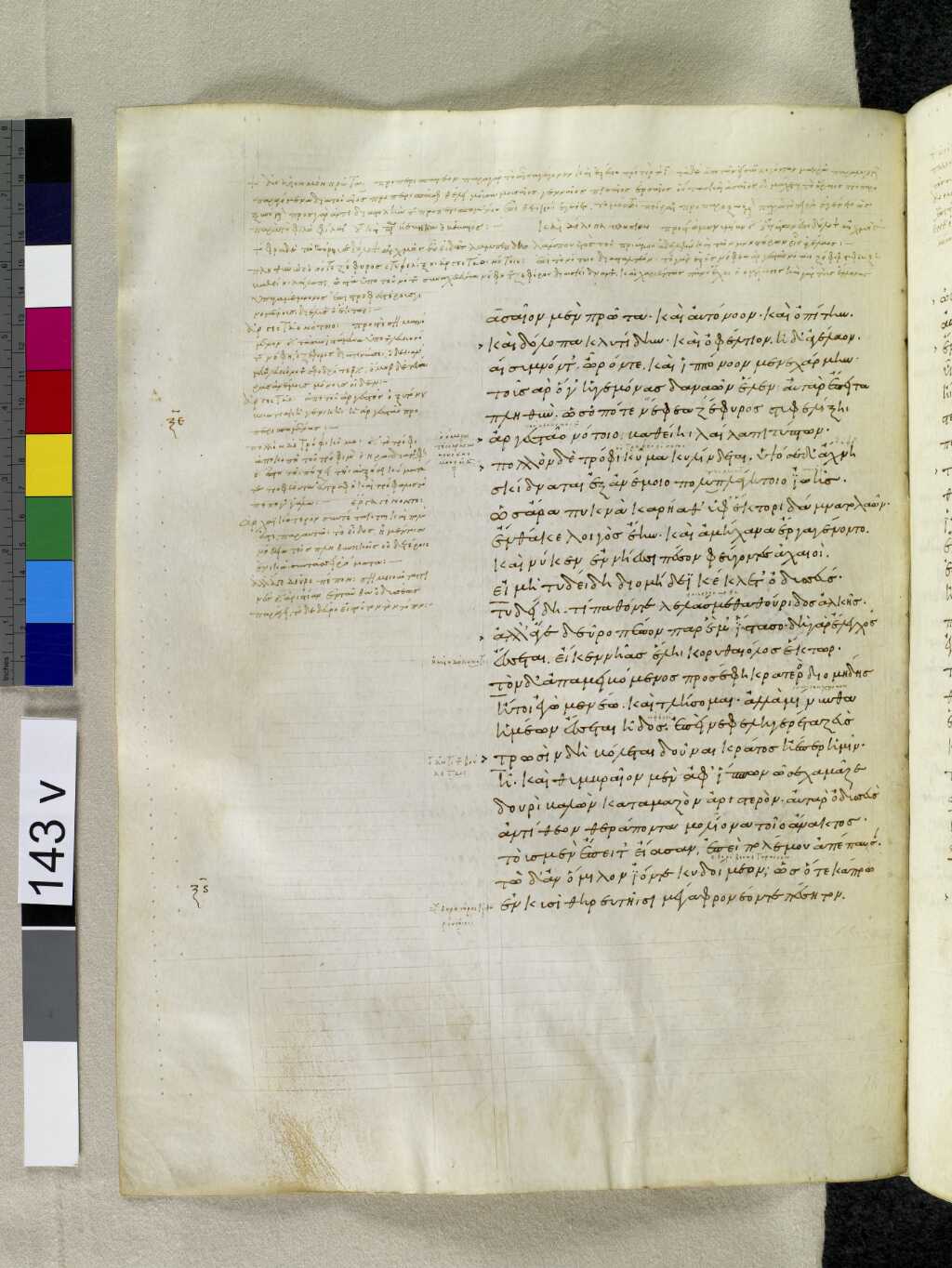
301Ἀσαῖον μὲν πρῶτα καὶ Αὐτόνοον καὶ Ὀπίτην 302καὶ Δόλοπα Κλυτίδην καὶ Ὀφέλτιον ἠδʼ Ἀγέλαον 303Αἴσυμνόν τʼ Ὦρόν τε καὶ Ἱππόνοον μενεχάρμην. 304τοὺς ἄρʼ ὅ γʼ ἡγεμόνας Δαναῶν ἕλεν, αὐτὰρ ἔπειτα 305πληθύν, ὡς ὁπότε νέφεα Ζέφυρος στυφελίξῃ 306ἀργεστᾶο Νότοιο βαθείῃ λαίλαπι τύπτων· 307πολλὸν δὲ τρόφι κῦμα κυλίνδεται, ὑψόσε δʼ ἄχνη 308σκίδναται ἐξ ἀνέμοιο πολυπλάγκτοιο ἰωῆς· 309ὣς ἄρα πυκνὰ καρήαθʼ ὑφʼ Ἕκτορι δάμνατο λαῶν. 310ἔνθά κε λοιγὸς ἔην καὶ ἀμήχανα ἔργα γένοντο, 311καί νύ κεν ἐν νήεσσι πέσον φεύγοντες Ἀχαιοί, 312εἰ μὴ Τυδεΐδῃ Διομήδεϊ κέκλετʼ Ὀδυσσεύς· 313Τυδεΐδη τί παθόντε λελάσμεθα θούριδος ἀλκῆς; 314ἀλλʼ ἄγε δεῦρο πέπον, παρʼ ἔμʼ ἵσταο· δὴ γὰρ ἔλεγχος 315ἔσσεται εἴ κεν νῆας ἕλῃ κορυθαίολος Ἕκτωρ. 316τὸν δʼ ἀπαμειβόμενος προσέφη κρατερὸς Διομήδης· 317ἤτοι ἐγὼ μενέω καὶ τλήσομαι· ἀλλὰ μίνυνθα 318ἡμέων ἔσσεται ἦδος, ἐπεὶ νεφεληγερέτα Ζεὺς 319Τρωσὶν δὴ βόλεται δοῦναι κράτος ἠέ περ ἡμῖν. 320ἦ καὶ Θυμβραῖον μὲν ἀφʼ ἵππων ὦσε χαμᾶζε 321δουρὶ βαλὼν κατὰ μαζὸν ἀριστερόν· αὐτὰρ Ὀδυσσεὺς 322ἀντίθεον θεράποντα Μολίονα τοῖο ἄνακτος. 323τοὺς μὲν ἔπειτʼ εἴασαν, ἐπεὶ πολέμου ἀπέπαυσαν· 324τὼ δʼ ἀνʼ ὅμιλον ἰόντε κυδοίμεον, ὡς ὅτε κάπρω 325ἐν κυσὶ θηρευτῇσι μέγα φρονέοντε πέσητον·
When Hector saw Agamemnon quit the field, he shouted to the Trojans and Lycians saying, “Trojans, Lycians, and Dardanian warriors, be men, my friends, and acquit yourselves in battle bravely; their best man has left them, and Jove has vouchsafed me a great triumph; charge the foe with your chariots that you may win still greater glory.”
With these words he put heart and soul into them all, and as a huntsman hounds his dogs on against a lion or wild boar, even so did Hector, peer of Mars, hound the proud Trojans on against the Achaeans. Full of hope he plunged in among the foremost, and fell on the fight like some fierce tempest that swoops down upon the sea, and lashes its deep blue waters into fury.
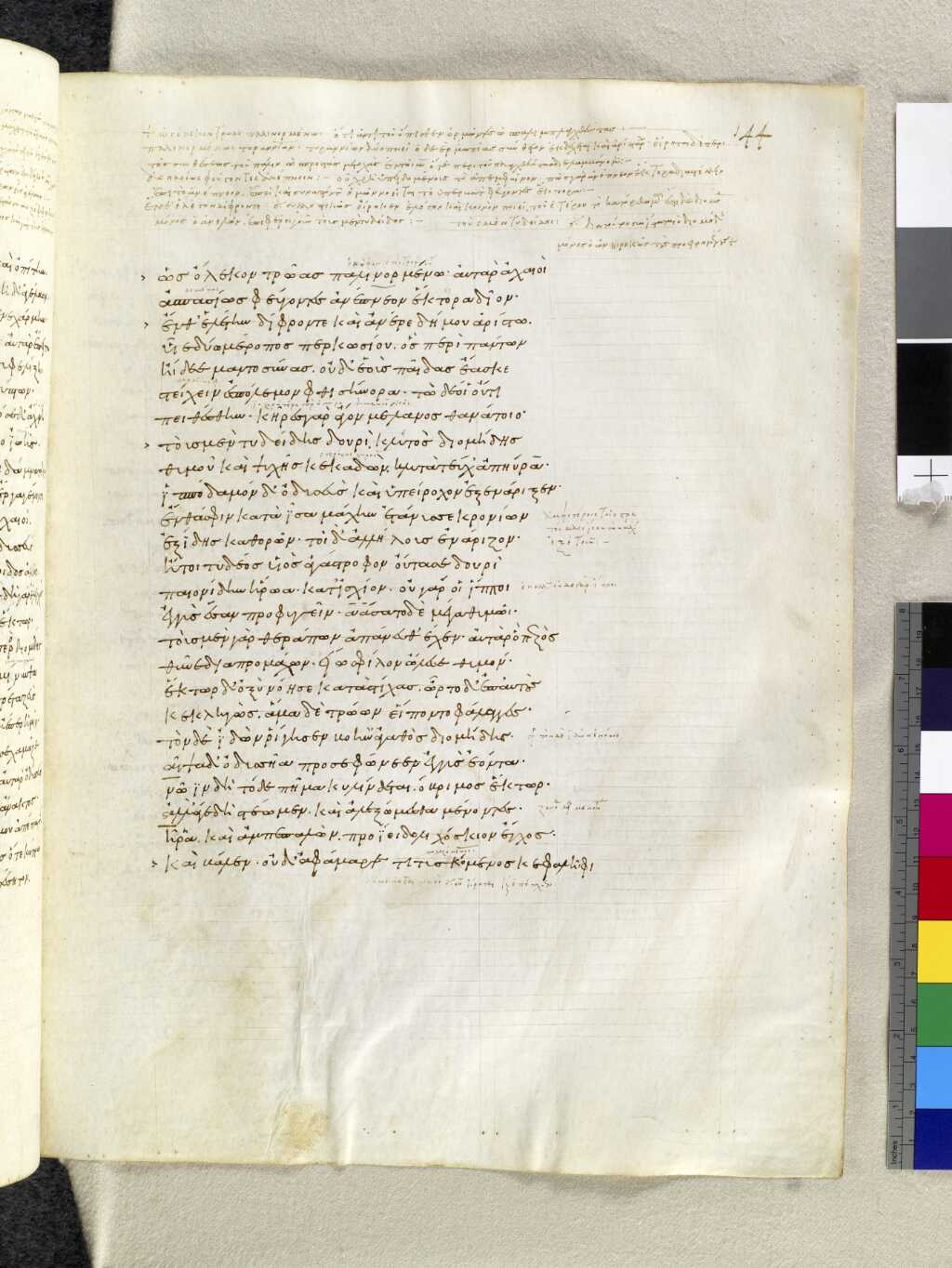
326ὣς ὄλεκον Τρῶας πάλιν ὀρμένω· αὐτὰρ Ἀχαιοὶ 327ἀσπασίως φεύγοντες ἀνέπνεον Ἕκτορα δῖον. 328ἔνθʼ ἑλέτην δίφρόν τε καὶ ἀνέρε δήμου ἀρίστω 329υἷε δύω Μέροπος Περκωσίου, ὃς περὶ πάντων 330ᾔδεε μαντοσύνας, οὐδὲ οὓς παῖδας ἔασκε 331στείχειν ἐς πόλεμον φθισήνορα· τὼ δέ οἱ οὔ τι 332πειθέσθην· κῆρες γὰρ ἄγον μέλανος θανάτοιο. 333τοὺς μὲν Τυδεΐδης δουρικλειτὸς Διομήδης 334θυμοῦ καὶ ψυχῆς κεκαδὼν κλυτὰ τεύχεʼ ἀπηύρα· 335Ἱππόδαμον δʼ Ὀδυσεὺς καὶ Ὑπείροχον ἐξενάριξεν. 336ἔνθά σφιν κατὰ ἶσα μάχην ἐτάνυσσε Κρονίων 337ἐξ Ἴδης καθορῶν· τοὶ δʼ ἀλλήλους ἐνάριζον. 338ἤτοι Τυδέος υἱὸς Ἀγάστροφον οὔτασε δουρὶ 339Παιονίδην ἥρωα κατʼ ἰσχίον· οὐ δέ οἱ ἵπποι 340ἐγγὺς ἔσαν προφυγεῖν, ἀάσατο δὲ μέγα θυμῷ. 341τοὺς μὲν γὰρ θεράπων ἀπάνευθʼ ἔχεν, αὐτὰρ ὃ πεζὸς 342θῦνε διὰ προμάχων, εἷος φίλον ὤλεσε θυμόν. 343Ἕκτωρ δʼ ὀξὺ νόησε κατὰ στίχας, ὦρτο δʼ ἐπʼ αὐτοὺς 344κεκλήγων· ἅμα δὲ Τρώων εἵποντο φάλαγγες. 345τὸν δὲ ἰδὼν ῥίγησε βοὴν ἀγαθὸς Διομήδης, 346αἶψα δʼ Ὀδυσσῆα προσεφώνεεν ἐγγὺς ἐόντα· 347νῶϊν δὴ τόδε πῆμα κυλίνδεται ὄβριμος Ἕκτωρ· 348ἀλλʼ ἄγε δὴ στέωμεν καὶ ἀλεξώμεσθα μένοντες. 349ἦ ῥα, καὶ ἀμπεπαλὼν προΐει δολιχόσκιον ἔγχος 350καὶ βάλεν, οὐδʼ ἀφάμαρτε τιτυσκόμενος κεφαλῆφιν,
What, then is the full tale of those whom Hector son of Priam killed in the hour of triumph which Jove then vouchsafed him? First Asaeus, Autonous, and Opites; Dolops son of Clytius, Opheltius and Agelaus; Aesymnus, Orus and Hipponous steadfast in battle; these chieftains of the Achaeans did Hector slay, and then he fell upon the rank and file. As when the west wind hustles the clouds of the white south and beats them down with the fierceness of its fury—the waves of the sea roll high, and the spray is flung aloft in the rage of the wandering wind—even so thick were the heads of them that fell by the hand of Hector.
All had then been lost and no help for it, and the Achaeans would have fled pell-mell to their ships, had not Ulysses cried out to Diomed, “Son of Tydeus, what has happened to us that we thus forget our prowess? Come, my good fellow, stand by my side and help me, we shall be shamed for ever if Hector takes the ships.”
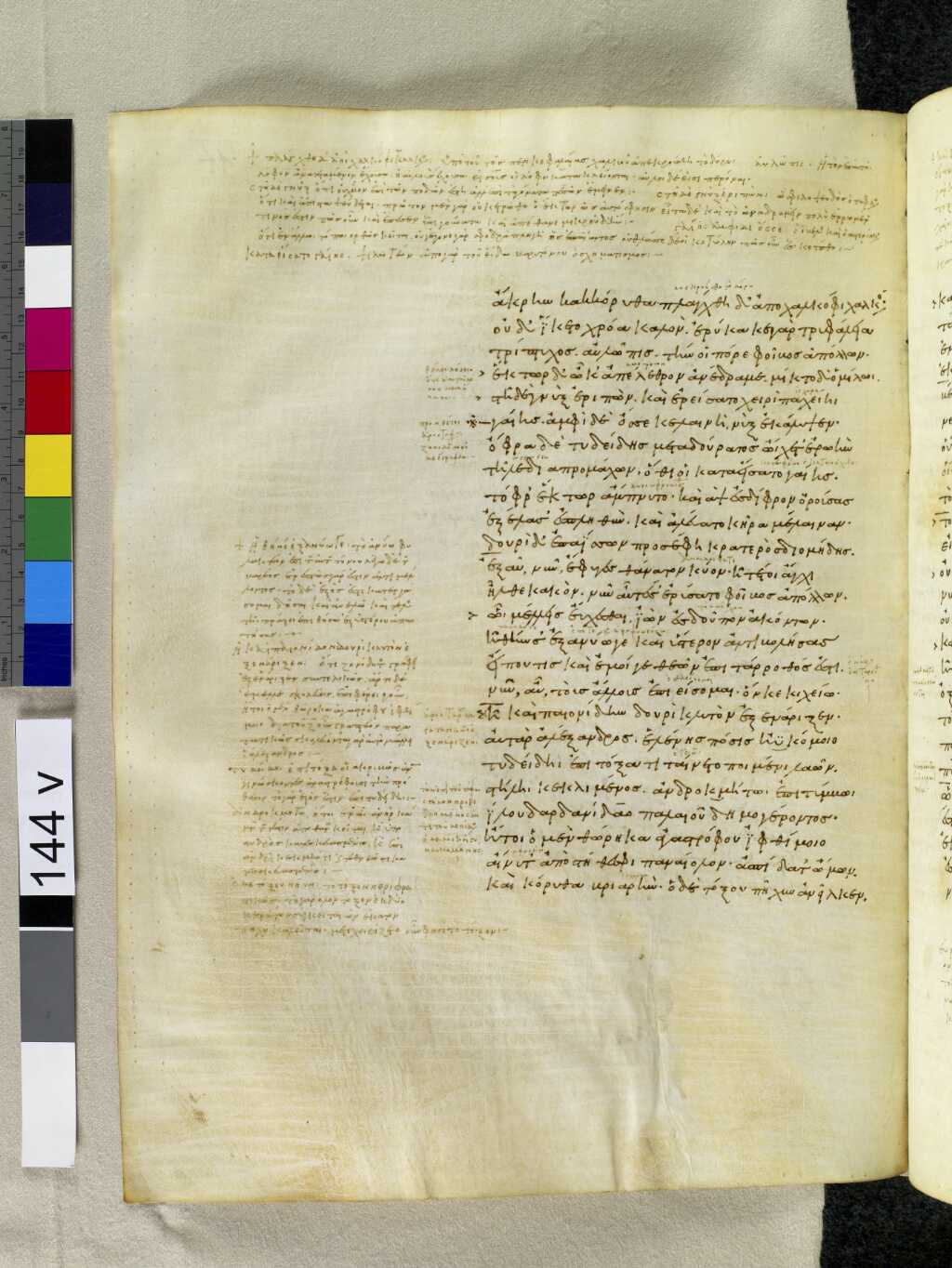
351ἄκρην κὰκ κόρυθα· πλάγχθη δʼ ἀπὸ χαλκόφι χαλκός, 352οὐδʼ ἵκετο χρόα καλόν· ἐρύκακε γὰρ τρυφάλεια 353τρίπτυχος αὐλῶπις, τήν οἱ πόρε Φοῖβος Ἀπόλλων. 354Ἕκτωρ δʼ ὦκʼ ἀπέλεθρον ἀνέδραμε, μίκτο δʼ ὁμίλῳ, 355στῆ δὲ γνὺξ ἐριπὼν καὶ ἐρείσατο χειρὶ παχείῃ 356γαίης· ἀμφὶ δὲ ὄσσε κελαινὴ νὺξ ἐκάλυψεν. 357ὄφρα δὲ Τυδεΐδης μετὰ δούρατος ᾤχετʼ ἐρωὴν 358τῆλε διὰ προμάχων, ὅθι οἱ καταείσατο γαίης 359τόφρʼ Ἕκτωρ ἔμπνυτο, καὶ ἂψ ἐς δίφρον ὀρούσας 360ἐξέλασʼ ἐς πληθύν, καὶ ἀλεύατο κῆρα μέλαιναν. 361δουρὶ δʼ ἐπαΐσσων προσέφη κρατερὸς Διομήδης· 362ἐξ αὖ νῦν ἔφυγες θάνατον κύον· ἦ τέ τοι ἄγχι 363ἦλθε κακόν· νῦν αὖτέ σʼ ἐρύσατο Φοῖβος Ἀπόλλων 364ᾧ μέλλεις εὔχεσθαι ἰὼν ἐς δοῦπον ἀκόντων. 365ἦ θήν σʼ ἐξανύω γε καὶ ὕστερον ἀντιβολήσας, 366εἴ πού τις καὶ ἔμοιγε θεῶν ἐπιτάρροθός ἐστι. 367νῦν αὖ τοὺς ἄλλους ἐπιείσομαι, ὅν κε κιχείω. 368ἦ, καὶ Παιονίδην δουρὶ κλυτὸν ἐξενάριζεν. 369αὐτὰρ Ἀλέξανδρος Ἑλένης πόσις ἠϋκόμοιο 370Τυδεΐδῃ ἔπι τόξα τιταίνετο ποιμένι λαῶν, 371στήλῃ κεκλιμένος ἀνδροκμήτῳ ἐπὶ τύμβῳ 372Ἴλου Δαρδανίδαο, παλαιοῦ δημογέροντος. 373ἤτοι ὃ μὲν θώρηκα Ἀγαστρόφου ἰφθίμοιο 374αἴνυτʼ ἀπὸ στήθεσφι παναίολον ἀσπίδα τʼ ὤμων 375καὶ κόρυθα βριαρήν· ὃ δὲ τόξου πῆχυν ἄνελκε
And Diomed answered, “Come what may, I will stand firm; but we shall have scant joy of it, for Jove is minded to give victory to the Trojans rather than to us.”
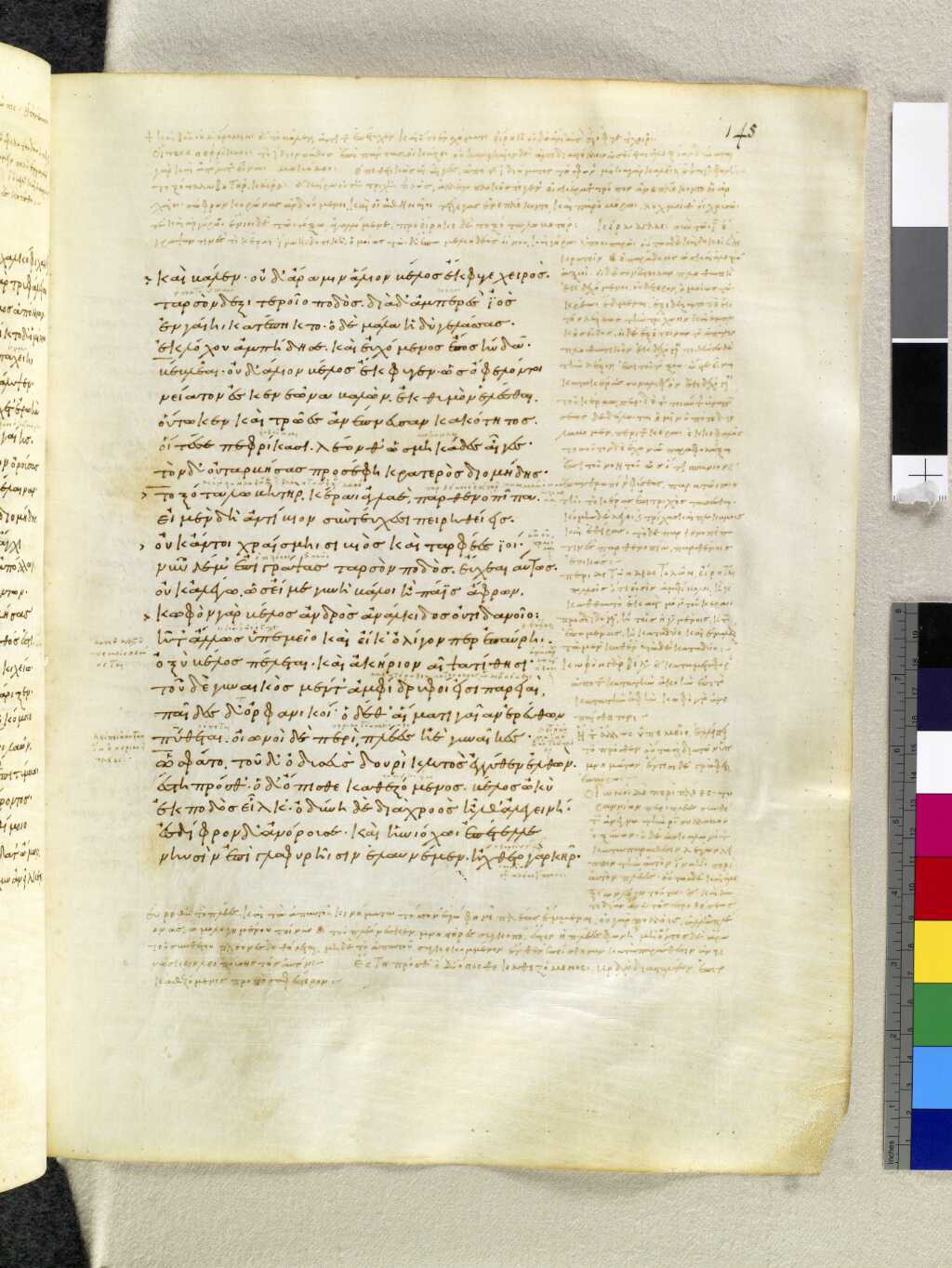
376καὶ βάλεν, οὐδʼ ἄρα μιν ἅλιον βέλος ἔκφυγε χειρός, 377ταρσὸν δεξιτεροῖο ποδός· διὰ δʼ ἀμπερὲς ἰὸς 378ἐν γαίῃ κατέπηκτο· ὃ δὲ μάλα ἡδὺ γελάσσας 379ἐκ λόχου ἀμπήδησε καὶ εὐχόμενος ἔπος ηὔδα· 380βέβληαι οὐδʼ ἅλιον βέλος ἔκφυγεν· ὡς ὄφελόν τοι 381νείατον ἐς κενεῶνα βαλὼν ἐκ θυμὸν ἑλέσθαι. 382οὕτω κεν καὶ Τρῶες ἀνέπνευσαν κακότητος, 383οἵ τέ σε πεφρίκασι λέονθʼ ὡς μηκάδες αἶγες. 384τὸν δʼ οὐ ταρβήσας προσέφη κρατερὸς Διομήδης· 385τοξότα λωβητὴρ κέρᾳ ἀγλαὲ παρθενοπῖπα 386εἰ μὲν δὴ ἀντίβιον σὺν τεύχεσι πειρηθείης, 387οὐκ ἄν τοι χραίσμῃσι βιὸς καὶ ταρφέες ἰοί· 388νῦν δέ μʼ ἐπιγράψας ταρσὸν ποδὸς εὔχεαι αὔτως. 389οὐκ ἀλέγω, ὡς εἴ με γυνὴ βάλοι ἢ πάϊς ἄφρων· 390κωφὸν γὰρ βέλος ἀνδρὸς ἀνάλκιδος οὐτιδανοῖο. 391ἦ τʼ ἄλλως ὑπʼ ἐμεῖο, καὶ εἴ κʼ ὀλίγον περ ἐπαύρῃ, 392ὀξὺ βέλος πέλεται, καὶ ἀκήριον αἶψα τίθησι. 393τοῦ δὲ γυναικὸς μέν τʼ ἀμφίδρυφοί εἰσι παρειαί, 394παῖδες δʼ ὀρφανικοί· ὃ δέ θʼ αἵματι γαῖαν ἐρεύθων 395πύθεται, οἰωνοὶ δὲ περὶ πλέες ἠὲ γυναῖκες. 396ὣς φάτο, τοῦ δʼ Ὀδυσεὺς δουρικλυτὸς ἐγγύθεν ἐλθὼν 397ἔστη πρόσθʼ· ὃ δʼ ὄπισθε καθεζόμενος βέλος ὠκὺ 398ἐκ ποδὸς ἕλκʼ, ὀδύνη δὲ διὰ χροὸς ἦλθʼ ἀλεγεινή. 399ἐς δίφρον δʼ ἀνόρουσε, καὶ ἡνιόχῳ ἐπέτελλε 400νηυσὶν ἔπι γλαφυρῇσιν ἐλαυνέμεν· ἤχθετο γὰρ κῆρ.
With these words he struck Thymbraeus from his chariot to the ground, smiting him in the left breast with his spear, while Ulysses killed Molion who was his squire. These they let lie, now that they had stopped their fighting; the two heroes then went on playing havoc with the foe, like two wild boars that turn in fury and rend the hounds that hunt them. Thus did they turn upon the Trojans and slay them, and the Achaeans were thankful to have breathing time in their flight from Hector.
They then took two princes with their chariot, the two sons of Merops of Percote, who excelled all others in the arts of divination. He had forbidden his sons to go to the war, but they would not obey him, for fate lured them to their fall. Diomed son of Tydeus slew them both and stripped them of their armour, while Ulysses killed Hippodamus and Hypeirochus.
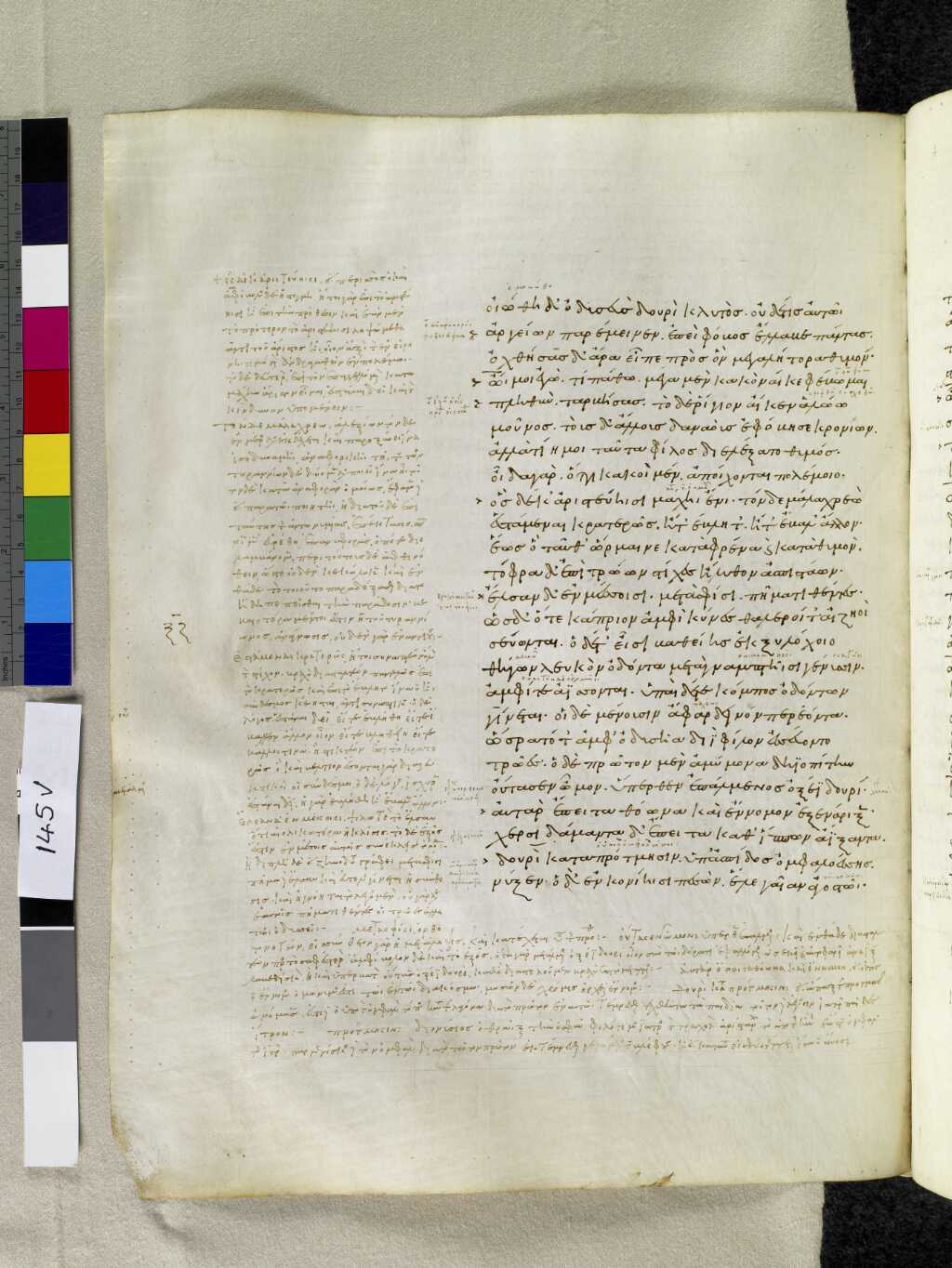
401οἰώθη δʼ Ὀδυσεὺς δουρὶ κλυτός, οὐδέ τις αὐτῷ 402Ἀργείων παρέμεινεν, ἐπεὶ φόβος ἔλλαβε πάντας· 403ὀχθήσας δʼ ἄρα εἶπε πρὸς ὃν μεγαλήτορα θυμόν· 404ὤ μοι ἐγὼ τί πάθω; μέγα μὲν κακὸν αἴ κε φέβωμαι 405πληθὺν ταρβήσας· τὸ δὲ ῥίγιον αἴ κεν ἁλώω 406μοῦνος· τοὺς δʼ ἄλλους Δαναοὺς ἐφόβησε Κρονίων. 407ἀλλὰ τί ἤ μοι ταῦτα φίλος διελέξατο θυμός; 408οἶδα γὰρ ὅττι κακοὶ μὲν ἀποίχονται πολέμοιο, 409ὃς δέ κʼ ἀριστεύῃσι μάχῃ ἔνι τὸν δὲ μάλα χρεὼ 410ἑστάμεναι κρατερῶς, ἤ τʼ ἔβλητʼ ἤ τʼ ἔβαλʼ ἄλλον. 411εἷος ὃ ταῦθʼ ὥρμαινε κατὰ φρένα καὶ κατὰ θυμόν, 412τόφρα δʼ ἐπὶ Τρώων στίχες ἤλυθον ἀσπιστάων, 413ἔλσαν δʼ ἐν μέσσοισι, μετὰ σφίσι πῆμα τιθέντες. 414ὡς δʼ ὅτε κάπριον ἀμφὶ κύνες θαλεροί τʼ αἰζηοὶ 415σεύωνται, ὃ δέ τʼ εἶσι βαθείης ἐκ ξυλόχοιο 416θήγων λευκὸν ὀδόντα μετὰ γναμπτῇσι γένυσσιν, 417ἀμφὶ δέ τʼ ἀΐσσονται, ὑπαὶ δέ τε κόμπος ὀδόντων 418γίγνεται, οἳ δὲ μένουσιν ἄφαρ δεινόν περ ἐόντα, 419ὥς ῥα τότʼ ἀμφʼ Ὀδυσῆα Διῒ φίλον ἐσσεύοντο 420Τρῶες· ὃ δὲ πρῶτον μὲν ἀμύμονα Δηϊοπίτην 421οὔτασεν ὦμον ὕπερθεν ἐπάλμενος ὀξέϊ δουρί, 422αὐτὰρ ἔπειτα Θόωνα καὶ Ἔννομον ἐξενάριξε. 423Χερσιδάμαντα δʼ ἔπειτα καθʼ ἵππων ἀΐξαντα 424δουρὶ κατὰ πρότμησιν ὑπʼ ἀσπίδος ὀμφαλοέσσης 425νύξεν· ὃ δʼ ἐν κονίῃσι πεσὼν ἕλε γαῖαν ἀγοστῷ.
And now the son of Saturn as he looked down from Ida ordained that neither side should have the advantage, and they kept on killing one another. The son of Tydeus speared Agastrophus son of Paeon in the hip-joint with his spear. His chariot was not at hand for him to fly with, so blindly confident had he been. His squire was in charge of it at some distance and he was fighting on foot among the foremost until he lost his life. Hector soon marked the havoc Diomed and Ulysses were making, and bore down upon them with a loud cry, followed by the Trojan ranks; brave Diomed was dismayed when he saw them, and said to Ulysses who was beside him, “Great Hector is bearing down upon us and we shall be undone; let us stand firm and wait his onset.”
He poised his spear as he spoke and hurled it, nor did he miss his mark. He had aimed at Hector’s head near the top of his helmet, but bronze was turned by bronze, and Hector was untouched, for the spear was stayed by the visored helm made with three plates of metal, which Phoebus Apollo had given him. Hector sprang back with a great bound under cover of the ranks; he fell on his knees and propped himself with his brawny hand leaning on the ground, for darkness had fallen on his eyes. The son of Tydeus having thrown his spear dashed in among the foremost fighters, to the place where he had seen it strike the ground; meanwhile Hector recovered himself and springing back into his chariot mingled with the crowd, by which means he saved his life. But Diomed made at him with his spear and said, “Dog, you have again got away though death was close on your heels. Phoebus Apollo, to whom I ween you pray ere you go into battle, has again saved you, nevertheless I will meet you and make an end of you hereafter, if there is any god who will stand by me too and be my helper. For the present I must pursue those I can lay hands on.”
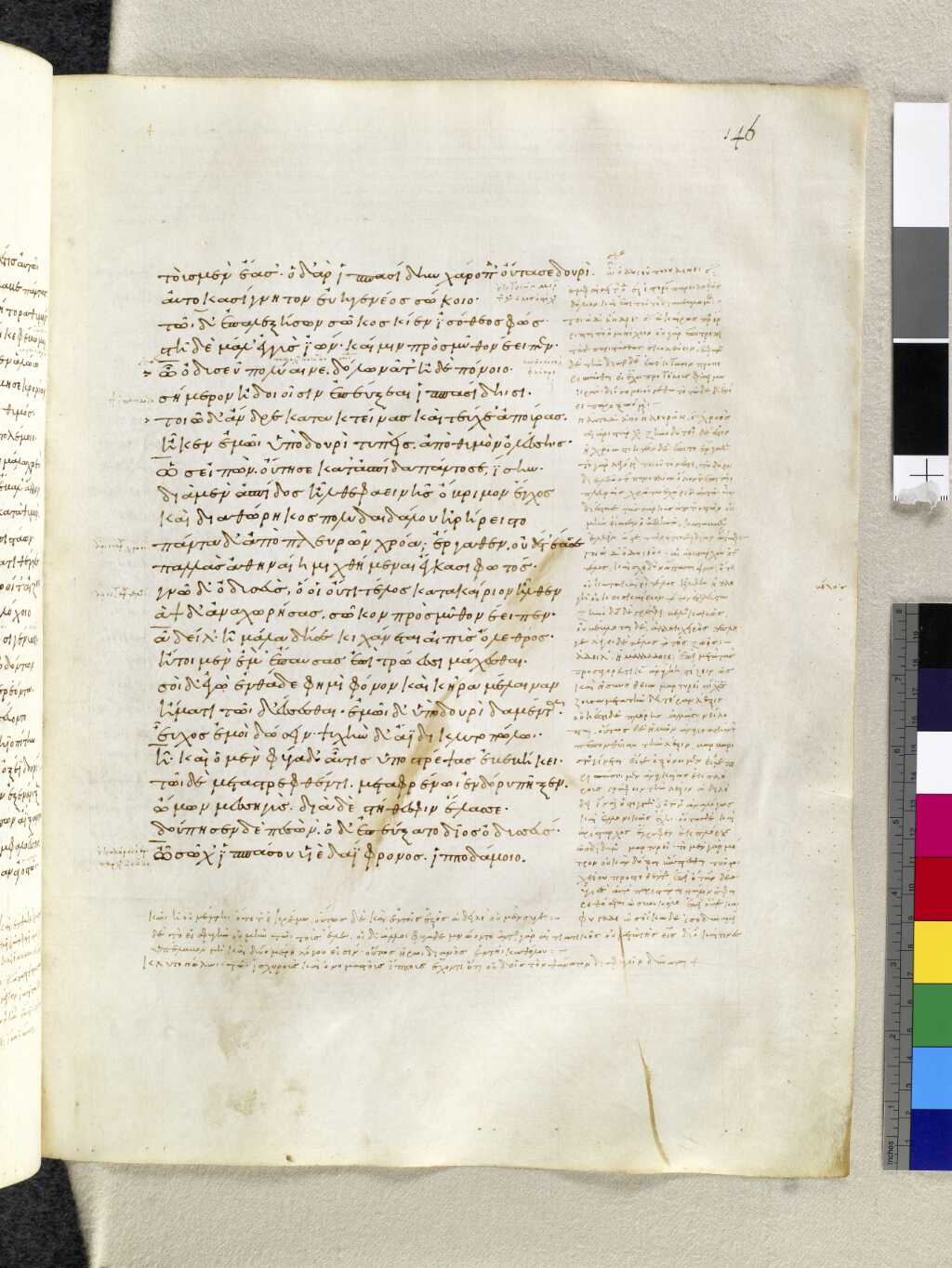
426τοὺς μὲν ἔασʼ, ὃ δʼ ἄρʼ Ἱππασίδην Χάροπʼ οὔτασε δουρὶ 427αὐτοκασίγνητον εὐηφενέος Σώκοιο. 428τῷ δʼ ἐπαλεξήσων Σῶκος κίεν ἰσόθεος φώς, 429στῆ δὲ μάλʼ ἐγγὺς ἰὼν καί μιν πρὸς μῦθον ἔειπεν 430ὦ Ὀδυσεῦ πολύαινε δόλων ἆτʼ ἠδὲ πόνοιο 431σήμερον ἢ δοιοῖσιν ἐπεύξεαι Ἱππασίδῃσι 432τοιώδʼ ἄνδρε κατακτείνας καὶ τεύχεʼ ἀπούρας, 433ἤ κεν ἐμῷ ὑπὸ δουρὶ τυπεὶς ἀπὸ θυμὸν ὀλέσσῃς. 434ὣς εἰπὼν οὔτησε κατʼ ἀσπίδα πάντοσʼ ἐΐσην. 435διὰ μὲν ἀσπίδος ἦλθε φαεινῆς ὄβριμον ἔγχος, 436καὶ διὰ θώρηκος πολυδαιδάλου ἠρήρειστο, 437πάντα δʼ ἀπὸ πλευρῶν χρόα ἔργαθεν, οὐδʼ ἔτʼ ἔασε 438Παλλὰς Ἀθηναίη μιχθήμεναι ἔγκασι φωτός. 439γνῶ δʼ Ὀδυσεὺς ὅ οἱ οὔ τι τέλος κατακαίριον ἦλθεν, 440ἂψ δʼ ἀναχωρήσας Σῶκον πρὸς μῦθον ἔειπεν· 441ἆ δείλʼ ἦ μάλα δή σε κιχάνεται αἰπὺς ὄλεθρος. 442ἤτοι μέν ῥʼ ἔμʼ ἔπαυσας ἐπὶ Τρώεσσι μάχεσθαι· 443σοὶ δʼ ἐγὼ ἐνθάδε φημὶ φόνον καὶ κῆρα μέλαιναν 444ἤματι τῷδʼ ἔσσεσθαι, ἐμῷ δʼ ὑπὸ δουρὶ δαμέντα 445εὖχος ἐμοὶ δώσειν, ψυχὴν δʼ Ἄϊδι κλυτοπώλῳ. 446ἦ, καὶ ὃ μὲν φύγαδʼ αὖτις ὑποστρέψας ἐβεβήκει, 447τῷ δὲ μεταστρεφθέντι μεταφρένῳ ἐν δόρυ πῆξεν 448ὤμων μεσσηγύς, διὰ δὲ στήθεσφιν ἔλασσε, 449δούπησεν δὲ πεσών· ὃ δʼ ἐπεύξατο δῖος Ὀδυσσεύς· 450ὦ Σῶχʼ Ἱππάσου υἱὲ δαΐφρονος ἱπποδάμοιο
As he spoke he began stripping the spoils from the son of Paeon, but Alexandrus husband of lovely Helen aimed an arrow at him, leaning against a pillar of the monument which men had raised to Ilus son of Dardanus, a ruler in days of old. Diomed had taken the cuirass from off the breast of Agastrophus, his heavy helmet also, and the shield from off his shoulders, when Paris drew his bow and let fly an arrow that sped not from his hand in vain, but pierced the flat of Diomed’s right foot, going right through it and fixing itself in the ground. Thereon Paris with a hearty laugh sprang forward from his hiding-place, and taunted him saying, “You are wounded—my arrow has not been shot in vain; would that it had hit you in the belly and killed you, for thus the Trojans, who fear you as goats fear a lion, would have had a truce from evil.”
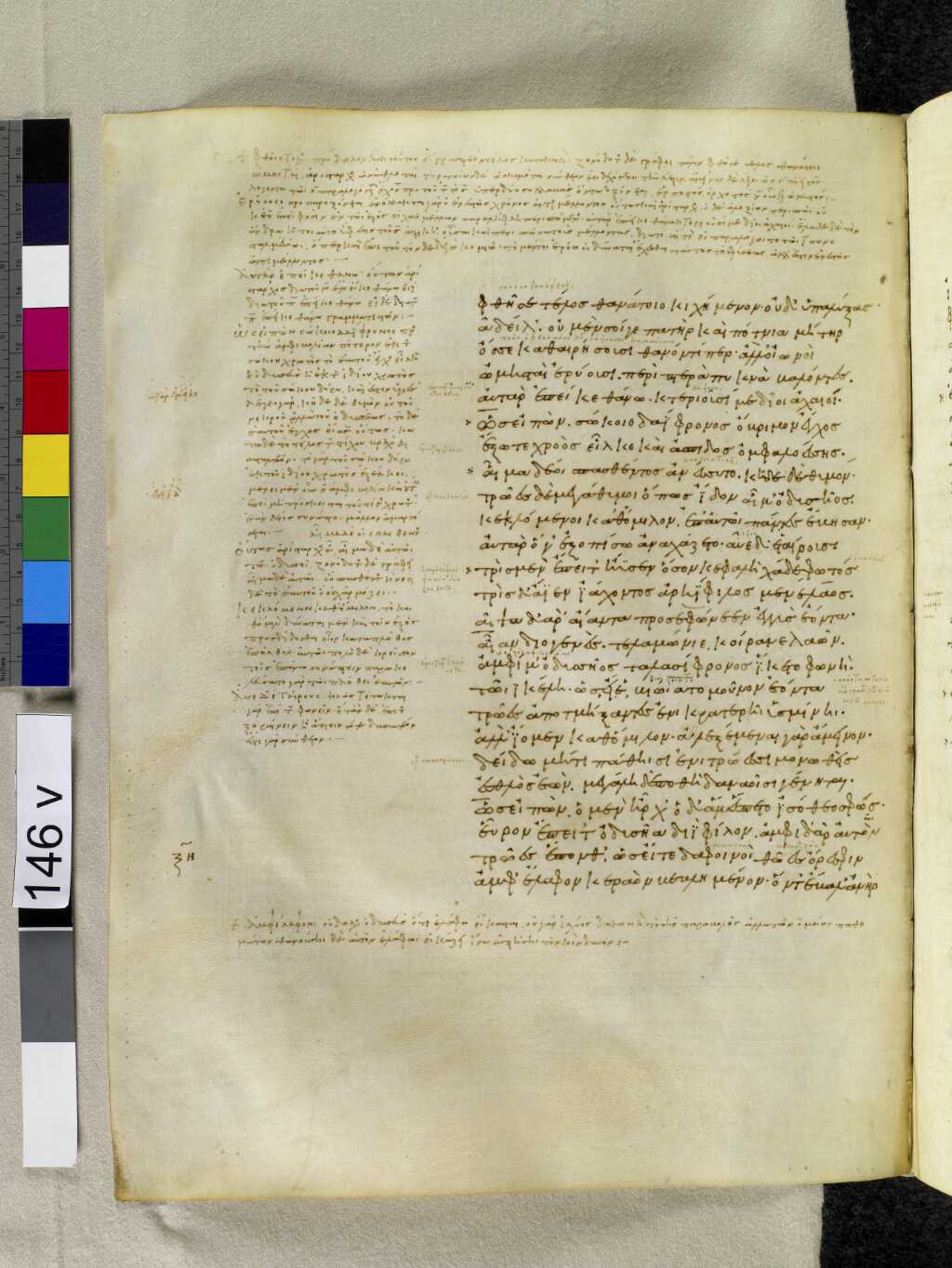
451φθῆ σε τέλος θανάτοιο κιχήμενον, οὐδʼ ὑπάλυξας. 452ἆ δείλʼ οὐ μὲν σοί γε πατὴρ καὶ πότνια μήτηρ 453ὄσσε καθαιρήσουσι θανόντι περ, ἀλλʼ οἰωνοὶ 454ὠμησταὶ ἐρύουσι, περὶ πτερὰ πυκνὰ βαλόντες. 455αὐτὰρ ἔμʼ, εἴ κε θάνω, κτεριοῦσί γε δῖοι Ἀχαιοί. 456ὣς εἰπὼν Σώκοιο δαΐφρονος ὄβριμον ἔγχος 457ἔξω τε χροὸς ἕλκε καὶ ἀσπίδος ὀμφαλοέσσης· 458αἷμα δέ οἱ σπασθέντος ἀνέσσυτο, κῆδε δὲ θυμόν. 459Τρῶες δὲ μεγάθυμοι ὅπως ἴδον αἷμʼ Ὀδυσῆος 460κεκλόμενοι καθʼ ὅμιλον ἐπʼ αὐτῷ πάντες ἔβησαν. 461αὐτὰρ ὅ γʼ ἐξοπίσω ἀνεχάζετο, αὖε δʼ ἑταίρους. 462τρὶς μὲν ἔπειτʼ ἤϋσεν ὅσον κεφαλὴ χάδε φωτός, 463τρὶς δʼ ἄϊεν ἰάχοντος ἄρηι φίλος Μενέλαος. 464αἶψα δʼ ἄρʼ Αἴαντα προσεφώνεεν ἐγγὺς ἐόντα· 465Αἶαν διογενὲς Τελαμώνιε κοίρανε λαῶν 466ἀμφί μʼ Ὀδυσσῆος ταλασίφρονος ἵκετʼ ἀϋτὴ 467τῷ ἰκέλη ὡς εἴ ἑ βιῴατο μοῦνον ἐόντα 468Τρῶες ἀποτμήξαντες ἐνὶ κρατερῇ ὑσμίνῃ. 469ἀλλʼ ἴομεν καθʼ ὅμιλον· ἀλεξέμεναι γὰρ ἄμεινον. 470δείδω μή τι πάθῃσιν ἐνὶ Τρώεσσι μονωθεὶς 471ἐσθλὸς ἐών, μεγάλη δὲ ποθὴ Δαναοῖσι γένηται. 472ὣς εἰπὼν ὃ μὲν ἦρχʼ, ὃ δʼ ἅμʼ ἕσπετο ἰσόθεος φώς. 473εὗρον ἔπειτʼ Ὀδυσῆα Διῒ φίλον· ἀμφὶ δʼ ἄρʼ αὐτὸν 474Τρῶες ἕπονθʼ ὡς εἴ τε δαφοινοὶ θῶες ὄρεσφιν 475ἀμφʼ ἔλαφον κεραὸν βεβλημένον, ὅν τʼ ἔβαλʼ ἀνὴρ
Diomed all undaunted answered, “Archer, you who without your bow are nothing, slanderer and seducer, if you were to be tried in single combat fighting in full armour, your bow and your arrows would serve you in little stead. Vain is your boast in that you have scratched the sole of my foot. I care no more than if a girl or some silly boy had hit me. A worthless coward can inflict but a light wound; when I wound a man though I but graze his skin it is another matter, for my weapon will lay him low. His wife will tear her cheeks for grief and his children will be fatherless: there will he rot, reddening the earth with his blood, and vultures, not women, will gather round him.”
Thus he spoke, but Ulysses came up and stood over him. Under this cover he sat down to draw the arrow from his foot, and sharp was the pain he suffered as he did so. Then he sprang on to his chariot and bade the charioteer drive him to the ships, for he was sick at heart.
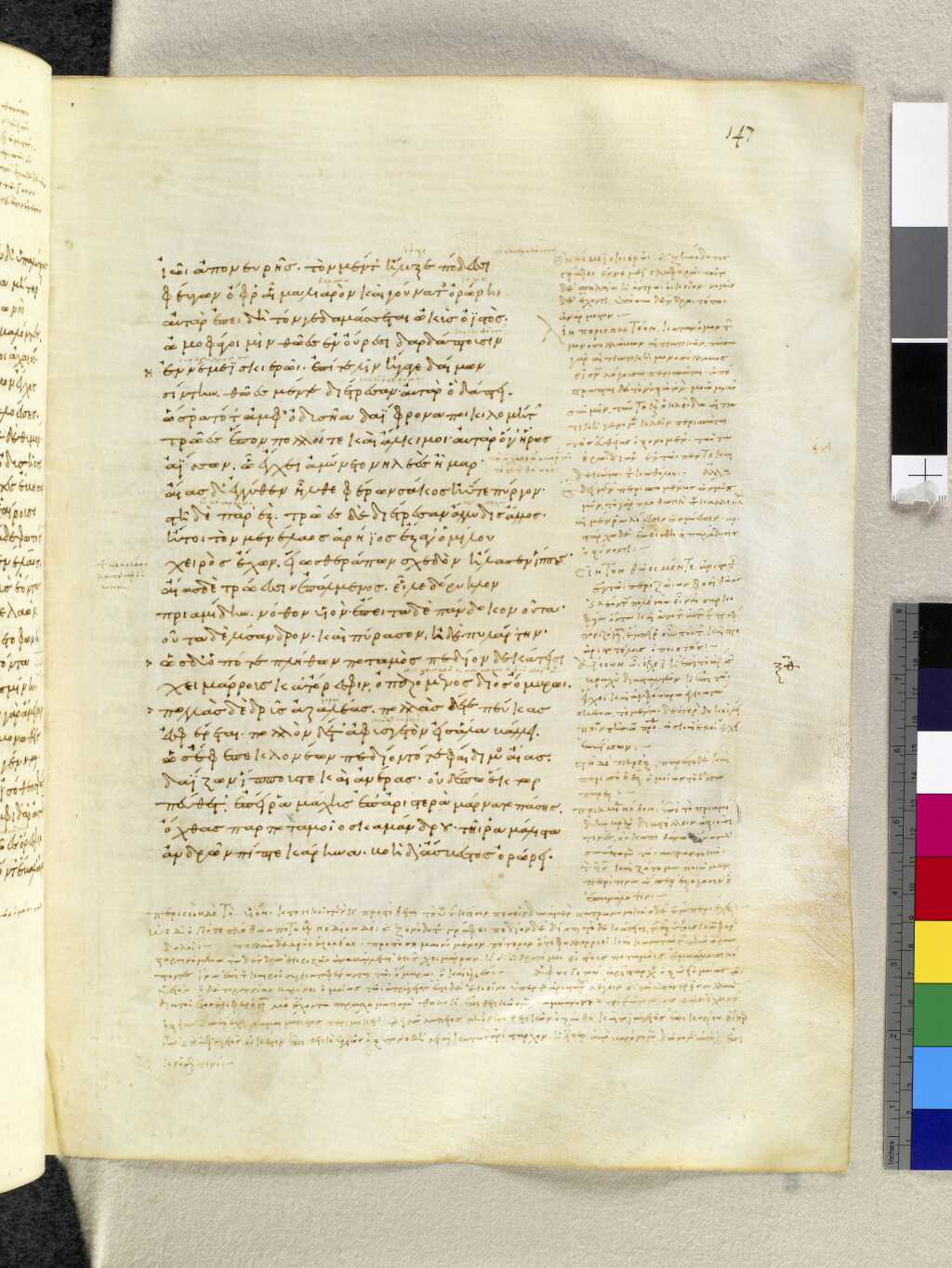
476ἰῷ ἀπὸ νευρῆς· τὸν μέν τʼ ἤλυξε πόδεσσι 477φεύγων, ὄφρʼ αἷμα λιαρὸν καὶ γούνατʼ ὀρώρῃ· 478αὐτὰρ ἐπεὶ δὴ τόν γε δαμάσσεται ὠκὺς ὀϊστός, 479ὠμοφάγοι μιν θῶες ἐν οὔρεσι δαρδάπτουσιν 480ἐν νέμεϊ σκιερῷ· ἐπί τε λῖν ἤγαγε δαίμων 481σίντην· θῶες μέν τε διέτρεσαν, αὐτὰρ ὃ δάπτει· 482ὥς ῥα τότʼ ἀμφʼ Ὀδυσῆα δαΐφρονα ποικιλομήτην 483Τρῶες ἕπον πολλοί τε καὶ ἄλκιμοι, αὐτὰρ ὅ γʼ ἥρως 484ἀΐσσων ᾧ ἔγχει ἀμύνετο νηλεὲς ἦμαρ. 485Αἴας δʼ ἐγγύθεν ἦλθε φέρων σάκος ἠΰτε πύργον, 486στῆ δὲ παρέξ· Τρῶες δὲ διέτρεσαν ἄλλυδις ἄλλος. 487ἤτοι τὸν Μενέλαος ἀρήϊος ἔξαγʼ ὁμίλου 488χειρὸς ἔχων, εἷος θεράπων σχεδὸν ἤλασεν ἵππους. 489Αἴας δὲ Τρώεσσιν ἐπάλμενος εἷλε Δόρυκλον 490Πριαμίδην νόθον υἱόν, ἔπειτα δὲ Πάνδοκον οὖτα, 491οὖτα δὲ Λύσανδρον καὶ Πύρασον ἠδὲ Πυλάρτην. 492ὡς δʼ ὁπότε πλήθων ποταμὸς πεδίον δὲ κάτεισι 493χειμάρρους κατʼ ὄρεσφιν ὀπαζόμενος Διὸς ὄμβρῳ, 494πολλὰς δὲ δρῦς ἀζαλέας, πολλὰς δέ τε πεύκας 495ἐσφέρεται, πολλὸν δέ τʼ ἀφυσγετὸν εἰς ἅλα βάλλει, 496ὣς ἔφεπε κλονέων πεδίον τότε φαίδιμος Αἴας, 497δαΐζων ἵππους τε καὶ ἀνέρας· οὐδέ πω Ἕκτωρ 498πεύθετʼ, ἐπεί ῥα μάχης ἐπʼ ἀριστερὰ μάρνατο πάσης 499ὄχθας πὰρ ποταμοῖο Σκαμάνδρου, τῇ ῥα μάλιστα 500ἀνδρῶν πῖπτε κάρηνα, βοὴ δʼ ἄσβεστος ὀρώρει
Ulysses was now alone; not one of the Argives stood by him, for they were all panic-stricken. “Alas,” said he to himself in his dismay, “what will become of me? It is ill if I turn and fly before these odds, but it will be worse if I am left alone and taken prisoner, for the son of Saturn has struck the rest of the Danaans with panic. But why talk to myself in this way? Well do I know that though cowards quit the field, a hero, whether he wound or be wounded, must stand firm and hold his own.”
While he was thus in two minds, the ranks of the Trojans advanced and hemmed him in, and bitterly did they come to rue it. As hounds and lusty youths set upon a wild boar that sallies from his lair whetting his white tusks—they attack him from every side and can hear the gnashing of his jaws, but for all his fierceness they still hold their ground—even so furiously did the Trojans attack Ulysses. First he sprang spear in hand upon Deiopites and wounded him on the shoulder with a downward blow; then he killed Thoon and Ennomus. After these he struck Chersidamas in the loins under his shield as he had just sprung down from his chariot; so he fell in the dust and clutched the earth in the hollow of his hand. These he let lie, and went on to wound Charops son of Hippasus own brother to noble Socus. Socus, hero that he was, made all speed to help him, and when he was close to Ulysses he said, “Far-famed Ulysses, insatiable of craft and toil, this day you shall either boast of having killed both the sons of Hippasus and stripped them of their armour, or you shall fall before my spear.”
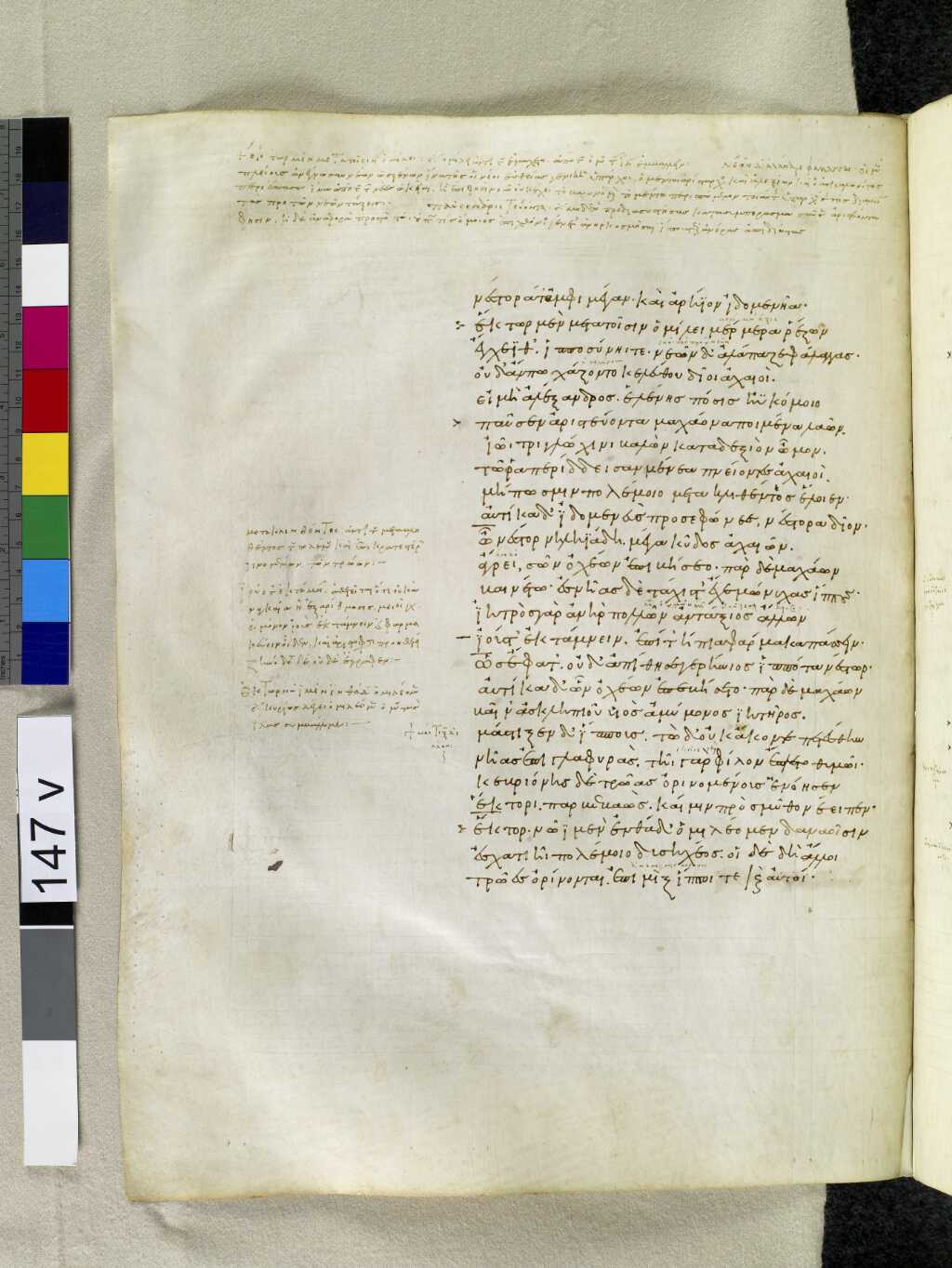
501Νέστορά τʼ ἀμφὶ μέγαν καὶ ἀρήϊον Ἰδομενῆα. 502Ἕκτωρ μὲν μετὰ τοῖσιν ὁμίλει μέρμερα ῥέζων 503ἔγχεΐ θʼ ἱπποσύνῃ τε, νέων δʼ ἀλάπαζε φάλαγγας· 504οὐδʼ ἄν πω χάζοντο κελεύθου δῖοι Ἀχαιοὶ 505εἰ μὴ Ἀλέξανδρος Ἑλένης πόσις ἠϋκόμοιο 506παῦσεν ἀριστεύοντα Μαχάονα ποιμένα λαῶν, 507ἰῷ τριγλώχινι βαλὼν κατὰ δεξιὸν ὦμον. 508τῷ ῥα περίδεισαν μένεα πνείοντες Ἀχαιοὶ 509μή πώς μιν πολέμοιο μετακλινθέντος ἕλοιεν. 510αὐτίκα δʼ Ἰδομενεὺς προσεφώνεε Νέστορα δῖον· 511ὦ Νέστορ Νηληϊάδη μέγα κῦδος Ἀχαιῶν 512ἄγρει σῶν ὀχέων ἐπιβήσεο, πὰρ δὲ Μαχάων 513βαινέτω, ἐς νῆας δὲ τάχιστʼ ἔχε μώνυχας ἵππους· 514ἰητρὸς γὰρ ἀνὴρ πολλῶν ἀντάξιος ἄλλων 515ἰούς τʼ ἐκτάμνειν ἐπί τʼ ἤπια φάρμακα πάσσειν. 516ὣς ἔφατʼ, οὐδʼ ἀπίθησε Γερήνιος ἱππότα Νέστωρ. 517αὐτίκα δʼ ὧν ὀχέων ἐπεβήσετο, πὰρ δὲ Μαχάων 518βαῖνʼ Ἀσκληπιοῦ υἱὸς ἀμύμονος ἰητῆρος· 519μάστιξεν δʼ ἵππους, τὼ δʼ οὐκ ἀέκοντε πετέσθην 520νῆας ἔπι γλαφυράς· τῇ γὰρ φίλον ἔπλετο θυμῷ. 521Κεβριόνης δὲ Τρῶας ὀρινομένους ἐνόησεν 522Ἕκτορι παρβεβαώς, καί μιν πρὸς μῦθον ἔειπεν· 523Ἕκτορ νῶϊ μὲν ἐνθάδʼ ὁμιλέομεν Δαναοῖσιν 524ἐσχατιῇ πολέμοιο δυσηχέος· οἳ δὲ δὴ ἄλλοι 525Τρῶες ὀρίνονται ἐπιμὶξ ἵπποι τε καὶ αὐτοί.
With these words he struck the shield of Ulysses. The spear went through the shield and passed on through his richly wrought cuirass, tearing the flesh from his side, but Pallas Minerva did not suffer it to pierce the entrails of the hero. Ulysses knew that his hour was not yet come, but he gave ground and said to Socus, “Wretch, you shall now surely die. You have stayed me from fighting further with the Trojans, but you shall now fall by my spear, yielding glory to myself, and your soul to Hades of the noble steeds.”
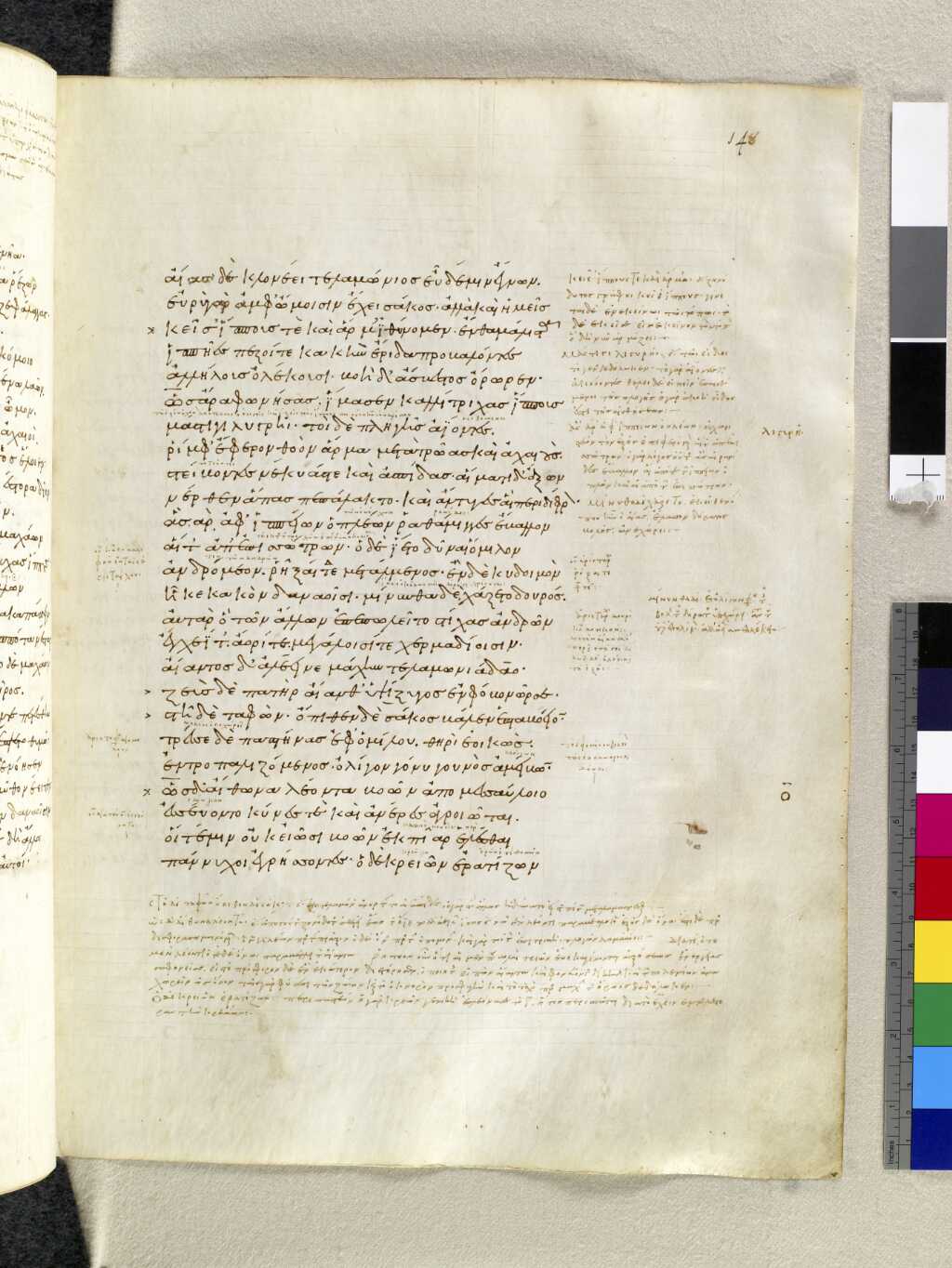
526Αἴας δὲ κλονέει Τελαμώνιος· εὖ δέ μιν ἔγνων· 527εὐρὺ γὰρ ἀμφʼ ὤμοισιν ἔχει σάκος· ἀλλὰ καὶ ἡμεῖς 528κεῖσʼ ἵππους τε καὶ ἅρμʼ ἰθύνομεν, ἔνθα μάλιστα 529ἱππῆες πεζοί τε κακὴν ἔριδα προβαλόντες 530ἀλλήλους ὀλέκουσι, βοὴ δʼ ἄσβεστος ὄρωρεν. 531ὣς ἄρα φωνήσας ἵμασεν καλλίτριχας ἵππους 532μάστιγι λιγυρῇ· τοὶ δὲ πληγῆς ἀΐοντες 533ῥίμφʼ ἔφερον θοὸν ἅρμα μετὰ Τρῶας καὶ Ἀχαιοὺς 534στείβοντες νέκυάς τε καὶ ἀσπίδας· αἵματι δʼ ἄξων 535νέρθεν ἅπας πεπάλακτο καὶ ἄντυγες αἳ περὶ δίφρον, 536ἃς ἄρʼ ἀφʼ ἱππείων ὁπλέων ῥαθάμιγγες ἔβαλλον 537αἵ τʼ ἀπʼ ἐπισσώτρων. ὃ δὲ ἵετο δῦναι ὅμιλον 538ἀνδρόμεον ῥῆξαί τε μετάλμενος· ἐν δὲ κυδοιμὸν 539ἧκε κακὸν Δαναοῖσι, μίνυνθα δὲ χάζετο δουρός. 540αὐτὰρ ὃ τῶν ἄλλων ἐπεπωλεῖτο στίχας ἀνδρῶν 541ἔγχεΐ τʼ ἄορί τε μεγάλοισί τε χερμαδίοισιν, 542Αἴαντος δʼ ἀλέεινε μάχην Τελαμωνιάδαο. 544Ζεὺς δὲ πατὴρ Αἴανθʼ ὑψίζυγος ἐν φόβον ὦρσε· 545στῆ δὲ ταφών, ὄπιθεν δὲ σάκος βάλεν ἑπταβόειον, 546τρέσσε δὲ παπτήνας ἐφʼ ὁμίλου θηρὶ ἐοικὼς 547ἐντροπαλιζόμενος ὀλίγον γόνυ γουνὸς ἀμείβων. 548ὡς δʼ αἴθωνα λέοντα βοῶν ἀπὸ μεσσαύλοιο 549ἐσσεύαντο κύνες τε καὶ ἀνέρες ἀγροιῶται, 550οἵ τέ μιν οὐκ εἰῶσι βοῶν ἐκ πῖαρ ἑλέσθαι 551πάννυχοι ἐγρήσσοντες· ὃ δὲ κρειῶν ἐρατίζων
Socus had turned in flight, but as he did so, the spear struck him in the back midway between the shoulders, and went right through his chest. He fell heavily to the ground and Ulysses vaunted over him saying, “O Socus, son of Hippasus tamer of horses, death has been too quick for you and you have not escaped him: poor wretch, not even in death shall your father and mother close your eyes, but the ravening vultures shall enshroud you with the flapping of their dark wings and devour you. Whereas even though I fall the Achaeans will give me my due rites of burial.”
So saying he drew Socus’s heavy spear out of his flesh and from his shield, and the blood welled forth when the spear was withdrawn so that he was much dismayed. When the Trojans saw that Ulysses was bleeding they raised a great shout and came on in a body towards him; he therefore gave ground, and called his comrades to come and help him. Thrice did he cry as loudly as man can cry, and thrice did brave Menelaus hear him; he turned, therefore, to Ajax who was close beside him and said, “Ajax, noble son of Telamon, captain of your people, the cry of Ulysses rings in my ears, as though the Trojans had cut him off and were worsting him while he is single-handed. Let us make our way through the throng; it will be well that we defend him; I fear he may come to harm for all his valour if he be left without support, and the Danaans would miss him sorely.”
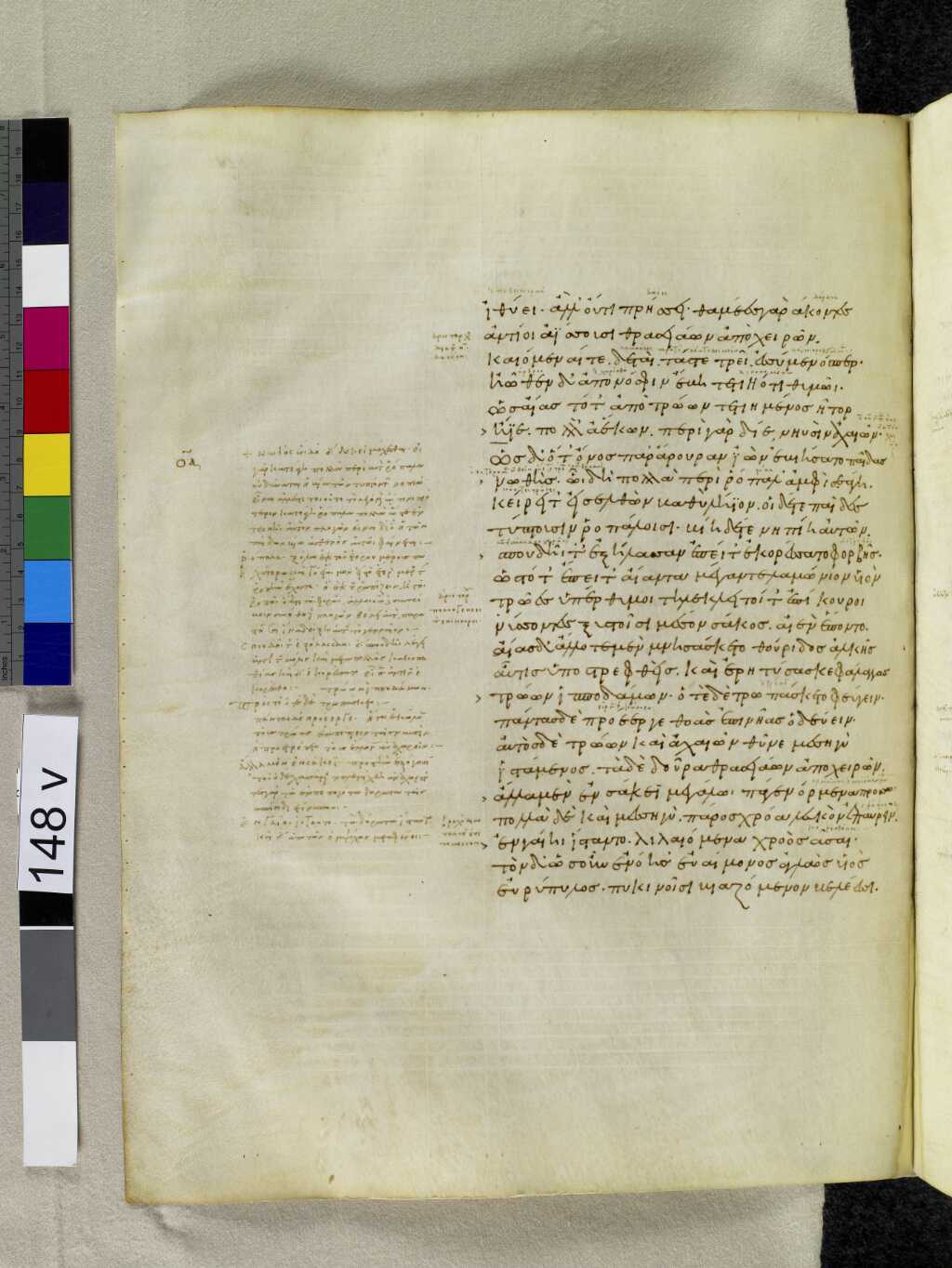
552ἰθύει, ἀλλʼ οὔ τι πρήσσει· θαμέες γὰρ ἄκοντες 553ἀντίον ἀΐσσουσι θρασειάων ἀπὸ χειρῶν 554καιόμεναί τε δεταί, τάς τε τρεῖ ἐσσύμενός περ· 555ἠῶθεν δʼ ἀπὸ νόσφιν ἔβη τετιηότι θυμῷ· 556ὣς Αἴας τότʼ ἀπὸ Τρώων τετιημένος ἦτορ 557ἤϊε πόλλʼ ἀέκων· περὶ γὰρ δίε νηυσὶν Ἀχαιῶν. 558ὡς δʼ ὅτʼ ὄνος παρʼ ἄρουραν ἰὼν ἐβιήσατο παῖδας 559νωθής, ᾧ δὴ πολλὰ περὶ ῥόπαλʼ ἀμφὶς ἐάγῃ, 560κείρει τʼ εἰσελθὼν βαθὺ λήϊον· οἳ δέ τε παῖδες 561τύπτουσιν ῥοπάλοισι· βίη δέ τε νηπίη αὐτῶν· 562σπουδῇ τʼ ἐξήλασσαν, ἐπεί τʼ ἐκορέσσατο φορβῆς· 563ὣς τότʼ ἔπειτʼ Αἴαντα μέγαν Τελαμώνιον υἱὸν 564Τρῶες ὑπέρθυμοι πολυηγερέες τʼ ἐπίκουροι 565νύσσοντες ξυστοῖσι μέσον σάκος αἰὲν ἕποντο. 566Αἴας δʼ ἄλλοτε μὲν μνησάσκετο θούριδος ἀλκῆς 567αὖτις ὑποστρεφθείς, καὶ ἐρητύσασκε φάλαγγας 568Τρώων ἱπποδάμων· ὁτὲ δὲ τρωπάσκετο φεύγειν. 569πάντας δὲ προέεργε θοὰς ἐπὶ νῆας ὁδεύειν, 570αὐτὸς δὲ Τρώων καὶ Ἀχαιῶν θῦνε μεσηγὺ 571ἱστάμενος· τὰ δὲ δοῦρα θρασειάων ἀπὸ χειρῶν 572ἄλλα μὲν ἐν σάκεϊ μεγάλῳ πάγεν ὄρμενα πρόσσω, 573πολλὰ δὲ καὶ μεσσηγύ, πάρος χρόα λευκὸν ἐπαυρεῖν, 574ἐν γαίῃ ἵσταντο λιλαιόμενα χροὸς ἆσαι. 575τὸν δʼ ὡς οὖν ἐνόησʼ Εὐαίμονος ἀγλαὸς υἱὸς 576Εὐρύπυλος πυκινοῖσι βιαζόμενον βελέεσσι,
He led the way and mighty Ajax went with him. The Trojans had gathered round Ulysses like ravenous mountain jackals round the carcase of some horned stag that has been hit with an arrow—the stag has fled at full speed so long as his blood was warm and his strength has lasted, but when the arrow has overcome him, the savage jackals devour him in the shady glades of the forest. Then heaven sends a fierce lion thither, whereon the jackals fly in terror and the lion robs them of their prey—even so did Trojans many and brave gather round crafty Ulysses, but the hero stood at bay and kept them off with his spear. Ajax then came up with his shield before him like a wall, and stood hard by, whereon the Trojans fled in all directions. Menelaus took Ulysses by the hand, and led him out of the press while his squire brought up his chariot, but Ajax rushed furiously on the Trojans and killed Doryclus, a bastard son of Priam; then he wounded Pandocus, Lysandrus, Pyrasus, and Pylartes; as some swollen torrent comes rushing in full flood from the mountains on to the plain, big with the rain of heaven—many a dry oak and many a pine does it engulf, and much mud does it bring down and cast into the sea—even so did brave Ajax chase the foe furiously over the plain, slaying both men and horses.
Hector did not yet know what Ajax was doing, for he was fighting on the extreme left of the battle by the banks of the river Scamander, where the carnage was thickest and the war-cry loudest round Nestor and brave Idomeneus. Among these Hector was making great slaughter with his spear and furious driving, and was destroying the ranks that were opposed to him; still the Achaeans would have given no ground, had not Alexandrus husband of lovely Helen stayed the prowess of Machaon, shepherd of his people, by wounding him in the right shoulder with a triple-barbed arrow. The Achaeans were in great fear that as the fight had turned against them the Trojans might take him prisoner, and Idomeneus said to Nestor, “Nestor son of Neleus, honour to the Achaean name, mount your chariot at once; take Machaon with you and drive your horses to the ships as fast as you can. A physician is worth more than several other men put together, for he can cut out arrows and spread healing herbs.”
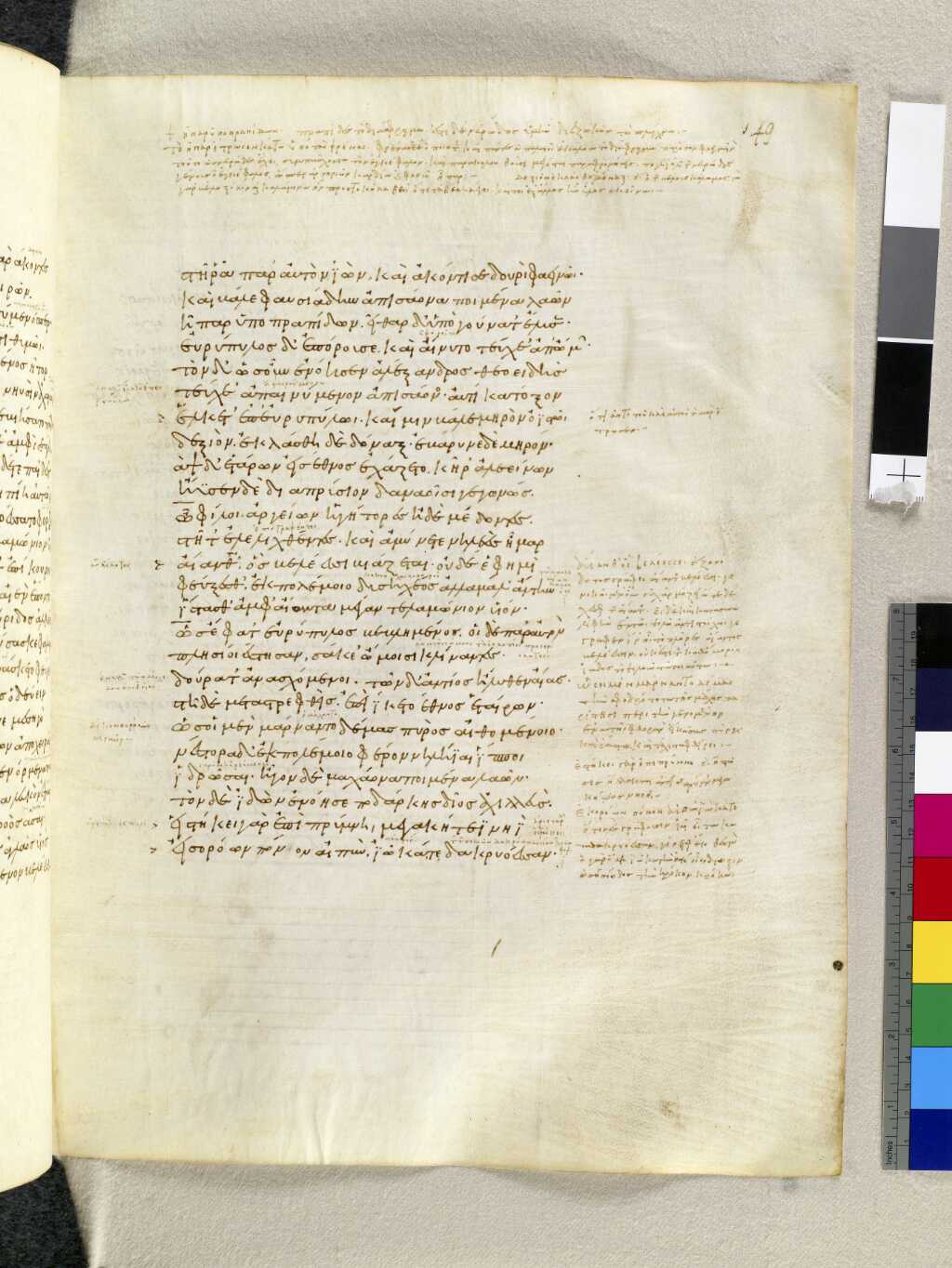
577στῆ ῥα παρʼ αὐτὸν ἰών, καὶ ἀκόντισε δουρὶ φαεινῷ, 578καὶ βάλε Φαυσιάδην Ἀπισάονα ποιμένα λαῶν 579ἧπαρ ὑπὸ πραπίδων, εἶθαρ δʼ ὑπὸ γούνατʼ ἔλυσεν· 580Εὐρύπυλος δʼ ἐπόρουσε καὶ αἴνυτο τεύχεʼ ἀπʼ ὤμων. 581τὸν δʼ ὡς οὖν ἐνόησεν Ἀλέξανδρος θεοειδὴς 582τεύχεʼ ἀπαινύμενον Ἀπισάονος, αὐτίκα τόξον 583ἕλκετʼ ἐπʼ Εὐρυπύλῳ, καί μιν βάλε μηρὸν ὀϊστῷ 584δεξιόν· ἐκλάσθη δὲ δόναξ, ἐβάρυνε δὲ μηρόν. 585ἂψ δʼ ἑτάρων εἰς ἔθνος ἐχάζετο κῆρʼ ἀλεείνων, 586ἤϋσεν δὲ διαπρύσιον Δαναοῖσι γεγωνώς· 587ὦ φίλοι Ἀργείων ἡγήτορες ἠδὲ μέδοντες 588στῆτʼ ἐλελιχθέντες καὶ ἀμύνετε νηλεὲς ἦμαρ 589Αἴανθʼ, ὃς βελέεσσι βιάζεται, οὐδέ ἕ φημι 590φεύξεσθʼ ἐκ πολέμοιο δυσηχέος· ἀλλὰ μάλʼ ἄντην 591ἵστασθʼ ἀμφʼ Αἴαντα μέγαν Τελαμώνιον υἱόν. 592ὣς ἔφατʼ Εὐρύπυλος βεβλημένος· οἳ δὲ παρʼ αὐτὸν 593πλησίοι ἔστησαν σάκεʼ ὤμοισι κλίναντες 594δούρατʼ ἀνασχόμενοι· τῶν δʼ ἀντίος ἤλυθεν Αἴας. 595στῆ δὲ μεταστρεφθείς, ἐπεὶ ἵκετο ἔθνος ἑταίρων. 596ὣς οἳ μὲν μάρναντο δέμας πυρὸς αἰθομένοιο· 597Νέστορα δʼ ἐκ πολέμοιο φέρον Νηλήϊαι ἵπποι 598ἱδρῶσαι, ἦγον δὲ Μαχάονα ποιμένα λαῶν. 599τὸν δὲ ἰδὼν ἐνόησε ποδάρκης δῖος Ἀχιλλεύς· 600ἑστήκει γὰρ ἐπὶ πρυμνῇ μεγακήτεϊ νηῒ 601εἰσορόων πόνον αἰπὺν ἰῶκά τε δακρυόεσσαν.
Nestor knight of Gerene did as Idomeneus had counselled; he at once mounted his chariot, and Machaon son of the famed physician Aesculapius, went with him. He lashed his horses and they flew onward nothing loth towards the ships, as though of their own free will.
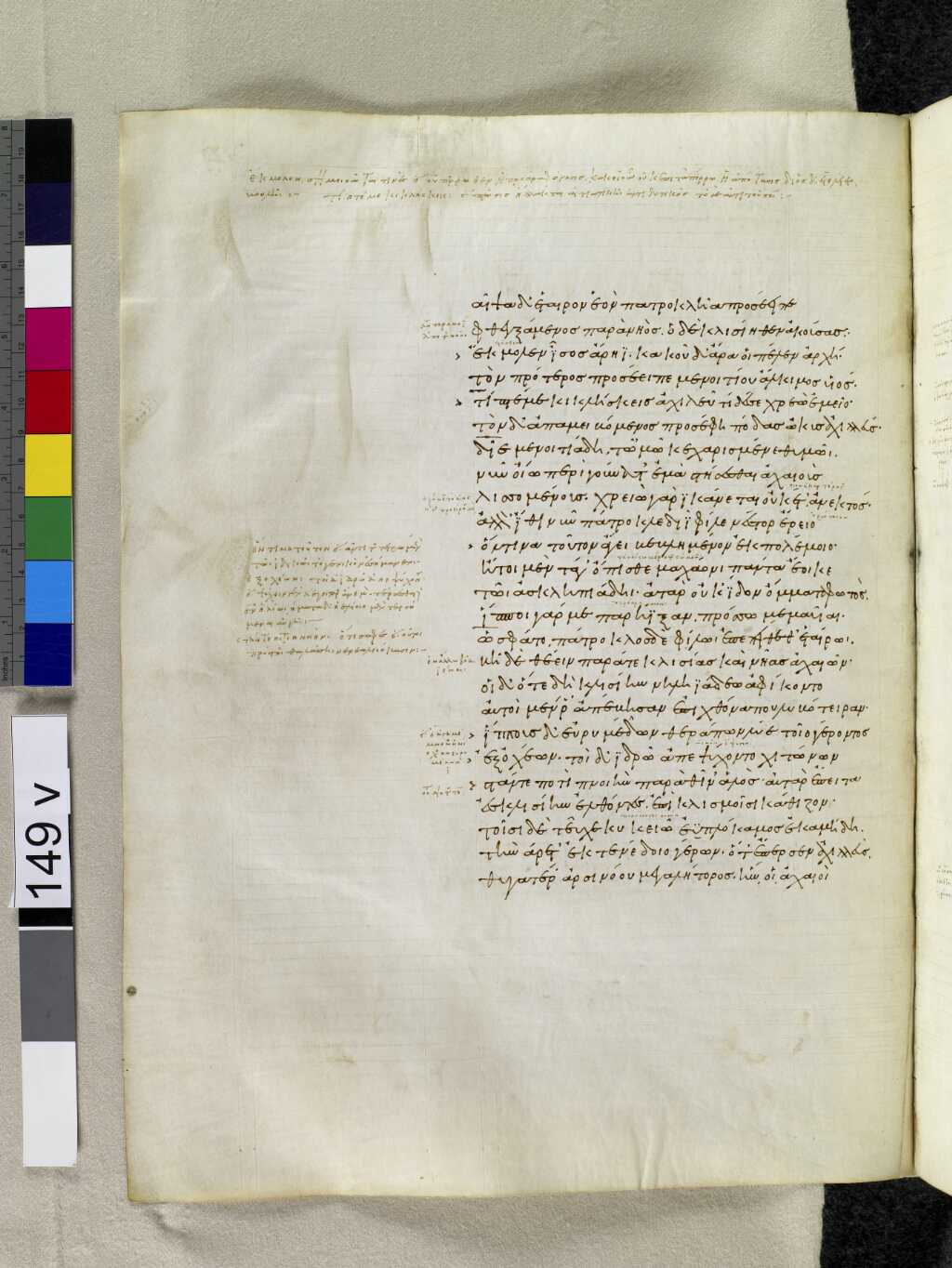
602αἶψα δʼ ἑταῖρον ἑὸν Πατροκλῆα προσέειπε 603φθεγξάμενος παρὰ νηός· ὃ δὲ κλισίηθεν ἀκούσας 604ἔκμολεν ἶσος Ἄρηϊ, κακοῦ δʼ ἄρα οἱ πέλεν ἀρχή. 605τὸν πρότερος προσέειπε Μενοιτίου ἄλκιμος υἱός· 606τίπτέ με κικλήσκεις Ἀχιλεῦ; τί δέ σε χρεὼ ἐμεῖο; 607τὸν δʼ ἀπαμειβόμενος προσέφη πόδας ὠκὺς Ἀχιλλεύς· 608δῖε Μενοιτιάδη τῷ ἐμῷ κεχαρισμένε θυμῷ 609νῦν ὀΐω περὶ γούνατʼ ἐμὰ στήσεσθαι Ἀχαιοὺς 610λισσομένους· χρειὼ γὰρ ἱκάνεται οὐκέτʼ ἀνεκτός. 611ἀλλʼ ἴθι νῦν Πάτροκλε Διῒ φίλε Νέστορʼ ἔρειο 612ὅν τινα τοῦτον ἄγει βεβλημένον ἐκ πολέμοιο· 613ἤτοι μὲν τά γʼ ὄπισθε Μαχάονι πάντα ἔοικε 614τῷ Ἀσκληπιάδῃ, ἀτὰρ οὐκ ἴδον ὄμματα φωτός· 615ἵπποι γάρ με παρήϊξαν πρόσσω μεμαυῖαι. 616ὣς φάτο, Πάτροκλος δὲ φίλῳ ἐπεπείθεθʼ ἑταίρῳ, 617βῆ δὲ θέειν παρά τε κλισίας καὶ νῆας Ἀχαιῶν. 618οἳ δʼ ὅτε δὴ κλισίην Νηληϊάδεω ἀφίκοντο, 619αὐτοὶ μέν ῥʼ ἀπέβησαν ἐπὶ χθόνα πουλυβότειραν, 620ἵππους δʼ Εὐρυμέδων θεράπων λύε τοῖο γέροντος 621ἐξ ὀχέων· τοὶ δʼ ἱδρῶ ἀπεψύχοντο χιτώνων 622στάντε ποτὶ πνοιὴν παρὰ θῖνʼ ἁλός· αὐτὰρ ἔπειτα 623ἐς κλισίην ἐλθόντες ἐπὶ κλισμοῖσι κάθιζον. 624τοῖσι δὲ τεῦχε κυκειῶ ἐϋπλόκαμος Ἑκαμήδη, 625τὴν ἄρετʼ ἐκ Τενέδοιο γέρων, ὅτε πέρσεν Ἀχιλλεύς, 626θυγατέρʼ Ἀρσινόου μεγαλήτορος, ἥν οἱ Ἀχαιοὶ
Then Cebriones seeing the Trojans in confusion said to Hector from his place beside him, “Hector, here are we two fighting on the extreme wing of the battle, while the other Trojans are in pell-mell rout, they and their horses. Ajax son of Telamon is driving them before him; I know him by the breadth of his shield: let us turn our chariot and horses thither, where horse and foot are fighting most desperately, and where the cry of battle is loudest.”
With this he lashed his goodly steeds, and when they felt the whip they drew the chariot full speed among the Achaeans and Trojans, over the bodies and shields of those that had fallen: the axle was bespattered with blood, and the rail round the car was covered with splashes both from the horses’ hoofs and from the tyres of the wheels. Hector tore his way through and flung himself into the thick of the fight, and his presence threw the Danaans into confusion, for his spear was not long idle; nevertheless though he went among the ranks with sword and spear, and throwing great stones, he avoided Ajax son of Telamon, for Jove would have been angry with him if he had fought a better man than himself.
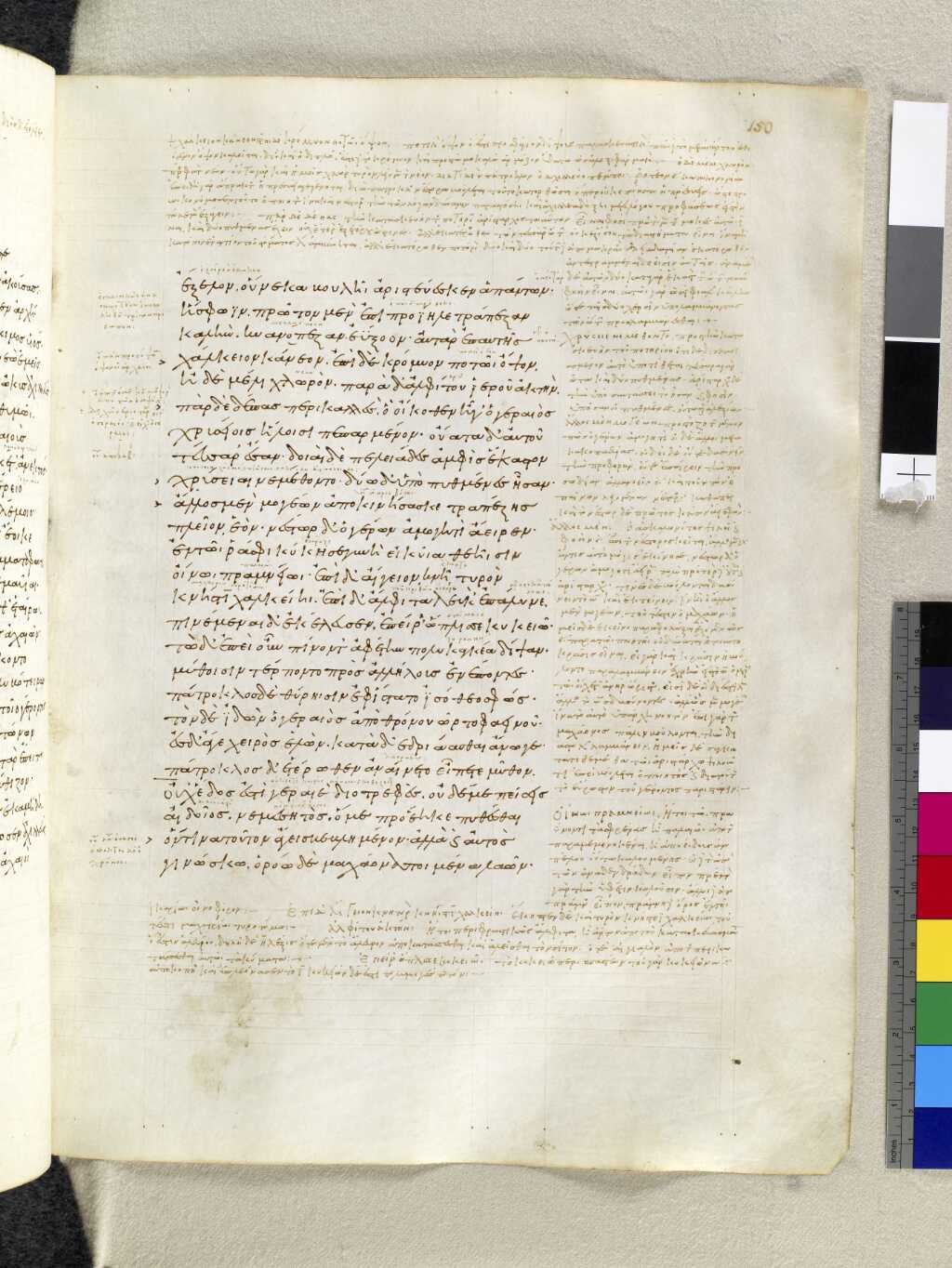
627ἔξελον οὕνεκα βουλῇ ἀριστεύεσκεν ἁπάντων. 628ἥ σφωϊν πρῶτον μὲν ἐπιπροΐηλε τράπεζαν 629καλὴν κυανόπεζαν ἐΰξοον, αὐτὰρ ἐπʼ αὐτῆς 630χάλκειον κάνεον, ἐπὶ δὲ κρόμυον ποτῷ ὄψον, 631ἠδὲ μέλι χλωρόν, παρὰ δʼ ἀλφίτου ἱεροῦ ἀκτήν, 632πὰρ δὲ δέπας περικαλλές, ὃ οἴκοθεν ἦγʼ ὁ γεραιός, 633χρυσείοις ἥλοισι πεπαρμένον· οὔατα δʼ αὐτοῦ 634τέσσαρʼ ἔσαν, δοιαὶ δὲ πελειάδες ἀμφὶς ἕκαστον 635χρύσειαι νεμέθοντο, δύω δʼ ὑπὸ πυθμένες ἦσαν. 636ἄλλος μὲν μογέων ἀποκινήσασκε τραπέζης 637πλεῖον ἐόν, Νέστωρ δʼ ὁ γέρων ἀμογητὶ ἄειρεν. 638ἐν τῷ ῥά σφι κύκησε γυνὴ ἐϊκυῖα θεῇσιν 639οἴνῳ Πραμνείῳ, ἐπὶ δʼ αἴγειον κνῆ τυρὸν 640κνήστι χαλκείῃ, ἐπὶ δʼ ἄλφιτα λευκὰ πάλυνε, 641πινέμεναι δʼ ἐκέλευσεν, ἐπεί ῥʼ ὥπλισσε κυκειῶ. 642τὼ δʼ ἐπεὶ οὖν πίνοντʼ ἀφέτην πολυκαγκέα δίψαν 643μύθοισιν τέρποντο πρὸς ἀλλήλους ἐνέποντες, 644Πάτροκλος δὲ θύρῃσιν ἐφίστατο ἰσόθεος φώς. 645τὸν δὲ ἰδὼν ὁ γεραιὸς ἀπὸ θρόνου ὦρτο φαεινοῦ, 646ἐς δʼ ἄγε χειρὸς ἑλών, κατὰ δʼ ἑδριάασθαι ἄνωγε. 647Πάτροκλος δʼ ἑτέρωθεν ἀναίνετο εἶπέ τε μῦθον· 648οὐχ ἕδος ἐστὶ γεραιὲ διοτρεφές, οὐδέ με πείσεις. 649αἰδοῖος νεμεσητὸς ὅ με προέηκε πυθέσθαι 650ὅν τινα τοῦτον ἄγεις βεβλημένον· ἀλλὰ καὶ αὐτὸς 651γιγνώσκω, ὁρόω δὲ Μαχάονα ποιμένα λαῶν.
Then father Jove from his high throne struck fear into the heart of Ajax, so that he stood there dazed and threw his shield behind him—looking fearfully at the throng of his foes as though he were some wild beast, and turning hither and thither but crouching slowly backwards. As peasants with their hounds chase a lion from their stockyard, and watch by night to prevent his carrying off the pick of their herd—he makes his greedy spring, but in vain, for the darts from many a strong hand fall thick around him, with burning brands that scare him for all his fury, and when morning comes he slinks foiled and angry away—even so did Ajax, sorely against his will, retreat angrily before the Trojans, fearing for the ships of the Achaeans. Or as some lazy ass that has had many a cudgel broken about his back, when he into a field begins eating the corn—boys beat him but he is too many for them, and though they lay about with their sticks they cannot hurt him; still when he has had his fill they at last drive him from the field—even so did the Trojans and their allies pursue great Ajax, ever smiting the middle of his shield with their darts. Now and again he would turn and show fight, keeping back the battalions of the Trojans, and then he would again retreat; but he prevented any of them from making his way to the ships. Single-handed he stood midway between the Trojans and Achaeans: the spears that sped from their hands stuck some of them in his mighty shield, while many, though thirsting for his blood, fell to the ground ere they could reach him to the wounding of his fair flesh.
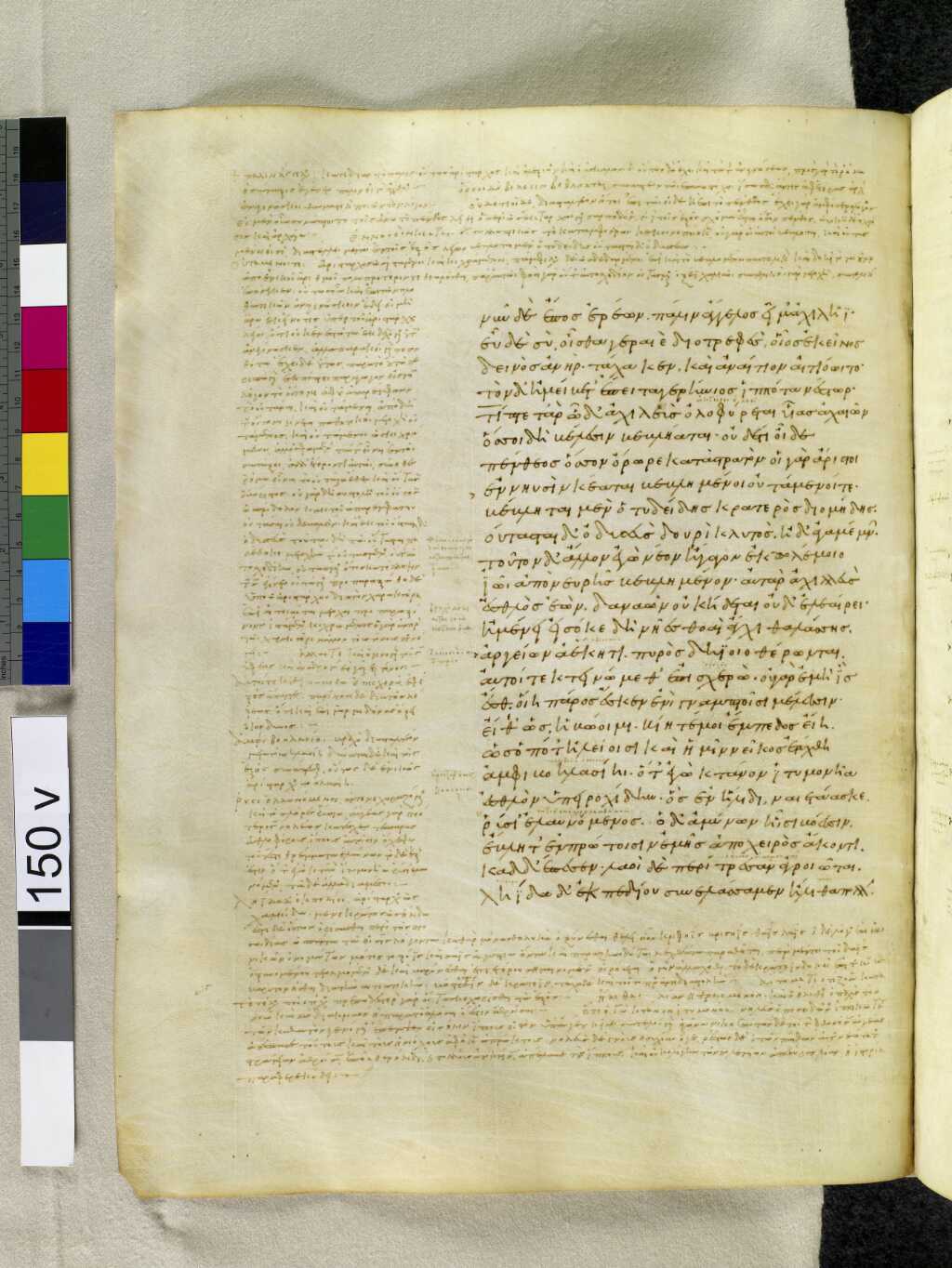
652νῦν δὲ ἔπος ἐρέων πάλιν ἄγγελος εἶμʼ Ἀχιλῆϊ. 653εὖ δὲ σὺ οἶσθα γεραιὲ διοτρεφές, οἷος ἐκεῖνος 654δεινὸς ἀνήρ· τάχα κεν καὶ ἀναίτιον αἰτιόῳτο. 655τὸν δʼ ἠμείβετʼ ἔπειτα Γερήνιος ἱππότα Νέστωρ· 656τίπτε τὰρ ὧδʼ Ἀχιλεὺς ὀλοφύρεται υἷας Ἀχαιῶν, 657ὅσσοι δὴ βέλεσιν βεβλήαται; οὐδέ τι οἶδε 658πένθεος, ὅσσον ὄρωρε κατὰ στρατόν· οἳ γὰρ ἄριστοι 659ἐν νηυσὶν κέαται βεβλημένοι οὐτάμενοί τε. 660βέβληται μὲν ὃ Τυδεΐδης κρατερὸς Διομήδης, 661οὔτασται δʼ Ὀδυσεὺς δουρὶ κλυτὸς ἠδʼ Ἀγαμέμνων· 662βέβληται δὲ καὶ Εὐρύπυλος κατὰ μηρὸν ὀϊστῷ· 663τοῦτον δʼ ἄλλον ἐγὼ νέον ἤγαγον ἐκ πολέμοιο 664ἰῷ ἀπὸ νευρῆς βεβλημένον. αὐτὰρ Ἀχιλλεὺς 665ἐσθλὸς ἐὼν Δαναῶν οὐ κήδεται οὐδʼ ἐλεαίρει. 666ἦ μένει εἰς ὅ κε δὴ νῆες θοαὶ ἄγχι θαλάσσης 667Ἀργείων ἀέκητι πυρὸς δηΐοιο θέρωνται, 668αὐτοί τε κτεινώμεθʼ ἐπισχερώ; οὐ γὰρ ἐμὴ ἲς 669ἔσθʼ οἵη πάρος ἔσκεν ἐνὶ γναμπτοῖσι μέλεσσιν. 670εἴθʼ ὣς ἡβώοιμι βίη δέ μοι ἔμπεδος εἴη 671ὡς ὁπότʼ Ἠλείοισι καὶ ἡμῖν νεῖκος ἐτύχθη 672ἀμφὶ βοηλασίῃ, ὅτʼ ἐγὼ κτάνον Ἰτυμονῆα 673ἐσθλὸν Ὑπειροχίδην, ὃς ἐν Ἤλιδι ναιετάασκε, 674ῥύσιʼ ἐλαυνόμενος· ὃ δʼ ἀμύνων ᾗσι βόεσσιν 675ἔβλητʼ ἐν πρώτοισιν ἐμῆς ἀπὸ χειρὸς ἄκοντι, 676κὰδ δʼ ἔπεσεν, λαοὶ δὲ περίτρεσαν ἀγροιῶται.
Now when Eurypylus the brave son of Euaemon saw that Ajax was being overpowered by the rain of arrows, he went up to him and hurled his spear. He struck Apisaon son of Phausius in the liver below the midriff, and laid him low. Eurypylus sprang upon him, and stripped the armour from his shoulders; but when Alexandrus saw him, he aimed an arrow at him which struck him in the right thigh; the arrow broke, but the point that was left in the wound dragged on the thigh; he drew back, therefore, under cover of his comrades to save his life, shouting as he did so to the Danaans, “My friends, princes and counsellors of the Argives, rally to the defence of Ajax who is being overpowered, and I doubt whether he will come out of the fight alive. Hither, then, to the rescue of great Ajax son of Telamon.”
Even so did he cry when he was wounded; thereon the others came near, and gathered round him, holding their shields upwards from their shoulders so as to give him cover. Ajax then made towards them, and turned round to stand at bay as soon as he had reached his men.
677ληΐδα δʼ ἐκ πεδίου συνελάσσαμεν ἤλιθα πολλὴν 678πεντήκοντα βοῶν ἀγέλας, τόσα πώεα οἰῶν, 679τόσσα συῶν συβόσια, τόσʼ αἰπόλια πλατέʼ αἰγῶν, 680ἵππους δὲ ξανθὰς ἑκατὸν καὶ πεντήκοντα 681πάσας θηλείας, πολλῇσι δὲ πῶλοι ὑπῆσαν. 682καὶ τὰ μὲν ἠλασάμεσθα Πύλον Νηλήϊον εἴσω 683ἐννύχιοι προτὶ ἄστυ· γεγήθει δὲ φρένα Νηλεύς, 684οὕνεκά μοι τύχε πολλὰ νέῳ πόλεμον δὲ κιόντι. 685κήρυκες δʼ ἐλίγαινον ἅμʼ ἠοῖ φαινομένηφι 686τοὺς ἴμεν οἷσι χρεῖος ὀφείλετʼ ἐν Ἤλιδι δίῃ· 687οἳ δὲ συναγρόμενοι Πυλίων ἡγήτορες ἄνδρες 688δαίτρευον· πολέσιν γὰρ Ἐπειοὶ χρεῖος ὄφειλον, 689ὡς ἡμεῖς παῦροι κεκακωμένοι ἐν Πύλῳ ἦμεν· 690ἐλθὼν γάρ ῥʼ ἐκάκωσε βίη Ἡρακληείη 691τῶν προτέρων ἐτέων, κατὰ δʼ ἔκταθεν ὅσσοι ἄριστοι· 692δώδεκα γὰρ Νηλῆος ἀμύμονος υἱέες ἦμεν· 693τῶν οἶος λιπόμην, οἳ δʼ ἄλλοι πάντες ὄλοντο. 694ταῦθʼ ὑπερηφανέοντες Ἐπειοὶ χαλκοχίτωνες 695ἡμέας ὑβρίζοντες ἀτάσθαλα μηχανόωντο. 696ἐκ δʼ ὃ γέρων ἀγέλην τε βοῶν καὶ πῶϋ μέγʼ οἰῶν 697εἵλετο κρινάμενος τριηκόσιʼ ἠδὲ νομῆας. 698καὶ γὰρ τῷ χρεῖος μέγʼ ὀφείλετʼ ἐν Ἤλιδι δίῃ 699τέσσαρες ἀθλοφόροι ἵπποι αὐτοῖσιν ὄχεσφιν 700ἐλθόντες μετʼ ἄεθλα· περὶ τρίποδος γὰρ ἔμελλον 701θεύσεσθαι· τοὺς δʼ αὖθι ἄναξ ἀνδρῶν Αὐγείας
Thus then did they fight as it were a flaming fire. Meanwhile the mares of Neleus, all in a lather with sweat, were bearing Nestor out of the fight, and with him Machaon shepherd of his people. Achilles saw and took note, for he was standing on the stern of his ship watching the hard stress and struggle of the fight. He called from the ship to his comrade Patroclus, who heard him in the tent and came out looking like Mars himself—here indeed was the beginning of the ill that presently befell him. “Why,” said he, “Achilles, do you call me? What do you want with me?” And Achilles answered, “Noble son of Menoetius, man after my own heart, I take it that I shall now have the Achaeans praying at my knees, for they are in great straits; go, Patroclus, and ask Nestor who it is that he is bearing away wounded from the field; from his back I should say it was Machaon son of Aesculapius, but I could not see his face for the horses went by me at full speed.”
Patroclus did as his dear comrade had bidden him, and set off running by the ships and tents of the Achaeans.
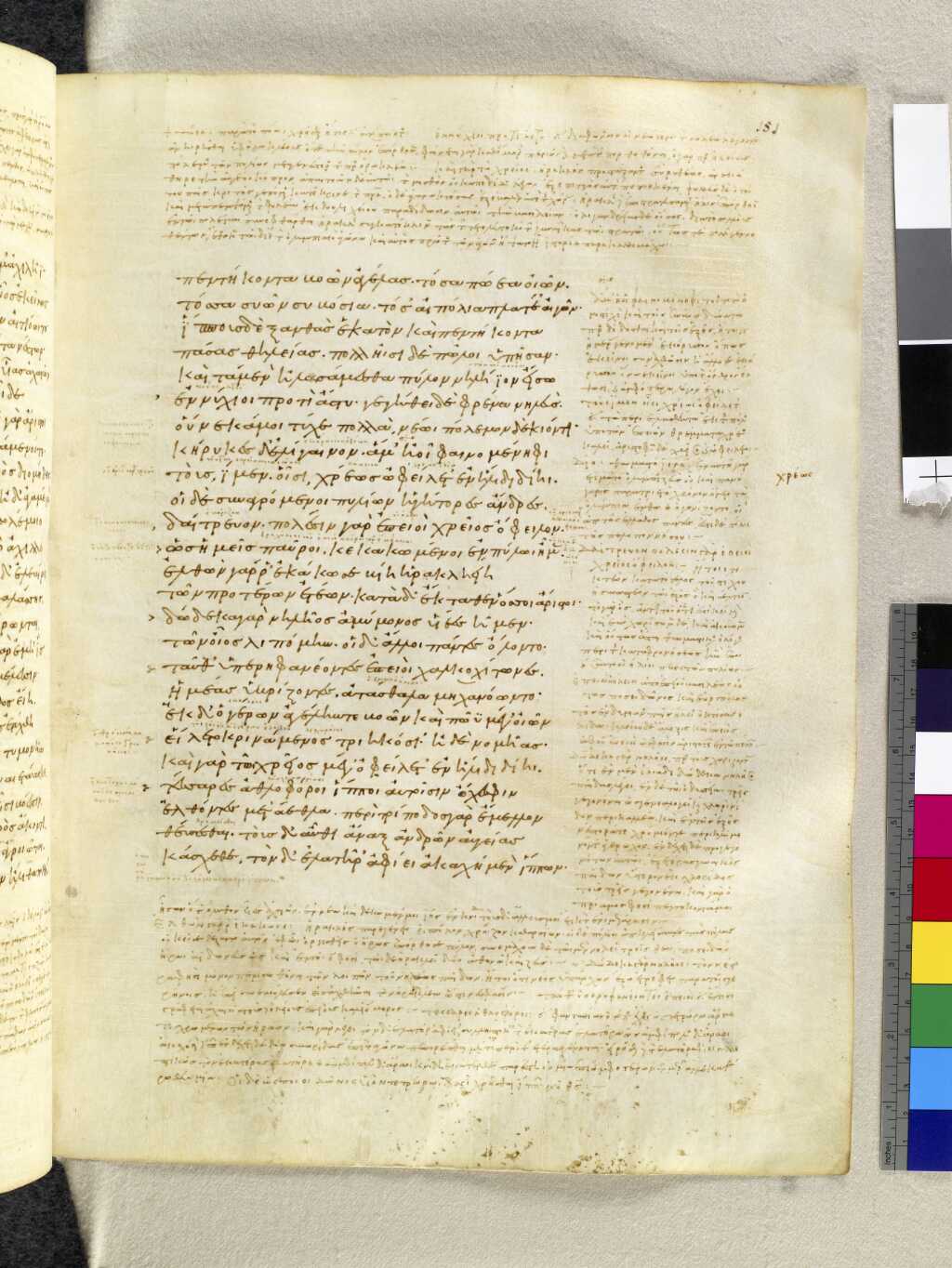
702κάσχεθε, τὸν δʼ ἐλατῆρʼ ἀφίει ἀκαχήμενον ἵππων. 703τῶν ὃ γέρων ἐπέων κεχολωμένος ἠδὲ καὶ ἔργων 704ἐξέλετʼ ἄσπετα πολλά· τὰ δʼ ἄλλʼ ἐς δῆμον ἔδωκε 705δαιτρεύειν, μή τίς οἱ ἀτεμβόμενος κίοι ἴσης. 706ἡμεῖς μὲν τὰ ἕκαστα διείπομεν, ἀμφί τε ἄστυ 707ἕρδομεν ἱρὰ θεοῖς· οἳ δὲ τρίτῳ ἤματι πάντες 708ἦλθον ὁμῶς αὐτοί τε πολεῖς καὶ μώνυχες ἵπποι 709πανσυδίῃ· μετὰ δέ σφι Μολίονε θωρήσσοντο 710παῖδʼ ἔτʼ ἐόντʼ, οὔ πω μάλα εἰδότε θούριδος ἀλκῆς. 711ἔστι δέ τις Θρυόεσσα πόλις αἰπεῖα κολώνη 712τηλοῦ ἐπʼ Ἀλφειῷ, νεάτη Πύλου ἠμαθόεντος· 713τὴν ἀμφεστρατόωντο διαρραῖσαι μεμαῶτες. 714ἀλλʼ ὅτε πᾶν πεδίον μετεκίαθον, ἄμμι δʼ Ἀθήνη 715ἄγγελος ἦλθε θέουσʼ ἀπʼ Ὀλύμπου θωρήσσεσθαι 716ἔννυχος, οὐδʼ ἀέκοντα Πύλον κάτα λαὸν ἄγειρεν 717ἀλλὰ μάλʼ ἐσσυμένους πολεμίζειν. οὐδέ με Νηλεὺς 718εἴα θωρήσσεσθαι, ἀπέκρυψεν δέ μοι ἵππους· 719οὐ γάρ πώ τί μʼ ἔφη ἴδμεν πολεμήϊα ἔργα. 720ἀλλὰ καὶ ὧς ἱππεῦσι μετέπρεπον ἡμετέροισι 721καὶ πεζός περ ἐών, ἐπεὶ ὧς ἄγε νεῖκος Ἀθήνη. 722ἔστι δέ τις ποταμὸς Μινυήϊος εἰς ἅλα βάλλων 723ἐγγύθεν Ἀρήνης, ὅθι μείναμεν Ἠῶ δῖαν 724ἱππῆες Πυλίων, τὰ δʼ ἐπέρρεον ἔθνεα πεζῶν. 725ἔνθεν πανσυδίῃ σὺν τεύχεσι θωρηχθέντες 726ἔνδιοι ἱκόμεσθʼ ἱερὸν ῥόον Ἀλφειοῖο.
When Nestor and Machaon had reached the tents of the son of Neleus, they dismounted, and an esquire, Eurymedon, took the horses from the chariot. The pair then stood in the breeze by the seaside to dry the sweat from their shirts, and when they had so done they came inside and took their seats. Fair Hecamede, whom Nestor had had awarded to him from Tenedos when Achilles took it, mixed them a mess; she was daughter of wise Arsinous, and the Achaeans had given her to Nestor because he excelled all of them in counsel. First she set for them a fair and well-made table that had feet of cyanus; on it there was a vessel of bronze and an onion to give relish to the drink, with honey and cakes of barley-meal. There was also a cup of rare workmanship which the old man had brought with him from home, studded with bosses of gold; it had four handles, on each of which there were two golden doves feeding, and it had two feet to stand on. Any one else would hardly have been able to lift it from the table when it was full, but Nestor could do so quite easily. In this the woman, as fair as a goddess, mixed them a mess with Pramnian wine; she grated goat’s milk cheese into it with a bronze grater, threw in a handful of white barley-meal, and having thus prepared the mess she bade them drink it. When they had done so and had thus quenched their thirst, they fell talking with one another, and at this moment Patroclus appeared at the door.
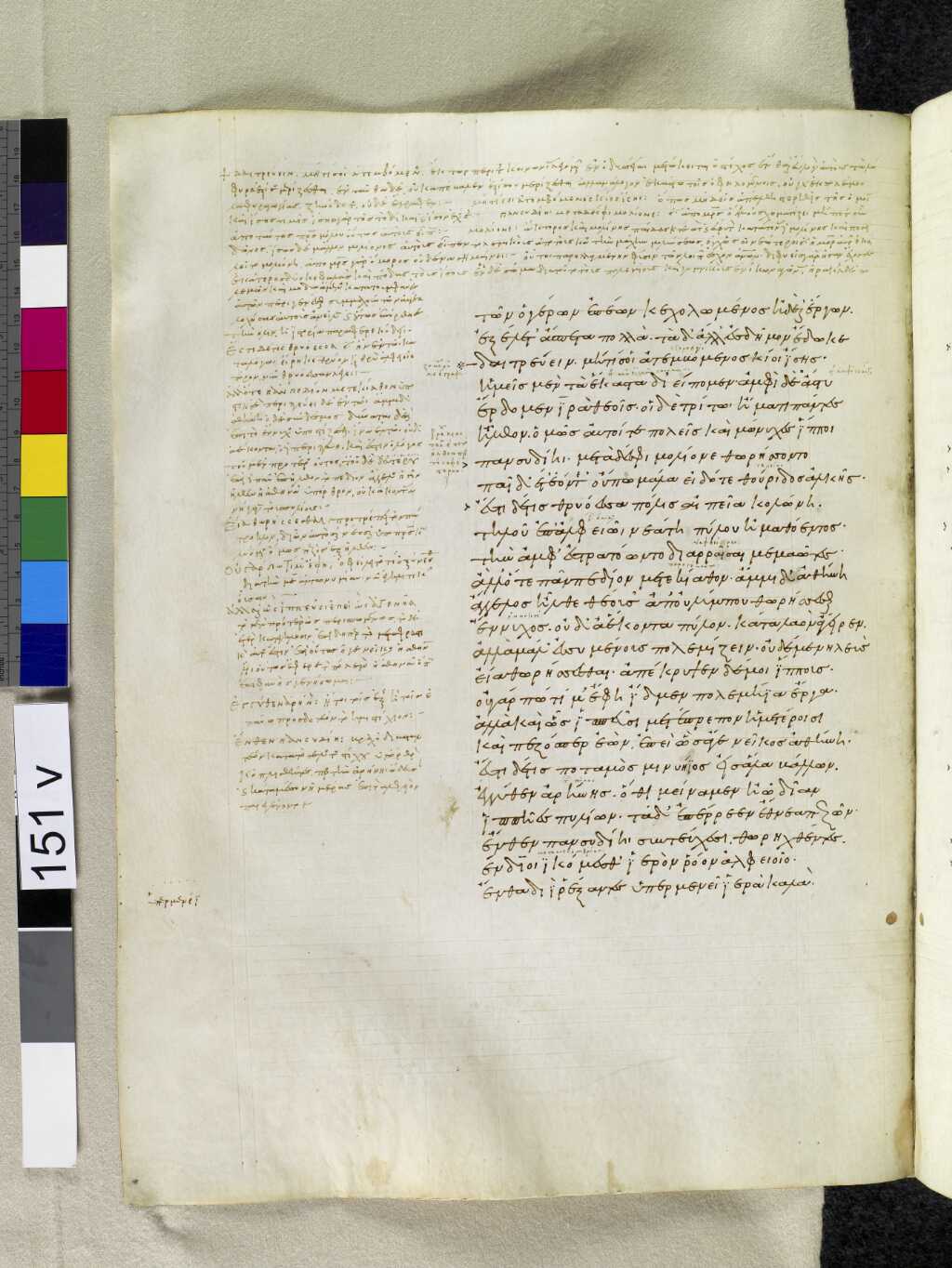
727ἔνθα Διὶ ῥέξαντες ὑπερμενεῖ ἱερὰ καλά, 728ταῦρον δʼ Ἀλφειῷ, ταῦρον δὲ Ποσειδάωνι, 729αὐτὰρ Ἀθηναίη γλαυκώπιδι βοῦν ἀγελαίην, 730δόρπον ἔπειθʼ ἑλόμεσθα κατὰ στρατὸν ἐν τελέεσσι, 731καὶ κατεκοιμήθημεν ἐν ἔντεσιν οἷσιν ἕκαστος 732ἀμφὶ ῥοὰς ποταμοῖο. ἀτὰρ μεγάθυμοι Ἐπειοὶ 733ἀμφέσταν δὴ ἄστυ διαρραῖσαι μεμαῶτες· 734ἀλλά σφι προπάροιθε φάνη μέγα ἔργον Ἄρηος· 735εὖτε γὰρ ἠέλιος φαέθων ὑπερέσχεθε γαίης, 736συμφερόμεσθα μάχῃ Διί τʼ εὐχόμενοι καὶ Ἀθήνῃ. 737ἀλλʼ ὅτε δὴ Πυλίων καὶ Ἐπειῶν ἔπλετο νεῖκος, 738πρῶτος ἐγὼν ἕλον ἄνδρα, κόμισσα δὲ μώνυχας ἵππους, 739Μούλιον αἰχμητήν· γαμβρὸς δʼ ἦν Αὐγείαο, 740πρεσβυτάτην δὲ θύγατρʼ εἶχε ξανθὴν Ἀγαμήδην, 741ἣ τόσα φάρμακα ᾔδη ὅσα τρέφει εὐρεῖα χθών. 742τὸν μὲν ἐγὼ προσιόντα βάλον χαλκήρεϊ δουρί, 743ἤριπε δʼ ἐν κονίῃσιν· ἐγὼ δʼ ἐς δίφρον ὀρούσας 744στῆν ῥα μετὰ προμάχοισιν· ἀτὰρ μεγάθυμοι Ἐπειοὶ 745ἔτρεσαν ἄλλυδις ἄλλος, ἐπεὶ ἴδον ἄνδρα πεσόντα 746ἡγεμόνʼ ἱππήων, ὃς ἀριστεύεσκε μάχεσθαι. 747αὐτὰρ ἐγὼν ἐπόρουσα κελαινῇ λαίλαπι ἶσος, 748πεντήκοντα δʼ ἕλον δίφρους, δύο δʼ ἀμφὶς ἕκαστον 749φῶτες ὀδὰξ ἕλον οὖδας ἐμῷ ὑπὸ δουρὶ δαμέντες. 750καί νύ κεν Ἀκτορίωνε Μολίονε παῖδʼ ἀλάπαξα, 751εἰ μή σφωε πατὴρ εὐρὺ κρείων ἐνοσίχθων
When the old man saw him he sprang from his seat, seized his hand, led him into the tent, and bade him take his place among them; but Patroclus stood where he was and said, “Noble sir, I may not stay, you cannot persuade me to come in; he that sent me is not one to be trifled with, and he bade me ask who the wounded man was whom you were bearing away from the field. I can now see for myself that he is Machaon, shepherd of his people. I must go back and tell Achilles. You, sir, know what a terrible man he is, and how ready to blame even where no blame should lie.”
And Nestor answered, “Why should Achilles care to know how many of the Achaeans may be wounded? He recks not of the dismay that reigns in our host; our most valiant chieftains lie disabled, brave Diomed, son of Tydeus, is wounded; so are Ulysses and Agamemnon; Eurypylus has been hit with an arrow in the thigh, and I have just been bringing this man from the field—he too wounded with an arrow. Nevertheless, Achilles, so valiant though he be, cares not and knows no ruth. Will he wait till the ships, do what we may, are in a blaze, and we perish one upon the other? As for me, I have no strength nor stay in me any longer; would that I were still young and strong as in the days when there was a fight between us and the men of Elis about some cattle-raiding. I then killed Itymoneus, the valiant son of Hypeirochus, a dweller in Elis, as I was driving in the spoil; he was hit by a dart thrown by my hand while fighting in the front rank in defence of his cows, so he fell and the country people around him were in great fear. We drove off a vast quantity of booty from the plain, fifty herds of cattle and as many flocks of sheep; fifty droves also of pigs, and as many wide-spreading flocks of goats. Of horses, moreover, we seized a hundred and fifty, all of them mares, and many had foals running with them. All these did we drive by night to Pylus, the city of Neleus, taking them within the city; and the heart of Neleus was glad in that I had taken so much, though it was the first time I had ever been in the field. At daybreak the heralds went round crying that all in Elis to whom there was a debt owing should come; and the leading Pylians assembled to divide the spoils. There were many to whom the Epeans owed chattels, for we men of Pylus were few and had been oppressed with wrong; in former years Hercules had come, and had laid his hand heavy upon us, so that all our best men had perished. Neleus had had twelve sons, but I alone was left; the others had all been killed. The Epeans presuming upon all this had looked down upon us and had done us much evil. My father chose a herd of cattle and a great flock of sheep—three hundred in all—and he took their shepherds with him, for there was a great debt due to him in Elis, to wit four horses, winners of prizes. They and their chariots with them had gone to the games and were to run for a tripod, but King Augeas took them, and sent back their driver grieving for the loss of his horses. Neleus was angered by what he had both said and done, and took great value in return, but he divided the rest, that no man might have less than his full share.
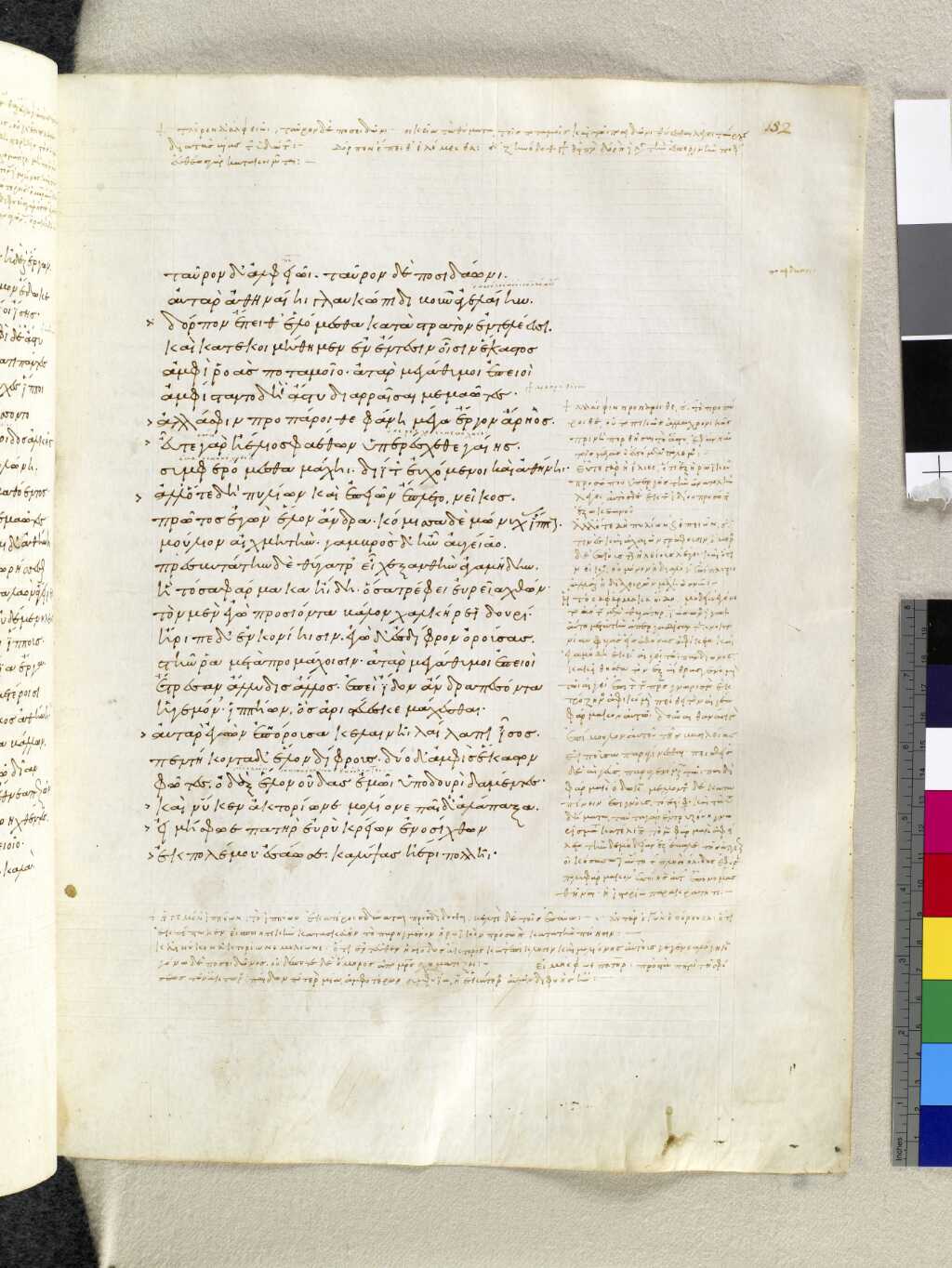
752ἐκ πολέμου ἐσάωσε καλύψας ἠέρι πολλῇ. 753ἔνθα Ζεὺς Πυλίοισι μέγα κράτος ἐγγυάλιξε· 754τόφρα γὰρ οὖν ἑπόμεσθα διὰ σπιδέος πεδίοιο 755κτείνοντές τʼ αὐτοὺς ἀνά τʼ ἔντεα καλὰ λέγοντες, 756ὄφρʼ ἐπὶ Βουπρασίου πολυπύρου βήσαμεν ἵππους 757πέτρης τʼ Ὠλενίης, καὶ Ἀλησίου ἔνθα κολώνη 758κέκληται· ὅθεν αὖτις ἀπέτραπε λαὸν Ἀθήνη. 759ἔνθʼ ἄνδρα κτείνας πύματον λίπον· αὐτὰρ Ἀχαιοὶ 760ἂψ ἀπὸ Βουπρασίοιο Πύλονδʼ ἔχον ὠκέας ἵππους, 761πάντες δʼ εὐχετόωντο θεῶν Διὶ Νέστορί τʼ ἀνδρῶν. 762ὣς ἔον, εἴ ποτʼ ἔον γε, μετʼ ἀνδράσιν. αὐτὰρ Ἀχιλλεὺς 763οἶος τῆς ἀρετῆς ἀπονήσεται· ἦ τέ μιν οἴω 764πολλὰ μετακλαύσεσθαι ἐπεί κʼ ἀπὸ λαὸς ὄληται. 765ὦ πέπον ἦ μὲν σοί γε Μενοίτιος ὧδʼ ἐπέτελλεν 766ἤματι τῷ ὅτε σʼ ἐκ Φθίης Ἀγαμέμνονι πέμπε, 767νῶϊ δέ τʼ ἔνδον ἐόντες ἐγὼ καὶ δῖος Ὀδυσσεὺς 768πάντα μάλʼ ἐν μεγάροις ἠκούομεν ὡς ἐπέτελλε. 769Πηλῆος δʼ ἱκόμεσθα δόμους εὖ ναιετάοντας 770λαὸν ἀγείροντες κατʼ Ἀχαιΐδα πουλυβότειραν. 771ἔνθα δʼ ἔπειθʼ ἥρωα Μενοίτιον εὕρομεν ἔνδον 772ἠδὲ σέ, πὰρ δʼ Ἀχιλῆα· γέρων δʼ ἱππηλάτα Πηλεὺς 773πίονα μηρία καῖε βοὸς Διὶ τερπικεραύνῳ 774αὐλῆς ἐν χόρτῳ· ἔχε δὲ χρύσειον ἄλεισον 775σπένδων αἴθοπα οἶνον ἐπʼ αἰθομένοις ἱεροῖσι. 776σφῶϊ μὲν ἀμφὶ βοὸς ἕπετον κρέα, νῶϊ δʼ ἔπειτα
“Thus did we order all things, and offer sacrifices to the gods throughout the city; but three days afterwards the Epeans came in a body, many in number, they and their chariots, in full array, and with them the two Moliones in their armour, though they were still lads and unused to fighting. Now there is a certain town, Thryoessa, perched upon a rock on the river Alpheus, the border city of Pylus. This they would destroy, and pitched their camp about it, but when they had crossed their whole plain, Minerva darted down by night from Olympus and bade us set ourselves in array; and she found willing soldiers in Pylos, for the men meant fighting. Neleus would not let me arm, and hid my horses, for he said that as yet I could know nothing about war; nevertheless Minerva so ordered the fight that, all on foot as I was, I fought among our mounted forces and vied with the foremost of them. There is a river Minyeius that falls into the sea near Arene, and there they that were mounted (and I with them) waited till morning, when the companies of foot soldiers came up with us in force. Thence in full panoply and equipment we came towards noon to the sacred waters of the Alpheus, and there we offered victims to almighty Jove, with a bull to Alpheus, another to Neptune, and a herd-heifer to Minerva. After this we took supper in our companies, and laid us down to rest each in his armour by the river.
“The Epeans were beleaguering the city and were determined to take it, but ere this might be there was a desperate fight in store for them. When the sun’s rays began to fall upon the earth we joined battle, praying to Jove and to Minerva, and when the fight had begun, I was the first to kill my man and take his horses—to wit the warrior Mulius. He was son-in-law to Augeas, having married his eldest daughter, golden-haired Agamede, who knew the virtues of every herb which grows upon the face of the earth. I speared him as he was coming towards me, and when he fell headlong in the dust, I sprang upon his chariot and took my place in the front ranks. The Epeans fled in all directions when they saw the captain of their horsemen (the best man they had) laid low, and I swept down on them like a whirlwind, taking fifty chariots—and in each of them two men bit the dust, slain by my spear. I should have even killed the two Moliones, sons of Actor, unless their real father, Neptune lord of the earthquake, had hidden them in a thick mist and borne them out of the fight. Thereon Jove vouchsafed the Pylians a great victory, for we chased them far over the plain, killing the men and bringing in their armour, till we had brought our horses to Buprasium, rich in wheat, and to the Olenian rock, with the hill that is called Alision, at which point Minerva turned the people back. There I slew the last man and left him; then the Achaeans drove their horses back from Buprasium to Pylos and gave thanks to Jove among the gods, and among mortal men to Nestor.
777στῆμεν ἐνὶ προθύροισι· ταφὼν δʼ ἀνόρουσεν Ἀχιλλεύς, 778ἐς δʼ ἄγε χειρὸς ἑλών, κατὰ δʼ ἑδριάασθαι ἄνωγε, 779ξείνιά τʼ εὖ παρέθηκεν, ἅ τε ξείνοις θέμις ἐστίν. 780αὐτὰρ ἐπεὶ τάρπημεν ἐδητύος ἠδὲ ποτῆτος, 781ἦρχον ἐγὼ μύθοιο κελεύων ὔμμʼ ἅμʼ ἕπεσθαι· 782σφὼ δὲ μάλʼ ἠθέλετον, τὼ δʼ ἄμφω πόλλʼ ἐπέτελλον. 783Πηλεὺς μὲν ᾧ παιδὶ γέρων ἐπέτελλʼ Ἀχιλῆϊ 784αἰὲν ἀριστεύειν καὶ ὑπείροχον ἔμμεναι ἄλλων· 785σοὶ δʼ αὖθʼ ὧδʼ ἐπέτελλε Μενοίτιος Ἄκτορος υἱός· 786τέκνον ἐμὸν γενεῇ μὲν ὑπέρτερός ἐστιν Ἀχιλλεύς, 787πρεσβύτερος δὲ σύ ἐσσι· βίῃ δʼ ὅ γε πολλὸν ἀμείνων. 788ἀλλʼ εὖ οἱ φάσθαι πυκινὸν ἔπος ἠδʼ ὑποθέσθαι 789καί οἱ σημαίνειν· ὃ δὲ πείσεται εἰς ἀγαθόν περ. 790ὣς ἐπέτελλʼ ὃ γέρων, σὺ δὲ λήθεαι· ἀλλʼ ἔτι καὶ νῦν 791ταῦτʼ εἴποις Ἀχιλῆϊ δαΐφρονι αἴ κε πίθηται. 792τίς δʼ οἶδʼ εἴ κέν οἱ σὺν δαίμονι θυμὸν ὀρίναις 793παρειπών; ἀγαθὴ δὲ παραίφασίς ἐστιν ἑταίρου. 794εἰ δέ τινα φρεσὶν ᾗσι θεοπροπίην ἀλεείνει 795καί τινά οἱ πὰρ Ζηνὸς ἐπέφραδε πότνια μήτηρ, 796ἀλλὰ σέ περ προέτω, ἅμα δʼ ἄλλος λαὸς ἑπέσθω 797Μυρμιδόνων, αἴ κέν τι φόως Δαναοῖσι γένηαι· 798καί τοι τεύχεα καλὰ δότω πόλεμον δὲ φέρεσθαι, 799αἴ κέ σε τῷ εἴσκοντες ἀπόσχωνται πολέμοιο 800Τρῶες, ἀναπνεύσωσι δʼ ἀρήϊοι υἷες Ἀχαιῶν 801τειρόμενοι· ὀλίγη δέ τʼ ἀνάπνευσις πολέμοιο.
“Such was I among my peers, as surely as ever was, but Achilles is for keeping all his valour for himself; bitterly will he rue it hereafter when the host is being cut to pieces. My good friend, did not Menoetius charge you thus, on the day when he sent you from Phthia to Agamemnon? Ulysses and I were in the house, inside, and heard all that he said to you; for we came to the fair house of Peleus while beating up recruits throughout all Achaea, and when we got there we found Menoetius and yourself, and Achilles with you. The old knight Peleus was in the outer court, roasting the fat thigh-bones of a heifer to Jove the lord of thunder; and he held a gold chalice in his hand from which he poured drink-offerings of wine over the burning sacrifice. You two were busy cutting up the heifer, and at that moment we stood at the gates, whereon Achilles sprang to his feet, led us by the hand into the house, placed us at table, and set before us such hospitable entertainment as guests expect. When we had satisfied ourselves with meat and drink, I said my say and urged both of you to join us. You were ready enough to do so, and the two old men charged you much and straitly. Old Peleus bade his son Achilles fight ever among the foremost and outvie his peers, while Menoetius the son of Actor spoke thus to you: ‘My son,’ said he, ‘Achilles is of nobler birth than you are, but you are older than he, though he is far the better man of the two. Counsel him wisely, guide him in the right way, and he will follow you to his own profit.’ Thus did your father charge you, but you have forgotten; nevertheless, even now, say all this to Achilles if he will listen to you. Who knows but with heaven’s help you may talk him over, for it is good to take a friend’s advice. If, however, he is fearful about some oracle, or if his mother has told him something from Jove, then let him send you, and let the rest of the Myrmidons follow with you, if perchance you may bring light and saving to the Danaans. And let him send you into battle clad in his own armour, that the Trojans may mistake you for him and leave off fighting; the sons of the Achaeans may thus have time to get their breath, for they are hard pressed and there is little breathing time in battle. You, who are fresh, might easily drive a tired enemy back to his walls and away from the tents and ships.”
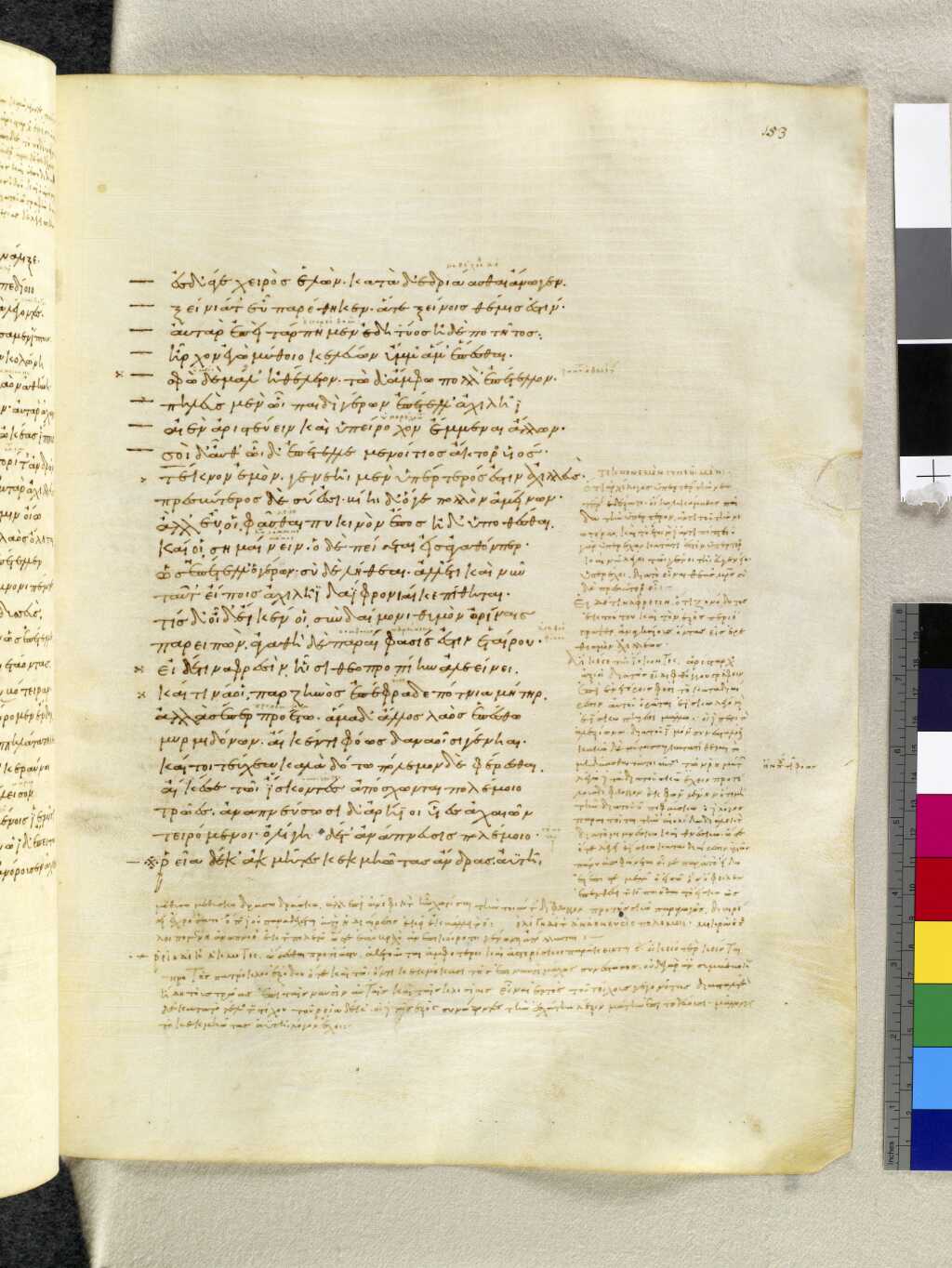
802ῥεῖα δέ κʼ ἀκμῆτες κεκμηότας ἄνδρας ἀϋτῇ 803ὤσαισθε προτὶ ἄστυ νεῶν ἄπο καὶ κλισιάων. 804ὣς φάτο, τῷ δʼ ἄρα θυμὸν ἐνὶ στήθεσσιν ὄρινε, 805βῆ δὲ θέειν παρὰ νῆας ἐπʼ Αἰακίδην Ἀχιλῆα. 806ἀλλʼ ὅτε δὴ κατὰ νῆας Ὀδυσσῆος θείοιο 807ἷξε θέων Πάτροκλος, ἵνά σφʼ ἀγορή τε θέμις τε 808ἤην, τῇ δὴ καί σφι θεῶν ἐτετεύχατο βωμοί, 809ἔνθά οἱ Εὐρύπυλος βεβλημένος ἀντεβόλησε 810διογενὴς Εὐαιμονίδης κατὰ μηρὸν ὀϊστῷ 811σκάζων ἐκ πολέμου· κατὰ δὲ νότιος ῥέεν ἱδρὼς 812ὤμων καὶ κεφαλῆς, ἀπὸ δʼ ἕλκεος ἀργαλέοιο 813αἷμα μέλαν κελάρυζε· νόος γε μὲν ἔμπεδος ἦεν. 814τὸν δὲ ἰδὼν ᾤκτειρε Μενοιτίου ἄλκιμος υἱός, 815καί ῥʼ ὀλοφυρόμενος ἔπεα πτερόεντα προσηύδα· 816ἆ δειλοὶ Δαναῶν ἡγήτορες ἠδὲ μέδοντες 817ὣς ἄρʼ ἐμέλλετε τῆλε φίλων καὶ πατρίδος αἴης 818ἄσειν ἐν Τροίῃ ταχέας κύνας ἀργέτι δημῷ. 819ἀλλʼ ἄγε μοι τόδε εἰπὲ διοτρεφὲς Εὐρύπυλʼ ἥρως, 820ἤ ῥʼ ἔτι που σχήσουσι πελώριον Ἕκτορʼ Ἀχαιοί, 821ἦ ἤδη φθίσονται ὑπʼ αὐτοῦ δουρὶ δαμέντες; 822τὸν δʼ αὖτʼ Εὐρύπυλος βεβλημένος ἀντίον ηὔδα· 823οὐκέτι διογενὲς Πατρόκλεες ἄλκαρ Ἀχαιῶν 824ἔσσεται, ἀλλʼ ἐν νηυσὶ μελαίνῃσιν πεσέονται. 825οἳ μὲν γὰρ δὴ πάντες, ὅσοι πάρος ἦσαν ἄριστοι, 826ἐν νηυσὶν κέαται βεβλημένοι οὐτάμενοί τε
With these words he moved the heart of Patroclus, who set off running by the line of the ships to Achilles, descendant of Aeacus. When he had got as far as the ships of Ulysses, where was their place of assembly and court of justice, with their altars dedicated to the gods, Eurypylus son of Euaemon, met him, wounded in the thigh with an arrow, and limping out of the fight. Sweat rained from his head and shoulders, and black blood welled from his cruel wound, but his mind did not wander. The son of Menoetius when he saw him had compassion upon him and spoke piteously saying, “O unhappy princes and counsellors of the Danaans, are you then doomed to feed the hounds of Troy with your fat, far from your friends and your native land? Say, noble Eurypylus, will the Achaeans be able to hold great Hector in check, or will they fall now before his spear?”
Wounded Eurypylus made answer, “Noble Patroclus, there is no hope left for the Achaeans but they will perish at their ships. All they that were princes among us are lying struck down and wounded at the hands of the Trojans, who are waxing stronger and stronger. But save me and take me to your ship; cut out the arrow from my thigh; wash the black blood from off it with warm water, and lay upon it those gracious herbs which, so they say, have been shown you by Achilles, who was himself shown them by Chiron, most righteous of all the centaurs. For of the physicians Podalirius and Machaon, I hear that the one is lying wounded in his tent and is himself in need of healing, while the other is fighting the Trojans upon the plain.”
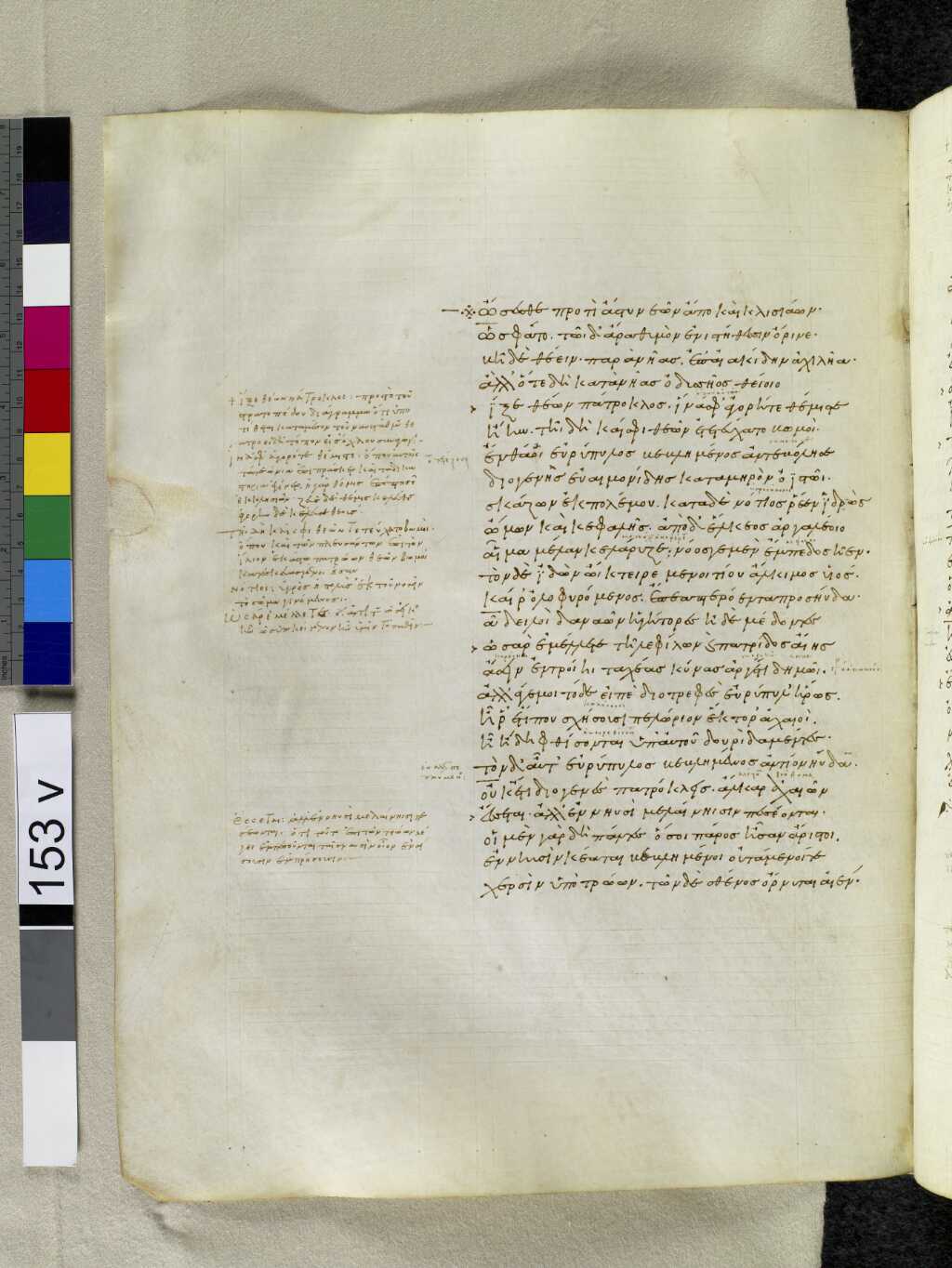
827χερσὶν ὕπο Τρώων· τῶν δὲ σθένος ὄρνυται αἰέν. 828ἀλλʼ ἐμὲ μὲν σὺ σάωσον ἄγων ἐπὶ νῆα μέλαιναν, 829μηροῦ δʼ ἔκταμʼ ὀϊστόν, ἀπʼ αὐτοῦ δʼ αἷμα κελαινὸν 830νίζʼ ὕδατι λιαρῷ, ἐπὶ δʼ ἤπια φάρμακα πάσσε 831ἐσθλά, τά σε προτί φασιν Ἀχιλλῆος δεδιδάχθαι, 832ὃν Χείρων ἐδίδαξε δικαιότατος Κενταύρων. 833ἰητροὶ μὲν γὰρ Ποδαλείριος ἠδὲ Μαχάων 834τὸν μὲν ἐνὶ κλισίῃσιν ὀΐομαι ἕλκος ἔχοντα 835χρηΐζοντα καὶ αὐτὸν ἀμύμονος ἰητῆρος 836κεῖσθαι· ὃ δʼ ἐν πεδίῳ Τρώων μένει ὀξὺν Ἄρηα. 837τὸν δʼ αὖτε προσέειπε Μενοιτίου ἄλκιμος υἱός· 838πῶς τὰρ ἔοι τάδε ἔργα; τί ῥέξομεν Εὐρύπυλʼ ἥρως; 839ἔρχομαι ὄφρʼ Ἀχιλῆϊ δαΐφρονι μῦθον ἐνίσπω 840ὃν Νέστωρ ἐπέτελλε Γερήνιος οὖρος Ἀχαιῶν· 841ἀλλʼ οὐδʼ ὧς περ σεῖο μεθήσω τειρομένοιο. 842ἦ, καὶ ὑπὸ στέρνοιο λαβὼν ἄγε ποιμένα λαῶν 843ἐς κλισίην· θεράπων δὲ ἰδὼν ὑπέχευε βοείας. 844ἔνθά μιν ἐκτανύσας ἐκ μηροῦ τάμνε μαχαίρῃ 845ὀξὺ βέλος περιπευκές, ἀπʼ αὐτοῦ δʼ αἷμα κελαινὸν 846νίζʼ ὕδατι λιαρῷ, ἐπὶ δὲ ῥίζαν βάλε πικρὴν 847χερσὶ διατρίψας ὀδυνήφατον, ἥ οἱ ἁπάσας 848ἔσχʼ ὀδύνας· τὸ μὲν ἕλκος ἐτέρσετο, παύσατο δʼ αἷμα.
“Hero Eurypylus,” replied the brave son of Menoetius, “how may these things be? What can I do? I am on my way to bear a message to noble Achilles from Nestor of Gerene, bulwark of the Achaeans, but even so I will not be unmindful of your distress.”
With this he clasped him round the middle and led him into the tent, and a servant, when he saw him, spread bullock-skins on the ground for him to lie on. He laid him at full length and cut out the sharp arrow from his thigh; he washed the black blood from the wound with warm water; he then crushed a bitter herb, rubbing it between his hands, and spread it upon the wound; this was a virtuous herb which killed all pain; so the wound presently dried and the blood left off flowing.
Cite
Source & Cross-References
- Source text: Venetus A (10th c.) via Homer Multitext IIIF + Perseus Greek + Butler English (PG #2199) — view original
- Critical edition: Munro & Allen (Perseus Digital Library)
← previous · → next · v cycle view · l back to library