The Iliad, Book 12
Introduction
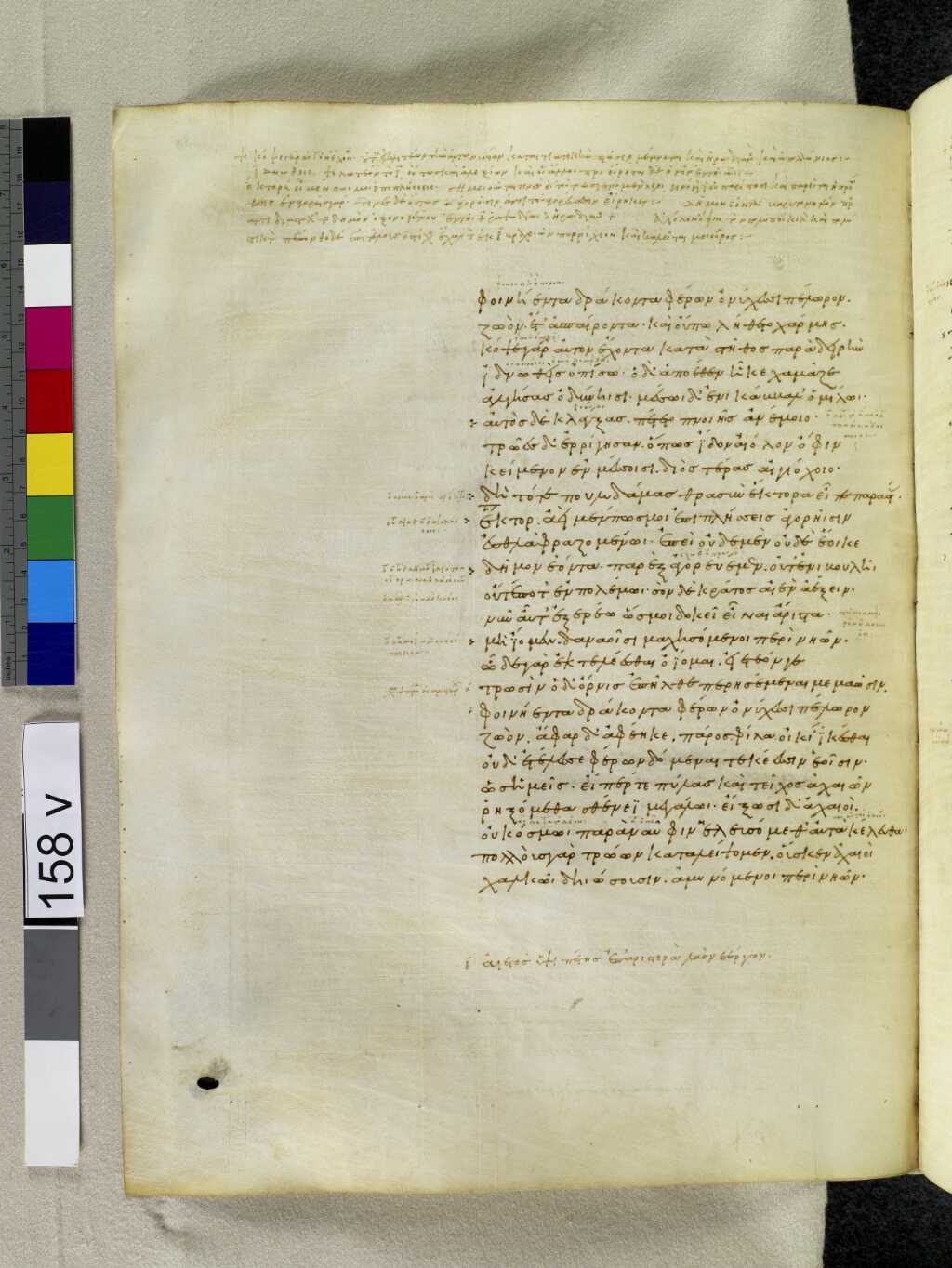
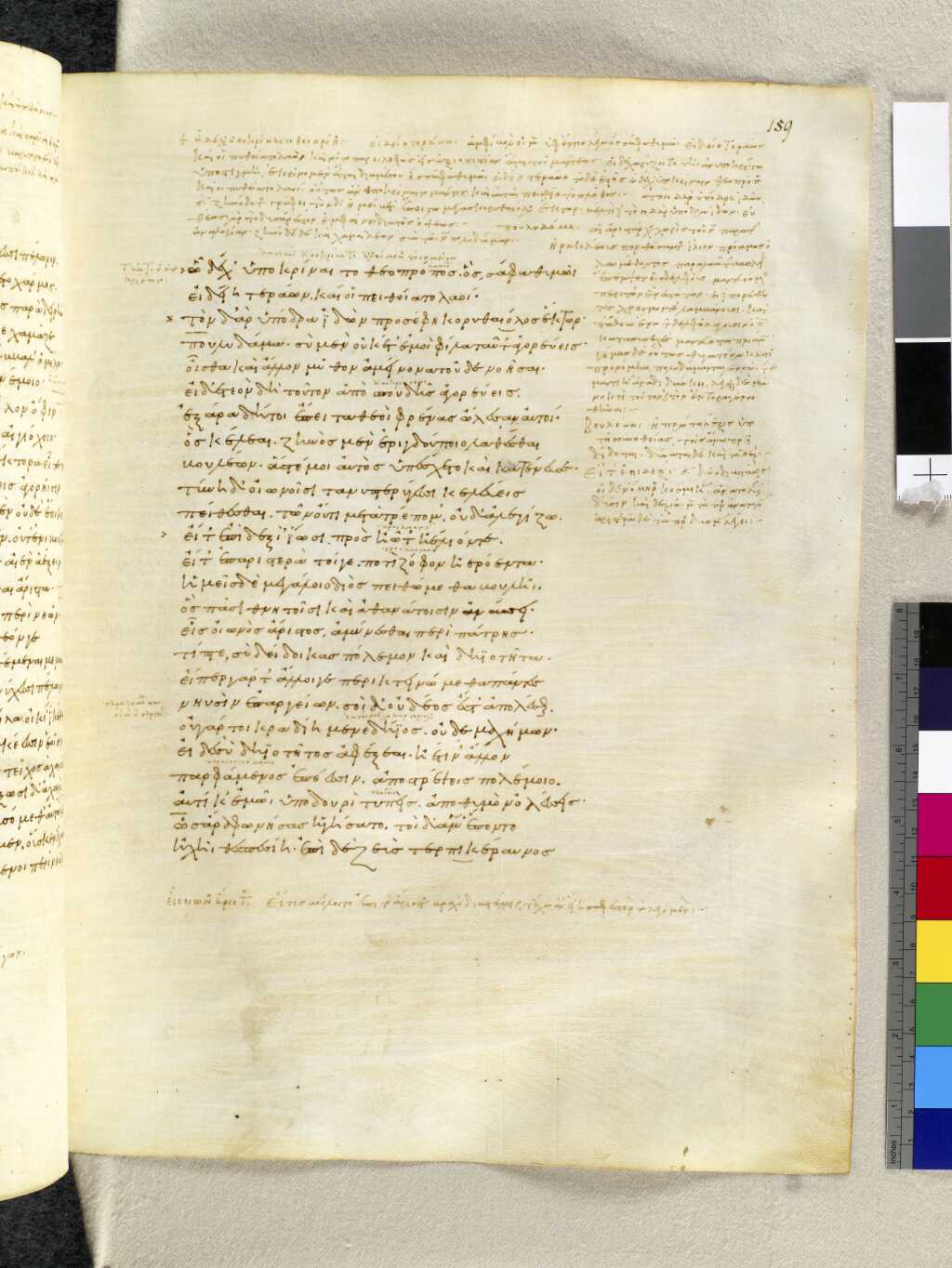
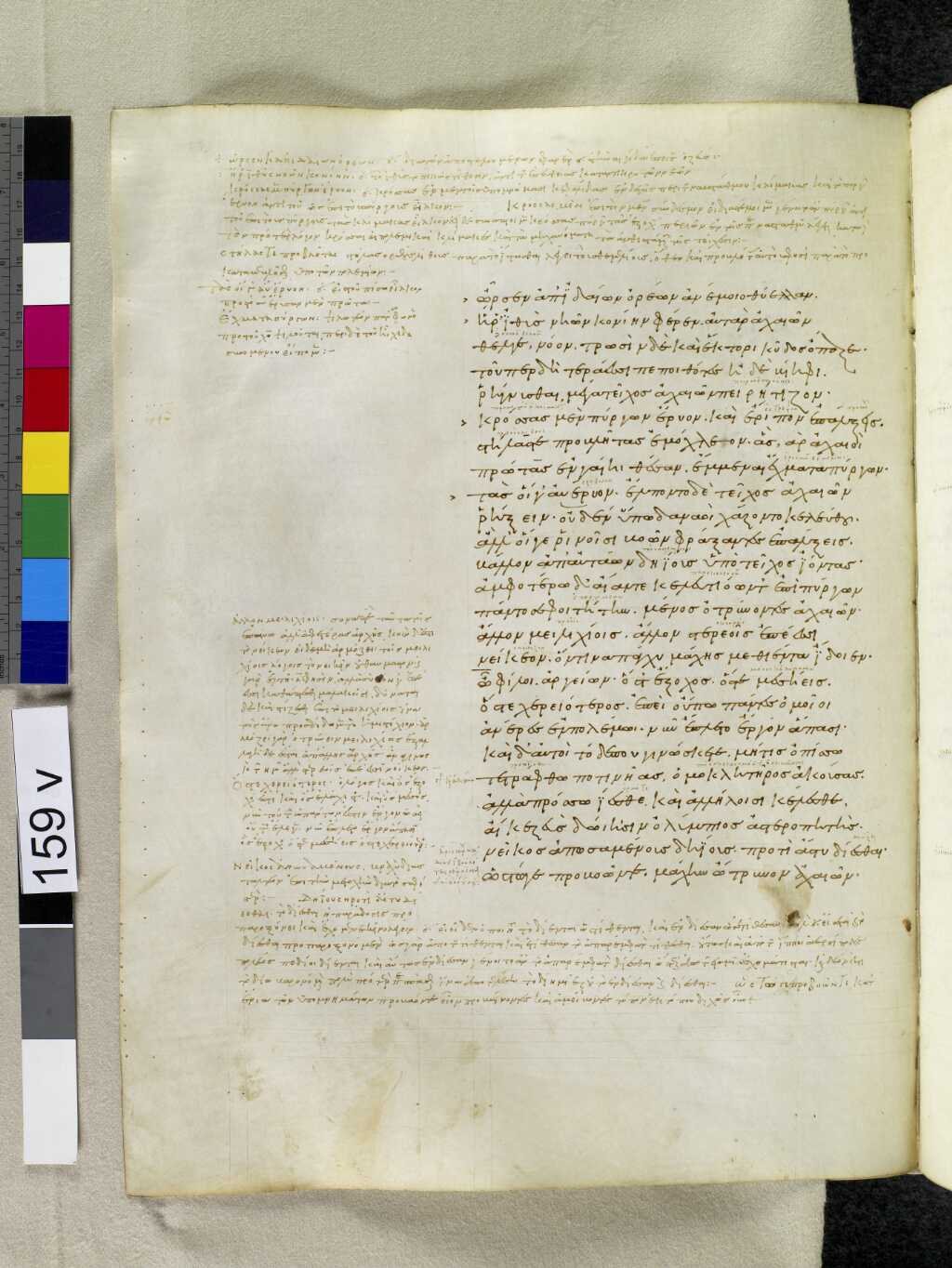
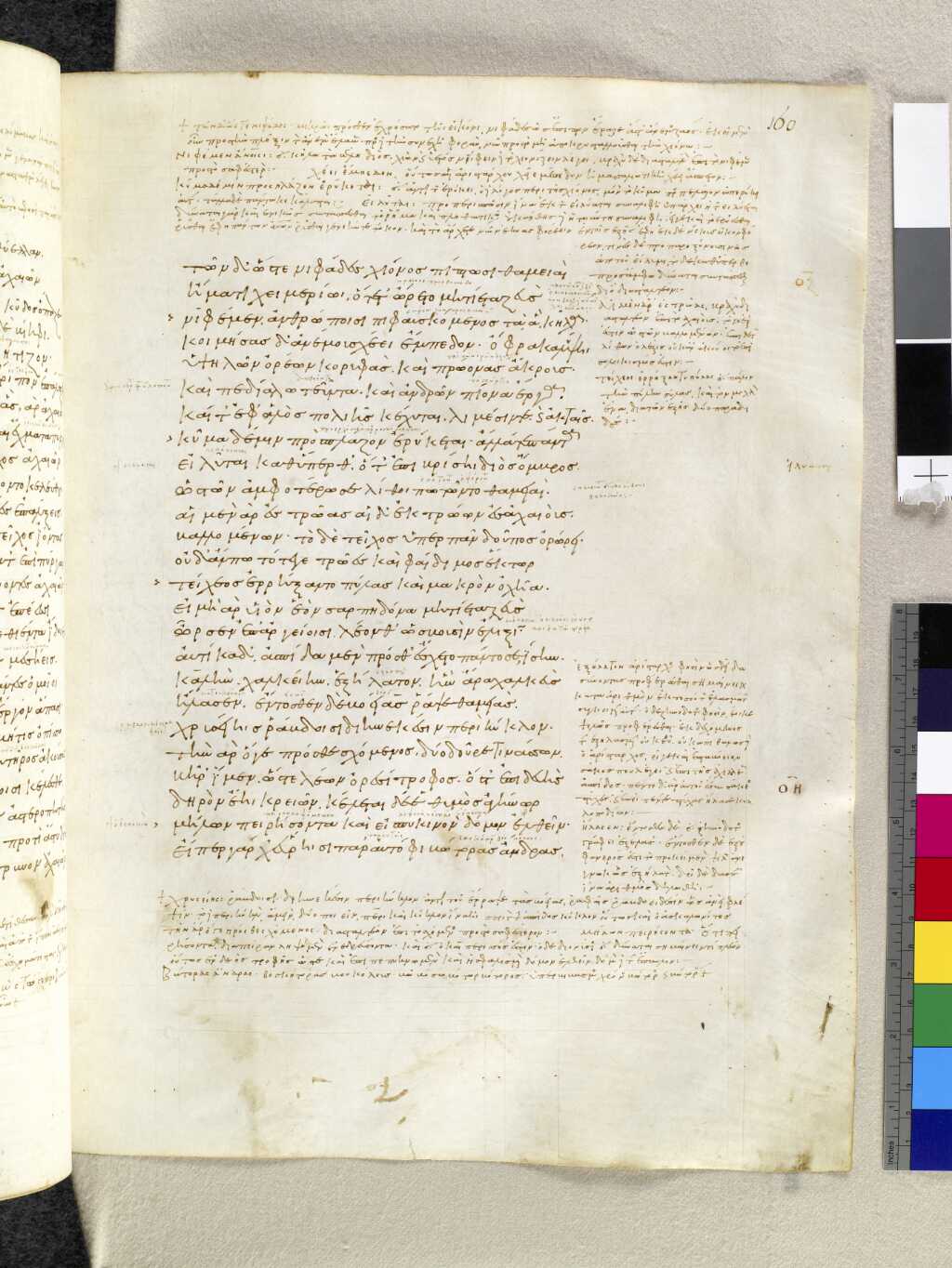
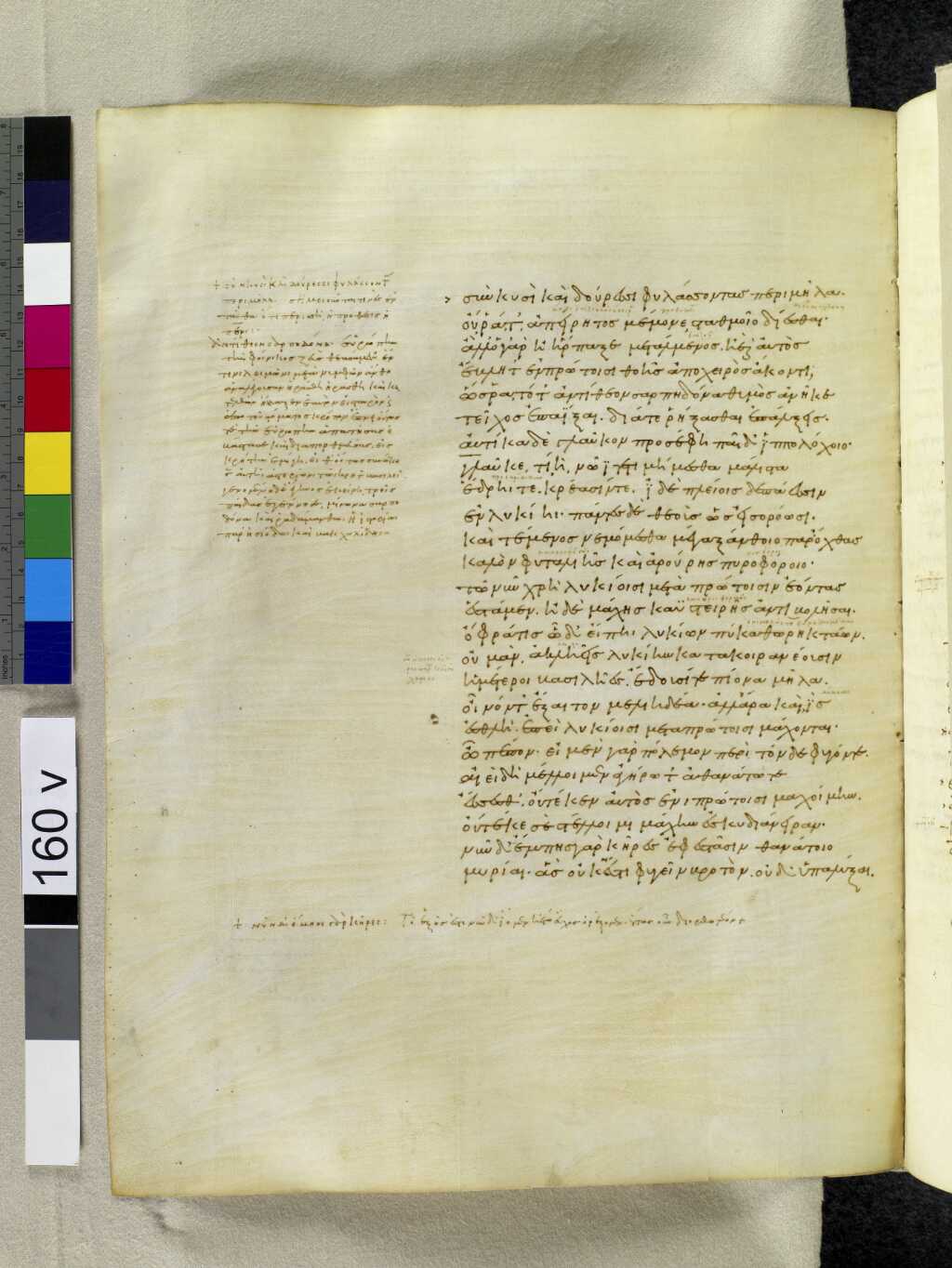
Book 12 of the Iliad with 19 sections, each linked to its specific folio in Venetus A (Marcianus Graecus 454, 10th c.). The Homer Multitext Project provides line-level folio mappings, ensuring every section of text corresponds to the exact manuscript page where it appears.
How was this verified? (Provenance)
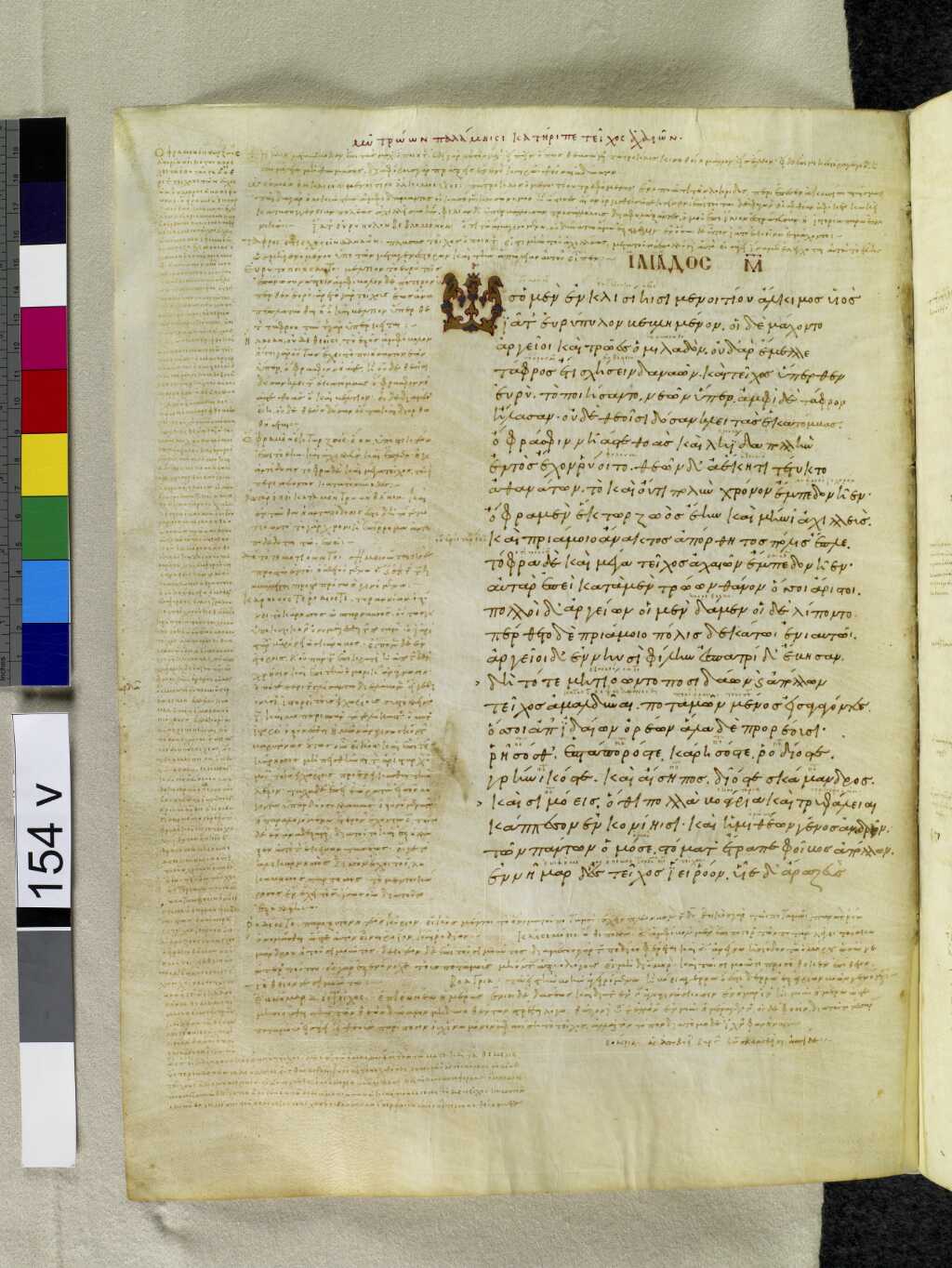
1ὣς ὃ μὲν ἐν κλισίῃσι Μενοιτίου ἄλκιμος υἱὸς 2ἰᾶτʼ Εὐρύπυλον βεβλημένον· οἳ δὲ μάχοντο 3Ἀργεῖοι καὶ Τρῶες ὁμιλαδόν· οὐδʼ ἄρʼ ἔμελλε 4τάφρος ἔτι σχήσειν Δαναῶν καὶ τεῖχος ὕπερθεν 5εὐρύ, τὸ ποιήσαντο νεῶν ὕπερ, ἀμφὶ δὲ τάφρον 6ἤλασαν· οὐδὲ θεοῖσι δόσαν κλειτὰς ἑκατόμβας· 7ὄφρά σφιν νῆάς τε θοὰς καὶ ληΐδα πολλὴν 8ἐντὸς ἔχον ῥύοιτο· θεῶν δʼ ἀέκητι τέτυκτο 9ἀθανάτων· τὸ καὶ οὔ τι πολὺν χρόνον ἔμπεδον ἦεν. 10ὄφρα μὲν Ἕκτωρ ζωὸς ἔην καὶ μήνιʼ Ἀχιλλεὺς 11καὶ Πριάμοιο ἄνακτος ἀπόρθητος πόλις ἔπλεν, 12τόφρα δὲ καὶ μέγα τεῖχος Ἀχαιῶν ἔμπεδον ἦεν. 13αὐτὰρ ἐπεὶ κατὰ μὲν Τρώων θάνον ὅσσοι ἄριστοι, 14πολλοὶ δʼ Ἀργείων οἳ μὲν δάμεν, οἳ δὲ λίποντο, 15πέρθετο δὲ Πριάμοιο πόλις δεκάτῳ ἐνιαυτῷ, 16Ἀργεῖοι δʼ ἐν νηυσὶ φίλην ἐς πατρίδʼ ἔβησαν, 17δὴ τότε μητιόωντο Ποσειδάων καὶ Ἀπόλλων 18τεῖχος ἀμαλδῦναι ποταμῶν μένος εἰσαγαγόντες. 19ὅσσοι ἀπʼ Ἰδαίων ὀρέων ἅλα δὲ προρέουσι, 20Ῥῆσός θʼ Ἑπτάπορός τε Κάρησός τε Ῥοδίος τε 21Γρήνικός τε καὶ Αἴσηπος δῖός τε Σκάμανδρος 22καὶ Σιμόεις, ὅθι πολλὰ βοάγρια καὶ τρυφάλειαι 23κάππεσον ἐν κονίῃσι καὶ ἡμιθέων γένος ἀνδρῶν· 24τῶν πάντων ὁμόσε στόματʼ ἔτραπε Φοῖβος Ἀπόλλων, 25ἐννῆμαρ δʼ ἐς τεῖχος ἵει ῥόον· ὗε δʼ ἄρα Ζεὺς
The Trojans and their allies break the wall, led on by Hector.
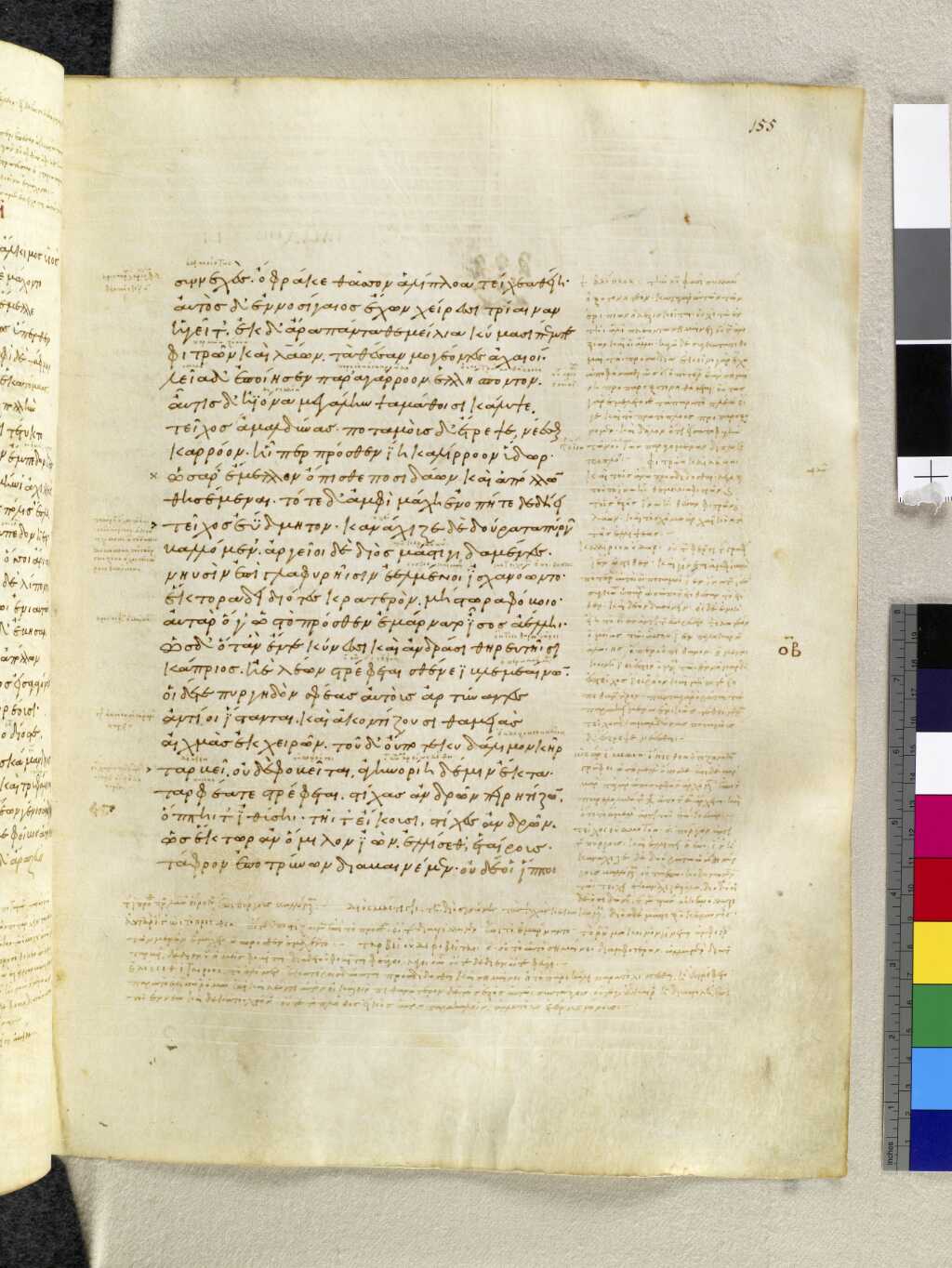
26συνεχές, ὄφρά κε θᾶσσον ἁλίπλοα τείχεα θείη. 27αὐτὸς δʼ ἐννοσίγαιος ἔχων χείρεσσι τρίαιναν 28ἡγεῖτʼ, ἐκ δʼ ἄρα πάντα θεμείλια κύμασι πέμπε 29φιτρῶν καὶ λάων, τὰ θέσαν μογέοντες Ἀχαιοί, 30λεῖα δʼ ἐποίησεν παρʼ ἀγάρροον Ἑλλήσποντον, 31αὖτις δʼ ἠϊόνα μεγάλην ψαμάθοισι κάλυψε 32τεῖχος ἀμαλδύνας· ποταμοὺς δʼ ἔτρεψε νέεσθαι 33κὰρ ῥόον, ᾗ περ πρόσθεν ἵεν καλλίρροον ὕδωρ. 34ὣς ἄρʼ ἔμελλον ὄπισθε Ποσειδάων καὶ Ἀπόλλων 35θησέμεναι· τότε δʼ ἀμφὶ μάχη ἐνοπή τε δεδήει 36τεῖχος ἐΰδμητον, κανάχιζε δὲ δούρατα πύργων 37βαλλόμενʼ· Ἀργεῖοι δὲ Διὸς μάστιγι δαμέντες 38νηυσὶν ἔπι γλαφυρῇσιν ἐελμένοι ἰσχανόωντο 39Ἕκτορα δειδιότες, κρατερὸν μήστωρα φόβοιο· 40αὐτὰρ ὅ γʼ ὡς τὸ πρόσθεν ἐμάρνατο ἶσος ἀέλλῃ· 41ὡς δʼ ὅτʼ ἂν ἔν τε κύνεσσι καὶ ἀνδράσι θηρευτῇσι 42κάπριος ἠὲ λέων στρέφεται σθένεϊ βλεμεαίνων· 43οἳ δέ τε πυργηδὸν σφέας αὐτοὺς ἀρτύναντες 44ἀντίον ἵστανται καὶ ἀκοντίζουσι θαμειὰς 45αἰχμὰς ἐκ χειρῶν· τοῦ δʼ οὔ ποτε κυδάλιμον κῆρ 46ταρβεῖ οὐδὲ φοβεῖται, ἀγηνορίη δέ μιν ἔκτα· 47ταρφέα τε στρέφεται στίχας ἀνδρῶν πειρητίζων· 48ὅππῃ τʼ ἰθύσῃ τῇ εἴκουσι στίχες ἀνδρῶν· 49ὣς Ἕκτωρ ἀνʼ ὅμιλον ἰὼν ἐλλίσσεθʼ ἑταίρους 50τάφρον ἐποτρύνων διαβαινέμεν· οὐδέ οἱ ἵπποι
So the son of Menoetius was attending to the hurt of Eurypylus within the tent, but the Argives and Trojans still fought desperately, nor were the trench and the high wall above it, to keep the Trojans in check longer. They had built it to protect their ships, and had dug the trench all round it that it might safeguard both the ships and the rich spoils which they had taken, but they had not offered hecatombs to the gods. It had been built without the consent of the immortals, and therefore it did not last. So long as Hector lived and Achilles nursed his anger, and so long as the city of Priam remained untaken, the great wall of the Achaeans stood firm; but when the bravest of the Trojans were no more, and many also of the Argives, though some were yet left alive—when, moreover, the city was sacked in the tenth year, and the Argives had gone back with their ships to their own country—then Neptune and Apollo took counsel to destroy the wall, and they turned on to it the streams of all the rivers from Mount Ida into the sea, Rhesus, Heptaporus, Caresus, Rhodius, Grenicus, Aesopus, and goodly Scamander, with Simois, where many a shield and helm had fallen, and many a hero of the race of demigods had bitten the dust. Phoebus Apollo turned the mouths of all these rivers together and made them flow for nine days against the wall, while Jove rained the whole time that he might wash it sooner into the sea. Neptune himself, trident in hand, surveyed the work and threw into the sea all the foundations of beams and stones which the Achaeans had laid with so much toil; he made all level by the mighty stream of the Hellespont, and then when he had swept the wall away he spread a great beach of sand over the place where it had been. This done he turned the rivers back into their old courses.
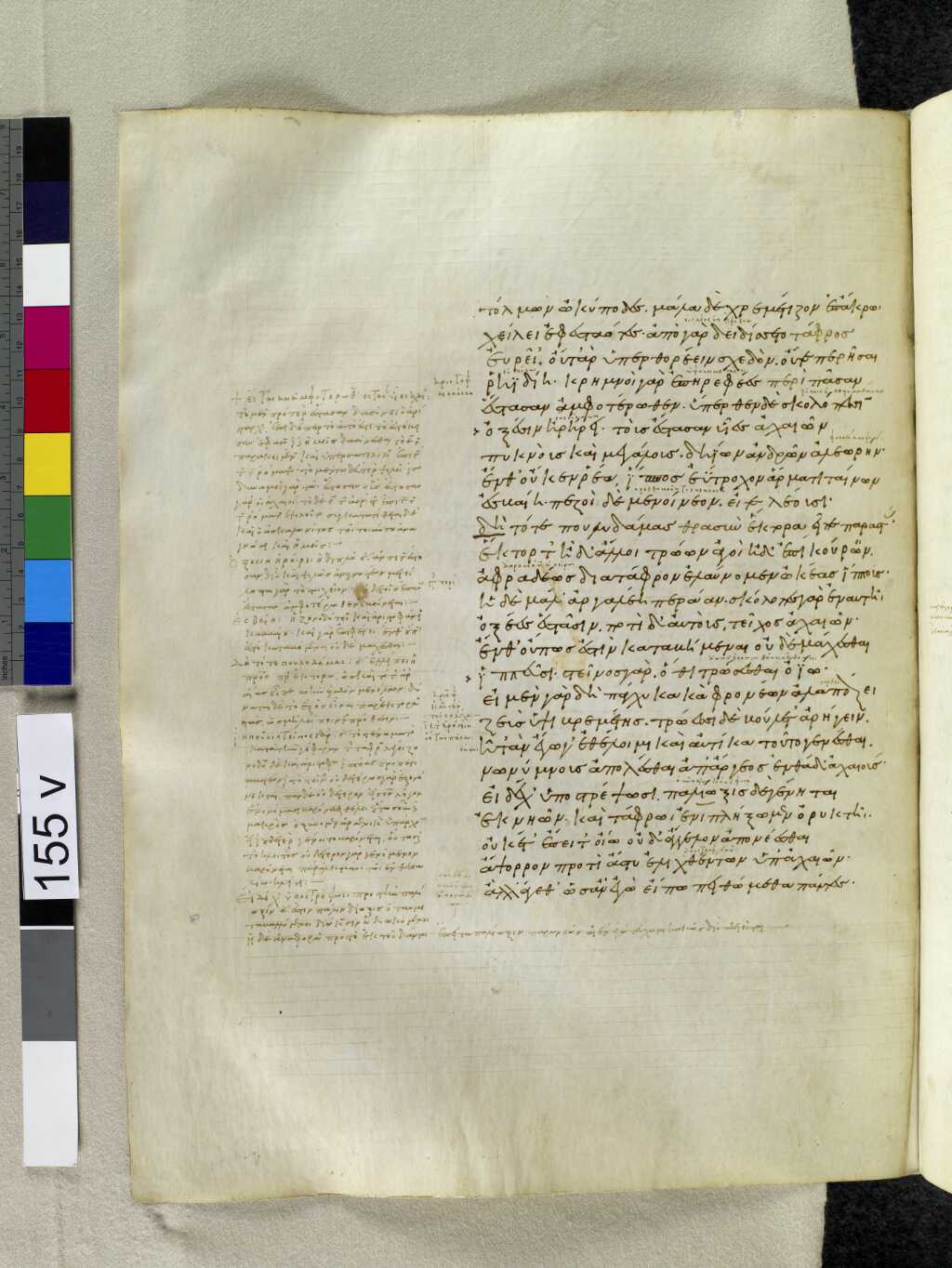
51τόλμων ὠκύποδες, μάλα δὲ χρεμέτιζον ἐπʼ ἄκρῳ 52χείλει ἐφεσταότες· ἀπὸ γὰρ δειδίσσετο τάφρος 53εὐρεῖʼ, οὔτʼ ἄρʼ ὑπερθορέειν σχεδὸν οὔτε περῆσαι 54ῥηϊδίη· κρημνοὶ γὰρ ἐπηρεφέες περὶ πᾶσαν 55ἕστασαν ἀμφοτέρωθεν, ὕπερθεν δὲ σκολόπεσσιν 56ὀξέσιν ἠρήρει, τοὺς ἵστασαν υἷες Ἀχαιῶν 57πυκνοὺς καὶ μεγάλους δηΐων ἀνδρῶν ἀλεωρήν. 58ἔνθʼ οὔ κεν ῥέα ἵππος ἐΰτροχον ἅρμα τιταίνων 59ἐσβαίη, πεζοὶ δὲ μενοίνεον εἰ τελέουσι. 60δὴ τότε Πουλυδάμας θρασὺν Ἕκτορα εἶπε παραστάς· 61Ἕκτορ τʼ ἠδʼ ἄλλοι Τρώων ἀγοὶ ἠδʼ ἐπικούρων 62ἀφραδέως διὰ τάφρον ἐλαύνομεν ὠκέας ἵππους· 63ἣ δὲ μάλʼ ἀργαλέη περάαν· σκόλοπες γὰρ ἐν αὐτῇ 64ὀξέες ἑστᾶσιν, ποτὶ δʼ αὐτοὺς τεῖχος Ἀχαιῶν, 65ἔνθʼ οὔ πως ἔστιν καταβήμεναι οὐδὲ μάχεσθαι 66ἱππεῦσι· στεῖνος γάρ, ὅθι τρώσεσθαι ὀΐω. 67εἰ μὲν γὰρ τοὺς πάγχυ κακὰ φρονέων ἀλαπάζει 68Ζεὺς ὑψιβρεμέτης, Τρώεσσι δὲ ἵετʼ ἀρήγειν, 69ἦ τʼ ἂν ἔγωγʼ ἐθέλοιμι καὶ αὐτίκα τοῦτο γενέσθαι, 70νωνύμνους ἀπολέσθαι ἀπʼ Ἄργεος ἐνθάδʼ Ἀχαιούς· 71εἰ δέ χʼ ὑποστρέψωσι, παλίωξις δὲ γένηται 72ἐκ νηῶν καὶ τάφρῳ ἐνιπλήξωμεν ὀρυκτῇ, 73οὐκέτʼ ἔπειτʼ ὀΐω οὐδʼ ἄγγελον ἀπονέεσθαι 74ἄψορρον προτὶ ἄστυ ἑλιχθέντων ὑπʼ Ἀχαιῶν. 75ἀλλʼ ἄγεθʼ ὡς ἂν ἐγὼ εἴπω πειθώμεθα πάντες·
This was what Neptune and Apollo were to do in after time; but as yet battle and turmoil were still raging round the wall till its timbers rang under the blows that rained upon them. The Argives, cowed by the scourge of Jove, were hemmed in at their ships in fear of Hector the mighty minister of Rout, who as heretofore fought with the force and fury of a whirlwind. As a lion or wild boar turns fiercely on the dogs and men that attack him, while these form a solid wall and shower their javelins as they face him—his courage is all undaunted, but his high spirit will be the death of him; many a time does he charge at his pursuers to scatter them, and they fall back as often as he does so—even so did Hector go about among the host exhorting his men, and cheering them on to cross the trench.
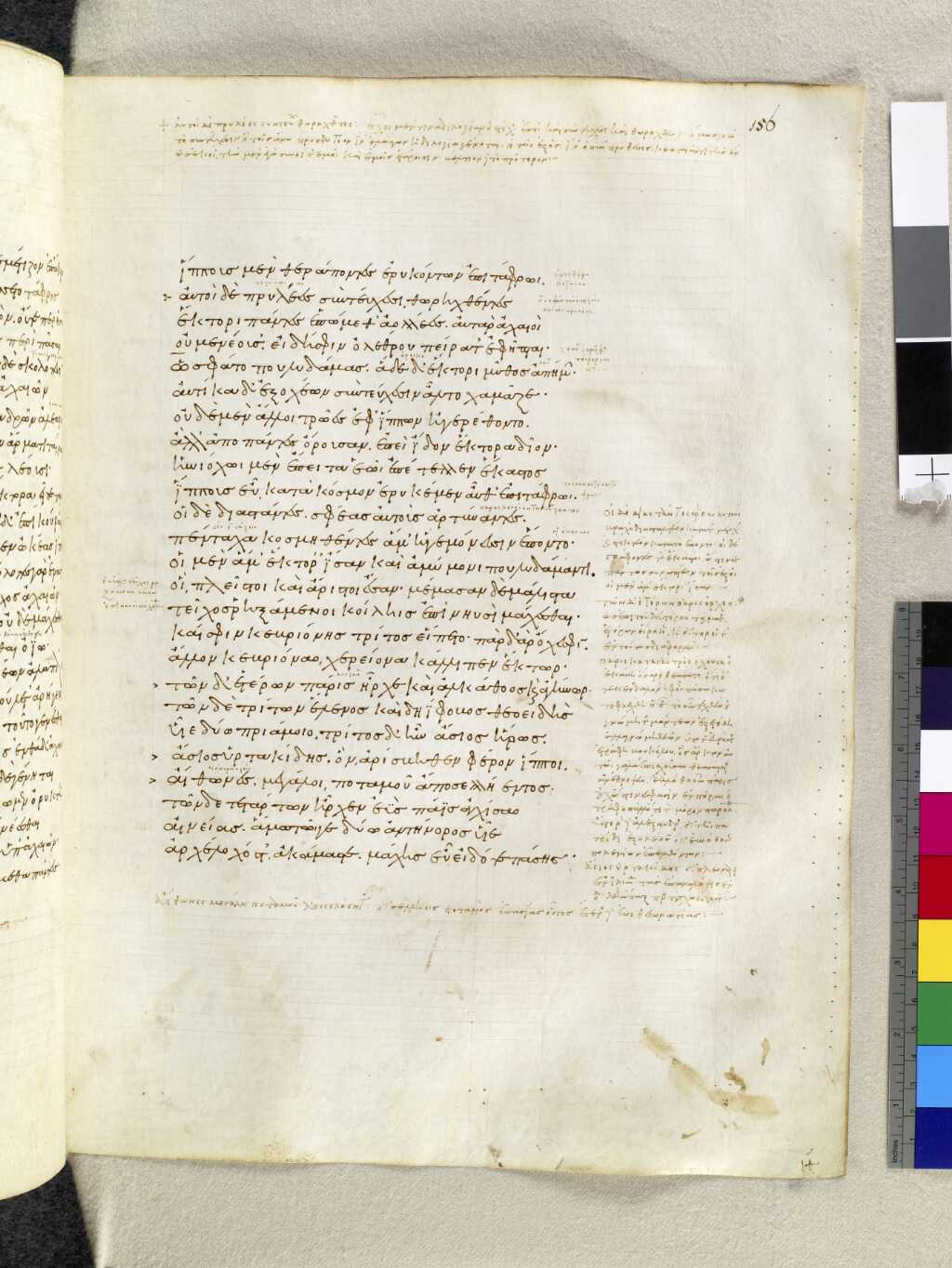
76ἵππους μὲν θεράποντες ἐρυκόντων ἐπὶ τάφρῳ, 77αὐτοὶ δὲ πρυλέες σὺν τεύχεσι θωρηχθέντες 78Ἕκτορι πάντες ἑπώμεθʼ ἀολλέες· αὐτὰρ Ἀχαιοὶ 79οὐ μενέουσʼ εἰ δή σφιν ὀλέθρου πείρατʼ ἐφῆπται. 80ὣς φάτο Πουλυδάμας, ἅδε δʼ Ἕκτορι μῦθος ἀπήμων, 81αὐτίκα δʼ ἐξ ὀχέων σὺν τεύχεσιν ἆλτο χαμᾶζε. 82οὐδὲ μὲν ἄλλοι Τρῶες ἐφʼ ἵππων ἠγερέθοντο, 83ἀλλʼ ἀπὸ πάντες ὄρουσαν, ἐπεὶ ἴδον Ἕκτορα δῖον. 84ἡνιόχῳ μὲν ἔπειτα ἑῷ ἐπέτελλεν ἕκαστος 85ἵππους εὖ κατὰ κόσμον ἐρυκέμεν αὖθʼ ἐπὶ τάφρῳ· 86οἳ δὲ διαστάντες σφέας αὐτοὺς ἀρτύναντες 87πένταχα κοσμηθέντες ἅμʼ ἡγεμόνεσσιν ἕποντο. 88οἳ μὲν ἅμʼ Ἕκτορʼ ἴσαν καὶ ἀμύμονι Πουλυδάμαντι, 89οἳ πλεῖστοι καὶ ἄριστοι ἔσαν, μέμασαν δὲ μάλιστα 90τεῖχος ῥηξάμενοι κοίλῃς ἐπὶ νηυσὶ μάχεσθαι. 91καί σφιν Κεβριόνης τρίτος εἵπετο· πὰρ δʼ ἄρʼ ὄχεσφιν 92ἄλλον Κεβριόναο χερείονα κάλλιπεν Ἕκτωρ. 93τῶν δʼ ἑτέρων Πάρις ἦρχε καὶ Ἀλκάθοος καὶ Ἀγήνωρ, 94τῶν δὲ τρίτων Ἕλενος καὶ Δηΐφοβος θεοειδὴς 95υἷε δύω Πριάμοιο· τρίτος δʼ ἦν Ἄσιος ἥρως 96Ἄσιος Ὑρτακίδης, ὃν Ἀρίσβηθεν φέρον ἵπποι 97αἴθωνες μεγάλοι ποταμοῦ ἄπο Σελλήεντος. 98τῶν δὲ τετάρτων ἦρχεν ἐῢς πάϊς Ἀγχίσαο 99Αἰνείας, ἅμα τῷ γε δύω Ἀντήνορος υἷε 100Ἀρχέλοχός τʼ Ἀκάμας τε μάχης εὖ εἰδότε πάσης.
But the horses dared not do so, and stood neighing upon its brink, for the width frightened them. They could neither jump it nor cross it, for it had overhanging banks all round upon either side, above which there were the sharp stakes that the sons of the Achaeans had planted so close and strong as a defence against all who would assail it; a horse, therefore, could not get into it and draw his chariot after him, but those who were on foot kept trying their very utmost. Then Polydamas went up to Hector and said, “Hector, and you other captains of the Trojans and allies, it is madness for us to try and drive our horses across the trench; it will be very hard to cross, for it is full of sharp stakes, and beyond these there is the wall. Our horses therefore cannot get down into it, and would be of no use if they did; moreover it is a narrow place and we should come to harm. If, indeed, great Jove is minded to help the Trojans, and in his anger will utterly destroy the Achaeans, I would myself gladly see them perish now and here far from Argos; but if they should rally and we are driven back from the ships pell-mell into the trench there will be not so much as a man get back to the city to tell the tale. Now, therefore, let us all do as I say; let our squires hold our horses by the trench, but let us follow Hector in a body on foot, clad in full armour, and if the day of their doom is at hand the Achaeans will not be able to withstand us.”
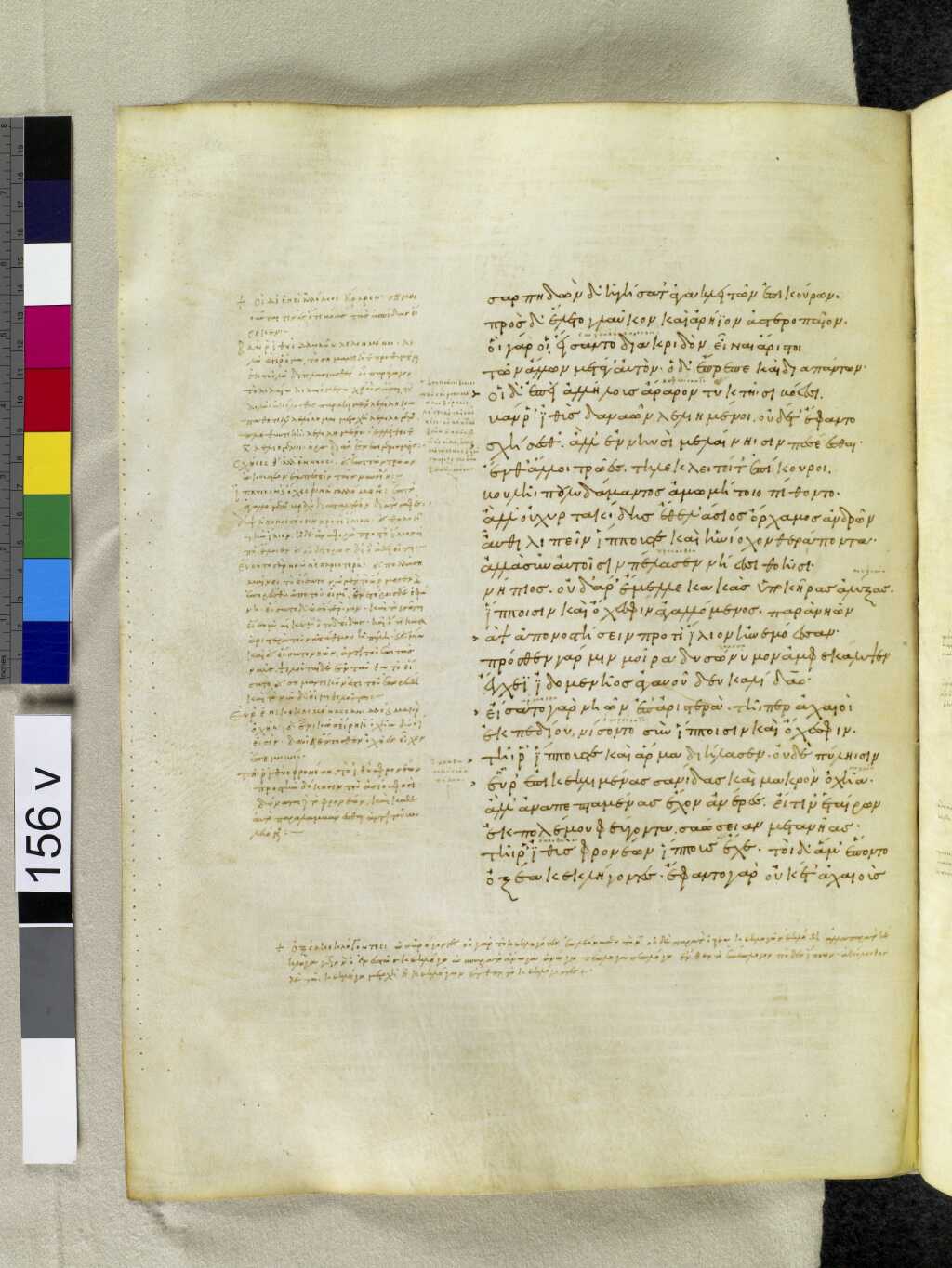
101Σαρπηδὼν δʼ ἡγήσατʼ ἀγακλειτῶν ἐπικούρων, 102πρὸς δʼ ἕλετο Γλαῦκον καὶ ἀρήϊον Ἀστεροπαῖον· 103οἳ γάρ οἱ εἴσαντο διακριδὸν εἶναι ἄριστοι 104τῶν ἄλλων μετά γʼ αὐτόν· ὃ δʼ ἔπρεπε καὶ διὰ πάντων. 105οἳ δʼ ἐπεὶ ἀλλήλους ἄραρον τυκτῇσι βόεσσι 106βάν ῥʼ ἰθὺς Δαναῶν λελιημένοι, οὐδʼ ἔτʼ ἔφαντο 107σχήσεσθʼ, ἀλλʼ ἐν νηυσὶ μελαίνῃσιν πεσέεσθαι. 108ἔνθʼ ἄλλοι Τρῶες τηλεκλειτοί τʼ ἐπίκουροι 109βουλῇ Πουλυδάμαντος ἀμωμήτοιο πίθοντο· 110ἀλλʼ οὐχ Ὑρτακίδης ἔθελʼ Ἄσιος ὄρχαμος ἀνδρῶν 111αὖθι λιπεῖν ἵππους τε καὶ ἡνίοχον θεράποντα, 112ἀλλὰ σὺν αὐτοῖσιν πέλασεν νήεσσι θοῇσι 113νήπιος, οὐδʼ ἄρʼ ἔμελλε κακὰς ὑπὸ κῆρας ἀλύξας 114ἵπποισιν καὶ ὄχεσφιν ἀγαλλόμενος παρὰ νηῶν 115ἂψ ἀπονοστήσειν προτὶ Ἴλιον ἠνεμόεσσαν· 116πρόσθεν γάρ μιν μοῖρα δυσώνυμος ἀμφεκάλυψεν 117ἔγχεϊ Ἰδομενῆος ἀγαυοῦ Δευκαλίδαο. 118εἴσατο γὰρ νηῶν ἐπʼ ἀριστερά, τῇ περ Ἀχαιοὶ 119ἐκ πεδίου νίσοντο σὺν ἵπποισιν καὶ ὄχεσφι· 120τῇ ῥʼ ἵππους τε καὶ ἅρμα διήλασεν, οὐδὲ πύλῃσιν 121εὗρʼ ἐπικεκλιμένας σανίδας καὶ μακρὸν ὀχῆα, 122ἀλλʼ ἀναπεπταμένας ἔχον ἀνέρες, εἴ τινʼ ἑταίρων 123ἐκ πολέμου φεύγοντα σαώσειαν μετὰ νῆας. 124τῇ ῥʼ ἰθὺς φρονέων ἵππους ἔχε, τοὶ δʼ ἅμʼ ἕποντο 125ὀξέα κεκλήγοντες· ἔφαντο γὰρ οὐκ ἔτʼ Ἀχαιοὺς
Thus spoke Polydamas and his saying pleased Hector, who sprang in full armour to the ground, and all the other Trojans, when they saw him do so, also left their chariots. Each man then gave his horses over to his charioteer in charge to hold them ready for him at the trench. Then they formed themselves into companies, made themselves ready, and in five bodies followed their leaders. Those that went with Hector and Polydamas were the bravest and most in number, and the most determined to break through the wall and fight at the ships. Cebriones was also joined with them as third in command, for Hector had left his chariot in charge of a less valiant soldier. The next company was led by Paris, Alcathous, and Agenor; the third by Helenus and Deiphobus, two sons of Priam, and with them was the hero Asius—Asius, the son of Hyrtacus, whose great black horses of the breed that comes from the river Selleis had brought him from Arisbe. Aeneas, the valiant son of Anchises, led the fourth; he and the two sons of Antenor, Archelochus and Acamas, men well versed in all the arts of war. Sarpedon was captain over the allies, and took with him Glaucus and Asteropaeus whom he deemed most valiant after himself—for he was far the best man of them all. These helped to array one another in their ox-hide shields, and then charged straight at the Danaans, for they felt sure that they would not hold out longer and that they should themselves now fall upon the ships.
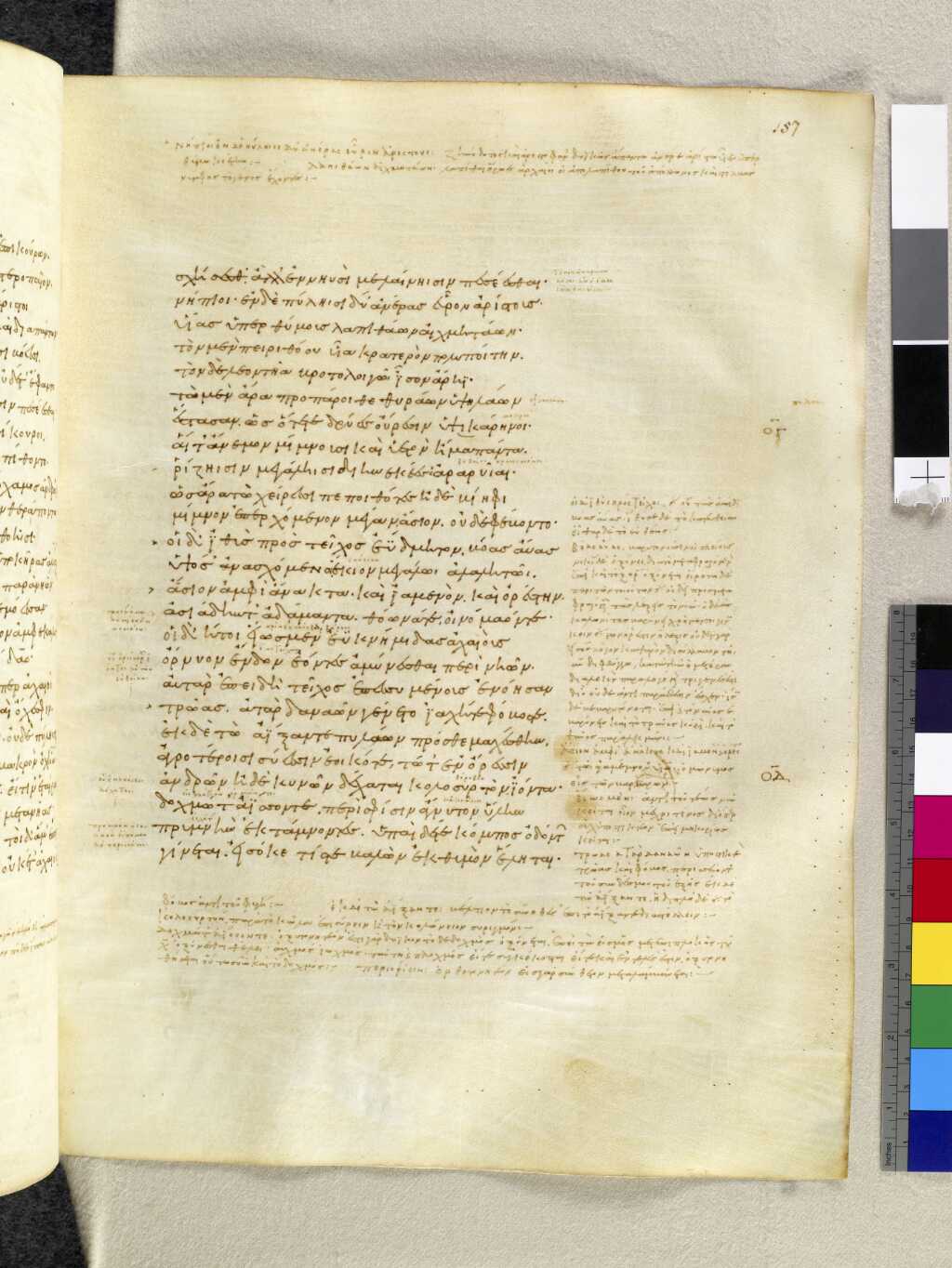
126σχήσεσθʼ, ἀλλʼ ἐν νηυσὶ μελαίνῃσιν πεσέεσθαι 127νήπιοι, ἐν δὲ πύλῃσι δύʼ ἀνέρας εὗρον ἀρίστους 128υἷας ὑπερθύμους Λαπιθάων αἰχμητάων, 129τὸν μὲν Πειριθόου υἷα κρατερὸν Πολυποίτην, 130τὸν δὲ Λεοντῆα βροτολοιγῷ ἶσον Ἄρηϊ. 131τὼ μὲν ἄρα προπάροιθε πυλάων ὑψηλάων 132ἕστασαν ὡς ὅτε τε δρύες οὔρεσιν ὑψικάρηνοι, 133αἵ τʼ ἄνεμον μίμνουσι καὶ ὑετὸν ἤματα πάντα 134ῥίζῃσιν μεγάλῃσι διηνεκέεσσʼ ἀραρυῖαι· 135ὣς ἄρα τὼ χείρεσσι πεποιθότες ἠδὲ βίηφι 136μίμνον ἐπερχόμενον μέγαν Ἄσιον οὐδὲ φέβοντο. 137οἳ δʼ ἰθὺς πρὸς τεῖχος ἐΰδμητον βόας αὔας 138ὑψόσʼ ἀνασχόμενοι ἔκιον μεγάλῳ ἀλαλητῷ 139Ἄσιον ἀμφὶ ἄνακτα καὶ Ἰαμενὸν καὶ Ὀρέστην 140Ἀσιάδην τʼ Ἀδάμαντα Θόωνά τε Οἰνόμαόν τε. 141οἳ δʼ ἤτοι εἷος μὲν ἐϋκνήμιδας Ἀχαιοὺς 142ὄρνυον ἔνδον ἐόντες ἀμύνεσθαι περὶ νηῶν· 143αὐτὰρ ἐπεὶ δὴ τεῖχος ἐπεσσυμένους ἐνόησαν 144Τρῶας, ἀτὰρ Δαναῶν γένετο ἰαχή τε φόβος τε, 145ἐκ δὲ τὼ ἀΐξαντε πυλάων πρόσθε μαχέσθην 146ἀγροτέροισι σύεσσιν ἐοικότε, τώ τʼ ἐν ὄρεσσιν 147ἀνδρῶν ἠδὲ κυνῶν δέχαται κολοσυρτὸν ἰόντα, 148δοχμώ τʼ ἀΐσσοντε περὶ σφίσιν ἄγνυτον ὕλην 149πρυμνὴν ἐκτάμνοντες, ὑπαὶ δέ τε κόμπος ὀδόντων 150γίγνεται εἰς ὅ κέ τίς τε βαλὼν ἐκ θυμὸν ἕληται·
The rest of the Trojans and their allies now followed the counsel of Polydamas but Asius, son of Hyrtacus, would not leave his horses and his esquire behind him; in his foolhardiness he took them on with him towards the ships, nor did he fail to come by his end in consequence. Nevermore was he to return to wind-beaten Ilius, exulting in his chariot and his horses; ere he could do so, death of ill-omened name had overshadowed him and he had fallen by the spear of Idomeneus the noble son of Deucalion. He had driven towards the left wing of the ships, by which way the Achaeans used to return with their chariots and horses from the plain. Hither he drove and found the gates with their doors opened wide, and the great bar down—for the gatemen kept them open so as to let those of their comrades enter who might be flying towards the ships. Hither of set purpose did he direct his horses, and his men followed him with a loud cry, for they felt sure that the Achaeans would not hold out longer, and that they should now fall upon the ships. Little did they know that at the gates they should find two of the bravest chieftains, proud sons of the fighting Lapithae—the one, Polypoetes, mighty son of Pirithous, and the other Leonteus, peer of murderous Mars. These stood before the gates like two high oak trees upon the mountains, that tower from their wide-spreading roots, and year after year battle with wind and rain—even so did these two men await the onset of great Asius confidently and without flinching. The Trojans led by him and by Iamenus, Orestes, Adamas the son of Asius, Thoon and Oenomaus, raised a loud cry of battle and made straight for the wall, holding their shields of dry ox-hide above their heads; for a while the two defenders remained inside and cheered the Achaeans on to stand firm in the defence of their ships; when, however, they saw that the Trojans were attacking the wall, while the Danaans were crying out for help and being routed, they rushed outside and fought in front of the gates like two wild boars upon the mountains that abide the attack of men and dogs, and charging on either side break down the wood all round them tearing it up by the roots, and one can hear the clattering of their tusks, till some one hits them and makes an end of them—even so did the gleaming bronze rattle about their breasts, as the weapons fell upon them; for they fought with great fury, trusting to their own prowess and to those who were on the wall above them. These threw great stones at their assailants in defence of themselves their tents and their ships. The stones fell thick as the flakes of snow which some fierce blast drives from the dark clouds and showers down in sheets upon the earth—even so fell the weapons from the hands alike of Trojans and Achaeans. Helmet and shield rang out as the great stones rained upon them, and Asius, the son of Hyrtacus, in his dismay cried aloud and smote his two thighs. “Father Jove,” he cried, “of a truth you too are altogether given to lying. I made sure the Argive heroes could not withstand us, whereas like slim-waisted wasps, or bees that have their nests in the rocks by the wayside—they leave not the holes wherein they have built undefended, but fight for their little ones against all who would take them—even so these men, though they be but two, will not be driven from the gates, but stand firm either to slay or be slain.”
He spoke, but moved not the mind of Jove, whose counsel it then was to give glory to Hector. Meanwhile the rest of the Trojans were fighting about the other gates; I, however, am no god to be able to tell about all these things, for the battle raged everywhere about the stone wall as it were a fiery furnace. The Argives, discomfited though they were, were forced to defend their ships, and all the gods who were defending the Achaeans were vexed in spirit; but the Lapithae kept on fighting with might and main.
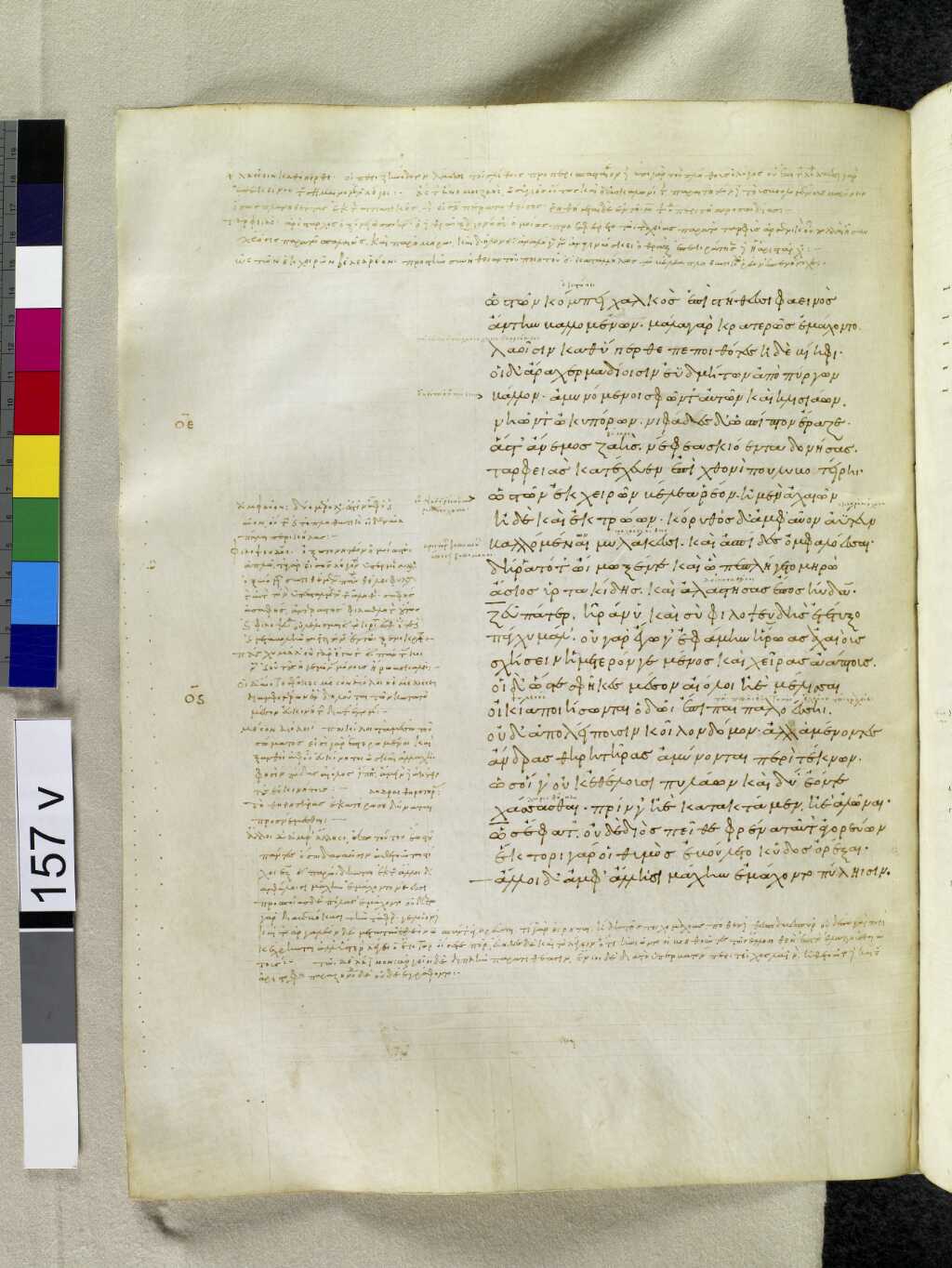
151ὣς τῶν κόμπει χαλκὸς ἐπὶ στήθεσσι φαεινὸς 152ἄντην βαλλομένων· μάλα γὰρ κρατερῶς ἐμάχοντο 153λαοῖσιν καθύπερθε πεποιθότες ἠδὲ βίηφιν. 154οἳ δʼ ἄρα χερμαδίοισιν ἐϋδμήτων ἀπὸ πύργων 155βάλλον ἀμυνόμενοι σφῶν τʼ αὐτῶν καὶ κλισιάων 156νηῶν τʼ ὠκυπόρων· νιφάδες δʼ ὡς πῖπτον ἔραζε, 157ἅς τʼ ἄνεμος ζαὴς νέφεα σκιόεντα δονήσας 158ταρφειὰς κατέχευεν ἐπὶ χθονὶ πουλυβοτείρῃ· 159ὣς τῶν ἐκ χειρῶν βέλεα ῥέον ἠμὲν Ἀχαιῶν 160ἠδὲ καὶ ἐκ Τρώων· κόρυθες δʼ ἀμφʼ αὖον ἀΰτευν 161βαλλομένων μυλάκεσσι καὶ ἀσπίδες ὀμφαλόεσσαι. 162δή ῥα τότʼ ᾤμωξεν καὶ ὣ πεπλήγετο μηρὼ 163Ἄσιος Ὑρτακίδης, καὶ ἀλαστήσας ἔπος ηὔδα· 164Ζεῦ πάτερ ἦ ῥά νυ καὶ σὺ φιλοψευδὴς ἐτέτυξο 165πάγχυ μάλʼ· οὐ γὰρ ἔγωγʼ ἐφάμην ἥρωας Ἀχαιοὺς 166σχήσειν ἡμέτερόν γε μένος καὶ χεῖρας ἀάπτους. 167οἳ δʼ, ὥς τε σφῆκες μέσον αἰόλοι ἠὲ μέλισσαι 168οἰκία ποιήσωνται ὁδῷ ἔπι παιπαλοέσσῃ, 169οὐδʼ ἀπολείπουσιν κοῖλον δόμον, ἀλλὰ μένοντες 170ἄνδρας θηρητῆρας ἀμύνονται περὶ τέκνων, 171ὣς οἵ γʼ οὐκ ἐθέλουσι πυλάων καὶ δύʼ ἐόντε 172χάσσασθαι πρίν γʼ ἠὲ κατακτάμεν ἠὲ ἁλῶναι. 173ὣς ἔφατʼ, οὐδὲ Διὸς πεῖθε φρένα ταῦτʼ ἀγορεύων· 174Ἕκτορι γάρ οἱ θυμὸς ἐβούλετο κῦδος ὀρέξαι. 175ἄλλοι δʼ ἀμφʼ ἄλλῃσι μάχην ἐμάχοντο πύλῃσιν·
Thereon Polypoetes, mighty son of Pirithous, hit Damasus with a spear upon his cheek-pierced helmet. The helmet did not protect him, for the point of the spear went through it, and broke the bone, so that the brain inside was scattered about, and he died fighting. He then slew Pylon and Ormenus. Leonteus, of the race of Mars, killed Hippomachus the son of Antimachus by striking him with his spear upon the girdle. He then drew his sword and sprang first upon Antiphates whom he killed in combat, and who fell face upwards on the earth. After him he killed Menon, Iamenus, and Orestes, and laid them low one after the other.
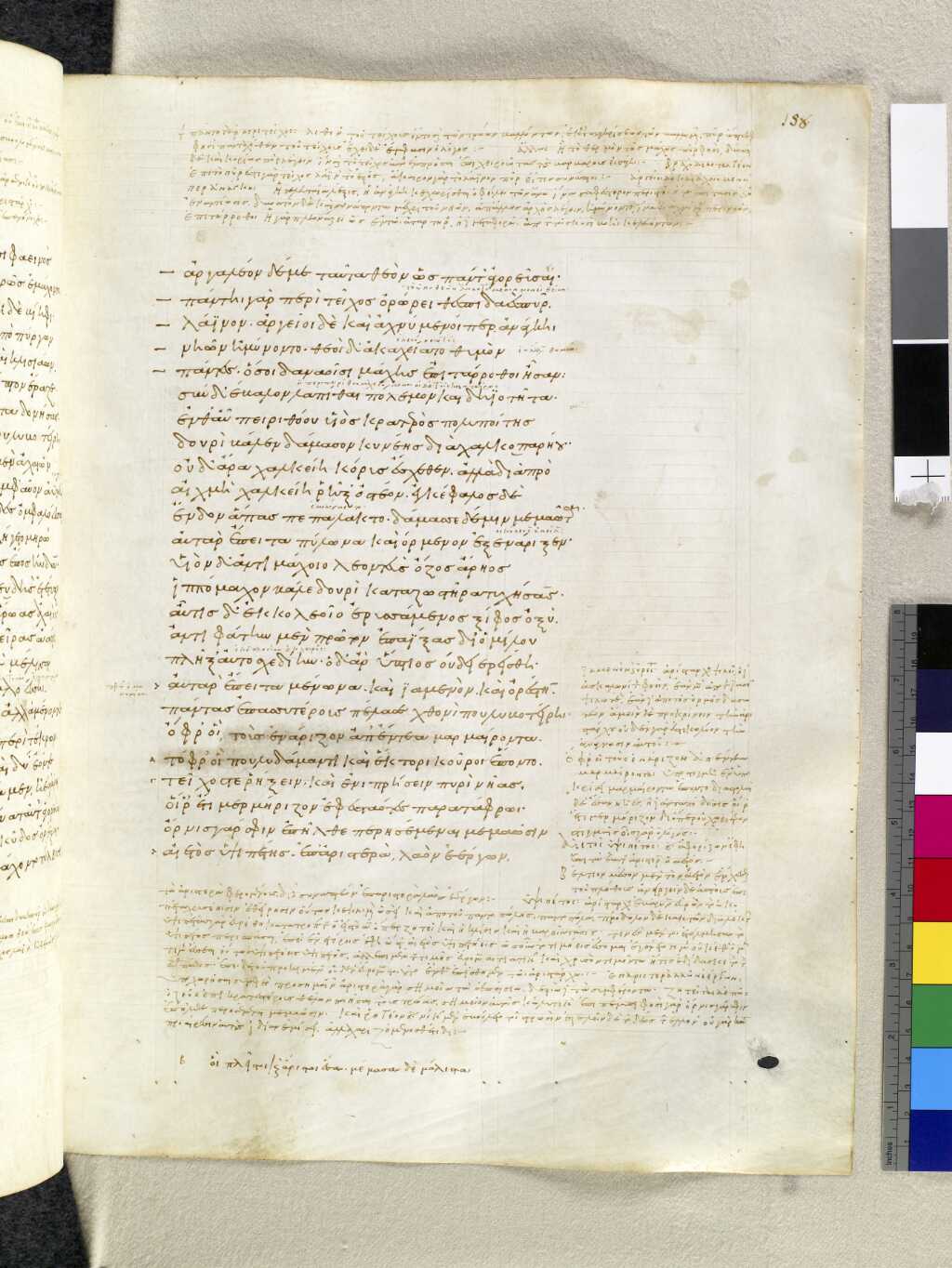
176ἀργαλέον δέ με ταῦτα θεὸν ὣς πάντʼ ἀγορεῦσαι· 177πάντῃ γὰρ περὶ τεῖχος ὀρώρει θεσπιδαὲς πῦρ 178λάϊνον· Ἀργεῖοι δὲ καὶ ἀχνύμενοί περ ἀνάγκῃ 179νηῶν ἠμύνοντο· θεοὶ δʼ ἀκαχήατο θυμὸν 180πάντες ὅσοι Δαναοῖσι μάχης ἐπιτάρροθοι ἦσαν. 181σὺν δʼ ἔβαλον Λαπίθαι πόλεμον καὶ δηϊοτῆτα. 182ἔνθʼ αὖ Πειριθόου υἱὸς κρατερὸς Πολυποίτης 183δουρὶ βάλεν Δάμασον κυνέης διὰ χαλκοπαρῄου· 184οὐδʼ ἄρα χαλκείη κόρυς ἔσχεθεν, ἀλλὰ διὰ πρὸ 185αἰχμὴ χαλκείη ῥῆξʼ ὀστέον, ἐγκέφαλος δὲ 186ἔνδον ἅπας πεπάλακτο· δάμασσε δέ μιν μεμαῶτα· 187αὐτὰρ ἔπειτα Πύλωνα καὶ Ὄρμενον ἐξενάριξεν. 188υἱὸν δʼ Ἀντιμάχοιο Λεοντεὺς ὄζος Ἄρηος 189Ἱππόμαχον βάλε δουρὶ κατὰ ζωστῆρα τυχήσας. 190αὖτις δʼ ἐκ κολεοῖο ἐρυσσάμενος ξίφος ὀξὺ 191Ἀντιφάτην μὲν πρῶτον ἐπαΐξας διʼ ὁμίλου 192πλῆξʼ αὐτοσχεδίην· ὃ δʼ ἄρʼ ὕπτιος οὔδει ἐρείσθη· 193αὐτὰρ ἔπειτα Μένωνα καὶ Ἰαμενὸν καὶ Ὀρέστην 194πάντας ἐπασσυτέρους πέλασε χθονὶ πουλυβοτείρῃ. 195ὄφρʼ οἳ τοὺς ἐνάριζον ἀπʼ ἔντεα μαρμαίροντα, 196τόφρʼ οἳ Πουλυδάμαντι καὶ Ἕκτορι κοῦροι ἕποντο, 197οἳ πλεῖστοι καὶ ἄριστοι ἔσαν, μέμασαν δὲ μάλιστα 198τεῖχός τε ῥήξειν καὶ ἐνιπρήσειν πυρὶ νῆας, 199οἵ ῥʼ ἔτι μερμήριζον ἐφεσταότες παρὰ τάφρῳ. 200ὄρνις γάρ σφιν ἐπῆλθε περησέμεναι μεμαῶσιν
While they were busy stripping the armour from these heroes, the youths who were led on by Polydamas and Hector (and these were the greater part and the most valiant of those that were trying to break through the wall and fire the ships) were still standing by the trench, uncertain what they should do; for they had seen a sign from heaven when they had essayed to cross it—a soaring eagle that flew skirting the left wing of their host, with a monstrous blood-red snake in its talons still alive and struggling to escape. The snake was still bent on revenge, wriggling and twisting itself backwards till it struck the bird that held it, on the neck and breast; whereon the bird being in pain, let it fall, dropping it into the middle of the host, and then flew down the wind with a sharp cry. The Trojans were struck with terror when they saw the snake, portent of aegis-bearing Jove, writhing in the midst of them, and Polydamas went up to Hector and said, “Hector, at our councils of war you are ever given to rebuke me, even when I speak wisely, as though it were not well, forsooth, that one of the people should cross your will either in the field or at the council board; you would have them support you always: nevertheless I will say what I think will be best; let us not now go on to fight the Danaans at their ships, for I know what will happen if this soaring eagle which skirted the left wing of our host with a monstrous blood-red snake in its talons (the snake being still alive) was really sent as an omen to the Trojans on their essaying to cross the trench. The eagle let go her hold; she did not succeed in taking it home to her little ones, and so will it be—with ourselves; even though by a mighty effort we break through the gates and wall of the Achaeans, and they give way before us, still we shall not return in good order by the way we came, but shall leave many a man behind us whom the Achaeans will do to death in defence of their ships. Thus would any seer who was expert in these matters, and was trusted by the people, read the portent.”
201αἰετὸς ὑψιπέτης ἐπʼ ἀριστερὰ λαὸν ἐέργων 202φοινήεντα δράκοντα φέρων ὀνύχεσσι πέλωρον 203ζωὸν ἔτʼ ἀσπαίροντα, καὶ οὔ πω λήθετο χάρμης, 204κόψε γὰρ αὐτὸν ἔχοντα κατὰ στῆθος παρὰ δειρὴν 205ἰδνωθεὶς ὀπίσω· ὃ δʼ ἀπὸ ἕθεν ἧκε χαμᾶζε 206ἀλγήσας ὀδύνῃσι, μέσῳ δʼ ἐνὶ κάββαλʼ ὁμίλῳ, 207αὐτὸς δὲ κλάγξας πέτετο πνοιῇς ἀνέμοιο. 208Τρῶες δʼ ἐρρίγησαν ὅπως ἴδον αἰόλον ὄφιν 209κείμενον ἐν μέσσοισι Διὸς τέρας αἰγιόχοιο. 210δὴ τότε Πουλυδάμας θρασὺν Ἕκτορα εἶπε παραστάς· 211Ἕκτορ ἀεὶ μέν πώς μοι ἐπιπλήσσεις ἀγορῇσιν 212ἐσθλὰ φραζομένῳ, ἐπεὶ οὐδὲ μὲν οὐδὲ ἔοικε 213δῆμον ἐόντα παρὲξ ἀγορευέμεν, οὔτʼ ἐνὶ βουλῇ 214οὔτέ ποτʼ ἐν πολέμῳ, σὸν δὲ κράτος αἰὲν ἀέξειν· 215νῦν αὖτʼ ἐξερέω ὥς μοι δοκεῖ εἶναι ἄριστα. 216μὴ ἴομεν Δαναοῖσι μαχησόμενοι περὶ νηῶν. 217ὧδε γὰρ ἐκτελέεσθαι ὀΐομαι, εἰ ἐτεόν γε 218Τρωσὶν ὅδʼ ὄρνις ἦλθε περησέμεναι μεμαῶσιν 219αἰετὸς ὑψιπέτης ἐπʼ ἀριστερὰ λαὸν ἐέργων 220φοινήεντα δράκοντα φέρων ὀνύχεσσι πέλωρον 221ζωόν· ἄφαρ δʼ ἀφέηκε πάρος φίλα οἰκίʼ ἱκέσθαι, 222οὐδʼ ἐτέλεσσε φέρων δόμεναι τεκέεσσιν ἑοῖσιν. 223ὣς ἡμεῖς, εἴ πέρ τε πύλας καὶ τεῖχος Ἀχαιῶν 224ῥηξόμεθα σθένεϊ μεγάλῳ, εἴξωσι δʼ Ἀχαιοί, 225οὐ κόσμῳ παρὰ ναῦφιν ἐλευσόμεθʼ αὐτὰ κέλευθα·
Hector looked fiercely at him and said, “Polydamas, I like not of your reading. You can find a better saying than this if you will. If, however, you have spoken in good earnest, then indeed has heaven robbed you of your reason. You would have me pay no heed to the counsels of Jove, nor to the promises he made me—and he bowed his head in confirmation; you bid me be ruled rather by the flight of wild-fowl. What care I whether they fly towards dawn or dark, and whether they be on my right hand or on my left? Let us put our trust rather in the counsel of great Jove, king of mortals and immortals. There is one omen, and one only—that a man should fight for his country. Why are you so fearful? Though we be all of us slain at the ships of the Argives you are not likely to be killed yourself, for you are not steadfast nor courageous. If you will not fight, or would talk others over from doing so, you shall fall forthwith before my spear.”
226πολλοὺς γὰρ Τρώων καταλείψομεν, οὕς κεν Ἀχαιοὶ 227χαλκῷ δῃώσωσιν ἀμυνόμενοι περὶ νηῶν. 228ὧδέ χʼ ὑποκρίναιτο θεοπρόπος, ὃς σάφα θυμῷ 229εἰδείη τεράων καί οἱ πειθοίατο λαοί. 230τὸν δʼ ἄρʼ ὑπόδρα ἰδὼν προσέφη κορυθαίολος Ἕκτωρ· 231Πουλυδάμα, σὺ μὲν οὐκ ἔτʼ ἐμοὶ φίλα ταῦτʼ ἀγορεύεις· 232οἶσθα καὶ ἄλλον μῦθον ἀμείνονα τοῦδε νοῆσαι. 233εἰ δʼ ἐτεὸν δὴ τοῦτον ἀπὸ σπουδῆς ἀγορεύεις, 234ἐξ ἄρα δή τοι ἔπειτα θεοὶ φρένας ὤλεσαν αὐτοί, 235ὃς κέλεαι Ζηνὸς μὲν ἐριγδούποιο λαθέσθαι 236βουλέων, ἅς τέ μοι αὐτὸς ὑπέσχετο καὶ κατένευσε· 237τύνη δʼ οἰωνοῖσι τανυπτερύγεσσι κελεύεις 238πείθεσθαι, τῶν οὔ τι μετατρέπομʼ οὐδʼ ἀλεγίζω 239εἴτʼ ἐπὶ δεξίʼ ἴωσι πρὸς ἠῶ τʼ ἠέλιόν τε, 240εἴτʼ ἐπʼ ἀριστερὰ τοί γε ποτὶ ζόφον ἠερόεντα. 241ἡμεῖς δὲ μεγάλοιο Διὸς πειθώμεθα βουλῇ, 242ὃς πᾶσι θνητοῖσι καὶ ἀθανάτοισιν ἀνάσσει. 243εἷς οἰωνὸς ἄριστος ἀμύνεσθαι περὶ πάτρης. 244τίπτε σὺ δείδοικας πόλεμον καὶ δηϊοτῆτα; 245εἴ περ γάρ τʼ ἄλλοι γε περὶ κτεινώμεθα πάντες 246νηυσὶν ἐπʼ Ἀργείων, σοὶ δʼ οὐ δέος ἔστʼ ἀπολέσθαι· 247οὐ γάρ τοι κραδίη μενεδήϊος οὐδὲ μαχήμων. 248εἰ δὲ σὺ δηϊοτῆτος ἀφέξεαι, ἠέ τινʼ ἄλλον 249παρφάμενος ἐπέεσσιν ἀποτρέψεις πολέμοιο, 250αὐτίκʼ ἐμῷ ὑπὸ δουρὶ τυπεὶς ἀπὸ θυμὸν ὀλέσσεις.
With these words he led the way, and the others followed after with a cry that rent the air. Then Jove the lord of thunder sent the blast of a mighty wind from the mountains of Ida, that bore the dust down towards the ships; he thus lulled the Achaeans into security, and gave victory to Hector and to the Trojans, who, trusting to their own might and to the signs he had shown them, essayed to break through the great wall of the Achaeans. They tore down the breastworks from the walls, and overthrew the battlements; they upheaved the buttresses, which the Achaeans had set in front of the wall in order to support it; when they had pulled these down they made sure of breaking through the wall, but the Danaans still showed no sign of giving ground; they still fenced the battlements with their shields of ox-hide, and hurled their missiles down upon the foe as soon as any came below the wall.
251ὣς ἄρα φωνήσας ἡγήσατο, τοὶ δʼ ἅμʼ ἕποντο 252ἠχῇ θεσπεσίῃ· ἐπὶ δὲ Ζεὺς τερπικέραυνος 253ὦρσεν ἀπʼ Ἰδαίων ὀρέων ἀνέμοιο θύελλαν, 254ἥ ῥʼ ἰθὺς νηῶν κονίην φέρεν· αὐτὰρ Ἀχαιῶν 255θέλγε νόον, Τρωσὶν δὲ καὶ Ἕκτορι κῦδος ὄπαζε. 256τοῦ περ δὴ τεράεσσι πεποιθότες ἠδὲ βίηφι 257ῥήγνυσθαι μέγα τεῖχος Ἀχαιῶν πειρήτιζον. 258κρόσσας μὲν πύργων ἔρυον, καὶ ἔρειπον ἐπάλξεις, 259στήλας τε προβλῆτας ἐμόχλεον, ἃς ἄρʼ Ἀχαιοὶ 260πρώτας ἐν γαίῃ θέσαν ἔμμεναι ἔχματα πύργων. 261τὰς οἵ γʼ αὐέρυον, ἔλποντο δὲ τεῖχος Ἀχαιῶν 262ῥήξειν· οὐδέ νύ πω Δαναοὶ χάζοντο κελεύθου, 263ἀλλʼ οἵ γε ῥινοῖσι βοῶν φράξαντες ἐπάλξεις 264βάλλον ἀπʼ αὐτάων δηΐους ὑπὸ τεῖχος ἰόντας. 265ἀμφοτέρω δʼ Αἴαντε κελευτιόωντʼ ἐπὶ πύργων 266πάντοσε φοιτήτην μένος ὀτρύνοντες Ἀχαιῶν. 267ἄλλον μειλιχίοις, ἄλλον στερεοῖς ἐπέεσσι 268νείκεον, ὅν τινα πάγχυ μάχης μεθιέντα ἴδοιεν· 269ὦ φίλοι Ἀργείων ὅς τʼ ἔξοχος ὅς τε μεσήεις 270ὅς τε χερειότερος, ἐπεὶ οὔ πω πάντες ὁμοῖοι 271ἀνέρες ἐν πολέμῳ, νῦν ἔπλετο ἔργον ἅπασι· 272καὶ δʼ αὐτοὶ τόδε που γιγνώσκετε. μή τις ὀπίσσω 273τετράφθω ποτὶ νῆας ὁμοκλητῆρος ἀκούσας, 274ἀλλὰ πρόσω ἵεσθε καὶ ἀλλήλοισι κέλεσθε, 275αἴ κε Ζεὺς δώῃσιν Ὀλύμπιος ἀστεροπητὴς
The two Ajaxes went about everywhere on the walls cheering on the Achaeans, giving fair words to some while they spoke sharply to any one whom they saw to be remiss. “My friends,” they cried, “Argives one and all—good bad and indifferent, for there was never fight yet, in which all were of equal prowess—there is now work enough, as you very well know, for all of you. See that you none of you turn in flight towards the ships, daunted by the shouting of the foe, but press forward and keep one another in heart, if it may so be that Olympian Jove the lord of lightning will vouchsafe us to repel our foes, and drive them back towards the city.”
276νεῖκος ἀπωσαμένους δηΐους προτὶ ἄστυ δίεσθαι. 277ὣς τώ γε προβοῶντε μάχην ὄτρυνον Ἀχαιῶν. 278τῶν δʼ, ὥς τε νιφάδες χιόνος πίπτωσι θαμειαὶ 279ἤματι χειμερίῳ, ὅτε τʼ ὤρετο μητίετα Ζεὺς 280νιφέμεν ἀνθρώποισι πιφαυσκόμενος τὰ ἃ κῆλα· 281κοιμήσας δʼ ἀνέμους χέει ἔμπεδον, ὄφρα καλύψῃ 282ὑψηλῶν ὀρέων κορυφὰς καὶ πρώονας ἄκρους 283καὶ πεδία λωτοῦντα καὶ ἀνδρῶν πίονα ἔργα, 284καί τʼ ἐφʼ ἁλὸς πολιῆς κέχυται λιμέσιν τε καὶ ἀκταῖς, 285κῦμα δέ μιν προσπλάζον ἐρύκεται· ἄλλά τε πάντα 286εἴλυται καθύπερθʼ, ὅτʼ ἐπιβρίσῃ Διὸς ὄμβρος· 287ὣς τῶν ἀμφοτέρωσε λίθοι πωτῶντο θαμειαί, 288αἱ μὲν ἄρʼ ἐς Τρῶας, αἱ δʼ ἐκ Τρώων ἐς Ἀχαιούς, 289βαλλομένων· τὸ δὲ τεῖχος ὕπερ πᾶν δοῦπος ὀρώρει. 290οὐδʼ ἄν πω τότε γε Τρῶες καὶ φαίδιμος Ἕκτωρ 291τείχεος ἐρρήξαντο πύλας καὶ μακρὸν ὀχῆα, 292εἰ μὴ ἄρʼ υἱὸν ἑὸν Σαρπηδόνα μητίετα Ζεὺς 293ὦρσεν ἐπʼ Ἀργείοισι λέονθʼ ὣς βουσὶν ἕλιξιν. 294αὐτίκα δʼ ἀσπίδα μὲν πρόσθʼ ἔσχετο πάντοσʼ ἐΐσην 295καλὴν χαλκείην ἐξήλατον, ἣν ἄρα χαλκεὺς 296ἤλασεν, ἔντοσθεν δὲ βοείας ῥάψε θαμειὰς 297χρυσείῃς ῥάβδοισι διηνεκέσιν περὶ κύκλον. 298τὴν ἄρʼ ὅ γε πρόσθε σχόμενος δύο δοῦρε τινάσσων 299βῆ ῥʼ ἴμεν ὥς τε λέων ὀρεσίτροφος, ὅς τʼ ἐπιδευὴς 300δηρὸν ἔῃ κρειῶν, κέλεται δέ ἑ θυμὸς ἀγήνωρ
Thus did the two go about shouting and cheering the Achaeans on. As the flakes that fall thick upon a winter’s day, when Jove is minded to snow and to display these his arrows to mankind—he lulls the wind to rest, and snows hour after hour till he has buried the tops of the high mountains, the headlands that jut into the sea, the grassy plains, and the tilled fields of men; the snow lies deep upon the forelands, and havens of the grey sea, but the waves as they come rolling in stay it that it can come no further, though all else is wrapped as with a mantle, so heavy are the heavens with snow—even thus thickly did the stones fall on one side and on the other, some thrown at the Trojans, and some by the Trojans at the Achaeans; and the whole wall was in an uproar.
Still the Trojans and brave Hector would not yet have broken down the gates and the great bar, had not Jove turned his son Sarpedon against the Argives as a lion against a herd of horned cattle. Before him he held his shield of hammered bronze, that the smith had beaten so fair and round, and had lined with ox-hides which he had made fast with rivets of gold all round the shield; this he held in front of him, and brandishing his two spears came on like some lion of the wilderness, who has been long famished for want of meat and will dare break even into a well-fenced homestead to try and get at the sheep. He may find the shepherds keeping watch over their flocks with dogs and spears, but he is in no mind to be driven from the fold till he has had a try for it; he will either spring on a sheep and carry it off, or be hit by a spear from some strong hand—even so was Sarpedon fain to attack the wall and break down its battlements. Then he said to Glaucus son of Hippolochus, “Glaucus, why in Lycia do we receive especial honour as regards our place at table? Why are the choicest portions served us and our cups kept brimming, and why do men look up to us as though we were gods? Moreover we hold a large estate by the banks of the river Xanthus, fair with orchard lawns and wheat-growing land; it becomes us, therefore, to take our stand at the head of all the Lycians and bear the brunt of the fight, that one may say to another, ‘Our princes in Lycia eat the fat of the land and drink best of wine, but they are fine fellows; they fight well and are ever at the front in battle.’ My good friend, if, when we were once out of this fight, we could escape old age and death thenceforward and forever, I should neither press forward myself nor bid you do so, but death in ten thousand shapes hangs ever over our heads, and no man can elude him; therefore let us go forward and either win glory for ourselves, or yield it to another.”
301μήλων πειρήσοντα καὶ ἐς πυκινὸν δόμον ἐλθεῖν· 302εἴ περ γάρ χʼ εὕρῃσι παρʼ αὐτόφι βώτορας ἄνδρας 303σὺν κυσὶ καὶ δούρεσσι φυλάσσοντας περὶ μῆλα, 304οὔ ῥά τʼ ἀπείρητος μέμονε σταθμοῖο δίεσθαι, 305ἀλλʼ ὅ γʼ ἄρʼ ἢ ἥρπαξε μετάλμενος, ἠὲ καὶ αὐτὸς 306ἔβλητʼ ἐν πρώτοισι θοῆς ἀπὸ χειρὸς ἄκοντι· 307ὥς ῥα τότʼ ἀντίθεον Σαρπηδόνα θυμὸς ἀνῆκε 308τεῖχος ἐπαΐξαι διά τε ῥήξασθαι ἐπάλξεις. 309αὐτίκα δὲ Γλαῦκον προσέφη παῖδʼ Ἱππολόχοιο· 310Γλαῦκε τί ἢ δὴ νῶϊ τετιμήμεσθα μάλιστα 311ἕδρῃ τε κρέασίν τε ἰδὲ πλείοις δεπάεσσιν 312ἐν Λυκίῃ, πάντες δὲ θεοὺς ὣς εἰσορόωσι, 313καὶ τέμενος νεμόμεσθα μέγα Ξάνθοιο παρʼ ὄχθας 314καλὸν φυταλιῆς καὶ ἀρούρης πυροφόροιο; 315τὼ νῦν χρὴ Λυκίοισι μέτα πρώτοισιν ἐόντας 316ἑστάμεν ἠδὲ μάχης καυστείρης ἀντιβολῆσαι, 317ὄφρά τις ὧδʼ εἴπῃ Λυκίων πύκα θωρηκτάων· 318οὐ μὰν ἀκλεέες Λυκίην κάτα κοιρανέουσιν 319ἡμέτεροι βασιλῆες, ἔδουσί τε πίονα μῆλα 320οἶνόν τʼ ἔξαιτον μελιηδέα· ἀλλʼ ἄρα καὶ ἲς 321ἐσθλή, ἐπεὶ Λυκίοισι μέτα πρώτοισι μάχονται. 322ὦ πέπον εἰ μὲν γὰρ πόλεμον περὶ τόνδε φυγόντε 323αἰεὶ δὴ μέλλοιμεν ἀγήρω τʼ ἀθανάτω τε 324ἔσσεσθʼ, οὔτέ κεν αὐτὸς ἐνὶ πρώτοισι μαχοίμην 325οὔτέ κε σὲ στέλλοιμι μάχην ἐς κυδιάνειραν·
Glaucus heeded his saying, and the pair forthwith led on the host of Lycians. Menestheus son of Peteos was dismayed when he saw them, for it was against his part of the wall that they came—bringing destruction with them; he looked along the wall for some chieftain to support his comrades and saw the two Ajaxes, men ever eager for the fray, and Teucer, who had just come from his tent, standing near them; but he could not make his voice heard by shouting to them, so great an uproar was there from crashing shields and helmets and the battering of gates with a din which reached the skies. For all the gates had been closed, and the Trojans were hammering at them to try and break their way through them. Menestheus, therefore, sent Thootes with a message to Ajax. “Run, good Thootes,” he said, “and call Ajax, or better still bid both come, for it will be all over with us here directly; the leaders of the Lycians are upon us, men who have ever fought desperately heretofore. But if they have too much on their hands to let them come, at any rate let Ajax son of Telamon do so, and let Teucer, the famous bowman, come with him.”
326νῦν δʼ ἔμπης γὰρ κῆρες ἐφεστᾶσιν θανάτοιο 327μυρίαι, ἃς οὐκ ἔστι φυγεῖν βροτὸν οὐδʼ ὑπαλύξαι, 328ἴομεν ἠέ τῳ εὖχος ὀρέξομεν ἠέ τις ἡμῖν. 329ὣς ἔφατʼ, οὐδὲ Γλαῦκος ἀπετράπετʼ οὐδʼ ἀπίθησε· 330τὼ δʼ ἰθὺς βήτην Λυκίων μέγα ἔθνος ἄγοντε. 331τοὺς δὲ ἰδὼν ῥίγησʼ υἱὸς Πετεῶο Μενεσθεύς· 332τοῦ γὰρ δὴ πρὸς πύργον ἴσαν κακότητα φέροντες. 333πάπτηνεν δʼ ἀνὰ πύργον Ἀχαιῶν εἴ τινʼ ἴδοιτο 334ἡγεμόνων, ὅς τίς οἱ ἀρὴν ἑτάροισιν ἀμύναι· 335ἐς δʼ ἐνόησʼ Αἴαντε δύω πολέμου ἀκορήτω 336ἑσταότας, Τεῦκρόν τε νέον κλισίηθεν ἰόντα 337ἐγγύθεν· ἀλλʼ οὔ πώς οἱ ἔην βώσαντι γεγωνεῖν· 338τόσσος γὰρ κτύπος ἦεν, ἀϋτὴ δʼ οὐρανὸν ἷκε, 339βαλλομένων σακέων τε καὶ ἱπποκόμων τρυφαλειῶν 340καὶ πυλέων· πᾶσαι γὰρ ἐπώχατο, τοὶ δὲ κατʼ αὐτὰς 341ἱστάμενοι πειρῶντο βίῃ ῥήξαντες ἐσελθεῖν. 342αἶψα δʼ ἐπʼ Αἴαντα προΐει κήρυκα Θοώτην· 343ἔρχεο δῖε Θοῶτα, θέων Αἴαντα κάλεσσον, 344ἀμφοτέρω μὲν μᾶλλον· ὃ γάρ κʼ ὄχʼ ἄριστον ἁπάντων 345εἴη, ἐπεὶ τάχα τῇδε τετεύξεται αἰπὺς ὄλεθρος. 346ὧδε γὰρ ἔβρισαν Λυκίων ἀγοί, οἳ τὸ πάρος περ 347ζαχρηεῖς τελέθουσι κατὰ κρατερὰς ὑσμίνας. 348εἰ δέ σφιν καὶ κεῖθι πόνος καὶ νεῖκος ὄρωρεν, 349ἀλλά περ οἶος ἴτω Τελαμώνιος ἄλκιμος Αἴας, 350καί οἱ Τεῦκρος ἅμα σπέσθω τόξων ἐῢ εἰδώς.
The messenger did as he was told, and set off running along the wall of the Achaeans. When he reached the Ajaxes he said to them, “Sirs, princes of the Argives, the son of noble Peteos bids you come to him for a while and help him. You had better both come if you can, or it will be all over with him directly; the leaders of the Lycians are upon him, men who have ever fought desperately heretofore; if you have too much on your hands to let both come, at any rate let Ajax, son of Telamon, do so, and let Teucer, the famous bowman, come with him.”
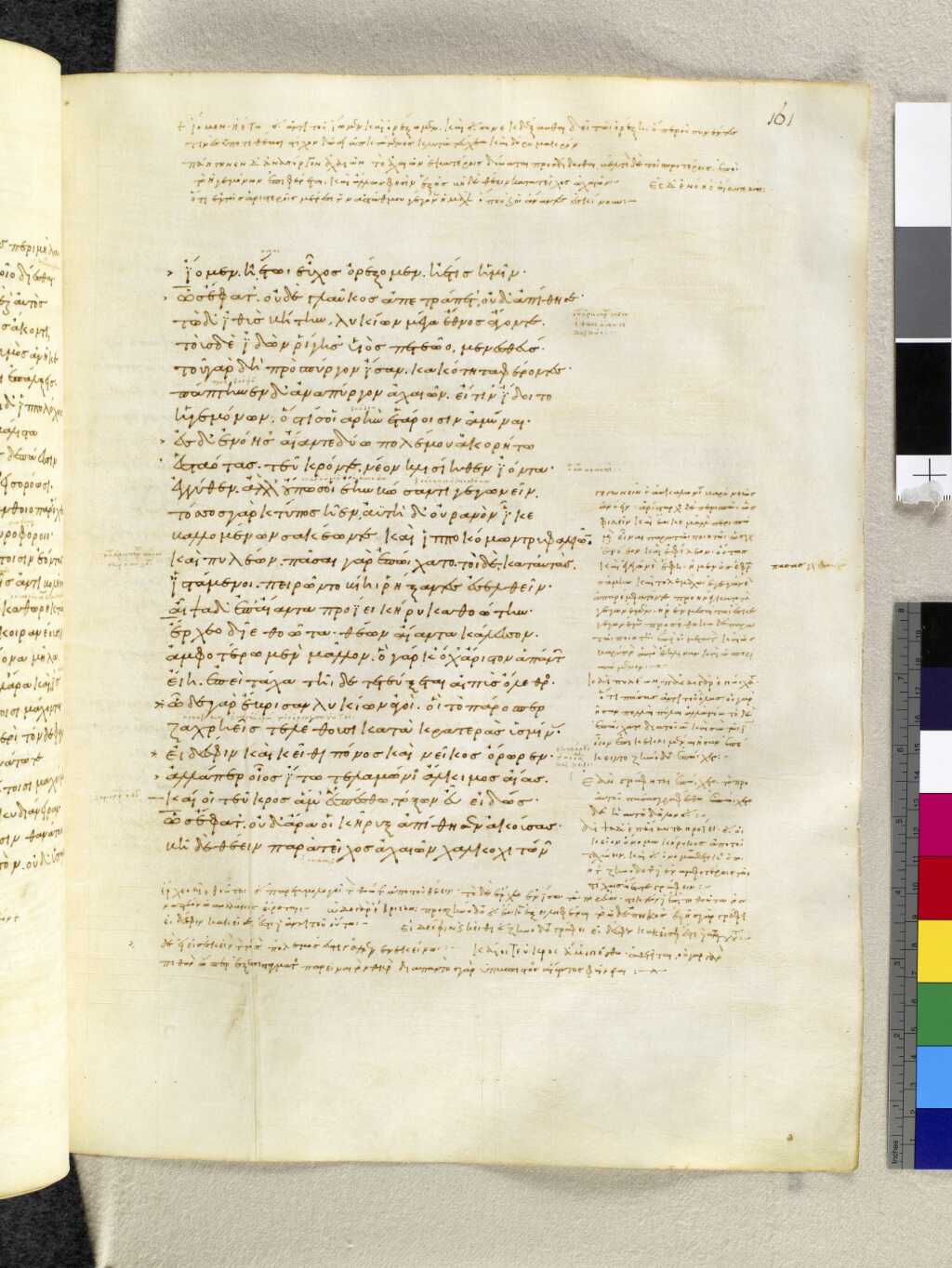
351ὣς ἔφατʼ, οὐδʼ ἄρα οἱ κῆρυξ ἀπίθησεν ἀκούσας, 352βῆ δὲ θέειν παρὰ τεῖχος Ἀχαιῶν χαλκοχιτώνων, 353στῆ δὲ παρʼ Αἰάντεσσι κιών, εἶθαρ δὲ προσηύδα· 354Αἴαντʼ Ἀργείων ἡγήτορε χαλκοχιτώνων 355ἠνώγει Πετεῶο διοτρεφέος φίλος υἱὸς 356κεῖσʼ ἴμεν, ὄφρα πόνοιο μίνυνθά περ ἀντιάσητον 357ἀμφοτέρω μὲν μᾶλλον· ὃ γάρ κʼ ὄχʼ ἄριστον ἁπάντων 358εἴη, ἐπεὶ τάχα κεῖθι τετεύξεται αἰπὺς ὄλεθρος· 359ὧδε γὰρ ἔβρισαν Λυκίων ἀγοί, οἳ τὸ πάρος περ 360ζαχρηεῖς τελέθουσι κατὰ κρατερὰς ὑσμίνας. 361εἰ δὲ καὶ ἐνθάδε περ πόλεμος καὶ νεῖκος ὄρωρεν, 362ἀλλά περ οἶος ἴτω Τελαμώνιος ἄλκιμος Αἴας, 363καί οἱ Τεῦκρος ἅμα σπέσθω τόξων ἐῢ εἰδώς. 364ὣς ἔφατʼ, οὐδʼ ἀπίθησε μέγας Τελαμώνιος Αἴας. 365αὐτίκʼ Ὀϊλιάδην ἔπεα πτερόεντα προσηύδα· 366Αἶαν σφῶϊ μὲν αὖθι, σὺ καὶ κρατερὸς Λυκομήδης, 367ἑσταότες Δαναοὺς ὀτρύνετον ἶφι μάχεσθαι· 368αὐτὰρ ἐγὼ κεῖσʼ εἶμι καὶ ἀντιόω πολέμοιο· 369αἶψα δʼ ἐλεύσομαι αὖτις, ἐπὴν εὖ τοῖς ἐπαμύνω. 370ὣς ἄρα φωνήσας ἀπέβη Τελαμώνιος Αἴας, 371καί οἱ Τεῦκρος ἅμʼ ᾖε κασίγνητος καὶ ὄπατρος· 372τοῖς δʼ ἅμα Πανδίων Τεύκρου φέρε καμπύλα τόξα. 373εὖτε Μενεσθῆος μεγαθύμου πύργον ἵκοντο 374τείχεος ἐντὸς ἰόντες, ἐπειγομένοισι δʼ ἵκοντο, 375οἳ δʼ ἐπʼ ἐπάλξεις βαῖνον ἐρεμνῇ λαίλαπι ἶσοι
Great Ajax son of Telamon heeded the message, and at once spoke to the son of Oileus. “Ajax,” said he, “do you two, yourself and brave Lycomedes, stay here and keep the Danaans in heart to fight their hardest. I will go over yonder, and bear my part in the fray, but I will come back here at once as soon as I have given them the help they need.”
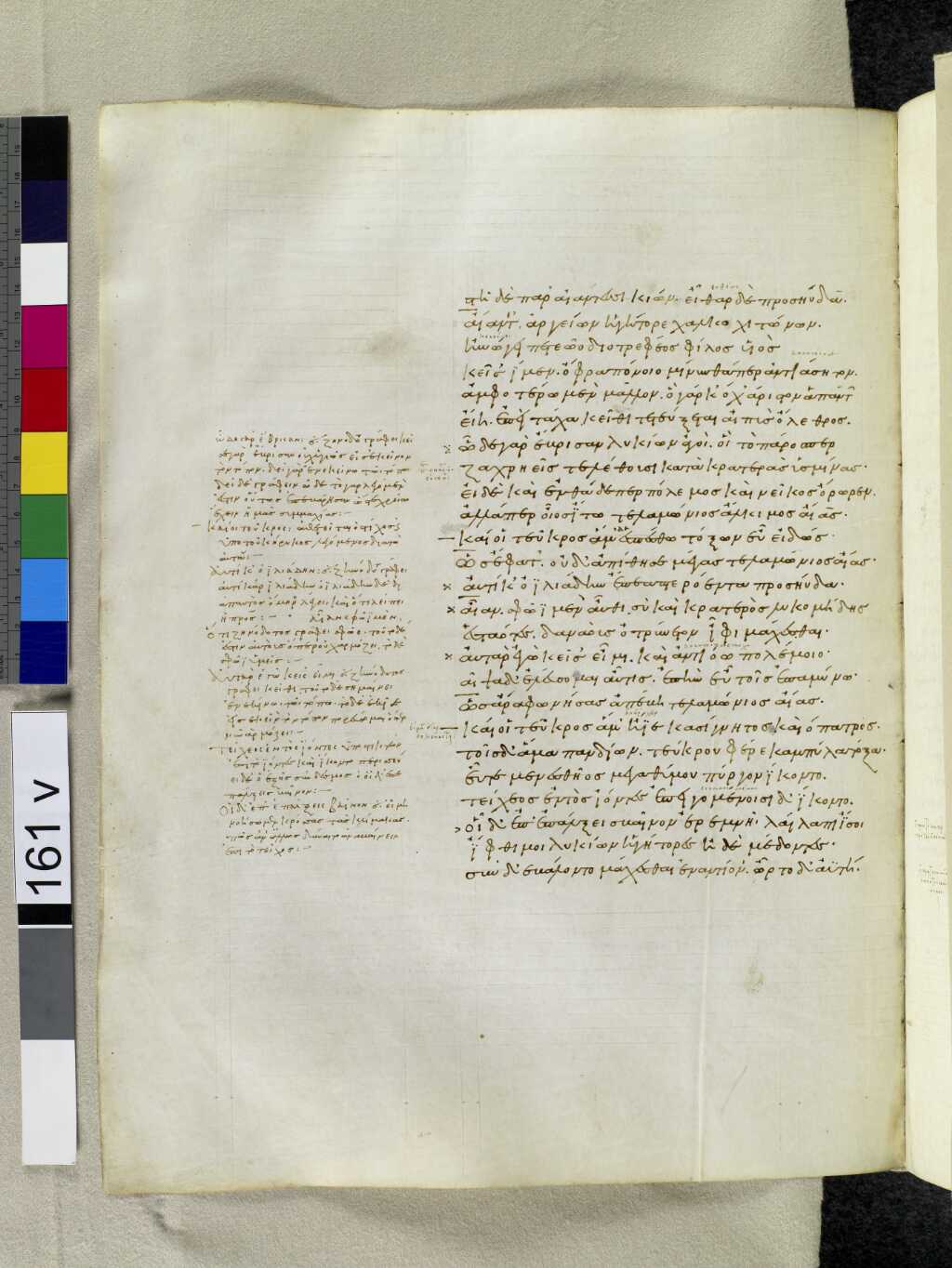
376ἴφθιμοι Λυκίων ἡγήτορες ἠδὲ μέδοντες· 377σὺν δʼ ἐβάλοντο μάχεσθαι ἐναντίον, ὦρτο δʼ ἀϋτή. 378Αἴας δὲ πρῶτος Τελαμώνιος ἄνδρα κατέκτα 379Σαρπήδοντος ἑταῖρον Ἐπικλῆα μεγάθυμον 380μαρμάρῳ ὀκριόεντι βαλών, ὅ ῥα τείχεος ἐντὸς 381κεῖτο μέγας παρʼ ἔπαλξιν ὑπέρτατος· οὐδέ κέ μιν ῥέα 382χείρεσσʼ ἀμφοτέρῃς ἔχοι ἀνὴρ οὐδὲ μάλʼ ἡβῶν, 383οἷοι νῦν βροτοί εἰσʼ· ὃ δʼ ἄρʼ ὑψόθεν ἔμβαλʼ ἀείρας, 384θλάσσε δὲ τετράφαλον κυνέην, σὺν δʼ ὀστέʼ ἄραξε 385πάντʼ ἄμυδις κεφαλῆς· ὃ δʼ ἄρʼ ἀρνευτῆρι ἐοικὼς 386κάππεσʼ ἀφʼ ὑψηλοῦ πύργου, λίπε δʼ ὀστέα θυμός. 387Τεῦκρος δὲ Γλαῦκον κρατερὸν παῖδʼ Ἱππολόχοιο 388ἰῷ ἐπεσσύμενον βάλε τείχεος ὑψηλοῖο, 389ᾗ ῥʼ ἴδε γυμνωθέντα βραχίονα, παῦσε δὲ χάρμης. 390ἂψ δʼ ἀπὸ τείχεος ἆλτο λαθών, ἵνα μή τις Ἀχαιῶν 391βλήμενον ἀθρήσειε καὶ εὐχετόῳτʼ ἐπέεσσι. 392Σαρπήδοντι δʼ ἄχος γένετο Γλαύκου ἀπιόντος 393αὐτίκʼ ἐπεί τʼ ἐνόησεν· ὅμως δʼ οὐ λήθετο χάρμης, 394ἀλλʼ ὅ γε Θεστορίδην Ἀλκμάονα δουρὶ τυχήσας 395νύξʼ, ἐκ δʼ ἔσπασεν ἔγχος· ὃ δʼ ἑσπόμενος πέσε δουρὶ 396πρηνής, ἀμφὶ δέ οἱ βράχε τεύχεα ποικίλα χαλκῷ, 397Σαρπηδὼν δʼ ἄρʼ ἔπαλξιν ἑλὼν χερσὶ στιβαρῇσιν 398ἕλχʼ, ἣ δʼ ἕσπετο πᾶσα διαμπερές, αὐτὰρ ὕπερθε 399τεῖχος ἐγυμνώθη, πολέεσσι δὲ θῆκε κέλευθον. 400τὸν δʼ Αἴας καὶ Τεῦκρος ὁμαρτήσανθʼ ὃ μὲν ἰῷ
With this, Ajax son of Telamon set off, and Teucer, his brother by the same father, went also, with Pandion to carry Teucer’s bow. They went along inside the wall, and when they came to the tower where Menestheus was (and hard pressed indeed did they find him) the brave captains and leaders of the Lycians were storming the battlements as it were a thick dark cloud, fighting in close quarters, and raising the battle-cry aloud.
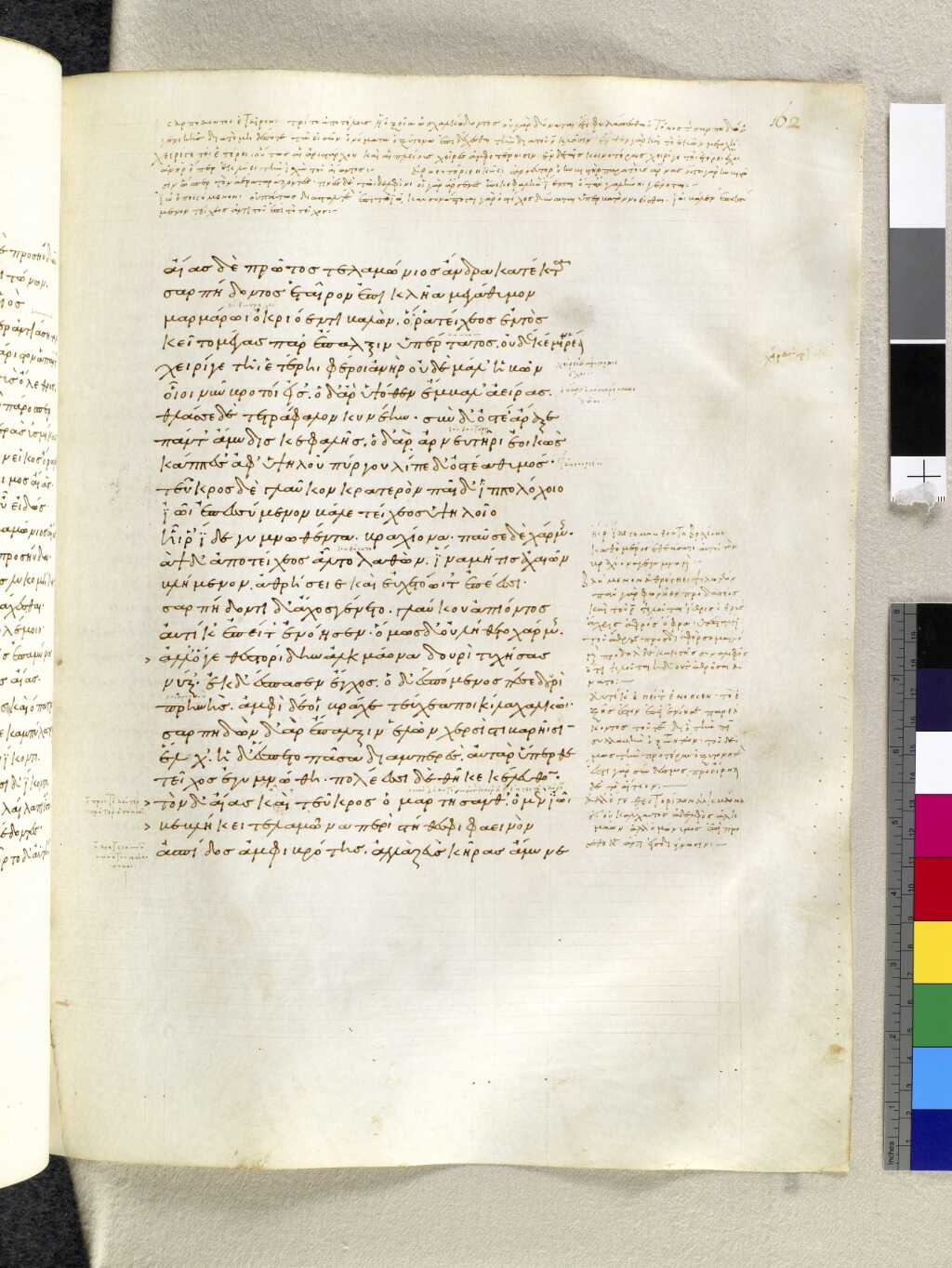
401βεβλήκει τελαμῶνα περὶ στήθεσσι φαεινὸν 402ἀσπίδος ἀμφιβρότης· ἀλλὰ Ζεὺς κῆρας ἄμυνε 403παιδὸς ἑοῦ, μὴ νηυσὶν ἔπι πρύμνῃσι δαμείη· 404Αἴας δʼ ἀσπίδα νύξεν ἐπάλμενος, οὐδὲ διὰ πρὸ 405ἤλυθεν ἐγχείη, στυφέλιξε δέ μιν μεμαῶτα. 406χώρησεν δʼ ἄρα τυτθὸν ἐπάλξιος· οὐδʼ ὅ γε πάμπαν 407χάζετʼ, ἐπεί οἱ θυμὸς ἐέλπετο κῦδος ἀρέσθαι. 408κέκλετο δʼ ἀντιθέοισιν ἑλιξάμενος Λυκίοισιν· 409ὦ Λύκιοι τί τʼ ἄρʼ ὧδε μεθίετε θούριδος ἀλκῆς; 410ἀργαλέον δέ μοί ἐστι καὶ ἰφθίμῳ περ ἐόντι 411μούνῳ ῥηξαμένῳ θέσθαι παρὰ νηυσὶ κέλευθον· 412ἀλλʼ ἐφομαρτεῖτε· πλεόνων δέ τι ἔργον ἄμεινον. 413ὣς ἔφαθʼ, οἳ δὲ ἄνακτος ὑποδείσαντες ὁμοκλὴν 414μᾶλλον ἐπέβρισαν βουληφόρον ἀμφὶ ἄνακτα. 415Ἀργεῖοι δʼ ἑτέρωθεν ἐκαρτύναντο φάλαγγας 416τείχεος ἔντοσθεν, μέγα δέ σφισι φαίνετο ἔργον· 417οὔτε γὰρ ἴφθιμοι Λύκιοι Δαναῶν ἐδύναντο 418τεῖχος ῥηξάμενοι θέσθαι παρὰ νηυσὶ κέλευθον, 419οὔτέ ποτʼ αἰχμηταὶ Δαναοὶ Λυκίους ἐδύναντο 420τείχεος ἂψ ὤσασθαι, ἐπεὶ τὰ πρῶτα πέλασθεν. 421ἀλλʼ ὥς τʼ ἀμφʼ οὔροισι δύʼ ἀνέρε δηριάασθον 422μέτρʼ ἐν χερσὶν ἔχοντες ἐπιξύνῳ ἐν ἀρούρῃ, 423ὥ τʼ ὀλίγῳ ἐνὶ χώρῳ ἐρίζητον περὶ ἴσης, 424ὣς ἄρα τοὺς διέεργον ἐπάλξιες· οἳ δʼ ὑπὲρ αὐτέων 425δῄουν ἀλλήλων ἀμφὶ στήθεσσι βοείας
First, Ajax son of Telamon killed brave Epicles, a comrade of Sarpedon, hitting him with a jagged stone that lay by the battlements at the very top of the wall. As men now are, even one who is in the bloom of youth could hardly lift it with his two hands, but Ajax raised it high aloft and flung it down, smashing Epicles’ four-crested helmet so that the bones of his head were crushed to pieces, and he fell from the high wall as though he were diving, with no more life left in him. Then Teucer wounded Glaucus the brave son of Hippolochus as he was coming on to attack the wall. He saw his shoulder bare and aimed an arrow at it, which made Glaucus leave off fighting. Thereon he sprang covertly down for fear some of the Achaeans might see that he was wounded and taunt him. Sarpedon was stung with grief when he saw Glaucus leave him, still he did not leave off fighting, but aimed his spear at Alcmaon the son of Thestor and hit him. He drew his spear back again and Alcmaon came down headlong after it with his bronzed armour rattling round him. Then Sarpedon seized the battlement in his strong hands, and tugged at it till it all gave way together, and a breach was made through which many might pass.
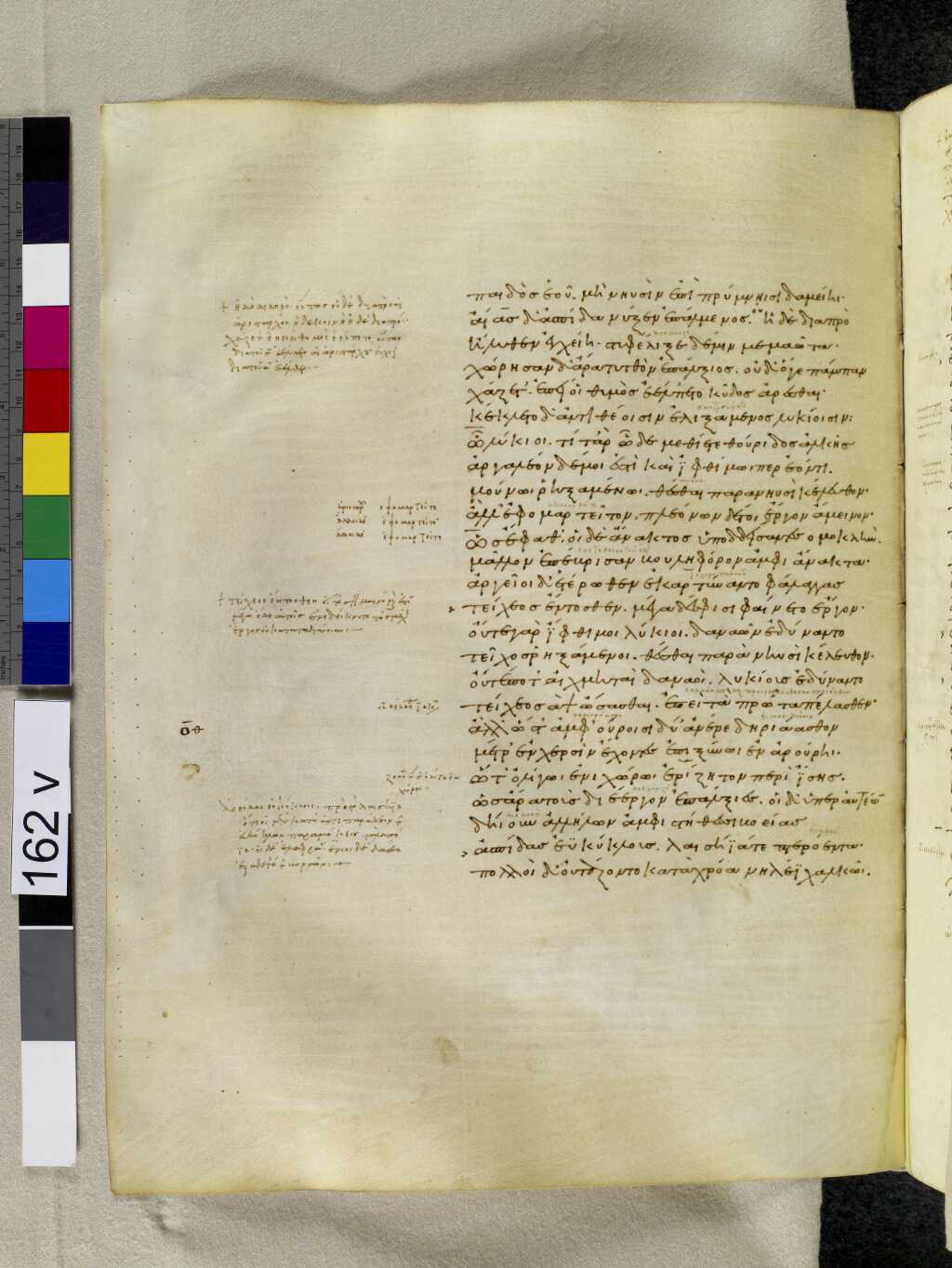
426ἀσπίδας εὐκύκλους λαισήϊά τε πτερόεντα. 427πολλοὶ δʼ οὐτάζοντο κατὰ χρόα νηλέϊ χαλκῷ, 428ἠμὲν ὅτεῳ στρεφθέντι μετάφρενα γυμνωθείη 429μαρναμένων, πολλοὶ δὲ διαμπερὲς ἀσπίδος αὐτῆς. 430πάντῃ δὴ πύργοι καὶ ἐπάλξιες αἵματι φωτῶν 431ἐρράδατʼ ἀμφοτέρωθεν ἀπὸ Τρώων καὶ Ἀχαιῶν. 432ἀλλʼ οὐδʼ ὧς ἐδύναντο φόβον ποιῆσαι Ἀχαιῶν, 433ἀλλʼ ἔχον ὥς τε τάλαντα γυνὴ χερνῆτις ἀληθής, 434ἥ τε σταθμὸν ἔχουσα καὶ εἴριον ἀμφὶς ἀνέλκει 435ἰσάζουσʼ, ἵνα παισὶν ἀεικέα μισθὸν ἄρηται· 436ὣς μὲν τῶν ἐπὶ ἶσα μάχη τέτατο πτόλεμός τε, 437πρίν γʼ ὅτε δὴ Ζεὺς κῦδος ὑπέρτερον Ἕκτορι δῶκε 438Πριαμίδῃ, ὃς πρῶτος ἐσήλατο τεῖχος Ἀχαιῶν. 439ἤϋσεν δὲ διαπρύσιον Τρώεσσι γεγωνώς· 440ὄρνυσθʼ ἱππόδαμοι Τρῶες, ῥήγνυσθε δὲ τεῖχος 441Ἀργείων καὶ νηυσὶν ἐνίετε θεσπιδαὲς πῦρ. 442ὣς φάτʼ ἐποτρύνων, οἳ δʼ οὔασι πάντες ἄκουον, 443ἴθυσαν δʼ ἐπὶ τεῖχος ἀολλέες· οἳ μὲν ἔπειτα 444κροσσάων ἐπέβαινον ἀκαχμένα δούρατʼ ἔχοντες, 445Ἕκτωρ δʼ ἁρπάξας λᾶαν φέρεν, ὅς ῥα πυλάων 446ἑστήκει πρόσθε πρυμνὸς παχύς, αὐτὰρ ὕπερθεν 447ὀξὺς ἔην· τὸν δʼ οὔ κε δύʼ ἀνέρε δήμου ἀρίστω 448ῥηϊδίως ἐπʼ ἄμαξαν ἀπʼ οὔδεος ὀχλίσσειαν, 449οἷοι νῦν βροτοί εἰσʼ· ὃ δέ μιν ῥέα πάλλε καὶ οἶος. 450τόν οἱ ἐλαφρὸν ἔθηκε Κρόνου πάϊς ἀγκυλομήτεω.
Ajax and Teucer then both of them attacked him. Teucer hit him with an arrow on the band that bore the shield which covered his body, but Jove saved his son from destruction that he might not fall by the ships’ sterns. Meanwhile Ajax sprang on him and pierced his shield, but the spear did not go clean through, though it hustled him back that he could come on no further. He therefore retired a little space from the battlement, yet without losing all his ground, for he still thought to cover himself with glory. Then he turned round and shouted to the brave Lycians saying, “Lycians, why do you thus fail me? For all my prowess I cannot break through the wall and open a way to the ships single-handed. Come close on behind me, for the more there are of us the better.”
The Lycians, shamed by his rebuke, pressed closer round him who was their counsellor and their king. The Argives on their part got their men in fighting order within the wall, and there was a deadly struggle between them. The Lycians could not break through the wall and force their way to the ships, nor could the Danaans drive the Lycians from the wall now that they had once reached it. As two men, measuring-rods in hand, quarrel about their boundaries in a field that they own in common, and stickle for their rights though they be but in a mere strip, even so did the battlements now serve as a bone of contention, and they beat one another’s round shields for their possession. Many a man’s body was wounded with the pitiless bronze, as he turned round and bared his back to the foe, and many were struck clean through their shields; the wall and battlements were everywhere deluged with the blood alike of Trojans and of Achaeans. But even so the Trojans could not rout the Achaeans, who still held on; and as some honest hard-working woman weighs wool in her balance and sees that the scales be true, for she would gain some pitiful earnings for her little ones, even so was the fight balanced evenly between them till the time came when Jove gave the greater glory to Hector son of Priam, who was first to spring towards the wall of the Achaeans. When he had done so, he cried aloud to the Trojans, “Up, Trojans, break the wall of the Argives, and fling fire upon their ships.”
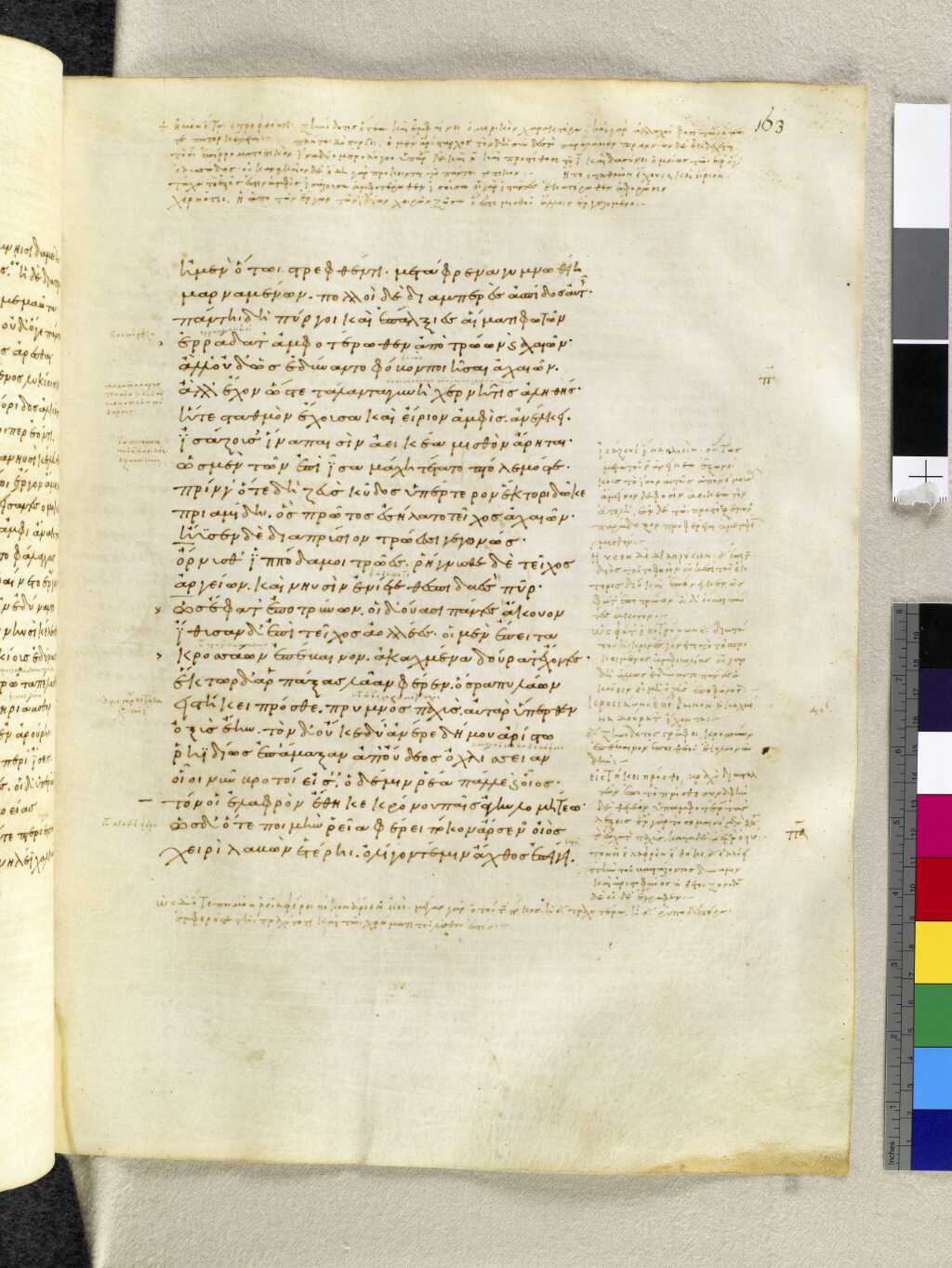
451ὡς δʼ ὅτε ποιμὴν ῥεῖα φέρει πόκον ἄρσενος οἰὸς 452χειρὶ λαβὼν ἑτέρῃ, ὀλίγον τέ μιν ἄχθος ἐπείγει, 453ὣς Ἕκτωρ ἰθὺς σανίδων φέρε λᾶαν ἀείρας, 454αἵ ῥα πύλας εἴρυντο πύκα στιβαρῶς ἀραρυίας 455δικλίδας ὑψηλάς· δοιοὶ δʼ ἔντοσθεν ὀχῆες 456εἶχον ἐπημοιβοί, μία δὲ κληῒς ἐπαρήρει. 457στῆ δὲ μάλʼ ἐγγὺς ἰών, καὶ ἐρεισάμενος βάλε μέσσας 458εὖ διαβάς, ἵνα μή οἱ ἀφαυρότερον βέλος εἴη, 459ῥῆξε δʼ ἀπʼ ἀμφοτέρους θαιρούς· πέσε δὲ λίθος εἴσω 460βριθοσύνῃ, μέγα δʼ ἀμφὶ πύλαι μύκον, οὐδʼ ἄρʼ ὀχῆες 461ἐσχεθέτην, σανίδες δὲ διέτμαγεν ἄλλυδις ἄλλη 462λᾶος ὑπὸ ῥιπῆς· ὃ δʼ ἄρʼ ἔσθορε φαίδιμος Ἕκτωρ 463νυκτὶ θοῇ ἀτάλαντος ὑπώπια· λάμπε δὲ χαλκῷ 464σμερδαλέῳ, τὸν ἕεστο περὶ χροΐ, δοιὰ δὲ χερσὶ 465δοῦρʼ ἔχεν· οὔ κέν τίς μιν ἐρύκακεν ἀντιβολήσας 466νόσφι θεῶν ὅτʼ ἐσᾶλτο πύλας· πυρὶ δʼ ὄσσε δεδήει. 467κέκλετο δὲ Τρώεσσιν ἑλιξάμενος καθʼ ὅμιλον 468τεῖχος ὑπερβαίνειν· τοὶ δʼ ὀτρύνοντι πίθοντο. 469αὐτίκα δʼ οἳ μὲν τεῖχος ὑπέρβασαν, οἳ δὲ κατʼ αὐτὰς 470ποιητὰς ἐσέχυντο πύλας· Δαναοὶ δὲ φόβηθεν 471νῆας ἀνὰ γλαφυράς, ὅμαδος δʼ ἀλίαστος ἐτύχθη.
Thus did he hound them on, and in one body they rushed straight at the wall as he had bidden them, and scaled the battlements with sharp spears in their hands. Hector laid hold of a stone that lay just outside the gates and was thick at one end but pointed at the other; two of the best men in a town, as men now are, could hardly raise it from the ground and put it on to a waggon, but Hector lifted it quite easily by himself, for the son of scheming Saturn made it light for him. As a shepherd picks up a ram’s fleece with one hand and finds it no burden, so easily did Hector lift the great stone and drive it right at the doors that closed the gates so strong and so firmly set. These doors were double and high, and were kept closed by two cross-bars to which there was but one key. When he had got close up to them, Hector strode towards them that his blow might gain in force and struck them in the middle, leaning his whole weight against them. He broke both hinges, and the stone fell inside by reason of its great weight. The portals re-echoed with the sound, the bars held no longer, and the doors flew open, one one way, and the other the other, through the force of the blow. Then brave Hector leaped inside with a face as dark as that of flying night. The gleaming bronze flashed fiercely about his body and he had two spears in his hand. None but a god could have withstood him as he flung himself into the gateway, and his eyes glared like fire. Then he turned round towards the Trojans and called on them to scale the wall, and they did as he bade them—some of them at once climbing over the wall, while others passed through the gates. The Danaans then fled panic-stricken towards their ships, and all was uproar and confusion.
Cite
Source & Cross-References
- Source text: Venetus A (10th c.) via Homer Multitext IIIF + Perseus Greek + Butler English (PG #2199) — view original
- Critical edition: Munro & Allen (Perseus Digital Library)
← previous · → next · v cycle view · l back to library