The Iliad, Book 19
Introduction
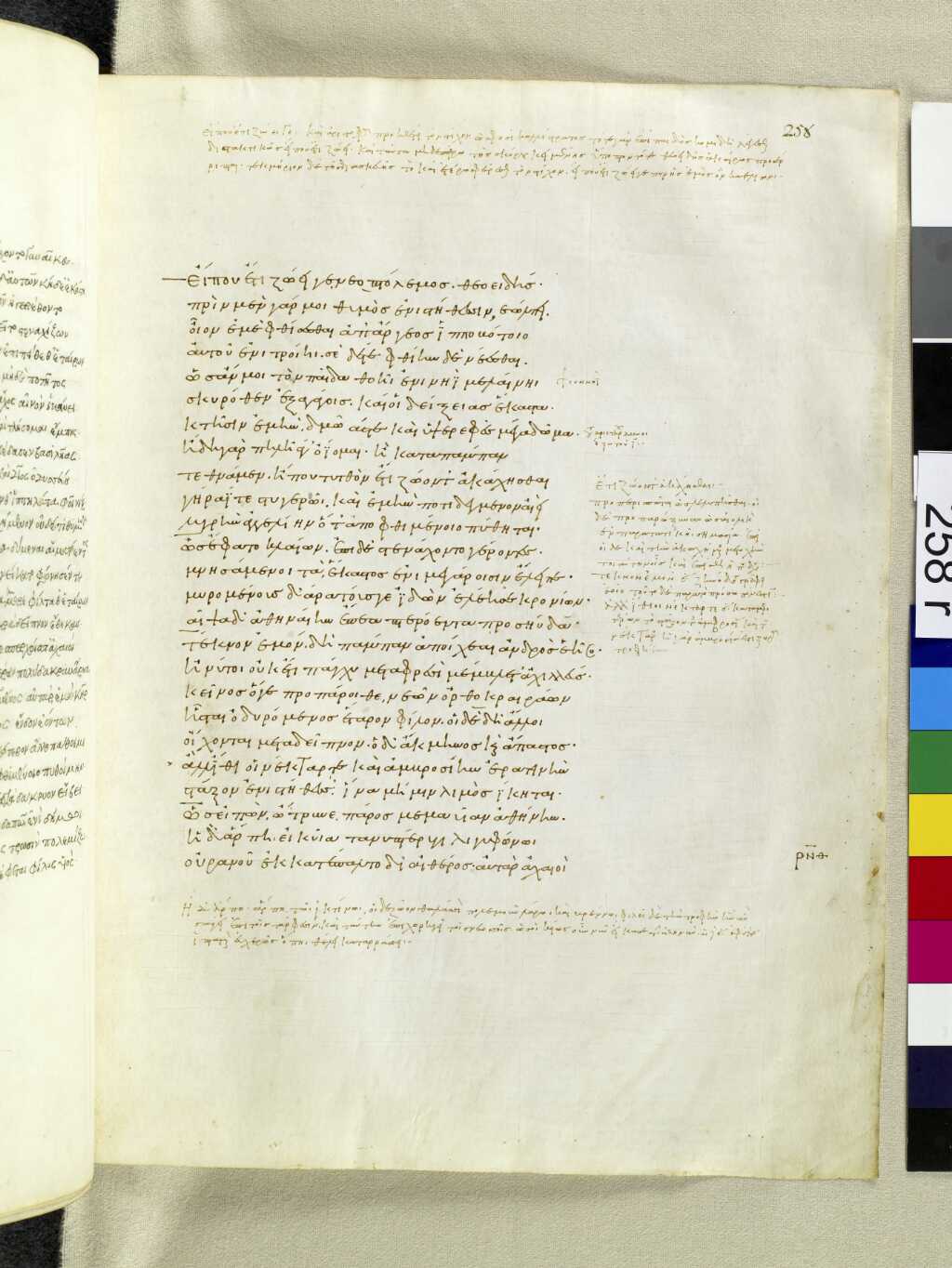
Book 19 of the Iliad with 17 sections, each linked to its specific folio in Venetus A (Marcianus Graecus 454, 10th c.). The Homer Multitext Project provides line-level folio mappings, ensuring every section of text corresponds to the exact manuscript page where it appears.
How was this verified? (Provenance)
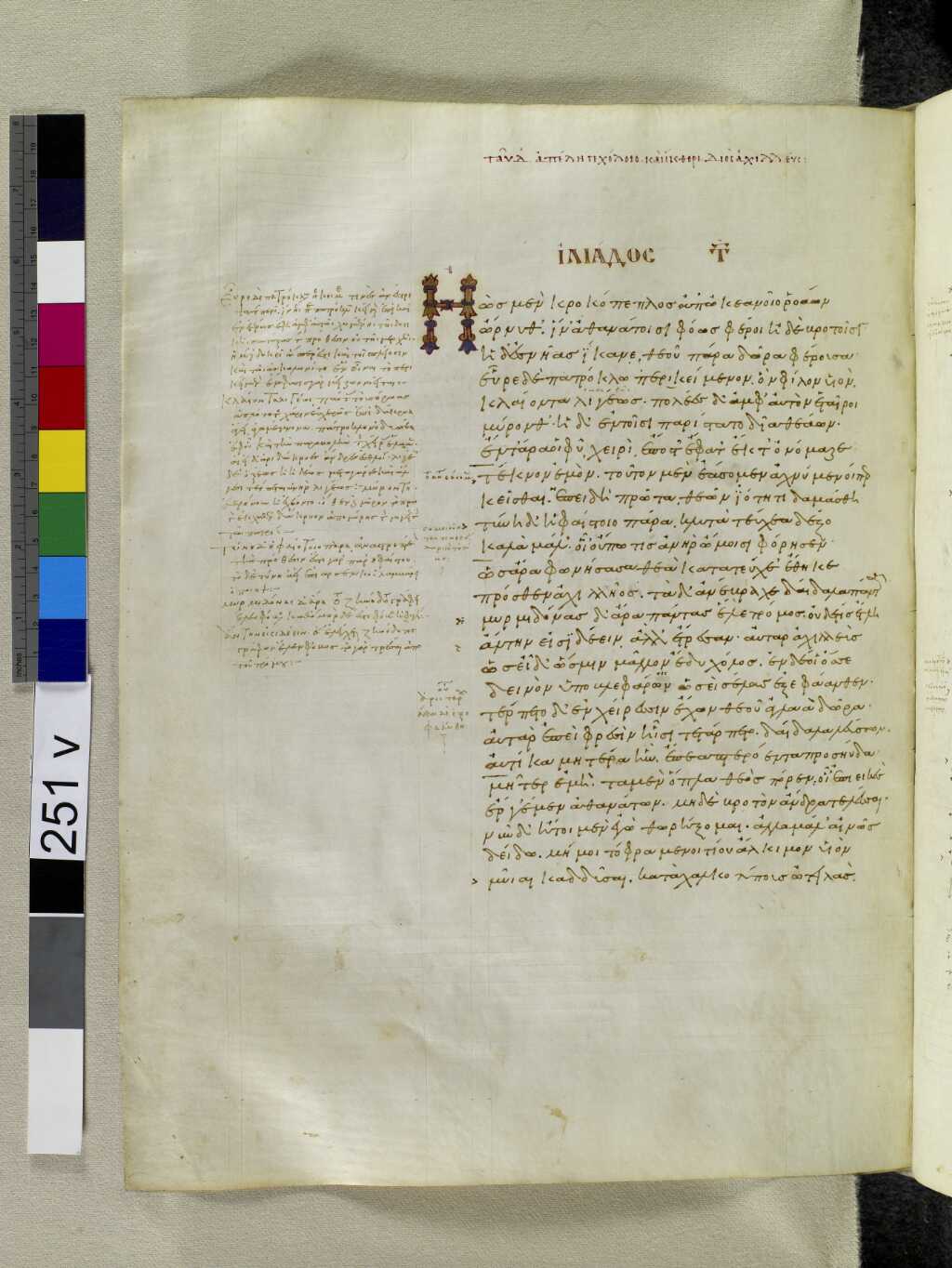
1Ἠὼς μὲν κροκόπεπλος ἀπʼ Ὠκεανοῖο ῥοάων 2ὄρνυθʼ, ἵνʼ ἀθανάτοισι φόως φέροι ἠδὲ βροτοῖσιν· 3ἣ δʼ ἐς νῆας ἵκανε θεοῦ πάρα δῶρα φέρουσα. 4εὗρε δὲ Πατρόκλῳ περικείμενον ὃν φίλον υἱὸν 5κλαίοντα λιγέως· πολέες δʼ ἀμφʼ αὐτὸν ἑταῖροι 6μύρονθʼ· ἣ δʼ ἐν τοῖσι παρίστατο δῖα θεάων, 7ἔν τʼ ἄρα οἱ φῦ χειρὶ ἔπος τʼ ἔφατʼ ἔκ τʼ ὀνόμαζε· 8τέκνον ἐμὸν τοῦτον μὲν ἐάσομεν ἀχνύμενοί περ 9κεῖσθαι, ἐπεὶ δὴ πρῶτα θεῶν ἰότητι δαμάσθη· 10τύνη δʼ Ἡφαίστοιο πάρα κλυτὰ τεύχεα δέξο 11καλὰ μάλʼ, οἷʼ οὔ πώ τις ἀνὴρ ὤμοισι φόρησεν. 12ὡς ἄρα φωνήσασα θεὰ κατὰ τεύχεʼ ἔθηκε 13πρόσθεν Ἀχιλλῆος· τὰ δʼ ἀνέβραχε δαίδαλα πάντα. 14Μυρμιδόνας δʼ ἄρα πάντας ἕλε τρόμος, οὐδέ τις ἔτλη 15ἄντην εἰσιδέειν, ἀλλʼ ἔτρεσαν. αὐτὰρ Ἀχιλλεὺς 16ὡς εἶδʼ, ὥς μιν μᾶλλον ἔδυ χόλος, ἐν δέ οἱ ὄσσε 17δεινὸν ὑπὸ βλεφάρων ὡς εἰ σέλας ἐξεφάανθεν· 18τέρπετο δʼ ἐν χείρεσσιν ἔχων θεοῦ ἀγλαὰ δῶρα. 19αὐτὰρ ἐπεὶ φρεσὶν ᾗσι τετάρπετο δαίδαλα λεύσσων 20αὐτίκα μητέρα ἣν ἔπεα πτερόεντα προσηύδα· 21μῆτερ ἐμὴ τὰ μὲν ὅπλα θεὸς πόρεν οἷʼ ἐπιεικὲς 22ἔργʼ ἔμεν ἀθανάτων, μὴ δὲ βροτὸν ἄνδρα τελέσσαι. 23νῦν δʼ ἤτοι μὲν ἐγὼ θωρήξομαι· ἀλλὰ μάλʼ αἰνῶς 24δείδω μή μοι τόφρα Μενοιτίου ἄλκιμον υἱὸν 25μυῖαι καδδῦσαι κατὰ χαλκοτύπους ὠτειλὰς
Achilles is reconciled with Agamemnon, puts on the armour which Vulcan had made him, and goes out to fight.
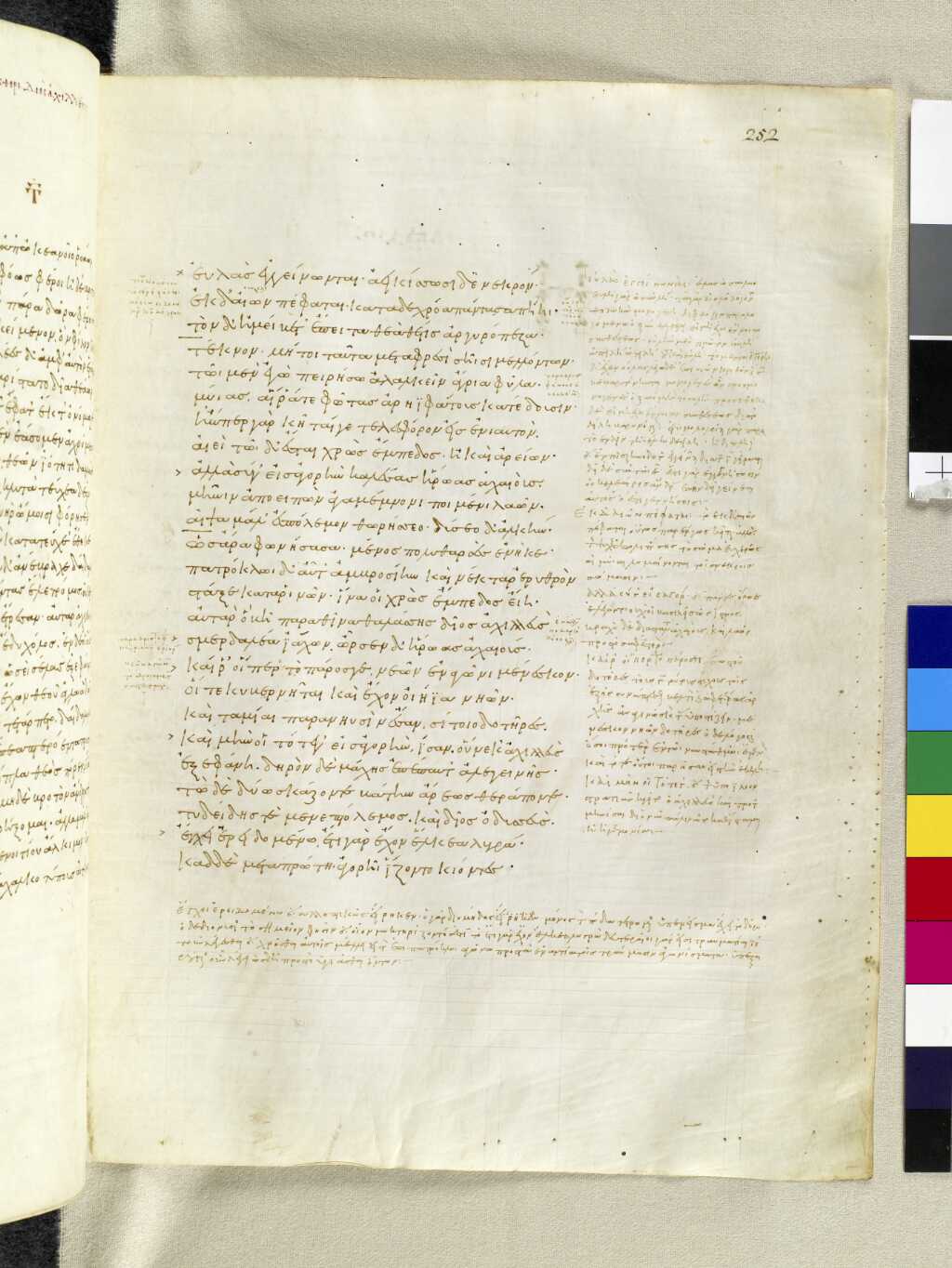
26εὐλὰς ἐγγείνωνται, ἀεικίσσωσι δὲ νεκρόν, 27ἐκ δʼ αἰὼν πέφαται, κατὰ δὲ χρόα πάντα σαπήῃ. 28τὸν δʼ ἠμείβετʼ ἔπειτα θεὰ Θέτις ἀργυρόπεζα· 29τέκνον μή τοι ταῦτα μετὰ φρεσὶ σῇσι μελόντων. 30τῷ μὲν ἐγὼ πειρήσω ἀλαλκεῖν ἄγρια φῦλα 31μυίας, αἵ ῥά τε φῶτας ἀρηϊφάτους κατέδουσιν· 32ἤν περ γὰρ κεῖταί γε τελεσφόρον εἰς ἐνιαυτόν, 33αἰεὶ τῷ γʼ ἔσται χρὼς ἔμπεδος, ἢ καὶ ἀρείων. 34ἀλλὰ σύ γʼ εἰς ἀγορὴν καλέσας ἥρωας Ἀχαιοὺς 35μῆνιν ἀποειπὼν Ἀγαμέμνονι ποιμένι λαῶν 36αἶψα μάλʼ ἐς πόλεμον θωρήσσεο, δύσεο δʼ ἀλκήν. 37ὣς ἄρα φωνήσασα μένος πολυθαρσὲς ἐνῆκε, 38Πατρόκλῳ δʼ αὖτʼ ἀμβροσίην καὶ νέκταρ ἐρυθρὸν 39στάξε κατὰ ῥινῶν, ἵνα οἱ χρὼς ἔμπεδος εἴη. 40αὐτὰρ ὃ βῆ παρὰ θῖνα θαλάσσης δῖος Ἀχιλλεὺς 41σμερδαλέα ἰάχων, ὦρσεν δʼ ἥρωας Ἀχαιούς. 42καί ῥʼ οἵ περ τὸ πάρος γε νεῶν ἐν ἀγῶνι μένεσκον 43οἵ τε κυβερνῆται καὶ ἔχον οἰήϊα νηῶν 44καὶ ταμίαι παρὰ νηυσὶν ἔσαν σίτοιο δοτῆρες, 45καὶ μὴν οἳ τότε γʼ εἰς ἀγορὴν ἴσαν, οὕνεκʼ Ἀχιλλεὺς 46ἐξεφάνη, δηρὸν δὲ μάχης ἐπέπαυτʼ ἀλεγεινῆς. 47τὼ δὲ δύω σκάζοντε βάτην Ἄρεος θεράποντε 48Τυδεΐδης τε μενεπτόλεμος καὶ δῖος Ὀδυσσεὺς 49ἔγχει ἐρειδομένω· ἔτι γὰρ ἔχον ἕλκεα λυγρά· 50κὰδ δὲ μετὰ πρώτῃ ἀγορῇ ἵζοντο κιόντες.
Now when Dawn in robe of saffron was hasting from the streams of Oceanus, to bring light to mortals and immortals, Thetis reached the ships with the armour that the god had given her. She found her son fallen about the body of Patroclus and weeping bitterly. Many also of his followers were weeping round him, but when the goddess came among them she clasped his hand in her own, saying, “My son, grieve as we may we must let this man lie, for it is by heaven’s will that he has fallen; now, therefore, accept from Vulcan this rich and goodly armour, which no man has ever yet borne upon his shoulders.”
As she spoke she set the armour before Achilles, and it rang out bravely as she did so. The Myrmidons were struck with awe, and none dared look full at it, for they were afraid; but Achilles was roused to still greater fury, and his eyes gleamed with a fierce light, for he was glad when he handled the splendid present which the god had made him. Then, as soon as he had satisfied himself with looking at it, he said to his mother, “Mother, the god has given me armour, meet handiwork for an immortal and such as no-one living could have fashioned; I will now arm, but I much fear that flies will settle upon the son of Menoetius and breed worms about his wounds, so that his body, now he is dead, will be disfigured and the flesh will rot.”
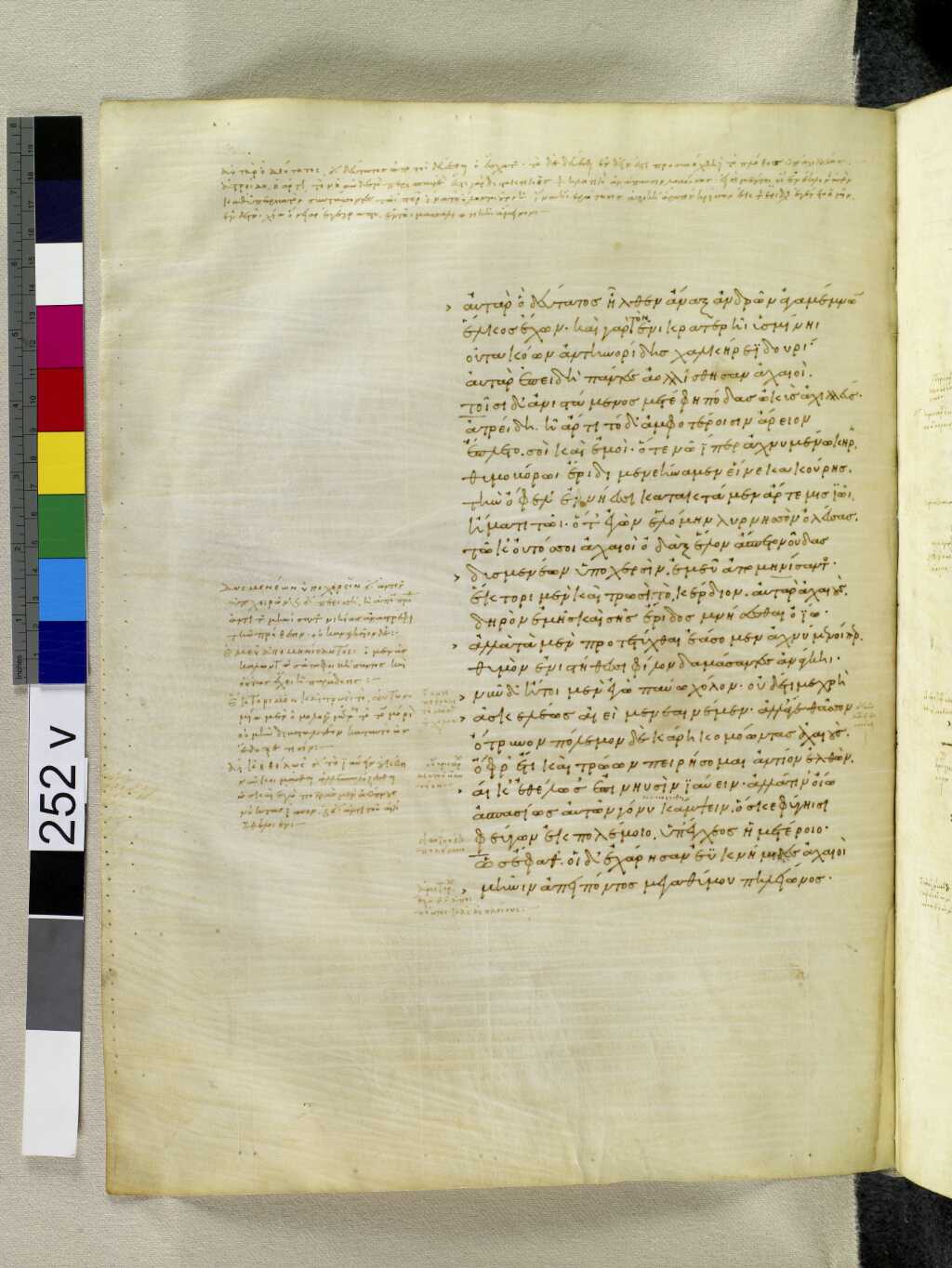
51αὐτὰρ ὃ δεύτατος ἦλθεν ἄναξ ἀνδρῶν Ἀγαμέμνων 52ἕλκος ἔχων· καὶ γὰρ τὸν ἐνὶ κρατερῇ ὑσμίνῃ 53οὖτα Κόων Ἀντηνορίδης χαλκήρεϊ δουρί. 54αὐτὰρ ἐπεὶ δὴ πάντες ἀολλίσθησαν Ἀχαιοί, 55τοῖσι δʼ ἀνιστάμενος μετέφη πόδας ὠκὺς Ἀχιλλεύς· 56Ἀτρεΐδη ἦ ἄρ τι τόδʼ ἀμφοτέροισιν ἄρειον 57ἔπλετο σοὶ καὶ ἐμοί, ὅ τε νῶΐ περ ἀχνυμένω κῆρ 58θυμοβόρῳ ἔριδι μενεήναμεν εἵνεκα κούρης; 59τὴν ὄφελʼ ἐν νήεσσι κατακτάμεν Ἄρτεμις ἰῷ 60ἤματι τῷ ὅτʼ ἐγὼν ἑλόμην Λυρνησσὸν ὀλέσσας· 61τώ κʼ οὐ τόσσοι Ἀχαιοὶ ὀδὰξ ἕλον ἄσπετον οὖδας 62δυσμενέων ὑπὸ χερσὶν ἐμεῦ ἀπομηνίσαντος. 63Ἕκτορι μὲν καὶ Τρωσὶ τὸ κέρδιον· αὐτὰρ Ἀχαιοὺς 64δηρὸν ἐμῆς καὶ σῆς ἔριδος μνήσεσθαι ὀΐω. 65ἀλλὰ τὰ μὲν προτετύχθαι ἐάσομεν ἀχνύμενοί περ 66θυμὸν ἐνὶ στήθεσσι φίλον δαμάσαντες ἀνάγκῃ· 67νῦν δʼ ἤτοι μὲν ἐγὼ παύω χόλον, οὐδέ τί με χρὴ 68ἀσκελέως αἰεὶ μενεαινέμεν· ἀλλʼ ἄγε θᾶσσον 69ὄτρυνον πόλεμον δὲ κάρη κομόωντας Ἀχαιούς, 70ὄφρʼ ἔτι καὶ Τρώων πειρήσομαι ἀντίον ἐλθὼν 71αἴ κʼ ἐθέλωσʼ ἐπὶ νηυσὶν ἰαύειν· ἀλλά τινʼ οἴω 72ἀσπασίως αὐτῶν γόνυ κάμψειν, ὅς κε φύγῃσι 73δηΐου ἐκ πολέμοιο ὑπʼ ἔγχεος ἡμετέροιο. 74ὣς ἔφαθʼ, οἳ δʼ ἐχάρησαν ἐϋκνήμιδες Ἀχαιοὶ 75μῆνιν ἀπειπόντος μεγαθύμου Πηλεΐωνος.
Silver-footed Thetis answered, “My son, be not disquieted about this matter. I will find means to protect him from the swarms of noisome flies that prey on the bodies of men who have been killed in battle. He may lie for a whole year, and his flesh shall still be as sound as ever, or even sounder. Call, therefore, the Achaean heroes in assembly; unsay your anger against Agamemnon; arm at once, and fight with might and main.”
As she spoke she put strength and courage into his heart, and she then dropped ambrosia and red nectar into the wounds of Patroclus, that his body might suffer no change.
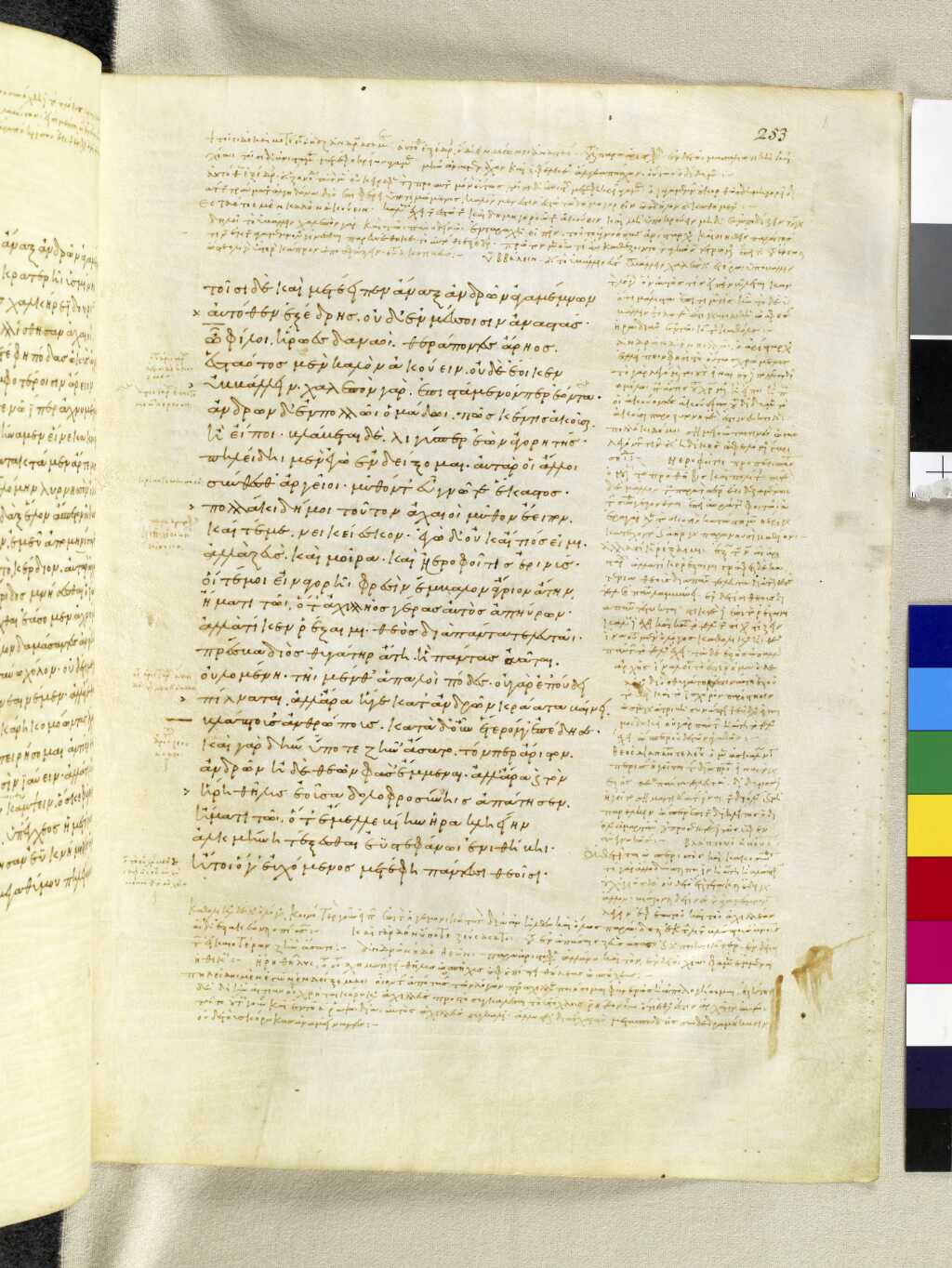
76τοῖσι δὲ καὶ μετέειπεν ἄναξ ἀνδρῶν Ἀγαμέμνων 77αὐτόθεν ἐξ ἕδρης, οὐδʼ ἐν μέσσοισιν ἀναστάς· 78ὦ φίλοι ἥρωες Δαναοὶ θεράποντες Ἄρηος 79ἑσταότος μὲν καλὸν ἀκούειν, οὐδὲ ἔοικεν 80ὑββάλλειν· χαλεπὸν γὰρ ἐπισταμένῳ περ ἐόντι. 81ἀνδρῶν δʼ ἐν πολλῷ ὁμάδῳ πῶς κέν τις ἀκούσαι 82ἢ εἴποι; βλάβεται δὲ λιγύς περ ἐὼν ἀγορητής. 83Πηλεΐδῃ μὲν ἐγὼν ἐνδείξομαι· αὐτὰρ οἱ ἄλλοι 84σύνθεσθʼ Ἀργεῖοι, μῦθόν τʼ εὖ γνῶτε ἕκαστος. 85πολλάκι δή μοι τοῦτον Ἀχαιοὶ μῦθον ἔειπον 86καί τέ με νεικείεσκον· ἐγὼ δʼ οὐκ αἴτιός εἰμι, 87ἀλλὰ Ζεὺς καὶ Μοῖρα καὶ ἠεροφοῖτις Ἐρινύς, 88οἵ τέ μοι εἰν ἀγορῇ φρεσὶν ἔμβαλον ἄγριον ἄτην, 89ἤματι τῷ ὅτʼ Ἀχιλλῆος γέρας αὐτὸς ἀπηύρων. 90ἀλλὰ τί κεν ῥέξαιμι; θεὸς διὰ πάντα τελευτᾷ. 91πρέσβα Διὸς θυγάτηρ Ἄτη, ἣ πάντας ἀᾶται, 92οὐλομένη· τῇ μέν θʼ ἁπαλοὶ πόδες· οὐ γὰρ ἐπʼ οὔδει 93πίλναται, ἀλλʼ ἄρα ἥ γε κατʼ ἀνδρῶν κράατα βαίνει 94βλάπτουσʼ ἀνθρώπους· κατὰ δʼ οὖν ἕτερόν γε πέδησε. 95καὶ γὰρ δή νύ ποτε Ζεὺς ἄσατο, τόν περ ἄριστον 96ἀνδρῶν ἠδὲ θεῶν φασʼ ἔμμεναι· ἀλλʼ ἄρα καὶ τὸν 97Ἥρη θῆλυς ἐοῦσα δολοφροσύνῃς ἀπάτησεν, 98ἤματι τῷ ὅτʼ ἔμελλε βίην Ἡρακληείην 99Ἀλκμήνη τέξεσθαι ἐϋστεφάνῳ ἐνὶ Θήβῃ. 100ἤτοι ὅ γʼ εὐχόμενος μετέφη πάντεσσι θεοῖσι·
Then Achilles went out upon the sea-shore, and with a loud cry called on the Achaean heroes. On this even those who as yet had stayed always at the ships, the pilots and helmsmen, and even the stewards who were about the ships and served out rations, all came to the place of assembly because Achilles had shown himself after having held aloof so long from fighting. Two sons of Mars, Ulysses and the son of Tydeus, came limping, for their wounds still pained them; nevertheless they came, and took their seats in the front row of the assembly. Last of all came Agamemnon, king of men, he too wounded, for Coon son of Antenor had struck him with a spear in battle.
When the Achaeans were got together Achilles rose and said, “Son of Atreus, surely it would have been better alike for both you and me, when we two were in such high anger about Briseis, surely it would have been better, had Diana’s arrow slain her at the ships on the day when I took her after having sacked Lyrnessus. For so, many an Achaean the less would have bitten dust before the foe in the days of my anger. It has been well for Hector and the Trojans, but the Achaeans will long indeed remember our quarrel. Now, however, let it be, for it is over. If we have been angry, necessity has schooled our anger. I put it from me: I dare not nurse it for ever; therefore, bid the Achaeans arm forthwith that I may go out against the Trojans, and learn whether they will be in a mind to sleep by the ships or no. Glad, I ween, will he be to rest his knees who may fly my spear when I wield it.”
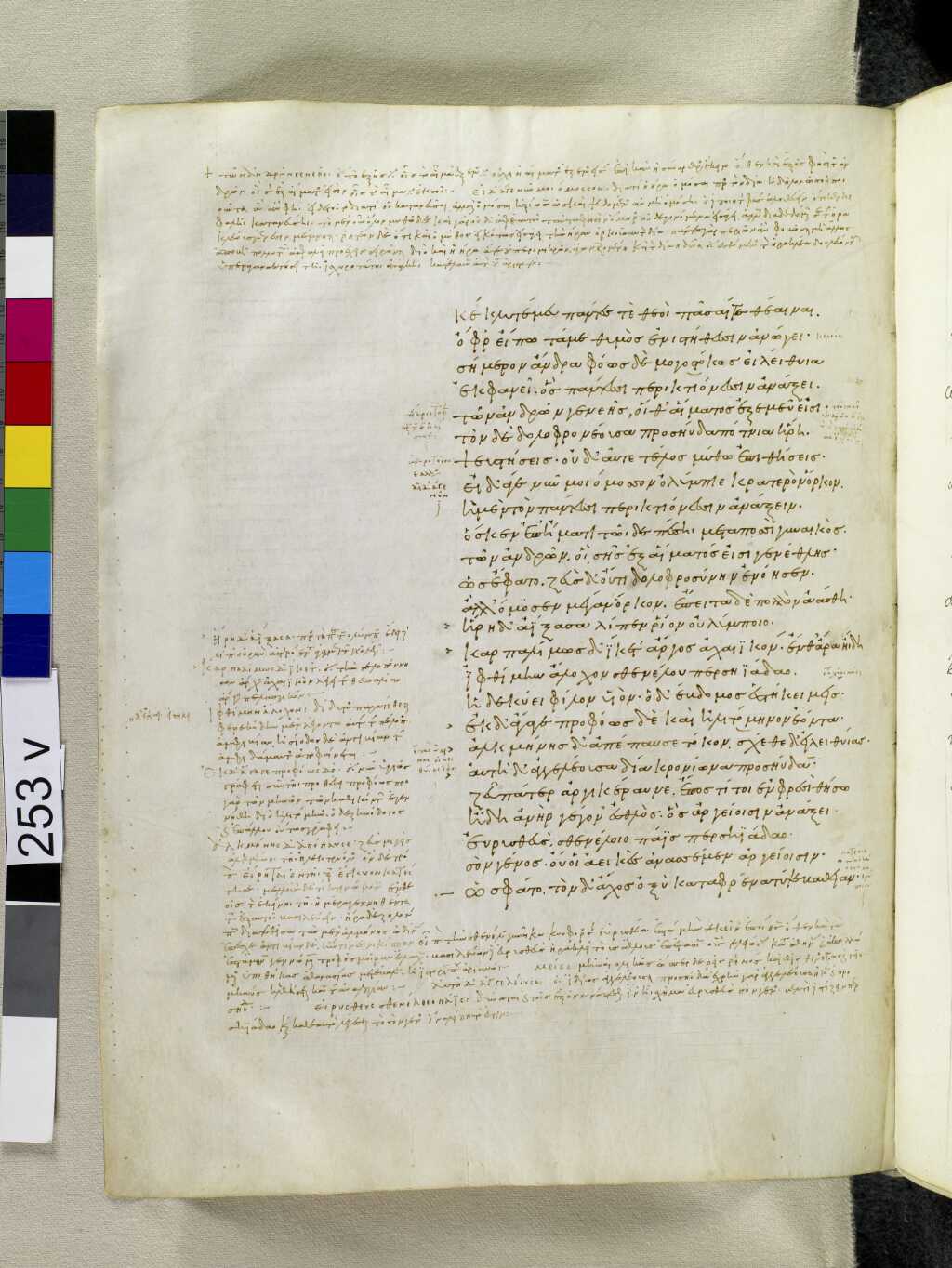
101κέκλυτέ μευ πάντές τε θεοὶ πᾶσαί τε θέαιναι, 102ὄφρʼ εἴπω τά με θυμὸς ἐνὶ στήθεσσιν ἀνώγει. 103σήμερον ἄνδρα φόως δὲ μογοστόκος Εἰλείθυια 104ἐκφανεῖ, ὃς πάντεσσι περικτιόνεσσιν ἀνάξει, 105τῶν ἀνδρῶν γενεῆς οἵ θʼ αἵματος ἐξ ἐμεῦ εἰσί. 106τὸν δὲ δολοφρονέουσα προσηύδα πότνια Ἥρη· 107ψευστήσεις, οὐδʼ αὖτε τέλος μύθῳ ἐπιθήσεις. 108εἰ δʼ ἄγε νῦν μοι ὄμοσσον Ὀλύμπιε καρτερὸν ὅρκον, 109ἦ μὲν τὸν πάντεσσι περικτιόνεσσιν ἀνάξειν 110ὅς κεν ἐπʼ ἤματι τῷδε πέσῃ μετὰ ποσσὶ γυναικὸς 111τῶν ἀνδρῶν οἳ σῆς ἐξ αἵματός εἰσι γενέθλης. 112ὣς ἔφατο· Ζεὺς δʼ οὔ τι δολοφροσύνην ἐνόησεν, 113ἀλλʼ ὄμοσεν μέγαν ὅρκον, ἔπειτα δὲ πολλὸν ἀάσθη. 114Ἥρη δʼ ἀΐξασα λίπεν ῥίον Οὐλύμποιο, 115καρπαλίμως δʼ ἵκετʼ Ἄργος Ἀχαιικόν, ἔνθʼ ἄρα ᾔδη 116ἰφθίμην ἄλοχον Σθενέλου Περσηϊάδαο. 117ἣ δʼ ἐκύει φίλον υἱόν, ὃ δʼ ἕβδομος ἑστήκει μείς· 118ἐκ δʼ ἄγαγε πρὸ φόως δὲ καὶ ἠλιτόμηνον ἐόντα, 119Ἀλκμήνης δʼ ἀπέπαυσε τόκον, σχέθε δʼ Εἰλειθυίας. 120αὐτὴ δʼ ἀγγελέουσα Δία Κρονίωνα προσηύδα· 121Ζεῦ πάτερ ἀργικέραυνε ἔπος τί τοι ἐν φρεσὶ θήσω· 122ἤδη ἀνὴρ γέγονʼ ἐσθλὸς ὃς Ἀργείοισιν ἀνάξει 123Εὐρυσθεὺς Σθενέλοιο πάϊς Περσηϊάδαο 124σὸν γένος· οὔ οἱ ἀεικὲς ἀνασσέμεν Ἀργείοισιν. 125ὣς φάτο, τὸν δʼ ἄχος ὀξὺ κατὰ φρένα τύψε βαθεῖαν·
Thus did he speak, and the Achaeans rejoiced in that he had put away his anger.
Then Agamemnon spoke, rising in his place, and not going into the middle of the assembly. “Danaan heroes,” said he, “servants of Mars, it is well to listen when a man stands up to speak, and it is not seemly to interrupt him, or it will go hard even with a practised speaker. Who can either hear or speak in an uproar? Even the finest orator will be disconcerted by it. I will expound to the son of Peleus, and do you other Achaeans heed me and mark me well. Often have the Achaeans spoken to me of this matter and upbraided me, but it was not I that did it: Jove, and Fate, and Erinys that walks in darkness struck me mad when we were assembled on the day that I took from Achilles the meed that had been awarded to him. What could I do? All things are in the hand of heaven, and Folly, eldest of Jove’s daughters, shuts men’s eyes to their destruction. She walks delicately, not on the solid earth, but hovers over the heads of men to make them stumble or to ensnare them.
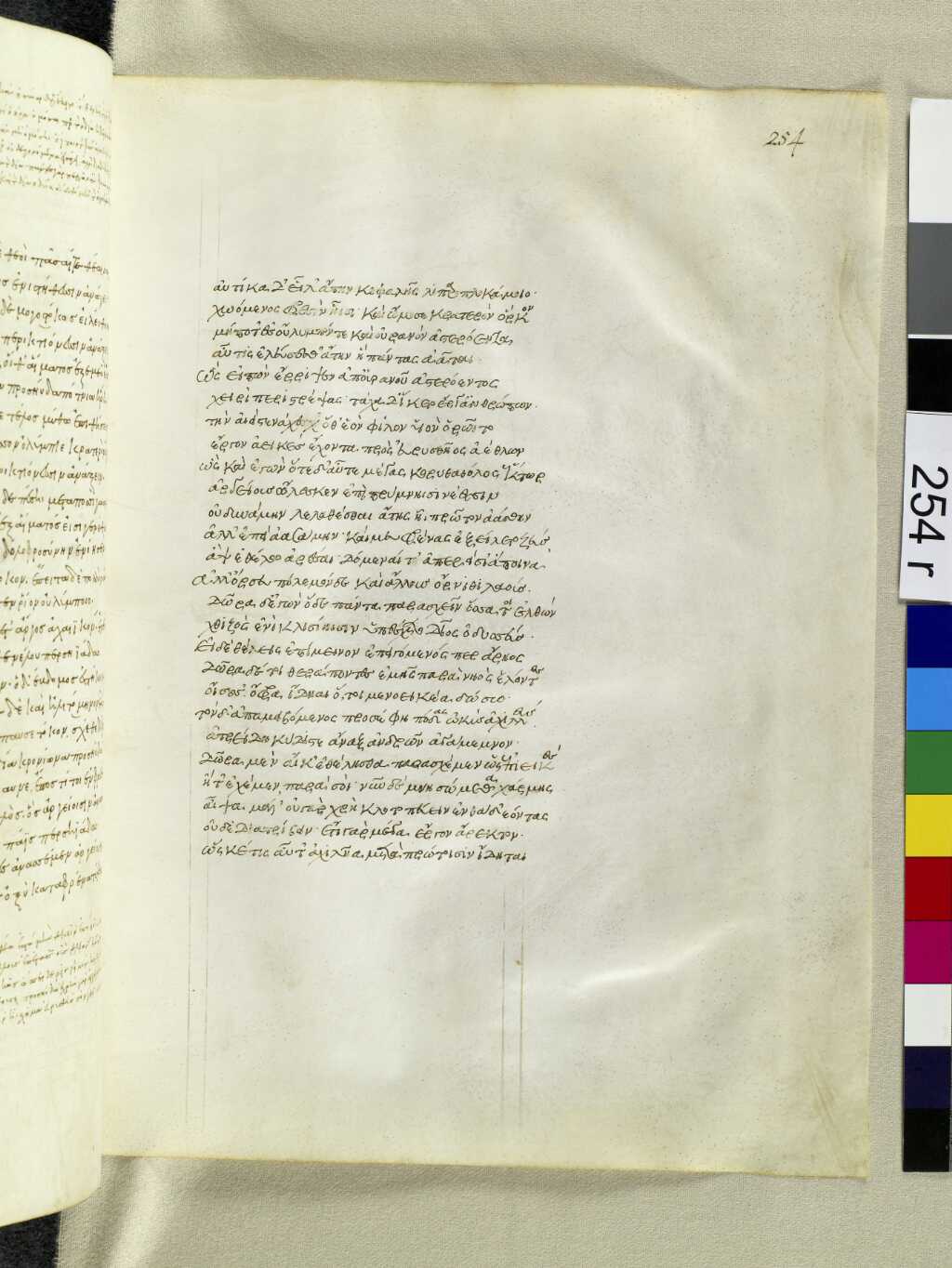
126αὐτίκα δʼ εἷλʼ Ἄτην κεφαλῆς λιπαροπλοκάμοιο 127χωόμενος φρεσὶν ᾗσι, καὶ ὤμοσε καρτερὸν ὅρκον 128μή ποτʼ ἐς Οὔλυμπόν τε καὶ οὐρανὸν ἀστερόεντα 129αὖτις ἐλεύσεσθαι Ἄτην, ἣ πάντας ἀᾶται. 130ὣς εἰπὼν ἔρριψεν ἀπʼ οὐρανοῦ ἀστερόεντος 131χειρὶ περιστρέψας· τάχα δʼ ἵκετο ἔργʼ ἀνθρώπων. 132τὴν αἰεὶ στενάχεσχʼ ὅθʼ ἑὸν φίλον υἱὸν ὁρῷτο 133ἔργον ἀεικὲς ἔχοντα ὑπʼ Εὐρυσθῆος ἀέθλων. 134ὣς καὶ ἐγών, ὅτε δʼ αὖτε μέγας κορυθαίολος Ἕκτωρ 135Ἀργείους ὀλέκεσκεν ἐπὶ πρυμνῇσι νέεσσιν, 136οὐ δυνάμην λελαθέσθʼ Ἄτης ᾗ πρῶτον ἀάσθην. 137ἀλλʼ ἐπεὶ ἀασάμην καί μευ φρένας ἐξέλετο Ζεύς, 138ἂψ ἐθέλω ἀρέσαι, δόμεναί τʼ ἀπερείσιʼ ἄποινα· 139ἀλλʼ ὄρσευ πόλεμον δὲ καὶ ἄλλους ὄρνυθι λαούς. 140δῶρα δʼ ἐγὼν ὅδε πάντα παρασχέμεν ὅσσά τοι ἐλθὼν 141χθιζὸς ἐνὶ κλισίῃσιν ὑπέσχετο δῖος Ὀδυσσεύς. 142εἰ δʼ ἐθέλεις, ἐπίμεινον ἐπειγόμενός περ Ἄρηος, 143δῶρα δέ τοι θεράποντες ἐμῆς παρὰ νηὸς ἑλόντες 144οἴσουσʼ, ὄφρα ἴδηαι ὅ τοι μενοεικέα δώσω. 145τὸν δʼ ἀπαμειβόμενος προσέφη πόδας ὠκὺς Ἀχιλλεύς· 146Ἀτρεΐδη κύδιστε ἄναξ ἀνδρῶν Ἀγάμεμνον 147δῶρα μὲν αἴ κʼ ἐθέλῃσθα παρασχέμεν, ὡς ἐπιεικές, 148ἤ τʼ ἐχέμεν παρὰ σοί· νῦν δὲ μνησώμεθα χάρμης 149αἶψα μάλʼ· οὐ γὰρ χρὴ κλοτοπεύειν ἐνθάδʼ ἐόντας 150οὐδὲ διατρίβειν· ἔτι γὰρ μέγα ἔργον ἄρεκτον·
“Time was when she fooled Jove himself, who they say is greatest whether of gods or men; for Juno, woman though she was, beguiled him on the day when Alcmena was to bring forth mighty Hercules in the fair city of Thebes. He told it out among the gods saying, ‘Hear me, all gods and goddesses, that I may speak even as I am minded; this day shall an Ilithuia, helper of women who are in labour, bring a man child into the world who shall be lord over all that dwell about him who are of my blood and lineage.’ Then said Juno all crafty and full of guile, ‘You will play false, and will not hold to your word. Swear me, O Olympian, swear me a great oath, that he who shall this day fall between the feet of a woman, shall be lord over all that dwell about him who are of your blood and lineage.’
“Thus she spoke, and Jove suspected her not, but swore the great oath, to his much ruing thereafter. For Juno darted down from the high summit of Olympus, and went in haste to Achaean Argos where she knew that the noble wife of Sthenelus son of Perseus then was. She being with child and in her seventh month, Juno brought the child to birth though there was a month still wanting, but she stayed the offspring of Alcmena, and kept back the Ilithuiae. Then she went to tell Jove the son of Saturn, and said, ‘Father Jove, lord of the lightning—I have a word for your ear. There is a fine child born this day, Eurystheus, son to Sthenelus the son of Perseus; he is of your lineage; it is well, therefore, that he should reign over the Argives.’
151ὥς κέ τις αὖτʼ Ἀχιλῆα μετὰ πρώτοισιν ἴδηται 152ἔγχεϊ χαλκείῳ Τρώων ὀλέκοντα φάλαγγας. 153ὧδέ τις ὑμείων μεμνημένος ἀνδρὶ μαχέσθω. 154τὸν δʼ ἀπαμειβόμενος προσέφη πολύμητις Ὀδυσσεύς· 155μὴ δʼ οὕτως, ἀγαθός περ ἐών, θεοείκελʼ Ἀχιλλεῦ 156νήστιας ὄτρυνε προτὶ Ἴλιον υἷας Ἀχαιῶν 157Τρωσὶ μαχησομένους, ἐπεὶ οὐκ ὀλίγον χρόνον ἔσται 158φύλοπις, εὖτʼ ἂν πρῶτον ὁμιλήσωσι φάλαγγες 159ἀνδρῶν, ἐν δὲ θεὸς πνεύσῃ μένος ἀμφοτέροισιν. 160ἀλλὰ πάσασθαι ἄνωχθι θοῇς ἐπὶ νηυσὶν Ἀχαιοὺς 161σίτου καὶ οἴνοιο· τὸ γὰρ μένος ἐστὶ καὶ ἀλκή. 162οὐ γὰρ ἀνὴρ πρόπαν ἦμαρ ἐς ἠέλιον καταδύντα 163ἄκμηνος σίτοιο δυνήσεται ἄντα μάχεσθαι· 164εἴ περ γὰρ θυμῷ γε μενοινάᾳ πολεμίζειν, 165ἀλλά τε λάθρῃ γυῖα βαρύνεται, ἠδὲ κιχάνει 166δίψά τε καὶ λιμός, βλάβεται δέ τε γούνατʼ ἰόντι. 167ὃς δέ κʼ ἀνὴρ οἴνοιο κορεσσάμενος καὶ ἐδωδῆς 168ἀνδράσι δυσμενέεσσι πανημέριος πολεμίζῃ, 169θαρσαλέον νύ οἱ ἦτορ ἐνὶ φρεσίν, οὐδέ τι γυῖα 170πρὶν κάμνει πρὶν πάντας ἐρωῆσαι πολέμοιο. 171ἀλλʼ ἄγε λαὸν μὲν σκέδασον καὶ δεῖπνον ἄνωχθι 172ὅπλεσθαι· τὰ δὲ δῶρα ἄναξ ἀνδρῶν Ἀγαμέμνων 173οἰσέτω ἐς μέσσην ἀγορήν, ἵνα πάντες Ἀχαιοὶ 174ὀφθαλμοῖσιν ἴδωσι, σὺ δὲ φρεσὶ σῇσιν ἰανθῇς. 175ὀμνυέτω δέ τοι ὅρκον ἐν Ἀργείοισιν ἀναστὰς
“On this Jove was stung to the very quick, and in his rage he caught Folly by the hair, and swore a great oath that never should she again invade starry heaven and Olympus, for she was the bane of all. Then he whirled her round with a twist of his hand, and flung her down from heaven so that she fell on to the fields of mortal men; and he was ever angry with her when he saw his son groaning under the cruel labours that Eurystheus laid upon him. Even so did I grieve when mighty Hector was killing the Argives at their ships, and all the time I kept thinking of Folly who had so baned me. I was blind, and Jove robbed me of my reason; I will now make atonement, and will add much treasure by way of amends. Go, therefore, into battle, you and your people with you. I will give you all that Ulysses offered you yesterday in your tents: or if it so please you, wait, though you would fain fight at once, and my squires shall bring the gifts from my ship, that you may see whether what I give you is enough.”
And Achilles answered, “Son of Atreus, king of men Agamemnon, you can give such gifts as you think proper, or you can withhold them: it is in your own hands. Let us now set battle in array; it is not well to tarry talking about trifles, for there is a deed which is as yet to do. Achilles shall again be seen fighting among the foremost, and laying low the ranks of the Trojans: bear this in mind each one of you when he is fighting.”
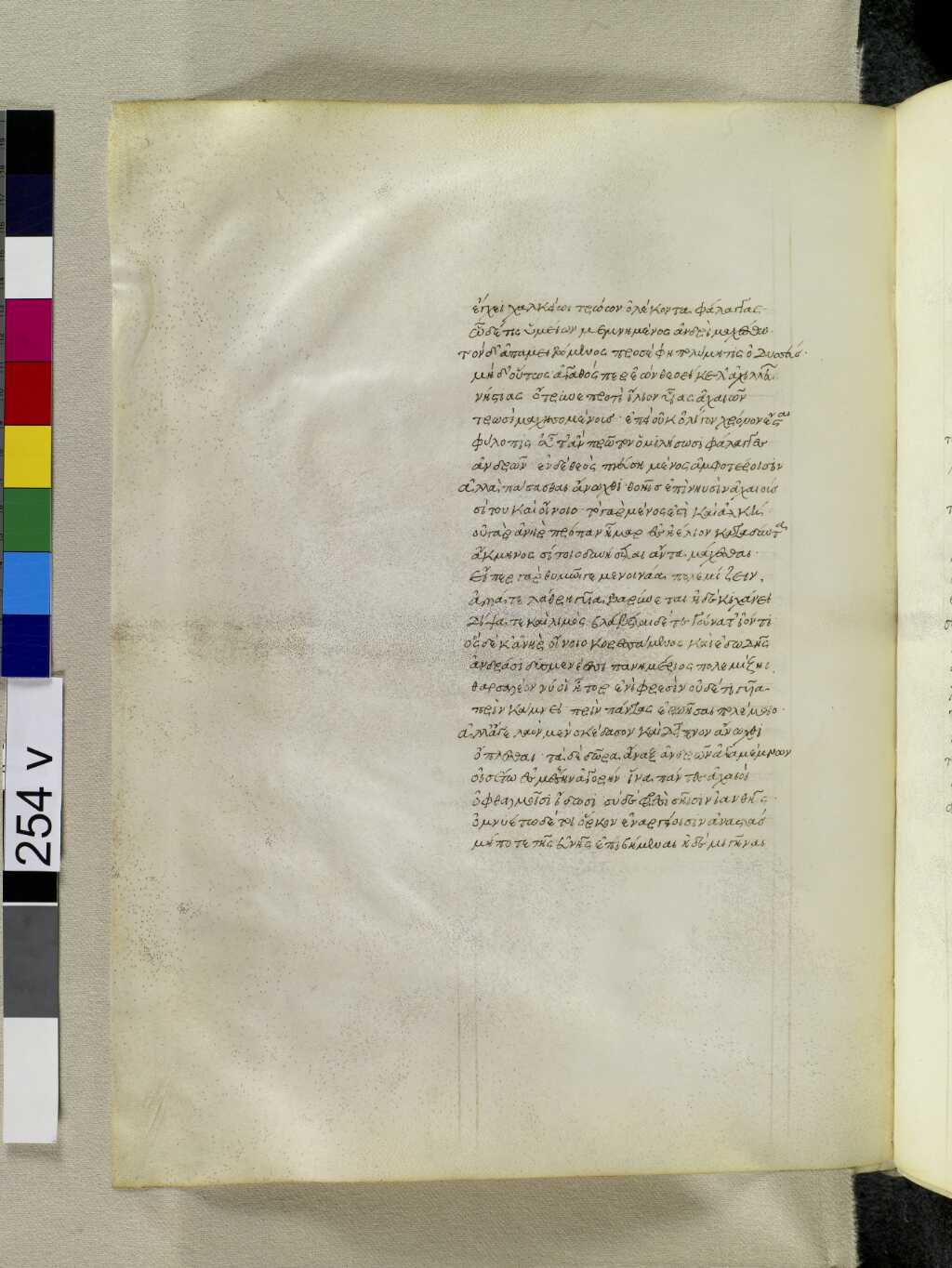
176μή ποτε τῆς εὐνῆς ἐπιβήμεναι ἠδὲ μιγῆναι· 177ἣ θέμις ἐστὶν ἄναξ ἤ τʼ ἀνδρῶν ἤ τε γυναικῶν· 178καὶ δὲ σοὶ αὐτῷ θυμὸς ἐνὶ φρεσὶν ἵλαος ἔστω. 179αὐτὰρ ἔπειτά σε δαιτὶ ἐνὶ κλισίῃς ἀρεσάσθω 180πιείρῃ, ἵνα μή τι δίκης ἐπιδευὲς ἔχῃσθα. 181Ἀτρεΐδη σὺ δʼ ἔπειτα δικαιότερος καὶ ἐπʼ ἄλλῳ 182ἔσσεαι. οὐ μὲν γάρ τι νεμεσσητὸν βασιλῆα 183ἄνδρʼ ἀπαρέσσασθαι ὅτε τις πρότερος χαλεπήνῃ. 184τὸν δʼ αὖτε προσέειπεν ἄναξ ἀνδρῶν Ἀγαμέμνων· 185χαίρω σεῦ Λαερτιάδη τὸν μῦθον ἀκούσας· 186ἐν μοίρῃ γὰρ πάντα διίκεο καὶ κατέλεξας. 187ταῦτα δʼ ἐγὼν ἐθέλω ὀμόσαι, κέλεται δέ με θυμός, 188οὐδʼ ἐπιορκήσω πρὸς δαίμονος. αὐτὰρ Ἀχιλλεὺς 189μιμνέτω αὐτόθι τεῖος ἐπειγόμενός περ Ἄρηος· 190μίμνετε δʼ ἄλλοι πάντες ἀολλέες, ὄφρά κε δῶρα 191ἐκ κλισίης ἔλθῃσι καὶ ὅρκια πιστὰ τάμωμεν. 192σοὶ δʼ αὐτῷ τόδʼ ἐγὼν ἐπιτέλλομαι ἠδὲ κελεύω· 193κρινάμενος κούρητας ἀριστῆας Παναχαιῶν 194δῶρα ἐμῆς παρὰ νηὸς ἐνεικέμεν, ὅσσʼ Ἀχιλῆϊ 195χθιζὸν ὑπέστημεν δώσειν, ἀγέμεν τε γυναῖκας. 196Ταλθύβιος δέ μοι ὦκα κατὰ στρατὸν εὐρὺν Ἀχαιῶν 197κάπρον ἑτοιμασάτω ταμέειν Διί τʼ Ἠελίῳ τε. 198τὸν δʼ ἀπαμειβόμενος προσέφη πόδας ὠκὺς Ἀχιλλεύς· 199Ἀτρεΐδη κύδιστε ἄναξ ἀνδρῶν Ἀγάμεμνον 200ἄλλοτέ περ καὶ μᾶλλον ὀφέλλετε ταῦτα πένεσθαι,
Then Ulysses said, “Achilles, godlike and brave, send not the Achaeans thus against Ilius to fight the Trojans fasting, for the battle will be no brief one, when it is once begun, and heaven has filled both sides with fury; bid them first take food both bread and wine by the ships, for in this there is strength and stay. No man can do battle the livelong day to the going down of the sun if he is without food; however much he may want to fight his strength will fail him before he knows it; hunger and thirst will find him out, and his limbs will grow weary under him. But a man can fight all day if he is full fed with meat and wine; his heart beats high, and his strength will stay till he has routed all his foes; therefore, send the people away and bid them prepare their meal; King Agamemnon will bring out the gifts in presence of the assembly, that all may see them and you may be satisfied. Moreover let him swear an oath before the Argives that he has never gone up into the couch of Briseis, nor been with her after the manner of men and women; and do you, too, show yourself of a gracious mind; let Agamemnon entertain you in his tents with a feast of reconciliation, that so you may have had your dues in full. As for you, son of Atreus, treat people more righteously in future; it is no disgrace even to a king that he should make amends if he was wrong in the first instance.”
And King Agamemnon answered, “Son of Laertes, your words please me well, for throughout you have spoken wisely. I will swear as you would have me do; I do so of my own free will, neither shall I take the name of heaven in vain. Let, then, Achilles wait, though he would fain fight at once, and do you others wait also, till the gifts come from my tent and we ratify the oath with sacrifice. Thus, then, do I charge you: take some noble young Achaeans with you, and bring from my tents the gifts that I promised yesterday to Achilles, and bring the women also; furthermore let Talthybius find me a boar from those that are with the host, and make it ready for sacrifice to Jove and to the sun.”
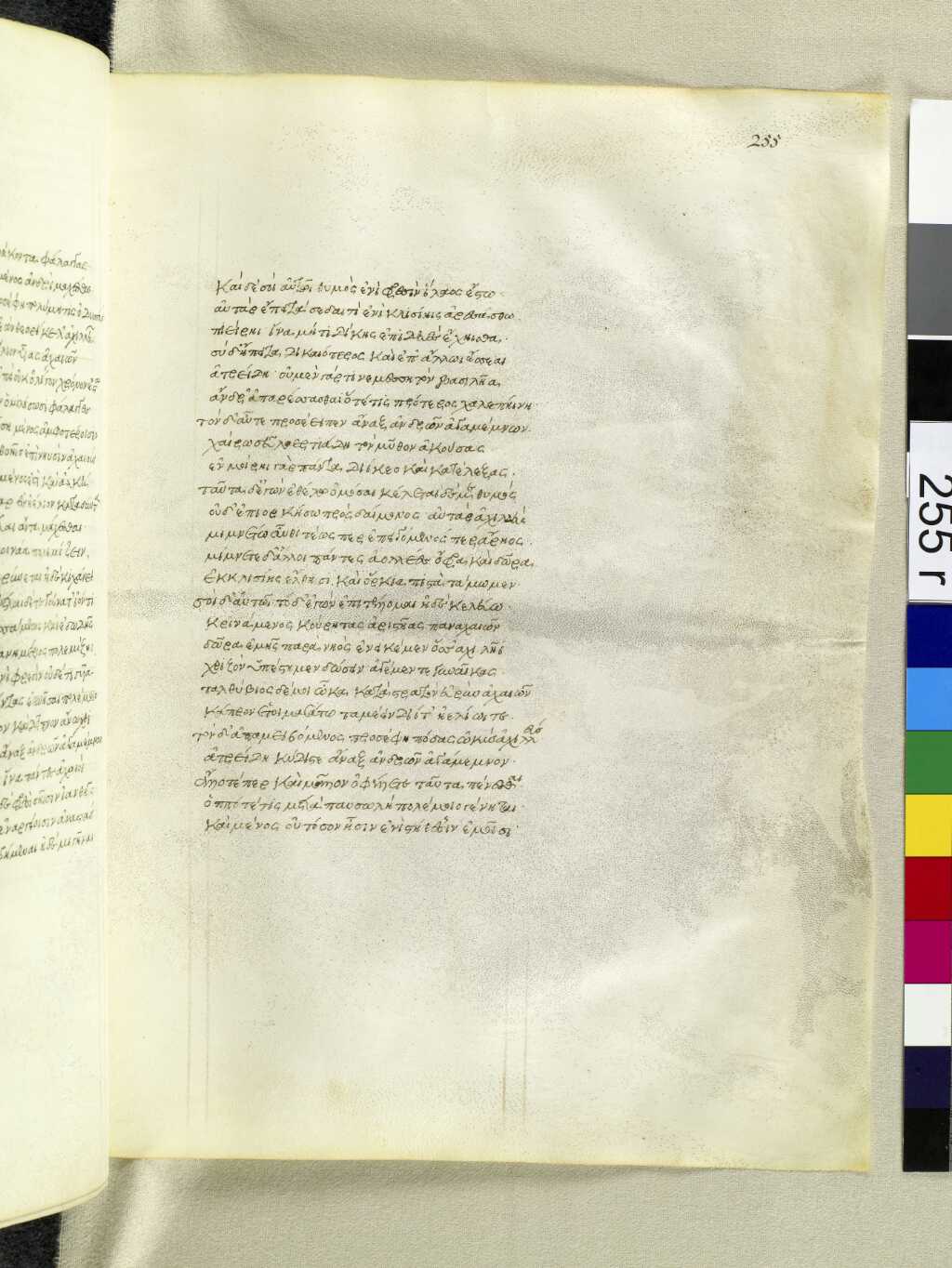
201ὁππότε τις μεταπαυσωλὴ πολέμοιο γένηται 202καὶ μένος οὐ τόσον ᾖσιν ἐνὶ στήθεσσιν ἐμοῖσι. 203νῦν δʼ οἳ μὲν κέαται δεδαϊγμένοι, οὓς ἐδάμασσεν 204Ἕκτωρ Πριαμίδης, ὅτε οἱ Ζεὺς κῦδος ἔδωκεν, 205ὑμεῖς δʼ ἐς βρωτὺν ὀτρύνετον· ἦ τʼ ἂν ἔγωγε 206νῦν μὲν ἀνώγοιμι πτολεμίζειν υἷας Ἀχαιῶν 207νήστιας ἀκμήνους, ἅμα δʼ ἠελίῳ καταδύντι 208τεύξεσθαι μέγα δόρπον, ἐπὴν τεισαίμεθα λώβην. 209πρὶν δʼ οὔ πως ἂν ἔμοιγε φίλον κατὰ λαιμὸν ἰείη 210οὐ πόσις οὐδὲ βρῶσις ἑταίρου τεθνηῶτος 211ὅς μοι ἐνὶ κλισίῃ δεδαϊγμένος ὀξέϊ χαλκῷ 212κεῖται ἀνὰ πρόθυρον τετραμμένος, ἀμφὶ δʼ ἑταῖροι 213μύρονται· τό μοι οὔ τι μετὰ φρεσὶ ταῦτα μέμηλεν, 214ἀλλὰ φόνος τε καὶ αἷμα καὶ ἀργαλέος στόνος ἀνδρῶν. 215τὸν δʼ ἀπαμειβόμενος προσέφη πολύμητις Ὀδυσσεύς· 216ὦ Ἀχιλεῦ Πηλῆος υἱὲ μέγα φέρτατʼ Ἀχαιῶν, 217κρείσσων εἰς ἐμέθεν καὶ φέρτερος οὐκ ὀλίγον περ 218ἔγχει, ἐγὼ δέ κε σεῖο νοήματί γε προβαλοίμην 219πολλόν, ἐπεὶ πρότερος γενόμην καὶ πλείονα οἶδα. 220τώ τοι ἐπιτλήτω κραδίη μύθοισιν ἐμοῖσιν. 221αἶψά τε φυλόπιδος πέλεται κόρος ἀνθρώποισιν, 222ἧς τε πλείστην μὲν καλάμην χθονὶ χαλκὸς ἔχευεν, 223ἄμητος δʼ ὀλίγιστος, ἐπὴν κλίνῃσι τάλαντα 224Ζεύς, ὅς τʼ ἀνθρώπων ταμίης πολέμοιο τέτυκται. 225γαστέρι δʼ οὔ πως ἔστι νέκυν πενθῆσαι Ἀχαιούς·
Then said Achilles, “Son of Atreus, king of men Agamemnon, see to these matters at some other season, when there is breathing time and when I am calmer. Would you have men eat while the bodies of those whom Hector son of Priam slew are still lying mangled upon the plain? Let the sons of the Achaeans, say I, fight fasting and without food, till we have avenged them; afterwards at the going down of the sun let them eat their fill. As for me, Patroclus is lying dead in my tent, all hacked and hewn, with his feet to the door, and his comrades are mourning round him. Therefore I can take thought of nothing save only slaughter and blood and the rattle in the throat of the dying.”
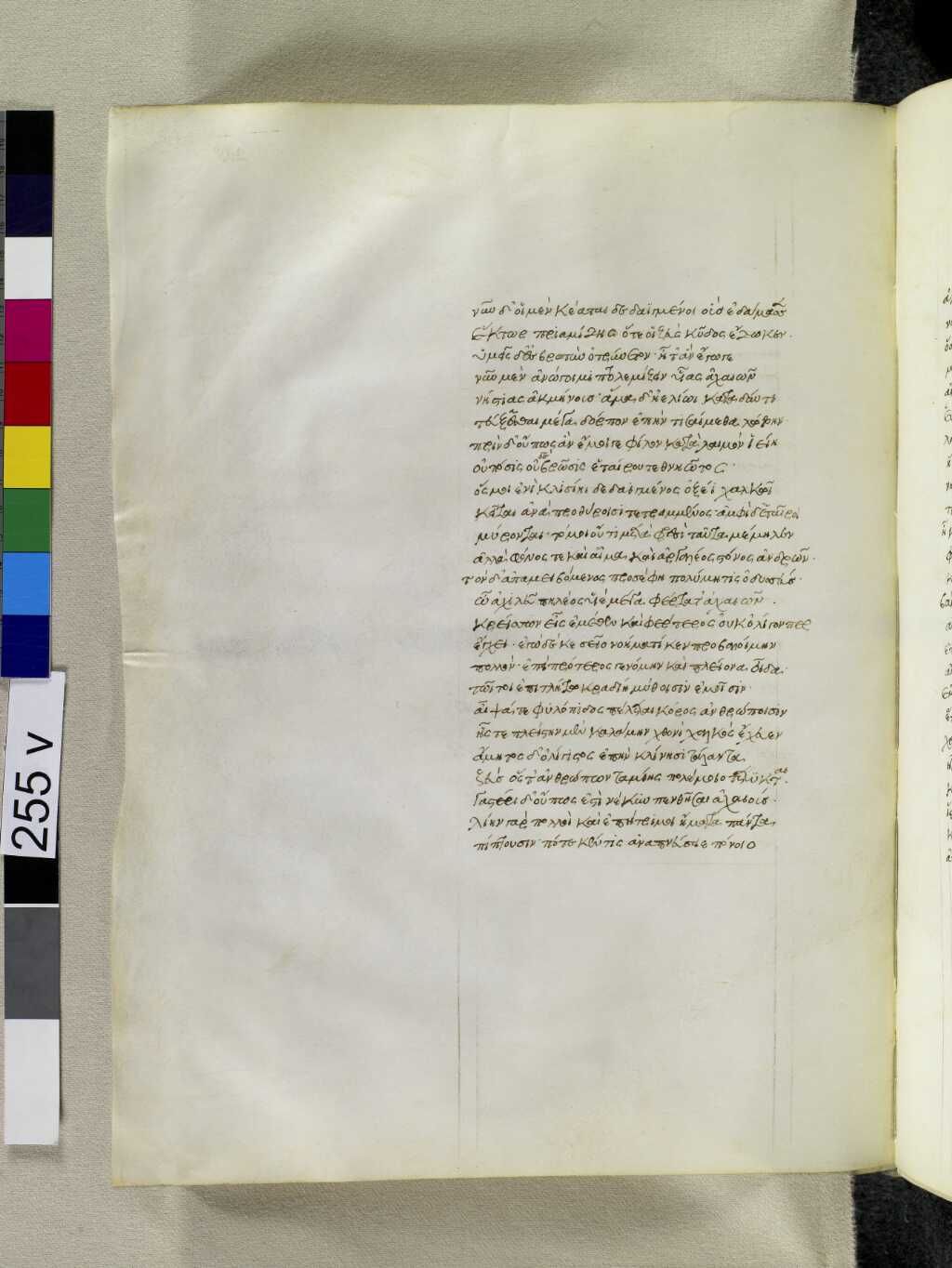
226λίην γὰρ πολλοὶ καὶ ἐπήτριμοι ἤματα πάντα 227πίπτουσιν· πότε κέν τις ἀναπνεύσειε πόνοιο; 228ἀλλὰ χρὴ τὸν μὲν καταθάπτειν ὅς κε θάνῃσι 229νηλέα θυμὸν ἔχοντας ἐπʼ ἤματι δακρύσαντας· 230ὅσσοι δʼ ἂν πολέμοιο περὶ στυγεροῖο λίπωνται 231μεμνῆσθαι πόσιος καὶ ἐδητύος, ὄφρʼ ἔτι μᾶλλον 232ἀνδράσι δυσμενέεσσι μαχώμεθα νωλεμὲς αἰεὶ 233ἑσσάμενοι χροῒ χαλκὸν ἀτειρέα. μηδέ τις ἄλλην 234λαῶν ὀτρυντὺν ποτιδέγμενος ἰσχαναάσθω· 235ἥδε γὰρ ὀτρυντὺς κακὸν ἔσσεται ὅς κε λίπηται 236νηυσὶν ἐπʼ Ἀργείων· ἀλλʼ ἀθρόοι ὁρμηθέντες 237Τρωσὶν ἐφʼ ἱπποδάμοισιν ἐγείρομεν ὀξὺν Ἄρηα. 238ἦ, καὶ Νέστορος υἷας ὀπάσσατο κυδαλίμοιο 239Φυλεΐδην τε Μέγητα Θόαντά τε Μηριόνην τε 240καὶ Κρειοντιάδην Λυκομήδεα καὶ Μελάνιππον· 241βὰν δʼ ἴμεν ἐς κλισίην Ἀγαμέμνονος Ἀτρεΐδαο. 242αὐτίκʼ ἔπειθʼ ἅμα μῦθος ἔην, τετέλεστο δὲ ἔργον· 243ἑπτὰ μὲν ἐκ κλισίης τρίποδας φέρον, οὕς οἱ ὑπέστη, 244αἴθωνας δὲ λέβητας ἐείκοσι, δώδεκα δʼ ἵππους· 245ἐκ δʼ ἄγον αἶψα γυναῖκας ἀμύμονα ἔργα ἰδυίας 246ἕπτʼ, ἀτὰρ ὀγδοάτην Βρισηΐδα καλλιπάρῃον. 247χρυσοῦ δὲ στήσας Ὀδυσεὺς δέκα πάντα τάλαντα 248ἦρχʼ, ἅμα δʼ ἄλλοι δῶρα φέρον κούρητες Ἀχαιῶν. 249καὶ τὰ μὲν ἐν μέσσῃ ἀγορῇ θέσαν, ἂν δʼ Ἀγαμέμνων 250ἵστατο· Ταλθύβιος δὲ θεῷ ἐναλίγκιος αὐδὴν
Ulysses answered, “Achilles, son of Peleus, mightiest of all the Achaeans, in battle you are better than I, and that more than a little, but in counsel I am much before you, for I am older and of greater knowledge. Therefore be patient under my words. Fighting is a thing of which men soon surfeit, and when Jove, who is war’s steward, weighs the upshot, it may well prove that the straw which our sickles have reaped is far heavier than the grain. It may not be that the Achaeans should mourn the dead with their bellies; day by day men fall thick and threefold continually; when should we have respite from our sorrow? Let us mourn our dead for a day and bury them out of sight and mind, but let those of us who are left eat and drink that we may arm and fight our foes more fiercely. In that hour let no man hold back, waiting for a second summons; such summons shall bode ill for him who is found lagging behind at our ships; let us rather sally as one man and loose the fury of war upon the Trojans.”
When he had thus spoken he took with him the sons of Nestor, with Meges son of Phyleus, Thoas, Meriones, Lycomedes son of Creontes, and Melanippus, and went to the tent of Agamemnon son of Atreus. The word was not sooner said than the deed was done: they brought out the seven tripods which Agamemnon had promised, with the twenty metal cauldrons and the twelve horses; they also brought the women skilled in useful arts, seven in number, with Briseis, which made eight. Ulysses weighed out the ten talents of gold and then led the way back, while the young Achaeans brought the rest of the gifts, and laid them in the middle of the assembly.
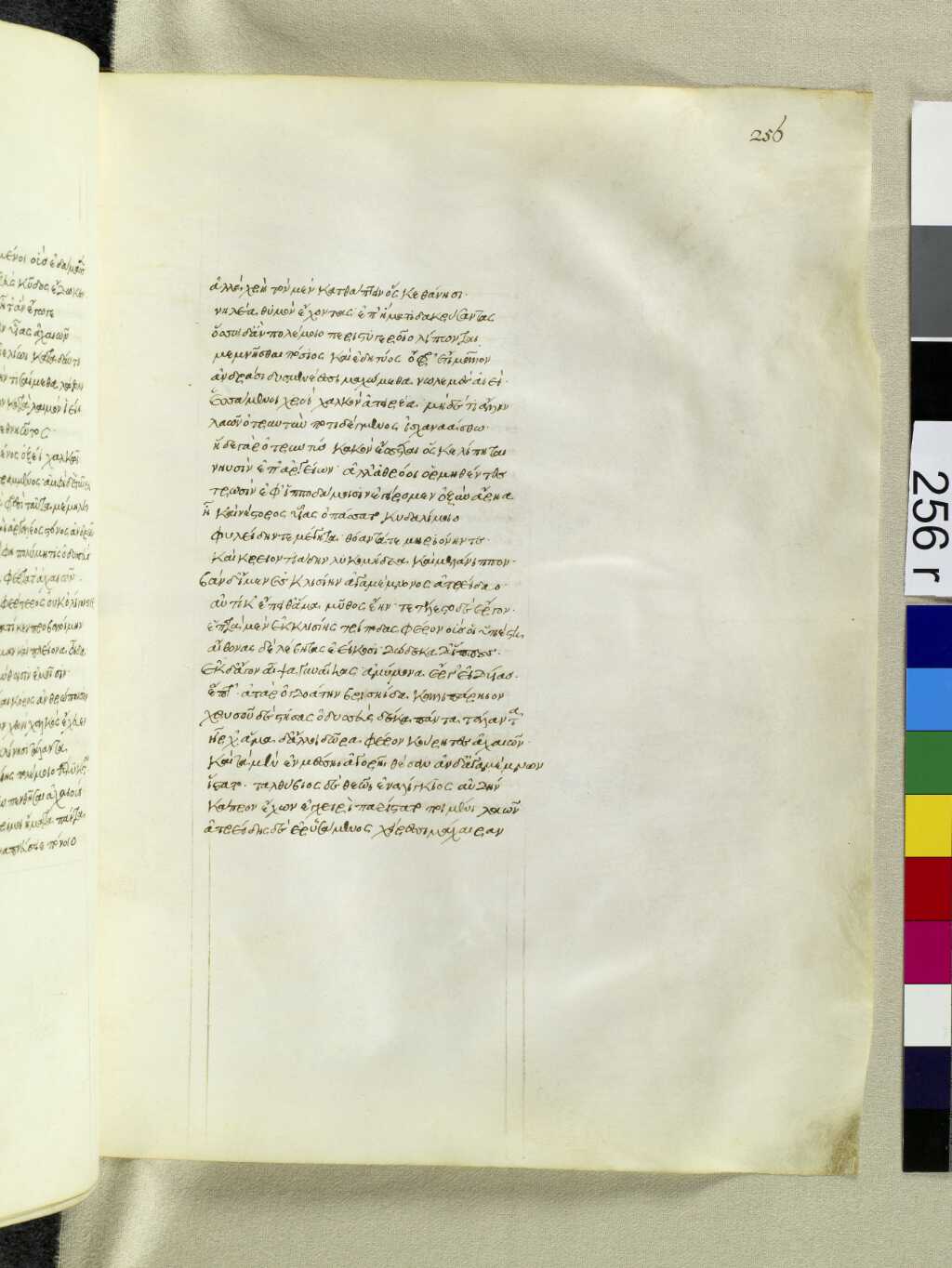
251κάπρον ἔχων ἐν χερσὶ παρίστατο ποιμένι λαῶν. 252Ἀτρεΐδης δὲ ἐρυσσάμενος χείρεσσι μάχαιραν, 253ἥ οἱ πὰρ ξίφεος μέγα κουλεὸν αἰὲν ἄωρτο, 254κάπρου ἀπὸ τρίχας ἀρξάμενος Διὶ χεῖρας ἀνασχὼν 255εὔχετο· τοὶ δʼ ἄρα πάντες ἐπʼ αὐτόφιν εἵατο σιγῇ 256Ἀργεῖοι κατὰ μοῖραν ἀκούοντες βασιλῆος. 257εὐξάμενος δʼ ἄρα εἶπεν ἰδὼν εἰς οὐρανὸν εὐρύν· 258ἴστω νῦν Ζεὺς πρῶτα θεῶν ὕπατος καὶ ἄριστος 259Γῆ τε καὶ Ἠέλιος καὶ Ἐρινύες, αἵ θʼ ὑπὸ γαῖαν 260ἀνθρώπους τίνυνται, ὅτις κʼ ἐπίορκον ὀμόσσῃ, 261μὴ μὲν ἐγὼ κούρῃ Βρισηΐδι χεῖρʼ ἐπένεικα, 262οὔτʼ εὐνῆς πρόφασιν κεχρημένος οὔτέ τευ ἄλλου. 263ἀλλʼ ἔμενʼ ἀπροτίμαστος ἐνὶ κλισίῃσιν ἐμῇσιν. 264εἰ δέ τι τῶνδʼ ἐπίορκον ἐμοὶ θεοὶ ἄλγεα δοῖεν 265πολλὰ μάλʼ, ὅσσα διδοῦσιν ὅτίς σφʼ ἀλίτηται ὀμόσσας. 266ἦ, καὶ ἀπὸ στόμαχον κάπρου τάμε νηλέϊ χαλκῷ. 267τὸν μὲν Ταλθύβιος πολιῆς ἁλὸς ἐς μέγα λαῖτμα 268ῥῖψʼ ἐπιδινήσας βόσιν ἰχθύσιν· αὐτὰρ Ἀχιλλεὺς 269ἀνστὰς Ἀργείοισι φιλοπτολέμοισι μετηύδα· 270Ζεῦ πάτερ ἦ μεγάλας ἄτας ἄνδρεσσι διδοῖσθα· 271οὐκ ἂν δή ποτε θυμὸν ἐνὶ στήθεσσιν ἐμοῖσιν 272Ἀτρεΐδης ὤρινε διαμπερές, οὐδέ κε κούρην 273ἦγεν ἐμεῦ ἀέκοντος ἀμήχανος· ἀλλά ποθι Ζεὺς 274ἤθελʼ Ἀχαιοῖσιν θάνατον πολέεσσι γενέσθαι. 275νῦν δʼ ἔρχεσθʼ ἐπὶ δεῖπνον, ἵνα ξυνάγωμεν Ἄρηα.
Agamemnon then rose, and Talthybius whose voice was like that of a god came to him with the boar. The son of Atreus drew the knife which he wore by the scabbard of his mighty sword, and began by cutting off some bristles from the boar, lifting up his hands in prayer as he did so. The other Achaeans sat where they were all silent and orderly to hear the king, and Agamemnon looked into the vault of heaven and prayed saying, “I call Jove the first and mightiest of all gods to witness, I call also Earth and Sun and the Erinyes who dwell below and take vengeance on him who shall swear falsely, that I have laid no hand upon the girl Briseis, neither to take her to my bed nor otherwise, but that she has remained in my tents inviolate. If I swear falsely may heaven visit me with all the penalties which it metes out to those who perjure themselves.”
He cut the boar’s throat as he spoke, whereon Talthybius whirled it round his head, and flung it into the wide sea to feed the fishes. Then Achilles also rose and said to the Argives, “Father Jove, of a truth you blind men’s eyes and bane them. The son of Atreus had not else stirred me to so fierce an anger, nor so stubbornly taken Briseis from me against my will. Surely Jove must have counselled the destruction of many an Argive. Go, now, and take your food that we may begin fighting.”
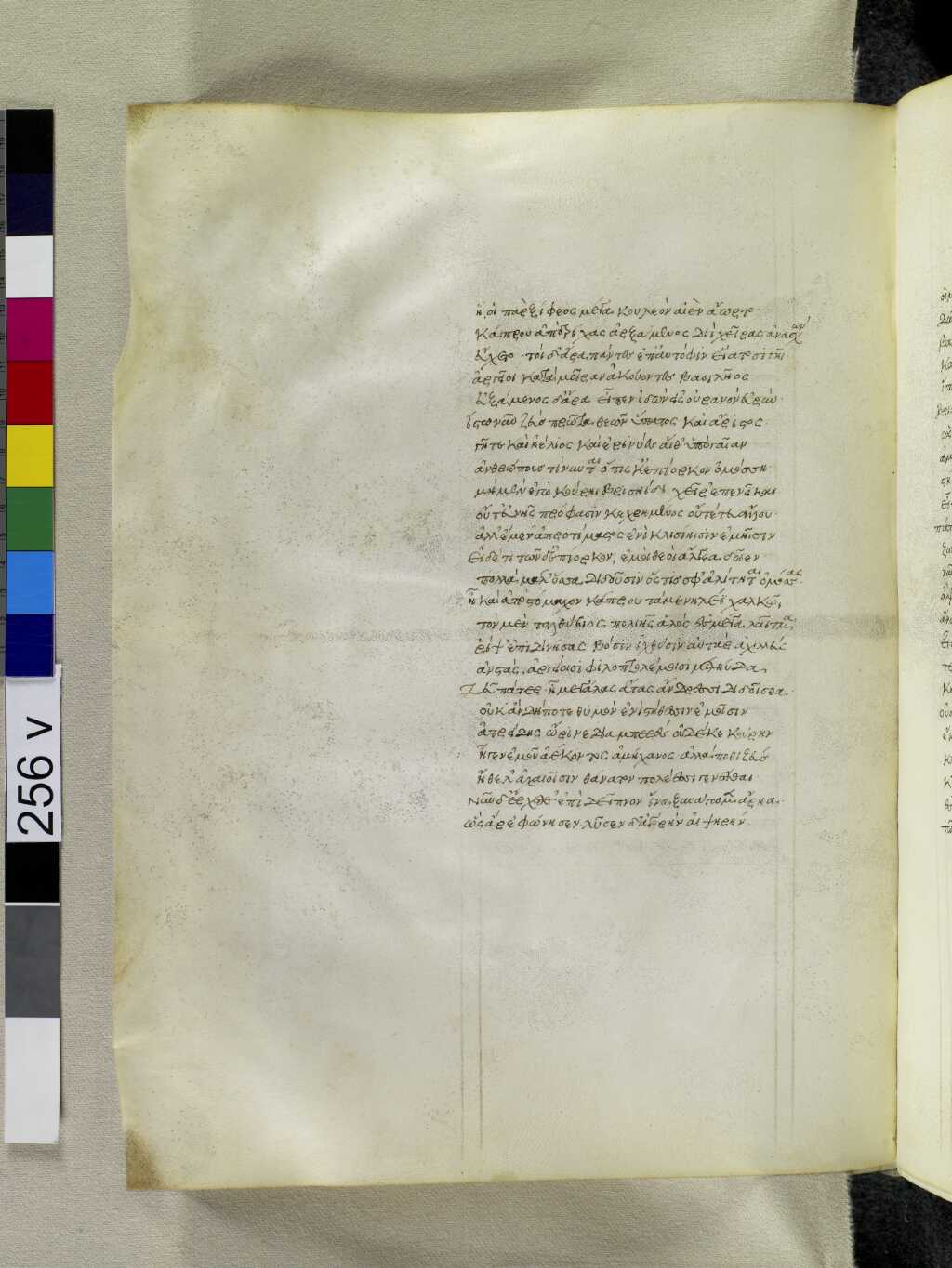
276ὣς ἄρʼ ἐφώνησεν, λῦσεν δʼ ἀγορὴν αἰψηρήν. 277οἳ μὲν ἄρʼ ἐσκίδναντο ἑὴν ἐπὶ νῆα ἕκαστος, 278δῶρα δὲ Μυρμιδόνες μεγαλήτορες ἀμφεπένοντο, 279βὰν δʼ ἐπὶ νῆα φέροντες Ἀχιλλῆος θείοιο. 280καὶ τὰ μὲν ἐν κλισίῃσι θέσαν, κάθισαν δὲ γυναῖκας, 281ἵππους δʼ εἰς ἀγέλην ἔλασαν θεράποντες ἀγαυοί. 282Βρισηῒς δʼ ἄρʼ ἔπειτʼ ἰκέλη χρυσέῃ Ἀφροδίτῃ 283ὡς ἴδε Πάτροκλον δεδαϊγμένον ὀξέϊ χαλκῷ, 284ἀμφʼ αὐτῷ χυμένη λίγʼ ἐκώκυε, χερσὶ δʼ ἄμυσσε 285στήθεά τʼ ἠδʼ ἁπαλὴν δειρὴν ἰδὲ καλὰ πρόσωπα. 286εἶπε δʼ ἄρα κλαίουσα γυνὴ ἐϊκυῖα θεῇσι· 287Πάτροκλέ μοι δειλῇ πλεῖστον κεχαρισμένε θυμῷ 288ζωὸν μέν σε ἔλειπον ἐγὼ κλισίηθεν ἰοῦσα, 289νῦν δέ σε τεθνηῶτα κιχάνομαι ὄρχαμε λαῶν 290ἂψ ἀνιοῦσʼ· ὥς μοι δέχεται κακὸν ἐκ κακοῦ αἰεί. 291ἄνδρα μὲν ᾧ ἔδοσάν με πατὴρ καὶ πότνια μήτηρ 292εἶδον πρὸ πτόλιος δεδαϊγμένον ὀξέϊ χαλκῷ, 293τρεῖς τε κασιγνήτους, τούς μοι μία γείνατο μήτηρ, 294κηδείους, οἳ πάντες ὀλέθριον ἦμαρ ἐπέσπον. 295οὐδὲ μὲν οὐδέ μʼ ἔασκες, ὅτʼ ἄνδρʼ ἐμὸν ὠκὺς Ἀχιλλεὺς 296ἔκτεινεν, πέρσεν δὲ πόλιν θείοιο Μύνητος, 297κλαίειν, ἀλλά μʼ ἔφασκες Ἀχιλλῆος θείοιο 298κουριδίην ἄλοχον θήσειν, ἄξειν τʼ ἐνὶ νηυσὶν 299ἐς Φθίην, δαίσειν δὲ γάμον μετὰ Μυρμιδόνεσσι. 300τώ σʼ ἄμοτον κλαίω τεθνηότα μείλιχον αἰεί.
On this he broke up the assembly, and every man went back to his own ship. The Myrmidons attended to the presents and took them away to the ship of Achilles. They placed them in his tents, while the stable-men drove the horses in among the others.
Briseis, fair as Venus, when she saw the mangled body of Patroclus, flung herself upon it and cried aloud, tearing her breast, her neck, and her lovely face with both her hands. Beautiful as a goddess she wept and said, “Patroclus, dearest friend, when I went hence I left you living; I return, O prince, to find you dead; thus do fresh sorrows multiply upon me one after the other. I saw him to whom my father and mother married me, cut down before our city, and my three own dear brothers perished with him on the self-same day; but you, Patroclus, even when Achilles slew my husband and sacked the city of noble Mynes, told me that I was not to weep, for you said you would make Achilles marry me, and take me back with him to Phthia, we should have a wedding feast among the Myrmidons. You were always kind to me and I shall never cease to grieve for you.”
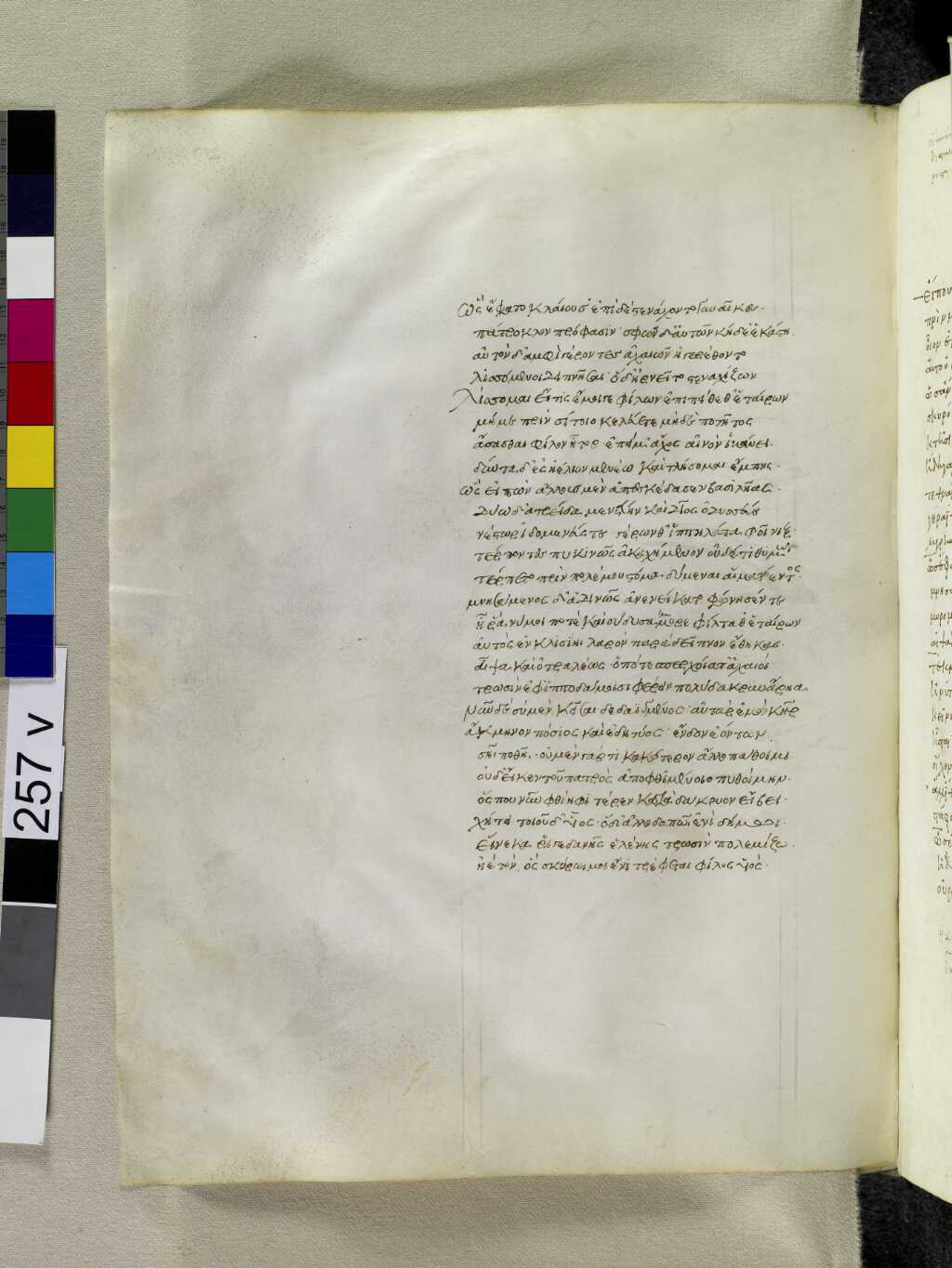
301ὣς ἔφατο κλαίουσʼ, ἐπὶ δὲ στενάχοντο γυναῖκες 302Πάτροκλον πρόφασιν, σφῶν δʼ αὐτῶν κήδεʼ ἑκάστη. 303αὐτὸν δʼ ἀμφὶ γέροντες Ἀχαιῶν ἠγερέθοντο 304λισσόμενοι δειπνῆσαι· ὃ δʼ ἠρνεῖτο στεναχίζων· 305λίσσομαι, εἴ τις ἔμοιγε φίλων ἐπιπείθεθʼ ἑταίρων, 306μή με πρὶν σίτοιο κελεύετε μηδὲ ποτῆτος 307ἄσασθαι φίλον ἦτορ, ἐπεί μʼ ἄχος αἰνὸν ἱκάνει· 308δύντα δʼ ἐς ἠέλιον μενέω καὶ τλήσομαι ἔμπης. 309ὣς εἰπὼν ἄλλους μὲν ἀπεσκέδασεν βασιλῆας, 310δοιὼ δʼ Ἀτρεΐδα μενέτην καὶ δῖος Ὀδυσσεὺς 311Νέστωρ Ἰδομενεύς τε γέρων θʼ ἱππηλάτα Φοῖνιξ 312τέρποντες πυκινῶς ἀκαχήμενον· οὐδέ τι θυμῷ 313τέρπετο, πρὶν πολέμου στόμα δύμεναι αἱματόεντος. 314μνησάμενος δʼ ἁδινῶς ἀνενείκατο φώνησέν τε· 315ἦ ῥά νύ μοί ποτε καὶ σὺ δυσάμμορε φίλταθʼ ἑταίρων 316αὐτὸς ἐνὶ κλισίῃ λαρὸν παρὰ δεῖπνον ἔθηκας 317αἶψα καὶ ὀτραλέως, ὁπότε σπερχοίατʼ Ἀχαιοὶ 318Τρωσὶν ἐφʼ ἱπποδάμοισι φέρειν πολύδακρυν Ἄρηα. 319νῦν δὲ σὺ μὲν κεῖσαι δεδαϊγμένος, αὐτὰρ ἐμὸν κῆρ 320ἄκμηνον πόσιος καὶ ἐδητύος, ἔνδον ἐόντων, 321σῇ ποθῇ· οὐ μὲν γάρ τι κακώτερον ἄλλο πάθοιμι, 322οὐδʼ εἴ κεν τοῦ πατρὸς ἀποφθιμένοιο πυθοίμην, 323ὅς που νῦν Φθίηφι τέρεν κατὰ δάκρυον εἴβει 324χήτεϊ τοιοῦδʼ υἷος· ὃ δʼ ἀλλοδαπῷ ἐνὶ δήμῳ 325εἵνεκα ῥιγεδανῆς Ἑλένης Τρωσὶν πολεμίζω·
She wept as she spoke, and the women joined in her lament-making as though their tears were for Patroclus, but in truth each was weeping for her own sorrows. The elders of the Achaeans gathered round Achilles and prayed him to take food, but he groaned and would not do so. “I pray you,” said he, “if any comrade will hear me, bid me neither eat nor drink, for I am in great heaviness, and will stay fasting even to the going down of the sun.”
On this he sent the other princes away, save only the two sons of Atreus and Ulysses, Nestor, Idomeneus, and the knight Phoenix, who stayed behind and tried to comfort him in the bitterness of his sorrow: but he would not be comforted till he should have flung himself into the jaws of battle, and he fetched sigh on sigh, thinking ever of Patroclus. Then he said—
326ἠὲ τὸν ὃς Σκύρῳ μοι ἔνι τρέφεται φίλος υἱός, 327εἴ που ἔτι ζώει γε Νεοπτόλεμος θεοειδής. 328πρὶν μὲν γάρ μοι θυμὸς ἐνὶ στήθεσσιν ἐώλπει 329οἶον ἐμὲ φθίσεσθαι ἀπʼ Ἄργεος ἱπποβότοιο 330αὐτοῦ ἐνὶ Τροίῃ, σὲ δέ τε Φθίην δὲ νέεσθαι, 331ὡς ἄν μοι τὸν παῖδα θοῇ ἐνὶ νηῒ μελαίνῃ 332Σκυρόθεν ἐξαγάγοις καί οἱ δείξειας ἕκαστα 333κτῆσιν ἐμὴν δμῶάς τε καὶ ὑψερεφὲς μέγα δῶμα. 334ἤδη γὰρ Πηλῆά γʼ ὀΐομαι ἢ κατὰ πάμπαν 335τεθνάμεν, ἤ που τυτθὸν ἔτι ζώοντʼ ἀκάχησθαι 336γήραΐ τε στυγερῷ καὶ ἐμὴν ποτιδέγμενον αἰεὶ 337λυγρὴν ἀγγελίην, ὅτʼ ἀποφθιμένοιο πύθηται. 338ὣς ἔφατο κλαίων, ἐπὶ δὲ στενάχοντο γέροντες, 339μνησάμενοι τὰ ἕκαστος ἐνὶ μεγάροισιν ἔλειπον· 340μυρομένους δʼ ἄρα τούς γε ἰδὼν ἐλέησε Κρονίων, 341αἶψα δʼ Ἀθηναίην ἔπεα πτερόεντα προσηύδα· 342τέκνον ἐμόν, δὴ πάμπαν ἀποίχεαι ἀνδρὸς ἑῆος. 343ἦ νύ τοι οὐκέτι πάγχυ μετὰ φρεσὶ μέμβλετʼ Ἀχιλλεύς; 344κεῖνος ὅ γε προπάροιθε νεῶν ὀρθοκραιράων 345ἧσται ὀδυρόμενος ἕταρον φίλον· οἳ δὲ δὴ ἄλλοι 346οἴχονται μετὰ δεῖπνον, ὃ δʼ ἄκμηνος καὶ ἄπαστος. 347ἀλλʼ ἴθι οἱ νέκτάρ τε καὶ ἀμβροσίην ἐρατεινὴν 348στάξον ἐνὶ στήθεσσʼ, ἵνα μή μιν λιμὸς ἵκηται. 349ὣς εἰπὼν ὄτρυνε πάρος μεμαυῖαν Ἀθήνην· 350ἣ δʼ ἅρπῃ ἐϊκυῖα τανυπτέρυγι λιγυφώνῳ
“Hapless and dearest comrade, you it was who would get a good dinner ready for me at once and without delay when the Achaeans were hasting to fight the Trojans; now, therefore, though I have meat and drink in my tents, yet will I fast for sorrow. Grief greater than this I could not know, not even though I were to hear of the death of my father, who is now in Phthia weeping for the loss of me his son, who am here fighting the Trojans in a strange land for the accursed sake of Helen, nor yet though I should hear that my son is no more—he who is being brought up in Scyros—if indeed Neoptolemus is still living. Till now I made sure that I alone was to fall here at Troy away from Argos, while you were to return to Phthia, bring back my son with you in your own ship, and show him all my property, my bondsmen, and the greatness of my house—for Peleus must surely be either dead, or what little life remains to him is oppressed alike with the infirmities of age and ever present fear lest he should hear the sad tidings of my death.”
He wept as he spoke, and the elders sighed in concert as each thought on what he had left at home behind him. The son of Saturn looked down with pity upon them, and said presently to Minerva, “My child, you have quite deserted your hero; is he then gone so clean out of your recollection? There he sits by the ships all desolate for the loss of his dear comrade, and though the others are gone to their dinner he will neither eat nor drink. Go then and drop nectar and ambrosia into his breast, that he may know no hunger.”
351οὐρανοῦ ἐκκατεπᾶλτο διʼ αἰθέρος. αὐτὰρ Ἀχαιοὶ 352αὐτίκα θωρήσσοντο κατὰ στρατόν· ἣ δʼ Ἀχιλῆϊ 353νέκταρ ἐνὶ στήθεσσι καὶ ἀμβροσίην ἐρατεινὴν 354στάξʼ, ἵνα μή μιν λιμὸς ἀτερπὴς γούναθʼ ἵκοιτο· 355αὐτὴ δὲ πρὸς πατρὸς ἐρισθενέος πυκινὸν δῶ 356ᾤχετο, τοὶ δʼ ἀπάνευθε νεῶν ἐχέοντο θοάων. 357ὡς δʼ ὅτε ταρφειαὶ νιφάδες Διὸς ἐκποτέονται 358ψυχραὶ ὑπὸ ῥιπῆς αἰθρηγενέος Βορέαο, 359ὣς τότε ταρφειαὶ κόρυθες λαμπρὸν γανόωσαι 360νηῶν ἐκφορέοντο καὶ ἀσπίδες ὀμφαλόεσσαι 361θώρηκές τε κραταιγύαλοι καὶ μείλινα δοῦρα. 362αἴγλη δʼ οὐρανὸν ἷκε, γέλασσε δὲ πᾶσα περὶ χθὼν 363χαλκοῦ ὑπὸ στεροπῆς· ὑπὸ δὲ κτύπος ὄρνυτο ποσσὶν 364ἀνδρῶν· ἐν δὲ μέσοισι κορύσσετο δῖος Ἀχιλλεύς. 365τοῦ καὶ ὀδόντων μὲν καναχὴ πέλε, τὼ δέ οἱ ὄσσε 366λαμπέσθην ὡς εἴ τε πυρὸς σέλας, ἐν δέ οἱ ἦτορ 367δῦνʼ ἄχος ἄτλητον· ὃ δʼ ἄρα Τρωσὶν μενεαίνων 368δύσετο δῶρα θεοῦ, τά οἱ Ἥφαιστος κάμε τεύχων. 369κνημῖδας μὲν πρῶτα περὶ κνήμῃσιν ἔθηκε 370καλὰς ἀργυρέοισιν ἐπισφυρίοις ἀραρυίας· 371δεύτερον αὖ θώρηκα περὶ στήθεσσιν ἔδυνεν. 372ἀμφὶ δʼ ἄρʼ ὤμοισιν βάλετο ξίφος ἀργυρόηλον 373χάλκεον· αὐτὰρ ἔπειτα σάκος μέγα τε στιβαρόν τε 374εἵλετο, τοῦ δʼ ἀπάνευθε σέλας γένετʼ ἠΰτε μήνης. 375ὡς δʼ ὅτʼ ἂν ἐκ πόντοιο σέλας ναύτῃσι φανήῃ
With these words he urged Minerva, who was already of the same mind. She darted down from heaven into the air like some falcon sailing on his broad wings and screaming. Meanwhile the Achaeans were arming throughout the host, and when Minerva had dropped nectar and ambrosia into Achilles so that no cruel hunger should cause his limbs to fail him, she went back to the house of her mighty father. Thick as the chill snow-flakes shed from the hand of Jove and borne on the keen blasts of the north wind, even so thick did the gleaming helmets, the bossed shields, the strongly plated breastplates, and the ashen spears stream from the ships. The sheen pierced the sky, the whole land was radiant with their flashing armour, and the sound of the tramp of their treading rose from under their feet. In the midst of them all Achilles put on his armour; he gnashed his teeth, his eyes gleamed like fire, for his grief was greater than he could bear. Thus, then, full of fury against the Trojans, did he don the gift of the god, the armour that Vulcan had made him.
First he put on the goodly greaves fitted with ancle-clasps, and next he did on the breastplate about his chest. He slung the silver-studded sword of bronze about his shoulders, and then took up the shield so great and strong that shone afar with a splendour as of the moon. As the light seen by sailors from out at sea, when men have lit a fire in their homestead high up among the mountains, but the sailors are carried out to sea by wind and storm far from the haven where they would be—even so did the gleam of Achilles’ wondrous shield strike up into the heavens. He lifted the redoubtable helmet, and set it upon his head, from whence it shone like a star, and the golden plumes which Vulcan had set thick about the ridge of the helmet, waved all around it. Then Achilles made trial of himself in his armour to see whether it fitted him, so that his limbs could play freely under it, and it seemed to buoy him up as though it had been wings.
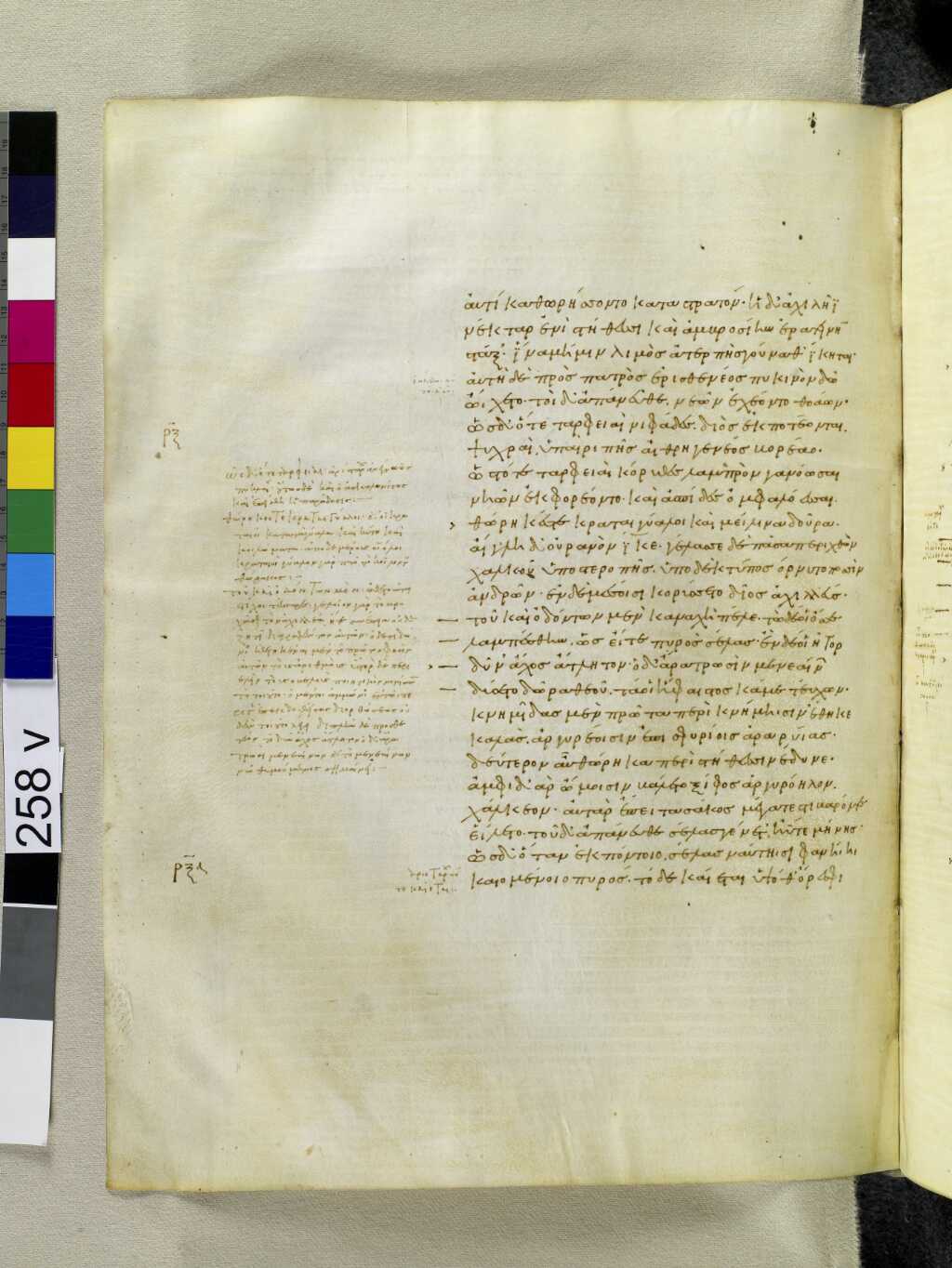
376καιομένοιο πυρός, τό τε καίεται ὑψόθʼ ὄρεσφι 377σταθμῷ ἐν οἰοπόλῳ· τοὺς δʼ οὐκ ἐθέλοντας ἄελλαι 378πόντον ἐπʼ ἰχθυόεντα φίλων ἀπάνευθε φέρουσιν· 379ὣς ἀπʼ Ἀχιλλῆος σάκεος σέλας αἰθέρʼ ἵκανε 380καλοῦ δαιδαλέου· περὶ δὲ τρυφάλειαν ἀείρας 381κρατὶ θέτο βριαρήν· ἣ δʼ ἀστὴρ ὣς ἀπέλαμπεν 382ἵππουρις τρυφάλεια, περισσείοντο δʼ ἔθειραι 383χρύσεαι, ἃς Ἥφαιστος ἵει λόφον ἀμφὶ θαμειάς. 384πειρήθη δʼ ἕο αὐτοῦ ἐν ἔντεσι δῖος Ἀχιλλεύς, 385εἰ οἷ ἐφαρμόσσειε καὶ ἐντρέχοι ἀγλαὰ γυῖα· 386τῷ δʼ εὖτε πτερὰ γίγνετʼ, ἄειρε δὲ ποιμένα λαῶν. 387ἐκ δʼ ἄρα σύριγγος πατρώϊον ἐσπάσατʼ ἔγχος 388βριθὺ μέγα στιβαρόν· τὸ μὲν οὐ δύνατʼ ἄλλος Ἀχαιῶν 389πάλλειν, ἀλλά μιν οἶος ἐπίστατο πῆλαι Ἀχιλλεύς, 390Πηλιάδα μελίην, τὴν πατρὶ φίλῳ πόρε Χείρων 391Πηλίου ἐκ κορυφῆς φόνον ἔμμεναι ἡρώεσσιν· 392ἵππους δʼ Αὐτομέδων τε καὶ Ἄλκιμος ἀμφιέποντες 393ζεύγνυον· ἀμφὶ δὲ καλὰ λέπαδνʼ ἕσαν, ἐν δὲ χαλινοὺς 394γαμφηλῇς ἔβαλον, κατὰ δʼ ἡνία τεῖναν ὀπίσσω 395κολλητὸν ποτὶ δίφρον. ὃ δὲ μάστιγα φαεινὴν 396χειρὶ λαβὼν ἀραρυῖαν ἐφʼ ἵπποιιν ἀνόρουσεν 397Αὐτομέδων· ὄπιθεν δὲ κορυσσάμενος βῆ Ἀχιλλεὺς 398τεύχεσι παμφαίνων ὥς τʼ ἠλέκτωρ Ὑπερίων, 399σμερδαλέον δʼ ἵπποισιν ἐκέκλετο πατρὸς ἑοῖο· 400Ξάνθέ τε καὶ Βαλίε τηλεκλυτὰ τέκνα Ποδάργης
He also drew his father’s spear out of the spear-stand, a spear so great and heavy and strong that none of the Achaeans save only Achilles had strength to wield it; this was the spear of Pelian ash from the topmost ridges of Mt. Pelion, which Chiron had once given to Peleus, fraught with the death of heroes. Automedon and Alcimus busied themselves with the harnessing of his horses; they made the bands fast about them, and put the bit in their mouths, drawing the reins back towards the chariot. Automedon, whip in hand, sprang up behind the horses, and after him Achilles mounted in full armour, resplendent as the sun-god Hyperion. Then with a loud voice he chided with his father’s horses saying, “Xanthus and Balius, famed offspring of Podarge—this time when we have done fighting be sure and bring your driver safely back to the host of the Achaeans, and do not leave him dead on the plain as you did Patroclus.”
Then fleet Xanthus answered under the yoke—for white-armed Juno had endowed him with human speech—and he bowed his head till his mane touched the ground as it hung down from under the yoke-band. “Dread Achilles,” said he, “we will indeed save you now, but the day of your death is near, and the blame will not be ours, for it will be heaven and stern fate that will destroy you. Neither was it through any sloth or slackness on our part that the Trojans stripped Patroclus of his armour; it was the mighty god whom lovely Leto bore that slew him as he fought among the foremost, and vouchsafed a triumph to Hector. We two can fly as swiftly as Zephyrus who they say is fleetest of all winds; nevertheless it is your doom to fall by the hand of a man and of a god.”
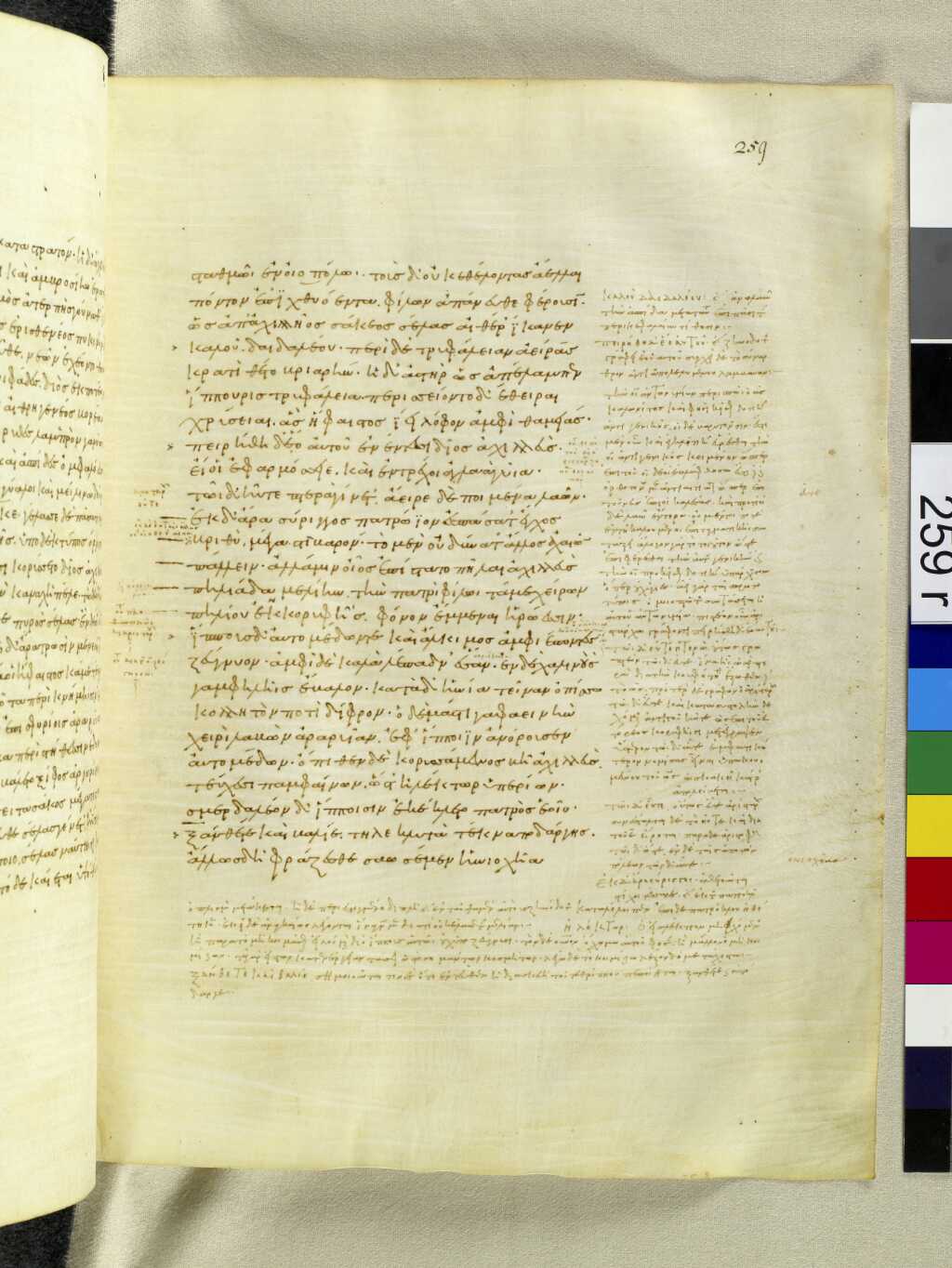
401ἄλλως δὴ φράζεσθε σαωσέμεν ἡνιοχῆα 402ἂψ Δαναῶν ἐς ὅμιλον ἐπεί χʼ ἕωμεν πολέμοιο, 403μηδʼ ὡς Πάτροκλον λίπετʼ αὐτόθι τεθνηῶτα. 404τὸν δʼ ἄρʼ ὑπὸ ζυγόφι προσέφη πόδας αἰόλος ἵππος 405Ξάνθος, ἄφαρ δʼ ἤμυσε καρήατι· πᾶσα δὲ χαίτη 406ζεύγλης ἐξεριποῦσα παρὰ ζυγὸν οὖδας ἵκανεν· 407αὐδήεντα δʼ ἔθηκε θεὰ λευκώλενος Ἥρη· 408καὶ λίην σʼ ἔτι νῦν γε σαώσομεν ὄβριμʼ Ἀχιλλεῦ· 409ἀλλά τοι ἐγγύθεν ἦμαρ ὀλέθριον· οὐδέ τοι ἡμεῖς 410αἴτιοι, ἀλλὰ θεός τε μέγας καὶ Μοῖρα κραταιή. 411οὐδὲ γὰρ ἡμετέρῃ βραδυτῆτί τε νωχελίῃ τε 412Τρῶες ἀπʼ ὤμοιιν Πατρόκλου τεύχεʼ ἕλοντο· 413ἀλλὰ θεῶν ὤριστος, ὃν ἠΰκομος τέκε Λητώ, 414ἔκτανʼ ἐνὶ προμάχοισι καὶ Ἕκτορι κῦδος ἔδωκε. 415νῶϊ δὲ καί κεν ἅμα πνοιῇ Ζεφύροιο θέοιμεν, 416ἥν περ ἐλαφροτάτην φάσʼ ἔμμεναι· ἀλλὰ σοὶ αὐτῷ 417μόρσιμόν ἐστι θεῷ τε καὶ ἀνέρι ἶφι δαμῆναι. 418ὣς ἄρα φωνήσαντος Ἐρινύες ἔσχεθον αὐδήν. 419τὸν δὲ μέγʼ ὀχθήσας προσέφη πόδας ὠκὺς Ἀχιλλεύς· 420Ξάνθε τί μοι θάνατον μαντεύεαι; οὐδέ τί σε χρή. 421εὖ νυ τὸ οἶδα καὶ αὐτὸς ὅ μοι μόρος ἐνθάδʼ ὀλέσθαι 422νόσφι φίλου πατρὸς καὶ μητέρος· ἀλλὰ καὶ ἔμπης 423οὐ λήξω πρὶν Τρῶας ἅδην ἐλάσαι πολέμοιο. 424ἦ ῥα, καὶ ἐν πρώτοις ἰάχων ἔχε μώνυχας ἵππους.
When he had thus said the Erinyes stayed his speech, and Achilles answered him in great sadness, saying, “Why, O Xanthus, do you thus foretell my death? You need not do so, for I well know that I am to fall here, far from my dear father and mother; none the more, however, shall I stay my hand till I have given the Trojans their fill of fighting.”
So saying, with a loud cry he drove his horses to the front.
Cite
Source & Cross-References
- Source text: Venetus A (10th c.) via Homer Multitext IIIF + Perseus Greek + Butler English (PG #2199) — view original
- Critical edition: Munro & Allen (Perseus Digital Library)
← previous · → next · v cycle view · l back to library