The Iliad, Book 20
Introduction
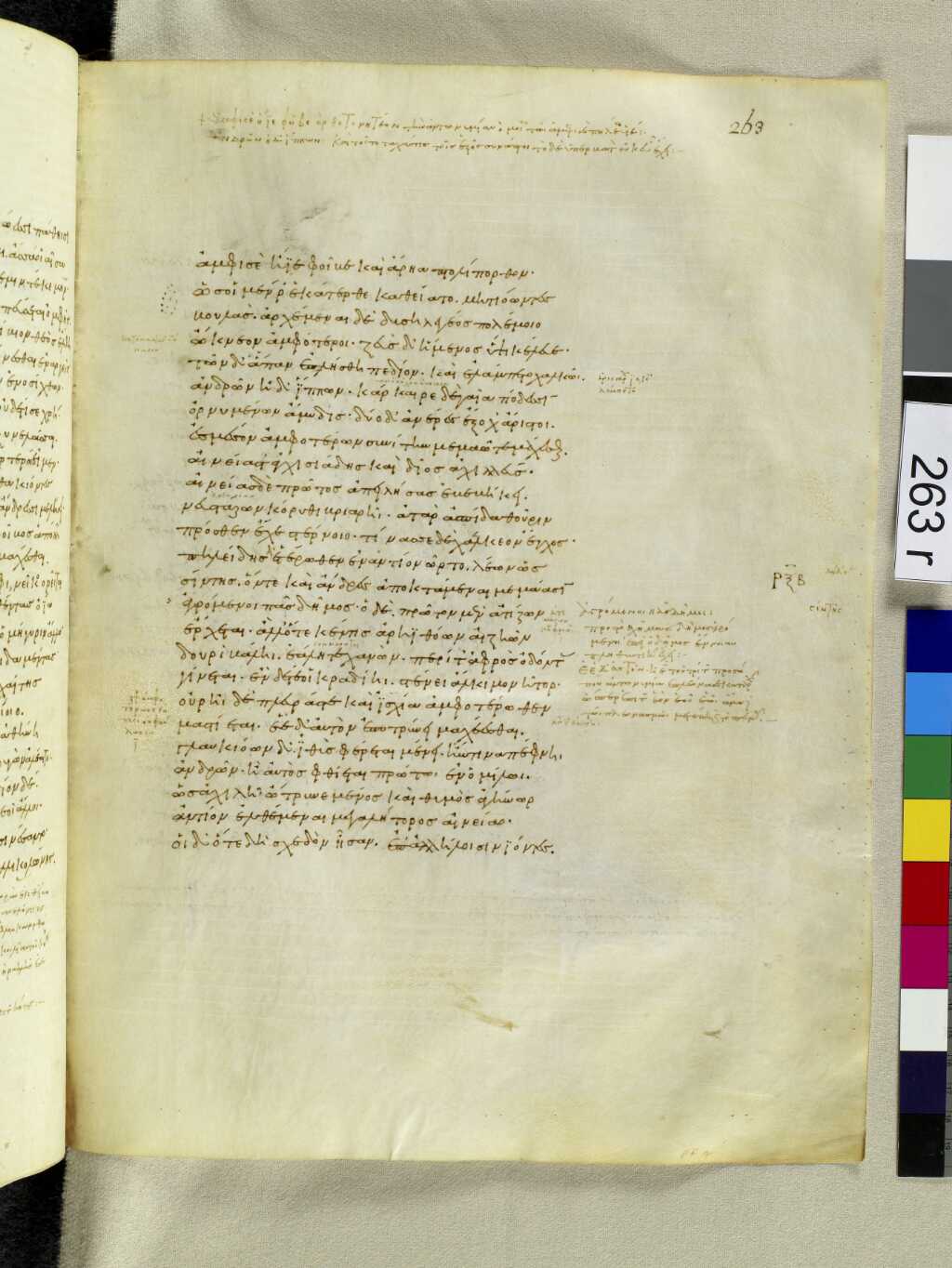
Book 20 of the Iliad with 21 sections, each linked to its specific folio in Venetus A (Marcianus Graecus 454, 10th c.). The Homer Multitext Project provides line-level folio mappings, ensuring every section of text corresponds to the exact manuscript page where it appears.
How was this verified? (Provenance)
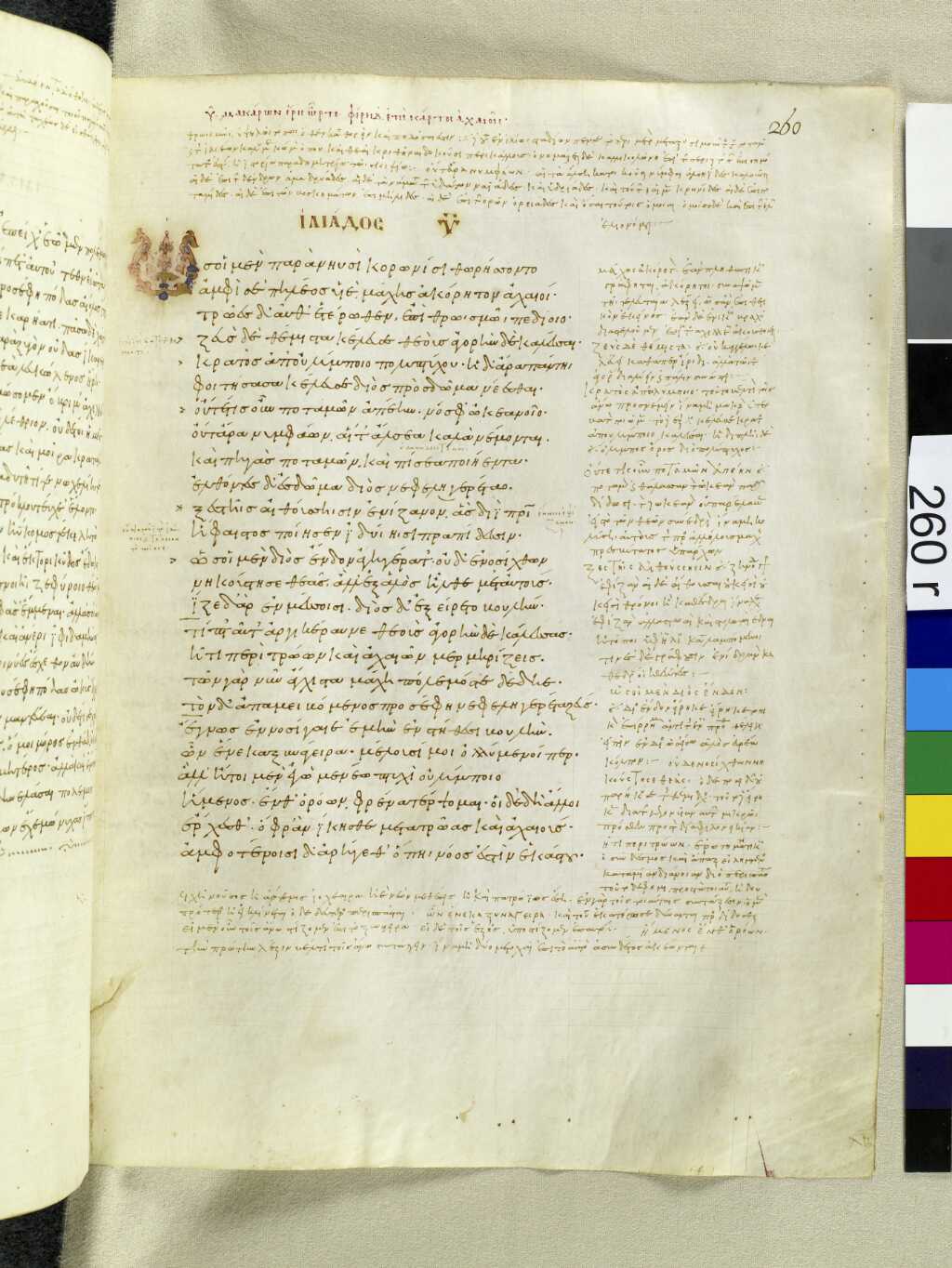
1ὣς οἳ μὲν παρὰ νηυσὶ κορωνίσι θωρήσσοντο 2ἀμφὶ σὲ Πηλέος υἱὲ μάχης ἀκόρητον Ἀχαιοί, 3Τρῶες δʼ αὖθʼ ἑτέρωθεν ἐπὶ θρωσμῷ πεδίοιο· 4Ζεὺς δὲ Θέμιστα κέλευσε θεοὺς ἀγορὴν δὲ καλέσσαι 5κρατὸς ἀπʼ Οὐλύμποιο πολυπτύχου· ἣ δʼ ἄρα πάντῃ 6φοιτήσασα κέλευσε Διὸς πρὸς δῶμα νέεσθαι. 7οὔτέ τις οὖν ποταμῶν ἀπέην νόσφʼ Ὠκεανοῖο, 8οὔτʼ ἄρα νυμφάων αἵ τʼ ἄλσεα καλὰ νέμονται 9καὶ πηγὰς ποταμῶν καὶ πίσεα ποιήεντα. 10ἐλθόντες δʼ ἐς δῶμα Διὸς νεφεληγερέταο 11ξεστῇς αἰθούσῃσιν ἐνίζανον, ἃς Διὶ πατρὶ 12Ἥφαιστος ποίησεν ἰδυίῃσι πραπίδεσσιν. 13ὣς οἳ μὲν Διὸς ἔνδον ἀγηγέρατʼ· οὐδʼ ἐνοσίχθων 14νηκούστησε θεᾶς, ἀλλʼ ἐξ ἁλὸς ἦλθε μετʼ αὐτούς, 15ἷζε δʼ ἄρʼ ἐν μέσσοισι, Διὸς δʼ ἐξείρετο βουλήν· 16τίπτʼ αὖτʼ ἀργικέραυνε θεοὺς ἀγορὴν δὲ κάλεσσας; 17ἦ τι περὶ Τρώων καὶ Ἀχαιῶν μερμηρίζεις; 18τῶν γὰρ νῦν ἄγχιστα μάχη πόλεμός τε δέδηε. 19τὸν δʼ ἀπαμειβόμενος προσέφη νεφεληγερέτα Ζεύς· 20ἔγνως ἐννοσίγαιε ἐμὴν ἐν στήθεσι βουλὴν 21ὧν ἕνεκα ξυνάγειρα· μέλουσί μοι ὀλλύμενοί περ. 22ἀλλʼ ἤτοι μὲν ἐγὼ μενέω πτυχὶ Οὐλύμποιο 23ἥμενος, ἔνθʼ ὁρόων φρένα τέρψομαι· οἳ δὲ δὴ ἄλλοι 24ἔρχεσθʼ ὄφρʼ ἂν ἵκησθε μετὰ Τρῶας καὶ Ἀχαιούς, 25ἀμφοτέροισι δʼ ἀρήγεθʼ ὅπῃ νόος ἐστὶν ἑκάστου.
The gods hold a council and determine to watch the fight, from the hill Callicolone, and the barrow of Hercules—A fight between Achilles and AEneas is interrupted by Neptune, who saves AEneas—Achilles kills many Trojans.
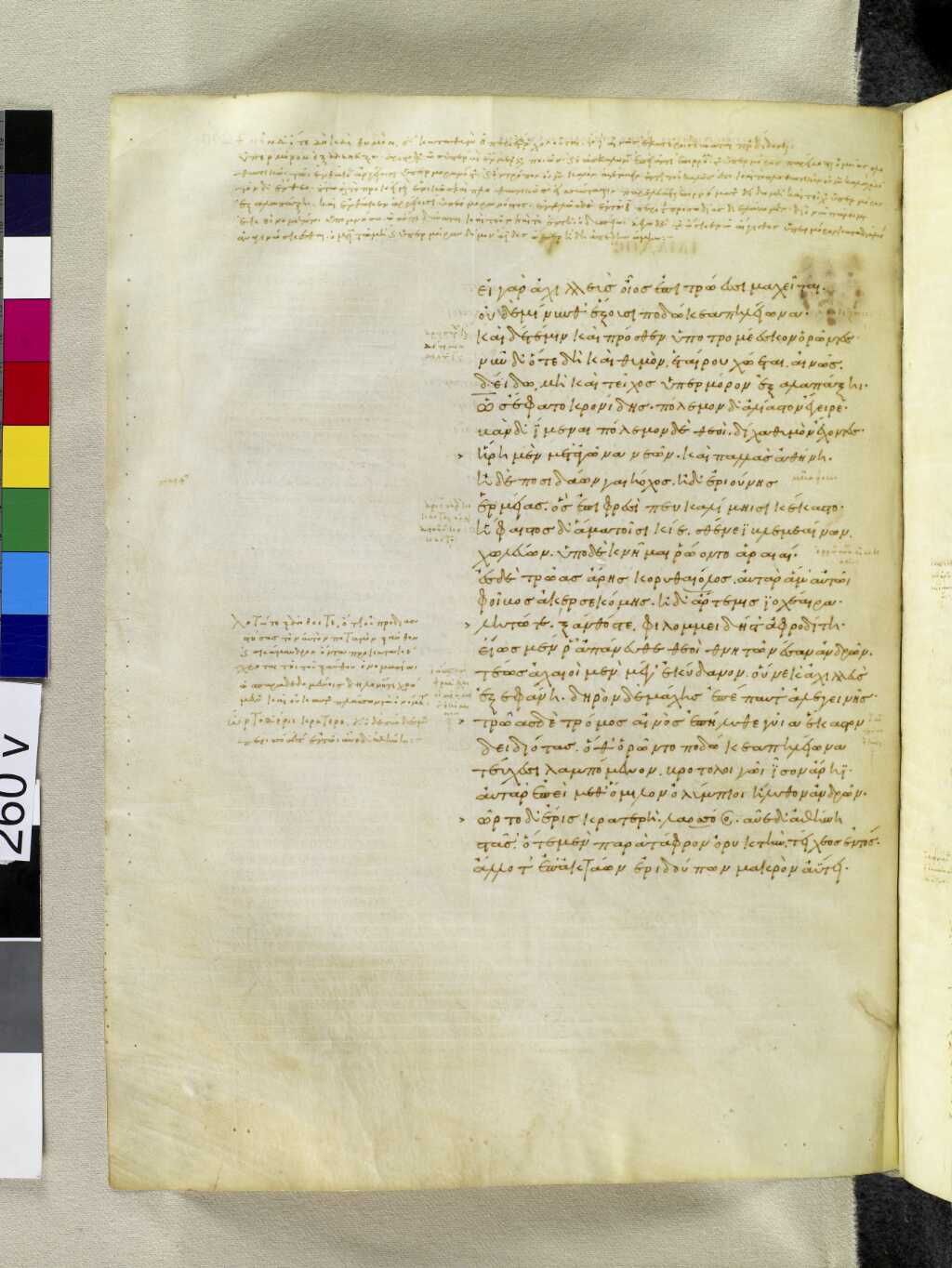
26εἰ γὰρ Ἀχιλλεὺς οἶος ἐπὶ Τρώεσσι μαχεῖται 27οὐδὲ μίνυνθʼ ἕξουσι ποδώκεα Πηλεΐωνα. 28καὶ δέ τί μιν καὶ πρόσθεν ὑποτρομέεσκον ὁρῶντες· 29νῦν δʼ ὅτε δὴ καὶ θυμὸν ἑταίρου χώεται αἰνῶς 30δείδω μὴ καὶ τεῖχος ὑπέρμορον ἐξαλαπάξῃ. 31ὣς ἔφατο Κρονίδης, πόλεμον δʼ ἀλίαστον ἔγειρε. 32βὰν δʼ ἴμεναι πόλεμον δὲ θεοὶ δίχα θυμὸν ἔχοντες· 33Ἥρη μὲν μετʼ ἀγῶνα νεῶν καὶ Παλλὰς Ἀθήνη 34ἠδὲ Ποσειδάων γαιήοχος ἠδʼ ἐριούνης 35Ἑρμείας, ὃς ἐπὶ φρεσὶ πευκαλίμῃσι κέκασται· 36Ἥφαιστος δʼ ἅμα τοῖσι κίε σθένεϊ βλεμεαίνων 37χωλεύων, ὑπὸ δὲ κνῆμαι ῥώοντο ἀραιαί. 38ἐς δὲ Τρῶας Ἄρης κορυθαίολος, αὐτὰρ ἅμʼ αὐτῷ 39Φοῖβος ἀκερσεκόμης ἠδʼ Ἄρτεμις ἰοχέαιρα 40Λητώ τε Ξάνθός τε φιλομειδής τʼ Ἀφροδίτη. 41εἷος μέν ῥʼ ἀπάνευθε θεοὶ θνητῶν ἔσαν ἀνδρῶν, 42τεῖος Ἀχαιοὶ μὲν μέγα κύδανον, οὕνεκʼ Ἀχιλλεὺς 43ἐξεφάνη, δηρὸν δὲ μάχης ἐπέπαυτʼ ἀλεγεινῆς· 44Τρῶας δὲ τρόμος αἰνὸς ὑπήλυθε γυῖα ἕκαστον 45δειδιότας, ὅθʼ ὁρῶντο ποδώκεα Πηλεΐωνα 46τεύχεσι λαμπόμενον βροτολοιγῷ ἶσον Ἄρηϊ. 47αὐτὰρ ἐπεὶ μεθʼ ὅμιλον Ὀλύμπιοι ἤλυθον ἀνδρῶν, 48ὦρτο δʼ Ἔρις κρατερὴ λαοσσόος, αὖε δʼ Ἀθήνη 49στᾶσʼ ὁτὲ μὲν παρὰ τάφρον ὀρυκτὴν τείχεος ἐκτός, 50ἄλλοτʼ ἐπʼ ἀκτάων ἐριδούπων μακρὸν ἀΰτει.
Thus, then, did the Achaeans arm by their ships round you, O son of Peleus, who were hungering for battle; while the Trojans over against them armed upon the rise of the plain.
Meanwhile Jove from the top of many-delled Olympus, bade Themis gather the gods in council, whereon she went about and called them to the house of Jove. There was not a river absent except Oceanus, nor a single one of the nymphs that haunt fair groves, or springs of rivers and meadows of green grass. When they reached the house of cloud-compelling Jove, they took their seats in the arcades of polished marble which Vulcan with his consummate skill had made for father Jove.
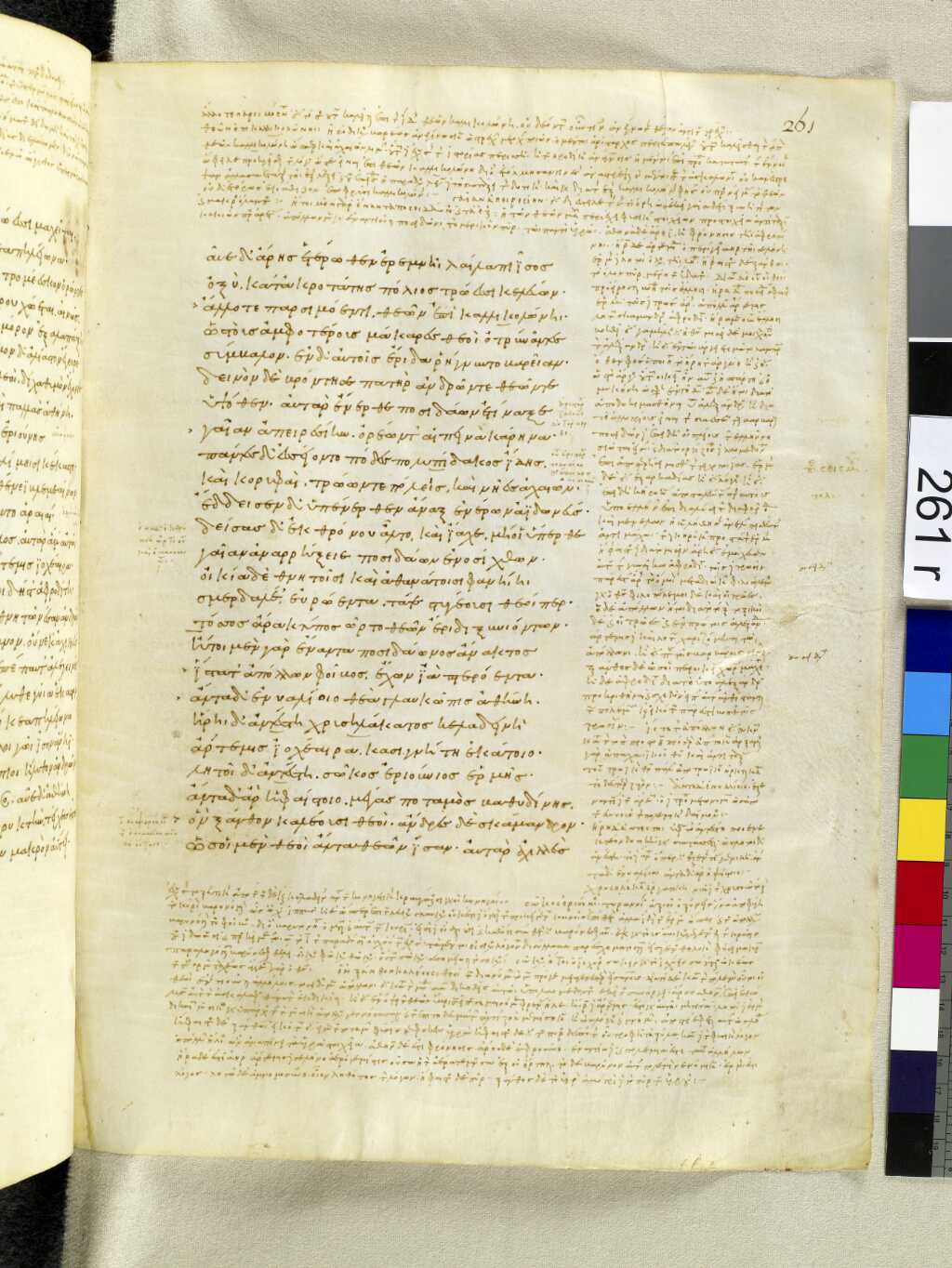
51αὖε δʼ Ἄρης ἑτέρωθεν ἐρεμνῇ λαίλαπι ἶσος 52ὀξὺ κατʼ ἀκροτάτης πόλιος Τρώεσσι κελεύων, 53ἄλλοτε πὰρ Σιμόεντι θέων ἐπὶ Καλλικολώνῃ. 54ὣς τοὺς ἀμφοτέρους μάκαρες θεοὶ ὀτρύνοντες 55σύμβαλον, ἐν δʼ αὐτοῖς ἔριδα ῥήγνυντο βαρεῖαν· 56δεινὸν δὲ βρόντησε πατὴρ ἀνδρῶν τε θεῶν τε 57ὑψόθεν· αὐτὰρ νέρθε Ποσειδάων ἐτίναξε 58γαῖαν ἀπειρεσίην ὀρέων τʼ αἰπεινὰ κάρηνα. 59πάντες δʼ ἐσσείοντο πόδες πολυπίδακος Ἴδης 60καὶ κορυφαί, Τρώων τε πόλις καὶ νῆες Ἀχαιῶν. 61ἔδεισεν δʼ ὑπένερθεν ἄναξ ἐνέρων Ἀϊδωνεύς, 62δείσας δʼ ἐκ θρόνου ἆλτο καὶ ἴαχε, μή οἱ ὕπερθε 63γαῖαν ἀναρρήξειε Ποσειδάων ἐνοσίχθων, 64οἰκία δὲ θνητοῖσι καὶ ἀθανάτοισι φανείη 65σμερδαλέʼ εὐρώεντα, τά τε στυγέουσι θεοί περ· 66τόσσος ἄρα κτύπος ὦρτο θεῶν ἔριδι ξυνιόντων. 67ἤτοι μὲν γὰρ ἔναντα Ποσειδάωνος ἄνακτος 68ἵστατʼ Ἀπόλλων Φοῖβος ἔχων ἰὰ πτερόεντα, 69ἄντα δʼ Ἐνυαλίοιο θεὰ γλαυκῶπις Ἀθήνη· 70Ἥρῃ δʼ ἀντέστη χρυσηλάκατος κελαδεινὴ 71Ἄρτεμις ἰοχέαιρα κασιγνήτη ἑκάτοιο· 72Λητοῖ δʼ ἀντέστη σῶκος ἐριούνιος Ἑρμῆς, 73ἄντα δʼ ἄρʼ Ἡφαίστοιο μέγας ποταμὸς βαθυδίνης, 74ὃν Ξάνθον καλέουσι θεοί, ἄνδρες δὲ Σκάμανδρον. 75ὣς οἳ μὲν θεοὶ ἄντα θεῶν ἴσαν· αὐτὰρ Ἀχιλλεὺς
In such wise, therefore, did they gather in the house of Jove. Neptune also, lord of the earthquake, obeyed the call of the goddess, and came up out of the sea to join them. There, sitting in the midst of them, he asked what Jove’s purpose might be. “Why,” said he, “wielder of the lightning, have you called the gods in council? Are you considering some matter that concerns the Trojans and Achaeans—for the blaze of battle is on the point of being kindled between them?”
And Jove answered, “You know my purpose, shaker of earth, and wherefore I have called you hither. I take thought for them even in their destruction. For my own part I shall stay here seated on Mt. Olympus and look on in peace, but do you others go about among Trojans and Achaeans, and help either side as you may be severally disposed. If Achilles fights the Trojans without hindrance they will make no stand against him; they have ever trembled at the sight of him, and now that he is roused to such fury about his comrade, he will override fate itself and storm their city.”
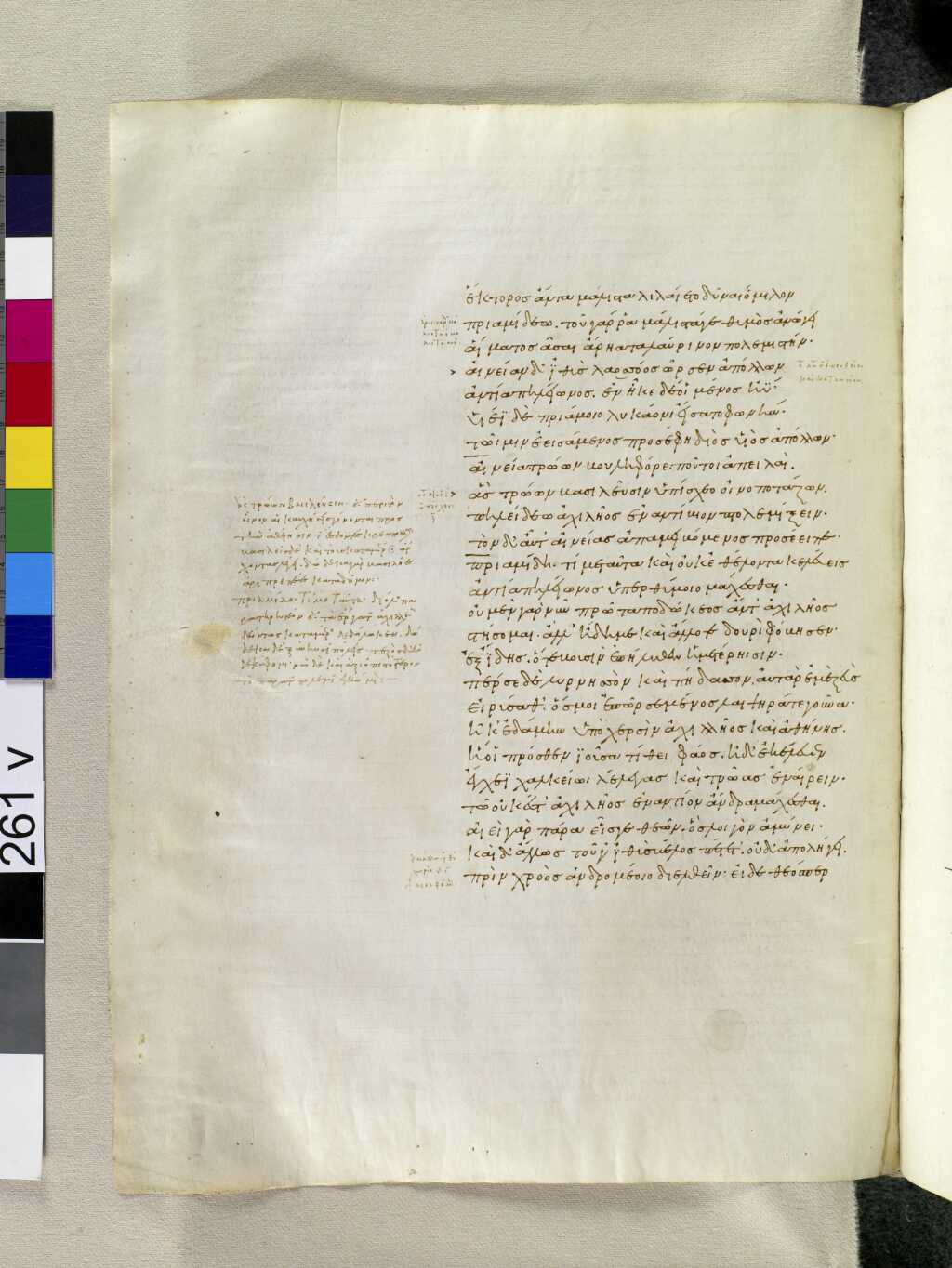
76Ἕκτορος ἄντα μάλιστα λιλαίετο δῦναι ὅμιλον 77Πριαμίδεω· τοῦ γάρ ῥα μάλιστά ἑ θυμὸς ἀνώγει 78αἵματος ἆσαι Ἄρηα ταλαύρινον πολεμιστήν. 79Αἰνείαν δʼ ἰθὺς λαοσσόος ὦρσεν Ἀπόλλων 80ἀντία Πηλεΐωνος, ἐνῆκε δέ οἱ μένος ἠΰ· 81υἱέϊ δὲ Πριάμοιο Λυκάονι εἴσατο φωνήν· 82τῷ μιν ἐεισάμενος προσέφη Διὸς υἱὸς Ἀπόλλων· 83Αἰνεία Τρώων βουληφόρε ποῦ τοι ἀπειλαὶ 84ἃς Τρώων βασιλεῦσιν ὑπίσχεο οἰνοποτάζων 85Πηλεΐδεω Ἀχιλῆος ἐναντίβιον πολεμίξειν; 86τὸν δʼ αὖτʼ Αἰνείας ἀπαμειβόμενος προσέειπε· 87Πριαμίδη τί με ταῦτα καὶ οὐκ ἐθέλοντα κελεύεις 88ἀντία Πηλεΐωνος ὑπερθύμοιο μάχεσθαι; 89οὐ μὲν γὰρ νῦν πρῶτα ποδώκεος ἄντʼ Ἀχιλῆος 90στήσομαι, ἀλλʼ ἤδη με καὶ ἄλλοτε δουρὶ φόβησεν 91ἐξ Ἴδης, ὅτε βουσὶν ἐπήλυθεν ἡμετέρῃσι, 92πέρσε δὲ Λυρνησσὸν καὶ Πήδασον· αὐτὰρ ἐμὲ Ζεὺς 93εἰρύσαθʼ, ὅς μοι ἐπῶρσε μένος λαιψηρά τε γοῦνα. 94ἦ κʼ ἐδάμην ὑπὸ χερσὶν Ἀχιλλῆος καὶ Ἀθήνης, 95ἥ οἱ πρόσθεν ἰοῦσα τίθει φάος ἠδʼ ἐκέλευεν 96ἔγχεϊ χαλκείῳ Λέλεγας καὶ Τρῶας ἐναίρειν. 97τὼ οὐκ ἔστʼ Ἀχιλῆος ἐναντίον ἄνδρα μάχεσθαι· 98αἰεὶ γὰρ πάρα εἷς γε θεῶν ὃς λοιγὸν ἀμύνει. 99καὶ δʼ ἄλλως τοῦ γʼ ἰθὺ βέλος πέτετʼ, οὐδʼ ἀπολήγει 100πρὶν χροὸς ἀνδρομέοιο διελθέμεν. εἰ δὲ θεός περ
Thus spoke Jove and gave the word for war, whereon the gods took their several sides and went into battle. Juno, Pallas Minerva, earth-encircling Neptune, Mercury bringer of good luck and excellent in all cunning—all these joined the host that came from the ships; with them also came Vulcan in all his glory, limping, but yet with his thin legs plying lustily under him. Mars of gleaming helmet joined the Trojans, and with him Apollo of locks unshorn, and the archer goddess Diana, Leto, Xanthus, and laughter-loving Venus.
So long as the gods held themselves aloof from mortal warriors the Achaeans were triumphant, for Achilles who had long refused to fight was now with them. There was not a Trojan but his limbs failed him for fear as he beheld the fleet son of Peleus all glorious in his armour, and looking like Mars himself. When, however, the Olympians came to take their part among men, forthwith uprose strong Strife, rouser of hosts, and Minerva raised her loud voice, now standing by the deep trench that ran outside the wall, and now shouting with all her might upon the shore of the sounding sea. Mars also bellowed out upon the other side, dark as some black thunder-cloud, and called on the Trojans at the top of his voice, now from the acropolis, and now speeding up the side of the river Simois till he came to the hill Callicolone.
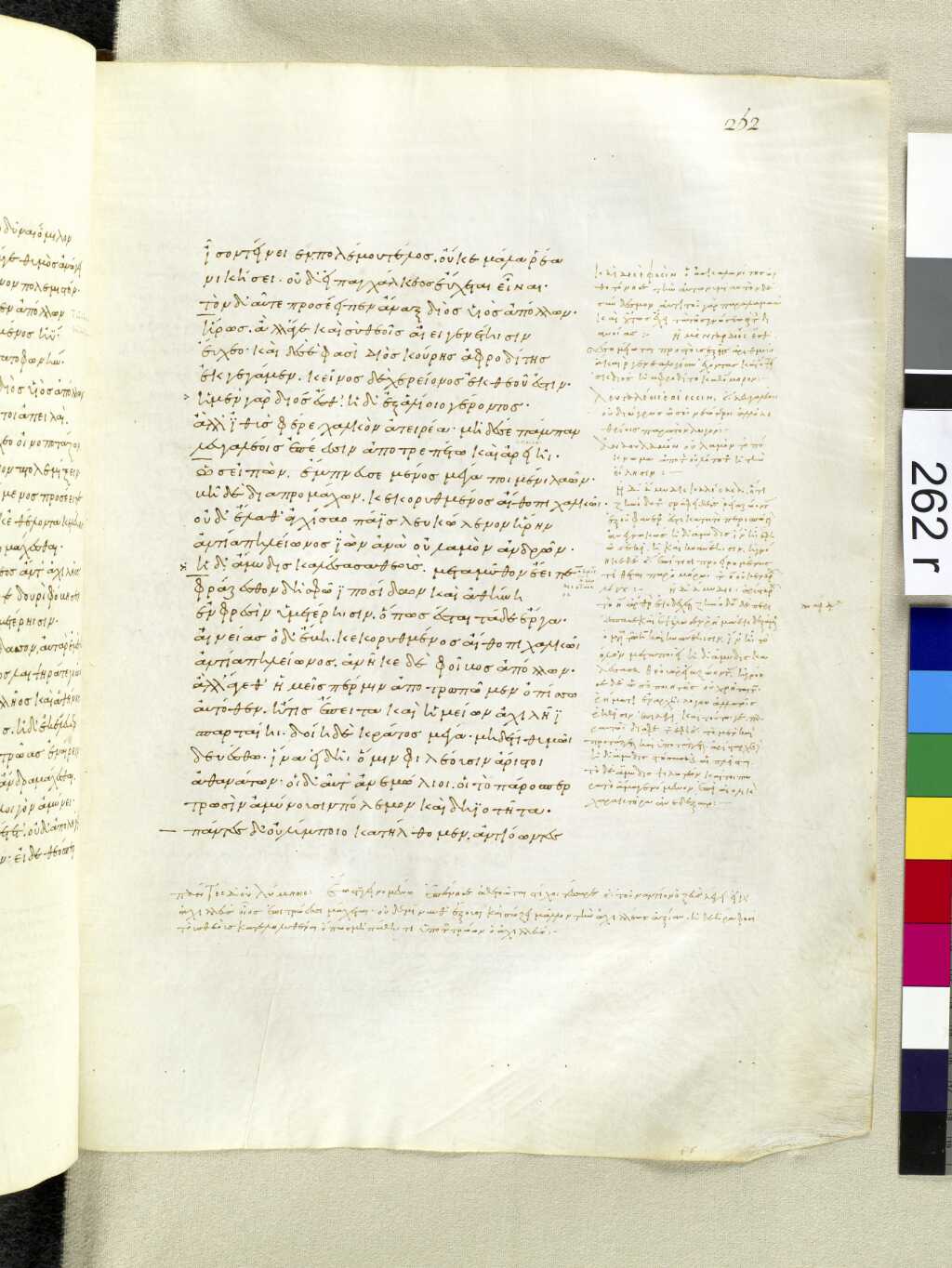
101ἶσον τείνειεν πολέμου τέλος, οὔ κε μάλα ῥέα 102νικήσειʼ, οὐδʼ εἰ παγχάλκεος εὔχεται εἶναι. 103τὸν δʼ αὖτε προσέειπεν ἄναξ Διὸς υἱὸς Ἀπόλλων· 104ἥρως ἀλλʼ ἄγε καὶ σὺ θεοῖς αἰειγενέτῃσιν 105εὔχεο· καὶ δὲ σέ φασι Διὸς κούρης Ἀφροδίτης 106ἐκγεγάμεν, κεῖνος δὲ χερείονος ἐκ θεοῦ ἐστίν· 107ἣ μὲν γὰρ Διός ἐσθʼ, ἣ δʼ ἐξ ἁλίοιο γέροντος. 108ἀλλʼ ἰθὺς φέρε χαλκὸν ἀτειρέα, μηδέ σε πάμπαν 109λευγαλέοις ἐπέεσσιν ἀποτρεπέτω καὶ ἀρειῇ. 110ὣς εἰπὼν ἔμπνευσε μένος μέγα ποιμένι λαῶν, 111βῆ δὲ διὰ προμάχων κεκορυθμένος αἴθοπι χαλκῷ. 112οὐδʼ ἔλαθʼ Ἀγχίσαο πάϊς λευκώλενον Ἥρην 113ἀντία Πηλεΐωνος ἰὼν ἀνὰ οὐλαμὸν ἀνδρῶν· 114ἣ δʼ ἄμυδις στήσασα θεοὺς μετὰ μῦθον ἔειπε· 115φράζεσθον δὴ σφῶϊ Ποσείδαον καὶ Ἀθήνη 116ἐν φρεσὶν ὑμετέρῃσιν, ὅπως ἔσται τάδε ἔργα. 117Αἰνείας ὅδʼ ἔβη κεκορυθμένος αἴθοπι χαλκῷ 118ἀντία Πηλεΐωνος, ἀνῆκε δὲ Φοῖβος Ἀπόλλων. 119ἀλλʼ ἄγεθʼ, ἡμεῖς πέρ μιν ἀποτρωπῶμεν ὀπίσσω 120αὐτόθεν· ἤ τις ἔπειτα καὶ ἡμείων Ἀχιλῆϊ 121παρσταίη, δοίη δὲ κράτος μέγα, μηδέ τι θυμῷ 122δευέσθω, ἵνα εἰδῇ ὅ μιν φιλέουσιν ἄριστοι 123ἀθανάτων, οἳ δʼ αὖτʼ ἀνεμώλιοι οἳ τὸ πάρος περ 124Τρωσὶν ἀμύνουσιν πόλεμον καὶ δηϊοτῆτα. 125πάντες δʼ Οὐλύμποιο κατήλθομεν ἀντιόωντες
Thus did the gods spur on both hosts to fight, and rouse fierce contention also among themselves. The sire of gods and men thundered from heaven above, while from beneath Neptune shook the vast earth, and bade the high hills tremble. The spurs and crests of many-fountained Ida quaked, as also the city of the Trojans and the ships of the Achaeans. Hades, king of the realms below, was struck with fear; he sprang panic-stricken from his throne and cried aloud in terror lest Neptune, lord of the earthquake, should crack the ground over his head, and lay bare his mouldy mansions to the sight of mortals and immortals—mansions so ghastly grim that even the gods shudder to think of them. Such was the uproar as the gods came together in battle. Apollo with his arrows took his stand to face King Neptune, while Minerva took hers against the god of war; the archer goddess Diana with her golden arrows, sister of far-darting Apollo, stood to face Juno; Mercury the lusty bringer of good luck faced Leto, while the mighty eddying river whom men can Scamander, but gods Xanthus, matched himself against Vulcan.
The gods, then, were thus ranged against one another. But the heart of Achilles was set on meeting Hector son of Priam, for it was with his blood that he longed above all things else to glut the stubborn lord of battle. Meanwhile Apollo set Aeneas on to attack the son of Peleus, and put courage into his heart, speaking with the voice of Lycaon son of Priam. In his likeness therefore, he said to Aeneas, “Aeneas, counsellor of the Trojans, where are now the brave words with which you vaunted over your wine before the Trojan princes, saying that you would fight Achilles son of Peleus in single combat?”
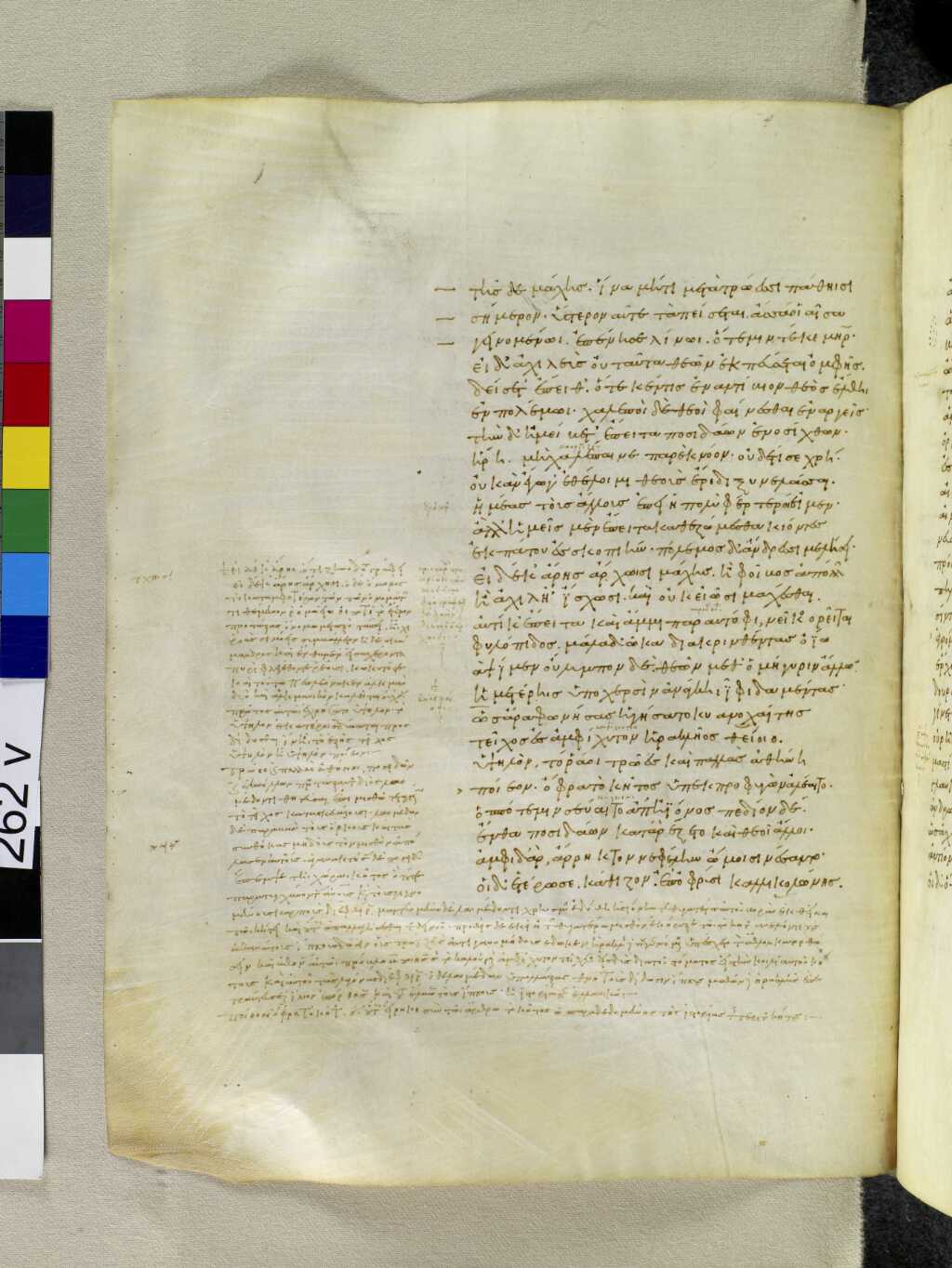
126τῆσδε μάχης, ἵνα μή τι μετὰ Τρώεσσι πάθῃσι 127σήμερον· ὕστερον αὖτε τὰ πείσεται ἅσσά οἱ αἶσα 128γιγνομένῳ ἐπένησε λίνῳ ὅτε μιν τέκε μήτηρ. 129εἰ δʼ Ἀχιλεὺς οὐ ταῦτα θεῶν ἐκ πεύσεται ὀμφῆς 130δείσετʼ ἔπειθʼ, ὅτε κέν τις ἐναντίβιον θεὸς ἔλθῃ 131ἐν πολέμῳ· χαλεποὶ δὲ θεοὶ φαίνεσθαι ἐναργεῖς. 132τὴν δʼ ἠμείβετʼ ἔπειτα Ποσειδάων ἐνοσίχθων· 133Ἥρη μὴ χαλέπαινε παρʼ ἐκ νόον· οὐδέ τί σε χρή. 134οὐκ ἂν ἔγωγʼ ἐθέλοιμι θεοὺς ἔριδι ξυνελάσσαι 135ἡμέας τοὺς ἄλλους, ἐπεὶ ἦ πολὺ φέρτεροί εἰμεν· 136ἀλλʼ ἡμεῖς μὲν ἔπειτα καθεζώμεσθα κιόντες 137ἐκ πάτου ἐς σκοπιήν, πόλεμος δʼ ἄνδρεσσι μελήσει. 138εἰ δέ κʼ Ἄρης ἄρχωσι μάχης ἢ Φοῖβος Ἀπόλλων, 139ἢ Ἀχιλῆʼ ἴσχωσι καὶ οὐκ εἰῶσι μάχεσθαι, 140αὐτίκʼ ἔπειτα καὶ ἄμμι παρʼ αὐτόθι νεῖκος ὀρεῖται 141φυλόπιδος· μάλα δʼ ὦκα διακρινθέντας ὀΐω 142ἂψ ἴμεν Οὔλυμπον δὲ θεῶν μεθʼ ὁμήγυριν ἄλλων 143ἡμετέρῃς ὑπὸ χερσὶν ἀναγκαίηφι δαμέντας. 144ὣς ἄρα φωνήσας ἡγήσατο κυανοχαίτης 145τεῖχος ἐς ἀμφίχυτον Ἡρακλῆος θείοιο 146ὑψηλόν, τό ῥά οἱ Τρῶες καὶ Παλλὰς Ἀθήνη 147ποίεον, ὄφρα τὸ κῆτος ὑπεκπροφυγὼν ἀλέαιτο, 148ὁππότε μιν σεύαιτο ἀπʼ ἠϊόνος πεδίον δέ. 149ἔνθα Ποσειδάων κατʼ ἄρʼ ἕζετο καὶ θεοὶ ἄλλοι, 150ἀμφὶ δʼ ἄρʼ ἄρρηκτον νεφέλην ὤμοισιν ἕσαντο·
And Aeneas answered, “Why do you thus bid me fight the proud son of Peleus, when I am in no mind to do so? Were I to face him now, it would not be for the first time. His spear has already put me to flight from Ida, when he attacked our cattle and sacked Lyrnessus and Pedasus; Jove indeed saved me in that he vouchsafed me strength to fly, else had I fallen by the hands of Achilles and Minerva, who went before him to protect him and urged him to fall upon the Lelegae and Trojans. No man may fight Achilles, for one of the gods is always with him as his guardian angel, and even were it not so, his weapon flies ever straight, and fails not to pierce the flesh of him who is against him; if heaven would let me fight him on even terms he should not soon overcome me, though he boasts that he is made of bronze.”
Then said King Apollo, son to Jove, “Nay, hero, pray to the ever-living gods, for men say that you were born of Jove’s daughter Venus, whereas Achilles is son to a goddess of inferior rank. Venus is child to Jove, while Thetis is but daughter to the old man of the sea. Bring, therefore, your spear to bear upon him, and let him not scare you with his taunts and menaces.”
151οἳ δʼ ἑτέρωσε καθῖζον ἐπʼ ὀφρύσι Καλλικολώνης 152ἀμφὶ σὲ ἤϊε Φοῖβε καὶ Ἄρηα πτολίπορθον. 153ὣς οἳ μέν ῥʼ ἑκάτερθε καθήατο μητιόωντες 154βουλάς· ἀρχέμεναι δὲ δυσηλεγέος πολέμοιο 155ὄκνεον ἀμφότεροι, Ζεὺς δʼ ἥμενος ὕψι κέλευε. 156τῶν δʼ ἅπαν ἐπλήσθη πεδίον καὶ λάμπετο χαλκῷ 157ἀνδρῶν ἠδʼ ἵππων· κάρκαιρε δὲ γαῖα πόδεσσιν 158ὀρνυμένων ἄμυδις. δύο δʼ ἀνέρες ἔξοχʼ ἄριστοι 159ἐς μέσον ἀμφοτέρων συνίτην μεμαῶτε μάχεσθαι 160Αἰνείας τʼ Ἀγχισιάδης καὶ δῖος Ἀχιλλεύς. 161Αἰνείας δὲ πρῶτος ἀπειλήσας ἐβεβήκει 162νευστάζων κόρυθι βριαρῇ· ἀτὰρ ἀσπίδα θοῦριν 163πρόσθεν ἔχε στέρνοιο, τίνασσε δὲ χάλκεον ἔγχος. 164Πηλεΐδης δʼ ἑτέρωθεν ἐναντίον ὦρτο λέων ὣς 165σίντης, ὅν τε καὶ ἄνδρες ἀποκτάμεναι μεμάασιν 166ἀγρόμενοι πᾶς δῆμος· ὃ δὲ πρῶτον μὲν ἀτίζων 167ἔρχεται, ἀλλʼ ὅτε κέν τις ἀρηϊθόων αἰζηῶν 168δουρὶ βάλῃ ἐάλη τε χανών, περί τʼ ἀφρὸς ὀδόντας 169γίγνεται, ἐν δέ τέ οἱ κραδίῃ στένει ἄλκιμον ἦτορ, 170οὐρῇ δὲ πλευράς τε καὶ ἰσχία ἀμφοτέρωθεν 171μαστίεται, ἑὲ δʼ αὐτὸν ἐποτρύνει μαχέσασθαι, 172γλαυκιόων δʼ ἰθὺς φέρεται μένει, ἤν τινα πέφνῃ 173ἀνδρῶν, ἢ αὐτὸς φθίεται πρώτῳ ἐν ὁμίλῳ· 174ὣς Ἀχιλῆʼ ὄτρυνε μένος καὶ θυμὸς ἀγήνωρ 175ἀντίον ἐλθέμεναι μεγαλήτορος Αἰνείαο.
As he spoke he put courage into the heart of the shepherd of his people, and he strode in full armour among the ranks of the foremost fighters. Nor did the son of Anchises escape the notice of white-armed Juno, as he went forth into the throng to meet Achilles. She called the gods about her, and said, “Look to it, you two, Neptune and Minerva, and consider how this shall be; Phoebus Apollo has been sending Aeneas clad in full armour to fight Achilles. Shall we turn him back at once, or shall one of us stand by Achilles and endow him with strength so that his heart fail not, and he may learn that the chiefs of the immortals are on his side, while the others who have all along been defending the Trojans are but vain helpers? Let us all come down from Olympus and join in the fight, that this day he may take no hurt at the hands of the Trojans. Hereafter let him suffer whatever fate may have spun out for him when he was begotten and his mother bore him. If Achilles be not thus assured by the voice of a god, he may come to fear presently when one of us meets him in battle, for the gods are terrible if they are seen face to face.”
176οἳ δʼ ὅτε δὴ σχεδὸν ἦσαν ἐπʼ ἀλλήλοισιν ἰόντες, 177τὸν πρότερος προσέειπε ποδάρκης δῖος Ἀχιλλεύς· 178Αἰνεία τί σὺ τόσσον ὁμίλου πολλὸν ἐπελθὼν 179ἔστης; ἦ σέ γε θυμὸς ἐμοὶ μαχέσασθαι ἀνώγει 180ἐλπόμενον Τρώεσσιν ἀνάξειν ἱπποδάμοισι 181τιμῆς τῆς Πριάμου; ἀτὰρ εἴ κεν ἔμʼ ἐξεναρίξῃς, 182οὔ τοι τοὔνεκά γε Πρίαμος γέρας ἐν χερὶ θήσει· 183εἰσὶν γάρ οἱ παῖδες, ὃ δʼ ἔμπεδος οὐδʼ ἀεσίφρων. 184ἦ νύ τί τοι Τρῶες τέμενος τάμον ἔξοχον ἄλλων 185καλὸν φυταλιῆς καὶ ἀρούρης, ὄφρα νέμηαι 186αἴ κεν ἐμὲ κτείνῃς; χαλεπῶς δέ σʼ ἔολπα τὸ ῥέξειν. 187ἤδη μὲν σέ γέ φημι καὶ ἄλλοτε δουρὶ φοβῆσαι. 188ἦ οὐ μέμνῃ ὅτε πέρ σε βοῶν ἄπο μοῦνον ἐόντα 189σεῦα κατʼ Ἰδαίων ὀρέων ταχέεσσι πόδεσσι 190καρπαλίμως; τότε δʼ οὔ τι μετατροπαλίζεο φεύγων. 191ἔνθεν δʼ ἐς Λυρνησσὸν ὑπέκφυγες· αὐτὰρ ἐγὼ τὴν 192πέρσα μεθορμηθεὶς σὺν Ἀθήνῃ καὶ Διὶ πατρί, 193ληϊάδας δὲ γυναῖκας ἐλεύθερον ἦμαρ ἀπούρας 194ἦγον· ἀτὰρ σὲ Ζεὺς ἐρρύσατο καὶ θεοὶ ἄλλοι. 195ἀλλʼ οὐ νῦν ἐρύεσθαι ὀΐομαι, ὡς ἐνὶ θυμῷ 196βάλλεαι· ἀλλά σʼ ἔγωγʼ ἀναχωρήσαντα κελεύω 197ἐς πληθὺν ἰέναι, μηδʼ ἀντίος ἵστασʼ ἐμεῖο, 198πρίν τι κακὸν παθέειν· ῥεχθὲν δέ τε νήπιος ἔγνω. 199τὸν δʼ αὖτʼ Αἰνείας ἀπαμείβετο φώνησέν τε· 200Πηλεΐδη μὴ δὴ ἐπέεσσί με νηπύτιον ὣς
Neptune lord of the earthquake answered her saying, “Juno, restrain your fury; it is not well; I am not in favour of forcing the other gods to fight us, for the advantage is too greatly on our own side; let us take our places on some hill out of the beaten track, and let mortals fight it out among themselves. If Mars or Phoebus Apollo begin fighting, or keep Achilles in check so that he cannot fight, we too, will at once raise the cry of battle, and in that case they will soon leave the field and go back vanquished to Olympus among the other gods.”
With these words the dark-haired god led the way to the high earth-barrow of Hercules, built round solid masonry, and made by the Trojans and Pallas Minerva for him to fly to when the sea-monster was chasing him from the shore on to the plain. Here Neptune and those that were with him took their seats, wrapped in a thick cloud of darkness; but the other gods seated themselves on the brow of Callicolone round you, O Phoebus, and Mars the waster of cities.
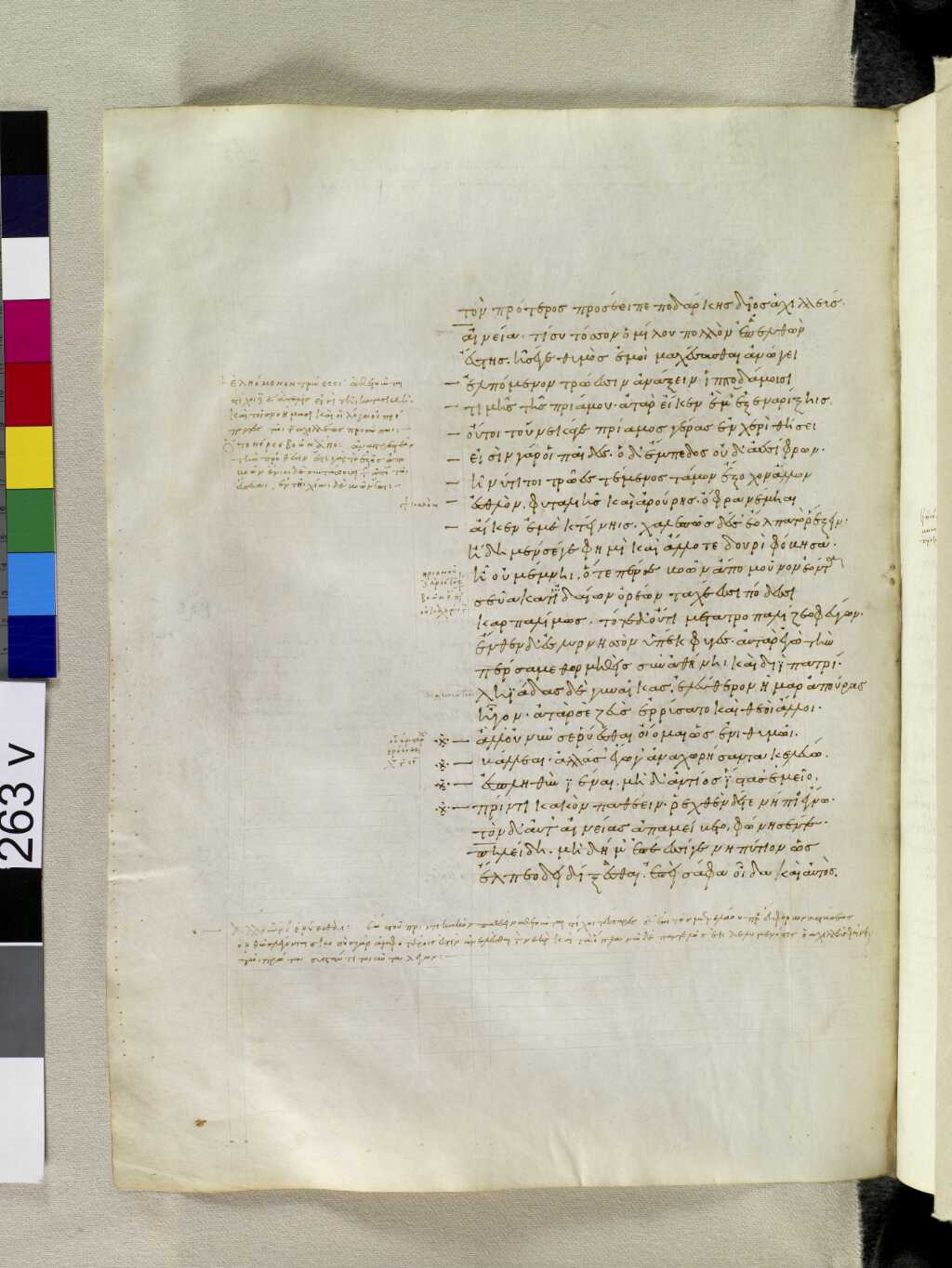
201ἔλπεο δειδίξεσθαι, ἐπεὶ σάφα οἶδα καὶ αὐτὸς 202ἠμὲν κερτομίας ἠδʼ αἴσυλα μυθήσασθαι. 203ἴδμεν δʼ ἀλλήλων γενεήν, ἴδμεν δὲ τοκῆας 204πρόκλυτʼ ἀκούοντες ἔπεα θνητῶν ἀνθρώπων· 205ὄψει δʼ οὔτʼ ἄρ πω σὺ ἐμοὺς ἴδες οὔτʼ ἄρʼ ἐγὼ σούς. 206φασὶ σὲ μὲν Πηλῆος ἀμύμονος ἔκγονον εἶναι, 207μητρὸς δʼ ἐκ Θέτιδος καλλιπλοκάμου ἁλοσύδνης· 208αὐτὰρ ἐγὼν υἱὸς μεγαλήτορος Ἀγχίσαο 209εὔχομαι ἐκγεγάμεν, μήτηρ δέ μοί ἐστʼ Ἀφροδίτη· 210τῶν δὴ νῦν ἕτεροί γε φίλον παῖδα κλαύσονται 211σήμερον· οὐ γάρ φημʼ ἐπέεσσί γε νηπυτίοισιν 212ὧδε διακρινθέντε μάχης ἐξαπονέεσθαι. 213εἰ δʼ ἐθέλεις καὶ ταῦτα δαήμεναι, ὄφρʼ ἐῢ εἰδῇς 214ἡμετέρην γενεήν, πολλοὶ δέ μιν ἄνδρες ἴσασι· 215Δάρδανον αὖ πρῶτον τέκετο νεφεληγερέτα Ζεύς, 216κτίσσε δὲ Δαρδανίην, ἐπεὶ οὔ πω Ἴλιος ἱρὴ 217ἐν πεδίῳ πεπόλιστο πόλις μερόπων ἀνθρώπων, 218ἀλλʼ ἔθʼ ὑπωρείας ᾤκεον πολυπίδακος Ἴδης. 219Δάρδανος αὖ τέκεθʼ υἱὸν Ἐριχθόνιον βασιλῆα, 220ὃς δὴ ἀφνειότατος γένετο θνητῶν ἀνθρώπων· 221τοῦ τρισχίλιαι ἵπποι ἕλος κάτα βουκολέοντο 222θήλειαι, πώλοισιν ἀγαλλόμεναι ἀταλῇσι. 223τάων καὶ Βορέης ἠράσσατο βοσκομενάων, 224ἵππῳ δʼ εἰσάμενος παρελέξατο κυανοχαίτῃ· 225αἳ δʼ ὑποκυσάμεναι ἔτεκον δυοκαίδεκα πώλους.
Thus did the gods sit apart and form their plans, but neither side was willing to begin battle with the other, and Jove from his seat on high was in command over them all. Meanwhile the whole plain was alive with men and horses, and blazing with the gleam of armour. The earth rang again under the tramp of their feet as they rushed towards each other, and two champions, by far the foremost of them all, met between the hosts to fight—to wit, Aeneas son of Anchises, and noble Achilles.
Aeneas was first to stride forward in attack, his doughty helmet tossing defiance as he came on. He held his strong shield before his breast, and brandished his bronze spear. The son of Peleus from the other side sprang forth to meet him, like some fierce lion that the whole country-side has met to hunt and kill—at first he bodes no ill, but when some daring youth has struck him with a spear, he crouches openmouthed, his jaws foam, he roars with fury, he lashes his tail from side to side about his ribs and loins, and glares as he springs straight before him, to find out whether he is to slay, or be slain among the foremost of his foes—even with such fury did Achilles burn to spring upon Aeneas.
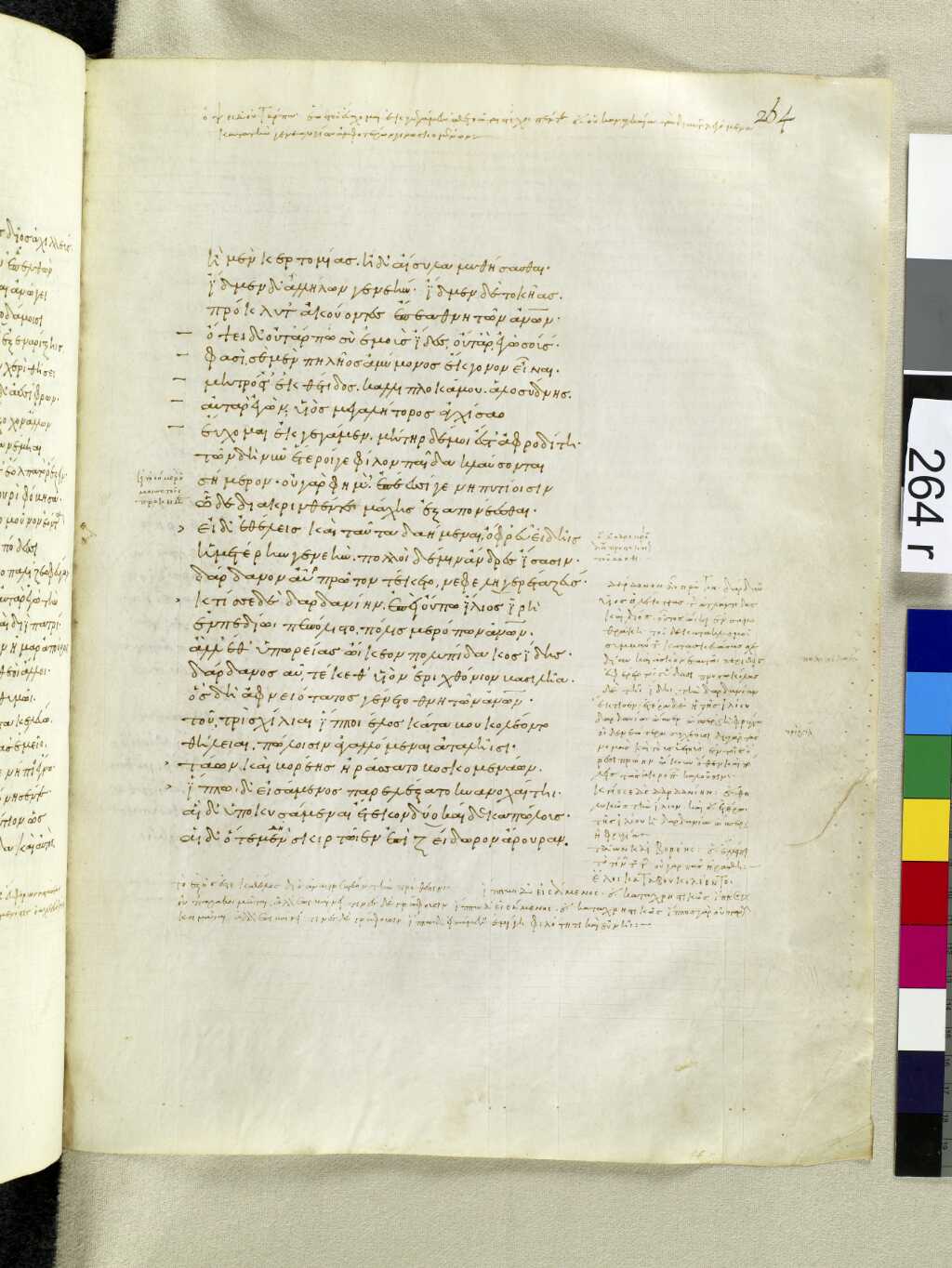
226αἳ δʼ ὅτε μὲν σκιρτῷεν ἐπὶ ζείδωρον ἄρουραν, 227ἄκρον ἐπʼ ἀνθερίκων καρπὸν θέον οὐδὲ κατέκλων· 228ἀλλʼ ὅτε δὴ σκιρτῷεν ἐπʼ εὐρέα νῶτα θαλάσσης, 229ἄκρον ἐπὶ ῥηγμῖνος ἁλὸς πολιοῖο θέεσκον. 230Τρῶα δʼ Ἐριχθόνιος τέκετο Τρώεσσιν ἄνακτα· 231Τρωὸς δʼ αὖ τρεῖς παῖδες ἀμύμονες ἐξεγένοντο 232Ἶλός τʼ Ἀσσάρακός τε καὶ ἀντίθεος Γανυμήδης, 233ὃς δὴ κάλλιστος γένετο θνητῶν ἀνθρώπων· 234τὸν καὶ ἀνηρείψαντο θεοὶ Διὶ οἰνοχοεύειν 235κάλλεος εἵνεκα οἷο ἵνʼ ἀθανάτοισι μετείη. 236Ἶλος δʼ αὖ τέκεθʼ υἱὸν ἀμύμονα Λαομέδοντα· 237Λαομέδων δʼ ἄρα Τιθωνὸν τέκετο Πρίαμόν τε 238Λάμπόν τε Κλυτίον θʼ Ἱκετάονά τʼ ὄζον Ἄρηος· 239Ἀσσάρακος δὲ Κάπυν, ὃ δʼ ἄρʼ Ἀγχίσην τέκε παῖδα· 240αὐτὰρ ἔμʼ Ἀγχίσης, Πρίαμος δʼ ἔτεχʼ Ἕκτορα δῖον. 241ταύτης τοι γενεῆς τε καὶ αἵματος εὔχομαι εἶναι. 242Ζεὺς δʼ ἀρετὴν ἄνδρεσσιν ὀφέλλει τε μινύθει τε 243ὅππως κεν ἐθέλῃσιν· ὃ γὰρ κάρτιστος ἁπάντων. 244ἀλλʼ ἄγε μηκέτι ταῦτα λεγώμεθα νηπύτιοι ὣς 245ἑσταότʼ ἐν μέσσῃ ὑσμίνῃ δηϊοτῆτος. 246ἔστι γὰρ ἀμφοτέροισιν ὀνείδεα μυθήσασθαι 247πολλὰ μάλʼ, οὐδʼ ἂν νηῦς ἑκατόζυγος ἄχθος ἄροιτο. 248στρεπτὴ δὲ γλῶσσʼ ἐστὶ βροτῶν, πολέες δʼ ἔνι μῦθοι 249παντοῖοι, ἐπέων δὲ πολὺς νομὸς ἔνθα καὶ ἔνθα. 250ὁπποῖόν κʼ εἴπῃσθα ἔπος, τοῖόν κʼ ἐπακούσαις.
When they were now close up with one another Achilles was first to speak. “Aeneas,” said he, “why do you stand thus out before the host to fight me? Is it that you hope to reign over the Trojans in the seat of Priam? Nay, though you kill me Priam will not hand his kingdom over to you. He is a man of sound judgement, and he has sons of his own. Or have the Trojans been allotting you a demesne of passing richness, fair with orchard lawns and corn lands, if you should slay me? This you shall hardly do. I have discomfited you once already. Have you forgotten how when you were alone I chased you from your herds helter-skelter down the slopes of Ida? You did not turn round to look behind you; you took refuge in Lyrnessus, but I attacked the city, and with the help of Minerva and father Jove I sacked it and carried its women into captivity, though Jove and the other gods rescued you. You think they will protect you now, but they will not do so; therefore I say go back into the host, and do not face me, or you will rue it. Even a fool may be wise after the event.”
Then Aeneas answered, “Son of Peleus, think not that your words can scare me as though I were a child. I too, if I will, can brag and talk unseemly. We know one another’s race and parentage as matters of common fame, though neither have you ever seen my parents nor I yours. Men say that you are son to noble Peleus, and that your mother is Thetis, fair-haired daughter of the sea. I have noble Anchises for my father, and Venus for my mother; the parents of one or other of us shall this day mourn a son, for it will be more than silly talk that shall part us when the fight is over. Learn, then, my lineage if you will—and it is known to many.
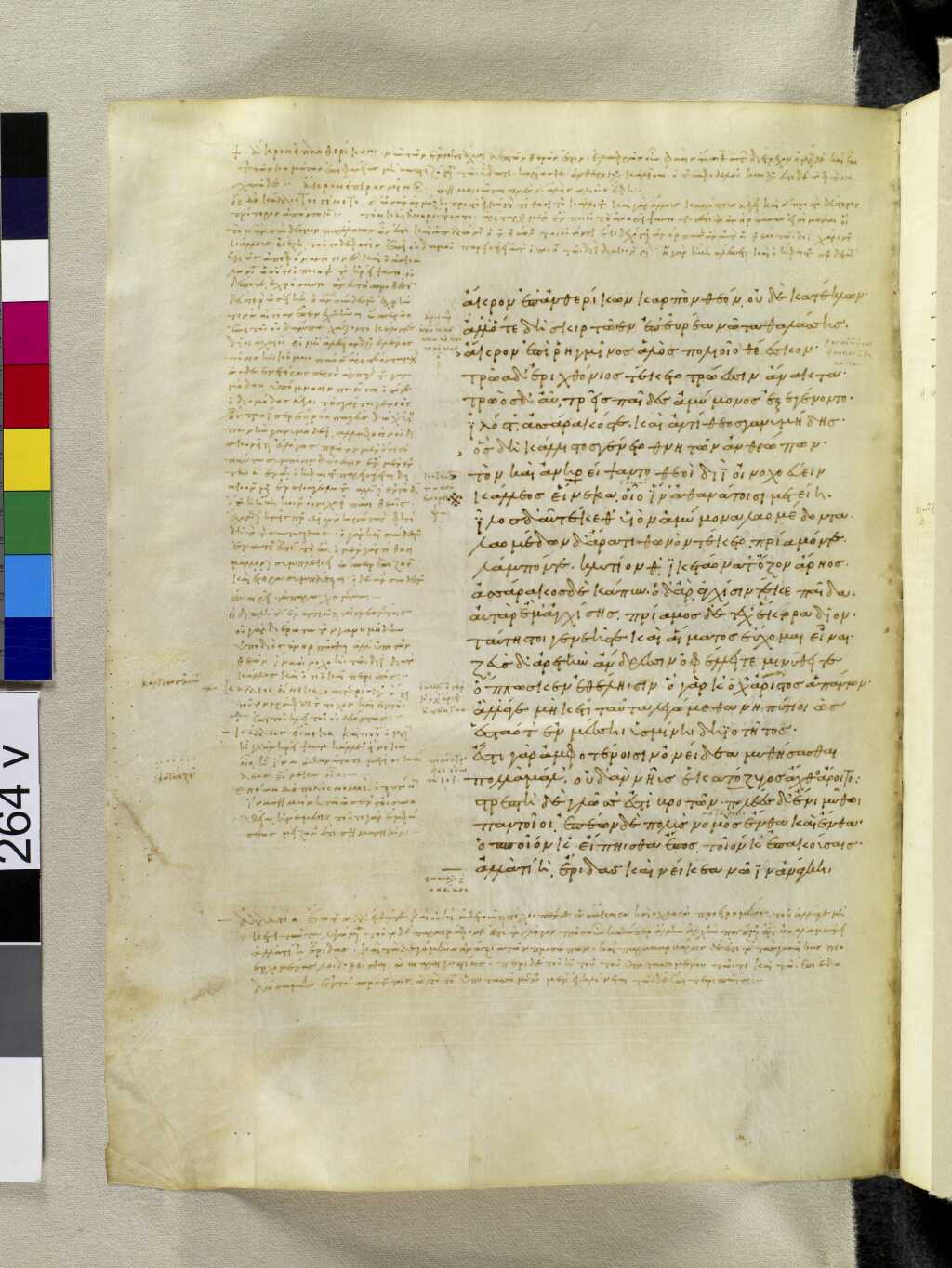
251ἀλλὰ τί ἢ ἔριδας καὶ νείκεα νῶϊν ἀνάγκη 252νεικεῖν ἀλλήλοισιν ἐναντίον ὥς τε γυναῖκας, 253αἵ τε χολωσάμεναι ἔριδος πέρι θυμοβόροιο 254νεικεῦσʼ ἀλλήλῃσι μέσην ἐς ἄγυιαν ἰοῦσαι 255πόλλʼ ἐτεά τε καὶ οὐκί· χόλος δέ τε καὶ τὰ κελεύει. 256ἀλκῆς δʼ οὔ μʼ ἐπέεσσιν ἀποτρέψεις μεμαῶτα 257πρὶν χαλκῷ μαχέσασθαι ἐναντίον· ἀλλʼ ἄγε θᾶσσον 258γευσόμεθʼ ἀλλήλων χαλκήρεσιν ἐγχείῃσιν. 259ἦ ῥα καὶ ἐν δεινῷ σάκει ἤλασεν ὄβριμον ἔγχος 260σμερδαλέῳ· μέγα δʼ ἀμφὶ σάκος μύκε δουρὸς ἀκωκῇ. 261Πηλεΐδης δὲ σάκος μὲν ἀπὸ ἕο χειρὶ παχείῃ 262ἔσχετο ταρβήσας· φάτο γὰρ δολιχόσκιον ἔγχος 263ῥέα διελεύσεσθαι μεγαλήτορος Αἰνείαο 264νήπιος, οὐδʼ ἐνόησε κατὰ φρένα καὶ κατὰ θυμὸν 265ὡς οὐ ῥηΐδιʼ ἐστὶ θεῶν ἐρικυδέα δῶρα 266ἀνδράσι γε θνητοῖσι δαμήμεναι οὐδʼ ὑποείκειν. 267οὐδὲ τότʼ Αἰνείαο δαΐφρονος ὄβριμον ἔγχος 268ῥῆξε σάκος· χρυσὸς γὰρ ἐρύκακε, δῶρα θεοῖο· 269ἀλλὰ δύω μὲν ἔλασσε διὰ πτύχας, αἳ δʼ ἄρʼ ἔτι τρεῖς 270ἦσαν, ἐπεὶ πέντε πτύχας ἤλασε κυλλοποδίων, 271τὰς δύο χαλκείας, δύο δʼ ἔνδοθι κασσιτέροιο, 272τὴν δὲ μίαν χρυσῆν, τῇ ῥʼ ἔσχετο μείλινον ἔγχος. 273δεύτερος αὖτʼ Ἀχιλεὺς προΐει δολιχόσκιον ἔγχος, 274καὶ βάλεν Αἰνείαο κατʼ ἀσπίδα πάντοσʼ ἐΐσην 275ἄντυγʼ ὕπο πρώτην, ᾗ λεπτότατος θέε χαλκός,
“In the beginning Dardanus was the son of Jove, and founded Dardania, for Ilius was not yet stablished on the plain for men to dwell in, and her people still abode on the spurs of many-fountained Ida. Dardanus had a son, king Erichthonius, who was wealthiest of all men living; he had three thousand mares that fed by the water-meadows, they and their foals with them. Boreas was enamoured of them as they were feeding, and covered them in the semblance of a dark-maned stallion. Twelve filly foals did they conceive and bear him, and these, as they sped over the rich plain, would go bounding on over the ripe ears of corn and not break them; or again when they would disport themselves on the broad back of Ocean they could gallop on the crest of a breaker. Erichthonius begat Tros, king of the Trojans, and Tros had three noble sons, Ilus, Assaracus, and Ganymede who was comeliest of mortal men; wherefore the gods carried him off to be Jove’s cup-bearer, for his beauty’s sake, that he might dwell among the immortals. Ilus begat Laomedon, and Laomedon begat Tithonus, Priam, Lampus, Clytius, and Hiketaon of the stock of Mars. But Assaracus was father to Capys, and Capys to Anchises, who was my father, while Hector is son to Priam.
“Such do I declare my blood and lineage, but as for valour, Jove gives it or takes it as he will, for he is lord of all. And now let there be no more of this prating in mid-battle as though we were children. We could fling taunts without end at one another; a hundred-oared galley would not hold them. The tongue can run all whithers and talk all wise; it can go here and there, and as a man says, so shall he be gainsaid. What is the use of our bandying hard like women who when they fall foul of one another go out and wrangle in the streets, one half true and the other lies, as rage inspires them? No words of yours shall turn me now that I am fain to fight—therefore let us make trial of one another with our spears.”
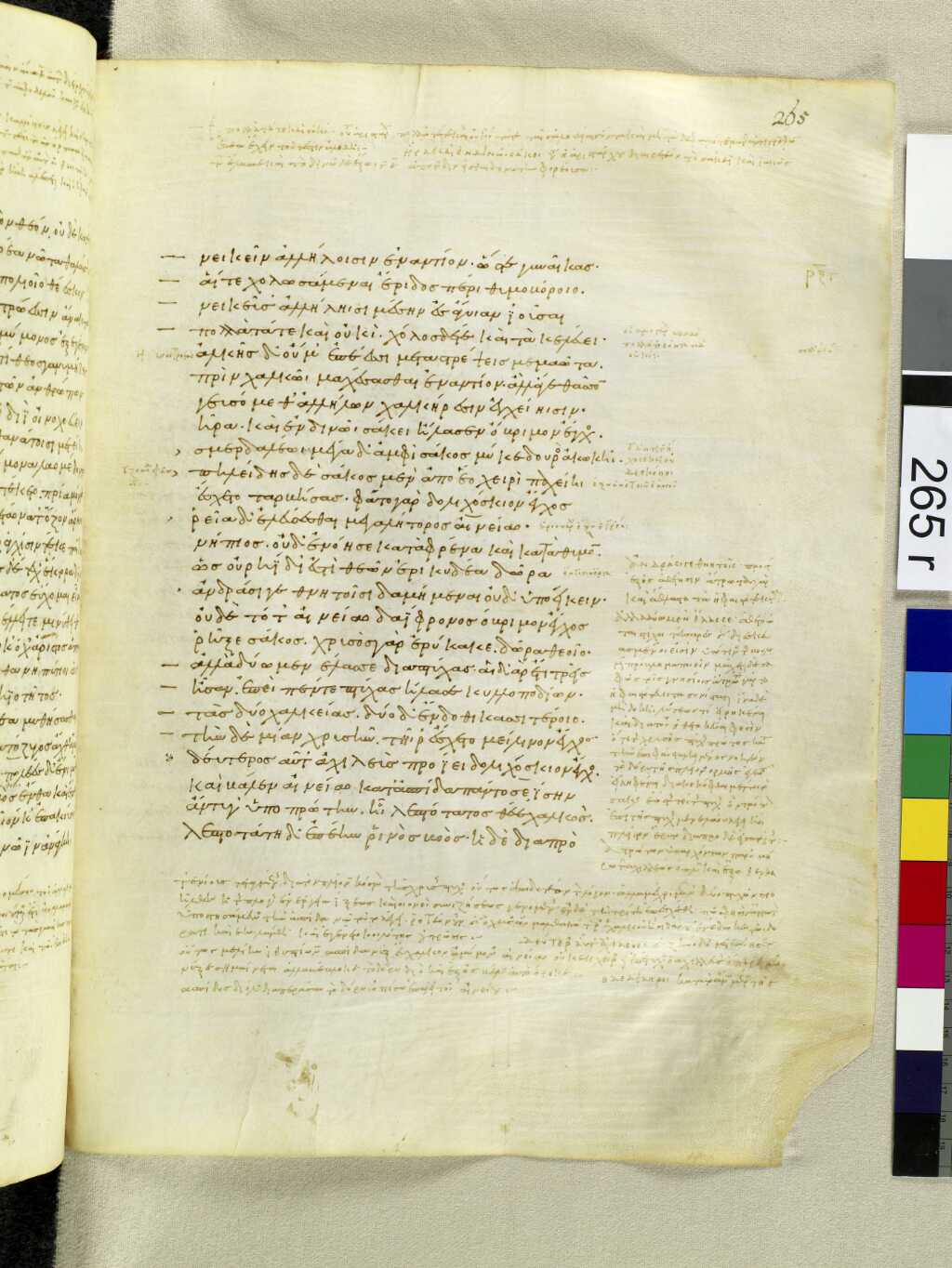
276λεπτοτάτη δʼ ἐπέην ῥινὸς βοός· ἣ δὲ διὰ πρὸ 277Πηλιὰς ἤϊξεν μελίη, λάκε δʼ ἀσπὶς ὑπʼ αὐτῆς. 278Αἰνείας δʼ ἐάλη καὶ ἀπὸ ἕθεν ἀσπίδʼ ἀνέσχε 279δείσας· ἐγχείη δʼ ἄρʼ ὑπὲρ νώτου ἐνὶ γαίῃ 280ἔστη ἱεμένη, διὰ δʼ ἀμφοτέρους ἕλε κύκλους 281ἀσπίδος ἀμφιβρότης· ὃ δʼ ἀλευάμενος δόρυ μακρὸν 282ἔστη, κὰδ δʼ ἄχος οἱ χύτο μυρίον ὀφθαλμοῖσι, 283ταρβήσας ὅ οἱ ἄγχι πάγη βέλος. αὐτὰρ Ἀχιλλεὺς 284ἐμμεμαὼς ἐπόρουσεν ἐρυσσάμενος ξίφος ὀξὺ 285σμερδαλέα ἰάχων· ὃ δὲ χερμάδιον λάβε χειρὶ 286Αἰνείας, μέγα ἔργον, ὃ οὐ δύο γʼ ἄνδρε φέροιεν, 287οἷοι νῦν βροτοί εἰσʼ· ὃ δέ μιν ῥέα πάλλε καὶ οἶος. 288ἔνθά κεν Αἰνείας μὲν ἐπεσσύμενον βάλε πέτρῳ 289ἢ κόρυθʼ ἠὲ σάκος, τό οἱ ἤρκεσε λυγρὸν ὄλεθρον, 290τὸν δέ κε Πηλεΐδης σχεδὸν ἄορι θυμὸν ἀπηύρα, 291εἰ μὴ ἄρʼ ὀξὺ νόησε Ποσειδάων ἐνοσίχθων· 292αὐτίκα δʼ ἀθανάτοισι θεοῖς μετὰ μῦθον ἔειπεν· 293ὢ πόποι ἦ μοι ἄχος μεγαλήτορος Αἰνείαο, 294ὃς τάχα Πηλεΐωνι δαμεὶς Ἄϊδος δὲ κάτεισι 295πειθόμενος μύθοισιν Ἀπόλλωνος ἑκάτοιο 296νήπιος, οὐδέ τί οἱ χραισμήσει λυγρὸν ὄλεθρον. 297ἀλλὰ τί ἢ νῦν οὗτος ἀναίτιος ἄλγεα πάσχει 298μὰψ ἕνεκʼ ἀλλοτρίων ἀχέων, κεχαρισμένα δʼ αἰεὶ 299δῶρα θεοῖσι δίδωσι τοὶ οὐρανὸν εὐρὺν ἔχουσιν; 300ἀλλʼ ἄγεθʼ ἡμεῖς πέρ μιν ὑπὲκ θανάτου ἀγάγωμεν,
As he spoke he drove his spear at the great and terrible shield of Achilles, which rang out as the point struck it. The son of Peleus held the shield before him with his strong hand, and he was afraid, for he deemed that Aeneas’s spear would go through it quite easily, not reflecting that the god’s glorious gifts were little likely to yield before the blows of mortal men; and indeed Aeneas’s spear did not pierce the shield, for the layer of gold, gift of the god, stayed the point. It went through two layers, but the god had made the shield in five, two of bronze, the two innermost ones of tin, and one of gold; it was in this that the spear was stayed.
Achilles in his turn threw, and struck the round shield of Aeneas at the very edge, where the bronze was thinnest; the spear of Pelian ash went clean through, and the shield rang under the blow; Aeneas was afraid, and crouched backwards, holding the shield away from him; the spear, however, flew over his back, and stuck quivering in the ground, after having gone through both circles of the sheltering shield. Aeneas though he had avoided the spear, stood still, blinded with fear and grief because the weapon had gone so near him; then Achilles sprang furiously upon him, with a cry as of death and with his keen blade drawn, and Aeneas seized a great stone, so huge that two men, as men now are, would be unable to lift it, but Aeneas wielded it quite easily.
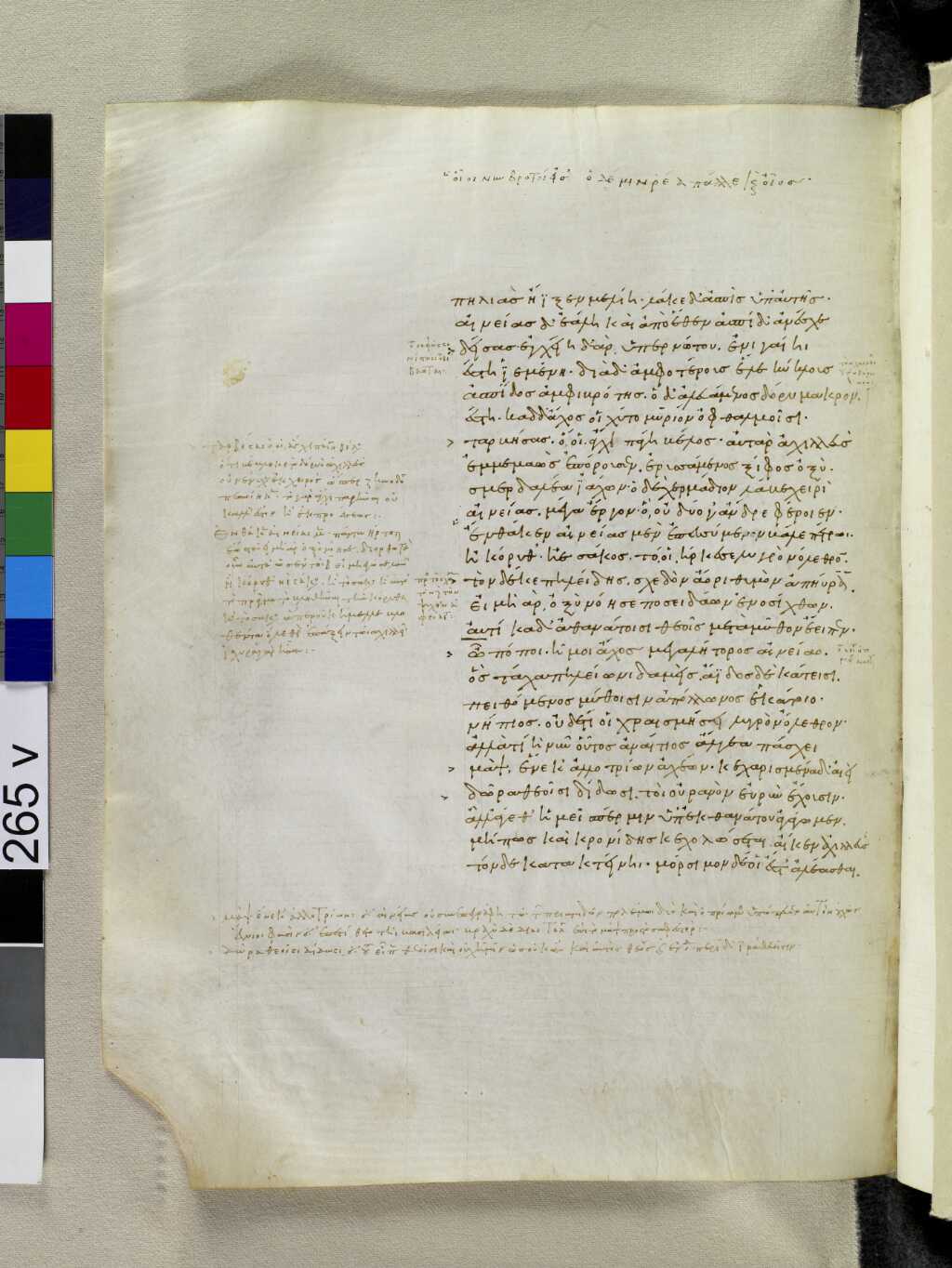
301μή πως καὶ Κρονίδης κεχολώσεται, αἴ κεν Ἀχιλλεὺς 302τόνδε κατακτείνῃ· μόριμον δέ οἵ ἐστʼ ἀλέασθαι, 303ὄφρα μὴ ἄσπερμος γενεὴ καὶ ἄφαντος ὄληται 304Δαρδάνου, ὃν Κρονίδης περὶ πάντων φίλατο παίδων 305οἳ ἕθεν ἐξεγένοντο γυναικῶν τε θνητάων. 306ἤδη γὰρ Πριάμου γενεὴν ἔχθηρε Κρονίων· 307νῦν δὲ δὴ Αἰνείαο βίη Τρώεσσιν ἀνάξει 308καὶ παίδων παῖδες, τοί κεν μετόπισθε γένωνται. 309τὸν δʼ ἠμείβετʼ ἔπειτα βοῶπις πότνια Ἥρη· 310ἐννοσίγαιʼ, αὐτὸς σὺ μετὰ φρεσὶ σῇσι νόησον 311Αἰνείαν ἤ κέν μιν ἐρύσσεαι ἦ κεν ἐάσῃς 312Πηλεΐδῃ Ἀχιλῆϊ δαμήμεναι, ἐσθλὸν ἐόντα. 313ἤτοι μὲν γὰρ νῶϊ πολέας ὠμόσσαμεν ὅρκους 314πᾶσι μετʼ ἀθανάτοισιν ἐγὼ καὶ Παλλὰς Ἀθήνη 315μή ποτʼ ἐπὶ Τρώεσσιν ἀλεξήσειν κακὸν ἦμαρ, 316μηδʼ ὁπότʼ ἂν Τροίη μαλερῷ πυρὶ πᾶσα δάηται 317καιομένη, καίωσι δʼ ἀρήϊοι υἷες Ἀχαιῶν. 318αὐτὰρ ἐπεὶ τό γʼ ἄκουσε Ποσειδάων ἐνοσίχθων, 319βῆ ῥʼ ἴμεν ἄν τε μάχην καὶ ἀνὰ κλόνον ἐγχειάων, 320ἷξε δʼ ὅθʼ Αἰνείας ἠδʼ ὃ κλυτὸς ἦεν Ἀχιλλεύς. 321αὐτίκα τῷ μὲν ἔπειτα κατʼ ὀφθαλμῶν χέεν ἀχλὺν 322Πηλεΐδῃ Ἀχιλῆϊ· ὃ δὲ μελίην εὔχαλκον 323ἀσπίδος ἐξέρυσεν μεγαλήτορος Αἰνείαο· 324καὶ τὴν μὲν προπάροιθε ποδῶν Ἀχιλῆος ἔθηκεν, 325Αἰνείαν δʼ ἔσσευεν ἀπὸ χθονὸς ὑψόσʼ ἀείρας.
Aeneas would then have struck Achilles as he was springing towards him, either on the helmet, or on the shield that covered him, and Achilles would have closed with him and despatched him with his sword, had not Neptune lord of the earthquake been quick to mark, and said forthwith to the immortals, “Alas, I am sorry for great Aeneas, who will now go down to the house of Hades, vanquished by the son of Peleus. Fool that he was to give ear to the counsel of Apollo. Apollo will never save him from destruction. Why should this man suffer when he is guiltless, to no purpose, and in another’s quarrel? Has he not at all times offered acceptable sacrifice to the gods that dwell in heaven? Let us then snatch him from death’s jaws, lest the son of Saturn be angry should Achilles slay him. It is fated, moreover, that he should escape, and that the race of Dardanus, whom Jove loved above all the sons born to him of mortal women, shall not perish utterly without seed or sign. For now indeed has Jove hated the blood of Priam, while Aeneas shall reign over the Trojans, he and his children’s children that shall be born hereafter.”
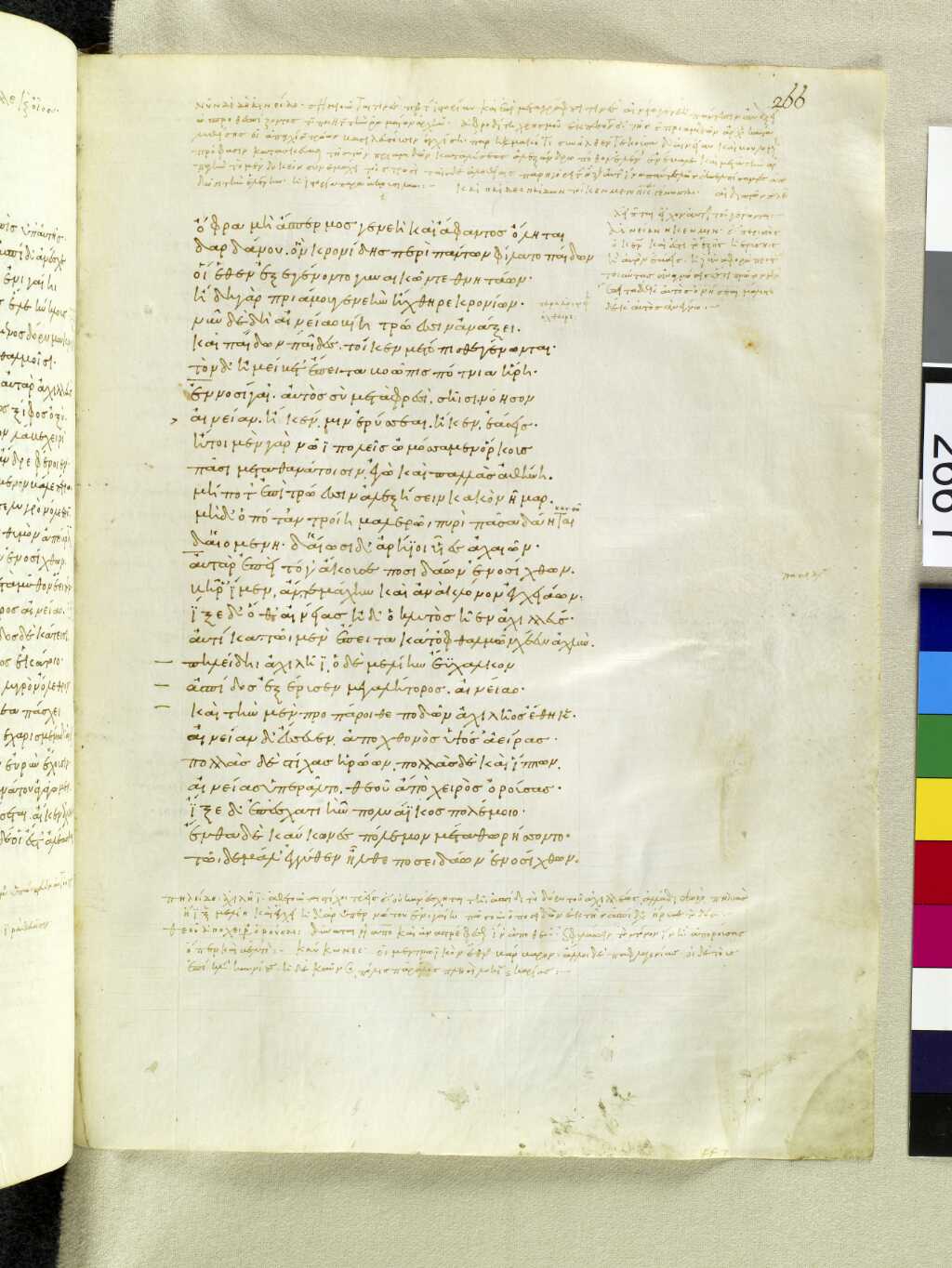
326πολλὰς δὲ στίχας ἡρώων, πολλὰς δὲ καὶ ἵππων 327Αἰνείας ὑπερᾶλτο θεοῦ ἀπὸ χειρὸς ὀρούσας, 328ἷξε δʼ ἐπʼ ἐσχατιὴν πολυάϊκος πολέμοιο, 329ἔνθά τε Καύκωνες πόλεμον μέτα θωρήσσοντο. 330τῷ δὲ μάλʼ ἐγγύθεν ἦλθε Ποσειδάων ἐνοσίχθων, 331καί μιν φωνήσας ἔπεα πτερόεντα προσηύδα· 332Αἰνεία, τίς σʼ ὧδε θεῶν ἀτέοντα κελεύει 333ἀντία Πηλεΐωνος ὑπερθύμοιο μάχεσθαι, 334ὃς σεῦ ἅμα κρείσσων καὶ φίλτερος ἀθανάτοισιν; 335ἀλλʼ ἀναχωρῆσαι ὅτε κεν συμβλήσεαι αὐτῷ, 336μὴ καὶ ὑπὲρ μοῖραν δόμον Ἄϊδος εἰσαφίκηαι. 337αὐτὰρ ἐπεί κʼ Ἀχιλεὺς θάνατον καὶ πότμον ἐπίσπῃ, 338θαρσήσας δὴ ἔπειτα μετὰ πρώτοισι μάχεσθαι· 339οὐ μὲν γάρ τίς σʼ ἄλλος Ἀχαιῶν ἐξεναρίξει. 340ὣς εἰπὼν λίπεν αὐτόθʼ, ἐπεὶ διεπέφραδε πάντα. 341αἶψα δʼ ἔπειτʼ Ἀχιλῆος ἀπʼ ὀφθαλμῶν σκέδασʼ ἀχλὺν 342θεσπεσίην· ὃ δʼ ἔπειτα μέγʼ ἔξιδεν ὀφθαλμοῖσιν, 343ὀχθήσας δʼ ἄρα εἶπε πρὸς ὃν μεγαλήτορα θυμόν· 344ὢ πόποι ἦ μέγα θαῦμα τόδʼ ὀφθαλμοῖσιν ὁρῶμαι· 345ἔγχος μὲν τόδε κεῖται ἐπὶ χθονός, οὐδέ τι φῶτα 346λεύσσω, τῷ ἐφέηκα κατακτάμεναι μενεαίνων. 347ἦ ῥα καὶ Αἰνείας φίλος ἀθανάτοισι θεοῖσιν 348ἦεν· ἀτάρ μιν ἔφην μὰψ αὔτως εὐχετάασθαι. 349ἐρρέτω· οὔ οἱ θυμὸς ἐμεῦ ἔτι πειρηθῆναι 350ἔσσεται, ὃς καὶ νῦν φύγεν ἄσμενος ἐκ θανάτοιο.
Then answered Juno, “Earth-shaker, look to this matter yourself, and consider concerning Aeneas, whether you will save him, or suffer him, brave though he be, to fall by the hand of Achilles son of Peleus. For of a truth we two, I and Pallas Minerva, have sworn full many a time before all the immortals, that never would we shield Trojans from destruction, not even when all Troy is burning in the flames that the Achaeans shall kindle.”
When earth-encircling Neptune heard this he went into the battle amid the clash of spears, and came to the place where Achilles and Aeneas were. Forthwith he shed a darkness before the eyes of the son of Peleus, drew the bronze-headed ashen spear from the shield of Aeneas, and laid it at the feet of Achilles. Then he lifted Aeneas on high from off the earth and hurried him away. Over the heads of many a band of warriors both horse and foot did he soar as the god’s hand sped him, till he came to the very fringe of the battle where the Cauconians were arming themselves for fight. Neptune, shaker of the earth, then came near to him and said, “Aeneas, what god has egged you on to this folly in fighting the son of Peleus, who is both a mightier man of valour and more beloved of heaven than you are? Give way before him whensoever you meet him, lest you go down to the house of Hades even though fate would have it otherwise. When Achilles is dead you may then fight among the foremost undaunted, for none other of the Achaeans shall slay you.”
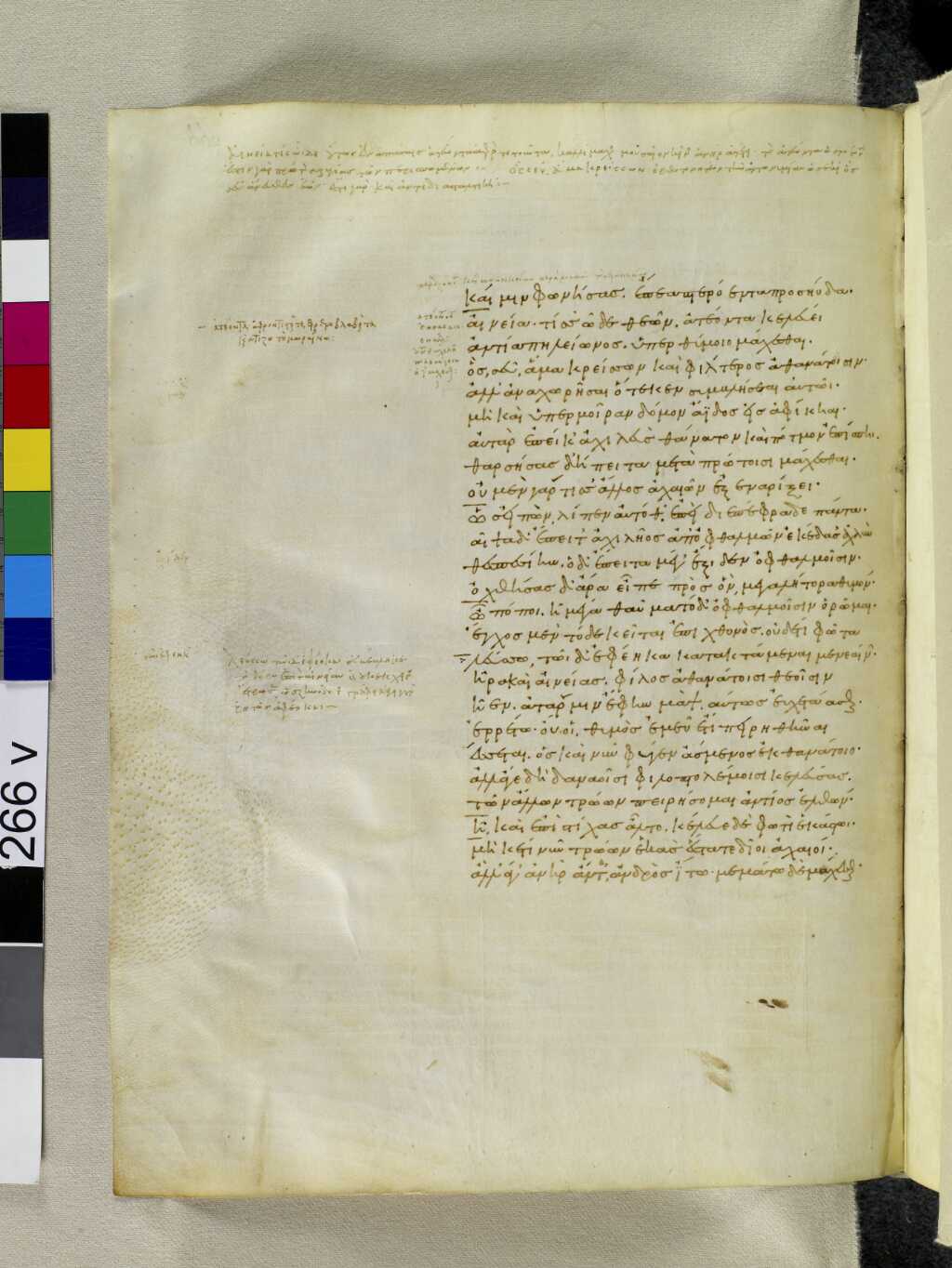
351ἀλλʼ ἄγε δὴ Δαναοῖσι φιλοπτολέμοισι κελεύσας 352τῶν ἄλλων Τρώων πειρήσομαι ἀντίος ἐλθών. 353ἦ, καὶ ἐπὶ στίχας ἆλτο, κέλευε δὲ φωτὶ ἑκάστῳ· 354μηκέτι νῦν Τρώων ἑκὰς ἕστατε δῖοι Ἀχαιοί, 355ἀλλʼ ἄγʼ ἀνὴρ ἄντʼ ἀνδρὸς ἴτω, μεμάτω δὲ μάχεσθαι. 356ἀργαλέον δέ μοί ἐστι καὶ ἰφθίμῳ περ ἐόντι 357τοσσούσδʼ ἀνθρώπους ἐφέπειν καὶ πᾶσι μάχεσθαι· 358οὐδέ κʼ Ἄρης, ὅς περ θεὸς ἄμβροτος, οὐδέ κʼ Ἀθήνη 359τοσσῆσδʼ ὑσμίνης ἐφέποι στόμα καὶ πονέοιτο· 360ἀλλʼ ὅσσον μὲν ἐγὼ δύναμαι χερσίν τε ποσίν τε 361καὶ σθένει, οὔ μʼ ἔτι φημὶ μεθησέμεν οὐδʼ ἠβαιόν, 362ἀλλὰ μάλα στιχὸς εἶμι διαμπερές, οὐδέ τινʼ οἴω 363Τρώων χαιρήσειν, ὅς τις σχεδὸν ἔγχεος ἔλθῃ. 364ὣς φάτʼ ἐποτρύνων· Τρώεσσι δὲ φαίδιμος Ἕκτωρ 365κέκλεθʼ ὁμοκλήσας, φάτο δʼ ἴμεναι ἄντʼ Ἀχιλῆος· 366Τρῶες ὑπέρθυμοι μὴ δείδιτε Πηλεΐωνα. 367καί κεν ἐγὼ ἐπέεσσι καὶ ἀθανάτοισι μαχοίμην, 368ἔγχεϊ δʼ ἀργαλέον, ἐπεὶ ἦ πολὺ φέρτεροί εἰσιν. 369οὐδʼ Ἀχιλεὺς πάντεσσι τέλος μύθοις ἐπιθήσει, 370ἀλλὰ τὸ μὲν τελέει, τὸ δὲ καὶ μεσσηγὺ κολούει. 371τοῦ δʼ ἐγὼ ἀντίος εἶμι καὶ εἰ πυρὶ χεῖρας ἔοικεν, 372εἰ πυρὶ χεῖρας ἔοικε, μένος δʼ αἴθωνι σιδήρῳ. 373ὣς φάτʼ ἐποτρύνων, οἳ δʼ ἀντίοι ἔγχεʼ ἄειραν 374Τρῶες· τῶν δʼ ἄμυδις μίχθη μένος, ὦρτο δʼ ἀϋτή. 375καὶ τότʼ ἄρʼ Ἕκτορα εἶπε παραστὰς Φοῖβος Ἀπόλλων·
The god left him when he had given him these instructions, and at once removed the darkness from before the eyes of Achilles, who opened them wide indeed and said in great anger, “Alas! what marvel am I now beholding? Here is my spear upon the ground, but I see not him whom I meant to kill when I hurled it. Of a truth Aeneas also must be under heaven’s protection, although I had thought his boasting was idle. Let him go hang; he will be in no mood to fight me further, seeing how narrowly he has missed being killed. I will now give my orders to the Danaans and attack some other of the Trojans.”
He sprang forward along the line and cheered his men on as he did so. “Let not the Trojans,” he cried, “keep you at arm’s length, Achaeans, but go for them and fight them man for man. However valiant I may be, I cannot give chase to so many and fight all of them. Even Mars, who is an immortal, or Minerva, would shrink from flinging himself into the jaws of such a fight and laying about him; nevertheless, so far as in me lies I will show no slackness of hand or foot nor want of endurance, not even for a moment; I will utterly break their ranks, and woe to the Trojan who shall venture within reach of my spear.”
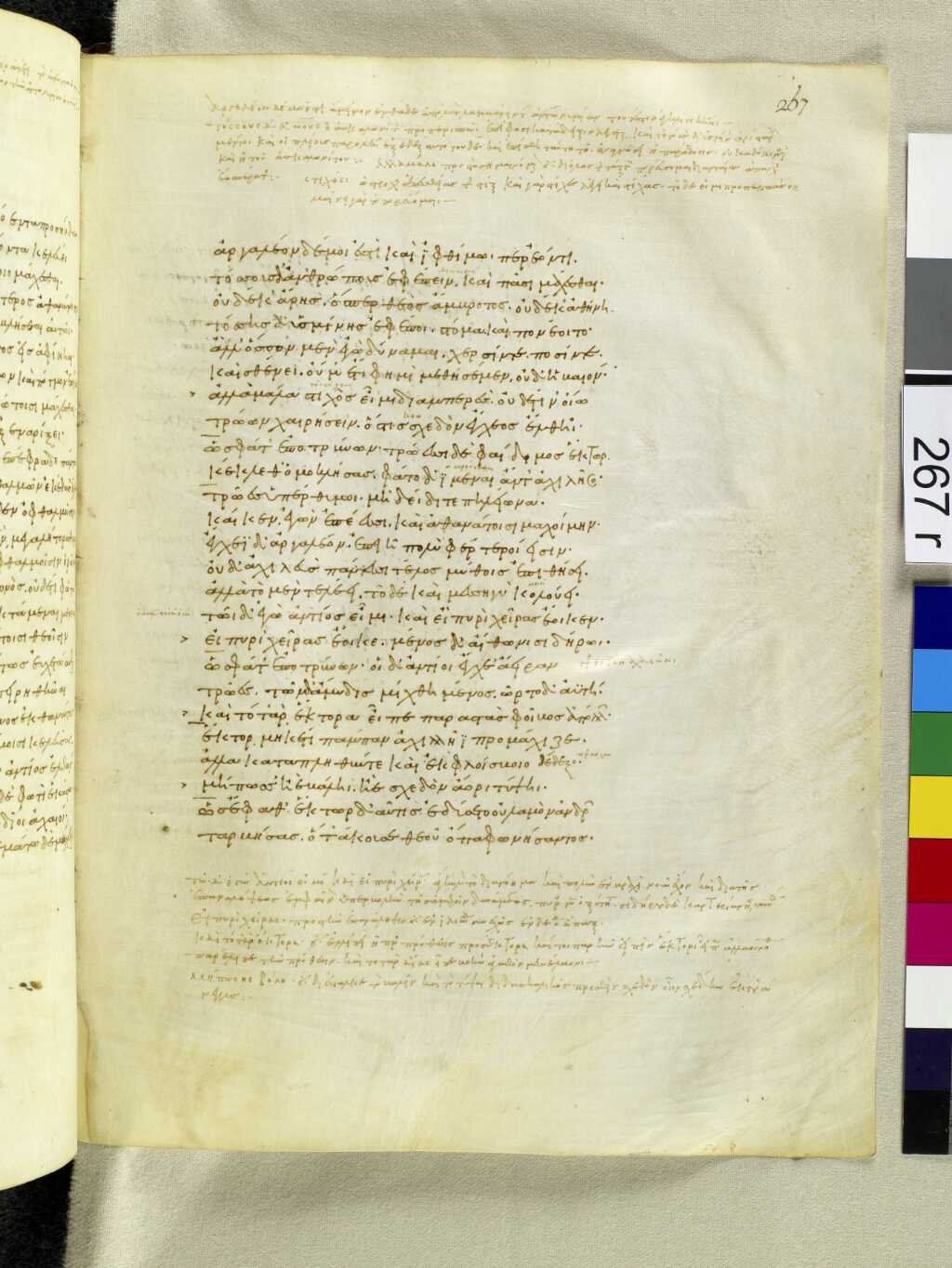
376Ἕκτορ μηκέτι πάμπαν Ἀχιλλῆϊ προμάχιζε, 377ἀλλὰ κατὰ πληθύν τε καὶ ἐκ φλοίσβοιο δέδεξο, 378μή πώς σʼ ἠὲ βάλῃ ἠὲ σχεδὸν ἄορι τύψῃ. 379ὣς ἔφαθʼ, Ἕκτωρ δʼ αὖτις ἐδύσετο οὐλαμὸν ἀνδρῶν 380ταρβήσας, ὅτʼ ἄκουσε θεοῦ ὄπα φωνήσαντος. 381ἐν δʼ Ἀχιλεὺς Τρώεσσι θόρε φρεσὶν εἱμένος ἀλκὴν 382σμερδαλέα ἰάχων, πρῶτον δʼ ἕλεν Ἰφιτίωνα 383ἐσθλὸν Ὀτρυντεΐδην πολέων ἡγήτορα λαῶν, 384ὃν νύμφη τέκε νηῒς Ὀτρυντῆϊ πτολιπόρθῳ 385Τμώλῳ ὕπο νιφόεντι Ὕδης ἐν πίονι δήμῳ· 386τὸν δʼ ἰθὺς μεμαῶτα βάλʼ ἔγχεϊ δῖος Ἀχιλλεὺς 387μέσσην κὰκ κεφαλήν· ἣ δʼ ἄνδιχα πᾶσα κεάσθη, 388δούπησεν δὲ πεσών, ὃ δʼ ἐπεύξατο δῖος Ἀχιλλεύς· 389κεῖσαι Ὀτρυντεΐδη πάντων ἐκπαγλότατʼ ἀνδρῶν· 390ἐνθάδε τοι θάνατος, γενεὴ δέ τοί ἐστʼ ἐπὶ λίμνῃ 391Γυγαίῃ, ὅθι τοι τέμενος πατρώϊόν ἐστιν 392Ὕλλῳ ἐπʼ ἰχθυόεντι καὶ Ἕρμῳ δινήεντι. 393ὣς ἔφατʼ εὐχόμενος, τὸν δὲ σκότος ὄσσε κάλυψε. 394τὸν μὲν Ἀχαιῶν ἵπποι ἐπισσώτροις δατέοντο 395πρώτῃ ἐν ὑσμίνῃ· ὃ δʼ ἐπʼ αὐτῷ Δημολέοντα 396ἐσθλὸν ἀλεξητῆρα μάχης Ἀντήνορος υἱὸν 397νύξε κατὰ κρόταφον, κυνέης διὰ χαλκοπαρῄου. 398οὐδʼ ἄρα χαλκείη κόρυς ἔσχεθεν, ἀλλὰ διʼ αὐτῆς 399αἰχμὴ ἱεμένη ῥῆξʼ ὀστέον, ἐγκέφαλος δὲ 400ἔνδον ἅπας πεπάλακτο· δάμασσε δέ μιν μεμαῶτα.
Thus did he exhort them. Meanwhile Hector called upon the Trojans and declared that he would fight Achilles. “Be not afraid, proud Trojans,” said he, “to face the son of Peleus; I could fight gods myself if the battle were one of words only, but they would be more than a match for me, if we had to use our spears. Even so the deed of Achilles will fall somewhat short of his word; he will do in part, and the other part he will clip short. I will go up against him though his hands be as fire—though his hands be fire and his strength iron.”
Thus urged the Trojans lifted up their spears against the Achaeans, and raised the cry of battle as they flung themselves into the midst of their ranks. But Phoebus Apollo came up to Hector and said, “Hector, on no account must you challenge Achilles to single combat; keep a look-out for him while you are under cover of the others and away from the thick of the fight, otherwise he will either hit you with a spear or cut you down at close quarters.”
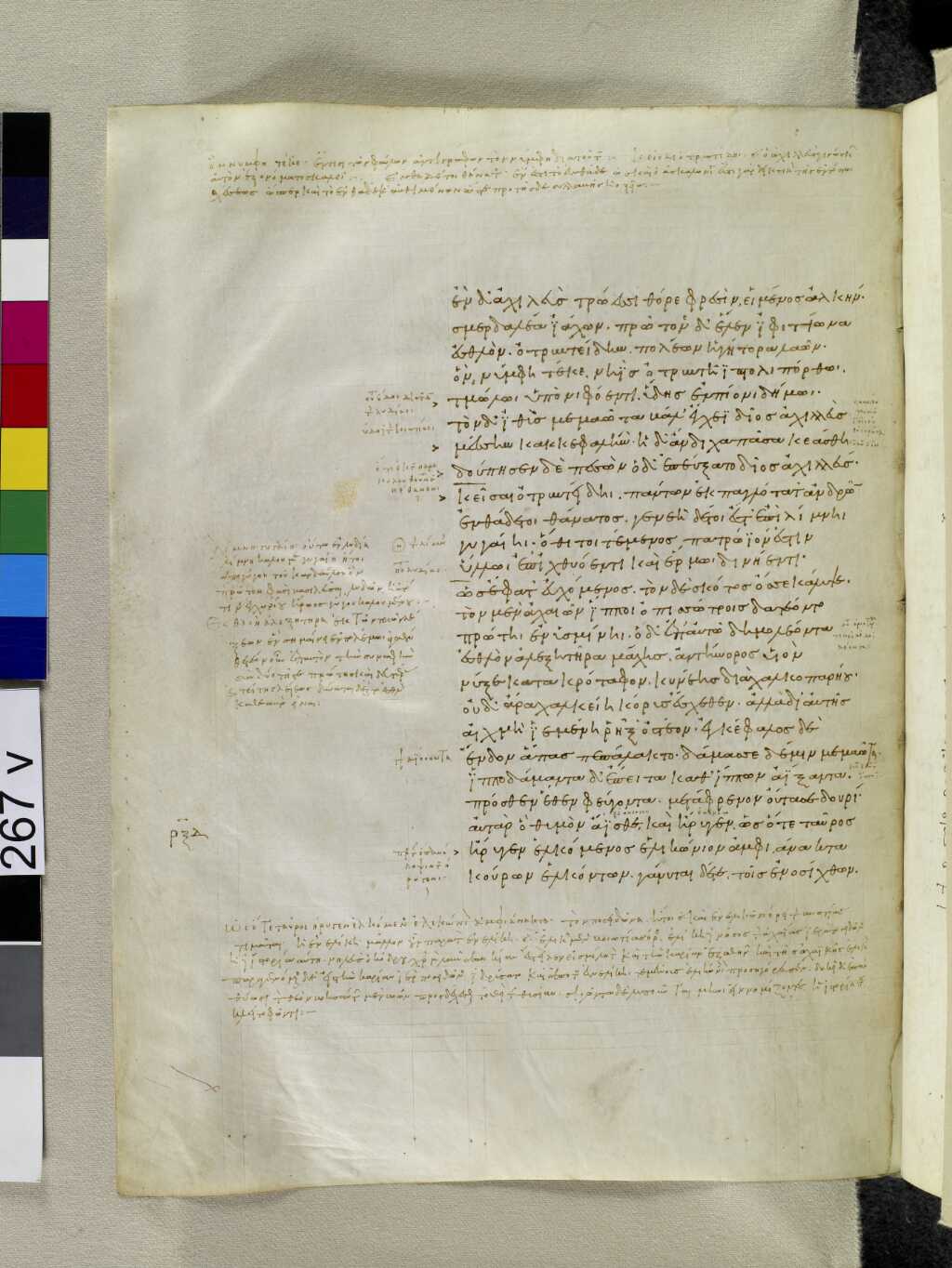
401Ἱπποδάμαντα δʼ ἔπειτα καθʼ ἵππων ἀΐξαντα 402πρόσθεν ἕθεν φεύγοντα μετάφρενον οὔτασε δουρί. 403αὐτὰρ ὃ θυμὸν ἄϊσθε καὶ ἤρυγεν, ὡς ὅτε ταῦρος 404ἤρυγεν ἑλκόμενος Ἑλικώνιον ἀμφὶ ἄνακτα 405κούρων ἑλκόντων· γάνυται δέ τε τοῖς ἐνοσίχθων· 406ὣς ἄρα τόν γʼ ἐρυγόντα λίπʼ ὀστέα θυμὸς ἀγήνωρ· 407αὐτὰρ ὃ βῆ σὺν δουρὶ μετʼ ἀντίθεον Πολύδωρον 408Πριαμίδην. τὸν δʼ οὔ τι πατὴρ εἴασκε μάχεσθαι, 409οὕνεκά οἱ μετὰ παισὶ νεώτατος ἔσκε γόνοιο, 410καί οἱ φίλτατος ἔσκε, πόδεσσι δὲ πάντας ἐνίκα 411δὴ τότε νηπιέῃσι ποδῶν ἀρετὴν ἀναφαίνων 412θῦνε διὰ προμάχων, εἷος φίλον ὤλεσε θυμόν. 413τὸν βάλε μέσσον ἄκοντι ποδάρκης δῖος Ἀχιλλεὺς 414νῶτα παραΐσσοντος, ὅθι ζωστῆρος ὀχῆες 415χρύσειοι σύνεχον καὶ διπλόος ἤντετο θώρηξ· 416ἀντικρὺ δὲ διέσχε παρʼ ὀμφαλὸν ἔγχεος αἰχμή, 417γνὺξ δʼ ἔριπʼ οἰμώξας, νεφέλη δέ μιν ἀμφεκάλυψε 418κυανέη, προτὶ οἷ δʼ ἔλαβʼ ἔντερα χερσὶ λιασθείς. 419Ἕκτωρ δʼ ὡς ἐνόησε κασίγνητον Πολύδωρον 420ἔντερα χερσὶν ἔχοντα λιαζόμενον ποτὶ γαίη 421κάρ ῥά οἱ ὀφθαλμῶν κέχυτʼ ἀχλύς· οὐδʼ ἄρʼ ἔτʼ ἔτλη 422δηρὸν ἑκὰς στρωφᾶσθʼ, ἀλλʼ ἀντίος ἦλθʼ Ἀχιλῆϊ 423ὀξὺ δόρυ κραδάων φλογὶ εἴκελος· αὐτὰρ Ἀχιλλεὺς 424ὡς εἶδʼ, ὣς ἀνεπᾶλτο, καὶ εὐχόμενος ἔπος ηὔδα· 425ἐγγὺς ἀνὴρ ὃς ἐμόν γε μάλιστʼ ἐσεμάσσατο θυμόν,
Thus he spoke, and Hector drew back within the crowd, for he was afraid when he heard what the god had said to him. Achilles then sprang upon the Trojans with a terrible cry, clothed in valour as with a garment. First he killed Iphition son of Otrynteus, a leader of much people whom a naiad nymph had borne to Otrynteus waster of cities, in the land of Hyde under the snowy heights of Mt. Tmolus. Achilles struck him full on the head as he was coming on towards him, and split it clean in two; whereon he fell heavily to the ground and Achilles vaunted over him saying, “You be low, son of Otrynteus, mighty hero; your death is here, but your lineage is on the Gygaean lake where your father’s estate lies, by Hyllus, rich in fish, and the eddying waters of Hermus.”
Thus did he vaunt, but darkness closed the eyes of the other. The chariots of the Achaeans cut him up as their wheels passed over him in the front of the battle, and after him Achilles killed Demoleon, a valiant man of war and son to Antenor. He struck him on the temple through his bronze-cheeked helmet. The helmet did not stay the spear, but it went right on, crushing the bone so that the brain inside was shed in all directions, and his lust of fighting was ended. Then he struck Hippodamas in the midriff as he was springing down from his chariot in front of him, and trying to escape. He breathed his last, bellowing like a bull bellows when young men are dragging him to offer him in sacrifice to the King of Helice, and the heart of the earth-shaker is glad; even so did he bellow as he lay dying. Achilles then went in pursuit of Polydorus son of Priam, whom his father had always forbidden to fight because he was the youngest of his sons, the one he loved best, and the fastest runner. He, in his folly and showing off the fleetness of his feet, was rushing about among front ranks until he lost his life, for Achilles struck him in the middle of the back as he was darting past him: he struck him just at the golden fastenings of his belt and where the two pieces of the double breastplate overlapped. The point of the spear pierced him through and came out by the navel, whereon he fell groaning on to his knees and a cloud of darkness overshadowed him as he sank holding his entrails in his hands.
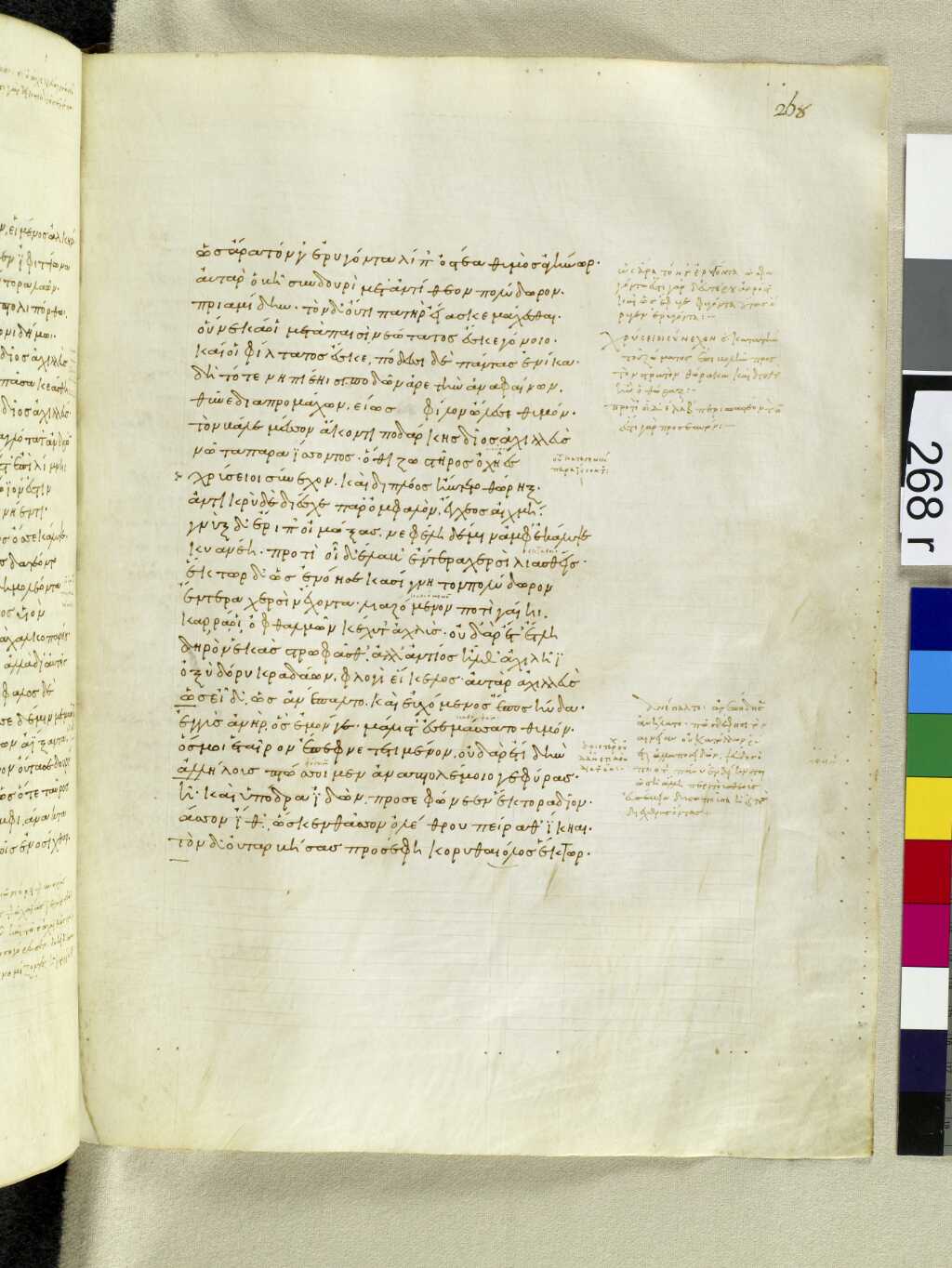
426ὅς μοι ἑταῖρον ἔπεφνε τετιμένον· οὐδʼ ἂν ἔτι δὴν 427ἀλλήλους πτώσσοιμεν ἀνὰ πτολέμοιο γεφύρας. 428ἦ, καὶ ὑπόδρα ἰδὼν προσεφώνεεν Ἕκτορα δῖον· 429ἆσσον ἴθʼ ὥς κεν θᾶσσον ὀλέθρου πείραθʼ ἵκηαι. 430τὸν δʼ οὐ ταρβήσας προσέφη κορυθαίολος Ἕκτωρ· 431Πηλεΐδη μὴ δὴ ἐπέεσσί με νηπύτιον ὣς 432ἔλπεο δειδίξεσθαι, ἐπεὶ σάφα οἶδα καὶ αὐτὸς 433ἠμὲν κερτομίας ἠδʼ αἴσυλα μυθήσασθαι. 434οἶδα δʼ ὅτι σὺ μὲν ἐσθλός, ἐγὼ δὲ σέθεν πολὺ χείρων. 435ἀλλʼ ἤτοι μὲν ταῦτα θεῶν ἐν γούνασι κεῖται, 436αἴ κέ σε χειρότερός περ ἐὼν ἀπὸ θυμὸν ἕλωμαι 437δουρὶ βαλών, ἐπεὶ ἦ καὶ ἐμὸν βέλος ὀξὺ πάροιθεν. 438ἦ ῥα, καὶ ἀμπεπαλὼν προΐει δόρυ, καὶ τό γʼ Ἀθήνη 439πνοιῇ Ἀχιλλῆος πάλιν ἔτραπε κυδαλίμοιο 440ἦκα μάλα ψύξασα· τὸ δʼ ἂψ ἵκεθʼ Ἕκτορα δῖον, 441αὐτοῦ δὲ προπάροιθε ποδῶν πέσεν. αὐτὰρ Ἀχιλλεὺς 442ἐμμεμαὼς ἐπόρουσε κατακτάμεναι μενεαίνων, 443σμερδαλέα ἰάχων· τὸν δʼ ἐξήρπαξεν Ἀπόλλων 444ῥεῖα μάλʼ ὥς τε θεός, ἐκάλυψε δʼ ἄρʼ ἠέρι πολλῇ. 445τρὶς μὲν ἔπειτʼ ἐπόρουσε ποδάρκης δῖος Ἀχιλλεὺς 446ἔγχεϊ χαλκείῳ, τρὶς δʼ ἠέρα τύψε βαθεῖαν. 447ἀλλʼ ὅτε δὴ τὸ τέταρτον ἐπέσσυτο δαίμονι ἶσος, 448δεινὰ δʼ ὁμοκλήσας ἔπεα πτερόεντα προσηύδα· 449ἐξ αὖ νῦν ἔφυγες θάνατον κύον· ἦ τέ τοι ἄγχι 450ἦλθε κακόν· νῦν αὖτέ σʼ ἐρύσατο Φοῖβος Ἀπόλλων,
When Hector saw his brother Polydorus with his entrails in his hands and sinking down upon the ground, a mist came over his eyes, and he could not bear to keep longer at a distance; he therefore poised his spear and darted towards Achilles like a flame of fire. When Achilles saw him he bounded forward and vaunted saying, “This is he that has wounded my heart most deeply and has slain my beloved comrade. Not for long shall we two quail before one another on the highways of war.”
He looked fiercely on Hector and said, “Draw near, that you may meet your doom the sooner.” Hector feared him not and answered, “Son of Peleus, think not that your words can scare me as though I were a child; I too if I will can brag and talk unseemly; I know that you are a mighty warrior, mightier by far than I, nevertheless the issue lies in the lap of heaven whether I, worse man though I be, may not slay you with my spear, for this too has been found keen ere now.”
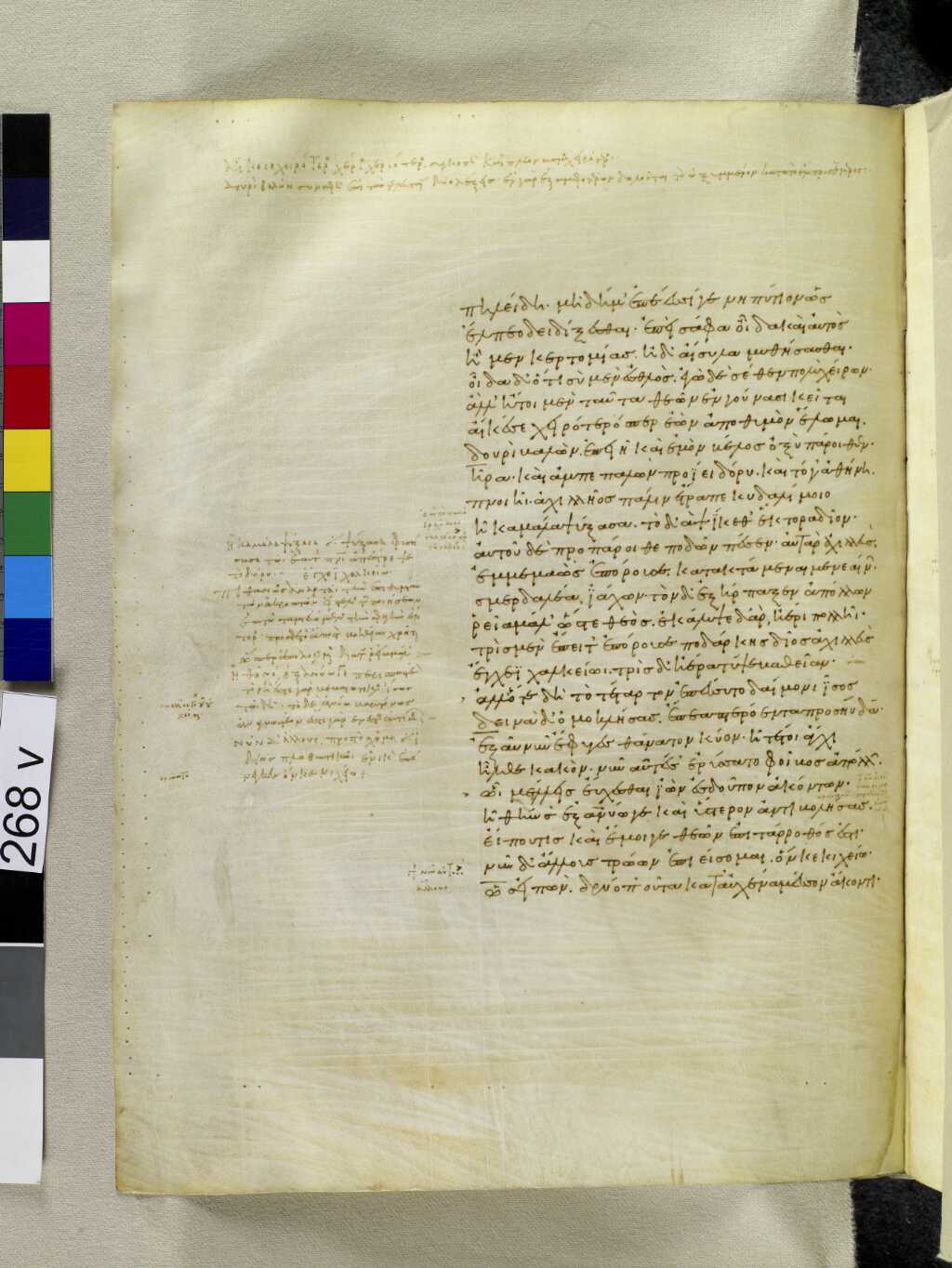
451ᾧ μέλλεις εὔχεσθαι ἰὼν ἐς δοῦπον ἀκόντων. 452ἦ θήν σʼ ἐξανύω γε καὶ ὕστερον ἀντιβολήσας, 453εἴ πού τις καὶ ἔμοιγε θεῶν ἐπιτάρροθός ἐστι. 454νῦν αὖ τοὺς ἄλλους ἐπιείσομαι, ὅν κε κιχείω. 455ὣς εἰπὼν Δρύοπʼ οὖτα κατʼ αὐχένα μέσσον ἄκοντι· 456ἤριπε δὲ προπάροιθε ποδῶν· ὃ δὲ τὸν μὲν ἔασε, 457Δημοῦχον δὲ Φιλητορίδην ἠΰν τε μέγαν τε 458κὰγ γόνυ δουρὶ βαλὼν ἠρύκακε. τὸν μὲν ἔπειτα 459οὐτάζων ξίφεϊ μεγάλῳ ἐξαίνυτο θυμόν· 460αὐτὰρ ὃ Λαόγονον καὶ Δάρδανον υἷε Βίαντος 461ἄμφω ἐφορμηθεὶς ἐξ ἵππων ὦσε χαμᾶζε, 462τὸν μὲν δουρὶ βαλών, τὸν δὲ σχεδὸν ἄορι τύψας. 463Τρῶα δʼ Ἀλαστορίδην, ὃ μὲν ἀντίος ἤλυθε γούνων, 464εἴ πώς εὑ πεφίδοιτο λαβὼν καὶ ζωὸν ἀφείη 465μηδὲ κατακτείνειεν ὁμηλικίην ἐλεήσας, 466νήπιος, οὐδὲ τὸ ᾔδη ὃ οὐ πείσεσθαι ἔμελλεν· 467οὐ γάρ τι γλυκύθυμος ἀνὴρ ἦν οὐδʼ ἀγανόφρων, 468ἀλλὰ μάλʼ ἐμμεμαώς· ὃ μὲν ἥπτετο χείρεσι γούνων 469ἱέμενος λίσσεσθʼ, ὃ δὲ φασγάνῳ οὖτα καθʼ ἧπαρ· 470ἐκ δέ οἱ ἧπαρ ὄλισθεν, ἀτὰρ μέλαν αἷμα κατʼ αὐτοῦ 471κόλπον ἐνέπλησεν· τὸν δὲ σκότος ὄσσε κάλυψε 472θυμοῦ δευόμενον· ὃ δὲ Μούλιον οὖτα παραστὰς 473δουρὶ κατʼ οὖς· εἶθαρ δὲ διʼ οὔατος ἦλθʼ ἑτέροιο 474αἰχμὴ χαλκείη· ὃ δʼ Ἀγήνορος υἱὸν Ἔχεκλον 475μέσσην κὰκ κεφαλὴν ξίφει ἤλασε κωπήεντι,
He hurled his spear as he spoke, but Minerva breathed upon it, and though she breathed but very lightly she turned it back from going towards Achilles, so that it returned to Hector and lay at his feet in front of him. Achilles then sprang furiously on him with a loud cry, bent on killing him, but Apollo caught him up easily as a god can, and hid him in a thick darkness. Thrice did Achilles spring towards him spear in hand, and thrice did he waste his blow upon the air. When he rushed forward for the fourth time as though he were a god, he shouted aloud saying, “Hound, this time too you have escaped death—but of a truth it came exceedingly near you. Phoebus Apollo, to whom it seems you pray before you go into battle, has again saved you; but if I too have any friend among the gods I will surely make an end of you when I come across you at some other time. Now, however, I will pursue and overtake other Trojans.”
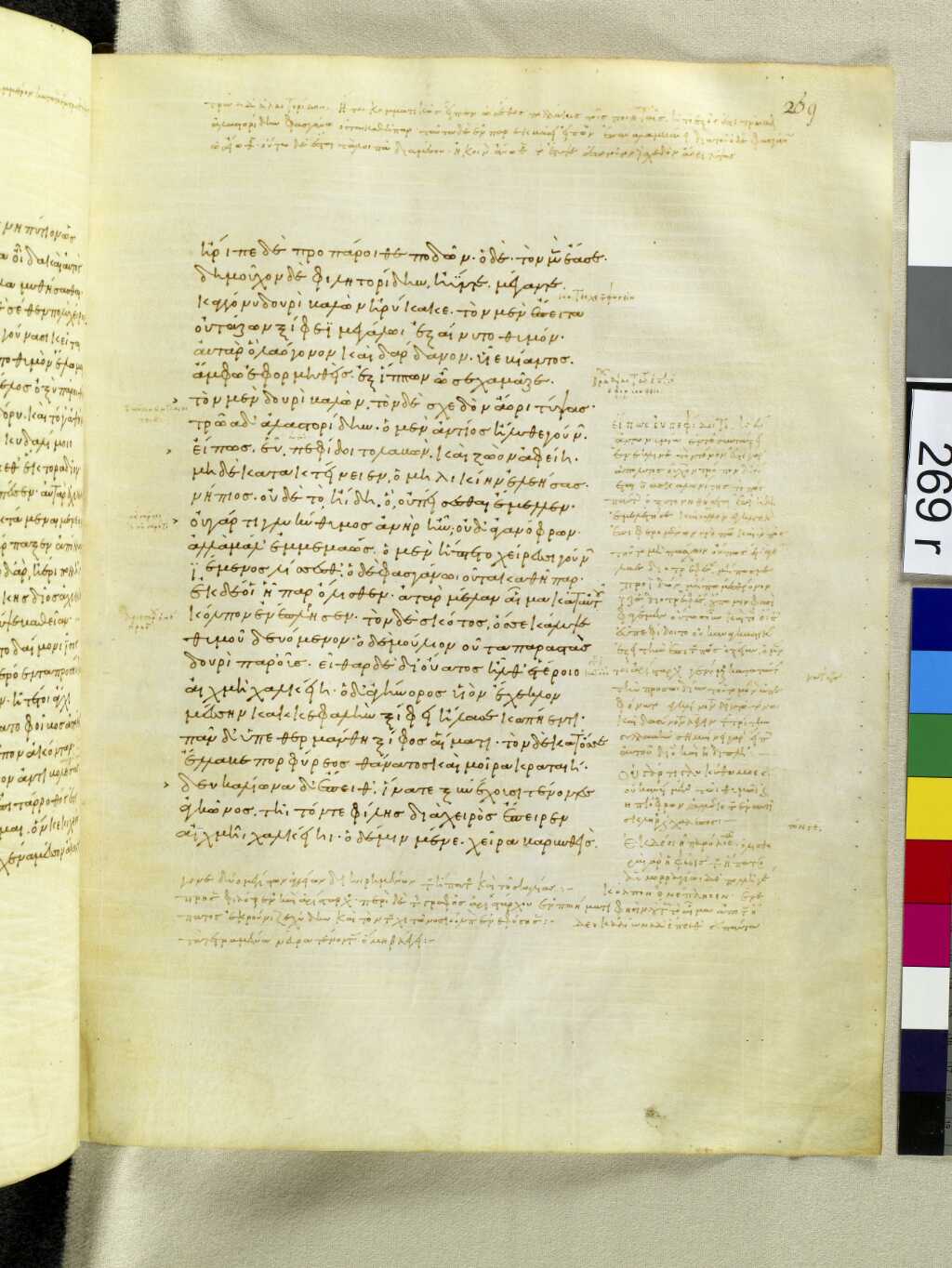
476πᾶν δʼ ὑπεθερμάνθη ξίφος αἵματι· τὸν δὲ κατʼ ὄσσε 477ἔλλαβε πορφύρεος θάνατος καὶ μοῖρα κραταιή. 478Δευκαλίωνα δʼ ἔπειθʼ, ἵνα τε ξυνέχουσι τένοντες 479ἀγκῶνος, τῇ τόν γε φίλης διὰ χειρὸς ἔπειρεν 480αἰχμῇ χαλκείῃ· ὃ δέ μιν μένε χεῖρα βαρυνθεὶς 481πρόσθʼ ὁρόων θάνατον· ὃ δὲ φασγάνῳ αὐχένα θείνας 482τῆλʼ αὐτῇ πήληκι κάρη βάλε· μυελὸς αὖτε 483σφονδυλίων ἔκπαλθʼ, ὃ δʼ ἐπὶ χθονὶ κεῖτο τανυσθείς. 484αὐτὰρ ὃ βῆ ῥʼ ἰέναι μετʼ ἀμύμονα Πείρεω υἱὸν 485Ῥίγμον, ὃς ἐκ Θρῄκης ἐριβώλακος εἰληλούθει· 486τὸν βάλε μέσσον ἄκοντι, πάγη δʼ ἐν νηδύϊ χαλκός, 487ἤριπε δʼ ἐξ ὀχέων· ὃ δʼ Ἀρηΐθοον θεράποντα 488ἂψ ἵππους στρέψαντα μετάφρενον ὀξέϊ δουρὶ 489νύξʼ, ἀπὸ δʼ ἅρματος ὦσε· κυκήθησαν δέ οἱ ἵπποι. 490ὡς δʼ ἀναμαιμάει βαθέʼ ἄγκεα θεσπιδαὲς πῦρ 491οὔρεος ἀζαλέοιο, βαθεῖα δὲ καίεται ὕλη, 492πάντῃ τε κλονέων ἄνεμος φλόγα εἰλυφάζει, 493ὣς ὅ γε πάντῃ θῦνε σὺν ἔγχεϊ δαίμονι ἶσος 494κτεινομένους ἐφέπων· ῥέε δʼ αἵματι γαῖα μέλαινα. 495ὡς δʼ ὅτε τις ζεύξῃ βόας ἄρσενας εὐρυμετώπους 496τριβέμεναι κρῖ λευκὸν ἐϋκτιμένῃ ἐν ἀλωῇ, 497ῥίμφά τε λέπτʼ ἐγένοντο βοῶν ὑπὸ πόσσʼ ἐριμύκων, 498ὣς ὑπʼ Ἀχιλλῆος μεγαθύμου μώνυχες ἵπποι 499στεῖβον ὁμοῦ νέκυάς τε καὶ ἀσπίδας· αἵματι δʼ ἄξων 500νέρθεν ἅπας πεπάλακτο καὶ ἄντυγες αἳ περὶ δίφρον,
On this he struck Dryops with his spear, about the middle of his neck, and he fell headlong at his feet. There he let him lie and stayed Demouchus son of Philetor, a man both brave and of great stature, by hitting him on the knee with a spear; then he smote him with his sword and killed him. After this he sprang on Laogonus and Dardanus, sons of Bias, and threw them from their chariot, the one with a blow from a thrown spear, while the other he cut down in hand-to-hand fight. There was also Tros the son of Alastor—he came up to Achilles and clasped his knees in the hope that he would spare him and not kill him but let him go, because they were both of the same age. Fool, he might have known that he should not prevail with him, for the man was in no mood for pity or forbearance but was in grim earnest. Therefore when Tros laid hold of his knees and sought a hearing for his prayers, Achilles drove his sword into his liver, and the liver came rolling out, while his bosom was all covered with the black blood that welled from the wound. Thus did death close his eyes as he lay lifeless.
Achilles then went up to Mulius and struck him on the ear with a spear, and the bronze spear-head came right out at the other ear. He also struck Echeclus son of Agenor on the head with his sword, which became warm with the blood, while death and stern fate closed the eyes of Echeclus. Next in order the bronze point of his spear wounded Deucalion in the fore-arm where the sinews of the elbow are united, whereon he waited Achilles’ onset with his arm hanging down and death staring him in the face. Achilles cut his head off with a blow from his sword and flung it helmet and all away from him, and the marrow came oozing out of his backbone as he lay. He then went in pursuit of Rhigmus, noble son of Peires, who had come from fertile Thrace, and struck him through the middle with a spear which fixed itself in his belly, so that he fell headlong from his chariot. He also speared Areithous squire to Rhigmus in the back as he was turning his horses in flight, and thrust him from his chariot, while the horses were struck with panic.
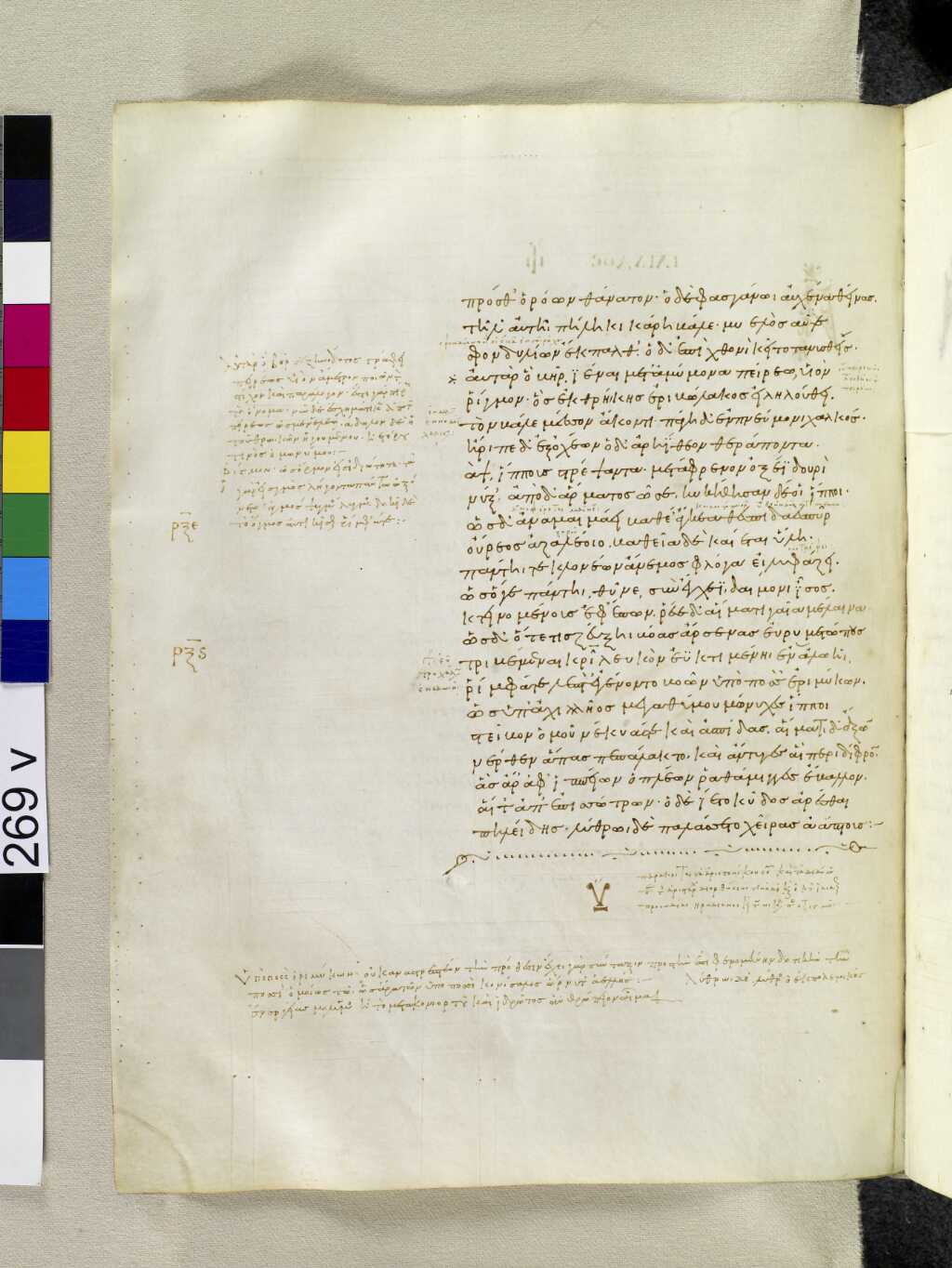
501ἃς ἄρʼ ἀφʼ ἱππείων ὁπλέων ῥαθάμιγγες ἔβαλλον 502αἵ τʼ ἀπʼ ἐπισσώτρων· ὃ δὲ ἵετο κῦδος ἀρέσθαι 503Πηλεΐδης, λύθρῳ δὲ παλάσσετο χεῖρας ἀάπτους.
As a fire raging in some mountain glen after long drought—and the dense forest is in a blaze, while the wind carries great tongues of fire in every direction—even so furiously did Achilles rage, wielding his spear as though he were a god, and giving chase to those whom he would slay, till the dark earth ran with blood. Or as one who yokes broad-browed oxen that they may tread barley in a threshing-floor—and it is soon bruised small under the feet of the lowing cattle—even so did the horses of Achilles trample on the shields and bodies of the slain. The axle underneath and the railing that ran round the car were bespattered with clots of blood thrown up by the horses’ hoofs, and from the tyres of the wheels; but the son of Peleus pressed on to win still further glory, and his hands were bedrabbled with gore.
Cite
Source & Cross-References
- Source text: Venetus A (10th c.) via Homer Multitext IIIF + Perseus Greek + Butler English (PG #2199) — view original
- Critical edition: Munro & Allen (Perseus Digital Library)
← previous · → next · v cycle view · l back to library