The Iliad, Book 3
Introduction
Book 3 of the Iliad with 19 sections, each linked to its specific folio in Venetus A (Marcianus Graecus 454, 10th c.). The Homer Multitext Project provides line-level folio mappings, ensuring every section of text corresponds to the exact manuscript page where it appears.
How was this verified? (Provenance)
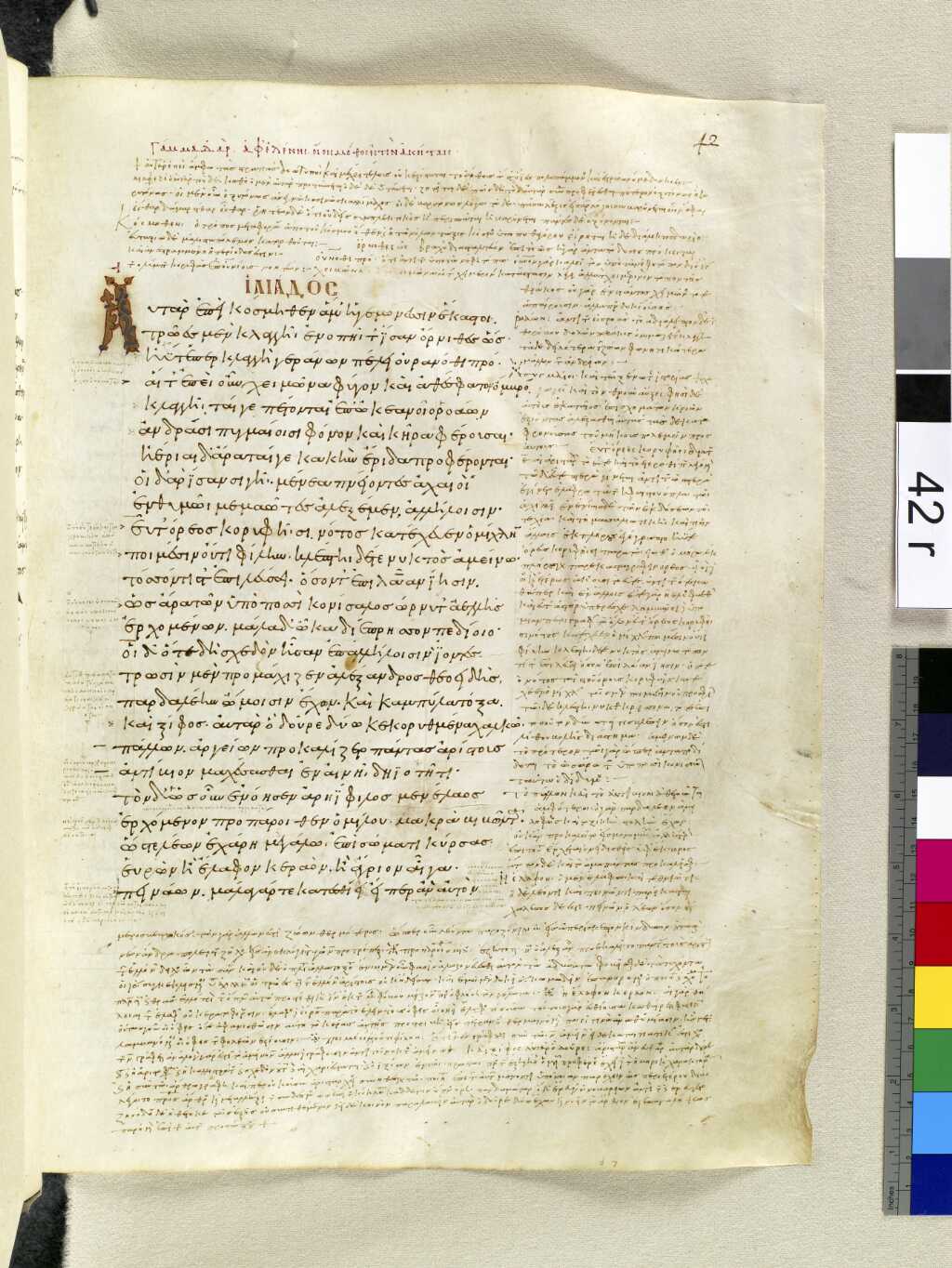
1αὐτὰρ ἐπεὶ κόσμηθεν ἅμʼ ἡγεμόνεσσιν ἕκαστοι, 2Τρῶες μὲν κλαγγῇ τʼ ἐνοπῇ τʼ ἴσαν ὄρνιθες ὣς 3ἠΰτε περ κλαγγὴ γεράνων πέλει οὐρανόθι πρό· 4αἵ τʼ ἐπεὶ οὖν χειμῶνα φύγον καὶ ἀθέσφατον ὄμβρον 5κλαγγῇ ταί γε πέτονται ἐπʼ ὠκεανοῖο ῥοάων 6ἀνδράσι Πυγμαίοισι φόνον καὶ κῆρα φέρουσαι· 7ἠέριαι δʼ ἄρα ταί γε κακὴν ἔριδα προφέρονται. 8οἳ δʼ ἄρʼ ἴσαν σιγῇ μένεα πνείοντες Ἀχαιοὶ 9ἐν θυμῷ μεμαῶτες ἀλεξέμεν ἀλλήλοισιν. 10εὖτʼ ὄρεος κορυφῇσι Νότος κατέχευεν ὀμίχλην 11ποιμέσιν οὔ τι φίλην, κλέπτῃ δέ τε νυκτὸς ἀμείνω, 12τόσσόν τίς τʼ ἐπιλεύσσει ὅσον τʼ ἐπὶ λᾶαν ἵησιν· 13ὣς ἄρα τῶν ὑπὸ ποσσὶ κονίσαλος ὄρνυτʼ ἀελλὴς 14ἐρχομένων· μάλα δʼ ὦκα διέπρησσον πεδίοιο. 15οἳ δʼ ὅτε δὴ σχεδὸν ἦσαν ἐπʼ ἀλλήλοισιν ἰόντες, 16Τρωσὶν μὲν προμάχιζεν Ἀλέξανδρος θεοειδὴς 17παρδαλέην ὤμοισιν ἔχων καὶ καμπύλα τόξα 18καὶ ξίφος· αὐτὰρ δοῦρε δύω κεκορυθμένα χαλκῷ 19πάλλων Ἀργείων προκαλίζετο πάντας ἀρίστους 20ἀντίβιον μαχέσασθαι ἐν αἰνῇ δηϊοτῆτι. 21τὸν δʼ ὡς οὖν ἐνόησεν ἀρηΐφιλος Μενέλαος 22ἐρχόμενον προπάροιθεν ὁμίλου μακρὰ βιβάντα, 23ὥς τε λέων ἐχάρη μεγάλῳ ἐπὶ σώματι κύρσας 24εὑρὼν ἢ ἔλαφον κεραὸν ἢ ἄγριον αἶγα 25πεινάων· μάλα γάρ τε κατεσθίει, εἴ περ ἂν αὐτὸν
Alexandria, also called Paris, challenges Menelaus—Helen and Priam view the Achaeans from the wall—The covenant—Paris and Menelaus fight, and Paris is worsted—Venus carries him off to save him—Scene between him and Helen.
When the companies were thus arrayed, each under its own captain, the Trojans advanced as a flight of wild-fowl or cranes that scream overhead when rain and winter drive them over the flowing waters of Oceanus to bring death and destruction on the Pygmies, and they wrangle in the air as they fly; but the Achaeans marched silently, in high heart, and minded to stand by one another.
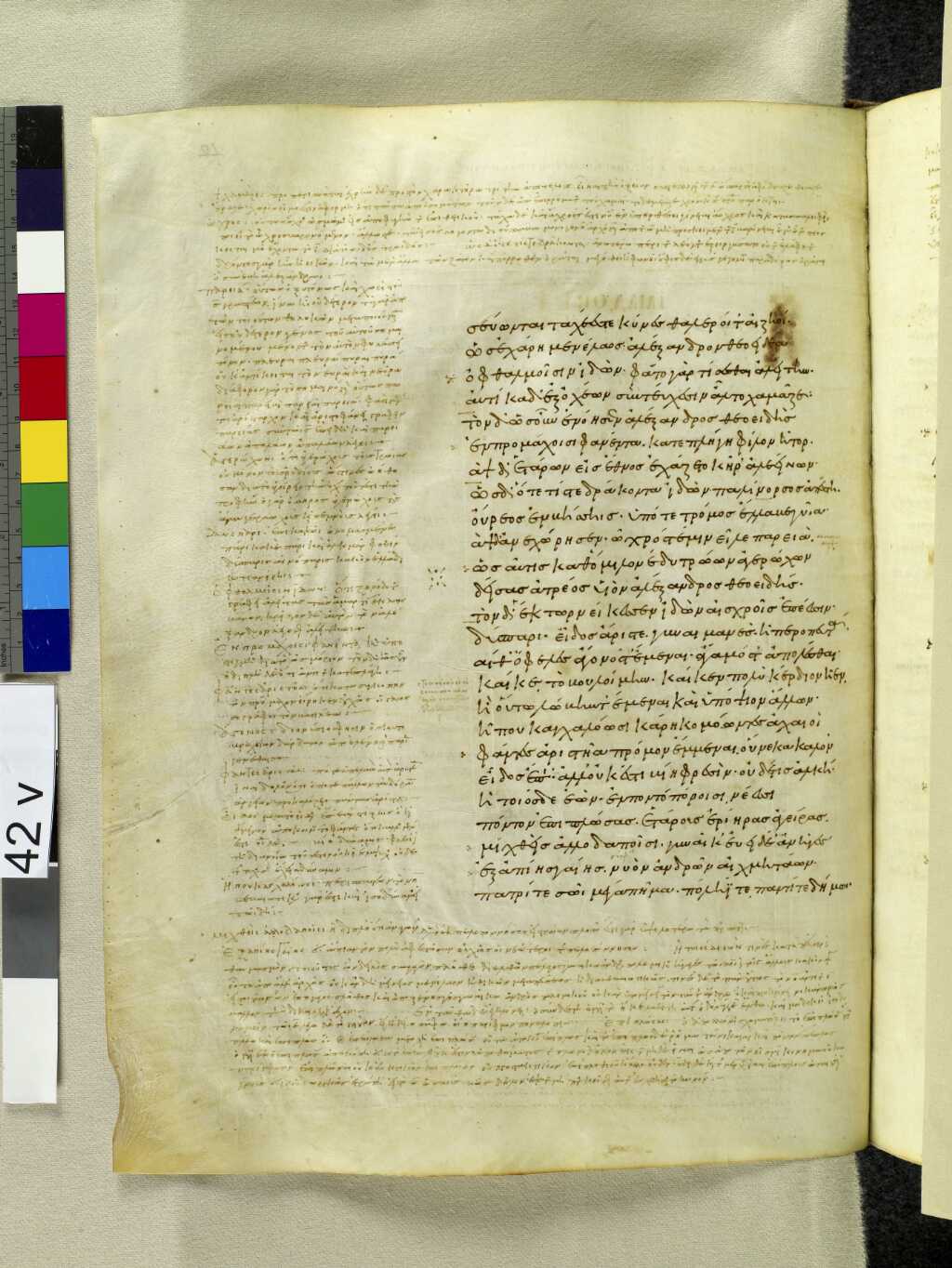
26σεύωνται ταχέες τε κύνες θαλεροί τʼ αἰζηοί· 27ὣς ἐχάρη Μενέλαος Ἀλέξανδρον θεοειδέα 28ὀφθαλμοῖσιν ἰδών· φάτο γὰρ τίσεσθαι ἀλείτην· 29αὐτίκα δʼ ἐξ ὀχέων σὺν τεύχεσιν ἆλτο χαμᾶζε. 30τὸν δʼ ὡς οὖν ἐνόησεν Ἀλέξανδρος θεοειδὴς 31ἐν προμάχοισι φανέντα, κατεπλήγη φίλον ἦτορ, 32ἂψ δʼ ἑτάρων εἰς ἔθνος ἐχάζετο κῆρʼ ἀλεείνων. 33ὡς δʼ ὅτε τίς τε δράκοντα ἰδὼν παλίνορσος ἀπέστη 34οὔρεος ἐν βήσσῃς, ὑπό τε τρόμος ἔλλαβε γυῖα, 35ἂψ δʼ ἀνεχώρησεν, ὦχρός τέ μιν εἷλε παρειάς, 36ὣς αὖτις καθʼ ὅμιλον ἔδυ Τρώων ἀγερώχων 37δείσας Ἀτρέος υἱὸν Ἀλέξανδρος θεοειδής. 38τὸν δʼ Ἕκτωρ νείκεσσεν ἰδὼν αἰσχροῖς ἐπέεσσιν· 39Δύσπαρι εἶδος ἄριστε γυναιμανὲς ἠπεροπευτὰ 40αἴθʼ ὄφελες ἄγονός τʼ ἔμεναι ἄγαμός τʼ ἀπολέσθαι· 41καί κε τὸ βουλοίμην, καί κεν πολὺ κέρδιον ἦεν 42ἢ οὕτω λώβην τʼ ἔμεναι καὶ ὑπόψιον ἄλλων. 43ἦ που καγχαλόωσι κάρη κομόωντες Ἀχαιοὶ 44φάντες ἀριστῆα πρόμον ἔμμεναι, οὕνεκα καλὸν 45εἶδος ἔπʼ, ἀλλʼ οὐκ ἔστι βίη φρεσὶν οὐδέ τις ἀλκή. 46ἦ τοιόσδε ἐὼν ἐν ποντοπόροισι νέεσσι 47πόντον ἐπιπλώσας, ἑτάρους ἐρίηρας ἀγείρας, 48μιχθεὶς ἀλλοδαποῖσι γυναῖκʼ εὐειδέʼ ἀνῆγες 49ἐξ ἀπίης γαίης νυὸν ἀνδρῶν αἰχμητάων 50πατρί τε σῷ μέγα πῆμα πόληΐ τε παντί τε δήμῳ,
As when the south wind spreads a curtain of mist upon the mountain tops, bad for shepherds but better than night for thieves, and a man can see no further than he can throw a stone, even so rose the dust from under their feet as they made all speed over the plain.
When they were close up with one another, Alexandrus came forward as champion on the Trojan side. On his shoulders he bore the skin of a panther, his bow, and his sword, and he brandished two spears shod with bronze as a challenge to the bravest of the Achaeans to meet him in single fight. Menelaus saw him thus stride out before the ranks, and was glad as a hungry lion that lights on the carcase of some goat or horned stag, and devours it there and then, though dogs and youths set upon him. Even thus was Menelaus glad when his eyes caught sight of Alexandrus, for he deemed that now he should be revenged. He sprang, therefore, from his chariot, clad in his suit of armour.
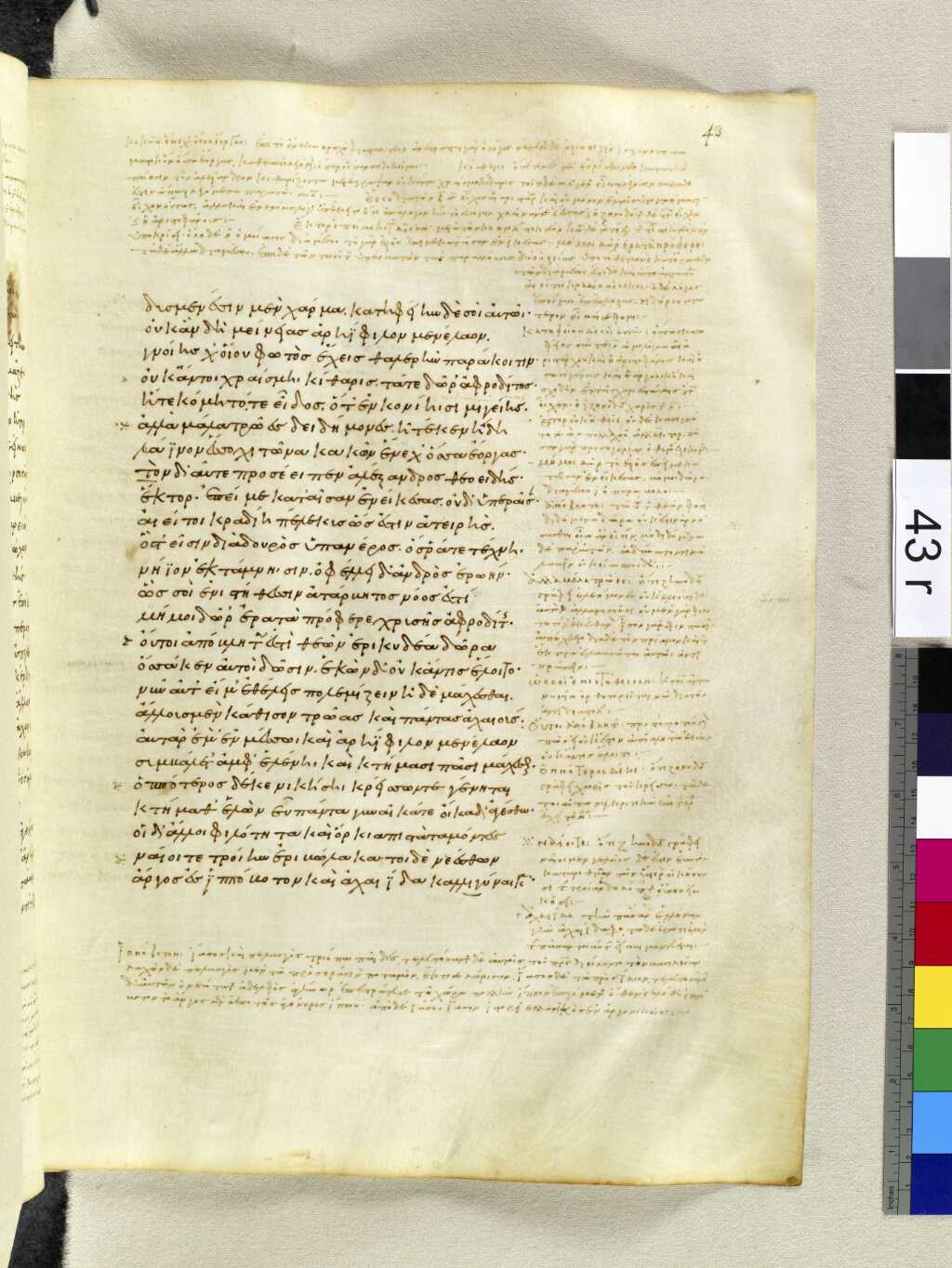
51δυσμενέσιν μὲν χάρμα, κατηφείην δὲ σοὶ αὐτῷ; 52οὐκ ἂν δὴ μείνειας ἀρηΐφιλον Μενέλαον; 53γνοίης χʼ οἵου φωτὸς ἔχεις θαλερὴν παράκοιτιν· 54οὐκ ἄν τοι χραίσμῃ κίθαρις τά τε δῶρʼ Ἀφροδίτης 55ἥ τε κόμη τό τε εἶδος ὅτʼ ἐν κονίῃσι μιγείης. 56ἀλλὰ μάλα Τρῶες δειδήμονες· ἦ τέ κεν ἤδη 57λάϊνον ἕσσο χιτῶνα κακῶν ἕνεχʼ ὅσσα ἔοργας. 58τὸν δʼ αὖτε προσέειπεν Ἀλέξανδρος θεοειδής· 59Ἕκτορ ἐπεί με κατʼ αἶσαν ἐνείκεσας οὐδʼ ὑπὲρ αἶσαν· 60αἰεί τοι κραδίη πέλεκυς ὥς ἐστιν ἀτειρὴς 61ὅς τʼ εἶσιν διὰ δουρὸς ὑπʼ ἀνέρος ὅς ῥά τε τέχνῃ 62νήϊον ἐκτάμνῃσιν, ὀφέλλει δʼ ἀνδρὸς ἐρωήν· 63ὣς σοὶ ἐνὶ στήθεσσιν ἀτάρβητος νόος ἐστί· 64μή μοι δῶρʼ ἐρατὰ πρόφερε χρυσέης Ἀφροδίτης· 65οὔ τοι ἀπόβλητʼ ἐστὶ θεῶν ἐρικυδέα δῶρα 66ὅσσά κεν αὐτοὶ δῶσιν, ἑκὼν δʼ οὐκ ἄν τις ἕλοιτο· 67νῦν αὖτʼ εἴ μʼ ἐθέλεις πολεμίζειν ἠδὲ μάχεσθαι, 68ἄλλους μὲν κάθισον Τρῶας καὶ πάντας Ἀχαιούς, 69αὐτὰρ ἔμʼ ἐν μέσσῳ καὶ ἀρηΐφιλον Μενέλαον 70συμβάλετʼ ἀμφʼ Ἑλένῃ καὶ κτήμασι πᾶσι μάχεσθαι· 71ὁππότερος δέ κε νικήσῃ κρείσσων τε γένηται, 72κτήμαθʼ ἑλὼν εὖ πάντα γυναῖκά τε οἴκαδʼ ἀγέσθω· 73οἳ δʼ ἄλλοι φιλότητα καὶ ὅρκια πιστὰ ταμόντες 74ναίοιτε Τροίην ἐριβώλακα, τοὶ δὲ νεέσθων 75Ἄργος ἐς ἱππόβοτον καὶ Ἀχαιΐδα καλλιγύναικα.
Alexandrus quailed as he saw Menelaus come forward, and shrank in fear of his life under cover of his men. As one who starts back affrighted, trembling and pale, when he comes suddenly upon a serpent in some mountain glade, even so did Alexandrus plunge into the throng of Trojan warriors, terror-stricken at the sight of the son of Atreus.
Then Hector upbraided him. “Paris,” said he, “evil-hearted Paris, fair to see, but woman-mad, and false of tongue, would that you had never been born, or that you had died unwed. Better so, than live to be disgraced and looked askance at. Will not the Achaeans mock at us and say that we have sent one to champion us who is fair to see but who has neither wit nor courage? Did you not, such as you are, get your following together and sail beyond the seas? Did you not from your a far country carry off a lovely woman wedded among a people of warriors—to bring sorrow upon your father, your city, and your whole country, but joy to your enemies, and hang-dog shamefacedness to yourself? And now can you not dare face Menelaus and learn what manner of man he is whose wife you have stolen? Where indeed would be your lyre and your love-tricks, your comely locks and your fair favour, when you were lying in the dust before him? The Trojans are a weak-kneed people, or ere this you would have had a shirt of stones for the wrongs you have done them.”
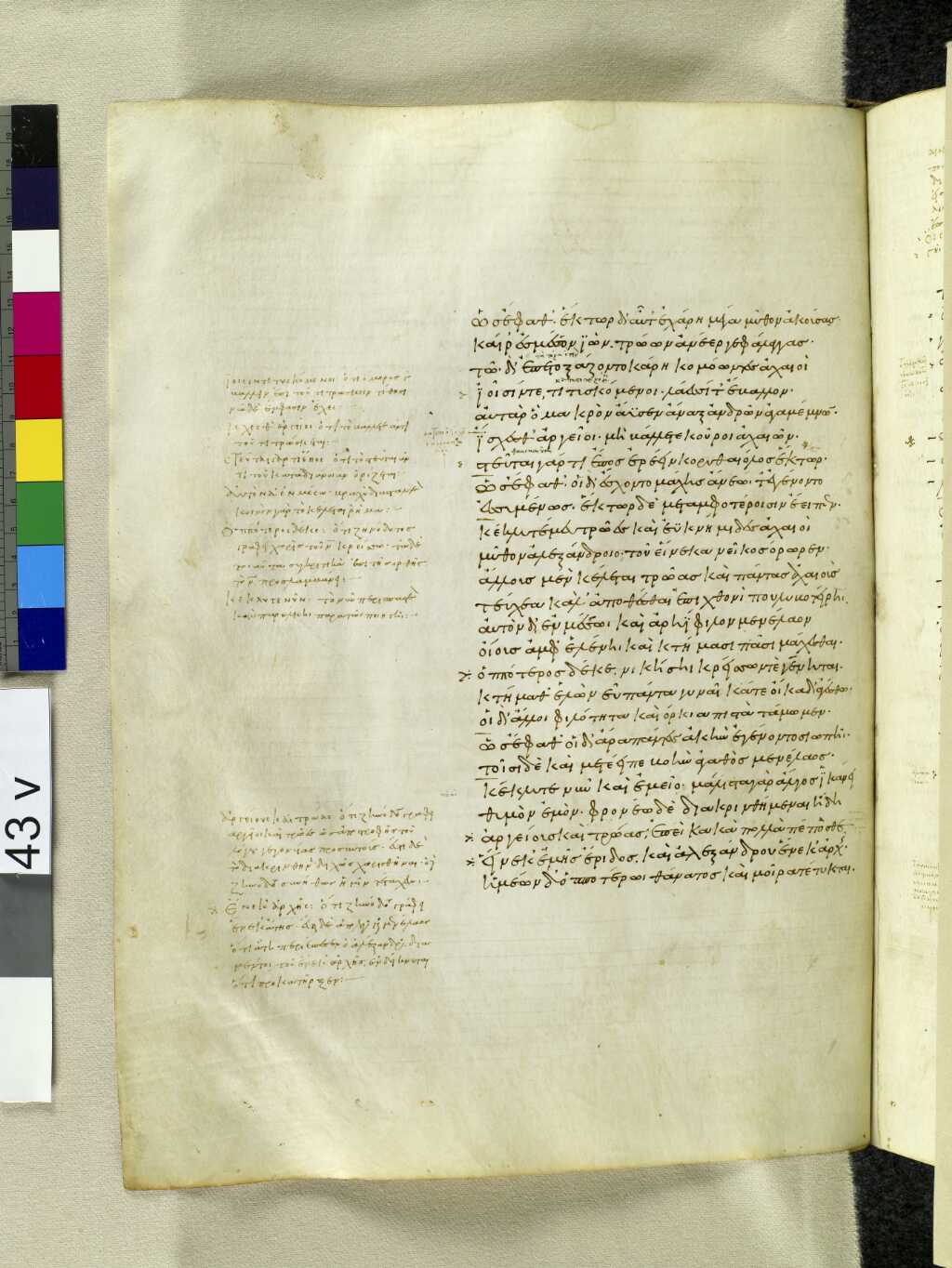
76ὣς ἔφαθʼ, Ἕκτωρ δʼ αὖτʼ ἐχάρη μέγα μῦθον ἀκούσας, 77καί ῥʼ ἐς μέσσον ἰὼν Τρώων ἀνέεργε φάλαγγας 78μέσσου δουρὸς ἑλών· τοὶ δʼ ἱδρύνθησαν ἅπαντες. 79τῷ δʼ ἐπετοξάζοντο κάρη κομόωντες Ἀχαιοὶ 80ἰοῖσίν τε τιτυσκόμενοι λάεσσί τʼ ἔβαλλον· 81αὐτὰρ ὃ μακρὸν ἄϋσεν ἄναξ ἀνδρῶν Ἀγαμέμνων· 82ἴσχεσθʼ Ἀργεῖοι, μὴ βάλλετε κοῦροι Ἀχαιῶν· 83στεῦται γάρ τι ἔπος ἐρέειν κορυθαίολος Ἕκτωρ. 84ὣς ἔφαθʼ, οἳ δʼ ἔσχοντο μάχης ἄνεῴ τʼ ἐγένοντο 85ἐσσυμένως· Ἕκτωρ δὲ μετʼ ἀμφοτέροισιν ἔειπε· 86κέκλυτέ μευ Τρῶες καὶ ἐϋκνήμιδες Ἀχαιοὶ 87μῦθον Ἀλεξάνδροιο, τοῦ εἵνεκα νεῖκος ὄρωρεν. 88ἄλλους μὲν κέλεται Τρῶας καὶ πάντας Ἀχαιοὺς 89τεύχεα κάλʼ ἀποθέσθαι ἐπὶ χθονὶ πουλυβοτείρῃ, 90αὐτὸν δʼ ἐν μέσσῳ καὶ ἀρηΐφιλον Μενέλαον 91οἴους ἀμφʼ Ἑλένῃ καὶ κτήμασι πᾶσι μάχεσθαι. 92ὁππότερος δέ κε νικήσῃ κρείσσων τε γένηται 93κτήμαθʼ ἑλὼν εὖ πάντα γυναῖκά τε οἴκαδʼ ἀγέσθω· 94οἳ δʼ ἄλλοι φιλότητα καὶ ὅρκια πιστὰ τάμωμεν. 95ὣς ἔφαθʼ, οἳ δʼ ἄρα πάντες ἀκὴν ἐγένοντο σιωπῇ· 96τοῖσι δὲ καὶ μετέειπε βοὴν ἀγαθὸς Μενέλαος· 97κέκλυτε νῦν καὶ ἐμεῖο· μάλιστα γὰρ ἄλγος ἱκάνει 98θυμὸν ἐμόν, φρονέω δὲ διακρινθήμεναι ἤδη 99Ἀργείους καὶ Τρῶας, ἐπεὶ κακὰ πολλὰ πέπασθε 100εἵνεκʼ ἐμῆς ἔριδος καὶ Ἀλεξάνδρου ἕνεκʼ ἀρχῆς·
And Alexandrus answered, “Hector, your rebuke is just. You are hard as the axe which a shipwright wields at his work, and cleaves the timber to his liking. As the axe in his hand, so keen is the edge of your scorn. Still, taunt me not with the gifts that golden Venus has given me; they are precious; let not a man disdain them, for the gods give them where they are minded, and none can have them for the asking. If you would have me do battle with Menelaus, bid the Trojans and Achaeans take their seats, while he and I fight in their midst for Helen and all her wealth. Let him who shall be victorious and prove to be the better man take the woman and all she has, to bear them to his home, but let the rest swear to a solemn covenant of peace whereby you Trojans shall stay here in Troy, while the others go home to Argos and the land of the Achaeans.”
When Hector heard this he was glad, and went about among the Trojan ranks holding his spear by the middle to keep them back, and they all sat down at his bidding: but the Achaeans still aimed at him with stones and arrows, till Agamemnon shouted to them saying, “Hold, Argives, shoot not, sons of the Achaeans; Hector desires to speak.”
They ceased taking aim and were still, whereon Hector spoke. “Hear from my mouth,” said he, “Trojans and Achaeans, the saying of Alexandrus, through whom this quarrel has come about. He bids the Trojans and Achaeans lay their armour upon the ground, while he and Menelaus fight in the midst of you for Helen and all her wealth. Let him who shall be victorious and prove to be the better man take the woman and all she has, to bear them to his own home, but let the rest swear to a solemn covenant of peace.”
101ἡμέων δʼ ὁπποτέρῳ θάνατος καὶ μοῖρα τέτυκται 102τεθναίη· ἄλλοι δὲ διακρινθεῖτε τάχιστα. 103οἴσετε ἄρνʼ, ἕτερον λευκόν, ἑτέρην δὲ μέλαιναν, 104Γῇ τε καὶ Ἠελίῳ· Διὶ δʼ ἡμεῖς οἴσομεν ἄλλον· 105ἄξετε δὲ Πριάμοιο βίην, ὄφρʼ ὅρκια τάμνῃ 106αὐτός, ἐπεί οἱ παῖδες ὑπερφίαλοι καὶ ἄπιστοι, 107μή τις ὑπερβασίῃ Διὸς ὅρκια δηλήσηται. 108αἰεὶ δʼ ὁπλοτέρων ἀνδρῶν φρένες ἠερέθονται· 109οἷς δʼ ὁ γέρων μετέῃσιν ἅμα πρόσσω καὶ ὀπίσσω 110λεύσσει, ὅπως ὄχʼ ἄριστα μετʼ ἀμφοτέροισι γένηται. 111ὣς ἔφαθʼ, οἳ δʼ ἐχάρησαν Ἀχαιοί τε Τρῶές τε 112ἐλπόμενοι παύσασθαι ὀϊζυροῦ πολέμοιο. 113καί ῥʼ ἵππους μὲν ἔρυξαν ἐπὶ στίχας, ἐκ δʼ ἔβαν αὐτοί, 114τεύχεά τʼ ἐξεδύοντο· τὰ μὲν κατέθεντʼ ἐπὶ γαίῃ 115πλησίον ἀλλήλων, ὀλίγη δʼ ἦν ἀμφὶς ἄρουρα· 116Ἕκτωρ δὲ προτὶ ἄστυ δύω κήρυκας ἔπεμπε 117καρπαλίμως ἄρνάς τε φέρειν Πρίαμόν τε καλέσσαι· 118αὐτὰρ ὃ Ταλθύβιον προΐει κρείων Ἀγαμέμνων 119νῆας ἔπι γλαφυρὰς ἰέναι, ἠδʼ ἄρνʼ ἐκέλευεν 120οἰσέμεναι· ὃ δʼ ἄρʼ οὐκ ἀπίθησʼ Ἀγαμέμνονι δίῳ. 121Ἶρις δʼ αὖθʼ Ἑλένῃ λευκωλένῳ ἄγγελος ἦλθεν 122εἰδομένη γαλόῳ Ἀντηνορίδαο δάμαρτι, 123τὴν Ἀντηνορίδης εἶχε κρείων Ἑλικάων 124Λαοδίκην Πριάμοιο θυγατρῶν εἶδος ἀρίστην. 125τὴν δʼ εὗρʼ ἐν μεγάρῳ· ἣ δὲ μέγαν ἱστὸν ὕφαινε
Thus he spoke, and they all held their peace, till Menelaus of the loud battle-cry addressed them. “And now,” he said, “hear me too, for it is I who am the most aggrieved. I deem that the parting of Achaeans and Trojans is at hand, as well it may be, seeing how much have suffered for my quarrel with Alexandrus and the wrong he did me. Let him who shall die, die, and let the others fight no more. Bring, then, two lambs, a white ram and a black ewe, for Earth and Sun, and we will bring a third for Jove. Moreover, you shall bid Priam come, that he may swear to the covenant himself; for his sons are high-handed and ill to trust, and the oaths of Jove must not be transgressed or taken in vain. Young men’s minds are light as air, but when an old man comes he looks before and after, deeming that which shall be fairest upon both sides.”
The Trojans and Achaeans were glad when they heard this, for they thought that they should now have rest. They backed their chariots toward the ranks, got out of them, and put off their armour, laying it down upon the ground; and the hosts were near to one another with a little space between them. Hector sent two messengers to the city to bring the lambs and to bid Priam come, while Agamemnon told Talthybius to fetch the other lamb from the ships, and he did as Agamemnon had said.
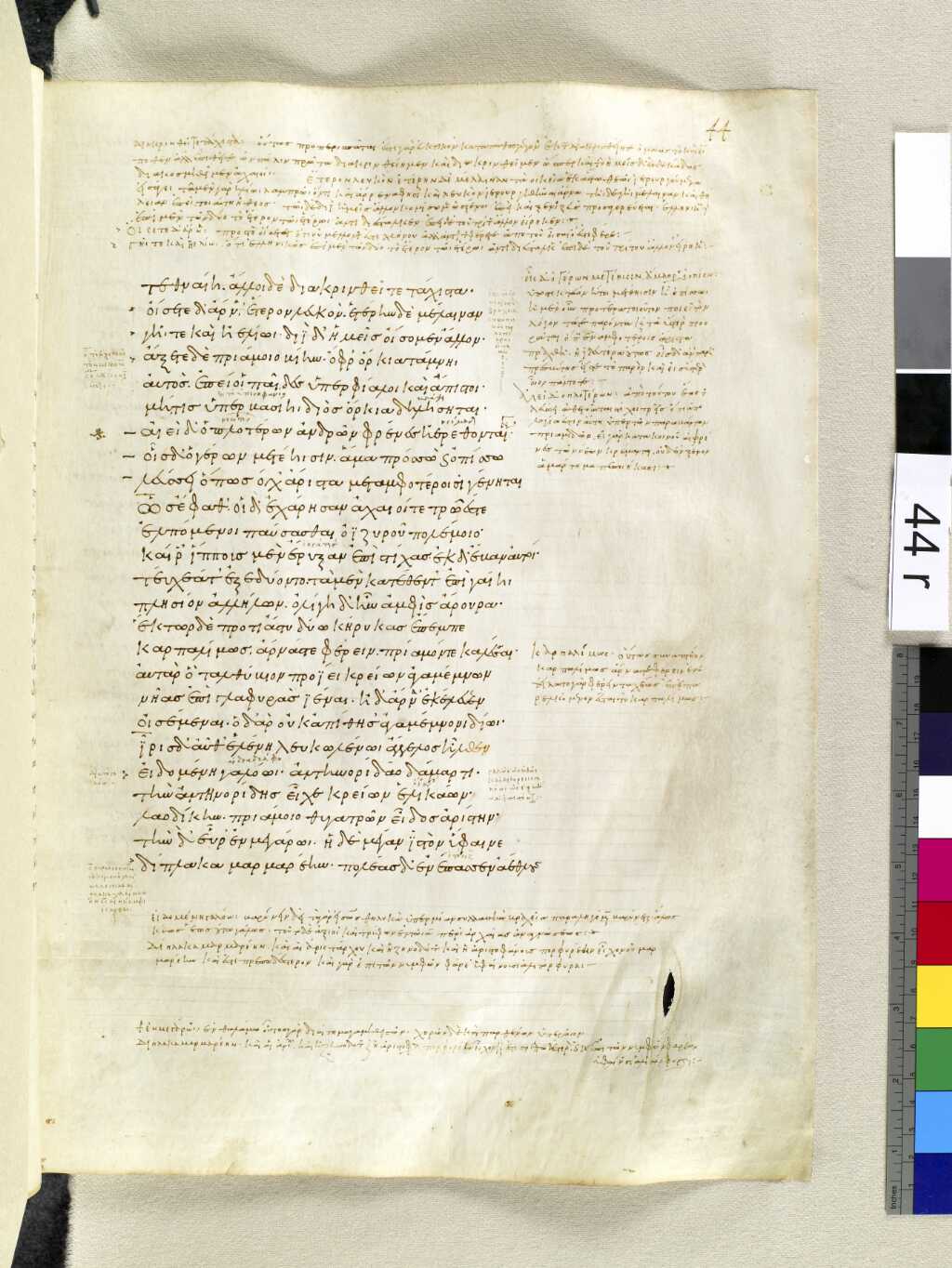
126δίπλακα πορφυρέην, πολέας δʼ ἐνέπασσεν ἀέθλους 127Τρώων θʼ ἱπποδάμων καὶ Ἀχαιῶν χαλκοχιτώνων, 128οὕς ἑθεν εἵνεκʼ ἔπασχον ὑπʼ Ἄρηος παλαμάων· 129ἀγχοῦ δʼ ἱσταμένη προσέφη πόδας ὠκέα Ἶρις· 130δεῦρʼ ἴθι νύμφα φίλη, ἵνα θέσκελα ἔργα ἴδηαι 131Τρώων θʼ ἱπποδάμων καὶ Ἀχαιῶν χαλκοχιτώνων, 132οἳ πρὶν ἐπʼ ἀλλήλοισι φέρον πολύδακρυν Ἄρηα 133ἐν πεδίῳ ὀλοοῖο λιλαιόμενοι πολέμοιο· 134οἳ δὴ νῦν ἕαται σιγῇ, πόλεμος δὲ πέπαυται, 135ἀσπίσι κεκλιμένοι, παρὰ δʼ ἔγχεα μακρὰ πέπηγεν. 136αὐτὰρ Ἀλέξανδρος καὶ ἀρηΐφιλος Μενέλαος 137μακρῇς ἐγχείῃσι μαχήσονται περὶ σεῖο· 138τῷ δέ κε νικήσαντι φίλη κεκλήσῃ ἄκοιτις. 139ὣς εἰποῦσα θεὰ γλυκὺν ἵμερον ἔμβαλε θυμῷ 140ἀνδρός τε προτέρου καὶ ἄστεος ἠδὲ τοκήων· 141αὐτίκα δʼ ἀργεννῇσι καλυψαμένη ὀθόνῃσιν 142ὁρμᾶτʼ ἐκ θαλάμοιο τέρεν κατὰ δάκρυ χέουσα 143οὐκ οἴη, ἅμα τῇ γε καὶ ἀμφίπολοι δύʼ ἕποντο, 144Αἴθρη Πιτθῆος θυγάτηρ, Κλυμένη τε βοῶπις· 145αἶψα δʼ ἔπειθʼ ἵκανον ὅθι Σκαιαὶ πύλαι ἦσαν. 146οἳ δʼ ἀμφὶ Πρίαμον καὶ Πάνθοον ἠδὲ Θυμοίτην 147Λάμπόν τε Κλυτίον θʼ Ἱκετάονά τʼ ὄζον Ἄρηος 148Οὐκαλέγων τε καὶ Ἀντήνωρ πεπνυμένω ἄμφω 149ἥατο δημογέροντες ἐπὶ Σκαιῇσι πύλῃσι, 150γήραϊ δὴ πολέμοιο πεπαυμένοι, ἀλλʼ ἀγορηταὶ
Meanwhile Iris went to Helen in the form of her sister-in-law, wife of the son of Antenor, for Helicaon, son of Antenor, had married Laodice, the fairest of Priam’s daughters. She found her in her own room, working at a great web of purple linen, on which she was embroidering the battles between Trojans and Achaeans, that Mars had made them fight for her sake. Iris then came close up to her and said, “Come hither, child, and see the strange doings of the Trojans and Achaeans. Till now they have been warring upon the plain, mad with lust of battle, but now they have left off fighting, and are leaning upon their shields, sitting still with their spears planted beside them. Alexandrus and Menelaus are going to fight about yourself, and you are to be the wife of him who is the victor.”
Thus spoke the goddess, and Helen’s heart yearned after her former husband, her city, and her parents. She threw a white mantle over her head, and hurried from her room, weeping as she went, not alone, but attended by two of her handmaids, Aethrae, daughter of Pittheus, and Clymene. And straightway they were at the Scaean gates.
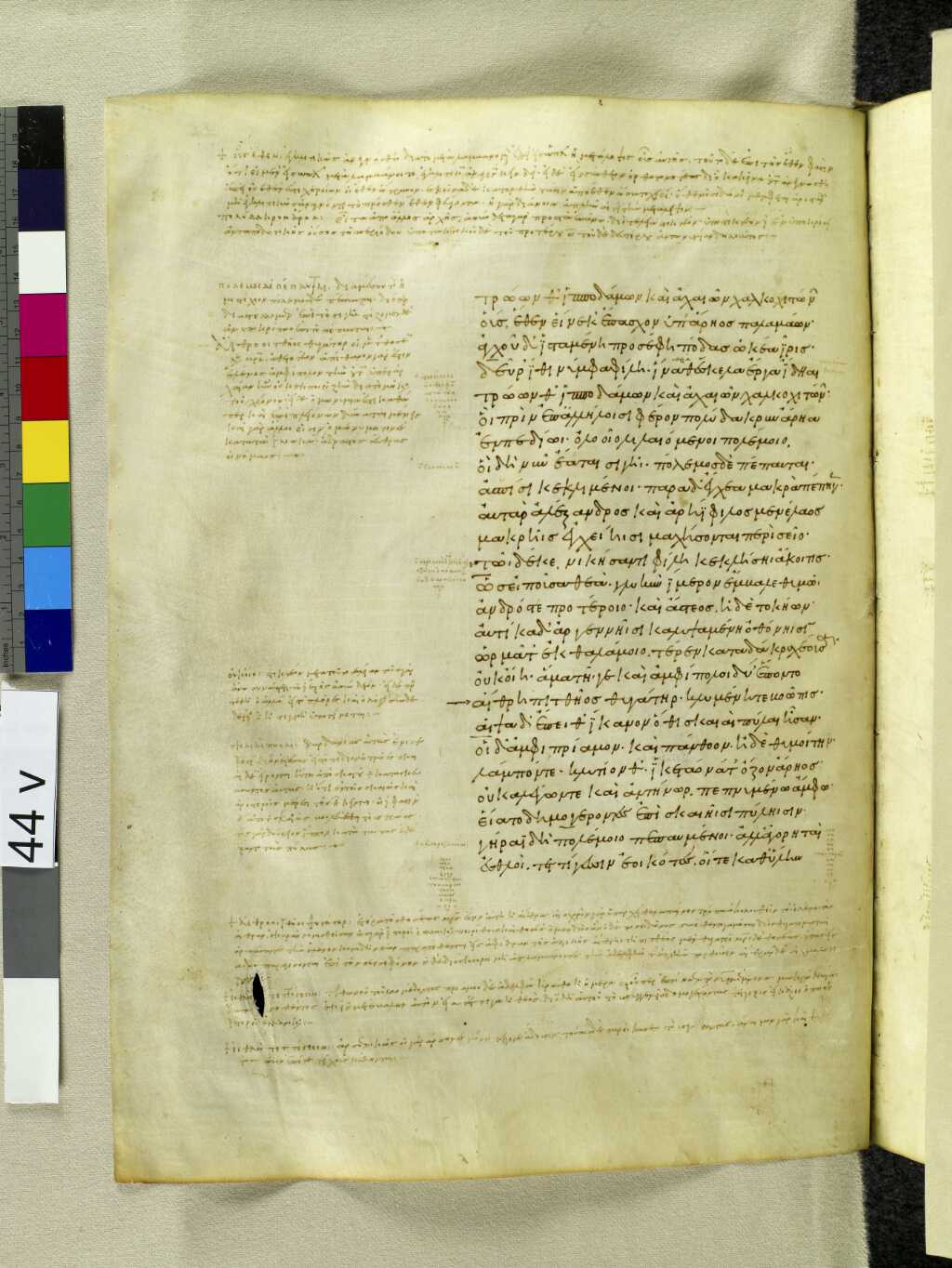
151ἐσθλοί, τεττίγεσσιν ἐοικότες οἵ τε καθʼ ὕλην 152δενδρέῳ ἐφεζόμενοι ὄπα λειριόεσσαν ἱεῖσι· 153τοῖοι ἄρα Τρώων ἡγήτορες ἧντʼ ἐπὶ πύργῳ. 154οἳ δʼ ὡς οὖν εἴδονθʼ Ἑλένην ἐπὶ πύργον ἰοῦσαν, 155ἦκα πρὸς ἀλλήλους ἔπεα πτερόεντʼ ἀγόρευον· 156οὐ νέμεσις Τρῶας καὶ ἐϋκνήμιδας Ἀχαιοὺς 157τοιῇδʼ ἀμφὶ γυναικὶ πολὺν χρόνον ἄλγεα πάσχειν· 158αἰνῶς ἀθανάτῃσι θεῇς εἰς ὦπα ἔοικεν· 159ἀλλὰ καὶ ὧς τοίη περ ἐοῦσʼ ἐν νηυσὶ νεέσθω, 160μηδʼ ἡμῖν τεκέεσσί τʼ ὀπίσσω πῆμα λίποιτο. 161ὣς ἄρʼ ἔφαν, Πρίαμος δʼ Ἑλένην ἐκαλέσσατο φωνῇ· 162δεῦρο πάροιθʼ ἐλθοῦσα φίλον τέκος ἵζευ ἐμεῖο, 163ὄφρα ἴδῃ πρότερόν τε πόσιν πηούς τε φίλους τε· 164οὔ τί μοι αἰτίη ἐσσί, θεοί νύ μοι αἴτιοί εἰσιν 165οἵ μοι ἐφώρμησαν πόλεμον πολύδακρυν Ἀχαιῶν· 166ὥς μοι καὶ τόνδʼ ἄνδρα πελώριον ἐξονομήνῃς 167ὅς τις ὅδʼ ἐστὶν Ἀχαιὸς ἀνὴρ ἠΰς τε μέγας τε. 168ἤτοι μὲν κεφαλῇ καὶ μείζονες ἄλλοι ἔασι, 169καλὸν δʼ οὕτω ἐγὼν οὔ πω ἴδον ὀφθαλμοῖσιν, 170οὐδʼ οὕτω γεραρόν· βασιλῆϊ γὰρ ἀνδρὶ ἔοικε. 171τὸν δʼ Ἑλένη μύθοισιν ἀμείβετο δῖα γυναικῶν· 172αἰδοῖός τέ μοί ἐσσι φίλε ἑκυρὲ δεινός τε· 173ὡς ὄφελεν θάνατός μοι ἁδεῖν κακὸς ὁππότε δεῦρο 174υἱέϊ σῷ ἑπόμην θάλαμον γνωτούς τε λιποῦσα 175παῖδά τε τηλυγέτην καὶ ὁμηλικίην ἐρατεινήν.
The two sages, Ucalegon and Antenor, elders of the people, were seated by the Scaean gates, with Priam, Panthous, Thymoetes, Lampus, Clytius, and Hiketaon of the race of Mars. These were too old to fight, but they were fluent orators, and sat on the tower like cicales that chirrup delicately from the boughs of some high tree in a wood. When they saw Helen coming towards the tower, they said softly to one another, “Small wonder that Trojans and Achaeans should endure so much and so long, for the sake of a woman so marvellously and divinely lovely. Still, fair though she be, let them take her and go, or she will breed sorrow for us and for our children after us.”
But Priam bade her draw nigh. “My child,” said he, “take your seat in front of me that you may see your former husband, your kinsmen and your friends. I lay no blame upon you, it is the gods, not you who are to blame. It is they that have brought about this terrible war with the Achaeans. Tell me, then, who is yonder huge hero so great and goodly? I have seen men taller by a head, but none so comely and so royal. Surely he must be a king.”
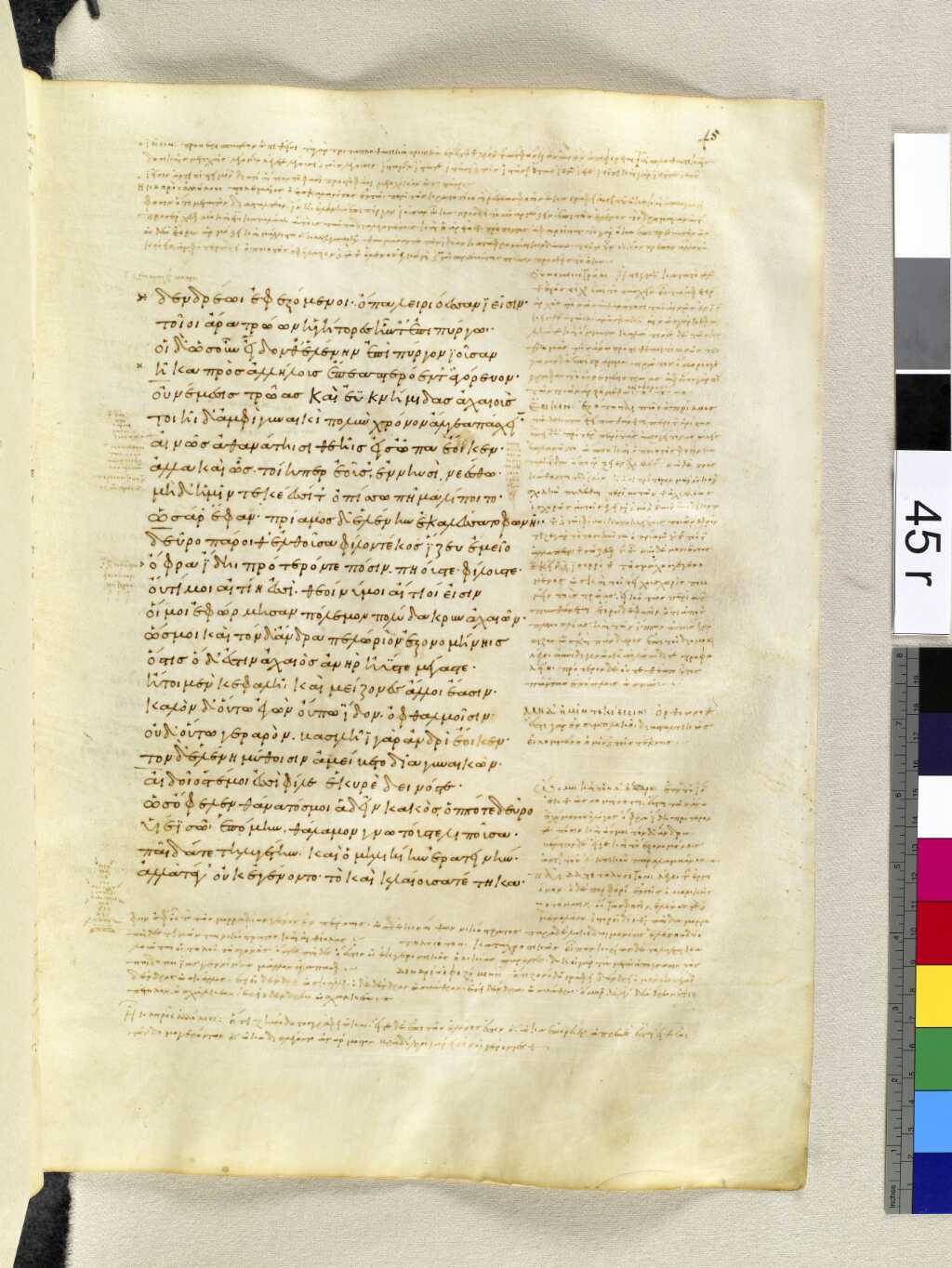
176ἀλλὰ τά γʼ οὐκ ἐγένοντο· τὸ καὶ κλαίουσα τέτηκα. 177τοῦτο δέ τοι ἐρέω ὅ μʼ ἀνείρεαι ἠδὲ μεταλλᾷς· 178οὗτός γʼ Ἀτρεΐδης εὐρὺ κρείων Ἀγαμέμνων, 179ἀμφότερον βασιλεύς τʼ ἀγαθὸς κρατερός τʼ αἰχμητής· 180δαὴρ αὖτʼ ἐμὸς ἔσκε κυνώπιδος, εἴ ποτʼ ἔην γε. 181ὣς φάτο, τὸν δʼ ὁ γέρων ἠγάσσατο φώνησέν τε· 182ὦ μάκαρ Ἀτρεΐδη μοιρηγενὲς ὀλβιόδαιμον, 183ἦ ῥά νύ τοι πολλοὶ δεδμήατο κοῦροι Ἀχαιῶν. 184ἤδη καὶ Φρυγίην εἰσήλυθον ἀμπελόεσσαν, 185ἔνθα ἴδον πλείστους Φρύγας ἀνέρας αἰολοπώλους 186λαοὺς Ὀτρῆος καὶ Μυγδόνος ἀντιθέοιο, 187οἵ ῥα τότʼ ἐστρατόωντο παρʼ ὄχθας Σαγγαρίοιο· 188καὶ γὰρ ἐγὼν ἐπίκουρος ἐὼν μετὰ τοῖσιν ἐλέχθην 189ἤματι τῷ ὅτε τʼ ἦλθον Ἀμαζόνες ἀντιάνειραι· 190ἀλλʼ οὐδʼ οἳ τόσοι ἦσαν ὅσοι ἑλίκωπες Ἀχαιοί. 191δεύτερον αὖτʼ Ὀδυσῆα ἰδὼν ἐρέεινʼ ὁ γεραιός· 192εἴπʼ ἄγε μοι καὶ τόνδε φίλον τέκος ὅς τις ὅδʼ ἐστί· 193μείων μὲν κεφαλῇ Ἀγαμέμνονος Ἀτρεΐδαο, 194εὐρύτερος δʼ ὤμοισιν ἰδὲ στέρνοισιν ἰδέσθαι. 195τεύχεα μέν οἱ κεῖται ἐπὶ χθονὶ πουλυβοτείρῃ, 196αὐτὸς δὲ κτίλος ὣς ἐπιπωλεῖται στίχας ἀνδρῶν· 197ἀρνειῷ μιν ἔγωγε ἐΐσκω πηγεσιμάλλῳ, 198ὅς τʼ οἰῶν μέγα πῶϋ διέρχεται ἀργεννάων. 199τὸν δʼ ἠμείβετʼ ἔπειθʼ Ἑλένη Διὸς ἐκγεγαυῖα· 200οὗτος δʼ αὖ Λαερτιάδης πολύμητις Ὀδυσσεύς,
“Sir,” answered Helen, “father of my husband, dear and reverend in my eyes, would that I had chosen death rather than to have come here with your son, far from my bridal chamber, my friends, my darling daughter, and all the companions of my girlhood. But it was not to be, and my lot is one of tears and sorrow. As for your question, the hero of whom you ask is Agamemnon, son of Atreus, a good king and a brave soldier, brother-in-law as surely as that he lives, to my abhorred and miserable self.”
The old man marvelled at him and said, “Happy son of Atreus, child of good fortune. I see that the Achaeans are subject to you in great multitudes. When I was in Phrygia I saw much horsemen, the people of Otreus and of Mygdon, who were camping upon the banks of the river Sangarius; I was their ally, and with them when the Amazons, peers of men, came up against them, but even they were not so many as the Achaeans.”
The old man next looked upon Ulysses; “Tell me,” he said, “who is that other, shorter by a head than Agamemnon, but broader across the chest and shoulders? His armour is laid upon the ground, and he stalks in front of the ranks as it were some great woolly ram ordering his ewes.”
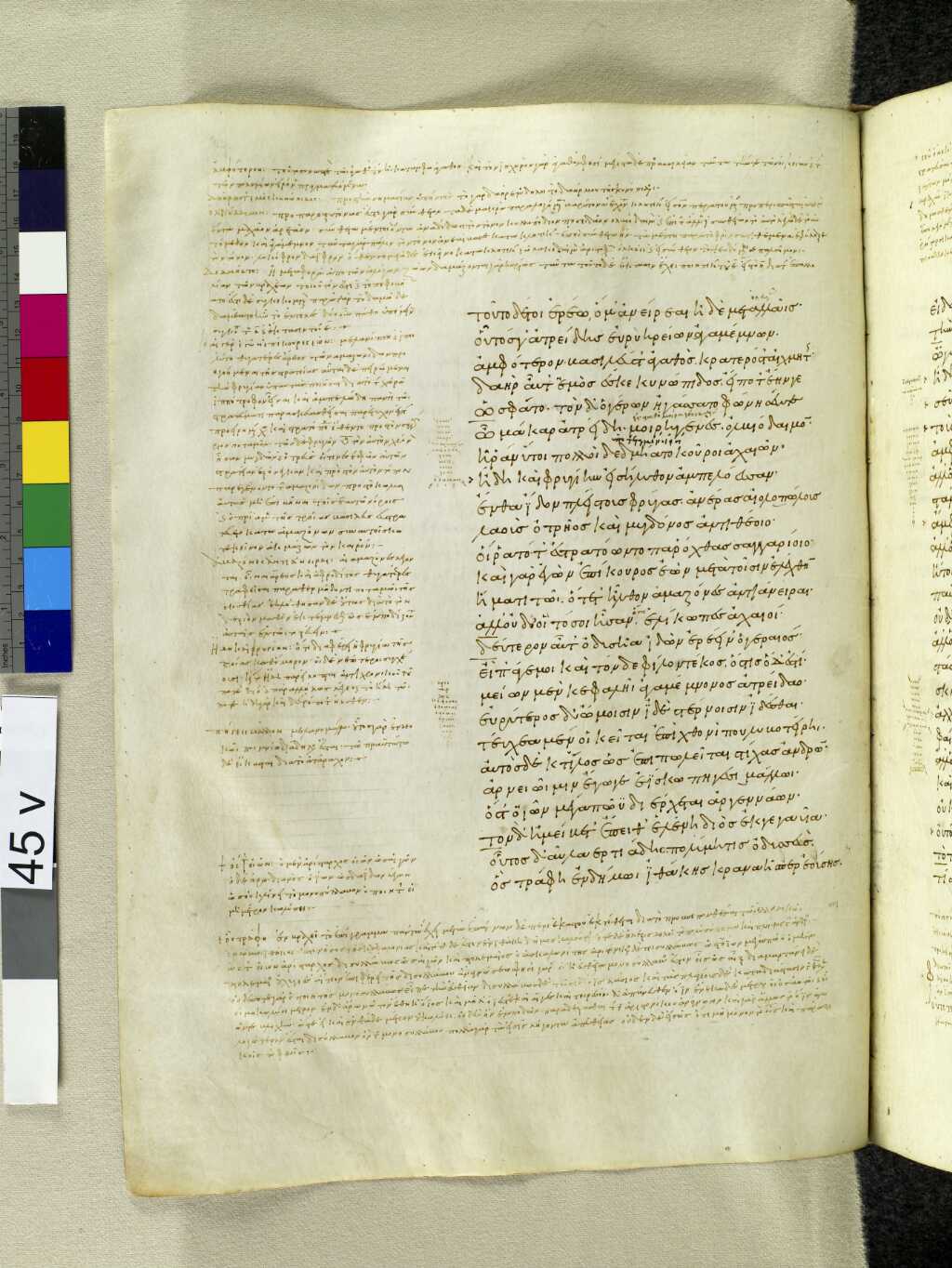
201ὃς τράφη ἐν δήμῳ Ἰθάκης κραναῆς περ ἐούσης 202εἰδὼς παντοίους τε δόλους καὶ μήδεα πυκνά. 203τὴν δʼ αὖτʼ Ἀντήνωρ πεπνυμένος ἀντίον ηὔδα· 204ὦ γύναι ἦ μάλα τοῦτο ἔπος νημερτὲς ἔειπες· 205ἤδη γὰρ καὶ δεῦρό ποτʼ ἤλυθε δῖος Ὀδυσσεὺς 206σεῦ ἕνεκʼ ἀγγελίης σὺν ἀρηϊφίλῳ Μενελάῳ· 207τοὺς δʼ ἐγὼ ἐξείνισσα καὶ ἐν μεγάροισι φίλησα, 208ἀμφοτέρων δὲ φυὴν ἐδάην καὶ μήδεα πυκνά. 209ἀλλʼ ὅτε δὴ Τρώεσσιν ἐν ἀγρομένοισιν ἔμιχθεν 210στάντων μὲν Μενέλαος ὑπείρεχεν εὐρέας ὤμους, 211ἄμφω δʼ ἑζομένω γεραρώτερος ἦεν Ὀδυσσεύς· 212ἀλλʼ ὅτε δὴ μύθους καὶ μήδεα πᾶσιν ὕφαινον 213ἤτοι μὲν Μενέλαος ἐπιτροχάδην ἀγόρευε, 214παῦρα μὲν ἀλλὰ μάλα λιγέως, ἐπεὶ οὐ πολύμυθος 215οὐδʼ ἀφαμαρτοεπής· ἦ καὶ γένει ὕστερος ἦεν. 216ἀλλʼ ὅτε δὴ πολύμητις ἀναΐξειεν Ὀδυσσεὺς 217στάσκεν, ὑπαὶ δὲ ἴδεσκε κατὰ χθονὸς ὄμματα πήξας, 218σκῆπτρον δʼ οὔτʼ ὀπίσω οὔτε προπρηνὲς ἐνώμα, 219ἀλλʼ ἀστεμφὲς ἔχεσκεν ἀΐδρεϊ φωτὶ ἐοικώς· 220φαίης κε ζάκοτόν τέ τινʼ ἔμμεναι ἄφρονά τʼ αὔτως. 221ἀλλʼ ὅτε δὴ ὄπα τε μεγάλην ἐκ στήθεος εἵη 222καὶ ἔπεα νιφάδεσσιν ἐοικότα χειμερίῃσιν, 223οὐκ ἂν ἔπειτʼ Ὀδυσῆΐ γʼ ἐρίσσειε βροτὸς ἄλλος· 224οὐ τότε γʼ ὧδʼ Ὀδυσῆος ἀγασσάμεθʼ εἶδος ἰδόντες. 225τὸ τρίτον αὖτʼ Αἴαντα ἰδὼν ἐρέεινʼ ὃ γεραιός·
And Helen answered, “He is Ulysses, a man of great craft, son of Laertes. He was born in rugged Ithaca, and excels in all manner of stratagems and subtle cunning.”
On this Antenor said, “Madam, you have spoken truly. Ulysses once came here as envoy about yourself, and Menelaus with him. I received them in my own house, and therefore know both of them by sight and conversation. When they stood up in presence of the assembled Trojans, Menelaus was the broader shouldered, but when both were seated Ulysses had the more royal presence. After a time they delivered their message, and the speech of Menelaus ran trippingly on the tongue; he did not say much, for he was a man of few words, but he spoke very clearly and to the point, though he was the younger man of the two; Ulysses, on the other hand, when he rose to speak, was at first silent and kept his eyes fixed upon the ground. There was no play nor graceful movement of his sceptre; he kept it straight and stiff like a man unpractised in oratory—one might have taken him for a mere churl or simpleton; but when he raised his voice, and the words came driving from his deep chest like winter snow before the wind, then there was none to touch him, and no man thought further of what he looked like.”
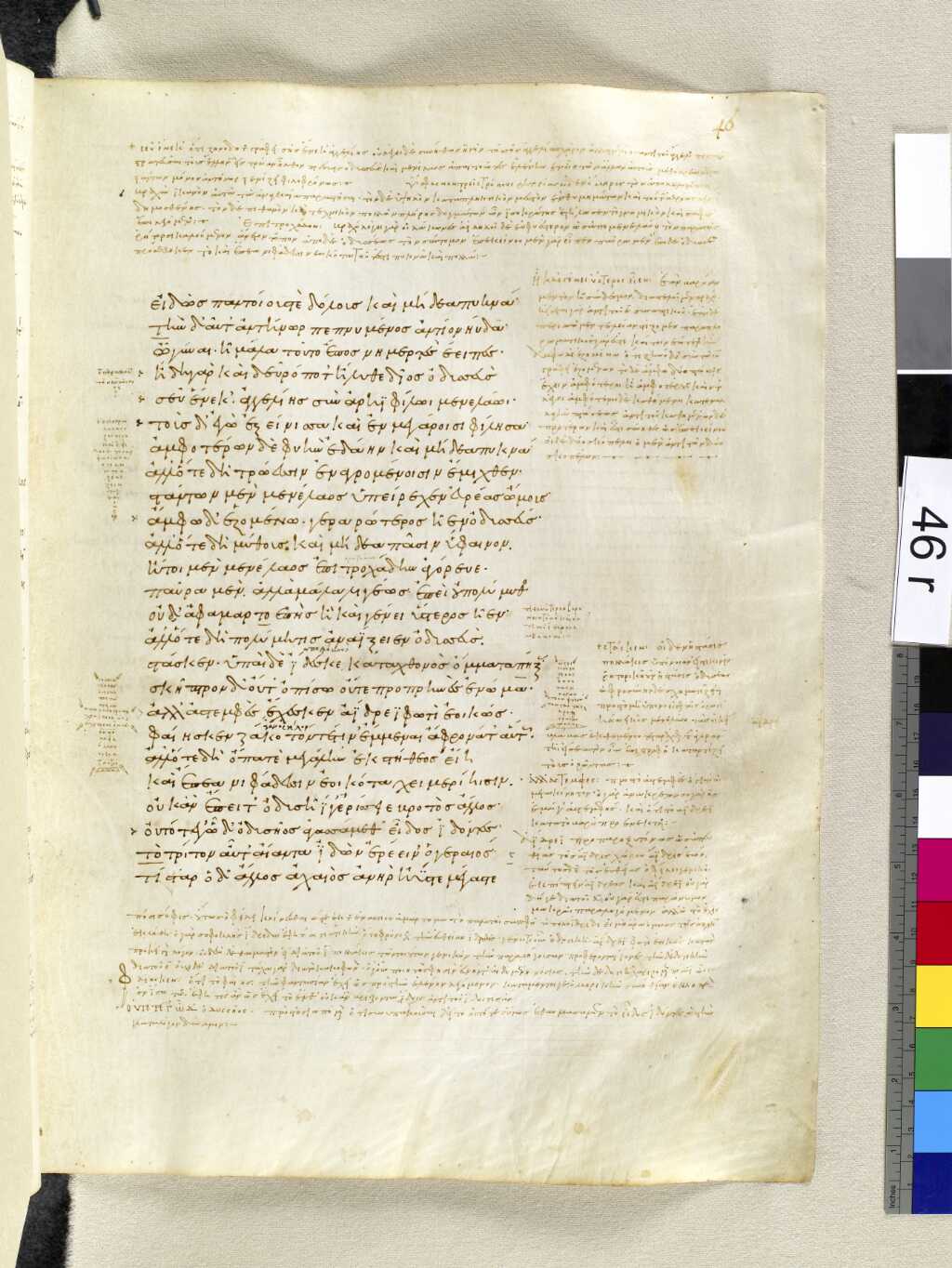
226τίς τὰρ ὅδʼ ἄλλος Ἀχαιὸς ἀνὴρ ἠΰς τε μέγας τε 227ἔξοχος Ἀργείων κεφαλήν τε καὶ εὐρέας ὤμους; 228τὸν δʼ Ἑλένη τανύπεπλος ἀμείβετο δῖα γυναικῶν· 229οὗτος δʼ Αἴας ἐστὶ πελώριος ἕρκος Ἀχαιῶν· 230Ἰδομενεὺς δʼ ἑτέρωθεν ἐνὶ Κρήτεσσι θεὸς ὣς 231ἕστηκʼ, ἀμφὶ δέ μιν Κρητῶν ἀγοὶ ἠγερέθονται. 232πολλάκι μιν ξείνισσεν ἀρηΐφιλος Μενέλαος 233οἴκῳ ἐν ἡμετέρῳ ὁπότε Κρήτηθεν ἵκοιτο. 234νῦν δʼ ἄλλους μὲν πάντας ὁρῶ ἑλίκωπας Ἀχαιούς, 235οὕς κεν ἐῢ γνοίην καί τʼ οὔνομα μυθησαίμην· 236δοιὼ δʼ οὐ δύναμαι ἰδέειν κοσμήτορε λαῶν 237Κάστορά θʼ ἱππόδαμον καὶ πὺξ ἀγαθὸν Πολυδεύκεα 238αὐτοκασιγνήτω, τώ μοι μία γείνατο μήτηρ. 239ἢ οὐχ ἑσπέσθην Λακεδαίμονος ἐξ ἐρατεινῆς, 240ἢ δεύρω μὲν ἕποντο νέεσσʼ ἔνι ποντοπόροισι, 241νῦν αὖτʼ οὐκ ἐθέλουσι μάχην καταδύμεναι ἀνδρῶν 242αἴσχεα δειδιότες καὶ ὀνείδεα πόλλʼ ἅ μοί ἐστιν. 243ὣς φάτο, τοὺς δʼ ἤδη κάτεχεν φυσίζοος αἶα 244ἐν Λακεδαίμονι αὖθι φίλῃ ἐν πατρίδι γαίῃ. 245κήρυκες δʼ ἀνὰ ἄστυ θεῶν φέρον ὅρκια πιστὰ 246ἄρνε δύω καὶ οἶνον ἐΰφρονα καρπὸν ἀρούρης 247ἀσκῷ ἐν αἰγείῳ· φέρε δὲ κρητῆρα φαεινὸν 248κῆρυξ Ἰδαῖος ἠδὲ χρύσεια κύπελλα· 249ὄτρυνεν δὲ γέροντα παριστάμενος ἐπέεσσιν· 250ὄρσεο Λαομεδοντιάδη, καλέουσιν ἄριστοι
Priam then caught sight of Ajax and asked, “Who is that great and goodly warrior whose head and broad shoulders tower above the rest of the Argives?”
“That,” answered Helen, “is huge Ajax, bulwark of the Achaeans, and on the other side of him, among the Cretans, stands Idomeneus looking like a god, and with the captains of the Cretans round him. Often did Menelaus receive him as a guest in our house when he came visiting us from Crete. I see, moreover, many other Achaeans whose names I could tell you, but there are two whom I can nowhere find, Castor, breaker of horses, and Pollux the mighty boxer; they are children of my mother, and own brothers to myself. Either they have not left Lacedaemon, or else, though they have brought their ships, they will not show themselves in battle for the shame and disgrace that I have brought upon them.”
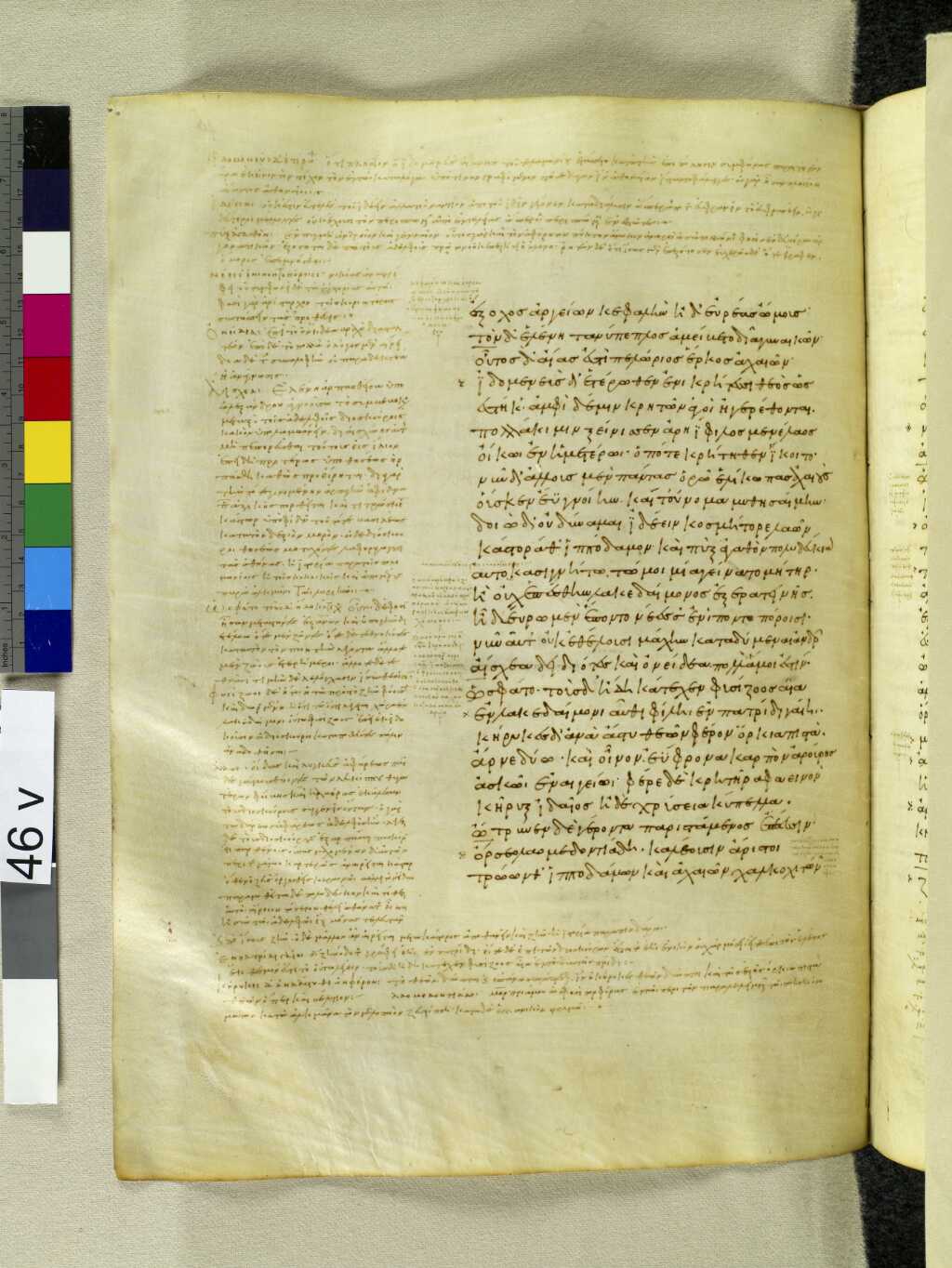
251Τρώων θʼ ἱπποδάμων καὶ Ἀχαιῶν χαλκοχιτώνων 252ἐς πεδίον καταβῆναι ἵνʼ ὅρκια πιστὰ τάμητε· 253αὐτὰρ Ἀλέξανδρος καὶ ἀρηΐφιλος Μενέλαος 254μακρῇς ἐγχείῃσι μαχήσοντʼ ἀμφὶ γυναικί· 255τῷ δέ κε νικήσαντι γυνὴ καὶ κτήμαθʼ ἕποιτο· 256οἳ δʼ ἄλλοι φιλότητα καὶ ὅρκια πιστὰ ταμόντες 257ναίοιμεν Τροίην ἐριβώλακα, τοὶ δὲ νέονται 258Ἄργος ἐς ἱππόβοτον καὶ Ἀχαιΐδα καλλιγύναικα. 259ὣς φάτο ῥίγησεν δʼ ὃ γέρων, ἐκέλευσε δʼ ἑταίρους 260ἵππους ζευγνύμεναι· τοὶ δʼ ὀτραλέως ἐπίθοντο. 261ἂν δʼ ἄρʼ ἔβη Πρίαμος, κατὰ δʼ ἡνία τεῖνεν ὀπίσσω· 262πὰρ δέ οἱ Ἀντήνωρ περικαλλέα βήσετο δίφρον· 263τὼ δὲ διὰ Σκαιῶν πεδίον δʼ ἔχον ὠκέας ἵππους. 264ἀλλʼ ὅτε δή ῥʼ ἵκοντο μετὰ Τρῶας καὶ Ἀχαιούς, 265ἐξ ἵππων ἀποβάντες ἐπὶ χθόνα πουλυβότειραν 266ἐς μέσσον Τρώων καὶ Ἀχαιῶν ἐστιχόωντο. 267ὄρνυτο δʼ αὐτίκʼ ἔπειτα ἄναξ ἀνδρῶν Ἀγαμέμνων, 268ἂν δʼ Ὀδυσεὺς πολύμητις· ἀτὰρ κήρυκες ἀγαυοὶ 269ὅρκια πιστὰ θεῶν σύναγον, κρητῆρι δὲ οἶνον 270μίσγον, ἀτὰρ βασιλεῦσιν ὕδωρ ἐπὶ χεῖρας ἔχευαν. 271Ἀτρεΐδης δὲ ἐρυσσάμενος χείρεσσι μάχαιραν, 272ἥ οἱ πὰρ ξίφεος μέγα κουλεόν αἰὲν ἄωρτο, 273ἀρνῶν ἐκ κεφαλέων τάμνε τρίχας· αὐτὰρ ἔπειτα 274κήρυκες Τρώων καὶ Ἀχαιῶν νεῖμαν ἀρίστοις. 275τοῖσιν δʼ Ἀτρεΐδης μεγάλʼ εὔχετο χεῖρας ἀνασχών·
She knew not that both these heroes were already lying under the earth in their own land of Lacedaemon.
Meanwhile the heralds were bringing the holy oath-offerings through the city—two lambs and a goatskin of wine, the gift of earth; and Idaeus brought the mixing-bowl and the cups of gold. He went up to Priam and said, “Son of Laomedon, the princes of the Trojans and Achaeans bid you come down on to the plain and swear to a solemn covenant. Alexandrus and Menelaus are to fight for Helen in single combat, that she and all her wealth may go with him who is the victor. We are to swear to a solemn covenant of peace whereby we others shall dwell here in Troy, while the Achaeans return to Argos and the land of the Achaeans.”
The old man trembled as he heard, but bade his followers yoke the horses, and they made all haste to do so. He mounted the chariot, gathered the reins in his hand, and Antenor took his seat beside him; they then drove through the Scaean gates on to the plain. When they reached the ranks of the Trojans and Achaeans they left the chariot, and with measured pace advanced into the space between the hosts.
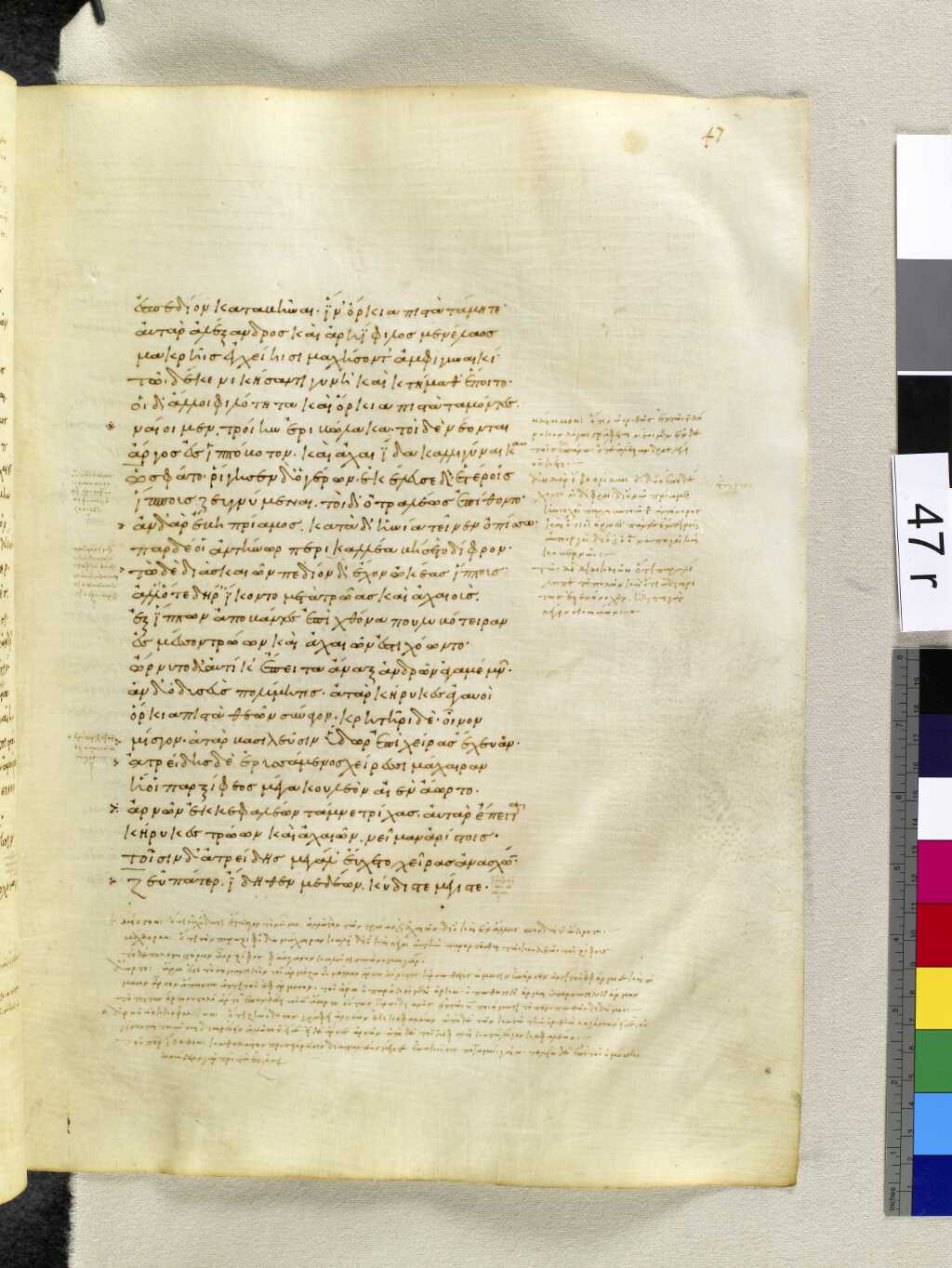
276Ζεῦ πάτερ Ἴδηθεν μεδέων κύδιστε μέγιστε, 277Ἠέλιός θʼ, ὃς πάντʼ ἐφορᾷς καὶ πάντʼ ἐπακούεις, 278καὶ ποταμοὶ καὶ γαῖα, καὶ οἳ ὑπένερθε καμόντας 279ἀνθρώπους τίνυσθον ὅτις κʼ ἐπίορκον ὀμόσσῃ, 280ὑμεῖς μάρτυροι ἔστε, φυλάσσετε δʼ ὅρκια πιστά· 281εἰ μέν κεν Μενέλαον Ἀλέξανδρος καταπέφνῃ 282αὐτὸς ἔπειθʼ Ἑλένην ἐχέτω καὶ κτήματα πάντα, 283ἡμεῖς δʼ ἐν νήεσσι νεώμεθα ποντοπόροισιν· 284εἰ δέ κʼ Ἀλέξανδρον κτείνῃ ξανθὸς Μενέλαος, 285Τρῶας ἔπειθʼ Ἑλένην καὶ κτήματα πάντʼ ἀποδοῦναι, 286τιμὴν δʼ Ἀργείοις ἀποτινέμεν ἥν τινʼ ἔοικεν, 287ἥ τε καὶ ἐσσομένοισι μετʼ ἀνθρώποισι πέληται. 288εἰ δʼ ἂν ἐμοὶ τιμὴν Πρίαμος Πριάμοιό τε παῖδες 289τίνειν οὐκ ἐθέλωσιν Ἀλεξάνδροιο πεσόντος, 290αὐτὰρ ἐγὼ καὶ ἔπειτα μαχήσομαι εἵνεκα ποινῆς 291αὖθι μένων, ἧός κε τέλος πολέμοιο κιχείω. 292ἦ, καὶ ἀπὸ στομάχους ἀρνῶν τάμε νηλέϊ χαλκῷ· 293καὶ τοὺς μὲν κατέθηκεν ἐπὶ χθονὸς ἀσπαίροντας 294θυμοῦ δευομένους· ἀπὸ γὰρ μένος εἵλετο χαλκός. 295οἶνον δʼ ἐκ κρητῆρος ἀφυσσόμενοι δεπάεσσιν 296ἔκχεον, ἠδʼ εὔχοντο θεοῖς αἰειγενέτῃσιν. 297ὧδε δέ τις εἴπεσκεν Ἀχαιῶν τε Τρώων τε· 298Ζεῦ κύδιστε μέγιστε καὶ ἀθάνατοι θεοὶ ἄλλοι 299ὁππότεροι πρότεροι ὑπὲρ ὅρκια πημήνειαν 300ὧδέ σφʼ ἐγκέφαλος χαμάδις ῥέοι ὡς ὅδε οἶνος
Agamemnon and Ulysses both rose to meet them. The attendants brought on the oath-offerings and mixed the wine in the mixing-bowls; they poured water over the hands of the chieftains, and the son of Atreus drew the dagger that hung by his sword, and cut wool from the lambs’ heads; this the men-servants gave about among the Trojan and Achaean princes, and the son of Atreus lifted up his hands in prayer. “Father Jove,” he cried, “that rulest in Ida, most glorious in power, and thou oh Sun, that seest and givest ear to all things, Earth and Rivers, and ye who in the realms below chastise the soul of him that has broken his oath, witness these rites and guard them, that they be not vain. If Alexandrus kills Menelaus, let him keep Helen and all her wealth, while we sail home with our ships; but if Menelaus kills Alexandrus, let the Trojans give back Helen and all that she has; let them moreover pay such fine to the Achaeans as shall be agreed upon, in testimony among those that shall be born hereafter. And if Priam and his sons refuse such fine when Alexandrus has fallen, then will I stay here and fight on till I have got satisfaction.”
As he spoke he drew his knife across the throats of the victims, and laid them down gasping and dying upon the ground, for the knife had reft them of their strength. Then they poured wine from the mixing-bowl into the cups, and prayed to the everlasting gods, saying, Trojans and Achaeans among one another, “Jove, most great and glorious, and ye other everlasting gods, grant that the brains of them who shall first sin against their oaths—of them and their children—may be shed upon the ground even as this wine, and let their wives become the slaves of strangers.”
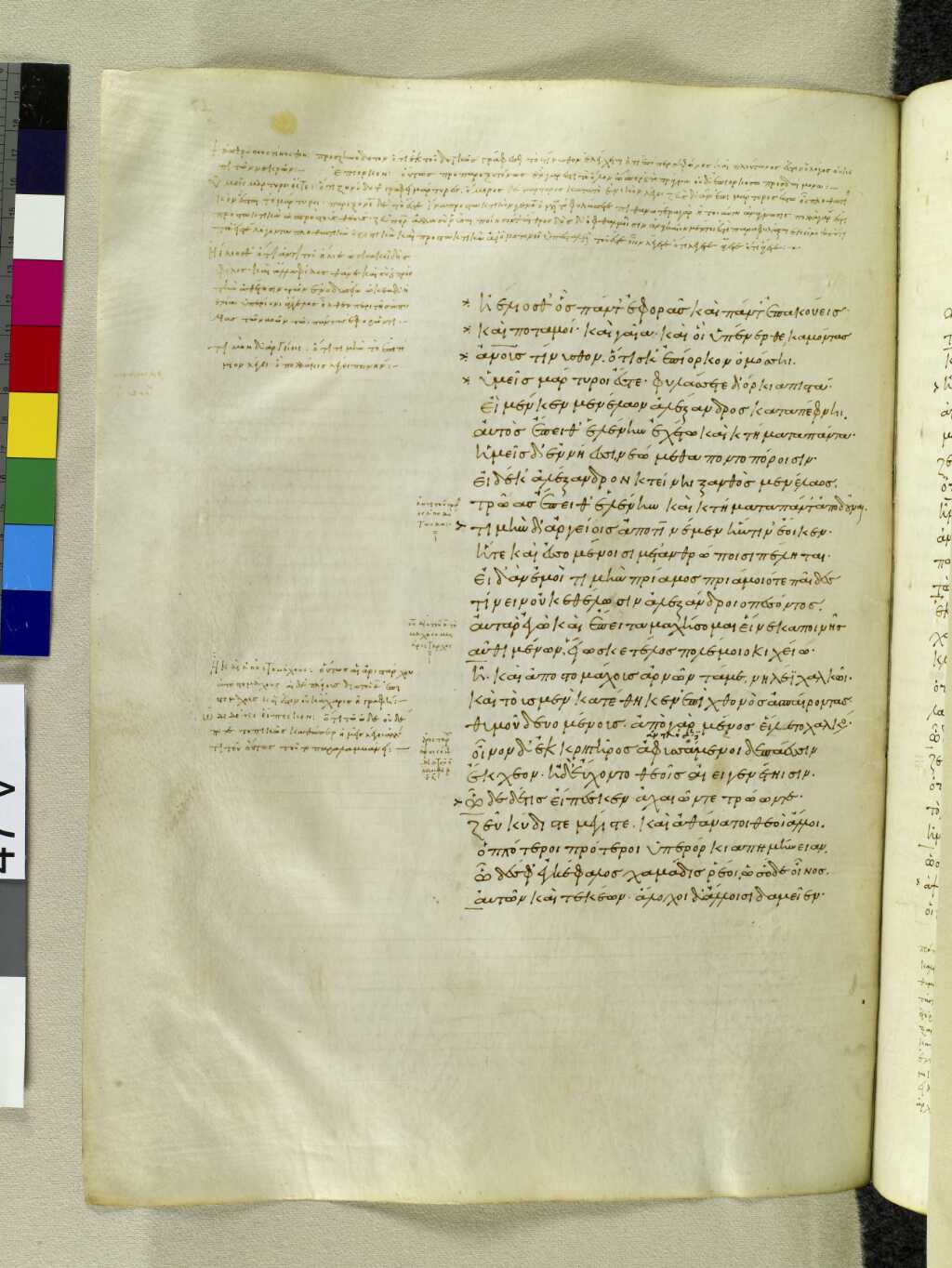
301αὐτῶν καὶ τεκέων, ἄλοχοι δʼ ἄλλοισι δαμεῖεν. 302ὣς ἔφαν, οὐδʼ ἄρα πώ σφιν ἐπεκραίαινε Κρονίων. 303τοῖσι δὲ Δαρδανίδης Πρίαμος μετὰ μῦθον ἔειπε· 304κέκλυτέ μευ Τρῶες καὶ ἐϋκνήμιδες Ἀχαιοί· 305ἤτοι ἐγὼν εἶμι προτὶ Ἴλιον ἠνεμόεσσαν 306ἄψ, ἐπεὶ οὔ πω τλήσομʼ ἐν ὀφθαλμοῖσιν ὁρᾶσθαι 307μαρνάμενον φίλον υἱὸν ἀρηϊφίλῳ Μενελάῳ· 308Ζεὺς μέν που τό γε οἶδε καὶ ἀθάνατοι θεοὶ ἄλλοι 309ὁπποτέρῳ θανάτοιο τέλος πεπρωμένον ἐστίν. 310ἦ ῥα καὶ ἐς δίφρον ἄρνας θέτο ἰσόθεος φώς, 311ἂν δʼ ἄρʼ ἔβαινʼ αὐτός, κατὰ δʼ ἡνία τεῖνεν ὀπίσσω· 312πὰρ δέ οἱ Ἀντήνωρ περικαλλέα βήσετο δίφρον. 313τὼ μὲν ἄρʼ ἄψορροι προτὶ Ἴλιον ἀπονέοντο· 314Ἕκτωρ δὲ Πριάμοιο πάϊς καὶ δῖος Ὀδυσσεὺς 315χῶρον μὲν πρῶτον διεμέτρεον, αὐτὰρ ἔπειτα 316κλήρους ἐν κυνέῃ χαλκήρεϊ πάλλον ἑλόντες, 317ὁππότερος δὴ πρόσθεν ἀφείη χάλκεον ἔγχος. 318λαοὶ δʼ ἠρήσαντο, θεοῖσι δὲ χεῖρας ἀνέσχον, 319ὧδε δέ τις εἴπεσκεν Ἀχαιῶν τε Τρώων τε· 320Ζεῦ πάτερ Ἴδηθεν μεδέων κύδιστε μέγιστε 321ὁππότερος τάδε ἔργα μετʼ ἀμφοτέροισιν ἔθηκε, 322τὸν δὸς ἀποφθίμενον δῦναι δόμον Ἄϊδος εἴσω, 323ἡμῖν δʼ αὖ φιλότητα καὶ ὅρκια πιστὰ γενέσθαι. 324ὣς ἄρʼ ἔφαν, πάλλεν δὲ μέγας κορυθαίολος Ἕκτωρ 325ἂψ ὁρόων· Πάριος δὲ θοῶς ἐκ κλῆρος ὄρουσεν.
Thus they prayed, but not as yet would Jove grant them their prayer. Then Priam, descendant of Dardanus, spoke, saying, “Hear me, Trojans and Achaeans, I will now go back to the wind-beaten city of Ilius: I dare not with my own eyes witness this fight between my son and Menelaus, for Jove and the other immortals alone know which shall fall.”
On this he laid the two lambs on his chariot and took his seat. He gathered the reins in his hand, and Antenor sat beside him; the two then went back to Ilius. Hector and Ulysses measured the ground, and cast lots from a helmet of bronze to see which should take aim first. Meanwhile the two hosts lifted up their hands and prayed saying, “Father Jove, that rulest from Ida, most glorious in power, grant that he who first brought about this war between us may die, and enter the house of Hades, while we others remain at peace and abide by our oaths.”
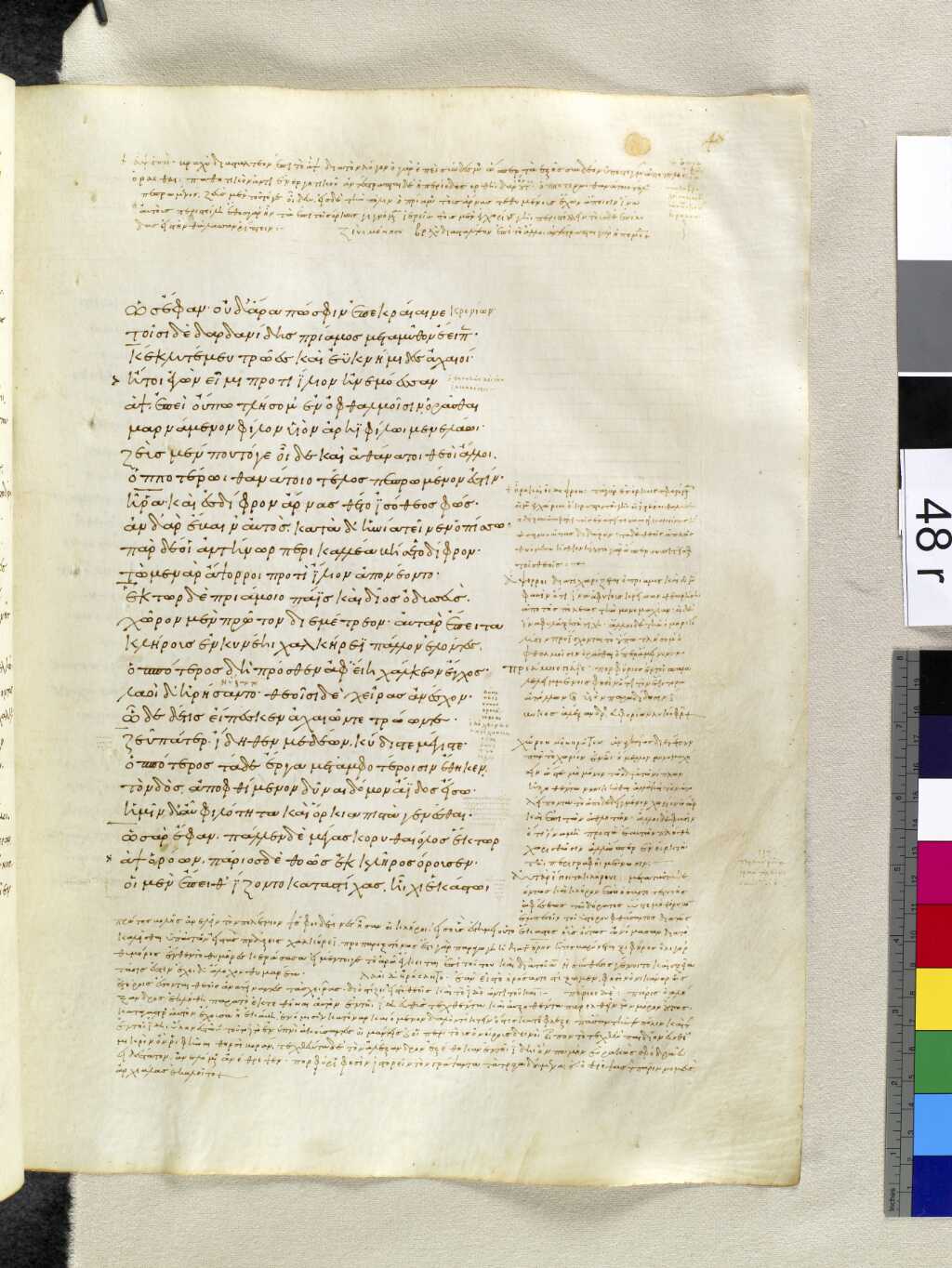
326οἳ μὲν ἔπειθʼ ἵζοντο κατὰ στίχας, ἧχι ἑκάστῳ 327ἵπποι ἀερσίποδες καὶ ποικίλα τεύχεʼ ἔκειτο· 328αὐτὰρ ὅ γʼ ἀμφʼ ὤμοισιν ἐδύσετο τεύχεα καλὰ 329δῖος Ἀλέξανδρος Ἑλένης πόσις ἠϋκόμοιο. 330κνημῖδας μὲν πρῶτα περὶ κνήμῃσιν ἔθηκε 331καλάς, ἀργυρέοισιν ἐπισφυρίοις ἀραρυίας· 332δεύτερον αὖ θώρηκα περὶ στήθεσσιν ἔδυνεν 333οἷο κασιγνήτοιο Λυκάονος· ἥρμοσε δʼ αὐτῷ. 334ἀμφὶ δʼ ἄρʼ ὤμοισιν βάλετο ξίφος ἀργυρόηλον 335χάλκεον, αὐτὰρ ἔπειτα σάκος μέγα τε στιβαρόν τε· 336κρατὶ δʼ ἐπʼ ἰφθίμῳ κυνέην εὔτυκτον ἔθηκεν 337ἵππουριν· δεινὸν δὲ λόφος καθύπερθεν ἔνευεν· 338εἵλετο δʼ ἄλκιμον ἔγχος, ὅ οἱ παλάμηφιν ἀρήρει. 339ὣς δʼ αὔτως Μενέλαος ἀρήϊος ἔντεʼ ἔδυνεν. 340οἳ δʼ ἐπεὶ οὖν ἑκάτερθεν ὁμίλου θωρήχθησαν, 341ἐς μέσσον Τρώων καὶ Ἀχαιῶν ἐστιχόωντο 342δεινὸν δερκόμενοι· θάμβος δʼ ἔχεν εἰσορόωντας 343Τρῶάς θʼ ἱπποδάμους καὶ ἐϋκνήμιδας Ἀχαιούς. 344καί ῥʼ ἐγγὺς στήτην διαμετρητῷ ἐνὶ χώρῳ 345σείοντʼ ἐγχείας ἀλλήλοισιν κοτέοντε. 346πρόσθε δʼ Ἀλέξανδρος προΐει δολιχόσκιον ἔγχος, 347καὶ βάλεν Ἀτρεΐδαο κατʼ ἀσπίδα πάντοσε ἴσην, 348οὐδʼ ἔρρηξεν χαλκός, ἀνεγνάμφθη δέ οἱ αἰχμὴ 349ἀσπίδʼ ἐνὶ κρατερῇ· ὃ δὲ δεύτερον ὄρνυτο χαλκῷ 350Ἀτρεΐδης Μενέλαος ἐπευξάμενος Διὶ πατρί·
Great Hector now turned his head aside while he shook the helmet, and the lot of Paris flew out first. The others took their several stations, each by his horses and the place where his arms were lying, while Alexandrus, husband of lovely Helen, put on his goodly armour. First he greaved his legs with greaves of good make and fitted with ancle-clasps of silver; after this he donned the cuirass of his brother Lycaon, and fitted it to his own body; he hung his silver-studded sword of bronze about his shoulders, and then his mighty shield. On his comely head he set his helmet, well wrought, with a crest of horse-hair that nodded menacingly above it, and he grasped a redoubtable spear that suited his hands. In like fashion Menelaus also put on his armour.
When they had thus armed, each amid his own people, they strode fierce of aspect into the open space, and both Trojans and Achaeans were struck with awe as they beheld them. They stood near one another on the measured ground, brandishing their spears, and each furious against the other. Alexandrus aimed first, and struck the round shield of the son of Atreus, but the spear did not pierce it, for the shield turned its point. Menelaus next took aim, praying to Father Jove as he did so. “King Jove,” he said, “grant me revenge on Alexandrus who has wronged me; subdue him under my hand that in ages yet to come a man may shrink from doing ill deeds in the house of his host.”
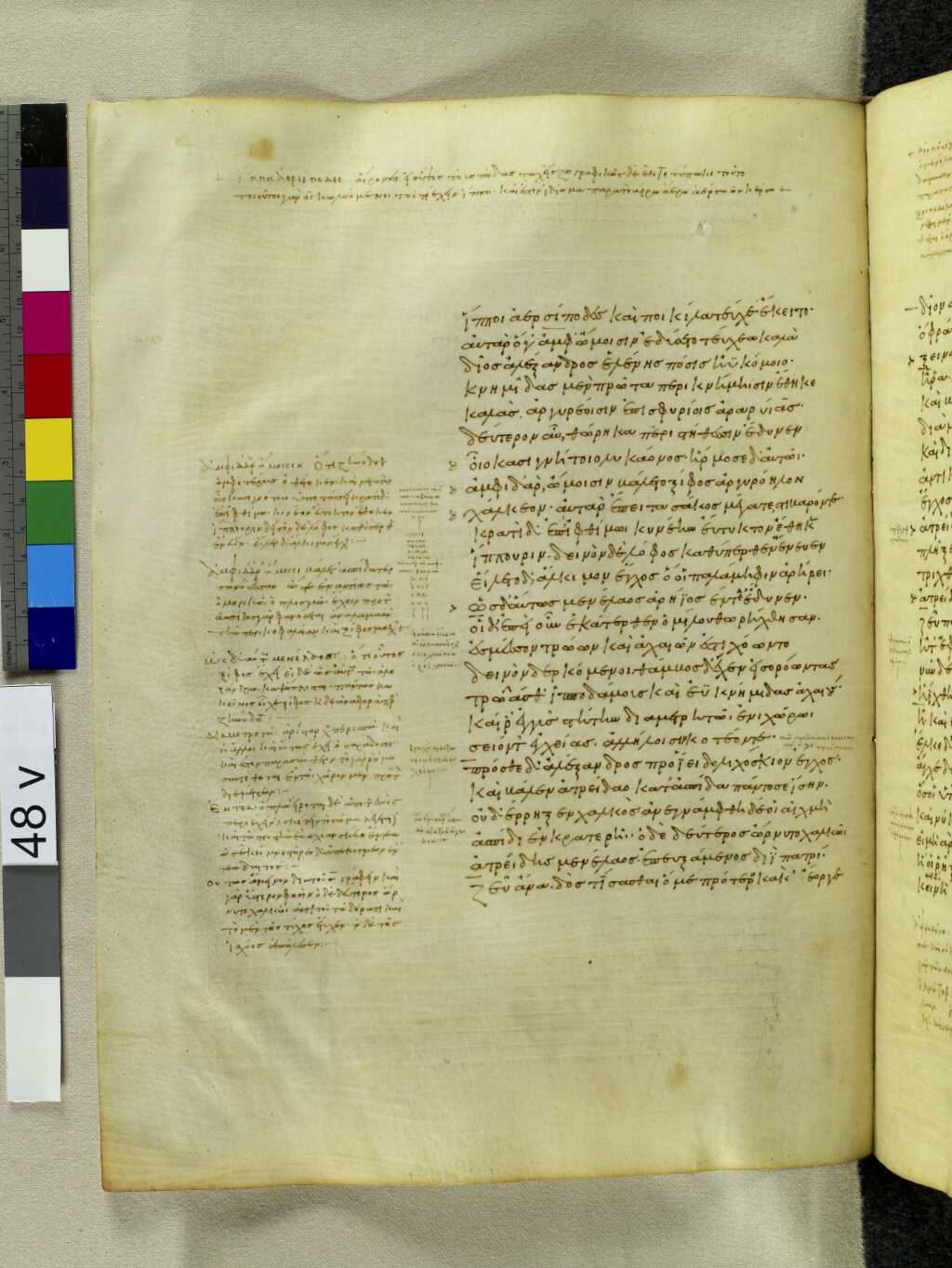
351Ζεῦ ἄνα δὸς τίσασθαι ὅ με πρότερος κάκʼ ἔοργε 352δῖον Ἀλέξανδρον, καὶ ἐμῇς ὑπὸ χερσὶ δάμασσον, 353ὄφρα τις ἐρρίγῃσι καὶ ὀψιγόνων ἀνθρώπων 354ξεινοδόκον κακὰ ῥέξαι, ὅ κεν φιλότητα παράσχῃ. 355ἦ ῥα καὶ ἀμπεπαλὼν προΐει δολιχόσκιον ἔγχος, 356καὶ βάλε Πριαμίδαο κατʼ ἀσπίδα πάντοσε ἴσην· 357διὰ μὲν ἀσπίδος ἦλθε φαεινῆς ὄβριμον ἔγχος, 358καὶ διὰ θώρηκος πολυδαιδάλου ἠρήρειστο· 359ἀντικρὺ δὲ παραὶ λαπάρην διάμησε χιτῶνα 360ἔγχος· ὃ δʼ ἐκλίνθη καὶ ἀλεύατο κῆρα μέλαιναν. 361Ἀτρεΐδης δὲ ἐρυσσάμενος ξίφος ἀργυρόηλον 362πλῆξεν ἀνασχόμενος κόρυθος φάλον· ἀμφὶ δʼ ἄρʼ αὐτῷ 363τριχθά τε καὶ τετραχθὰ διατρυφὲν ἔκπεσε χειρός. 364Ἀτρεΐδης δʼ ᾤμωξεν ἰδὼν εἰς οὐρανὸν εὐρύν· 365Ζεῦ πάτερ οὔ τις σεῖο θεῶν ὀλοώτερος ἄλλος· 366ἦ τʼ ἐφάμην τίσασθαι Ἀλέξανδρον κακότητος· 367νῦν δέ μοι ἐν χείρεσσιν ἄγη ξίφος, ἐκ δέ μοι ἔγχος 368ἠΐχθη παλάμηφιν ἐτώσιον, οὐδʼ ἔβαλόν μιν. 369ἦ καὶ ἐπαΐξας κόρυθος λάβεν ἱπποδασείης, 370ἕλκε δʼ ἐπιστρέψας μετʼ ἐϋκνήμιδας Ἀχαιούς· 371ἄγχε δέ μιν πολύκεστος ἱμὰς ἁπαλὴν ὑπὸ δειρήν, 372ὅς οἱ ὑπʼ ἀνθερεῶνος ὀχεὺς τέτατο τρυφαλείης. 373καί νύ κεν εἴρυσσέν τε καὶ ἄσπετον ἤρατο κῦδος, 374εἰ μὴ ἄρʼ ὀξὺ νόησε Διὸς θυγάτηρ Ἀφροδίτη, 375ἥ οἱ ῥῆξεν ἱμάντα βοὸς ἶφι κταμένοιο·
He poised his spear as he spoke, and hurled it at the shield of Alexandrus. Through shield and cuirass it went, and tore the shirt by his flank, but Alexandrus swerved aside, and thus saved his life. Then the son of Atreus drew his sword, and drove at the projecting part of his helmet, but the sword fell shivered in three or four pieces from his hand, and he cried, looking towards Heaven, “Father Jove, of all gods thou art the most despiteful; I made sure of my revenge, but the sword has broken in my hand, my spear has been hurled in vain, and I have not killed him.”
With this he flew at Alexandrus, caught him by the horse-hair plume of his helmet, and began dragging him towards the Achaeans. The strap of the helmet that went under his chin was choking him, and Menelaus would have dragged him off to his own great glory had not Jove’s daughter Venus been quick to mark and to break the strap of ox-hide, so that the empty helmet came away in his hand. This he flung to his comrades among the Achaeans, and was again springing upon Alexandrus to run him through with a spear, but Venus snatched him up in a moment (as a god can do), hid him under a cloud of darkness, and conveyed him to his own bedchamber.
Then she went to call Helen, and found her on a high tower with the Trojan women crowding round her. She took the form of an old woman who used to dress wool for her when she was still in Lacedaemon, and of whom she was very fond. Thus disguised she plucked her by perfumed robe and said, “Come hither; Alexandrus says you are to go to the house; he is on his bed in his own room, radiant with beauty and dressed in gorgeous apparel. No one would think he had just come from fighting, but rather that he was going to a dance, or had done dancing and was sitting down.”
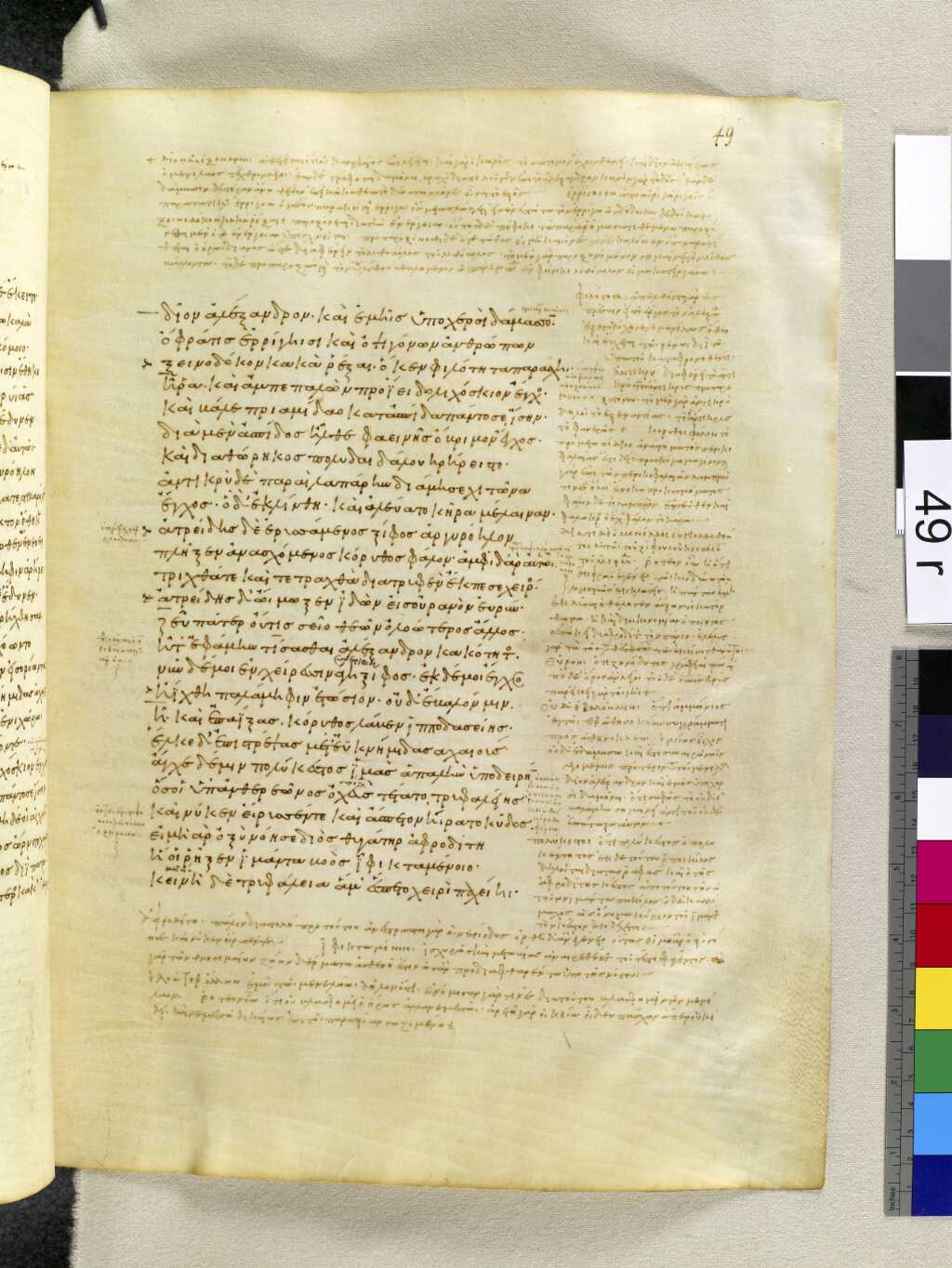
376κεινὴ δὲ τρυφάλεια ἅμʼ ἕσπετο χειρὶ παχείῃ. 377τὴν μὲν ἔπειθʼ ἥρως μετʼ ἐϋκνήμιδας Ἀχαιοὺς 378ῥῖψʼ ἐπιδινήσας, κόμισαν δʼ ἐρίηρες ἑταῖροι· 379αὐτὰρ ὃ ἂψ ἐπόρουσε κατακτάμεναι μενεαίνων 380ἔγχεϊ χαλκείῳ· τὸν δʼ ἐξήρπαξʼ Ἀφροδίτη 381ῥεῖα μάλʼ ὥς τε θεός, ἐκάλυψε δʼ ἄρʼ ἠέρι πολλῇ, 382κὰδ δʼ εἷσʼ ἐν θαλάμῳ εὐώδεϊ κηώεντι. 383αὐτὴ δʼ αὖ Ἑλένην καλέουσʼ ἴε· τὴν δὲ κίχανε 384πύργῳ ἐφʼ ὑψηλῷ, περὶ δὲ Τρῳαὶ ἅλις ἦσαν· 385χειρὶ δὲ νεκταρέου ἑανοῦ ἐτίναξε λαβοῦσα, 386γρηῒ δέ μιν ἐϊκυῖα παλαιγενέϊ προσέειπεν 387εἰροκόμῳ, ἥ οἱ Λακεδαίμονι ναιετοώσῃ 388ἤσκειν εἴρια καλά, μάλιστα δέ μιν φιλέεσκε· 389τῇ μιν ἐεισαμένη προσεφώνεε δῖʼ Ἀφροδίτη· 390δεῦρʼ ἴθʼ· Ἀλέξανδρός σε καλεῖ οἶκον δὲ νέεσθαι. 391κεῖνος ὅ γʼ ἐν θαλάμῳ καὶ δινωτοῖσι λέχεσσι 392κάλλεΐ τε στίλβων καὶ εἵμασιν· οὐδέ κε φαίης 393ἀνδρὶ μαχεσσάμενον τόν γʼ ἐλθεῖν, ἀλλὰ χορὸν δὲ 394ἔρχεσθʼ, ἠὲ χοροῖο νέον λήγοντα καθίζειν. 395ὣς φάτο, τῇ δʼ ἄρα θυμὸν ἐνὶ στήθεσσιν ὄρινε· 396καί ῥʼ ὡς οὖν ἐνόησε θεᾶς περικαλλέα δειρὴν 397στήθεά θʼ ἱμερόεντα καὶ ὄμματα μαρμαίροντα, 398θάμβησέν τʼ ἄρʼ ἔπειτα ἔπος τʼ ἔφατʼ ἔκ τʼ ὀνόμαζε· 399δαιμονίη, τί με ταῦτα λιλαίεαι ἠπεροπεύειν; 400ἦ πῄ με προτέρω πολίων εὖ ναιομενάων
With these words she moved the heart of Helen to anger. When she marked the beautiful neck of the goddess, her lovely bosom, and sparkling eyes, she marvelled at her and said, “Goddess, why do you thus beguile me? Are you going to send me afield still further to some man whom you have taken up in Phrygia or fair Meonia? Menelaus has just vanquished Alexandrus, and is to take my hateful self back with him. You are come here to betray me. Go sit with Alexandrus yourself; henceforth be goddess no longer; never let your feet carry you back to Olympus; worry about him and look after him till he make you his wife, or, for the matter of that, his slave—but me? I shall not go; I can garnish his bed no longer; I should be a by-word among all the women of Troy. Besides, I have trouble on my mind.”
Venus was very angry, and said, “Bold hussy, do not provoke me; if you do, I shall leave you to your fate and hate you as much as I have loved you. I will stir up fierce hatred between Trojans and Achaeans, and you shall come to a bad end.”
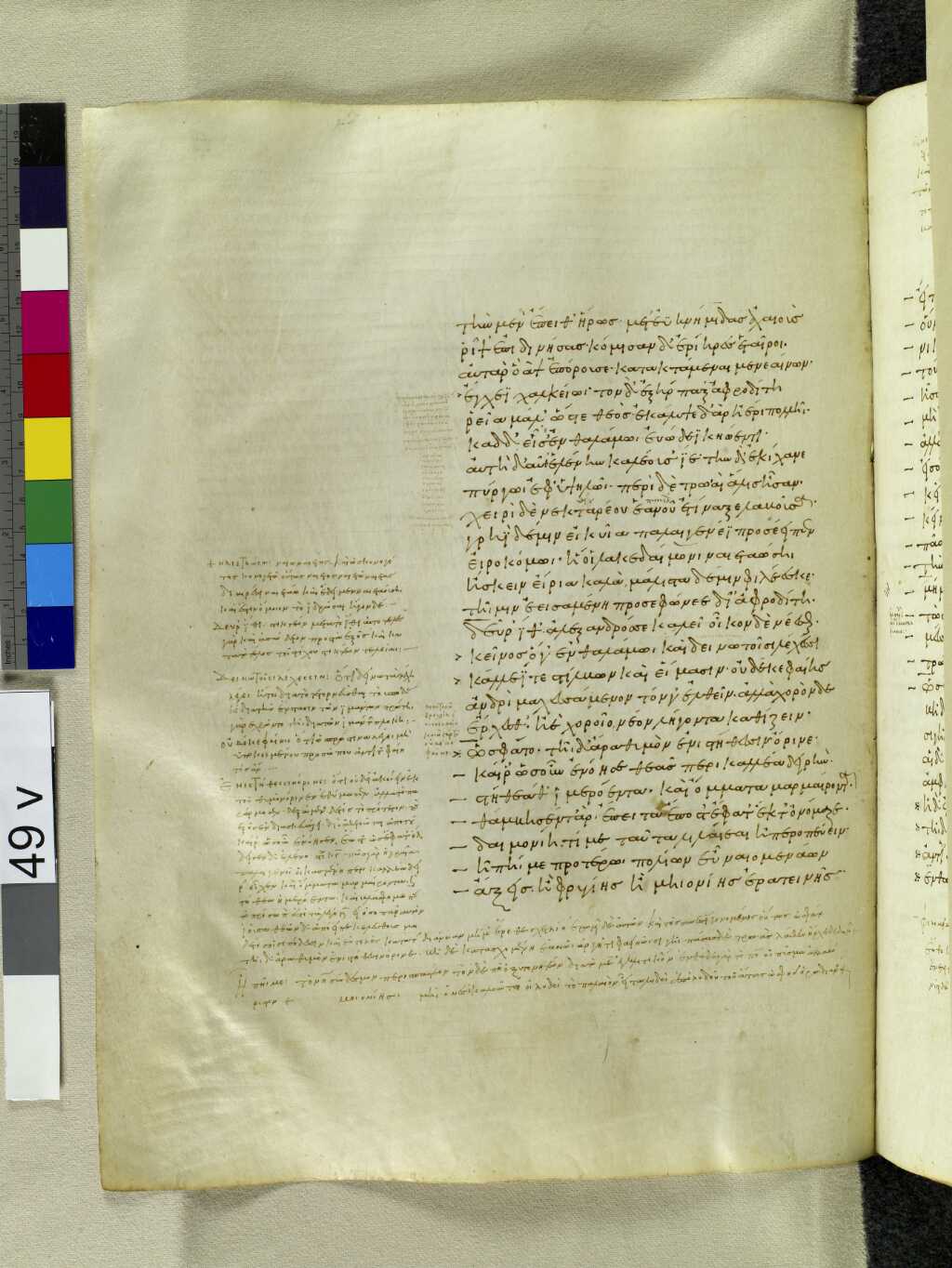
401ἄξεις, ἢ Φρυγίης ἢ Μῃονίης ἐρατεινῆς, 402εἴ τίς τοι καὶ κεῖθι φίλος μερόπων ἀνθρώπων· 403οὕνεκα δὴ νῦν δῖον Ἀλέξανδρον Μενέλαος 404νικήσας ἐθέλει στυγερὴν ἐμὲ οἴκαδʼ ἄγεσθαι, 405τοὔνεκα δὴ νῦν δεῦρο δολοφρονέουσα παρέστης; 406ἧσο παρʼ αὐτὸν ἰοῦσα, θεῶν δʼ ἀπόεικε κελεύθου, 407μηδʼ ἔτι σοῖσι πόδεσσιν ὑποστρέψειας Ὄλυμπον, 408ἀλλʼ αἰεὶ περὶ κεῖνον ὀΐζυε καί ἑ φύλασσε, 409εἰς ὅ κέ σʼ ἢ ἄλοχον ποιήσεται ἢ ὅ γε δούλην. 410κεῖσε δʼ ἐγὼν οὐκ εἶμι· νεμεσσητὸν δέ κεν εἴη· 411κείνου πορσανέουσα λέχος· Τρῳαὶ δέ μʼ ὀπίσσω 412πᾶσαι μωμήσονται· ἔχω δʼ ἄχεʼ ἄκριτα θυμῷ. 413τὴν δὲ χολωσαμένη προσεφώνεε δῖʼ Ἀφροδίτη· 414μή μʼ ἔρεθε σχετλίη, μὴ χωσαμένη σε μεθείω, 415τὼς δέ σʼ ἀπεχθήρω ὡς νῦν ἔκπαγλʼ ἐφίλησα, 416μέσσῳ δʼ ἀμφοτέρων μητίσομαι ἔχθεα λυγρὰ 417Τρώων καὶ Δαναῶν, σὺ δέ κεν κακὸν οἶτον ὄληαι. 418ὣς ἔφατʼ, ἔδεισεν δʼ Ἑλένη Διὸς ἐκγεγαυῖα, 419βῆ δὲ κατασχομένη ἑανῷ ἀργῆτι φαεινῷ 420σιγῇ, πάσας δὲ Τρῳὰς λάθεν· ἦρχε δὲ δαίμων. 421αἳ δʼ ὅτʼ Ἀλεξάνδροιο δόμον περικαλλέʼ ἵκοντο, 422ἀμφίπολοι μὲν ἔπειτα θοῶς ἐπὶ ἔργα τράποντο, 423ἣ δʼ εἰς ὑψόροφον θάλαμον κίε δῖα γυναικῶν. 424τῇ δʼ ἄρα δίφρον ἑλοῦσα φιλομειδὴς Ἀφροδίτη 425ἀντίʼ Ἀλεξάνδροιο θεὰ κατέθηκε φέρουσα·
At this Helen was frightened. She wrapped her mantle about her and went in silence, following the goddess and unnoticed by the Trojan women.
When they came to the house of Alexandrus the maid-servants set about their work, but Helen went into her own room, and the laughter-loving goddess took a seat and set it for her facing Alexandrus. On this Helen, daughter of aegis-bearing Jove, sat down, and with eyes askance began to upbraid her husband.
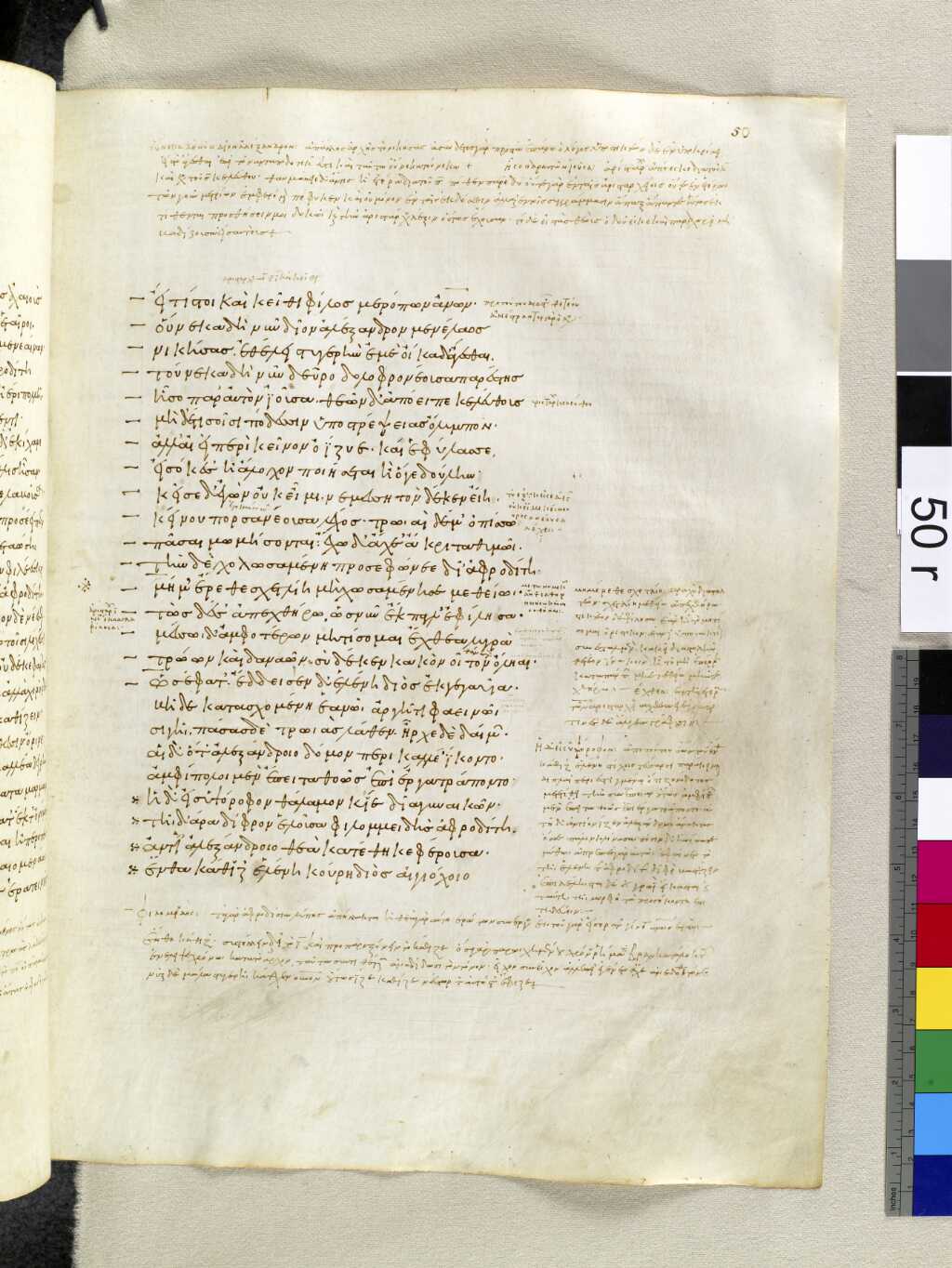
426ἔνθα κάθιζʼ Ἑλένη κούρη Διὸς αἰγιόχοιο 427ὄσσε πάλιν κλίνασα, πόσιν δʼ ἠνίπαπε μύθῳ· 428ἤλυθες ἐκ πολέμου· ὡς ὤφελες αὐτόθʼ ὀλέσθαι 429ἀνδρὶ δαμεὶς κρατερῷ, ὃς ἐμὸς πρότερος πόσις ἦεν. 430ἦ μὲν δὴ πρίν γʼ εὔχεʼ ἀρηϊφίλου Μενελάου 431σῇ τε βίῃ καὶ χερσὶ καὶ ἔγχεϊ φέρτερος εἶναι· 432ἀλλʼ ἴθι νῦν προκάλεσσαι ἀρηΐφιλον Μενέλαον 433ἐξαῦτις μαχέσασθαι ἐναντίον· ἀλλά σʼ ἔγωγε 434παύεσθαι κέλομαι, μηδὲ ξανθῷ Μενελάῳ 435ἀντίβιον πόλεμον πολεμίζειν ἠδὲ μάχεσθαι 436ἀφραδέως, μή πως τάχʼ ὑπʼ αὐτοῦ δουρὶ δαμήῃς. 437τὴν δὲ Πάρις μύθοισιν ἀμειβόμενος προσέειπε· 438μή με γύναι χαλεποῖσιν ὀνείδεσι θυμὸν ἔνιπτε· 439νῦν μὲν γὰρ Μενέλαος ἐνίκησεν σὺν Ἀθήνῃ, 440κεῖνον δʼ αὖτις ἐγώ· πάρα γὰρ θεοί εἰσι καὶ ἡμῖν. 441ἀλλʼ ἄγε δὴ φιλότητι τραπείομεν εὐνηθέντε· 442οὐ γάρ πώ ποτέ μʼ ὧδέ γʼ ἔρως φρένας ἀμφεκάλυψεν, 443οὐδʼ ὅτε σε πρῶτον Λακεδαίμονος ἐξ ἐρατεινῆς 444ἔπλεον ἁρπάξας ἐν ποντοπόροισι νέεσσι, 445νήσῳ δʼ ἐν Κραναῇ ἐμίγην φιλότητι καὶ εὐνῇ, 446ὥς σεο νῦν ἔραμαι καί με γλυκὺς ἵμερος αἱρεῖ. 447ἦ ῥα, καὶ ἄρχε λέχος δὲ κιών· ἅμα δʼ εἵπετʼ ἄκοιτις. 448τὼ μὲν ἄρʼ ἐν τρητοῖσι κατεύνασθεν λεχέεσσιν, 449Ἀτρεΐδης δʼ ἀνʼ ὅμιλον ἐφοίτα θηρὶ ἐοικὼς 450εἴ που ἐσαθρήσειεν Ἀλέξανδρον θεοειδέα.
“So you are come from the fight,” said she; “would that you had fallen rather by the hand of that brave man who was my husband. You used to brag that you were a better man with hands and spear than Menelaus. Go, then, and challenge him again—but I should advise you not to do so, for if you are foolish enough to meet him in single combat, you will soon fall by his spear.”
And Paris answered, “Wife, do not vex me with your reproaches. This time, with the help of Minerva, Menelaus has vanquished me; another time I may myself be victor, for I too have gods that will stand by me. Come, let us lie down together and make friends. Never yet was I so passionately enamoured of you as at this moment—not even when I first carried you off from Lacedaemon and sailed away with you—not even when I had converse with you upon the couch of love in the island of Cranae was I so enthralled by desire of you as now.” On this he led her towards the bed, and his wife went with him.
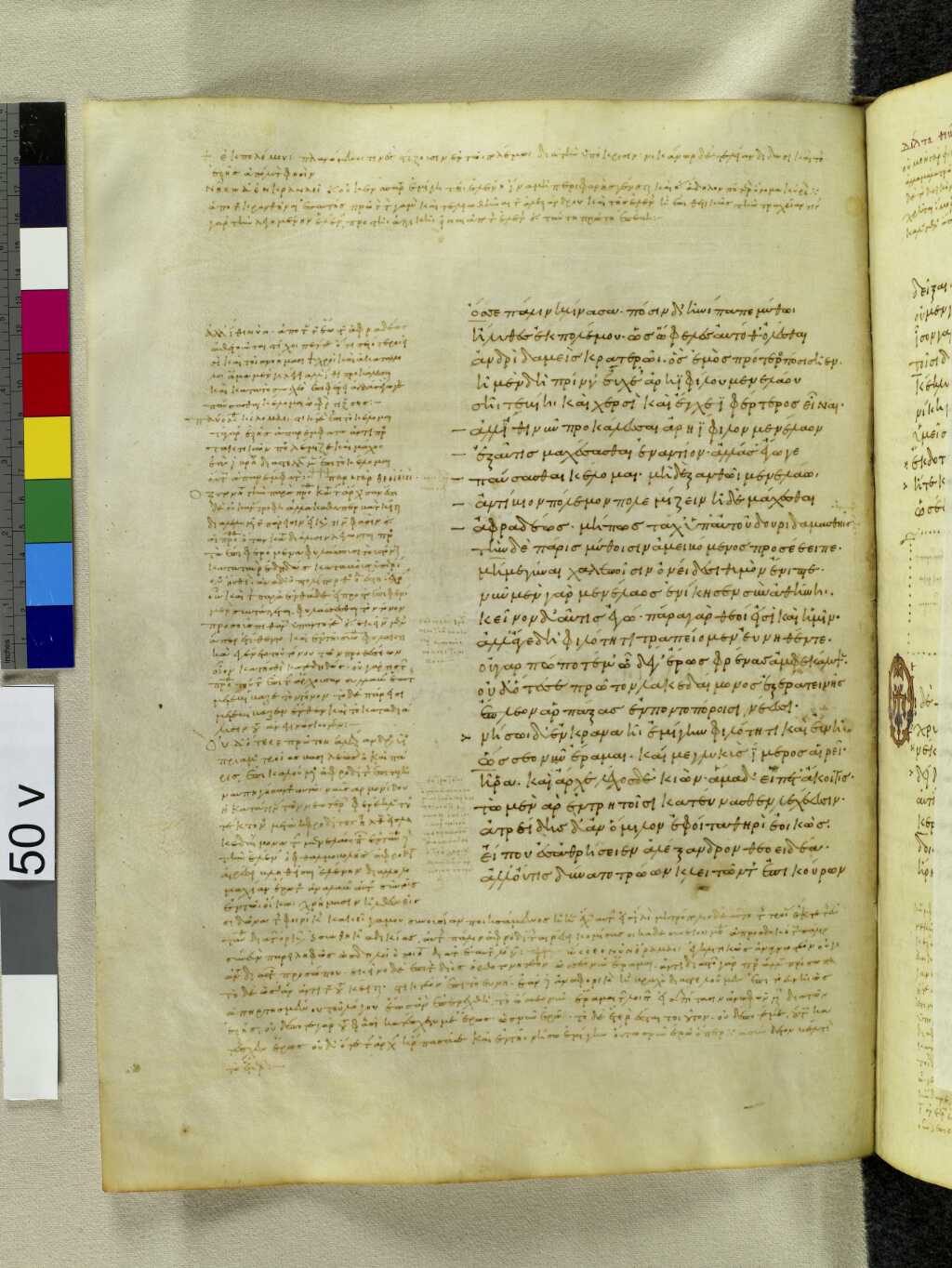
451ἀλλʼ οὔ τις δύνατο Τρώων κλειτῶν τʼ ἐπικούρων 452δεῖξαι Ἀλέξανδρον τότʼ ἀρηϊφίλῳ Μενελάῳ· 453οὐ μὲν γὰρ φιλότητί γʼ ἐκεύθανον εἴ τις ἴδοιτο· 454ἶσον γάρ σφιν πᾶσιν ἀπήχθετο κηρὶ μελαίνῃ. 455τοῖσι δὲ καὶ μετέειπεν ἄναξ ἀνδρῶν Ἀγαμέμνων· 456κέκλυτέ μευ Τρῶες καὶ Δάρδανοι ἠδʼ ἐπίκουροι· 457νίκη μὲν δὴ φαίνετʼ ἀρηϊφίλου Μενελάου, 458ὑμεῖς δʼ Ἀργείην Ἑλένην καὶ κτήμαθʼ ἅμʼ αὐτῇ 459ἔκδοτε, καὶ τιμὴν ἀποτινέμεν ἥν τινʼ ἔοικεν, 460ἥ τε καὶ ἐσσομένοισι μετʼ ἀνθρώποισι πέληται. 461ὣς ἔφατʼ Ἀτρεΐδης, ἐπὶ δʼ ᾔνεον ἄλλοι Ἀχαιοί.
Thus they laid themselves on the bed together; but the son of Atreus strode among the throng, looking everywhere for Alexandrus, and no man, neither of the Trojans nor of the allies, could find him. If they had seen him they were in no mind to hide him, for they all of them hated him as they did death itself. Then Agamemnon, king of men, spoke, saying, “Hear me, Trojans, Dardanians, and allies. The victory has been with Menelaus; therefore give back Helen with all her wealth, and pay such fine as shall be agreed upon, in testimony among them that shall be born hereafter.”
Thus spoke the son of Atreus, and the Achaeans shouted in applause.
Cite
Source & Cross-References
- Source text: Venetus A (10th c.) via Homer Multitext IIIF + Perseus Greek + Butler English (PG #2199) — view original
- Critical edition: Munro & Allen (Perseus Digital Library)
← previous · → next · v cycle view · l back to library