The Iliad, Book 22
Introduction
Book 22 of the Iliad with 21 sections, each linked to its specific folio in Venetus A (Marcianus Graecus 454, 10th c.). The Homer Multitext Project provides line-level folio mappings, ensuring every section of text corresponds to the exact manuscript page where it appears.
How was this verified? (Provenance)
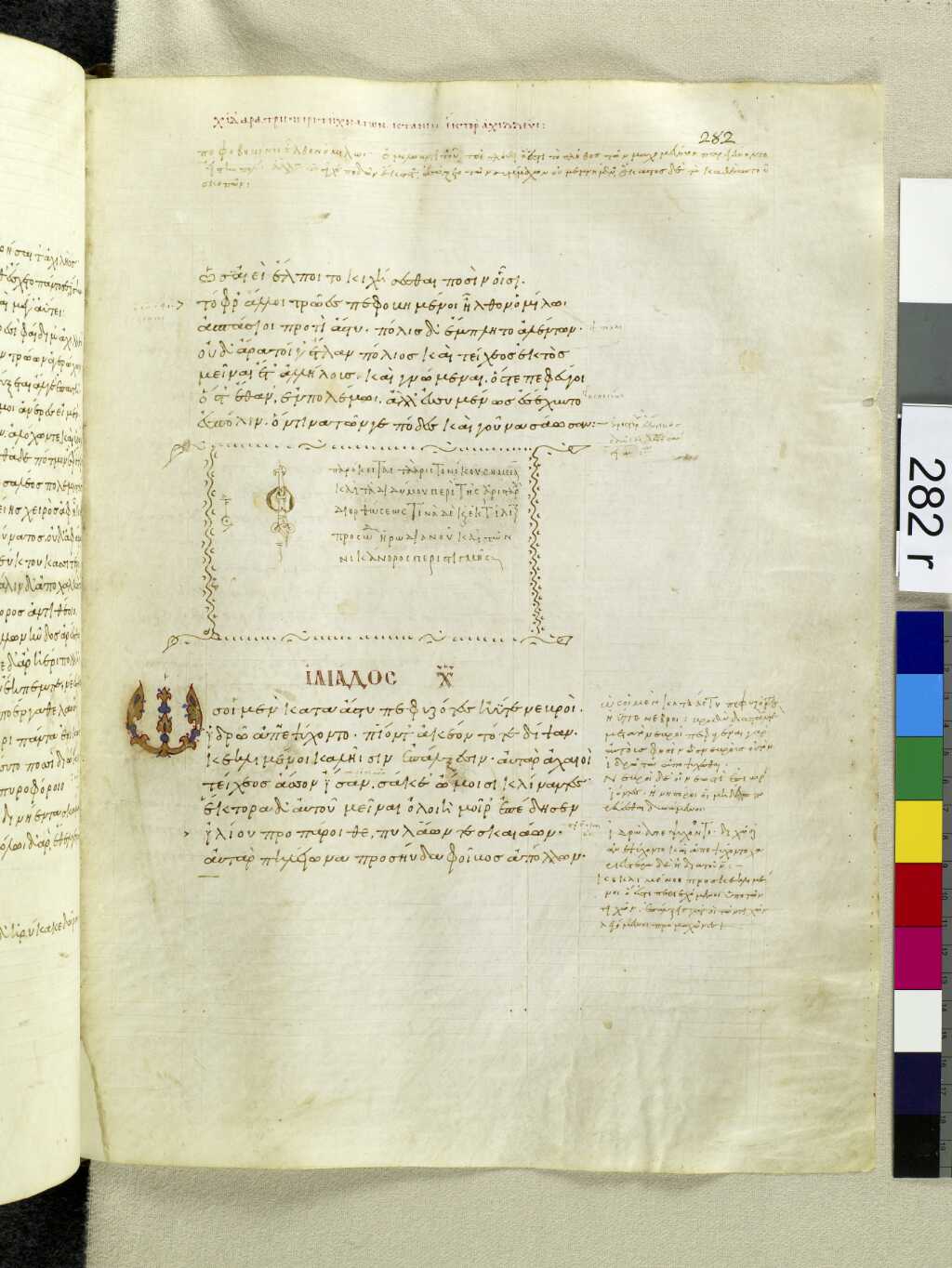
1ὣς οἳ μὲν κατὰ ἄστυ πεφυζότες ἠΰτε νεβροὶ 2ἱδρῶ ἀπεψύχοντο πίον τʼ ἀκέοντό τε δίψαν 3κεκλιμένοι καλῇσιν ἐπάλξεσιν· αὐτὰρ Ἀχαιοὶ 4τείχεος ἆσσον ἴσαν σάκεʼ ὤμοισι κλίναντες. 5Ἕκτορα δʼ αὐτοῦ μεῖναι ὀλοιὴ μοῖρα πέδησεν 6Ἰλίου προπάροιθε πυλάων τε Σκαιάων. 7αὐτὰρ Πηλείωνα προσηύδα Φοῖβος Ἀπόλλων· 8τίπτέ με Πηλέος υἱὲ ποσὶν ταχέεσσι διώκεις 9αὐτὸς θνητὸς ἐὼν θεὸν ἄμβροτον; οὐδέ νύ πώ με 10ἔγνως ὡς θεός εἰμι, σὺ δʼ ἀσπερχὲς μενεαίνεις. 11ἦ νύ τοι οὔ τι μέλει Τρώων πόνος, οὓς ἐφόβησας, 12οἳ δή τοι εἰς ἄστυ ἄλεν, σὺ δὲ δεῦρο λιάσθης. 13οὐ μέν με κτενέεις, ἐπεὶ οὔ τοι μόρσιμός εἰμι. 14τὸν δὲ μέγʼ ὀχθήσας προσέφη πόδας ὠκὺς Ἀχιλλεύς· 15ἔβλαψάς μʼ ἑκάεργε θεῶν ὀλοώτατε πάντων 16ἐνθάδε νῦν τρέψας ἀπὸ τείχεος· ἦ κʼ ἔτι πολλοὶ 17γαῖαν ὀδὰξ εἷλον πρὶν Ἴλιον εἰσαφικέσθαι. 18νῦν δʼ ἐμὲ μὲν μέγα κῦδος ἀφείλεο, τοὺς δὲ σάωσας 19ῥηϊδίως, ἐπεὶ οὔ τι τίσιν γʼ ἔδεισας ὀπίσσω. 20ἦ σʼ ἂν τισαίμην, εἴ μοι δύναμίς γε παρείη. 21ὣς εἰπὼν προτὶ ἄστυ μέγα φρονέων ἐβεβήκει, 22σευάμενος ὥς θʼ ἵππος ἀεθλοφόρος σὺν ὄχεσφιν, 23ὅς ῥά τε ῥεῖα θέῃσι τιταινόμενος πεδίοιο· 24ὣς Ἀχιλεὺς λαιψηρὰ πόδας καὶ γούνατʼ ἐνώμα. 25τὸν δʼ ὃ γέρων Πρίαμος πρῶτος ἴδεν ὀφθαλμοῖσι
Thus the Trojans in the city, scared like fawns, wiped the sweat from off them and drank to quench their thirst, leaning against the goodly battlements, while the Achaeans with their shields laid upon their shoulders drew close up to the walls. But stern fate bade Hector stay where he was before Ilius and the Scaean gates. Then Phoebus Apollo spoke to the son of Peleus saying, “Why, son of Peleus, do you, who are but man, give chase to me who am immortal? Have you not yet found out that it is a god whom you pursue so furiously? You did not harass the Trojans whom you had routed, and now they are within their walls, while you have been decoyed hither away from them. Me you cannot kill, for death can take no hold upon me.”
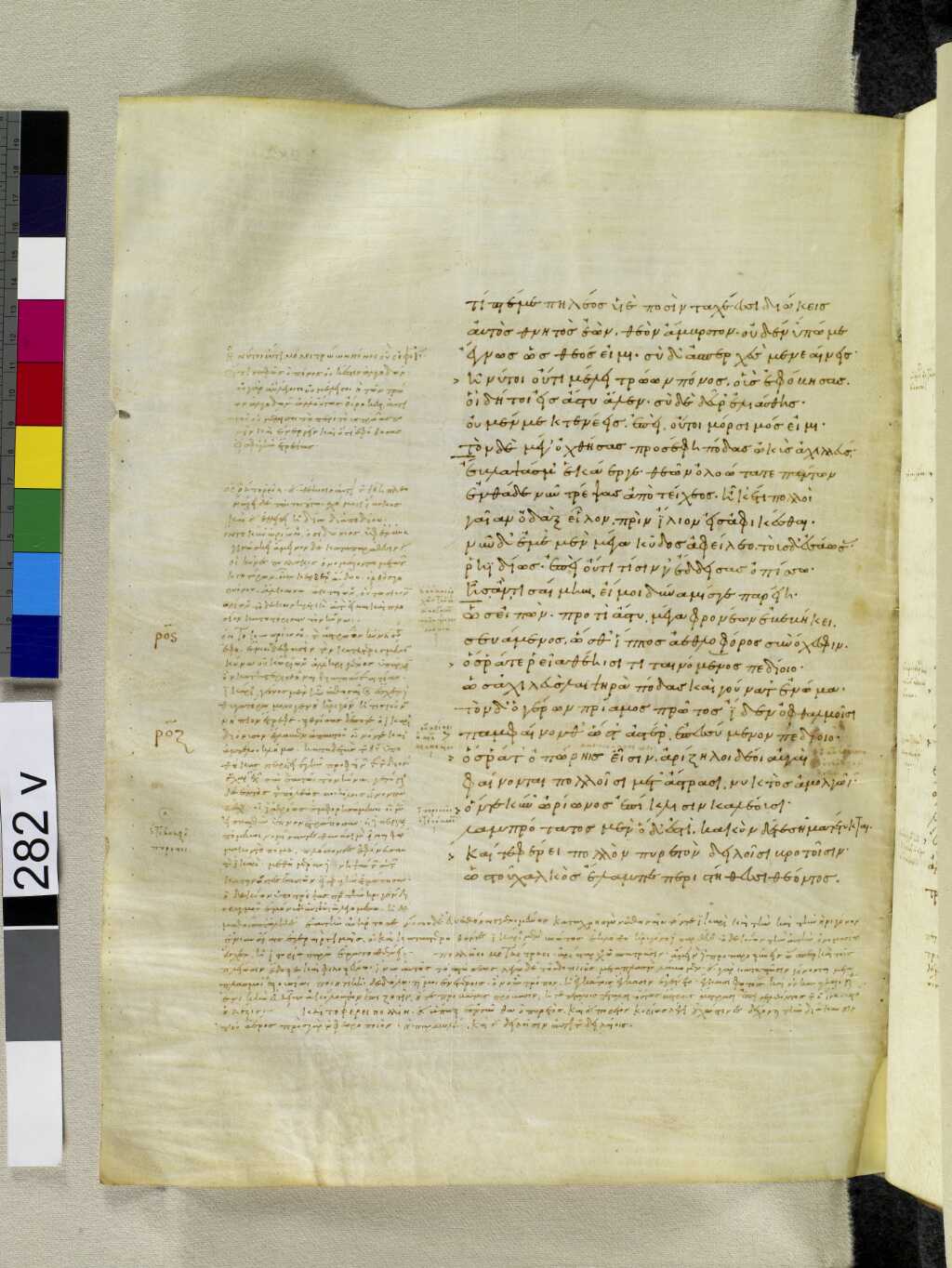
26παμφαίνονθʼ ὥς τʼ ἀστέρʼ ἐπεσσύμενον πεδίοιο, 27ὅς ῥά τʼ ὀπώρης εἶσιν, ἀρίζηλοι δέ οἱ αὐγαὶ 28φαίνονται πολλοῖσι μετʼ ἀστράσι νυκτὸς ἀμολγῷ, 29ὅν τε κύνʼ Ὠρίωνος ἐπίκλησιν καλέουσι. 30λαμπρότατος μὲν ὅ γʼ ἐστί, κακὸν δέ τε σῆμα τέτυκται, 31καί τε φέρει πολλὸν πυρετὸν δειλοῖσι βροτοῖσιν· 32ὣς τοῦ χαλκὸς ἔλαμπε περὶ στήθεσσι θέοντος. 33ᾤμωξεν δʼ ὃ γέρων, κεφαλὴν δʼ ὅ γε κόψατο χερσὶν 34ὑψόσʼ ἀνασχόμενος, μέγα δʼ οἰμώξας ἐγεγώνει 35λισσόμενος φίλον υἱόν· ὃ δὲ προπάροιθε πυλάων 36ἑστήκει ἄμοτον μεμαὼς Ἀχιλῆϊ μάχεσθαι· 37τὸν δʼ ὃ γέρων ἐλεεινὰ προσηύδα χεῖρας ὀρεγνύς· 38Ἕκτορ μή μοι μίμνε φίλον τέκος ἀνέρα τοῦτον 39οἶος ἄνευθʼ ἄλλων, ἵνα μὴ τάχα πότμον ἐπίσπῃς 40Πηλεΐωνι δαμείς, ἐπεὶ ἦ πολὺ φέρτερός ἐστι 41σχέτλιος· αἴθε θεοῖσι φίλος τοσσόνδε γένοιτο 42ὅσσον ἐμοί· τάχα κέν ἑ κύνες καὶ γῦπες ἔδοιεν 43κείμενον· ἦ κέ μοι αἰνὸν ἀπὸ πραπίδων ἄχος ἔλθοι· 44ὅς μʼ υἱῶν πολλῶν τε καὶ ἐσθλῶν εὖνιν ἔθηκε 45κτείνων καὶ περνὰς νήσων ἔπι τηλεδαπάων. 46καὶ γὰρ νῦν δύο παῖδε Λυκάονα καὶ Πολύδωρον 47οὐ δύναμαι ἰδέειν Τρώων εἰς ἄστυ ἀλέντων, 48τούς μοι Λαοθόη τέκετο κρείουσα γυναικῶν. 49ἀλλʼ εἰ μὲν ζώουσι μετὰ στρατῷ, ἦ τʼ ἂν ἔπειτα 50χαλκοῦ τε χρυσοῦ τʼ ἀπολυσόμεθʼ, ἔστι γὰρ ἔνδον·
Achilles was greatly angered and said, “You have baulked me, Far-Darter, most malicious of all gods, and have drawn me away from the wall, where many another man would have bitten the dust ere he got within Ilius; you have robbed me of great glory and have saved the Trojans at no risk to yourself, for you have nothing to fear, but I would indeed have my revenge if it were in my power to do so.”
On this, with fell intent he made towards the city, and as the winning horse in a chariot race strains every nerve when he is flying over the plain, even so fast and furiously did the limbs of Achilles bear him onwards. King Priam was first to note him as he scoured the plain, all radiant as the star which men call Orion’s Hound, and whose beams blaze forth in time of harvest more brilliantly than those of any other that shines by night; brightest of them all though he be, he yet bodes ill for mortals, for he brings fire and fever in his train—even so did Achilles’ armour gleam on his breast as he sped onwards. Priam raised a cry and beat his head with his hands as he lifted them up and shouted out to his dear son, imploring him to return; but Hector still stayed before the gates, for his heart was set upon doing battle with Achilles. The old man reached out his arms towards him and bade him for pity’s sake come within the walls. “Hector,” he cried, “my son, stay not to face this man alone and unsupported, or you will meet death at the hands of the son of Peleus, for he is mightier than you. Monster that he is; would indeed that the gods loved him no better than I do, for so, dogs and vultures would soon devour him as he lay stretched on earth, and a load of grief would be lifted from my heart, for many a brave son has he reft from me, either by killing them or selling them away in the islands that are beyond the sea: even now I miss two sons from among the Trojans who have thronged within the city, Lycaon and Polydorus, whom Laothoe peeress among women bore me. Should they be still alive and in the hands of the Achaeans, we will ransom them with gold and bronze, of which we have store, for the old man Altes endowed his daughter richly; but if they are already dead and in the house of Hades, sorrow will it be to us two who were their parents; albeit the grief of others will be more short-lived unless you too perish at the hands of Achilles. Come, then, my son, within the city, to be the guardian of Trojan men and Trojan women, or you will both lose your own life and afford a mighty triumph to the son of Peleus. Have pity also on your unhappy father while life yet remains to him—on me, whom the son of Saturn will destroy by a terrible doom on the threshold of old age, after I have seen my sons slain and my daughters haled away as captives, my bridal chambers pillaged, little children dashed to earth amid the rage of battle, and my sons’ wives dragged away by the cruel hands of the Achaeans; in the end fierce hounds will tear me in pieces at my own gates after some one has beaten the life out of my body with sword or spear-hounds that I myself reared and fed at my own table to guard my gates, but who will yet lap my blood and then lie all distraught at my doors. When a young man falls by the sword in battle, he may lie where he is and there is nothing unseemly; let what will be seen, all is honourable in death, but when an old man is slain there is nothing in this world more pitiable than that dogs should defile his grey hair and beard and all that men hide for shame.”
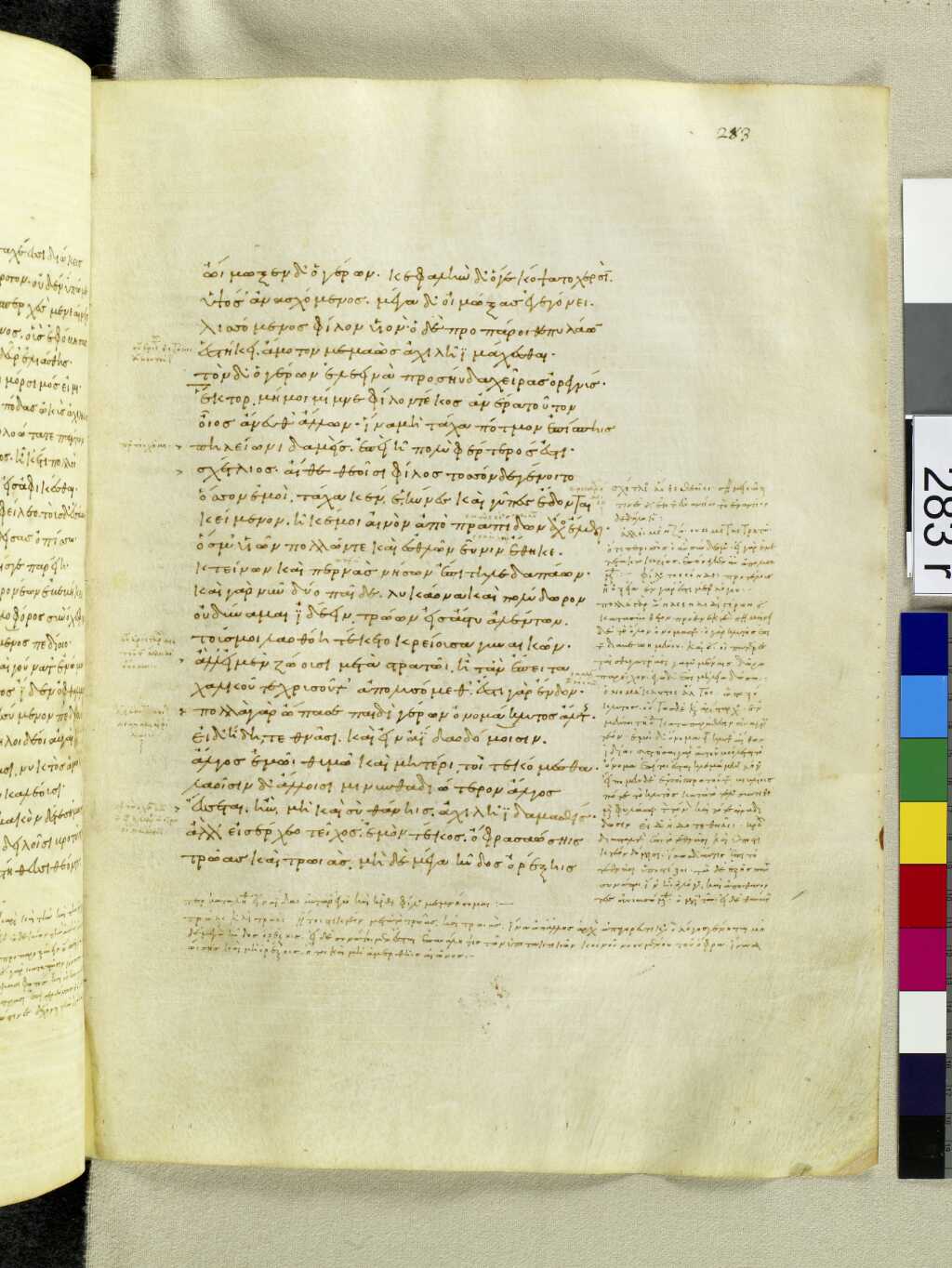
51πολλὰ γὰρ ὤπασε παιδὶ γέρων ὀνομάκλυτος Ἄλτης. 52εἰ δʼ ἤδη τεθνᾶσι καὶ εἰν Ἀΐδαο δόμοισιν, 53ἄλγος ἐμῷ θυμῷ καὶ μητέρι τοὶ τεκόμεσθα· 54λαοῖσιν δʼ ἄλλοισι μινυνθαδιώτερον ἄλγος 55ἔσσεται, ἢν μὴ καὶ σὺ θάνῃς Ἀχιλῆϊ δαμασθείς. 56ἀλλʼ εἰσέρχεο τεῖχος ἐμὸν τέκος, ὄφρα σαώσῃς 57Τρῶας καὶ Τρῳάς, μὴ δὲ μέγα κῦδος ὀρέξῃς 58Πηλεΐδῃ, αὐτὸς δὲ φίλης αἰῶνος ἀμερθῇς. 59πρὸς δʼ ἐμὲ τὸν δύστηνον ἔτι φρονέοντʼ ἐλέησον 60δύσμορον, ὅν ῥα πατὴρ Κρονίδης ἐπὶ γήραος οὐδῷ 61αἴσῃ ἐν ἀργαλέῃ φθίσει κακὰ πόλλʼ ἐπιδόντα 62υἷάς τʼ ὀλλυμένους ἑλκηθείσας τε θύγατρας, 63καὶ θαλάμους κεραϊζομένους, καὶ νήπια τέκνα 64βαλλόμενα προτὶ γαίῃ ἐν αἰνῇ δηϊοτῆτι, 65ἑλκομένας τε νυοὺς ὀλοῇς ὑπὸ χερσὶν Ἀχαιῶν. 66αὐτὸν δʼ ἂν πύματόν με κύνες πρώτῃσι θύρῃσιν 67ὠμησταὶ ἐρύουσιν, ἐπεί κέ τις ὀξέϊ χαλκῷ 68τύψας ἠὲ βαλὼν ῥεθέων ἐκ θυμὸν ἕληται, 69οὓς τρέφον ἐν μεγάροισι τραπεζῆας θυραωρούς, 70οἵ κʼ ἐμὸν αἷμα πιόντες ἀλύσσοντες περὶ θυμῷ 71κείσοντʼ ἐν προθύροισι. νέῳ δέ τε πάντʼ ἐπέοικεν 72ἄρηϊ κταμένῳ δεδαϊγμένῳ ὀξέϊ χαλκῷ 73κεῖσθαι· πάντα δὲ καλὰ θανόντι περ ὅττι φανήῃ· 74ἀλλʼ ὅτε δὴ πολιόν τε κάρη πολιόν τε γένειον 75αἰδῶ τʼ αἰσχύνωσι κύνες κταμένοιο γέροντος,
The old man tore his grey hair as he spoke, but he moved not the heart of Hector. His mother hard by wept and moaned aloud as she bared her bosom and pointed to the breast which had suckled him. “Hector,” she cried, weeping bitterly the while, “Hector, my son, spurn not this breast, but have pity upon me too: if I have ever given you comfort from my own bosom, think on it now, dear son, and come within the wall to protect us from this man; stand not without to meet him. Should the wretch kill you, neither I nor your richly dowered wife shall ever weep, dear offshoot of myself, over the bed on which you lie, for dogs will devour you at the ships of the Achaeans.”
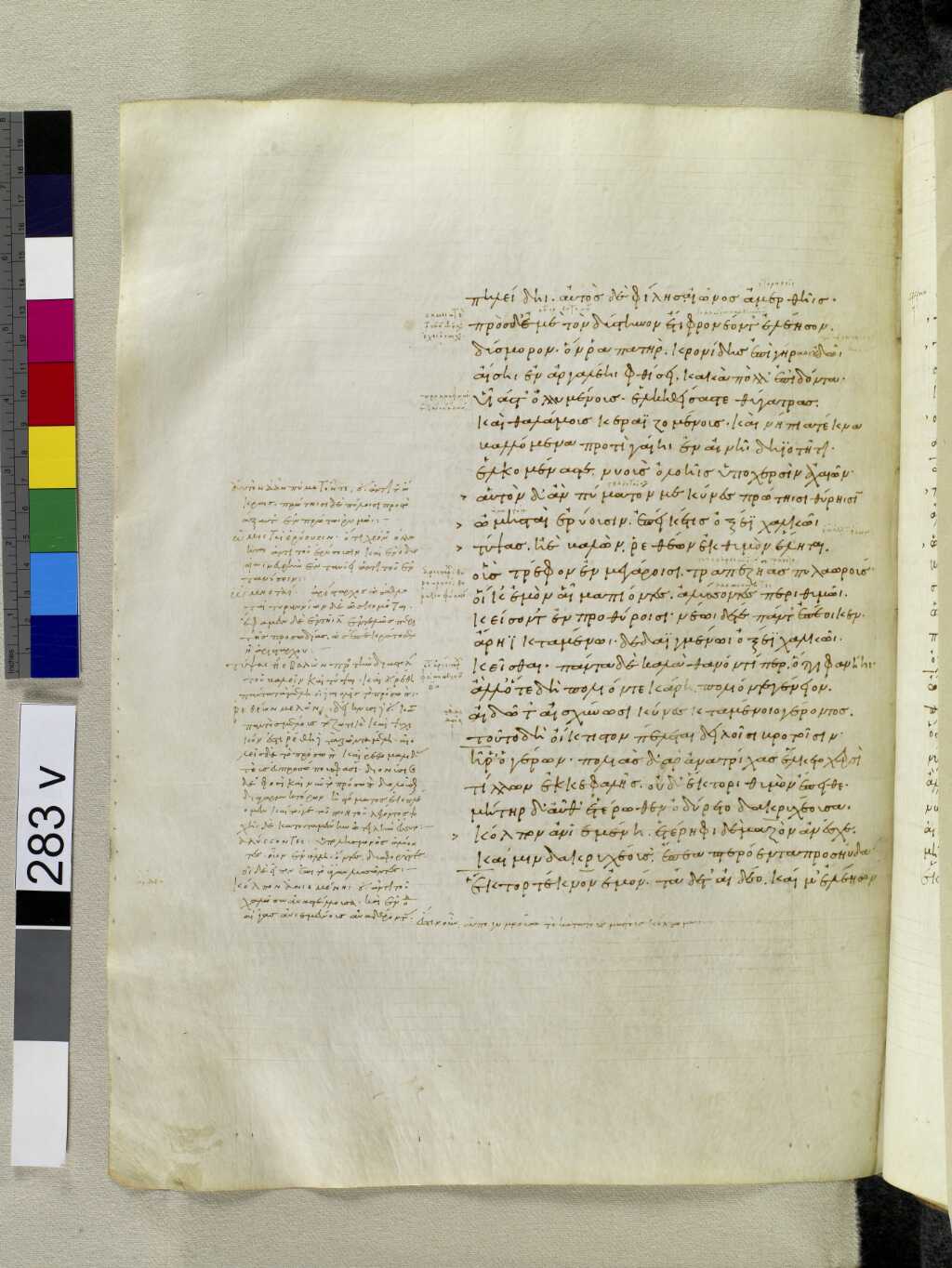
76τοῦτο δὴ οἴκτιστον πέλεται δειλοῖσι βροτοῖσιν. 77ἦ ῥʼ ὃ γέρων, πολιὰς δʼ ἄρʼ ἀνὰ τρίχας ἕλκετο χερσὶ 78τίλλων ἐκ κεφαλῆς· οὐδʼ Ἕκτορι θυμὸν ἔπειθε. 79μήτηρ δʼ αὖθʼ ἑτέρωθεν ὀδύρετο δάκρυ χέουσα 80κόλπον ἀνιεμένη, ἑτέρηφι δὲ μαζὸν ἀνέσχε· 81καί μιν δάκρυ χέουσʼ ἔπεα πτερόεντα προσηύδα· 82Ἕκτορ τέκνον ἐμὸν τάδε τʼ αἴδεο καί μʼ ἐλέησον 83αὐτήν, εἴ ποτέ τοι λαθικηδέα μαζὸν ἐπέσχον· 84τῶν μνῆσαι φίλε τέκνον ἄμυνε δὲ δήϊον ἄνδρα 85τείχεος ἐντὸς ἐών, μὴ δὲ πρόμος ἵστασο τούτῳ 86σχέτλιος· εἴ περ γάρ σε κατακτάνῃ, οὔ σʼ ἔτʼ ἔγωγε 87κλαύσομαι ἐν λεχέεσσι φίλον θάλος, ὃν τέκον αὐτή, 88οὐδʼ ἄλοχος πολύδωρος· ἄνευθε δέ σε μέγα νῶϊν 89Ἀργείων παρὰ νηυσὶ κύνες ταχέες κατέδονται. 90ὣς τώ γε κλαίοντε προσαυδήτην φίλον υἱὸν 91πολλὰ λισσομένω· οὐδʼ Ἕκτορι θυμὸν ἔπειθον, 92ἀλλʼ ὅ γε μίμνʼ Ἀχιλῆα πελώριον ἆσσον ἰόντα. 93ὡς δὲ δράκων ἐπὶ χειῇ ὀρέστερος ἄνδρα μένῃσι 94βεβρωκὼς κακὰ φάρμακʼ, ἔδυ δέ τέ μιν χόλος αἰνός, 95σμερδαλέον δὲ δέδορκεν ἑλισσόμενος περὶ χειῇ· 96ὣς Ἕκτωρ ἄσβεστον ἔχων μένος οὐχ ὑπεχώρει 97πύργῳ ἔπι προὔχοντι φαεινὴν ἀσπίδʼ ἐρείσας· 98ὀχθήσας δʼ ἄρα εἶπε πρὸς ὃν μεγαλήτορα θυμόν· 99ὤ μοι ἐγών, εἰ μέν κε πύλας καὶ τείχεα δύω, 100Πουλυδάμας μοι πρῶτος ἐλεγχείην ἀναθήσει,
Thus did the two with many tears implore their son, but they moved not the heart of Hector, and he stood his ground awaiting huge Achilles as he drew nearer towards him. As a serpent in its den upon the mountains, full fed with deadly poisons, waits for the approach of man—he is filled with fury and his eyes glare terribly as he goes writhing round his den—even so Hector leaned his shield against a tower that jutted out from the wall and stood where he was, undaunted.
“Alas,” said he to himself in the heaviness of his heart, “if I go within the gates, Polydamas will be the first to heap reproach upon me, for it was he that urged me to lead the Trojans back to the city on that awful night when Achilles again came forth against us. I would not listen, but it would have been indeed better if I had done so. Now that my folly has destroyed the host, I dare not look Trojan men and Trojan women in the face, lest a worse man should say, ‘Hector has ruined us by his self-confidence.’ Surely it would be better for me to return after having fought Achilles and slain him, or to die gloriously here before the city. What, again, if I were to lay down my shield and helmet, lean my spear against the wall and go straight up to noble Achilles? What if I were to promise to give up Helen, who was the fountainhead of all this war, and all the treasure that Alexandrus brought with him in his ships to Troy, aye, and to let the Achaeans divide the half of everything that the city contains among themselves? I might make the Trojans, by the mouths of their princes, take a solemn oath that they would hide nothing, but would divide into two shares all that is within the city—but why argue with myself in this way? Were I to go up to him he would show me no kind of mercy; he would kill me then and there as easily as though I were a woman, when I had off my armour. There is no parleying with him from some rock or oak tree as young men and maidens prattle with one another. Better fight him at once, and learn to which of us Jove will vouchsafe victory.”
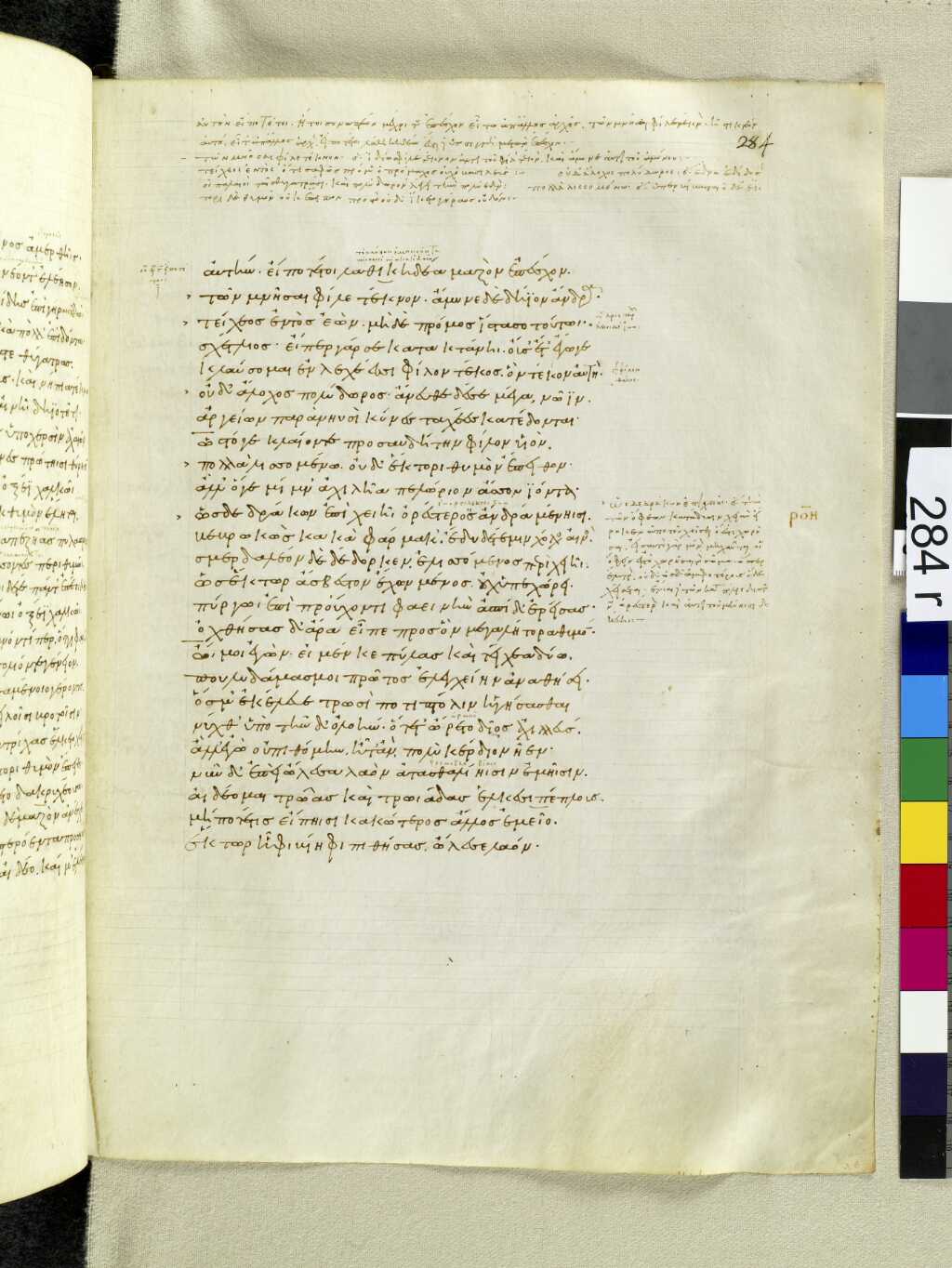
101ὅς μʼ ἐκέλευε Τρωσὶ ποτὶ πτόλιν ἡγήσασθαι 102νύχθʼ ὕπο τήνδʼ ὀλοὴν ὅτε τʼ ὤρετο δῖος Ἀχιλλεύς. 103ἀλλʼ ἐγὼ οὐ πιθόμην· ἦ τʼ ἂν πολὺ κέρδιον ἦεν. 104νῦν δʼ ἐπεὶ ὤλεσα λαὸν ἀτασθαλίῃσιν ἐμῇσιν, 105αἰδέομαι Τρῶας καὶ Τρῳάδας ἑλκεσιπέπλους, 106μή ποτέ τις εἴπῃσι κακώτερος ἄλλος ἐμεῖο· 107Ἕκτωρ ἧφι βίηφι πιθήσας ὤλεσε λαόν. 108ὣς ἐρέουσιν· ἐμοὶ δὲ τότʼ ἂν πολὺ κέρδιον εἴη 109ἄντην ἢ Ἀχιλῆα κατακτείναντα νέεσθαι, 110ἠέ κεν αὐτῷ ὀλέσθαι ἐϋκλειῶς πρὸ πόληος. 111εἰ δέ κεν ἀσπίδα μὲν καταθείομαι ὀμφαλόεσσαν 112καὶ κόρυθα βριαρήν, δόρυ δὲ πρὸς τεῖχος ἐρείσας 113αὐτὸς ἰὼν Ἀχιλῆος ἀμύμονος ἀντίος ἔλθω 114καί οἱ ὑπόσχωμαι Ἑλένην καὶ κτήμαθʼ ἅμʼ αὐτῇ, 115πάντα μάλʼ ὅσσά τʼ Ἀλέξανδρος κοίλῃς ἐνὶ νηυσὶν 116ἠγάγετο Τροίηνδʼ, ἥ τʼ ἔπλετο νείκεος ἀρχή, 117δωσέμεν Ἀτρεΐδῃσιν ἄγειν, ἅμα δʼ ἀμφὶς Ἀχαιοῖς 118ἄλλʼ ἀποδάσσεσθαι ὅσα τε πτόλις ἥδε κέκευθε· 119Τρωσὶν δʼ αὖ μετόπισθε γερούσιον ὅρκον ἕλωμαι 120μή τι κατακρύψειν, ἀλλʼ ἄνδιχα πάντα δάσασθαι 121κτῆσιν ὅσην πτολίεθρον ἐπήρατον ἐντὸς ἐέργει· 122ἀλλὰ τί ἤ μοι ταῦτα φίλος διελέξατο θυμός; 123μή μιν ἐγὼ μὲν ἵκωμαι ἰών, ὃ δέ μʼ οὐκ ἐλεήσει 124οὐδέ τί μʼ αἰδέσεται, κτενέει δέ με γυμνὸν ἐόντα 125αὔτως ὥς τε γυναῖκα, ἐπεί κʼ ἀπὸ τεύχεα δύω.
Thus did he stand and ponder, but Achilles came up to him as it were Mars himself, plumed lord of battle. From his right shoulder he brandished his terrible spear of Pelian ash, and the bronze gleamed around him like flashing fire or the rays of the rising sun. Fear fell upon Hector as he beheld him, and he dared not stay longer where he was but fled in dismay from before the gates, while Achilles darted after him at his utmost speed. As a mountain falcon, swiftest of all birds, swoops down upon some cowering dove—the dove flies before him but the falcon with a shrill scream follows close after, resolved to have her—even so did Achilles make straight for Hector with all his might, while Hector fled under the Trojan wall as fast as his limbs could take him.
On they flew along the waggon-road that ran hard by under the wall, past the look-out station, and past the weather-beaten wild fig-tree, till they came to two fair springs which feed the river Scamander. One of these two springs is warm, and steam rises from it as smoke from a burning fire, but the other even in summer is as cold as hail or snow, or the ice that forms on water. Here, hard by the springs, are the goodly washing-troughs of stone, where in the time of peace before the coming of the Achaeans the wives and fair daughters of the Trojans used to wash their clothes. Past these did they fly, the one in front and the other giving chase behind him: good was the man that fled, but better far was he that followed after, and swiftly indeed did they run, for the prize was no mere beast for sacrifice or bullock’s hide, as it might be for a common foot-race, but they ran for the life of Hector. As horses in a chariot race speed round the turning-posts when they are running for some great prize—a tripod or woman—at the games in honour of some dead hero, so did these two run full speed three times round the city of Priam. All the gods watched them, and the sire of gods and men was the first to speak.
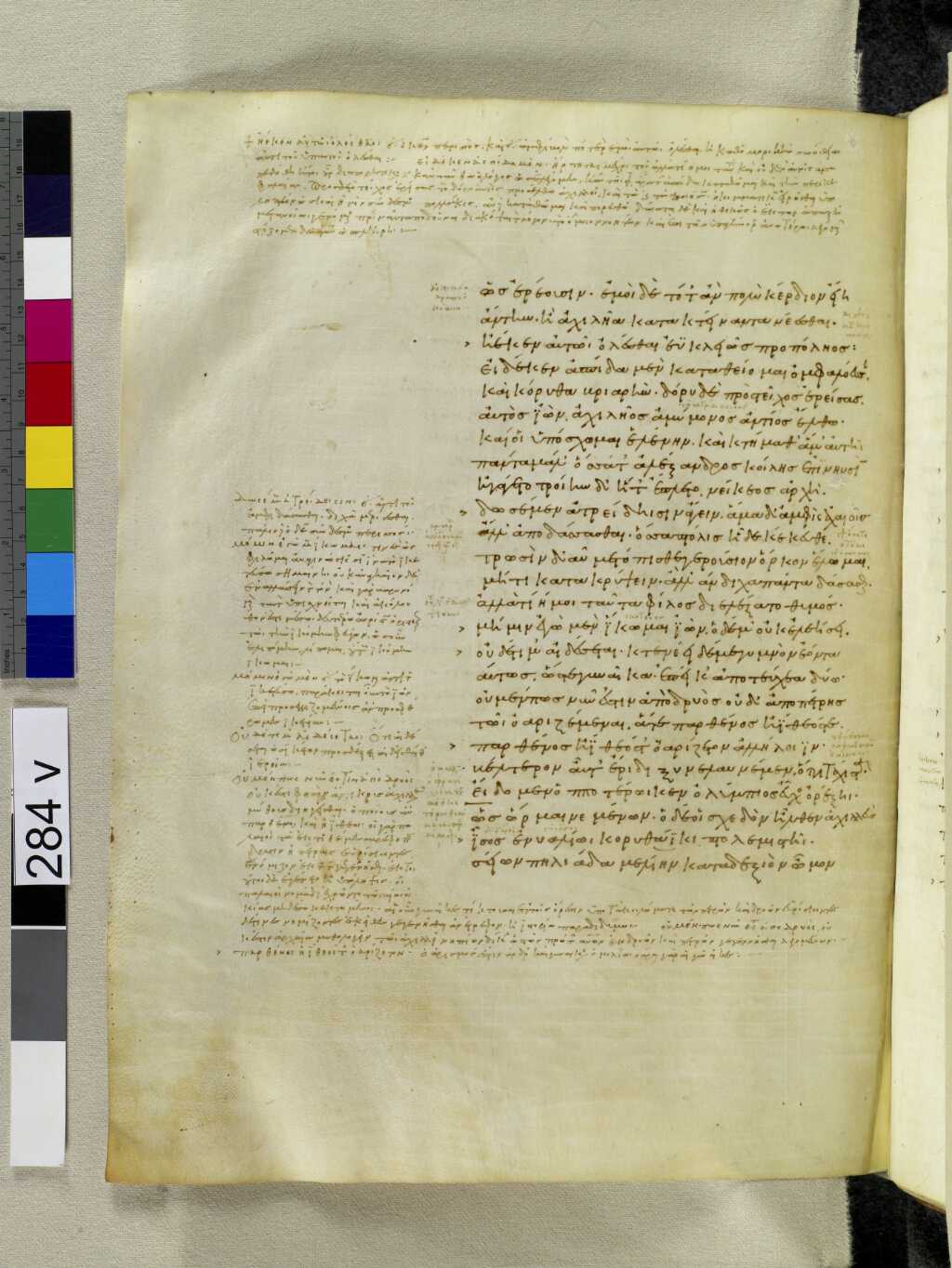
126οὐ μέν πως νῦν ἔστιν ἀπὸ δρυὸς οὐδʼ ἀπὸ πέτρης 127τῷ ὀαριζέμεναι, ἅ τε παρθένος ἠΐθεός τε 128παρθένος ἠΐθεός τʼ ὀαρίζετον ἀλλήλοιιν. 129βέλτερον αὖτʼ ἔριδι ξυνελαυνέμεν ὅττι τάχιστα· 130εἴδομεν ὁπποτέρῳ κεν Ὀλύμπιος εὖχος ὀρέξῃ. 131ὣς ὅρμαινε μένων, ὃ δέ οἱ σχεδὸν ἦλθεν Ἀχιλλεὺς 132ἶσος Ἐνυαλίῳ κορυθάϊκι πτολεμιστῇ 133σείων Πηλιάδα μελίην κατὰ δεξιὸν ὦμον 134δεινήν· ἀμφὶ δὲ χαλκὸς ἐλάμπετο εἴκελος αὐγῇ 135ἢ πυρὸς αἰθομένου ἢ ἠελίου ἀνιόντος. 136Ἕκτορα δʼ, ὡς ἐνόησεν, ἕλε τρόμος· οὐδʼ ἄρʼ ἔτʼ ἔτλη 137αὖθι μένειν, ὀπίσω δὲ πύλας λίπε, βῆ δὲ φοβηθείς· 138Πηλεΐδης δʼ ἐπόρουσε ποσὶ κραιπνοῖσι πεποιθώς. 139ἠΰτε κίρκος ὄρεσφιν ἐλαφρότατος πετεηνῶν 140ῥηϊδίως οἴμησε μετὰ τρήρωνα πέλειαν, 141ἣ δέ θʼ ὕπαιθα φοβεῖται, ὃ δʼ ἐγγύθεν ὀξὺ λεληκὼς 142ταρφέʼ ἐπαΐσσει, ἑλέειν τέ ἑ θυμὸς ἀνώγει· 143ὣς ἄρʼ ὅ γʼ ἐμμεμαὼς ἰθὺς πέτετο, τρέσε δʼ Ἕκτωρ 144τεῖχος ὕπο Τρώων, λαιψηρὰ δὲ γούνατʼ ἐνώμα. 145οἳ δὲ παρὰ σκοπιὴν καὶ ἐρινεὸν ἠνεμόεντα 146τείχεος αἰὲν ὑπʼ ἐκ κατʼ ἀμαξιτὸν ἐσσεύοντο, 147κρουνὼ δʼ ἵκανον καλλιρρόω· ἔνθα δὲ πηγαὶ 148δοιαὶ ἀναΐσσουσι Σκαμάνδρου δινήεντος. 149ἣ μὲν γάρ θʼ ὕδατι λιαρῷ ῥέει, ἀμφὶ δὲ καπνὸς 150γίγνεται ἐξ αὐτῆς ὡς εἰ πυρὸς αἰθομένοιο·
“Alas,” said he, “my eyes behold a man who is dear to me being pursued round the walls of Troy; my heart is full of pity for Hector, who has burned the thigh-bones of many a heifer in my honour, one while on the crests of many-valleyed Ida, and again on the citadel of Troy; and now I see noble Achilles in full pursuit of him round the city of Priam. What say you? Consider among yourselves and decide whether we shall now save him or let him fall, valiant though he be, before Achilles, son of Peleus.”
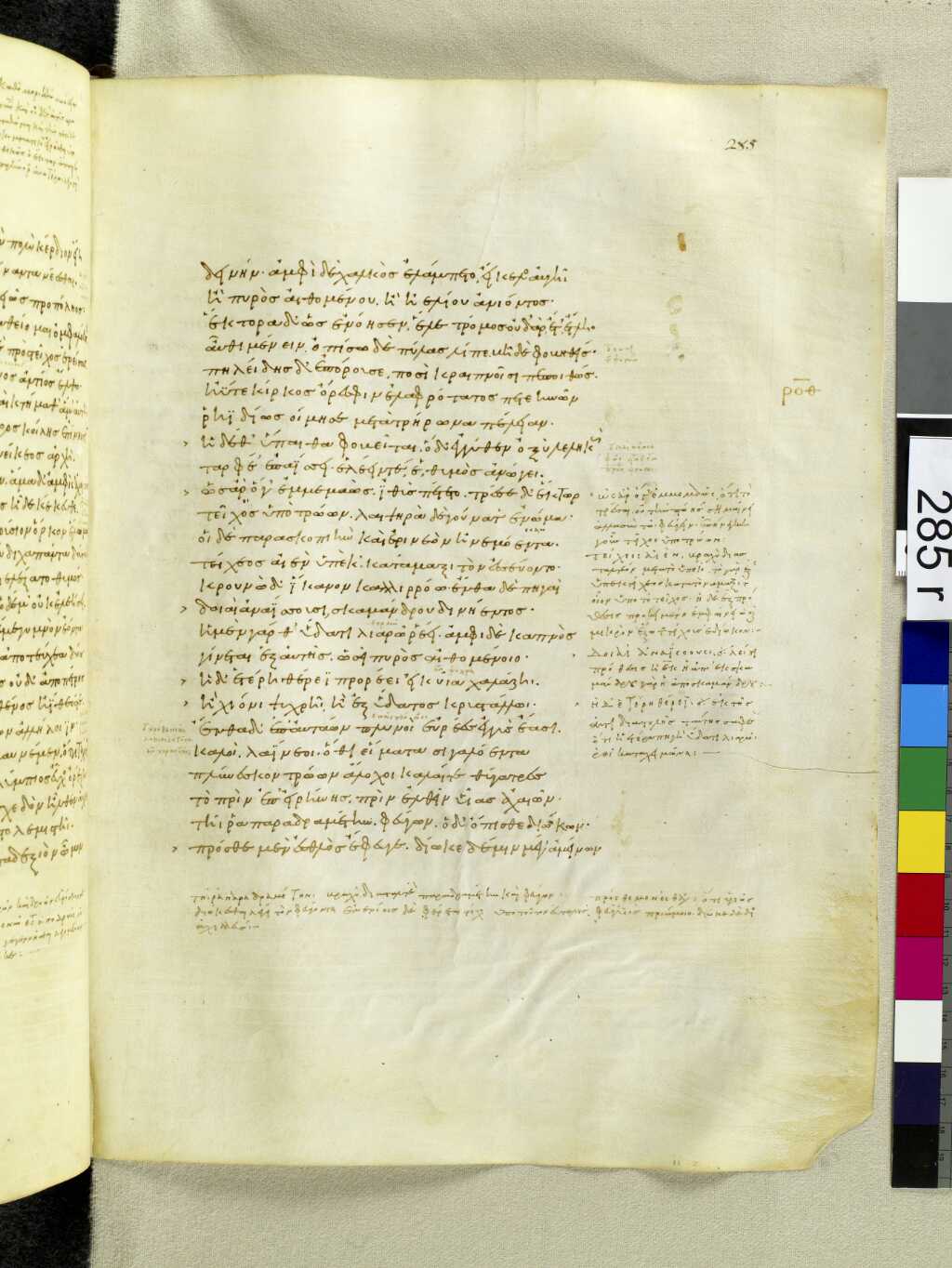
151ἣ δʼ ἑτέρη θέρεϊ προρέει ἐϊκυῖα χαλάζῃ, 152ἢ χιόνι ψυχρῇ ἢ ἐξ ὕδατος κρυστάλλῳ. 153ἔνθα δʼ ἐπʼ αὐτάων πλυνοὶ εὐρέες ἐγγὺς ἔασι 154καλοὶ λαΐνεοι, ὅθι εἵματα σιγαλόεντα 155πλύνεσκον Τρώων ἄλοχοι καλαί τε θύγατρες 156τὸ πρὶν ἐπʼ εἰρήνης πρὶν ἐλθεῖν υἷας Ἀχαιῶν. 157τῇ ῥα παραδραμέτην φεύγων ὃ δʼ ὄπισθε διώκων· 158πρόσθε μὲν ἐσθλὸς ἔφευγε, δίωκε δέ μιν μέγʼ ἀμείνων 159καρπαλίμως, ἐπεὶ οὐχ ἱερήϊον οὐδὲ βοείην 160ἀρνύσθην, ἅ τε ποσσὶν ἀέθλια γίγνεται ἀνδρῶν, 161ἀλλὰ περὶ ψυχῆς θέον Ἕκτορος ἱπποδάμοιο. 162ὡς δʼ ὅτʼ ἀεθλοφόροι περὶ τέρματα μώνυχες ἵπποι 163ῥίμφα μάλα τρωχῶσι· τὸ δὲ μέγα κεῖται ἄεθλον 164ἢ τρίπος ἠὲ γυνὴ ἀνδρὸς κατατεθνηῶτος· 165ὣς τὼ τρὶς Πριάμοιο πόλιν πέρι δινηθήτην 166καρπαλίμοισι πόδεσσι· θεοὶ δʼ ἐς πάντες ὁρῶντο· 167τοῖσι δὲ μύθων ἦρχε πατὴρ ἀνδρῶν τε θεῶν τε· 168ὢ πόποι ἦ φίλον ἄνδρα διωκόμενον περὶ τεῖχος 169ὀφθαλμοῖσιν ὁρῶμαι· ἐμὸν δʼ ὀλοφύρεται ἦτορ 170Ἕκτορος, ὅς μοι πολλὰ βοῶν ἐπὶ μηρίʼ ἔκηεν 171Ἴδης ἐν κορυφῇσι πολυπτύχου, ἄλλοτε δʼ αὖτε 172ἐν πόλει ἀκροτάτῃ· νῦν αὖτέ ἑ δῖος Ἀχιλλεὺς 173ἄστυ πέρι Πριάμοιο ποσὶν ταχέεσσι διώκει. 174ἀλλʼ ἄγετε φράζεσθε θεοὶ καὶ μητιάασθε 175ἠέ μιν ἐκ θανάτοιο σαώσομεν, ἦέ μιν ἤδη
Then Minerva said, “Father, wielder of the lightning, lord of cloud and storm, what mean you? Would you pluck this mortal whose doom has long been decreed out of the jaws of death? Do as you will, but we others shall not be of a mind with you.”
And Jove answered, “My child, Trito-born, take heart. I did not speak in full earnest, and I will let you have your way. Do without let or hindrance as you are minded.”
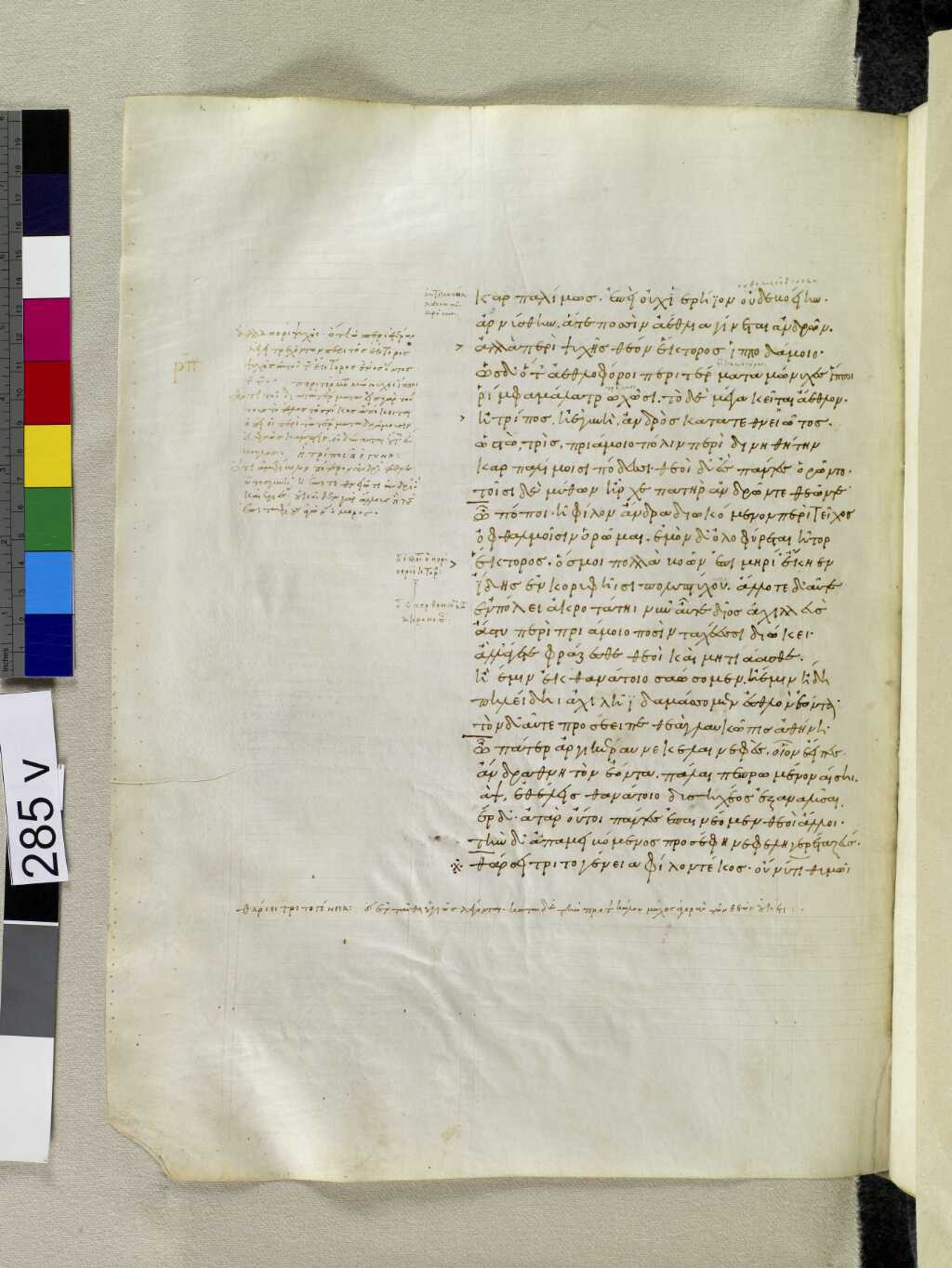
176Πηλεΐδῃ Ἀχιλῆϊ δαμάσσομεν ἐσθλὸν ἐόντα. 177τὸν δʼ αὖτε προσέειπε θεὰ γλαυκῶπις Ἀθήνη· 178ὦ πάτερ ἀργικέραυνε κελαινεφὲς οἷον ἔειπες· 179ἄνδρα θνητὸν ἐόντα πάλαι πεπρωμένον αἴσῃ 180ἂψ ἐθέλεις θανάτοιο δυσηχέος ἐξαναλῦσαι; 181ἔρδʼ· ἀτὰρ οὔ τοι πάντες ἐπαινέομεν θεοὶ ἄλλοι. 182τὴν δʼ ἀπαμειβόμενος προσέφη νεφεληγερέτα Ζεύς· 183θάρσει Τριτογένεια φίλον τέκος· οὔ νύ τι θυμῷ 184πρόφρονι μυθέομαι, ἐθέλω δέ τοι ἤπιος εἶναι· 185ἔρξον ὅπῃ δή τοι νόος ἔπλετο, μὴ δʼ ἔτʼ ἐρώει. 186ὣς εἰπὼν ὄτρυνε πάρος μεμαυῖαν Ἀθήνην· 187βῆ δὲ κατʼ Οὐλύμποιο καρήνων ἀΐξασα. 188Ἕκτορα δʼ ἀσπερχὲς κλονέων ἔφεπʼ ὠκὺς Ἀχιλλεύς. 189ὡς δʼ ὅτε νεβρὸν ὄρεσφι κύων ἐλάφοιο δίηται 190ὄρσας ἐξ εὐνῆς διά τʼ ἄγκεα καὶ διὰ βήσσας· 191τὸν δʼ εἴ πέρ τε λάθῃσι καταπτήξας ὑπὸ θάμνῳ, 192ἀλλά τʼ ἀνιχνεύων θέει ἔμπεδον ὄφρά κεν εὕρῃ· 193ὣς Ἕκτωρ οὐ λῆθε ποδώκεα Πηλεΐωνα. 194ὁσσάκι δʼ ὁρμήσειε πυλάων Δαρδανιάων 195ἀντίον ἀΐξασθαι ἐϋδμήτους ὑπὸ πύργους, 196εἴ πως οἷ καθύπερθεν ἀλάλκοιεν βελέεσσι, 197τοσσάκι μιν προπάροιθεν ἀποστρέψασκε παραφθὰς 198πρὸς πεδίον· αὐτὸς δὲ ποτὶ πτόλιος πέτετʼ αἰεί. 199ὡς δʼ ἐν ὀνείρῳ οὐ δύναται φεύγοντα διώκειν· 200οὔτʼ ἄρʼ ὃ τὸν δύναται ὑποφεύγειν οὔθʼ ὃ διώκειν·
Thus did he urge Minerva who was already eager, and down she darted from the topmost summits of Olympus.
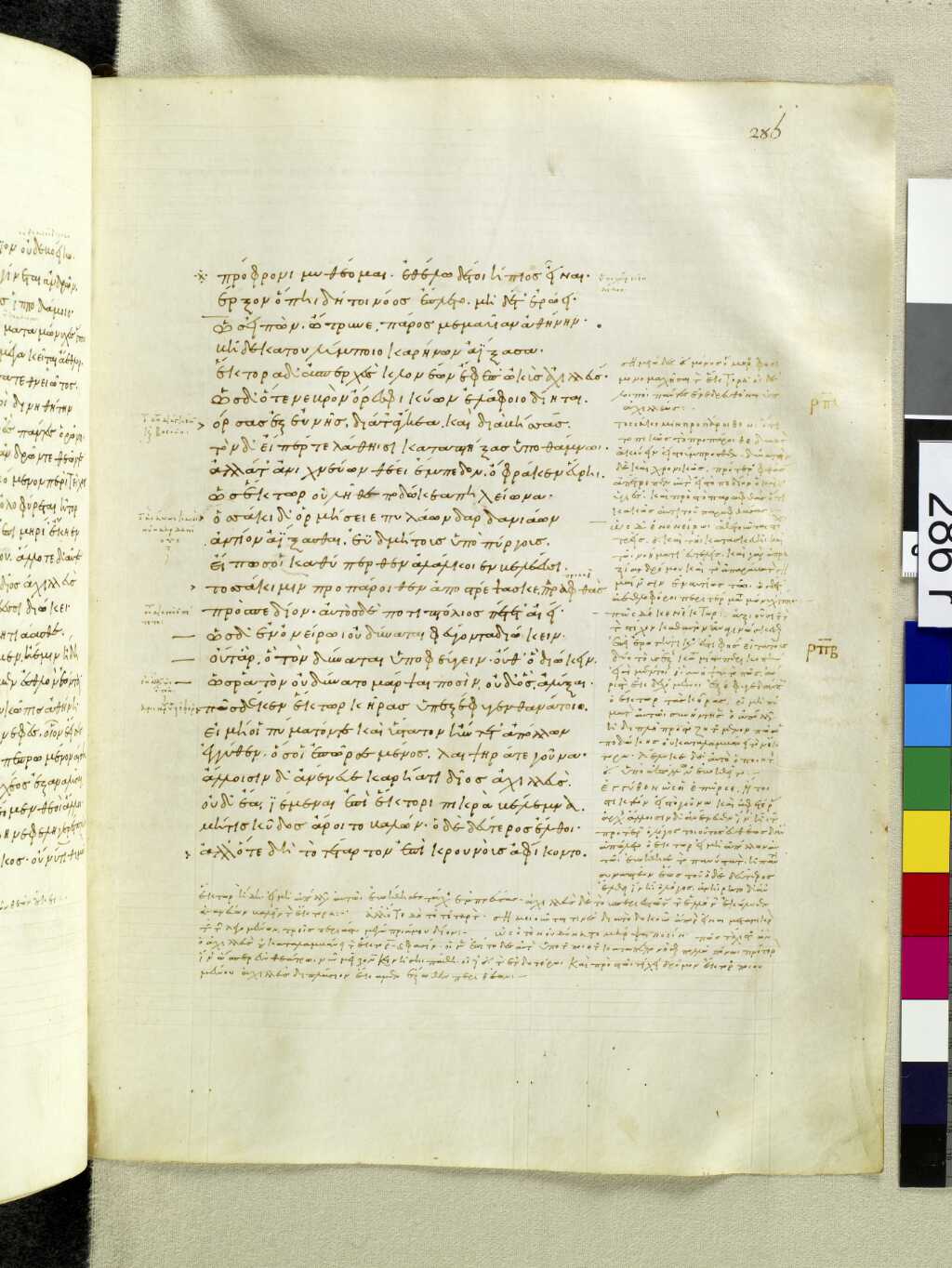
201ὣς ὃ τὸν οὐ δύνατο μάρψαι ποσίν, οὐδʼ ὃς ἀλύξαι. 202πῶς δέ κεν Ἕκτωρ κῆρας ὑπεξέφυγεν θανάτοιο, 203εἰ μή οἱ πύματόν τε καὶ ὕστατον ἤντετʼ Ἀπόλλων 204ἐγγύθεν, ὅς οἱ ἐπῶρσε μένος λαιψηρά τε γοῦνα; 205λαοῖσιν δʼ ἀνένευε καρήατι δῖος Ἀχιλλεύς, 206οὐδʼ ἔα ἱέμεναι ἐπὶ Ἕκτορι πικρὰ βέλεμνα, 207μή τις κῦδος ἄροιτο βαλών, ὃ δὲ δεύτερος ἔλθοι. 208ἀλλʼ ὅτε δὴ τὸ τέταρτον ἐπὶ κρουνοὺς ἀφίκοντο, 209καὶ τότε δὴ χρύσεια πατὴρ ἐτίταινε τάλαντα, 210ἐν δʼ ἐτίθει δύο κῆρε τανηλεγέος θανάτοιο, 211τὴν μὲν Ἀχιλλῆος, τὴν δʼ Ἕκτορος ἱπποδάμοιο, 212ἕλκε δὲ μέσσα λαβών· ῥέπε δʼ Ἕκτορος αἴσιμον ἦμαρ, 213ᾤχετο δʼ εἰς Ἀΐδαο, λίπεν δέ ἑ Φοῖβος Ἀπόλλων. 214Πηλεΐωνα δʼ ἵκανε θεὰ γλαυκῶπις Ἀθήνη, 215ἀγχοῦ δʼ ἱσταμένη ἔπεα πτερόεντα προσηύδα· 216νῦν δὴ νῶι ἔολπα Διῒ φίλε φαίδιμʼ Ἀχιλλεῦ 217οἴσεσθαι μέγα κῦδος Ἀχαιοῖσι προτὶ νῆας 218Ἕκτορα δῃώσαντε μάχης ἄατόν περ ἐόντα. 219οὔ οἱ νῦν ἔτι γʼ ἔστι πεφυγμένον ἄμμε γενέσθαι, 220οὐδʼ εἴ κεν μάλα πολλὰ πάθοι ἑκάεργος Ἀπόλλων 221προπροκυλινδόμενος πατρὸς Διὸς αἰγιόχοιο. 222ἀλλὰ σὺ μὲν νῦν στῆθι καὶ ἄμπνυε, τόνδε δʼ ἐγώ τοι 223οἰχομένη πεπιθήσω ἐναντίβιον μαχέσασθαι. 224ὣς φάτʼ Ἀθηναίη, ὃ δʼ ἐπείθετο, χαῖρε δὲ θυμῷ, 225στῆ δʼ ἄρʼ ἐπὶ μελίης χαλκογλώχινος ἐρεισθείς.
Achilles was still in full pursuit of Hector, as a hound chasing a fawn which he has started from its covert on the mountains, and hunts through glade and thicket. The fawn may try to elude him by crouching under cover of a bush, but he will scent her out and follow her up until he gets her—even so there was no escape for Hector from the fleet son of Peleus. Whenever he made a set to get near the Dardanian gates and under the walls, that his people might help him by showering down weapons from above, Achilles would gain on him and head him back towards the plain, keeping himself always on the city side. As a man in a dream who fails to lay hands upon another whom he is pursuing—the one cannot escape nor the other overtake—even so neither could Achilles come up with Hector, nor Hector break away from Achilles; nevertheless he might even yet have escaped death had not the time come when Apollo, who thus far had sustained his strength and nerved his running, was now no longer to stay by him. Achilles made signs to the Achaean host, and shook his head to show that no man was to aim a dart at Hector, lest another might win the glory of having hit him and he might himself come in second. Then, at last, as they were nearing the fountains for the fourth time, the father of all balanced his golden scales and placed a doom in each of them, one for Achilles and the other for Hector. As he held the scales by the middle, the doom of Hector fell down deep into the house of Hades—and then Phoebus Apollo left him. Thereon Minerva went close up to the son of Peleus and said, “Noble Achilles, favoured of heaven, we two shall surely take back to the ships a triumph for the Achaeans by slaying Hector, for all his lust of battle. Do what Apollo may as he lies grovelling before his father, aegis-bearing Jove, Hector cannot escape us longer. Stay here and take breath, while I go up to him and persuade him to make a stand and fight you.”
Thus spoke Minerva. Achilles obeyed her gladly, and stood still, leaning on his bronze-pointed ashen spear, while Minerva left him and went after Hector in the form and with the voice of Deiphobus. She came close up to him and said, “Dear brother, I see you are hard pressed by Achilles who is chasing you at full speed round the city of Priam, let us await his onset and stand on our defence.”
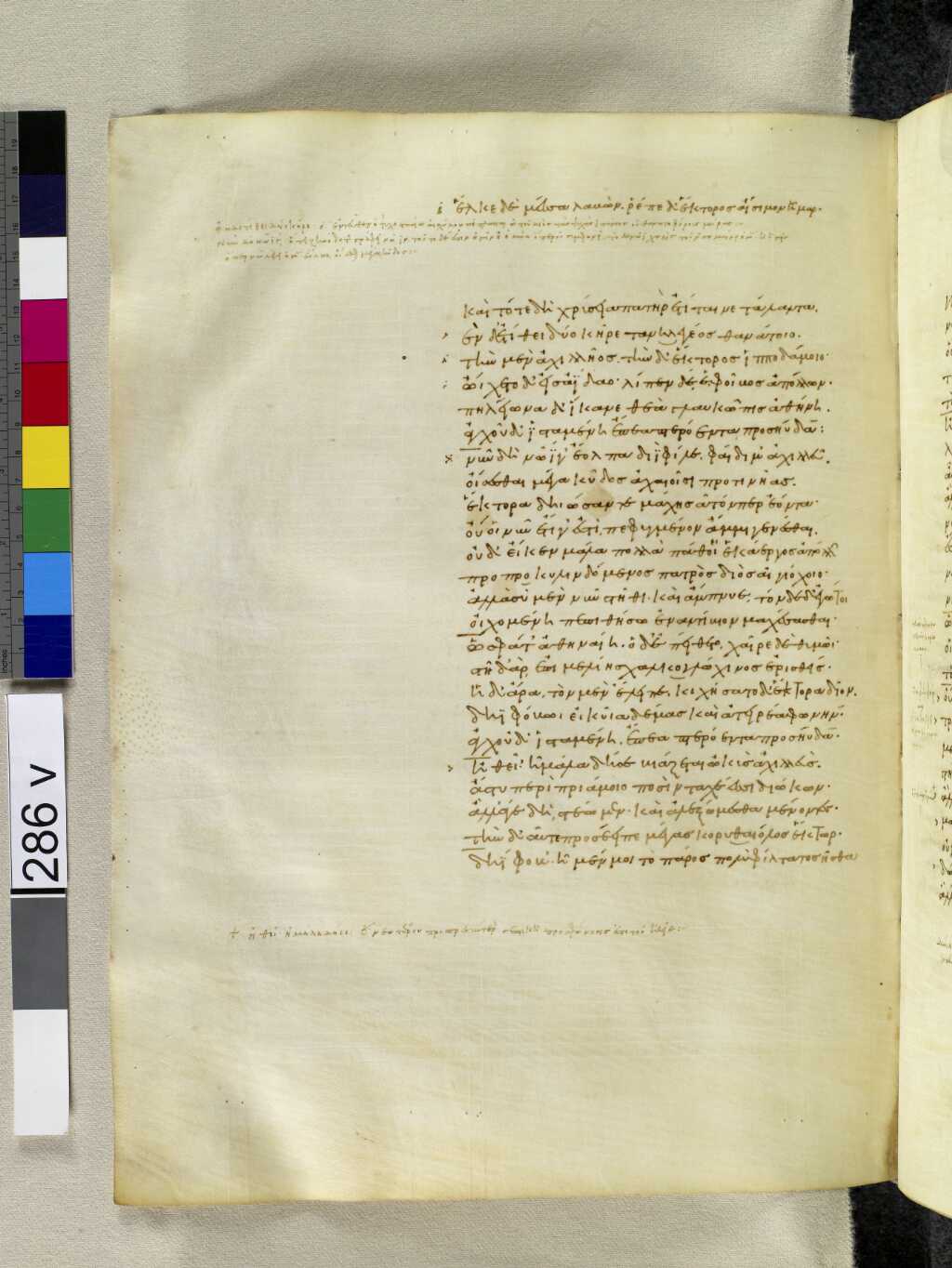
226ἣ δʼ ἄρα τὸν μὲν ἔλειπε, κιχήσατο δʼ Ἕκτορα δῖον 227Δηϊφόβῳ ἐϊκυῖα δέμας καὶ ἀτειρέα φωνήν· 228ἀγχοῦ δʼ ἱσταμένη ἔπεα πτερόεντα προσηύδα· 229ἠθεῖʼ ἦ μάλα δή σε βιάζεται ὠκὺς Ἀχιλλεὺς 230ἄστυ πέρι Πριάμοιο ποσὶν ταχέεσσι διώκων· 231ἀλλʼ ἄγε δὴ στέωμεν καὶ ἀλεξώμεσθα μένοντες. 232τὴν δʼ αὖτε προσέειπε μέγας κορυθαίολος Ἕκτωρ· 233Δηΐφοβʼ ἦ μέν μοι τὸ πάρος πολὺ φίλτατος ἦσθα 234γνωτῶν οὓς Ἑκάβη ἠδὲ Πρίαμος τέκε παῖδας· 235νῦν δʼ ἔτι καὶ μᾶλλον νοέω φρεσὶ τιμήσασθαι, 236ὃς ἔτλης ἐμεῦ εἵνεκʼ, ἐπεὶ ἴδες ὀφθαλμοῖσι, 237τείχεος ἐξελθεῖν, ἄλλοι δʼ ἔντοσθε μένουσι. 238τὸν δʼ αὖτε προσέειπε θεὰ γλαυκῶπις Ἀθήνη· 239ἠθεῖʼ ἦ μὲν πολλὰ πατὴρ καὶ πότνια μήτηρ 240λίσσονθʼ ἑξείης γουνούμενοι, ἀμφὶ δʼ ἑταῖροι, 241αὖθι μένειν· τοῖον γὰρ ὑποτρομέουσιν ἅπαντες· 242ἀλλʼ ἐμὸς ἔνδοθι θυμὸς ἐτείρετο πένθεϊ λυγρῷ. 243νῦν δʼ ἰθὺς μεμαῶτε μαχώμεθα, μὴ δέ τι δούρων 244ἔστω φειδωλή, ἵνα εἴδομεν εἴ κεν Ἀχιλλεὺς 245νῶϊ κατακτείνας ἔναρα βροτόεντα φέρηται 246νῆας ἔπι γλαφυράς, ἦ κεν σῷ δουρὶ δαμήῃ. 247ὣς φαμένη καὶ κερδοσύνῃ ἡγήσατʼ Ἀθήνη· 248οἳ δʼ ὅτε δὴ σχεδὸν ἦσαν ἐπʼ ἀλλήλοισιν ἰόντες, 249τὸν πρότερος προσέειπε μέγας κορυθαίολος Ἕκτωρ· 250οὔ σʼ ἔτι Πηλέος υἱὲ φοβήσομαι, ὡς τὸ πάρος περ
And Hector answered, “Deiphobus, you have always been dearest to me of all my brothers, children of Hecuba and Priam, but henceforth I shall rate you yet more highly, inasmuch as you have ventured outside the wall for my sake when all the others remain inside.”
Then Minerva said, “Dear brother, my father and mother went down on their knees and implored me, as did all my comrades, to remain inside, so great a fear has fallen upon them all; but I was in an agony of grief when I beheld you; now, therefore, let us two make a stand and fight, and let there be no keeping our spears in reserve, that we may learn whether Achilles shall kill us and bear off our spoils to the ships, or whether he shall fall before you.”
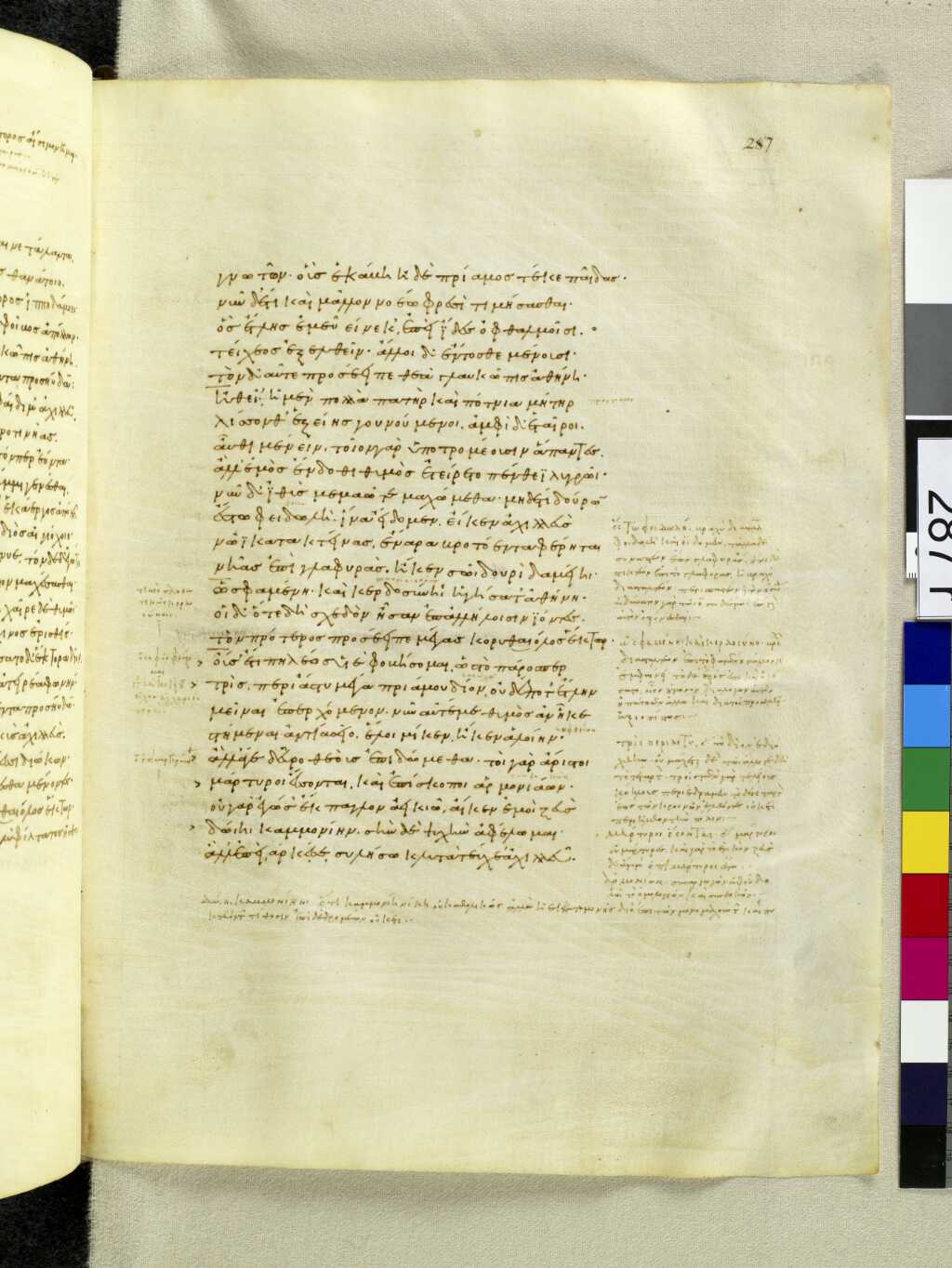
251τρὶς περὶ ἄστυ μέγα Πριάμου δίον, οὐδέ ποτʼ ἔτλην 252μεῖναι ἐπερχόμενον· νῦν αὖτέ με θυμὸς ἀνῆκε 253στήμεναι ἀντία σεῖο· ἕλοιμί κεν ἤ κεν ἁλοίην. 254ἀλλʼ ἄγε δεῦρο θεοὺς ἐπιδώμεθα· τοὶ γὰρ ἄριστοι 255μάρτυροι ἔσσονται καὶ ἐπίσκοποι ἁρμονιάων· 256οὐ γὰρ ἐγώ σʼ ἔκπαγλον ἀεικιῶ, αἴ κεν ἐμοὶ Ζεὺς 257δώῃ καμμονίην, σὴν δὲ ψυχὴν ἀφέλωμαι· 258ἀλλʼ ἐπεὶ ἄρ κέ σε συλήσω κλυτὰ τεύχεʼ Ἀχιλλεῦ 259νεκρὸν Ἀχαιοῖσιν δώσω πάλιν· ὣς δὲ σὺ ῥέζειν. 260τὸν δʼ ἄρʼ ὑπόδρα ἰδὼν προσέφη πόδας ὠκὺς Ἀχιλλεύς· 261Ἕκτορ μή μοι ἄλαστε συνημοσύνας ἀγόρευε· 262ὡς οὐκ ἔστι λέουσι καὶ ἀνδράσιν ὅρκια πιστά, 263οὐδὲ λύκοι τε καὶ ἄρνες ὁμόφρονα θυμὸν ἔχουσιν, 264ἀλλὰ κακὰ φρονέουσι διαμπερὲς ἀλλήλοισιν, 265ὣς οὐκ ἔστʼ ἐμὲ καὶ σὲ φιλήμεναι, οὐδέ τι νῶϊν 266ὅρκια ἔσσονται, πρίν γʼ ἢ ἕτερόν γε πεσόντα 267αἵματος ἆσαι Ἄρηα ταλαύρινον πολεμιστήν. 268παντοίης ἀρετῆς μιμνήσκεο· νῦν σε μάλα χρὴ 269αἰχμητήν τʼ ἔμεναι καὶ θαρσαλέον πολεμιστήν. 270οὔ τοι ἔτʼ ἔσθʼ ὑπάλυξις, ἄφαρ δέ σε Παλλὰς Ἀθήνη 271ἔγχει ἐμῷ δαμάᾳ· νῦν δʼ ἀθρόα πάντʼ ἀποτίσεις 272κήδεʼ ἐμῶν ἑτάρων οὓς ἔκτανες ἔγχεϊ θύων. 273ἦ ῥα, καὶ ἀμπεπαλὼν προΐει δολιχόσκιον ἔγχος· 274καὶ τὸ μὲν ἄντα ἰδὼν ἠλεύατο φαίδιμος Ἕκτωρ· 275ἕζετο γὰρ προϊδών, τὸ δʼ ὑπέρπτατο χάλκεον ἔγχος,
Thus did Minerva inveigle him by her cunning, and when the two were now close to one another great Hector was first to speak. “I will no longer fly you, son of Peleus,” said he, “as I have been doing hitherto. Three times have I fled round the mighty city of Priam, without daring to withstand you, but now, let me either slay or be slain, for I am in the mind to face you. Let us, then, give pledges to one another by our gods, who are the fittest witnesses and guardians of all covenants; let it be agreed between us that if Jove vouchsafes me the longer stay and I take your life, I am not to treat your dead body in any unseemly fashion, but when I have stripped you of your armour, I am to give up your body to the Achaeans. And do you likewise.”
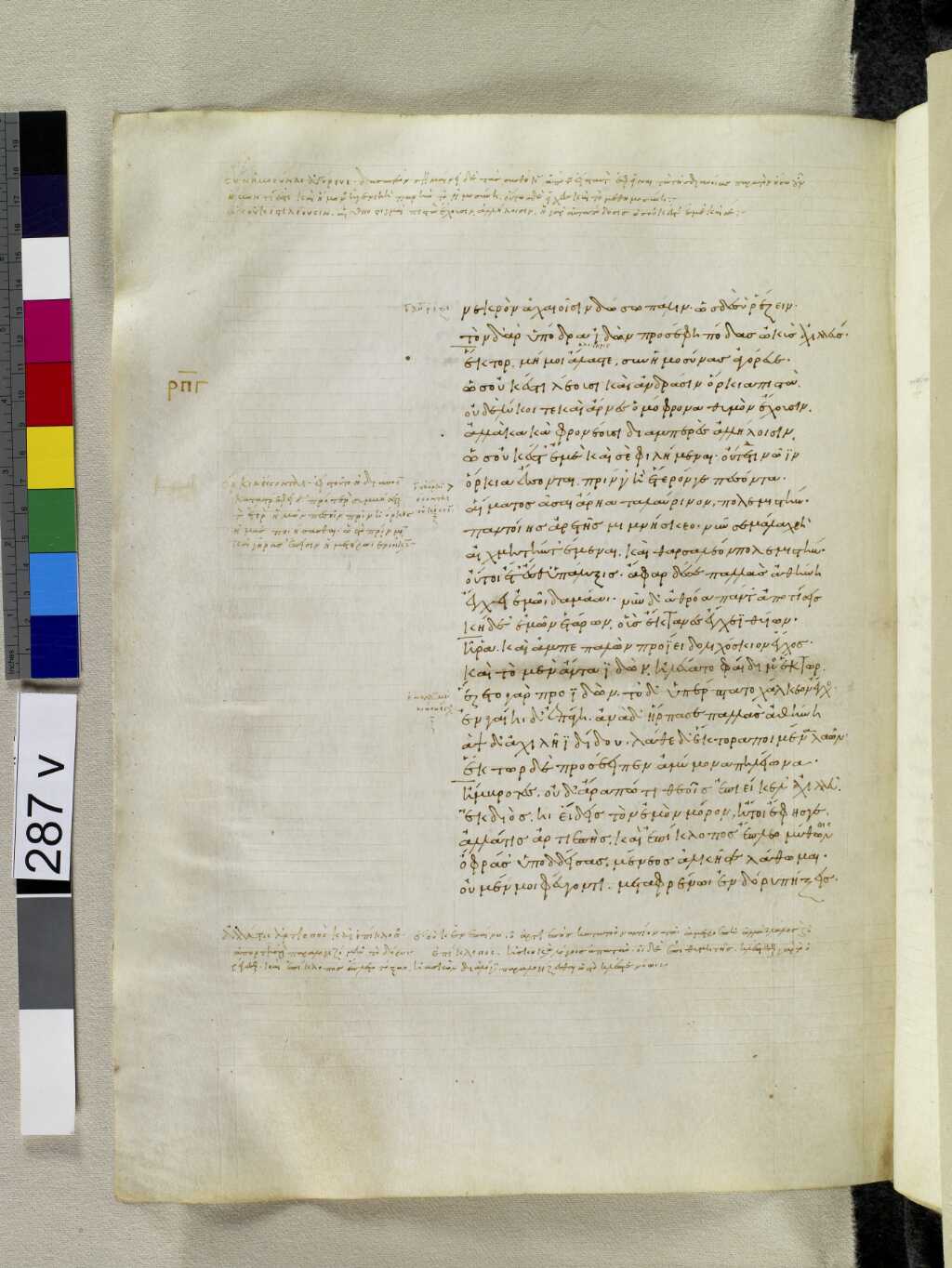
276ἐν γαίῃ δʼ ἐπάγη· ἀνὰ δʼ ἥρπασε Παλλὰς Ἀθήνη, 277ἂψ δʼ Ἀχιλῆϊ δίδου, λάθε δʼ Ἕκτορα ποιμένα λαῶν. 278Ἕκτωρ δὲ προσέειπεν ἀμύμονα Πηλεΐωνα· 279ἤμβροτες, οὐδʼ ἄρα πώ τι θεοῖς ἐπιείκελʼ Ἀχιλλεῦ 280ἐκ Διὸς ἠείδης τὸν ἐμὸν μόρον, ἦ τοι ἔφης γε· 281ἀλλά τις ἀρτιεπὴς καὶ ἐπίκλοπος ἔπλεο μύθων, 282ὄφρά σʼ ὑποδείσας μένεος ἀλκῆς τε λάθωμαι. 283οὐ μέν μοι φεύγοντι μεταφρένῳ ἐν δόρυ πήξεις, 284ἀλλʼ ἰθὺς μεμαῶτι διὰ στήθεσφιν ἔλασσον 285εἴ τοι ἔδωκε θεός· νῦν αὖτʼ ἐμὸν ἔγχος ἄλευαι 286χάλκεον· ὡς δή μιν σῷ ἐν χροῒ πᾶν κομίσαιο. 287καί κεν ἐλαφρότερος πόλεμος Τρώεσσι γένοιτο 288σεῖο καταφθιμένοιο· σὺ γάρ σφισι πῆμα μέγιστον. 289ἦ ῥα, καὶ ἀμπεπαλὼν προΐει δολιχόσκιον ἔγχος, 290καὶ βάλε Πηλεΐδαο μέσον σάκος οὐδʼ ἀφάμαρτε· 291τῆλε δʼ ἀπεπλάγχθη σάκεος δόρυ· χώσατο δʼ Ἕκτωρ 292ὅττί ῥά οἱ βέλος ὠκὺ ἐτώσιον ἔκφυγε χειρός, 293στῆ δὲ κατηφήσας, οὐδʼ ἄλλʼ ἔχε μείλινον ἔγχος. 294Δηΐφοβον δʼ ἐκάλει λευκάσπιδα μακρὸν ἀΰσας· 295ᾔτεέ μιν δόρυ μακρόν· ὃ δʼ οὔ τί οἱ ἐγγύθεν ἦεν. 296Ἕκτωρ δʼ ἔγνω ᾗσιν ἐνὶ φρεσὶ φώνησέν τε· 297ὢ πόποι ἦ μάλα δή με θεοὶ θάνατόνδε κάλεσσαν· 298Δηΐφοβον γὰρ ἔγωγʼ ἐφάμην ἥρωα παρεῖναι· 299ἀλλʼ ὃ μὲν ἐν τείχει, ἐμὲ δʼ ἐξαπάτησεν Ἀθήνη. 300νῦν δὲ δὴ ἐγγύθι μοι θάνατος κακός, οὐδʼ ἔτʼ ἄνευθεν,
Achilles glared at him and answered, “Fool, prate not to me about covenants. There can be no covenants between men and lions, wolves and lambs can never be of one mind, but hate each other out and out all through. Therefore there can be no understanding between you and me, nor may there be any covenants between us, till one or other shall fall and glut grim Mars with his life’s blood. Put forth all your strength; you have need now to prove yourself indeed a bold soldier and man of war. You have no more chance, and Pallas Minerva will forthwith vanquish you by my spear: you shall now pay me in full for the grief you have caused me on account of my comrades whom you have killed in battle.”
He poised his spear as he spoke and hurled it. Hector saw it coming and avoided it; he watched it and crouched down so that it flew over his head and stuck in the ground beyond; Minerva then snatched it up and gave it back to Achilles without Hector’s seeing her; Hector thereon said to the son of Peleus, “You have missed your aim, Achilles, peer of the gods, and Jove has not yet revealed to you the hour of my doom, though you made sure that he had done so. You were a false-tongued liar when you deemed that I should forget my valour and quail before you. You shall not drive your spear into the back of a runaway—drive it, should heaven so grant you power, drive it into me as I make straight towards you; and now for your own part avoid my spear if you can—would that you might receive the whole of it into your body; if you were once dead the Trojans would find the war an easier matter, for it is you who have harmed them most.”
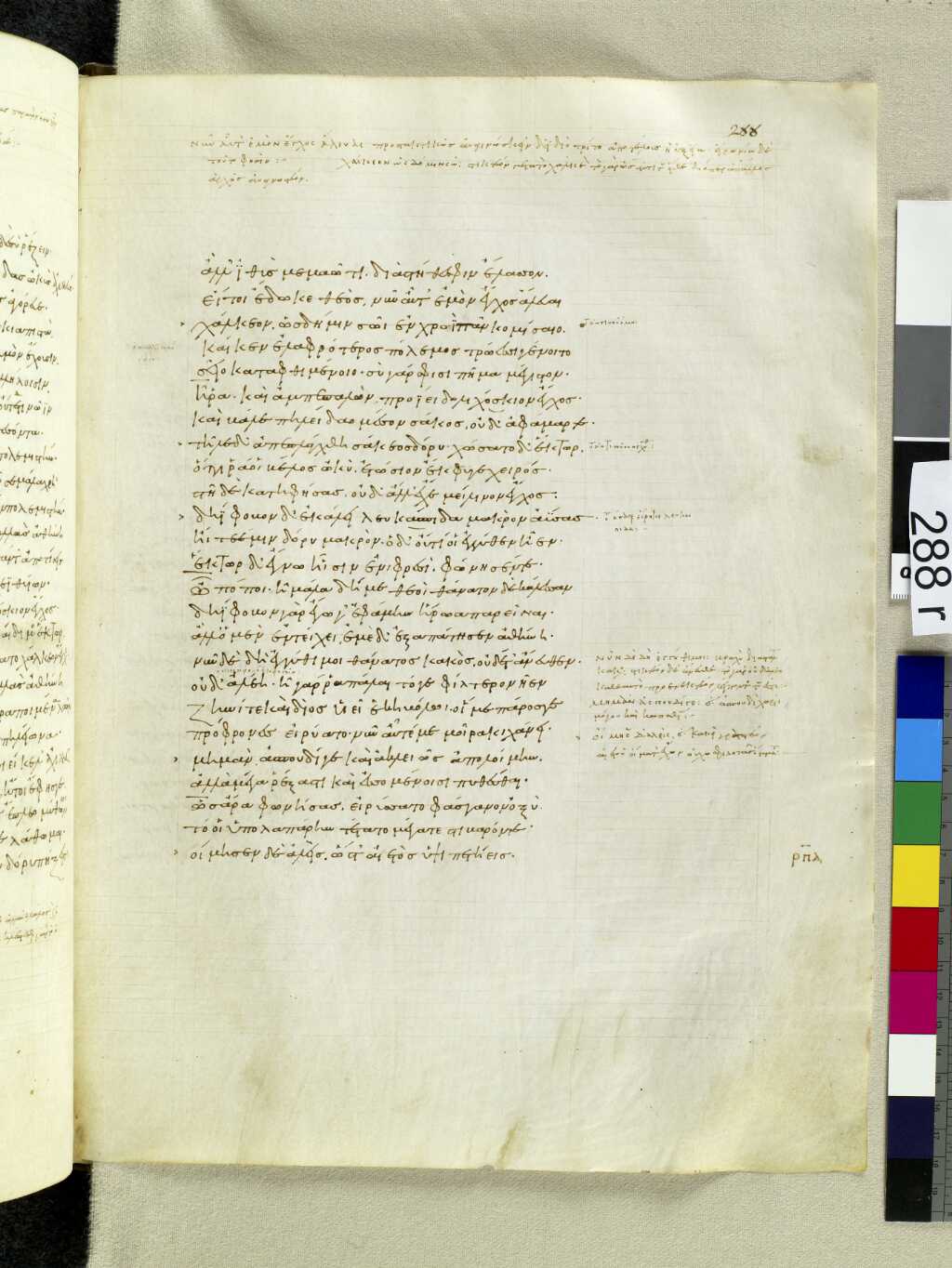
301οὐδʼ ἀλέη· ἦ γάρ ῥα πάλαι τό γε φίλτερον ἦεν 302Ζηνί τε καὶ Διὸς υἷι ἑκηβόλῳ, οἵ με πάρος γε 303πρόφρονες εἰρύατο· νῦν αὖτέ με μοῖρα κιχάνει. 304μὴ μὰν ἀσπουδί γε καὶ ἀκλειῶς ἀπολοίμην, 305ἀλλὰ μέγα ῥέξας τι καὶ ἐσσομένοισι πυθέσθαι. 306ὣς ἄρα φωνήσας εἰρύσσατο φάσγανον ὀξύ, 307τό οἱ ὑπὸ λαπάρην τέτατο μέγα τε στιβαρόν τε, 308οἴμησεν δὲ ἀλεὶς ὥς τʼ αἰετὸς ὑψιπετήεις, 309ὅς τʼ εἶσιν πεδίον δὲ διὰ νεφέων ἐρεβεννῶν 310ἁρπάξων ἢ ἄρνʼ ἀμαλὴν ἤ πτῶκα λαγωόν· 311ὣς Ἕκτωρ οἴμησε τινάσσων φάσγανον ὀξύ. 312ὁρμήθη δʼ Ἀχιλεύς, μένεος δʼ ἐμπλήσατο θυμὸν 313ἀγρίου, πρόσθεν δὲ σάκος στέρνοιο κάλυψε 314καλὸν δαιδάλεον, κόρυθι δʼ ἐπένευε φαεινῇ 315τετραφάλῳ· καλαὶ δὲ περισσείοντο ἔθειραι 316χρύσεαι, ἃς Ἥφαιστος ἵει λόφον ἀμφὶ θαμειάς. 317οἷος δʼ ἀστὴρ εἶσι μετʼ ἀστράσι νυκτὸς ἀμολγῷ 318ἕσπερος, ὃς κάλλιστος ἐν οὐρανῷ ἵσταται ἀστήρ, 319ὣς αἰχμῆς ἀπέλαμπʼ εὐήκεος, ἣν ἄρʼ Ἀχιλλεὺς 320πάλλεν δεξιτερῇ φρονέων κακὸν Ἕκτορι δίῳ, 321εἰσορόων χρόα καλόν, ὅπῃ εἴξειε μάλιστα. 322τοῦ δὲ καὶ ἄλλο τόσον μὲν ἔχε χρόα χάλκεα τεύχεα, 323καλά, τὰ Πατρόκλοιο βίην ἐνάριξε κατακτάς· 324φαίνετο δʼ ᾗ κληῗδες ἀπʼ ὤμων αὐχένʼ ἔχουσι, 325λαυκανίην, ἵνα τε ψυχῆς ὤκιστος ὄλεθρος·
He poised his spear as he spoke and hurled it. His aim was true for he hit the middle of Achilles’ shield, but the spear rebounded from it, and did not pierce it. Hector was angry when he saw that the weapon had sped from his hand in vain, and stood there in dismay for he had no second spear. With a loud cry he called Deiphobus and asked him for one, but there was no man; then he saw the truth and said to himself, “Alas! the gods have lured me on to my destruction. I deemed that the hero Deiphobus was by my side, but he is within the wall, and Minerva has inveigled me; death is now indeed exceedingly near at hand and there is no way out of it—for so Jove and his son Apollo the far-darter have willed it, though heretofore they have been ever ready to protect me. My doom has come upon me; let me not then die ingloriously and without a struggle, but let me first do some great thing that shall be told among men hereafter.”
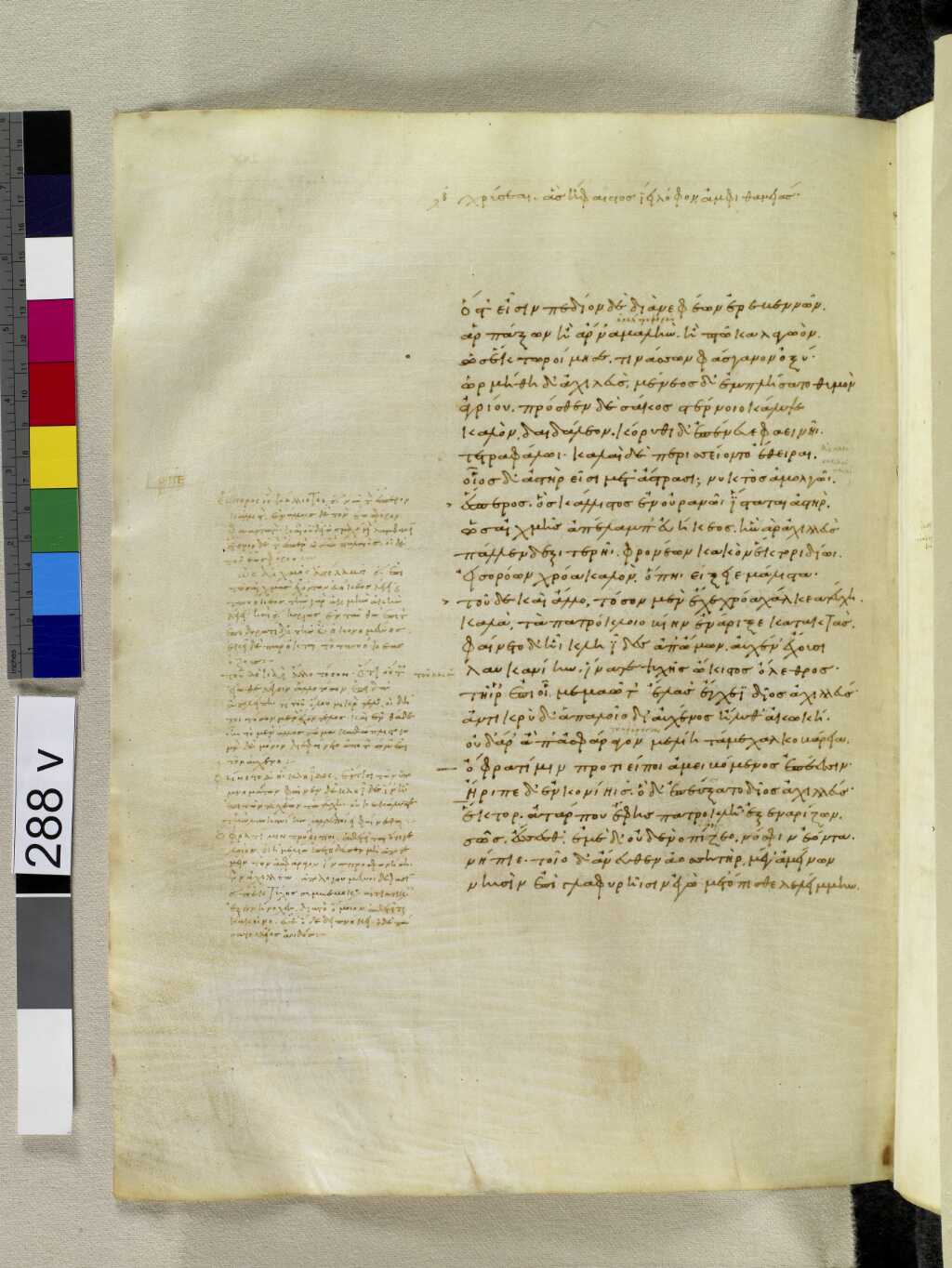
326τῇ ῥʼ ἐπὶ οἷ μεμαῶτʼ ἔλασʼ ἔγχεϊ δῖος Ἀχιλλεύς, 327ἀντικρὺ δʼ ἁπαλοῖο διʼ αὐχένος ἤλυθʼ ἀκωκή· 328οὐδʼ ἄρʼ ἀπʼ ἀσφάραγον μελίη τάμε χαλκοβάρεια, 329ὄφρά τί μιν προτιείποι ἀμειβόμενος ἐπέεσσιν. 330ἤριπε δʼ ἐν κονίῃς· ὃ δʼ ἐπεύξατο δῖος Ἀχιλλεύς· 331Ἕκτορ ἀτάρ που ἔφης Πατροκλῆʼ ἐξεναρίζων 332σῶς ἔσσεσθʼ, ἐμὲ δʼ οὐδὲν ὀπίζεο νόσφιν ἐόντα, 333νήπιε· τοῖο δʼ ἄνευθεν ἀοσσητὴρ μέγʼ ἀμείνων 334νηυσὶν ἔπι γλαφυρῇσιν ἐγὼ μετόπισθε λελείμμην, 335ὅς τοι γούνατʼ ἔλυσα· σὲ μὲν κύνες ἠδʼ οἰωνοὶ 336ἑλκήσουσʼ ἀϊκῶς, τὸν δὲ κτεριοῦσιν Ἀχαιοί. 337τὸν δʼ ὀλιγοδρανέων προσέφη κορυθαίολος Ἕκτωρ· 338λίσσομʼ ὑπὲρ ψυχῆς καὶ γούνων σῶν τε τοκήων, 339μή με ἔα παρὰ νηυσὶ κύνας καταδάψαι Ἀχαιῶν, 340ἀλλὰ σὺ μὲν χαλκόν τε ἅλις χρυσόν τε δέδεξο, 341δῶρα τά τοι δώσουσι πατὴρ καὶ πότνια μήτηρ, 342σῶμα δὲ οἴκαδʼ ἐμὸν δόμεναι πάλιν, ὄφρα πυρός με 343Τρῶες καὶ Τρώων ἄλοχοι λελάχωσι θανόντα. 344τὸν δʼ ἄρʼ ὑπόδρα ἰδὼν προσέφη πόδας ὠκὺς Ἀχιλλεὺς· 345μή με κύον γούνων γουνάζεο μὴ δὲ τοκήων· 346αἲ γάρ πως αὐτόν με μένος καὶ θυμὸς ἀνήη 347ὤμʼ ἀποταμνόμενον κρέα ἔδμεναι, οἷα ἔοργας, 348ὡς οὐκ ἔσθʼ ὃς σῆς γε κύνας κεφαλῆς ἀπαλάλκοι, 349οὐδʼ εἴ κεν δεκάκις τε καὶ εἰκοσινήριτʼ ἄποινα 350στήσωσʼ ἐνθάδʼ ἄγοντες, ὑπόσχωνται δὲ καὶ ἄλλα,
As he spoke he drew the keen blade that hung so great and strong by his side, and gathering himself together be sprang on Achilles like a soaring eagle which swoops down from the clouds on to some lamb or timid hare—even so did Hector brandish his sword and spring upon Achilles. Achilles mad with rage darted towards him, with his wondrous shield before his breast, and his gleaming helmet, made with four layers of metal, nodding fiercely forward. The thick tresses of gold with which Vulcan had crested the helmet floated round it, and as the evening star that shines brighter than all others through the stillness of night, even such was the gleam of the spear which Achilles poised in his right hand, fraught with the death of noble Hector. He eyed his fair flesh over and over to see where he could best wound it, but all was protected by the goodly armour of which Hector had spoiled Patroclus after he had slain him, save only the throat where the collar-bones divide the neck from the shoulders, and this is a most deadly place: here then did Achilles strike him as he was coming on towards him, and the point of his spear went right through the fleshy part of the neck, but it did not sever his windpipe so that he could still speak. Hector fell headlong, and Achilles vaunted over him saying, “Hector, you deemed that you should come off scatheless when you were spoiling Patroclus, and recked not of myself who was not with him. Fool that you were: for I, his comrade, mightier far than he, was still left behind him at the ships, and now I have laid you low. The Achaeans shall give him all due funeral rites, while dogs and vultures shall work their will upon yourself.”
Then Hector said, as the life ebbed out of him, “I pray you by your life and knees, and by your parents, let not dogs devour me at the ships of the Achaeans, but accept the rich treasure of gold and bronze which my father and mother will offer you, and send my body home, that the Trojans and their wives may give me my dues of fire when I am dead.”
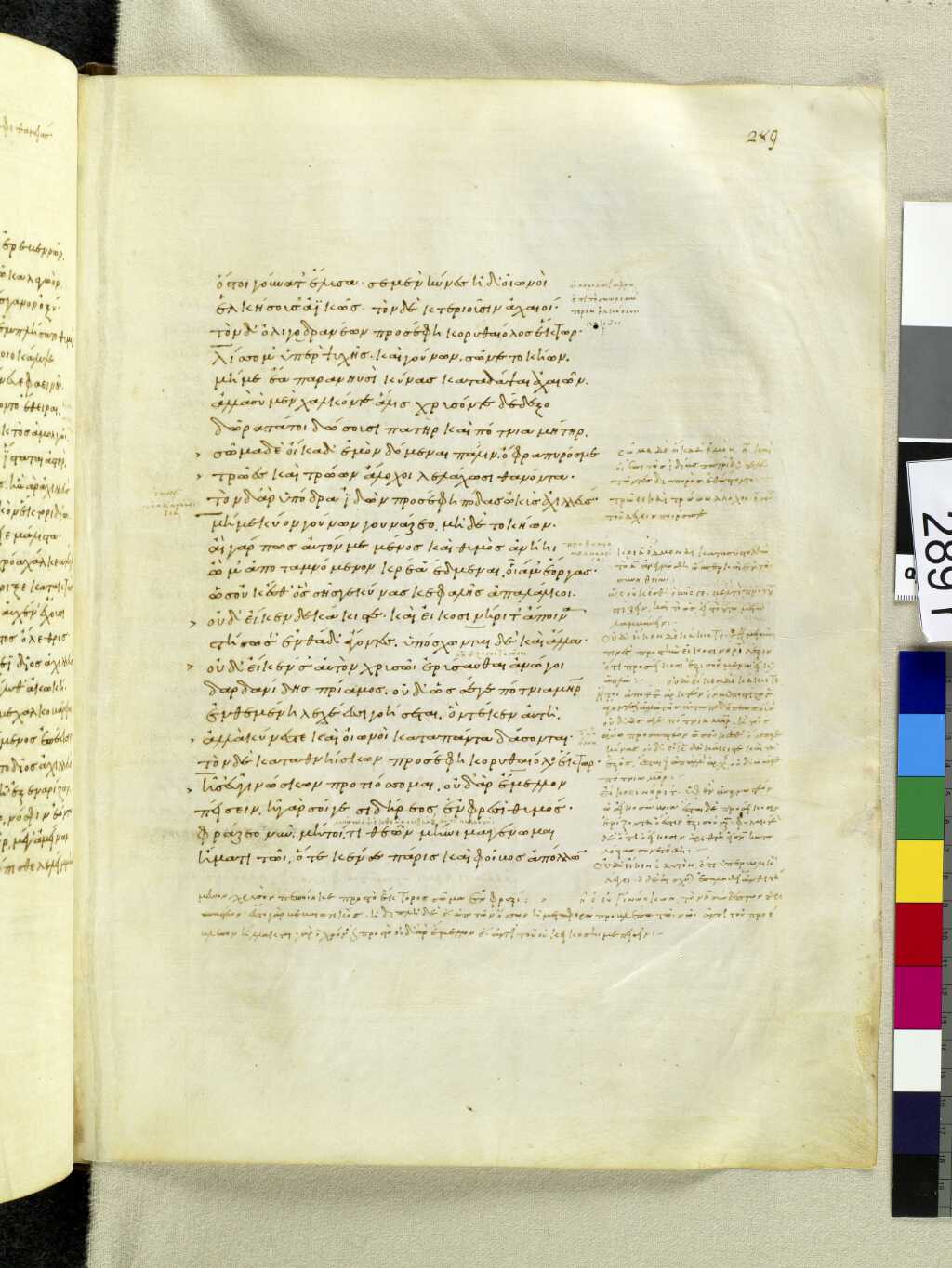
351οὐδʼ εἴ κέν σʼ αὐτὸν χρυσῷ ἐρύσασθαι ἀνώγοι 352Δαρδανίδης Πρίαμος· οὐδʼ ὧς σέ γε πότνια μήτηρ 353ἐνθεμένη λεχέεσσι γοήσεται ὃν τέκεν αὐτή, 354ἀλλὰ κύνες τε καὶ οἰωνοὶ κατὰ πάντα δάσονται. 355τὸν δὲ καταθνῄσκων προσέφη κορυθαίολος Ἕκτωρ· 356ἦ σʼ εὖ γιγνώσκων προτιόσσομαι, οὐδʼ ἄρʼ ἔμελλον 357πείσειν· ἦ γὰρ σοί γε σιδήρεος ἐν φρεσὶ θυμός. 358φράζεο νῦν, μή τοί τι θεῶν μήνιμα γένωμαι 359ἤματι τῷ ὅτε κέν σε Πάρις καὶ Φοῖβος Ἀπόλλων 360ἐσθλὸν ἐόντʼ ὀλέσωσιν ἐνὶ Σκαιῇσι πύλῃσιν. 361ὣς ἄρα μιν εἰπόντα τέλος θανάτοιο κάλυψε, 362ψυχὴ δʼ ἐκ ῥεθέων πταμένη Ἄϊδος δὲ βεβήκει 363ὃν πότμον γοόωσα λιποῦσʼ ἀνδροτῆτα καὶ ἥβην. 364τὸν καὶ τεθνηῶτα προσηύδα δῖος Ἀχιλλεύς· 365τέθναθι· κῆρα δʼ ἐγὼ τότε δέξομαι ὁππότε κεν δὴ 366Ζεὺς ἐθέλῃ τελέσαι ἠδʼ ἀθάνατοι θεοὶ ἄλλοι. 367ἦ ῥα, καὶ ἐκ νεκροῖο ἐρύσσατο χάλκεον ἔγχος, 368καὶ τό γʼ ἄνευθεν ἔθηχʼ, ὃ δʼ ἀπʼ ὤμων τεύχεʼ ἐσύλα 369αἱματόεντʼ· ἄλλοι δὲ περίδραμον υἷες Ἀχαιῶν, 370οἳ καὶ θηήσαντο φυὴν καὶ εἶδος ἀγητὸν 371Ἕκτορος· οὐδʼ ἄρα οἵ τις ἀνουτητί γε παρέστη. 372ὧδε δέ τις εἴπεσκεν ἰδὼν ἐς πλησίον ἄλλον· 373ὢ πόποι, ἦ μάλα δὴ μαλακώτερος ἀμφαφάασθαι 374Ἕκτωρ ἢ ὅτε νῆας ἐνέπρησεν πυρὶ κηλέῳ. 375ὣς ἄρα τις εἴπεσκε καὶ οὐτήσασκε παραστάς.
Achilles glared at him and answered, “Dog, talk not to me neither of knees nor parents; would that I could be as sure of being able to cut your flesh into pieces and eat it raw, for the ill you have done me, as I am that nothing shall save you from the dogs—it shall not be, though they bring ten or twenty-fold ransom and weigh it out for me on the spot, with promise of yet more hereafter. Though Priam son of Dardanus should bid them offer me your weight in gold, even so your mother shall never lay you out and make lament over the son she bore, but dogs and vultures shall eat you utterly up.”
Hector with his dying breath then said, “I know you what you are, and was sure that I should not move you, for your heart is hard as iron; look to it that I bring not heaven’s anger upon you on the day when Paris and Phoebus Apollo, valiant though you be, shall slay you at the Scaean gates.”
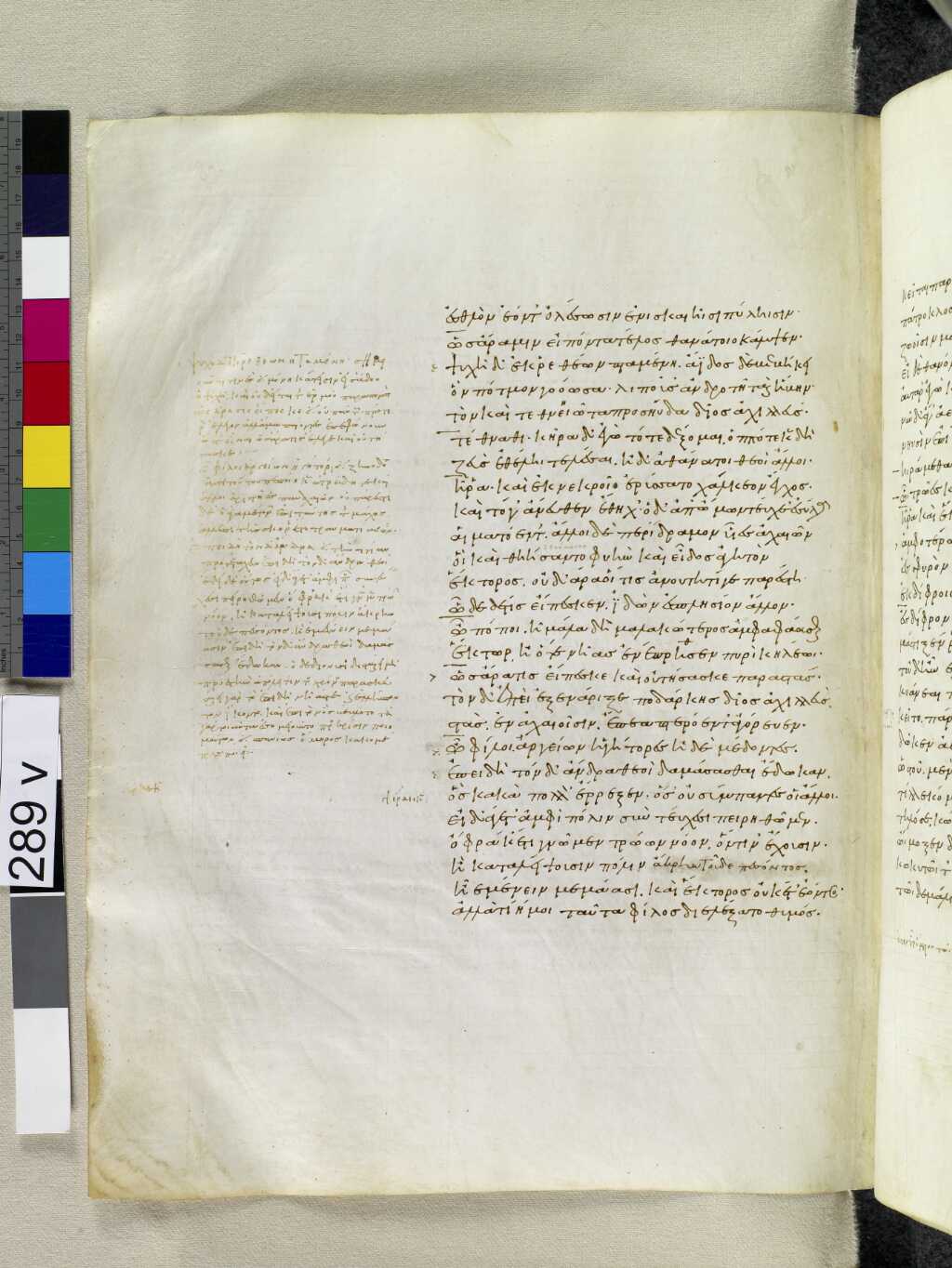
376τὸν δʼ ἐπεὶ ἐξενάριξε ποδάρκης δῖος Ἀχιλλεύς, 377στὰς ἐν Ἀχαιοῖσιν ἔπεα πτερόεντʼ ἀγόρευεν· 378ὦ φίλοι Ἀργείων ἡγήτορες ἠδὲ μέδοντες 379ἐπεὶ δὴ τόνδʼ ἄνδρα θεοὶ δαμάσασθαι ἔδωκαν, 380ὃς κακὰ πόλλʼ ἔρρεξεν ὅσʼ οὐ σύμπαντες οἱ ἄλλοι, 381εἰ δʼ ἄγετʼ ἀμφὶ πόλιν σὺν τεύχεσι πειρηθῶμεν, 382ὄφρά κʼ ἔτι γνῶμεν Τρώων νόον ὅν τινʼ ἔχουσιν, 383ἢ καταλείψουσιν πόλιν ἄκρην τοῦδε πεσόντος, 384ἦε μένειν μεμάασι καὶ Ἕκτορος οὐκέτʼ ἐόντος. 385ἀλλὰ τί ἤ μοι ταῦτα φίλος διελέξατο θυμός; 386κεῖται πὰρ νήεσσι νέκυς ἄκλαυτος ἄθαπτος 387Πάτροκλος· τοῦ δʼ οὐκ ἐπιλήσομαι, ὄφρʼ ἂν ἔγωγε 388ζωοῖσιν μετέω καί μοι φίλα γούνατʼ ὀρώρῃ· 389εἰ δὲ θανόντων περ καταλήθοντʼ εἰν Ἀΐδαο 390αὐτὰρ ἐγὼ καὶ κεῖθι φίλου μεμνήσομʼ ἑταίρου. 391νῦν δʼ ἄγʼ ἀείδοντες παιήονα κοῦροι Ἀχαιῶν 392νηυσὶν ἔπι γλαφυρῇσι νεώμεθα, τόνδε δʼ ἄγωμεν. 393ἠράμεθα μέγα κῦδος· ἐπέφνομεν Ἕκτορα δῖον, 394ᾧ Τρῶες κατὰ ἄστυ θεῷ ὣς εὐχετόωντο. 395ἦ ῥα, καὶ Ἕκτορα δῖον ἀεικέα μήδετο ἔργα. 396ἀμφοτέρων μετόπισθε ποδῶν τέτρηνε τένοντε 397ἐς σφυρὸν ἐκ πτέρνης, βοέους δʼ ἐξῆπτεν ἱμάντας, 398ἐκ δίφροιο δʼ ἔδησε, κάρη δʼ ἕλκεσθαι ἔασεν· 399ἐς δίφρον δʼ ἀναβὰς ἀνά τε κλυτὰ τεύχεʼ ἀείρας 400μάστιξέν ῥʼ ἐλάαν, τὼ δʼ οὐκ ἀέκοντε πετέσθην.
When he had thus said the shrouds of death enfolded him, whereon his soul went out of him and flew down to the house of Hades, lamenting its sad fate that it should enjoy youth and strength no longer. But Achilles said, speaking to the dead body, “Die; for my part I will accept my fate whensoever Jove and the other gods see fit to send it.”
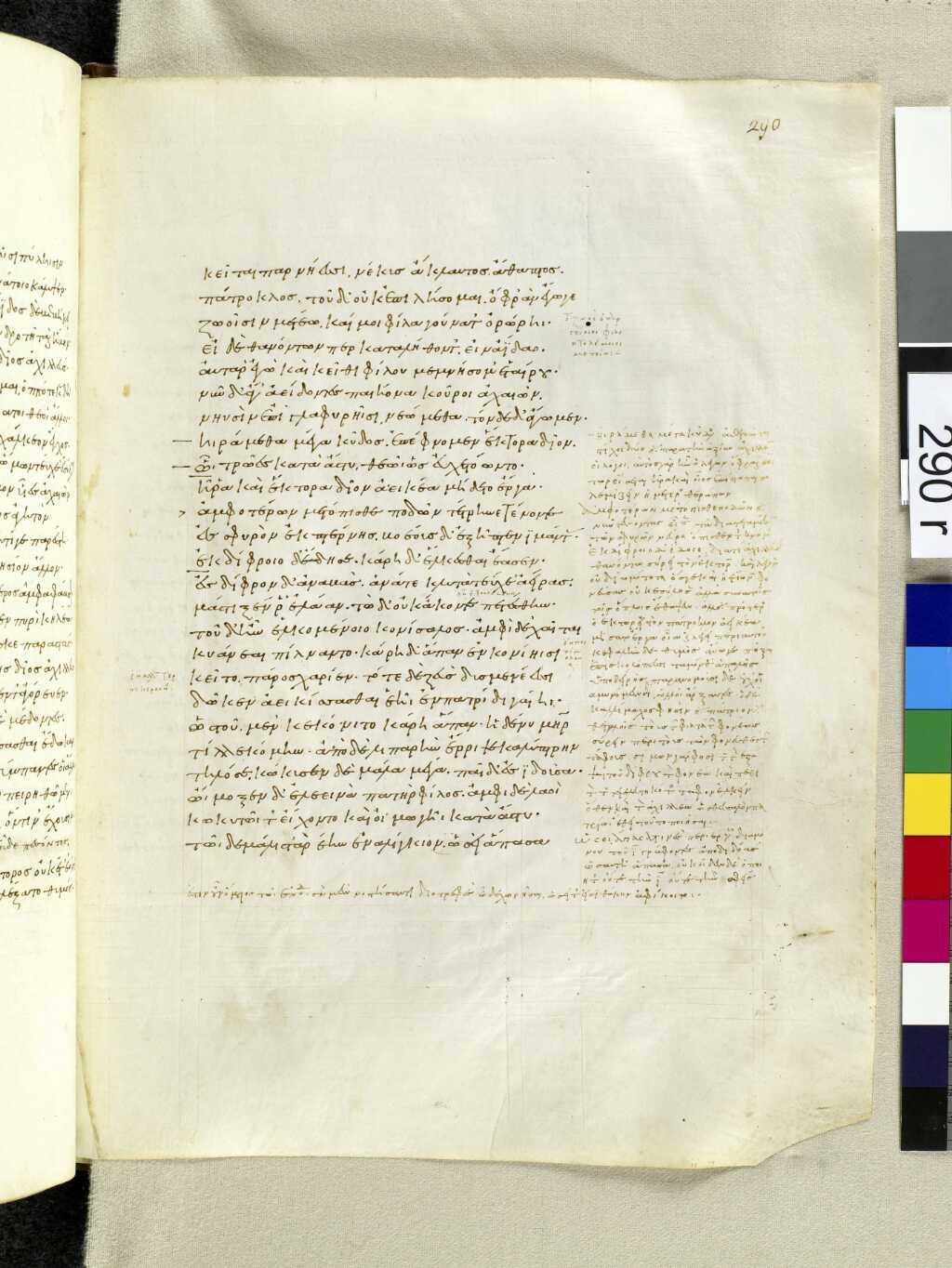
401τοῦ δʼ ἦν ἑλκομένοιο κονίσαλος, ἀμφὶ δὲ χαῖται 402κυάνεαι πίτναντο, κάρη δʼ ἅπαν ἐν κονίῃσι 403κεῖτο πάρος χαρίεν· τότε δὲ Ζεὺς δυσμενέεσσι 404δῶκεν ἀεικίσσασθαι ἑῇ ἐν πατρίδι γαίῃ. 405ὣς τοῦ μὲν κεκόνιτο κάρη ἅπαν· ἣ δέ νυ μήτηρ 406τίλλε κόμην, ἀπὸ δὲ λιπαρὴν ἔρριψε καλύπτρην 407τηλόσε, κώκυσεν δὲ μάλα μέγα παῖδʼ ἐσιδοῦσα· 408ᾤμωξεν δʼ ἐλεεινὰ πατὴρ φίλος, ἀμφὶ δὲ λαοὶ 409κωκυτῷ τʼ εἴχοντο καὶ οἰμωγῇ κατὰ ἄστυ. 410τῷ δὲ μάλιστʼ ἄρʼ ἔην ἐναλίγκιον ὡς εἰ ἅπασα 411Ἴλιος ὀφρυόεσσα πυρὶ σμύχοιτο κατʼ ἄκρης. 412λαοὶ μέν ῥα γέροντα μόγις ἔχον ἀσχαλόωντα 413ἐξελθεῖν μεμαῶτα πυλάων Δαρδανιάων. 414πάντας δʼ ἐλλιτάνευε κυλινδόμενος κατὰ κόπρον, 415ἐξονομακλήδην ὀνομάζων ἄνδρα ἕκαστον· 416σχέσθε φίλοι, καί μʼ οἶον ἐάσατε κηδόμενοί περ 417ἐξελθόντα πόληος ἱκέσθʼ ἐπὶ νῆας Ἀχαιῶν. 418λίσσωμʼ ἀνέρα τοῦτον ἀτάσθαλον ὀβριμοεργόν, 419ἤν πως ἡλικίην αἰδέσσεται ἠδʼ ἐλεήσῃ 420γῆρας· καὶ δέ νυ τῷ γε πατὴρ τοιόσδε τέτυκται 421Πηλεύς, ὅς μιν ἔτικτε καὶ ἔτρεφε πῆμα γενέσθαι 422Τρωσί· μάλιστα δʼ ἐμοὶ περὶ πάντων ἄλγεʼ ἔθηκε. 423τόσσους γάρ μοι παῖδας ἀπέκτανε τηλεθάοντας· 424τῶν πάντων οὐ τόσσον ὀδύρομαι ἀχνύμενός περ 425ὡς ἑνός, οὗ μʼ ἄχος ὀξὺ κατοίσεται Ἄϊδος εἴσω,
As he spoke he drew his spear from the body and set it on one side; then he stripped the blood-stained armour from Hector’s shoulders while the other Achaeans came running up to view his wondrous strength and beauty; and no one came near him without giving him a fresh wound. Then would one turn to his neighbour and say, “It is easier to handle Hector now than when he was flinging fire on to our ships”—and as he spoke he would thrust his spear into him anew.
When Achilles had done spoiling Hector of his armour, he stood among the Argives and said, “My friends, princes and counsellors of the Argives, now that heaven has vouchsafed us to overcome this man, who has done us more hurt than all the others together, consider whether we should not attack the city in force, and discover in what mind the Trojans may be. We should thus learn whether they will desert their city now that Hector has fallen, or will still hold out even though he is no longer living. But why argue with myself in this way, while Patroclus is still lying at the ships unburied, and unmourned—he whom I can never forget so long as I am alive and my strength fails not? Though men forget their dead when once they are within the house of Hades, yet not even there will I forget the comrade whom I have lost. Now, therefore, Achaean youths, let us raise the song of victory and go back to the ships taking this man along with us; for we have achieved a mighty triumph and have slain noble Hector to whom the Trojans prayed throughout their city as though he were a god.”
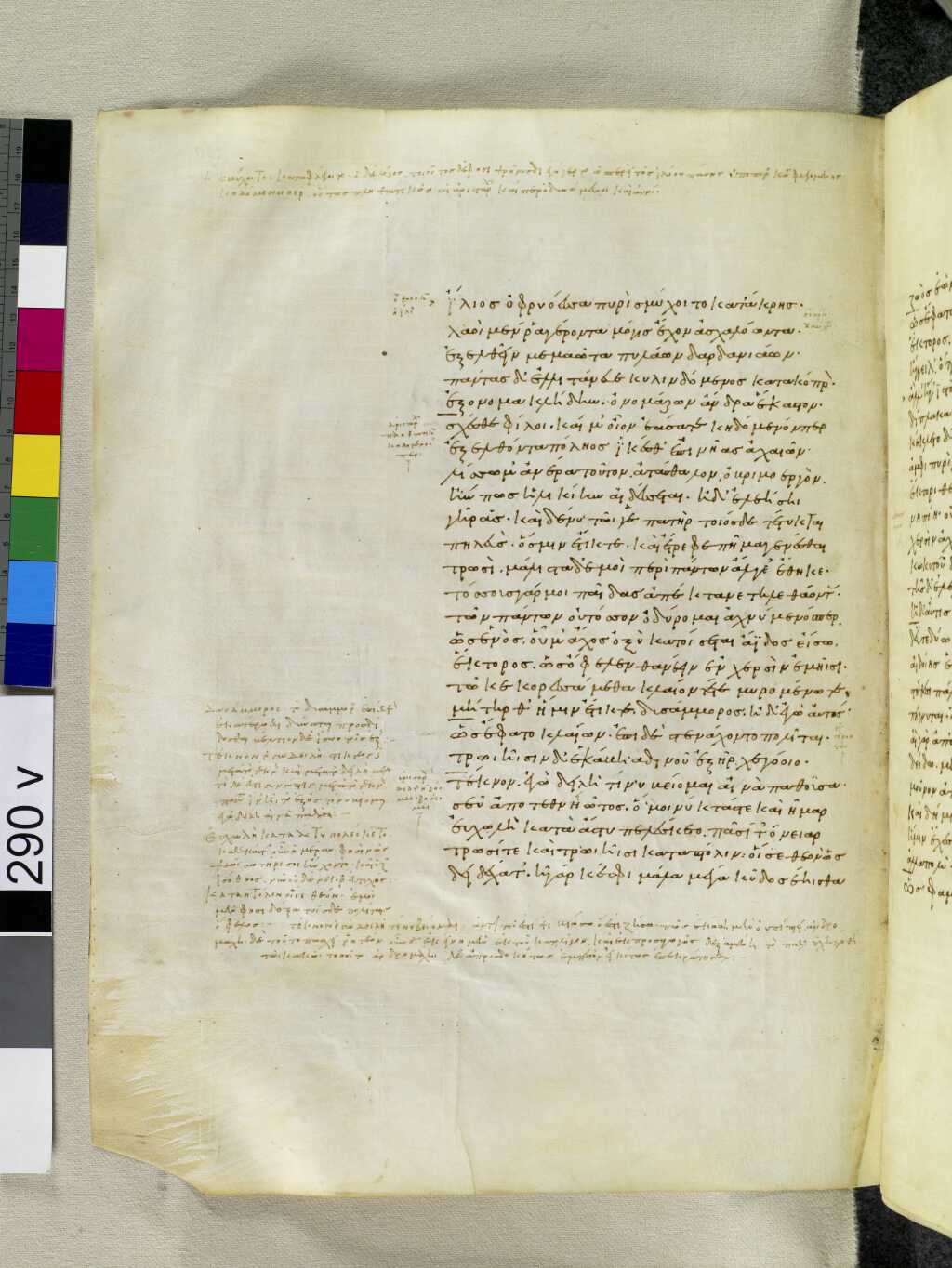
426Ἕκτορος· ὡς ὄφελεν θανέειν ἐν χερσὶν ἐμῇσι· 427τώ κε κορεσσάμεθα κλαίοντέ τε μυρομένω τε 428μήτηρ θʼ, ἥ μιν ἔτικτε δυσάμμορος, ἠδʼ ἐγὼ αὐτός. 429ὣς ἔφατο κλαίων, ἐπὶ δὲ στενάχοντο πολῖται· 430Τρῳῇσιν δʼ Ἑκάβη ἁδινοῦ ἐξῆρχε γόοιο· 431τέκνον ἐγὼ δειλή· τί νυ βείομαι αἰνὰ παθοῦσα 432σεῦ ἀποτεθνηῶτος; ὅ μοι νύκτάς τε καὶ ἦμαρ 433εὐχωλὴ κατὰ ἄστυ πελέσκεο, πᾶσί τʼ ὄνειαρ 434Τρωσί τε καὶ Τρῳῇσι κατὰ πτόλιν, οἵ σε θεὸν ὣς 435δειδέχατʼ· ἦ γὰρ καί σφι μάλα μέγα κῦδος ἔησθα 436ζωὸς ἐών· νῦν αὖ θάνατος καὶ μοῖρα κιχάνει. 437ὣς ἔφατο κλαίουσʼ, ἄλοχος δʼ οὔ πώ τι πέπυστο 438Ἕκτορος· οὐ γάρ οἵ τις ἐτήτυμος ἄγγελος ἐλθὼν 439ἤγγειλʼ ὅττί ῥά οἱ πόσις ἔκτοθι μίμνε πυλάων, 440ἀλλʼ ἥ γʼ ἱστὸν ὕφαινε μυχῷ δόμου ὑψηλοῖο 441δίπλακα πορφυρέην, ἐν δὲ θρόνα ποικίλʼ ἔπασσε. 442κέκλετο δʼ ἀμφιπόλοισιν ἐϋπλοκάμοις κατὰ δῶμα 443ἀμφὶ πυρὶ στῆσαι τρίποδα μέγαν, ὄφρα πέλοιτο 444Ἕκτορι θερμὰ λοετρὰ μάχης ἐκ νοστήσαντι 445νηπίη, οὐδʼ ἐνόησεν ὅ μιν μάλα τῆλε λοετρῶν 446χερσὶν Ἀχιλλῆος δάμασε γλαυκῶπις Ἀθήνη. 447κωκυτοῦ δʼ ἤκουσε καὶ οἰμωγῆς ἀπὸ πύργου· 448τῆς δʼ ἐλελίχθη γυῖα, χαμαὶ δέ οἱ ἔκπεσε κερκίς· 449ἣ δʼ αὖτις δμῳῇσιν ἐϋπλοκάμοισι μετηύδα· 450δεῦτε δύω μοι ἕπεσθον, ἴδωμʼ ὅτινʼ ἔργα τέτυκται.
On this he treated the body of Hector with contumely: he pierced the sinews at the back of both his feet from heel to ancle and passed thongs of ox-hide through the slits he had made: thus he made the body fast to his chariot, letting the head trail upon the ground. Then when he had put the goodly armour on the chariot and had himself mounted, he lashed his horses on and they flew forward nothing loth. The dust rose from Hector as he was being dragged along, his dark hair flew all abroad, and his head once so comely was laid low on earth, for Jove had now delivered him into the hands of his foes to do him outrage in his own land.
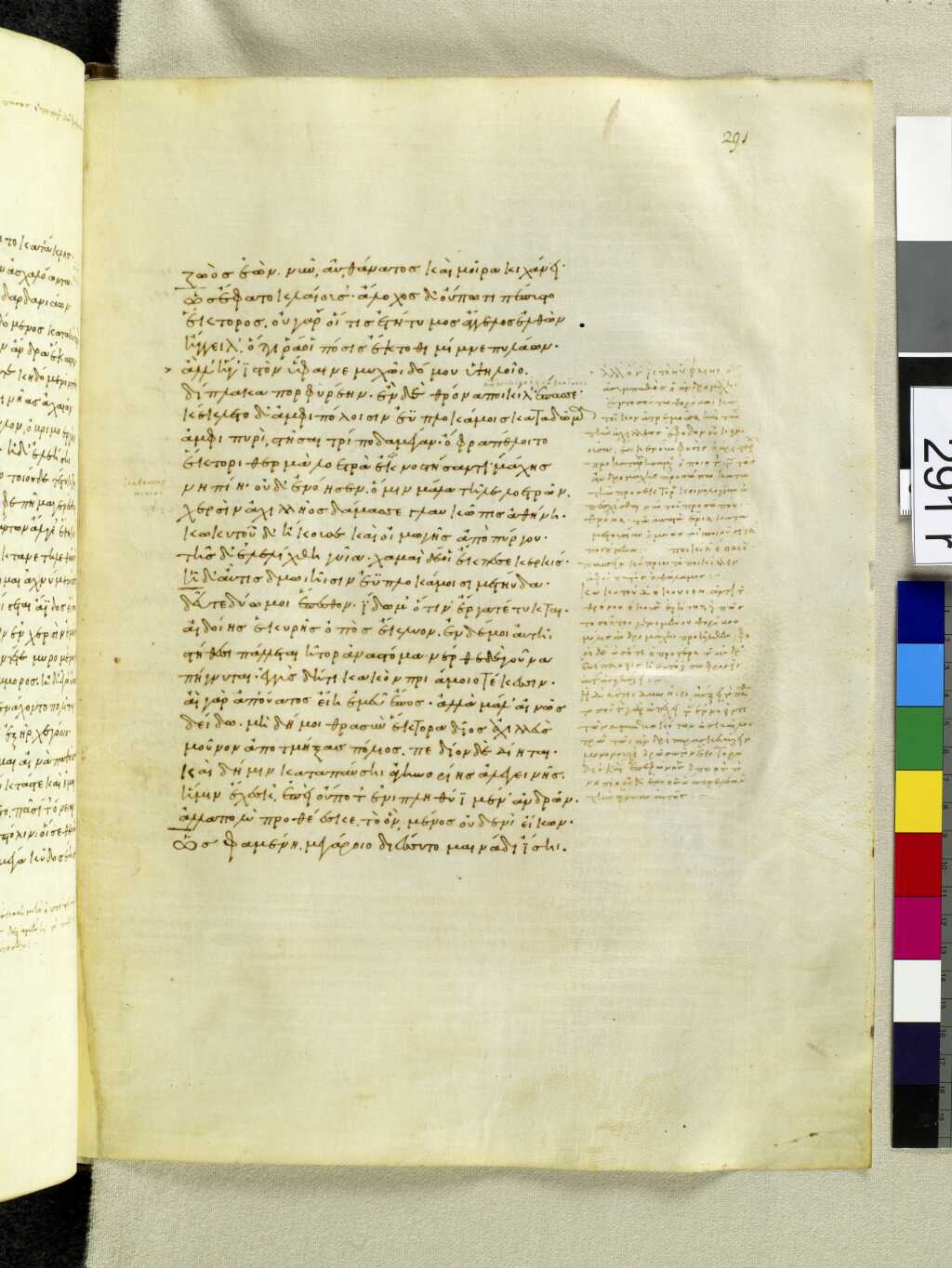
451αἰδοίης ἑκυρῆς ὀπὸς ἔκλυον, ἐν δʼ ἐμοὶ αὐτῇ 452στήθεσι πάλλεται ἦτορ ἀνὰ στόμα, νέρθε δὲ γοῦνα 453πήγνυται· ἐγγὺς δή τι κακὸν Πριάμοιο τέκεσσιν. 454αἲ γὰρ ἀπʼ οὔατος εἴη ἐμεῦ ἔπος· ἀλλὰ μάλʼ αἰνῶς 455δείδω μὴ δή μοι θρασὺν Ἕκτορα δῖος Ἀχιλλεὺς 456μοῦνον ἀποτμήξας πόλιος πεδίον δὲ δίηται, 457καὶ δή μιν καταπαύσῃ ἀγηνορίης ἀλεγεινῆς 458ἥ μιν ἔχεσκʼ, ἐπεὶ οὔ ποτʼ ἐνὶ πληθυῖ μένεν ἀνδρῶν, 459ἀλλὰ πολὺ προθέεσκε, τὸ ὃν μένος οὐδενὶ εἴκων. 460ὣς φαμένη μεγάροιο διέσσυτο μαινάδι ἴση 461παλλομένη κραδίην· ἅμα δʼ ἀμφίπολοι κίον αὐτῇ 462αὐτὰρ ἐπεὶ πύργόν τε καὶ ἀνδρῶν ἷξεν ὅμιλον 463ἔστη παπτήνασʼ ἐπὶ τείχεϊ, τὸν δὲ νόησεν 464ἑλκόμενον πρόσθεν πόλιος· ταχέες δέ μιν ἵπποι 465ἕλκον ἀκηδέστως κοίλας ἐπὶ νῆας Ἀχαιῶν. 466τὴν δὲ κατʼ ὀφθαλμῶν ἐρεβεννὴ νὺξ ἐκάλυψεν, 467ἤριπε δʼ ἐξοπίσω, ἀπὸ δὲ ψυχὴν ἐκάπυσσε. 468τῆλε δʼ ἀπὸ κρατὸς βάλε δέσματα σιγαλόεντα, 469ἄμπυκα κεκρύφαλόν τε ἰδὲ πλεκτὴν ἀναδέσμην 470κρήδεμνόν θʼ, ὅ ῥά οἱ δῶκε χρυσῆ Ἀφροδίτη 471ἤματι τῷ ὅτε μιν κορυθαίολος ἠγάγεθʼ Ἕκτωρ 472ἐκ δόμου Ἠετίωνος, ἐπεὶ πόρε μυρία ἕδνα. 473ἀμφὶ δέ μιν γαλόῳ τε καὶ εἰνατέρες ἅλις ἔσταν, 474αἵ ἑ μετὰ σφίσιν εἶχον ἀτυζομένην ἀπολέσθαι. 475ἣ δʼ ἐπεὶ οὖν ἔμπνυτο καὶ ἐς φρένα θυμὸς ἀγέρθη
Thus was the head of Hector being dishonoured in the dust. His mother tore her hair, and flung her veil from her with a loud cry as she looked upon her son. His father made piteous moan, and throughout the city the people fell to weeping and wailing. It was as though the whole of frowning Ilius was being smirched with fire. Hardly could the people hold Priam back in his hot haste to rush without the gates of the city. He grovelled in the mire and besought them, calling each one of them by his name. “Let be, my friends,” he cried, “and for all your sorrow, suffer me to go single-handed to the ships of the Achaeans. Let me beseech this cruel and terrible man, if maybe he will respect the feeling of his fellow-men, and have compassion on my old age. His own father is even such another as myself—Peleus, who bred him and reared him to be the bane of us Trojans, and of myself more than of all others. Many a son of mine has he slain in the flower of his youth, and yet, grieve for these as I may, I do so for one—Hector—more than for them all, and the bitterness of my sorrow will bring me down to the house of Hades. Would that he had died in my arms, for so both his ill-starred mother who bore him, and myself, should have had the comfort of weeping and mourning over him.”
Thus did he speak with many tears, and all the people of the city joined in his lament. Hecuba then raised the cry of wailing among the Trojans. “Alas, my son,” she cried, “what have I left to live for now that you are no more? Night and day did I glory in you throughout the city, for you were a tower of strength to all in Troy, and both men and women alike hailed you as a god. So long as you lived you were their pride, but now death and destruction have fallen upon you.”
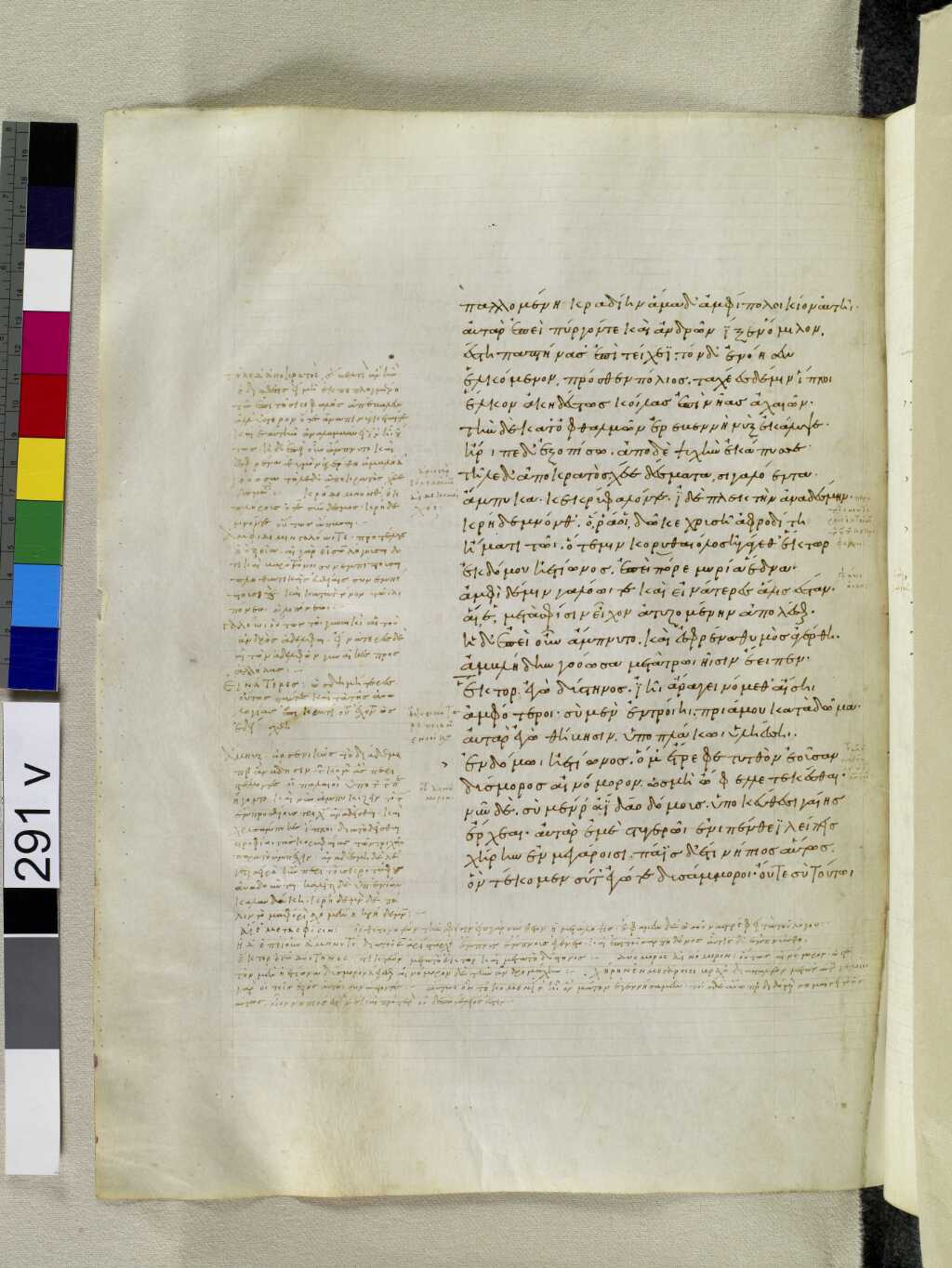
476ἀμβλήδην γοόωσα μετὰ Τρῳῇσιν ἔειπεν· 477Ἕκτορ ἐγὼ δύστηνος· ἰῇ ἄρα γεινόμεθʼ αἴσῃ 478ἀμφότεροι, σὺ μὲν ἐν Τροίῃ Πριάμου κατὰ δῶμα, 479αὐτὰρ ἐγὼ Θήβῃσιν ὑπὸ Πλάκῳ ὑληέσσῃ 480ἐν δόμῳ Ἠετίωνος, ὅ μʼ ἔτρεφε τυτθὸν ἐοῦσαν 481δύσμορος αἰνόμορον· ὡς μὴ ὤφελλε τεκέσθαι. 482νῦν δὲ σὺ μὲν Ἀΐδαο δόμους ὑπὸ κεύθεσι γαίης 483ἔρχεαι, αὐτὰρ ἐμὲ στυγερῷ ἐνὶ πένθεϊ λείπεις 484χήρην ἐν μεγάροισι· πάϊς δʼ ἔτι νήπιος αὔτως, 485ὃν τέκομεν σύ τʼ ἐγώ τε δυσάμμοροι· οὔτε σὺ τούτῳ 486ἔσσεαι Ἕκτορ ὄνειαρ ἐπεὶ θάνες, οὔτε σοὶ οὗτος. 487ἤν περ γὰρ πόλεμόν γε φύγῃ πολύδακρυν Ἀχαιῶν, 488αἰεί τοι τούτῳ γε πόνος καὶ κήδεʼ ὀπίσσω 489ἔσσοντʼ· ἄλλοι γάρ οἱ ἀπουρίσσουσιν ἀρούρας. 490ἦμαρ δʼ ὀρφανικὸν παναφήλικα παῖδα τίθησι· 491πάντα δʼ ὑπεμνήμυκε, δεδάκρυνται δὲ παρειαί, 492δευόμενος δέ τʼ ἄνεισι πάϊς ἐς πατρὸς ἑταίρους, 493ἄλλον μὲν χλαίνης ἐρύων, ἄλλον δὲ χιτῶνος· 494τῶν δʼ ἐλεησάντων κοτύλην τις τυτθὸν ἐπέσχε· 495χείλεα μέν τʼ ἐδίηνʼ, ὑπερῴην δʼ οὐκ ἐδίηνε. 496τὸν δὲ καὶ ἀμφιθαλὴς ἐκ δαιτύος ἐστυφέλιξε 497χερσὶν πεπλήγων καὶ ὀνειδείοισιν ἐνίσσων· 498ἔρρʼ οὕτως· οὐ σός γε πατὴρ μεταδαίνυται ἡμῖν. 499δακρυόεις δέ τʼ ἄνεισι πάϊς ἐς μητέρα χήρην 500Ἀστυάναξ, ὃς πρὶν μὲν ἑοῦ ἐπὶ γούνασι πατρὸς
Hector’s wife had as yet heard nothing, for no one had come to tell her that her husband had remained without the gates. She was at her loom in an inner part of the house, weaving a double purple web, and embroidering it with many flowers. She told her maids to set a large tripod on the fire, so as to have a warm bath ready for Hector when he came out of battle; poor woman, she knew not that he was now beyond the reach of baths, and that Minerva had laid him low by the hands of Achilles. She heard the cry coming as from the wall, and trembled in every limb; the shuttle fell from her hands, and again she spoke to her waiting-women. “Two of you,” she said, “come with me that I may learn what it is that has befallen; I heard the voice of my husband’s honoured mother; my own heart beats as though it would come into my mouth and my limbs refuse to carry me; some great misfortune for Priam’s children must be at hand. May I never live to hear it, but I greatly fear that Achilles has cut off the retreat of brave Hector and has chased him on to the plain where he was single-handed; I fear he may have put an end to the reckless daring which possessed my husband, who would never remain with the body of his men, but would dash on far in front, foremost of them all in valour.”
Her heart beat fast, and as she spoke she flew from the house like a maniac, with her waiting-women following after. When she reached the battlements and the crowd of people, she stood looking out upon the wall, and saw Hector being borne away in front of the city—the horses dragging him without heed or care over the ground towards the ships of the Achaeans. Her eyes were then shrouded as with the darkness of night and she fell fainting backwards. She tore the attiring from her head and flung it from her, the frontlet and net with its plaited band, and the veil which golden Venus had given her on the day when Hector took her with him from the house of Eetion, after having given countless gifts of wooing for her sake. Her husband’s sisters and the wives of his brothers crowded round her and supported her, for she was fain to die in her distraction; when she again presently breathed and came to herself, she sobbed and made lament among the Trojans saying, “Woe is me, O Hector; woe, indeed, that to share a common lot we were born, you at Troy in the house of Priam, and I at Thebes under the wooded mountain of Placus in the house of Eetion who brought me up when I was a child—ill-starred sire of an ill-starred daughter—would that he had never begotten me. You are now going into the house of Hades under the secret places of the earth, and you leave me a sorrowing widow in your house. The child, of whom you and I are the unhappy parents, is as yet a mere infant. Now that you are gone, O Hector, you can do nothing for him nor he for you. Even though he escape the horrors of this woeful war with the Achaeans, yet shall his life henceforth be one of labour and sorrow, for others will seize his lands. The day that robs a child of his parents severs him from his own kind; his head is bowed, his cheeks are wet with tears, and he will go about destitute among the friends of his father, plucking one by the cloak and another by the shirt. Some one or other of these may so far pity him as to hold the cup for a moment towards him and let him moisten his lips, but he must not drink enough to wet the roof of his mouth; then one whose parents are alive will drive him from the table with blows and angry words. ‘Out with you,’ he will say, ‘you have no father here,’ and the child will go crying back to his widowed mother—he, Astyanax, who erewhile would sit upon his father’s knees, and have none but the daintiest and choicest morsels set before him. When he had played till he was tired and went to sleep, he would lie in a bed, in the arms of his nurse, on a soft couch, knowing neither want nor care, whereas now that he has lost his father his lot will be full of hardship—he, whom the Trojans name Astyanax, because you, O Hector, were the only defence of their gates and battlements. The wriggling writhing worms will now eat you at the ships, far from your parents, when the dogs have glutted themselves upon you. You will lie naked, although in your house you have fine and goodly raiment made by hands of women. This will I now burn; it is of no use to you, for you can never again wear it, and thus you will have respect shown you by the Trojans both men and women.”
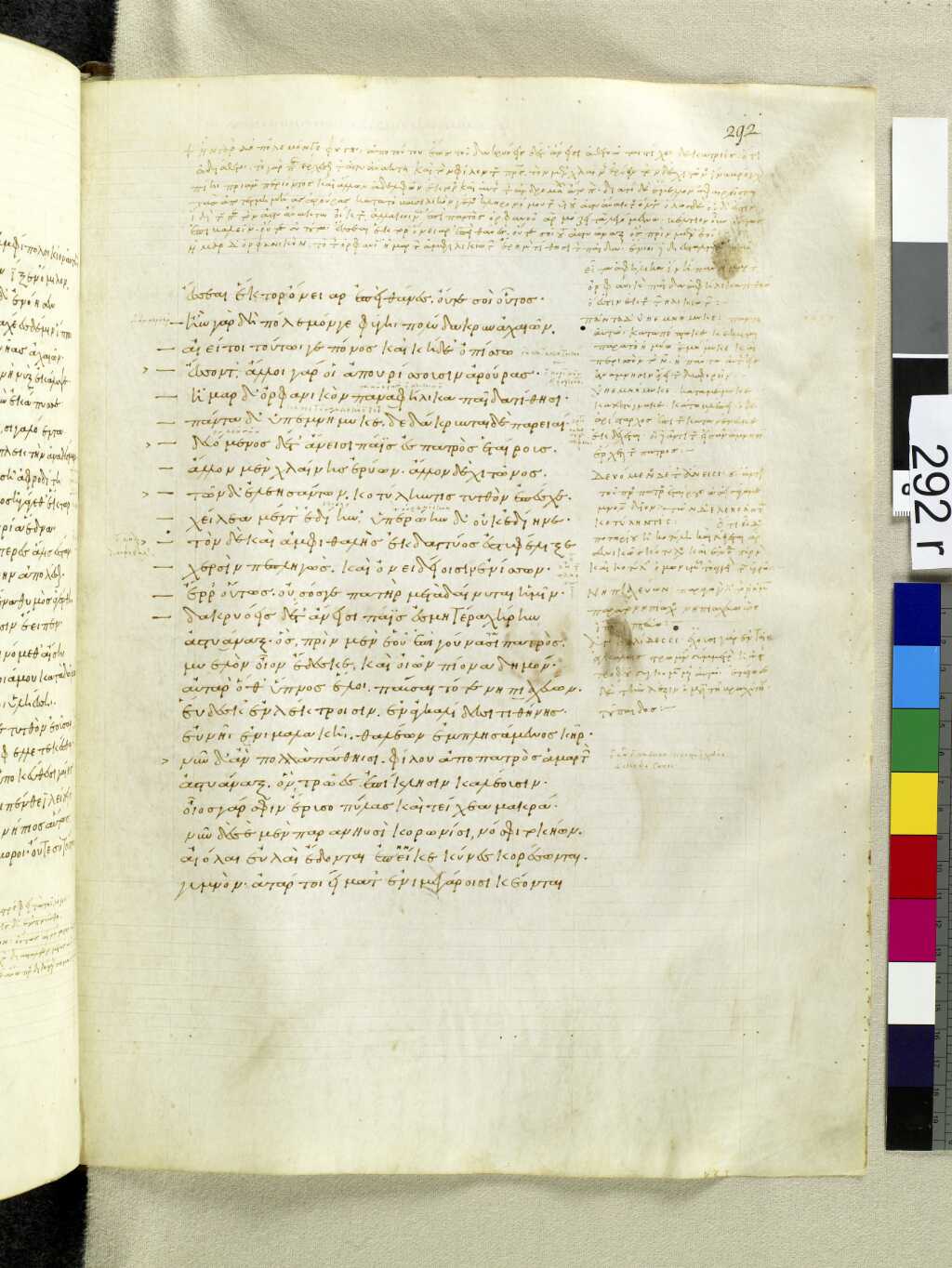
501μυελὸν οἶον ἔδεσκε καὶ οἰῶν πίονα δημόν· 502αὐτὰρ ὅθʼ ὕπνος ἕλοι, παύσαιτό τε νηπιαχεύων, 503εὕδεσκʼ ἐν λέκτροισιν ἐν ἀγκαλίδεσσι τιθήνης 504εὐνῇ ἔνι μαλακῇ θαλέων ἐμπλησάμενος κῆρ· 505νῦν δʼ ἂν πολλὰ πάθῃσι φίλου ἀπὸ πατρὸς ἁμαρτὼν 506Ἀστυάναξ, ὃν Τρῶες ἐπίκλησιν καλέουσιν· 507οἶος γάρ σφιν ἔρυσο πύλας καὶ τείχεα μακρά. 508νῦν δὲ σὲ μὲν παρὰ νηυσὶ κορωνίσι νόσφι τοκήων 509αἰόλαι εὐλαὶ ἔδονται, ἐπεί κε κύνες κορέσωνται 510γυμνόν· ἀτάρ τοι εἵματʼ ἐνὶ μεγάροισι κέονται 511λεπτά τε καὶ χαρίεντα τετυγμένα χερσὶ γυναικῶν. 512ἀλλʼ ἤτοι τάδε πάντα καταφλέξω πυρὶ κηλέῳ 513οὐδὲν σοί γʼ ὄφελος, ἐπεὶ οὐκ ἐγκείσεαι αὐτοῖς, 514ἀλλὰ πρὸς Τρώων καὶ Τρωϊάδων κλέος εἶναι. 515ὣς ἔφατο κλαίουσʼ, ἐπὶ δὲ στενάχοντο γυναῖκες.
In such wise did she cry aloud amid her tears, and the women joined in her lament.
Cite
Source & Cross-References
- Source text: Venetus A (10th c.) via Homer Multitext IIIF + Perseus Greek + Butler English (PG #2199) — view original
- Critical edition: Munro & Allen (Perseus Digital Library)
← previous · → next · v cycle view · l back to library