The Iliad, Book 5
Introduction
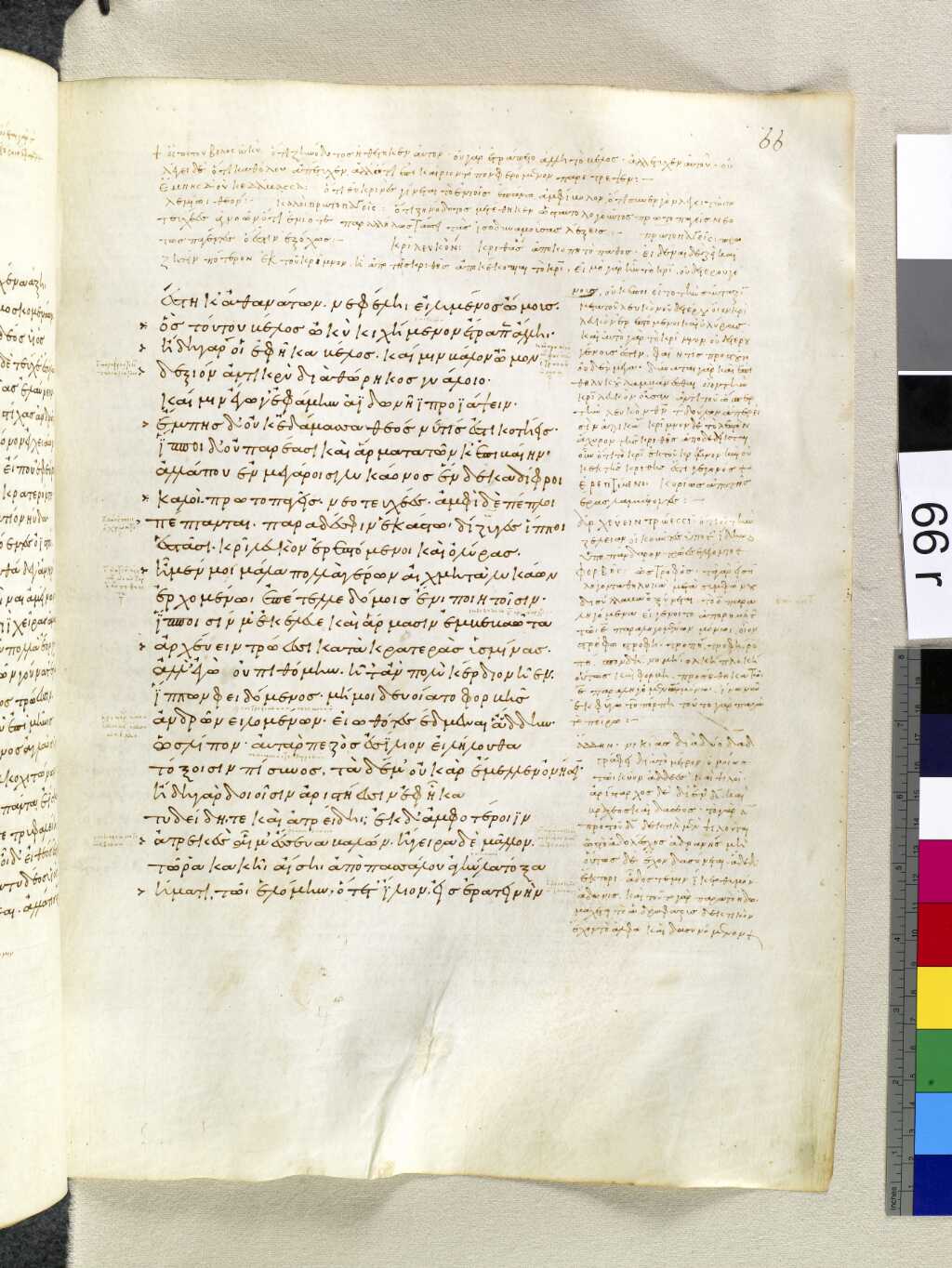
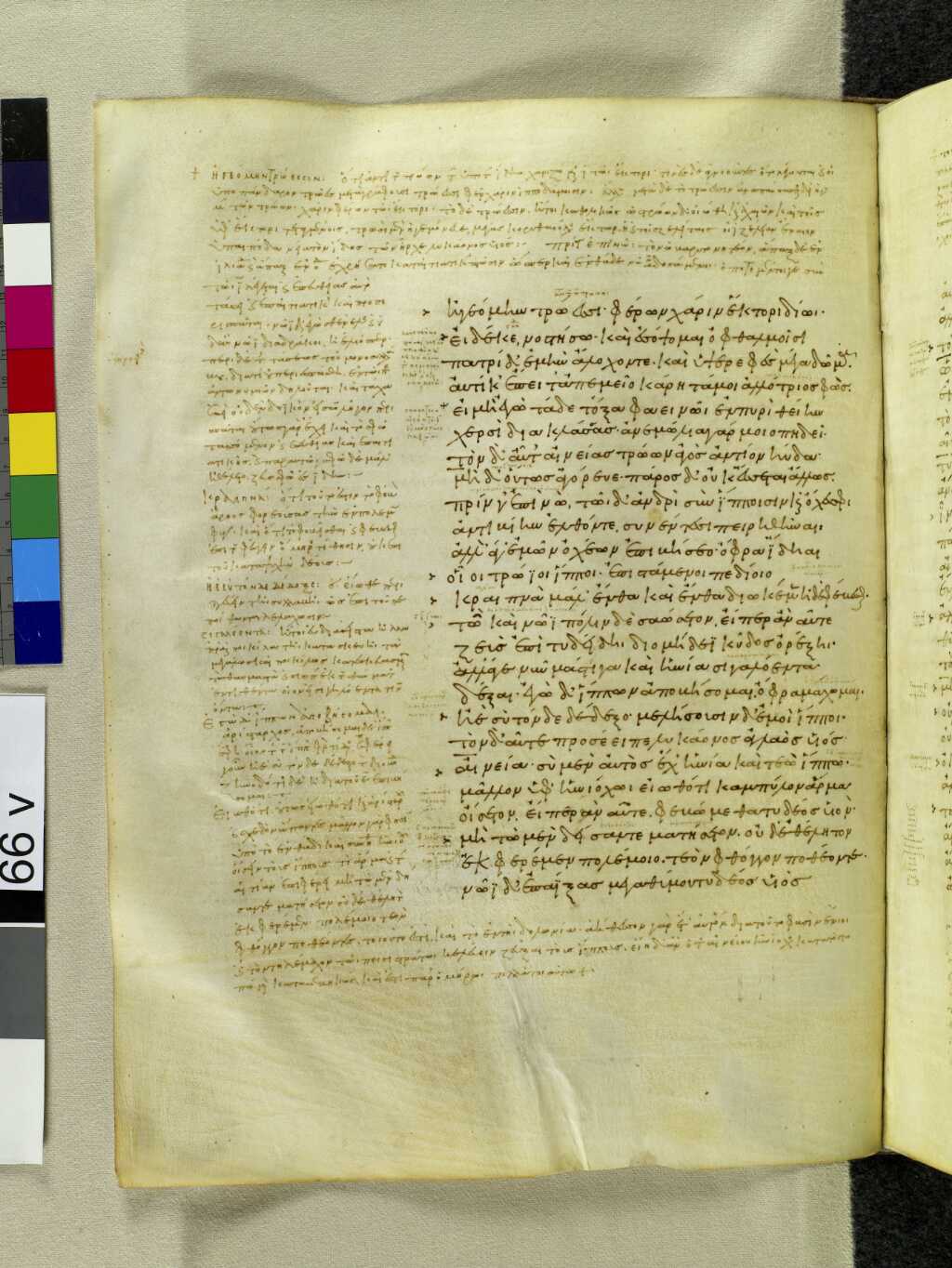
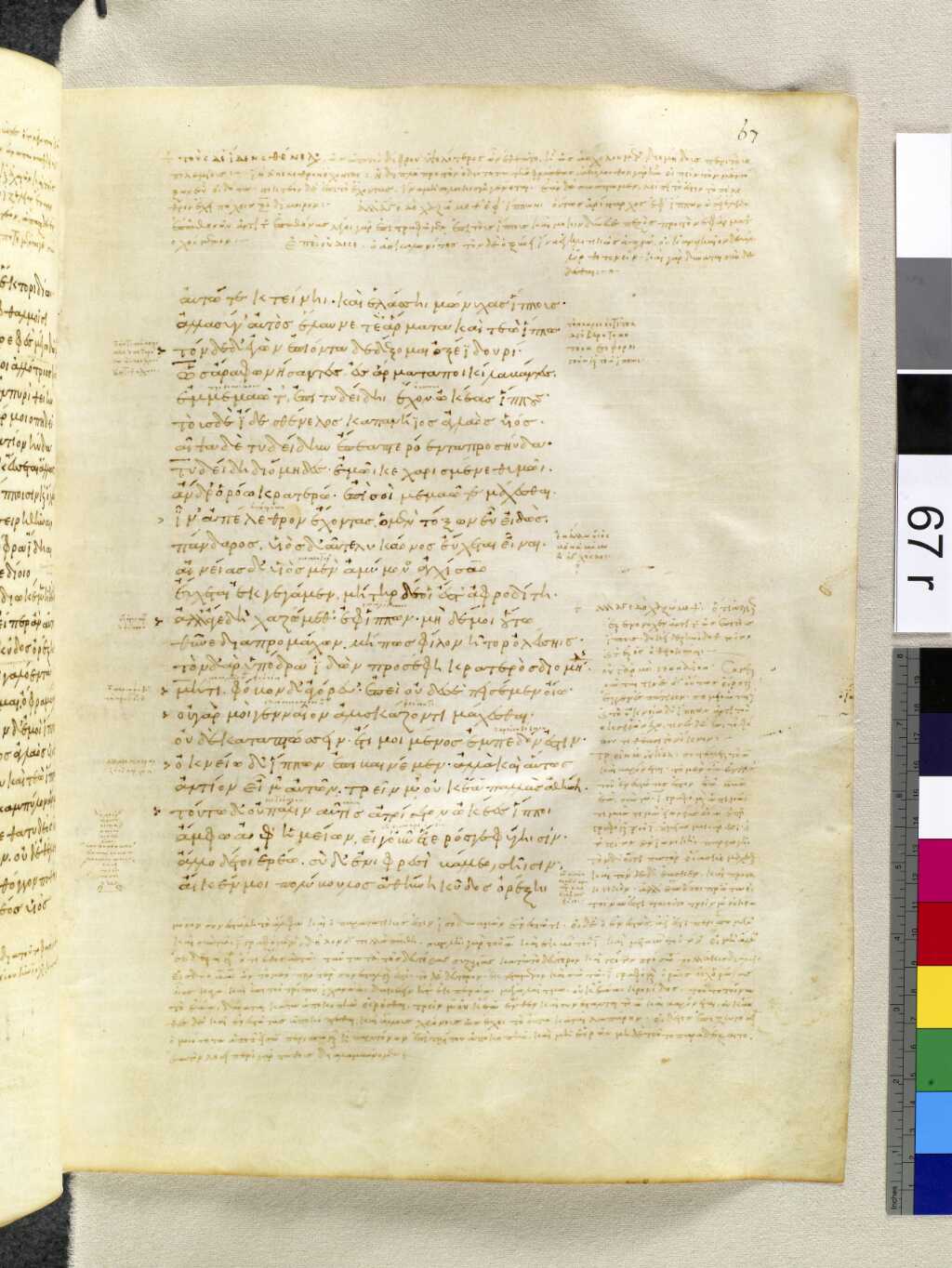
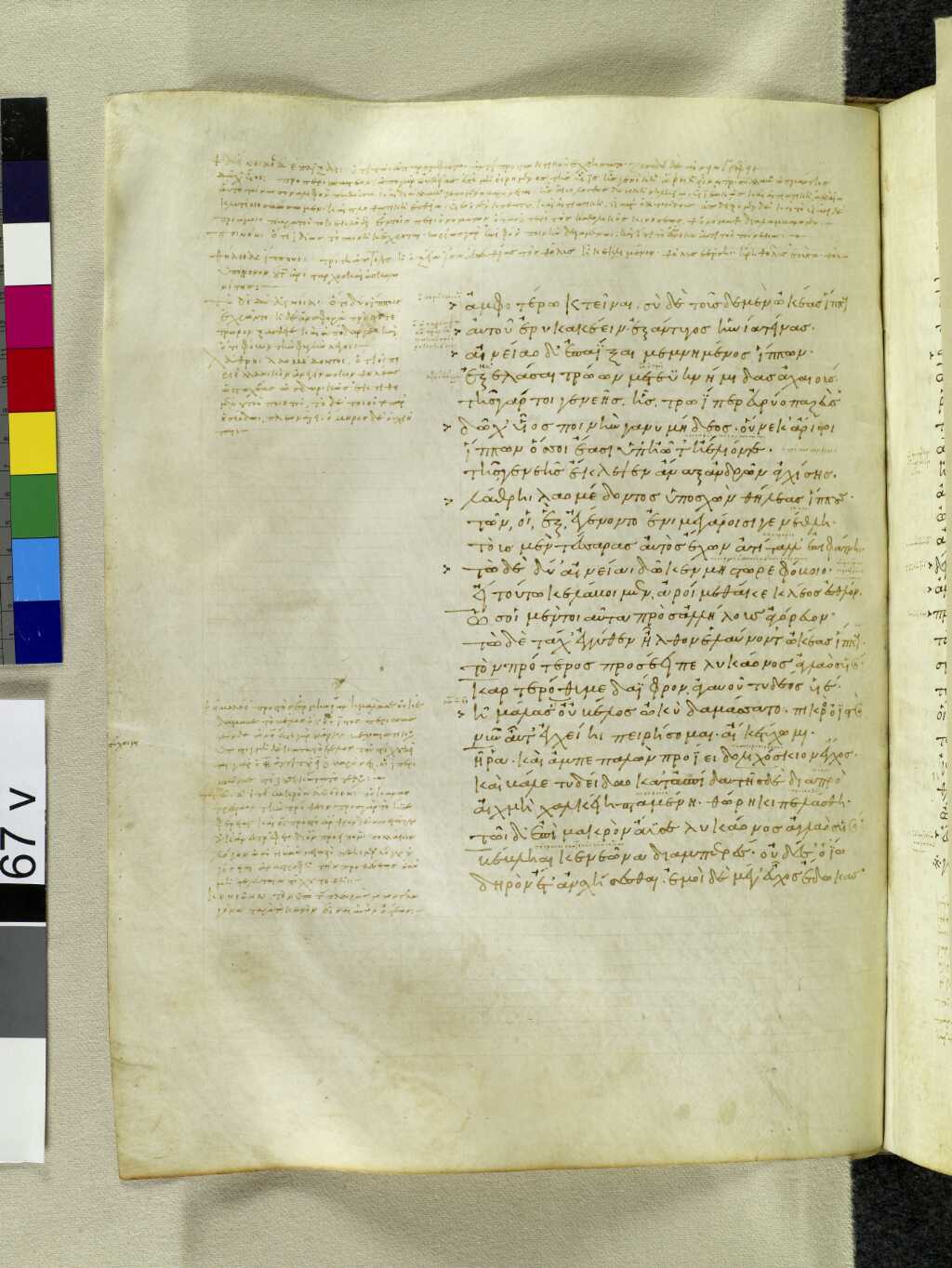
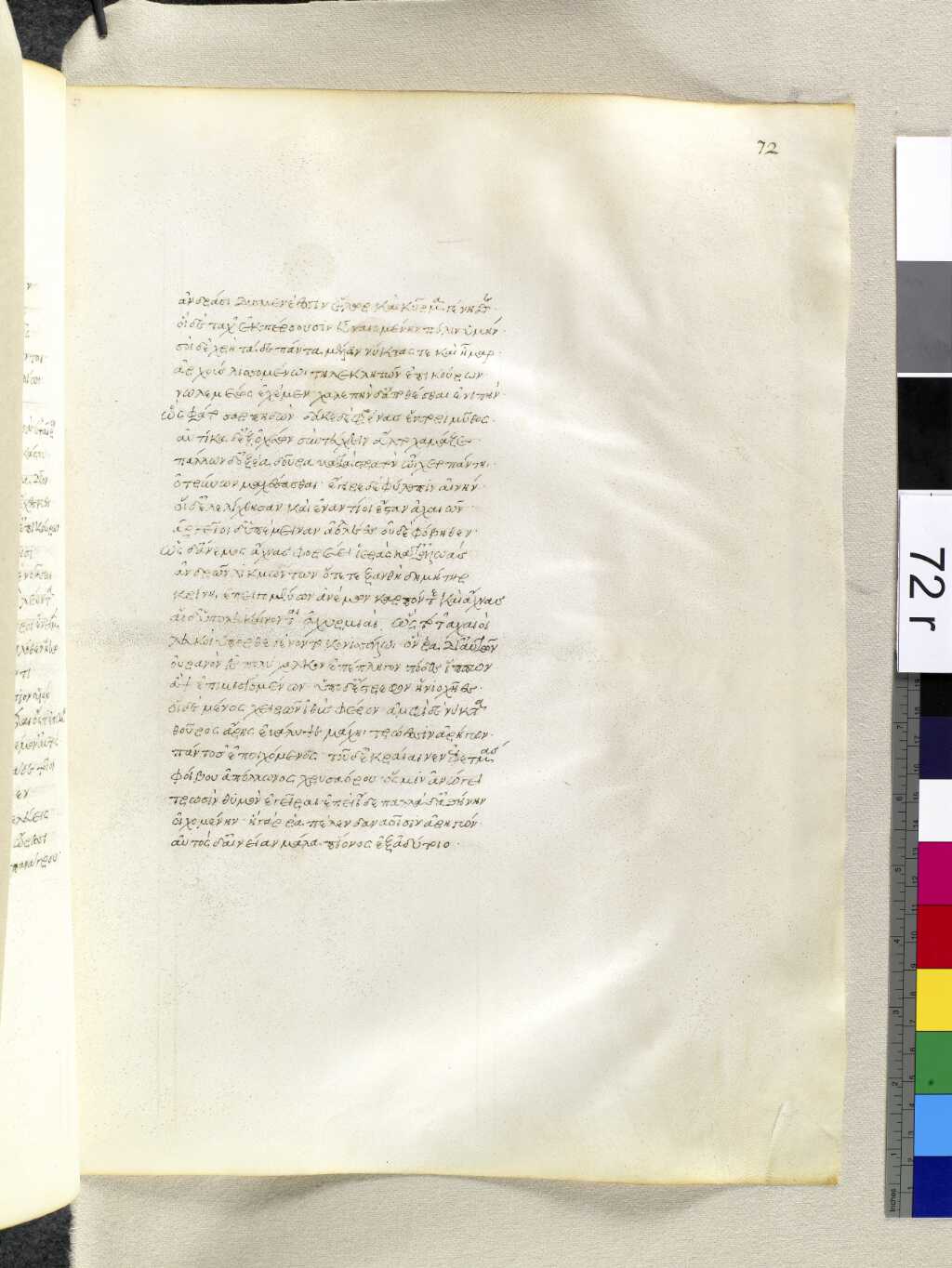
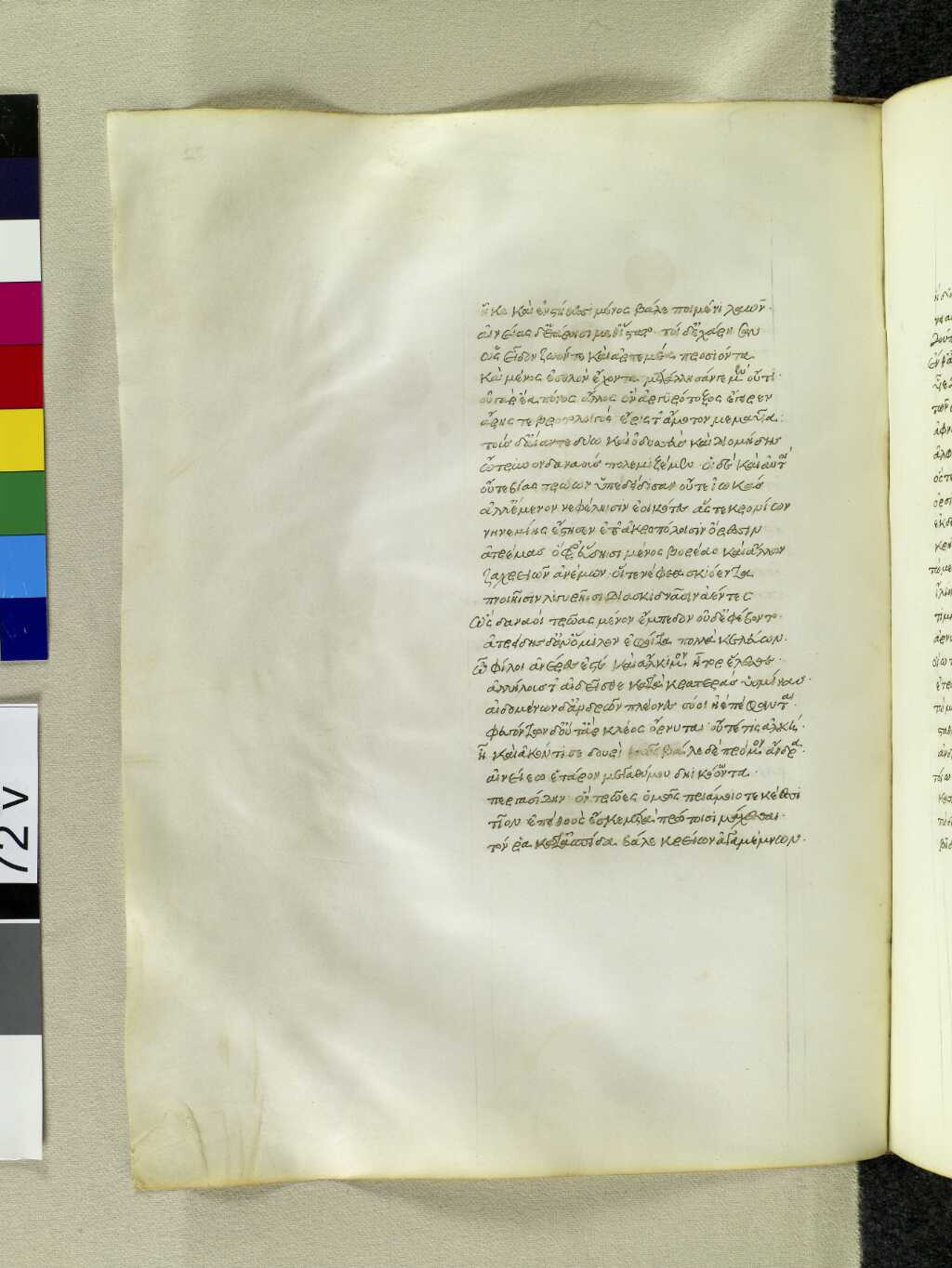
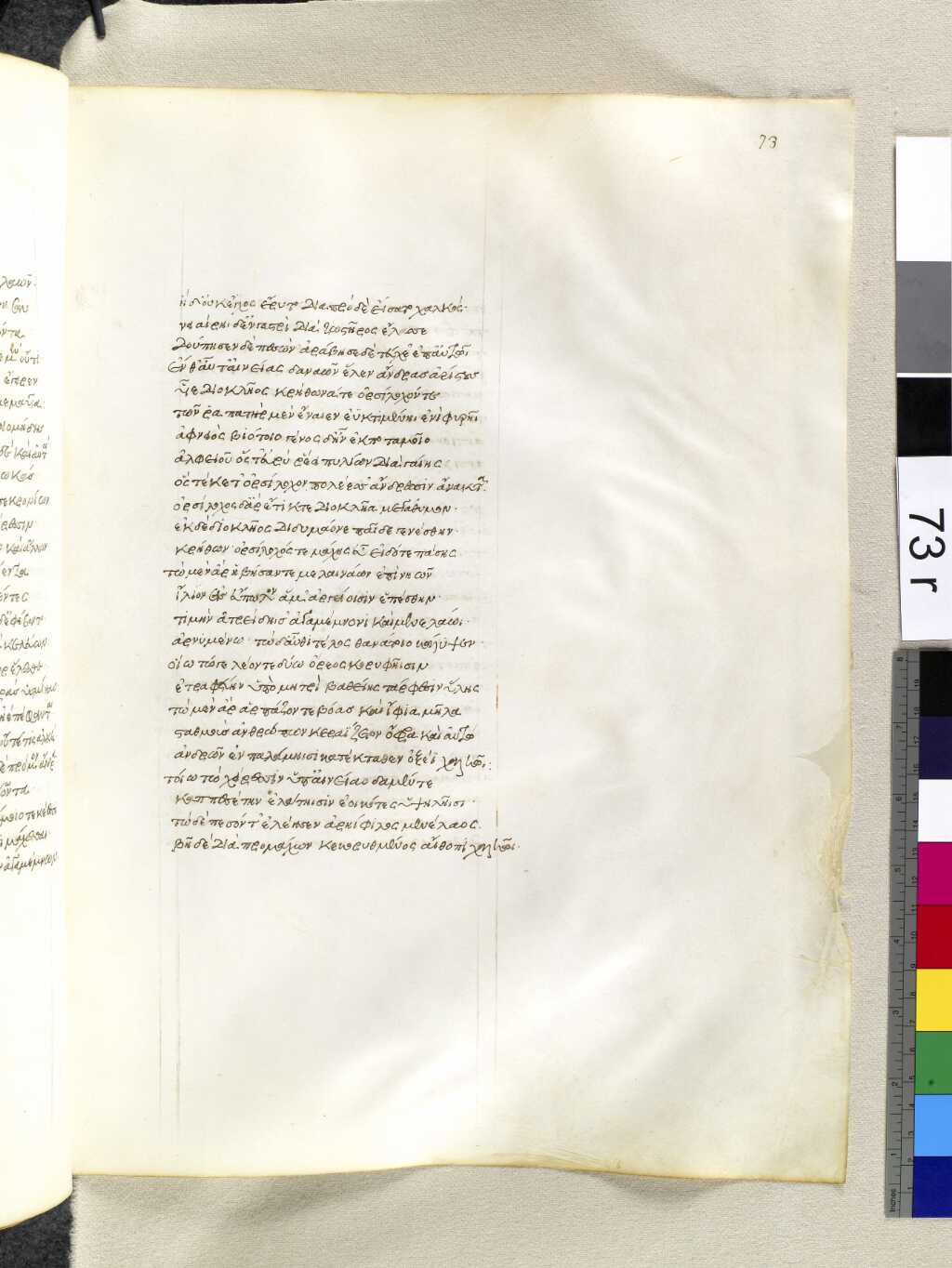
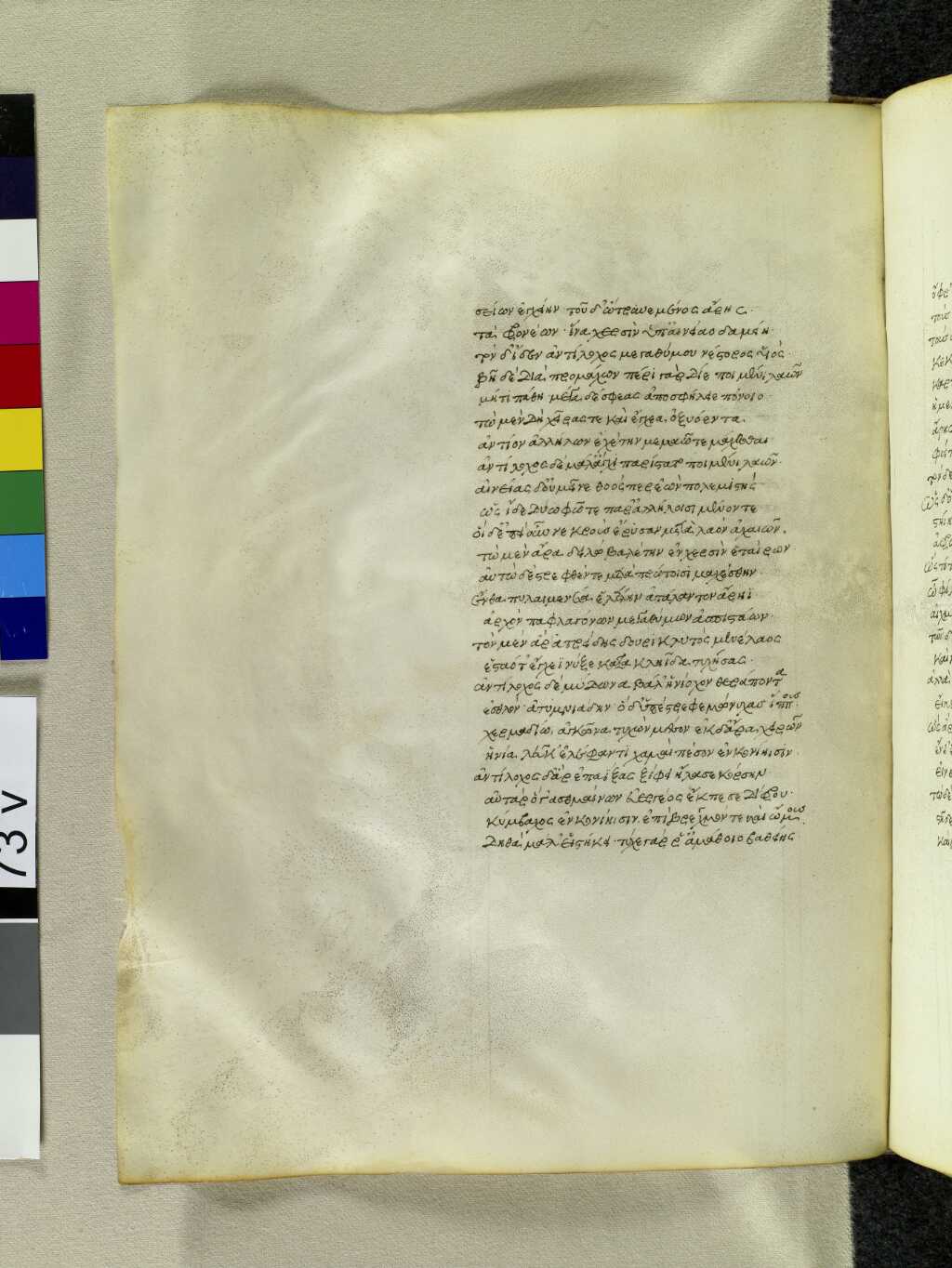
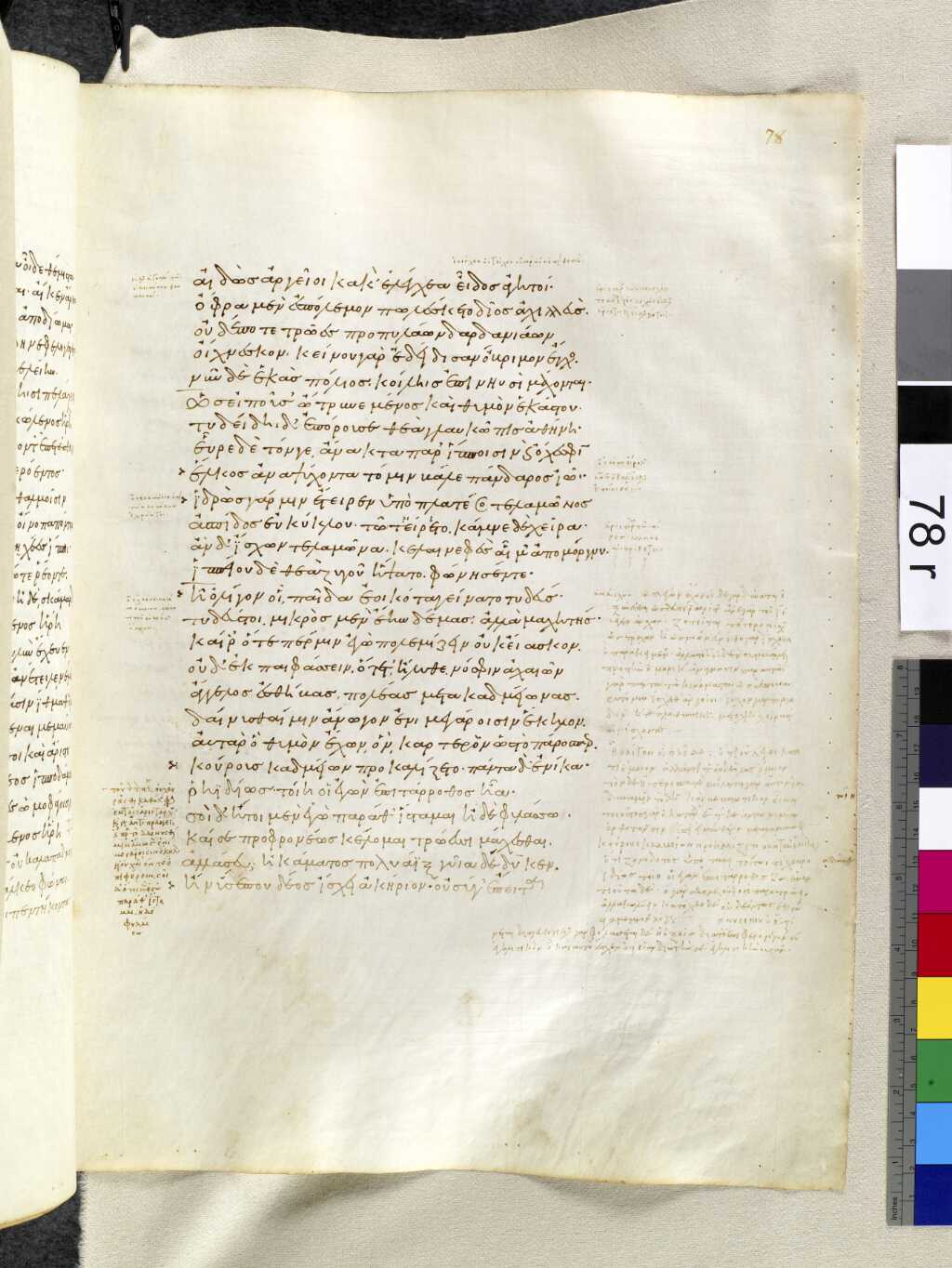
Book 5 of the Iliad with 37 sections, each linked to its specific folio in Venetus A (Marcianus Graecus 454, 10th c.). The Homer Multitext Project provides line-level folio mappings, ensuring every section of text corresponds to the exact manuscript page where it appears.
How was this verified? (Provenance)
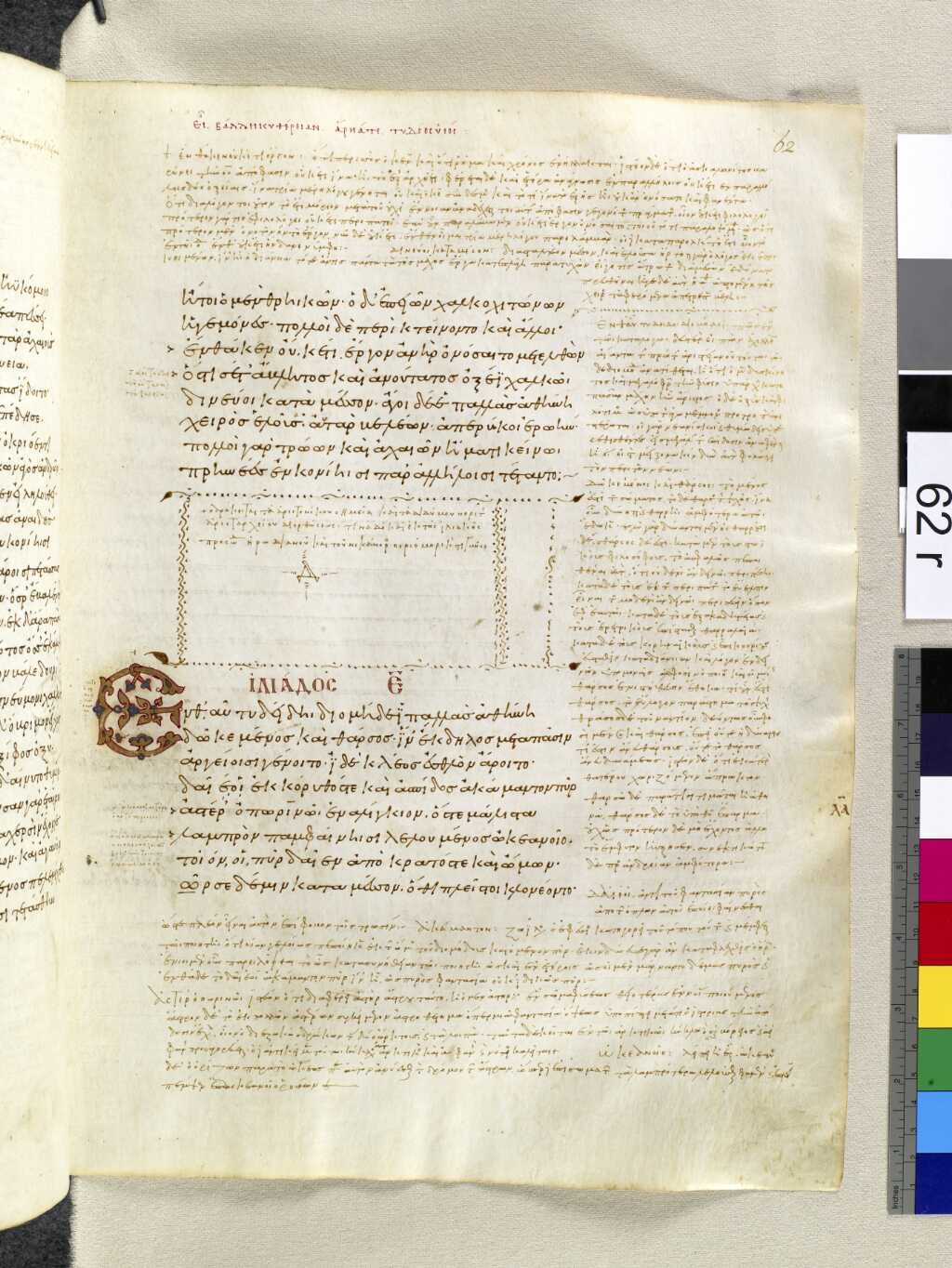
1ἔνθʼ αὖ Τυδεΐδῃ Διομήδεϊ Παλλὰς Ἀθήνη 2δῶκε μένος καὶ θάρσος, ἵνʼ ἔκδηλος μετὰ πᾶσιν 3Ἀργείοισι γένοιτο ἰδὲ κλέος ἐσθλὸν ἄροιτο· 4δαῖέ οἱ ἐκ κόρυθός τε καὶ ἀσπίδος ἀκάματον πῦρ 5ἀστέρʼ ὀπωρινῷ ἐναλίγκιον, ὅς τε μάλιστα 6λαμπρὸν παμφαίνῃσι λελουμένος ὠκεανοῖο· 7τοῖόν οἱ πῦρ δαῖεν ἀπὸ κρατός τε καὶ ὤμων, 8ὦρσε δέ μιν κατὰ μέσσον ὅθι πλεῖστοι κλονέοντο. 9ἦν δέ τις ἐν Τρώεσσι Δάρης ἀφνειὸς ἀμύμων 10ἱρεὺς Ἡφαίστοιο· δύω δέ οἱ υἱέες ἤστην 11Φηγεὺς Ἰδαῖός τε μάχης εὖ εἰδότε πάσης. 12τώ οἱ ἀποκρινθέντε ἐναντίω ὁρμηθήτην· 13τὼ μὲν ἀφʼ ἵπποιιν, ὃ δʼ ἀπὸ χθονὸς ὄρνυτο πεζός. 14οἳ δʼ ὅτε δὴ σχεδὸν ἦσαν ἐπʼ ἀλλήλοισιν ἰόντες 15Φηγεύς ῥα πρότερος προΐει δολιχόσκιον ἔγχος· 16Τυδεΐδεω δʼ ὑπὲρ ὦμον ἀριστερὸν ἤλυθʼ ἀκωκὴ 17ἔγχεος, οὐδʼ ἔβαλʼ αὐτόν· ὃ δʼ ὕστερος ὄρνυτο χαλκῷ 18Τυδεΐδης· τοῦ δʼ οὐχ ἅλιον βέλος ἔκφυγε χειρός, 19ἀλλʼ ἔβαλε στῆθος μεταμάζιον, ὦσε δʼ ἀφʼ ἵππων. 20Ἰδαῖος δʼ ἀπόρουσε λιπὼν περικαλλέα δίφρον, 21οὐδʼ ἔτλη περιβῆναι ἀδελφειοῦ κταμένοιο· 22οὐδὲ γὰρ οὐδέ κεν αὐτὸς ὑπέκφυγε κῆρα μέλαιναν, 23ἀλλʼ Ἥφαιστος ἔρυτο, σάωσε δὲ νυκτὶ καλύψας, 24ὡς δή οἱ μὴ πάγχυ γέρων ἀκαχήμενος εἴη. 25ἵππους δʼ ἐξελάσας μεγαθύμου Τυδέος υἱὸς
The exploits of Diomed, who, though wounded by Pandarus, continues fighting—He kills Pandarus and wounds AEneas—Venus rescues AEneas, but being wounded by Diomed, commits him to the care of Apollo and goes to Olympus, where she is tended by her mother Dione—Mars encourages the Trojans, and AEneas returns to the fight cured of his wound—Minerva and Juno help the Achaeans, and by the advice of the former Diomed wounds Mars, who returns to Olympus to get cured.
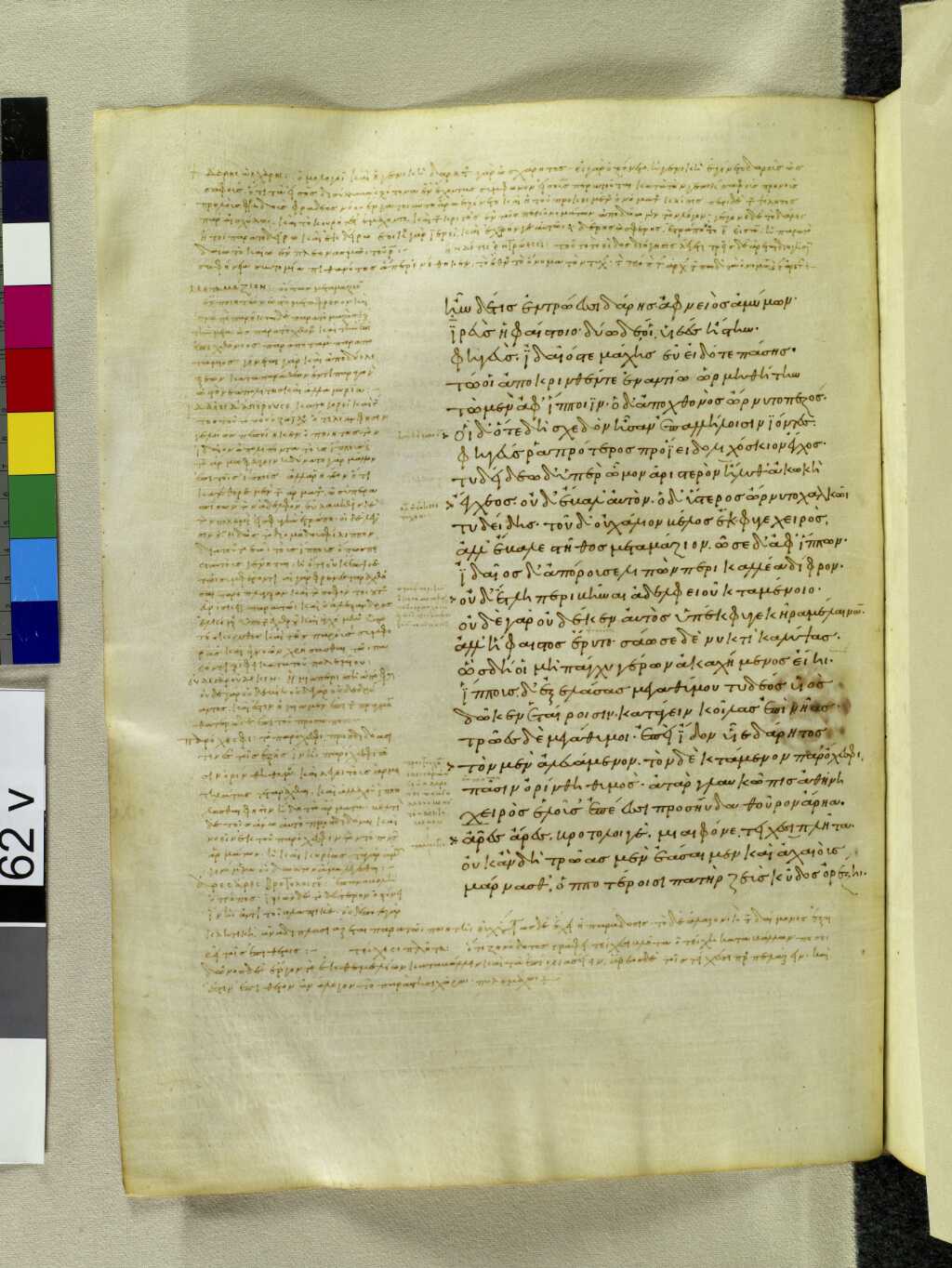
26δῶκεν ἑταίροισιν κατάγειν κοίλας ἐπὶ νῆας. 27Τρῶες δὲ μεγάθυμοι ἐπεὶ ἴδον υἷε Δάρητος 28τὸν μὲν ἀλευάμενον, τὸν δὲ κτάμενον παρʼ ὄχεσφι, 29πᾶσιν ὀρίνθη θυμός· ἀτὰρ γλαυκῶπις Ἀθήνη 30χειρὸς ἑλοῦσʼ ἐπέεσσι προσηύδα θοῦρον Ἄρηα· 31Ἆρες Ἄρες βροτολοιγὲ μιαιφόνε τειχεσιπλῆτα 32οὐκ ἂν δὴ Τρῶας μὲν ἐάσαιμεν καὶ Ἀχαιοὺς 33μάρνασθʼ, ὁπποτέροισι πατὴρ Ζεὺς κῦδος ὀρέξῃ, 34νῶϊ δὲ χαζώμεσθα, Διὸς δʼ ἀλεώμεθα μῆνιν; 35ὣς εἰποῦσα μάχης ἐξήγαγε θοῦρον Ἄρηα· 36τὸν μὲν ἔπειτα καθεῖσεν ἐπʼ ἠϊόεντι Σκαμάνδρῳ, 37Τρῶας δʼ ἔκλιναν Δαναοί· ἕλε δʼ ἄνδρα ἕκαστος 38ἡγεμόνων· πρῶτος δὲ ἄναξ ἀνδρῶν Ἀγαμέμνων 39ἀρχὸν Ἁλιζώνων Ὀδίον μέγαν ἔκβαλε δίφρου· 40πρώτῳ γὰρ στρεφθέντι μεταφρένῳ ἐν δόρυ πῆξεν 41ὤμων μεσσηγύς, διὰ δὲ στήθεσφιν ἔλασσε, 42δούπησεν δὲ πεσών, ἀράβησε δὲ τεύχεʼ ἐπʼ αὐτῷ. 43Ἰδομενεὺς δʼ ἄρα Φαῖστον ἐνήρατο Μῄονος υἱὸν 44Βώρου, ὃς ἐκ Τάρνης ἐριβώλακος εἰληλούθει. 45τὸν μὲν ἄρʼ Ἰδομενεὺς δουρικλυτὸς ἔγχεϊ μακρῷ 46νύξʼ ἵππων ἐπιβησόμενον κατὰ δεξιὸν ὦμον· 47ἤριπε δʼ ἐξ ὀχέων, στυγερὸς δʼ ἄρα μιν σκότος εἷλε. 48τὸν μὲν ἄρʼ Ἰδομενῆος ἐσύλευον θεράποντες· 49υἱὸν δὲ Στροφίοιο Σκαμάνδριον αἵμονα θήρης 50Ἀτρεΐδης Μενέλαος ἕλʼ ἔγχεϊ ὀξυόεντι
Then Pallas Minerva put valour into the heart of Diomed, son of Tydeus, that he might excel all the other Argives, and cover himself with glory. She made a stream of fire flare from his shield and helmet like the star that shines most brilliantly in summer after its bath in the waters of Oceanus—even such a fire did she kindle upon his head and shoulders as she bade him speed into the thickest hurly-burly of the fight.
Now there was a certain rich and honourable man among the Trojans, priest of Vulcan, and his name was Dares. He had two sons, Phegeus and Idaeus, both of them skilled in all the arts of war. These two came forward from the main body of Trojans, and set upon Diomed, he being on foot, while they fought from their chariot. When they were close up to one another, Phegeus took aim first, but his spear went over Diomed’s left shoulder without hitting him. Diomed then threw, and his spear sped not in vain, for it hit Phegeus on the breast near the nipple, and he fell from his chariot. Idaeus did not dare to bestride his brother’s body, but sprang from the chariot and took to flight, or he would have shared his brother’s fate; whereon Vulcan saved him by wrapping him in a cloud of darkness, that his old father might not be utterly overwhelmed with grief; but the son of Tydeus drove off with the horses, and bade his followers take them to the ships. The Trojans were scared when they saw the two sons of Dares, one of them in fright and the other lying dead by his chariot. Minerva, therefore, took Mars by the hand and said, “Mars, Mars, bane of men, blood-stained stormer of cities, may we not now leave the Trojans and Achaeans to fight it out, and see to which of the two Jove will vouchsafe the victory? Let us go away, and thus avoid his anger.”
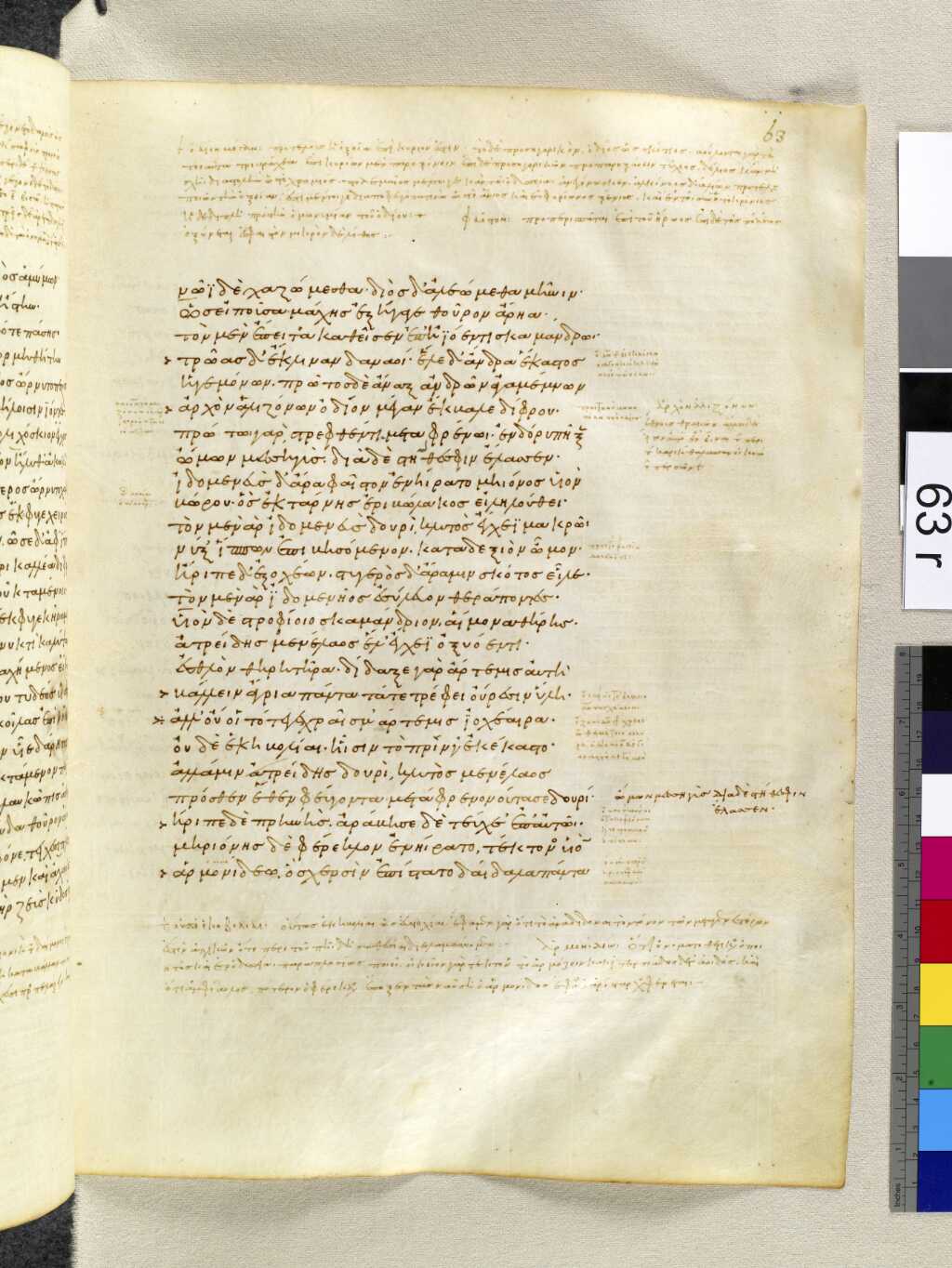
51ἐσθλὸν θηρητῆρα· δίδαξε γὰρ Ἄρτεμις αὐτὴ 52βάλλειν ἄγρια πάντα, τά τε τρέφει οὔρεσιν ὕλη· 53ἀλλʼ οὔ οἱ τότε γε χραῖσμʼ Ἄρτεμις ἰοχέαιρα, 54οὐδὲ ἑκηβολίαι ᾗσιν τὸ πρίν γε κέκαστο· 55ἀλλά μιν Ἀτρεΐδης δουρικλειτὸς Μενέλαος 56πρόσθεν ἕθεν φεύγοντα μετάφρενον οὔτασε δουρὶ 57ὤμων μεσσηγύς, διὰ δὲ στήθεσφιν ἔλασσεν, 58ἤριπε δὲ πρηνής, ἀράβησε δὲ τεύχεʼ ἐπʼ αὐτῷ. 59Μηριόνης δὲ Φέρεκλον ἐνήρατο, τέκτονος υἱὸν 60Ἁρμονίδεω, ὃς χερσὶν ἐπίστατο δαίδαλα πάντα 61τεύχειν· ἔξοχα γάρ μιν ἐφίλατο Παλλὰς Ἀθήνη· 62ὃς καὶ Ἀλεξάνδρῳ τεκτήνατο νῆας ἐΐσας 63ἀρχεκάκους, αἳ πᾶσι κακὸν Τρώεσσι γένοντο 64οἷ τʼ αὐτῷ, ἐπεὶ οὔ τι θεῶν ἐκ θέσφατα ᾔδη. 65τὸν μὲν Μηριόνης ὅτε δὴ κατέμαρπτε διώκων 66βεβλήκει γλουτὸν κατὰ δεξιόν· ἣ δὲ διαπρὸ 67ἀντικρὺ κατὰ κύστιν ὑπʼ ὀστέον ἤλυθʼ ἀκωκή· 68γνὺξ δʼ ἔριπʼ οἰμώξας, θάνατος δέ μιν ἀμφεκάλυψε. 69Πήδαιον δʼ ἄρʼ ἔπεφνε Μέγης Ἀντήνορος υἱὸν 70ὅς ῥα νόθος μὲν ἔην, πύκα δʼ ἔτρεφε δῖα Θεανὼ 71ἶσα φίλοισι τέκεσσι χαριζομένη πόσεϊ ᾧ. 72τὸν μὲν Φυλεΐδης δουρὶ κλυτὸς ἐγγύθεν ἐλθὼν 73βεβλήκει κεφαλῆς κατὰ ἰνίον ὀξέϊ δουρί· 74ἀντικρὺ δʼ ἀνʼ ὀδόντας ὑπὸ γλῶσσαν τάμε χαλκός· 75ἤριπε δʼ ἐν κονίῃ, ψυχρὸν δʼ ἕλε χαλκὸν ὀδοῦσιν.
So saying, she drew Mars out of the battle, and set him down upon the steep banks of the Scamander. Upon this the Danaans drove the Trojans back, and each one of their chieftains killed his man. First King Agamemnon flung mighty Odius, captain of the Halizoni, from his chariot. The spear of Agamemnon caught him on the broad of his back, just as he was turning in flight; it struck him between the shoulders and went right through his chest, and his armour rang rattling round him as he fell heavily to the ground.
Then Idomeneus killed Phaesus, son of Borus the Meonian, who had come from Varne. Mighty Idomeneus speared him on the right shoulder as he was mounting his chariot, and the darkness of death enshrouded him as he fell heavily from the car.
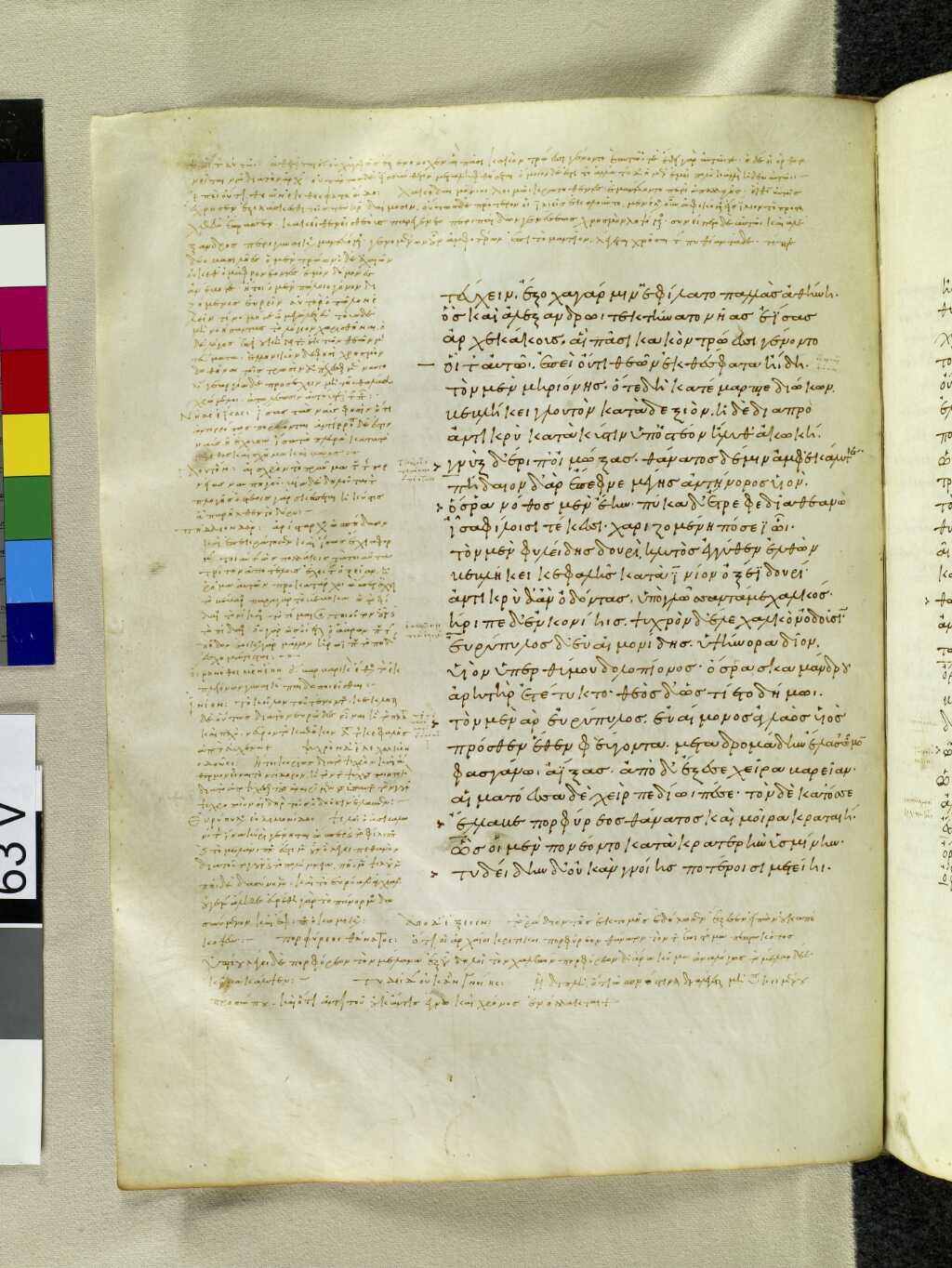
76Εὐρύπυλος δʼ Εὐαιμονίδης Ὑψήνορα δῖον 77υἱὸν ὑπερθύμου Δολοπίονος, ὅς ῥα Σκαμάνδρου 78ἀρητὴρ ἐτέτυκτο, θεὸς δʼ ὣς τίετο δήμῳ, 79τὸν μὲν ἄρʼ Εὐρύπυλος, Εὐαίμονος ἀγλαὸς υἱός, 80πρόσθεν ἕθεν φεύγοντα μεταδρομάδην ἔλασʼ ὦμον 81φασγάνῳ ἀΐξας, ἀπὸ δʼ ἔξεσε χεῖρα βαρεῖαν· 82αἱματόεσσα δὲ χεὶρ πεδίῳ πέσε· τὸν δὲ κατʼ ὄσσε 83ἔλλαβε πορφύρεος θάνατος καὶ μοῖρα κραταιή. 84ὣς οἳ μὲν πονέοντο κατὰ κρατερὴν ὑσμίνην· 85Τυδεΐδην δʼ οὐκ ἂν γνοίης ποτέροισι μετείη 86ἠὲ μετὰ Τρώεσσιν ὁμιλέοι ἦ μετʼ Ἀχαιοῖς. 87θῦνε γὰρ ἂμ πεδίον ποταμῷ πλήθοντι ἐοικὼς 88χειμάρρῳ, ὅς τʼ ὦκα ῥέων ἐκέδασσε γεφύρας· 89τὸν δʼ οὔτʼ ἄρ τε γέφυραι ἐεργμέναι ἰσχανόωσιν, 90οὔτʼ ἄρα ἕρκεα ἴσχει ἀλωάων ἐριθηλέων 91ἐλθόντʼ ἐξαπίνης ὅτʼ ἐπιβρίσῃ Διὸς ὄμβρος· 92πολλὰ δʼ ὑπʼ αὐτοῦ ἔργα κατήριπε κάλʼ αἰζηῶν· 93ὣς ὑπὸ Τυδεΐδῃ πυκιναὶ κλονέοντο φάλαγγες 94Τρώων, οὐδʼ ἄρα μιν μίμνον πολέες περ ἐόντες. 95τὸν δʼ ὡς οὖν ἐνόησε Λυκάονος ἀγλαὸς υἱὸς 96θύνοντʼ ἂμ πεδίον πρὸ ἕθεν κλονέοντα φάλαγγας, 97αἶψʼ ἐπὶ Τυδεΐδῃ ἐτιταίνετο καμπύλα τόξα, 98καὶ βάλʼ ἐπαΐσσοντα τυχὼν κατὰ δεξιὸν ὦμον 99θώρηκος γύαλον· διὰ δʼ ἔπτατο πικρὸς ὀϊστός, 100ἀντικρὺ δὲ διέσχε, παλάσσετο δʼ αἵματι θώρηξ.
The squires of Idomeneus spoiled him of his armour, while Menelaus, son of Atreus, killed Scamandrius the son of Strophius, a mighty huntsman and keen lover of the chase. Diana herself had taught him how to kill every kind of wild creature that is bred in mountain forests, but neither she nor his famed skill in archery could now save him, for the spear of Menelaus struck him in the back as he was flying; it struck him between the shoulders and went right through his chest, so that he fell headlong and his armour rang rattling round him.
Meriones then killed Phereclus the son of Tecton, who was the son of Hermon, a man whose hand was skilled in all manner of cunning workmanship, for Pallas Minerva had dearly loved him. He it was that made the ships for Alexandrus, which were the beginning of all mischief, and brought evil alike both on the Trojans and on Alexandrus himself; for he heeded not the decrees of heaven. Meriones overtook him as he was flying, and struck him on the right buttock. The point of the spear went through the bone into the bladder, and death came upon him as he cried aloud and fell forward on his knees.
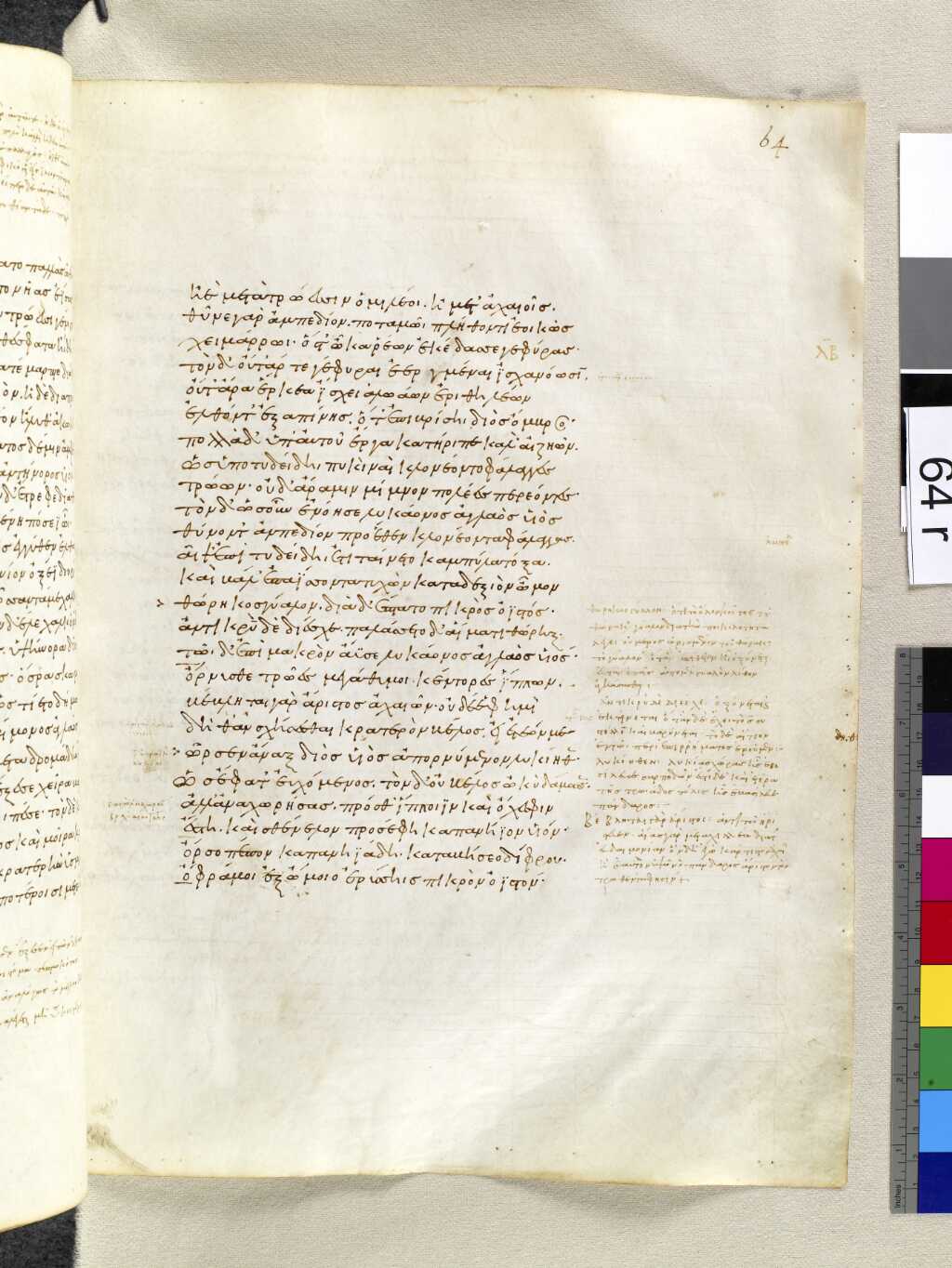
101τῷ δʼ ἐπὶ μακρὸν ἄϋσε Λυκάονος ἀγλαὸς υἱός· 102ὄρνυσθε Τρῶες μεγάθυμοι κέντορες ἵππων· 103βέβληται γὰρ ἄριστος Ἀχαιῶν, οὐδέ ἕ φημι 104δήθʼ ἀνσχήσεσθαι κρατερὸν βέλος, εἰ ἐτεόν με 105ὦρσεν ἄναξ Διὸς υἱὸς ἀπορνύμενον Λυκίηθεν. 106ὣς ἔφατʼ εὐχόμενος· τὸν δʼ οὐ βέλος ὠκὺ δάμασσεν, 107ἀλλʼ ἀναχωρήσας πρόσθʼ ἵπποιιν καὶ ὄχεσφιν 108ἔστη, καὶ Σθένελον προσέφη Καπανήϊον υἱόν· 109ὄρσο πέπον Καπανηϊάδη, καταβήσεο δίφρου, 110ὄφρά μοι ἐξ ὤμοιο ἐρύσσῃς πικρὸν ὀϊστόν. 111ὣς ἄρʼ ἔφη, Σθένελος δὲ καθʼ ἵππων ἆλτο χαμᾶζε, 112πὰρ δὲ στὰς βέλος ὠκὺ διαμπερὲς ἐξέρυσʼ ὤμου· 113αἷμα δʼ ἀνηκόντιζε διὰ στρεπτοῖο χιτῶνος. 114δὴ τότʼ ἔπειτʼ ἠρᾶτο βοὴν ἀγαθὸς Διομήδης· 115κλῦθί μευ αἰγιόχοιο Διὸς τέκος Ἀτρυτώνη, 116εἴ ποτέ μοι καὶ πατρὶ φίλα φρονέουσα παρέστης 117δηΐῳ ἐν πολέμῳ, νῦν αὖτʼ ἐμὲ φῖλαι Ἀθήνη· 118δὸς δέ τέ μʼ ἄνδρα ἑλεῖν καὶ ἐς ὁρμὴν ἔγχεος ἐλθεῖν 119ὅς μʼ ἔβαλε φθάμενος καὶ ἐπεύχεται, οὐδέ μέ φησι 120δηρὸν ἔτʼ ὄψεσθαι λαμπρὸν φάος ἠελίοιο. 121ὣς ἔφατʼ εὐχόμενος· τοῦ δʼ ἔκλυε Παλλὰς Ἀθήνη, 122γυῖα δʼ ἔθηκεν ἐλαφρά, πόδας καὶ χεῖρας ὕπερθεν· 123ἀγχοῦ δʼ ἱσταμένη ἔπεα πτερόεντα προσηύδα· 124θαρσῶν νῦν Διόμηδες ἐπὶ Τρώεσσι μάχεσθαι· 125ἐν γάρ τοι στήθεσσι μένος πατρώϊον ἧκα
Meges, moreover, slew Pedaeus, son of Antenor, who, though he was a bastard, had been brought up by Theano as one of her own children, for the love she bore her husband. The son of Phyleus got close up to him and drove a spear into the nape of his neck: it went under his tongue all among his teeth, so he bit the cold bronze, and fell dead in the dust.
And Eurypylus, son of Euaemon, killed Hypsenor, the son of noble Dolopion, who had been made priest of the river Scamander, and was honoured among the people as though he were a god. Eurypylus gave him chase as he was flying before him, smote him with his sword upon the arm, and lopped his strong hand from off it. The bloody hand fell to the ground, and the shades of death, with fate that no man can withstand, came over his eyes.
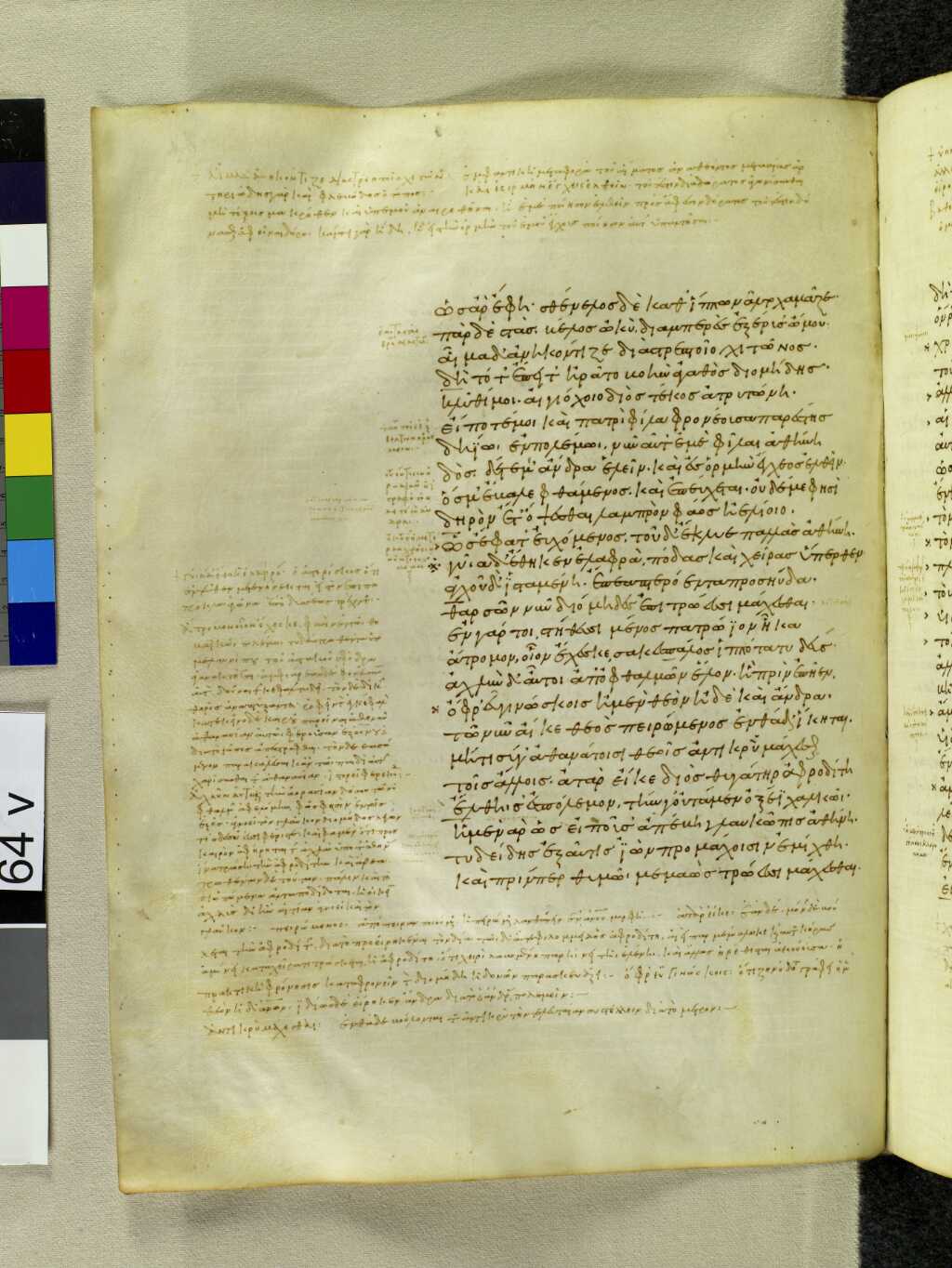
126ἄτρομον, οἷον ἔχεσκε σακέσπαλος ἱππότα Τυδεύς· 127ἀχλὺν δʼ αὖ τοι ἀπʼ ὀφθαλμῶν ἕλον ἣ πρὶν ἐπῆεν, 128ὄφρʼ εὖ γιγνώσκῃς ἠμὲν θεὸν ἠδὲ καὶ ἄνδρα. 129τὼ νῦν αἴ κε θεὸς πειρώμενος ἐνθάδʼ ἵκηται 130μή τι σύ γʼ ἀθανάτοισι θεοῖς ἀντικρὺ μάχεσθαι 131τοῖς ἄλλοις· ἀτὰρ εἴ κε Διὸς θυγάτηρ Ἀφροδίτη 132ἔλθῃσʼ ἐς πόλεμον, τήν γʼ οὐτάμεν ὀξέϊ χαλκῷ. 133ἣ μὲν ἄρʼ ὣς εἰποῦσʼ ἀπέβη γλαυκῶπις Ἀθήνη, 134Τυδεΐδης δʼ ἐξαῦτις ἰὼν προμάχοισιν ἐμίχθη 135καὶ πρίν περ θυμῷ μεμαὼς Τρώεσσι μάχεσθαι· 136δὴ τότε μιν τρὶς τόσσον ἕλεν μένος ὥς τε λέοντα 137ὅν ῥά τε ποιμὴν ἀγρῷ ἐπʼ εἰροπόκοις ὀΐεσσι 138χραύσῃ μέν τʼ αὐλῆς ὑπεράλμενον οὐδὲ δαμάσσῃ· 139τοῦ μέν τε σθένος ὦρσεν, ἔπειτα δέ τʼ οὐ προσαμύνει, 140ἀλλὰ κατὰ σταθμοὺς δύεται, τὰ δʼ ἐρῆμα φοβεῖται· 141αἳ μέν τʼ ἀγχιστῖναι ἐπʼ ἀλλήλῃσι κέχυνται, 142αὐτὰρ ὃ ἐμμεμαὼς βαθέης ἐξάλλεται αὐλῆς· 143ὣς μεμαὼς Τρώεσσι μίγη κρατερὸς Διομήδης. 144ἔνθʼ ἕλεν Ἀστύνοον καὶ Ὑπείρονα ποιμένα λαῶν, 145τὸν μὲν ὑπὲρ μαζοῖο βαλὼν χαλκήρεϊ δουρί, 146τὸν δʼ ἕτερον ξίφεϊ μεγάλῳ κληῗδα παρʼ ὦμον 147πλῆξʼ, ἀπὸ δʼ αὐχένος ὦμον ἐέργαθεν ἠδʼ ἀπὸ νώτου. 148τοὺς μὲν ἔασʼ, ὃ δʼ Ἄβαντα μετῴχετο καὶ Πολύειδον 149υἱέας Εὐρυδάμαντος ὀνειροπόλοιο γέροντος· 150τοῖς οὐκ ἐρχομένοις ὃ γέρων ἐκρίνατʼ ὀνείρους,
Thus furiously did the battle rage between them. As for the son of Tydeus, you could not say whether he was more among the Achaeans or the Trojans. He rushed across the plain like a winter torrent that has burst its barrier in full flood; no dykes, no walls of fruitful vineyards can embank it when it is swollen with rain from heaven, but in a moment it comes tearing onward, and lays many a field waste that many a strong man’s hand has reclaimed—even so were the dense phalanxes of the Trojans driven in rout by the son of Tydeus, and many though they were, they dared not abide his onslaught.
Now when the son of Lycaon saw him scouring the plain and driving the Trojans pell-mell before him, he aimed an arrow and hit the front part of his cuirass near the shoulder: the arrow went right through the metal and pierced the flesh, so that the cuirass was covered with blood. On this the son of Lycaon shouted in triumph, “Knights Trojans, come on; the bravest of the Achaeans is wounded, and he will not hold out much longer if King Apollo was indeed with me when I sped from Lycia hither.”
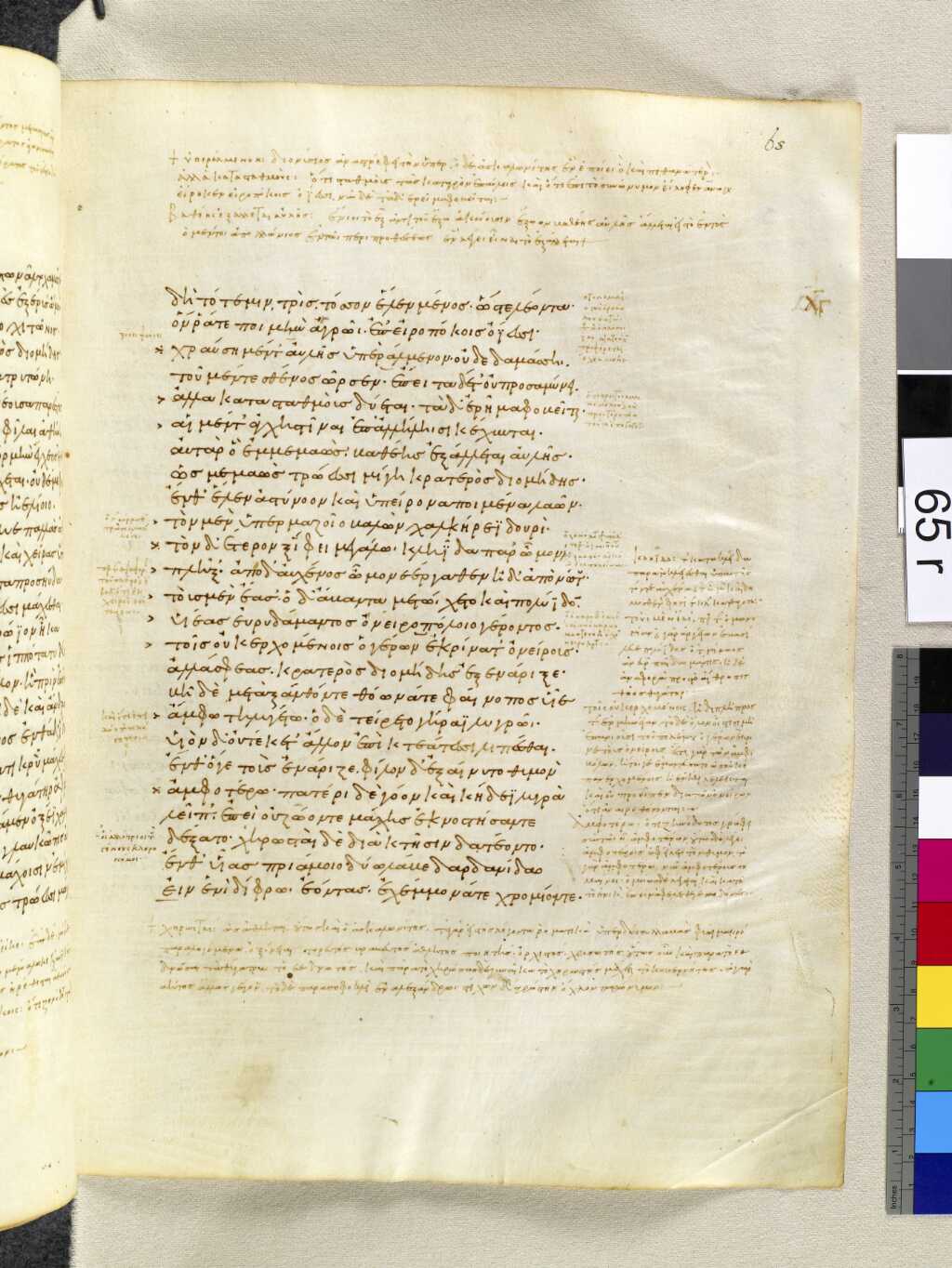
151ἀλλά σφεας κρατερὸς Διομήδης ἐξενάριξε· 152βῆ δὲ μετὰ Ξάνθόν τε Θόωνά τε Φαίνοπος υἷε 153ἄμφω τηλυγέτω· ὃ δὲ τείρετο γήραϊ λυγρῷ, 154υἱὸν δʼ οὐ τέκετʼ ἄλλον ἐπὶ κτεάτεσσι λιπέσθαι. 155ἔνθʼ ὅ γε τοὺς ἐνάριζε, φίλον δʼ ἐξαίνυτο θυμὸν 156ἀμφοτέρω, πατέρι δὲ γόον καὶ κήδεα λυγρὰ 157λεῖπʼ, ἐπεὶ οὐ ζώοντε μάχης ἐκνοστήσαντε 158δέξατο· χηρωσταὶ δὲ διὰ κτῆσιν δατέοντο. 159ἔνθʼ υἷας Πριάμοιο δύω λάβε Δαρδανίδαο 160εἰν ἑνὶ δίφρῳ ἐόντας Ἐχέμμονά τε Χρομίον τε. 161ὡς δὲ λέων ἐν βουσὶ θορὼν ἐξ αὐχένα ἄξῃ 162πόρτιος ἠὲ βοὸς ξύλοχον κάτα βοσκομενάων, 163ὣς τοὺς ἀμφοτέρους ἐξ ἵππων Τυδέος υἱὸς 164βῆσε κακῶς ἀέκοντας, ἔπειτα δὲ τεύχεʼ ἐσύλα· 165ἵππους δʼ οἷς ἑτάροισι δίδου μετὰ νῆας ἐλαύνειν. 166τὸν δʼ ἴδεν Αἰνείας ἀλαπάζοντα στίχας ἀνδρῶν, 167βῆ δʼ ἴμεν ἄν τε μάχην καὶ ἀνὰ κλόνον ἐγχειάων 168Πάνδαρον ἀντίθεον διζήμενος εἴ που ἐφεύροι· 169εὗρε Λυκάονος υἱὸν ἀμύμονά τε κρατερόν τε, 170στῆ δὲ πρόσθʼ αὐτοῖο ἔπος τέ μιν ἀντίον ηὔδα· 171Πάνδαρε ποῦ τοι τόξον ἰδὲ πτερόεντες ὀϊστοὶ 172καὶ κλέος; ᾧ οὔ τίς τοι ἐρίζεται ἐνθάδε γʼ ἀνήρ, 173οὐδέ τις ἐν Λυκίῃ σέο γʼ εὔχεται εἶναι ἀμείνων. 174ἀλλʼ ἄγε τῷδʼ ἔφες ἀνδρὶ βέλος Διὶ χεῖρας ἀνασχὼν 175ὅς τις ὅδε κρατέει καὶ δὴ κακὰ πολλὰ ἔοργε
Thus did he vaunt; but his arrow had not killed Diomed, who withdrew and made for the chariot and horses of Sthenelus, the son of Capaneus. “Dear son of Capaneus,” said he, “come down from your chariot, and draw the arrow out of my shoulder.”
Sthenelus sprang from his chariot, and drew the arrow from the wound, whereon the blood came spouting out through the hole that had been made in his shirt. Then Diomed prayed, saying, “Hear me, daughter of aegis-bearing Jove, unweariable, if ever you loved my father well and stood by him in the thick of a fight, do the like now by me; grant me to come within a spear’s throw of that man and kill him. He has been too quick for me and has wounded me; and now he is boasting that I shall not see the light of the sun much longer.”
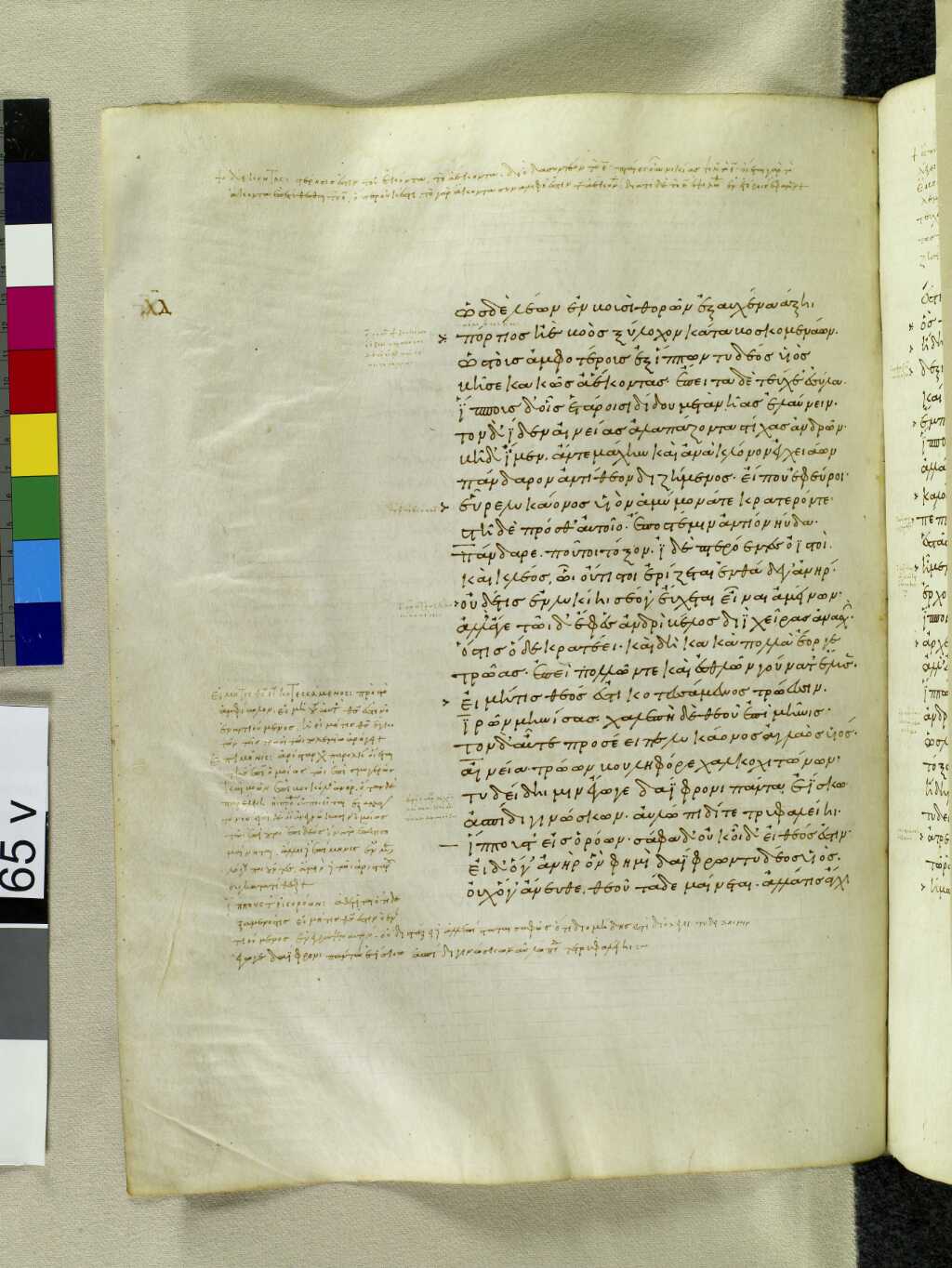
176Τρῶας, ἐπεὶ πολλῶν τε καὶ ἐσθλῶν γούνατʼ ἔλυσεν· 177εἰ μή τις θεός ἐστι κοτεσσάμενος Τρώεσσιν 178ἱρῶν μηνίσας· χαλεπὴ δὲ θεοῦ ἔπι μῆνις. 179τὸν δʼ αὖτε προσέειπε Λυκάονος ἀγλαὸς υἱός· 180Αἰνεία Τρώων βουληφόρε χαλκοχιτώνων 181Τυδεΐδῃ μιν ἔγωγε δαΐφρονι πάντα ἐΐσκω, 182ἀσπίδι γιγνώσκων αὐλώπιδί τε τρυφαλείῃ, 183ἵππους τʼ εἰσορόων· σάφα δʼ οὐκ οἶδʼ εἰ θεός ἐστιν. 184εἰ δʼ ὅ γʼ ἀνὴρ ὅν φημι δαΐφρων Τυδέος υἱὸς 185οὐχ ὅ γʼ ἄνευθε θεοῦ τάδε μαίνεται, ἀλλά τις ἄγχι 186ἕστηκʼ ἀθανάτων νεφέλῃ εἰλυμένος ὤμους, 187ὃς τούτου βέλος ὠκὺ κιχήμενον ἔτραπεν ἄλλῃ. 188ἤδη γάρ οἱ ἐφῆκα βέλος, καί μιν βάλον ὦμον 189δεξιὸν ἀντικρὺ διὰ θώρηκος γυάλοιο· 190καί μιν ἔγωγʼ ἐφάμην Ἀϊδωνῆϊ προϊάψειν, 191ἔμπης δʼ οὐκ ἐδάμασσα· θεός νύ τίς ἐστι κοτήεις. 192ἵπποι δʼ οὐ παρέασι καὶ ἅρματα τῶν κʼ ἐπιβαίην· 193ἀλλά που ἐν μεγάροισι Λυκάονος ἕνδεκα δίφροι 194καλοὶ πρωτοπαγεῖς νεοτευχέες· ἀμφὶ δὲ πέπλοι 195πέπτανται· παρὰ δέ σφιν ἑκάστῳ δίζυγες ἵπποι 196ἑστᾶσι κρῖ λευκὸν ἐρεπτόμενοι καὶ ὀλύρας. 197ἦ μέν μοι μάλα πολλὰ γέρων αἰχμητὰ Λυκάων 198ἐρχομένῳ ἐπέτελλε δόμοις ἔνι ποιητοῖσιν· 199ἵπποισίν μʼ ἐκέλευε καὶ ἅρμασιν ἐμβεβαῶτα 200ἀρχεύειν Τρώεσσι κατὰ κρατερὰς ὑσμίνας·
Thus he prayed, and Pallas Minerva heard him; she made his limbs supple and quickened his hands and his feet. Then she went up close to him and said, “Fear not, Diomed, to do battle with the Trojans, for I have set in your heart the spirit of your knightly father Tydeus. Moreover, I have withdrawn the veil from your eyes, that you know gods and men apart. If, then, any other god comes here and offers you battle, do not fight him; but should Jove’s daughter Venus come, strike her with your spear and wound her.”
201ἀλλʼ ἐγὼ οὐ πιθόμην· ἦ τʼ ἂν πολὺ κέρδιον ἦεν· 202ἵππων φειδόμενος, μή μοι δευοίατο φορβῆς 203ἀνδρῶν εἰλομένων εἰωθότες ἔδμεναι ἄδην. 204ὣς λίπον, αὐτὰρ πεζὸς ἐς Ἴλιον εἰλήλουθα 205τόξοισιν πίσυνος· τὰ δέ μʼ οὐκ ἄρʼ ἔμελλον ὀνήσειν. 206ἤδη γὰρ δοιοῖσιν ἀριστήεσσιν ἐφῆκα 207Τυδεΐδῃ τε καὶ Ἀτρεΐδῃ, ἐκ δʼ ἀμφοτέροιιν 208ἀτρεκὲς αἷμʼ ἔσσευα βαλών, ἤγειρα δὲ μᾶλλον. 209τώ ῥα κακῇ αἴσῃ ἀπὸ πασσάλου ἀγκύλα τόξα 210ἤματι τῷ ἑλόμην ὅτε Ἴλιον εἰς ἐρατεινὴν 211ἡγεόμην Τρώεσσι φέρων χάριν Ἕκτορι δίῳ. 212εἰ δέ κε νοστήσω καὶ ἐσόψομαι ὀφθαλμοῖσι 213πατρίδʼ ἐμὴν ἄλοχόν τε καὶ ὑψερεφὲς μέγα δῶμα, 214αὐτίκʼ ἔπειτʼ ἀπʼ ἐμεῖο κάρη τάμοι ἀλλότριος φὼς 215εἰ μὴ ἐγὼ τάδε τόξα φαεινῷ ἐν πυρὶ θείην 216χερσὶ διακλάσσας· ἀνεμώλια γάρ μοι ὀπηδεῖ. 217τὸν δʼ αὖτʼ Αἰνείας Τρώων ἀγὸς ἀντίον ηὔδα· 218μὴ δʼ οὕτως ἀγόρευε· πάρος δʼ οὐκ ἔσσεται ἄλλως, 219πρίν γʼ ἐπὶ νὼ τῷδʼ ἀνδρὶ σὺν ἵπποισιν καὶ ὄχεσφιν 220ἀντιβίην ἐλθόντε σὺν ἔντεσι πειρηθῆναι. 221ἀλλʼ ἄγʼ ἐμῶν ὀχέων ἐπιβήσεο, ὄφρα ἴδηαι 222οἷοι Τρώϊοι ἵπποι ἐπιστάμενοι πεδίοιο 223κραιπνὰ μάλʼ ἔνθα καὶ ἔνθα διωκέμεν ἠδὲ φέβεσθαι· 224τὼ καὶ νῶϊ πόλιν δὲ σαώσετον, εἴ περ ἂν αὖτε 225Ζεὺς ἐπὶ Τυδεΐδῃ Διομήδεϊ κῦδος ὀρέξῃ.
When she had said this Minerva went away, and the son of Tydeus again took his place among the foremost fighters, three times more fierce even than he had been before. He was like a lion that some mountain shepherd has wounded, but not killed, as he is springing over the wall of a sheep-yard to attack the sheep. The shepherd has roused the brute to fury but cannot defend his flock, so he takes shelter under cover of the buildings, while the sheep, panic-stricken on being deserted, are smothered in heaps one on top of the other, and the angry lion leaps out over the sheep-yard wall. Even thus did Diomed go furiously about among the Trojans.
He killed Astynous, and Hypeiron shepherd of his people, the one with a thrust of his spear, which struck him above the nipple, the other with a sword-cut on the collar-bone, that severed his shoulder from his neck and back. He let both of them lie, and went in pursuit of Abas and Polyidus, sons of the old reader of dreams Eurydamas: they never came back for him to read them any more dreams, for mighty Diomed made an end of them. He then gave chase to Xanthus and Thoon, the two sons of Phaenops, both of them very dear to him, for he was now worn out with age, and begat no more sons to inherit his possessions. But Diomed took both their lives and left their father sorrowing bitterly, for he nevermore saw them come home from battle alive, and his kinsmen divided his wealth among themselves.
226ἀλλʼ ἄγε νῦν μάστιγα καὶ ἡνία σιγαλόεντα 227δέξαι, ἐγὼ δʼ ἵππων ἀποβήσομαι ὄφρα μάχωμαι· 228ἠὲ σὺ τόνδε δέδεξο, μελήσουσιν δʼ ἐμοὶ ἵπποι. 229τὸν δʼ αὖτε προσέειπε Λυκάονος ἀγλαὸς υἱός· 230Αἰνεία σὺ μὲν αὐτὸς ἔχʼ ἡνία καὶ τεὼ ἵππω· 231μᾶλλον ὑφʼ ἡνιόχῳ εἰωθότι καμπύλον ἅρμα 232οἴσετον, εἴ περ ἂν αὖτε φεβώμεθα Τυδέος υἱόν· 233μὴ τὼ μὲν δείσαντε ματήσετον, οὐδʼ ἐθέλητον 234ἐκφερέμεν πολέμοιο τεὸν φθόγγον ποθέοντε, 235νῶϊ δʼ ἐπαΐξας μεγαθύμου Τυδέος υἱὸς 236αὐτώ τε κτείνῃ καὶ ἐλάσσῃ μώνυχας ἵππους. 237ἀλλὰ σύ γʼ αὐτὸς ἔλαυνε τέʼ ἅρματα καὶ τεὼ ἵππω, 238τὸν δὲ δʼ ἐγὼν ἐπιόντα δεδέξομαι ὀξέϊ δουρί. 239ὣς ἄρα φωνήσαντες ἐς ἅρματα ποικίλα βάντες 240ἐμμεμαῶτʼ ἐπὶ Τυδεΐδῃ ἔχον ὠκέας ἵππους. 241τοὺς δὲ ἴδε Σθένελος Καπανήϊος ἀγλαὸς υἱός, 242αἶψα δὲ Τυδεΐδην ἔπεα πτερόεντα προσηύδα· 243Τυδεΐδη Διόμηδες ἐμῷ κεχαρισμένε θυμῷ, 244ἄνδρʼ ὁρόω κρατερὼ ἐπὶ σοὶ μεμαῶτε μάχεσθαι 245ἶνʼ ἀπέλεθρον ἔχοντας· ὃ μὲν τόξων ἐῢ εἰδὼς 246Πάνδαρος, υἱὸς δʼ αὖτε Λυκάονος εὔχεται εἶναι· 247Αἰνείας δʼ υἱὸς μὲν ἀμύμονος Ἀγχίσαο 248εὔχεται ἐκγεγάμεν, μήτηρ δέ οἵ ἐστʼ Ἀφροδίτη. 249ἀλλʼ ἄγε δὴ χαζώμεθʼ ἐφʼ ἵππων, μηδέ μοι οὕτω 250θῦνε διὰ προμάχων, μή πως φίλον ἦτορ ὀλέσσῃς.
Then he came upon two sons of Priam, Echemmon and Chromius, as they were both in one chariot. He sprang upon them as a lion fastens on the neck of some cow or heifer when the herd is feeding in a coppice. For all their vain struggles he flung them both from their chariot and stripped the armour from their bodies. Then he gave their horses to his comrades to take them back to the ships.
When Aeneas saw him thus making havoc among the ranks, he went through the fight amid the rain of spears to see if he could find Pandarus. When he had found the brave son of Lycaon he said, “Pandarus, where is now your bow, your winged arrows, and your renown as an archer, in respect of which no man here can rival you nor is there any in Lycia that can beat you? Lift then your hands to Jove and send an arrow at this fellow who is going so masterfully about, and has done such deadly work among the Trojans. He has killed many a brave man—unless indeed he is some god who is angry with the Trojans about their sacrifices, and has set his hand against them in his displeasure.”
251τὸν δʼ ἄρʼ ὑπόδρα ἰδὼν προσέφη κρατερὸς Διομήδης· 252μή τι φόβον δʼ ἀγόρευʼ, ἐπεὶ οὐδὲ σὲ πεισέμεν οἴω. 253οὐ γάρ μοι γενναῖον ἀλυσκάζοντι μάχεσθαι 254οὐδὲ καταπτώσσειν· ἔτι μοι μένος ἔμπεδόν ἐστιν· 255ὀκνείω δʼ ἵππων ἐπιβαινέμεν, ἀλλὰ καὶ αὔτως 256ἀντίον εἶμʼ αὐτῶν· τρεῖν μʼ οὐκ ἐᾷ Παλλὰς Ἀθήνη. 257τούτω δʼ οὐ πάλιν αὖτις ἀποίσετον ὠκέες ἵπποι 258ἄμφω ἀφʼ ἡμείων, εἴ γʼ οὖν ἕτερός γε φύγῃσιν. 259ἄλλο δέ τοι ἐρέω, σὺ δʼ ἐνὶ φρεσὶ βάλλεο σῇσιν· 260αἴ κέν μοι πολύβουλος Ἀθήνη κῦδος ὀρέξῃ 261ἀμφοτέρω κτεῖναι, σὺ δὲ τούσδε μὲν ὠκέας ἵππους 262αὐτοῦ ἐρυκακέειν ἐξ ἄντυγος ἡνία τείνας, 263Αἰνείαο δʼ ἐπαΐξαι μεμνημένος ἵππων, 264ἐκ δʼ ἐλάσαι Τρώων μετʼ ἐϋκνήμιδας Ἀχαιούς. 265τῆς γάρ τοι γενεῆς ἧς Τρωΐ περ εὐρύοπα Ζεὺς 266δῶχʼ υἷος ποινὴν Γανυμήδεος, οὕνεκʼ ἄριστοι 267ἵππων ὅσσοι ἔασιν ὑπʼ ἠῶ τʼ ἠέλιόν τε, 268τῆς γενεῆς ἔκλεψεν ἄναξ ἀνδρῶν Ἀγχίσης 269λάθρῃ Λαομέδοντος ὑποσχὼν θήλεας ἵππους· 270τῶν οἱ ἓξ ἐγένοντο ἐνὶ μεγάροισι γενέθλη. 271τοὺς μὲν τέσσαρας αὐτὸς ἔχων ἀτίταλλʼ ἐπὶ φάτνῃ, 272τὼ δὲ δύʼ Αἰνείᾳ δῶκεν μήστωρε φόβοιο. 273εἰ τούτω κε λάβοιμεν, ἀροίμεθά κε κλέος ἐσθλόν. 274ὣς οἳ μὲν τοιαῦτα πρὸς ἀλλήλους ἀγόρευον, 275τὼ δὲ τάχʼ ἐγγύθεν ἦλθον ἐλαύνοντʼ ὠκέας ἵππους.
And the son of Lycaon answered, “Aeneas, I take him for none other than the son of Tydeus. I know him by his shield, the visor of his helmet, and by his horses. It is possible that he may be a god, but if he is the man I say he is, he is not making all this havoc without heaven’s help, but has some god by his side who is shrouded in a cloud of darkness, and who turned my arrow aside when it had hit him. I have taken aim at him already and hit him on the right shoulder; my arrow went through the breast-piece of his cuirass; and I made sure I should send him hurrying to the world below, but it seems that I have not killed him. There must be a god who is angry with me. Moreover I have neither horse nor chariot. In my father’s stables there are eleven excellent chariots, fresh from the builder, quite new, with cloths spread over them; and by each of them there stand a pair of horses, champing barley and rye; my old father Lycaon urged me again and again when I was at home and on the point of starting, to take chariots and horses with me that I might lead the Trojans in battle, but I would not listen to him; it would have been much better if I had done so, but I was thinking about the horses, which had been used to eat their fill, and I was afraid that in such a great gathering of men they might be ill-fed, so I left them at home and came on foot to Ilius armed only with my bow and arrows. These it seems, are of no use, for I have already hit two chieftains, the sons of Atreus and of Tydeus, and though I drew blood surely enough, I have only made them still more furious. I did ill to take my bow down from its peg on the day I led my band of Trojans to Ilius in Hector’s service, and if ever I get home again to set eyes on my native place, my wife, and the greatness of my house, may some one cut my head off then and there if I do not break the bow and set it on a hot fire—such pranks as it plays me.”
Aeneas answered, “Say no more. Things will not mend till we two go against this man with chariot and horses and bring him to a trial of arms. Mount my chariot, and note how cleverly the horses of Tros can speed hither and thither over the plain in pursuit or flight. If Jove again vouchsafes glory to the son of Tydeus they will carry us safely back to the city. Take hold, then, of the whip and reins while I stand upon the car to fight, or else do you wait this man’s onset while I look after the horses.”
276τὸν πρότερος προσέειπε Λυκάονος ἀγλαὸς υἱός· 277καρτερόθυμε δαΐφρον ἀγαυοῦ Τυδέος υἱὲ 278ἦ μάλα σʼ οὐ βέλος ὠκὺ δαμάσσατο πικρὸς ὀϊστός· 279νῦν αὖτʼ ἐγχείῃ πειρήσομαι αἴ κε τύχωμι. 280ἦ ῥα καὶ ἀμπεπαλὼν προΐει δολιχόσκιον ἔγχος 281καὶ βάλε Τυδεΐδαο κατʼ ἀσπίδα· τῆς δὲ διὰ πρὸ 282αἰχμὴ χαλκείη πταμένη θώρηκι πελάσθη· 283τῷ δʼ ἐπὶ μακρὸν ἄϋσε Λυκάονος ἀγλαὸς υἱός· 284βέβληαι κενεῶνα διαμπερές, οὐδέ σʼ ὀΐω 285δηρὸν ἔτʼ ἀνσχήσεσθαι· ἐμοὶ δὲ μέγʼ εὖχος ἔδωκας. 286τὸν δʼ οὐ ταρβήσας προσέφη κρατερὸς Διομήδης· 287ἤμβροτες οὐδʼ ἔτυχες· ἀτὰρ οὐ μὲν σφῶΐ γʼ ὀΐω 288πρίν γʼ ἀποπαύσεσθαι πρίν γʼ ἢ ἕτερόν γε πεσόντα 289αἵματος ἆσαι Ἄρηα, ταλαύρινον πολεμιστήν. 290ὣς φάμενος προέηκε· βέλος δʼ ἴθυνεν Ἀθήνη 291ῥῖνα παρʼ ὀφθαλμόν, λευκοὺς δʼ ἐπέρησεν ὀδόντας. 292τοῦ δʼ ἀπὸ μὲν γλῶσσαν πρυμνὴν τάμε χαλκὸς ἀτειρής, 293αἰχμὴ δʼ ἐξελύθη παρὰ νείατον ἀνθερεῶνα· 294ἤριπε δʼ ἐξ ὀχέων, ἀράβησε δὲ τεύχεʼ ἐπʼ αὐτῷ 295αἰόλα παμφανόωντα, παρέτρεσσαν δέ οἱ ἵπποι 296ὠκύποδες· τοῦ δʼ αὖθι λύθη ψυχή τε μένος τε. 297Αἰνείας δʼ ἀπόρουσε σὺν ἀσπίδι δουρί τε μακρῷ 298δείσας μή πώς οἱ ἐρυσαίατο νεκρὸν Ἀχαιοί. 299ἀμφὶ δʼ ἄρʼ αὐτῷ βαῖνε λέων ὣς ἀλκὶ πεποιθώς, 300πρόσθε δέ οἱ δόρυ τʼ ἔσχε καὶ ἀσπίδα πάντοσʼ ἐΐσην,
“Aeneas,” replied the son of Lycaon, “take the reins and drive; if we have to fly before the son of Tydeus the horses will go better for their own driver. If they miss the sound of your voice when they expect it they may be frightened, and refuse to take us out of the fight. The son of Tydeus will then kill both of us and take the horses. Therefore drive them yourself and I will be ready for him with my spear.”
They then mounted the chariot and drove full speed towards the son of Tydeus. Sthenelus, son of Capaneus, saw them coming and said to Diomed, “Diomed, son of Tydeus, man after my own heart, I see two heroes speeding towards you, both of them men of might the one a skilful archer, Pandarus son of Lycaon, the other, Aeneas, whose sire is Anchises, while his mother is Venus. Mount the chariot and let us retreat. Do not, I pray you, press so furiously forward, or you may get killed.”
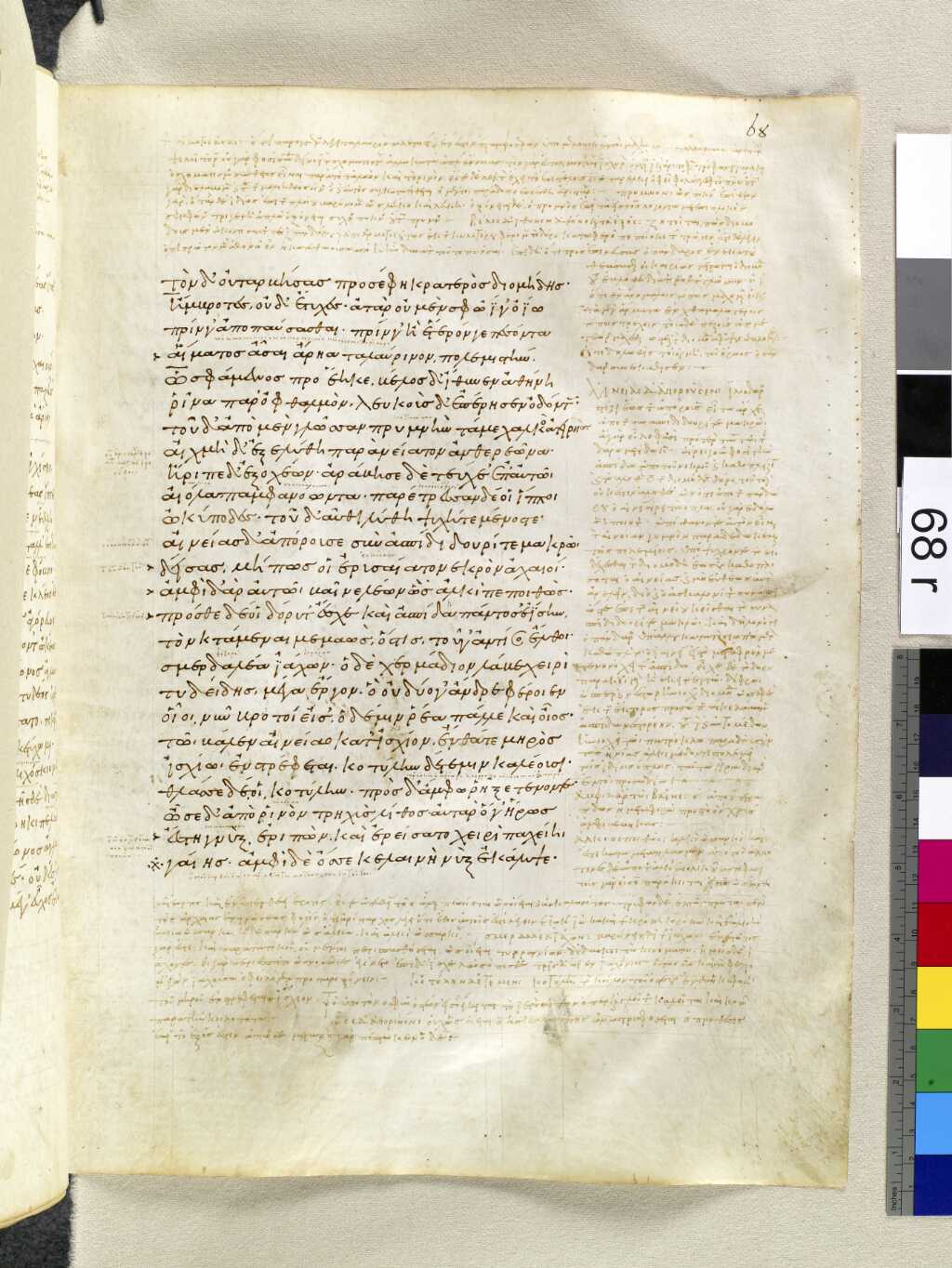
301τὸν κτάμεναι μεμαὼς ὅς τις τοῦ γʼ ἀντίος ἔλθοι 302σμερδαλέα ἰάχων· ὃ δὲ χερμάδιον λάβε χειρὶ 303Τυδεΐδης μέγα ἔργον ὃ οὐ δύο γʼ ἄνδρε φέροιεν, 304οἷοι νῦν βροτοί εἰσʼ· ὃ δέ μιν ῥέα πάλλε καὶ οἶος. 305τῷ βάλεν Αἰνείαο κατʼ ἰσχίον ἔνθά τε μηρὸς 306ἰσχίῳ ἐνστρέφεται, κοτύλην δέ τέ μιν καλέουσι· 307θλάσσε δέ οἱ κοτύλην, πρὸς δʼ ἄμφω ῥῆξε τένοντε· 308ὦσε δʼ ἀπὸ ῥινὸν τρηχὺς λίθος· αὐτὰρ ὅ γʼ ἥρως 309ἔστη γνὺξ ἐριπὼν καὶ ἐρείσατο χειρὶ παχείῃ 310γαίης· ἀμφὶ δὲ ὄσσε κελαινὴ νὺξ ἐκάλυψε. 311καί νύ κεν ἔνθʼ ἀπόλοιτο ἄναξ ἀνδρῶν Αἰνείας, 312εἰ μὴ ἄρʼ ὀξὺ νόησε Διὸς θυγάτηρ Ἀφροδίτη 313μήτηρ, ἥ μιν ὑπʼ Ἀγχίσῃ τέκε βουκολέοντι· 314ἀμφὶ δʼ ἑὸν φίλον υἱὸν ἐχεύατο πήχεε λευκώ, 315πρόσθε δέ οἱ πέπλοιο φαεινοῦ πτύγμα κάλυψεν 316ἕρκος ἔμεν βελέων, μή τις Δαναῶν ταχυπώλων 317χαλκὸν ἐνὶ στήθεσσι βαλὼν ἐκ θυμὸν ἕλοιτο. 318ἣ μὲν ἑὸν φίλον υἱὸν ὑπεξέφερεν πολέμοιο· 319οὐδʼ υἱὸς Καπανῆος ἐλήθετο συνθεσιάων 320τάων ἃς ἐπέτελλε βοὴν ἀγαθὸς Διομήδης, 321ἀλλʼ ὅ γε τοὺς μὲν ἑοὺς ἠρύκακε μώνυχας ἵππους 322νόσφιν ἀπὸ φλοίσβου ἐξ ἄντυγος ἡνία τείνας, 323Αἰνείαο δʼ ἐπαΐξας καλλίτριχας ἵππους 324ἐξέλασε Τρώων μετʼ ἐϋκνήμιδας Ἀχαιούς. 325δῶκε δὲ Δηϊπύλῳ ἑτάρῳ φίλῳ, ὃν περὶ πάσης
Diomed looked angrily at him and answered: “Talk not of flight, for I shall not listen to you: I am of a race that knows neither flight nor fear, and my limbs are as yet unwearied. I am in no mind to mount, but will go against them even as I am; Pallas Minerva bids me be afraid of no man, and even though one of them escape, their steeds shall not take both back again. I say further, and lay my saying to your heart—if Minerva sees fit to vouchsafe me the glory of killing both, stay your horses here and make the reins fast to the rim of the chariot; then be sure you spring Aeneas’ horses and drive them from the Trojan to the Achaean ranks. They are of the stock that great Jove gave to Tros in payment for his son Ganymede, and are the finest that live and move under the sun. King Anchises stole the blood by putting his mares to them without Laomedon’s knowledge, and they bore him six foals. Four are still in his stables, but he gave the other two to Aeneas. We shall win great glory if we can take them.”
Thus did they converse, but the other two had now driven close up to them, and the son of Lycaon spoke first. “Great and mighty son,” said he, “of noble Tydeus, my arrow failed to lay you low, so I will now try with my spear.”
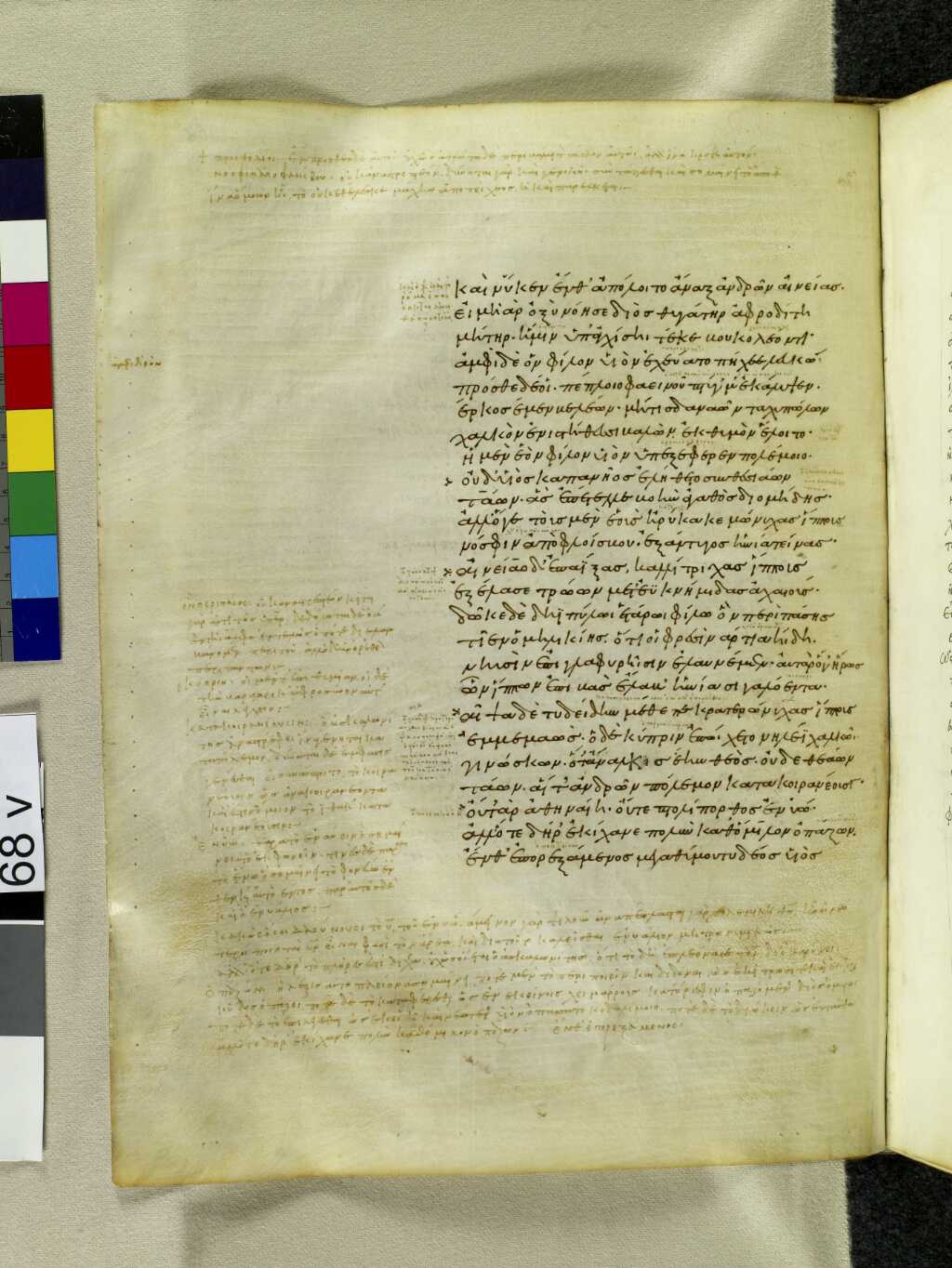
326τῖεν ὁμηλικίης ὅτι οἱ φρεσὶν ἄρτια ᾔδη, 327νηυσὶν ἔπι γλαφυρῇσιν ἐλαυνέμεν· αὐτὰρ ὅ γʼ ἥρως 328ὧν ἵππων ἐπιβὰς ἔλαβʼ ἡνία σιγαλόεντα, 329αἶψα δὲ Τυδεΐδην μέθεπε κρατερώνυχας ἵππους 330ἐμμεμαώς· ὃ δὲ Κύπριν ἐπῴχετο νηλέϊ χαλκῷ 331γιγνώσκων ὅ τʼ ἄναλκις ἔην θεός, οὐδὲ θεάων 332τάων αἵ τʼ ἀνδρῶν πόλεμον κάτα κοιρανέουσιν, 333οὔτʼ ἄρʼ Ἀθηναίη οὔτε πτολίπορθος Ἐνυώ. 334ἀλλʼ ὅτε δή ῥʼ ἐκίχανε πολὺν καθʼ ὅμιλον ὀπάζων, 335ἔνθʼ ἐπορεξάμενος μεγαθύμου Τυδέος υἱὸς 336ἄκρην οὔτασε χεῖρα μετάλμενος ὀξέϊ δουρὶ 337ἀβληχρήν· εἶθαρ δὲ δόρυ χροὸς ἀντετόρησεν 338ἀμβροσίου διὰ πέπλου, ὅν οἱ Χάριτες κάμον αὐταί, 339πρυμνὸν ὕπερ θέναρος· ῥέε δʼ ἄμβροτον αἷμα θεοῖο 340ἰχώρ, οἷός πέρ τε ῥέει μακάρεσσι θεοῖσιν· 341οὐ γὰρ σῖτον ἔδουσʼ, οὐ πίνουσʼ αἴθοπα οἶνον, 342τοὔνεκʼ ἀναίμονές εἰσι καὶ ἀθάνατοι καλέονται. 343ἣ δὲ μέγα ἰάχουσα ἀπὸ ἕο κάββαλεν υἱόν· 344καὶ τὸν μὲν μετὰ χερσὶν ἐρύσατο Φοῖβος Ἀπόλλων 345κυανέῃ νεφέλῃ, μή τις Δαναῶν ταχυπώλων 346χαλκὸν ἐνὶ στήθεσσι βαλὼν ἐκ θυμὸν ἕλοιτο· 347τῇ δʼ ἐπὶ μακρὸν ἄϋσε βοὴν ἀγαθὸς Διομήδης· 348εἶκε Διὸς θύγατερ πολέμου καὶ δηϊοτῆτος· 349ἦ οὐχ ἅλις ὅττι γυναῖκας ἀνάλκιδας ἠπεροπεύεις; 350εἰ δὲ σύ γʼ ἐς πόλεμον πωλήσεαι, ἦ τέ σʼ ὀΐω
He poised his spear as he spoke and hurled it from him. It struck the shield of the son of Tydeus; the bronze point pierced it and passed on till it reached the breastplate. Thereon the son of Lycaon shouted out and said, “You are hit clean through the belly; you will not stand out for long, and the glory of the fight is mine.”
But Diomed all undismayed made answer, “You have missed, not hit, and before you two see the end of this matter one or other of you shall glut tough-shielded Mars with his blood.”
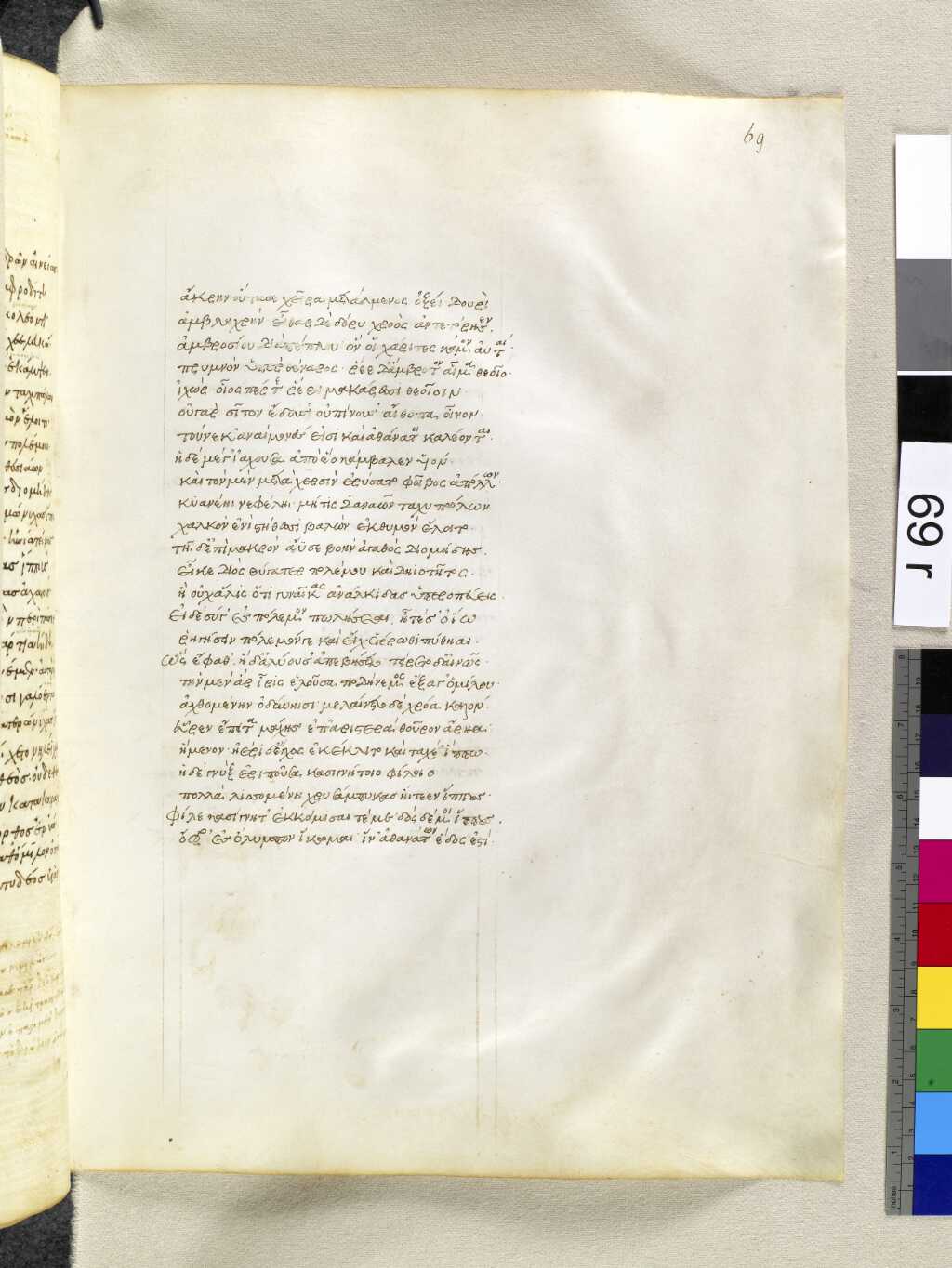
351ῥιγήσειν πόλεμόν γε καὶ εἴ χʼ ἑτέρωθι πύθηαι. 352ὣς ἔφαθʼ, ἣ δʼ ἀλύουσʼ ἀπεβήσετο, τείρετο δʼ αἰνῶς· 353τὴν μὲν ἄρʼ Ἶρις ἑλοῦσα ποδήνεμος ἔξαγʼ ὁμίλου 354ἀχθομένην ὀδύνῃσι, μελαίνετο δὲ χρόα καλόν. 355εὗρεν ἔπειτα μάχης ἐπʼ ἀριστερὰ θοῦρον Ἄρηα 356ἥμενον· ἠέρι δʼ ἔγχος ἐκέκλιτο καὶ ταχέʼ ἵππω· 357ἣ δὲ γνὺξ ἐριποῦσα κασιγνήτοιο φίλοιο 358πολλὰ λισσομένη χρυσάμπυκας ᾔτεεν ἵππους· 359φίλε κασίγνητε κόμισαί τέ με δός τέ μοι ἵππους, 360ὄφρʼ ἐς Ὄλυμπον ἵκωμαι ἵνʼ ἀθανάτων ἕδος ἐστί. 361λίην ἄχθομαι ἕλκος ὅ με βροτὸς οὔτασεν ἀνὴρ 362Τυδεΐδης, ὃς νῦν γε καὶ ἂν Διὶ πατρὶ μάχοιτο. 363ὣς φάτο, τῇ δʼ ἄρʼ Ἄρης δῶκε χρυσάμπυκας ἵππους· 364ἣ δʼ ἐς δίφρον ἔβαινεν ἀκηχεμένη φίλον ἦτορ, 365πὰρ δέ οἱ Ἶρις ἔβαινε καὶ ἡνία λάζετο χερσί, 366μάστιξεν δʼ ἐλάαν, τὼ δʼ οὐκ ἀέκοντε πετέσθην. 367αἶψα δʼ ἔπειθʼ ἵκοντο θεῶν ἕδος αἰπὺν Ὄλυμπον· 368ἔνθʼ ἵππους ἔστησε ποδήνεμος ὠκέα Ἶρις 369λύσασʼ ἐξ ὀχέων, παρὰ δʼ ἀμβρόσιον βάλεν εἶδαρ· 370ἣ δʼ ἐν γούνασι πῖπτε Διώνης δῖʼ Ἀφροδίτη 371μητρὸς ἑῆς· ἣ δʼ ἀγκὰς ἐλάζετο θυγατέρα ἥν, 372χειρί τέ μιν κατέρεξεν ἔπος τʼ ἔφατʼ ἐκ τʼ ὀνόμαζε· 373τίς νύ σε τοιάδʼ ἔρεξε φίλον τέκος Οὐρανιώνων 374μαψιδίως, ὡς εἴ τι κακὸν ῥέζουσαν ἐνωπῇ; 375τὴν δʼ ἠμείβετʼ ἔπειτα φιλομμειδὴς Ἀφροδίτη·
With this he hurled his spear, and Minerva guided it on to Pandarus’s nose near the eye. It went crashing in among his white teeth; the bronze point cut through the root of his tongue, coming out under his chin, and his glistening armour rang rattling round him as he fell heavily to the ground. The horses started aside for fear, and he was reft of life and strength.
Aeneas sprang from his chariot armed with shield and spear, fearing lest the Achaeans should carry off the body. He bestrode it as a lion in the pride of strength, with shield and spear before him and a cry of battle on his lips resolute to kill the first that should dare face him. But the son of Tydeus caught up a mighty stone, so huge and great that as men now are it would take two to lift it; nevertheless he bore it aloft with ease unaided, and with this he struck Aeneas on the groin where the hip turns in the joint that is called the “cup-bone.” The stone crushed this joint, and broke both the sinews, while its jagged edges tore away all the flesh. The hero fell on his knees, and propped himself with his hand resting on the ground till the darkness of night fell upon his eyes. And now Aeneas, king of men, would have perished then and there, had not his mother, Jove’s daughter Venus, who had conceived him by Anchises when he was herding cattle, been quick to mark, and thrown her two white arms about the body of her dear son. She protected him by covering him with a fold of her own fair garment, lest some Danaan should drive a spear into his breast and kill him.
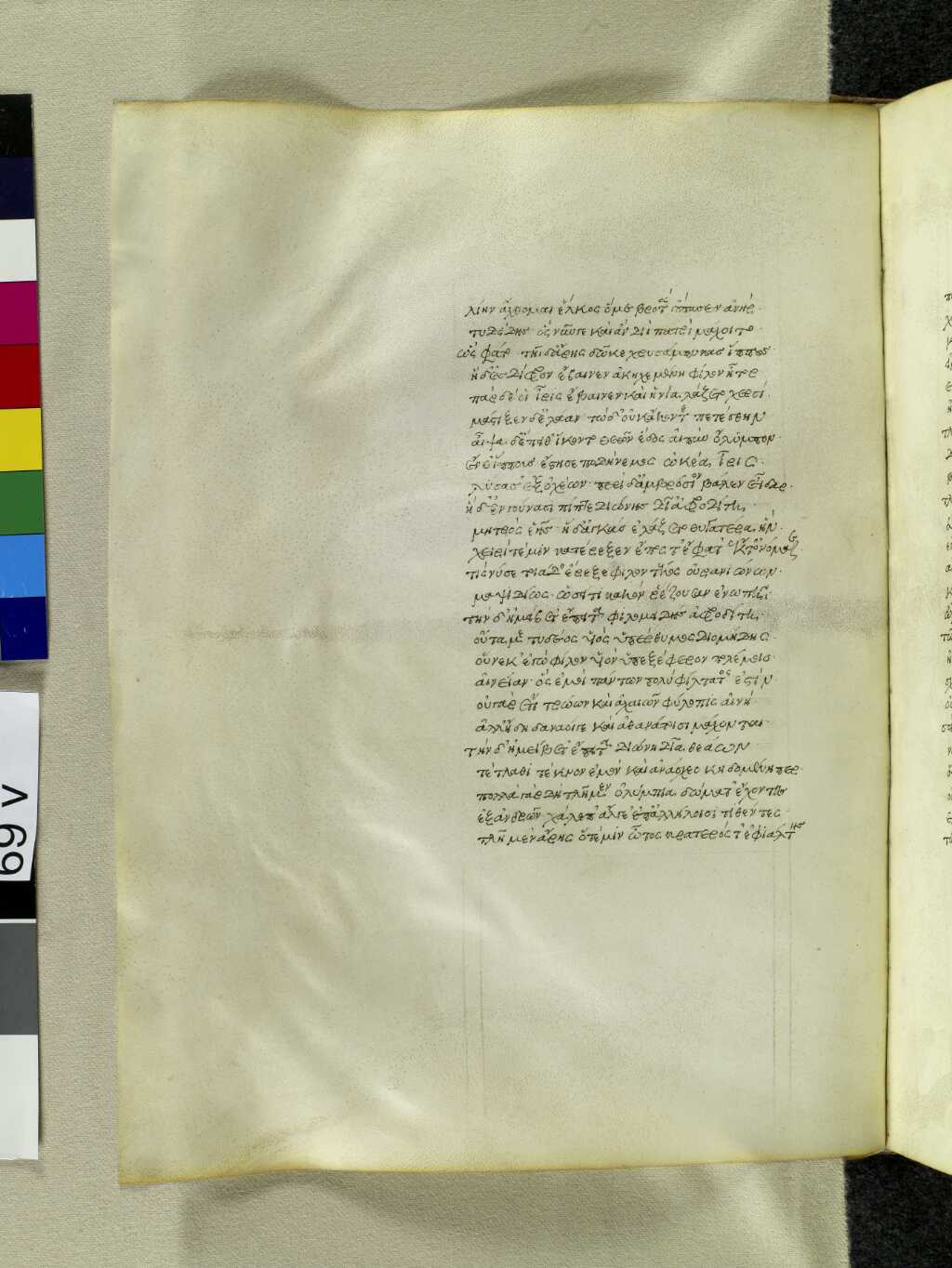
376οὖτά με Τυδέος υἱὸς ὑπέρθυμος Διομήδης, 377οὕνεκʼ ἐγὼ φίλον υἱὸν ὑπεξέφερον πολέμοιο 378Αἰνείαν, ὃς ἐμοὶ πάντων πολὺ φίλτατός ἐστιν. 379οὐ γὰρ ἔτι Τρώων καὶ Ἀχαιῶν φύλοπις αἰνή, 380ἀλλʼ ἤδη Δαναοί γε καὶ ἀθανάτοισι μάχονται. 381τὴν δʼ ἠμείβετʼ ἔπειτα Διώνη, δῖα θεάων· 382τέτλαθι τέκνον ἐμόν, καὶ ἀνάσχεο κηδομένη περ· 383πολλοὶ γὰρ δὴ τλῆμεν Ὀλύμπια δώματʼ ἔχοντες 384ἐξ ἀνδρῶν χαλέπʼ ἄλγεʼ ἐπʼ ἀλλήλοισι τιθέντες. 385τλῆ μὲν Ἄρης ὅτε μιν Ὦτος κρατερός τʼ Ἐφιάλτης 386παῖδες Ἀλωῆος, δῆσαν κρατερῷ ἐνὶ δεσμῷ· 387χαλκέῳ δʼ ἐν κεράμῳ δέδετο τρισκαίδεκα μῆνας· 388καί νύ κεν ἔνθʼ ἀπόλοιτο Ἄρης ἆτος πολέμοιο, 389εἰ μὴ μητρυιὴ περικαλλὴς Ἠερίβοια 390Ἑρμέᾳ ἐξήγγειλεν· ὃ δʼ ἐξέκλεψεν Ἄρηα 391ἤδη τειρόμενον, χαλεπὸς δέ ἑ δεσμὸς ἐδάμνα. 392τλῆ δʼ Ἥρη, ὅτε μιν κρατερὸς πάϊς Ἀμφιτρύωνος 393δεξιτερὸν κατὰ μαζὸν ὀϊστῷ τριγλώχινι 394βεβλήκει· τότε καί μιν ἀνήκεστον λάβεν ἄλγος. 395τλῆ δʼ Ἀΐδης ἐν τοῖσι πελώριος ὠκὺν ὀϊστόν, 396εὖτέ μιν ωὐτὸς ἀνὴρ υἱὸς Διὸς αἰγιόχοιο 397ἐν Πύλῳ ἐν νεκύεσσι βαλὼν ὀδύνῃσιν ἔδωκεν· 398αὐτὰρ ὃ βῆ πρὸς δῶμα Διὸς καὶ μακρὸν Ὄλυμπον 399κῆρ ἀχέων ὀδύνῃσι πεπαρμένος· αὐτὰρ ὀϊστὸς 400ὤμῳ ἔνι στιβαρῷ ἠλήλατο, κῆδε δὲ θυμόν.
Thus, then, did she bear her dear son out of the fight. But the son of Capaneus was not unmindful of the orders that Diomed had given him. He made his own horses fast, away from the hurly-burly, by binding the reins to the rim of the chariot. Then he sprang upon Aeneas’s horses and drove them from the Trojan to the Achaean ranks. When he had so done he gave them over to his chosen comrade Deipylus, whom he valued above all others as the one who was most like-minded with himself, to take them on to the ships. He then remounted his own chariot, seized the reins, and drove with all speed in search of the son of Tydeus.
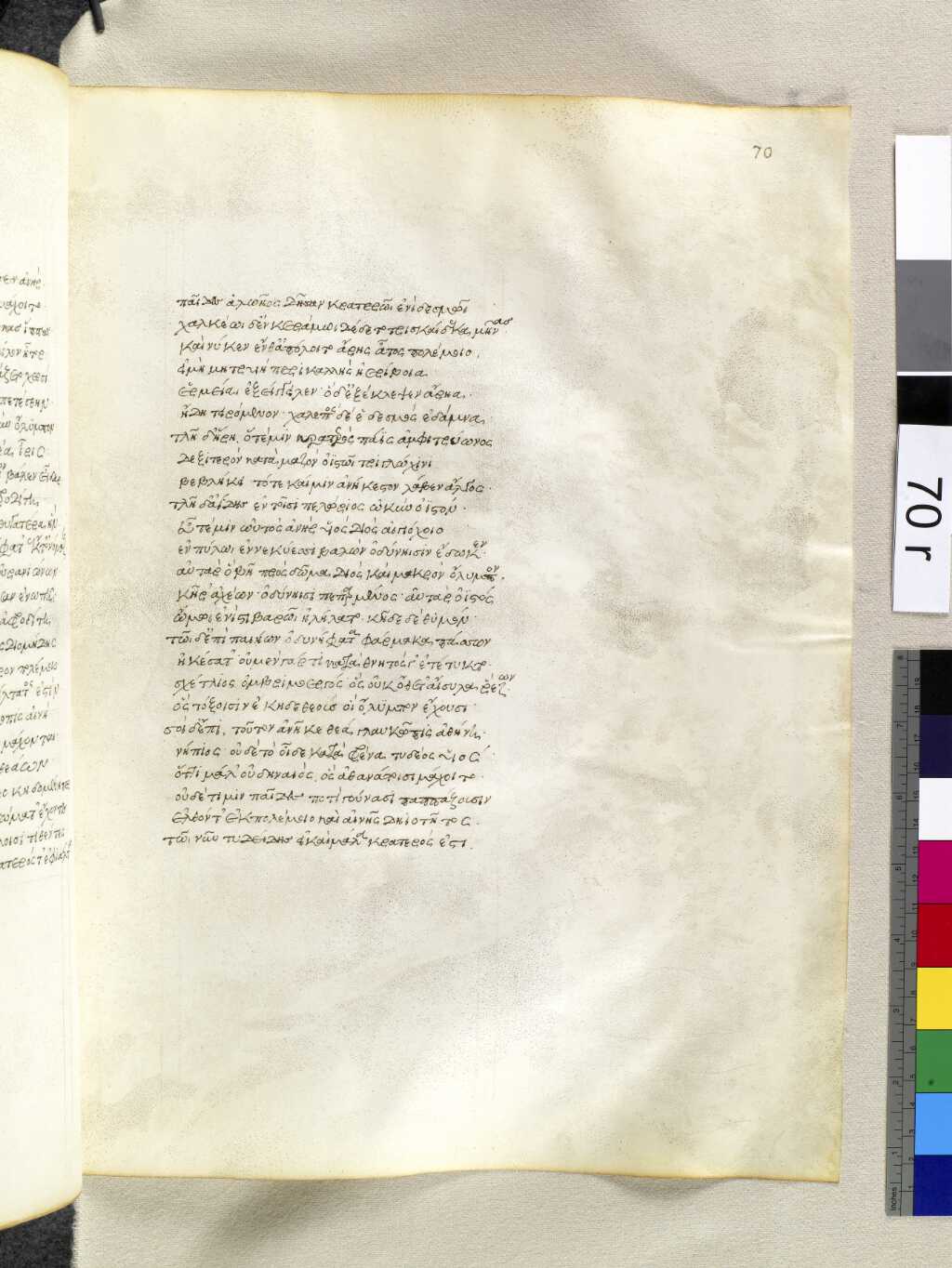
401τῷ δʼ ἐπὶ Παιήων ὀδυνήφατα φάρμακα πάσσων 402ἠκέσατʼ· οὐ μὲν γάρ τι καταθνητός γε τέτυκτο. 403σχέτλιος ὀβριμοεργὸς ὃς οὐκ ὄθετʼ αἴσυλα ῥέζων, 404ὃς τόξοισιν ἔκηδε θεοὺς οἳ Ὄλυμπον ἔχουσι. 405σοὶ δʼ ἐπὶ τοῦτον ἀνῆκε θεὰ γλαυκῶπις Ἀθήνη· 406νήπιος, οὐδὲ τὸ οἶδε κατὰ φρένα Τυδέος υἱὸς 407ὅττι μάλʼ οὐ δηναιὸς ὃς ἀθανάτοισι μάχηται, 408οὐδέ τί μιν παῖδες ποτὶ γούνασι παππάζουσιν 409ἐλθόντʼ ἐκ πολέμοιο καὶ αἰνῆς δηϊοτῆτος. 410τὼ νῦν Τυδεΐδης, εἰ καὶ μάλα καρτερός ἐστι, 411φραζέσθω μή τίς οἱ ἀμείνων σεῖο μάχηται, 412μὴ δὴν Αἰγιάλεια περίφρων Ἀδρηστίνη 413ἐξ ὕπνου γοόωσα φίλους οἰκῆας ἐγείρῃ 414κουρίδιον ποθέουσα πόσιν τὸν ἄριστον Ἀχαιῶν 415ἰφθίμη ἄλοχος Διομήδεος ἱπποδάμοιο. 416ἦ ῥα καὶ ἀμφοτέρῃσιν ἀπʼ ἰχῶ χειρὸς ὀμόργνυ· 417ἄλθετο χείρ, ὀδύναι δὲ κατηπιόωντο βαρεῖαι. 418αἳ δʼ αὖτʼ εἰσορόωσαι Ἀθηναίη τε καὶ Ἥρη 419κερτομίοις ἐπέεσσι Δία Κρονίδην ἐρέθιζον. 420τοῖσι δὲ μύθων ἦρχε θεὰ γλαυκῶπις Ἀθήνη· 421Ζεῦ πάτερ ἦ ῥά τί μοι κεχολώσεαι ὅττι κεν εἴπω; 422ἦ μάλα δή τινα Κύπρις Ἀχαιϊάδων ἀνιεῖσα 423Τρωσὶν ἅμα σπέσθαι, τοὺς νῦν ἔκπαγλα φίλησε, 424τῶν τινα καρρέζουσα Ἀχαιϊάδων ἐϋπέπλων 425πρὸς χρυσῇ περόνῃ καταμύξατο χεῖρα ἀραιήν.
Now the son of Tydeus was in pursuit of the Cyprian goddess, spear in hand, for he knew her to be feeble and not one of those goddesses that can lord it among men in battle like Minerva or Enyo the waster of cities, and when at last after a long chase he caught her up, he flew at her and thrust his spear into the flesh of her delicate hand. The point tore through the ambrosial robe which the Graces had woven for her, and pierced the skin between her wrist and the palm of her hand, so that the immortal blood, or ichor, that flows in the veins of the blessed gods, came pouring from the wound; for the gods do not eat bread nor drink wine, hence they have no blood such as ours, and are immortal. Venus screamed aloud, and let her son fall, but Phoebus Apollo caught him in his arms, and hid him in a cloud of darkness, lest some Danaan should drive a spear into his breast and kill him; and Diomed shouted out as he left her, “Daughter of Jove, leave war and battle alone, can you not be contented with beguiling silly women? If you meddle with fighting you will get what will make you shudder at the very name of war.”
The goddess went dazed and discomfited away, and Iris, fleet as the wind, drew her from the throng, in pain and with her fair skin all besmirched. She found fierce Mars waiting on the left of the battle, with his spear and his two fleet steeds resting on a cloud; whereon she fell on her knees before her brother and implored him to let her have his horses. “Dear brother,” she cried, “save me, and give me your horses to take me to Olympus where the gods dwell. I am badly wounded by a mortal, the son of Tydeus, who would now fight even with father Jove.”
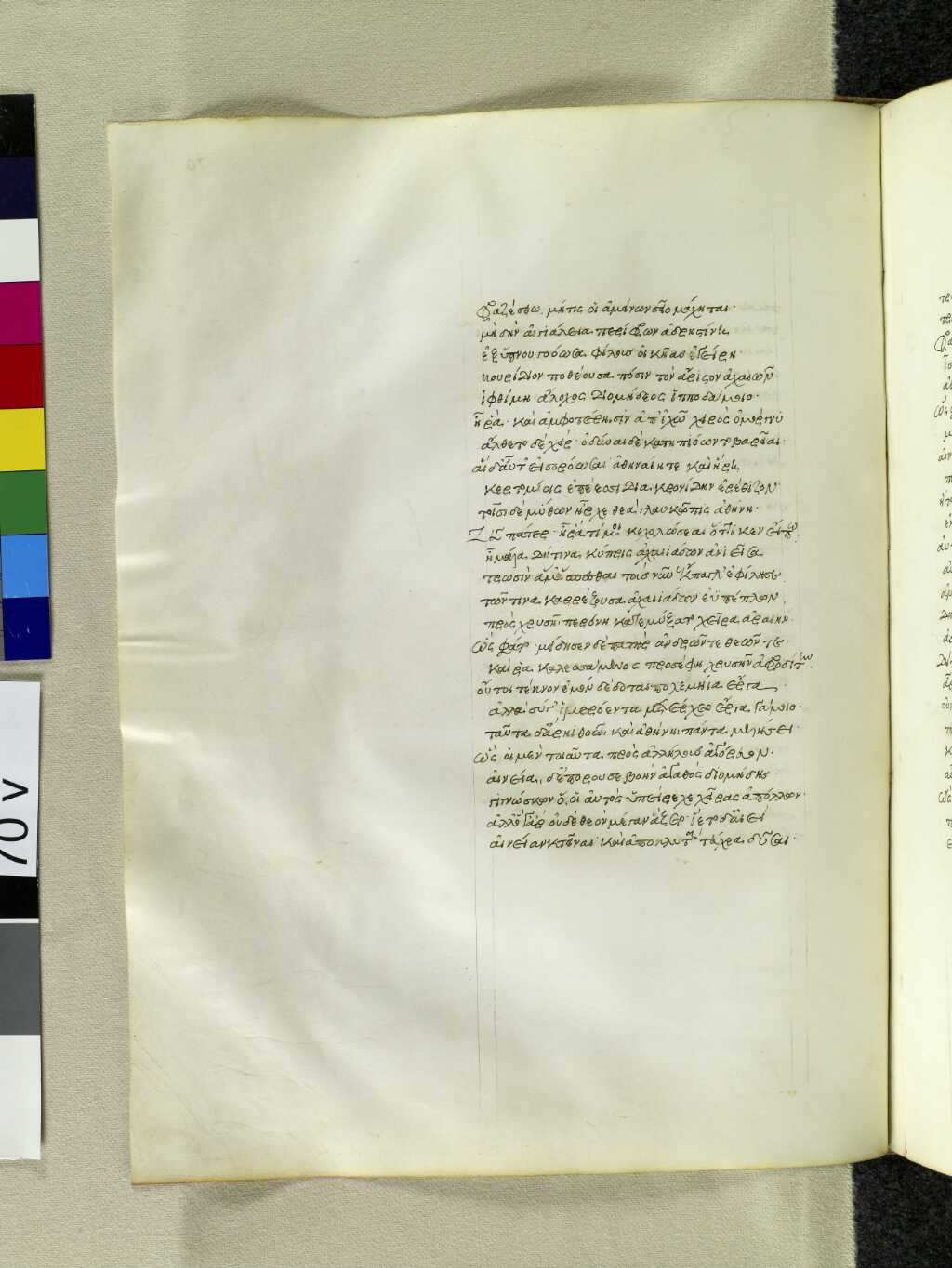
426ὣς φάτο, μείδησεν δὲ πατὴρ ἀνδρῶν τε θεῶν τε, 427καί ῥα καλεσσάμενος προσέφη χρυσῆν Ἀφροδίτην· 428οὔ τοι τέκνον ἐμὸν δέδοται πολεμήϊα ἔργα, 429ἀλλὰ σύ γʼ ἱμερόεντα μετέρχεο ἔργα γάμοιο, 430ταῦτα δʼ Ἄρηϊ θοῷ καὶ Ἀθήνῃ πάντα μελήσει. 431ὣς οἳ μὲν τοιαῦτα πρὸς ἀλλήλους ἀγόρευον, 432Αἰνείᾳ δʼ ἐπόρουσε βοὴν ἀγαθὸς Διομήδης, 433γιγνώσκων ὅ οἱ αὐτὸς ὑπείρεχε χεῖρας Ἀπόλλων· 434ἀλλʼ ὅ γʼ ἄρʼ οὐδὲ θεὸν μέγαν ἅζετο, ἵετο δʼ αἰεὶ 435Αἰνείαν κτεῖναι καὶ ἀπὸ κλυτὰ τεύχεα δῦσαι. 436τρὶς μὲν ἔπειτʼ ἐπόρουσε κατακτάμεναι μενεαίνων, 437τρὶς δέ οἱ ἐστυφέλιξε φαεινὴν ἀσπίδʼ Ἀπόλλων· 438ἀλλʼ ὅτε δὴ τὸ τέταρτον ἐπέσσυτο δαίμονι ἶσος, 439δεινὰ δʼ ὁμοκλήσας προσέφη ἑκάεργος Ἀπόλλων· 440φράζεο Τυδεΐδη καὶ χάζεο, μηδὲ θεοῖσιν 441ἶσʼ ἔθελε φρονέειν, ἐπεὶ οὔ ποτε φῦλον ὁμοῖον 442ἀθανάτων τε θεῶν χαμαὶ ἐρχομένων τʼ ἀνθρώπων. 443ὣς φάτο, Τυδεΐδης δʼ ἀνεχάζετο τυτθὸν ὀπίσσω 444μῆνιν ἀλευάμενος ἑκατηβόλου Ἀπόλλωνος. 445Αἰνείαν δʼ ἀπάτερθεν ὁμίλου θῆκεν Ἀπόλλων 446Περγάμῳ εἰν ἱερῇ, ὅθι οἱ νηός γε τέτυκτο. 447ἤτοι τὸν Λητώ τε καὶ Ἄρτεμις ἰοχέαιρα 448ἐν μεγάλῳ ἀδύτῳ ἀκέοντό τε κύδαινόν τε· 449αὐτὰρ ὃ εἴδωλον τεῦξʼ ἀργυρότοξος Ἀπόλλων 450αὐτῷ τʼ Αἰνείᾳ ἴκελον καὶ τεύχεσι τοῖον,
Thus she spoke, and Mars gave her his gold-bedizened steeds. She mounted the chariot sick and sorry at heart, while Iris sat beside her and took the reins in her hand. She lashed her horses on and they flew forward nothing loth, till in a trice they were at high Olympus, where the gods have their dwelling. There she stayed them, unloosed them from the chariot, and gave them their ambrosial forage; but Venus flung herself on to the lap of her mother Dione, who threw her arms about her and caressed her, saying, “Which of the heavenly beings has been treating you in this way, as though you had been doing something wrong in the face of day?”
And laughter-loving Venus answered, “Proud Diomed, the son of Tydeus, wounded me because I was bearing my dear son Aeneas, whom I love best of all mankind, out of the fight. The war is no longer one between Trojans and Achaeans, for the Danaans have now taken to fighting with the immortals.”
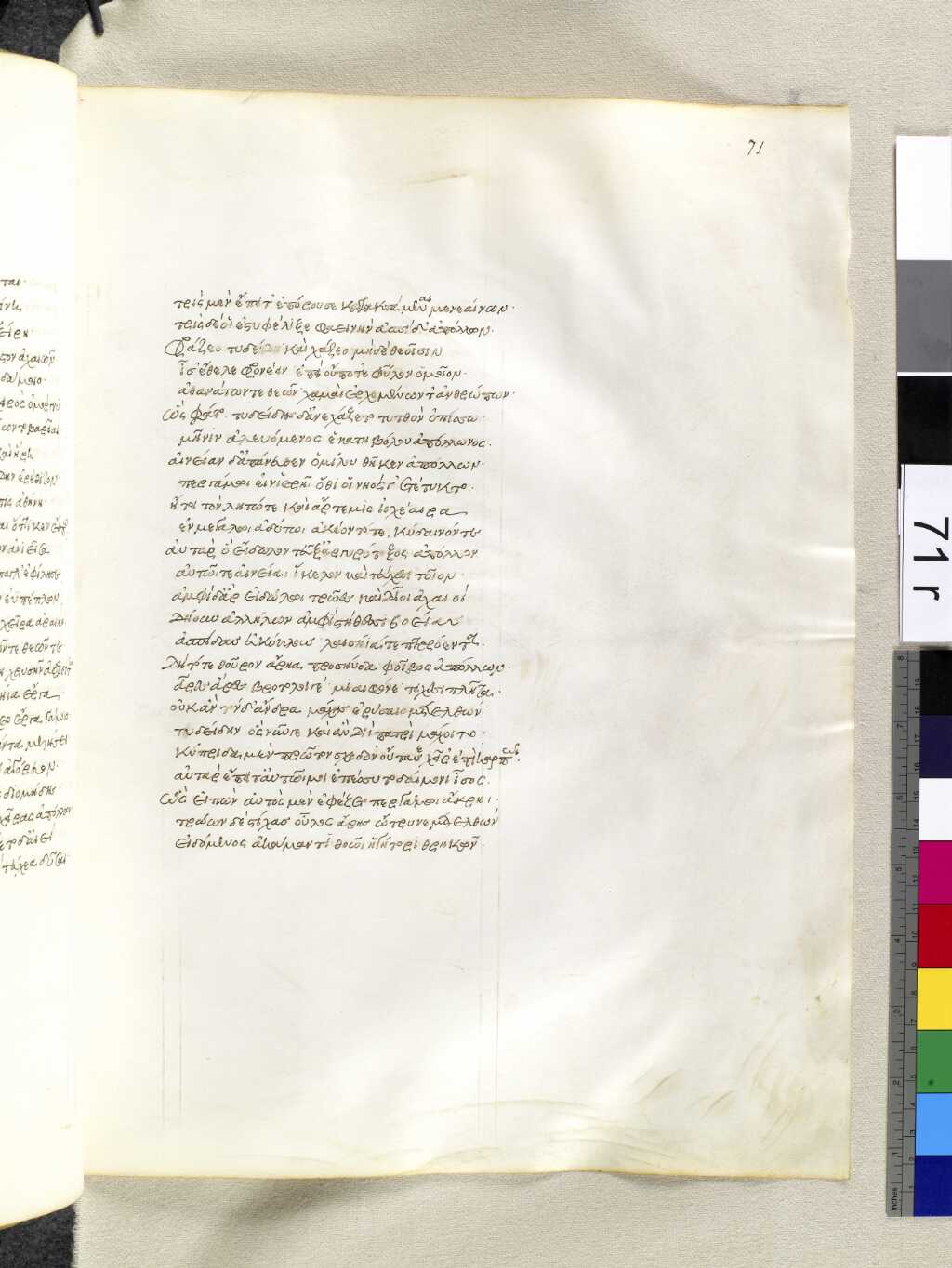
451ἀμφὶ δʼ ἄρʼ εἰδώλῳ Τρῶες καὶ δῖοι Ἀχαιοὶ 452δῄουν ἀλλήλων ἀμφὶ στήθεσσι βοείας 453ἀσπίδας εὐκύκλους λαισήϊά τε πτερόεντα. 454δὴ τότε θοῦρον Ἄρηα προσηύδα Φοῖβος Ἀπόλλων· 455Ἆρες Ἄρες βροτολοιγὲ μιαιφόνε τειχεσιπλῆτα, 456οὐκ ἂν δὴ τόνδʼ ἄνδρα μάχης ἐρύσαιο μετελθὼν 457Τυδεΐδην, ὃς νῦν γε καὶ ἂν Διὶ πατρὶ μάχοιτο; 458Κύπριδα μὲν πρῶτα σχεδὸν οὔτασε χεῖρʼ ἐπὶ καρπῷ, 459αὐτὰρ ἔπειτʼ αὐτῷ μοι ἐπέσσυτο δαίμονι ἶσος. 460ὣς εἰπὼν αὐτὸς μὲν ἐφέζετο Περγάμῳ ἄκρῃ, 461Τρῳὰς δὲ στίχας οὖλος Ἄρης ὄτρυνε μετελθὼν 462εἰδόμενος Ἀκάμαντι θοῷ ἡγήτορι Θρῃκῶν· 463υἱάσι δὲ Πριάμοιο διοτρεφέεσσι κέλευεν· 464ὦ υἱεῖς Πριάμοιο διοτρεφέος βασιλῆος 465ἐς τί ἔτι κτείνεσθαι ἐάσετε λαὸν Ἀχαιοῖς; 466ἦ εἰς ὅ κεν ἀμφὶ πύλῃς εὖ ποιητῇσι μάχωνται; 467κεῖται ἀνὴρ ὃν ἶσον ἐτίομεν Ἕκτορι δίῳ 468Αἰνείας υἱὸς μεγαλήτορος Ἀγχίσαο· 469ἀλλʼ ἄγετʼ ἐκ φλοίσβοιο σαώσομεν ἐσθλὸν ἑταῖρον. 470ὣς εἰπὼν ὄτρυνε μένος καὶ θυμὸν ἑκάστου. 471ἔνθʼ αὖ Σαρπηδὼν μάλα νείκεσεν Ἕκτορα δῖον· 472Ἕκτορ πῇ δή τοι μένος οἴχεται ὃ πρὶν ἔχεσκες; 473φῆς που ἄτερ λαῶν πόλιν ἑξέμεν ἠδʼ ἐπικούρων 474οἶος σὺν γαμβροῖσι κασιγνήτοισί τε σοῖσι. 475τῶν νῦν οὔ τινʼ ἐγὼ ἰδέειν δύναμʼ οὐδὲ νοῆσαι,
“Bear it, my child,” replied Dione, “and make the best of it. We dwellers in Olympus have to put up with much at the hands of men, and we lay much suffering on one another. Mars had to suffer when Otus and Ephialtes, children of Aloeus, bound him in cruel bonds, so that he lay thirteen months imprisoned in a vessel of bronze. Mars would have then perished had not fair Eeriboea, stepmother to the sons of Aloeus, told Mercury, who stole him away when he was already well-nigh worn out by the severity of his bondage. Juno, again, suffered when the mighty son of Amphitryon wounded her on the right breast with a three-barbed arrow, and nothing could assuage her pain. So, also, did huge Hades, when this same man, the son of aegis-bearing Jove, hit him with an arrow even at the gates of hell, and hurt him badly. Thereon Hades went to the house of Jove on great Olympus, angry and full of pain; and the arrow in his brawny shoulder caused him great anguish till Paeeon healed him by spreading soothing herbs on the wound, for Hades was not of mortal mould. Daring, headstrong, evildoer who recked not of his sin in shooting the gods that dwell in Olympus. And now Minerva has egged this son of Tydeus on against yourself, fool that he is for not reflecting that no man who fights with gods will live long or hear his children prattling about his knees when he returns from battle. Let, then, the son of Tydeus see that he does not have to fight with one who is stronger than you are. Then shall his brave wife Aegialeia, daughter of Adrestus, rouse her whole house from sleep, wailing for the loss of her wedded lord, Diomed the bravest of the Achaeans.”
So saying, she wiped the ichor from the wrist of her daughter with both hands, whereon the pain left her, and her hand was healed. But Minerva and Juno, who were looking on, began to taunt Jove with their mocking talk, and Minerva was first to speak. “Father Jove,” said she, “do not be angry with me, but I think the Cyprian must have been persuading some one of the Achaean women to go with the Trojans of whom she is so very fond, and while caressing one or other of them she must have torn her delicate hand with the gold pin of the woman’s brooch.”
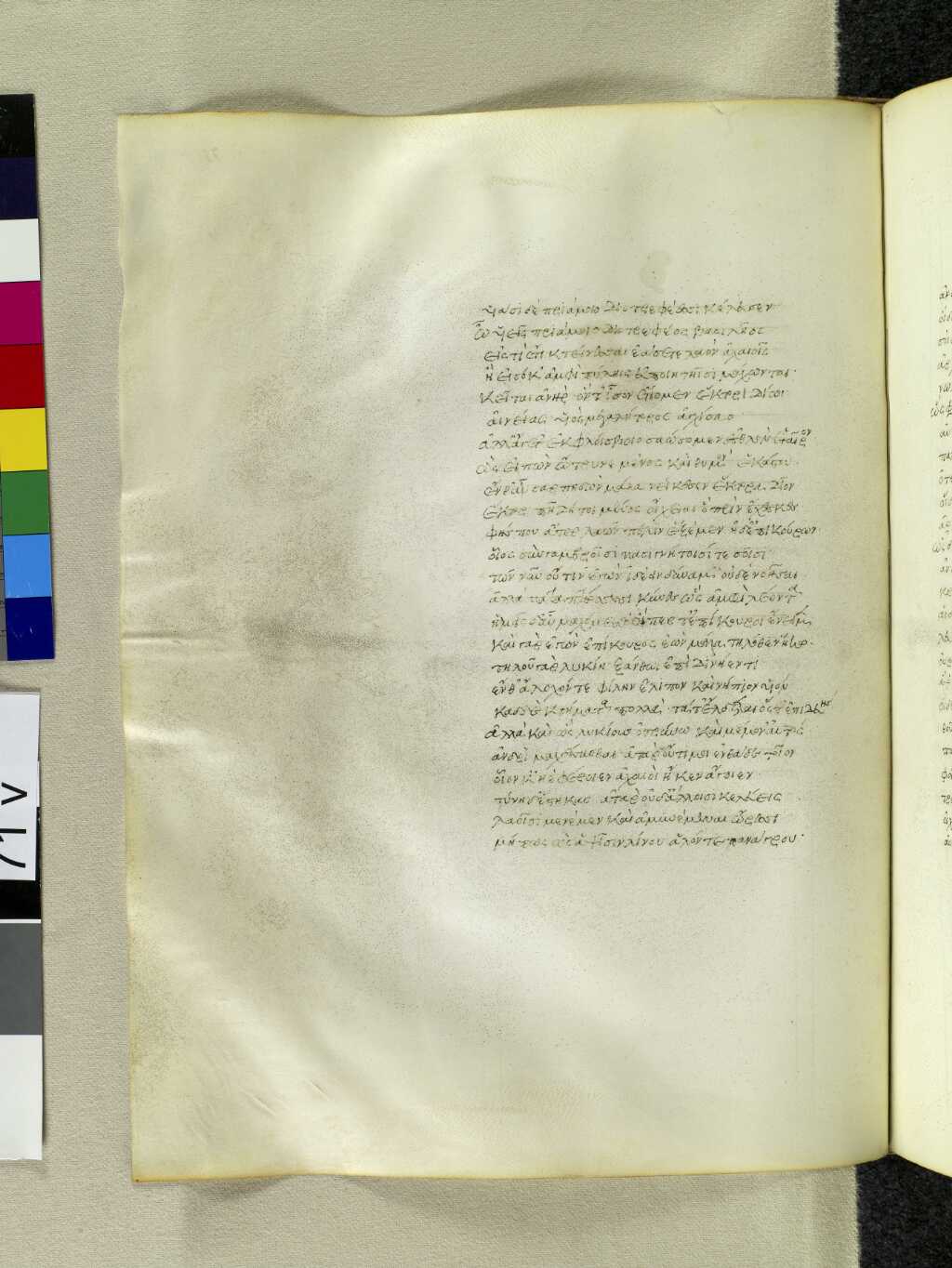
476ἀλλὰ καταπτώσσουσι κύνες ὣς ἀμφὶ λέοντα· 477ἡμεῖς δὲ μαχόμεσθʼ οἵ πέρ τʼ ἐπίκουροι ἔνειμεν. 478καὶ γὰρ ἐγὼν ἐπίκουρος ἐὼν μάλα τηλόθεν ἥκω· 479τηλοῦ γὰρ Λυκίη Ξάνθῳ ἔπι δινήεντι, 480ἔνθʼ ἄλοχόν τε φίλην ἔλιπον καὶ νήπιον υἱόν, 481κὰδ δὲ κτήματα πολλά, τὰ ἔλδεται ὅς κʼ ἐπιδευής. 482ἀλλὰ καὶ ὧς Λυκίους ὀτρύνω καὶ μέμονʼ αὐτὸς 483ἀνδρὶ μαχήσασθαι· ἀτὰρ οὔ τί μοι ἐνθάδε τοῖον 484οἷόν κʼ ἠὲ φέροιεν Ἀχαιοὶ ἤ κεν ἄγοιεν· 485τύνη δʼ ἕστηκας, ἀτὰρ οὐδʼ ἄλλοισι κελεύεις 486λαοῖσιν μενέμεν καὶ ἀμυνέμεναι ὤρεσσι. 487μή πως ὡς ἀψῖσι λίνου ἁλόντε πανάγρου 488ἀνδράσι δυσμενέεσσιν ἕλωρ καὶ κύρμα γένησθε· 489οἳ δὲ τάχʼ ἐκπέρσουσʼ εὖ ναιομένην πόλιν ὑμήν. 490σοὶ δὲ χρὴ τάδε πάντα μέλειν νύκτάς τε καὶ ἦμαρ 491ἀρχοὺς λισσομένῳ τηλεκλειτῶν ἐπικούρων 492νωλεμέως ἐχέμεν, κρατερὴν δʼ ἀποθέσθαι ἐνιπήν. 493ὣς φάτο Σαρπηδών, δάκε δὲ φρένας Ἕκτορι μῦθος· 494αὐτίκα δʼ ἐξ ὀχέων σὺν τεύχεσιν ἆλτο χαμᾶζε, 495πάλλων δʼ ὀξέα δοῦρα κατὰ στρατὸν ᾤχετο πάντῃ 496ὀτρύνων μαχέσασθαι, ἔγειρε δὲ φύλοπιν αἰνήν. 497οἳ δʼ ἐλελίχθησαν καὶ ἐναντίοι ἔσταν Ἀχαιῶν· 498Ἀργεῖοι δʼ ὑπέμειναν ἀολλέες οὐδὲ φόβηθεν. 499ὡς δʼ ἄνεμος ἄχνας φορέει ἱερὰς κατʼ ἀλωὰς 500ἀνδρῶν λικμώντων, ὅτε τε ξανθὴ Δημήτηρ
The sire of gods and men smiled, and called golden Venus to his side. “My child,” said he, “it has not been given you to be a warrior. Attend, henceforth, to your own delightful matrimonial duties, and leave all this fighting to Mars and to Minerva.”
Thus did they converse. But Diomed sprang upon Aeneas, though he knew him to be in the very arms of Apollo. Not one whit did he fear the mighty god, so set was he on killing Aeneas and stripping him of his armour. Thrice did he spring forward with might and main to slay him, and thrice did Apollo beat back his gleaming shield. When he was coming on for the fourth time, as though he were a god, Apollo shouted to him with an awful voice and said, “Take heed, son of Tydeus, and draw off; think not to match yourself against gods, for men that walk the earth cannot hold their own with the immortals.”
501κρίνῃ ἐπειγομένων ἀνέμων καρπόν τε καὶ ἄχνας, 502αἳ δʼ ὑπολευκαίνονται ἀχυρμιαί· ὣς τότʼ Ἀχαιοὶ 503λευκοὶ ὕπερθε γένοντο κονισάλῳ, ὅν ῥα διʼ αὐτῶν 504οὐρανὸν ἐς πολύχαλκον ἐπέπληγον πόδες ἵππων 505ἂψ ἐπιμισγομένων· ὑπὸ δʼ ἔστρεφον ἡνιοχῆες. 506οἳ δὲ μένος χειρῶν ἰθὺς φέρον· ἀμφὶ δὲ νύκτα 507θοῦρος Ἄρης ἐκάλυψε μάχῃ Τρώεσσιν ἀρήγων 508πάντοσʼ ἐποιχόμενος· τοῦ δʼ ἐκραίαινεν ἐφετμὰς 509Φοίβου Ἀπόλλωνος χρυσαόρου, ὅς μιν ἀνώγει 510Τρωσὶν θυμὸν ἐγεῖραι, ἐπεὶ ἴδε Παλλάδʼ Ἀθήνην 511οἰχομένην· ἣ γάρ ῥα πέλεν Δαναοῖσιν ἀρηγών. 512αὐτὸς δʼ Αἰνείαν μάλα πίονος ἐξ ἀδύτοιο 513ἧκε, καὶ ἐν στήθεσσι μένος βάλε ποιμένι λαῶν. 514Αἰνείας δʼ ἑτάροισι μεθίστατο· τοὶ δὲ χάρησαν, 515ὡς εἶδον ζωόν τε καὶ ἀρτεμέα προσιόντα 516καὶ μένος ἐσθλὸν ἔχοντα· μετάλλησάν γε μὲν οὔ τι. 517οὐ γὰρ ἔα πόνος ἄλλος, ὃν ἀργυρότοξος ἔγειρεν 518Ἄρης τε βροτολοιγὸς Ἔρις τʼ ἄμοτον μεμαυῖα. 519τοὺς δʼ Αἴαντε δύω καὶ Ὀδυσσεὺς καὶ Διομήδης 520ὄτρυνον Δαναοὺς πολεμιζέμεν· οἳ δὲ καὶ αὐτοὶ 521οὔτε βίας Τρώων ὑπεδείδισαν οὔτε ἰωκάς, 522ἀλλʼ ἔμενον νεφέλῃσιν ἐοικότες ἅς τε Κρονίων 523νηνεμίης ἔστησεν ἐπʼ ἀκροπόλοισιν ὄρεσσιν 524ἀτρέμας, ὄφρʼ εὕδῃσι μένος Βορέαο καὶ ἄλλων 525ζαχρειῶν ἀνέμων, οἵ τε νέφεα σκιόεντα
The son of Tydeus then gave way for a little space, to avoid the anger of the god, while Apollo took Aeneas out of the crowd and set him in sacred Pergamus, where his temple stood. There, within the mighty sanctuary, Latona and Diana healed him and made him glorious to behold, while Apollo of the silver bow fashioned a wraith in the likeness of Aeneas, and armed as he was. Round this the Trojans and Achaeans hacked at the bucklers about one another’s breasts, hewing each other’s round shields and light hide-covered targets. Then Phoebus Apollo said to Mars, “Mars, Mars, bane of men, blood-stained stormer of cities, can you not go to this man, the son of Tydeus, who would now fight even with father Jove, and draw him out of the battle? He first went up to the Cyprian and wounded her in the hand near her wrist, and afterwards sprang upon me too, as though he were a god.”
He then took his seat on the top of Pergamus, while murderous Mars went about among the ranks of the Trojans, cheering them on, in the likeness of fleet Acamas chief of the Thracians. “Sons of Priam,” said he, “how long will you let your people be thus slaughtered by the Achaeans? Would you wait till they are at the walls of Troy? Aeneas the son of Anchises has fallen, he whom we held in as high honour as Hector himself. Help me, then, to rescue our brave comrade from the stress of the fight.”
526πνοιῇσιν λιγυρῇσι διασκιδνᾶσιν ἀέντες· 527ὣς Δαναοὶ Τρῶας μένον ἔμπεδον οὐδὲ φέβοντο. 528Ἀτρεΐδης δʼ ἀνʼ ὅμιλον ἐφοίτα πολλὰ κελεύων· 529ὦ φίλοι ἀνέρες ἔστε καὶ ἄλκιμον ἦτορ ἕλεσθε, 530ἀλλήλους τʼ αἰδεῖσθε κατὰ κρατερὰς ὑσμίνας· 531αἰδομένων ἀνδρῶν πλέονες σόοι ἠὲ πέφανται· 532φευγόντων δʼ οὔτʼ ἂρ κλέος ὄρνυται οὔτε τις ἀλκή. 533ἦ καὶ ἀκόντισε δουρὶ θοῶς, βάλε δὲ πρόμον ἄνδρα 534Αἰνείω ἕταρον μεγαθύμου Δηϊκόωντα 535Περγασίδην, ὃν Τρῶες ὁμῶς Πριάμοιο τέκεσσι 536τῖον, ἐπεὶ θοὸς ἔσκε μετὰ πρώτοισι μάχεσθαι. 537τόν ῥα κατʼ ἀσπίδα δουρὶ βάλε κρείων Ἀγαμέμνων· 538ἣ δʼ οὐκ ἔγχος ἔρυτο, διὰ πρὸ δὲ εἴσατο χαλκός, 539νειαίρῃ δʼ ἐν γαστρὶ διὰ ζωστῆρος ἔλασσε· 540δούπησεν δὲ πεσών, ἀράβησε δὲ τεύχεʼ ἐπʼ αὐτῷ. 541ἔνθʼ αὖτʼ Αἰνείας Δαναῶν ἕλεν ἄνδρας ἀρίστους 542υἷε Διοκλῆος Κρήθωνά τε Ὀρσίλοχόν τε, 543τῶν ῥα πατὴρ μὲν ἔναιεν ἐϋκτιμένῃ ἐνὶ Φηρῇ 544ἀφνειὸς βιότοιο, γένος δʼ ἦν ἐκ ποταμοῖο 545Ἀλφειοῦ, ὅς τʼ εὐρὺ ῥέει Πυλίων διὰ γαίης, 546ὃς τέκετʼ Ὀρτίλοχον πολέεσσʼ ἄνδρεσσιν ἄνακτα· 547Ὀρτίλοχος δʼ ἄρʼ ἔτικτε Διοκλῆα μεγάθυμον, 548ἐκ δὲ Διοκλῆος διδυμάονε παῖδε γενέσθην, 549Κρήθων Ὀρσίλοχός τε μάχης εὖ εἰδότε πάσης. 550τὼ μὲν ἄρʼ ἡβήσαντε μελαινάων ἐπὶ νηῶν
With these words he put heart and soul into them all. Then Sarpedon rebuked Hector very sternly. “Hector,” said he, “where is your prowess now? You used to say that though you had neither people nor allies you could hold the town alone with your brothers and brothers-in-law. I see not one of them here; they cower as hounds before a lion; it is we, your allies, who bear the brunt of the battle. I have come from afar, even from Lycia and the banks of the river Xanthus, where I have left my wife, my infant son, and much wealth to tempt whoever is needy; nevertheless, I head my Lycian soldiers and stand my ground against any who would fight me though I have nothing here for the Achaeans to plunder, while you look on, without even bidding your men stand firm in defence of their wives. See that you fall not into the hands of your foes as men caught in the meshes of a net, and they sack your fair city forthwith. Keep this before your mind night and day, and beseech the captains of your allies to hold on without flinching, and thus put away their reproaches from you.”
So spoke Sarpedon, and Hector smarted under his words. He sprang from his chariot clad in his suit of armour, and went about among the host brandishing his two spears, exhorting the men to fight and raising the terrible cry of battle. Then they rallied and again faced the Achaeans, but the Argives stood compact and firm, and were not driven back. As the breezes sport with the chaff upon some goodly threshing-floor, when men are winnowing—while yellow Ceres blows with the wind to sift the chaff from the grain, and the chaff-heaps grow whiter and whiter—even so did the Achaeans whiten in the dust which the horses’ hoofs raised to the firmament of heaven, as their drivers turned them back to battle, and they bore down with might upon the foe. Fierce Mars, to help the Trojans, covered them in a veil of darkness, and went about everywhere among them, inasmuch as Phoebus Apollo had told him that when he saw Pallas Minerva leave the fray he was to put courage into the hearts of the Trojans—for it was she who was helping the Danaans. Then Apollo sent Aeneas forth from his rich sanctuary, and filled his heart with valour, whereon he took his place among his comrades, who were overjoyed at seeing him alive, sound, and of a good courage; but they could not ask him how it had all happened, for they were too busy with the turmoil raised by Mars and by Strife, who raged insatiably in their midst.
551Ἴλιον εἰς εὔπωλον ἅμʼ Ἀργείοισιν ἑπέσθην, 552τιμὴν Ἀτρεΐδῃς Ἀγαμέμνονι καὶ Μενελάῳ 553ἀρνυμένω· τὼ δʼ αὖθι τέλος θανάτοιο κάλυψεν. 554οἵω τώ γε λέοντε δύω ὄρεος κορυφῇσιν 555ἐτραφέτην ὑπὸ μητρὶ βαθείης τάρφεσιν ὕλης· 556τὼ μὲν ἄρʼ ἁρπάζοντε βόας καὶ ἴφια μῆλα 557σταθμοὺς ἀνθρώπων κεραΐζετον, ὄφρα καὶ αὐτὼ 558ἀνδρῶν ἐν παλάμῃσι κατέκταθεν ὀξέϊ χαλκῷ· 559τοίω τὼ χείρεσσιν ὑπʼ Αἰνείαο δαμέντε 560καππεσέτην, ἐλάτῃσιν ἐοικότες ὑψηλῇσι. 561τὼ δὲ πεσόντʼ ἐλέησεν ἀρηΐφιλος Μενέλαος, 562βῆ δὲ διὰ προμάχων κεκορυθμένος αἴθοπι χαλκῷ 563σείων ἐγχείην· τοῦ δʼ ὄτρυνεν μένος Ἄρης, 564τὰ φρονέων ἵνα χερσὶν ὑπʼ Αἰνείαο δαμείη. 565τὸν δʼ ἴδεν Ἀντίλοχος μεγαθύμου Νέστορος υἱός, 566βῆ δὲ διὰ προμάχων· περὶ γὰρ δίε ποιμένι λαῶν 567μή τι πάθοι, μέγα δέ σφας ἀποσφήλειε πόνοιο. 568τὼ μὲν δὴ χεῖράς τε καὶ ἔγχεα ὀξυόεντα 569ἀντίον ἀλλήλων ἐχέτην μεμαῶτε μάχεσθαι· 570Ἀντίλοχος δὲ μάλʼ ἄγχι παρίστατο ποιμένι λαῶν. 571Αἰνείας δʼ οὐ μεῖνε θοός περ ἐὼν πολεμιστὴς 572ὡς εἶδεν δύο φῶτε παρʼ ἀλλήλοισι μένοντε. 573οἳ δʼ ἐπεὶ οὖν νεκροὺς ἔρυσαν μετὰ λαὸν Ἀχαιῶν, 574τὼ μὲν ἄρα δειλὼ βαλέτην ἐν χερσὶν ἑταίρων, 575αὐτὼ δὲ στρεφθέντε μετὰ πρώτοισι μαχέσθην.
The two Ajaxes, Ulysses and Diomed, cheered the Danaans on, fearless of the fury and onset of the Trojans. They stood as still as clouds which the son of Saturn has spread upon the mountain tops when there is no air and fierce Boreas sleeps with the other boisterous winds whose shrill blasts scatter the clouds in all directions—even so did the Danaans stand firm and unflinching against the Trojans. The son of Atreus went about among them and exhorted them. “My friends,” said he, “quit yourselves like brave men, and shun dishonour in one another’s eyes amid the stress of battle. They that shun dishonour more often live than get killed, but they that fly save neither life nor name.”
As he spoke he hurled his spear and hit one of those who were in the front rank, the comrade of Aeneas, Deicoon son of Pergasus, whom the Trojans held in no less honour than the sons of Priam, for he was ever quick to place himself among the foremost. The spear of King Agamemnon struck his shield and went right through it, for the shield stayed it not. It drove through his belt into the lower part of his belly, and his armour rang rattling round him as he fell heavily to the ground.
576ἔνθα Πυλαιμένεα ἑλέτην ἀτάλαντον Ἄρηϊ 577ἀρχὸν Παφλαγόνων μεγαθύμων ἀσπιστάων. 578τὸν μὲν ἄρʼ Ἀτρεΐδης δουρικλειτὸς Μενέλαος 579ἑσταότʼ ἔγχεϊ νύξε κατὰ κληῗδα τυχήσας· 580Ἀντίλοχος δὲ Μύδωνα βάλʼ ἡνίοχον θεράποντα 581ἐσθλὸν Ἀτυμνιάδην· ὃ δʼ ὑπέστρεφε μώνυχας ἵππους· 582χερμαδίῳ ἀγκῶνα τυχὼν μέσον· ἐκ δʼ ἄρα χειρῶν 583ἡνία λεύκʼ ἐλέφαντι χαμαὶ πέσον ἐν κονίῃσιν. 584Ἀντίλοχος δʼ ἄρʼ ἐπαΐξας ξίφει ἤλασε κόρσην· 585αὐτὰρ ὅ γʼ ἀσθμαίνων εὐεργέος ἔκπεσε δίφρου 586κύμβαχος ἐν κονίῃσιν ἐπὶ βρεχμόν τε καὶ ὤμους. 587δηθὰ μάλʼ ἑστήκει· τύχε γάρ ῥʼ ἀμάθοιο βαθείης· 588ὄφρʼ ἵππω πλήξαντε χαμαὶ βάλον ἐν κονίῃσι· 589τοὺς ἵμασʼ Ἀντίλοχος, μετὰ δὲ στρατὸν ἤλασʼ Ἀχαιῶν. 590τοὺς δʼ Ἕκτωρ ἐνόησε κατὰ στίχας, ὦρτο δʼ ἐπʼ αὐτοὺς 591κεκλήγων· ἅμα δὲ Τρώων εἵποντο φάλαγγες 592καρτεραί· ἦρχε δʼ ἄρα σφιν Ἄρης καὶ πότνιʼ Ἐνυώ, 593ἣ μὲν ἔχουσα Κυδοιμὸν ἀναιδέα δηϊοτῆτος, 594Ἄρης δʼ ἐν παλάμῃσι πελώριον ἔγχος ἐνώμα, 595φοίτα δʼ ἄλλοτε μὲν πρόσθʼ Ἕκτορος, ἄλλοτʼ ὄπισθε. 596τὸν δὲ ἰδὼν ῥίγησε βοὴν ἀγαθὸς Διομήδης· 597ὡς δʼ ὅτʼ ἀνὴρ ἀπάλαμνος ἰὼν πολέος πεδίοιο 598στήῃ ἐπʼ ὠκυρόῳ ποταμῷ ἅλα δὲ προρέοντι 599ἀφρῷ μορμύροντα ἰδών, ἀνά τʼ ἔδραμʼ ὀπίσσω, 600ὣς τότε Τυδεΐδης ἀνεχάζετο, εἶπέ τε λαῷ·
Then Aeneas killed two champions of the Danaans, Crethon and Orsilochus. Their father was a rich man who lived in the strong city of Phere and was descended from the river Alpheus, whose broad stream flows through the land of the Pylians. The river begat Orsilochus, who ruled over much people and was father to Diocles, who in his turn begat twin sons, Crethon and Orsilochus, well skilled in all the arts of war. These, when they grew up, went to Ilius with the Argive fleet in the cause of Menelaus and Agamemnon sons of Atreus, and there they both of them fell. As two lions whom their dam has reared in the depths of some mountain forest to plunder homesteads and carry off sheep and cattle till they get killed by the hand of man, so were these two vanquished by Aeneas, and fell like high pine-trees to the ground.
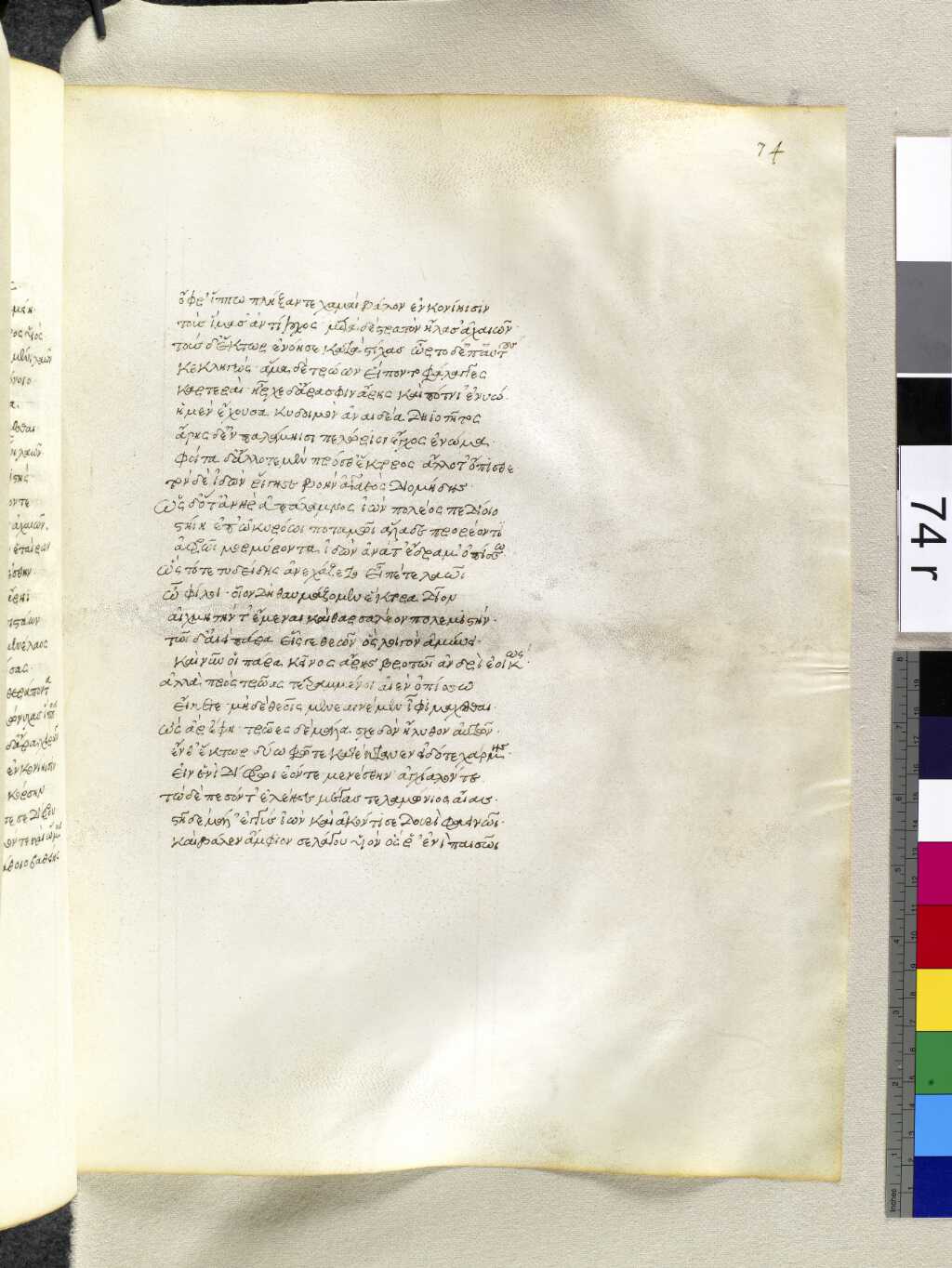
601ὦ φίλοι οἷον δὴ θαυμάζομεν Ἕκτορα δῖον 602αἰχμητήν τʼ ἔμεναι καὶ θαρσαλέον πολεμιστήν· 603τῷ δʼ αἰεὶ πάρα εἷς γε θεῶν, ὃς λοιγὸν ἀμύνει· 604καὶ νῦν οἱ πάρα κεῖνος Ἄρης βροτῷ ἀνδρὶ ἐοικώς. 605ἀλλὰ πρὸς Τρῶας τετραμμένοι αἰὲν ὀπίσσω 606εἴκετε, μηδὲ θεοῖς μενεαινέμεν ἶφι μάχεσθαι. 607ὣς ἄρʼ ἔφη, Τρῶες δὲ μάλα σχεδὸν ἤλυθον αὐτῶν. 608ἔνθʼ Ἕκτωρ δύο φῶτε κατέκτανεν εἰδότε χάρμης 609εἰν ἑνὶ δίφρῳ ἐόντε, Μενέσθην Ἀγχίαλόν τε. 610τὼ δὲ πεσόντʼ ἐλέησε μέγας Τελαμώνιος Αἴας· 611στῆ δὲ μάλʼ ἐγγὺς ἰών, καὶ ἀκόντισε δουρὶ φαεινῷ, 612καὶ βάλεν Ἄμφιον Σελάγου υἱόν, ὅς ῥʼ ἐνὶ Παισῷ 613ναῖε πολυκτήμων πολυλήϊος· ἀλλά ἑ μοῖρα 614ἦγʼ ἐπικουρήσοντα μετὰ Πρίαμόν τε καὶ υἷας. 615τόν ῥα κατὰ ζωστῆρα βάλεν Τελαμώνιος Αἴας, 616νειαίρῃ δʼ ἐν γαστρὶ πάγη δολιχόσκιον ἔγχος, 617δούπησεν δὲ πεσών· ὃ δʼ ἐπέδραμε φαίδιμος Αἴας 618τεύχεα συλήσων· Τρῶες δʼ ἐπὶ δούρατʼ ἔχευαν 619ὀξέα παμφανόωντα· σάκος δʼ ἀνεδέξατο πολλά. 620αὐτὰρ ὃ λὰξ προσβὰς ἐκ νεκροῦ χάλκεον ἔγχος 621ἐσπάσατʼ· οὐδʼ ἄρʼ ἔτʼ ἄλλα δυνήσατο τεύχεα καλὰ 622ὤμοιιν ἀφελέσθαι· ἐπείγετο γὰρ βελέεσσι. 623δεῖσε δʼ ὅ γʼ ἀμφίβασιν κρατερὴν Τρώων ἀγερώχων, 624οἳ πολλοί τε καὶ ἐσθλοὶ ἐφέστασαν ἔγχεʼ ἔχοντες, 625οἵ ἑ μέγαν περ ἐόντα καὶ ἴφθιμον καὶ ἀγαυὸν
Brave Menelaus pitied them in their fall, and made his way to the front, clad in gleaming bronze and brandishing his spear, for Mars egged him on to do so with intent that he should be killed by Aeneas; but Antilochus the son of Nestor saw him and sprang forward, fearing that the king might come to harm and thus bring all their labour to nothing; when, therefore Aeneas and Menelaus were setting their hands and spears against one another eager to do battle, Antilochus placed himself by the side of Menelaus. Aeneas, bold though he was, drew back on seeing the two heroes side by side in front of him, so they drew the bodies of Crethon and Orsilochus to the ranks of the Achaeans and committed the two poor fellows into the hands of their comrades. They then turned back and fought in the front ranks.
They killed Pylaemenes peer of Mars, leader of the Paphlagonian warriors. Menelaus struck him on the collar-bone as he was standing on his chariot, while Antilochus hit his charioteer and squire Mydon, the son of Atymnius, who was turning his horses in flight. He hit him with a stone upon the elbow, and the reins, enriched with white ivory, fell from his hands into the dust. Antilochus rushed towards him and struck him on the temples with his sword, whereon he fell head first from the chariot to the ground. There he stood for a while with his head and shoulders buried deep in the dust—for he had fallen on sandy soil till his horses kicked him and laid him flat on the ground, as Antilochus lashed them and drove them off to the host of the Achaeans.
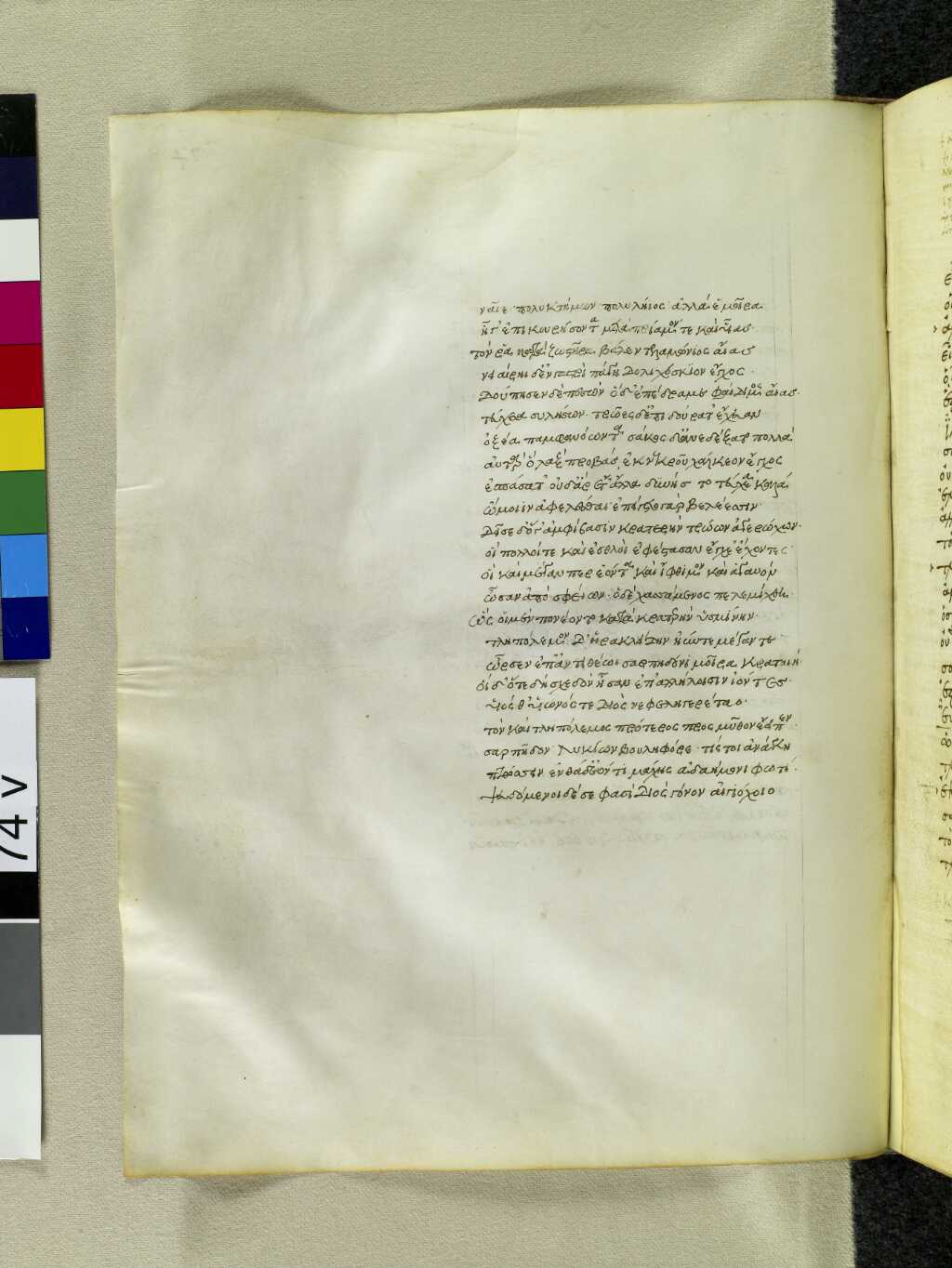
626ὦσαν ἀπὸ σφείων· ὃ δὲ χασσάμενος πελεμίχθη. 627ὣς οἳ μὲν πονέοντο κατὰ κρατερὴν ὑσμίνην· 628Τληπόλεμον δʼ Ἡρακλεΐδην ἠΰν τε μέγαν τε 629ὦρσεν ἐπʼ ἀντιθέῳ Σαρπηδόνι μοῖρα κραταιή. 630οἳ δʼ ὅτε δὴ σχεδὸν ἦσαν ἐπʼ ἀλλήλοισιν ἰόντες 631υἱός θʼ υἱωνός τε Διὸς νεφεληγερέταο, 632τὸν καὶ Τληπόλεμος πρότερος πρὸς μῦθον ἔειπε· 633Σαρπῆδον Λυκίων βουληφόρε, τίς τοι ἀνάγκη 634πτώσσειν ἐνθάδʼ ἐόντι μάχης ἀδαήμονι φωτί; 635ψευδόμενοι δέ σέ φασι Διὸς γόνον αἰγιόχοιο 636εἶναι, ἐπεὶ πολλὸν κείνων ἐπιδεύεαι ἀνδρῶν 637οἳ Διὸς ἐξεγένοντο ἐπὶ προτέρων ἀνθρώπων· 638ἀλλʼ οἷόν τινά φασι βίην Ἡρακληείην 639εἶναι, ἐμὸν πατέρα θρασυμέμνονα θυμολέοντα· 640ὅς ποτε δεῦρʼ ἐλθὼν ἕνεχʼ ἵππων Λαομέδοντος 641ἓξ οἴῃς σὺν νηυσὶ καὶ ἀνδράσι παυροτέροισιν 642Ἰλίου ἐξαλάπαξε πόλιν, χήρωσε δʼ ἀγυιάς· 643σοὶ δὲ κακὸς μὲν θυμός, ἀποφθινύθουσι δὲ λαοί. 644οὐδέ τί σε Τρώεσσιν ὀΐομαι ἄλκαρ ἔσεσθαι 645ἐλθόντʼ ἐκ Λυκίης, οὐδʼ εἰ μάλα καρτερός ἐσσι, 646ἀλλʼ ὑπʼ ἐμοὶ δμηθέντα πύλας Ἀΐδαο περήσειν. 647τὸν δʼ αὖ Σαρπηδὼν Λυκίων ἀγὸς ἀντίον ηὔδα· 648Τληπόλεμʼ ἤτοι κεῖνος ἀπώλεσεν Ἴλιον ἱρὴν 649ἀνέρος ἀφραδίῃσιν ἀγαυοῦ Λαομέδοντος, 650ὅς ῥά μιν εὖ ἕρξαντα κακῷ ἠνίπαπε μύθῳ,
But Hector marked them from across the ranks, and with a loud cry rushed towards them, followed by the strong battalions of the Trojans. Mars and dread Enyo led them on, she fraught with ruthless turmoil of battle, while Mars wielded a monstrous spear, and went about, now in front of Hector and now behind him.
Diomed shook with passion as he saw them. As a man crossing a wide plain is dismayed to find himself on the brink of some great river rolling swiftly to the sea—he sees its boiling waters and starts back in fear—even so did the son of Tydeus give ground. Then he said to his men, “My friends, how can we wonder that Hector wields the spear so well? Some god is ever by his side to protect him, and now Mars is with him in the likeness of mortal man. Keep your faces therefore towards the Trojans, but give ground backwards, for we dare not fight with gods.”
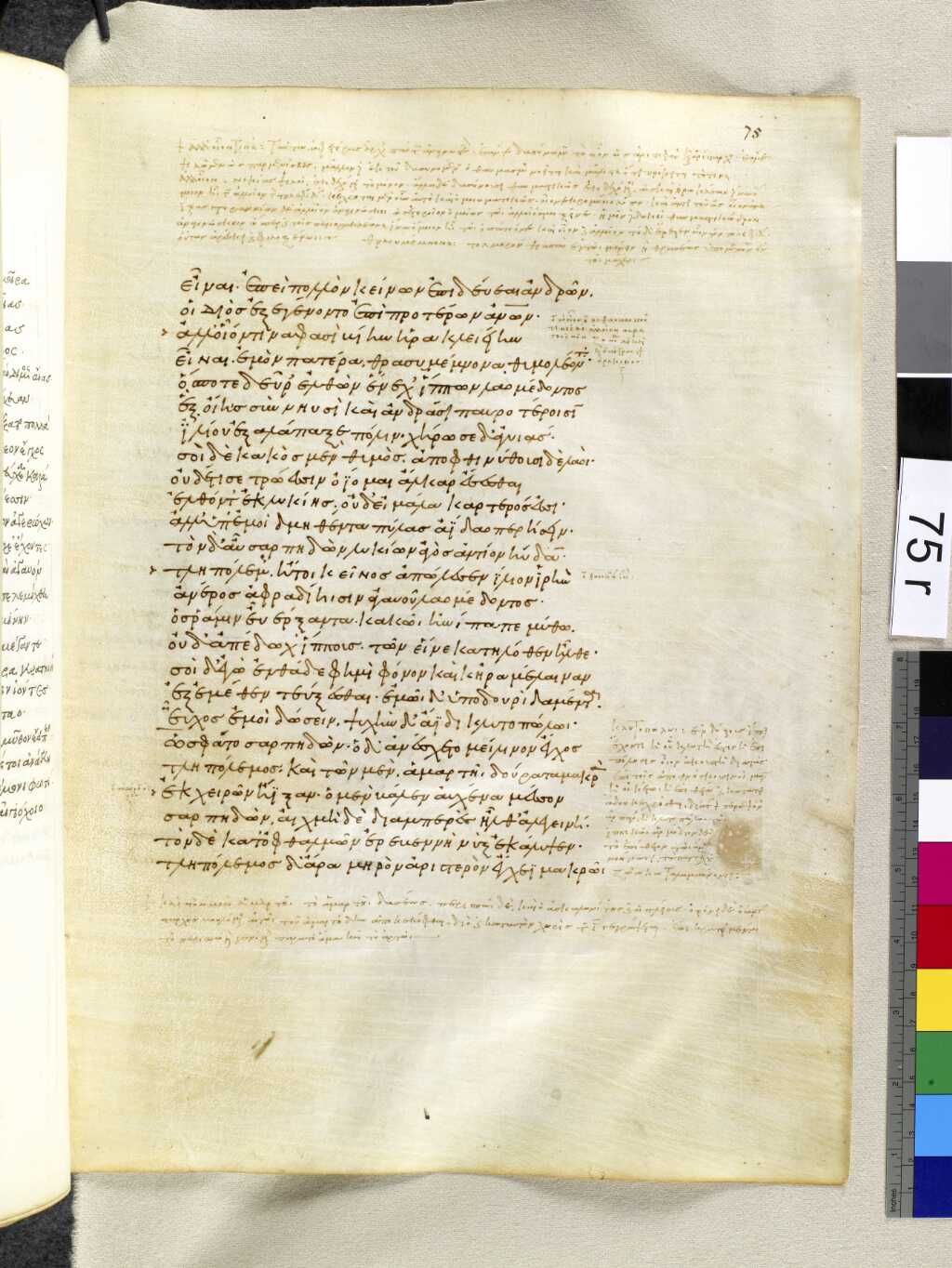
651οὐδʼ ἀπέδωχʼ ἵππους, ὧν εἵνεκα τηλόθεν ἦλθε. 652σοὶ δʼ ἐγὼ ἐνθάδε φημὶ φόνον καὶ κῆρα μέλαιναν 653ἐξ ἐμέθεν τεύξεσθαι, ἐμῷ δʼ ὑπὸ δουρὶ δαμέντα 654εὖχος ἐμοὶ δώσειν, ψυχὴν δʼ Ἄϊδι κλυτοπώλῳ. 655ὣς φάτο Σαρπηδών, ὃ δʼ ἀνέσχετο μείλινον ἔγχος 656Τληπόλεμος· καὶ τῶν μὲν ἁμαρτῇ δούρατα μακρὰ 657ἐκ χειρῶν ἤϊξαν· ὃ μὲν βάλεν αὐχένα μέσσον 658Σαρπηδών, αἰχμὴ δὲ διαμπερὲς ἦλθʼ ἀλεγεινή· 659τὸν δὲ κατʼ ὀφθαλμῶν ἐρεβεννὴ νὺξ ἐκάλυψε. 660Τληπόλεμος δʼ ἄρα μηρὸν ἀριστερὸν ἔγχεϊ μακρῷ 661βεβλήκειν, αἰχμὴ δὲ διέσσυτο μαιμώωσα 662ὀστέω ἐγχριμφθεῖσα, πατὴρ δʼ ἔτι λοιγὸν ἄμυνεν. 663οἳ μὲν ἄρʼ ἀντίθεον Σαρπηδόνα δῖοι ἑταῖροι 664ἐξέφερον πολέμοιο· βάρυνε δέ μιν δόρυ μακρὸν 665ἑλκόμενον· τὸ μὲν οὔ τις ἐπεφράσατʼ οὐδὲ νόησε 666μηροῦ ἐξερύσαι δόρυ μείλινον ὄφρʼ ἐπιβαίη 667σπευδόντων· τοῖον γὰρ ἔχον πόνον ἀμφιέποντες. 668Τληπόλεμον δʼ ἑτέρωθεν ἐϋκνήμιδες Ἀχαιοὶ 669ἐξέφερον πολέμοιο· νόησε δὲ δῖος Ὀδυσσεὺς 670τλήμονα θυμὸν ἔχων, μαίμησε δέ οἱ φίλον ἦτορ· 671μερμήριξε δʼ ἔπειτα κατὰ φρένα καὶ κατὰ θυμὸν 672ἢ προτέρω Διὸς υἱὸν ἐριγδούποιο διώκοι, 673ἦ ὅ γε τῶν πλεόνων Λυκίων ἀπὸ θυμὸν ἕλοιτο. 674οὐδʼ ἄρʼ Ὀδυσσῆϊ μεγαλήτορι μόρσιμον ἦεν 675ἴφθιμον Διὸς υἱὸν ἀποκτάμεν ὀξέϊ χαλκῷ·
As he spoke the Trojans drew close up, and Hector killed two men, both in one chariot, Menesthes and Anchialus, heroes well versed in war. Ajax son of Telamon pitied them in their fall; he came close up and hurled his spear, hitting Amphius the son of Selagus, a man of great wealth who lived in Paesus and owned much corn-growing land, but his lot had led him to come to the aid of Priam and his sons. Ajax struck him in the belt; the spear pierced the lower part of his belly, and he fell heavily to the ground. Then Ajax ran towards him to strip him of his armour, but the Trojans rained spears upon him, many of which fell upon his shield. He planted his heel upon the body and drew out his spear, but the darts pressed so heavily upon him that he could not strip the goodly armour from his shoulders. The Trojan chieftains, moreover, many and valiant, came about him with their spears, so that he dared not stay; great, brave and valiant though he was, they drove him from them and he was beaten back.
Thus, then, did the battle rage between them. Presently the strong hand of fate impelled Tlepolemus, the son of Hercules, a man both brave and of great stature, to fight Sarpedon; so the two, son and grandson of great Jove, drew near to one another, and Tlepolemus spoke first. “Sarpedon,” said he, “councillor of the Lycians, why should you come skulking here you who are a man of peace? They lie who call you son of aegis-bearing Jove, for you are little like those who were of old his children. Far other was Hercules, my own brave and lion-hearted father, who came here for the horses of Laomedon, and though he had six ships only, and few men to follow him, sacked the city of Ilius and made a wilderness of her highways. You are a coward, and your people are falling from you. For all your strength, and all your coming from Lycia, you will be no help to the Trojans but will pass the gates of Hades vanquished by my hand.”
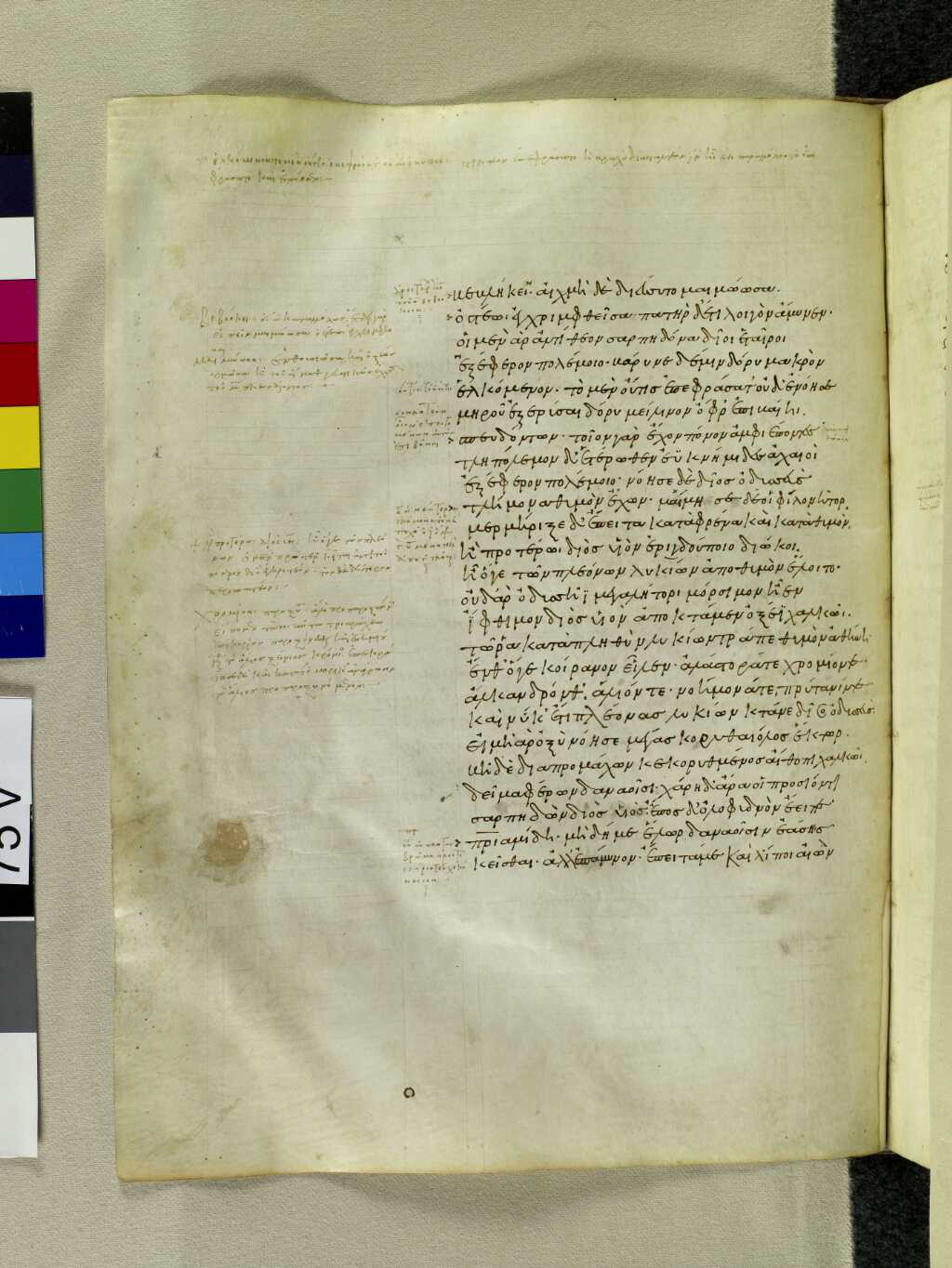
676τώ ῥα κατὰ πληθὺν Λυκίων τράπε θυμὸν Ἀθήνη. 677ἔνθʼ ὅ γε Κοίρανον εἷλεν Ἀλάστορά τε Χρομίον τε 678Ἄλκανδρόν θʼ Ἅλιόν τε Νοήμονά τε Πρύτανίν τε. 679καί νύ κʼ ἔτι πλέονας Λυκίων κτάνε δῖος Ὀδυσσεὺς 680εἰ μὴ ἄρʼ ὀξὺ νόησε μέγας κορυθαίολος Ἕκτωρ· 681βῆ δὲ διὰ προμάχων κεκορυθμένος αἴθοπι χαλκῷ 682δεῖμα φέρων Δαναοῖσι· χάρη δʼ ἄρα οἱ προσιόντι 683Σαρπηδὼν Διὸς υἱός, ἔπος δʼ ὀλοφυδνὸν ἔειπε· 684Πριαμίδη, μὴ δή με ἕλωρ Δαναοῖσιν ἐάσῃς 685κεῖσθαι, ἀλλʼ ἐπάμυνον· ἔπειτά με καὶ λίποι αἰὼν 686ἐν πόλει ὑμετέρῃ, ἐπεὶ οὐκ ἄρʼ ἔμελλον ἔγωγε 687νοστήσας οἶκον δὲ φίλην ἐς πατρίδα γαῖαν 688εὐφρανέειν ἄλοχόν τε φίλην καὶ νήπιον υἱόν. 689ὣς φάτο, τὸν δʼ οὔ τι προσέφη κορυθαίολος Ἕκτωρ, 690ἀλλὰ παρήϊξεν λελιημένος ὄφρα τάχιστα 691ὤσαιτʼ Ἀργείους, πολέων δʼ ἀπὸ θυμὸν ἕλοιτο. 692οἳ μὲν ἄρʼ ἀντίθεον Σαρπηδόνα δῖοι ἑταῖροι 693εἷσαν ὑπʼ αἰγιόχοιο Διὸς περικαλλέϊ φηγῷ· 694ἐκ δʼ ἄρα οἱ μηροῦ δόρυ μείλινον ὦσε θύραζε 695ἴφθιμος Πελάγων, ὅς οἱ φίλος ἦεν ἑταῖρος. 696τὸν δʼ ἔλιπε ψυχή, κατὰ δʼ ὀφθαλμῶν κέχυτʼ ἀχλύς· 697αὖτις δʼ ἐμπνύνθη, περὶ δὲ πνοιὴ Βορέαο 698ζώγρει ἐπιπνείουσα κακῶς κεκαφηότα θυμόν. 699Ἀργεῖοι δʼ ὑπʼ Ἄρηϊ καὶ Ἕκτορι χαλκοκορυστῇ 700οὔτε ποτὲ προτρέποντο μελαινάων ἐπὶ νηῶν
And Sarpedon, captain of the Lycians, answered, “Tlepolemus, your father overthrew Ilius by reason of Laomedon’s folly in refusing payment to one who had served him well. He would not give your father the horses which he had come so far to fetch. As for yourself, you shall meet death by my spear. You shall yield glory to myself, and your soul to Hades of the noble steeds.”
Thus spoke Sarpedon, and Tlepolemus upraised his spear. They threw at the same moment, and Sarpedon struck his foe in the middle of his throat; the spear went right through, and the darkness of death fell upon his eyes. Tlepolemus’s spear struck Sarpedon on the left thigh with such force that it tore through the flesh and grazed the bone, but his father as yet warded off destruction from him.
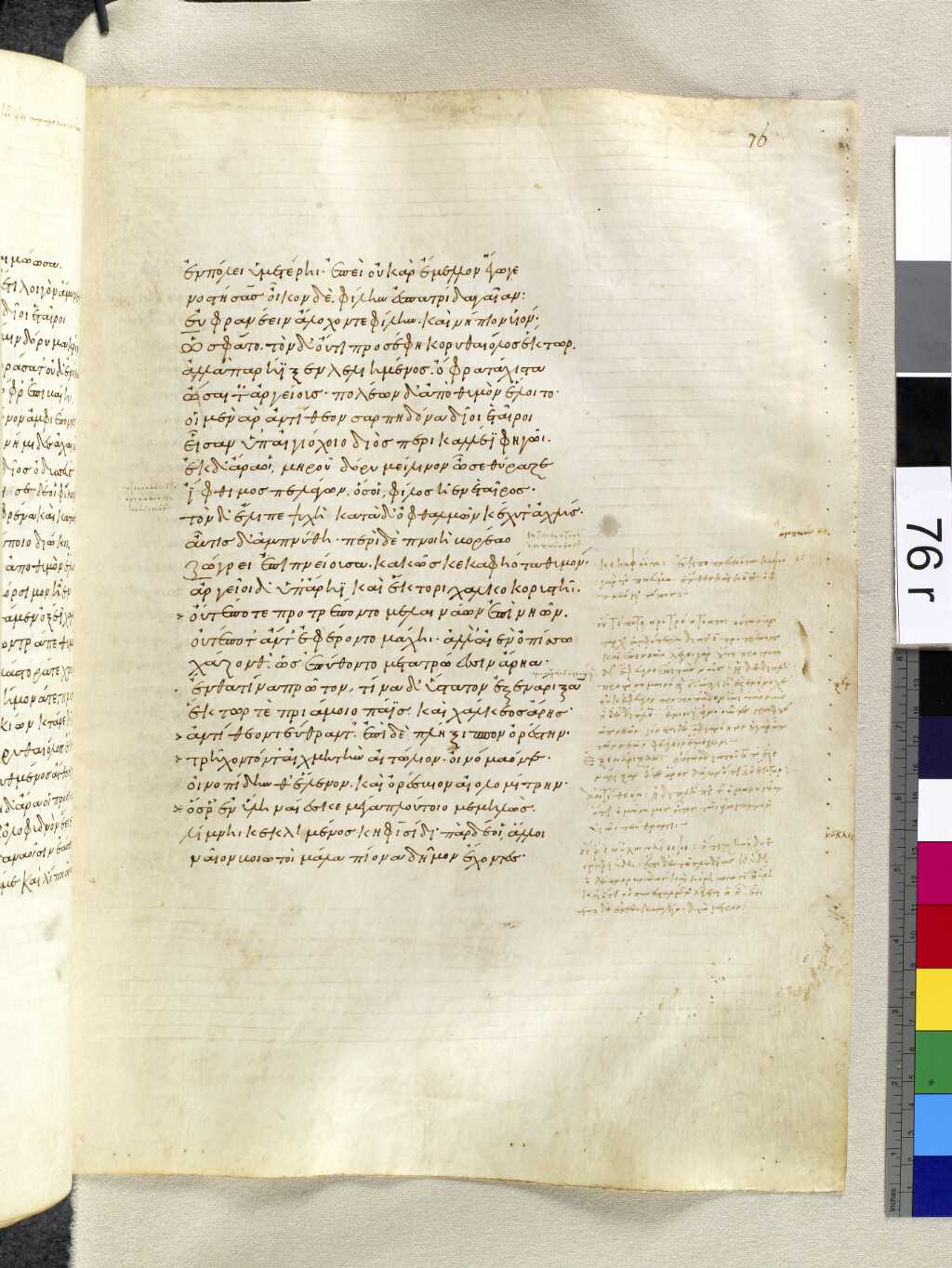
701οὔτε ποτʼ ἀντεφέροντο μάχῃ, ἀλλʼ αἰὲν ὀπίσσω 702χάζονθʼ, ὡς ἐπύθοντο μετὰ Τρώεσσιν Ἄρηα. 703ἔνθα τίνα πρῶτον τίνα δʼ ὕστατον ἐξενάριξαν 704Ἕκτωρ τε Πριάμοιο πάϊς καὶ χάλκεος Ἄρης; 705ἀντίθεον Τεύθραντʼ, ἐπὶ δὲ πλήξιππον Ὀρέστην, 706Τρῆχόν τʼ αἰχμητὴν Αἰτώλιον Οἰνόμαόν τε, 707Οἰνοπίδην θʼ Ἕλενον καὶ Ὀρέσβιον αἰολομίτρην, 708ὅς ῥʼ ἐν Ὕλῃ ναίεσκε μέγα πλούτοιο μεμηλώς, 709λίμνῃ κεκλιμένος Κηφισίδι· πὰρ δέ οἱ ἄλλοι 710ναῖον Βοιωτοὶ μάλα πίονα δῆμον ἔχοντες. 711τοὺς δʼ ὡς οὖν ἐνόησε θεὰ λευκώλενος Ἥρη 712Ἀργείους ὀλέκοντας ἐνὶ κρατερῇ ὑσμίνῃ, 713αὐτίκʼ Ἀθηναίην ἔπεα πτερόεντα προσηύδα· 714ὢ πόποι αἰγιόχοιο Διὸς τέκος Ἀτρυτώνη, 715ἦ ῥʼ ἅλιον τὸν μῦθον ὑπέστημεν Μενελάῳ 716Ἴλιον ἐκπέρσαντʼ εὐτείχεον ἀπονέεσθαι, 717εἰ οὕτω μαίνεσθαι ἐάσομεν οὖλον Ἄρηα. 718ἀλλʼ ἄγε δὴ καὶ νῶϊ μεδώμεθα θούριδος ἀλκῆς. 719ὣς ἔφατʼ, οὐδʼ ἀπίθησε θεὰ γλαυκῶπις Ἀθήνη. 720ἣ μὲν ἐποιχομένη χρυσάμπυκας ἔντυεν ἵππους 721Ἥρη πρέσβα θεὰ θυγάτηρ μεγάλοιο Κρόνοιο· 722Ἥβη δʼ ἀμφʼ ὀχέεσσι θοῶς βάλε καμπύλα κύκλα 723χάλκεα ὀκτάκνημα σιδηρέῳ ἄξονι ἀμφίς. 724τῶν ἤτοι χρυσέη ἴτυς ἄφθιτος, αὐτὰρ ὕπερθε 725χάλκεʼ ἐπίσσωτρα προσαρηρότα, θαῦμα ἰδέσθαι·
His comrades bore Sarpedon out of the fight, in great pain by the weight of the spear that was dragging from his wound. They were in such haste and stress as they bore him that no one thought of drawing the spear from his thigh so as to let him walk uprightly. Meanwhile the Achaeans carried off the body of Tlepolemus, whereon Ulysses was moved to pity, and panted for the fray as he beheld them. He doubted whether to pursue the son of Jove, or to make slaughter of the Lycian rank and file; it was not decreed, however, that he should slay the son of Jove; Minerva, therefore, turned him against the main body of the Lycians. He killed Coeranus, Alastor, Chromius, Alcandrus, Halius, Noemon, and Prytanis, and would have slain yet more, had not great Hector marked him, and sped to the front of the fight clad in his suit of mail, filling the Danaans with terror. Sarpedon was glad when he saw him coming, and besought him, saying, “Son of Priam, let me not be here to fall into the hands of the Danaans. Help me, and since I may not return home to gladden the hearts of my wife and of my infant son, let me die within the walls of your city.”
Hector made him no answer, but rushed onward to fall at once upon the Achaeans and kill many among them. His comrades then bore Sarpedon away and laid him beneath Jove’s spreading oak tree. Pelagon, his friend and comrade, drew the spear out of his thigh, but Sarpedon fainted and a mist came over his eyes. Presently he came to himself again, for the breath of the north wind as it played upon him gave him new life, and brought him out of the deep swoon into which he had fallen.
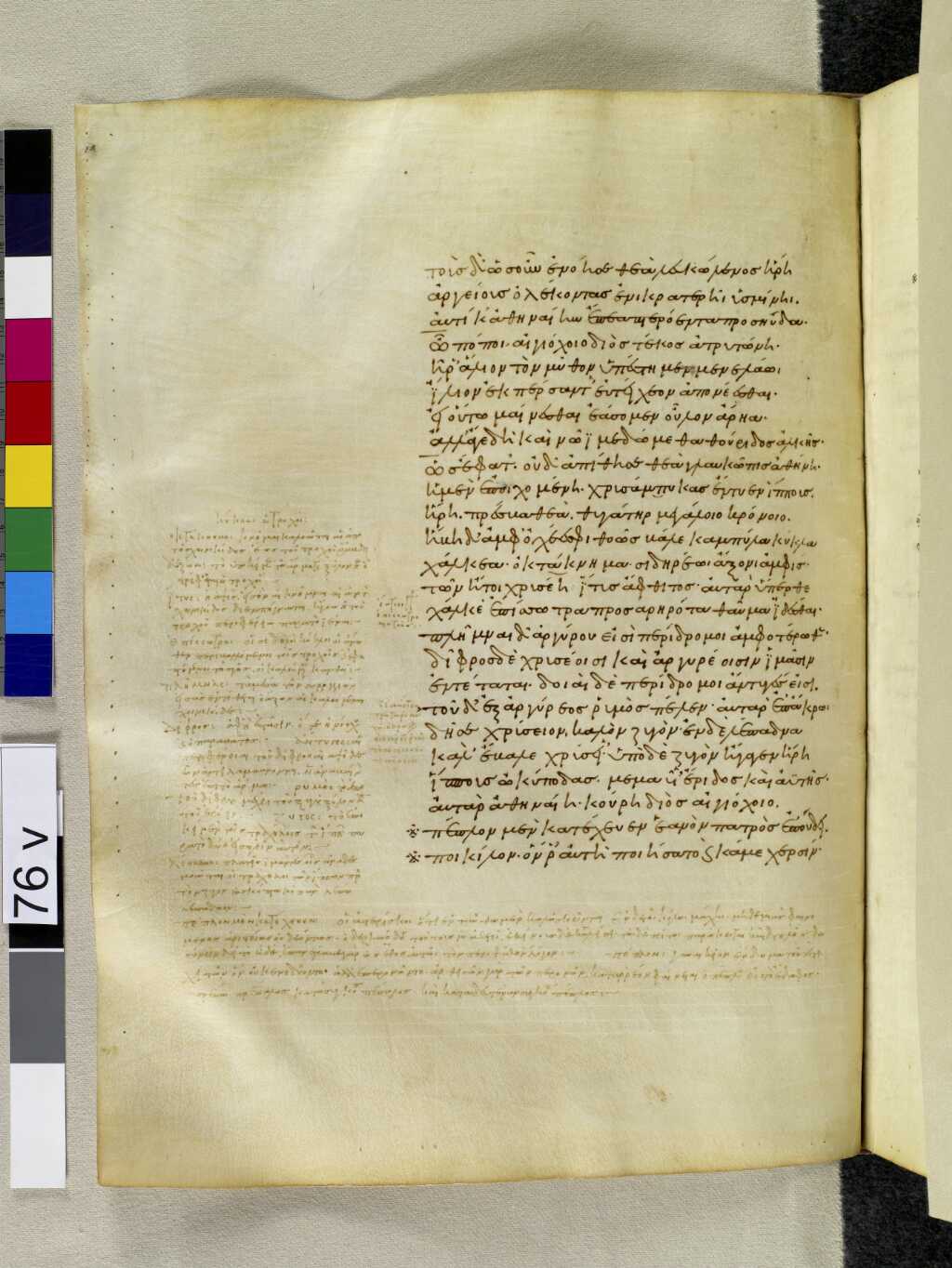
726πλῆμναι δʼ ἀργύρου εἰσὶ περίδρομοι ἀμφοτέρωθεν· 727δίφρος δὲ χρυσέοισι καὶ ἀργυρέοισιν ἱμᾶσιν 728ἐντέταται, δοιαὶ δὲ περίδρομοι ἄντυγές εἰσι. 729τοῦ δʼ ἐξ ἀργύρεος ῥυμὸς πέλεν· αὐτὰρ ἐπʼ ἄκρῳ 730δῆσε χρύσειον καλὸν ζυγόν, ἐν δὲ λέπαδνα 731κάλʼ ἔβαλε χρύσειʼ· ὑπὸ δὲ ζυγὸν ἤγαγεν Ἥρη 732ἵππους ὠκύποδας, μεμαυῖʼ ἔριδος καὶ ἀϋτῆς. 733αὐτὰρ Ἀθηναίη κούρη Διὸς αἰγιόχοιο 734πέπλον μὲν κατέχευεν ἑανὸν πατρὸς ἐπʼ οὔδει 735ποικίλον, ὅν ῥʼ αὐτὴ ποιήσατο καὶ κάμε χερσίν· 736ἣ δὲ χιτῶνʼ ἐνδῦσα Διὸς νεφεληγερέταο 737τεύχεσιν ἐς πόλεμον θωρήσσετο δακρυόεντα. 738ἀμφὶ δʼ ἄρʼ ὤμοισιν βάλετʼ αἰγίδα θυσσανόεσσαν 739δεινήν, ἣν περὶ μὲν πάντῃ Φόβος ἐστεφάνωται, 740ἐν δʼ Ἔρις, ἐν δʼ Ἀλκή, ἐν δὲ κρυόεσσα Ἰωκή, 741ἐν δέ τε Γοργείη κεφαλὴ δεινοῖο πελώρου 742δεινή τε σμερδνή τε, Διὸς τέρας αἰγιόχοιο. 743κρατὶ δʼ ἐπʼ ἀμφίφαλον κυνέην θέτο τετραφάληρον 744χρυσείην, ἑκατὸν πολίων πρυλέεσσʼ ἀραρυῖαν· 745ἐς δʼ ὄχεα φλόγεα ποσὶ βήσετο, λάζετο δʼ ἔγχος 746βριθὺ μέγα στιβαρόν, τῷ δάμνησι στίχας ἀνδρῶν 747ἡρώων, οἷσίν τε κοτέσσεται ὀβριμοπάτρη. 748Ἥρη δὲ μάστιγι θοῶς ἐπεμαίετʼ ἄρʼ ἵππους· 749αὐτόμαται δὲ πύλαι μύκον οὐρανοῦ ἃς ἔχον Ὧραι, 750τῇς ἐπιτέτραπται μέγας οὐρανὸς Οὔλυμπός τε
Meanwhile the Argives were neither driven towards their ships by Mars and Hector, nor yet did they attack them; when they knew that Mars was with the Trojans they retreated, but kept their faces still turned towards the foe. Who, then, was first and who last to be slain by Mars and Hector? They were valiant Teuthras, and Orestes the renowned charioteer, Trechus the Aetolian warrior, Oenomaus, Helenus the son of Oenops, and Oresbius of the gleaming girdle, who was possessed of great wealth, and dwelt by the Cephisian lake with the other Boeotians who lived near him, owners of a fertile country.
Now when the goddess Juno saw the Argives thus falling, she said to Minerva, “Alas, daughter of aegis-bearing Jove, unweariable, the promise we made Menelaus that he should not return till he had sacked the city of Ilius will be of no effect if we let Mars rage thus furiously. Let us go into the fray at once.”
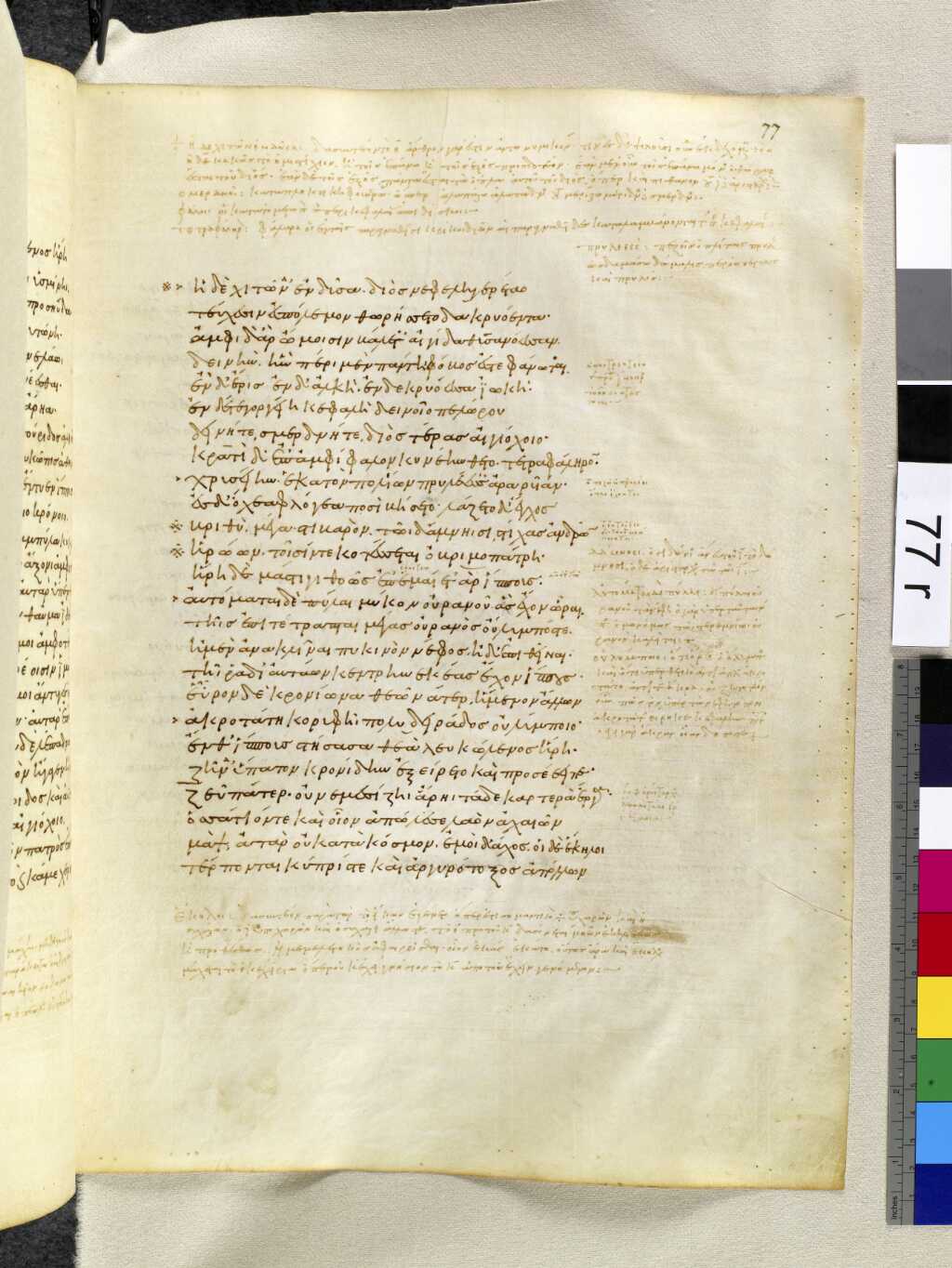
751ἠμὲν ἀνακλῖναι πυκινὸν νέφος ἠδʼ ἐπιθεῖναι. 752τῇ ῥα διʼ αὐτάων κεντρηνεκέας ἔχον ἵππους· 753εὗρον δὲ Κρονίωνα θεῶν ἄτερ ἥμενον ἄλλων 754ἀκροτάτῃ κορυφῇ πολυδειράδος Οὐλύμποιο. 755ἔνθʼ ἵππους στήσασα θεὰ λευκώλενος Ἥρη 756Ζῆνʼ ὕπατον Κρονίδην ἐξείρετο καὶ προσέειπε· 757Ζεῦ πάτερ οὐ νεμεσίζῃ Ἄρῃ τάδε καρτερὰ ἔργα 758ὁσσάτιόν τε καὶ οἷον ἀπώλεσε λαὸν Ἀχαιῶν 759μὰψ ἀτὰρ οὐ κατὰ κόσμον ἐμοὶ δʼ ἄχος, οἳ δὲ ἕκηλοι 760τέρπονται Κύπρίς τε καὶ ἀργυρότοξος Ἀπόλλων 761ἄφρονα τοῦτον ἀνέντες, ὃς οὔ τινα οἶδε θέμιστα; 762Ζεῦ πάτερ ἦ ῥά τί μοι κεχολώσεαι, αἴ κεν Ἄρηα 763λυγρῶς πεπληγυῖα μάχης ἐξαποδίωμαι; 764τὴν δʼ ἀπαμειβόμενος προσέφη νεφεληγερέτα Ζεύς· 765ἄγρει μάν οἱ ἔπορσον Ἀθηναίην ἀγελείην, 766ἥ ἑ μάλιστʼ εἴωθε κακῇς ὀδύνῃσι πελάζειν. 767ὣς ἔφατʼ, οὐδʼ ἀπίθησε θεὰ λευκώλενος Ἥρη, 768μάστιξεν δʼ ἵππους· τὼ δʼ οὐκ ἀέκοντε πετέσθην 769μεσσηγὺς γαίης τε καὶ οὐρανοῦ ἀστερόεντος. 770ὅσσον δʼ ἠεροειδὲς ἀνὴρ ἴδεν ὀφθαλμοῖσιν 771ἥμενος ἐν σκοπιῇ, λεύσσων ἐπὶ οἴνοπα πόντον, 772τόσσον ἐπιθρῴσκουσι θεῶν ὑψηχέες ἵπποι. 773ἀλλʼ ὅτε δὴ Τροίην ἷξον ποταμώ τε ῥέοντε, 774ἧχι ῥοὰς Σιμόεις συμβάλλετον ἠδὲ Σκάμανδρος, 775ἔνθʼ ἵππους ἔστησε θεὰ λευκώλενος Ἥρη
Minerva did not gainsay her. Thereon the august goddess, daughter of great Saturn, began to harness her gold-bedizened steeds. Hebe with all speed fitted on the eight-spoked wheels of bronze that were on either side of the iron axle-tree. The felloes of the wheels were of gold, imperishable, and over these there was a tire of bronze, wondrous to behold. The naves of the wheels were silver, turning round the axle upon either side. The car itself was made with plaited bands of gold and silver, and it had a double top-rail running all round it. From the body of the car there went a pole of silver, on to the end of which she bound the golden yoke, with the bands of gold that were to go under the necks of the horses. Then Juno put her steeds under the yoke, eager for battle and the war-cry.
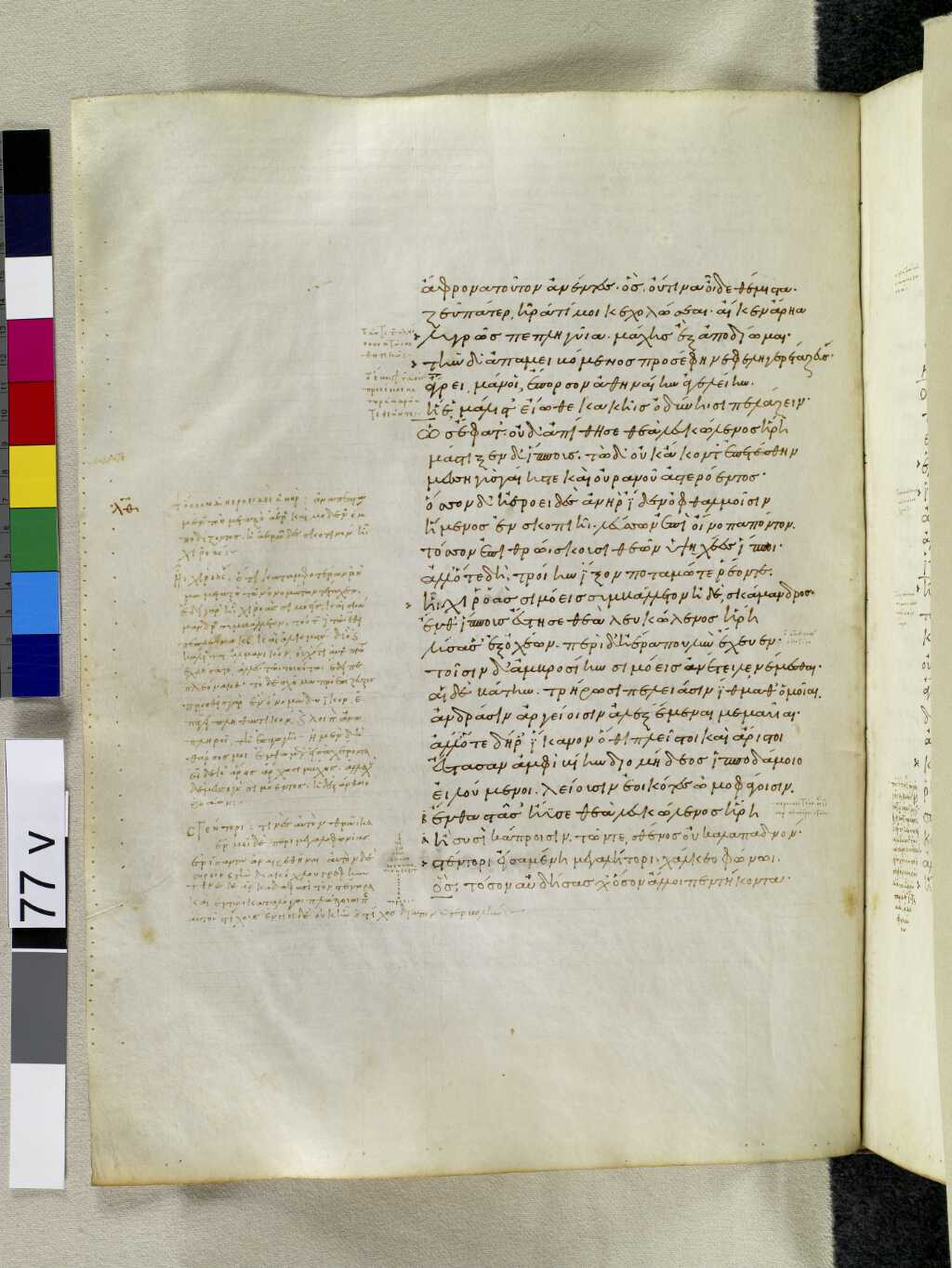
776λύσασʼ ἐξ ὀχέων, περὶ δʼ ἠέρα πουλὺν ἔχευε· 777τοῖσιν δʼ ἀμβροσίην Σιμόεις ἀνέτειλε νέμεσθαι. 778αἳ δὲ βάτην τρήρωσι πελειάσιν ἴθμαθʼ ὁμοῖαι 779ἀνδράσιν Ἀργείοισιν ἀλεξέμεναι μεμαυῖαι· 780ἀλλʼ ὅτε δή ῥʼ ἵκανον ὅθι πλεῖστοι καὶ ἄριστοι 781ἕστασαν ἀμφὶ βίην Διομήδεος ἱπποδάμοιο 782εἰλόμενοι λείουσιν ἐοικότες ὠμοφάγοισιν 783ἢ συσὶ κάπροισιν, τῶν τε σθένος οὐκ ἀλαπαδνόν, 784ἔνθα στᾶσʼ ἤϋσε θεὰ λευκώλενος Ἥρη 785Στέντορι εἰσαμένη μεγαλήτορι χαλκεοφώνῳ, 786ὃς τόσον αὐδήσασχʼ ὅσον ἄλλοι πεντήκοντα· 787αἰδὼς Ἀργεῖοι κάκʼ ἐλέγχεα εἶδος ἀγητοί· 788ὄφρα μὲν ἐς πόλεμον πωλέσκετο δῖος Ἀχιλλεύς, 789οὐδέ ποτε Τρῶες πρὸ πυλάων Δαρδανιάων 790οἴχνεσκον· κείνου γὰρ ἐδείδισαν ὄβριμον ἔγχος· 791νῦν δὲ ἑκὰς πόλιος κοίλῃς ἐπὶ νηυσὶ μάχονται. 792ὣς εἰποῦσʼ ὄτρυνε μένος καὶ θυμὸν ἑκάστου. 793Τυδεΐδῃ δʼ ἐπόρουσε θεὰ γλαυκῶπις Ἀθήνη· 794εὗρε δὲ τόν γε ἄνακτα παρʼ ἵπποισιν καὶ ὄχεσφιν 795ἕλκος ἀναψύχοντα τό μιν βάλε Πάνδαρος ἰῷ. 796ἱδρὼς γάρ μιν ἔτειρεν ὑπὸ πλατέος τελαμῶνος 797ἀσπίδος εὐκύκλου· τῷ τείρετο, κάμνε δὲ χεῖρα, 798ἂν δʼ ἴσχων τελαμῶνα κελαινεφὲς αἷμʼ ἀπομόργνυ. 799ἱππείου δὲ θεὰ ζυγοῦ ἥψατο φώνησέν τε· 800ἦ ὀλίγον οἷ παῖδα ἐοικότα γείνατο Τυδεύς.
Meanwhile Minerva flung her richly embroidered vesture, made with her own hands, on to her father’s threshold, and donned the shirt of Jove, arming herself for battle. She threw her tasselled aegis about her shoulders, wreathed round with Rout as with a fringe, and on it were Strife, and Strength, and Panic whose blood runs cold; moreover there was the head of the dread monster Gorgon, grim and awful to behold, portent of aegis-bearing Jove. On her head she set her helmet of gold, with four plumes, and coming to a peak both in front and behind—decked with the emblems of a hundred cities; then she stepped into her flaming chariot and grasped the spear, so stout and sturdy and strong, with which she quells the ranks of heroes who have displeased her. Juno lashed the horses on, and the gates of heaven bellowed as they flew open of their own accord—gates over which the Hours preside, in whose hands are Heaven and Olympus, either to open the dense cloud that hides them, or to close it. Through these the goddesses drove their obedient steeds, and found the son of Saturn sitting all alone on the topmost ridges of Olympus. There Juno stayed her horses, and spoke to Jove the son of Saturn, lord of all. “Father Jove,” said she, “are you not angry with Mars for these high doings? how great and goodly a host of the Achaeans he has destroyed to my great grief, and without either right or reason, while the Cyprian and Apollo are enjoying it all at their ease and setting this unrighteous madman on to do further mischief. I hope, Father Jove, that you will not be angry if I hit Mars hard, and chase him out of the battle.”
And Jove answered, “Set Minerva on to him, for she punishes him more often than any one else does.”
801Τυδεύς τοι μικρὸς μὲν ἔην δέμας, ἀλλὰ μαχητής· 802καί ῥʼ ὅτε πέρ μιν ἐγὼ πολεμίζειν οὐκ εἴασκον 803οὐδʼ ἐκπαιφάσσειν, ὅτε τʼ ἤλυθε νόσφιν Ἀχαιῶν 804ἄγγελος ἐς Θήβας πολέας μετὰ Καδμείωνας· 805δαίνυσθαί μιν ἄνωγον ἐνὶ μεγάροισιν ἕκηλον· 806αὐτὰρ ὃ θυμὸν ἔχων ὃν καρτερὸν ὡς τὸ πάρος περ 807κούρους Καδμείων προκαλίζετο, πάντα δʼ ἐνίκα 808ῥηϊδίως· τοίη οἱ ἐγὼν ἐπιτάρροθος ἦα. 809σοὶ δʼ ἤτοι μὲν ἐγὼ παρά θʼ ἵσταμαι ἠδὲ φυλάσσω, 810καί σε προφρονέως κέλομαι Τρώεσσι μάχεσθαι· 811ἀλλά σευ ἢ κάματος πολυᾶϊξ γυῖα δέδυκεν 812ἤ νύ σέ που δέος ἴσχει ἀκήριον· οὐ σύ γʼ ἔπειτα 813Τυδέος ἔκγονός ἐσσι δαΐφρονος Οἰνεΐδαο. 814τὴν δʼ ἀπαμειβόμενος προσέφη κρατερὸς Διομήδης· 815γιγνώσκω σε θεὰ θύγατερ Διὸς αἰγιόχοιο· 816τώ τοι προφρονέως ἐρέω ἔπος οὐδʼ ἐπικεύσω. 817οὔτέ τί με δέος ἴσχει ἀκήριον οὔτέ τις ὄκνος, 818ἀλλʼ ἔτι σέων μέμνημαι ἐφετμέων ἃς ἐπέτειλας· 819οὔ μʼ εἴας μακάρεσσι θεοῖς ἀντικρὺ μάχεσθαι 820τοῖς ἄλλοις· ἀτὰρ εἴ κε Διὸς θυγάτηρ Ἀφροδίτη 821ἔλθῃσʼ ἐς πόλεμον, τήν γʼ οὐτάμεν ὀξέϊ χαλκῷ. 822τοὔνεκα νῦν αὐτός τʼ ἀναχάζομαι ἠδὲ καὶ ἄλλους 823Ἀργείους ἐκέλευσα ἀλήμεναι ἐνθάδε πάντας· 824γιγνώσκω γὰρ Ἄρηα μάχην ἀνὰ κοιρανέοντα. 825τὸν δʼ ἠμείβετʼ ἔπειτα θεὰ γλαυκῶπις Ἀθήνη·
Juno did as he had said. She lashed her horses, and they flew forward nothing loth midway betwixt earth and sky. As far as a man can see when he looks out upon the sea from some high beacon, so far can the loud-neighing horses of the gods spring at a single bound. When they reached Troy and the place where its two flowing streams Simois and Scamander meet, there Juno stayed them and took them from the chariot. She hid them in a thick cloud, and Simois made ambrosia spring up for them to eat; the two goddesses then went on, flying like turtledoves in their eagerness to help the Argives. When they came to the part where the bravest and most in number were gathered about mighty Diomed, fighting like lions or wild boars of great strength and endurance, there Juno stood still and raised a shout like that of brazen-voiced Stentor, whose cry was as loud as that of fifty men together. “Argives,” she cried; “shame on cowardly creatures, brave in semblance only; as long as Achilles was fighting, if his spear was so deadly that the Trojans dared not show themselves outside the Dardanian gates, but now they sally far from the city and fight even at your ships.”
With these words she put heart and soul into them all, while Minerva sprang to the side of the son of Tydeus, whom she found near his chariot and horses, cooling the wound that Pandarus had given him. For the sweat caused by the hand that bore the weight of his shield irritated the hurt: his arm was weary with pain, and he was lifting up the strap to wipe away the blood. The goddess laid her hand on the yoke of his horses and said, “The son of Tydeus is not such another as his father. Tydeus was a little man, but he could fight, and rushed madly into the fray even when I told him not to do so. When he went all unattended as envoy to the city of Thebes among the Cadmeans, I bade him feast in their houses and be at peace; but with that high spirit which was ever present with him, he challenged the youth of the Cadmeans, and at once beat them in all that he attempted, so mightily did I help him. I stand by you too to protect you, and I bid you be instant in fighting the Trojans; but either you are tired out, or you are afraid and out of heart, and in that case I say that you are no true son of Tydeus the son of Oeneus.”
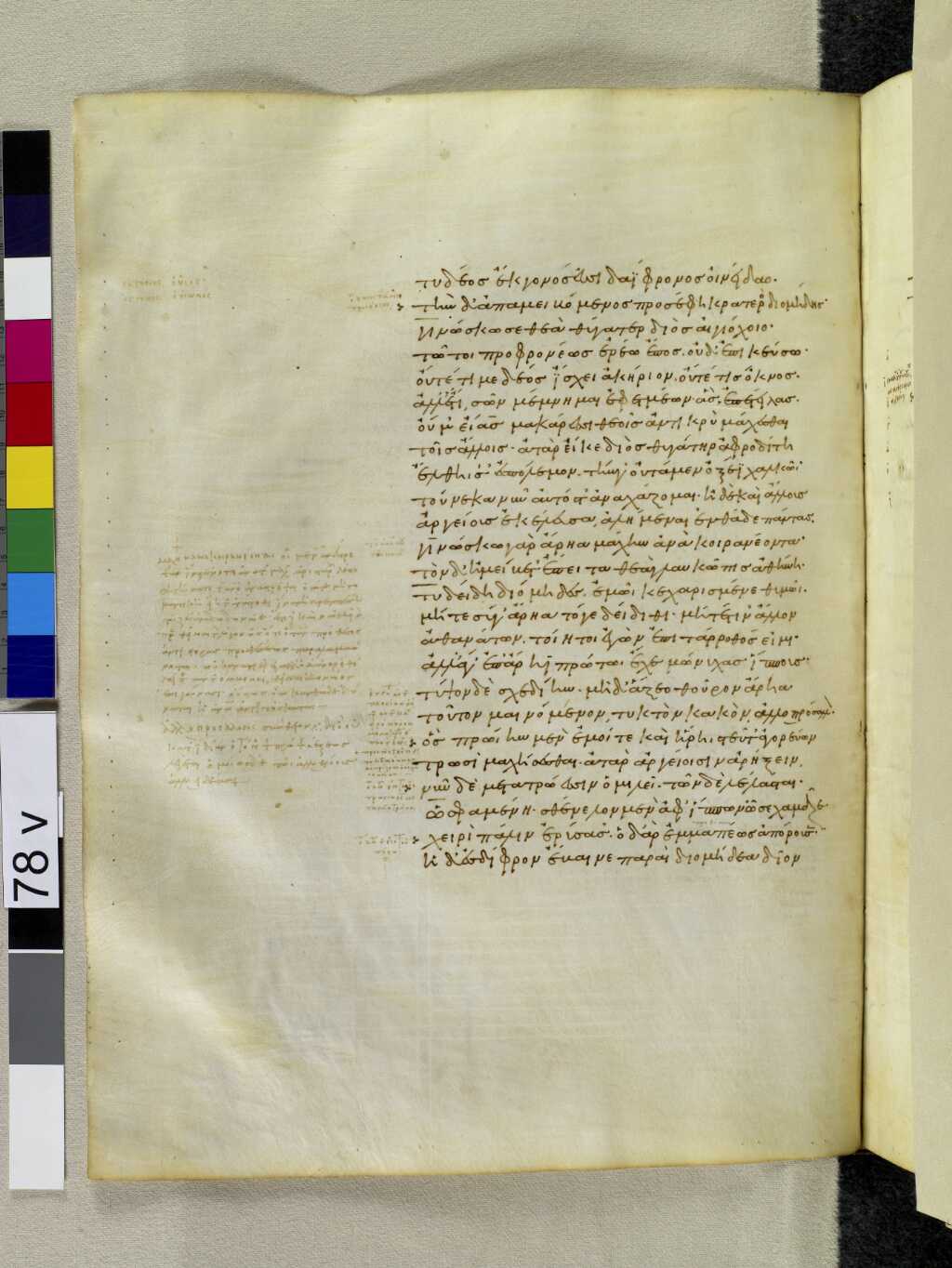
826Τυδεΐδη Διόμηδες ἐμῷ κεχαρισμένε θυμῷ 827μήτε σύ γʼ Ἄρηα τό γε δείδιθι μήτε τινʼ ἄλλον 828ἀθανάτων, τοίη τοι ἐγὼν ἐπιτάρροθός εἰμι· 829ἀλλʼ ἄγʼ ἐπʼ Ἄρηϊ πρώτῳ ἔχε μώνυχας ἵππους, 830τύψον δὲ σχεδίην μηδʼ ἅζεο θοῦρον Ἄρηα 831τοῦτον μαινόμενον, τυκτὸν κακόν, ἀλλοπρόσαλλον, 832ὃς πρῴην μὲν ἐμοί τε καὶ Ἥρῃ στεῦτʼ ἀγορεύων 833Τρωσὶ μαχήσεσθαι, ἀτὰρ Ἀργείοισιν ἀρήξειν, 834νῦν δὲ μετὰ Τρώεσσιν ὁμιλεῖ, τῶν δὲ λέλασται. 835ὣς φαμένη Σθένελον μὲν ἀφʼ ἵππων ὦσε χαμᾶζε, 836χειρὶ πάλιν ἐρύσασʼ, ὃ δʼ ἄρʼ ἐμμαπέως ἀπόρουσεν· 837ἣ δʼ ἐς δίφρον ἔβαινε παραὶ Διομήδεα δῖον 838ἐμμεμαυῖα θεά· μέγα δʼ ἔβραχε φήγινος ἄξων 839βριθοσύνῃ· δεινὴν γὰρ ἄγεν θεὸν ἄνδρά τʼ ἄριστον. 840λάζετο δὲ μάστιγα καὶ ἡνία Παλλὰς Ἀθήνη· 841αὐτίκʼ ἐπʼ Ἄρηϊ πρώτῳ ἔχε μώνυχας ἵππους. 842ἤτοι ὃ μὲν Περίφαντα πελώριον ἐξενάριζεν 843Αἰτωλῶν ὄχʼ ἄριστον Ὀχησίου ἀγλαὸν υἱόν· 844τὸν μὲν Ἄρης ἐνάριζε μιαιφόνος· αὐτὰρ Ἀθήνη 845δῦνʼ Ἄϊδος κυνέην, μή μιν ἴδοι ὄβριμος Ἄρης. 846ὡς δὲ ἴδε βροτολοιγὸς Ἄρης Διομήδεα δῖον, 847ἤτοι ὃ μὲν Περίφαντα πελώριον αὐτόθʼ ἔασε 848κεῖσθαι ὅθι πρῶτον κτείνων ἐξαίνυτο θυμόν, 849αὐτὰρ ὃ βῆ ῥʼ ἰθὺς Διομήδεος ἱπποδάμοιο. 850οἳ δʼ ὅτε δὴ σχεδὸν ἦσαν ἐπʼ ἀλλήλοισιν ἰόντες,
Diomed answered, “I know you, goddess, daughter of aegis-bearing Jove, and will hide nothing from you. I am not afraid nor out of heart, nor is there any slackness in me. I am only following your own instructions; you told me not to fight any of the blessed gods; but if Jove’s daughter Venus came into battle I was to wound her with my spear. Therefore I am retreating, and bidding the other Argives gather in this place, for I know that Mars is now lording it in the field.”
“Diomed, son of Tydeus,” replied Minerva, “man after my own heart, fear neither Mars nor any other of the immortals, for I will befriend you. Nay, drive straight at Mars, and smite him in close combat; fear not this raging madman, villain incarnate, first on one side and then on the other. But now he was holding talk with Juno and myself, saying he would help the Argives and attack the Trojans; nevertheless he is with the Trojans, and has forgotten the Argives.”
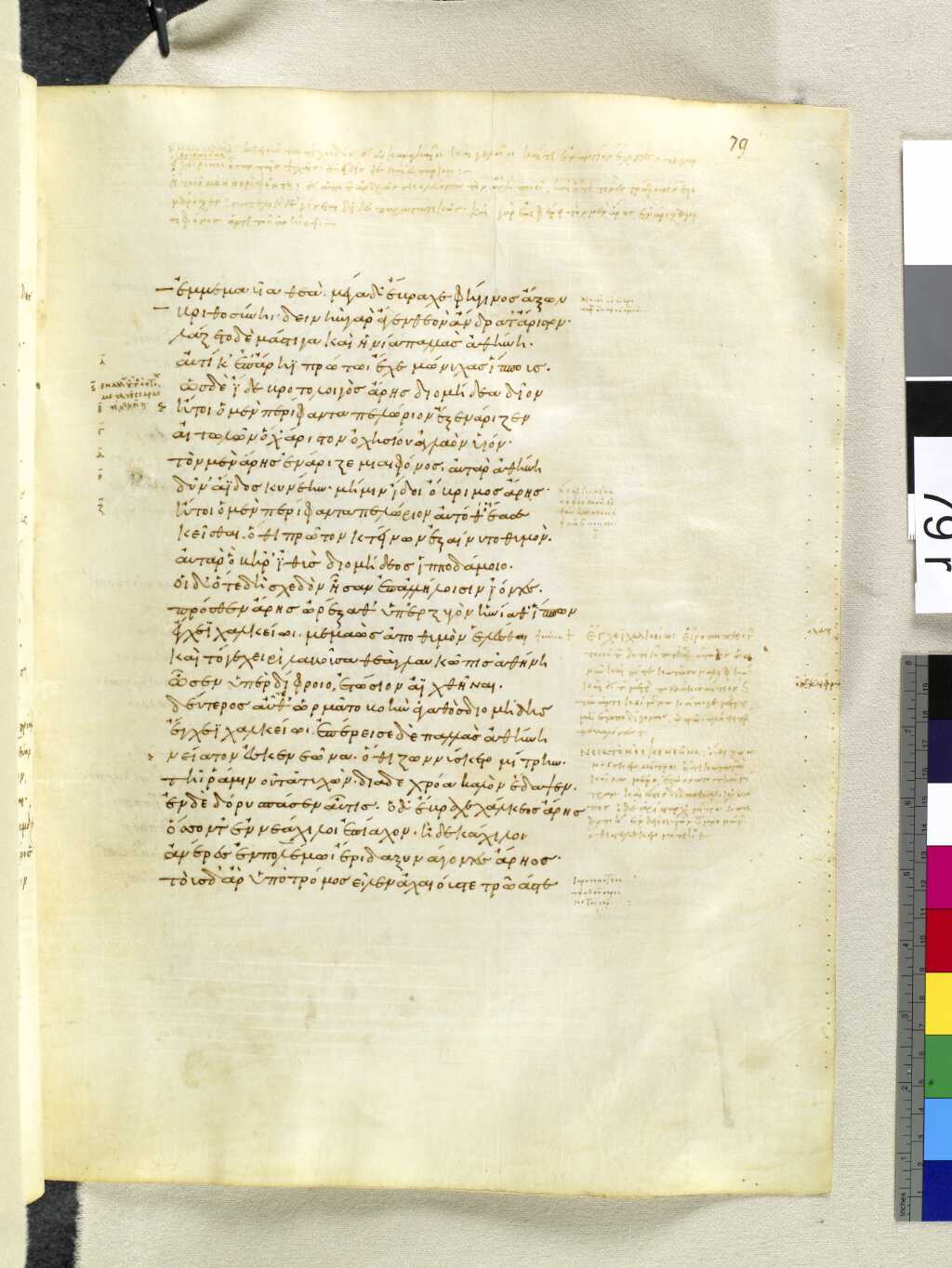
851πρόσθεν Ἄρης ὠρέξαθʼ ὑπὲρ ζυγὸν ἡνία θʼ ἵππων 852ἔγχεϊ χαλκείῳ μεμαὼς ἀπὸ θυμὸν ἑλέσθαι· 853καὶ τό γε χειρὶ λαβοῦσα θεὰ γλαυκῶπις Ἀθήνη 854ὦσεν ὑπὲκ δίφροιο ἐτώσιον ἀϊχθῆναι. 855δεύτερος αὖθʼ ὡρμᾶτο βοὴν ἀγαθὸς Διομήδης 856ἔγχεϊ χαλκείῳ· ἐπέρεισε δὲ Παλλὰς Ἀθήνη 857νείατον ἐς κενεῶνα ὅθι ζωννύσκετο μίτρῃ· 858τῇ ῥά μιν οὖτα τυχών, διὰ δὲ χρόα καλὸν ἔδαψεν, 859ἐκ δὲ δόρυ σπάσεν αὖτις· ὃ δʼ ἔβραχε χάλκεος Ἄρης 860ὅσσόν τʼ ἐννεάχιλοι ἐπίαχον ἢ δεκάχιλοι 861ἀνέρες ἐν πολέμῳ ἔριδα ξυνάγοντες Ἄρηος. 862τοὺς δʼ ἄρʼ ὑπὸ τρόμος εἷλεν Ἀχαιούς τε Τρῶάς τε 863δείσαντας· τόσον ἔβραχʼ Ἄρης ἆτος πολέμοιο. 864οἵη δʼ ἐκ νεφέων ἐρεβεννὴ φαίνεται ἀὴρ 865καύματος ἐξ ἀνέμοιο δυσαέος ὀρνυμένοιο, 866τοῖος Τυδεΐδῃ Διομήδεϊ χάλκεος Ἄρης 867φαίνεθʼ ὁμοῦ νεφέεσσιν ἰὼν εἰς οὐρανὸν εὐρύν. 868καρπαλίμως δʼ ἵκανε θεῶν ἕδος αἰπὺν Ὄλυμπον, 869πὰρ δὲ Διὶ Κρονίωνι καθέζετο θυμὸν ἀχεύων, 870δεῖξεν δʼ ἄμβροτον αἷμα καταρρέον ἐξ ὠτειλῆς, 871καί ῥʼ ὀλοφυρόμενος ἔπεα πτερόεντα προσηύδα· 872Ζεῦ πάτερ οὐ νεμεσίζῃ ὁρῶν τάδε καρτερὰ ἔργα; 873αἰεί τοι ῥίγιστα θεοὶ τετληότες εἰμὲν 874ἀλλήλων ἰότητι, χάριν ἄνδρεσσι φέροντες. 875σοὶ πάντες μαχόμεσθα· σὺ γὰρ τέκες ἄφρονα κούρην
With this she caught hold of Sthenelus and lifted him off the chariot on to the ground. In a second he was on the ground, whereupon the goddess mounted the car and placed herself by the side of Diomed. The oaken axle groaned aloud under the burden of the awful goddess and the hero; Pallas Minerva took the whip and reins, and drove straight at Mars. He was in the act of stripping huge Periphas, son of Ochesius and bravest of the Aetolians. Bloody Mars was stripping him of his armour, and Minerva donned the helmet of Hades, that he might not see her; when, therefore, he saw Diomed, he made straight for him and let Periphas lie where he had fallen. As soon as they were at close quarters he let fly with his bronze spear over the reins and yoke, thinking to take Diomed’s life, but Minerva caught the spear in her hand and made it fly harmlessly over the chariot. Diomed then threw, and Pallas Minerva drove the spear into the pit of Mars’s stomach where his under-girdle went round him. There Diomed wounded him, tearing his fair flesh and then drawing his spear out again. Mars roared as loudly as nine or ten thousand men in the thick of a fight, and the Achaeans and Trojans were struck with panic, so terrible was the cry he raised.
As a dark cloud in the sky when it comes on to blow after heat, even so did Diomed son of Tydeus see Mars ascend into the broad heavens. With all speed he reached high Olympus, home of the gods, and in great pain sat down beside Jove the son of Saturn. He showed Jove the immortal blood that was flowing from his wound, and spoke piteously, saying, “Father Jove, are you not angered by such doings? We gods are continually suffering in the most cruel manner at one another’s hands while helping mortals; and we all owe you a grudge for having begotten that mad termagant of a daughter, who is always committing outrage of some kind. We other gods must all do as you bid us, but her you neither scold nor punish; you encourage her because the pestilent creature is your daughter. See how she has been inciting proud Diomed to vent his rage on the immortal gods. First he went up to the Cyprian and wounded her in the hand near her wrist, and then he sprang upon me too as though he were a god. Had I not run for it I must either have lain there for long enough in torments among the ghastly corpses, or have been eaten alive with spears till I had no more strength left in me.”
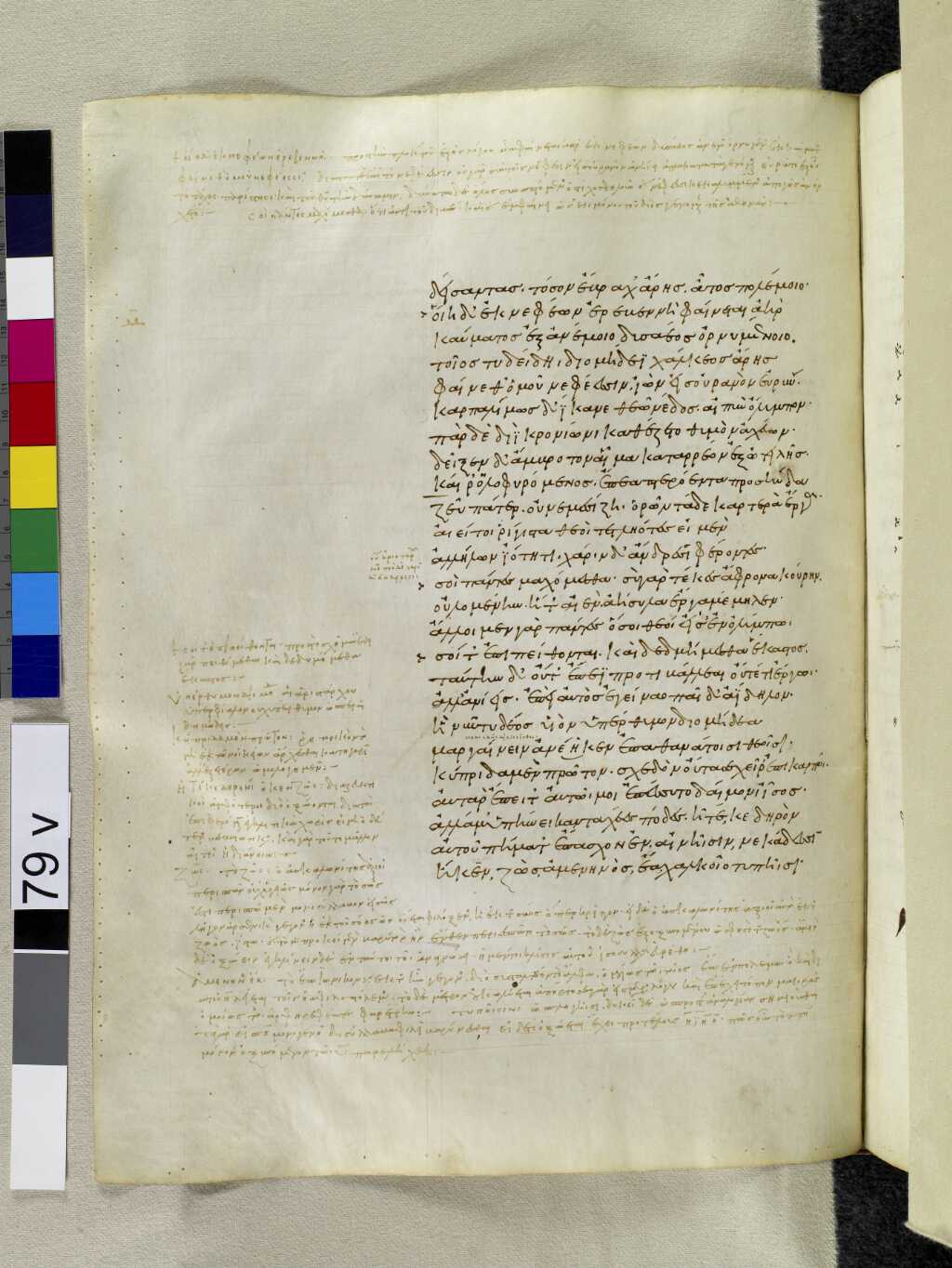
876οὐλομένην, ᾗ τʼ αἰὲν ἀήσυλα ἔργα μέμηλεν. 877ἄλλοι μὲν γὰρ πάντες ὅσοι θεοί εἰσʼ ἐν Ὀλύμπῳ 878σοί τʼ ἐπιπείθονται καὶ δεδμήμεσθα ἕκαστος· 879ταύτην δʼ οὔτʼ ἔπεϊ προτιβάλλεαι οὔτέ τι ἔργῳ, 880ἀλλʼ ἀνιεῖς, ἐπεὶ αὐτὸς ἐγείναο παῖδʼ ἀΐδηλον· 881ἣ νῦν Τυδέος υἱὸν ὑπερφίαλον Διομήδεα 882μαργαίνειν ἀνέηκεν ἐπʼ ἀθανάτοισι θεοῖσι. 883Κύπριδα μὲν πρῶτον σχεδὸν οὔτασε χεῖρʼ ἐπὶ καρπῷ, 884αὐτὰρ ἔπειτʼ αὐτῷ μοι ἐπέσσυτο δαίμονι ἶσος· 885ἀλλά μʼ ὑπήνεικαν ταχέες πόδες· ἦ τέ κε δηρὸν 886αὐτοῦ πήματʼ ἔπασχον ἐν αἰνῇσιν νεκάδεσσιν, 887ἤ κε ζὼς ἀμενηνὸς ἔα χαλκοῖο τυπῇσι. 888τὸν δʼ ἄρʼ ὑπόδρα ἰδὼν προσέφη νεφεληγερέτα Ζεύς. 889μή τί μοι ἀλλοπρόσαλλε παρεζόμενος μινύριζε. 890ἔχθιστος δέ μοί ἐσσι θεῶν οἳ Ὄλυμπον ἔχουσιν· 891αἰεὶ γάρ τοι ἔρις τε φίλη πόλεμοί τε μάχαι τε. 892μητρός τοι μένος ἐστὶν ἀάσχετον οὐκ ἐπιεικτὸν 893Ἥρης· τὴν μὲν ἐγὼ σπουδῇ δάμνημʼ ἐπέεσσι· 894τώ σʼ ὀΐω κείνης τάδε πάσχειν ἐννεσίῃσιν. 895ἀλλʼ οὐ μάν σʼ ἔτι δηρὸν ἀνέξομαι ἄλγεʼ ἔχοντα· 896ἐκ γὰρ ἐμεῦ γένος ἐσσί, ἐμοὶ δέ σε γείνατο μήτηρ· 897εἰ δέ τευ ἐξ ἄλλου γε θεῶν γένευ ὧδʼ ἀΐδηλος 898καί κεν δὴ πάλαι ἦσθα ἐνέρτερος Οὐρανιώνων. 899ὣς φάτο, καὶ Παιήονʼ ἀνώγειν ἰήσασθαι. 900τῷ δʼ ἐπὶ Παιήων ὀδυνήφατα φάρμακα πάσσων
Jove looked angrily at him and said, “Do not come whining here, Sir Facing-both-ways. I hate you worst of all the gods in Olympus, for you are ever fighting and making mischief. You have the intolerable and stubborn spirit of your mother Juno: it is all I can do to manage her, and it is her doing that you are now in this plight: still, I cannot let you remain longer in such great pain; you are my own offspring, and it was by me that your mother conceived you; if, however, you had been the son of any other god, you are so destructive that by this time you should have been lying lower than the Titans.”
He then bade Paeeon heal him, whereon Paeeon spread pain-killing herbs upon his wound and cured him, for he was not of mortal mould. As the juice of the fig-tree curdles milk, and thickens it in a moment though it is liquid, even so instantly did Paeeon cure fierce Mars. Then Hebe washed him, and clothed him in goodly raiment, and he took his seat by his father Jove all glorious to behold.
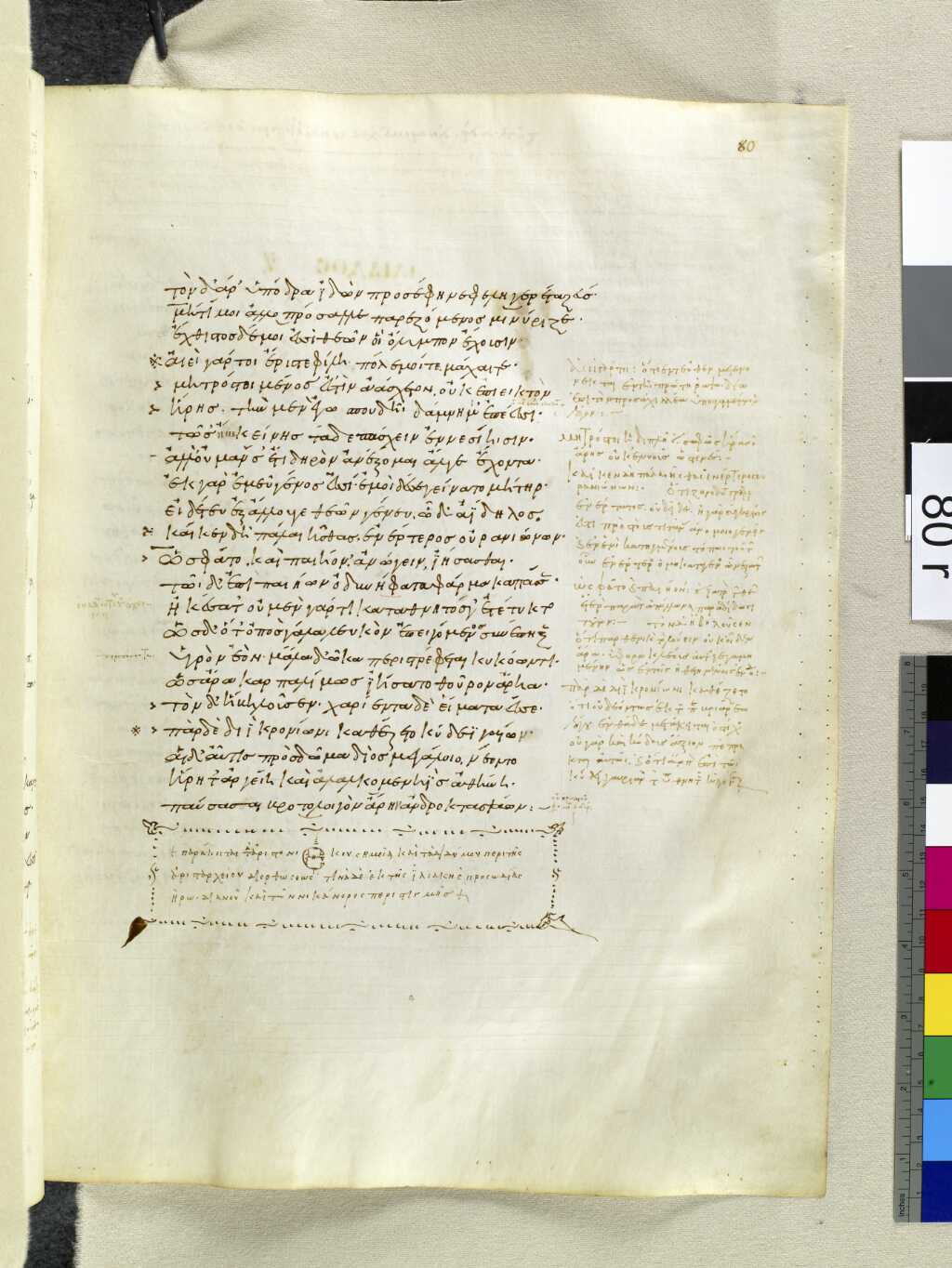
901ἠκέσατʼ· οὐ μὲν γάρ τι καταθνητός γʼ ἐτέτυκτο. 902ὡς δʼ ὅτʼ ὀπὸς γάλα λευκὸν ἐπειγόμενος συνέπηξεν 903ὑγρὸν ἐόν, μάλα δʼ ὦκα περιτρέφεται κυκόωντι, 904ὣς ἄρα καρπαλίμως ἰήσατο θοῦρον Ἄρηα. 905τὸν δʼ Ἥβη λοῦσεν, χαρίεντα δὲ εἵματα ἕσσε· 906πὰρ δὲ Διὶ Κρονίωνι καθέζετο κύδεϊ γαίων. 907αἳ δʼ αὖτις πρὸς δῶμα Διὸς μεγάλοιο νέοντο 908Ἥρη τʼ Ἀργείη καὶ Ἀλαλκομενηῒς Ἀθήνη 909παύσασαι βροτολοιγὸν Ἄρηʼ ἀνδροκτασιάων.
But Juno of Argos and Minerva of Alalcomene, now that they had put a stop to the murderous doings of Mars, went back again to the house of Jove.
Cite
Source & Cross-References
- Source text: Venetus A (10th c.) via Homer Multitext IIIF + Perseus Greek + Butler English (PG #2199) — view original
- Critical edition: Munro & Allen (Perseus Digital Library)
← previous · → next · v cycle view · l back to library