The Iliad, Book 6
Introduction
Book 6 of the Iliad with 22 sections, each linked to its specific folio in Venetus A (Marcianus Graecus 454, 10th c.). The Homer Multitext Project provides line-level folio mappings, ensuring every section of text corresponds to the exact manuscript page where it appears.
How was this verified? (Provenance)
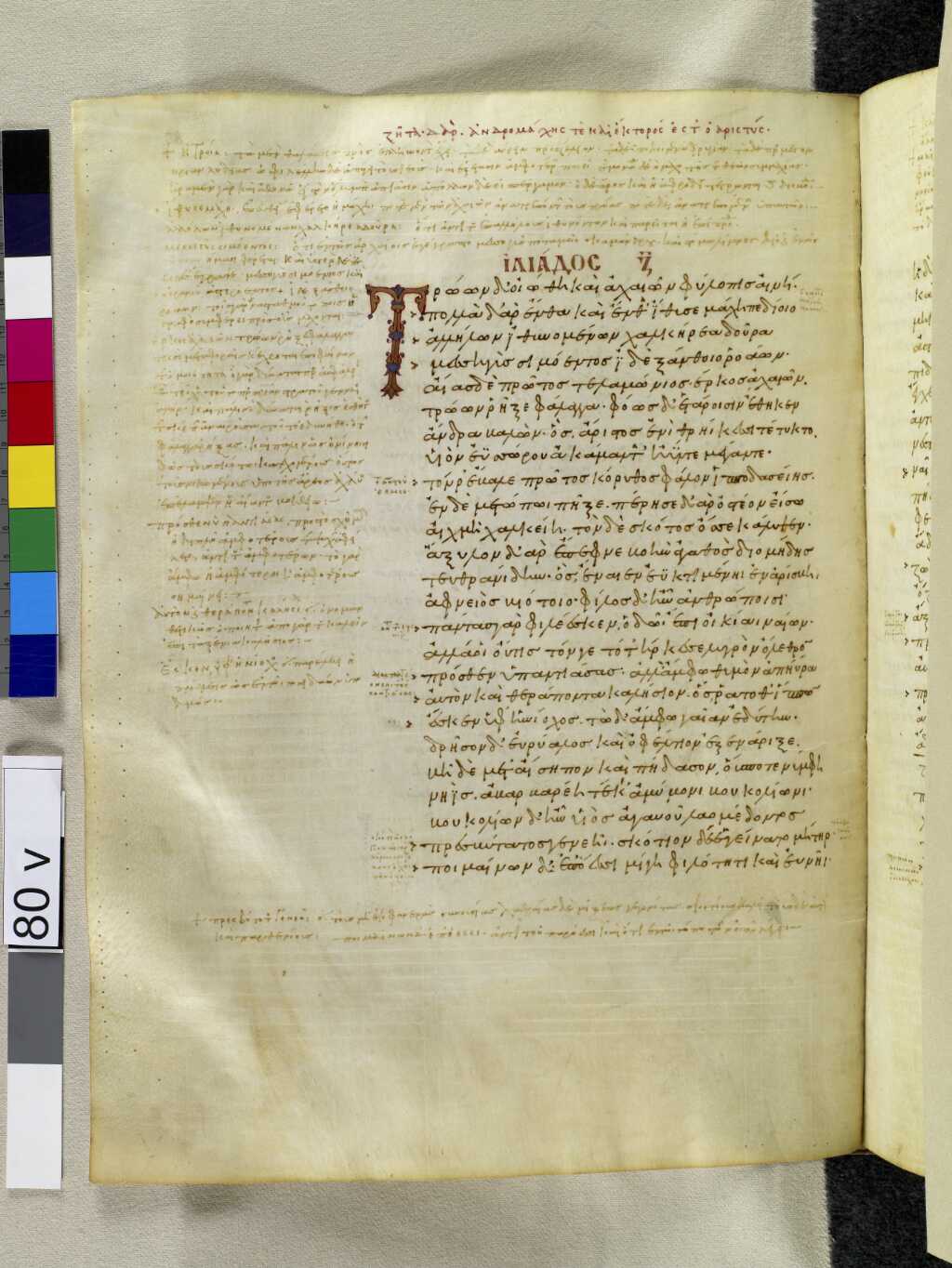
1Τρώων δʼ οἰώθη καὶ Ἀχαιῶν φύλοπις αἰνή· 2πολλὰ δʼ ἄρʼ ἔνθα καὶ ἔνθʼ ἴθυσε μάχη πεδίοιο 3ἀλλήλων ἰθυνομένων χαλκήρεα δοῦρα 4μεσσηγὺς Σιμόεντος ἰδὲ Ξάνθοιο ῥοάων. 5Αἴας δὲ πρῶτος Τελαμώνιος ἕρκος Ἀχαιῶν 6Τρώων ῥῆξε φάλαγγα, φόως δʼ ἑτάροισιν ἔθηκεν, 7ἄνδρα βαλὼν ὃς ἄριστος ἐνὶ Θρῄκεσσι τέτυκτο 8υἱὸν Ἐϋσσώρου Ἀκάμαντʼ ἠΰν τε μέγαν τε. 9τόν ῥʼ ἔβαλε πρῶτος κόρυθος φάλον ἱπποδασείης, 10ἐν δὲ μετώπῳ πῆξε, πέρησε δʼ ἄρʼ ὀστέον εἴσω 11αἰχμὴ χαλκείη· τὸν δὲ σκότος ὄσσε κάλυψεν. 12Ἄξυλον δʼ ἄρʼ ἔπεφνε βοὴν ἀγαθὸς Διομήδης 13Τευθρανίδην, ὃς ἔναιεν ἐϋκτιμένῃ ἐν Ἀρίσβῃ 14ἀφνειὸς βιότοιο, φίλος δʼ ἦν ἀνθρώποισι. 15πάντας γὰρ φιλέεσκεν ὁδῷ ἔπι οἰκία ναίων. 16ἀλλά οἱ οὔ τις τῶν γε τότʼ ἤρκεσε λυγρὸν ὄλεθρον 17πρόσθεν ὑπαντιάσας, ἀλλʼ ἄμφω θυμὸν ἀπηύρα 18αὐτὸν καὶ θεράποντα Καλήσιον, ὅς ῥα τόθʼ ἵππων 19ἔσκεν ὑφηνίοχος· τὼ δʼ ἄμφω γαῖαν ἐδύτην. 20Δρῆσον δʼ Εὐρύαλος καὶ Ὀφέλτιον ἐξενάριξε· 21βῆ δὲ μετʼ Αἴσηπον καὶ Πήδασον, οὕς ποτε νύμφη 22νηῒς Ἀβαρβαρέη τέκʼ ἀμύμονι Βουκολίωνι. 23Βουκολίων δʼ ἦν υἱὸς ἀγαυοῦ Λαομέδοντος 24πρεσβύτατος γενεῇ, σκότιον δέ ἑ γείνατο μήτηρ· 25ποιμαίνων δʼ ἐπʼ ὄεσσι μίγη φιλότητι καὶ εὐνῇ,
Glaucus and Diomed—The story of Bellerophon—Hector and Andromache.
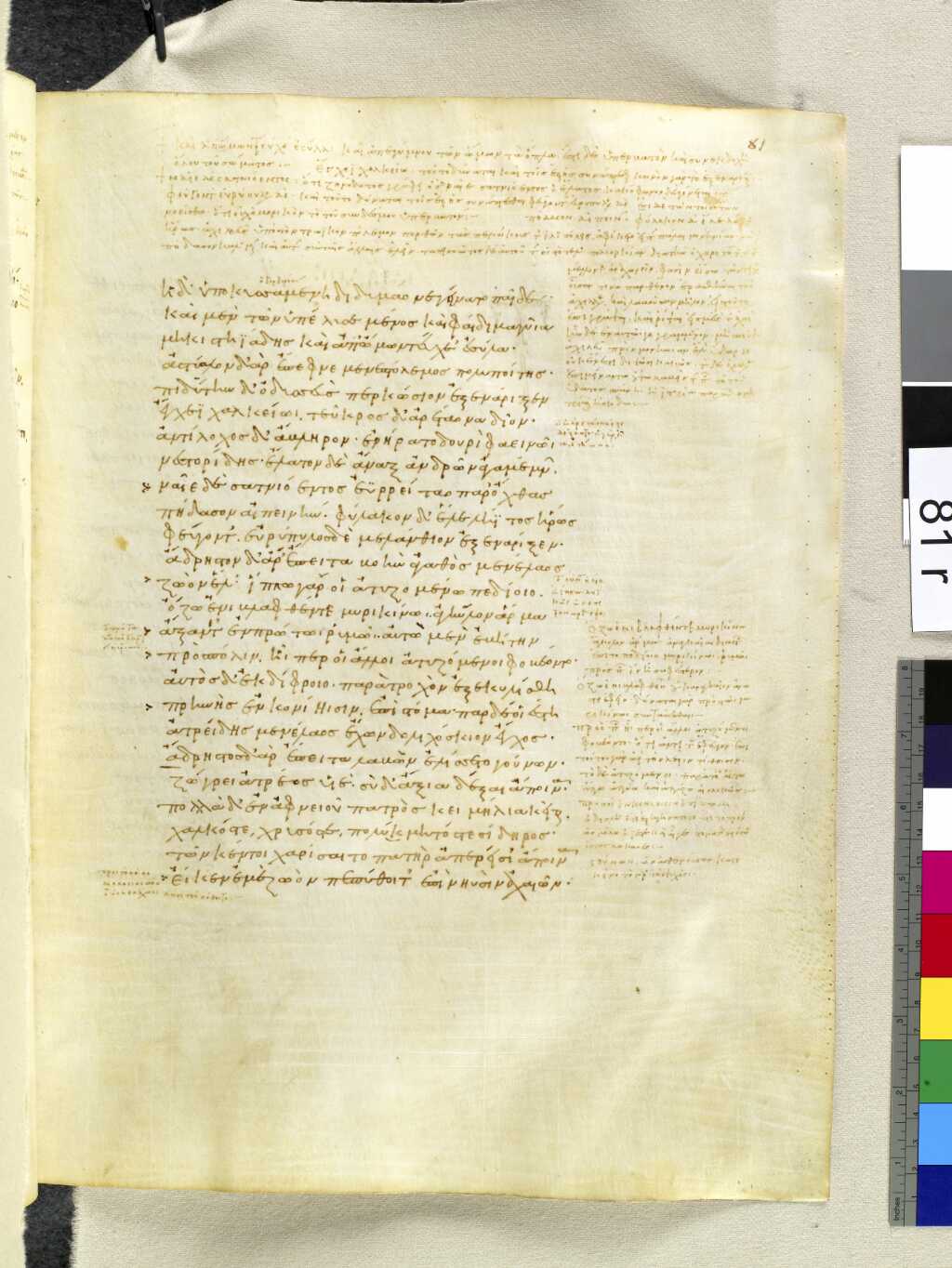
26ἣ δʼ ὑποκυσαμένη διδυμάονε γείνατο παῖδε. 27καὶ μὲν τῶν ὑπέλυσε μένος καὶ φαίδιμα γυῖα 28Μηκιστηϊάδης καὶ ἀπʼ ὤμων τεύχεʼ ἐσύλα. 29Ἀστύαλον δʼ ἄρʼ ἔπεφνε μενεπτόλεμος Πολυποίτης· 30Πιδύτην δʼ Ὀδυσεὺς Περκώσιον ἐξενάριξεν 31ἔγχεϊ χαλκείῳ, Τεῦκρος δʼ Ἀρετάονα δῖον. 32Ἀντίλοχος δʼ Ἄβληρον ἐνήρατο δουρὶ φαεινῷ 33Νεστορίδης, Ἔλατον δὲ ἄναξ ἀνδρῶν Ἀγαμέμνων· 34ναῖε δὲ Σατνιόεντος ἐϋρρείταο παρʼ ὄχθας 35Πήδασον αἰπεινήν. Φύλακον δʼ ἕλε Λήϊτος ἥρως 36φεύγοντʼ· Εὐρύπυλος δὲ Μελάνθιον ἐξενάριξεν. 37Ἄδρηστον δʼ ἄρʼ ἔπειτα βοὴν ἀγαθὸς Μενέλαος 38ζωὸν ἕλʼ· ἵππω γάρ οἱ ἀτυζομένω πεδίοιο 39ὄζῳ ἔνι βλαφθέντε μυρικίνῳ ἀγκύλον ἅρμα 40ἄξαντʼ ἐν πρώτῳ ῥυμῷ αὐτὼ μὲν ἐβήτην 41πρὸς πόλιν, ᾗ περ οἱ ἄλλοι ἀτυζόμενοι φοβέοντο, 42αὐτὸς δʼ ἐκ δίφροιο παρὰ τροχὸν ἐξεκυλίσθη 43πρηνὴς ἐν κονίῃσιν ἐπὶ στόμα· πὰρ δέ οἱ ἔστη 44Ἀτρεΐδης Μενέλαος ἔχων δολιχόσκιον ἔγχος. 45Ἄδρηστος δʼ ἄρʼ ἔπειτα λαβὼν ἐλίσσετο γούνων· 46ζώγρει Ἀτρέος υἱέ, σὺ δʼ ἄξια δέξαι ἄποινα· 47πολλὰ δʼ ἐν ἀφνειοῦ πατρὸς κειμήλια κεῖται 48χαλκός τε χρυσός τε πολύκμητός τε σίδηρος, 49τῶν κέν τοι χαρίσαιτο πατὴρ ἀπερείσιʼ ἄποινα 50εἴ κεν ἐμὲ ζωὸν πεπύθοιτʼ ἐπὶ νηυσὶν Ἀχαιῶν.
The fight between Trojans and Achaeans was now left to rage as it would, and the tide of war surged hither and thither over the plain as they aimed their bronze-shod spears at one another between the streams of Simois and Xanthus.
First, Ajax son of Telamon, tower of strength to the Achaeans, broke a phalanx of the Trojans, and came to the assistance of his comrades by killing Acamas son of Eussorus, the best man among the Thracians, being both brave and of great stature. The spear struck the projecting peak of his helmet: its bronze point then went through his forehead into the brain, and darkness veiled his eyes.
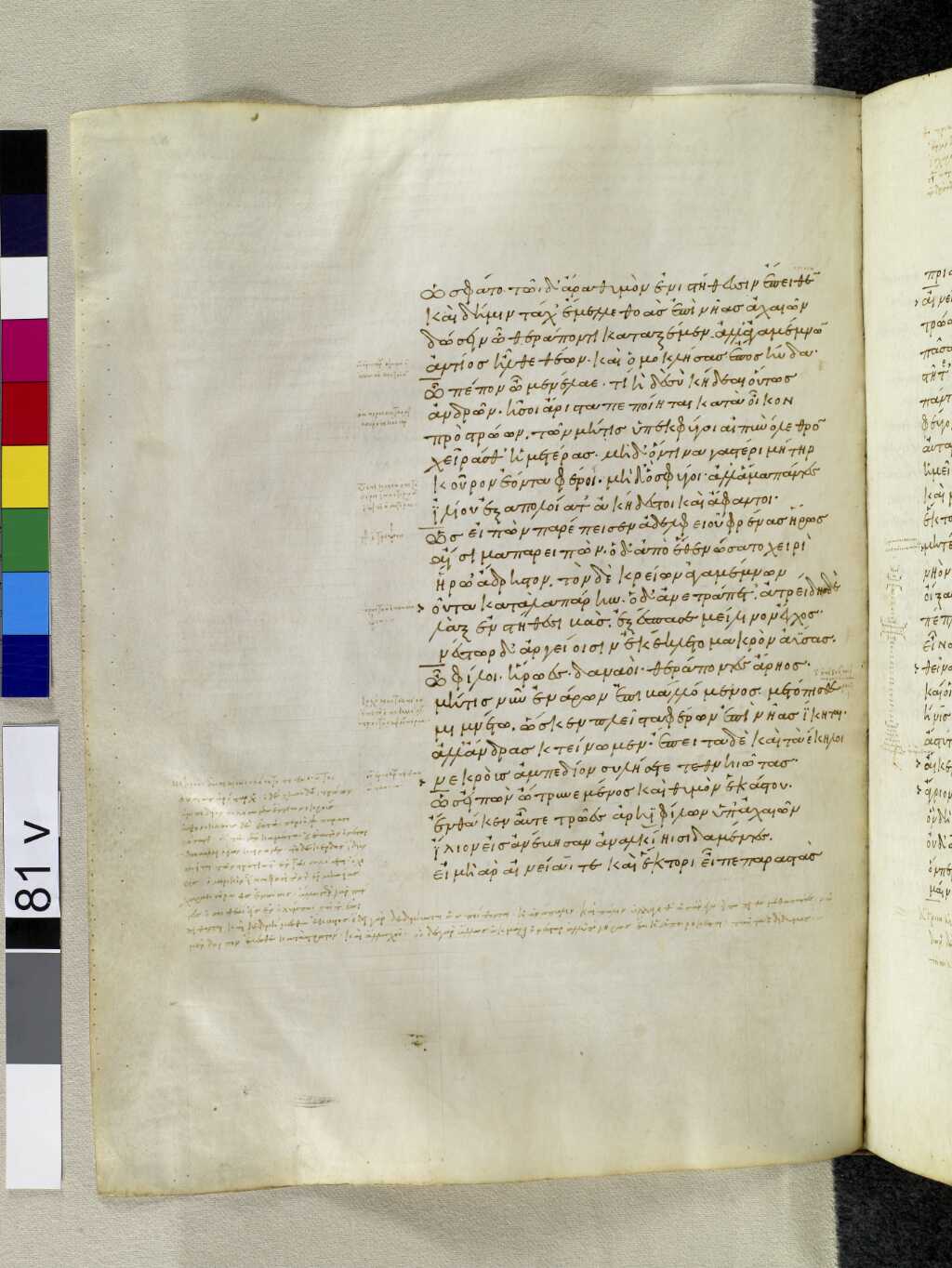
51ὣς φάτο, τῷ δʼ ἄρα θυμὸν ἐνὶ στήθεσσιν ἔπειθε· 52καὶ δή μιν τάχʼ ἔμελλε θοὰς ἐπὶ νῆας Ἀχαιῶν 53δώσειν ᾧ θεράποντι καταξέμεν· ἀλλʼ Ἀγαμέμνων 54ἀντίος ἦλθε θέων, καὶ ὁμοκλήσας ἔπος ηὔδα· 55ὦ πέπον ὦ Μενέλαε, τί ἢ δὲ σὺ κήδεαι οὕτως 56ἀνδρῶν; ἦ σοὶ ἄριστα πεποίηται κατὰ οἶκον 57πρὸς Τρώων; τῶν μή τις ὑπεκφύγοι αἰπὺν ὄλεθρον 58χεῖράς θʼ ἡμετέρας, μηδʼ ὅν τινα γαστέρι μήτηρ 59κοῦρον ἐόντα φέροι, μηδʼ ὃς φύγοι, ἀλλʼ ἅμα πάντες 60Ἰλίου ἐξαπολοίατʼ ἀκήδεστοι καὶ ἄφαντοι. 61ὣς εἰπὼν ἔτρεψεν ἀδελφειοῦ φρένας ἥρως 62αἴσιμα παρειπών· ὃ δʼ ἀπὸ ἕθεν ὤσατο χειρὶ 63ἥρωʼ Ἄδρηστον· τὸν δὲ κρείων Ἀγαμέμνων 64οὖτα κατὰ λαπάρην· ὃ δʼ ἀνετράπετʼ, Ἀτρεΐδης δὲ 65λὰξ ἐν στήθεσι βὰς ἐξέσπασε μείλινον ἔγχος. 66Νέστωρ δʼ Ἀργείοισιν ἐκέκλετο μακρὸν ἀΰσας· 67ὦ φίλοι ἥρωες Δαναοὶ θεράποντες Ἄρηος 68μή τις νῦν ἐνάρων ἐπιβαλλόμενος μετόπισθε 69μιμνέτω ὥς κε πλεῖστα φέρων ἐπὶ νῆας ἵκηται, 70ἀλλʼ ἄνδρας κτείνωμεν· ἔπειτα δὲ καὶ τὰ ἕκηλοι 71νεκροὺς ἂμ πεδίον συλήσετε τεθνηῶτας. 72ὣς εἰπὼν ὄτρυνε μένος καὶ θυμὸν ἑκάστου. 73ἔνθά κεν αὖτε Τρῶες ἀρηϊφίλων ὑπʼ Ἀχαιῶν 74Ἴλιον εἰσανέβησαν ἀναλκείῃσι δαμέντες, 75εἰ μὴ ἄρʼ Αἰνείᾳ τε καὶ Ἕκτορι εἶπε παραστὰς
Then Diomed killed Axylus son of Teuthranus, a rich man who lived in the strong city of Arisbe, and was beloved by all men; for he had a house by the roadside, and entertained every one who passed; howbeit not one of his guests stood before him to save his life, and Diomed killed both him and his squire Calesius, who was then his charioteer—so the pair passed beneath the earth.
Euryalus killed Dresus and Opheltius, and then went in pursuit of Aesepus and Pedasus, whom the naiad nymph Abarbarea had borne to noble Bucolion. Bucolion was eldest son to Laomedon, but he was a bastard. While tending his sheep he had converse with the nymph, and she conceived twin sons; these the son of Mecisteus now slew, and he stripped the armour from their shoulders. Polypoetes then killed Astyalus, Ulysses Pidytes of Percote, and Teucer Aretaon. Ablerus fell by the spear of Nestor’s son Antilochus, and Agamemnon, king of men, killed Elatus who dwelt in Pedasus by the banks of the river Satnioeis. Leitus killed Phylacus as he was flying, and Eurypylus slew Melanthus.
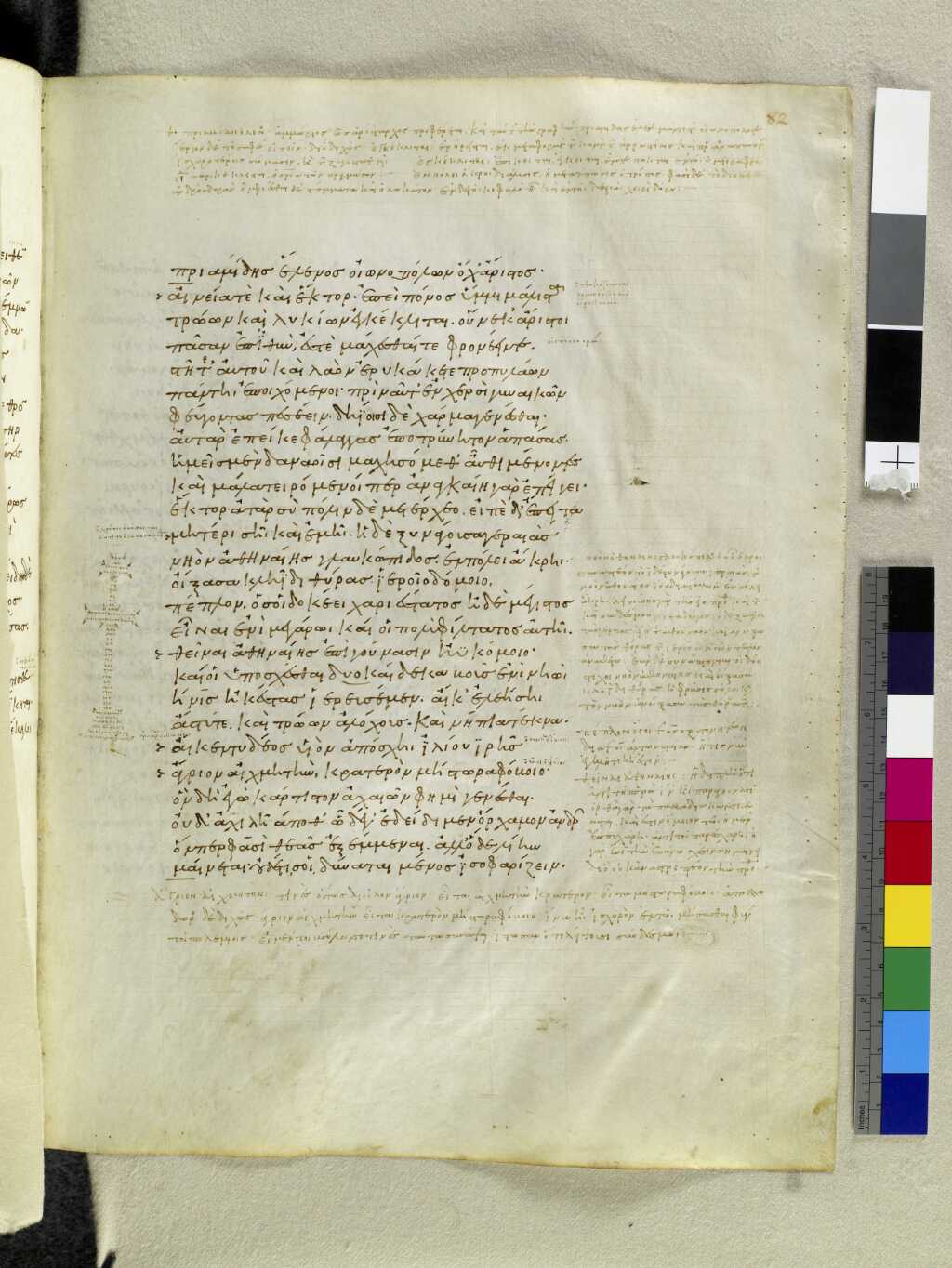
76Πριαμίδης Ἕλενος οἰωνοπόλων ὄχʼ ἄριστος· 77Αἰνεία τε καὶ Ἕκτορ, ἐπεὶ πόνος ὔμμι μάλιστα 78Τρώων καὶ Λυκίων ἐγκέκλιται, οὕνεκʼ ἄριστοι 79πᾶσαν ἐπʼ ἰθύν ἐστε μάχεσθαί τε φρονέειν τε, 80στῆτʼ αὐτοῦ, καὶ λαὸν ἐρυκάκετε πρὸ πυλάων 81πάντῃ ἐποιχόμενοι πρὶν αὖτʼ ἐν χερσὶ γυναικῶν 82φεύγοντας πεσέειν, δηΐοισι δὲ χάρμα γενέσθαι. 83αὐτὰρ ἐπεί κε φάλαγγας ἐποτρύνητον ἁπάσας, 84ἡμεῖς μὲν Δαναοῖσι μαχησόμεθʼ αὖθι μένοντες, 85καὶ μάλα τειρόμενοί περ· ἀναγκαίη γὰρ ἐπείγει· 86Ἕκτορ ἀτὰρ σὺ πόλιν δὲ μετέρχεο, εἰπὲ δʼ ἔπειτα 87μητέρι σῇ καὶ ἐμῇ· ἣ δὲ ξυνάγουσα γεραιὰς 88νηὸν Ἀθηναίης γλαυκώπιδος ἐν πόλει ἄκρῃ 89οἴξασα κληῗδι θύρας ἱεροῖο δόμοιο 90πέπλον, ὅς οἱ δοκέει χαριέστατος ἠδὲ μέγιστος 91εἶναι ἐνὶ μεγάρῳ καί οἱ πολὺ φίλτατος αὐτῇ, 92θεῖναι Ἀθηναίης ἐπὶ γούνασιν ἠϋκόμοιο, 93καί οἱ ὑποσχέσθαι δυοκαίδεκα βοῦς ἐνὶ νηῷ 94ἤνις ἠκέστας ἱερευσέμεν, αἴ κʼ ἐλεήσῃ 95ἄστύ τε καὶ Τρώων ἀλόχους καὶ νήπια τέκνα, 96ὥς κεν Τυδέος υἱὸν ἀπόσχῃ Ἰλίου ἱρῆς 97ἄγριον αἰχμητὴν κρατερὸν μήστωρα φόβοιο, 98ὃν δὴ ἐγὼ κάρτιστον Ἀχαιῶν φημι γενέσθαι. 99οὐδʼ Ἀχιλῆά ποθʼ ὧδέ γʼ ἐδείδιμεν ὄρχαμον ἀνδρῶν, 100ὅν πέρ φασι θεᾶς ἐξέμμεναι· ἀλλʼ ὅδε λίην
Then Menelaus of the loud war-cry took Adrestus alive, for his horses ran into a tamarisk bush, as they were flying wildly over the plain, and broke the pole from the car; they went on towards the city along with the others in full flight, but Adrestus rolled out, and fell in the dust flat on his face by the wheel of his chariot; Menelaus came up to him spear in hand, but Adrestus caught him by the knees begging for his life. “Take me alive,” he cried, “son of Atreus, and you shall have a full ransom for me: my father is rich and has much treasure of gold, bronze, and wrought iron laid by in his house. From this store he will give you a large ransom should he hear of my being alive and at the ships of the Achaeans.”
101μαίνεται, οὐδέ τίς οἱ δύναται μένος ἰσοφαρίζειν. 102ὣς ἔφαθʼ, Ἕκτωρ δʼ οὔ τι κασιγνήτῳ ἀπίθησεν. 103αὐτίκα δʼ ἐξ ὀχέων σὺν τεύχεσιν ἆλτο χαμᾶζε, 104πάλλων δʼ ὀξέα δοῦρα κατὰ στρατὸν ᾤχετο πάντῃ 105ὀτρύνων μαχέσασθαι, ἔγειρε δὲ φύλοπιν αἰνήν. 106οἳ δʼ ἐλελίχθησαν καὶ ἐναντίοι ἔσταν Ἀχαιῶν· 107Ἀργεῖοι δʼ ὑπεχώρησαν, λῆξαν δὲ φόνοιο, 108φὰν δέ τινʼ ἀθανάτων ἐξ οὐρανοῦ ἀστερόεντος 109Τρωσὶν ἀλεξήσοντα κατελθέμεν, ὡς ἐλέλιχθεν. 110Ἕκτωρ δὲ Τρώεσσιν ἐκέκλετο μακρὸν ἀΰσας· 111Τρῶες ὑπέρθυμοι τηλεκλειτοί τʼ ἐπίκουροι 112ἀνέρες ἔστε φίλοι, μνήσασθε δὲ θούριδος ἀλκῆς, 113ὄφρʼ ἂν ἐγὼ βείω προτὶ Ἴλιον, ἠδὲ γέρουσιν 114εἴπω βουλευτῇσι καὶ ἡμετέρῃς ἀλόχοισι 115δαίμοσιν ἀρήσασθαι, ὑποσχέσθαι δʼ ἑκατόμβας. 116ὣς ἄρα φωνήσας ἀπέβη κορυθαίολος Ἕκτωρ· 117ἀμφὶ δέ μιν σφυρὰ τύπτε καὶ αὐχένα δέρμα κελαινὸν 118ἄντυξ ἣ πυμάτη θέεν ἀσπίδος ὀμφαλοέσσης. 119Γλαῦκος δʼ Ἱππολόχοιο πάϊς καὶ Τυδέος υἱὸς 120ἐς μέσον ἀμφοτέρων συνίτην μεμαῶτε μάχεσθαι. 121οἳ δʼ ὅτε δὴ σχεδὸν ἦσαν ἐπʼ ἀλλήλοισιν ἰόντε, 122τὸν πρότερος προσέειπε βοὴν ἀγαθὸς Διομήδης· 123τίς δὲ σύ ἐσσι φέριστε καταθνητῶν ἀνθρώπων; 124οὐ μὲν γάρ ποτʼ ὄπωπα μάχῃ ἔνι κυδιανείρῃ 125τὸ πρίν· ἀτὰρ μὲν νῦν γε πολὺ προβέβηκας ἁπάντων
Thus did he plead, and Menelaus was for yielding and giving him to a squire to take to the ships of the Achaeans, but Agamemnon came running up to him and rebuked him. “My good Menelaus,” said he, “this is no time for giving quarter. Has, then, your house fared so well at the hands of the Trojans? Let us not spare a single one of them—not even the child unborn and in its mother’s womb; let not a man of them be left alive, but let all in Ilius perish, unheeded and forgotten.”
Thus did he speak, and his brother was persuaded by him, for his words were just. Menelaus, therefore, thrust Adrestus from him, whereon King Agamemnon struck him in the flank, and he fell: then the son of Atreus planted his foot upon his breast to draw his spear from the body.
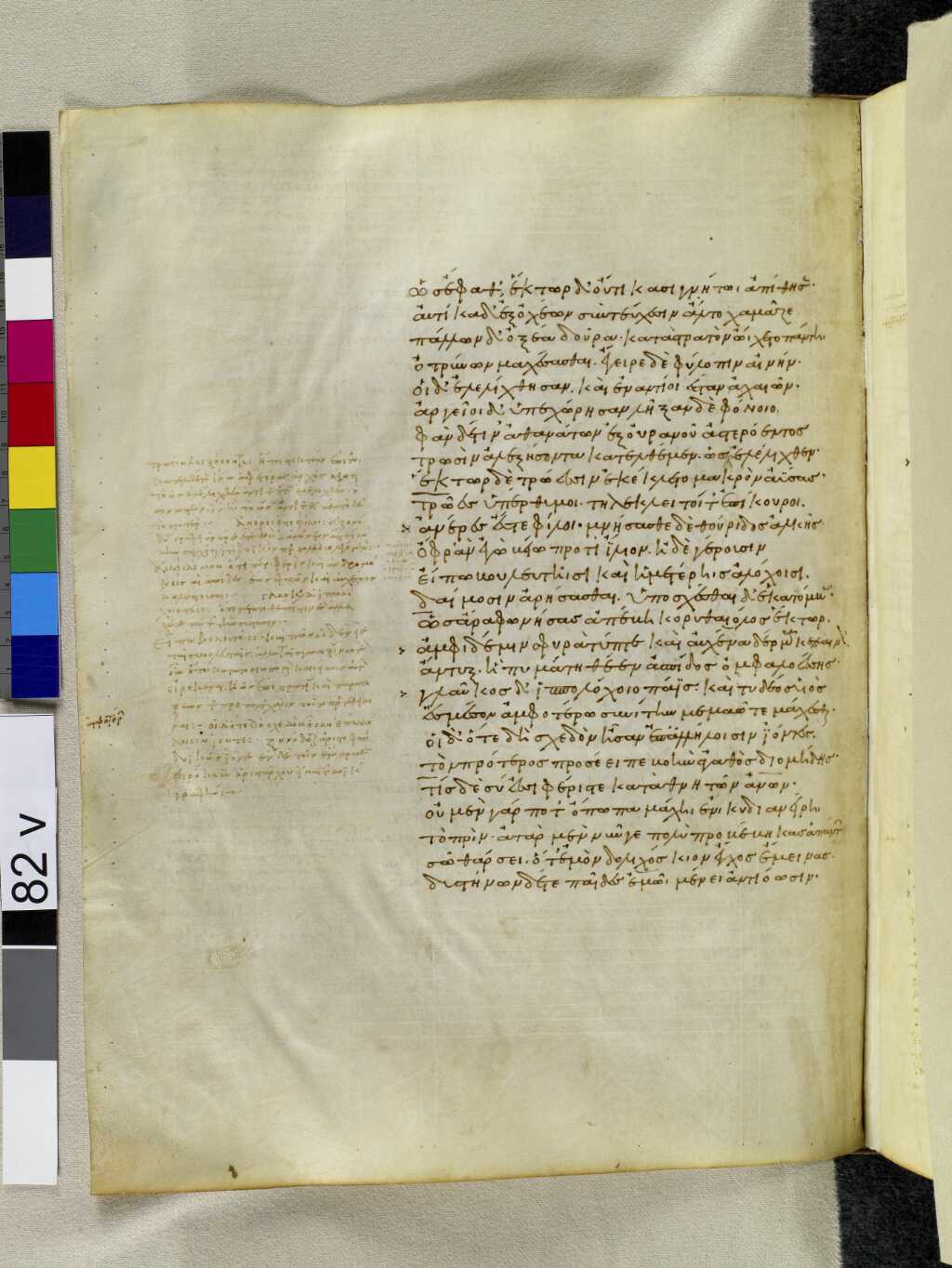
126σῷ θάρσει, ὅ τʼ ἐμὸν δολιχόσκιον ἔγχος ἔμεινας· 127δυστήνων δέ τε παῖδες ἐμῷ μένει ἀντιόωσιν. 128εἰ δέ τις ἀθανάτων γε κατʼ οὐρανοῦ εἰλήλουθας, 129οὐκ ἂν ἔγωγε θεοῖσιν ἐπουρανίοισι μαχοίμην. 130οὐδὲ γὰρ οὐδὲ Δρύαντος υἱὸς κρατερὸς Λυκόοργος 131δὴν ἦν, ὅς ῥα θεοῖσιν ἐπουρανίοισιν ἔριζεν· 132ὅς ποτε μαινομένοιο Διωνύσοιο τιθήνας 133σεῦε κατʼ ἠγάθεον Νυσήϊον· αἳ δʼ ἅμα πᾶσαι 134θύσθλα χαμαὶ κατέχευαν ὑπʼ ἀνδροφόνοιο Λυκούργου 135θεινόμεναι βουπλῆγι· Διώνυσος δὲ φοβηθεὶς 136δύσεθʼ ἁλὸς κατὰ κῦμα, Θέτις δʼ ὑπεδέξατο κόλπῳ 137δειδιότα· κρατερὸς γὰρ ἔχε τρόμος ἀνδρὸς ὁμοκλῇ. 138τῷ μὲν ἔπειτʼ ὀδύσαντο θεοὶ ῥεῖα ζώοντες, 139καί μιν τυφλὸν ἔθηκε Κρόνου πάϊς· οὐδʼ ἄρʼ ἔτι δὴν 140ἦν, ἐπεὶ ἀθανάτοισιν ἀπήχθετο πᾶσι θεοῖσιν· 141οὐδʼ ἂν ἐγὼ μακάρεσσι θεοῖς ἐθέλοιμι μάχεσθαι. 142εἰ δέ τίς ἐσσι βροτῶν οἳ ἀρούρης καρπὸν ἔδουσιν, 143ἆσσον ἴθʼ ὥς κεν θᾶσσον ὀλέθρου πείραθʼ ἵκηαι. 144τὸν δʼ αὖθʼ Ἱππολόχοιο προσηύδα φαίδιμος υἱός· 145Τυδεΐδη μεγάθυμε τί ἢ γενεὴν ἐρεείνεις; 146οἵη περ φύλλων γενεὴ τοίη δὲ καὶ ἀνδρῶν. 147φύλλα τὰ μέν τʼ ἄνεμος χαμάδις χέει, ἄλλα δέ θʼ ὕλη 148τηλεθόωσα φύει, ἔαρος δʼ ἐπιγίγνεται ὥρη· 149ὣς ἀνδρῶν γενεὴ ἣ μὲν φύει ἣ δʼ ἀπολήγει. 150εἰ δʼ ἐθέλεις καὶ ταῦτα δαήμεναι ὄφρʼ ἐῢ εἰδῇς
Meanwhile Nestor shouted to the Argives, saying, “My friends, Danaan warriors, servants of Mars, let no man lag that he may spoil the dead, and bring back much booty to the ships. Let us kill as many as we can; the bodies will lie upon the plain, and you can despoil them later at your leisure.”
With these words he put heart and soul into them all. And now the Trojans would have been routed and driven back into Ilius, had not Priam’s son Helenus, wisest of augurs, said to Hector and Aeneas, “Hector and Aeneas, you two are the mainstays of the Trojans and Lycians, for you are foremost at all times, alike in fight and counsel; hold your ground here, and go about among the host to rally them in front of the gates, or they will fling themselves into the arms of their wives, to the great joy of our foes. Then, when you have put heart into all our companies, we will stand firm here and fight the Danaans however hard they press us, for there is nothing else to be done. Meanwhile do you, Hector, go to the city and tell our mother what is happening. Tell her to bid the matrons gather at the temple of Minerva in the acropolis; let her then take her key and open the doors of the sacred building; there, upon the knees of Minerva, let her lay the largest, fairest robe she has in her house—the one she sets most store by; let her, moreover, promise to sacrifice twelve yearling heifers that have never yet felt the goad, in the temple of the goddess, if she will take pity on the town, with the wives and little ones of the Trojans, and keep the son of Tydeus from falling on the goodly city of Ilius; for he fights with fury and fills men’s souls with panic. I hold him mightiest of them all; we did not fear even their great champion Achilles, son of a goddess though he be, as we do this man: his rage is beyond all bounds, and there is none can vie with him in prowess.”
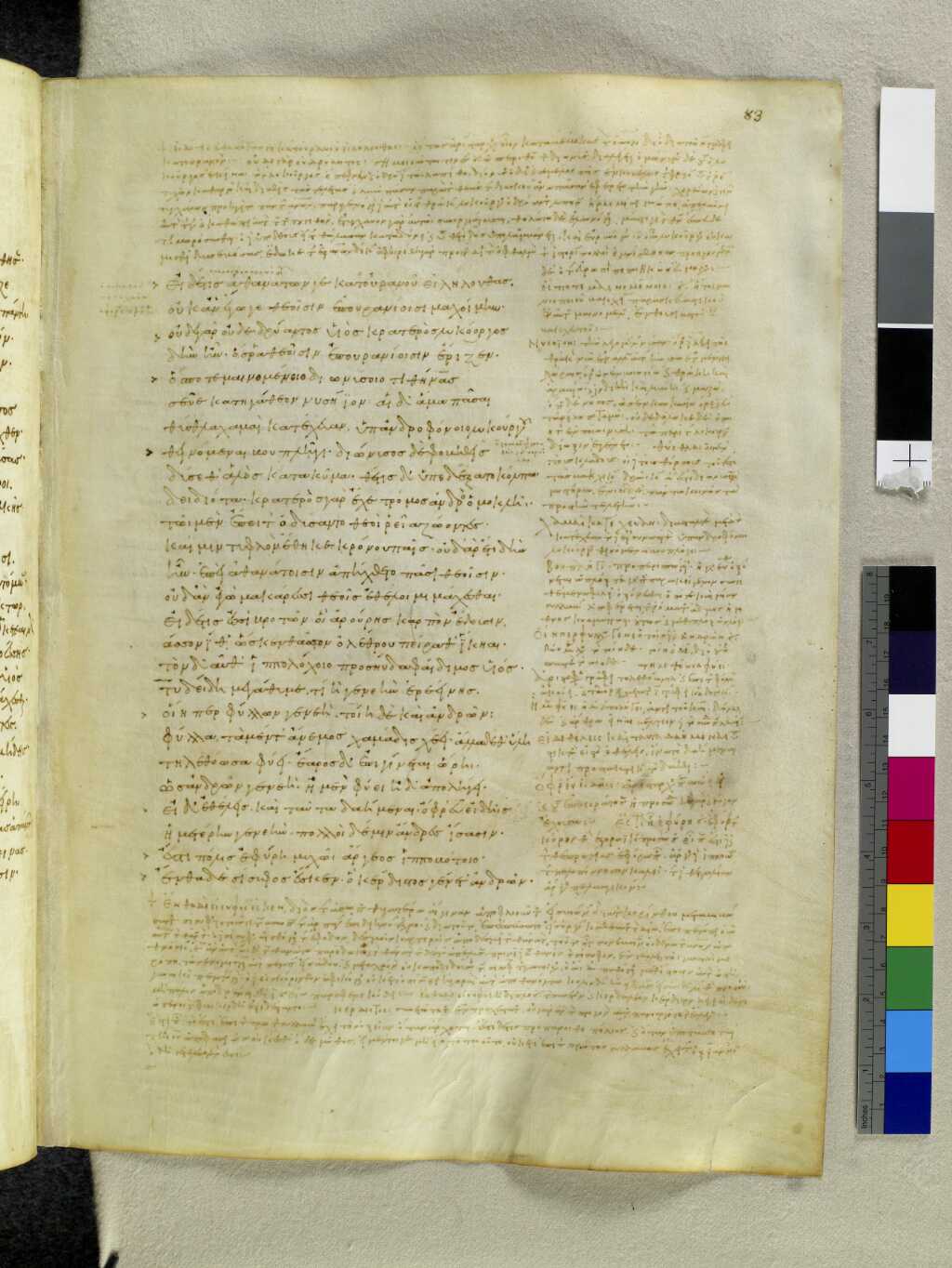
151ἡμετέρην γενεήν, πολλοὶ δέ μιν ἄνδρες ἴσασιν· 152ἔστι πόλις Ἐφύρη μυχῷ Ἄργεος ἱπποβότοιο, 153ἔνθα δὲ Σίσυφος ἔσκεν, ὃ κέρδιστος γένετʼ ἀνδρῶν, 154Σίσυφος Αἰολίδης· ὃ δʼ ἄρα Γλαῦκον τέκεθʼ υἱόν, 155αὐτὰρ Γλαῦκος τίκτεν ἀμύμονα Βελλεροφόντην· 156τῷ δὲ θεοὶ κάλλός τε καὶ ἠνορέην ἐρατεινὴν 157ὤπασαν· αὐτάρ οἱ Προῖτος κακὰ μήσατο θυμῷ, 158ὅς ῥʼ ἐκ δήμου ἔλασσεν, ἐπεὶ πολὺ φέρτερος ἦεν, 159Ἀργείων· Ζεὺς γάρ οἱ ὑπὸ σκήπτρῳ ἐδάμασσε. 160τῷ δὲ γυνὴ Προίτου ἐπεμήνατο δῖʼ Ἄντεια 161κρυπταδίῃ φιλότητι μιγήμεναι· ἀλλὰ τὸν οὔ τι 162πεῖθʼ ἀγαθὰ φρονέοντα δαΐφρονα Βελλεροφόντην. 163ἣ δὲ ψευσαμένη Προῖτον βασιλῆα προσηύδα· 164τεθναίης ὦ Προῖτʼ, ἢ κάκτανε Βελλεροφόντην, 165ὅς μʼ ἔθελεν φιλότητι μιγήμεναι οὐκ ἐθελούσῃ. 166ὣς φάτο, τὸν δὲ ἄνακτα χόλος λάβεν οἷον ἄκουσε· 167κτεῖναι μέν ῥʼ ἀλέεινε, σεβάσσατο γὰρ τό γε θυμῷ, 168πέμπε δέ μιν Λυκίην δέ, πόρεν δʼ ὅ γε σήματα λυγρὰ 169γράψας ἐν πίνακι πτυκτῷ θυμοφθόρα πολλά, 170δεῖξαι δʼ ἠνώγειν ᾧ πενθερῷ ὄφρʼ ἀπόλοιτο. 171αὐτὰρ ὁ βῆ Λυκίην δὲ θεῶν ὑπʼ ἀμύμονι πομπῇ. 172ἀλλʼ ὅτε δὴ Λυκίην ἷξε Ξάνθόν τε ῥέοντα, 173προφρονέως μιν τῖεν ἄναξ Λυκίης εὐρείης· 174ἐννῆμαρ ξείνισσε καὶ ἐννέα βοῦς ἱέρευσεν. 175ἀλλʼ ὅτε δὴ δεκάτη ἐφάνη ῥοδοδάκτυλος Ἠὼς
Hector did as his brother bade him. He sprang from his chariot, and went about everywhere among the host, brandishing his spears, urging the men on to fight, and raising the dread cry of battle. Thereon they rallied and again faced the Achaeans, who gave ground and ceased their murderous onset, for they deemed that some one of the immortals had come down from starry heaven to help the Trojans, so strangely had they rallied. And Hector shouted to the Trojans, “Trojans and allies, be men, my friends, and fight with might and main, while I go to Ilius and tell the old men of our council and our wives to pray to the gods and vow hecatombs in their honour.”
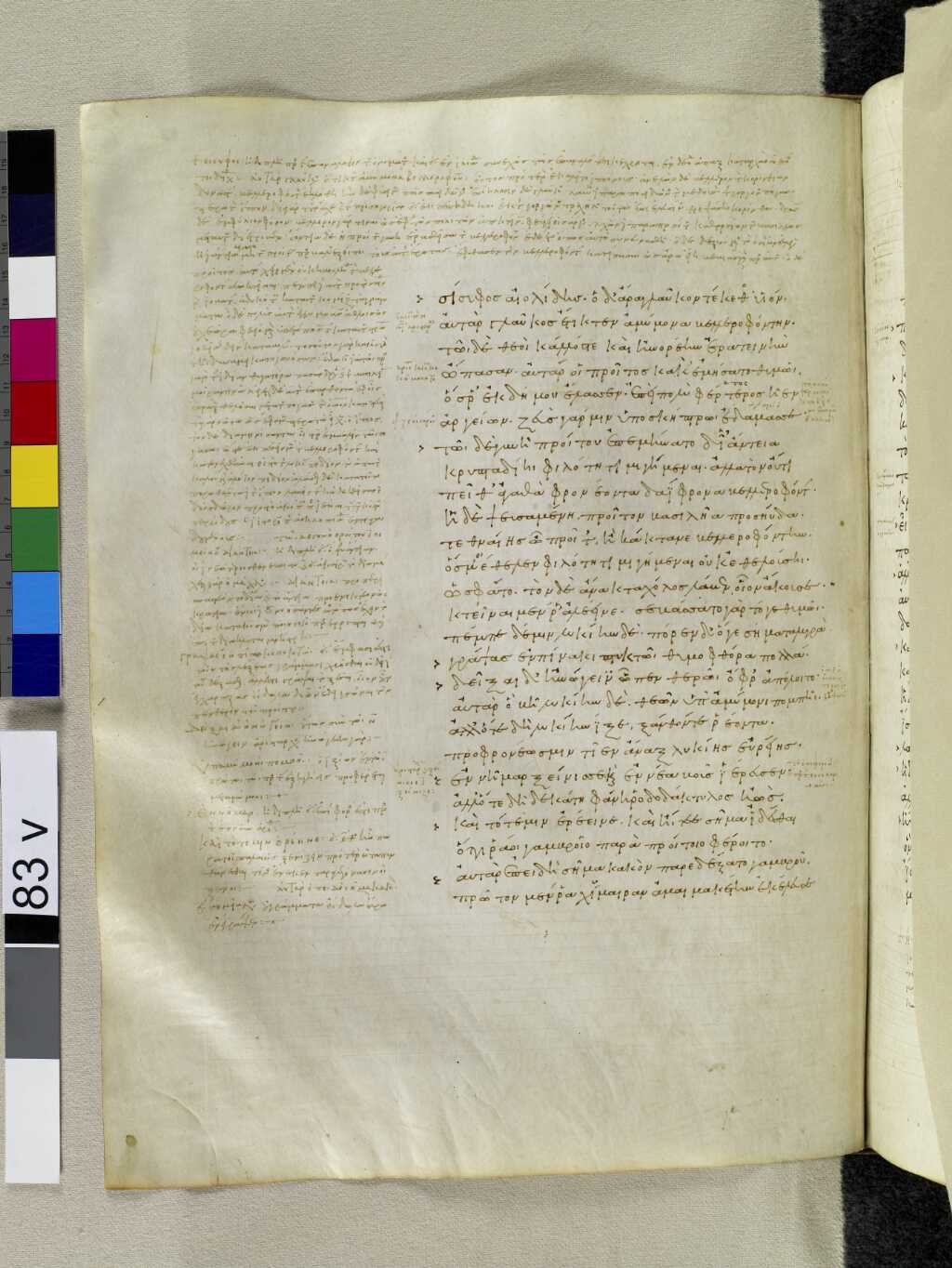
176καὶ τότε μιν ἐρέεινε καὶ ᾔτεε σῆμα ἰδέσθαι 177ὅττί ῥά οἱ γαμβροῖο πάρα Προίτοιο φέροιτο. 178αὐτὰρ ἐπεὶ δὴ σῆμα κακὸν παρεδέξατο γαμβροῦ, 179πρῶτον μέν ῥα Χίμαιραν ἀμαιμακέτην ἐκέλευσε 180πεφνέμεν· ἣ δʼ ἄρʼ ἔην θεῖον γένος οὐδʼ ἀνθρώπων, 181πρόσθε λέων, ὄπιθεν δὲ δράκων, μέσση δὲ χίμαιρα, 182δεινὸν ἀποπνείουσα πυρὸς μένος αἰθομένοιο, 183καὶ τὴν μὲν κατέπεφνε θεῶν τεράεσσι πιθήσας. 184δεύτερον αὖ Σολύμοισι μαχέσσατο κυδαλίμοισι· 185καρτίστην δὴ τήν γε μάχην φάτο δύμεναι ἀνδρῶν. 186τὸ τρίτον αὖ κατέπεφνεν Ἀμαζόνας ἀντιανείρας. 187τῷ δʼ ἄρʼ ἀνερχομένῳ πυκινὸν δόλον ἄλλον ὕφαινε· 188κρίνας ἐκ Λυκίης εὐρείης φῶτας ἀρίστους 189εἷσε λόχον· τοὶ δʼ οὔ τι πάλιν οἶκον δὲ νέοντο· 190πάντας γὰρ κατέπεφνεν ἀμύμων Βελλεροφόντης. 191ἀλλʼ ὅτε δὴ γίγνωσκε θεοῦ γόνον ἠῢν ἐόντα 192αὐτοῦ μιν κατέρυκε, δίδου δʼ ὅ γε θυγατέρα ἥν, 193δῶκε δέ οἱ τιμῆς βασιληΐδος ἥμισυ πάσης· 194καὶ μέν οἱ Λύκιοι τέμενος τάμον ἔξοχον ἄλλων 195καλὸν φυταλιῆς καὶ ἀρούρης, ὄφρα νέμοιτο. 196ἣ δʼ ἔτεκε τρία τέκνα δαΐφρονι Βελλεροφόντῃ 197Ἴσανδρόν τε καὶ Ἱππόλοχον καὶ Λαοδάμειαν. 198Λαοδαμείῃ μὲν παρελέξατο μητίετα Ζεύς, 199ἣ δʼ ἔτεκʼ ἀντίθεον Σαρπηδόνα χαλκοκορυστήν. 200ἀλλʼ ὅτε δὴ καὶ κεῖνος ἀπήχθετο πᾶσι θεοῖσιν,
With this he went his way, and the black rim of hide that went round his shield beat against his neck and his ancles.
Then Glaucus son of Hippolochus, and the son of Tydeus went into the open space between the hosts to fight in single combat. When they were close up to one another Diomed of the loud war-cry was the first to speak. “Who, my good sir,” said he, “who are you among men? I have never seen you in battle until now, but you are daring beyond all others if you abide my onset. Woe to those fathers whose sons face my might. If, however, you are one of the immortals and have come down from heaven, I will not fight you; for even valiant Lycurgus, son of Dryas, did not live long when he took to fighting with the gods. He it was that drove the nursing women who were in charge of frenzied Bacchus through the land of Nysa, and they flung their thyrsi on the ground as murderous Lycurgus beat them with his oxgoad. Bacchus himself plunged terror-stricken into the sea, and Thetis took him to her bosom to comfort him, for he was scared by the fury with which the man reviled him. Thereon the gods who live at ease were angry with Lycurgus and the son of Saturn struck him blind, nor did he live much longer after he had become hateful to the immortals. Therefore I will not fight with the blessed gods; but if you are of them that eat the fruit of the ground, draw near and meet your doom.”
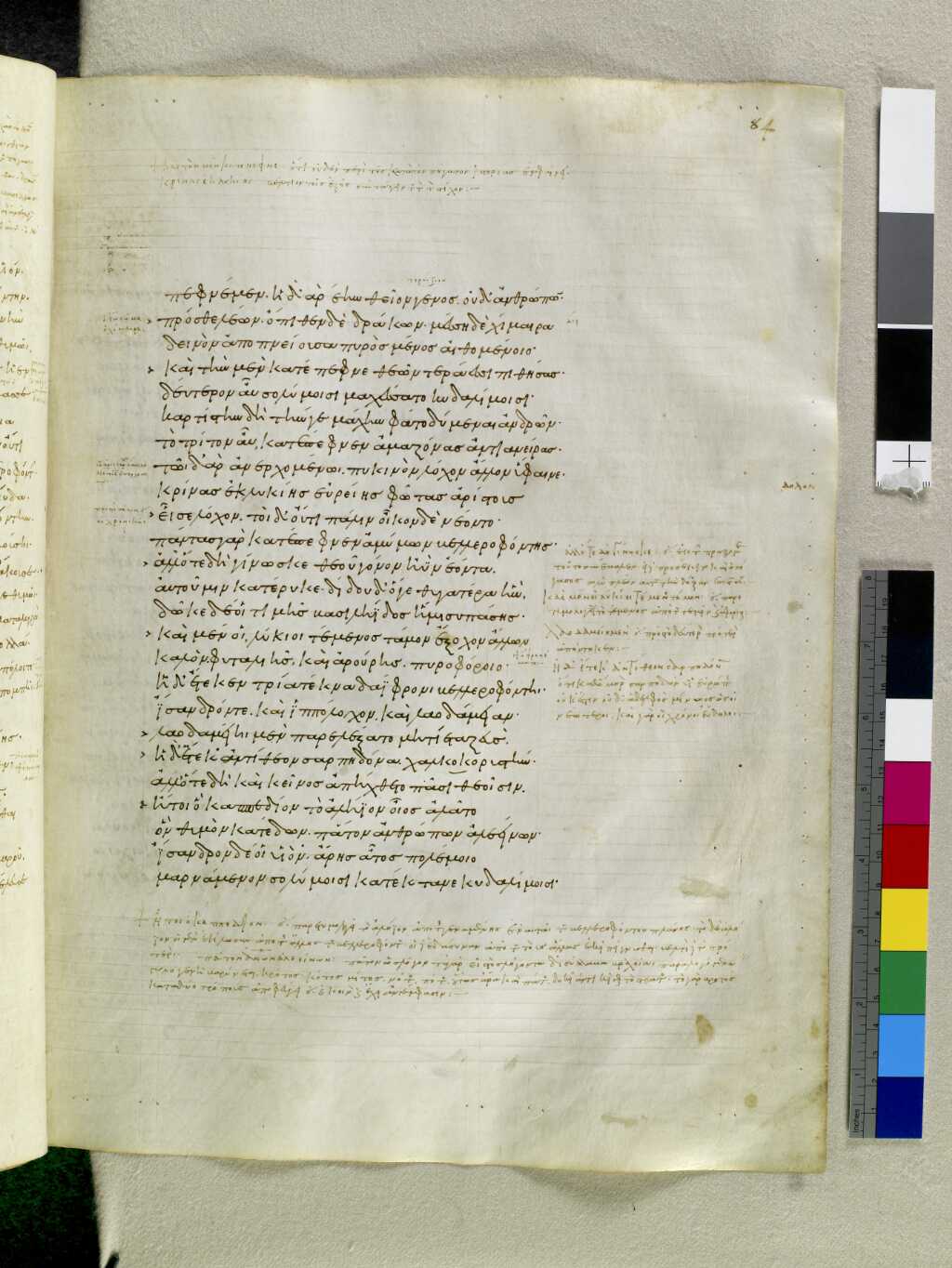
201ἤτοι ὃ κὰπ πεδίον τὸ Ἀλήϊον οἶος ἀλᾶτο 202ὃν θυμὸν κατέδων, πάτον ἀνθρώπων ἀλεείνων· 203Ἴσανδρον δέ οἱ υἱὸν Ἄρης ἆτος πολέμοιο 204μαρνάμενον Σολύμοισι κατέκτανε κυδαλίμοισι· 205τὴν δὲ χολωσαμένη χρυσήνιος Ἄρτεμις ἔκτα. 206Ἱππόλοχος δέ μʼ ἔτικτε, καὶ ἐκ τοῦ φημι γενέσθαι· 207πέμπε δέ μʼ ἐς Τροίην, καί μοι μάλα πόλλʼ ἐπέτελλεν 208αἰὲν ἀριστεύειν καὶ ὑπείροχον ἔμμεναι ἄλλων, 209μηδὲ γένος πατέρων αἰσχυνέμεν, οἳ μέγʼ ἄριστοι 210ἔν τʼ Ἐφύρῃ ἐγένοντο καὶ ἐν Λυκίῃ εὐρείῃ. 211ταύτης τοι γενεῆς τε καὶ αἵματος εὔχομαι εἶναι. 212ὣς φάτο, γήθησεν δὲ βοὴν ἀγαθὸς Διομήδης· 213ἔγχος μὲν κατέπηξεν ἐπὶ χθονὶ πουλυβοτείρῃ, 214αὐτὰρ ὃ μειλιχίοισι προσηύδα ποιμένα λαῶν· 215ἦ ῥά νύ μοι ξεῖνος πατρώϊός ἐσσι παλαιός· 216Οἰνεὺς γάρ ποτε δῖος ἀμύμονα Βελλεροφόντην 217ξείνισʼ ἐνὶ μεγάροισιν ἐείκοσιν ἤματʼ ἐρύξας· 218οἳ δὲ καὶ ἀλλήλοισι πόρον ξεινήϊα καλά· 219Οἰνεὺς μὲν ζωστῆρα δίδου φοίνικι φαεινόν, 220Βελλεροφόντης δὲ χρύσεον δέπας ἀμφικύπελλον 221καί μιν ἐγὼ κατέλειπον ἰὼν ἐν δώμασʼ ἐμοῖσι. 222Τυδέα δʼ οὐ μέμνημαι, ἐπεί μʼ ἔτι τυτθὸν ἐόντα 223κάλλιφʼ, ὅτʼ ἐν Θήβῃσιν ἀπώλετο λαὸς Ἀχαιῶν. 224τὼ νῦν σοὶ μὲν ἐγὼ ξεῖνος φίλος Ἄργεϊ μέσσῳ 225εἰμί, σὺ δʼ ἐν Λυκίῃ ὅτε κεν τῶν δῆμον ἵκωμαι.
And the son of Hippolochus answered, “Son of Tydeus, why ask me of my lineage? Men come and go as leaves year by year upon the trees. Those of autumn the wind sheds upon the ground, but when spring returns the forest buds forth with fresh vines. Even so is it with the generations of mankind, the new spring up as the old are passing away. If, then, you would learn my descent, it is one that is well known to many. There is a city in the heart of Argos, pasture land of horses, called Ephyra, where Sisyphus lived, who was the craftiest of all mankind. He was the son of Aeolus, and had a son named Glaucus, who was father to Bellerophon, whom heaven endowed with the most surpassing comeliness and beauty. But Proetus devised his ruin, and being stronger than he, drove him from the land of the Argives, over which Jove had made him ruler. For Antea, wife of Proetus, lusted after him, and would have had him lie with her in secret; but Bellerophon was an honourable man and would not, so she told lies about him to Proetus. ‘Proetus,’ said she, ‘kill Bellerophon or die, for he would have had converse with me against my will.’ The king was angered, but shrank from killing Bellerophon, so he sent him to Lycia with lying letters of introduction, written on a folded tablet, and containing much ill against the bearer. He bade Bellerophon show these letters to his father-in-law, to the end that he might thus perish; Bellerophon therefore went to Lycia, and the gods convoyed him safely.
“When he reached the river Xanthus, which is in Lycia, the king received him with all goodwill, feasted him nine days, and killed nine heifers in his honour, but when rosy-fingered morning appeared upon the tenth day, he questioned him and desired to see the letter from his son-in-law Proetus. When he had received the wicked letter he first commanded Bellerophon to kill that savage monster, the Chimaera, who was not a human being, but a goddess, for she had the head of a lion and the tail of a serpent, while her body was that of a goat, and she breathed forth flames of fire; but Bellerophon slew her, for he was guided by signs from heaven. He next fought the far-famed Solymi, and this, he said, was the hardest of all his battles. Thirdly, he killed the Amazons, women who were the peers of men, and as he was returning thence the king devised yet another plan for his destruction; he picked the bravest warriors in all Lycia, and placed them in ambuscade, but not a man ever came back, for Bellerophon killed every one of them. Then the king knew that he must be the valiant offspring of a god, so he kept him in Lycia, gave him his daughter in marriage, and made him of equal honour in the kingdom with himself; and the Lycians gave him a piece of land, the best in all the country, fair with vineyards and tilled fields, to have and to hold.
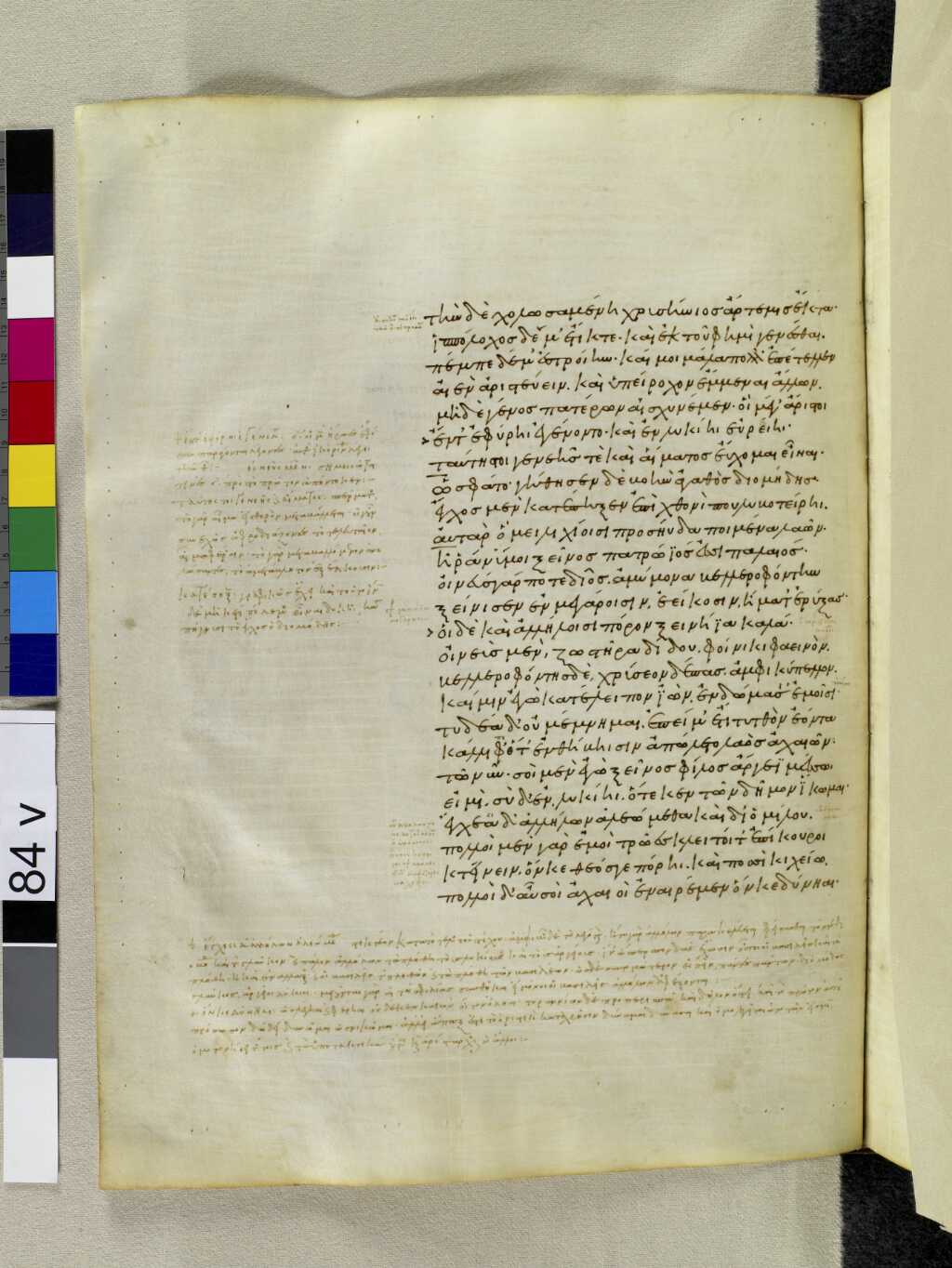
226ἔγχεα δʼ ἀλλήλων ἀλεώμεθα καὶ διʼ ὁμίλου· 227πολλοὶ μὲν γὰρ ἐμοὶ Τρῶες κλειτοί τʼ ἐπίκουροι 228κτείνειν ὅν κε θεός γε πόρῃ καὶ ποσσὶ κιχείω, 229πολλοὶ δʼ αὖ σοὶ Ἀχαιοὶ ἐναιρέμεν ὅν κε δύνηαι. 230τεύχεα δʼ ἀλλήλοις ἐπαμείψομεν, ὄφρα καὶ οἵδε 231γνῶσιν ὅτι ξεῖνοι πατρώϊοι εὐχόμεθʼ εἶναι. 232ὣς ἄρα φωνήσαντε καθʼ ἵππων ἀΐξαντε 233χεῖράς τʼ ἀλλήλων λαβέτην καὶ πιστώσαντο· 234ἔνθʼ αὖτε Γλαύκῳ Κρονίδης φρένας ἐξέλετο Ζεύς, 235ὃς πρὸς Τυδεΐδην Διομήδεα τεύχεʼ ἄμειβε 236χρύσεα χαλκείων, ἑκατόμβοιʼ ἐννεαβοίων. 237Ἕκτωρ δʼ ὡς Σκαιάς τε πύλας καὶ φηγὸν ἵκανεν, 238ἀμφʼ ἄρα μιν Τρώων ἄλοχοι θέον ἠδὲ θύγατρες 239εἰρόμεναι παῖδάς τε κασιγνήτους τε ἔτας τε 240καὶ πόσιας· ὃ δʼ ἔπειτα θεοῖς εὔχεσθαι ἀνώγει 241πάσας ἑξείης· πολλῇσι δὲ κήδεʼ ἐφῆπτο. 242ἀλλʼ ὅτε δὴ Πριάμοιο δόμον περικαλλέʼ ἵκανε 243ξεστῇς αἰθούσῃσι τετυγμένον· αὐτὰρ ἐν αὐτῷ 244πεντήκοντʼ ἔνεσαν θάλαμοι ξεστοῖο λίθοιο 245πλησίον ἀλλήλων δεδμημένοι, ἔνθα δὲ παῖδες 246κοιμῶντο Πριάμοιο παρὰ μνηστῇς ἀλόχοισι, 247κουράων δʼ ἑτέρωθεν ἐναντίοι ἔνδοθεν αὐλῆς 248δώδεκʼ ἔσαν τέγεοι θάλαμοι ξεστοῖο λίθοιο 249πλησίον ἀλλήλων δεδμημένοι, ἔνθα δὲ γαμβροὶ 250κοιμῶντο Πριάμοιο παρʼ αἰδοίῃς ἀλόχοισιν·
“The king’s daughter bore Bellerophon three children, Isander, Hippolochus, and Laodameia. Jove, the lord of counsel, lay with Laodameia, and she bore him noble Sarpedon; but when Bellerophon came to be hated by all the gods, he wandered all desolate and dismayed upon the Alean plain, gnawing at his own heart, and shunning the path of man. Mars, insatiate of battle, killed his son Isander while he was fighting the Solymi; his daughter was killed by Diana of the golden reins, for she was angered with her; but Hippolochus was father to myself, and when he sent me to Troy he urged me again and again to fight ever among the foremost and outvie my peers, so as not to shame the blood of my fathers who were the noblest in Ephyra and in all Lycia. This, then, is the descent I claim.”
Thus did he speak, and the heart of Diomed was glad. He planted his spear in the ground, and spoke to him with friendly words. “Then,” he said, “you are an old friend of my father’s house. Great Oeneus once entertained Bellerophon for twenty days, and the two exchanged presents. Oeneus gave a belt rich with purple, and Bellerophon a double cup, which I left at home when I set out for Troy. I do not remember Tydeus, for he was taken from us while I was yet a child, when the army of the Achaeans was cut to pieces before Thebes. Henceforth, however, I must be your host in middle Argos, and you mine in Lycia, if I should ever go there; let us avoid one another’s spears even during a general engagement; there are many noble Trojans and allies whom I can kill, if I overtake them and heaven delivers them into my hand; so again with yourself, there are many Achaeans whose lives you may take if you can; we two, then, will exchange armour, that all present may know of the old ties that subsist between us.”
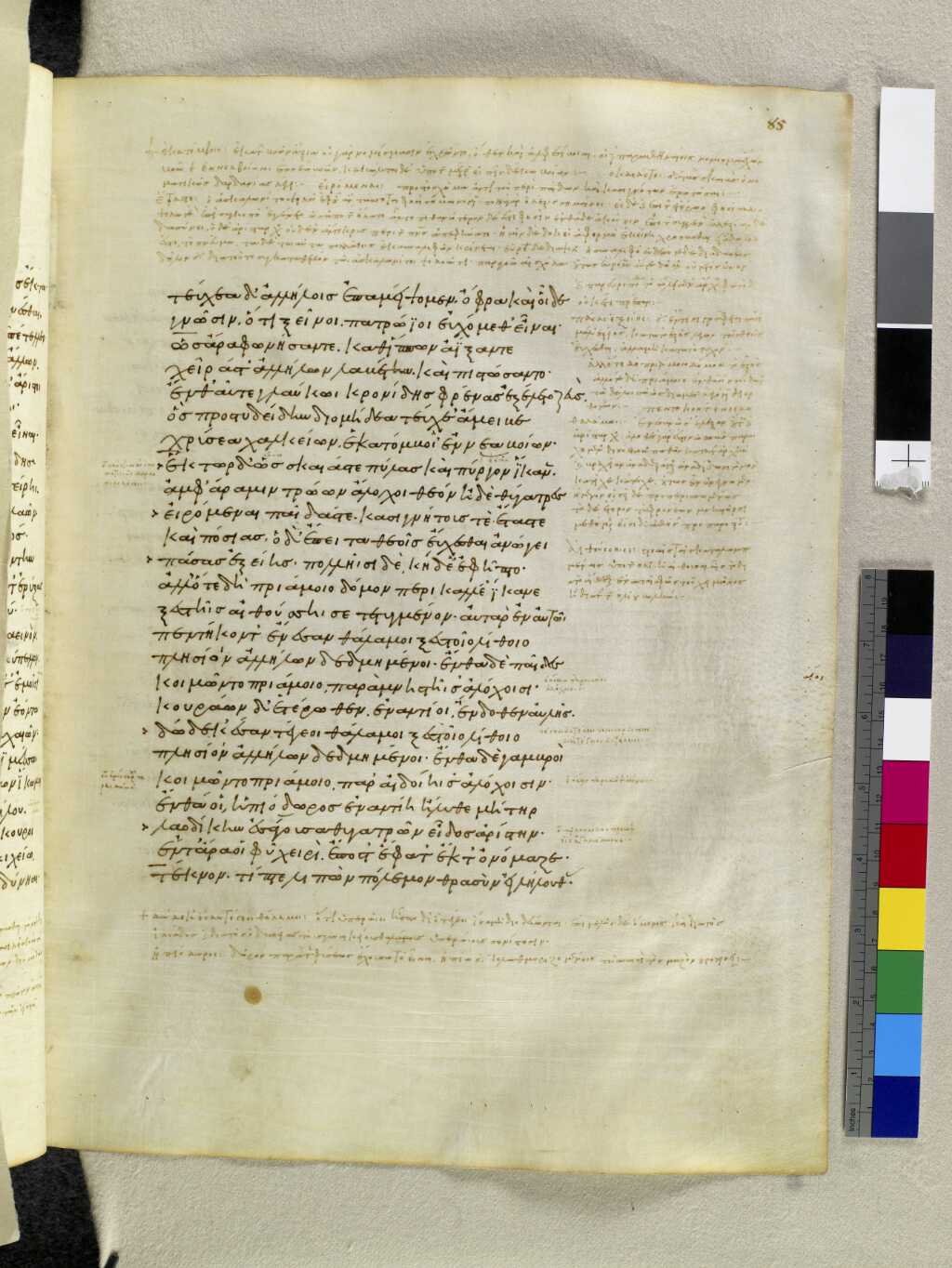
251ἔνθά οἱ ἠπιόδωρος ἐναντίη ἤλυθε μήτηρ 252Λαοδίκην ἐσάγουσα θυγατρῶν εἶδος ἀρίστην· 253ἔν τʼ ἄρα οἱ φῦ χειρὶ ἔπος τʼ ἔφατʼ ἔκ τʼ ὀνόμαζε· 254τέκνον τίπτε λιπὼν πόλεμον θρασὺν εἰλήλουθας; 255ἦ μάλα δὴ τείρουσι δυσώνυμοι υἷες Ἀχαιῶν 256μαρνάμενοι περὶ ἄστυ· σὲ δʼ ἐνθάδε θυμὸς ἀνῆκεν 257ἐλθόντʼ ἐξ ἄκρης πόλιος Διὶ χεῖρας ἀνασχεῖν. 258ἀλλὰ μένʼ ὄφρά κέ τοι μελιηδέα οἶνον ἐνείκω, 259ὡς σπείσῃς Διὶ πατρὶ καὶ ἄλλοις ἀθανάτοισι 260πρῶτον, ἔπειτα δὲ καὐτὸς ὀνήσεαι αἴ κε πίῃσθα. 261ἀνδρὶ δὲ κεκμηῶτι μένος μέγα οἶνος ἀέξει, 262ὡς τύνη κέκμηκας ἀμύνων σοῖσιν ἔτῃσι. 263τὴν δʼ ἠμείβετʼ ἔπειτα μέγας κορυθαίολος Ἕκτωρ· 264μή μοι οἶνον ἄειρε μελίφρονα πότνια μῆτερ, 265μή μʼ ἀπογυιώσῃς μένεος, ἀλκῆς τε λάθωμαι· 266χερσὶ δʼ ἀνίπτοισιν Διὶ λείβειν αἴθοπα οἶνον 267ἅζομαι· οὐδέ πῃ ἔστι κελαινεφέϊ Κρονίωνι 268αἵματι καὶ λύθρῳ πεπαλαγμένον εὐχετάασθαι. 269ἀλλὰ σὺ μὲν πρὸς νηὸν Ἀθηναίης ἀγελείης 270ἔρχεο σὺν θυέεσσιν ἀολλίσσασα γεραιάς· 271πέπλον δʼ, ὅς τίς τοι χαριέστατος ἠδὲ μέγιστος 272ἔστιν ἐνὶ μεγάρῳ καί τοι πολὺ φίλτατος αὐτῇ, 273τὸν θὲς Ἀθηναίης ἐπὶ γούνασιν ἠϋκόμοιο, 274καί οἱ ὑποσχέσθαι δυοκαίδεκα βοῦς ἐνὶ νηῷ 275ἤνις ἠκέστας ἱερευσέμεν, αἴ κʼ ἐλεήσῃ
With these words they sprang from their chariots, grasped one another’s hands, and plighted friendship. But the son of Saturn made Glaucus take leave of his wits, for he exchanged golden armour for bronze, the worth of a hundred head of cattle for the worth of nine.
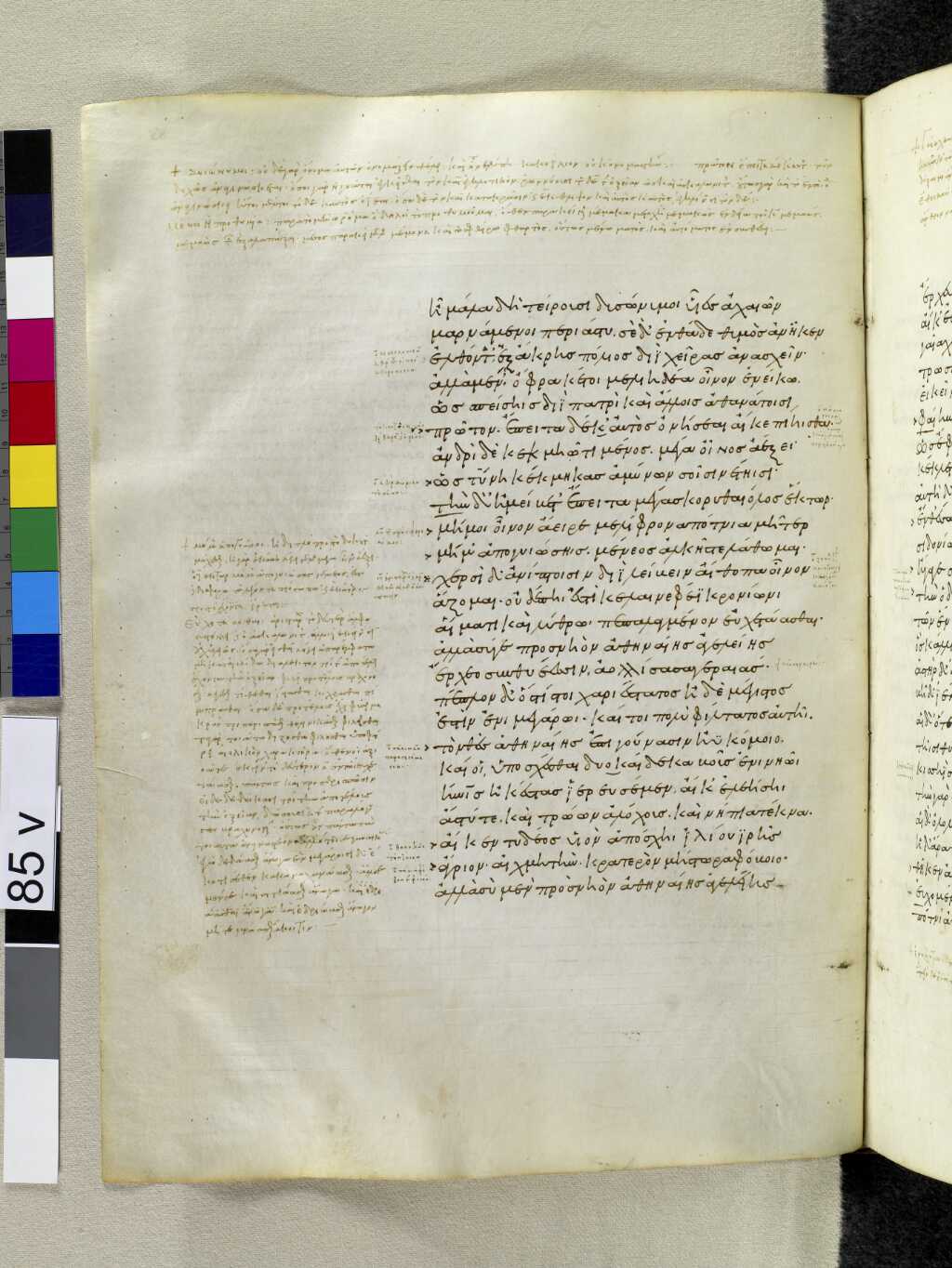
276ἄστύ τε καὶ Τρώων ἀλόχους καὶ νήπια τέκνα, 277αἴ κεν Τυδέος υἱὸν ἀπόσχῃ Ἰλίου ἱρῆς 278ἄγριον αἰχμητὴν κρατερὸν μήστωρα φόβοιο. 279ἀλλὰ σὺ μὲν πρὸς νηὸν Ἀθηναίης ἀγελείης 280ἔρχευ, ἐγὼ δὲ Πάριν μετελεύσομαι ὄφρα καλέσσω 281αἴ κʼ ἐθέλῃσʼ εἰπόντος ἀκουέμεν· ὥς κέ οἱ αὖθι 282γαῖα χάνοι· μέγα γάρ μιν Ὀλύμπιος ἔτρεφε πῆμα 283Τρωσί τε καὶ Πριάμῳ μεγαλήτορι τοῖό τε παισίν. 284εἰ κεῖνόν γε ἴδοιμι κατελθόντʼ Ἄϊδος εἴσω 285φαίην κε φρένʼ ἀτέρπου ὀϊζύος ἐκλελαθέσθαι. 286ὣς ἔφαθʼ, ἣ δὲ μολοῦσα ποτὶ μέγαρʼ ἀμφιπόλοισι 287κέκλετο· ταὶ δʼ ἄρʼ ἀόλλισσαν κατὰ ἄστυ γεραιάς. 288αὐτὴ δʼ ἐς θάλαμον κατεβήσετο κηώεντα, 289ἔνθʼ ἔσάν οἱ πέπλοι παμποίκιλα ἔργα γυναικῶν 290Σιδονίων, τὰς αὐτὸς Ἀλέξανδρος θεοειδὴς 291ἤγαγε Σιδονίηθεν ἐπιπλὼς εὐρέα πόντον, 292τὴν ὁδὸν ἣν Ἑλένην περ ἀνήγαγεν εὐπατέρειαν· 293τῶν ἕνʼ ἀειραμένη Ἑκάβη φέρε δῶρον Ἀθήνῃ, 294ὃς κάλλιστος ἔην ποικίλμασιν ἠδὲ μέγιστος, 295ἀστὴρ δʼ ὣς ἀπέλαμπεν· ἔκειτο δὲ νείατος ἄλλων. 296βῆ δʼ ἰέναι, πολλαὶ δὲ μετεσσεύοντο γεραιαί. 297αἱ δʼ ὅτε νηὸν ἵκανον Ἀθήνης ἐν πόλει ἄκρῃ, 298τῇσι θύρας ὤϊξε Θεανὼ καλλιπάρῃος 299Κισσηῒς ἄλοχος Ἀντήνορος ἱπποδάμοιο· 300τὴν γὰρ Τρῶες ἔθηκαν Ἀθηναίης ἱέρειαν.
Now when Hector reached the Scaean gates and the oak tree, the wives and daughters of the Trojans came running towards him to ask after their sons, brothers, kinsmen, and husbands: he told them to set about praying to the gods, and many were made sorrowful as they heard him.
Presently he reached the splendid palace of King Priam, adorned with colonnades of hewn stone. In it there were fifty bedchambers—all of hewn stone—built near one another, where the sons of Priam slept, each with his wedded wife. Opposite these, on the other side the courtyard, there were twelve upper rooms also of hewn stone for Priam’s daughters, built near one another, where his sons-in-law slept with their wives. When Hector got there, his fond mother came up to him with Laodice the fairest of her daughters. She took his hand within her own and said, “My son, why have you left the battle to come hither? Are the Achaeans, woe betide them, pressing you hard about the city that you have thought fit to come and uplift your hands to Jove from the citadel? Wait till I can bring you wine that you may make offering to Jove and to the other immortals, and may then drink and be refreshed. Wine gives a man fresh strength when he is wearied, as you now are with fighting on behalf of your kinsmen.”
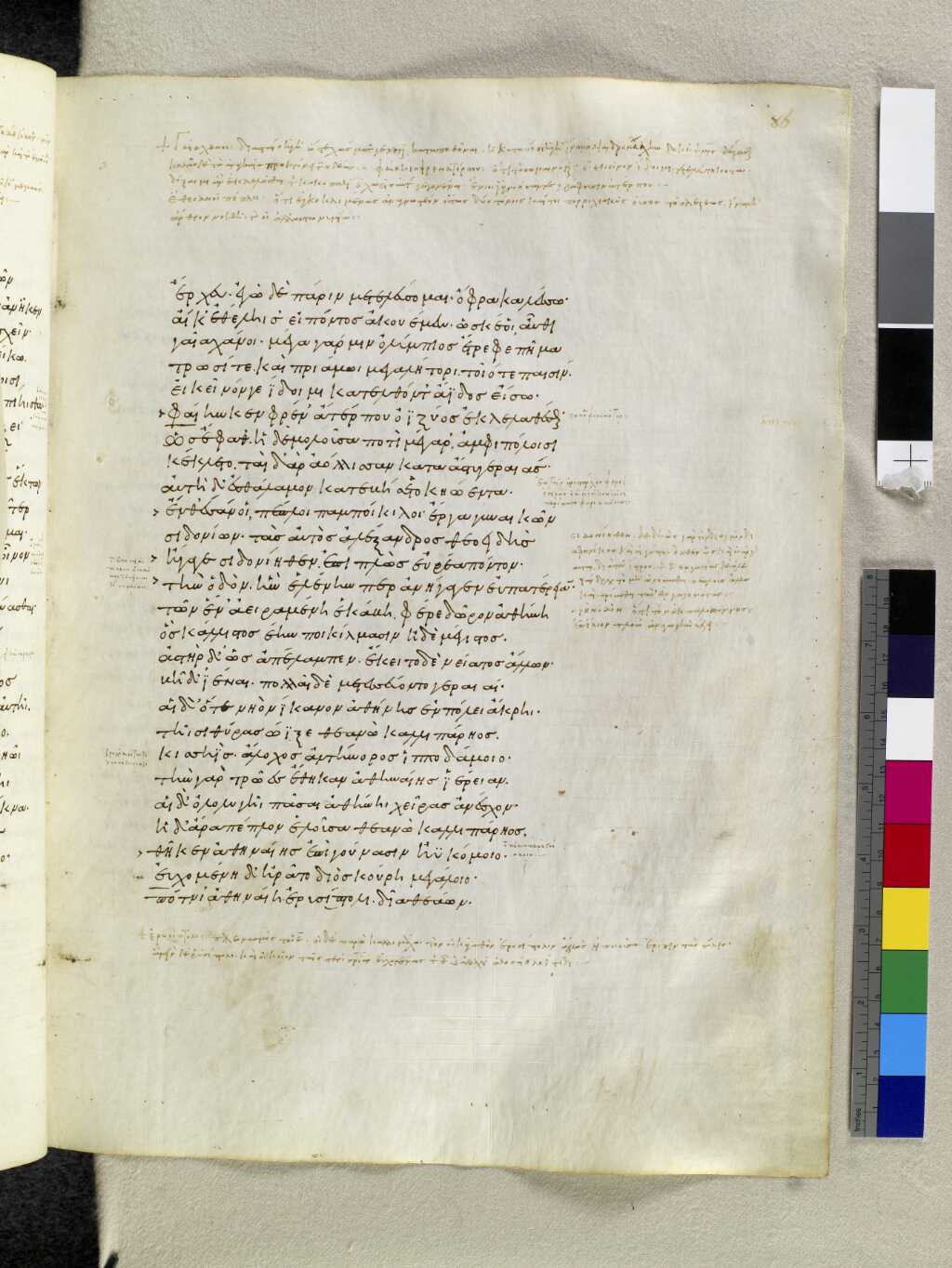
301αἳ δʼ ὀλολυγῇ πᾶσαι Ἀθήνῃ χεῖρας ἀνέσχον· 302ἣ δʼ ἄρα πέπλον ἑλοῦσα Θεανὼ καλλιπάρῃος 303θῆκεν Ἀθηναίης ἐπὶ γούνασιν ἠϋκόμοιο, 304εὐχομένη δʼ ἠρᾶτο Διὸς κούρῃ μεγάλοιο· 305πότνιʼ Ἀθηναίη ἐρυσίπτολι δῖα θεάων 306ἆξον δὴ ἔγχος Διομήδεος, ἠδὲ καὶ αὐτὸν 307πρηνέα δὸς πεσέειν Σκαιῶν προπάροιθε πυλάων, 308ὄφρά τοι αὐτίκα νῦν δυοκαίδεκα βοῦς ἐνὶ νηῷ 309ἤνις ἠκέστας ἱερεύσομεν, αἴ κʼ ἐλεήσῃς 310ἄστύ τε καὶ Τρώων ἀλόχους καὶ νήπια τέκνα. 311ὣς ἔφατʼ εὐχομένη, ἀνένευε δὲ Παλλὰς Ἀθήνη. 312ὣς αἳ μέν ῥʼ εὔχοντο Διὸς κούρῃ μεγάλοιο, 313Ἕκτωρ δὲ πρὸς δώματʼ Ἀλεξάνδροιο βεβήκει 314καλά, τά ῥʼ αὐτὸς ἔτευξε σὺν ἀνδράσιν οἳ τότʼ ἄριστοι 315ἦσαν ἐνὶ Τροίῃ ἐριβώλακι τέκτονες ἄνδρες, 316οἵ οἱ ἐποίησαν θάλαμον καὶ δῶμα καὶ αὐλὴν 317ἐγγύθι τε Πριάμοιο καὶ Ἕκτορος ἐν πόλει ἄκρῃ. 318ἔνθʼ Ἕκτωρ εἰσῆλθε Διῒ φίλος, ἐν δʼ ἄρα χειρὶ 319ἔγχος ἔχʼ ἑνδεκάπηχυ· πάροιθε δὲ λάμπετο δουρὸς 320αἰχμὴ χαλκείη, περὶ δὲ χρύσεος θέε πόρκης. 321τὸν δʼ εὗρʼ ἐν θαλάμῳ περικαλλέα τεύχεʼ ἕποντα 322ἀσπίδα καὶ θώρηκα, καὶ ἀγκύλα τόξʼ ἁφόωντα· 323Ἀργείη δʼ Ἑλένη μετʼ ἄρα δμῳῇσι γυναιξὶν 324ἧστο καὶ ἀμφιπόλοισι περικλυτὰ ἔργα κέλευε. 325τὸν δʼ Ἕκτωρ νείκεσσεν ἰδὼν αἰσχροῖς ἐπέεσσι·
And Hector answered, “Honoured mother, bring no wine, lest you unman me and I forget my strength. I dare not make a drink-offering to Jove with unwashed hands; one who is bespattered with blood and filth may not pray to the son of Saturn. Get the matrons together, and go with offerings to the temple of Minerva driver of the spoil; there, upon the knees of Minerva, lay the largest and fairest robe you have in your house—the one you set most store by; promise, moreover, to sacrifice twelve yearling heifers that have never yet felt the goad, in the temple of the goddess if she will take pity on the town, with the wives and little ones of the Trojans, and keep the son of Tydeus from off the goodly city of Ilius, for he fights with fury, and fills men’s souls with panic. Go, then, to the temple of Minerva, while I seek Paris and exhort him, if he will hear my words. Would that the earth might open her jaws and swallow him, for Jove bred him to be the bane of the Trojans, and of Priam and Priam’s sons. Could I but see him go down into the house of Hades, my heart would forget its heaviness.”
His mother went into the house and called her waiting-women who gathered the matrons throughout the city. She then went down into her fragrant store-room, where her embroidered robes were kept, the work of Sidonian women, whom Alexandrus had brought over from Sidon when he sailed the seas upon that voyage during which he carried off Helen. Hecuba took out the largest robe, and the one that was most beautifully enriched with embroidery, as an offering to Minerva: it glittered like a star, and lay at the very bottom of the chest. With this she went on her way and many matrons with her.
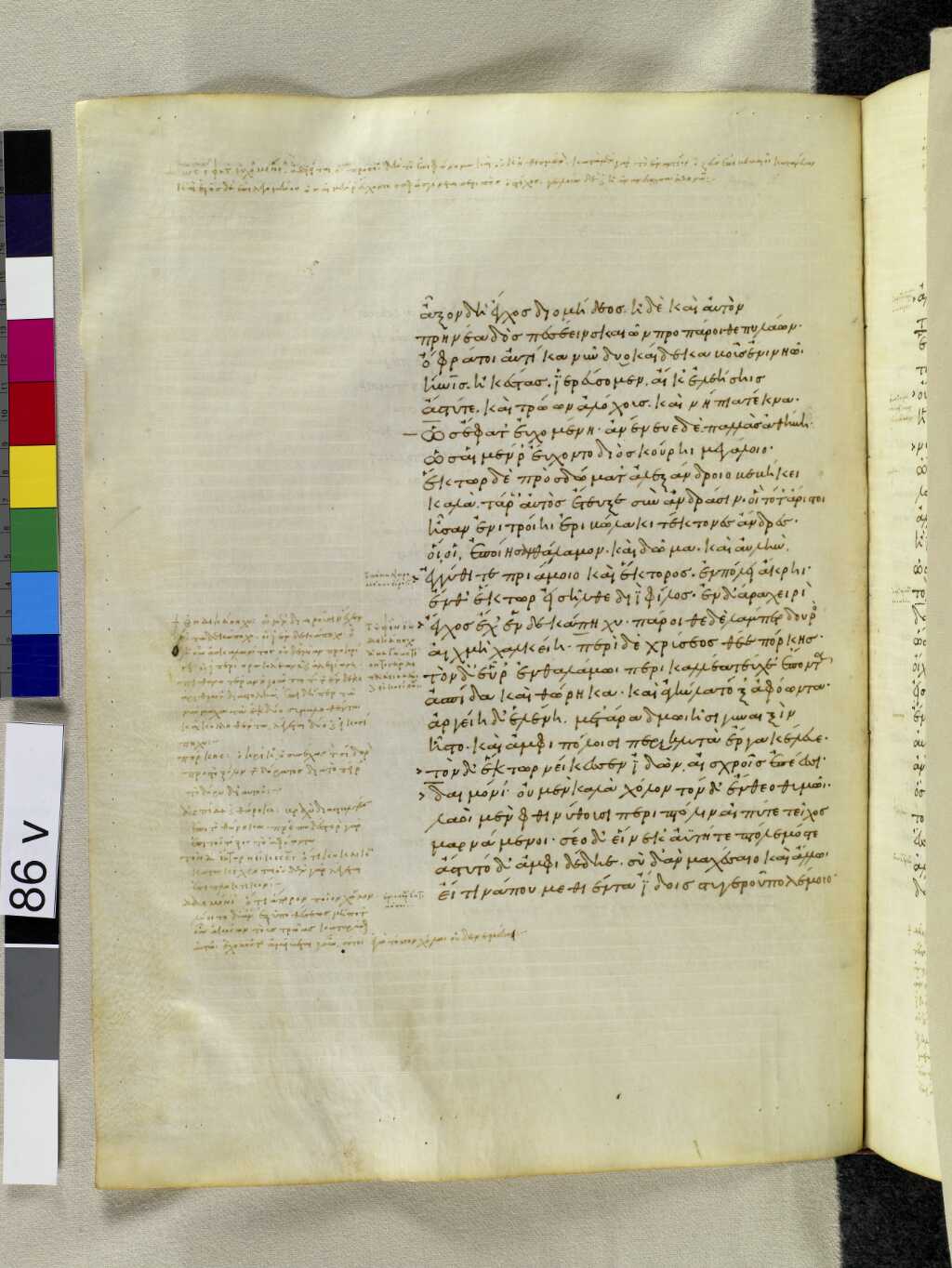
326δαιμόνιʼ οὐ μὲν καλὰ χόλον τόνδʼ ἔνθεο θυμῷ, 327λαοὶ μὲν φθινύθουσι περὶ πτόλιν αἰπύ τε τεῖχος 328μαρνάμενοι· σέο δʼ εἵνεκʼ ἀϋτή τε πτόλεμός τε 329ἄστυ τόδʼ ἀμφιδέδηε· σὺ δʼ ἂν μαχέσαιο καὶ ἄλλῳ, 330ὅν τινά που μεθιέντα ἴδοις στυγεροῦ πολέμοιο. 331ἀλλʼ ἄνα μὴ τάχα ἄστυ πυρὸς δηΐοιο θέρηται. 332τὸν δʼ αὖτε προσέειπεν Ἀλέξανδρος θεοειδής· 333Ἕκτορ ἐπεί με κατʼ αἶσαν ἐνείκεσας οὐδʼ ὑπὲρ αἶσαν, 334τοὔνεκά τοι ἐρέω· σὺ δὲ σύνθεο καί μευ ἄκουσον· 335οὔ τοι ἐγὼ Τρώων τόσσον χόλῳ οὐδὲ νεμέσσι 336ἥμην ἐν θαλάμῳ, ἔθελον δʼ ἄχεϊ προτραπέσθαι. 337νῦν δέ με παρειποῦσʼ ἄλοχος μαλακοῖς ἐπέεσσιν 338ὅρμησʼ ἐς πόλεμον· δοκέει δέ μοι ὧδε καὶ αὐτῷ 339λώϊον ἔσσεσθαι· νίκη δʼ ἐπαμείβεται ἄνδρας. 340ἀλλʼ ἄγε νῦν ἐπίμεινον, Ἀρήϊα τεύχεα δύω· 341ἢ ἴθʼ, ἐγὼ δὲ μέτειμι· κιχήσεσθαι δέ σʼ ὀΐω. 342ὣς φάτο, τὸν δʼ οὔ τι προσέφη κορυθαίολος Ἕκτωρ· 343τὸν δʼ Ἑλένη μύθοισι προσηύδα μειλιχίοισι· 344δᾶερ ἐμεῖο κυνὸς κακομηχάνου ὀκρυοέσσης, 345ὥς μʼ ὄφελʼ ἤματι τῷ ὅτε με πρῶτον τέκε μήτηρ 346οἴχεσθαι προφέρουσα κακὴ ἀνέμοιο θύελλα 347εἰς ὄρος ἢ εἰς κῦμα πολυφλοίσβοιο θαλάσσης, 348ἔνθά με κῦμʼ ἀπόερσε πάρος τάδε ἔργα γενέσθαι. 349αὐτὰρ ἐπεὶ τάδε γʼ ὧδε θεοὶ κακὰ τεκμήραντο, 350ἀνδρὸς ἔπειτʼ ὤφελλον ἀμείνονος εἶναι ἄκοιτις,
When they reached the temple of Minerva, lovely Theano, daughter of Cisseus and wife of Antenor, opened the doors, for the Trojans had made her priestess of Minerva. The women lifted up their hands to the goddess with a loud cry, and Theano took the robe to lay it upon the knees of Minerva, praying the while to the daughter of great Jove. “Holy Minerva,” she cried, “protectress of our city, mighty goddess, break the spear of Diomed and lay him low before the Scaean gates. Do this, and we will sacrifice twelve heifers that have never yet known the goad, in your temple, if you will have pity upon the town, with the wives and little ones of the Trojans.” Thus she prayed, but Pallas Minerva granted not her prayer.
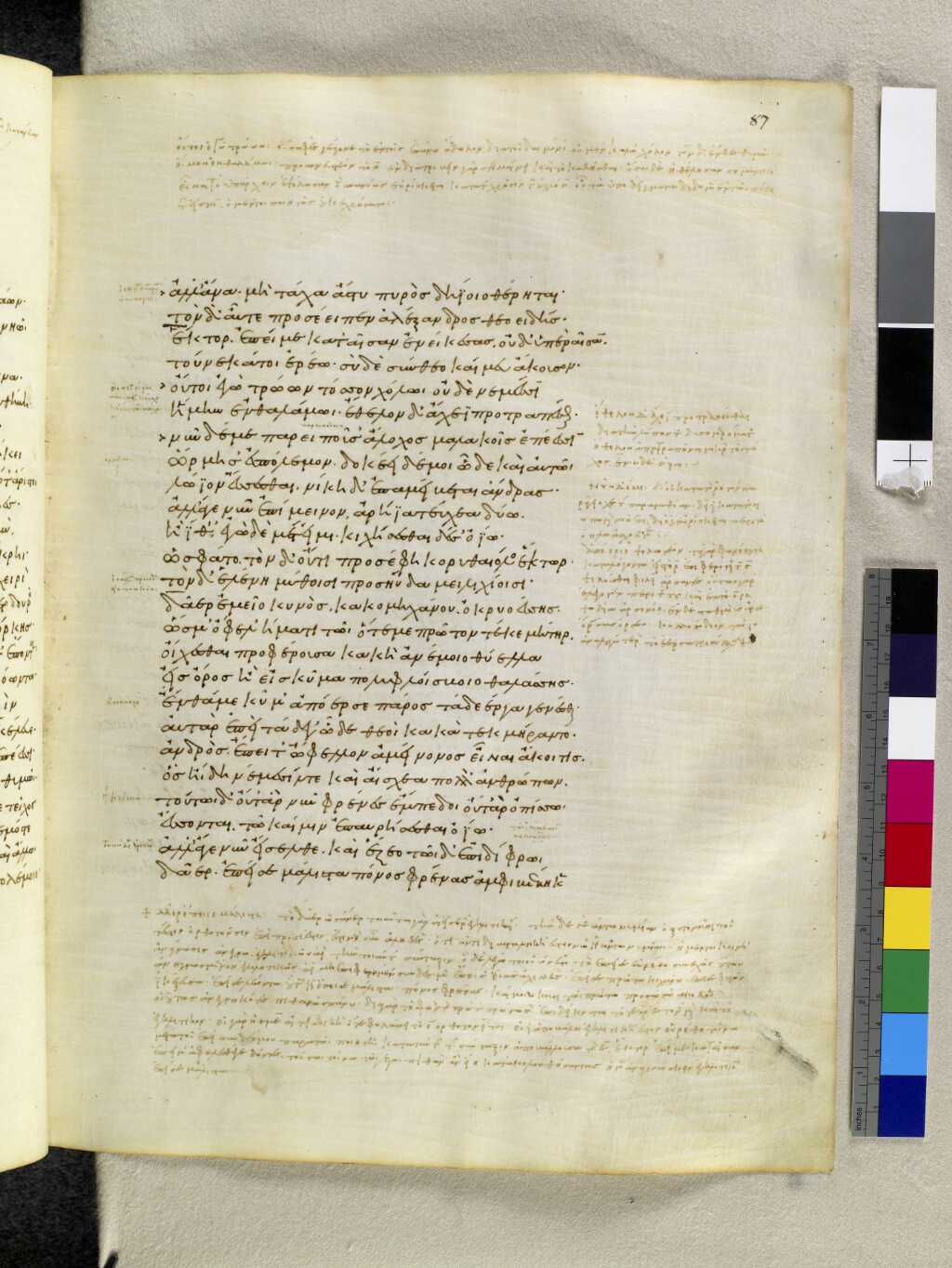
351ὃς ᾔδη νέμεσίν τε καὶ αἴσχεα πόλλʼ ἀνθρώπων. 352τούτῳ δʼ οὔτʼ ἂρ νῦν φρένες ἔμπεδοι οὔτʼ ἄρʼ ὀπίσσω 353ἔσσονται· τὼ καί μιν ἐπαυρήσεσθαι ὀΐω. 354ἀλλʼ ἄγε νῦν εἴσελθε καὶ ἕζεο τῷδʼ ἐπὶ δίφρῳ 355δᾶερ, ἐπεί σε μάλιστα πόνος φρένας ἀμφιβέβηκεν 356εἵνεκʼ ἐμεῖο κυνὸς καὶ Ἀλεξάνδρου ἕνεκʼ ἄτης, 357οἷσιν ἐπὶ Ζεὺς θῆκε κακὸν μόρον, ὡς καὶ ὀπίσσω 358ἀνθρώποισι πελώμεθʼ ἀοίδιμοι ἐσσομένοισι. 359τὴν δʼ ἠμείβετʼ ἔπειτα μέγας κορυθαίολος Ἕκτωρ 360μή με κάθιζʼ Ἑλένη φιλέουσά περ· οὐδέ με πείσεις· 361ἤδη γάρ μοι θυμὸς ἐπέσσυται ὄφρʼ ἐπαμύνω 362Τρώεσσʼ, οἳ μέγʼ ἐμεῖο ποθὴν ἀπεόντος ἔχουσιν. 363ἀλλὰ σύ γʼ ὄρνυθι τοῦτον, ἐπειγέσθω δὲ καὶ αὐτός, 364ὥς κεν ἔμʼ ἔντοσθεν πόλιος καταμάρψῃ ἐόντα. 365καὶ γὰρ ἐγὼν οἶκον δὲ ἐλεύσομαι ὄφρα ἴδωμαι 366οἰκῆας ἄλοχόν τε φίλην καὶ νήπιον υἱόν. 367οὐ γὰρ οἶδʼ εἰ ἔτι σφιν ὑπότροπος ἵξομαι αὖτις, 368ἦ ἤδη μʼ ὑπὸ χερσὶ θεοὶ δαμόωσιν Ἀχαιῶν. 369ὣς ἄρα φωνήσας ἀπέβη κορυθαίολος Ἕκτωρ· 370αἶψα δʼ ἔπειθʼ ἵκανε δόμους εὖ ναιετάοντας, 371οὐδʼ εὗρʼ Ἀνδρομάχην λευκώλενον ἐν μεγάροισιν, 372ἀλλʼ ἥ γε ξὺν παιδὶ καὶ ἀμφιπόλῳ ἐϋπέπλῳ 373πύργῳ ἐφεστήκει γοόωσά τε μυρομένη τε. 374Ἕκτωρ δʼ ὡς οὐκ ἔνδον ἀμύμονα τέτμεν ἄκοιτιν 375ἔστη ἐπʼ οὐδὸν ἰών, μετὰ δὲ δμῳῇσιν ἔειπεν·
While they were thus praying to the daughter of great Jove, Hector went to the fair house of Alexandrus, which he had built for him by the foremost builders in the land. They had built him his house, storehouse, and courtyard near those of Priam and Hector on the acropolis. Here Hector entered, with a spear eleven cubits long in his hand; the bronze point gleamed in front of him, and was fastened to the shaft of the spear by a ring of gold. He found Alexandrus within the house, busied about his armour, his shield and cuirass, and handling his curved bow; there, too, sat Argive Helen with her women, setting them their several tasks; and as Hector saw him he rebuked him with words of scorn. “Sir,” said he, “you do ill to nurse this rancour; the people perish fighting round this our town; you would yourself chide one whom you saw shirking his part in the combat. Up then, or ere long the city will be in a blaze.”
And Alexandrus answered, “Hector, your rebuke is just; listen therefore, and believe me when I tell you that I am not here so much through rancour or ill-will towards the Trojans, as from a desire to indulge my grief. My wife was even now gently urging me to battle, and I hold it better that I should go, for victory is ever fickle. Wait, then, while I put on my armour, or go first and I will follow. I shall be sure to overtake you.”
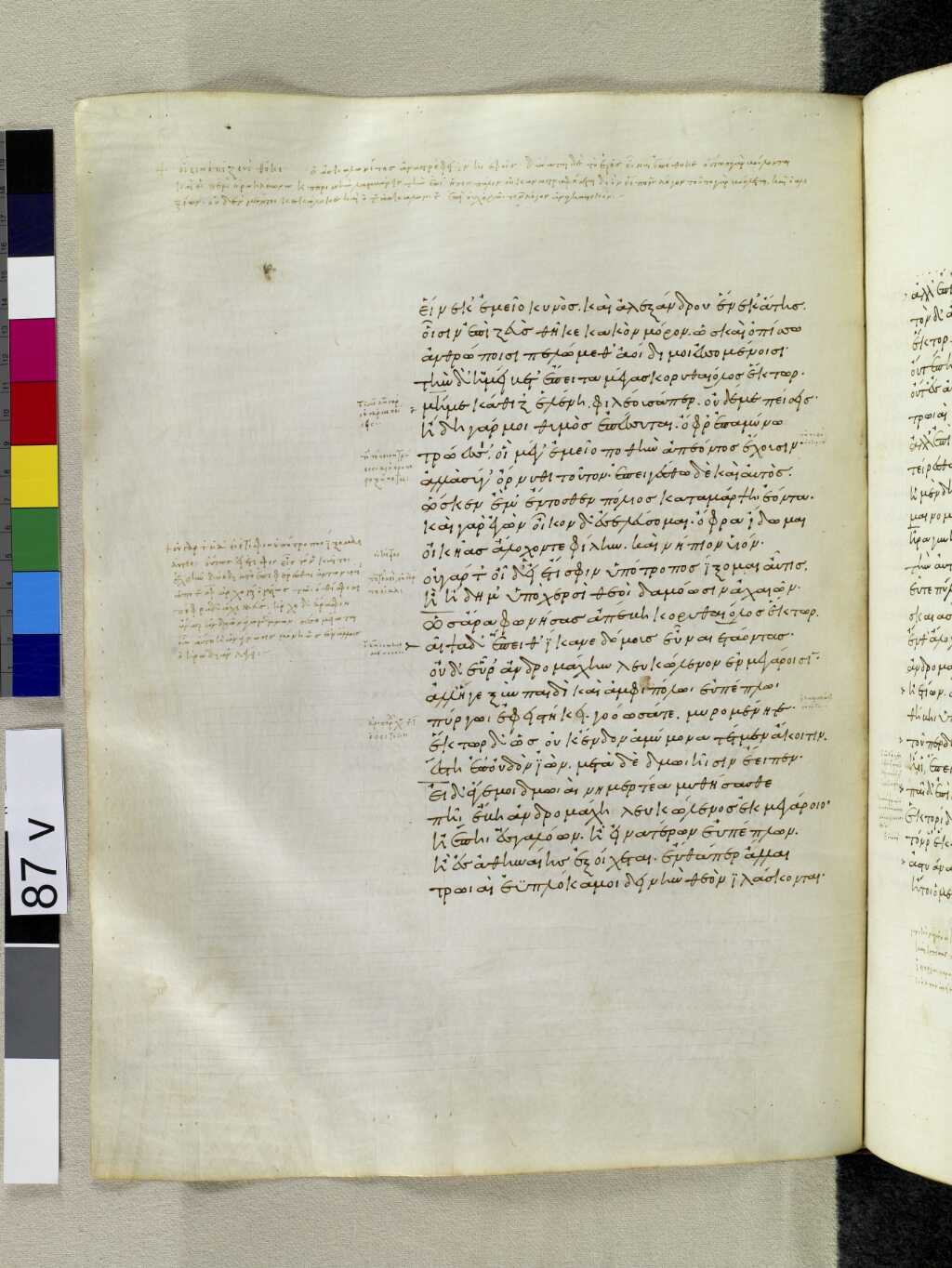
376εἰ δʼ ἄγε μοι δμῳαὶ νημερτέα μυθήσασθε· 377πῇ ἔβη Ἀνδρομάχη λευκώλενος ἐκ μεγάροιο; 378ἠέ πῃ ἐς γαλόων ἢ εἰνατέρων ἐϋπέπλων 379ἢ ἐς Ἀθηναίης ἐξοίχεται, ἔνθά περ ἄλλαι 380Τρῳαὶ ἐϋπλόκαμοι δεινὴν θεὸν ἱλάσκονται; 381τὸν δʼ αὖτʼ ὀτρηρὴ ταμίη πρὸς μῦθον ἔειπεν· 382Ἕκτορ ἐπεὶ μάλʼ ἄνωγας ἀληθέα μυθήσασθαι, 383οὔτέ πῃ ἐς γαλόων οὔτʼ εἰνατέρων ἐϋπέπλων 384οὔτʼ ἐς Ἀθηναίης ἐξοίχεται, ἔνθά περ ἄλλαι 385Τρῳαὶ ἐϋπλόκαμοι δεινὴν θεὸν ἱλάσκονται, 386ἀλλʼ ἐπὶ πύργον ἔβη μέγαν Ἰλίου, οὕνεκʼ ἄκουσε 387τείρεσθαι Τρῶας, μέγα δὲ κράτος εἶναι Ἀχαιῶν. 388ἣ μὲν δὴ πρὸς τεῖχος ἐπειγομένη ἀφικάνει 389μαινομένῃ ἐϊκυῖα· φέρει δʼ ἅμα παῖδα τιθήνη. 390ἦ ῥα γυνὴ ταμίη, ὃ δʼ ἀπέσσυτο δώματος Ἕκτωρ 391τὴν αὐτὴν ὁδὸν αὖτις ἐϋκτιμένας κατʼ ἀγυιάς. 392εὖτε πύλας ἵκανε διερχόμενος μέγα ἄστυ 393Σκαιάς, τῇ ἄρʼ ἔμελλε διεξίμεναι πεδίον δέ, 394ἔνθʼ ἄλοχος πολύδωρος ἐναντίη ἦλθε θέουσα 395Ἀνδρομάχη θυγάτηρ μεγαλήτορος Ἠετίωνος 396Ἠετίων ὃς ἔναιεν ὑπὸ Πλάκῳ ὑληέσσῃ 397Θήβῃ Ὑποπλακίῃ Κιλίκεσσʼ ἄνδρεσσιν ἀνάσσων· 398τοῦ περ δὴ θυγάτηρ ἔχεθʼ Ἕκτορι χαλκοκορυστῇ. 399ἥ οἱ ἔπειτʼ ἤντησʼ, ἅμα δʼ ἀμφίπολος κίεν αὐτῇ 400παῖδʼ ἐπὶ κόλπῳ ἔχουσʼ ἀταλάφρονα νήπιον αὔτως
Hector made no answer, but Helen tried to soothe him. “Brother,” said she, “to my abhorred and sinful self, would that a whirlwind had caught me up on the day my mother brought me forth, and had borne me to some mountain or to the waves of the roaring sea that should have swept me away ere this mischief had come about. But, since the gods have devised these evils, would, at any rate, that I had been wife to a better man—to one who could smart under dishonour and men’s evil speeches. This fellow was never yet to be depended upon, nor never will be, and he will surely reap what he has sown. Still, brother, come in and rest upon this seat, for it is you who bear the brunt of that toil that has been caused by my hateful self and by the sin of Alexandrus—both of whom Jove has doomed to be a theme of song among those that shall be born hereafter.”
And Hector answered, “Bid me not be seated, Helen, for all the goodwill you bear me. I cannot stay. I am in haste to help the Trojans, who miss me greatly when I am not among them; but urge your husband, and of his own self also let him make haste to overtake me before I am out of the city. I must go home to see my household, my wife and my little son, for I know not whether I shall ever again return to them, or whether the gods will cause me to fall by the hands of the Achaeans.”
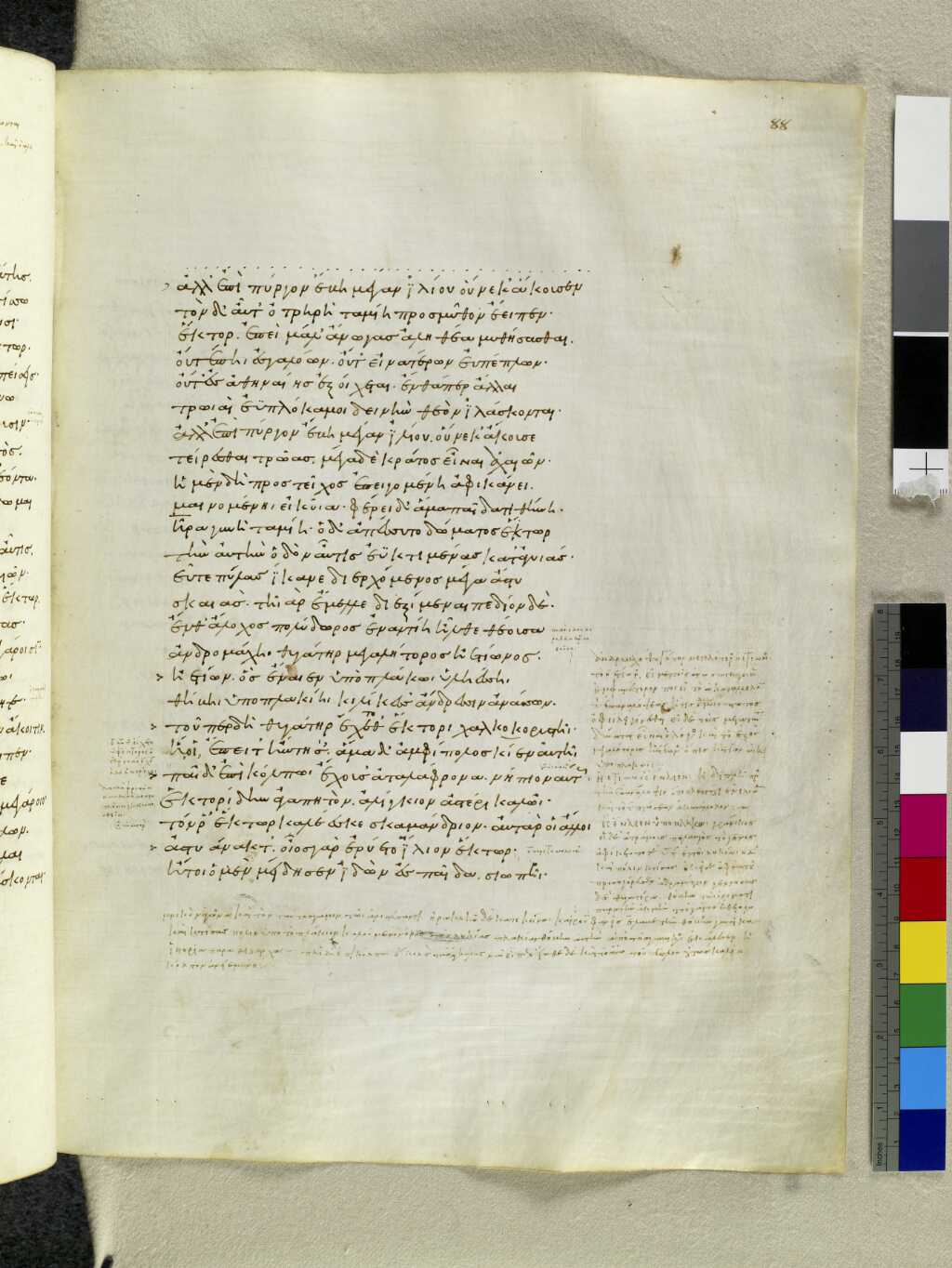
401Ἑκτορίδην ἀγαπητὸν ἀλίγκιον ἀστέρι καλῷ, 402τόν ῥʼ Ἕκτωρ καλέεσκε Σκαμάνδριον, αὐτὰρ οἱ ἄλλοι 403Ἀστυάνακτʼ· οἶος γὰρ ἐρύετο Ἴλιον Ἕκτωρ. 404ἤτοι ὃ μὲν μείδησεν ἰδὼν ἐς παῖδα σιωπῇ· 405Ἀνδρομάχη δέ οἱ ἄγχι παρίστατο δάκρυ χέουσα, 406ἔν τʼ ἄρα οἱ φῦ χειρὶ ἔπος τʼ ἔφατʼ ἔκ τʼ ὀνόμαζε· 407δαιμόνιε φθίσει σε τὸ σὸν μένος, οὐδʼ ἐλεαίρεις 408παῖδά τε νηπίαχον καὶ ἔμʼ ἄμμορον, ἣ τάχα χήρη 409σεῦ ἔσομαι· τάχα γάρ σε κατακτανέουσιν Ἀχαιοὶ 410πάντες ἐφορμηθέντες· ἐμοὶ δέ κε κέρδιον εἴη 411σεῦ ἀφαμαρτούσῃ χθόνα δύμεναι· οὐ γὰρ ἔτʼ ἄλλη 412ἔσται θαλπωρὴ ἐπεὶ ἂν σύ γε πότμον ἐπίσπῃς 413ἀλλʼ ἄχεʼ· οὐδέ μοι ἔστι πατὴρ καὶ πότνια μήτηρ. 414ἤτοι γὰρ πατέρʼ ἁμὸν ἀπέκτανε δῖος Ἀχιλλεύς, 415ἐκ δὲ πόλιν πέρσεν Κιλίκων εὖ ναιετάουσαν 416Θήβην ὑψίπυλον· κατὰ δʼ ἔκτανεν Ἠετίωνα, 417οὐδέ μιν ἐξενάριξε, σεβάσσατο γὰρ τό γε θυμῷ, 418ἀλλʼ ἄρα μιν κατέκηε σὺν ἔντεσι δαιδαλέοισιν 419ἠδʼ ἐπὶ σῆμʼ ἔχεεν· περὶ δὲ πτελέας ἐφύτευσαν 420νύμφαι ὀρεστιάδες κοῦραι Διὸς αἰγιόχοιο. 421οἳ δέ μοι ἑπτὰ κασίγνητοι ἔσαν ἐν μεγάροισιν 422οἳ μὲν πάντες ἰῷ κίον ἤματι Ἄϊδος εἴσω· 423πάντας γὰρ κατέπεφνε ποδάρκης δῖος Ἀχιλλεὺς 424βουσὶν ἐπʼ εἰλιπόδεσσι καὶ ἀργεννῇς ὀΐεσσι. 425μητέρα δʼ, ἣ βασίλευεν ὑπὸ Πλάκῳ ὑληέσσῃ,
Then Hector left her, and forthwith was at his own house. He did not find Andromache, for she was on the wall with her child and one of her maids, weeping bitterly. Seeing, then, that she was not within, he stood on the threshold of the women’s rooms and said, “Women, tell me, and tell me true, where did Andromache go when she left the house? Was it to my sisters, or to my brothers’ wives? or is she at the temple of Minerva where the other women are propitiating the awful goddess?”
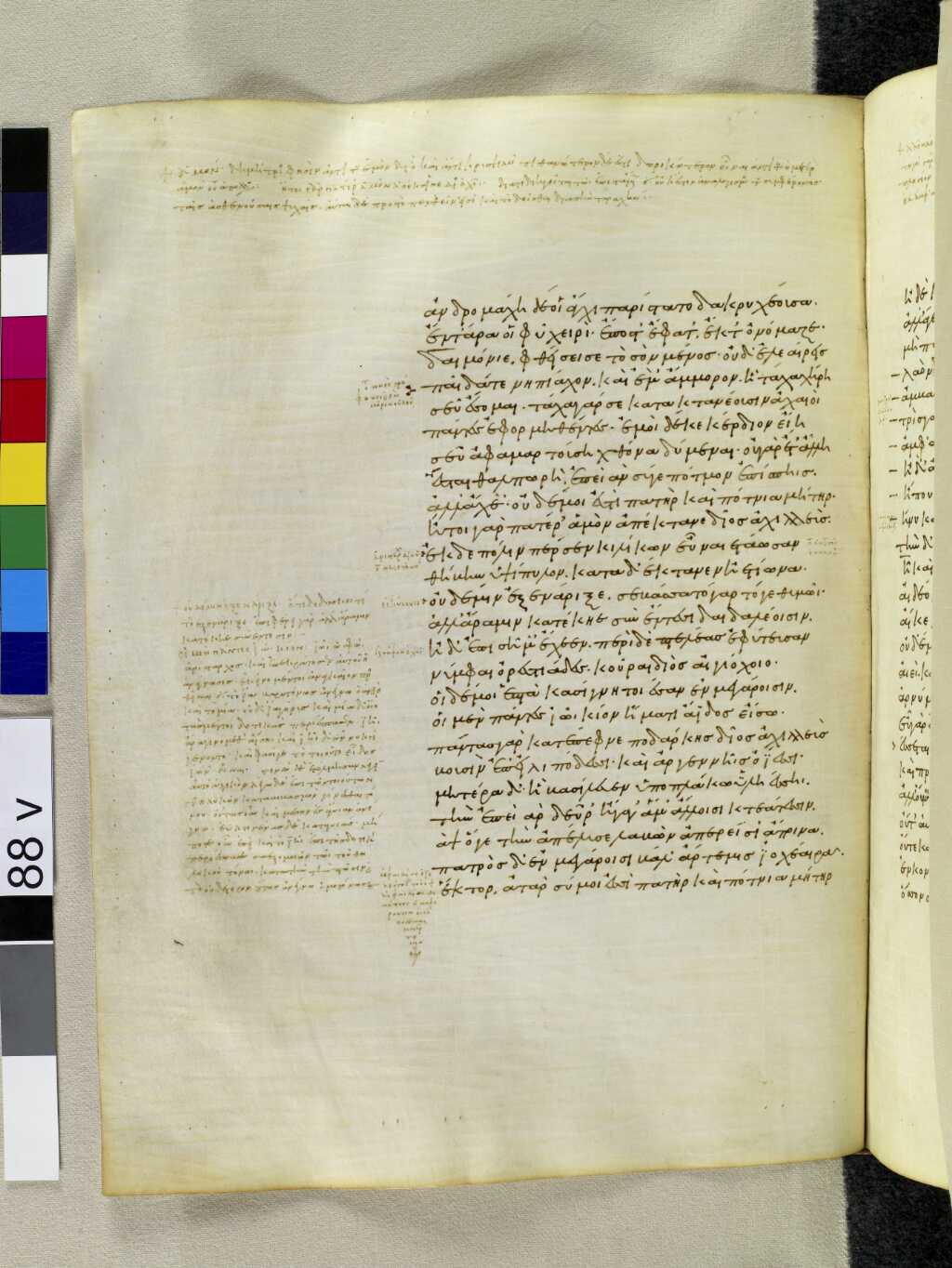
426τὴν ἐπεὶ ἂρ δεῦρʼ ἤγαγʼ ἅμʼ ἄλλοισι κτεάτεσσιν, 427ἂψ ὅ γε τὴν ἀπέλυσε λαβὼν ἀπερείσιʼ ἄποινα, 428πατρὸς δʼ ἐν μεγάροισι βάλʼ Ἄρτεμις ἰοχέαιρα. 429Ἕκτορ ἀτὰρ σύ μοί ἐσσι πατὴρ καὶ πότνια μήτηρ 430ἠδὲ κασίγνητος, σὺ δέ μοι θαλερὸς παρακοίτης· 431ἀλλʼ ἄγε νῦν ἐλέαιρε καὶ αὐτοῦ μίμνʼ ἐπὶ πύργῳ, 432μὴ παῖδʼ ὀρφανικὸν θήῃς χήρην τε γυναῖκα· 433λαὸν δὲ στῆσον παρʼ ἐρινεόν, ἔνθα μάλιστα 434ἀμβατός ἐστι πόλις καὶ ἐπίδρομον ἔπλετο τεῖχος. 435τρὶς γὰρ τῇ γʼ ἐλθόντες ἐπειρήσανθʼ οἱ ἄριστοι 436ἀμφʼ Αἴαντε δύω καὶ ἀγακλυτὸν Ἰδομενῆα 437ἠδʼ ἀμφʼ Ἀτρεΐδας καὶ Τυδέος ἄλκιμον υἱόν· 438ἤ πού τίς σφιν ἔνισπε θεοπροπίων ἐῢ εἰδώς, 439ἤ νυ καὶ αὐτῶν θυμὸς ἐποτρύνει καὶ ἀνώγει. 440τὴν δʼ αὖτε προσέειπε μέγας κορυθαίολος Ἕκτωρ· 441ἦ καὶ ἐμοὶ τάδε πάντα μέλει γύναι· ἀλλὰ μάλʼ αἰνῶς 442αἰδέομαι Τρῶας καὶ Τρῳάδας ἑλκεσιπέπλους, 443αἴ κε κακὸς ὣς νόσφιν ἀλυσκάζω πολέμοιο· 444οὐδέ με θυμὸς ἄνωγεν, ἐπεὶ μάθον ἔμμεναι ἐσθλὸς 445αἰεὶ καὶ πρώτοισι μετὰ Τρώεσσι μάχεσθαι 446ἀρνύμενος πατρός τε μέγα κλέος ἠδʼ ἐμὸν αὐτοῦ. 447εὖ γὰρ ἐγὼ τόδε οἶδα κατὰ φρένα καὶ κατὰ θυμόν· 448ἔσσεται ἦμαρ ὅτʼ ἄν ποτʼ ὀλώλῃ Ἴλιος ἱρὴ 449καὶ Πρίαμος καὶ λαὸς ἐϋμμελίω Πριάμοιο. 450ἀλλʼ οὔ μοι Τρώων τόσσον μέλει ἄλγος ὀπίσσω,
His good housekeeper answered, “Hector, since you bid me tell you truly, she did not go to your sisters nor to your brothers’ wives, nor yet to the temple of Minerva, where the other women are propitiating the awful goddess, but she is on the high wall of Ilius, for she had heard the Trojans were being hard pressed, and that the Achaeans were in great force: she went to the wall in frenzied haste, and the nurse went with her carrying the child.”
Hector hurried from the house when she had done speaking, and went down the streets by the same way that he had come. When he had gone through the city and had reached the Scaean gates through which he would go out on to the plain, his wife came running towards him, Andromache, daughter of great Eetion who ruled in Thebe under the wooded slopes of Mt. Placus, and was king of the Cilicians. His daughter had married Hector, and now came to meet him with a nurse who carried his little child in her bosom—a mere babe. Hector’s darling son, and lovely as a star. Hector had named him Scamandrius, but the people called him Astyanax, for his father stood alone as chief guardian of Ilius. Hector smiled as he looked upon the boy, but he did not speak, and Andromache stood by him weeping and taking his hand in her own. “Dear husband,” said she, “your valour will bring you to destruction; think on your infant son, and on my hapless self who ere long shall be your widow—for the Achaeans will set upon you in a body and kill you. It would be better for me, should I lose you, to lie dead and buried, for I shall have nothing left to comfort me when you are gone, save only sorrow. I have neither father nor mother now. Achilles slew my father when he sacked Thebe the goodly city of the Cilicians. He slew him, but did not for very shame despoil him; when he had burned him in his wondrous armour, he raised a barrow over his ashes and the mountain nymphs, daughters of aegis-bearing Jove, planted a grove of elms about his tomb. I had seven brothers in my father’s house, but on the same day they all went within the house of Hades. Achilles killed them as they were with their sheep and cattle. My mother—her who had been queen of all the land under Mt. Placus—he brought hither with the spoil, and freed her for a great sum, but the archer-queen Diana took her in the house of your father. Nay—Hector—you who to me are father, mother, brother, and dear husband—have mercy upon me; stay here upon this wall; make not your child fatherless, and your wife a widow; as for the host, place them near the fig-tree, where the city can be best scaled, and the wall is weakest. Thrice have the bravest of them come thither and assailed it, under the two Ajaxes, Idomeneus, the sons of Atreus, and the brave son of Tydeus, either of their own bidding, or because some soothsayer had told them.”
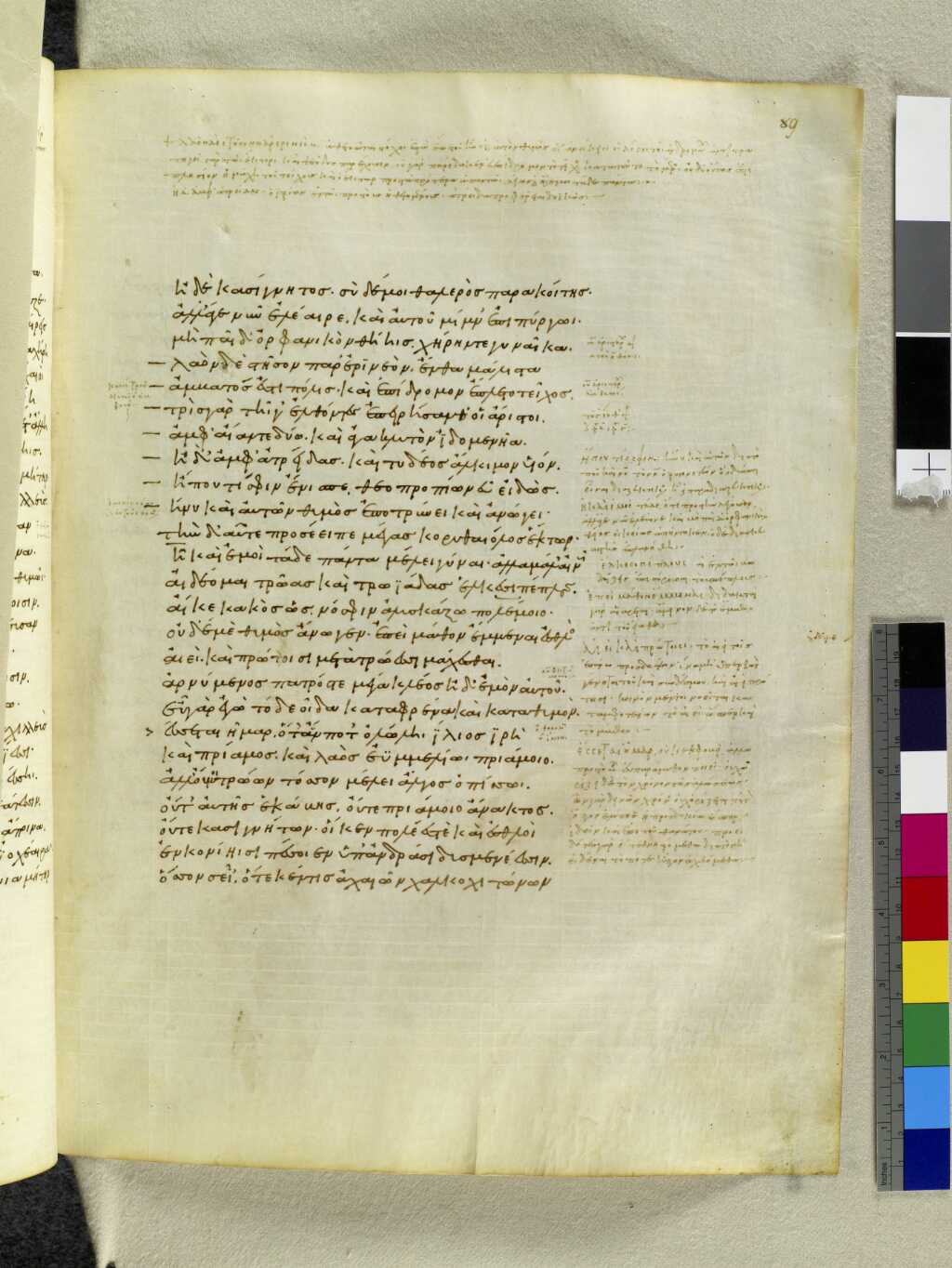
451οὔτʼ αὐτῆς Ἑκάβης οὔτε Πριάμοιο ἄνακτος 452οὔτε κασιγνήτων, οἵ κεν πολέες τε καὶ ἐσθλοὶ 453ἐν κονίῃσι πέσοιεν ὑπʼ ἀνδράσι δυσμενέεσσιν, 454ὅσσον σεῦ, ὅτε κέν τις Ἀχαιῶν χαλκοχιτώνων 455δακρυόεσσαν ἄγηται ἐλεύθερον ἦμαρ ἀπούρας· 456καί κεν ἐν Ἄργει ἐοῦσα πρὸς ἄλλης ἱστὸν ὑφαίνοις, 457καί κεν ὕδωρ φορέοις Μεσσηΐδος ἢ Ὑπερείης 458πόλλʼ ἀεκαζομένη, κρατερὴ δʼ ἐπικείσετʼ ἀνάγκη· 459καί ποτέ τις εἴπῃσιν ἰδὼν κατὰ δάκρυ χέουσαν· 460Ἕκτορος ἥδε γυνὴ ὃς ἀριστεύεσκε μάχεσθαι 461Τρώων ἱπποδάμων ὅτε Ἴλιον ἀμφεμάχοντο. 462ὥς ποτέ τις ἐρέει· σοὶ δʼ αὖ νέον ἔσσεται ἄλγος 463χήτεϊ τοιοῦδʼ ἀνδρὸς ἀμύνειν δούλιον ἦμαρ. 464ἀλλά με τεθνηῶτα χυτὴ κατὰ γαῖα καλύπτοι 465πρίν γέ τι σῆς τε βοῆς σοῦ θʼ ἑλκηθμοῖο πυθέσθαι. 466ὣς εἰπὼν οὗ παιδὸς ὀρέξατο φαίδιμος Ἕκτωρ· 467ἂψ δʼ ὃ πάϊς πρὸς κόλπον ἐϋζώνοιο τιθήνης 468ἐκλίνθη ἰάχων πατρὸς φίλου ὄψιν ἀτυχθεὶς 469ταρβήσας χαλκόν τε ἰδὲ λόφον ἱππιοχαίτην, 470δεινὸν ἀπʼ ἀκροτάτης κόρυθος νεύοντα νοήσας. 471ἐκ δʼ ἐγέλασσε πατήρ τε φίλος καὶ πότνια μήτηρ· 472αὐτίκʼ ἀπὸ κρατὸς κόρυθʼ εἵλετο φαίδιμος Ἕκτωρ, 473καὶ τὴν μὲν κατέθηκεν ἐπὶ χθονὶ παμφανόωσαν· 474αὐτὰρ ὅ γʼ ὃν φίλον υἱὸν ἐπεὶ κύσε πῆλέ τε χερσὶν 475εἶπε δʼ ἐπευξάμενος Διί τʼ ἄλλοισίν τε θεοῖσι·
And Hector answered, “Wife, I too have thought upon all this, but with what face should I look upon the Trojans, men or women, if I shirked battle like a coward? I cannot do so: I know nothing save to fight bravely in the forefront of the Trojan host and win renown alike for my father and myself. Well do I know that the day will surely come when mighty Ilius shall be destroyed with Priam and Priam’s people, but I grieve for none of these—not even for Hecuba, nor King Priam, nor for my brothers many and brave who may fall in the dust before their foes—for none of these do I grieve as for yourself when the day shall come on which some one of the Achaeans shall rob you for ever of your freedom, and bear you weeping away. It may be that you will have to ply the loom in Argos at the bidding of a mistress, or to fetch water from the springs Messeis or Hypereia, treated brutally by some cruel task-master; then will one say who sees you weeping, ‘She was wife to Hector, the bravest warrior among the Trojans during the war before Ilius.’ On this your tears will break forth anew for him who would have put away the day of captivity from you. May I lie dead under the barrow that is heaped over my body ere I hear your cry as they carry you into bondage.”
He stretched his arms towards his child, but the boy cried and nestled in his nurse’s bosom, scared at the sight of his father’s armour, and at the horse-hair plume that nodded fiercely from his helmet. His father and mother laughed to see him, but Hector took the helmet from his head and laid it all gleaming upon the ground. Then he took his darling child, kissed him, and dandled him in his arms, praying over him the while to Jove and to all the gods. “Jove,” he cried, “grant that this my child may be even as myself, chief among the Trojans; let him be not less excellent in strength, and let him rule Ilius with his might. Then may one say of him as he comes from battle, ‘The son is far better than the father.’ May he bring back the blood-stained spoils of him whom he has laid low, and let his mother’s heart be glad.”
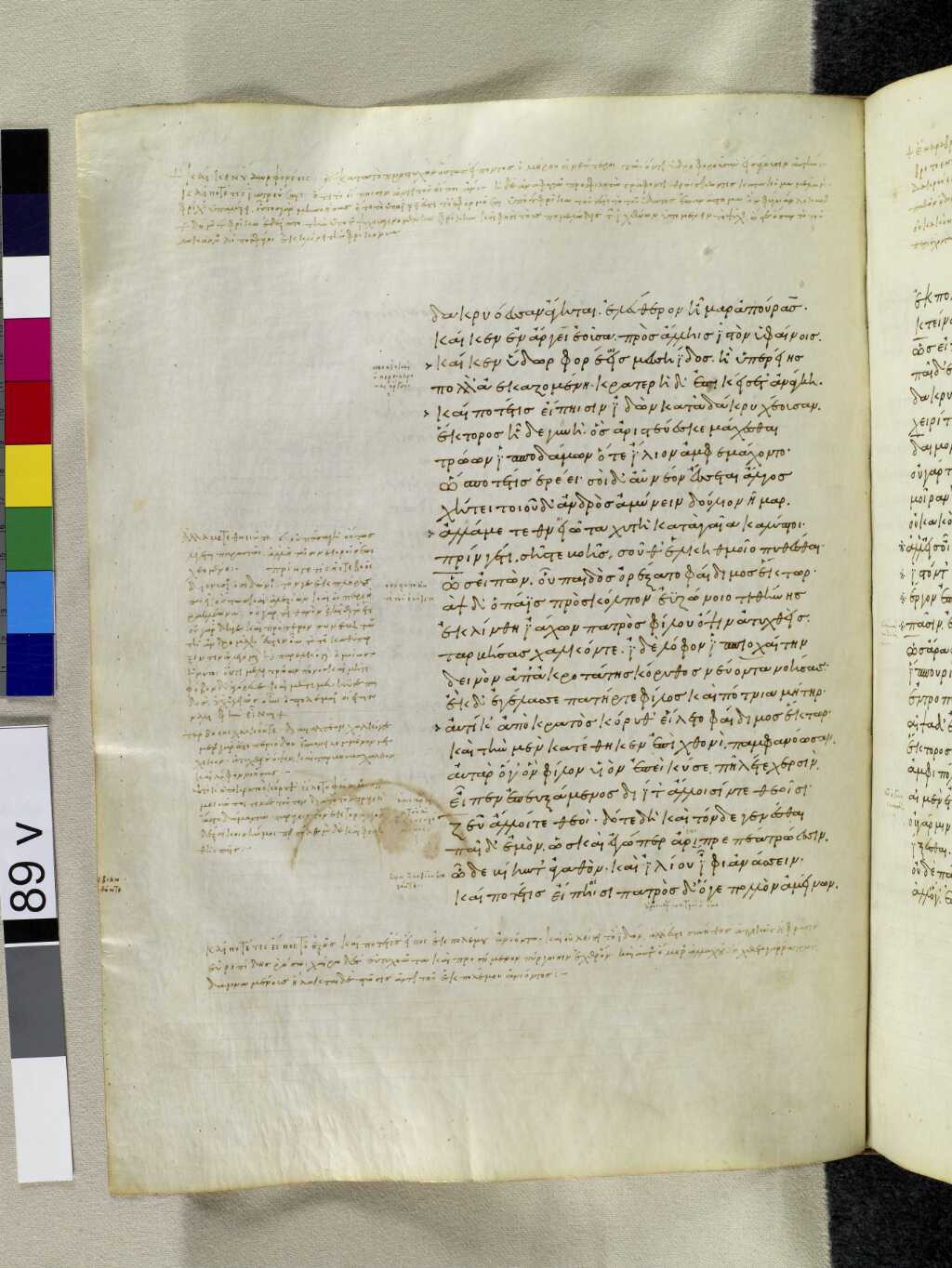
476Ζεῦ ἄλλοι τε θεοὶ δότε δὴ καὶ τόνδε γενέσθαι 477παῖδʼ ἐμὸν ὡς καὶ ἐγώ περ ἀριπρεπέα Τρώεσσιν, 478ὧδε βίην τʼ ἀγαθόν, καὶ Ἰλίου ἶφι ἀνάσσειν· 479καί ποτέ τις εἴποι πατρός γʼ ὅδε πολλὸν ἀμείνων 480ἐκ πολέμου ἀνιόντα· φέροι δʼ ἔναρα βροτόεντα 481κτείνας δήϊον ἄνδρα, χαρείη δὲ φρένα μήτηρ. 482ὣς εἰπὼν ἀλόχοιο φίλης ἐν χερσὶν ἔθηκε 483παῖδʼ ἑόν· ἣ δʼ ἄρα μιν κηώδεϊ δέξατο κόλπῳ 484δακρυόεν γελάσασα· πόσις δʼ ἐλέησε νοήσας, 485χειρί τέ μιν κατέρεξεν ἔπος τʼ ἔφατʼ ἔκ τʼ ὀνόμαζε· 486δαιμονίη μή μοί τι λίην ἀκαχίζεο θυμῷ· 487οὐ γάρ τίς μʼ ὑπὲρ αἶσαν ἀνὴρ Ἄϊδι προϊάψει· 488μοῖραν δʼ οὔ τινά φημι πεφυγμένον ἔμμεναι ἀνδρῶν, 489οὐ κακὸν οὐδὲ μὲν ἐσθλόν, ἐπὴν τὰ πρῶτα γένηται. 490ἀλλʼ εἰς οἶκον ἰοῦσα τὰ σʼ αὐτῆς ἔργα κόμιζε 491ἱστόν τʼ ἠλακάτην τε, καὶ ἀμφιπόλοισι κέλευε 492ἔργον ἐποίχεσθαι· πόλεμος δʼ ἄνδρεσσι μελήσει 493πᾶσι, μάλιστα δʼ ἐμοί, τοὶ Ἰλίῳ ἐγγεγάασιν. 494ὣς ἄρα φωνήσας κόρυθʼ εἵλετο φαίδιμος Ἕκτωρ 495ἵππουριν· ἄλοχος δὲ φίλη οἶκον δὲ βεβήκει 496ἐντροπαλιζομένη, θαλερὸν κατὰ δάκρυ χέουσα. 497αἶψα δʼ ἔπειθʼ ἵκανε δόμους εὖ ναιετάοντας 498Ἕκτορος ἀνδροφόνοιο, κιχήσατο δʼ ἔνδοθι πολλὰς 499ἀμφιπόλους, τῇσιν δὲ γόον πάσῃσιν ἐνῶρσεν. 500αἳ μὲν ἔτι ζωὸν γόον Ἕκτορα ᾧ ἐνὶ οἴκῳ·
With this he laid the child again in the arms of his wife, who took him to her own soft bosom, smiling through her tears. As her husband watched her his heart yearned towards her and he caressed her fondly, saying, “My own wife, do not take these things too bitterly to heart. No one can hurry me down to Hades before my time, but if a man’s hour is come, be he brave or be he coward, there is no escape for him when he has once been born. Go, then, within the house, and busy yourself with your daily duties, your loom, your distaff, and the ordering of your servants; for war is man’s matter, and mine above all others of them that have been born in Ilius.”
He took his plumed helmet from the ground, and his wife went back again to her house, weeping bitterly and often looking back towards him. When she reached her home she found her maidens within, and bade them all join in her lament; so they mourned Hector in his own house though he was yet alive, for they deemed that they should never see him return safe from battle, and from the furious hands of the Achaeans.
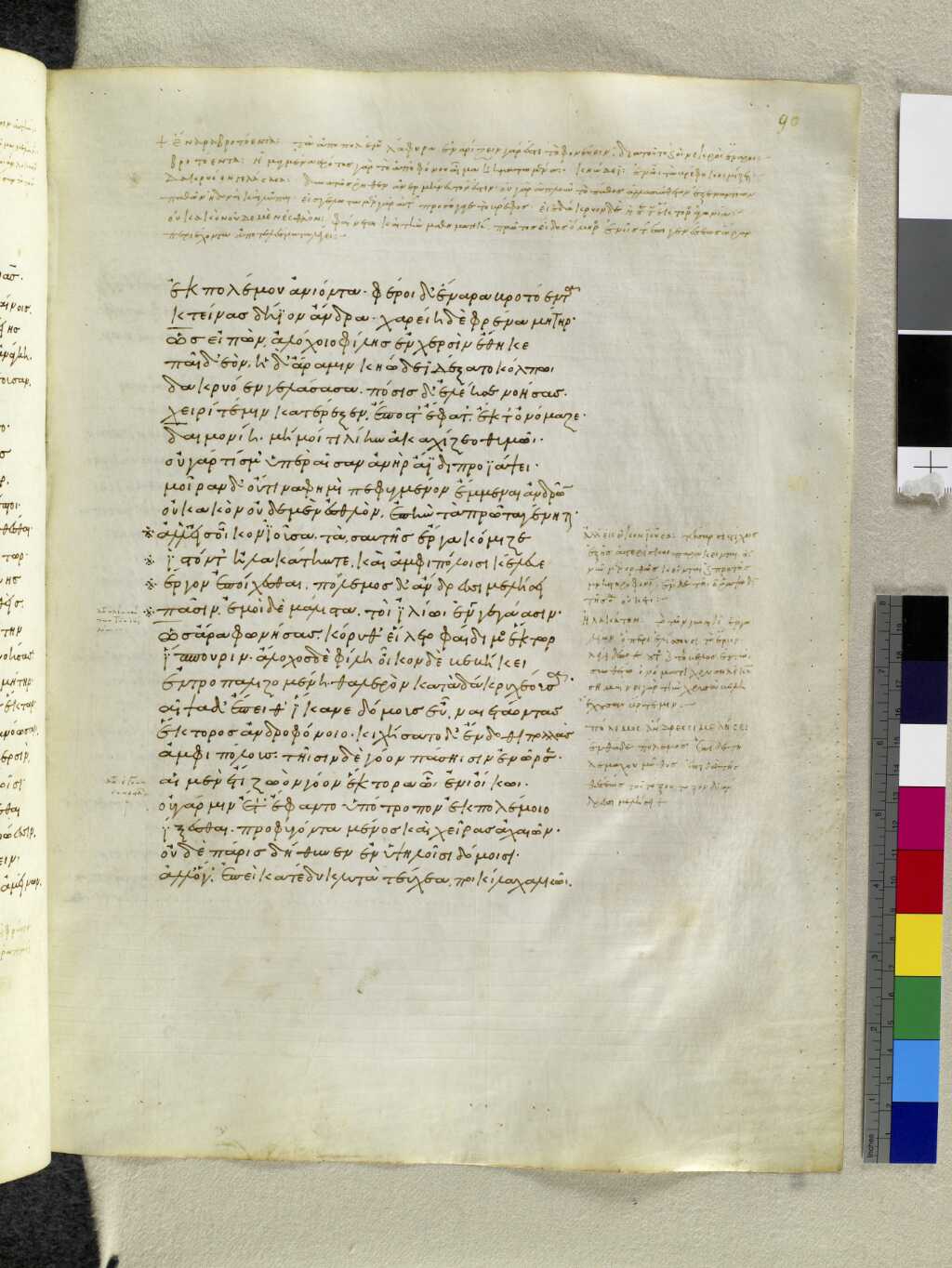
501οὐ γάρ μιν ἔτʼ ἔφαντο ὑπότροπον ἐκ πολέμοιο 502ἵξεσθαι προφυγόντα μένος καὶ χεῖρας Ἀχαιῶν. 503οὐδὲ Πάρις δήθυνεν ἐν ὑψηλοῖσι δόμοισιν, 504ἀλλʼ ὅ γʼ, ἐπεὶ κατέδυ κλυτὰ τεύχεα ποικίλα χαλκῷ, 505σεύατʼ ἔπειτʼ ἀνὰ ἄστυ ποσὶ κραιπνοῖσι πεποιθώς. 506ὡς δʼ ὅτε τις στατὸς ἵππος ἀκοστήσας ἐπὶ φάτνῃ 507δεσμὸν ἀπορρήξας θείῃ πεδίοιο κροαίνων 508εἰωθὼς λούεσθαι ἐϋρρεῖος ποταμοῖο 509κυδιόων· ὑψοῦ δὲ κάρη ἔχει, ἀμφὶ δὲ χαῖται 510ὤμοις ἀΐσσονται· ὃ δʼ ἀγλαΐηφι πεποιθὼς 511ῥίμφά ἑ γοῦνα φέρει μετά τʼ ἤθεα καὶ νομὸν ἵππων· 512ὣς υἱὸς Πριάμοιο Πάρις κατὰ Περγάμου ἄκρης 513τεύχεσι παμφαίνων ὥς τʼ ἠλέκτωρ ἐβεβήκει 514καγχαλόων, ταχέες δὲ πόδες φέρον· αἶψα δʼ ἔπειτα 515Ἕκτορα δῖον ἔτετμεν ἀδελφεὸν εὖτʼ ἄρʼ ἔμελλε 516στρέψεσθʼ ἐκ χώρης ὅθι ᾗ ὀάριζε γυναικί. 517τὸν πρότερος προσέειπεν Ἀλέξανδρος θεοειδής· 518ἠθεῖʼ ἦ μάλα δή σε καὶ ἐσσύμενον κατερύκω 519δηθύνων, οὐδʼ ἦλθον ἐναίσιμον ὡς ἐκέλευες; 520τὸν δʼ ἀπαμειβόμενος προσέφη κορυθαίολος Ἕκτωρ· 521δαιμόνιʼ οὐκ ἄν τίς τοι ἀνὴρ ὃς ἐναίσιμος εἴη 522ἔργον ἀτιμήσειε μάχης, ἐπεὶ ἄλκιμός ἐσσι· 523ἀλλὰ ἑκὼν μεθιεῖς τε καὶ οὐκ ἐθέλεις· τὸ δʼ ἐμὸν κῆρ 524ἄχνυται ἐν θυμῷ, ὅθʼ ὑπὲρ σέθεν αἴσχεʼ ἀκούω 525πρὸς Τρώων, οἳ ἔχουσι πολὺν πόνον εἵνεκα σεῖο.
Paris did not remain long in his house. He donned his goodly armour overlaid with bronze, and hasted through the city as fast as his feet could take him. As a horse, stabled and fed, breaks loose and gallops gloriously over the plain to the place where he is wont to bathe in the fair-flowing river—he holds his head high, and his mane streams upon his shoulders as he exults in his strength and flies like the wind to the haunts and feeding ground of the mares—even so went forth Paris from high Pergamus, gleaming like sunlight in his armour, and he laughed aloud as he sped swiftly on his way. Forthwith he came upon his brother Hector, who was then turning away from the place where he had held converse with his wife, and he was himself the first to speak. “Sir,” said he, “I fear that I have kept you waiting when you are in haste, and have not come as quickly as you bade me.”
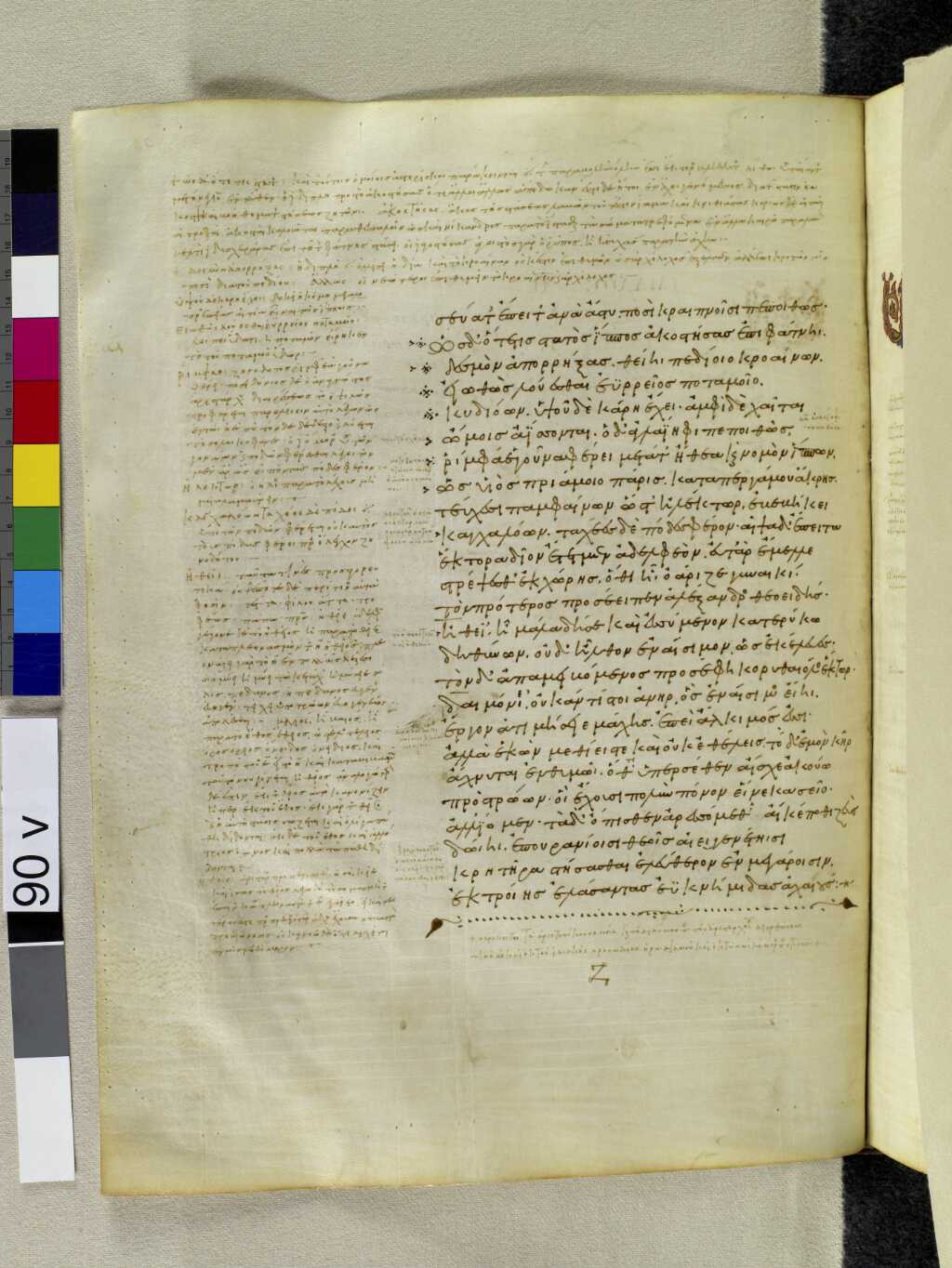
526ἀλλʼ ἴομεν· τὰ δʼ ὄπισθεν ἀρεσσόμεθʼ, αἴ κέ ποθι Ζεὺς 527δώῃ ἐπουρανίοισι θεοῖς αἰειγενέτῃσι 528κρητῆρα στήσασθαι ἐλεύθερον ἐν μεγάροισιν 529ἐκ Τροίης ἐλάσαντας ἐϋκνήμιδας Ἀχαιούς.
“My good brother,” answered Hector, “you fight bravely, and no man with any justice can make light of your doings in battle. But you are careless and wilfully remiss. It grieves me to the heart to hear the ill that the Trojans speak about you, for they have suffered much on your account. Let us be going, and we will make things right hereafter, should Jove vouchsafe us to set the cup of our deliverance before ever-living gods of heaven in our own homes, when we have chased the Achaeans from Troy.”
Cite
Source & Cross-References
- Source text: Venetus A (10th c.) via Homer Multitext IIIF + Perseus Greek + Butler English (PG #2199) — view original
- Critical edition: Munro & Allen (Perseus Digital Library)
← previous · → next · v cycle view · l back to library