The Iliad, Book 8
Introduction
Book 8 of the Iliad with 23 sections, each linked to its specific folio in Venetus A (Marcianus Graecus 454, 10th c.). The Homer Multitext Project provides line-level folio mappings, ensuring every section of text corresponds to the exact manuscript page where it appears.
How was this verified? (Provenance)
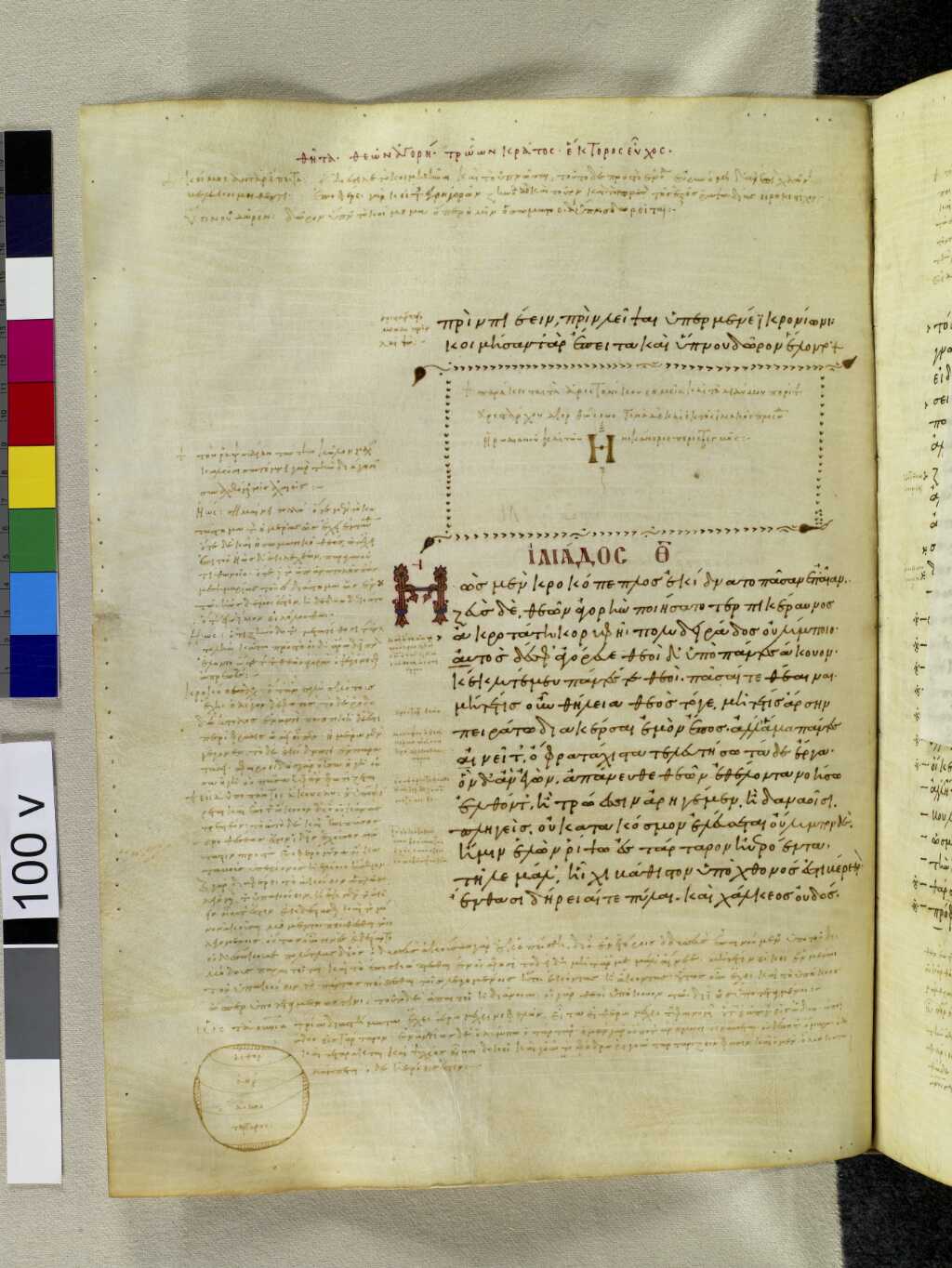
1Ἠὼς μὲν κροκόπεπλος ἐκίδνατο πᾶσαν ἐπʼ αἶαν, 2Ζεὺς δὲ θεῶν ἀγορὴν ποιήσατο τερπικέραυνος 3ἀκροτάτῃ κορυφῇ πολυδειράδος Οὐλύμποιο· 4αὐτὸς δέ σφʼ ἀγόρευε, θεοὶ δʼ ὑπὸ πάντες ἄκουον· 5κέκλυτέ μευ πάντές τε θεοὶ πᾶσαί τε θέαιναι, 6ὄφρʼ εἴπω τά με θυμὸς ἐνὶ στήθεσσι κελεύει. 7μήτέ τις οὖν θήλεια θεὸς τό γε μήτέ τις ἄρσην 8πειράτω διακέρσαι ἐμὸν ἔπος, ἀλλʼ ἅμα πάντες 9αἰνεῖτʼ, ὄφρα τάχιστα τελευτήσω τάδε ἔργα. 10ὃν δʼ ἂν ἐγὼν ἀπάνευθε θεῶν ἐθέλοντα νοήσω 11ἐλθόντʼ ἢ Τρώεσσιν ἀρηγέμεν ἢ Δαναοῖσι 12πληγεὶς οὐ κατὰ κόσμον ἐλεύσεται Οὔλυμπον δέ· 13ἤ μιν ἑλὼν ῥίψω ἐς Τάρταρον ἠερόεντα 14τῆλε μάλʼ, ἧχι βάθιστον ὑπὸ χθονός ἐστι βέρεθρον, 15ἔνθα σιδήρειαί τε πύλαι καὶ χάλκεος οὐδός, 16τόσσον ἔνερθʼ Ἀΐδεω ὅσον οὐρανός ἐστʼ ἀπὸ γαίης· 17γνώσετʼ ἔπειθʼ ὅσον εἰμὶ θεῶν κάρτιστος ἁπάντων. 18εἰ δʼ ἄγε πειρήσασθε θεοὶ ἵνα εἴδετε πάντες· 19σειρὴν χρυσείην ἐξ οὐρανόθεν κρεμάσαντες 20πάντές τʼ ἐξάπτεσθε θεοὶ πᾶσαί τε θέαιναι· 21ἀλλʼ οὐκ ἂν ἐρύσαιτʼ ἐξ οὐρανόθεν πεδίον δὲ 22Ζῆνʼ ὕπατον μήστωρʼ, οὐδʼ εἰ μάλα πολλὰ κάμοιτε. 23ἀλλʼ ὅτε δὴ καὶ ἐγὼ πρόφρων ἐθέλοιμι ἐρύσσαι, 24αὐτῇ κεν γαίῃ ἐρύσαιμʼ αὐτῇ τε θαλάσσῃ· 25σειρὴν μέν κεν ἔπειτα περὶ ῥίον Οὐλύμποιο
Jove forbids the gods to interfere further—There is an even fight till midday, but then Jove inclines the scales of victory in favour of the Trojans, who eventually chase the Achaeans within their wall—Juno and Minerva set out to help the Trojans: Jove sends Iris to turn them back, but later on he promises Juno that she shall have her way in the end—Hector’s triumph is stayed by nightfall—The Trojans bivouac on the plain.
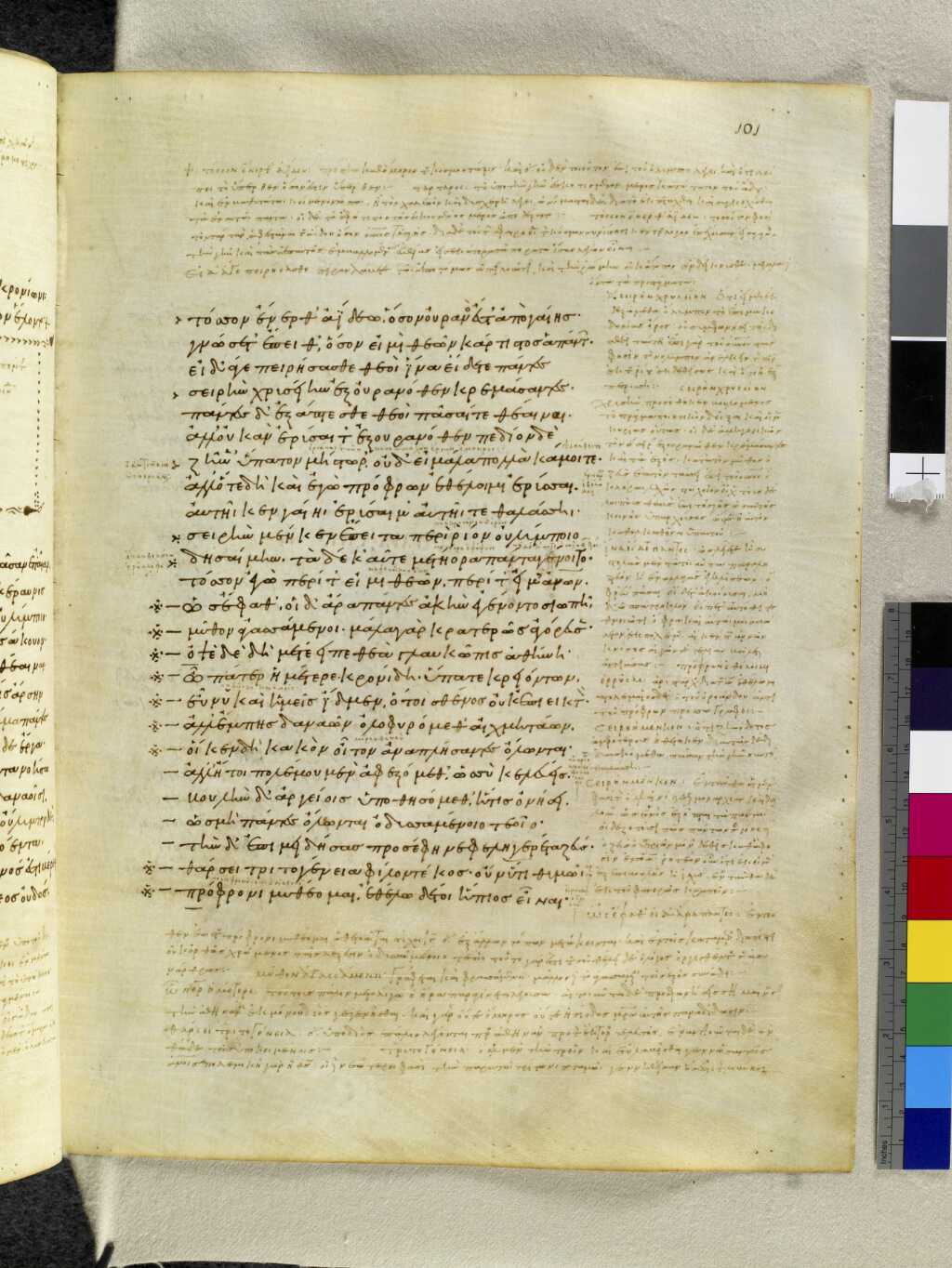
26δησαίμην, τὰ δέ κʼ αὖτε μετήορα πάντα γένοιτο. 27τόσσον ἐγὼ περί τʼ εἰμὶ θεῶν περί τʼ εἴμʼ ἀνθρώπων. 28ὣς ἔφαθʼ, οἱ δʼ ἄρα πάντες ἀκὴν ἐγένοντο σιωπῇ 29μῦθον ἀγασσάμενοι· μάλα γὰρ κρατερῶς ἀγόρευσεν. 30ὀψὲ δὲ δὴ μετέειπε θεὰ γλαυκῶπις Ἀθήνη· 31ὦ πάτερ ἡμέτερε Κρονίδη ὕπατε κρειόντων 32εὖ νυ καὶ ἡμεῖς ἴδμεν ὅ τοι σθένος οὐκ ἐπιεικτόν· 33ἀλλʼ ἔμπης Δαναῶν ὀλοφυρόμεθʼ αἰχμητάων, 34οἵ κεν δὴ κακὸν οἶτον ἀναπλήσαντες ὄλωνται. 35ἀλλʼ ἤτοι πολέμου μὲν ἀφεξόμεθʼ ὡς σὺ κελεύεις· 36βουλὴν δʼ Ἀργείοις ὑποθησόμεθʼ ἥ τις ὀνήσει, 37ὡς μὴ πάντες ὄλωνται ὀδυσσαμένοιο τεοῖο. 38τὴν δʼ ἐπιμειδήσας προσέφη νεφεληγερέτα Ζεύς· 39θάρσει Τριτογένεια φίλον τέκος· οὔ νύ τι θυμῷ 40πρόφρονι μυθέομαι, ἐθέλω δέ τοι ἤπιος εἶναι. 41ὣς εἰπὼν ὑπʼ ὄχεσφι τιτύσκετο χαλκόποδʼ ἵππω 42ὠκυπέτα χρυσέῃσιν ἐθείρῃσιν κομόωντε, 43χρυσὸν δʼ αὐτὸς ἔδυνε περὶ χροΐ, γέντο δʼ ἱμάσθλην 44χρυσείην εὔτυκτον, ἑοῦ δʼ ἐπεβήσετο δίφρου, 45μάστιξεν δʼ ἐλάαν· τὼ δʼ οὐκ ἀέκοντε πετέσθην 46μεσσηγὺς γαίης τε καὶ οὐρανοῦ ἀστερόεντος. 47Ἴδην δʼ ἵκανεν πολυπίδακα μητέρα θηρῶν 48Γάργαρον, ἔνθά τέ οἱ τέμενος βωμός τε θυήεις. 49ἔνθʼ ἵππους ἔστησε πατὴρ ἀνδρῶν τε θεῶν τε 50λύσας ἐξ ὀχέων, κατὰ δʼ ἠέρα πουλὺν ἔχευεν.
Now when Morning, clad in her robe of saffron, had begun to suffuse light over the earth, Jove called the gods in council on the topmost crest of serrated Olympus. Then he spoke and all the other gods gave ear. “Hear me,” said he, “gods and goddesses, that I may speak even as I am minded. Let none of you neither goddess nor god try to cross me, but obey me every one of you that I may bring this matter to an end. If I see anyone acting apart and helping either Trojans or Danaans, he shall be beaten inordinately ere he come back again to Olympus; or I will hurl him down into dark Tartarus far into the deepest pit under the earth, where the gates are iron and the floor bronze, as far beneath Hades as heaven is high above the earth, that you may learn how much the mightiest I am among you. Try me and find out for yourselves. Hangs me a golden chain from heaven, and lay hold of it all of you, gods and goddesses together—tug as you will, you will not drag Jove the supreme counsellor from heaven to earth; but were I to pull at it myself I should draw you up with earth and sea into the bargain, then would I bind the chain about some pinnacle of Olympus and leave you all dangling in the mid firmament. So far am I above all others either of gods or men.”
They were frightened and all of them of held their peace, for he had spoken masterfully; but at last Minerva answered, “Father, son of Saturn, king of kings, we all know that your might is not to be gainsaid, but we are also sorry for the Danaan warriors, who are perishing and coming to a bad end. We will, however, since you so bid us, refrain from actual fighting, but we will make serviceable suggestions to the Argives that they may not all of them perish in your displeasure.”
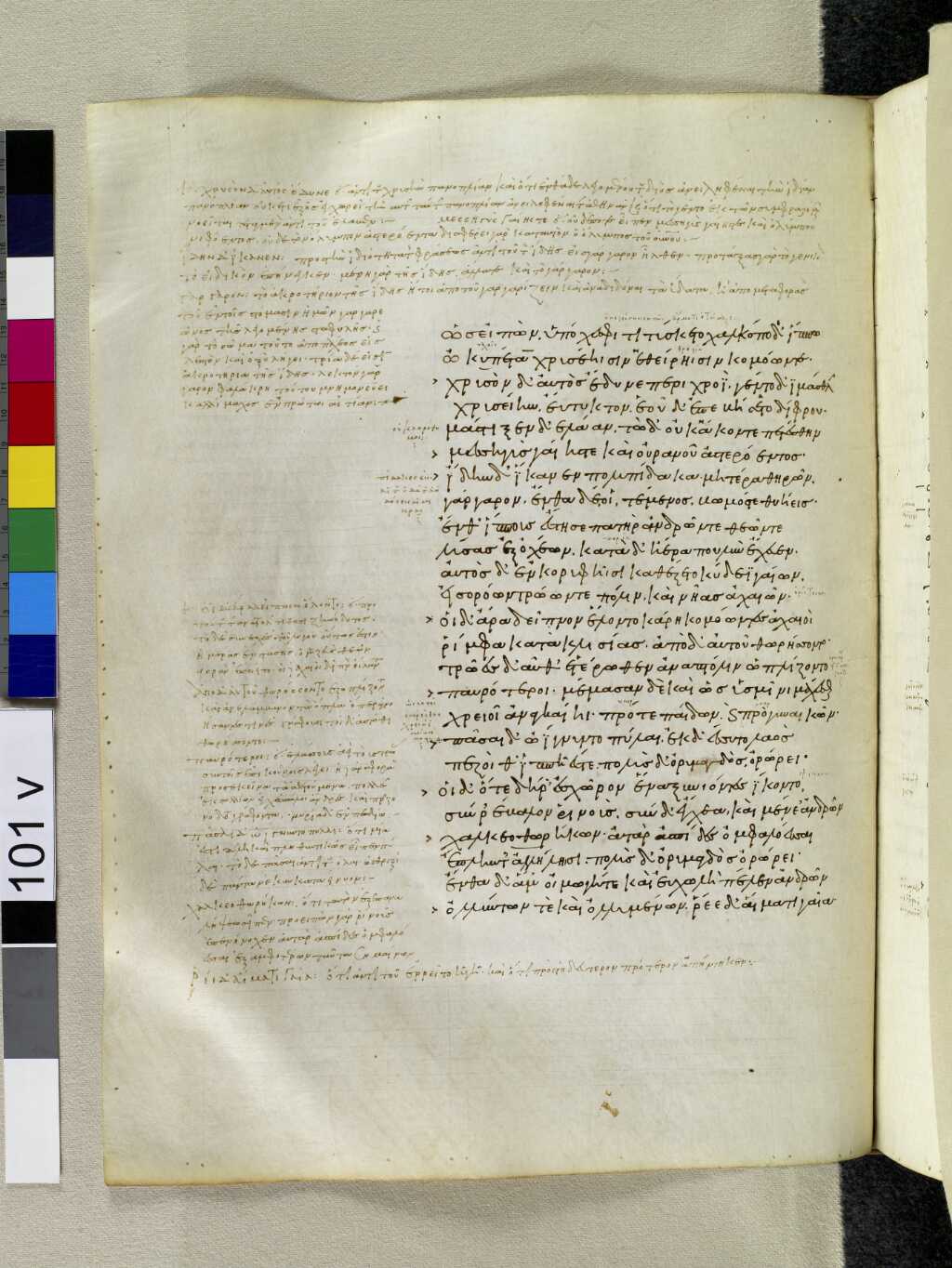
51αὐτὸς δʼ ἐν κορυφῇσι καθέζετο κύδεϊ γαίων 52εἰσορόων Τρώων τε πόλιν καὶ νῆας Ἀχαιῶν. 53οἳ δʼ ἄρα δεῖπνον ἕλοντο κάρη κομόωντες Ἀχαιοὶ 54ῥίμφα κατὰ κλισίας, ἀπὸ δʼ αὐτοῦ θωρήσσοντο. 55Τρῶες δʼ αὖθʼ ἑτέρωθεν ἀνὰ πτόλιν ὁπλίζοντο 56παυρότεροι· μέμασαν δὲ καὶ ὧς ὑσμῖνι μάχεσθαι 57χρειοῖ ἀναγκαίῃ, πρό τε παίδων καὶ πρὸ γυναικῶν. 58πᾶσαι δʼ ὠΐγνυντο πύλαι, ἐκ δʼ ἔσσυτο λαός, 59πεζοί θʼ ἱππῆές τε· πολὺς δʼ ὀρυμαγδὸς ὀρώρει. 60οἳ δʼ ὅτε δή ῥʼ ἐς χῶρον ἕνα ξυνιόντες ἵκοντο 61σύν ῥʼ ἔβαλον ῥινούς, σὺν δʼ ἔγχεα καὶ μένεʼ ἀνδρῶν 62χαλκεοθωρήκων· ἀτὰρ ἀσπίδες ὀμφαλόεσσαι 63ἔπληντʼ ἀλλήλῃσι, πολὺς δʼ ὀρυμαγδὸς ὀρώρει. 64ἔνθα δʼ ἅμʼ οἰμωγή τε καὶ εὐχωλὴ πέλεν ἀνδρῶν 65ὀλλύντων τε καὶ ὀλλυμένων, ῥέε δʼ αἵματι γαῖα. 66ὄφρα μὲν ἠὼς ἦν καὶ ἀέξετο ἱερὸν ἦμαρ, 67τόφρα μάλʼ ἀμφοτέρων βέλεʼ ἥπτετο, πῖπτε δὲ λαός. 68ἦμος δʼ Ἠέλιος μέσον οὐρανὸν ἀμφιβεβήκει, 69καὶ τότε δὴ χρύσεια πατὴρ ἐτίταινε τάλαντα· 70ἐν δʼ ἐτίθει δύο κῆρε τανηλεγέος θανάτοιο 71Τρώων θʼ ἱπποδάμων καὶ Ἀχαιῶν χαλκοχιτώνων, 72ἕλκε δὲ μέσσα λαβών· ῥέπε δʼ αἴσιμον ἦμαρ Ἀχαιῶν. 73αἳ μὲν Ἀχαιῶν κῆρες ἐπὶ χθονὶ πουλυβοτείρῃ 74ἑζέσθην, Τρώων δὲ πρὸς οὐρανὸν εὐρὺν ἄερθεν· 75αὐτὸς δʼ ἐξ Ἴδης μεγάλʼ ἔκτυπε, δαιόμενον δὲ
Jove smiled at her and answered, “Take heart, my child, Trito-born; I am not really in earnest, and I wish to be kind to you.”
With this he yoked his fleet horses, with hoofs of bronze and manes of glittering gold. He girded himself also with gold about the body, seized his gold whip and took his seat in his chariot. Thereon he lashed his horses and they flew forward nothing loth midway twixt earth and starry heaven. After a while he reached many-fountained Ida, mother of wild beasts, and Gargarus, where are his grove and fragrant altar. There the father of gods and men stayed his horses, took them from the chariot, and hid them in a thick cloud; then he took his seat all glorious upon the topmost crests, looking down upon the city of Troy and the ships of the Achaeans.
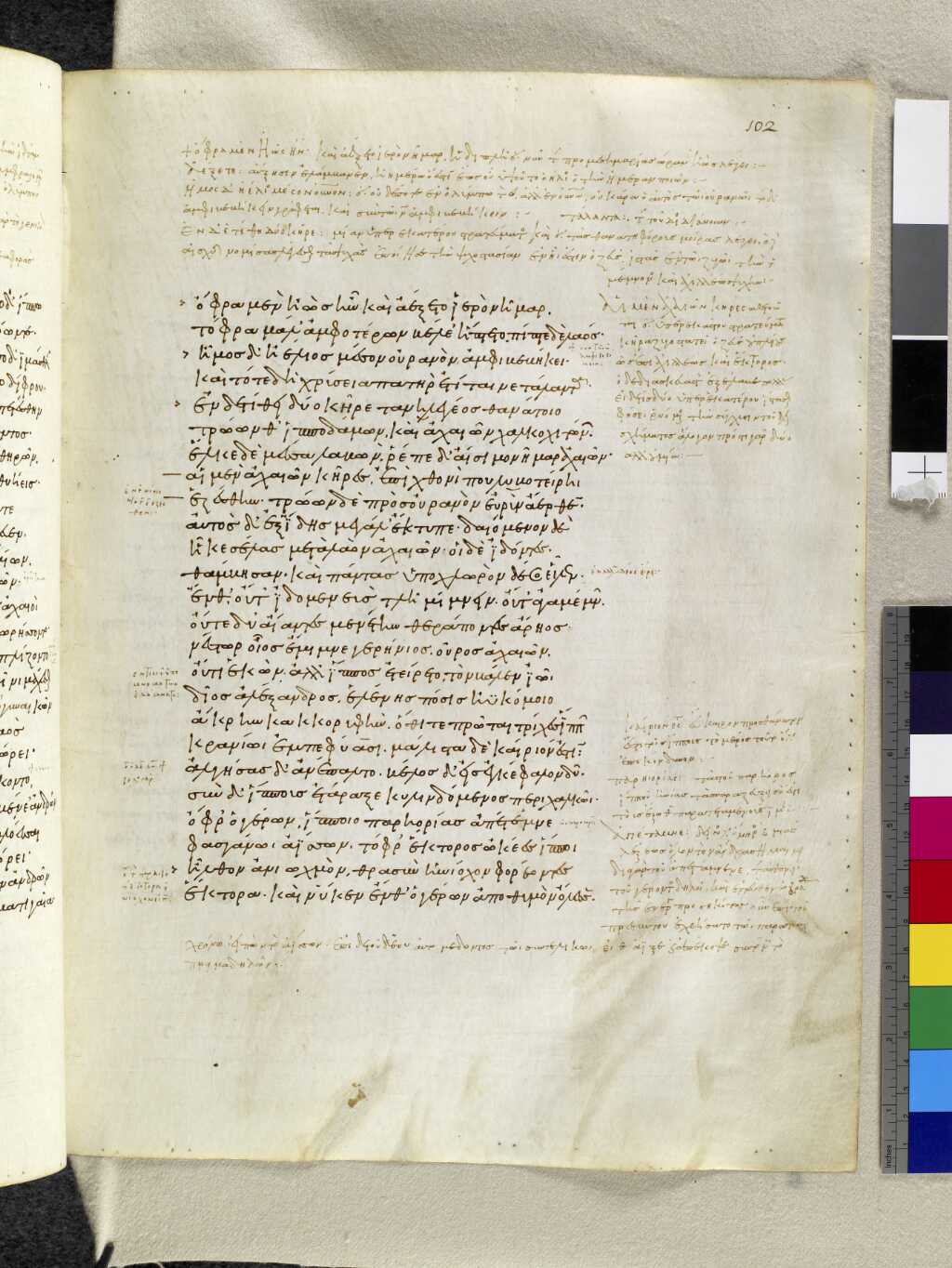
76ἧκε σέλας μετὰ λαὸν Ἀχαιῶν· οἳ δὲ ἰδόντες 77θάμβησαν, καὶ πάντας ὑπὸ χλωρὸν δέος εἷλεν. 78ἔνθʼ οὔτʼ Ἰδομενεὺς τλῆ μίμνειν οὔτʼ Ἀγαμέμνων, 79οὔτε δύʼ Αἴαντες μενέτην θεράποντες Ἄρηος· 80Νέστωρ οἶος ἔμιμνε Γερήνιος οὖρος Ἀχαιῶν 81οὔ τι ἑκών, ἀλλʼ ἵππος ἐτείρετο, τὸν βάλεν ἰῷ 82δῖος Ἀλέξανδρος Ἑλένης πόσις ἠϋκόμοιο 83ἄκρην κὰκ κορυφήν, ὅθι τε πρῶται τρίχες ἵππων 84κρανίῳ ἐμπεφύασι, μάλιστα δὲ καίριόν ἐστιν. 85ἀλγήσας δʼ ἀνέπαλτο, βέλος δʼ εἰς ἐγκέφαλον δῦ, 86σὺν δʼ ἵππους ἐτάραξε κυλινδόμενος περὶ χαλκῷ. 87ὄφρʼ ὁ γέρων ἵπποιο παρηορίας ἀπέταμνε 88φασγάνῳ ἀΐσσων, τόφρʼ Ἕκτορος ὠκέες ἵπποι 89ἦλθον ἀνʼ ἰωχμὸν θρασὺν ἡνίοχον φορέοντες 90Ἕκτορα· καί νύ κεν ἔνθʼ ὁ γέρων ἀπὸ θυμὸν ὄλεσσεν 91εἰ μὴ ἄρʼ ὀξὺ νόησε βοὴν ἀγαθὸς Διομήδης· 92σμερδαλέον δʼ ἐβόησεν ἐποτρύνων Ὀδυσῆα· 93διογενὲς Λαερτιάδη πολυμήχανʼ Ὀδυσσεῦ 94πῇ φεύγεις μετὰ νῶτα βαλὼν κακὸς ὣς ἐν ὁμίλῳ; 95μή τίς τοι φεύγοντι μεταφρένῳ ἐν δόρυ πήξῃ· 96ἀλλὰ μένʼ ὄφρα γέροντος ἀπώσομεν ἄγριον ἄνδρα. 97ὣς ἔφατʼ, οὐδʼ ἐσάκουσε πολύτλας δῖος Ὀδυσσεύς, 98ἀλλὰ παρήϊξεν κοίλας ἐπὶ νῆας Ἀχαιῶν. 99Τυδεΐδης δʼ αὐτός περ ἐὼν προμάχοισιν ἐμίχθη, 100στῆ δὲ πρόσθʼ ἵππων Νηληϊάδαο γέροντος,
The Achaeans took their morning meal hastily at the ships, and afterwards put on their armour. The Trojans on the other hand likewise armed themselves throughout the city, fewer in numbers but nevertheless eager perforce to do battle for their wives and children. All the gates were flung wide open, and horse and foot sallied forth with the tramp as of a great multitude.
When they were got together in one place, shield clashed with shield, and spear with spear, in the conflict of mail-clad men. Mighty was the din as the bossed shields pressed hard on one another—death—cry and shout of triumph of slain and slayers, and the earth ran red with blood.
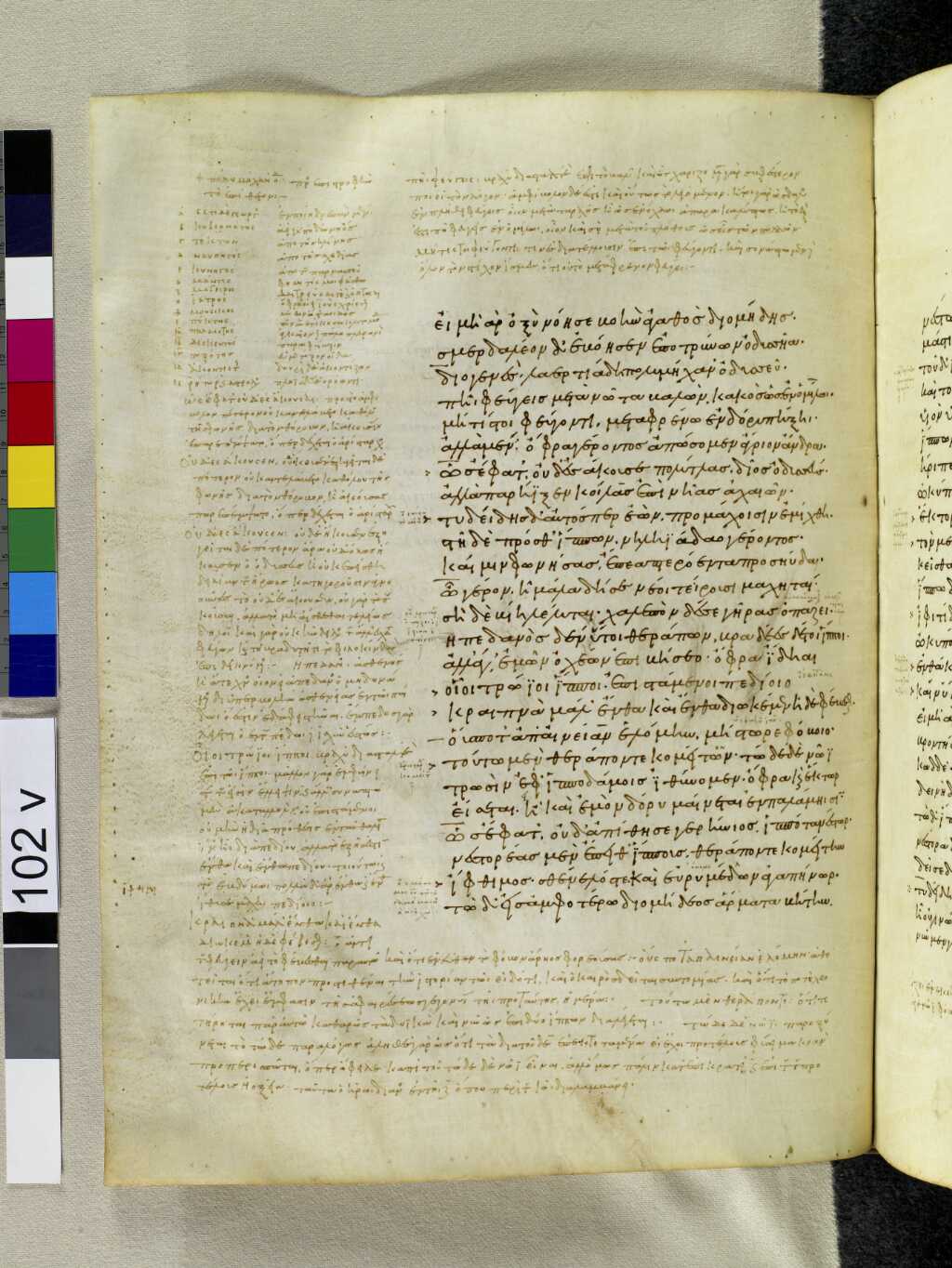
101καί μιν φωνήσας ἔπεα πτερόεντα προσηύδα· 102ὦ γέρον ἦ μάλα δή σε νέοι τείρουσι μαχηταί, 103σὴ δὲ βίη λέλυται, χαλεπὸν δέ σε γῆρας ὀπάζει, 104ἠπεδανὸς δέ νύ τοι θεράπων, βραδέες δέ τοι ἵπποι. 105ἀλλʼ ἄγʼ ἐμῶν ὀχέων ἐπιβήσεο, ὄφρα ἴδηαι 106οἷοι Τρώϊοι ἵπποι ἐπιστάμενοι πεδίοιο 107κραιπνὰ μάλʼ ἔνθα καὶ ἔνθα διωκέμεν ἠδὲ φέβεσθαι, 108οὕς ποτʼ ἀπʼ Αἰνείαν ἑλόμην μήστωρε φόβοιο. 109τούτω μὲν θεράποντε κομείτων, τώδε δὲ νῶϊ 110Τρωσὶν ἐφʼ ἱπποδάμοις ἰθύνομεν, ὄφρα καὶ Ἕκτωρ 111εἴσεται εἰ καὶ ἐμὸν δόρυ μαίνεται ἐν παλάμῃσιν. 112ὣς ἔφατʼ, οὐδʼ ἀπίθησε Γερήνιος ἱππότα Νέστωρ. 113Νεστορέας μὲν ἔπειθʼ ἵππους θεράποντε κομείτην 114ἴφθιμοι Σθένελός τε καὶ Εὐρυμέδων ἀγαπήνωρ. 115τὼ δʼ εἰς ἀμφοτέρω Διομήδεος ἅρματα βήτην· 116Νέστωρ δʼ ἐν χείρεσσι λάβʼ ἡνία σιγαλόεντα, 117μάστιξεν δʼ ἵππους· τάχα δʼ Ἕκτορος ἄγχι γένοντο. 118τοῦ δʼ ἰθὺς μεμαῶτος ἀκόντισε Τυδέος υἱός· 119καὶ τοῦ μέν ῥʼ ἀφάμαρτεν, ὃ δʼ ἡνίοχον θεράποντα 120υἱὸν ὑπερθύμου Θηβαίου Ἠνιοπῆα 121ἵππων ἡνίʼ ἔχοντα βάλε στῆθος παρὰ μαζόν. 122ἤριπε δʼ ἐξ ὀχέων, ὑπερώησαν δέ οἱ ἵπποι 123ὠκύποδες· τοῦ δʼ αὖθι λύθη ψυχή τε μένος τε. 124Ἕκτορα δʼ αἰνὸν ἄχος πύκασε φρένας ἡνιόχοιο· 125τὸν μὲν ἔπειτʼ εἴασε καὶ ἀχνύμενός περ ἑταίρου
Now so long as the day waxed and it was still morning their weapons beat against one another, and the people fell, but when the sun had reached mid-heaven, the sire of all balanced his golden scales, and put two fates of death within them, one for the Trojans and the other for the Achaeans. He took the balance by the middle, and when he lifted it up the day of the Achaeans sank; the death-fraught scale of the Achaeans settled down upon the ground, while that of the Trojans rose heavenwards. Then he thundered aloud from Ida, and sent the glare of his lightning upon the Achaeans; when they saw this, pale fear fell upon them and they were sore afraid.
Idomeneus dared not stay nor yet Agamemnon, nor did the two Ajaxes, servants of Mars, hold their ground. Nestor knight of Gerene alone stood firm, bulwark of the Achaeans, not of his own will, but one of his horses was disabled. Alexandrus husband of lovely Helen had hit it with an arrow just on the top of its head where the mane begins to grow away from the skull, a very deadly place. The horse bounded in his anguish as the arrow pierced his brain, and his struggles threw others into confusion. The old man instantly began cutting the traces with his sword, but Hector’s fleet horses bore down upon him through the rout with their bold charioteer, even Hector himself, and the old man would have perished there and then had not Diomed been quick to mark, and with a loud cry called Ulysses to help him.
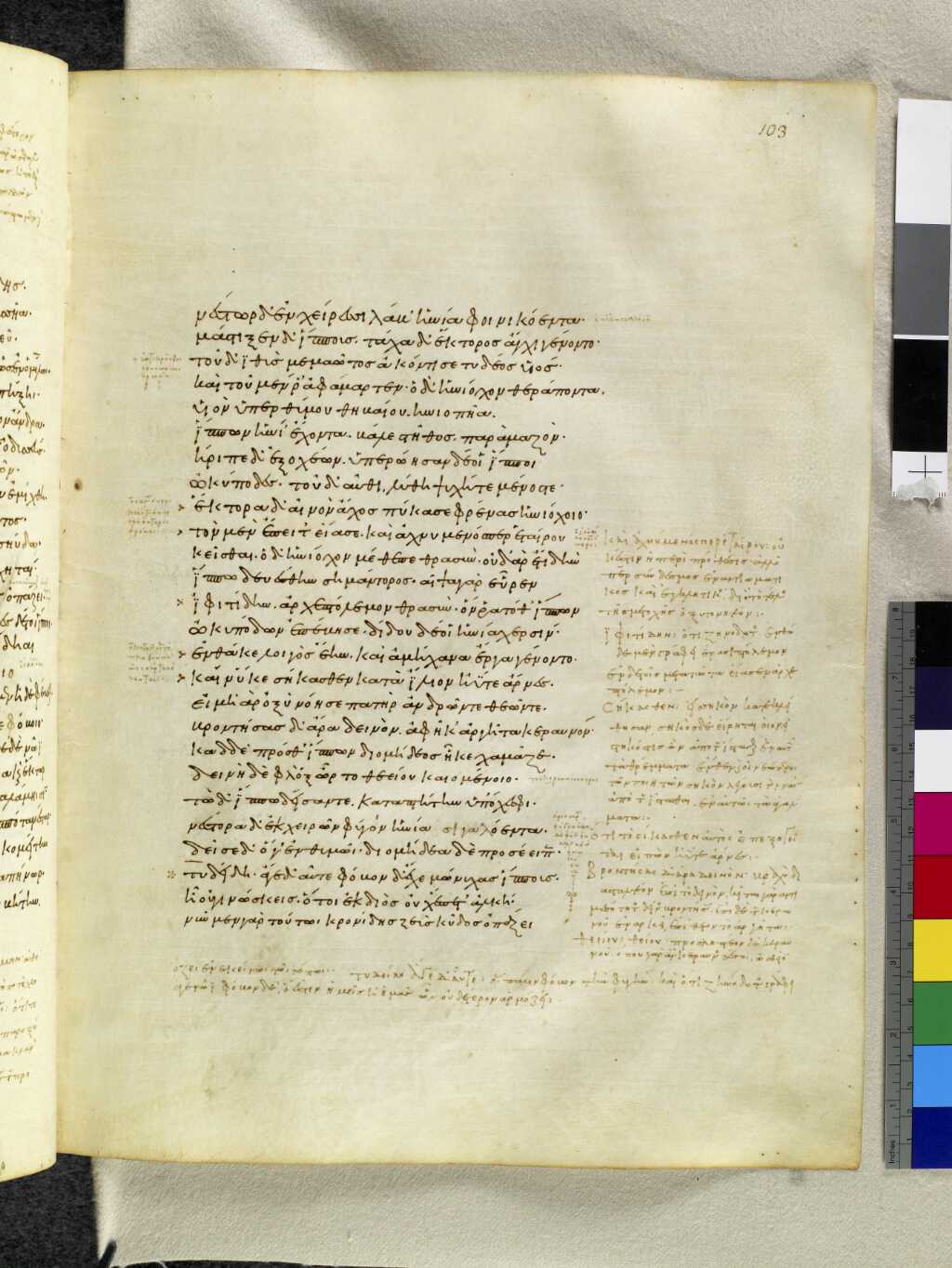
126κεῖσθαι, ὃ δʼ ἡνίοχον μέθεπε θρασύν· οὐδʼ ἄρʼ ἔτι δὴν 127ἵππω δευέσθην σημάντορος· αἶψα γὰρ εὗρεν 128Ἰφιτίδην Ἀρχεπτόλεμον θρασύν, ὅν ῥα τόθʼ ἵππων 129ὠκυπόδων ἐπέβησε, δίδου δέ οἱ ἡνία χερσίν. 130ἔνθά κε λοιγὸς ἔην καὶ ἀμήχανα ἔργα γένοντο, 131καί νύ κε σήκασθεν κατὰ Ἴλιον ἠΰτε ἄρνες, 132εἰ μὴ ἄρʼ ὀξὺ νόησε πατὴρ ἀνδρῶν τε θεῶν τε· 133βροντήσας δʼ ἄρα δεινὸν ἀφῆκʼ ἀργῆτα κεραυνόν, 134κὰδ δὲ πρόσθʼ ἵππων Διομήδεος ἧκε χαμᾶζε· 135δεινὴ δὲ φλὸξ ὦρτο θεείου καιομένοιο, 136τὼ δʼ ἵππω δείσαντε καταπτήτην ὑπʼ ὄχεσφι· 137Νέστορα δʼ ἐκ χειρῶν φύγον ἡνία σιγαλόεντα, 138δεῖσε δʼ ὅ γʼ ἐν θυμῷ, Διομήδεα δὲ προσέειπε· 139Τυδεΐδη ἄγε δʼ αὖτε φόβον δʼ ἔχε μώνυχας ἵππους. 140ἦ οὐ γιγνώσκεις ὅ τοι ἐκ Διὸς οὐχ ἕπετʼ ἀλκή; 141νῦν μὲν γὰρ τούτῳ Κρονίδης Ζεὺς κῦδος ὀπάζει 142σήμερον· ὕστερον αὖτε καὶ ἡμῖν, αἴ κʼ ἐθέλῃσι, 143δώσει· ἀνὴρ δέ κεν οὔ τι Διὸς νόον εἰρύσσαιτο 144οὐδὲ μάλʼ ἴφθιμος, ἐπεὶ ἦ πολὺ φέρτερός ἐστι. 145τὸν δʼ ἠμείβετʼ ἔπειτα βοὴν ἀγαθὸς Διομήδης· 146ναὶ δὴ ταῦτά γε πάντα γέρον κατὰ μοῖραν ἔειπες· 147ἀλλὰ τόδʼ αἰνὸν ἄχος κραδίην καὶ θυμὸν ἱκάνει· 148Ἕκτωρ γάρ ποτε φήσει ἐνὶ Τρώεσσʼ ἀγορεύων· 149Τυδεΐδης ὑπʼ ἐμεῖο φοβεύμενος ἵκετο νῆας. 150ὥς ποτʼ ἀπειλήσει· τότε μοι χάνοι εὐρεῖα χθών.
“Ulysses,” he cried, “noble son of Laertes where are you flying to, with your back turned like a coward? See that you are not struck with a spear between the shoulders. Stay here and help me to defend Nestor from this man’s furious onset.”
Ulysses would not give ear, but sped onward to the ships of the Achaeans, and the son of Tydeus flinging himself alone into the thick of the fight took his stand before the horses of the son of Neleus. “Sir,” said he, “these young warriors are pressing you hard, your force is spent, and age is heavy upon you, your squire is naught, and your horses are slow to move. Mount my chariot and see what the horses of Tros can do—how cleverly they can scud hither and thither over the plain either in flight or in pursuit. I took them from the hero Aeneas. Let our squires attend to your own steeds, but let us drive mine straight at the Trojans, that Hector may learn how furiously I too can wield my spear.”
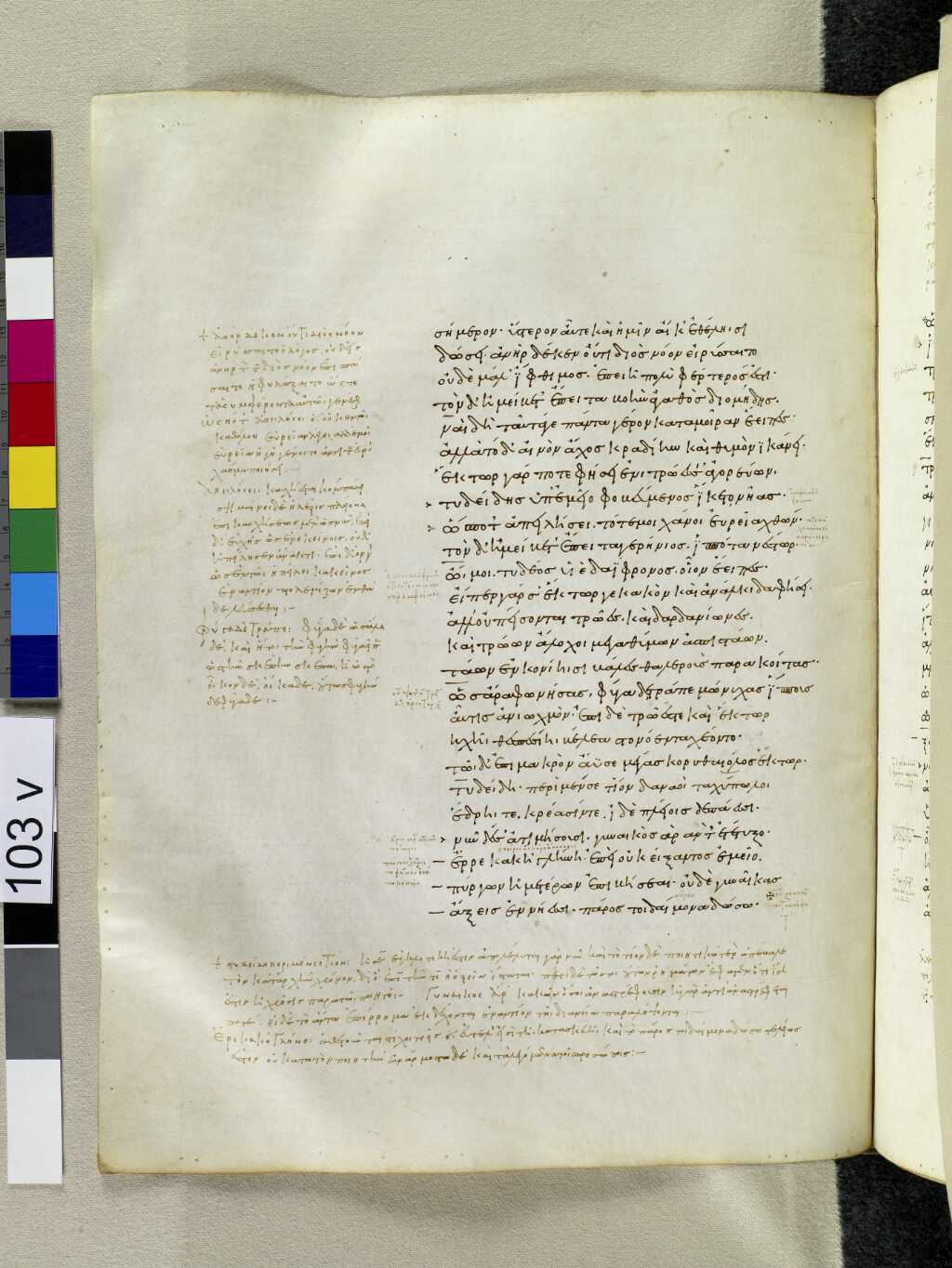
151τὸν δʼ ἠμείβετʼ ἔπειτα Γερήνιος ἱππότα Νέστωρ· 152ὤ μοι Τυδέος υἱὲ δαΐφρονος, οἷον ἔειπες. 153εἴ περ γάρ σʼ Ἕκτωρ γε κακὸν καὶ ἀνάλκιδα φήσει, 154ἀλλʼ οὐ πείσονται Τρῶες καὶ Δαρδανίωνες 155καὶ Τρώων ἄλοχοι μεγαθύμων ἀσπιστάων, 156τάων ἐν κονίῃσι βάλες θαλεροὺς παρακοίτας. 157ὣς ἄρα φωνήσας φύγαδε τράπε μώνυχας ἵππους 158αὖτις ἀνʼ ἰωχμόν· ἐπὶ δὲ Τρῶές τε καὶ Ἕκτωρ 159ἠχῇ θεσπεσίῃ βέλεα στονόεντα χέοντο. 160τῷ δʼ ἐπὶ μακρὸν ἄϋσε μέγας κορυθαίολος Ἕκτωρ· 161Τυδεΐδη περὶ μέν σε τίον Δαναοὶ ταχύπωλοι 162ἕδρῃ τε κρέασίν τε ἰδὲ πλείοις δεπάεσσι· 163νῦν δέ σʼ ἀτιμήσουσι· γυναικὸς ἄρʼ ἀντὶ τέτυξο. 164ἔρρε κακὴ γλήνη, ἐπεὶ οὐκ εἴξαντος ἐμεῖο 165πύργων ἡμετέρων ἐπιβήσεαι, οὐδὲ γυναῖκας 166ἄξεις ἐν νήεσσι· πάρος τοι δαίμονα δώσω. 167ὣς φάτο, Τυδεΐδης δὲ διάνδιχα μερμήριξεν 168ἵππους τε στρέψαι καὶ ἐναντίβιον μαχέσασθαι. 169τρὶς μὲν μερμήριξε κατὰ φρένα καὶ κατὰ θυμόν, 170τρὶς δʼ ἄρʼ ἀπʼ Ἰδαίων ὀρέων κτύπε μητίετα Ζεὺς 171σῆμα τιθεὶς Τρώεσσι μάχης ἑτεραλκέα νίκην. 172Ἕκτωρ δὲ Τρώεσσιν ἐκέκλετο μακρὸν ἀΰσας· 173Τρῶες καὶ Λύκιοι καὶ Δάρδανοι ἀγχιμαχηταὶ 174ἀνέρες ἔστε φίλοι, μνήσασθε δὲ θούριδος ἀλκῆς. 175γιγνώσκω δʼ ὅτι μοι πρόφρων κατένευσε Κρονίων
Nestor knight of Gerene hearkened to his words. Thereon the doughty squires, Sthenelus and kind-hearted Eurymedon, saw to Nestor’s horses, while the two both mounted Diomed’s chariot. Nestor took the reins in his hands and lashed the horses on; they were soon close up with Hector, and the son of Tydeus aimed a spear at him as he was charging full speed towards them. He missed him, but struck his charioteer and squire Eniopeus son of noble Thebaeus in the breast by the nipple while the reins were in his hands, so that he died there and then, and the horses swerved as he fell headlong from the chariot. Hector was greatly grieved at the loss of his charioteer, but let him lie for all his sorrow, while he went in quest of another driver; nor did his steeds have to go long without one, for he presently found brave Archeptolemus the son of Iphitus, and made him get up behind the horses, giving the reins into his hand.
All had then been lost and no help for it, for they would have been penned up in Ilius like sheep, had not the sire of gods and men been quick to mark, and hurled a fiery flaming thunderbolt which fell just in front of Diomed’s horses with a flare of burning brimstone. The horses were frightened and tried to back beneath the car, while the reins dropped from Nestor’s hands. Then he was afraid and said to Diomed, “Son of Tydeus, turn your horses in flight; see you not that the hand of Jove is against you? To-day he vouchsafes victory to Hector; to-morrow, if it so please him, he will again grant it to ourselves; no man, however brave, may thwart the purpose of Jove, for he is far stronger than any.”
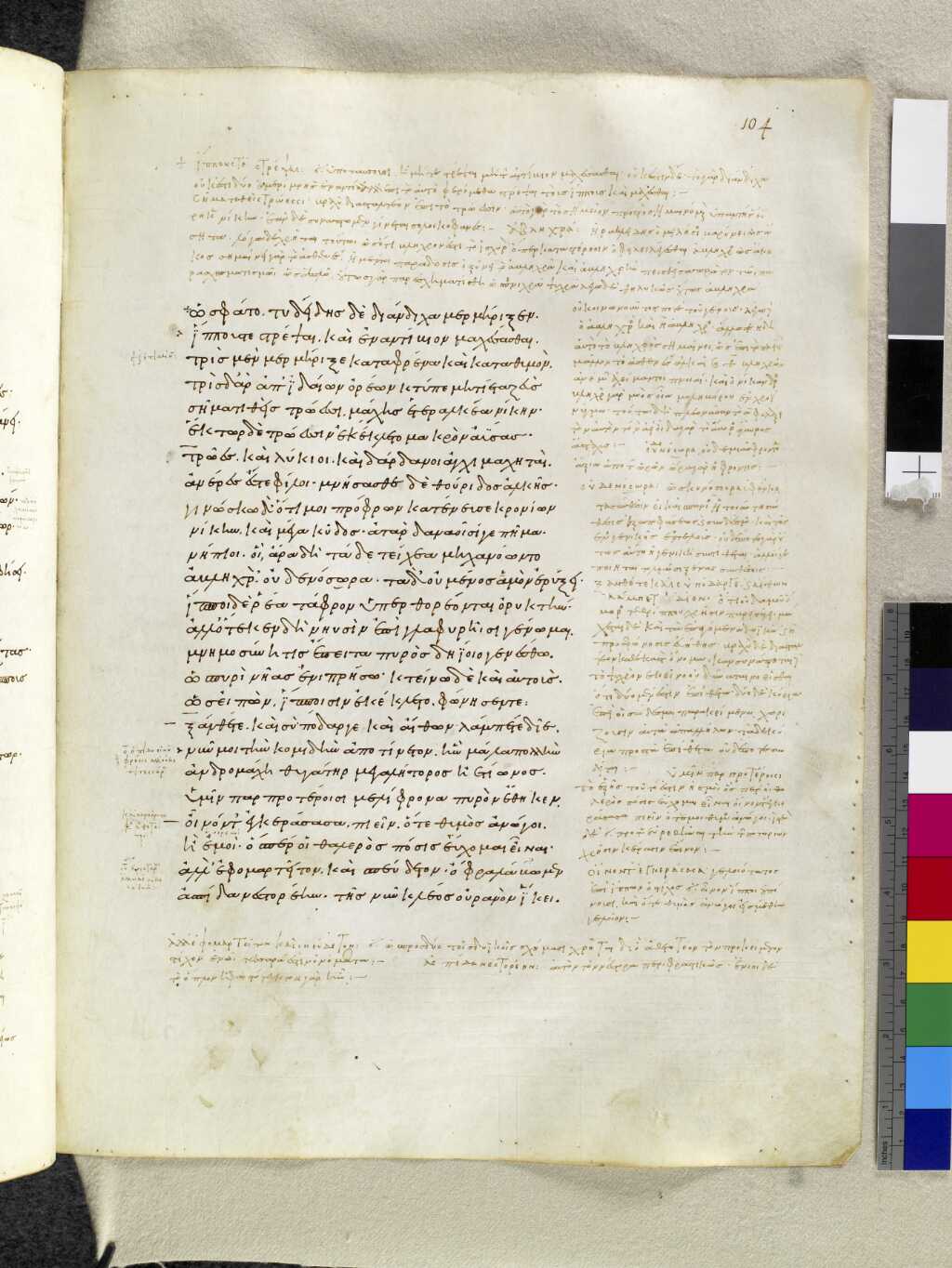
176νίκην καὶ μέγα κῦδος, ἀτὰρ Δαναοῖσί γε πῆμα· 177νήπιοι οἳ ἄρα δὴ τάδε τείχεα μηχανόωντο 178ἀβλήχρʼ οὐδενόσωρα· τὰ δʼ οὐ μένος ἁμὸν ἐρύξει· 179ἵπποι δὲ ῥέα τάφρον ὑπερθορέονται ὀρυκτήν. 180ἀλλʼ ὅτε κεν δὴ νηυσὶν ἔπι γλαφυρῇσι γένωμαι, 181μνημοσύνη τις ἔπειτα πυρὸς δηΐοιο γενέσθω, 182ὡς πυρὶ νῆας ἐνιπρήσω, κτείνω δὲ καὶ αὐτοὺς 183Ἀργείους παρὰ νηυσὶν ἀτυζομένους ὑπὸ καπνοῦ. 184ὣς εἰπὼν ἵπποισιν ἐκέκλετο φώνησέν τε· 185Ξάνθέ τε καὶ σὺ Πόδαργε καὶ Αἴθων Λάμπέ τε δῖε 186νῦν μοι τὴν κομιδὴν ἀποτίνετον, ἣν μάλα πολλὴν 187Ἀνδρομάχη θυγάτηρ μεγαλήτορος Ἠετίωνος 188ὑμῖν πὰρ προτέροισι μελίφρονα πυρὸν ἔθηκεν 189οἶνόν τʼ ἐγκεράσασα πιεῖν, ὅτε θυμὸς ἀνώγοι, 190ἢ ἐμοί, ὅς πέρ οἱ θαλερὸς πόσις εὔχομαι εἶναι. 191ἀλλʼ ἐφομαρτεῖτον καὶ σπεύδετον ὄφρα λάβωμεν 192ἀσπίδα Νεστορέην, τῆς νῦν κλέος οὐρανὸν ἵκει 193πᾶσαν χρυσείην ἔμεναι, κανόνας τε καὶ αὐτήν, 194αὐτὰρ ἀπʼ ὤμοιιν Διομήδεος ἱπποδάμοιο 195δαιδάλεον θώρηκα, τὸν Ἥφαιστος κάμε τεύχων. 196εἰ τούτω κε λάβοιμεν, ἐελποίμην κεν Ἀχαιοὺς 197αὐτονυχὶ νηῶν ἐπιβησέμεν ὠκειάων. 198ὣς ἔφατʼ εὐχόμενος, νεμέσησε δὲ πότνια Ἥρη, 199σείσατο δʼ εἰνὶ θρόνῳ, ἐλέλιξε δὲ μακρὸν Ὄλυμπον, 200καί ῥα Ποσειδάωνα μέγαν θεὸν ἀντίον ηὔδα·
Diomed answered, “All that you have said is true; there is a grief however which pierces me to the very heart, for Hector will talk among the Trojans and say, ‘The son of Tydeus fled before me to the ships.’ This is the vaunt he will make, and may earth then swallow me.”
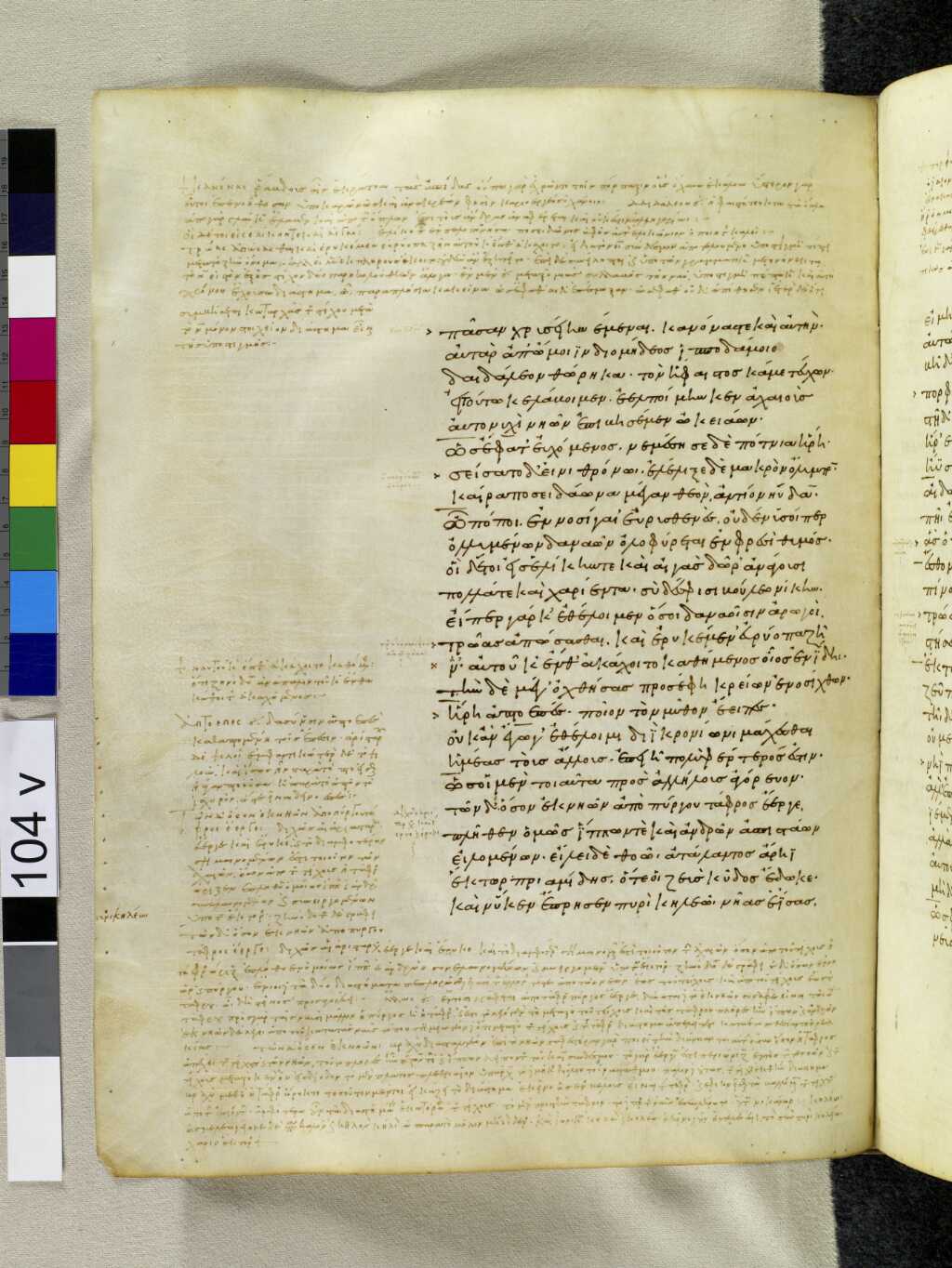
201ὢ πόποι ἐννοσίγαιʼ εὐρυσθενές, οὐδέ νυ σοί περ 202ὀλλυμένων Δαναῶν ὀλοφύρεται ἐν φρεσὶ θυμός. 203οἳ δέ τοι εἰς Ἑλίκην τε καὶ Αἰγὰς δῶρʼ ἀνάγουσι 204πολλά τε καὶ χαρίεντα· σὺ δέ σφισι βούλεο νίκην. 205εἴ περ γάρ κʼ ἐθέλοιμεν, ὅσοι Δαναοῖσιν ἀρωγοί, 206Τρῶας ἀπώσασθαι καὶ ἐρυκέμεν εὐρύοπα Ζῆν, 207αὐτοῦ κʼ ἔνθʼ ἀκάχοιτο καθήμενος οἶος ἐν Ἴδῃ. 208τὴν δὲ μέγʼ ὀχθήσας προσέφη κρείων ἐνοσίχθων· 209Ἥρη ἀπτοεπὲς ποῖον τὸν μῦθον ἔειπες. 210οὐκ ἂν ἔγωγʼ ἐθέλοιμι Διὶ Κρονίωνι μάχεσθαι 211ἡμέας τοὺς ἄλλους, ἐπεὶ ἦ πολὺ φέρτερός ἐστιν. 212ὣς οἳ μὲν τοιαῦτα πρὸς ἀλλήλους ἀγόρευον· 213τῶν δʼ ὅσον ἐκ νηῶν ἀπὸ πύργου τάφρος ἔεργε 214πλῆθεν ὁμῶς ἵππων τε καὶ ἀνδρῶν ἀσπιστάων 215εἰλομένων· εἴλει δὲ θοῷ ἀτάλαντος Ἄρηϊ 216Ἕκτωρ Πριαμίδης, ὅτε οἱ Ζεὺς κῦδος ἔδωκε. 217καί νύ κʼ ἐνέπρησεν πυρὶ κηλέῳ νῆας ἐΐσας, 218εἰ μὴ ἐπὶ φρεσὶ θῆκʼ Ἀγαμέμνονι πότνια Ἥρη 219αὐτῷ ποιπνύσαντι θοῶς ὀτρῦναι Ἀχαιούς. 220βῆ δʼ ἰέναι παρά τε κλισίας καὶ νῆας Ἀχαιῶν 221πορφύρεον μέγα φᾶρος ἔχων ἐν χειρὶ παχείῃ, 222στῆ δʼ ἐπʼ Ὀδυσσῆος μεγακήτεϊ νηῒ μελαίνῃ, 223ἥ ῥʼ ἐν μεσσάτῳ ἔσκε γεγωνέμεν ἀμφοτέρωσε, 224ἠμὲν ἐπʼ Αἴαντος κλισίας Τελαμωνιάδαο 225ἠδʼ ἐπʼ Ἀχιλλῆος, τοί ῥʼ ἔσχατα νῆας ἐΐσας
“Son of Tydeus,” replied Nestor, “what mean you? Though Hector say that you are a coward the Trojans and Dardanians will not believe him, nor yet the wives of the mighty warriors whom you have laid low.”
So saying he turned the horses back through the thick of the battle, and with a cry that rent the air the Trojans and Hector rained their darts after them. Hector shouted to him and said, “Son of Tydeus, the Danaans have done you honour hitherto as regards your place at table, the meals they give you, and the filling of your cup with wine. Henceforth they will despise you, for you are become no better than a woman. Be off, girl and coward that you are, you shall not scale our walls through any flinching upon my part; neither shall you carry off our wives in your ships, for I shall kill you with my own hand.”
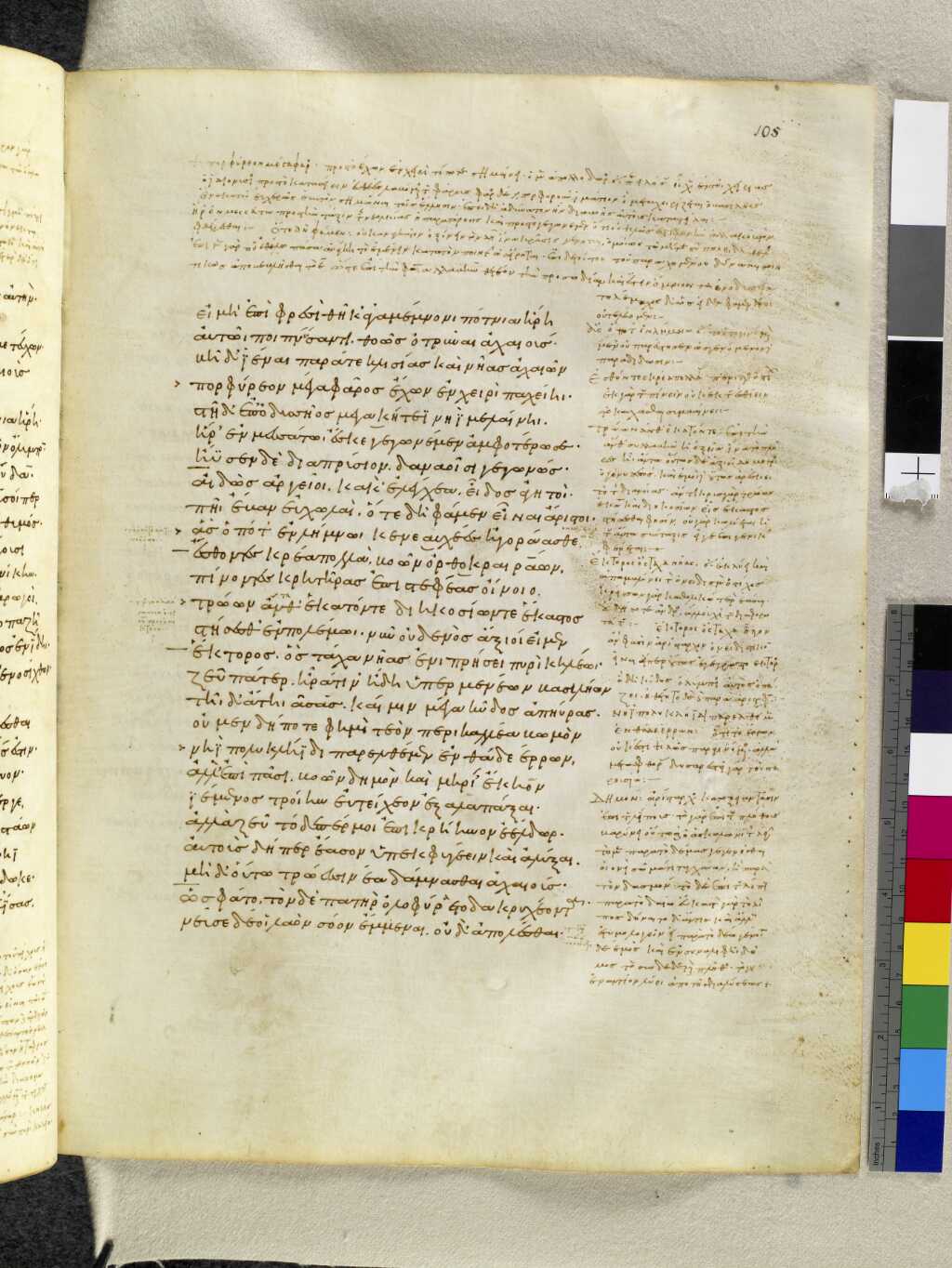
226εἴρυσαν, ἠνορέῃ πίσυνοι καὶ κάρτεϊ χειρῶν· 227ἤϋσεν δὲ διαπρύσιον Δαναοῖσι γεγωνώς· 228αἰδὼς Ἀργεῖοι, κάκʼ ἐλέγχεα, εἶδος ἀγητοί· 229πῇ ἔβαν εὐχωλαί, ὅτε δὴ φάμεν εἶναι ἄριστοι, 230ἃς ὁπότʼ ἐν Λήμνῳ κενεαυχέες ἠγοράασθε, 231ἔσθοντες κρέα πολλὰ βοῶν ὀρθοκραιράων 232πίνοντες κρητῆρας ἐπιστεφέας οἴνοιο, 233Τρώων ἄνθʼ ἑκατόν τε διηκοσίων τε ἕκαστος 234στήσεσθʼ ἐν πολέμῳ· νῦν δʼ οὐδʼ ἑνὸς ἄξιοί εἰμεν 235Ἕκτορος, ὃς τάχα νῆας ἐνιπρήσει πυρὶ κηλέῳ. 236Ζεῦ πάτερ, ἦ ῥά τινʼ ἤδη ὑπερμενέων βασιλήων 237τῇδʼ ἄτῃ ἄασας καί μιν μέγα κῦδος ἀπηύρας; 238οὐ μὲν δή ποτέ φημι τεὸν περικαλλέα βωμὸν 239νηῒ πολυκλήϊδι παρελθέμεν ἐνθάδε ἔρρων, 240ἀλλʼ ἐπὶ πᾶσι βοῶν δημὸν καὶ μηρίʼ ἔκηα 241ἱέμενος Τροίην εὐτείχεον ἐξαλαπάξαι. 242ἀλλὰ Ζεῦ τόδε πέρ μοι ἐπικρήηνον ἐέλδωρ· 243αὐτοὺς δή περ ἔασον ὑπεκφυγέειν καὶ ἀλύξαι, 244μηδʼ οὕτω Τρώεσσιν ἔα δάμνασθαι Ἀχαιούς. 245ὣς φάτο, τὸν δὲ πατὴρ ὀλοφύρατο δάκρυ χέοντα, 246νεῦσε δέ οἱ λαὸν σόον ἔμμεναι οὐδʼ ἀπολέσθαι. 247αὐτίκα δʼ αἰετὸν ἧκε τελειότατον πετεηνῶν, 248νεβρὸν ἔχοντʼ ὀνύχεσσι τέκος ἐλάφοιο ταχείης· 249πὰρ δὲ Διὸς βωμῷ περικαλλέϊ κάββαλε νεβρόν, 250ἔνθα πανομφαίῳ Ζηνὶ ῥέζεσκον Ἀχαιοί.
The son of Tydeus was in two minds whether or no to turn his horses round again and fight him. Thrice did he doubt, and thrice did Jove thunder from the heights of Ida in token to the Trojans that he would turn the battle in their favour. Hector then shouted to them and said, “Trojans, Lycians, and Dardanians, lovers of close fighting, be men, my friends, and fight with might and with main; I see that Jove is minded to vouchsafe victory and great glory to myself, while he will deal destruction upon the Danaans. Fools, for having thought of building this weak and worthless wall. It shall not stay my fury; my horses will spring lightly over their trench, and when I am at their ships forget not to bring me fire that I may burn them, while I slaughter the Argives who will be all dazed and bewildered by the smoke.”
Then he cried to his horses, “Xanthus and Podargus, and you Aethon and goodly Lampus, pay me for your keep now and for all the honey-sweet corn with which Andromache daughter of great Eetion has fed you, and for she has mixed wine and water for you to drink whenever you would, before doing so even for me who am her own husband. Haste in pursuit, that we may take the shield of Nestor, the fame of which ascends to heaven, for it is of solid gold, arm-rods and all, and that we may strip from the shoulders of Diomed the cuirass which Vulcan made him. Could we take these two things, the Achaeans would set sail in their ships this self-same night.”
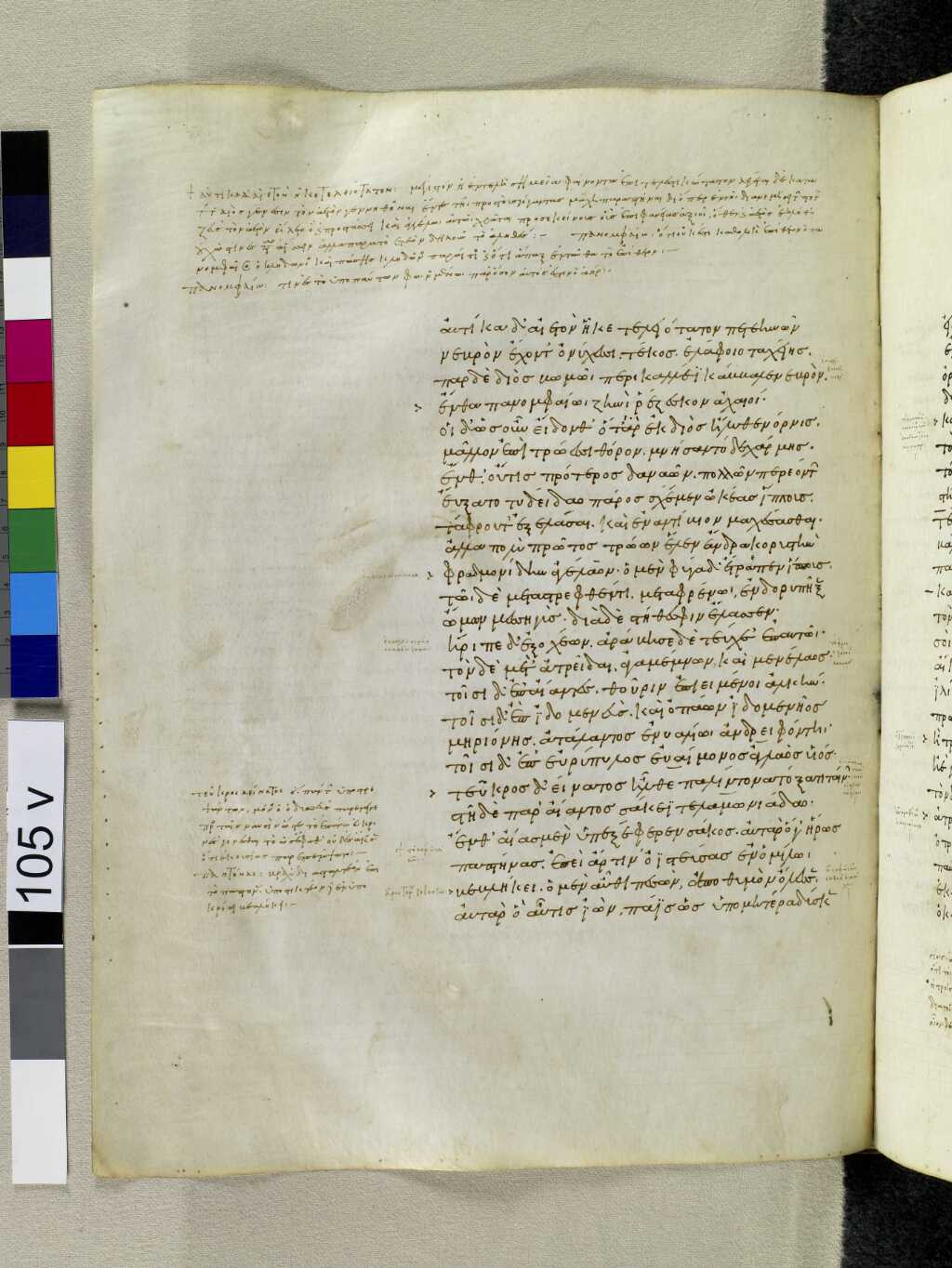
251οἳ δʼ ὡς οὖν εἴδονθʼ ὅ τʼ ἄρʼ ἐκ Διὸς ἤλυθεν ὄρνις, 252μᾶλλον ἐπὶ Τρώεσσι θόρον, μνήσαντο δὲ χάρμης. 253ἔνθʼ οὔ τις πρότερος Δαναῶν πολλῶν περ ἐόντων 254εὔξατο Τυδεΐδαο πάρος σχέμεν ὠκέας ἵππους 255τάφρου τʼ ἐξελάσαι καὶ ἐναντίβιον μαχέσασθαι, 256ἀλλὰ πολὺ πρῶτος Τρώων ἕλεν ἄνδρα κορυστὴν 257Φραδμονίδην Ἀγέλαον· ὃ μὲν φύγαδʼ ἔτραπεν ἵππους· 258τῷ δὲ μεταστρεφθέντι μεταφρένῳ ἐν δόρυ πῆξεν 259ὤμων μεσσηγύς, διὰ δὲ στήθεσφιν ἔλασσεν· 260ἤριπε δʼ ἐξ ὀχέων, ἀράβησε δὲ τεύχεʼ ἐπʼ αὐτῷ. 261τὸν δὲ μετʼ Ἀτρεΐδαι Ἀγαμέμνων καὶ Μενέλαος, 262τοῖσι δʼ ἐπʼ Αἴαντες θοῦριν ἐπιειμένοι ἀλκήν, 263τοῖσι δʼ ἐπʼ Ἰδομενεὺς καὶ ὀπάων Ἰδομενῆος 264Μηριόνης ἀτάλαντος Ἐνυαλίῳ ἀνδρειφόντῃ, 265τοῖσι δʼ ἐπʼ Εὐρύπυλος Εὐαίμονος ἀγλαὸς υἱός· 266Τεῦκρος δʼ εἴνατος ἦλθε παλίντονα τόξα τιταίνων, 267στῆ δʼ ἄρʼ ὑπʼ Αἴαντος σάκεϊ Τελαμωνιάδαο. 268ἔνθʼ Αἴας μὲν ὑπεξέφερεν σάκος· αὐτὰρ ὅ γʼ ἥρως 269παπτήνας, ἐπεὶ ἄρ τινʼ ὀϊστεύσας ἐν ὁμίλῳ 270βεβλήκοι, ὃ μὲν αὖθι πεσὼν ἀπὸ θυμὸν ὄλεσσεν, 271αὐτὰρ ὃ αὖτις ἰὼν πάϊς ὣς ὑπὸ μητέρα δύσκεν 272εἰς Αἴανθʼ· ὃ δέ μιν σάκεϊ κρύπτασκε φαεινῷ. 273ἔνθα τίνα πρῶτον Τρώων ἕλε Τεῦκρος ἀμύμων; 274Ὀρσίλοχον μὲν πρῶτα καὶ Ὄρμενον ἠδʼ Ὀφελέστην 275Δαίτορά τε Χρομίον τε καὶ ἀντίθεον Λυκοφόντην
Thus did he vaunt, but Queen Juno made high Olympus quake as she shook with rage upon her throne. Then said she to the mighty god of Neptune, “What now, wide ruling lord of the earthquake? Can you find no compassion in your heart for the dying Danaans, who bring you many a welcome offering to Helice and to Aegae? Wish them well then. If all of us who are with the Danaans were to drive the Trojans back and keep Jove from helping them, he would have to sit there sulking alone on Ida.”
King Neptune was greatly troubled and answered, “Juno, rash of tongue, what are you talking about? We other gods must not set ourselves against Jove, for he is far stronger than we are.”
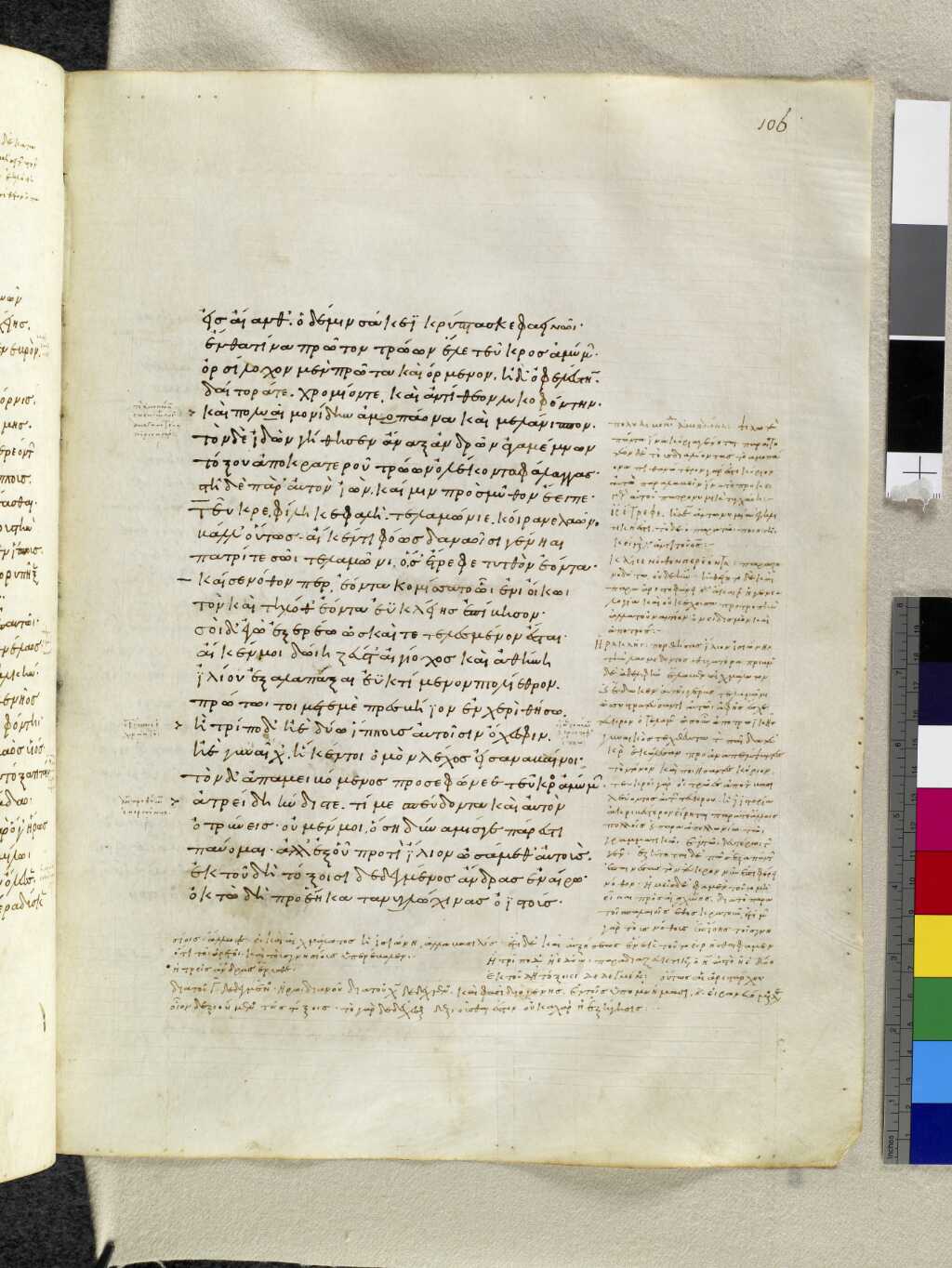
276καὶ Πολυαιμονίδην Ἀμοπάονα καὶ Μελάνιππον, 277πάντας ἐπασσυτέρους πέλασε χθονὶ πουλυβοτείρῃ. 278τὸν δὲ ἰδὼν γήθησεν ἄναξ ἀνδρῶν Ἀγαμέμνων 279τόξου ἄπο κρατεροῦ Τρώων ὀλέκοντα φάλαγγας· 280στῆ δὲ παρʼ αὐτὸν ἰὼν καί μιν πρὸς μῦθον ἔειπε· 281Τεῦκρε φίλη κεφαλή, Τελαμώνιε κοίρανε λαῶν 282βάλλʼ οὕτως, αἴ κέν τι φόως Δαναοῖσι γένηαι 283πατρί τε σῷ Τελαμῶνι, ὅ σʼ ἔτρεφε τυτθὸν ἐόντα, 284καί σε νόθον περ ἐόντα κομίσσατο ᾧ ἐνὶ οἴκῳ· 285τὸν καὶ τηλόθʼ ἐόντα ἐϋκλείης ἐπίβησον. 286σοὶ δʼ ἐγὼ ἐξερέω ὡς καὶ τετελεσμένον ἔσται· 287αἴ κέν μοι δώῃ Ζεύς τʼ αἰγίοχος καὶ Ἀθήνη 288Ἰλίου ἐξαλαπάξαι ἐϋκτίμενον πτολίεθρον, 289πρώτῳ τοι μετʼ ἐμὲ πρεσβήϊον ἐν χερὶ θήσω, 290ἢ τρίποδʼ ἠὲ δύω ἵππους αὐτοῖσιν ὄχεσφιν 291ἠὲ γυναῖχʼ, ἥ κέν τοι ὁμὸν λέχος εἰσαναβαίνοι. 292τὸν δʼ ἀπαμειβόμενος προσεφώνεε Τεῦκρος ἀμύμων· 293Ἀτρεΐδη κύδιστε τί με σπεύδοντα καὶ αὐτὸν 294ὀτρύνεις; οὐ μέν τοι ὅση δύναμίς γε πάρεστι 295παύομαι, ἀλλʼ ἐξ οὗ προτὶ Ἴλιον ὠσάμεθʼ αὐτοὺς 296ἐκ τοῦ δὴ τόξοισι δεδεγμένος ἄνδρας ἐναίρω. 297ὀκτὼ δὴ προέηκα τανυγλώχινας ὀϊστούς, 298πάντες δʼ ἐν χροῒ πῆχθεν ἀρηϊθόων αἰζηῶν· 299τοῦτον δʼ οὐ δύναμαι βαλέειν κύνα λυσσητῆρα. 300ἦ ῥα καὶ ἄλλον ὀϊστὸν ἀπὸ νευρῆφιν ἴαλλεν
Thus did they converse; but the whole space enclosed by the ditch, from the ships even to the wall, was filled with horses and warriors, who were pent up there by Hector son of Priam, now that the hand of Jove was with him. He would even have set fire to the ships and burned them, had not Queen Juno put it into the mind of Agamemnon, to bestir himself and to encourage the Achaeans. To this end he went round the ships and tents carrying a great purple cloak, and took his stand by the huge black hull of Ulysses’ ship, which was middlemost of all; it was from this place that his voice would carry farthest, on the one hand towards the tents of Ajax son of Telamon, and on the other towards those of Achilles—for these two heroes, well assured of their own strength, had valorously drawn up their ships at the two ends of the line. From this spot then, with a voice that could be heard afar, he shouted to the Danaans, saying, “Argives, shame on you cowardly creatures, brave in semblance only; where are now our vaunts that we should prove victorious—the vaunts we made so vaingloriously in Lemnos, when we ate the flesh of horned cattle and filled our mixing-bowls to the brim? You vowed that you would each of you stand against a hundred or two hundred men, and now you prove no match even for one—for Hector, who will be ere long setting our ships in a blaze. Father Jove, did you ever so ruin a great king and rob him so utterly of his greatness? Yet, when to my sorrow I was coming hither, I never let my ship pass your altars without offering the fat and thigh-bones of heifers upon every one of them, so eager was I to sack the city of Troy. Vouchsafe me then this prayer—suffer us to escape at any rate with our lives, and let not the Achaeans be so utterly vanquished by the Trojans.”
Thus did he pray, and father Jove pitying his tears vouchsafed him that his people should live, not die; forthwith he sent them an eagle, most unfailingly portentous of all birds, with a young fawn in its talons; the eagle dropped the fawn by the altar on which the Achaeans sacrificed to Jove the lord of omens; when, therefore, the people saw that the bird had come from Jove, they sprang more fiercely upon the Trojans and fought more boldly.
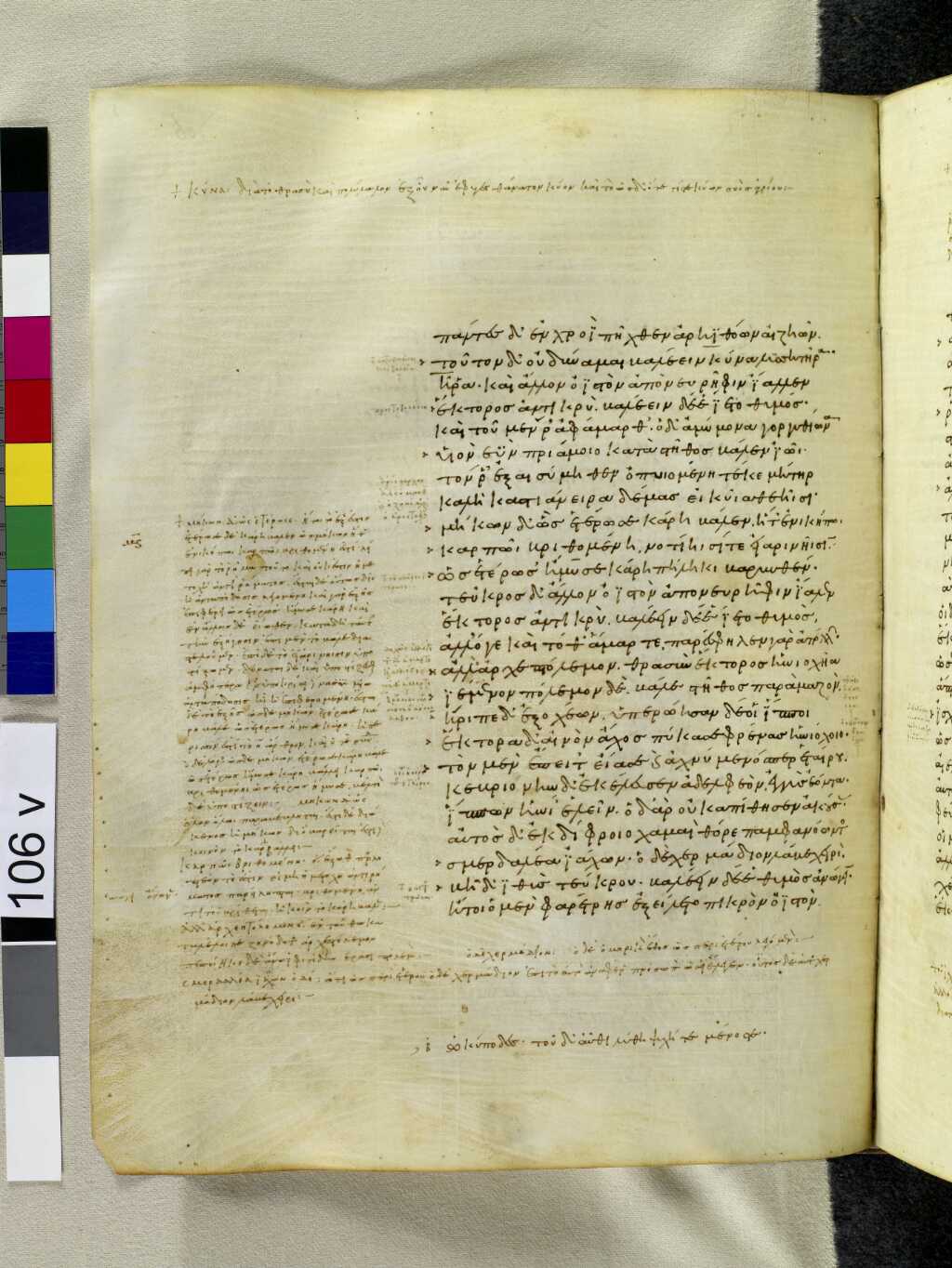
301Ἕκτορος ἀντικρύ, βαλέειν δέ ἑ ἵετο θυμός· 302καὶ τοῦ μέν ῥʼ ἀφάμαρθʼ, ὃ δʼ ἀμύμονα Γοργυθίωνα 303υἱὸν ἐῢν Πριάμοιο κατὰ στῆθος βάλεν ἰῷ, 304τόν ῥʼ ἐξ Αἰσύμηθεν ὀπυιομένη τέκε μήτηρ 305καλὴ Καστιάνειρα δέμας ἐϊκυῖα θεῇσι. 306μήκων δʼ ὡς ἑτέρωσε κάρη βάλεν, ἥ τʼ ἐνὶ κήπῳ 307καρπῷ βριθομένη νοτίῃσί τε εἰαρινῇσιν, 308ὣς ἑτέρωσʼ ἤμυσε κάρη πήληκι βαρυνθέν. 309Τεῦκρος δʼ ἄλλον ὀϊστὸν ἀπὸ νευρῆφιν ἴαλλεν 310Ἕκτορος ἀντικρύ, βαλέειν δέ ἑ ἵετο θυμός. 311ἀλλʼ ὅ γε καὶ τόθʼ ἅμαρτε· παρέσφηλεν γὰρ Ἀπόλλων· 312ἀλλʼ Ἀρχεπτόλεμον θρασὺν Ἕκτορος ἡνιοχῆα 313ἱέμενον πόλεμον δὲ βάλε στῆθος παρὰ μαζόν· 314ἤριπε δʼ ἐξ ὀχέων, ὑπερώησαν δέ οἱ ἵπποι 315ὠκύποδες· τοῦ δʼ αὖθι λύθη ψυχή τε μένος τε. 316Ἕκτορα δʼ αἰνὸν ἄχος πύκασε φρένας ἡνιόχοιο· 317τὸν μὲν ἔπειτʼ εἴασε καὶ ἀχνύμενός περ ἑταίρου, 318Κεβριόνην δʼ ἐκέλευσεν ἀδελφεὸν ἐγγὺς ἐόντα 319ἵππων ἡνίʼ ἑλεῖν· ὃ δʼ ἄρʼ οὐκ ἀπίθησεν ἀκούσας. 320αὐτὸς δʼ ἐκ δίφροιο χαμαὶ θόρε παμφανόωντος 321σμερδαλέα ἰάχων· ὃ δὲ χερμάδιον λάβε χειρί, 322βῆ δʼ ἰθὺς Τεύκρου, βαλέειν δέ ἑ θυμὸς ἀνώγει. 323ἤτοι ὃ μὲν φαρέτρης ἐξείλετο πικρὸν ὀϊστόν, 324θῆκε δʼ ἐπὶ νευρῇ· τὸν δʼ αὖ κορυθαίολος Ἕκτωρ 325αὐερύοντα παρʼ ὦμον, ὅθι κληῒς ἀποέργει
There was no man of all the many Danaans who could then boast that he had driven his horses over the trench and gone forth to fight sooner than the son of Tydeus; long before any one else could do so he slew an armed warrior of the Trojans, Agelaus the son of Phradmon. He had turned his horses in flight, but the spear struck him in the back midway between his shoulders and went right through his chest, and his armour rang rattling round him as he fell forward from his chariot.
After him came Agamemnon and Menelaus, sons of Atreus, the two Ajaxes clothed in valour as with a garment, Idomeneus and his companion in arms Meriones, peer of murderous Mars, and Eurypylus the brave son of Euaemon. Ninth came Teucer with his bow, and took his place under cover of the shield of Ajax son of Telamon. When Ajax lifted his shield Teucer would peer round, and when he had hit any one in the throng, the man would fall dead; then Teucer would hie back to Ajax as a child to its mother, and again duck down under his shield.
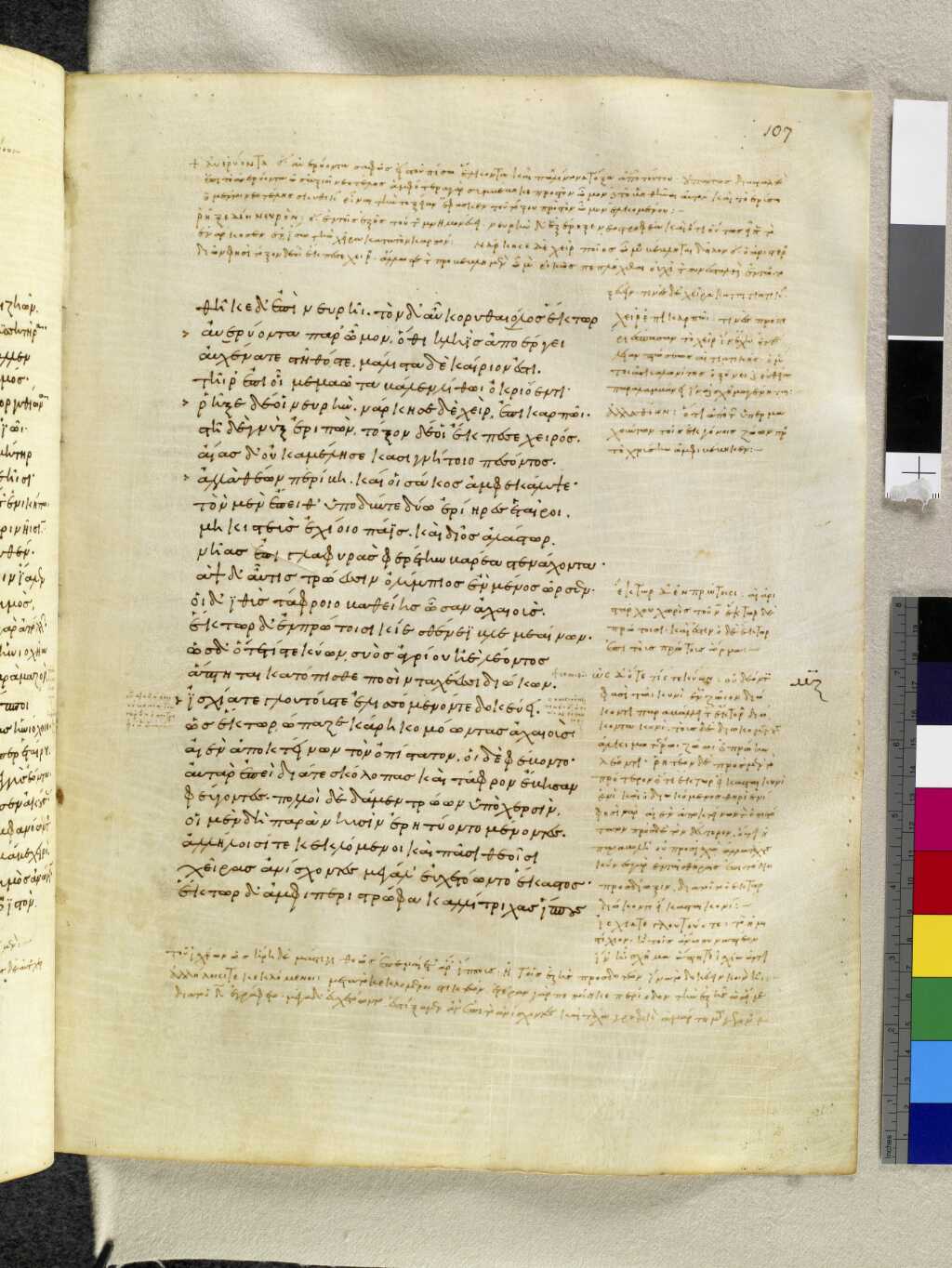
326αὐχένα τε στῆθός τε, μάλιστα δὲ καίριόν ἐστι, 327τῇ ῥʼ ἐπὶ οἷ μεμαῶτα βάλεν λίθῳ ὀκριόεντι, 328ῥῆξε δέ οἱ νευρήν· νάρκησε δὲ χεὶρ ἐπὶ καρπῷ, 329στῆ δὲ γνὺξ ἐριπών, τόξον δέ οἱ ἔκπεσε χειρός. 330Αἴας δʼ οὐκ ἀμέλησε κασιγνήτοιο πεσόντος, 331ἀλλὰ θέων περίβη καί οἱ σάκος ἀμφεκάλυψε. 332τὸν μὲν ἔπειθʼ ὑποδύντε δύω ἐρίηρες ἑταῖροι 333Μηκιστεὺς Ἐχίοιο πάϊς καὶ δῖος Ἀλάστωρ 334νῆας ἔπι γλαφυρὰς φερέτην βαρέα στενάχοντα. 335ἂψ δʼ αὖτις Τρώεσσιν Ὀλύμπιος ἐν μένος ὦρσεν· 336οἳ δʼ ἰθὺς τάφροιο βαθείης ὦσαν Ἀχαιούς· 337Ἕκτωρ δʼ ἐν πρώτοισι κίε σθένεϊ βλεμεαίνων. 338ὡς δʼ ὅτε τίς τε κύων συὸς ἀγρίου ἠὲ λέοντος 339ἅπτηται κατόπισθε ποσὶν ταχέεσσι διώκων 340ἰσχία τε γλουτούς τε, ἑλισσόμενόν τε δοκεύει, 341ὣς Ἕκτωρ ὤπαζε κάρη κομόωντας Ἀχαιούς, 342αἰὲν ἀποκτείνων τὸν ὀπίστατον· οἳ δὲ φέβοντο. 343αὐτὰρ ἐπεὶ διά τε σκόλοπας καὶ τάφρον ἔβησαν 344φεύγοντες, πολλοὶ δὲ δάμεν Τρώων ὑπὸ χερσίν, 345οἳ μὲν δὴ παρὰ νηυσὶν ἐρητύοντο μένοντες, 346ἀλλήλοισί τε κεκλόμενοι καὶ πᾶσι θεοῖσι 347χεῖρας ἀνίσχοντες μεγάλʼ εὐχετόωντο ἕκαστος· 348Ἕκτωρ δʼ ἀμφιπεριστρώφα καλλίτριχας ἵππους 349Γοργοῦς ὄμματʼ ἔχων ἠδὲ βροτολοιγοῦ Ἄρηος. 350τοὺς δὲ ἰδοῦσʼ ἐλέησε θεὰ λευκώλενος Ἥρη,
Which of the Trojans did brave Teucer first kill? Orsilochus, and then Ormenus and Ophelestes, Daetor, Chromius, and godlike Lycophontes, Amopaon son of Polyaemon, and Melanippus. All these in turn did he lay low upon the earth, and King Agamemnon was glad when he saw him making havoc of the Trojans with his mighty bow. He went up to him and said, “Teucer, man after my own heart, son of Telamon, captain among the host, shoot on, and be at once the saving of the Danaans and the glory of your father Telamon, who brought you up and took care of you in his own house when you were a child, bastard though you were. Cover him with glory though he is far off; I will promise and I will assuredly perform; if aegis-bearing Jove and Minerva grant me to sack the city of Ilius, you shall have the next best meed of honour after my own—a tripod, or two horses with their chariot, or a woman who shall go up into your bed.”
And Teucer answered, “Most noble son of Atreus, you need not urge me; from the moment we began to drive them back to Ilius, I have never ceased so far as in me lies to look out for men whom I can shoot and kill; I have shot eight barbed shafts, and all of them have been buried in the flesh of warlike youths, but this mad dog I cannot hit.”
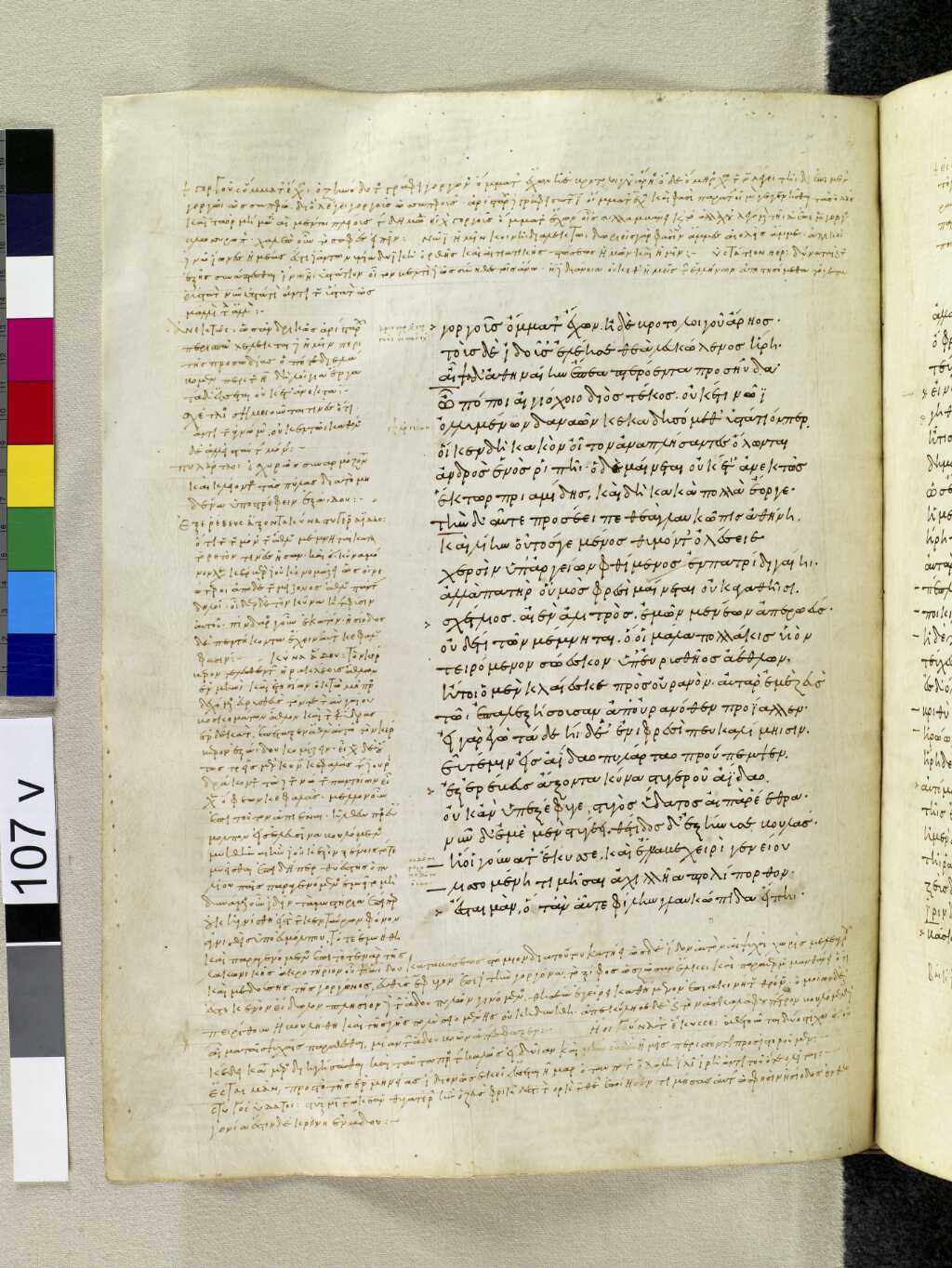
351αἶψα δʼ Ἀθηναίην ἔπεα πτερόεντα προσηύδα· 352ὢ πόποι αἰγιόχοιο Διὸς τέκος οὐκέτι νῶϊ 353ὀλλυμένων Δαναῶν κεκαδησόμεθʼ ὑστάτιόν περ; 354οἵ κεν δὴ κακὸν οἶτον ἀναπλήσαντες ὄλωνται 355ἀνδρὸς ἑνὸς ῥιπῇ, ὃ δὲ μαίνεται οὐκέτʼ ἀνεκτῶς 356Ἕκτωρ Πριαμίδης, καὶ δὴ κακὰ πολλὰ ἔοργε. 357τὴν δʼ αὖτε προσέειπε θεὰ γλαυκῶπις Ἀθήνη· 358καὶ λίην οὗτός γε μένος θυμόν τʼ ὀλέσειε 359χερσὶν ὑπʼ Ἀργείων φθίμενος ἐν πατρίδι γαίῃ· 360ἀλλὰ πατὴρ οὑμὸς φρεσὶ μαίνεται οὐκ ἀγαθῇσι 361σχέτλιος, αἰὲν ἀλιτρός, ἐμῶν μενέων ἀπερωεύς· 362οὐδέ τι τῶν μέμνηται, ὅ οἱ μάλα πολλάκις υἱὸν 363τειρόμενον σώεσκον ὑπʼ Εὐρυσθῆος ἀέθλων. 364ἤτοι ὃ μὲν κλαίεσκε πρὸς οὐρανόν, αὐτὰρ ἐμὲ Ζεὺς 365τῷ ἐπαλεξήσουσαν ἀπʼ οὐρανόθεν προΐαλλεν. 366εἰ γὰρ ἐγὼ τάδε ᾔδεʼ ἐνὶ φρεσὶ πευκαλίμῃσιν 367εὖτέ μιν εἰς Ἀΐδαο πυλάρταο προὔπεμψεν 368ἐξ Ἐρέβευς ἄξοντα κύνα στυγεροῦ Ἀΐδαο, 369οὐκ ἂν ὑπεξέφυγε Στυγὸς ὕδατος αἰπὰ ῥέεθρα. 370νῦν δʼ ἐμὲ μὲν στυγέει, Θέτιδος δʼ ἐξήνυσε βουλάς, 371ἥ οἱ γούνατʼ ἔκυσσε καὶ ἔλλαβε χειρὶ γενείου, 372λισσομένη τιμῆσαι Ἀχιλλῆα πτολίπορθον. 373ἔσται μὰν ὅτʼ ἂν αὖτε φίλην γλαυκώπιδα εἴπῃ. 374ἀλλὰ σὺ μὲν νῦν νῶϊν ἐπέντυε μώνυχας ἵππους, 375ὄφρʼ ἂν ἐγὼ καταδῦσα Διὸς δόμον αἰγιόχοιο
As he spoke he aimed another arrow straight at Hector, for he was bent on hitting him; nevertheless he missed him, and the arrow hit Priam’s brave son Gorgythion in the breast. His mother, fair Castianeira, lovely as a goddess, had been married from Aesyme, and now he bowed his head as a garden poppy in full bloom when it is weighed down by showers in spring—even thus heavy bowed his head beneath the weight of his helmet.
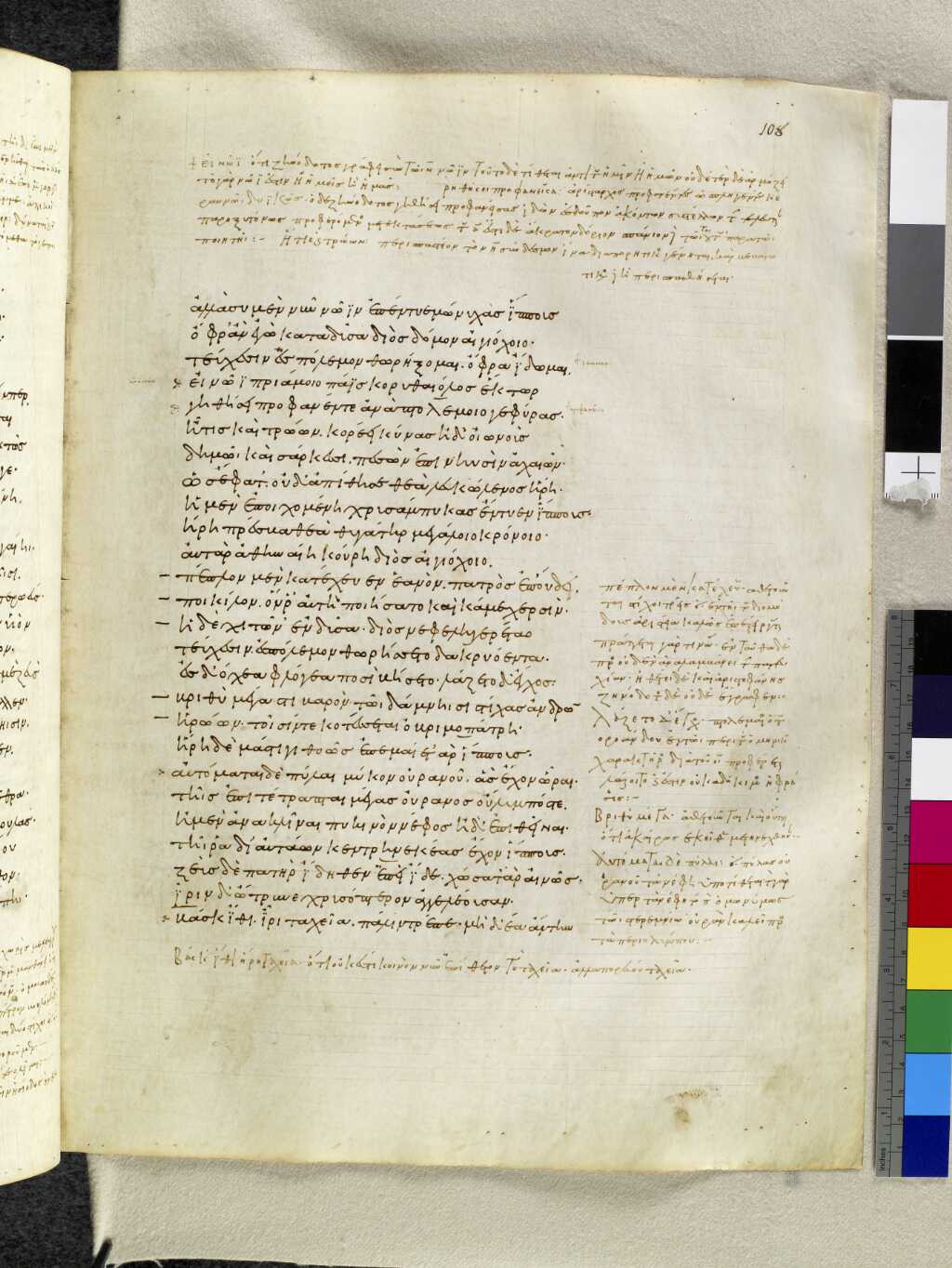
376τεύχεσιν ἐς πόλεμον θωρήξομαι, ὄφρα ἴδωμαι 377ἢ νῶϊ Πριάμοιο πάϊς κορυθαίολος Ἕκτωρ 378γηθήσει προφανέντε ἀνὰ πτολέμοιο γεφύρας, 379ἦ τις καὶ Τρώων κορέει κύνας ἠδʼ οἰωνοὺς 380δημῷ καὶ σάρκεσσι, πεσὼν ἐπὶ νηυσὶν Ἀχαιῶν. 381ὣς ἔφατʼ, οὐδʼ ἀπίθησε θεὰ λευκώλενος Ἥρη. 382ἣ μὲν ἐποιχομένη χρυσάμπυκας ἔντυεν ἵππους 383Ἥρη πρέσβα θεὰ θυγάτηρ μεγάλοιο Κρόνοιο· 384αὐτὰρ Ἀθηναίη κούρη Διὸς αἰγιόχοιο 385πέπλον μὲν κατέχευεν ἑανὸν πατρὸς ἐπʼ οὔδει 386ποικίλον, ὅν ῥʼ αὐτὴ ποιήσατο καὶ κάμε χερσίν, 387ἣ δὲ χιτῶνʼ ἐνδῦσα Διὸς νεφεληγερέταο 388τεύχεσιν ἐς πόλεμον θωρήσσετο δακρυόεντα. 389ἐς δʼ ὄχεα φλόγεα ποσὶ βήσετο, λάζετο δʼ ἔγχος 390βριθὺ μέγα στιβαρόν, τῷ δάμνησι στίχας ἀνδρῶν 391ἡρώων, τοῖσίν τε κοτέσσεται ὀβριμοπάτρη. 392Ἥρη δὲ μάστιγι θοῶς ἐπεμαίετʼ ἄρʼ ἵππους· 393αὐτόμαται δὲ πύλαι μύκον οὐρανοῦ ἃς ἔχον Ὧραι, 394τῇς ἐπιτέτραπται μέγας οὐρανὸς Οὔλυμπός τε 395ἠμὲν ἀνακλῖναι πυκινὸν νέφος ἠδʼ ἐπιθεῖναι. 396τῇ ῥα διʼ αὐτάων κεντρηνεκέας ἔχον ἵππους. 397Ζεὺς δὲ πατὴρ Ἴδηθεν ἐπεὶ ἴδε χώσατʼ ἄρʼ αἰνῶς, 398Ἶριν δʼ ὄτρυνε χρυσόπτερον ἀγγελέουσαν· 399βάσκʼ ἴθι Ἶρι ταχεῖα, πάλιν τρέπε μηδʼ ἔα ἄντην 400ἔρχεσθʼ· οὐ γὰρ καλὰ συνοισόμεθα πτόλεμον δέ.
Again he aimed at Hector, for he was longing to hit him, and again his arrow missed, for Apollo turned it aside; but he hit Hector’s brave charioteer Archeptolemus in the breast, by the nipple, as he was driving furiously into the fight. The horses swerved aside as he fell headlong from the chariot, and there was no life left in him. Hector was greatly grieved at the loss of his charioteer, but for all his sorrow he let him lie where he fell, and bade his brother Cebriones, who was hard by, take the reins. Cebriones did as he had said. Hector thereon with a loud cry sprang from his chariot to the ground, and seizing a great stone made straight for Teucer with intent to kill him. Teucer had just taken an arrow from his quiver and had laid it upon the bowstring, but Hector struck him with the jagged stone as he was taking aim and drawing the string to his shoulder; he hit him just where the collar-bone divides the neck from the chest, a very deadly place, and broke the sinew of his arm so that his wrist was less, and the bow dropped from his hand as he fell forward on his knees. Ajax saw that his brother had fallen, and running towards him bestrode him and sheltered him with his shield. Meanwhile his two trusty squires, Mecisteus son of Echius, and Alastor, came up and bore him to the ships groaning in his great pain.
Jove now again put heart into the Trojans, and they drove the Achaeans to their deep trench with Hector in all his glory at their head. As a hound grips a wild boar or lion in flank or buttock when he gives him chase, and watches warily for his wheeling, even so did Hector follow close upon the Achaeans, ever killing the hindmost as they rushed panic-stricken onwards. When they had fled through the set stakes and trench and many Achaeans had been laid low at the hands of the Trojans, they halted at their ships, calling upon one another and praying every man instantly as they lifted up their hands to the gods; but Hector wheeled his horses this way and that, his eyes glaring like those of Gorgo or murderous Mars.
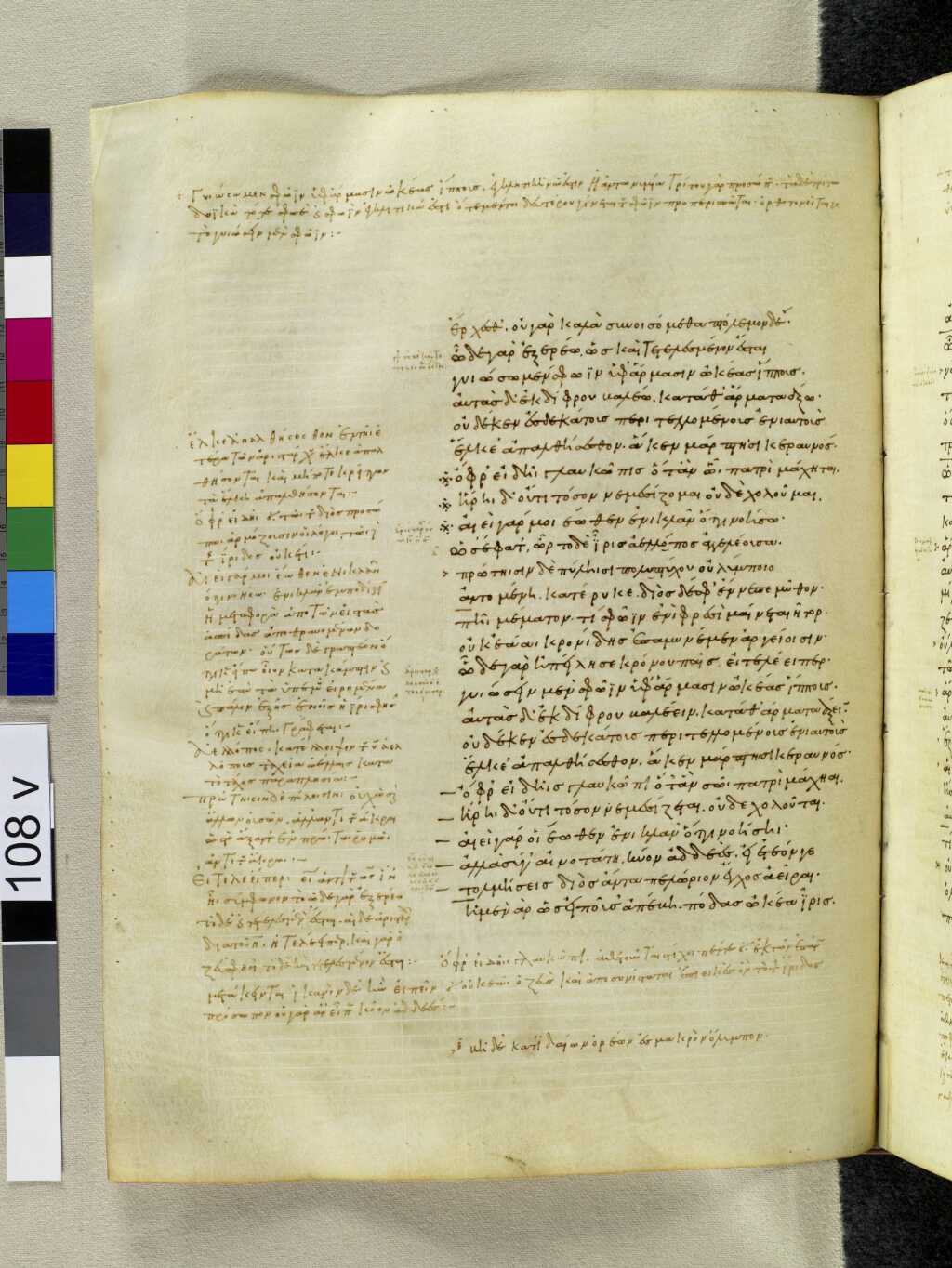
401ὧδε γὰρ ἐξερέω, τὸ δὲ καὶ τετελεσμένον ἔσται· 402γυιώσω μέν σφωϊν ὑφʼ ἅρμασιν ὠκέας ἵππους, 403αὐτὰς δʼ ἐκ δίφρου βαλέω κατά θʼ ἅρματα ἄξω· 404οὐδέ κεν ἐς δεκάτους περιτελλομένους ἐνιαυτοὺς 405ἕλκεʼ ἀπαλθήσεσθον, ἅ κεν μάρπτῃσι κεραυνός· 406ὄφρα ἰδῇ γλαυκῶπις ὅτʼ ἂν ᾧ πατρὶ μάχηται. 407Ἥρῃ δʼ οὔ τι τόσον νεμεσίζομαι οὐδὲ χολοῦμαι· 408αἰεὶ γάρ μοι ἔωθεν ἐνικλᾶν ὅττί κεν εἴπω. 409ὣς ἔφατʼ, ὦρτο δὲ Ἶρις ἀελλόπος ἀγγελέουσα, 410βῆ δʼ ἐξ Ἰδαίων ὀρέων ἐς μακρὸν Ὄλυμπον. 411πρώτῃσιν δὲ πύλῃσι πολυπτύχου Οὐλύμποιο 412ἀντομένη κατέρυκε, Διὸς δέ σφʼ ἔννεπε μῦθον· 413πῇ μέματον; τί σφῶϊν ἐνὶ φρεσὶ μαίνεται ἦτορ; 414οὐκ ἐάᾳ Κρονίδης ἐπαμυνέμεν Ἀργείοισιν. 415ὧδε γὰρ ἠπείλησε Κρόνου πάϊς, ᾗ τελέει περ, 416γυιώσειν μὲν σφῶϊν ὑφʼ ἅρμασιν ὠκέας ἵππους, 417αὐτὰς δʼ ἐκ δίφρου βαλέειν κατά θʼ ἅρματα ἄξειν· 418οὐδέ κεν ἐς δεκάτους περιτελλομένους ἐνιαυτοὺς 419ἕλκεʼ ἀπαλθήσεσθον, ἅ κεν μάρπτῃσι κεραυνός· 420ὄφρα ἰδῇς γλαυκῶπι ὅτʼ ἂν σῷ πατρὶ μάχηαι. 421Ἥρῃ δʼ οὔ τι τόσον νεμεσίζεται οὐδὲ χολοῦται· 422αἰεὶ γάρ οἱ ἔωθεν ἐνικλᾶν ὅττι κεν εἴπῃ· 423ἀλλὰ σύ γʼ αἰνοτάτη κύον ἀδεὲς εἰ ἐτεόν γε 424τολμήσεις Διὸς ἄντα πελώριον ἔγχος ἀεῖραι. 425ἣ μὲν ἄρʼ ὣς εἰποῦσʼ ἀπέβη πόδας ὠκέα Ἶρις,
Juno when she saw them had pity upon them, and at once said to Minerva, “Alas, child of aegis-bearing Jove, shall you and I take no more thought for the dying Danaans, though it be the last time we ever do so? See how they perish and come to a bad end before the onset of but a single man. Hector the son of Priam rages with intolerable fury, and has already done great mischief.”
Minerva answered, “Would, indeed, this fellow might die in his own land, and fall by the hands of the Achaeans; but my father Jove is mad with spleen, ever foiling me, ever headstrong and unjust. He forgets how often I saved his son when he was worn out by the labours Eurystheus had laid on him. He would weep till his cry came up to heaven, and then Jove would send me down to help him; if I had had the sense to foresee all this, when Eurystheus sent him to the house of Hades, to fetch the hell-hound from Erebus, he would never have come back alive out of the deep waters of the river Styx. And now Jove hates me, while he lets Thetis have her way because she kissed his knees and took hold of his beard, when she was begging him to do honour to Achilles. I shall know what to do next time he begins calling me his grey-eyed darling. Get our horses ready, while I go within the house of aegis-bearing Jove and put on my armour; we shall then find out whether Priam’s son Hector will be glad to meet us in the highways of battle, or whether the Trojans will glut hounds and vultures with the fat of their flesh as they be dead by the ships of the Achaeans.”
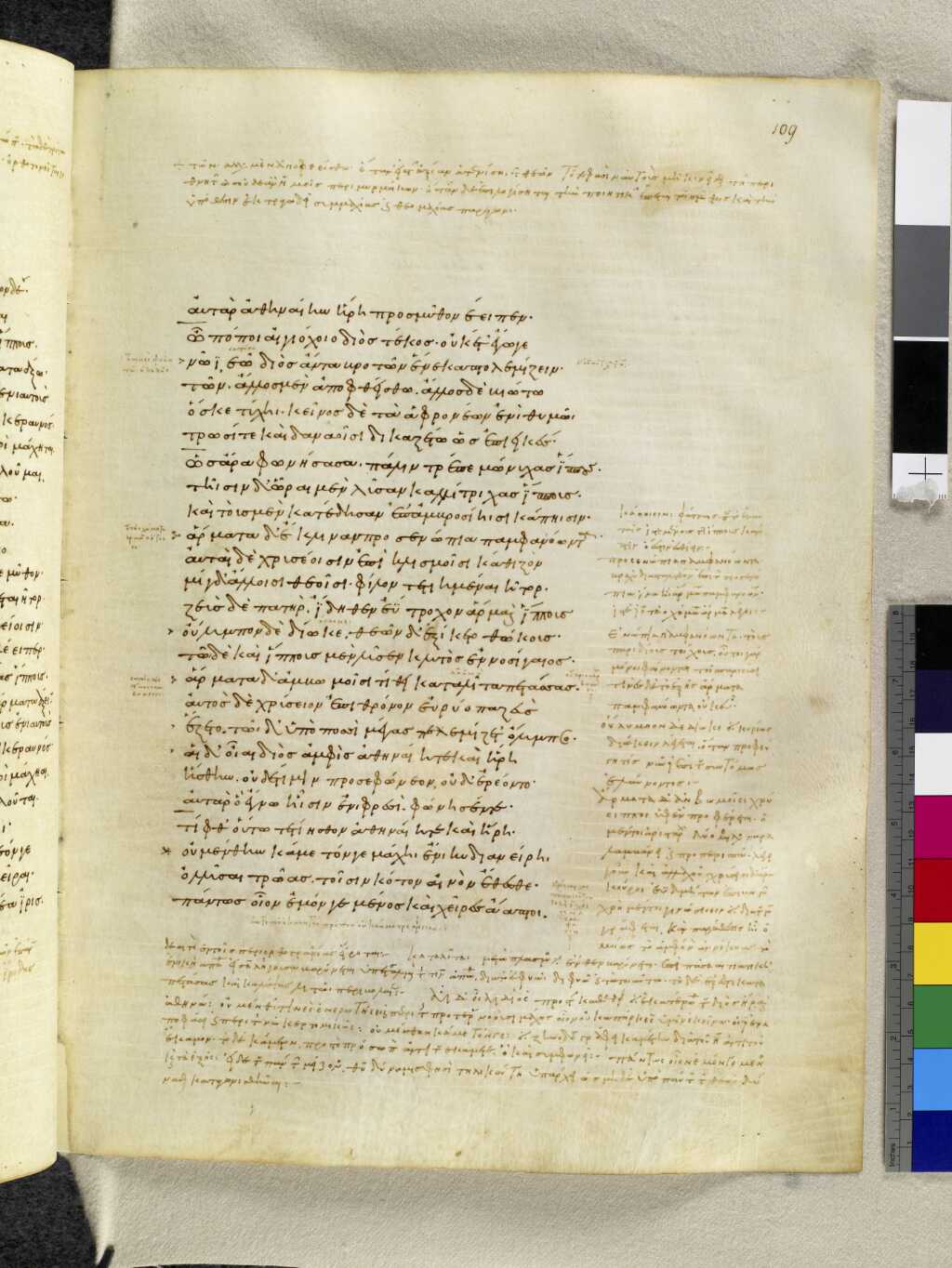
426αὐτὰρ Ἀθηναίην Ἥρη πρὸς μῦθον ἔειπεν· 427ὢ πόποι αἰγιόχοιο Διὸς τέκος, οὐκέτʼ ἔγωγε 428νῶϊ ἐῶ Διὸς ἄντα βροτῶν ἕνεκα πτολεμίζειν· 429τῶν ἄλλος μὲν ἀποφθίσθω, ἄλλος δὲ βιώτω, 430ὅς κε τύχῃ· κεῖνος δὲ τὰ ἃ φρονέων ἐνὶ θυμῷ 431Τρωσί τε καὶ Δαναοῖσι δικαζέτω, ὡς ἐπιεικές. 432ὣς ἄρα φωνήσασα πάλιν τρέπε μώνυχας ἵππους· 433τῇσιν δʼ Ὧραι μὲν λῦσαν καλλίτριχας ἵππους, 434καὶ τοὺς μὲν κατέδησαν ἐπʼ ἀμβροσίῃσι κάπῃσιν, 435ἅρματα δʼ ἔκλιναν πρὸς ἐνώπια παμφανόωντα· 436αὐταὶ δὲ χρυσέοισιν ἐπὶ κλισμοῖσι κάθιζον 437μίγδʼ ἄλλοισι θεοῖσι, φίλον τετιημέναι ἦτορ. 438Ζεὺς δὲ πατὴρ Ἴδηθεν ἐΰτροχον ἅρμα καὶ ἵππους 439Οὔλυμπον δὲ δίωκε, θεῶν δʼ ἐξίκετο θώκους. 440τῷ δὲ καὶ ἵππους μὲν λῦσε κλυτὸς ἐννοσίγαιος, 441ἅρματα δʼ ἂμ βωμοῖσι τίθει κατὰ λῖτα πετάσσας· 442αὐτὸς δὲ χρύσειον ἐπὶ θρόνον εὐρύοπα Ζεὺς 443ἕζετο, τῷ δʼ ὑπὸ ποσσὶ μέγας πελεμίζετʼ Ὄλυμπος. 444αἳ δʼ οἶαι Διὸς ἀμφὶς Ἀθηναίη τε καὶ Ἥρη 445ἥσθην, οὐδέ τί μιν προσεφώνεον οὐδʼ ἐρέοντο· 446αὐτὰρ ὃ ἔγνω ᾗσιν ἐνὶ φρεσὶ φώνησέν τε· 447τίφθʼ οὕτω τετίησθον Ἀθηναίη τε καὶ Ἥρη; 448οὐ μέν θην κάμετόν γε μάχῃ ἔνι κυδιανείρῃ 449ὀλλῦσαι Τρῶας, τοῖσιν κότον αἰνὸν ἔθεσθε. 450πάντως, οἷον ἐμόν γε μένος καὶ χεῖρες ἄαπτοι,
Thus did she speak and white-armed Juno, daughter of great Saturn, obeyed her words; she set about harnessing her gold-bedizened steeds, while Minerva daughter of aegis-bearing Jove flung her richly vesture, made with her own hands, on to the threshold of her father, and donned the shirt of Jove, arming herself for battle. Then she stepped into her flaming chariot, and grasped the spear so stout and sturdy and strong with which she quells the ranks of heroes who have displeased her. Juno lashed her horses, and the gates of heaven bellowed as they flew open of their own accord—gates over which the Hours preside, in whose hands are heaven and Olympus, either to open the dense cloud that hides them or to close it. Through these the goddesses drove their obedient steeds.
But father Jove when he saw them from Ida was very angry, and sent winged Iris with a message to them. “Go,” said he, “fleet Iris, turn them back, and see that they do not come near me, for if we come to fighting there will be mischief. This is what I say, and this is what I mean to do. I will lame their horses for them; I will hurl them from their chariot, and will break it in pieces. It will take them all ten years to heal the wounds my lightning shall inflict upon them; my grey-eyed daughter will then learn what quarrelling with her father means. I am less surprised and angry with Juno, for whatever I say she always contradicts me.”
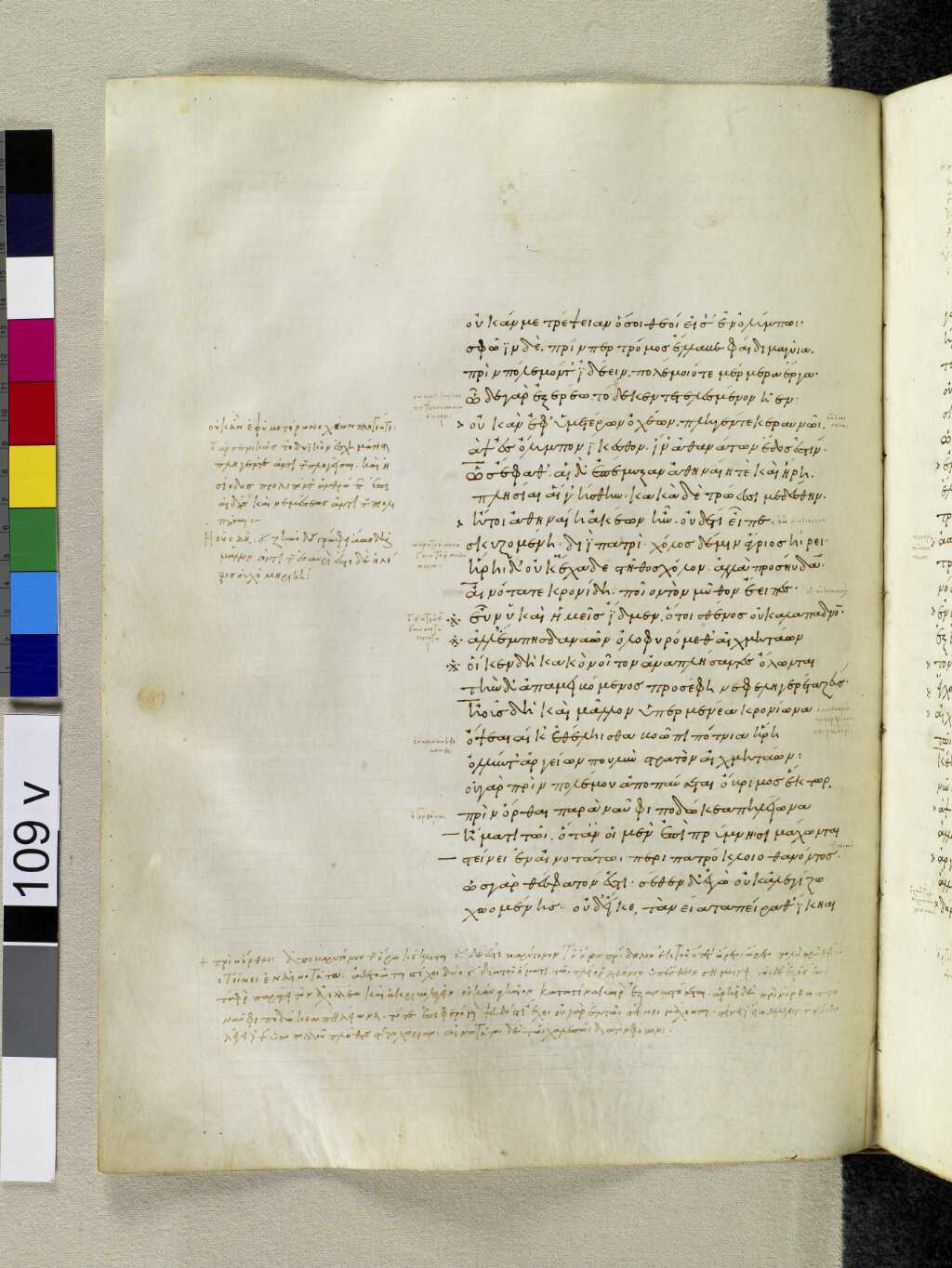
451οὐκ ἄν με τρέψειαν ὅσοι θεοί εἰσʼ ἐν Ὀλύμπῳ. 452σφῶϊν δὲ πρίν περ τρόμος ἔλλαβε φαίδιμα γυῖα 453πρὶν πόλεμόν τε ἰδεῖν πολέμοιό τε μέρμερα ἔργα. 454ὧδε γὰρ ἐξερέω, τὸ δέ κεν τετελεσμένον ἦεν· 455οὐκ ἂν ἐφʼ ὑμετέρων ὀχέων πληγέντε κεραυνῷ 456ἂψ ἐς Ὄλυμπον ἵκεσθον, ἵνʼ ἀθανάτων ἕδος ἐστίν. 457ὣς ἔφαθʼ, αἳ δʼ ἐπέμυξαν Ἀθηναίη τε καὶ Ἥρη· 458πλησίαι αἵ γʼ ἥσθην, κακὰ δὲ Τρώεσσι μεδέσθην. 459ἤτοι Ἀθηναίη ἀκέων ἦν οὐδέ τι εἶπε 460σκυζομένη Διὶ πατρί, χόλος δέ μιν ἄγριος ᾕρει· 461Ἥρῃ δʼ οὐκ ἔχαδε στῆθος χόλον, ἀλλὰ προσηύδα· 462αἰνότατε Κρονίδη ποῖον τὸν μῦθον ἔειπες. 463εὖ νυ καὶ ἡμεῖς ἴδμεν ὅ τοι σθένος οὐκ ἀλαπαδνόν· 464ἀλλʼ ἔμπης Δαναῶν ὀλοφυρόμεθʼ αἰχμητάων, 465οἵ κεν δὴ κακὸν οἶτον ἀναπλήσαντες ὄλωνται. 466ἀλλʼ ἤτοι πολέμου μὲν ἀφεξόμεθʼ, εἰ σὺ κελεύεις· 467βουλὴν δʼ Ἀργείοις ὑποθησόμεθʼ ἥ τις ὀνήσει, 468ὡς μὴ πάντες ὄλωνται ὀδυσσαμένοιο τεοῖο. 469τὴν δʼ ἀπαμειβόμενος προσέφη νεφεληγερέτα Ζεύς· 470ἠοῦς δὴ καὶ μᾶλλον ὑπερμενέα Κρονίωνα 471ὄψεαι, αἴ κʼ ἐθέλῃσθα, βοῶπις πότνια Ἥρη 472ὀλλύντʼ Ἀργείων πουλὺν στρατὸν αἰχμητάων· 473οὐ γὰρ πρὶν πολέμου ἀποπαύσεται ὄβριμος Ἕκτωρ 474πρὶν ὄρθαι παρὰ ναῦφι ποδώκεα Πηλεΐωνα, 475ἤματι τῷ ὅτʼ ἂν οἳ μὲν ἐπὶ πρύμνῃσι μάχωνται
With this Iris went her way, fleet as the wind, from the heights of Ida to the lofty summits of Olympus. She met the goddesses at the outer gates of its many valleys and gave them her message. “What,” said she, “are you about? Are you mad? The son of Saturn forbids going. This is what he says, and this is what he means to do, he will lame your horses for you, he will hurl you from your chariot, and will break it in pieces. It will take you all ten years to heal the wounds his lightning will inflict upon you, that you may learn, grey-eyed goddess, what quarrelling with your father means. He is less hurt and angry with Juno, for whatever he says she always contradicts him but you, bold hussy, will you really dare to raise your huge spear in defiance of Jove?”
With this she left them, and Juno said to Minerva, “Of a truth, child of aegis-bearing Jove, I am not for fighting men’s battles further in defiance of Jove. Let them live or die as luck will have it, and let Jove mete out his judgements upon the Trojans and Danaans according to his own pleasure.”
476στείνει ἐν αἰνοτάτῳ περὶ Πατρόκλοιο θανόντος· 477ὣς γὰρ θέσφατόν ἐστι· σέθεν δʼ ἐγὼ οὐκ ἀλεγίζω 478χωομένης, οὐδʼ εἴ κε τὰ νείατα πείραθʼ ἵκηαι 479γαίης καὶ πόντοιο, ἵνʼ Ἰάπετός τε Κρόνος τε 480ἥμενοι οὔτʼ αὐγῇς Ὑπερίονος Ἠελίοιο 481τέρποντʼ οὔτʼ ἀνέμοισι, βαθὺς δέ τε Τάρταρος ἀμφίς· 482οὐδʼ ἢν ἔνθʼ ἀφίκηαι ἀλωμένη, οὔ σευ ἔγωγε 483σκυζομένης ἀλέγω, ἐπεὶ οὐ σέο κύντερον ἄλλο. 484ὣς φάτο, τὸν δʼ οὔ τι προσέφη λευκώλενος Ἥρη. 485ἐν δʼ ἔπεσʼ Ὠκεανῷ λαμπρὸν φάος ἠελίοιο 486ἕλκον νύκτα μέλαιναν ἐπὶ ζείδωρον ἄρουραν. 487Τρωσὶν μέν ῥʼ ἀέκουσιν ἔδυ φάος, αὐτὰρ Ἀχαιοῖς 488ἀσπασίη τρίλλιστος ἐπήλυθε νὺξ ἐρεβεννή. 489Τρώων αὖτʼ ἀγορὴν ποιήσατο φαίδιμος Ἕκτωρ 490νόσφι νεῶν ἀγαγὼν ποταμῷ ἔπι δινήεντι, 491ἐν καθαρῷ ὅθι δὴ νεκύων διεφαίνετο χῶρος. 492ἐξ ἵππων δʼ ἀποβάντες ἐπὶ χθόνα μῦθον ἄκουον 493τόν ῥʼ Ἕκτωρ ἀγόρευε Διῒ φίλος· ἐν δʼ ἄρα χειρὶ 494ἔγχος ἔχʼ ἑνδεκάπηχυ· πάροιθε δὲ λάμπετο δουρὸς 495αἰχμὴ χαλκείη, περὶ δὲ χρύσεος θέε πόρκης, 496τῷ ὅ γʼ ἐρεισάμενος ἔπεα Τρώεσσι μετηύδα· 497κέκλυτέ μευ Τρῶες καὶ Δάρδανοι ἠδʼ ἐπίκουροι· 498νῦν ἐφάμην νῆάς τʼ ὀλέσας καὶ πάντας Ἀχαιοὺς 499ἂψ ἀπονοστήσειν προτὶ Ἴλιον ἠνεμόεσσαν· 500ἀλλὰ πρὶν κνέφας ἦλθε, τὸ νῦν ἐσάωσε μάλιστα
She turned her steeds; the Hours presently unyoked them, made them fast to their ambrosial mangers, and leaned the chariot against the end wall of the courtyard. The two goddesses then sat down upon their golden thrones, amid the company of the other gods; but they were very angry.
Presently father Jove drove his chariot to Olympus, and entered the assembly of gods. The mighty lord of the earthquake unyoked his horses for him, set the car upon its stand, and threw a cloth over it. Jove then sat down upon his golden throne and Olympus reeled beneath him. Minerva and Juno sat alone, apart from Jove, and neither spoke nor asked him questions, but Jove knew what they meant, and said, “Minerva and Juno, why are you so angry? Are you fatigued with killing so many of your dear friends the Trojans? Be this as it may, such is the might of my hands that all the gods in Olympus cannot turn me; you were both of you trembling all over ere ever you saw the fight and its terrible doings. I tell you therefore-and it would have surely been—I should have struck you with lightning, and your chariots would never have brought you back again to Olympus.”
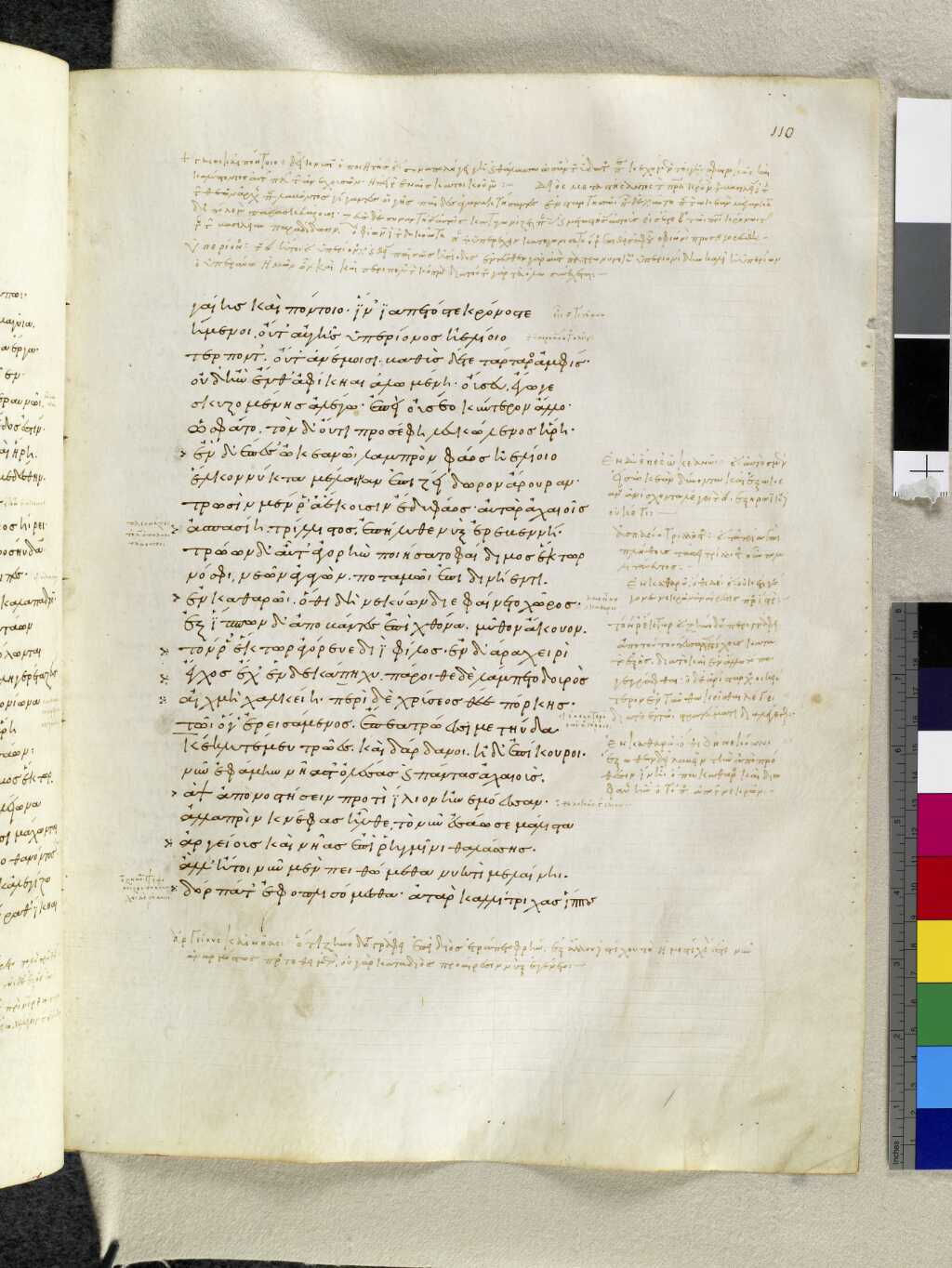
501Ἀργείους καὶ νῆας ἐπὶ ῥηγμῖνι θαλάσσης. 502ἀλλʼ ἤτοι νῦν μὲν πειθώμεθα νυκτὶ μελαίνῃ 503δόρπά τʼ ἐφοπλισόμεσθα· ἀτὰρ καλλίτριχας ἵππους 504λύσαθʼ ὑπὲξ ὀχέων, παρὰ δέ σφισι βάλλετʼ ἐδωδήν· 505ἐκ πόλιος δʼ ἄξεσθε βόας καὶ ἴφια μῆλα 506καρπαλίμως, οἶνον δὲ μελίφρονα οἰνίζεσθε 507σῖτόν τʼ ἐκ μεγάρων, ἐπὶ δὲ ξύλα πολλὰ λέγεσθε, 508ὥς κεν παννύχιοι μέσφʼ ἠοῦς ἠριγενείης 509καίωμεν πυρὰ πολλά, σέλας δʼ εἰς οὐρανὸν ἵκῃ, 510μή πως καὶ διὰ νύκτα κάρη κομόωντες Ἀχαιοὶ 511φεύγειν ὁρμήσωνται ἐπʼ εὐρέα νῶτα θαλάσσης. 512μὴ μὰν ἀσπουδί γε νεῶν ἐπιβαῖεν ἕκηλοι, 513ἀλλʼ ὥς τις τούτων γε βέλος καὶ οἴκοθι πέσσῃ 514βλήμενος ἢ ἰῷ ἢ ἔγχεϊ ὀξυόεντι 515νηὸς ἐπιθρῴσκων, ἵνα τις στυγέῃσι καὶ ἄλλος 516Τρωσὶν ἐφʼ ἱπποδάμοισι φέρειν πολύδακρυν Ἄρηα. 517κήρυκες δʼ ἀνὰ ἄστυ Διῒ φίλοι ἀγγελλόντων 518παῖδας πρωθήβας πολιοκροτάφους τε γέροντας 519λέξασθαι περὶ ἄστυ θεοδμήτων ἐπὶ πύργων· 520θηλύτεραι δὲ γυναῖκες ἐνὶ μεγάροισιν ἑκάστη 521πῦρ μέγα καιόντων· φυλακὴ δέ τις ἔμπεδος ἔστω 522μὴ λόχος εἰσέλθῃσι πόλιν λαῶν ἀπεόντων. 523ὧδʼ ἔστω Τρῶες μεγαλήτορες ὡς ἀγορεύω· 524μῦθος δʼ ὃς μὲν νῦν ὑγιὴς εἰρημένος ἔστω, 525τὸν δʼ ἠοῦς Τρώεσσι μεθʼ ἱπποδάμοις ἀγορεύσω.
Minerva and Juno groaned in spirit as they sat side by side and brooded mischief for the Trojans. Minerva sat silent without a word, for she was in a furious passion and bitterly incensed against her father; but Juno could not contain herself and said, “What, dread son of Saturn, are you talking about? We know how great your power is, nevertheless we have compassion upon the Danaan warriors who are perishing and coming to a bad end. We will, however, since you so bid us, refrain from actual fighting, but we will make serviceable suggestions to the Argives, that they may not all of them perish in your displeasure.”
And Jove answered, “To-morrow morning, Juno, if you choose to do so, you will see the son of Saturn destroying large numbers of the Argives, for fierce Hector shall not cease fighting till he has roused the son of Peleus when they are fighting in dire straits at their ships’ sterns about the body of Patroclus. Like it or no, this is how it is decreed; for aught I care, you may go to the lowest depths beneath earth and sea, where Iapetus and Saturn dwell in lone Tartarus with neither ray of light nor breath of wind to cheer them. You may go on and on till you get there, and I shall not care one whit for your displeasure; you are the greatest vixen living.”
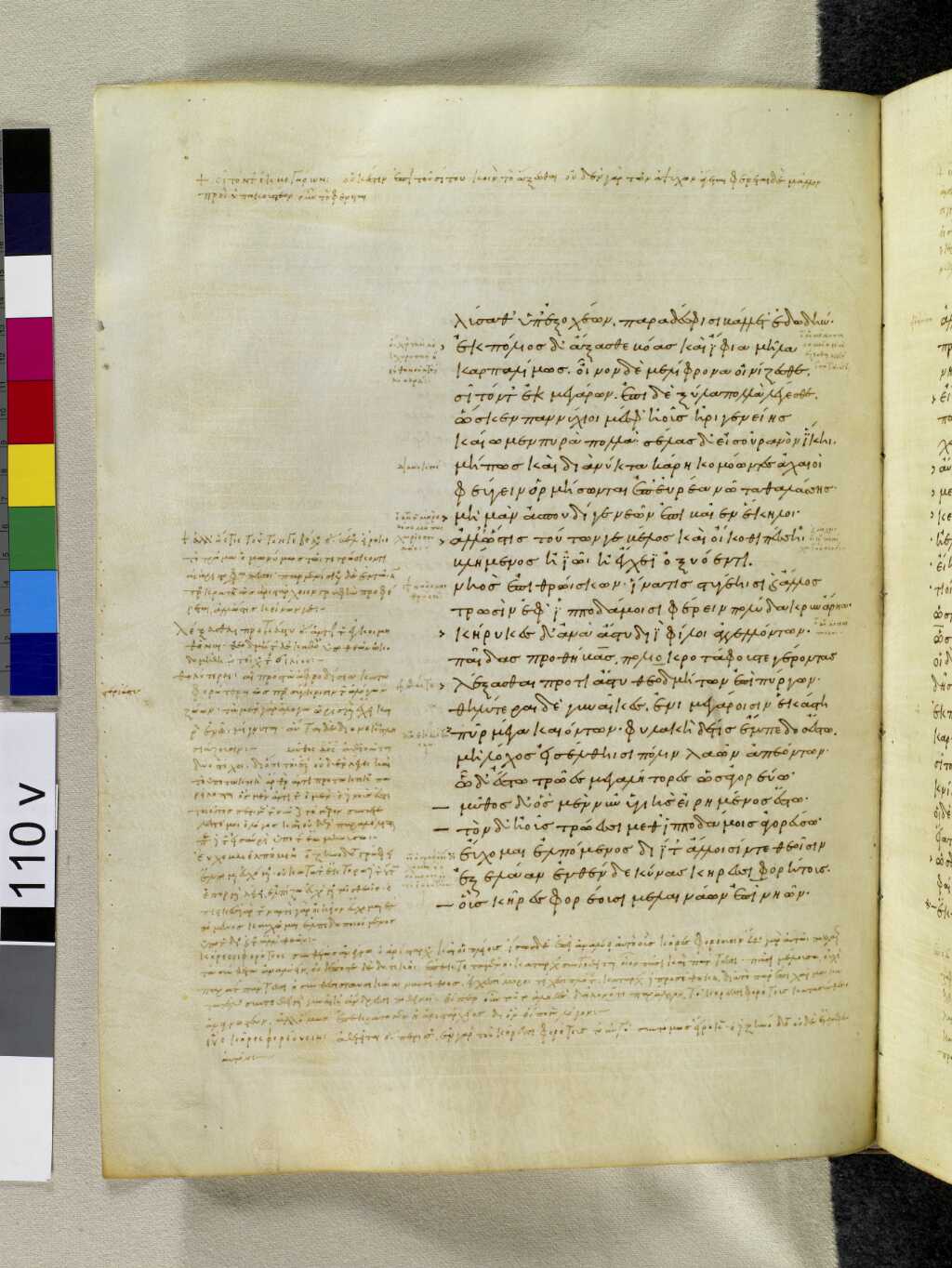
526ἔλπομαι εὐχόμενος Διί τʼ ἄλλοισίν τε θεοῖσιν 527ἐξελάαν ἐνθένδε κύνας κηρεσσιφορήτους, 528οὓς κῆρες φορέουσι μελαινάων ἐπὶ νηῶν. 529ἀλλʼ ἤτοι ἐπὶ νυκτὶ φυλάξομεν ἡμέας αὐτούς, 530πρῶϊ δʼ ὑπηοῖοι σὺν τεύχεσι θωρηχθέντες 531νηυσὶν ἔπι γλαφυρῇσιν ἐγείρομεν ὀξὺν Ἄρηα. 532εἴσομαι εἴ κέ μʼ ὁ Τυδεΐδης κρατερὸς Διομήδης 533πὰρ νηῶν πρὸς τεῖχος ἀπώσεται, ἤ κεν ἐγὼ τὸν 534χαλκῷ δῃώσας ἔναρα βροτόεντα φέρωμαι. 535αὔριον ἣν ἀρετὴν διαείσεται, εἴ κʼ ἐμὸν ἔγχος 536μείνῃ ἐπερχόμενον· ἀλλʼ ἐν πρώτοισιν ὀΐω 537κείσεται οὐτηθείς, πολέες δʼ ἀμφʼ αὐτὸν ἑταῖροι 538ἠελίου ἀνιόντος ἐς αὔριον· εἰ γὰρ ἐγὼν ὣς 539εἴην ἀθάνατος καὶ ἀγήρως ἤματα πάντα, 540τιοίμην δʼ ὡς τίετʼ Ἀθηναίη καὶ Ἀπόλλων, 541ὡς νῦν ἡμέρη ἥδε κακὸν φέρει Ἀργείοισιν. 542ὣς Ἕκτωρ ἀγόρευʼ, ἐπὶ δὲ Τρῶες κελάδησαν. 543οἳ δʼ ἵππους μὲν λῦσαν ὑπὸ ζυγοῦ ἱδρώοντας, 544δῆσαν δʼ ἱμάντεσσι παρʼ ἅρμασιν οἷσιν ἕκαστος· 545ἐκ πόλιος δʼ ἄξοντο βόας καὶ ἴφια μῆλα 546καρπαλίμως, οἶνον δὲ μελίφρονα οἰνίζοντο, 547σῖτόν τʼ ἐκ μεγάρων, ἐπὶ δὲ ξύλα πολλὰ λέγοντο. 548ἔρδον δ’ ἀθανάτοισι τεληέσσας ἑκατόμβας 549κνίσην δʼ ἐκ πεδίου ἄνεμοι φέρον οὐρανὸν εἴσω. 550ἡδεῖαν· τῆς δ’ οὔ τι θεοὶ μάκαρες δατέοντο,
Juno made him no answer. The sun’s glorious orb now sank into Oceanus and drew down night over the land. Sorry indeed were the Trojans when light failed them, but welcome and thrice prayed for did darkness fall upon the Achaeans.
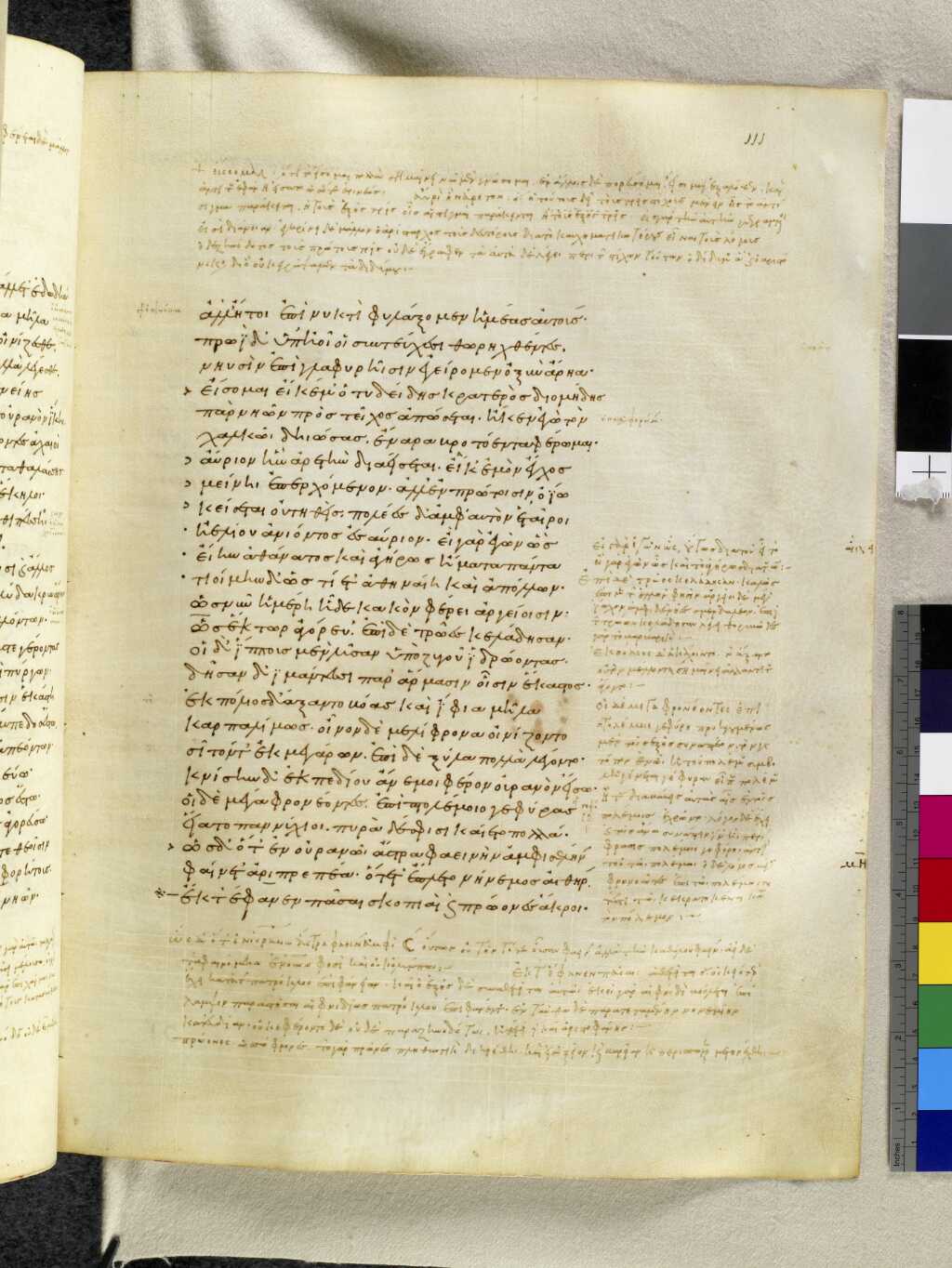
551οὐδ’ ἔθελον· μάλα γάρ σφιν ἀπήχθετο Ἴλιος ἱρή, 552καὶ Πρίαμος καὶ λαὸς ἐϋμμελίω Πριάμοιο 553οἳ δὲ μέγα φρονέοντες ἐπὶ πτολέμοιο γεφύρας 554εἴατο παννύχιοι, πυρὰ δέ σφισι καίετο πολλά. 555ὡς δʼ ὅτʼ ἐν οὐρανῷ ἄστρα φαεινὴν ἀμφὶ σελήνην 556φαίνετʼ ἀριπρεπέα, ὅτε τʼ ἔπλετο νήνεμος αἰθήρ· 557ἔκ τʼ ἔφανεν πᾶσαι σκοπιαὶ καὶ πρώονες ἄκροι 558καὶ νάπαι· οὐρανόθεν δʼ ἄρʼ ὑπερράγη ἄσπετος αἰθήρ, 559πάντα δὲ εἴδεται ἄστρα, γέγηθε δέ τε φρένα ποιμήν· 560τόσσα μεσηγὺ νεῶν ἠδὲ Ξάνθοιο ῥοάων 561Τρώων καιόντων πυρὰ φαίνετο Ἰλιόθι πρό. 562χίλιʼ ἄρʼ ἐν πεδίῳ πυρὰ καίετο, πὰρ δὲ ἑκάστῳ 563εἴατο πεντήκοντα σέλᾳ πυρὸς αἰθομένοιο. 564ἵπποι δὲ κρῖ λευκὸν ἐρεπτόμενοι καὶ ὀλύρας 565ἑσταότες παρʼ ὄχεσφιν ἐΰθρονον Ἠῶ μίμνον.
Then Hector led the Trojans back from the ships, and held a council on the open space near the river, where there was a spot clear of corpses. They left their chariots and sat down on the ground to hear the speech he made them. He grasped a spear eleven cubits long, the bronze point of which gleamed in front of it, while the ring round the spear-head was of gold. Spear in hand he spoke. “Hear me,” said he, “Trojans, Dardanians, and allies. I deemed but now that I should destroy the ships and all the Achaeans with them ere I went back to Ilius, but darkness came on too soon. It was this alone that saved them and their ships upon the sea-shore. Now, therefore, let us obey the behests of night, and prepare our suppers. Take your horses out of their chariots and give them their feeds of corn; then make speed to bring sheep and cattle from the city; bring wine also and corn for your horses and gather much wood, that from dark till dawn we may burn watchfires whose flare may reach to heaven. For the Achaeans may try to fly beyond the sea by night, and they must not embark scatheless and unmolested; many a man among them must take a dart with him to nurse at home, hit with spear or arrow as he is leaping on board his ship, that others may fear to bring war and weeping upon the Trojans. Moreover let the heralds tell it about the city that the growing youths and grey-bearded men are to camp upon its heaven-built walls. Let the women each of them light a great fire in her house, and let watch be safely kept lest the town be entered by surprise while the host is outside. See to it, brave Trojans, as I have said, and let this suffice for the moment; at daybreak I will instruct you further. I pray in hope to Jove and to the gods that we may then drive those fate-sped hounds from our land, for ’tis the fates that have borne them and their ships hither. This night, therefore, let us keep watch, but with early morning let us put on our armour and rouse fierce war at the ships of the Achaeans; I shall then know whether brave Diomed the son of Tydeus will drive me back from the ships to the wall, or whether I shall myself slay him and carry off his blood-stained spoils. To-morrow let him show his mettle, abide my spear if he dare. I ween that at break of day, he shall be among the first to fall and many another of his comrades round him. Would that I were as sure of being immortal and never growing old, and of being worshipped like Minerva and Apollo, as I am that this day will bring evil to the Argives.”
Thus spoke Hector and the Trojans shouted applause. They took their sweating steeds from under the yoke, and made them fast each by his own chariot. They made haste to bring sheep and cattle from the city, they brought wine also and corn from their houses and gathered much wood. They then offered unblemished hecatombs to the immortals, and the wind carried the sweet savour of sacrifice to heaven—but the blessed gods partook not thereof, for they bitterly hated Ilius with Priam and Priam’s people. Thus high in hope they sat through the livelong night by the highways of war, and many a watchfire did they kindle. As when the stars shine clear, and the moon is bright—there is not a breath of air, not a peak nor glade nor jutting headland but it stands out in the ineffable radiance that breaks from the serene of heaven; the stars can all of them be told and the heart of the shepherd is glad—even thus shone the watchfires of the Trojans before Ilius midway between the ships and the river Xanthus. A thousand camp-fires gleamed upon the plain, and in the glow of each there sat fifty men, while the horses, champing oats and corn beside their chariots, waited till dawn should come.
Cite
Source & Cross-References
- Source text: Venetus A (10th c.) via Homer Multitext IIIF + Perseus Greek + Butler English (PG #2199) — view original
- Critical edition: Munro & Allen (Perseus Digital Library)
← previous · → next · v cycle view · l back to library