The Iliad, Book 9
Introduction
Book 9 of the Iliad with 29 sections, each linked to its specific folio in Venetus A (Marcianus Graecus 454, 10th c.). The Homer Multitext Project provides line-level folio mappings, ensuring every section of text corresponds to the exact manuscript page where it appears.
How was this verified? (Provenance)
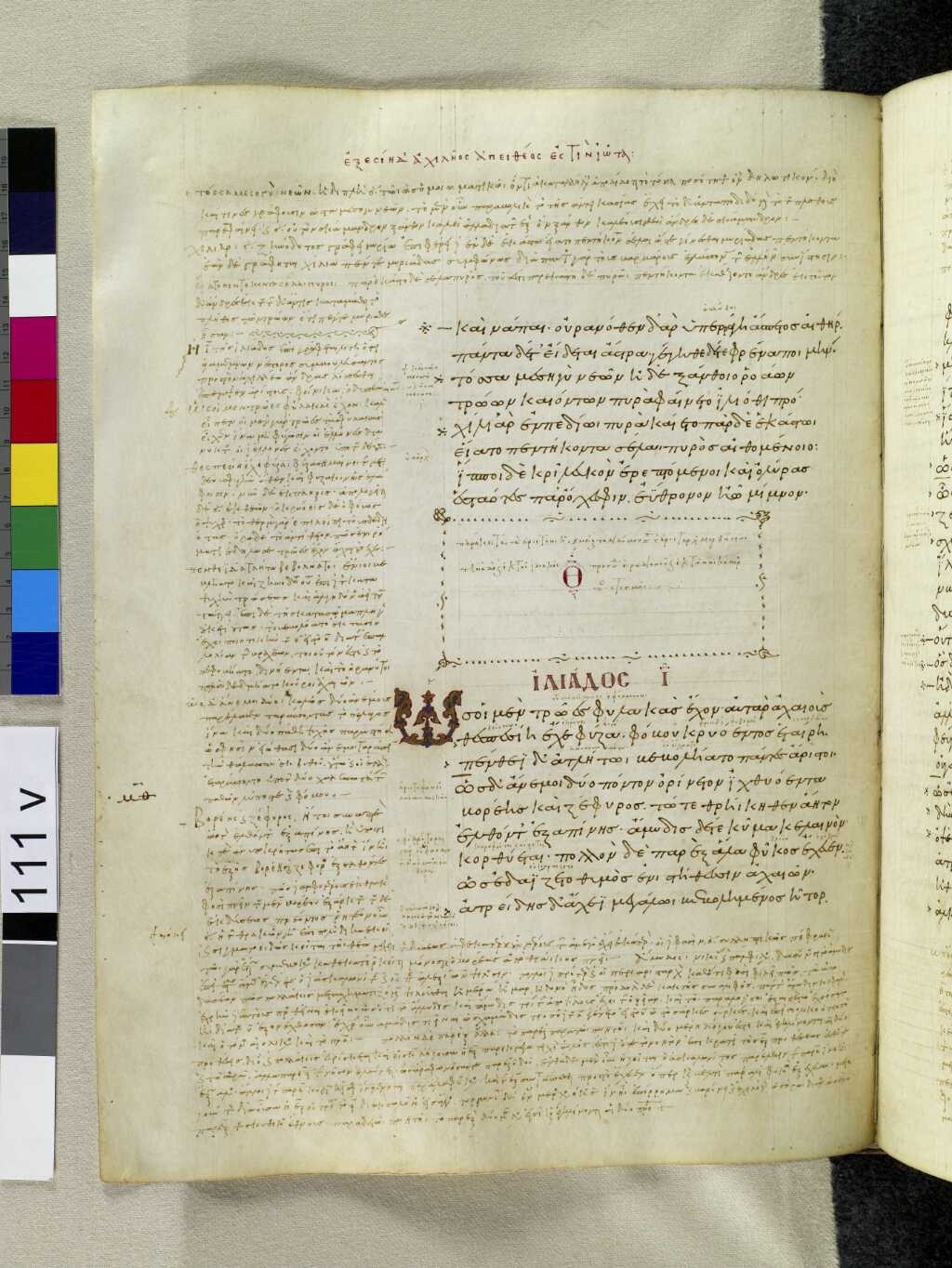
1ὣς οἱ μὲν Τρῶες φυλακὰς ἔχον· αὐτὰρ Ἀχαιοὺς 2θεσπεσίη ἔχε φύζα φόβου κρυόεντος ἑταίρη, 3πένθεϊ δʼ ἀτλήτῳ βεβολήατο πάντες ἄριστοι. 4ὡς δʼ ἄνεμοι δύο πόντον ὀρίνετον ἰχθυόεντα 5Βορέης καὶ Ζέφυρος, τώ τε Θρῄκηθεν ἄητον 6ἐλθόντʼ ἐξαπίνης· ἄμυδις δέ τε κῦμα κελαινὸν 7κορθύεται, πολλὸν δὲ παρὲξ ἅλα φῦκος ἔχευεν· 8ὣς ἐδαΐζετο θυμὸς ἐνὶ στήθεσσιν Ἀχαιῶν. 9Ἀτρεΐδης δʼ ἄχεϊ μεγάλῳ βεβολημένος ἦτορ 10φοίτα κηρύκεσσι λιγυφθόγγοισι κελεύων 11κλήδην εἰς ἀγορὴν κικλήσκειν ἄνδρα ἕκαστον, 12μὴ δὲ βοᾶν· αὐτὸς δὲ μετὰ πρώτοισι πονεῖτο. 13ἷζον δʼ εἰν ἀγορῇ τετιηότες· ἂν δʼ Ἀγαμέμνων 14ἵστατο δάκρυ χέων ὥς τε κρήνη μελάνυδρος 15ἥ τε κατʼ αἰγίλιπος πέτρης δνοφερὸν χέει ὕδωρ· 16ὣς ὃ βαρὺ στενάχων ἔπεʼ Ἀργείοισι μετηύδα· 17ὦ φίλοι Ἀργείων ἡγήτορες ἠδὲ μέδοντες 18Ζεύς με μέγα Κρονίδης ἄτῃ ἐνέδησε βαρείῃ 19σχέτλιος, ὃς τότε μέν μοι ὑπέσχετο καὶ κατένευσεν 20Ἴλιον ἐκπέρσαντʼ εὐτείχεον ἀπονέεσθαι, 21νῦν δὲ κακὴν ἀπάτην βουλεύσατο, καί με κελεύει 22δυσκλέα Ἄργος ἱκέσθαι, ἐπεὶ πολὺν ὤλεσα λαόν. 23οὕτω που Διὶ μέλλει ὑπερμενέϊ φίλον εἶναι, 24ὃς δὴ πολλάων πολίων κατέλυσε κάρηνα 25ἠδʼ ἔτι καὶ λύσει· τοῦ γὰρ κράτος ἐστὶ μέγιστον.
The Embassy to Achilles.
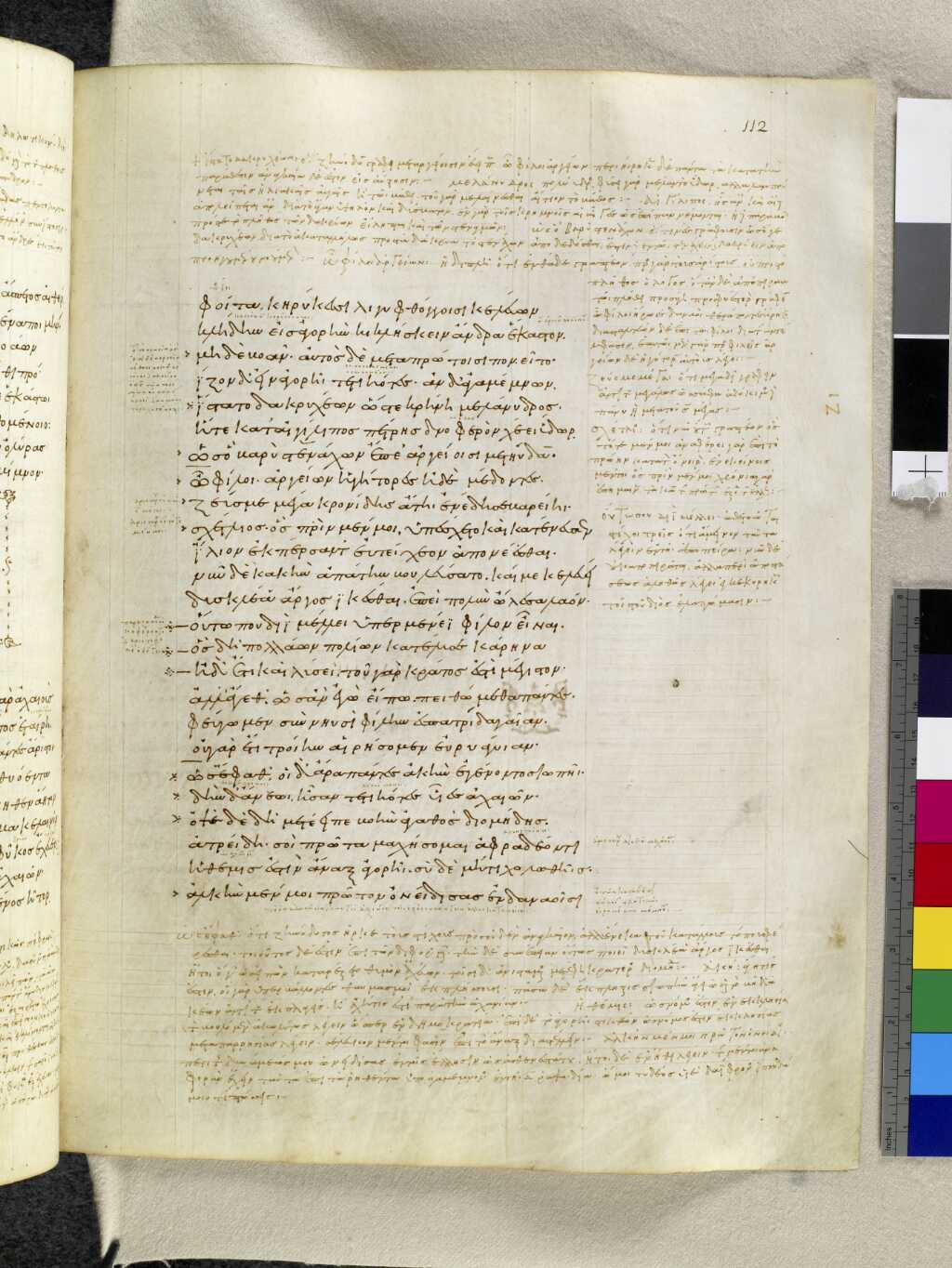
26ἀλλʼ ἄγεθʼ ὡς ἂν ἐγὼ εἴπω πειθώμεθα πάντες· 27φεύγωμεν σὺν νηυσὶ φίλην ἐς πατρίδα γαῖαν· 28οὐ γὰρ ἔτι Τροίην αἱρήσομεν εὐρυάγυιαν. 29ὣς ἔφαθʼ, οἳ δʼ ἄρα πάντες ἀκὴν ἐγένοντο σιωπῇ. 30δὴν δʼ ἄνεῳ ἦσαν τετιηότες υἷες Ἀχαιῶν· 31ὀψὲ δὲ δὴ μετέειπε βοὴν ἀγαθὸς Διομήδης· 32Ἀτρεΐδη σοὶ πρῶτα μαχήσομαι ἀφραδέοντι, 33ἣ θέμις ἐστὶν ἄναξ ἀγορῇ· σὺ δὲ μή τι χολωθῇς. 34ἀλκὴν μέν μοι πρῶτον ὀνείδισας ἐν Δαναοῖσι 35φὰς ἔμεν ἀπτόλεμον καὶ ἀνάλκιδα· ταῦτα δὲ πάντα 36ἴσασʼ Ἀργείων ἠμὲν νέοι ἠδὲ γέροντες. 37σοὶ δὲ διάνδιχα δῶκε Κρόνου πάϊς ἀγκυλομήτεω· 38σκήπτρῳ μέν τοι δῶκε τετιμῆσθαι περὶ πάντων, 39ἀλκὴν δʼ οὔ τοι δῶκεν, ὅ τε κράτος ἐστὶ μέγιστον. 40δαιμόνιʼ οὕτω που μάλα ἔλπεαι υἷας Ἀχαιῶν 41ἀπτολέμους τʼ ἔμεναι καὶ ἀνάλκιδας ὡς ἀγορεύεις; 42εἰ δέ τοι αὐτῷ θυμὸς ἐπέσσυται ὥς τε νέεσθαι 43ἔρχεο· πάρ τοι ὁδός, νῆες δέ τοι ἄγχι θαλάσσης 44ἑστᾶσʼ, αἵ τοι ἕποντο Μυκήνηθεν μάλα πολλαί. 45ἀλλʼ ἄλλοι μενέουσι κάρη κομόωντες Ἀχαιοὶ 46εἰς ὅ κέ περ Τροίην διαπέρσομεν. εἰ δὲ καὶ αὐτοὶ 47φευγόντων σὺν νηυσὶ φίλην ἐς πατρίδα γαῖαν· 48νῶϊ δʼ ἐγὼ Σθένελός τε μαχησόμεθʼ εἰς ὅ κε τέκμωρ 49Ἰλίου εὕρωμεν· σὺν γὰρ θεῷ εἰλήλουθμεν. 50ὣς ἔφαθʼ, οἳ δʼ ἄρα πάντες ἐπίαχον υἷες Ἀχαιῶν
Thus did the Trojans watch. But Panic, comrade of blood-stained Rout, had taken fast hold of the Achaeans, and their princes were all of them in despair. As when the two winds that blow from Thrace—the north and the northwest—spring up of a sudden and rouse the fury of the main—in a moment the dark waves uprear their heads and scatter their sea-wrack in all directions—even thus troubled were the hearts of the Achaeans.
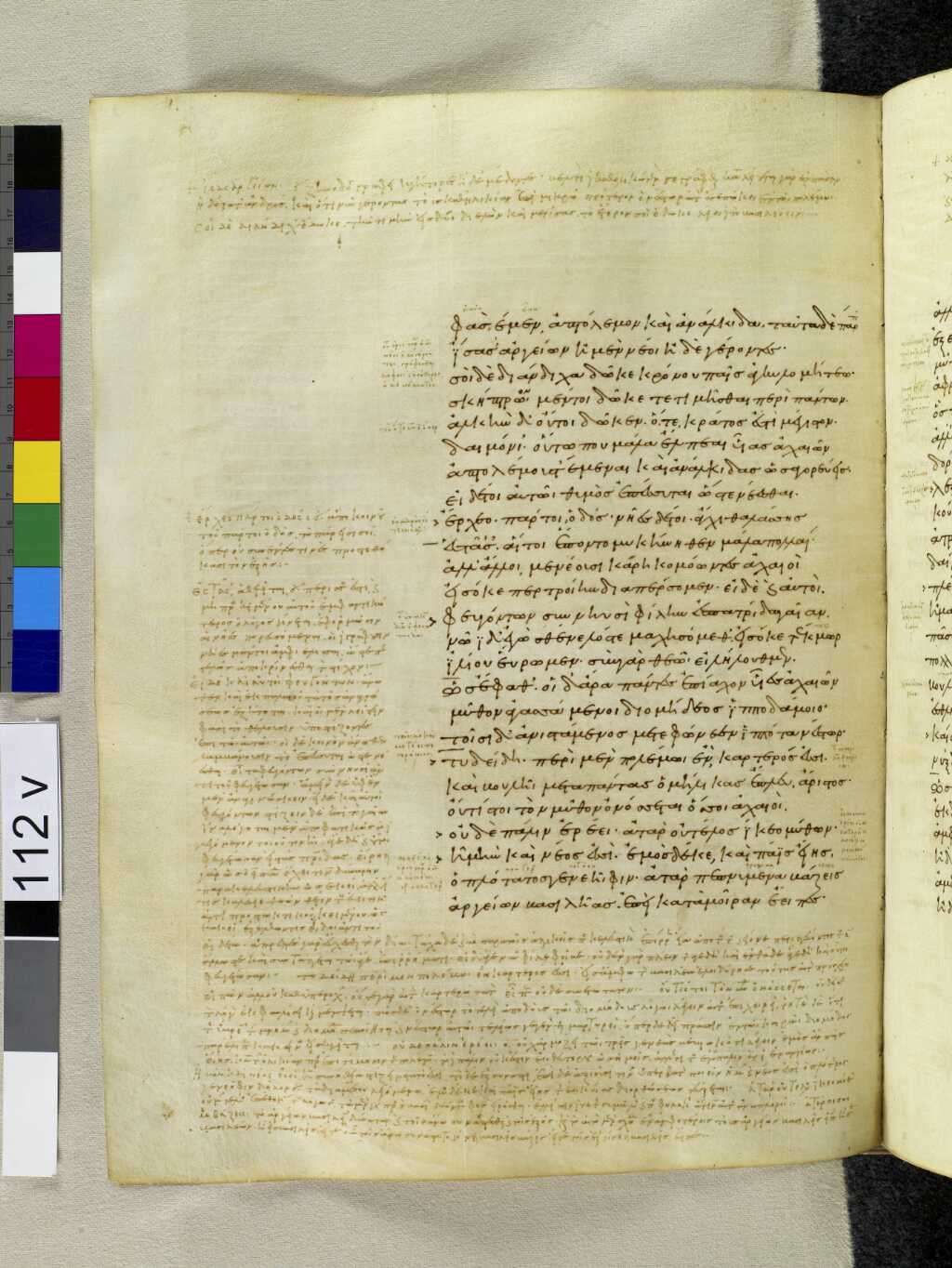
51μῦθον ἀγασσάμενοι Διομήδεος ἱπποδάμοιο. 52τοῖσι δʼ ἀνιστάμενος μετεφώνεεν ἱππότα Νέστωρ· 53Τυδεΐδη περὶ μὲν πολέμῳ ἔνι καρτερός ἐσσι, 54καὶ βουλῇ μετὰ πάντας ὁμήλικας ἔπλευ ἄριστος. 55οὔ τίς τοι τὸν μῦθον ὀνόσσεται ὅσσοι Ἀχαιοί, 56οὐδὲ πάλιν ἐρέει· ἀτὰρ οὐ τέλος ἵκεο μύθων. 57ἦ μὲν καὶ νέος ἐσσί, ἐμὸς δέ κε καὶ πάϊς εἴης 58ὁπλότατος γενεῆφιν· ἀτὰρ πεπνυμένα βάζεις 59Ἀργείων βασιλῆας, ἐπεὶ κατὰ μοῖραν ἔειπες. 60ἀλλʼ ἄγʼ ἐγών, ὃς σεῖο γεραίτερος εὔχομαι εἶναι, 61ἐξείπω καὶ πάντα διίξομαι· οὐδέ κέ τίς μοι 62μῦθον ἀτιμήσειʼ, οὐδὲ κρείων Ἀγαμέμνων. 63ἀφρήτωρ ἀθέμιστος ἀνέστιός ἐστιν ἐκεῖνος 64ὃς πολέμου ἔραται ἐπιδημίου ὀκρυόεντος. 65ἀλλʼ ἤτοι νῦν μὲν πειθώμεθα νυκτὶ μελαίνῃ 66δόρπά τʼ ἐφοπλισόμεσθα· φυλακτῆρες δὲ ἕκαστοι 67λεξάσθων παρὰ τάφρον ὀρυκτὴν τείχεος ἐκτός. 68κούροισιν μὲν ταῦτʼ ἐπιτέλλομαι· αὐτὰρ ἔπειτα 69Ἀτρεΐδη σὺ μὲν ἄρχε· σὺ γὰρ βασιλεύτατός ἐσσι. 70δαίνυ δαῖτα γέρουσιν· ἔοικέ τοι, οὔ τοι ἀεικές. 71πλεῖαί τοι οἴνου κλισίαι, τὸν νῆες Ἀχαιῶν 72ἠμάτιαι Θρῄκηθεν ἐπʼ εὐρέα πόντον ἄγουσι· 73πᾶσά τοί ἐσθʼ ὑποδεξίη, πολέεσσι δʼ ἀνάσσεις. 74πολλῶν δʼ ἀγρομένων τῷ πείσεαι ὅς κεν ἀρίστην 75βουλὴν βουλεύσῃ· μάλα δὲ χρεὼ πάντας Ἀχαιοὺς
The son of Atreus in dismay bade the heralds call the people to a council man by man, but not to cry the matter aloud; he made haste also himself to call them, and they sat sorry at heart in their assembly. Agamemnon shed tears as it were a running stream or cataract on the side of some sheer cliff; and thus, with many a heavy sigh he spoke to the Achaeans. “My friends,” said he, “princes and councillors of the Argives, the hand of heaven has been laid heavily upon me. Cruel Jove gave me his solemn promise that I should sack the city of Troy before returning, but he has played me false, and is now bidding me go ingloriously back to Argos with the loss of much people. Such is the will of Jove, who has laid many a proud city in the dust as he will yet lay others, for his power is above all. Now, therefore, let us all do as I say and sail back to our own country, for we shall not take Troy.”
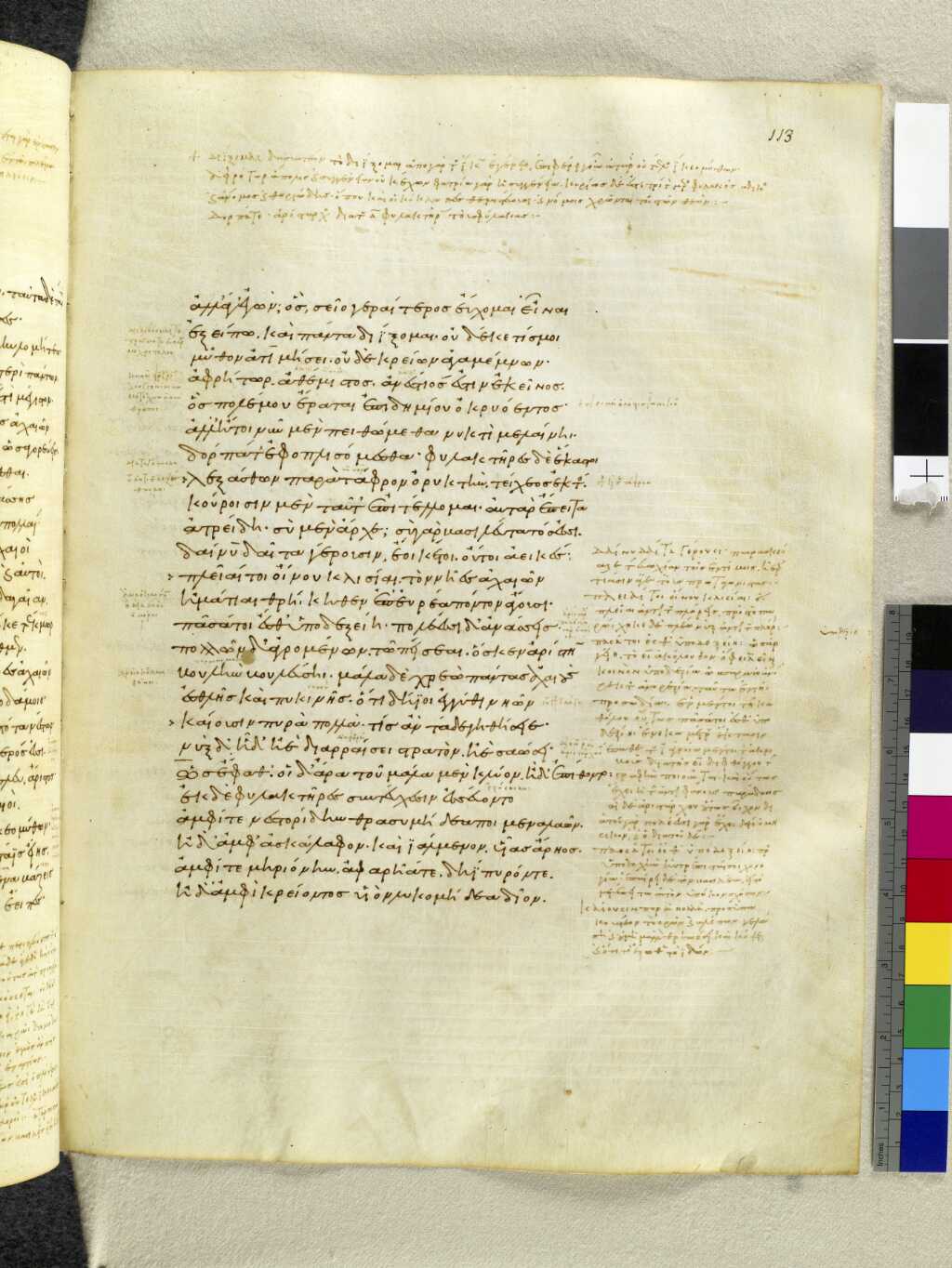
76ἐσθλῆς καὶ πυκινῆς, ὅτι δήϊοι ἐγγύθι νηῶν 77καίουσιν πυρὰ πολλά· τίς ἂν τάδε γηθήσειε; 78νὺξ δʼ ἧδʼ ἠὲ διαρραίσει στρατὸν ἠὲ σαώσει. 79ὣς ἔφαθʼ, οἳ δʼ ἄρα τοῦ μάλα μὲν κλύον ἠδὲ πίθοντο. 80ἐκ δὲ φυλακτῆρες σὺν τεύχεσιν ἐσσεύοντο 81ἀμφί τε Νεστορίδην Θρασυμήδεα ποιμένα λαῶν, 82ἠδʼ ἀμφʼ Ἀσκάλαφον καὶ Ἰάλμενον υἷας Ἄρηος 83ἀμφί τε Μηριόνην Ἀφαρῆά τε Δηΐπυρόν τε, 84ἠδʼ ἀμφὶ Κρείοντος υἱὸν Λυκομήδεα δῖον. 85ἕπτʼ ἔσαν ἡγεμόνες φυλάκων, ἑκατὸν δὲ ἑκάστῳ 86κοῦροι ἅμα στεῖχον δολίχʼ ἔγχεα χερσὶν ἔχοντες· 87κὰδ δὲ μέσον τάφρου καὶ τείχεος ἷζον ἰόντες· 88ἔνθα δὲ πῦρ κήαντο, τίθεντο δὲ δόρπα ἕκαστος. 89Ἀτρεΐδης δὲ γέροντας ἀολλέας ἦγεν Ἀχαιῶν 90ἐς κλισίην, παρὰ δέ σφι τίθει μενοεικέα δαῖτα. 91οἳ δʼ ἐπʼ ὀνείαθʼ ἑτοῖμα προκείμενα χεῖρας ἴαλλον. 92αὐτὰρ ἐπεὶ πόσιος καὶ ἐδητύος ἐξ ἔρον ἕντο, 93τοῖς ὁ γέρων πάμπρωτος ὑφαίνειν ἤρχετο μῆτιν 94Νέστωρ, οὗ καὶ πρόσθεν ἀρίστη φαίνετο βουλή· 95ὅ σφιν ἐϋφρονέων ἀγορήσατο καὶ μετέειπεν· 96Ἀτρεΐδη κύδιστε ἄναξ ἀνδρῶν Ἀγάμεμνον 97ἐν σοὶ μὲν λήξω, σέο δʼ ἄρξομαι, οὕνεκα πολλῶν 98λαῶν ἐσσι ἄναξ καί τοι Ζεὺς ἐγγυάλιξε 99σκῆπτρόν τʼ ἠδὲ θέμιστας, ἵνά σφισι βουλεύῃσθα. 100τώ σε χρὴ περὶ μὲν φάσθαι ἔπος ἠδʼ ἐπακοῦσαι,
Thus he spoke, and the sons of the Achaeans for a long while sat sorrowful there, but they all held their peace, till at last Diomed of the loud battle-cry made answer saying, “Son of Atreus, I will chide your folly, as is my right in council. Be not then aggrieved that I should do so. In the first place you attacked me before all the Danaans and said that I was a coward and no soldier. The Argives young and old know that you did so. But the son of scheming Saturn endowed you by halves only. He gave you honour as the chief ruler over us, but valour, which is the highest both right and might he did not give you. Sir, think you that the sons of the Achaeans are indeed as unwarlike and cowardly as you say they are? If your own mind is set upon going home—go—the way is open to you; the many ships that followed you from Mycene stand ranged upon the sea-shore; but the rest of us stay here till we have sacked Troy. Nay though these too should turn homeward with their ships, Sthenelus and myself will still fight on till we reach the goal of Ilius, for heaven was with us when we came.”
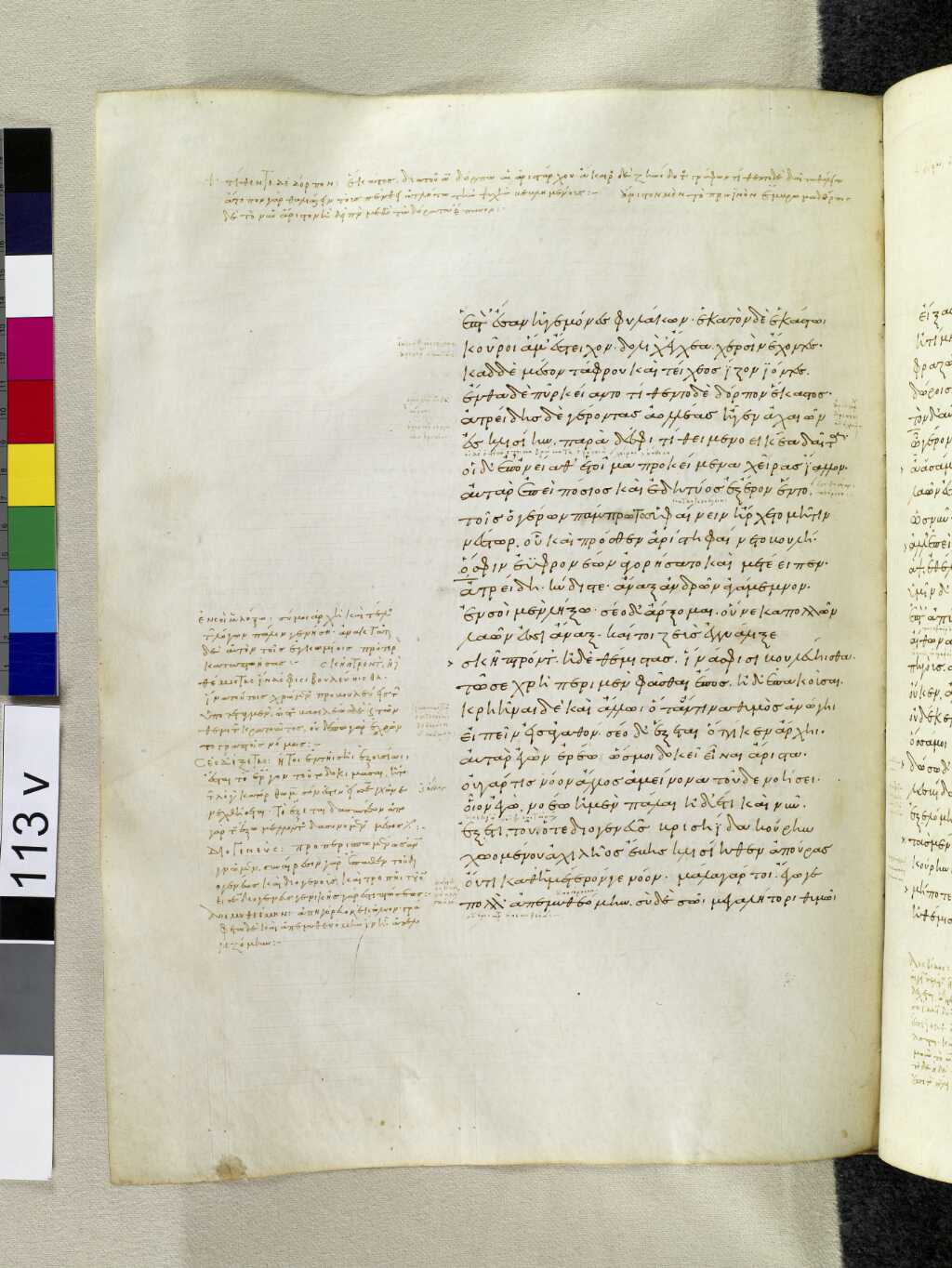
101κρηῆναι δὲ καὶ ἄλλῳ, ὅτʼ ἄν τινα θυμὸς ἀνώγῃ 102εἰπεῖν εἰς ἀγαθόν· σέο δʼ ἕξεται ὅττί κεν ἄρχῃ. 103αὐτὰρ ἐγὼν ἐρέω ὥς μοι δοκεῖ εἶναι ἄριστα. 104οὐ γάρ τις νόον ἄλλος ἀμείνονα τοῦδε νοήσει 105οἷον ἐγὼ νοέω ἠμὲν πάλαι ἠδʼ ἔτι καὶ νῦν 106ἐξ ἔτι τοῦ ὅτε διογενὲς Βρισηΐδα κούρην 107χωομένου Ἀχιλῆος ἔβης κλισίηθεν ἀπούρας 108οὔ τι καθʼ ἡμέτερόν γε νόον· μάλα γάρ τοι ἔγωγε 109πόλλʼ ἀπεμυθεόμην· σὺ δὲ σῷ μεγαλήτορι θυμῷ 110εἴξας ἄνδρα φέριστον, ὃν ἀθάνατοί περ ἔτισαν, 111ἠτίμησας, ἑλὼν γὰρ ἔχεις γέρας· ἀλλʼ ἔτι καὶ νῦν 112φραζώμεσθʼ ὥς κέν μιν ἀρεσσάμενοι πεπίθωμεν 113δώροισίν τʼ ἀγανοῖσιν ἔπεσσί τε μειλιχίοισι. 114τὸν δʼ αὖτε προσέειπεν ἄναξ ἀνδρῶν Ἀγαμέμνων· 115ὦ γέρον οὔ τι ψεῦδος ἐμὰς ἄτας κατέλεξας· 116ἀασάμην, οὐδʼ αὐτὸς ἀναίνομαι. ἀντί νυ πολλῶν 117λαῶν ἐστὶν ἀνὴρ ὅν τε Ζεὺς κῆρι φιλήσῃ, 118ὡς νῦν τοῦτον ἔτισε, δάμασσε δὲ λαὸν Ἀχαιῶν. 119ἀλλʼ ἐπεὶ ἀασάμην φρεσὶ λευγαλέῃσι πιθήσας, 120ἂψ ἐθέλω ἀρέσαι δόμεναί τʼ ἀπερείσιʼ ἄποινα. 121ὑμῖν δʼ ἐν πάντεσσι περικλυτὰ δῶρʼ ὀνομήνω 122ἕπτʼ ἀπύρους τρίποδας, δέκα δὲ χρυσοῖο τάλαντα, 123αἴθωνας δὲ λέβητας ἐείκοσι, δώδεκα δʼ ἵππους 124πηγοὺς ἀθλοφόρους, οἳ ἀέθλια ποσσὶν ἄροντο. 125οὔ κεν ἀλήϊος εἴη ἀνὴρ ᾧ τόσσα γένοιτο,
The sons of the Achaeans shouted applause at the words of Diomed, and presently Nestor rose to speak. “Son of Tydeus,” said he, “in war your prowess is beyond question, and in council you excel all who are of your own years; no one of the Achaeans can make light of what you say nor gainsay it, but you have not yet come to the end of the whole matter. You are still young—you might be the youngest of my own children—still you have spoken wisely and have counselled the chief of the Achaeans not without discretion; nevertheless I am older than you and I will tell you everything; therefore let no man, not even King Agamemnon, disregard my saying, for he that foments civil discord is a clanless, hearthless outlaw.
“Now, however, let us obey the behests of night and get our suppers, but let the sentinels every man of them camp by the trench that is without the wall. I am giving these instructions to the young men; when they have been attended to, do you, son of Atreus, give your orders, for you are the most royal among us all. Prepare a feast for your councillors; it is right and reasonable that you should do so; there is abundance of wine in your tents, which the ships of the Achaeans bring from Thrace daily. You have everything at your disposal wherewith to entertain guests, and you have many subjects. When many are got together, you can be guided by him whose counsel is wisest—and sorely do we need shrewd and prudent counsel, for the foe has lit his watchfires hard by our ships. Who can be other than dismayed? This night will either be the ruin of our host, or save it.”
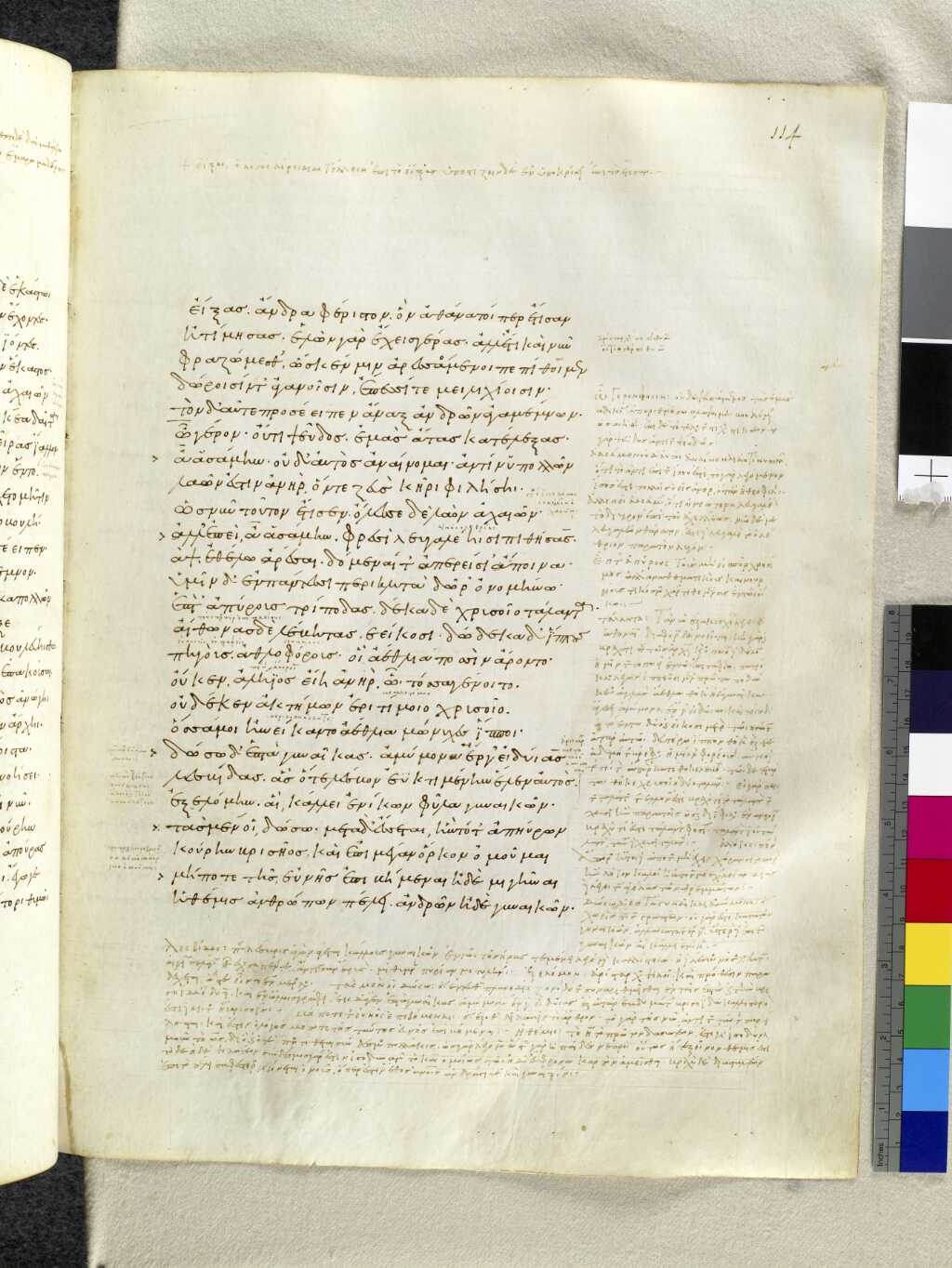
126οὐδέ κεν ἀκτήμων ἐριτίμοιο χρυσοῖο, 127ὅσσά μοι ἠνείκαντο ἀέθλια μώνυχες ἵπποι. 128δώσω δʼ ἑπτὰ γυναῖκας ἀμύμονα ἔργα ἰδυίας 129Λεσβίδας, ἃς ὅτε Λέσβον ἐϋκτιμένην ἕλεν αὐτὸς 130ἐξελόμην, αἳ κάλλει ἐνίκων φῦλα γυναικῶν. 131τὰς μέν οἱ δώσω, μετὰ δʼ ἔσσεται ἣν τότʼ ἀπηύρων 132κούρη Βρισῆος· ἐπὶ δὲ μέγαν ὅρκον ὀμοῦμαι 133μή ποτε τῆς εὐνῆς ἐπιβήμεναι ἠδὲ μιγῆναι, 134ἣ θέμις ἀνθρώπων πέλει ἀνδρῶν ἠδὲ γυναικῶν. 135ταῦτα μὲν αὐτίκα πάντα παρέσσεται· εἰ δέ κεν αὖτε 136ἄστυ μέγα Πριάμοιο θεοὶ δώωσʼ ἀλαπάξαι, 137νῆα ἅλις χρυσοῦ καὶ χαλκοῦ νηησάσθω 138εἰσελθών, ὅτε κεν δατεώμεθα ληΐδʼ Ἀχαιοί, 139Τρωϊάδας δὲ γυναῖκας ἐείκοσιν αὐτὸς ἑλέσθω, 140αἴ κε μετʼ Ἀργείην Ἑλένην κάλλισται ἔωσιν. 141εἰ δέ κεν Ἄργος ἱκοίμεθʼ Ἀχαιϊκὸν οὖθαρ ἀρούρης 142γαμβρός κέν μοι ἔοι· τίσω δέ μιν ἶσον Ὀρέστῃ, 143ὅς μοι τηλύγετος τρέφεται θαλίῃ ἔνι πολλῇ. 144τρεῖς δέ μοί εἰσι θύγατρες ἐνὶ μεγάρῳ εὐπήκτῳ 145Χρυσόθεμις καὶ Λαοδίκη καὶ Ἰφιάνασσα, 146τάων ἥν κʼ ἐθέλῃσι φίλην ἀνάεδνον ἀγέσθω 147πρὸς οἶκον Πηλῆος· ἐγὼ δʼ ἐπὶ μείλια δώσω 148πολλὰ μάλʼ, ὅσσʼ οὔ πώ τις ἑῇ ἐπέδωκε θυγατρί· 149ἑπτὰ δέ οἱ δώσω εὖ ναιόμενα πτολίεθρα 150Καρδαμύλην Ἐνόπην τε καὶ Ἱρὴν ποιήεσσαν
Thus did he speak, and they did even as he had said. The sentinels went out in their armour under command of Nestor’s son Thrasymedes, a captain of the host, and of the bold warriors Ascalaphus and Ialmenus: there were also Meriones, Aphareus and Deipyrus, and the son of Creion, noble Lycomedes. There were seven captains of the sentinels, and with each there went a hundred youths armed with long spears: they took their places midway between the trench and the wall, and when they had done so they lit their fires and got every man his supper.
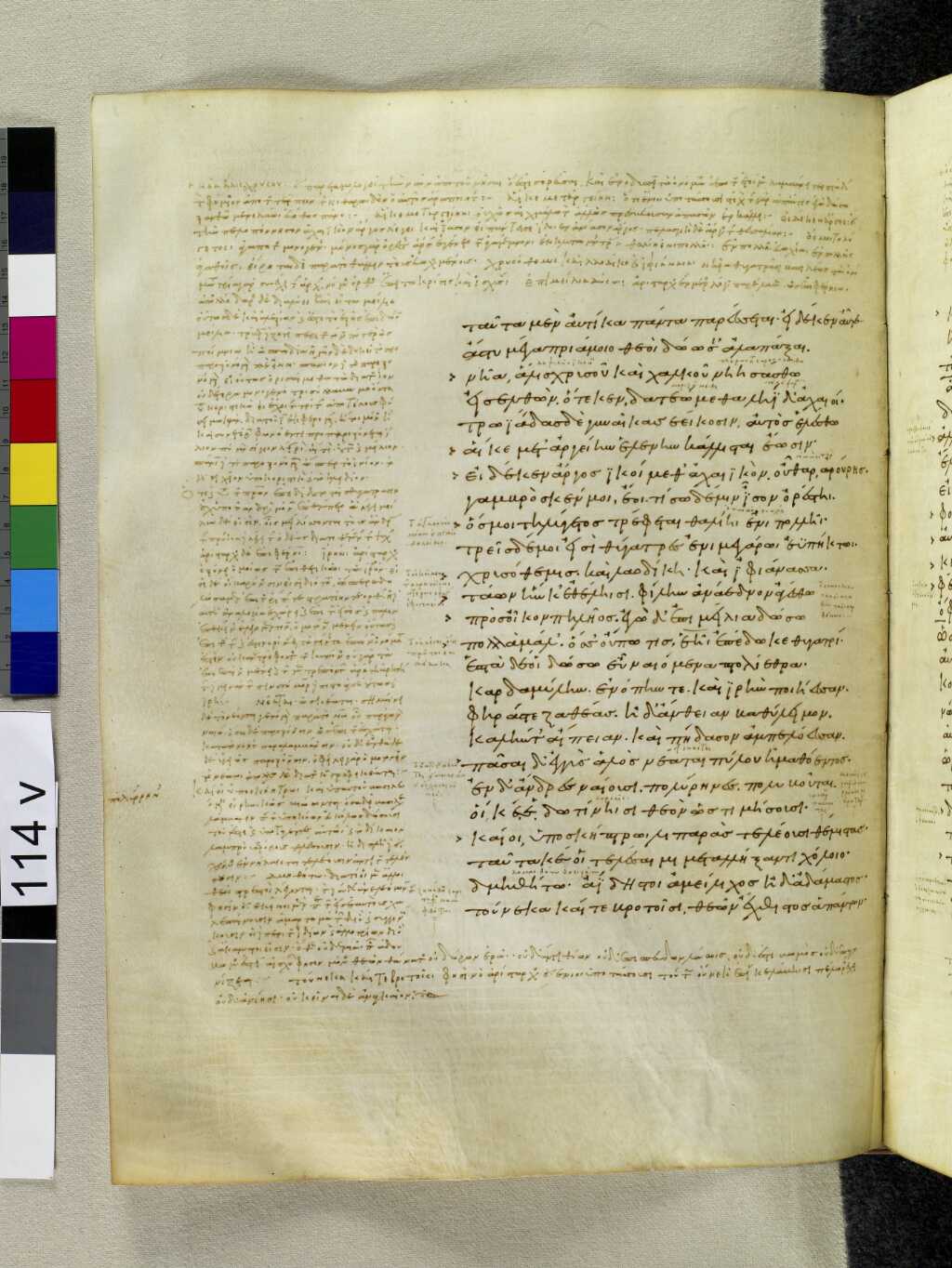
151Φηράς τε ζαθέας ἠδʼ Ἄνθειαν βαθύλειμον 152καλήν τʼ Αἴπειαν καὶ Πήδασον ἀμπελόεσσαν. 153πᾶσαι δʼ ἐγγὺς ἁλός, νέαται Πύλου ἠμαθόεντος· 154ἐν δʼ ἄνδρες ναίουσι πολύρρηνες πολυβοῦται, 155οἵ κέ ἑ δωτίνῃσι θεὸν ὣς τιμήσουσι 156καί οἱ ὑπὸ σκήπτρῳ λιπαρὰς τελέουσι θέμιστας. 157ταῦτά κέ οἱ τελέσαιμι μεταλήξαντι χόλοιο. 158δμηθήτω· Ἀΐδης τοι ἀμείλιχος ἠδʼ ἀδάμαστος, 159τοὔνεκα καί τε βροτοῖσι θεῶν ἔχθιστος ἁπάντων· 160καί μοι ὑποστήτω ὅσσον βασιλεύτερός εἰμι 161ἠδʼ ὅσσον γενεῇ προγενέστερος εὔχομαι εἶναι. 162τὸν δʼ ἠμείβετʼ ἔπειτα Γερήνιος ἱππότα Νέστωρ· 163Ἀτρεΐδη κύδιστε ἄναξ ἀνδρῶν Ἀγάμεμνον 164δῶρα μὲν οὐκέτʼ ὀνοστὰ διδοῖς Ἀχιλῆϊ ἄνακτι· 165ἀλλʼ ἄγετε κλητοὺς ὀτρύνομεν, οἵ κε τάχιστα 166ἔλθωσʼ ἐς κλισίην Πηληϊάδεω Ἀχιλῆος. 167εἰ δʼ ἄγε τοὺς ἂν ἐγὼ ἐπιόψομαι οἳ δὲ πιθέσθων. 168Φοῖνιξ μὲν πρώτιστα Διῒ φίλος ἡγησάσθω, 169αὐτὰρ ἔπειτʼ Αἴας τε μέγας καὶ δῖος Ὀδυσσεύς· 170κηρύκων δʼ Ὀδίος τε καὶ Εὐρυβάτης ἅμʼ ἑπέσθων. 171φέρτε δὲ χερσὶν ὕδωρ, εὐφημῆσαί τε κέλεσθε, 172ὄφρα Διὶ Κρονίδῃ ἀρησόμεθʼ, αἴ κʼ ἐλεήσῃ. 173ὣς φάτο, τοῖσι δὲ πᾶσιν ἑαδότα μῦθον ἔειπεν. 174αὐτίκα κήρυκες μὲν ὕδωρ ἐπὶ χεῖρας ἔχευαν, 175κοῦροι δὲ κρητῆρας ἐπεστέψαντο ποτοῖο,
The son of Atreus then bade many councillors of the Achaeans to his quarters and prepared a great feast in their honour. They laid their hands on the good things that were before them, and as soon as they had enough to eat and drink, old Nestor, whose counsel was ever truest, was the first to lay his mind before them. He, therefore, with all sincerity and goodwill addressed them thus.
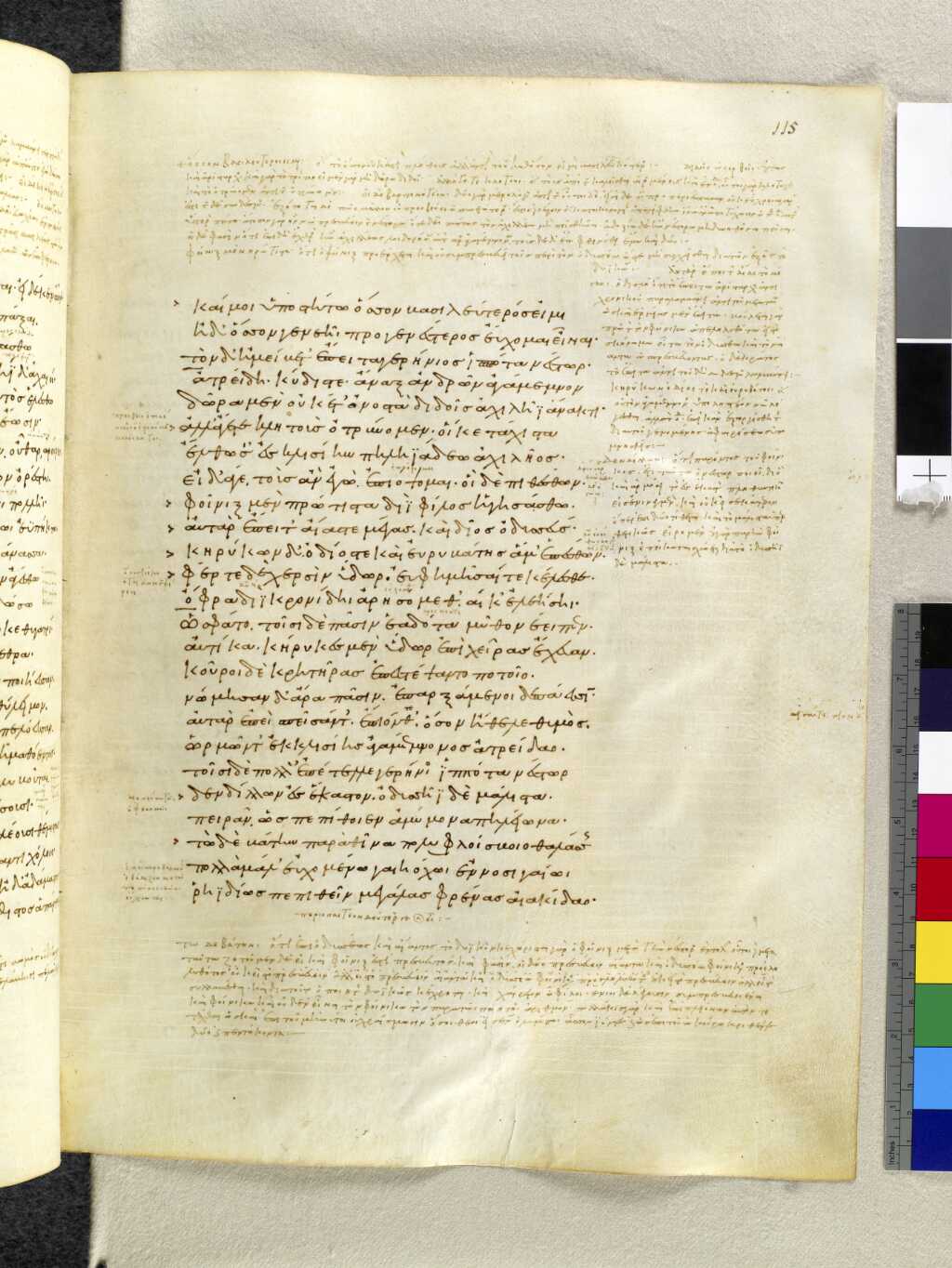
176νώμησαν δʼ ἄρα πᾶσιν ἐπαρξάμενοι δεπάεσσιν. 177αὐτὰρ ἐπεὶ σπεῖσάν τʼ ἔπιόν θʼ ὅσον ἤθελε θυμός, 178ὁρμῶντʼ ἐκ κλισίης Ἀγαμέμνονος Ἀτρεΐδαο. 179τοῖσι δὲ πόλλʼ ἐπέτελλε Γερήνιος ἱππότα Νέστωρ 180δενδίλλων ἐς ἕκαστον, Ὀδυσσῆϊ δὲ μάλιστα, 181πειρᾶν ὡς πεπίθοιεν ἀμύμονα Πηλεΐωνα. 182τὼ δὲ βάτην παρὰ θῖνα πολυφλοίσβοιο θαλάσσης 183πολλὰ μάλʼ εὐχομένω γαιηόχῳ ἐννοσιγαίῳ 184ῥηϊδίως πεπιθεῖν μεγάλας φρένας Αἰακίδαο. 185Μυρμιδόνων δʼ ἐπί τε κλισίας καὶ νῆας ἱκέσθην, 186τὸν δʼ εὗρον φρένα τερπόμενον φόρμιγγι λιγείῃ 187καλῇ δαιδαλέῃ, ἐπὶ δʼ ἀργύρεον ζυγὸν ἦεν, 188τὴν ἄρετʼ ἐξ ἐνάρων πόλιν Ἠετίωνος ὀλέσσας· 189τῇ ὅ γε θυμὸν ἔτερπεν, ἄειδε δʼ ἄρα κλέα ἀνδρῶν. 190Πάτροκλος δέ οἱ οἶος ἐναντίος ἧστο σιωπῇ, 191δέγμενος Αἰακίδην ὁπότε λήξειεν ἀείδων, 192τὼ δὲ βάτην προτέρω, ἡγεῖτο δὲ δῖος Ὀδυσσεύς, 193στὰν δὲ πρόσθʼ αὐτοῖο· ταφὼν δʼ ἀνόρουσεν Ἀχιλλεὺς 194αὐτῇ σὺν φόρμιγγι λιπὼν ἕδος ἔνθα θάασσεν. 195ὣς δʼ αὔτως Πάτροκλος, ἐπεὶ ἴδε φῶτας, ἀνέστη. 196τὼ καὶ δεικνύμενος προσέφη πόδας ὠκὺς Ἀχιλλεύς· 197χαίρετον· ἦ φίλοι ἄνδρες ἱκάνετον ἦ τι μάλα χρεώ, 198οἵ μοι σκυζομένῳ περ Ἀχαιῶν φίλτατοί ἐστον. 199ὣς ἄρα φωνήσας προτέρω ἄγε δῖος Ἀχιλλεύς, 200εἷσεν δʼ ἐν κλισμοῖσι τάπησί τε πορφυρέοισιν.
“With yourself, most noble son of Atreus, king of men, Agamemnon, will I both begin my speech and end it, for you are king over much people. Jove, moreover, has vouchsafed you to wield the sceptre and to uphold righteousness, that you may take thought for your people under you; therefore it behooves you above all others both to speak and to give ear, and to out the counsel of another who shall have been minded to speak wisely. All turns on you and on your commands, therefore I will say what I think will be best. No man will be of a truer mind than that which has been mine from the hour when you, sir, angered Achilles by taking the girl Briseis from his tent against my judgment. I urged you not to do so, but you yielded to your own pride, and dishonoured a hero whom heaven itself had honoured—for you still hold the prize that had been awarded to him. Now, however, let us think how we may appease him, both with presents and fair speeches that may conciliate him.”
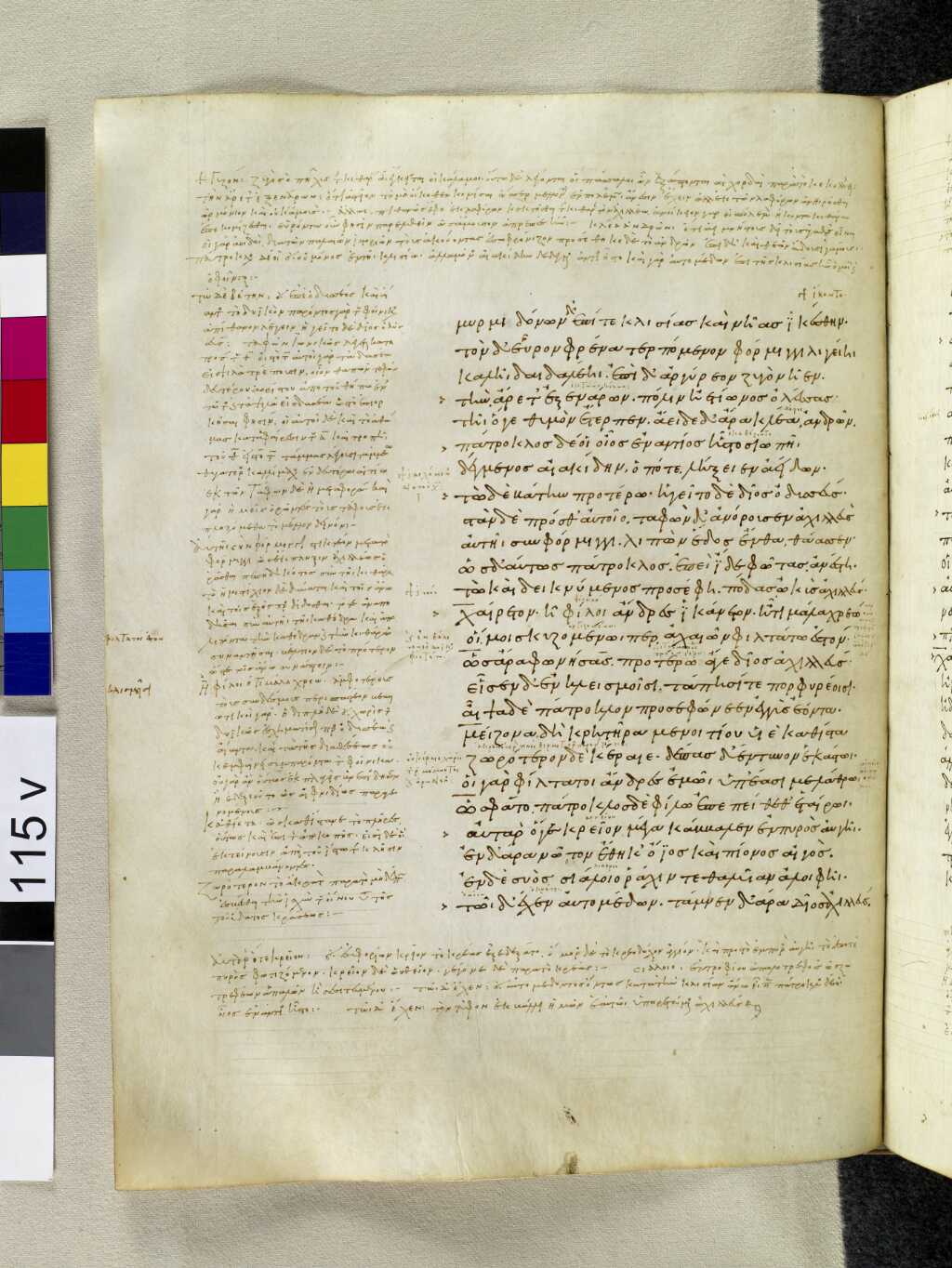
201αἶψα δὲ Πάτροκλον προσεφώνεεν ἐγγὺς ἐόντα· 202μείζονα δὴ κρητῆρα Μενοιτίου υἱὲ καθίστα, 203ζωρότερον δὲ κέραιε, δέπας δʼ ἔντυνον ἑκάστῳ· 204οἳ γὰρ φίλτατοι ἄνδρες ἐμῷ ὑπέασι μελάθρῳ. 205ὣς φάτο, Πάτροκλος δὲ φίλῳ ἐπεπείθεθʼ ἑταίρῳ. 206αὐτὰρ ὅ γε κρεῖον μέγα κάββαλεν ἐν πυρὸς αὐγῇ, 207ἐν δʼ ἄρα νῶτον ἔθηκʼ ὄϊος καὶ πίονος αἰγός, 208ἐν δὲ συὸς σιάλοιο ῥάχιν τεθαλυῖαν ἀλοιφῇ. 209τῷ δʼ ἔχεν Αὐτομέδων, τάμνεν δʼ ἄρα δῖος Ἀχιλλεύς. 210καὶ τὰ μὲν εὖ μίστυλλε καὶ ἀμφʼ ὀβελοῖσιν ἔπειρε, 211πῦρ δὲ Μενοιτιάδης δαῖεν μέγα ἰσόθεος φώς. 212αὐτὰρ ἐπεὶ κατὰ πῦρ ἐκάη καὶ φλὸξ ἐμαράνθη, 213ἀνθρακιὴν στορέσας ὀβελοὺς ἐφύπερθε τάνυσσε, 214πάσσε δʼ ἁλὸς θείοιο κρατευτάων ἐπαείρας. 215αὐτὰρ ἐπεί ῥʼ ὤπτησε καὶ εἰν ἐλεοῖσιν ἔχευε, 216Πάτροκλος μὲν σῖτον ἑλὼν ἐπένειμε τραπέζῃ 217καλοῖς ἐν κανέοισιν, ἀτὰρ κρέα νεῖμεν Ἀχιλλεύς. 218αὐτὸς δʼ ἀντίον ἷζεν Ὀδυσσῆος θείοιο 219τοίχου τοῦ ἑτέροιο, θεοῖσι δὲ θῦσαι ἀνώγει 220Πάτροκλον ὃν ἑταῖρον· ὃ δʼ ἐν πυρὶ βάλλε θυηλάς. 221οἳ δʼ ἐπʼ ὀνείαθʼ ἑτοῖμα προκείμενα χεῖρας ἴαλλον. 222αὐτὰρ ἐπεὶ πόσιος καὶ ἐδητύος ἐξ ἔρον ἕντο, 223νεῦσʼ Αἴας Φοίνικι· νόησε δὲ δῖος Ὀδυσσεύς, 224πλησάμενος δʼ οἴνοιο δέπας δείδεκτʼ Ἀχιλῆα· 225χαῖρʼ Ἀχιλεῦ· δαιτὸς μὲν ἐΐσης οὐκ ἐπιδευεῖς
And King Agamemnon answered, “Sir, you have reproved my folly justly. I was wrong. I own it. One whom heaven befriends is in himself a host, and Jove has shown that he befriends this man by destroying much people of the Achaeans. I was blinded with passion and yielded to my worser mind; therefore I will make amends, and will give him great gifts by way of atonement. I will tell them in the presence of you all. I will give him seven tripods that have never yet been on the fire, and ten talents of gold. I will give him twenty iron cauldrons and twelve strong horses that have won races and carried off prizes. Rich, indeed, both in land and gold is he that has as many prizes as my horses have won me. I will give him seven excellent workwomen, Lesbians, whom I chose for myself when he took Lesbos—all of surpassing beauty. I will give him these, and with them her whom I erewhile took from him, the daughter of Briseus; and I swear a great oath that I never went up into her couch, nor have been with her after the manner of men and women.
“All these things will I give him now, and if hereafter the gods vouchsafe me to sack the city of Priam, let him come when we Achaeans are dividing the spoil, and load his ship with gold and bronze to his liking; furthermore let him take twenty Trojan women, the loveliest after Helen herself. Then, when we reach Achaean Argos, wealthiest of all lands, he shall be my son-in-law and I will show him like honour with my own dear son Orestes, who is being nurtured in all abundance. I have three daughters, Chrysothemis, Laodice, and Iphianassa, let him take the one of his choice, freely and without gifts of wooing, to the house of Peleus; I will add such dower to boot as no man ever yet gave his daughter, and will give him seven well-established cities, Cardamyle, Enope, and Hire, where there is grass; holy Pherae and the rich meadows of Anthea; Aepea also, and the vine-clad slopes of Pedasus, all near the sea, and on the borders of sandy Pylos. The men that dwell there are rich in cattle and sheep; they will honour him with gifts as though he were a god, and be obedient to his comfortable ordinances. All this will I do if he will now forgo his anger. Let him then yield; it is only Hades who is utterly ruthless and unyielding—and hence he is of all gods the one most hateful to mankind. Moreover I am older and more royal than himself. Therefore, let him now obey me.”
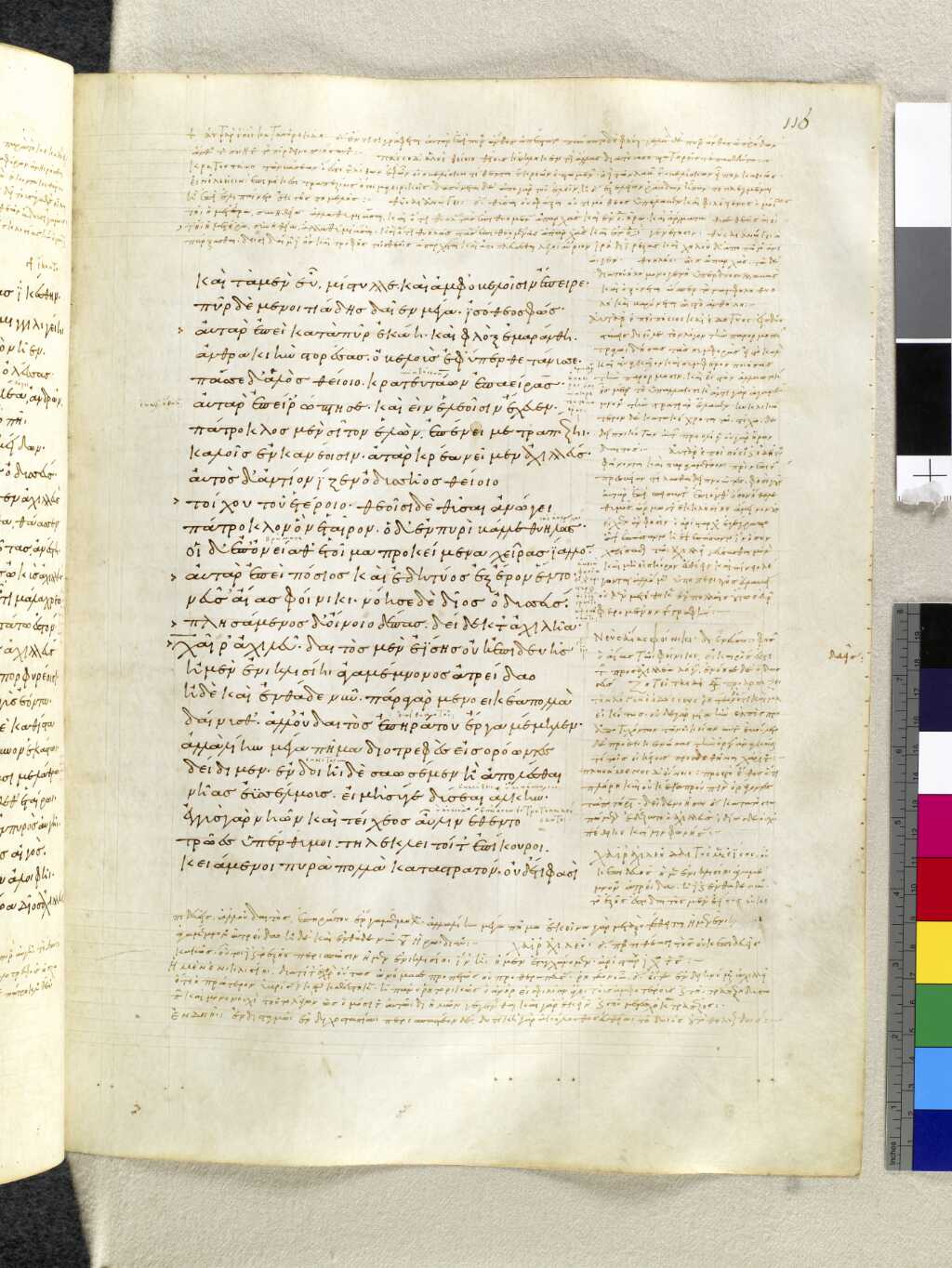
226ἠμὲν ἐνὶ κλισίῃ Ἀγαμέμνονος Ἀτρεΐδαο 227ἠδὲ καὶ ἐνθάδε νῦν, πάρα γὰρ μενοεικέα πολλὰ 228δαίνυσθʼ· ἀλλʼ οὐ δαιτὸς ἐπηράτου ἔργα μέμηλεν, 229ἀλλὰ λίην μέγα πῆμα διοτρεφὲς εἰσορόωντες 230δείδιμεν· ἐν δοιῇ δὲ σαωσέμεν ἢ ἀπολέσθαι 231νῆας ἐϋσσέλμους, εἰ μὴ σύ γε δύσεαι ἀλκήν. 232ἐγγὺς γὰρ νηῶν καὶ τείχεος αὖλιν ἔθεντο 233Τρῶες ὑπέρθυμοι τηλεκλειτοί τʼ ἐπίκουροι 234κηάμενοι πυρὰ πολλὰ κατὰ στρατόν, οὐδʼ ἔτι φασὶ 235σχήσεσθʼ, ἀλλʼ ἐν νηυσὶ μελαίνῃσιν πεσέεσθαι. 236Ζεὺς δέ σφι Κρονίδης ἐνδέξια σήματα φαίνων 237ἀστράπτει· Ἕκτωρ δὲ μέγα σθένεϊ βλεμεαίνων 238μαίνεται ἐκπάγλως πίσυνος Διί, οὐδέ τι τίει 239ἀνέρας οὐδὲ θεούς· κρατερὴ δέ ἑ λύσσα δέδυκεν. 240ἀρᾶται δὲ τάχιστα φανήμεναι Ἠῶ δῖαν· 241στεῦται γὰρ νηῶν ἀποκόψειν ἄκρα κόρυμβα 242αὐτάς τʼ ἐμπρήσειν μαλεροῦ πυρός, αὐτὰρ Ἀχαιοὺς 243δῃώσειν παρὰ τῇσιν ὀρινομένους ὑπὸ καπνοῦ. 244ταῦτʼ αἰνῶς δείδοικα κατὰ φρένα, μή οἱ ἀπειλὰς 245ἐκτελέσωσι θεοί, ἡμῖν δὲ δὴ αἴσιμον εἴη 246φθίσθαι ἐνὶ Τροίῃ ἑκὰς Ἄργεος ἱπποβότοιο. 247ἀλλʼ ἄνα εἰ μέμονάς γε καὶ ὀψέ περ υἷας Ἀχαιῶν 248τειρομένους ἐρύεσθαι ὑπὸ Τρώων ὀρυμαγδοῦ. 249αὐτῷ τοι μετόπισθʼ ἄχος ἔσσεται, οὐδέ τι μῆχος 250ῥεχθέντος κακοῦ ἔστʼ ἄκος εὑρεῖν· ἀλλὰ πολὺ πρὶν
Then Nestor answered, “Most noble son of Atreus, king of men, Agamemnon. The gifts you offer are no small ones, let us then send chosen messengers, who may go to the tent of Achilles son of Peleus without delay. Let those go whom I shall name. Let Phoenix, dear to Jove, lead the way; let Ajax and Ulysses follow, and let the heralds Odius and Eurybates go with them. Now bring water for our hands, and bid all keep silence while we pray to Jove the son of Saturn, if so be that he may have mercy upon us.”
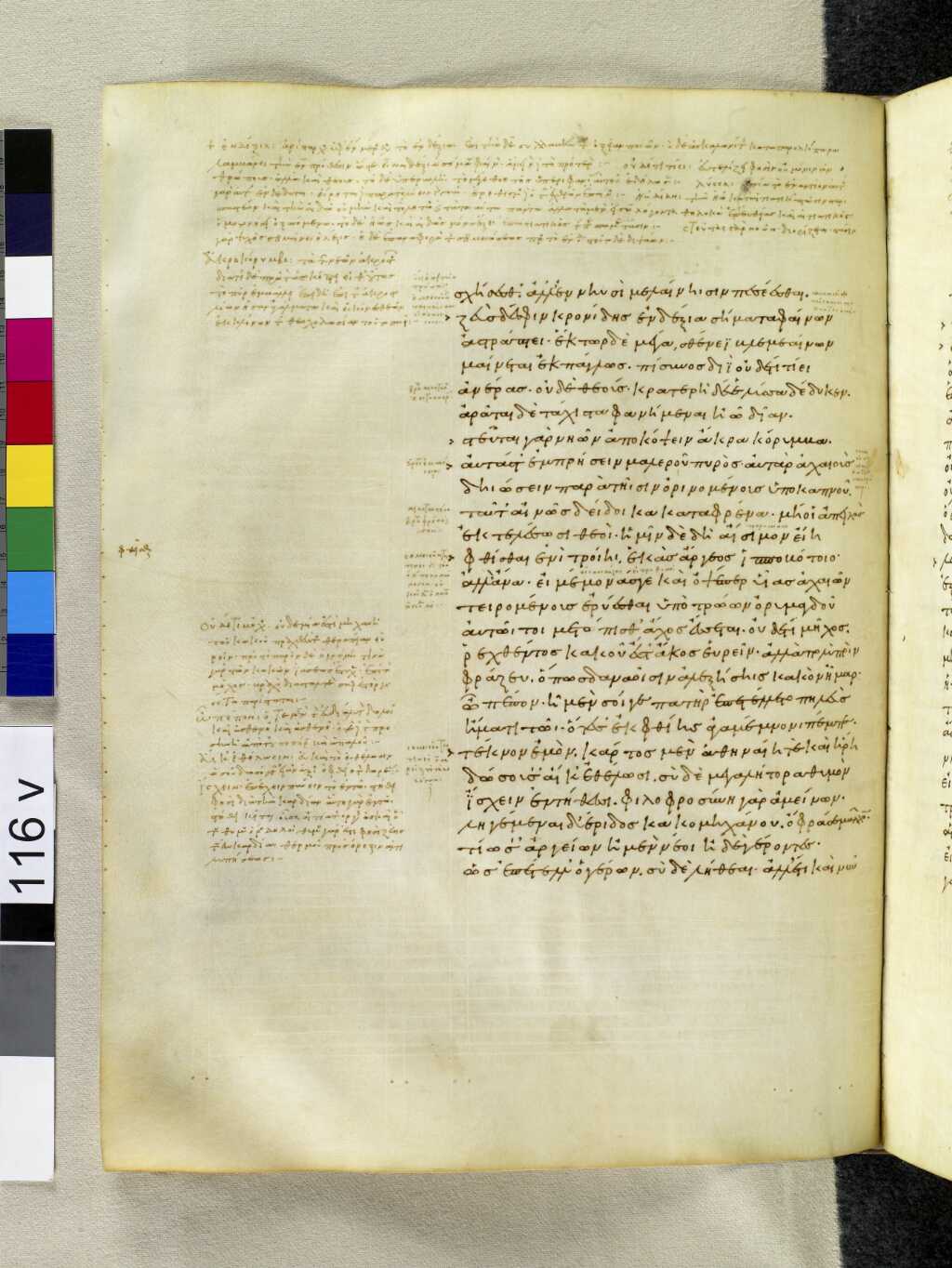
251φράζευ ὅπως Δαναοῖσιν ἀλεξήσεις κακὸν ἦμαρ. 252ὦ πέπον ἦ μὲν σοί γε πατὴρ ἐπετέλλετο Πηλεὺς 253ἤματι τῷ ὅτε σʼ ἐκ Φθίης Ἀγαμέμνονι πέμπε· 254τέκνον ἐμὸν κάρτος μὲν Ἀθηναίη τε καὶ Ἥρη 255δώσουσʼ αἴ κʼ ἐθέλωσι, σὺ δὲ μεγαλήτορα θυμὸν 256ἴσχειν ἐν στήθεσσι· φιλοφροσύνη γὰρ ἀμείνων· 257ληγέμεναι δʼ ἔριδος κακομηχάνου, ὄφρά σε μᾶλλον 258τίωσʼ Ἀργείων ἠμὲν νέοι ἠδὲ γέροντες. 259ὣς ἐπέτελλʼ ὃ γέρων, σὺ δὲ λήθεαι· ἀλλʼ ἔτι καὶ νῦν 260παύεʼ, ἔα δὲ χόλον θυμαλγέα· σοὶ δʼ Ἀγαμέμνων 261ἄξια δῶρα δίδωσι μεταλήξαντι χόλοιο. 262εἰ δὲ σὺ μέν μευ ἄκουσον, ἐγὼ δέ κέ τοι καταλέξω 263ὅσσά τοι ἐν κλισίῃσιν ὑπέσχετο δῶρʼ Ἀγαμέμνων· 264ἕπτʼ ἀπύρους τρίποδας, δέκα δὲ χρυσοῖο τάλαντα, 265αἴθωνας δὲ λέβητας ἐείκοσι, δώδεκα δʼ ἵππους 266πηγοὺς ἀθλοφόρους, οἳ ἀέθλια ποσσὶν ἄροντο. 267οὔ κεν ἀλήϊος εἴη ἀνὴρ ᾧ τόσσα γένοιτο 268οὐδέ κεν ἀκτήμων ἐριτίμοιο χρυσοῖο, 269ὅσσʼ Ἀγαμέμνονος ἵπποι ἀέθλια ποσσὶν ἄροντο. 270δώσει δʼ ἑπτὰ γυναῖκας ἀμύμονα ἔργα ἰδυίας 271Λεσβίδας, ἃς ὅτε Λέσβον ἐϋκτιμένην ἕλες αὐτὸς 272ἐξέλεθʼ, αἳ τότε κάλλει ἐνίκων φῦλα γυναικῶν. 273τὰς μέν τοι δώσει, μετὰ δʼ ἔσσεται ἣν τότʼ ἀπηύρα 274κούρη Βρισῆος· ἐπὶ δὲ μέγαν ὅρκον ὀμεῖται 275μή ποτε τῆς εὐνῆς ἐπιβήμεναι ἠδὲ μιγῆναι
Thus did he speak, and his saying pleased them well. Men-servants poured water over the hands of the guests, while pages filled the mixing-bowls with wine and water, and handed it round after giving every man his drink-offering; then, when they had made their offerings, and had drunk each as much as he was minded, the envoys set out from the tent of Agamemnon son of Atreus; and Nestor, looking first to one and then to another, but most especially at Ulysses, was instant with them that they should prevail with the noble son of Peleus.
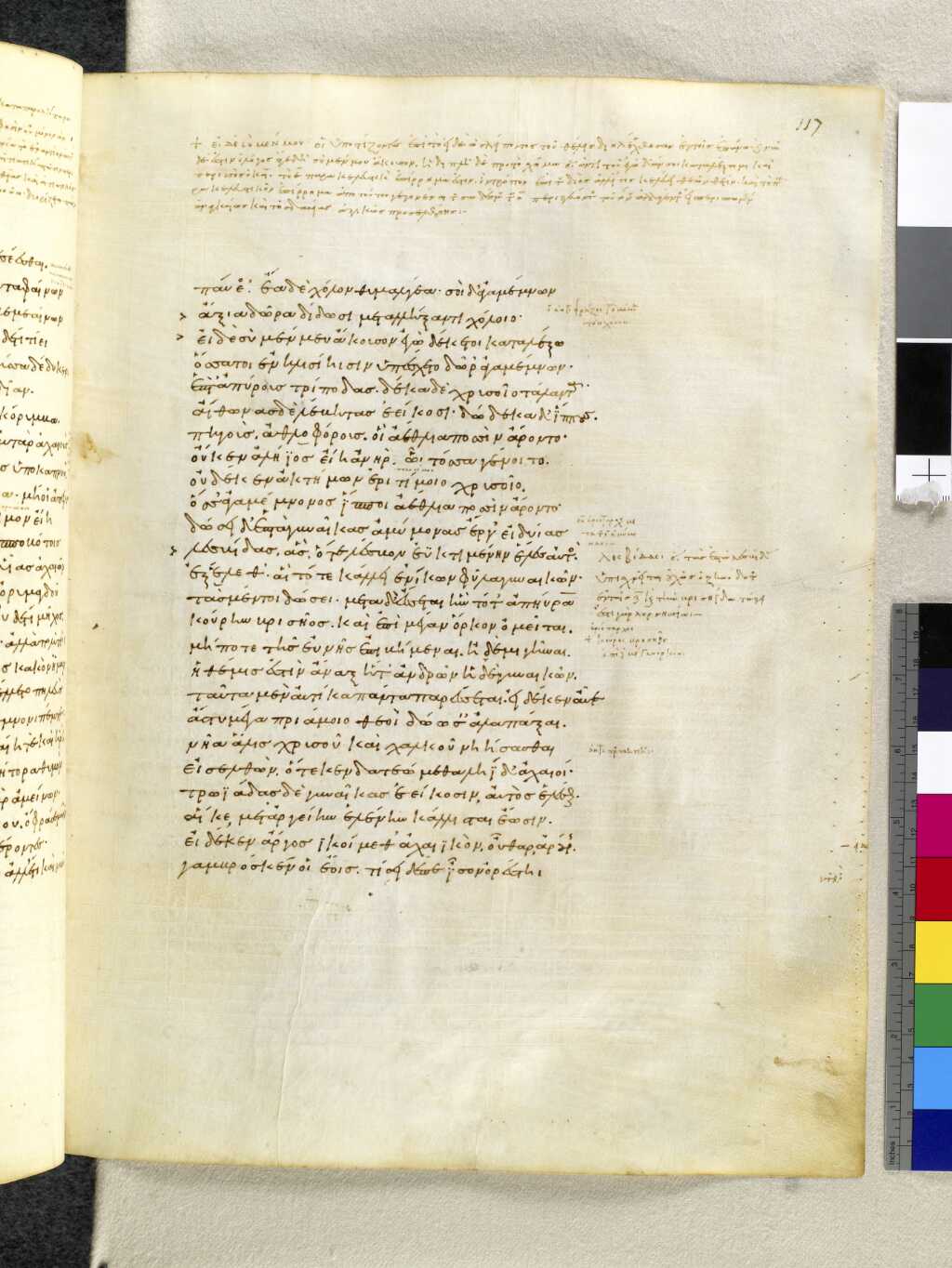
276ἣ θέμις ἐστὶν ἄναξ ἤτʼ ἀνδρῶν ἤτε γυναικῶν. 277ταῦτα μὲν αὐτίκα πάντα παρέσσεται· εἰ δέ κεν αὖτε 278ἄστυ μέγα Πριάμοιο θεοὶ δώωσʼ ἀλαπάξαι, 279νῆα ἅλις χρυσοῦ καὶ χαλκοῦ νηήσασθαι 280εἰσελθών, ὅτε κεν δατεώμεθα ληΐδʼ Ἀχαιοί, 281Τρωϊάδας δὲ γυναῖκας ἐείκοσιν αὐτὸς ἑλέσθαι, 282αἵ κε μετʼ Ἀργείην Ἑλένην κάλλισται ἔωσιν. 283εἰ δέ κεν Ἄργος ἱκοίμεθʼ Ἀχαιϊκὸν οὖθαρ ἀρούρης 284γαμβρός κέν οἱ ἔοις· τίσει δέ σε ἶσον Ὀρέστῃ, 285ὅς οἱ τηλύγετος τρέφεται θαλίῃ ἔνι πολλῇ. 286τρεῖς δέ οἵ εἰσι θύγατρες ἐνὶ μεγάρῳ εὐπήκτῳ 287Χρυσόθεμις καὶ Λαοδίκη καὶ Ἰφιάνασσα, 288τάων ἥν κʼ ἐθέλῃσθα φίλην ἀνάεδνον ἄγεσθαι 289πρὸς οἶκον Πηλῆος· ὃ δʼ αὖτʼ ἐπὶ μείλια δώσει 290πολλὰ μάλʼ, ὅσσʼ οὔ πώ τις ἑῇ ἐπέδωκε θυγατρί· 291ἑπτὰ δέ τοι δώσει εὖ ναιόμενα πτολίεθρα 292Καρδαμύλην Ἐνόπην τε καὶ Ἱρὴν ποιήεσσαν 293Φηράς τε ζαθέας ἠδʼ Ἄνθειαν βαθύλειμον 294καλήν τʼ Αἴπειαν καὶ Πήδασον ἀμπελόεσσαν. 295πᾶσαι δʼ ἐγγὺς ἁλός, νέαται Πύλου ἠμαθόεντος· 296ἐν δʼ ἄνδρες ναίουσι πολύρρηνες πολυβοῦται, 297οἵ κέ σε δωτίνῃσι θεὸν ὣς τιμήσουσι 298καί τοι ὑπὸ σκήπτρῳ λιπαρὰς τελέουσι θέμιστας. 299ταῦτά κέ τοι τελέσειε μεταλήξαντι χόλοιο. 300εἰ δέ τοι Ἀτρεΐδης μὲν ἀπήχθετο κηρόθι μᾶλλον
They went their way by the shore of the sounding sea, and prayed earnestly to earth-encircling Neptune that the high spirit of the son of Aeacus might incline favourably towards them. When they reached the ships and tents of the Myrmidons, they found Achilles playing on a lyre, fair, of cunning workmanship, and its cross-bar was of silver. It was part of the spoils which he had taken when he sacked the city of Eetion, and he was now diverting himself with it and singing the feats of heroes. He was alone with Patroclus, who sat opposite to him and said nothing, waiting till he should cease singing. Ulysses and Ajax now came in—Ulysses leading the way—and stood before him. Achilles sprang from his seat with the lyre still in his hand, and Patroclus, when he saw the strangers, rose also. Achilles then greeted them saying, “All hail and welcome—you must come upon some great matter, you, who for all my anger are still dearest to me of the Achaeans.”
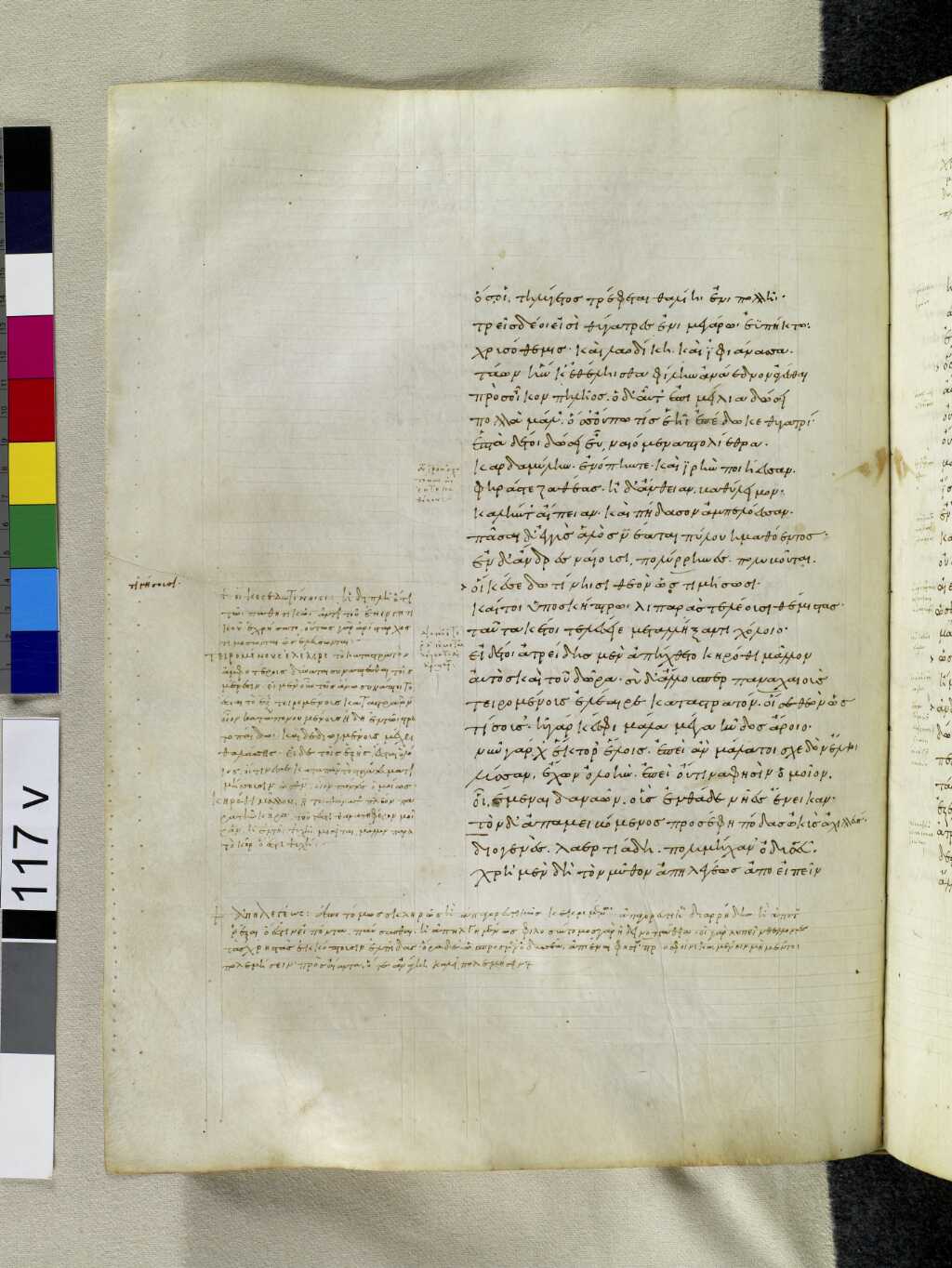
301αὐτὸς καὶ τοῦ δῶρα, σὺ δʼ ἄλλους περ Παναχαιοὺς 302τειρομένους ἐλέαιρε κατὰ στρατόν, οἵ σε θεὸν ὣς 303τίσουσʼ· ἦ γάρ κέ σφι μάλα μέγα κῦδος ἄροιο· 304νῦν γάρ χʼ Ἕκτορʼ ἕλοις, ἐπεὶ ἂν μάλα τοι σχεδὸν ἔλθοι 305λύσσαν ἔχων ὀλοήν, ἐπεὶ οὔ τινά φησιν ὁμοῖον 306οἷ ἔμεναι Δαναῶν οὓς ἐνθάδε νῆες ἔνεικαν. 307τὸν δʼ ἀπαμειβόμενος προσέφη πόδας ὠκὺς Ἀχιλλεύς· 308διογενὲς Λαερτιάδη πολυμήχανʼ Ὀδυσσεῦ 309χρὴ μὲν δὴ τὸν μῦθον ἀπηλεγέως ἀποειπεῖν, 310ᾗ περ δὴ φρονέω τε καὶ ὡς τετελεσμένον ἔσται, 311ὡς μή μοι τρύζητε παρήμενοι ἄλλοθεν ἄλλος. 312ἐχθρὸς γάρ μοι κεῖνος ὁμῶς Ἀΐδαο πύλῃσιν 313ὅς χʼ ἕτερον μὲν κεύθῃ ἐνὶ φρεσίν, ἄλλο δὲ εἴπῃ. 314αὐτὰρ ἐγὼν ἐρέω ὥς μοι δοκεῖ εἶναι ἄριστα· 315οὔτʼ ἔμεγʼ Ἀτρεΐδην Ἀγαμέμνονα πεισέμεν οἴω 316οὔτʼ ἄλλους Δαναούς, ἐπεὶ οὐκ ἄρα τις χάρις ἦεν 317μάρνασθαι δηΐοισιν ἐπʼ ἀνδράσι νωλεμὲς αἰεί. 318ἴση μοῖρα μένοντι καὶ εἰ μάλα τις πολεμίζοι· 319ἐν δὲ ἰῇ τιμῇ ἠμὲν κακὸς ἠδὲ καὶ ἐσθλός· 320κάτθανʼ ὁμῶς ὅ τʼ ἀεργὸς ἀνὴρ ὅ τε πολλὰ ἐοργώς. 321οὐδέ τί μοι περίκειται, ἐπεὶ πάθον ἄλγεα θυμῷ 322αἰεὶ ἐμὴν ψυχὴν παραβαλλόμενος πολεμίζειν. 323ὡς δʼ ὄρνις ἀπτῆσι νεοσσοῖσι προφέρῃσι 324μάστακʼ ἐπεί κε λάβῃσι, κακῶς δʼ ἄρα οἱ πέλει αὐτῇ, 325ὣς καὶ ἐγὼ πολλὰς μὲν ἀΰπνους νύκτας ἴαυον,
With this he led them forward, and bade them sit on seats covered with purple rugs; then he said to Patroclus who was close by him, “Son of Menoetius, set a larger bowl upon the table, mix less water with the wine, and give every man his cup, for these are very dear friends, who are now under my roof.”
Patroclus did as his comrade bade him; he set the chopping-block in front of the fire, and on it he laid the loin of a sheep, the loin also of a goat, and the chine of a fat hog. Automedon held the meat while Achilles chopped it; he then sliced the pieces and put them on spits while the son of Menoetius made the fire burn high. When the flame had died down, he spread the embers, laid the spits on top of them, lifting them up and setting them upon the spit-racks; and he sprinkled them with salt. When the meat was roasted, he set it on platters, and handed bread round the table in fair baskets, while Achilles dealt them their portions. Then Achilles took his seat facing Ulysses against the opposite wall, and bade his comrade Patroclus offer sacrifice to the gods; so he cast the offerings into the fire, and they laid their hands upon the good things that were before them. As soon as they had had enough to eat and drink, Ajax made a sign to Phoenix, and when he saw this, Ulysses filled his cup with wine and pledged Achilles.
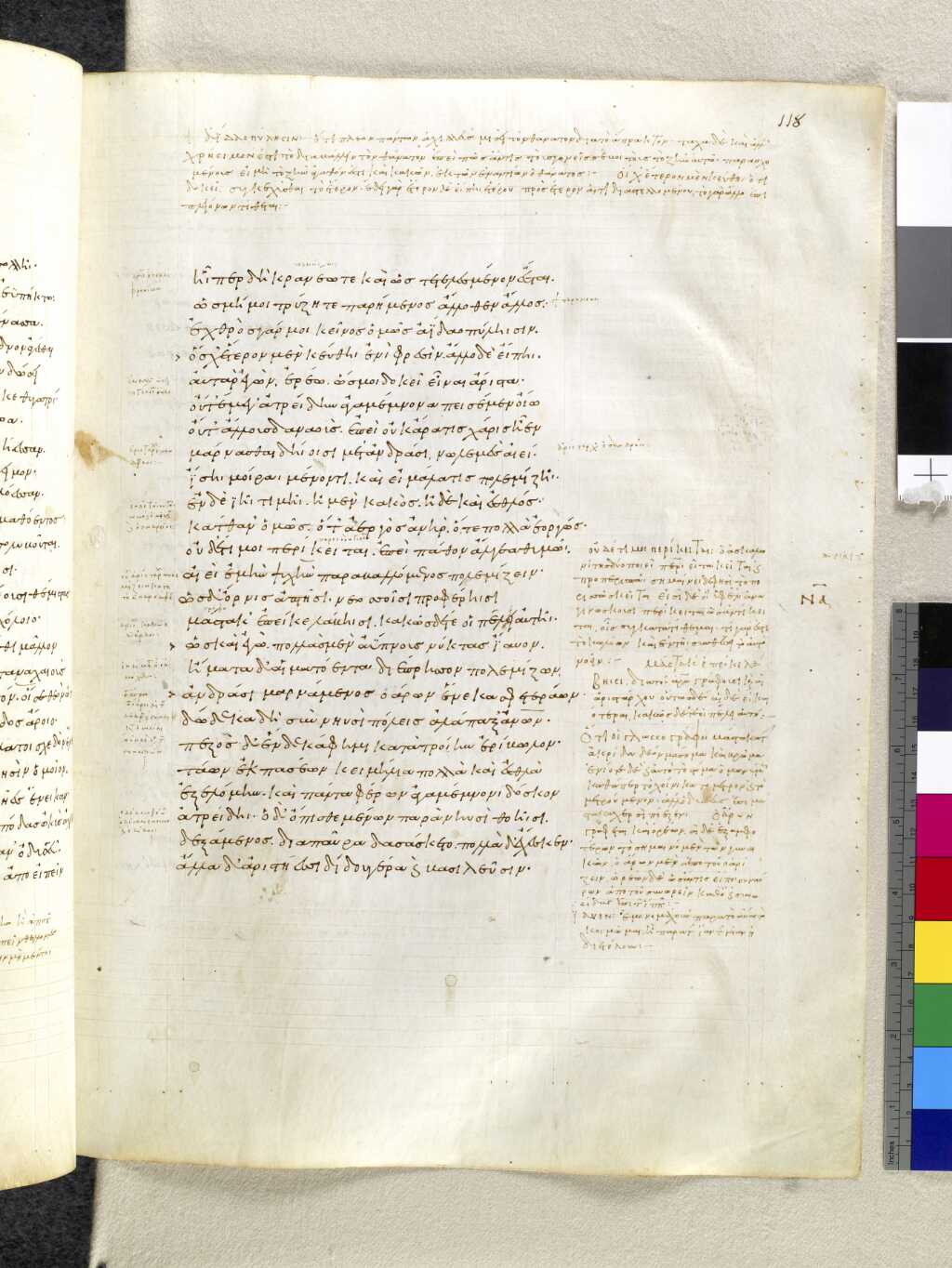
326ἤματα δʼ αἱματόεντα διέπρησσον πολεμίζων 327ἀνδράσι μαρνάμενος ὀάρων ἕνεκα σφετεράων. 328δώδεκα δὴ σὺν νηυσὶ πόλεις ἀλάπαξʼ ἀνθρώπων, 329πεζὸς δʼ ἕνδεκά φημι κατὰ Τροίην ἐρίβωλον· 330τάων ἐκ πασέων κειμήλια πολλὰ καὶ ἐσθλὰ 331ἐξελόμην, καὶ πάντα φέρων Ἀγαμέμνονι δόσκον 332Ἀτρεΐδῃ· ὃ δʼ ὄπισθε μένων παρὰ νηυσὶ θοῇσι 333δεξάμενος διὰ παῦρα δασάσκετο, πολλὰ δʼ ἔχεσκεν. 334ἄλλα δʼ ἀριστήεσσι δίδου γέρα καὶ βασιλεῦσι· 335τοῖσι μὲν ἔμπεδα κεῖται, ἐμεῦ δʼ ἀπὸ μούνου Ἀχαιῶν 336εἵλετʼ, ἔχει δʼ ἄλοχον θυμαρέα· τῇ παριαύων 337τερπέσθω. τί δὲ δεῖ πολεμιζέμεναι Τρώεσσιν 338Ἀργείους; τί δὲ λαὸν ἀνήγαγεν ἐνθάδʼ ἀγείρας 339Ἀτρεΐδης; ἦ οὐχ Ἑλένης ἕνεκʼ ἠϋκόμοιο; 340ἦ μοῦνοι φιλέουσʼ ἀλόχους μερόπων ἀνθρώπων 341Ἀτρεΐδαι; ἐπεὶ ὅς τις ἀνὴρ ἀγαθὸς καὶ ἐχέφρων 342τὴν αὐτοῦ φιλέει καὶ κήδεται, ὡς καὶ ἐγὼ τὴν 343ἐκ θυμοῦ φίλεον δουρικτητήν περ ἐοῦσαν. 344νῦν δʼ ἐπεὶ ἐκ χειρῶν γέρας εἵλετο καί μʼ ἀπάτησε 345μή μευ πειράτω εὖ εἰδότος· οὐδέ με πείσει. 346ἀλλʼ Ὀδυσεῦ σὺν σοί τε καὶ ἄλλοισιν βασιλεῦσι 347φραζέσθω νήεσσιν ἀλεξέμεναι δήϊον πῦρ. 348ἦ μὲν δὴ μάλα πολλὰ πονήσατο νόσφιν ἐμεῖο, 349καὶ δὴ τεῖχος ἔδειμε, καὶ ἤλασε τάφρον ἐπʼ αὐτῷ 350εὐρεῖαν μεγάλην, ἐν δὲ σκόλοπας κατέπηξεν·
“Hail,” said he, “Achilles, we have had no scant of good cheer, neither in the tent of Agamemnon, nor yet here; there has been plenty to eat and drink, but our thought turns upon no such matter. Sir, we are in the face of great disaster, and without your help know not whether we shall save our fleet or lose it. The Trojans and their allies have camped hard by our ships and by the wall; they have lit watchfires throughout their host and deem that nothing can now prevent them from falling on our fleet. Jove, moreover, has sent his lightnings on their right; Hector, in all his glory, rages like a maniac; confident that Jove is with him he fears neither god nor man, but is gone raving mad, and prays for the approach of day. He vows that he will hew the high sterns of our ships in pieces, set fire to their hulls, and make havoc of the Achaeans while they are dazed and smothered in smoke; I much fear that heaven will make good his boasting, and it will prove our lot to perish at Troy far from our home in Argos. Up, then, and late though it be, save the sons of the Achaeans who faint before the fury of the Trojans. You will repent bitterly hereafter if you do not, for when the harm is done there will be no curing it; consider ere it be too late, and save the Danaans from destruction.
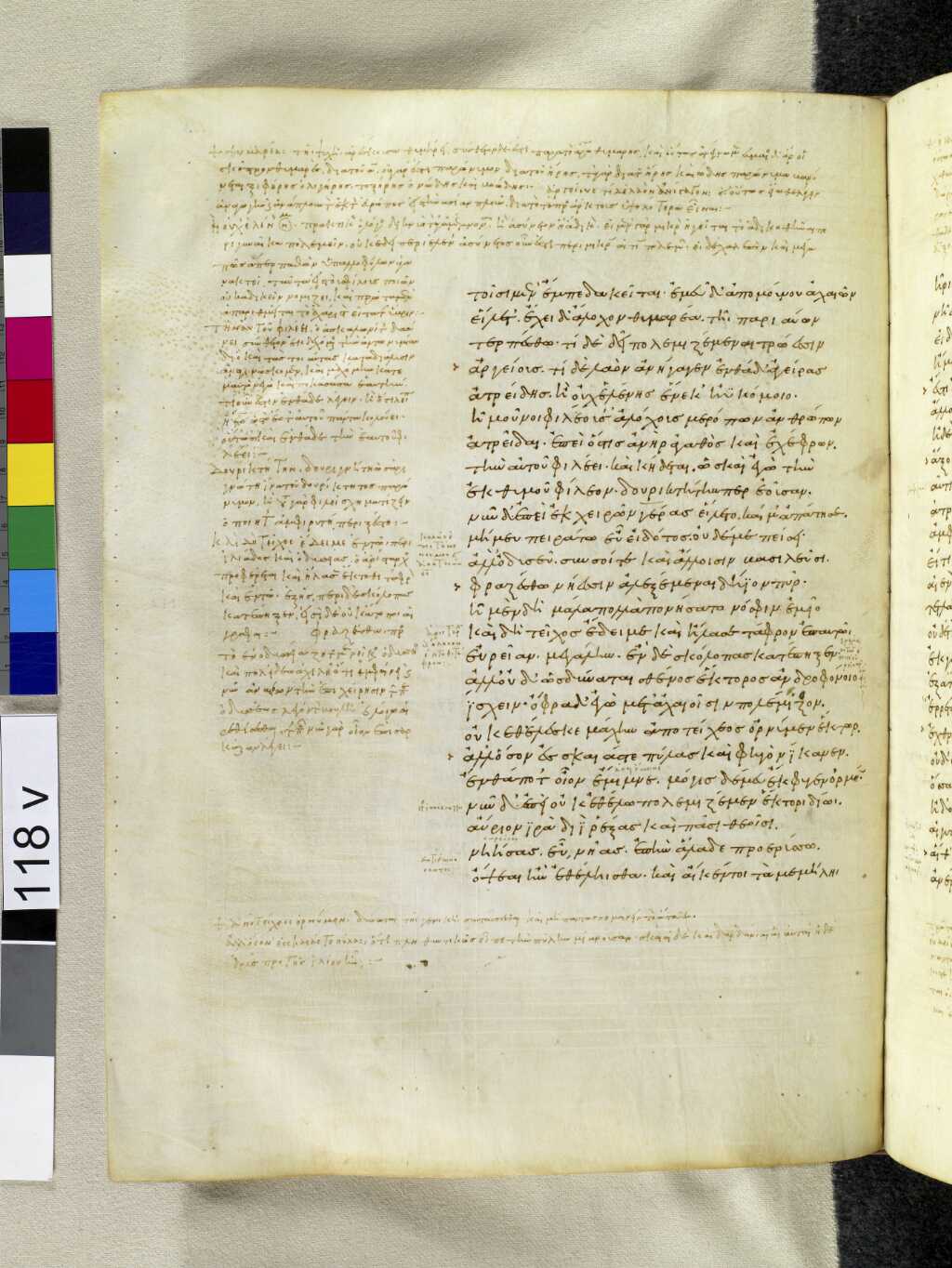
351ἀλλʼ οὐδʼ ὧς δύναται σθένος Ἕκτορος ἀνδροφόνοιο 352ἴσχειν· ὄφρα δʼ ἐγὼ μετʼ Ἀχαιοῖσιν πολέμιζον 353οὐκ ἐθέλεσκε μάχην ἀπὸ τείχεος ὀρνύμεν Ἕκτωρ, 354ἀλλʼ ὅσον ἐς Σκαιάς τε πύλας καὶ φηγὸν ἵκανεν· 355ἔνθά ποτʼ οἶον ἔμιμνε, μόγις δέ μευ ἔκφυγεν ὁρμήν. 356νῦν δʼ ἐπεὶ οὐκ ἐθέλω πολεμιζέμεν Ἕκτορι δίῳ 357αὔριον ἱρὰ Διὶ ῥέξας καὶ πᾶσι θεοῖσι 358νηήσας εὖ νῆας, ἐπὴν ἅλα δὲ προερύσσω, 359ὄψεαι, αἴ κʼ ἐθέλῃσθα καὶ αἴ κέν τοι τὰ μεμήλῃ, 360ἦρι μάλʼ Ἑλλήσποντον ἐπʼ ἰχθυόεντα πλεούσας 361νῆας ἐμάς, ἐν δʼ ἄνδρας ἐρεσσέμεναι μεμαῶτας· 362εἰ δέ κεν εὐπλοίην δώῃ κλυτὸς ἐννοσίγαιος 363ἤματί κε τριτάτῳ Φθίην ἐρίβωλον ἱκοίμην. 364ἔστι δέ μοι μάλα πολλά, τὰ κάλλιπον ἐνθάδε ἔρρων· 365ἄλλον δʼ ἐνθένδε χρυσὸν καὶ χαλκὸν ἐρυθρὸν 366ἠδὲ γυναῖκας ἐϋζώνους πολιόν τε σίδηρον 367ἄξομαι, ἅσσʼ ἔλαχόν γε· γέρας δέ μοι, ὅς περ ἔδωκεν, 368αὖτις ἐφυβρίζων ἕλετο κρείων Ἀγαμέμνων 369Ἀτρεΐδης· τῷ πάντʼ ἀγορευέμεν ὡς ἐπιτέλλω 370ἀμφαδόν, ὄφρα καὶ ἄλλοι ἐπισκύζωνται Ἀχαιοὶ 371εἴ τινά που Δαναῶν ἔτι ἔλπεται ἐξαπατήσειν 372αἰὲν ἀναιδείην ἐπιειμένος· οὐδʼ ἂν ἔμοιγε 373τετλαίη κύνεός περ ἐὼν εἰς ὦπα ἰδέσθαι· 374οὐδέ τί οἱ βουλὰς συμφράσσομαι, οὐδὲ μὲν ἔργον· 375ἐκ γὰρ δή μʼ ἀπάτησε καὶ ἤλιτεν· οὐδʼ ἂν ἔτʼ αὖτις
“My good friend, when your father Peleus sent you from Phthia to Agamemnon, did he not charge you saying, ‘Son, Minerva and Juno will make you strong if they choose, but check your high temper, for the better part is in goodwill. Eschew vain quarrelling, and the Achaeans old and young will respect you more for doing so.’ These were his words, but you have forgotten them. Even now, however, be appeased, and put away your anger from you. Agamemnon will make you great amends if you will forgive him; listen, and I will tell you what he has said in his tent that he will give you. He will give you seven tripods that have never yet been on the fire, and ten talents of gold; twenty iron cauldrons, and twelve strong horses that have won races and carried off prizes. Rich indeed both in land and gold is he who has as many prizes as these horses have won for Agamemnon. Moreover he will give you seven excellent workwomen, Lesbians, whom he chose for himself, when you took Lesbos—all of surpassing beauty. He will give you these, and with them her whom he erewhile took from you, the daughter of Briseus, and he will swear a great oath, he has never gone up into her couch nor been with her after the manner of men and women. All these things will he give you now down, and if hereafter the gods vouchsafe him to sack the city of Priam, you can come when we Achaeans are dividing the spoil, and load your ship with gold and bronze to your liking. You can take twenty Trojan women, the loveliest after Helen herself. Then, when we reach Achaean Argos, wealthiest of all lands, you shall be his son-in-law, and he will show you like honour with his own dear son Orestes, who is being nurtured in all abundance. Agamemnon has three daughters, Chrysothemis, Laodice, and Iphianassa; you may take the one of your choice, freely and without gifts of wooing, to the house of Peleus; he will add such dower to boot as no man ever yet gave his daughter, and will give you seven well-established cities, Cardamyle, Enope, and Hire where there is grass; holy Pherae and the rich meadows of Anthea; Aepea also, and the vine-clad slopes of Pedasus, all near the sea, and on the borders of sandy Pylos. The men that dwell there are rich in cattle and sheep; they will honour you with gifts as though were a god, and be obedient to your comfortable ordinances. All this will he do if you will now forgo your anger. Moreover, though you hate both him and his gifts with all your heart, yet pity the rest of the Achaeans who are being harassed in all their host; they will honour you as a god, and you will earn great glory at their hands. You might even kill Hector; he will come within your reach, for he is infatuated, and declares that not a Danaan whom the ships have brought can hold his own against him.”
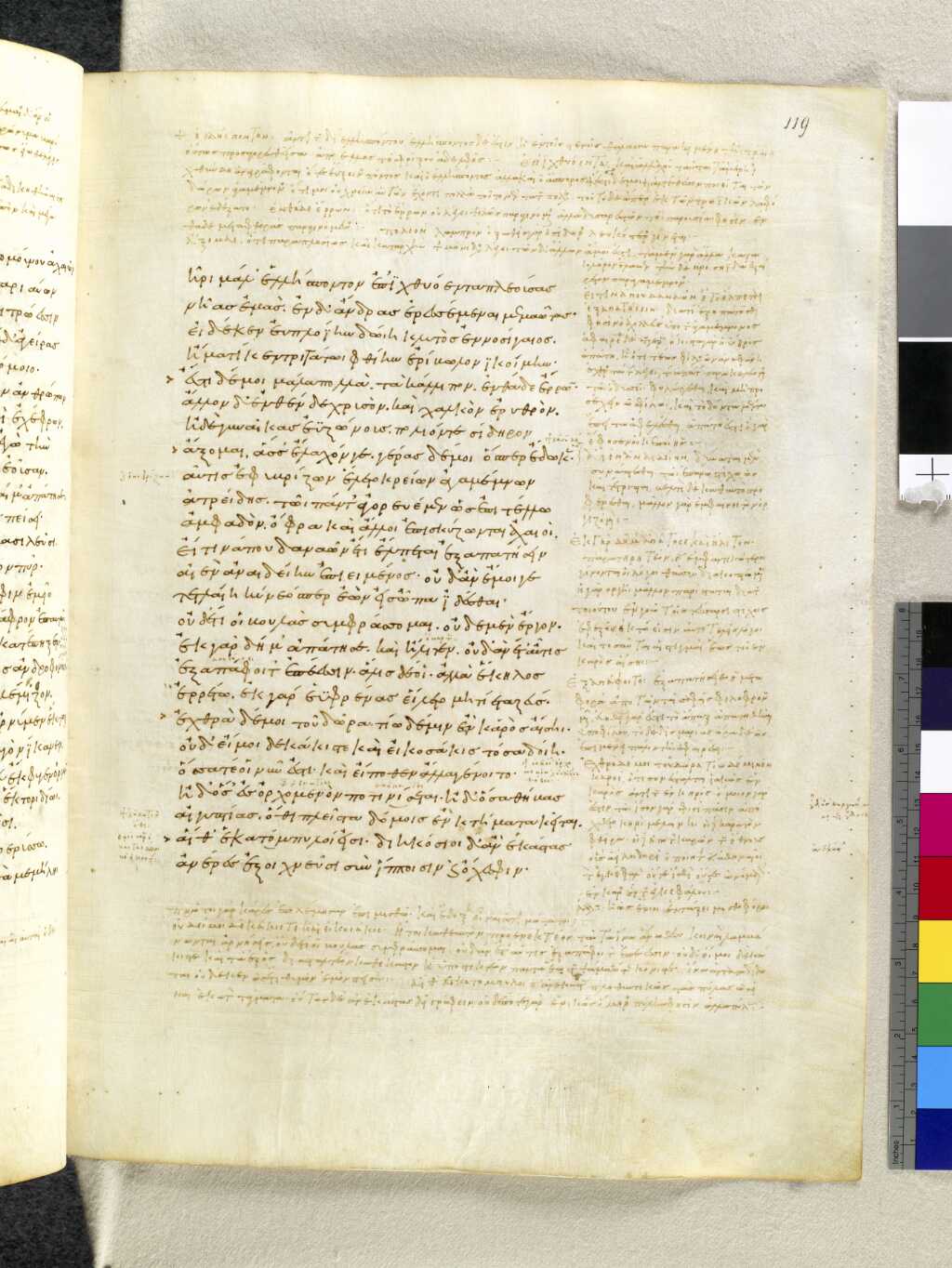
376ἐξαπάφοιτʼ ἐπέεσσιν· ἅλις δέ οἱ· ἀλλὰ ἕκηλος 377ἐρρέτω· ἐκ γάρ εὑ φρένας εἵλετο μητίετα Ζεύς. 378ἐχθρὰ δέ μοι τοῦ δῶρα, τίω δέ μιν ἐν καρὸς αἴσῃ. 379οὐδʼ εἴ μοι δεκάκις τε καὶ εἰκοσάκις τόσα δοίη 380ὅσσά τέ οἱ νῦν ἔστι, καὶ εἴ ποθεν ἄλλα γένοιτο, 381οὐδʼ ὅσʼ ἐς Ὀρχομενὸν ποτινίσεται, οὐδʼ ὅσα Θήβας 382Αἰγυπτίας, ὅθι πλεῖστα δόμοις ἐν κτήματα κεῖται, 383αἵ θʼ ἑκατόμπυλοί εἰσι, διηκόσιοι δʼ ἀνʼ ἑκάστας 384ἀνέρες ἐξοιχνεῦσι σὺν ἵπποισιν καὶ ὄχεσφιν· 385οὐδʼ εἴ μοι τόσα δοίη ὅσα ψάμαθός τε κόνις τε, 386οὐδέ κεν ὧς ἔτι θυμὸν ἐμὸν πείσειʼ Ἀγαμέμνων 387πρίν γʼ ἀπὸ πᾶσαν ἐμοὶ δόμεναι θυμαλγέα λώβην. 388κούρην δʼ οὐ γαμέω Ἀγαμέμνονος Ἀτρεΐδαο, 389οὐδʼ εἰ χρυσείῃ Ἀφροδίτῃ κάλλος ἐρίζοι, 390ἔργα δʼ Ἀθηναίῃ γλαυκώπιδι ἰσοφαρίζοι· 391οὐδέ μιν ὧς γαμέω· ὃ δʼ Ἀχαιῶν ἄλλον ἑλέσθω, 392ὅς τις οἷ τʼ ἐπέοικε καὶ ὃς βασιλεύτερός ἐστιν. 393ἢν γὰρ δή με σαῶσι θεοὶ καὶ οἴκαδʼ ἵκωμαι, 394Πηλεύς θήν μοι ἔπειτα γυναῖκά γε μάσσεται αὐτός. 395πολλαὶ Ἀχαιΐδες εἰσὶν ἀνʼ Ἑλλάδα τε Φθίην τε 396κοῦραι ἀριστήων, οἵ τε πτολίεθρα ῥύονται, 397τάων ἥν κʼ ἐθέλωμι φίλην ποιήσομʼ ἄκοιτιν. 398ἔνθα δέ μοι μάλα πολλὸν ἐπέσσυτο θυμὸς ἀγήνωρ 399γήμαντα μνηστὴν ἄλοχον ἐϊκυῖαν ἄκοιτιν 400κτήμασι τέρπεσθαι τὰ γέρων ἐκτήσατο Πηλεύς·
Achilles answered, “Ulysses, noble son of Laertes, I should give you formal notice plainly and in all fixity of purpose that there be no more of this cajoling, from whatsoever quarter it may come. Him do I hate even as the gates of hell who says one thing while he hides another in his heart; therefore I will say what I mean. I will be appeased neither by Agamemnon son of Atreus nor by any other of the Danaans, for I see that I have no thanks for all my fighting. He that fights fares no better than he that does not; coward and hero are held in equal honour, and death deals like measure to him who works and him who is idle. I have taken nothing by all my hardships—with my life ever in my hand; as a bird when she has found a morsel takes it to her nestlings, and herself fares hardly, even so many a long night have I been wakeful, and many a bloody battle have I waged by day against those who were fighting for their women. With my ships I have taken twelve cities, and eleven round about Troy have I stormed with my men by land; I took great store of wealth from every one of them, but I gave all up to Agamemnon son of Atreus. He stayed where he was by his ships, yet of what came to him he gave little, and kept much himself.
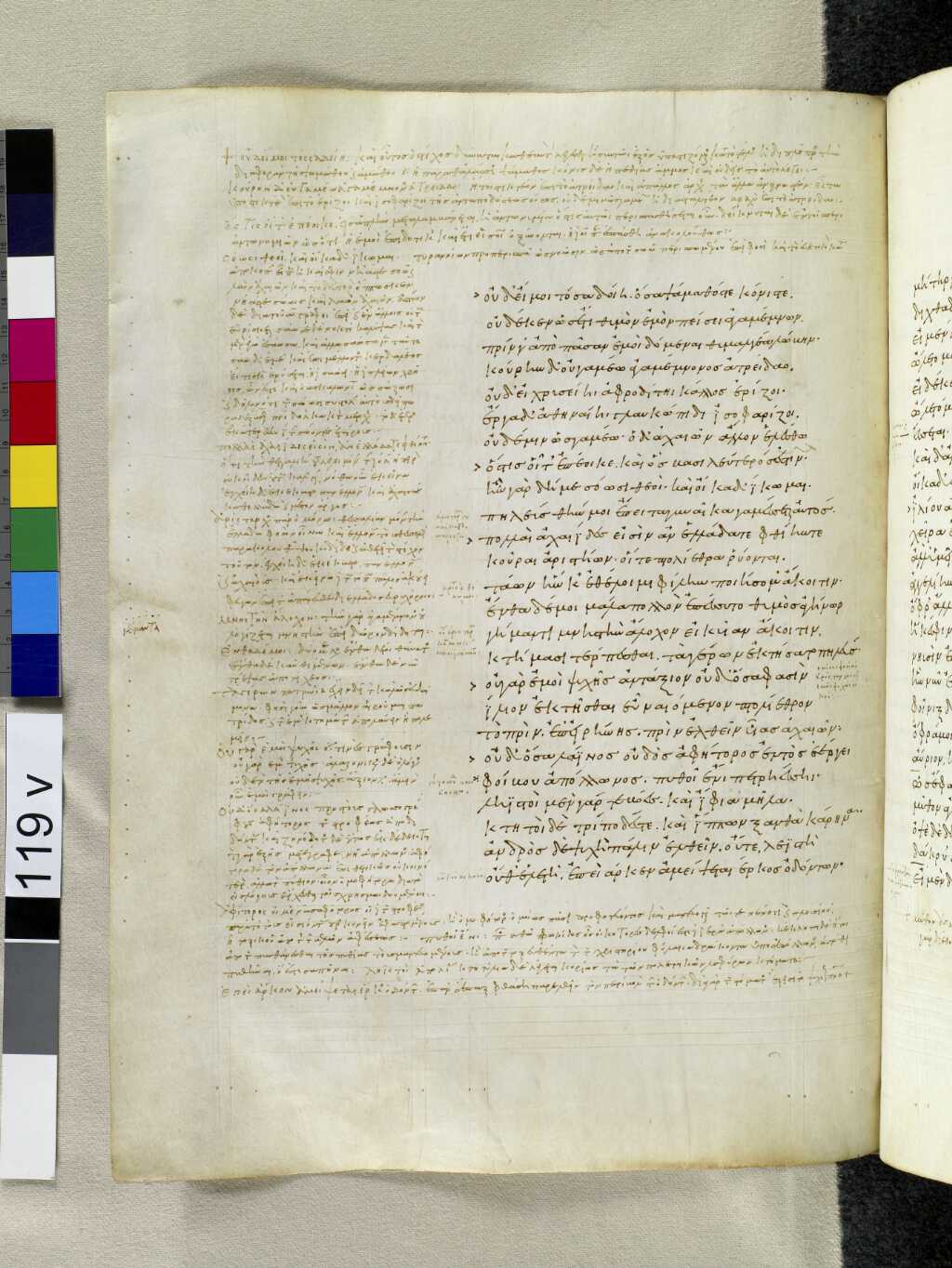
401οὐ γὰρ ἐμοὶ ψυχῆς ἀντάξιον οὐδʼ ὅσα φασὶν 402Ἴλιον ἐκτῆσθαι εὖ ναιόμενον πτολίεθρον 403τὸ πρὶν ἐπʼ εἰρήνης, πρὶν ἐλθεῖν υἷας Ἀχαιῶν, 404οὐδʼ ὅσα λάϊνος οὐδὸς ἀφήτορος ἐντὸς ἐέργει 405Φοίβου Ἀπόλλωνος Πυθοῖ ἔνι πετρηέσσῃ. 406ληϊστοὶ μὲν γάρ τε βόες καὶ ἴφια μῆλα, 407κτητοὶ δὲ τρίποδές τε καὶ ἵππων ξανθὰ κάρηνα, 408ἀνδρὸς δὲ ψυχὴ πάλιν ἐλθεῖν οὔτε λεϊστὴ 409οὔθʼ ἑλετή, ἐπεὶ ἄρ κεν ἀμείψεται ἕρκος ὀδόντων. 410μήτηρ γάρ τέ μέ φησι θεὰ Θέτις ἀργυρόπεζα 411διχθαδίας κῆρας φερέμεν θανάτοιο τέλος δέ. 412εἰ μέν κʼ αὖθι μένων Τρώων πόλιν ἀμφιμάχωμαι, 413ὤλετο μέν μοι νόστος, ἀτὰρ κλέος ἄφθιτον ἔσται· 414εἰ δέ κεν οἴκαδʼ ἵκωμι φίλην ἐς πατρίδα γαῖαν, 415ὤλετό μοι κλέος ἐσθλόν, ἐπὶ δηρὸν δέ μοι αἰὼν 416ἔσσεται, οὐδέ κέ μʼ ὦκα τέλος θανάτοιο κιχείη. 417καὶ δʼ ἂν τοῖς ἄλλοισιν ἐγὼ παραμυθησαίμην 418οἴκαδʼ ἀποπλείειν, ἐπεὶ οὐκέτι δήετε τέκμωρ 419Ἰλίου αἰπεινῆς· μάλα γάρ ἑθεν εὐρύοπα Ζεὺς 420χεῖρα ἑὴν ὑπερέσχε, τεθαρσήκασι δὲ λαοί. 421ἀλλʼ ὑμεῖς μὲν ἰόντες ἀριστήεσσιν Ἀχαιῶν 422ἀγγελίην ἀπόφασθε· τὸ γὰρ γέρας ἐστὶ γερόντων· 423ὄφρʼ ἄλλην φράζωνται ἐνὶ φρεσὶ μῆτιν ἀμείνω, 424ἥ κέ σφιν νῆάς τε σαῷ καὶ λαὸν Ἀχαιῶν 425νηυσὶν ἔπι γλαφυρῇς, ἐπεὶ οὔ σφισιν ἥδέ γʼ ἑτοίμη
“Nevertheless he did distribute some meeds of honour among the chieftains and kings, and these have them still; from me alone of the Achaeans did he take the woman in whom I delighted—let him keep her and sleep with her. Why, pray, must the Argives needs fight the Trojans? What made the son of Atreus gather the host and bring them? Was it not for the sake of Helen? Are the sons of Atreus the only men in the world who love their wives? Any man of common right feeling will love and cherish her who is his own, as I this woman, with my whole heart, though she was but a fruitling of my spear. Agamemnon has taken her from me; he has played me false; I know him; let him tempt me no further, for he shall not move me. Let him look to you, Ulysses, and to the other princes to save his ships from burning. He has done much without me already. He has built a wall; he has dug a trench deep and wide all round it, and he has planted it within with stakes; but even so he stays not the murderous might of Hector. So long as I fought the Achaeans Hector suffered not the battle range far from the city walls; he would come to the Scaean gates and to the oak tree, but no further. Once he stayed to meet me and hardly did he escape my onset: now, however, since I am in no mood to fight him, I will to-morrow offer sacrifice to Jove and to all the gods; I will draw my ships into the water and then victual them duly; to-morrow morning, if you care to look, you will see my ships on the Hellespont, and my men rowing out to sea with might and main. If great Neptune vouchsafes me a fair passage, in three days I shall be in Phthia. I have much there that I left behind me when I came here to my sorrow, and I shall bring back still further store of gold, of red copper, of fair women, and of iron, my share of the spoils that we have taken; but one prize, he who gave has insolently taken away. Tell him all as I now bid you, and tell him in public that the Achaeans may hate him and beware of him should he think that he can yet dupe others for his effrontery never fails him.
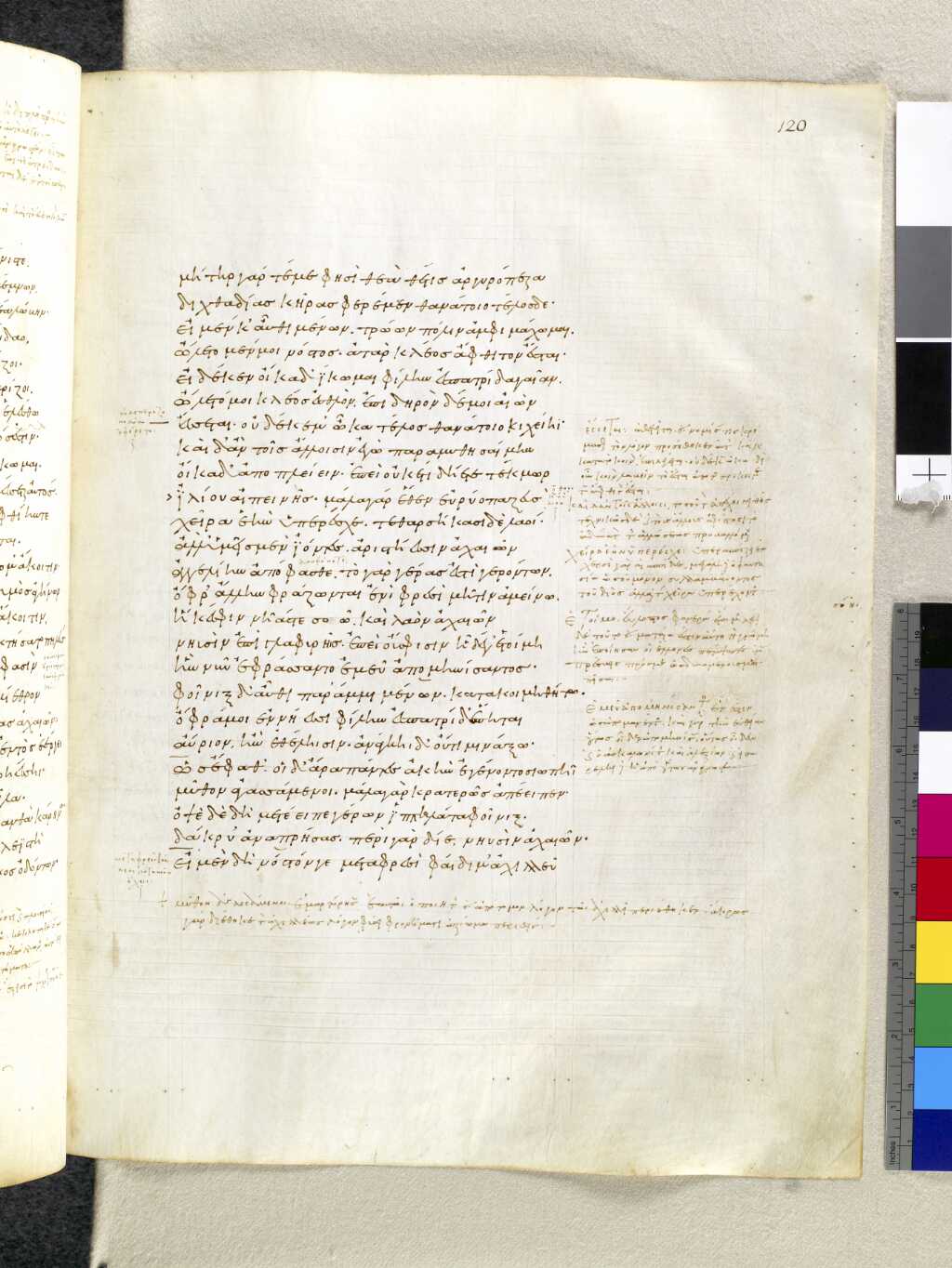
426ἣν νῦν ἐφράσσαντο ἐμεῦ ἀπομηνίσαντος· 427Φοῖνιξ δʼ αὖθι παρʼ ἄμμι μένων κατακοιμηθήτω, 428ὄφρά μοι ἐν νήεσσι φίλην ἐς πατρίδʼ ἕπηται 429αὔριον ἢν ἐθέλῃσιν· ἀνάγκῃ δʼ οὔ τί μιν ἄξω. 430ὣς ἔφαθʼ, οἳ δʼ ἄρα πάντες ἀκὴν ἐγένοντο σιωπῇ 431μῦθον ἀγασσάμενοι· μάλα γὰρ κρατερῶς ἀπέειπεν· 432ὀψὲ δὲ δὴ μετέειπε γέρων ἱππηλάτα Φοῖνιξ 433δάκρυʼ ἀναπρήσας· περὶ γὰρ δίε νηυσὶν Ἀχαιῶν· 434εἰ μὲν δὴ νόστόν γε μετὰ φρεσὶ φαίδιμʼ Ἀχιλλεῦ 435βάλλεαι, οὐδέ τι πάμπαν ἀμύνειν νηυσὶ θοῇσι 436πῦρ ἐθέλεις ἀΐδηλον, ἐπεὶ χόλος ἔμπεσε θυμῷ, 437πῶς ἂν ἔπειτʼ ἀπὸ σεῖο φίλον τέκος αὖθι λιποίμην 438οἶος; σοὶ δέ μʼ ἔπεμπε γέρων ἱππηλάτα Πηλεὺς 439ἤματι τῷ ὅτε σʼ ἐκ Φθίης Ἀγαμέμνονι πέμπε 440νήπιον οὔ πω εἰδόθʼ ὁμοιΐου πολέμοιο 441οὐδʼ ἀγορέων, ἵνα τʼ ἄνδρες ἀριπρεπέες τελέθουσι. 442τοὔνεκά με προέηκε διδασκέμεναι τάδε πάντα, 443μύθων τε ῥητῆρʼ ἔμεναι πρηκτῆρά τε ἔργων. 444ὡς ἂν ἔπειτʼ ἀπὸ σεῖο φίλον τέκος οὐκ ἐθέλοιμι 445λείπεσθʼ, οὐδʼ εἴ κέν μοι ὑποσταίη θεὸς αὐτὸς 446γῆρας ἀποξύσας θήσειν νέον ἡβώοντα, 447οἷον ὅτε πρῶτον λίπον Ἑλλάδα καλλιγύναικα 448φεύγων νείκεα πατρὸς Ἀμύντορος Ὀρμενίδαο, 449ὅς μοι παλλακίδος περιχώσατο καλλικόμοιο, 450τὴν αὐτὸς φιλέεσκεν, ἀτιμάζεσκε δʼ ἄκοιτιν
“As for me, hound that he is, he dares not look me in the face. I will take no counsel with him, and will undertake nothing in common with him. He has wronged me and deceived me enough, he shall not cozen me further; let him go his own way, for Jove has robbed him of his reason. I loathe his presents, and for himself care not one straw. He may offer me ten or even twenty times what he has now done, nay—not though it be all that he has in the world, both now or ever shall have; he may promise me the wealth of Orchomenus or of Egyptian Thebes, which is the richest city in the whole world, for it has a hundred gates through each of which two hundred men may drive at once with their chariots and horses; he may offer me gifts as the sands of the sea or the dust of the plain in multitude, but even so he shall not move me till I have been revenged in full for the bitter wrong he has done me. I will not marry his daughter; she may be fair as Venus, and skilful as Minerva, but I will have none of her: let another take her, who may be a good match for her and who rules a larger kingdom. If the gods spare me to return home, Peleus will find me a wife; there are Achaean women in Hellas and Phthia, daughters of kings that have cities under them; of these I can take whom I will and marry her. Many a time was I minded when at home in Phthia to woo and wed a woman who would make me a suitable wife, and to enjoy the riches of my old father Peleus. My life is more to me than all the wealth of Ilius while it was yet at peace before the Achaeans went there, or than all the treasure that lies on the stone floor of Apollo’s temple beneath the cliffs of Pytho. Cattle and sheep are to be had for harrying, and a man buy both tripods and horses if he wants them, but when his life has once left him it can neither be bought nor harried back again.
“My mother Thetis tells me that there are two ways in which I may meet my end. If I stay here and fight, I shall not return alive but my name will live for ever: whereas if I go home my name will die, but it will be long ere death shall take me. To the rest of you, then, I say, ‘Go home, for you will not take Ilius.’ Jove has held his hand over her to protect her, and her people have taken heart. Go, therefore, as in duty bound, and tell the princes of the Achaeans the message that I have sent them; tell them to find some other plan for the saving of their ships and people, for so long as my displeasure lasts the one that they have now hit upon may not be. As for Phoenix, let him sleep here that he may sail with me in the morning if he so will. But I will not take him by force.”
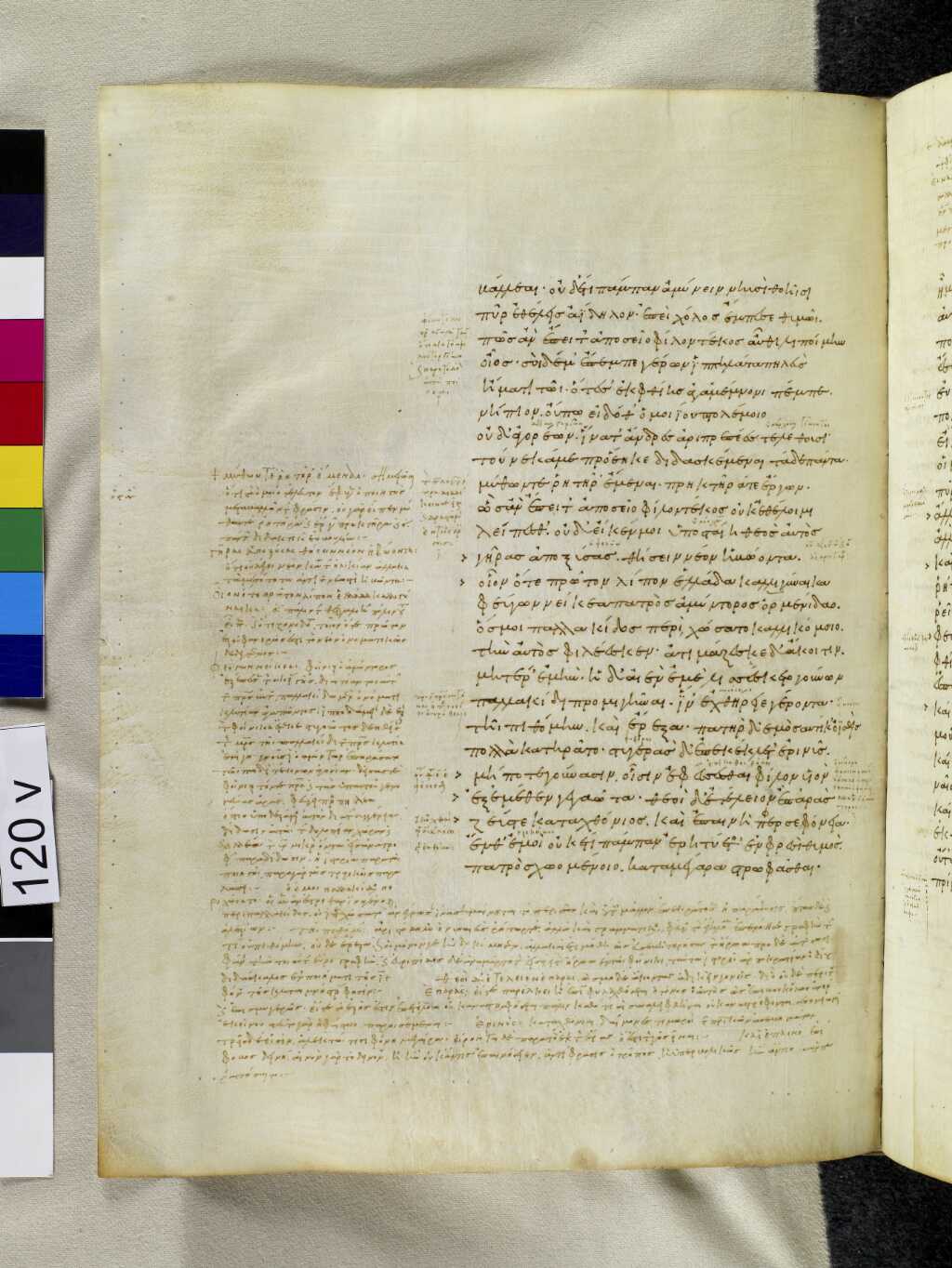
451μητέρʼ ἐμήν· ἣ δʼ αἰὲν ἐμὲ λισσέσκετο γούνων 452παλλακίδι προμιγῆναι, ἵνʼ ἐχθήρειε γέροντα. 453τῇ πιθόμην καὶ ἔρεξα· πατὴρ δʼ ἐμὸς αὐτίκʼ ὀϊσθεὶς 454πολλὰ κατηρᾶτο, στυγερὰς δʼ ἐπεκέκλετʼ Ἐρινῦς, 455μή ποτε γούνασιν οἷσιν ἐφέσσεσθαι φίλον υἱὸν 456ἐξ ἐμέθεν γεγαῶτα· θεοὶ δʼ ἐτέλειον ἐπαρὰς 457Ζεύς τε καταχθόνιος καὶ ἐπαινὴ Περσεφόνεια. 462ἔνθʼ ἐμοὶ οὐκέτι πάμπαν ἐρητύετʼ ἐν φρεσὶ θυμὸς 463πατρὸς χωομένοιο κατὰ μέγαρα στρωφᾶσθαι. 464ἦ μὲν πολλὰ ἔται καὶ ἀνεψιοὶ ἀμφὶς ἐόντες 465αὐτοῦ λισσόμενοι κατερήτυον ἐν μεγάροισι, 466πολλὰ δὲ ἴφια μῆλα καὶ εἰλίποδας ἕλικας βοῦς 467ἔσφαζον, πολλοὶ δὲ σύες θαλέθοντες ἀλοιφῇ 468εὑόμενοι τανύοντο διὰ φλογὸς Ἡφαίστοιο, 469πολλὸν δʼ ἐκ κεράμων μέθυ πίνετο τοῖο γέροντος. 470εἰνάνυχες δέ μοι ἀμφʼ αὐτῷ παρὰ νύκτας ἴαυον· 471οἳ μὲν ἀμειβόμενοι φυλακὰς ἔχον, οὐδέ ποτʼ ἔσβη 472πῦρ, ἕτερον μὲν ὑπʼ αἰθούσῃ εὐερκέος αὐλῆς, 473ἄλλο δʼ ἐνὶ προδόμῳ, πρόσθεν θαλάμοιο θυράων. 474ἀλλʼ ὅτε δὴ δεκάτη μοι ἐπήλυθε νὺξ ἐρεβεννή, 475καὶ τότʼ ἐγὼ θαλάμοιο θύρας πυκινῶς ἀραρυίας 476ῥήξας ἐξῆλθον, καὶ ὑπέρθορον ἑρκίον αὐλῆς 477ῥεῖα, λαθὼν φύλακάς τʼ ἄνδρας δμῳάς τε γυναῖκας. 478φεῦγον ἔπειτʼ ἀπάνευθε διʼ Ἑλλάδος εὐρυχόροιο, 479Φθίην δʼ ἐξικόμην ἐριβώλακα μητέρα μήλων
They all held their peace, dismayed at the sternness with which he had denied them, till presently the old knight Phoenix in his great fear for the ships of the Achaeans, burst into tears and said, “Noble Achilles, if you are now minded to return, and in the fierceness of your anger will do nothing to save the ships from burning, how, my son, can I remain here without you? Your father Peleus bade me go with you when he sent you as a mere lad from Phthia to Agamemnon. You knew nothing neither of war nor of the arts whereby men make their mark in council, and he sent me with you to train you in all excellence of speech and action. Therefore, my son, I will not stay here without you—no, not though heaven itself vouchsafe to strip my years from off me, and make me young as I was when I first left Hellas the land of fair women. I was then flying the anger of father Amyntor, son of Ormenus, who was furious with me in the matter of his concubine, of whom he was enamoured to the wronging of his wife my mother. My mother, therefore, prayed me without ceasing to lie with the woman myself, that so she hate my father, and in the course of time I yielded. But my father soon came to know, and cursed me bitterly, calling the dread Erinyes to witness. He prayed that no son of mine might ever sit upon knees—and the gods, Jove of the world below and awful Proserpine, fulfilled his curse. I took counsel to kill him, but some god stayed my rashness and bade me think on men’s evil tongues and how I should be branded as the murderer of my father; nevertheless I could not bear to stay in my father’s house with him so bitter against me. My cousins and clansmen came about me, and pressed me sorely to remain; many a sheep and many an ox did they slaughter, and many a fat hog did they set down to roast before the fire; many a jar, too, did they broach of my father’s wine. Nine whole nights did they set a guard over me taking it in turns to watch, and they kept a fire always burning, both in the cloister of the outer court and in the inner court at the doors of the room wherein I lay; but when the darkness of the tenth night came, I broke through the closed doors of my room, and climbed the wall of the outer court after passing quickly and unperceived through the men on guard and the women servants. I then fled through Hellas till I came to fertile Phthia, mother of sheep, and to King Peleus, who made me welcome and treated me as a father treats an only son who will be heir to all his wealth. He made me rich and set me over much people, establishing me on the borders of Phthia where I was chief ruler over the Dolopians.
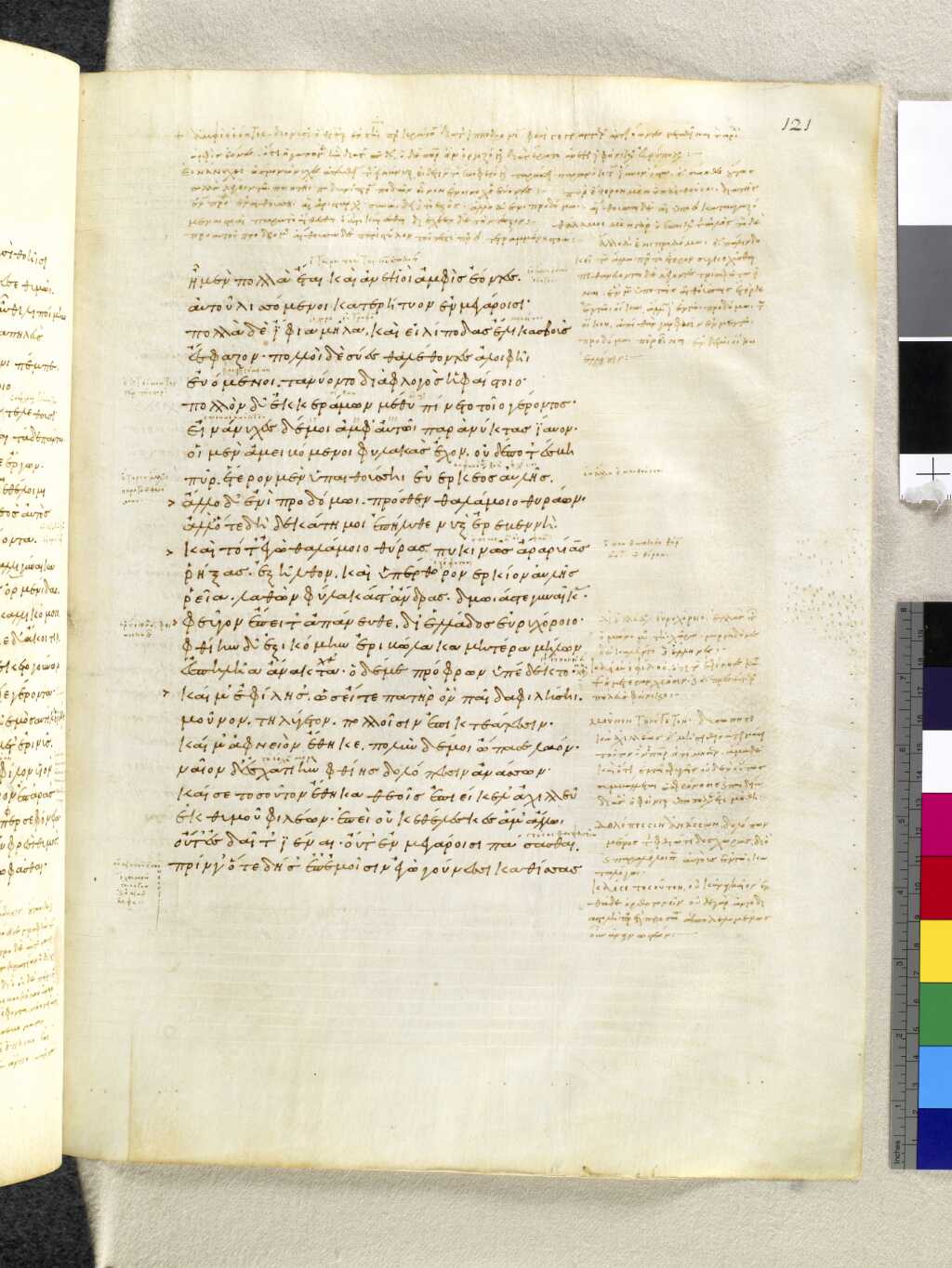
480ἐς Πηλῆα ἄναχθʼ· ὃ δέ με πρόφρων ὑπέδεκτο, 481καί μʼ ἐφίλησʼ ὡς εἴ τε πατὴρ ὃν παῖδα φιλήσῃ 482μοῦνον τηλύγετον πολλοῖσιν ἐπὶ κτεάτεσσι, 483καί μʼ ἀφνειὸν ἔθηκε, πολὺν δέ μοι ὤπασε λαόν· 484ναῖον δʼ ἐσχατιὴν Φθίης Δολόπεσσιν ἀνάσσων. 485καί σε τοσοῦτον ἔθηκα θεοῖς ἐπιείκελʼ Ἀχιλλεῦ, 486ἐκ θυμοῦ φιλέων, ἐπεὶ οὐκ ἐθέλεσκες ἅμʼ ἄλλῳ 487οὔτʼ ἐς δαῖτʼ ἰέναι οὔτʼ ἐν μεγάροισι πάσασθαι, 488πρίν γʼ ὅτε δή σʼ ἐπʼ ἐμοῖσιν ἐγὼ γούνεσσι καθίσσας 489ὄψου τʼ ἄσαιμι προταμὼν καὶ οἶνον ἐπισχών. 490πολλάκι μοι κατέδευσας ἐπὶ στήθεσσι χιτῶνα 491οἴνου ἀποβλύζων ἐν νηπιέῃ ἀλεγεινῇ. 492ὣς ἐπὶ σοὶ μάλα πολλὰ πάθον καὶ πολλὰ μόγησα, 493τὰ φρονέων ὅ μοι οὔ τι θεοὶ γόνον ἐξετέλειον 494ἐξ ἐμεῦ· ἀλλὰ σὲ παῖδα θεοῖς ἐπιείκελʼ Ἀχιλλεῦ 495ποιεύμην, ἵνα μοί ποτʼ ἀεικέα λοιγὸν ἀμύνῃς. 496ἀλλʼ Ἀχιλεῦ δάμασον θυμὸν μέγαν· οὐδέ τί σε χρὴ 497νηλεὲς ἦτορ ἔχειν· στρεπτοὶ δέ τε καὶ θεοὶ αὐτοί, 498τῶν περ καὶ μείζων ἀρετὴ τιμή τε βίη τε. 499καὶ μὲν τοὺς θυέεσσι καὶ εὐχωλῇς ἀγανῇσι 500λοιβῇ τε κνίσῃ τε παρατρωπῶσʼ ἄνθρωποι 501λισσόμενοι, ὅτε κέν τις ὑπερβήῃ καὶ ἁμάρτῃ. 502καὶ γάρ τε λιταί εἰσι Διὸς κοῦραι μεγάλοιο 503χωλαί τε ῥυσαί τε παραβλῶπές τʼ ὀφθαλμώ, 504αἵ ῥά τε καὶ μετόπισθʼ ἄτης ἀλέγουσι κιοῦσαι.
“It was I, Achilles, who had the making of you; I loved you with all my heart: for you would eat neither at home nor when you had gone out elsewhere, till I had first set you upon my knees, cut up the dainty morsel that you were to eat, and held the wine-cup to your lips. Many a time have you slobbered your wine in baby helplessness over my shirt; I had infinite trouble with you, but I knew that heaven had vouchsafed me no offspring of my own, and I made a son of you, Achilles, that in my hour of need you might protect me. Now, therefore, I say battle with your pride and beat it; cherish not your anger for ever; the might and majesty of heaven are more than ours, but even heaven may be appeased; and if a man has sinned he prays the gods, and reconciles them to himself by his piteous cries and by frankincense, with drink-offerings and the savour of burnt sacrifice. For prayers are as daughters to great Jove; halt, wrinkled, with eyes askance, they follow in the footsteps of sin, who, being fierce and fleet of foot, leaves them far behind him, and ever baneful to mankind outstrips them even to the ends of the world; but nevertheless the prayers come hobbling and healing after. If a man has pity upon these daughters of Jove when they draw near him, they will bless him and hear him too when he is praying; but if he deny them and will not listen to them, they go to Jove the son of Saturn and pray that he may presently fall into sin—to his ruing bitterly hereafter. Therefore, Achilles, give these daughters of Jove due reverence, and bow before them as all good men will bow. Were not the son of Atreus offering you gifts and promising others later—if he were still furious and implacable—I am not he that would bid you throw off your anger and help the Achaeans, no matter how great their need; but he is giving much now, and more hereafter; he has sent his captains to urge his suit, and has chosen those who of all the Argives are most acceptable to you; make not then their words and their coming to be of none effect. Your anger has been righteous so far. We have heard in song how heroes of old time quarrelled when they were roused to fury, but still they could be won by gifts, and fair words could soothe them.
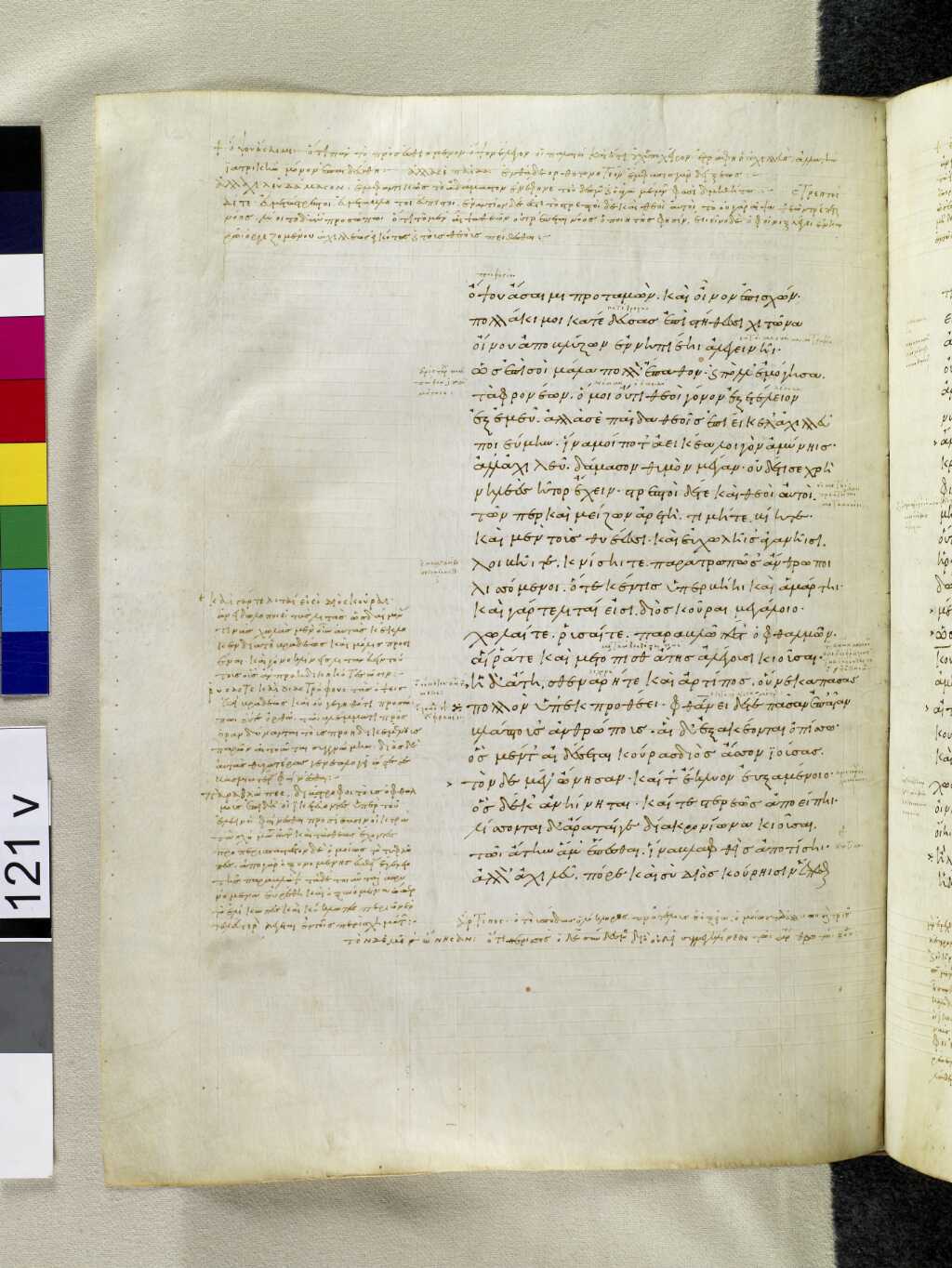
505ἣ δʼ ἄτη σθεναρή τε καὶ ἀρτίπος, οὕνεκα πάσας 506πολλὸν ὑπεκπροθέει, φθάνει δέ τε πᾶσαν ἐπʼ αἶαν 507βλάπτουσʼ ἀνθρώπους· αἳ δʼ ἐξακέονται ὀπίσσω. 508ὃς μέν τʼ αἰδέσεται κούρας Διὸς ἆσσον ἰούσας, 509τὸν δὲ μέγʼ ὤνησαν καί τʼ ἔκλυον εὐχομένοιο· 510ὃς δέ κʼ ἀνήνηται καί τε στερεῶς ἀποείπῃ, 511λίσσονται δʼ ἄρα ταί γε Δία Κρονίωνα κιοῦσαι 512τῷ ἄτην ἅμʼ ἕπεσθαι, ἵνα βλαφθεὶς ἀποτίσῃ. 513ἀλλʼ Ἀχιλεῦ πόρε καὶ σὺ Διὸς κούρῃσιν ἕπεσθαι 514τιμήν, ἥ τʼ ἄλλων περ ἐπιγνάμπτει νόον ἐσθλῶν. 515εἰ μὲν γὰρ μὴ δῶρα φέροι τὰ δʼ ὄπισθʼ ὀνομάζοι 516Ἀτρεΐδης, ἀλλʼ αἰὲν ἐπιζαφελῶς χαλεπαίνοι, 517οὐκ ἂν ἔγωγέ σε μῆνιν ἀπορρίψαντα κελοίμην 518Ἀργείοισιν ἀμυνέμεναι χατέουσί περ ἔμπης· 519νῦν δʼ ἅμα τʼ αὐτίκα πολλὰ διδοῖ τὰ δʼ ὄπισθεν ὑπέστη, 520ἄνδρας δὲ λίσσεσθαι ἐπιπροέηκεν ἀρίστους 521κρινάμενος κατὰ λαὸν Ἀχαιϊκόν, οἵ τε σοὶ αὐτῷ 522φίλτατοι Ἀργείων· τῶν μὴ σύ γε μῦθον ἐλέγξῃς 523μηδὲ πόδας· πρὶν δʼ οὔ τι νεμεσσητὸν κεχολῶσθαι. 524οὕτω καὶ τῶν πρόσθεν ἐπευθόμεθα κλέα ἀνδρῶν 525ἡρώων, ὅτε κέν τινʼ ἐπιζάφελος χόλος ἵκοι· 526δωρητοί τε πέλοντο παράρρητοί τʼ ἐπέεσσι. 527μέμνημαι τόδε ἔργον ἐγὼ πάλαι οὔ τι νέον γε 528ὡς ἦν· ἐν δʼ ὑμῖν ἐρέω πάντεσσι φίλοισι. 529Κουρῆτές τʼ ἐμάχοντο καὶ Αἰτωλοὶ μενεχάρμαι
“I have an old story in my mind—a very old one—but you are all friends and I will tell it. The Curetes and the Aetolians were fighting and killing one another round Calydon—the Aetolians defending the city and the Curetes trying to destroy it. For Diana of the golden throne was angry and did them hurt because Oeneus had not offered her his harvest first-fruits. The other gods had all been feasted with hecatombs, but to the daughter of great Jove alone he had made no sacrifice. He had forgotten her, or somehow or other it had escaped him, and this was a grievous sin. Thereon the archer goddess in her displeasure sent a prodigious creature against him—a savage wild boar with great white tusks that did much harm to his orchard lands, uprooting apple-trees in full bloom and throwing them to the ground. But Meleager son of Oeneus got huntsmen and hounds from many cities and killed it—for it was so monstrous that not a few were needed, and many a man did it stretch upon his funeral pyre. On this the goddess set the Curetes and the Aetolians fighting furiously about the head and skin of the boar.
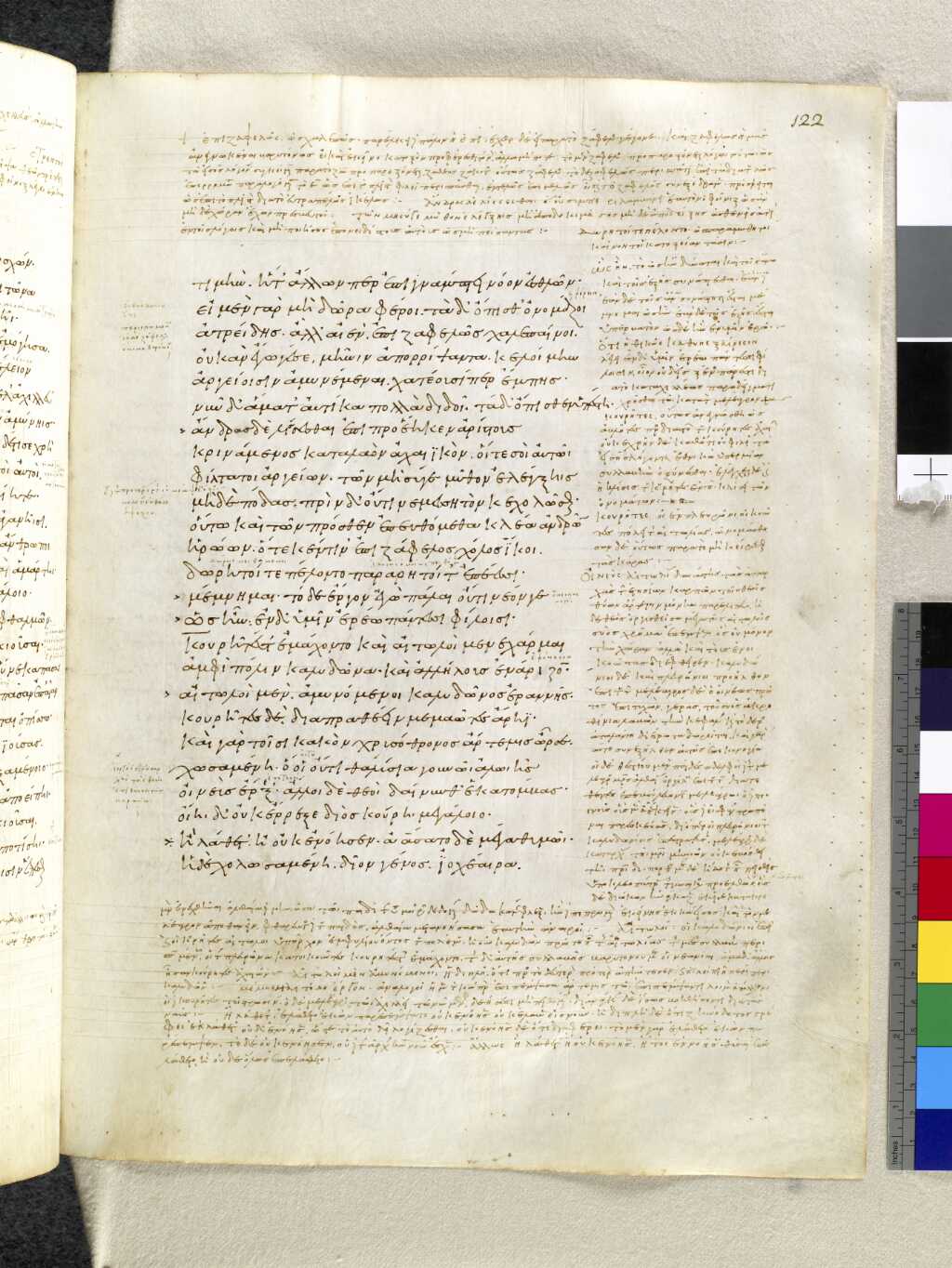
530ἀμφὶ πόλιν Καλυδῶνα καὶ ἀλλήλους ἐνάριζον, 531Αἰτωλοὶ μὲν ἀμυνόμενοι Καλυδῶνος ἐραννῆς, 532Κουρῆτες δὲ διαπραθέειν μεμαῶτες Ἄρηϊ. 533καὶ γὰρ τοῖσι κακὸν χρυσόθρονος Ἄρτεμις ὦρσε 534χωσαμένη ὅ οἱ οὔ τι θαλύσια γουνῷ ἀλωῆς 535Οἰνεὺς ῥέξʼ· ἄλλοι δὲ θεοὶ δαίνυνθʼ ἑκατόμβας, 536οἴῃ δʼ οὐκ ἔρρεξε Διὸς κούρῃ μεγάλοιο. 537ἢ λάθετʼ ἢ οὐκ ἐνόησεν· ἀάσατο δὲ μέγα θυμῷ. 538ἣ δὲ χολωσαμένη δῖον γένος ἰοχέαιρα 539ὦρσεν ἔπι χλούνην σῦν ἄγριον ἀργιόδοντα, 540ὃς κακὰ πόλλʼ ἕρδεσκεν ἔθων Οἰνῆος ἀλωήν· 541πολλὰ δʼ ὅ γε προθέλυμνα χαμαὶ βάλε δένδρεα μακρὰ 542αὐτῇσιν ῥίζῃσι καὶ αὐτοῖς ἄνθεσι μήλων. 543τὸν δʼ υἱὸς Οἰνῆος ἀπέκτεινεν Μελέαγρος 544πολλέων ἐκ πολίων θηρήτορας ἄνδρας ἀγείρας 545καὶ κύνας· οὐ μὲν γάρ κε δάμη παύροισι βροτοῖσι· 546τόσσος ἔην, πολλοὺς δὲ πυρῆς ἐπέβησʼ ἀλεγεινῆς. 547ἣ δʼ ἀμφʼ αὐτῷ θῆκε πολὺν κέλαδον καὶ ἀϋτὴν 548ἀμφὶ συὸς κεφαλῇ καὶ δέρματι λαχνήεντι, 549Κουρήτων τε μεσηγὺ καὶ Αἰτωλῶν μεγαθύμων. 550ὄφρα μὲν οὖν Μελέαγρος ἄρηι φίλος πολέμιζε, 551τόφρα δὲ Κουρήτεσσι κακῶς ἦν, οὐδὲ δύναντο 552τείχεος ἔκτοσθεν μίμνειν πολέες περ ἐόντες· 553ἀλλʼ ὅτε δὴ Μελέαγρον ἔδυ χόλος, ὅς τε καὶ ἄλλων 554οἰδάνει ἐν στήθεσσι νόον πύκα περ φρονεόντων,
“So long as Meleager was in the field things went badly with the Curetes, and for all their numbers they could not hold their ground under the city walls; but in the course of time Meleager was angered as even a wise man will sometimes be. He was incensed with his mother Althaea, and therefore stayed at home with his wedded wife fair Cleopatra, who was daughter of Marpessa daughter of Euenus, and of Ides the man then living. He it was who took his bow and faced King Apollo himself for fair Marpessa’s sake; her father and mother then named her Alcyone, because her mother had mourned with the plaintive strains of the halcyon-bird when Phoebus Apollo had carried her off. Meleager, then, stayed at home with Cleopatra, nursing the anger which he felt by reason of his mother’s curses. His mother, grieving for the death of her brother, prayed the gods, and beat the earth with her hands, calling upon Hades and on awful Proserpine; she went down upon her knees and her bosom was wet with tears as she prayed that they would kill her son—and Erinys that walks in darkness and knows no ruth heard her from Erebus.
“Then was heard the din of battle about the gates of Calydon, and the dull thump of the battering against their walls. Thereon the elders of the Aetolians besought Meleager; they sent the chiefest of their priests, and begged him to come out and help them, promising him a great reward. They bade him choose fifty plough-gates, the most fertile in the plain of Calydon, the one-half vineyard and the other open plough-land. The old warrior Oeneus implored him, standing at the threshold of his room and beating the doors in supplication. His sisters and his mother herself besought him sore, but he the more refused them; those of his comrades who were nearest and dearest to him also prayed him, but they could not move him till the foe was battering at the very doors of his chamber, and the Curetes had scaled the walls and were setting fire to the city. Then at last his sorrowing wife detailed the horrors that befall those whose city is taken; she reminded him how the men are slain, and the city is given over to the flames, while the women and children are carried into captivity; when he heard all this, his heart was touched, and he donned his armour to go forth. Thus of his own inward motion he saved the city of the Aetolians; but they now gave him nothing of those rich rewards that they had offered earlier, and though he saved the city he took nothing by it. Be not then, my son, thus minded; let not heaven lure you into any such course. When the ships are burning it will be a harder matter to save them. Take the gifts, and go, for the Achaeans will then honour you as a god; whereas if you fight without taking them, you may beat the battle back, but you will not be held in like honour.”
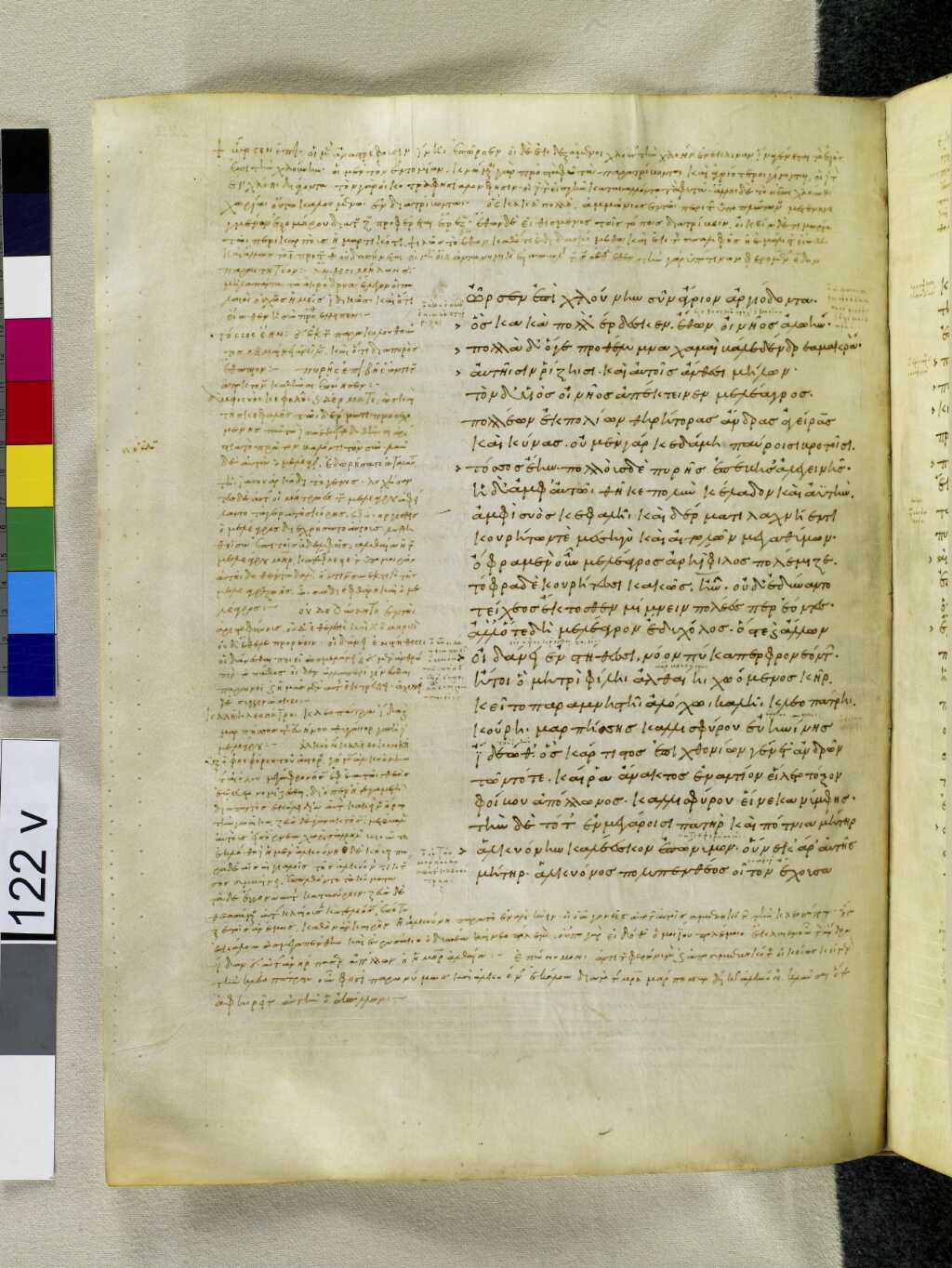
555ἤτοι ὃ μητρὶ φίλῃ Ἀλθαίῃ χωόμενος κῆρ 556κεῖτο παρὰ μνηστῇ ἀλόχῳ καλῇ Κλεοπάτρῃ 557κούρῃ Μαρπήσσης καλλισφύρου Εὐηνίνης 558Ἴδεώ θʼ, ὃς κάρτιστος ἐπιχθονίων γένετʼ ἀνδρῶν 559τῶν τότε· καί ῥα ἄνακτος ἐναντίον εἵλετο τόξον 560Φοίβου Ἀπόλλωνος καλλισφύρου εἵνεκα νύμφης, 561τὴν δὲ τότʼ ἐν μεγάροισι πατὴρ καὶ πότνια μήτηρ 562Ἀλκυόνην καλέεσκον ἐπώνυμον, οὕνεκʼ ἄρʼ αὐτῆς 563μήτηρ ἀλκυόνος πολυπενθέος οἶτον ἔχουσα 564κλαῖεν ὅ μιν ἑκάεργος ἀνήρπασε Φοῖβος Ἀπόλλων· 565τῇ ὅ γε παρκατέλεκτο χόλον θυμαλγέα πέσσων 566ἐξ ἀρέων μητρὸς κεχολωμένος, ἥ ῥα θεοῖσι 567πόλλʼ ἀχέουσʼ ἠρᾶτο κασιγνήτοιο φόνοιο, 568πολλὰ δὲ καὶ γαῖαν πολυφόρβην χερσὶν ἀλοία 569κικλήσκουσʼ Ἀΐδην καὶ ἐπαινὴν Περσεφόνειαν 570πρόχνυ καθεζομένη, δεύοντο δὲ δάκρυσι κόλποι, 571παιδὶ δόμεν θάνατον· τῆς δʼ ἠεροφοῖτις Ἐρινὺς 572ἔκλυεν ἐξ Ἐρέβεσφιν ἀμείλιχον ἦτορ ἔχουσα. 573τῶν δὲ τάχʼ ἀμφὶ πύλας ὅμαδος καὶ δοῦπος ὀρώρει 574πύργων βαλλομένων· τὸν δὲ λίσσοντο γέροντες 575Αἰτωλῶν, πέμπον δὲ θεῶν ἱερῆας ἀρίστους, 576ἐξελθεῖν καὶ ἀμῦναι ὑποσχόμενοι μέγα δῶρον· 577ὁππόθι πιότατον πεδίον Καλυδῶνος ἐραννῆς, 578ἔνθά μιν ἤνωγον τέμενος περικαλλὲς ἑλέσθαι 579πεντηκοντόγυον, τὸ μὲν ἥμισυ οἰνοπέδοιο,
And Achilles answered, “Phoenix, old friend and father, I have no need of such honour. I have honour from Jove himself, which will abide with me at my ships while I have breath in my body, and my limbs are strong. I say further—and lay my saying to your heart—vex me no more with this weeping and lamentation, all in the cause of the son of Atreus. Love him so well, and you may lose the love I bear you. You ought to help me rather in troubling those that trouble me; be king as much as I am, and share like honour with myself; the others shall take my answer; stay here yourself and sleep comfortably in your bed; at daybreak we will consider whether to remain or go.”
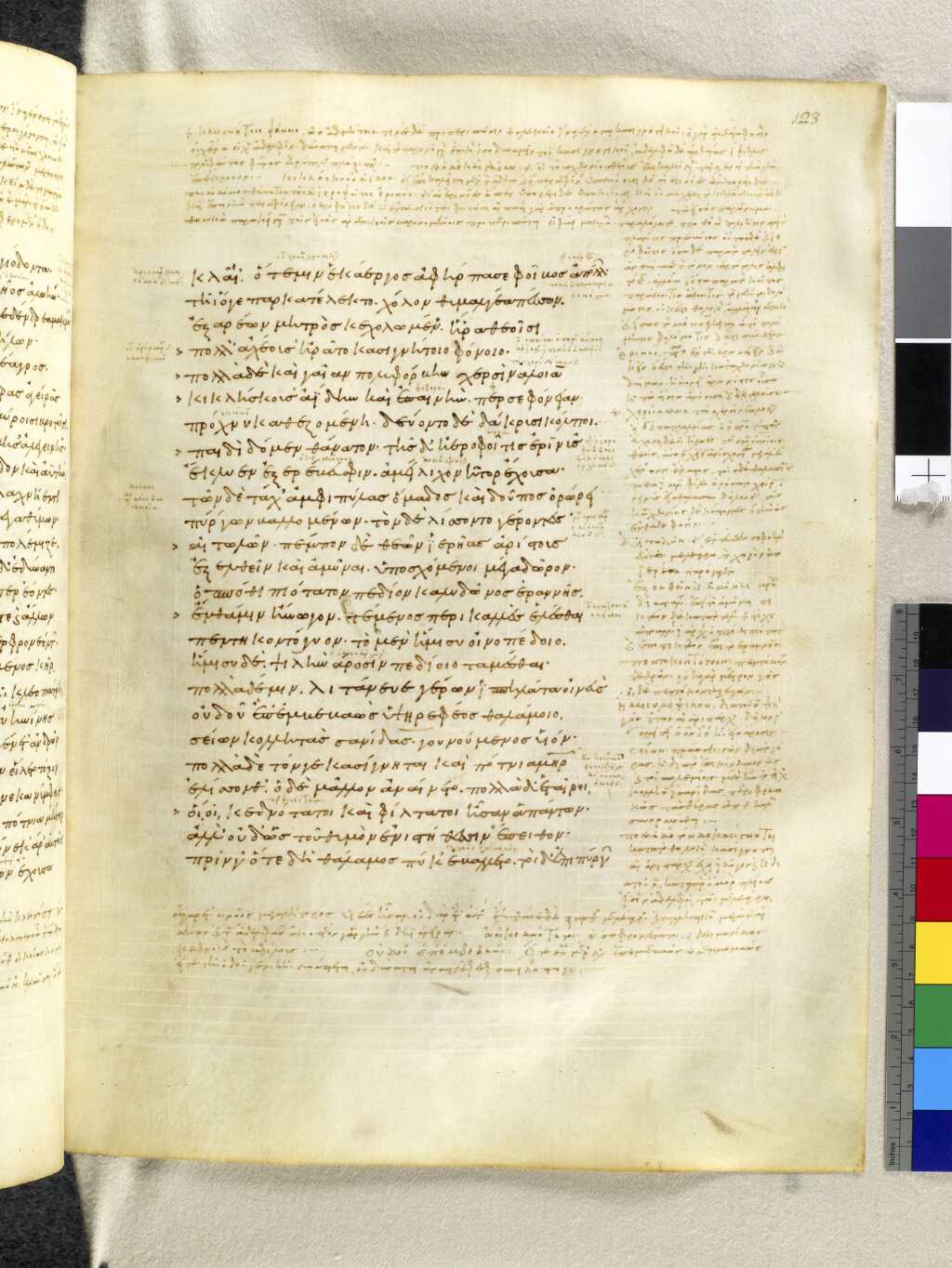
580ἥμισυ δὲ ψιλὴν ἄροσιν πεδίοιο ταμέσθαι. 581πολλὰ δέ μιν λιτάνευε γέρων ἱππηλάτα Οἰνεὺς 582οὐδοῦ ἐπεμβεβαὼς ὑψηρεφέος θαλάμοιο 583σείων κολλητὰς σανίδας γουνούμενος υἱόν· 584πολλὰ δὲ τόν γε κασίγνηται καὶ πότνια μήτηρ 585ἐλλίσσονθʼ· ὃ δὲ μᾶλλον ἀναίνετο· πολλὰ δʼ ἑταῖροι, 586οἵ οἱ κεδνότατοι καὶ φίλτατοι ἦσαν ἁπάντων· 587ἀλλʼ οὐδʼ ὧς τοῦ θυμὸν ἐνὶ στήθεσσιν ἔπειθον, 588πρίν γʼ ὅτε δὴ θάλαμος πύκʼ ἐβάλλετο, τοὶ δʼ ἐπὶ πύργων 589βαῖνον Κουρῆτες καὶ ἐνέπρηθον μέγα ἄστυ. 590καὶ τότε δὴ Μελέαγρον ἐΰζωνος παράκοιτις 591λίσσετʼ ὀδυρομένη, καί οἱ κατέλεξεν ἅπαντα 592κήδεʼ, ὅσʼ ἀνθρώποισι πέλει τῶν ἄστυ ἁλώῃ· 593ἄνδρας μὲν κτείνουσι, πόλιν δέ τε πῦρ ἀμαθύνει, 594τέκνα δέ τʼ ἄλλοι ἄγουσι βαθυζώνους τε γυναῖκας. 595τοῦ δʼ ὠρίνετο θυμὸς ἀκούοντος κακὰ ἔργα, 596βῆ δʼ ἰέναι, χροῒ δʼ ἔντεʼ ἐδύσετο παμφανόωντα. 597ὣς ὃ μὲν Αἰτωλοῖσιν ἀπήμυνεν κακὸν ἦμαρ 598εἴξας ᾧ θυμῷ· τῷ δʼ οὐκέτι δῶρα τέλεσσαν 599πολλά τε καὶ χαρίεντα, κακὸν δʼ ἤμυνε καὶ αὔτως. 600ἀλλὰ σὺ μή μοι ταῦτα νόει φρεσί, μὴ δέ σε δαίμων 601ἐνταῦθα τρέψειε φίλος· κάκιον δέ κεν εἴη 602νηυσὶν καιομένῃσιν ἀμυνέμεν· ἀλλʼ ἐπὶ δώρων 603ἔρχεο· ἶσον γάρ σε θεῷ τίσουσιν Ἀχαιοί. 604εἰ δέ κʼ ἄτερ δώρων πόλεμον φθισήνορα δύῃς
On this he nodded quietly to Patroclus as a sign that he was to prepare a bed for Phoenix, and that the others should take their leave. Ajax son of Telamon then said, “Ulysses, noble son of Laertes, let us be gone, for I see that our journey is vain. We must now take our answer, unwelcome though it be, to the Danaans who are waiting to receive it. Achilles is savage and remorseless; he is cruel, and cares nothing for the love his comrades lavished upon him more than on all the others. He is implacable—and yet if a man’s brother or son has been slain he will accept a fine by way of amends from him that killed him, and the wrong-doer having paid in full remains in peace among his own people; but as for you, Achilles, the gods have put a wicked unforgiving spirit in your heart, and this, all about one single girl, whereas we now offer you the seven best we have, and much else into the bargain. Be then of a more gracious mind, respect the hospitality of your own roof. We are with you as messengers from the host of the Danaans, and would fain be held nearest and dearest to yourself of all the Achaeans.”
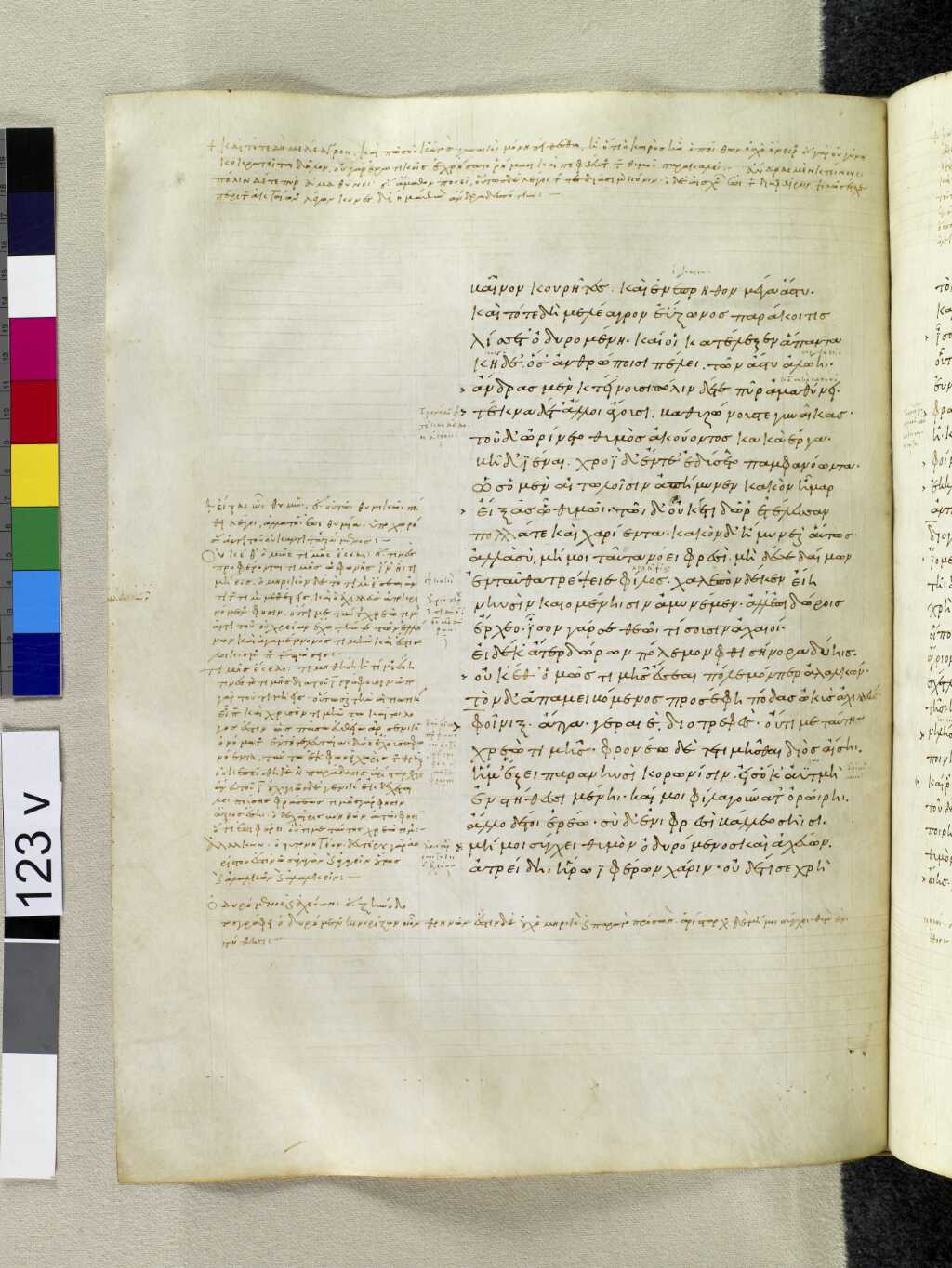
605οὐκέθʼ ὁμῶς τιμῆς ἔσεαι πόλεμόν περ ἀλαλκών. 606τὸν δʼ ἀπαμειβόμενος προσέφη πόδας ὠκὺς Ἀχιλλεύς· 607Φοῖνιξ ἄττα γεραιὲ διοτρεφὲς οὔ τί με ταύτης 608χρεὼ τιμῆς· φρονέω δὲ τετιμῆσθαι Διὸς αἴσῃ, 609ἥ μʼ ἕξει παρὰ νηυσὶ κορωνίσιν εἰς ὅ κʼ ἀϋτμὴ 610ἐν στήθεσσι μένῃ καί μοι φίλα γούνατʼ ὀρώρῃ. 611ἄλλο δέ τοι ἐρέω, σὺ δʼ ἐνὶ φρεσὶ βάλλεο σῇσι· 612μή μοι σύγχει θυμὸν ὀδυρόμενος καὶ ἀχεύων 613Ἀτρεΐδῃ ἥρωϊ φέρων χάριν· οὐδέ τί σε χρὴ 614τὸν φιλέειν, ἵνα μή μοι ἀπέχθηαι φιλέοντι. 615καλόν τοι σὺν ἐμοὶ τὸν κήδειν ὅς κʼ ἐμὲ κήδῃ· 616ἶσον ἐμοὶ βασίλευε καὶ ἥμισυ μείρεο τιμῆς. 617οὗτοι δʼ ἀγγελέουσι, σὺ δʼ αὐτόθι λέξεο μίμνων 618εὐνῇ ἔνι μαλακῇ· ἅμα δʼ ἠοῖ φαινομένηφι 619φρασσόμεθʼ ἤ κε νεώμεθʼ ἐφʼ ἡμέτερʼ ἦ κε μένωμεν. 620ἦ καὶ Πατρόκλῳ ὅ γʼ ἐπʼ ὀφρύσι νεῦσε σιωπῇ 621Φοίνικι στορέσαι πυκινὸν λέχος, ὄφρα τάχιστα 622ἐκ κλισίης νόστοιο μεδοίατο· τοῖσι δʼ ἄρʼ Αἴας 623ἀντίθεος Τελαμωνιάδης μετὰ μῦθον ἔειπε· 624διογενὲς Λαερτιάδη πολυμήχανʼ Ὀδυσσεῦ 625ἴομεν· οὐ γάρ μοι δοκέει μύθοιο τελευτὴ 626τῇδέ γʼ ὁδῷ κρανέεσθαι· ἀπαγγεῖλαι δὲ τάχιστα 627χρὴ μῦθον Δαναοῖσι καὶ οὐκ ἀγαθόν περ ἐόντα 628οἵ που νῦν ἕαται ποτιδέγμενοι. αὐτάρ Ἀχιλλεὺς 629ἄγριον ἐν στήθεσσι θέτο μεγαλήτορα θυμὸν
“Ajax,” replied Achilles, “noble son of Telamon, you have spoken much to my liking, but my blood boils when I think it all over, and remember how the son of Atreus treated me with contumely as though I were some vile tramp, and that too in the presence of the Argives. Go, then, and deliver your message; say that I will have no concern with fighting till Hector, son of noble Priam, reaches the tents of the Myrmidons in his murderous course, and flings fire upon their ships. For all his lust of battle, I take it he will be held in check when he is at my own tent and ship.”
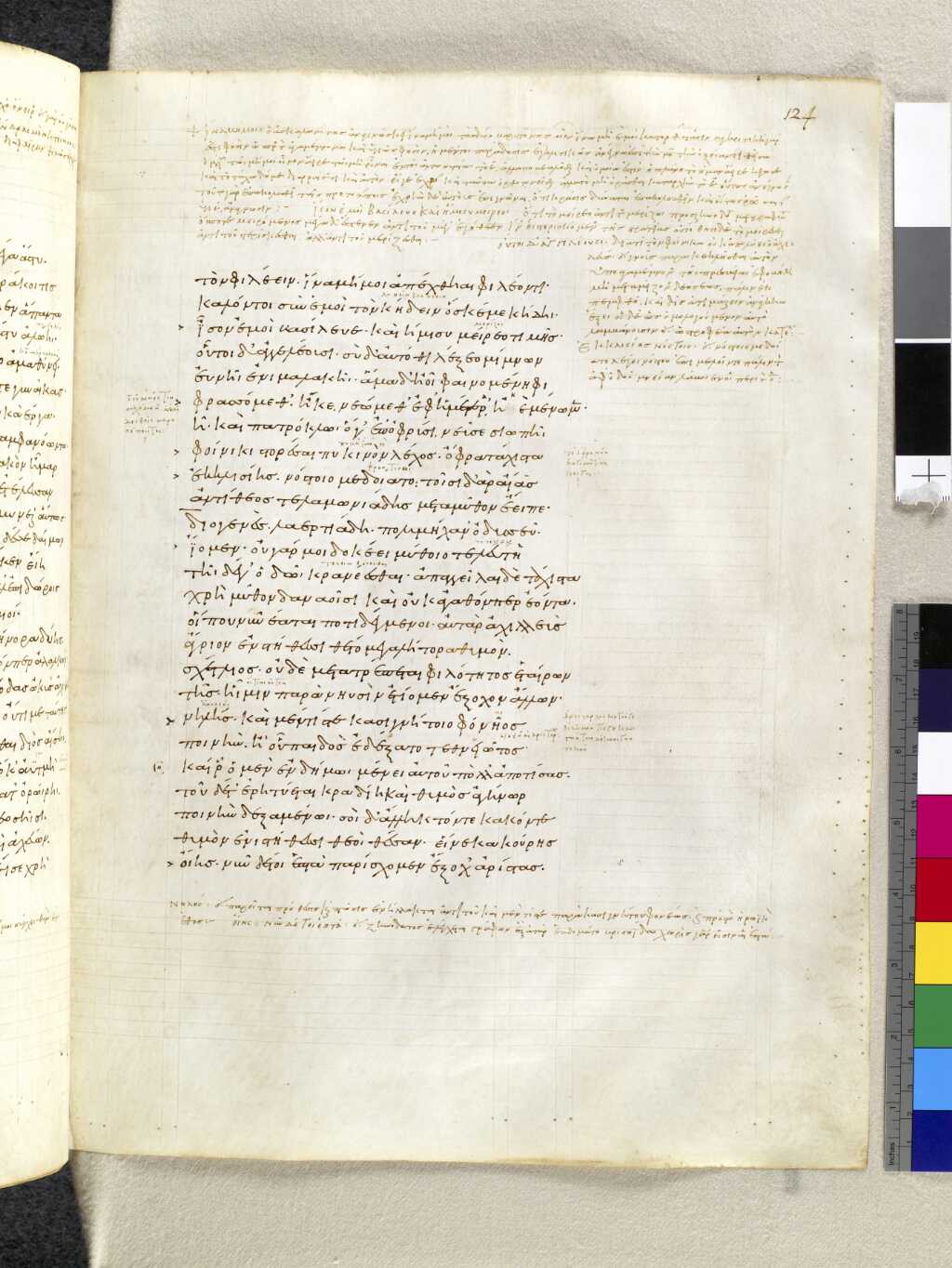
630σχέτλιος, οὐδὲ μετατρέπεται φιλότητος ἑταίρων 631τῆς ᾗ μιν παρὰ νηυσὶν ἐτίομεν ἔξοχον ἄλλων 632νηλής· καὶ μέν τίς τε κασιγνήτοιο φονῆος 633ποινὴν ἢ οὗ παιδὸς ἐδέξατο τεθνηῶτος· 634καί ῥʼ ὃ μὲν ἐν δήμῳ μένει αὐτοῦ πόλλʼ ἀποτίσας, 635τοῦ δέ τʼ ἐρητύεται κραδίη καὶ θυμὸς ἀγήνωρ 636ποινὴν δεξαμένῳ· σοὶ δʼ ἄληκτόν τε κακόν τε 637θυμὸν ἐνὶ στήθεσσι θεοὶ θέσαν εἵνεκα κούρης 638οἴης· νῦν δέ τοι ἑπτὰ παρίσχομεν ἔξοχʼ ἀρίστας, 639ἄλλά τε πόλλʼ ἐπὶ τῇσι· σὺ δʼ ἵλαον ἔνθεο θυμόν, 640αἴδεσσαι δὲ μέλαθρον· ὑπωρόφιοι δέ τοί εἰμεν 641πληθύος ἐκ Δαναῶν, μέμαμεν δέ τοι ἔξοχον ἄλλων 642κήδιστοί τʼ ἔμεναι καὶ φίλτατοι ὅσσοι Ἀχαιοί. 643τὸν δʼ ἀπαμειβόμενος προσέφη πόδας ὠκὺς Ἀχιλλεύς· 644Αἶαν διογενὲς Τελαμώνιε κοίρανε λαῶν 645πάντά τί μοι κατὰ θυμὸν ἐείσαο μυθήσασθαι· 646ἀλλά μοι οἰδάνεται κραδίη χόλῳ ὁππότε κείνων 647μνήσομαι ὥς μʼ ἀσύφηλον ἐν Ἀργείοισιν ἔρεξεν 648Ἀτρεΐδης ὡς εἴ τινʼ ἀτίμητον μετανάστην. 649ἀλλʼ ὑμεῖς ἔρχεσθε καὶ ἀγγελίην ἀπόφασθε· 650οὐ γὰρ πρὶν πολέμοιο μεδήσομαι αἱματόεντος 651πρίν γʼ υἱὸν Πριάμοιο δαΐφρονος Ἕκτορα δῖον 652Μυρμιδόνων ἐπί τε κλισίας καὶ νῆας ἱκέσθαι 653κτείνοντʼ Ἀργείους, κατά τε σμῦξαι πυρὶ νῆας. 654ἀμφὶ δέ τοι τῇ ἐμῇ κλισίῃ καὶ νηῒ μελαίνῃ
On this they took every man his double cup, made their drink-offerings, and went back to the ships, Ulysses leading the way. But Patroclus told his men and the maid-servants to make ready a comfortable bed for Phoenix; they therefore did so with sheepskins, a rug, and a sheet of fine linen. The old man then laid himself down and waited till morning came. But Achilles slept in an inner room, and beside him the daughter of Phorbas lovely Diomede, whom he had carried off from Lesbos. Patroclus lay on the other side of the room, and with him fair Iphis whom Achilles had given him when he took Scyros the city of Enyeus.
When the envoys reached the tents of the son of Atreus, the Achaeans rose, pledged them in cups of gold, and began to question them. King Agamemnon was the first to do so. “Tell me, Ulysses,” said he, “will he save the ships from burning, or did he refuse, and is he still furious?”
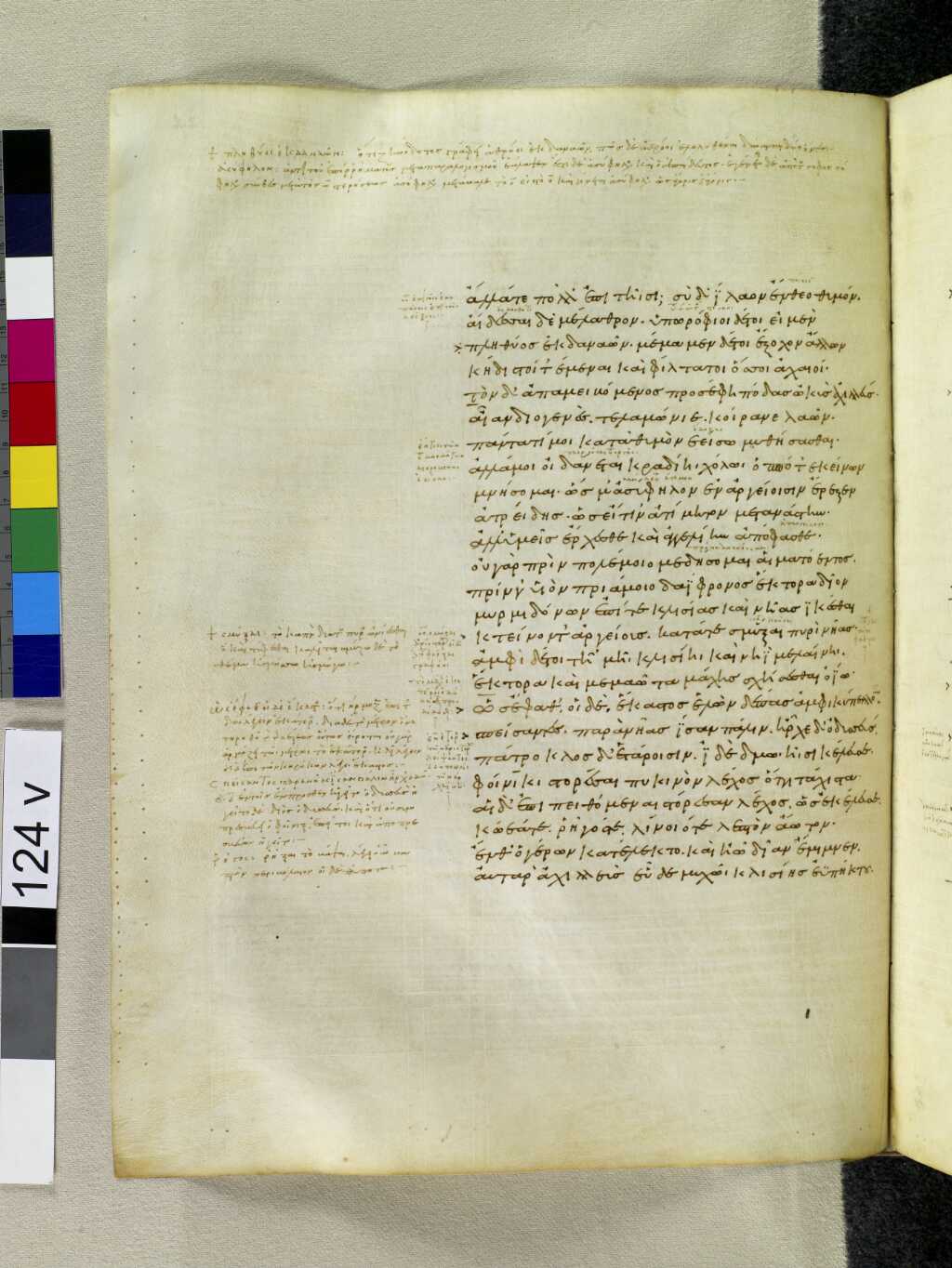
655Ἕκτορα καὶ μεμαῶτα μάχης σχήσεσθαι ὀΐω. 656ὣς ἔφαθʼ, οἳ δὲ ἕκαστος ἑλὼν δέπας ἀμφικύπελλον 657σπείσαντες παρὰ νῆας ἴσαν πάλιν· ἦρχε δʼ Ὀδυσσεύς. 658Πάτροκλος δʼ ἑτάροισιν ἰδὲ δμωῇσι κέλευσε 659Φοίνικι στορέσαι πυκινὸν λέχος ὅττι τάχιστα. 660αἳ δʼ ἐπιπειθόμεναι στόρεσαν λέχος ὡς ἐκέλευσε 661κώεά τε ῥῆγός τε λίνοιό τε λεπτὸν ἄωτον. 662ἔνθʼ ὃ γέρων κατέλεκτο καὶ ἠῶ δῖαν ἔμιμνεν. 663αὐτὰρ Ἀχιλλεὺς εὗδε μυχῷ κλισίης εὐπήκτου· 664τῷ δʼ ἄρα παρκατέλεκτο γυνή, τὴν Λεσβόθεν ἦγε, 665Φόρβαντος θυγάτηρ Διομήδη καλλιπάρῃος. 666Πάτροκλος δʼ ἑτέρωθεν ἐλέξατο· πὰρ δʼ ἄρα καὶ τῷ 667Ἶφις ἐΰζωνος, τήν οἱ πόρε δῖος Ἀχιλλεὺς 668Σκῦρον ἑλὼν αἰπεῖαν Ἐνυῆος πτολίεθρον. 669οἳ δʼ ὅτε δὴ κλισίῃσιν ἐν Ἀτρεΐδαο γένοντο. 670τοὺς μὲν ἄρα χρυσέοισι κυπέλλοις υἷες Ἀχαιῶν 671δειδέχατʼ ἄλλοθεν ἄλλος ἀνασταδόν, ἔκ τʼ ἐρέοντο· 672πρῶτος δʼ ἐξερέεινεν ἄναξ ἀνδρῶν Ἀγαμέμνων· 673εἴπʼ ἄγε μʼ ὦ πολύαινʼ Ὀδυσεῦ μέγα κῦδος Ἀχαιῶν 674ἤ ῥʼ ἐθέλει νήεσσιν ἀλεξέμεναι δήϊον πῦρ, 675ἦ ἀπέειπε, χόλος δʼ ἔτʼ ἔχει μεγαλήτορα θυμόν; 676τὸν δʼ αὖτε προσέειπε πολύτλας δῖος Ὀδυσσεύς· 677Ἀτρεΐδη κύδιστε ἄναξ ἀνδρῶν Ἀγάμεμνον 678κεῖνός γʼ οὐκ ἐθέλει σβέσσαι χόλον, ἀλλʼ ἔτι μᾶλλον 679πιμπλάνεται μένεος, σὲ δʼ ἀναίνεται ἠδὲ σὰ δῶρα.
Ulysses answered, “Most noble son of Atreus, king of men, Agamemnon, Achilles will not be calmed, but is more fiercely angry than ever, and spurns both you and your gifts. He bids you take counsel with the Achaeans to save the ships and host as you best may; as for himself, he said that at daybreak he should draw his ships into the water. He said further that he should advise every one to sail home likewise, for that you will not reach the goal of Ilius. ‘Jove,’ he said, ‘has laid his hand over the city to protect it, and the people have taken heart.’ This is what he said, and the others who were with me can tell you the same story—Ajax and the two heralds, men, both of them, who may be trusted. The old man Phoenix stayed where he was to sleep, for so Achilles would have it, that he might go home with him in the morning if he so would; but he will not take him by force.”
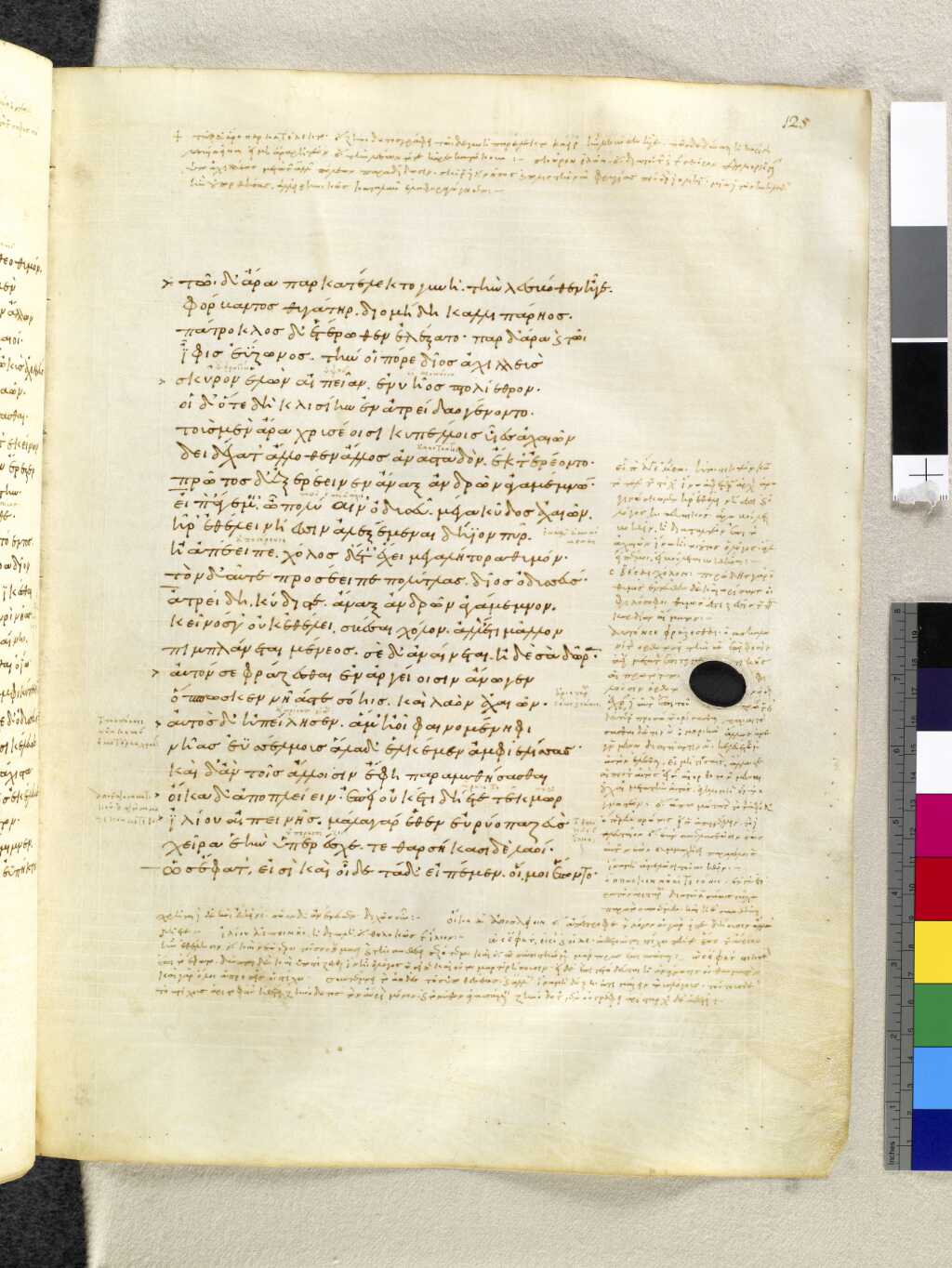
680αὐτόν σε φράζεσθαι ἐν Ἀργείοισιν ἄνωγεν 681ὅππως κεν νῆάς τε σαῷς καὶ λαὸν Ἀχαιῶν· 682αὐτὸς δʼ ἠπείλησεν ἅμʼ ἠοῖ φαινομένηφι 683νῆας ἐϋσσέλμους ἅλαδʼ ἑλκέμεν ἀμφιελίσσας. 684καὶ δʼ ἂν τοῖς ἄλλοισιν ἔφη παραμυθήσασθαι 685οἴκαδʼ ἀποπλείειν, ἐπεὶ οὐκέτι δήετε τέκμωρ 686Ἰλίου αἰπεινῆς· μάλα γάρ ἑθεν εὐρύοπα Ζεὺς 687χεῖρα ἑὴν ὑπερέσχε, τεθαρσήκασι δὲ λαοί. 688ὣς ἔφατʼ· εἰσὶ καὶ οἵδε τάδʼ εἰπέμεν, οἵ μοι ἕποντο, 689Αἴας καὶ κήρυκε δύω πεπνυμένω ἄμφω. 690Φοῖνιξ δʼ αὖθʼ ὃ γέρων κατελέξατο, ὡς γὰρ ἀνώγει, 691ὄφρά οἱ ἐν νήεσσι φίλην ἐς πατρίδʼ ἕπηται 692αὔριον, ἢν ἐθέλῃσιν· ἀνάγκῃ δʼ οὔ τί μιν ἄξει. 693ὣς ἔφαθʼ, οἳ δʼ ἄρα πάντες ἀκὴν ἐγένοντο σιωπῇ 694μῦθον ἀγασσάμενοι· μάλα γὰρ κρατερῶς ἀγόρευσε. 695δὴν δʼ ἄνεῳ ἦσαν τετιηότες υἷες Ἀχαιῶν· 696ὀψὲ δὲ δὴ μετέειπε βοὴν ἀγαθὸς Διομήδης· 697Ἀτρεΐδη κύδιστε ἄναξ ἀνδρῶν Ἀγάμεμνον 698μὴ ὄφελες λίσσεσθαι ἀμύμονα Πηλεΐωνα 699μυρία δῶρα διδούς· ὃ δʼ ἀγήνωρ ἐστὶ καὶ ἄλλως· 700νῦν αὖ μιν πολὺ μᾶλλον ἀγηνορίῃσιν ἐνῆκας. 701ἀλλʼ ἤτοι κεῖνον μὲν ἐάσομεν ἤ κεν ἴῃσιν 702ἦ κε μένῃ· τότε δʼ αὖτε μαχήσεται ὁππότε κέν μιν 703θυμὸς ἐνὶ στήθεσσιν ἀνώγῃ καὶ θεὸς ὄρσῃ. 704ἀλλʼ ἄγεθʼ ὡς ἂν ἐγὼ εἴπω πειθώμεθα πάντες·
They all held their peace, sitting for a long time silent and dejected, by reason of the sternness with which Achilles had refused them, till presently Diomed said, “Most noble son of Atreus, king of men, Agamemnon, you ought not to have sued the son of Peleus nor offered him gifts. He is proud enough as it is, and you have encouraged him in his pride still further. Let him stay or go as he will. He will fight later when he is in the humour, and heaven puts it in his mind to do so. Now, therefore, let us all do as I say; we have eaten and drunk our fill, let us then take our rest, for in rest there is both strength and stay. But when fair rosy-fingered morn appears, forthwith bring out your host and your horsemen in front of the ships, urging them on, and yourself fighting among the foremost.”
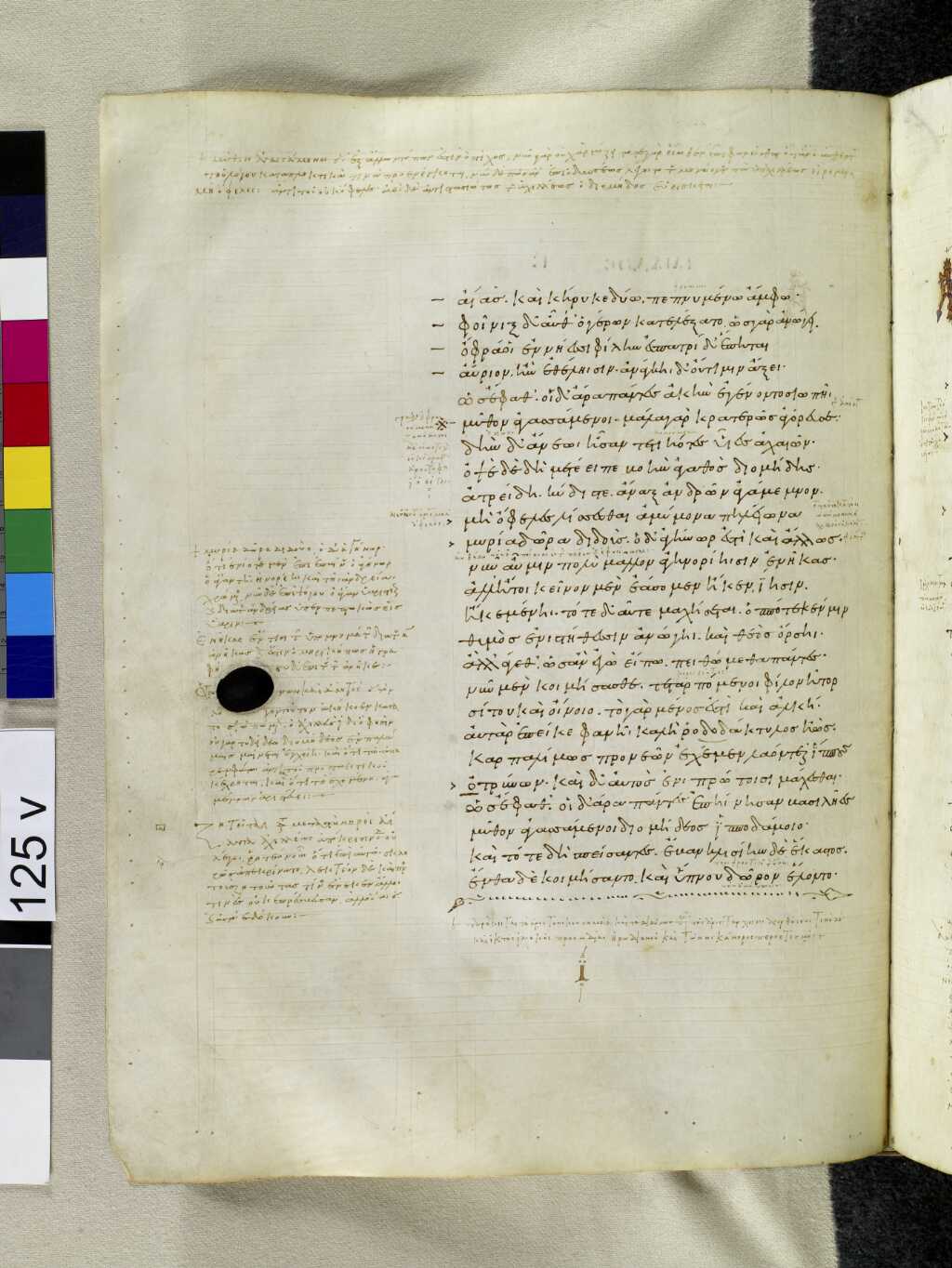
705νῦν μὲν κοιμήσασθε τεταρπόμενοι φίλον ἦτορ 706σίτου καὶ οἴνοιο· τὸ γὰρ μένος ἐστὶ καὶ ἀλκή· 707αὐτὰρ ἐπεί κε φανῇ καλὴ ῥοδοδάκτυλος Ἠώς, 708καρπαλίμως πρὸ νεῶν ἐχέμεν λαόν τε καὶ ἵππους 709ὀτρύνων, καὶ δʼ αὐτὸς ἐνὶ πρώτοισι μάχεσθαι. 710ὣς ἔφαθʼ, οἳ δʼ ἄρα πάντες ἐπῄνησαν βασιλῆες 711μῦθον ἀγασσάμενοι Διομήδεος ἱπποδάμοιο. 712καὶ τότε δὴ σπείσαντες ἔβαν κλισίην δὲ ἕκαστος, 713ἔνθα δὲ κοιμήσαντο καὶ ὕπνου δῶρον ἕλοντο.
Thus he spoke, and the other chieftains approved his words. They then made their drink-offerings and went every man to his own tent, where they laid down to rest and enjoyed the boon of sleep.
Cite
Source & Cross-References
- Source text: Venetus A (10th c.) via Homer Multitext IIIF + Perseus Greek + Butler English (PG #2199) — view original
- Critical edition: Munro & Allen (Perseus Digital Library)
← previous · → next · v cycle view · l back to library