John, Chapter 14 (Codex Washingtonianus)
Introduction
John 14 from Codex Washingtonianus (the Freer Gospels, Gregory-Aland 032, Freer Gallery of Art F1906.274), a parchment codex of the four Gospels written in Egypt in the late 4th or early 5th century and bought by Charles Lang Freer from the dealer Ali Arabi at Giza in 1906. It is one of the oldest nearly complete Gospel books in existence. The Gospels stand in the so-called Western order, Matthew, John, Luke, Mark, and the text is famously block-mixed: the copyist drew on several exemplars of different textual character, so the text type changes in blocks within a single Gospel. After Mark 16:14 the codex carries the Freer Logion, a saying found in no other manuscript. Two passages are lost to damage: Mark 15:13-37 and John 14:26-16:6.
- Scan: each section is shown with the actual page of the codex that carries those verses, from the Freer Gallery's own photographs of F1906.274 served by the Smithsonian IIIF service (ids.si.edu). Which page holds which verse comes from the verse index of the Center for the Study of New Testament Manuscripts (CSNTM), whose photographs of the codex are the same shots; every CSNTM page was matched to its Smithsonian image by pixel comparison before use. Where a verse begins on one page and ends on the next, both pages are listed. Verses the index cannot place on a surviving page are not shown.
- Greek: Constantin von Tischendorf's Editio octava critica maior (1869-72, public domain), verbatim from bolls.life. This is a printed critical edition, not a transcription of Washingtonianus itself: the codex has many readings of its own, and where it differs from Tischendorf the manuscript reading can be checked on the page image. Numbering: Tischendorf omits a few verses that the KJV prints (they are in the English column only).
- English: the King James Version (1611, public domain), verbatim from bible-api.com. The KJV translates the later Byzantine text, so it will not always match the Greek shown or the reading of the codex.
Not in the codex (lost to damage): John 14:26-31.
How was this verified? (Provenance)
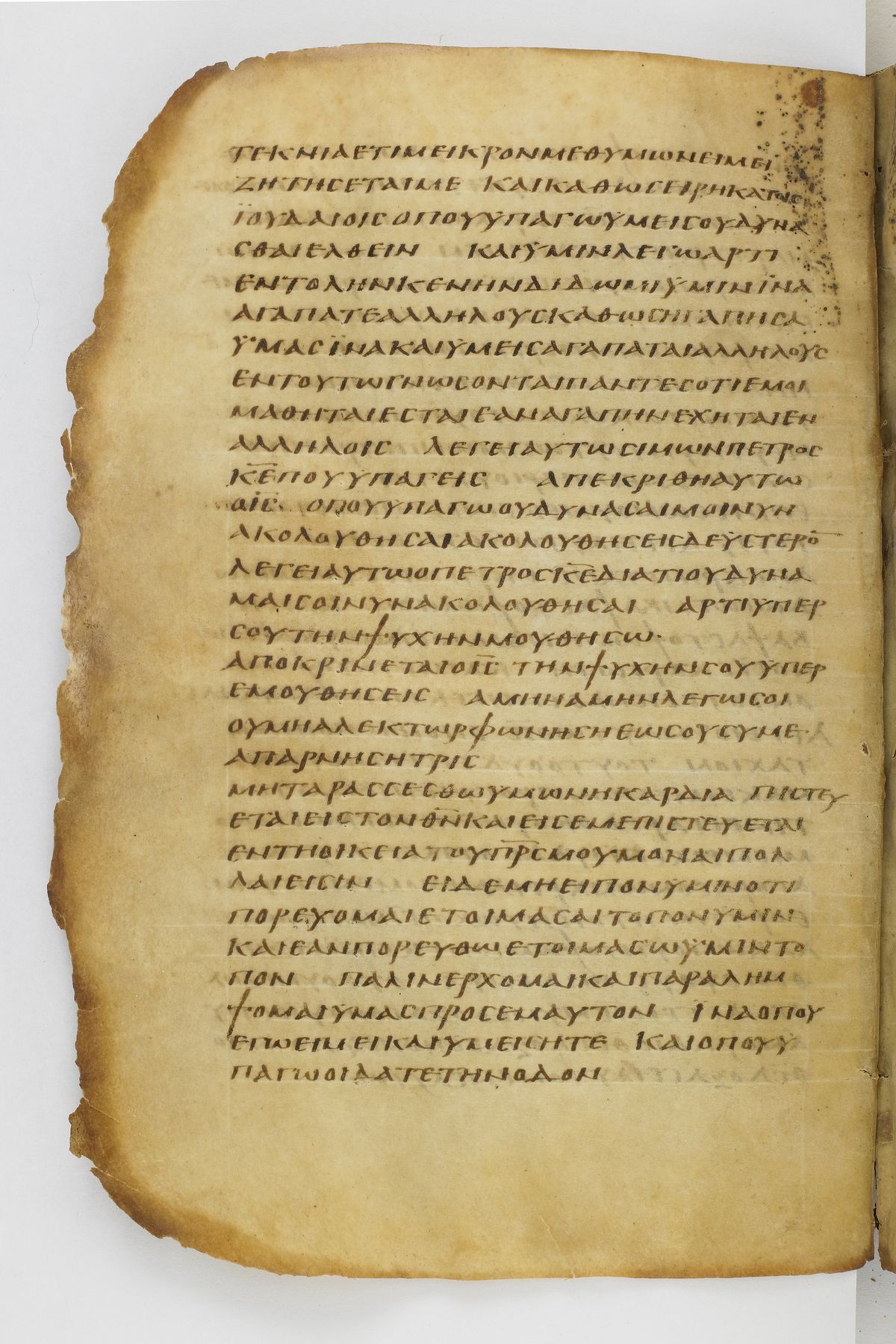
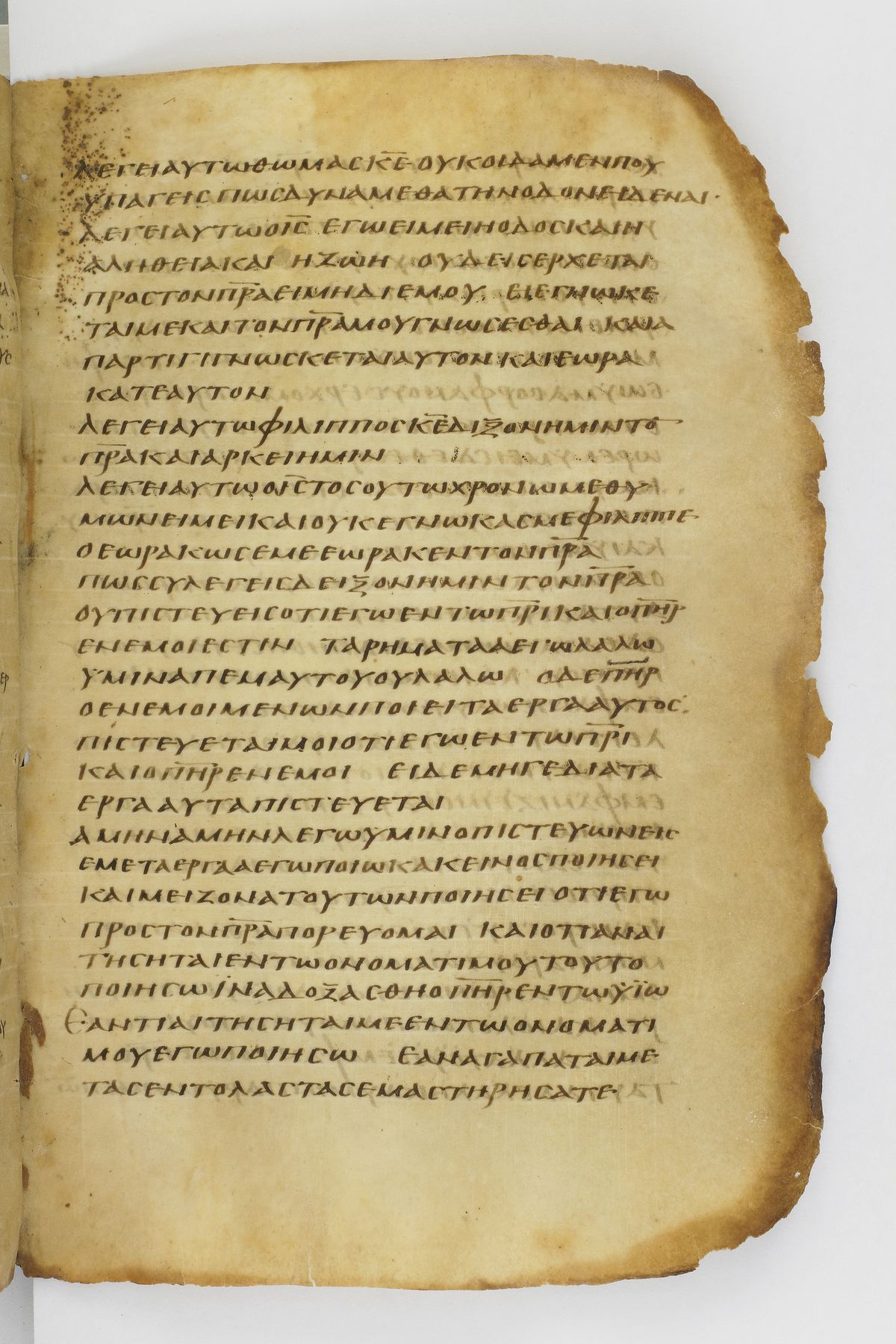
1Μὴ ταρασσέσθω ὑμῶν ἡ καρδία· πιστεύετε εἰς τὸν θεόν, καὶ εἰς ἐμὲ πιστεύετε. 2ἐν τῇ οἰκίᾳ τοῦ πατρός μου μοναὶ πολλαί εἰσίν· εἰ δὲ μή, εἶπον ἂν ὑμῖν· ὅτι πορεύομαι ἑτοιμάσαι τόπον ὑμῖν· 3καὶ ἐὰν πορευθῶ καὶ ἑτοιμάσω τόπον ὑμῖν, πάλιν ἔρχομαι καὶ παραλήμψομαι ὑμᾶς πρὸς ἐμαυτόν, ἵνα ὅπου εἰμὶ ἐγὼ καὶ ὑμεῖς ἦτε. 4καὶ ὅπου ἐγὼ ὑπάγω οἴδατε τὴν ὁδόν. 5Λέγει αὐτῷ Θωμᾶς· κύριε, οὐκ οἴδαμεν ποῦ ὑπάγεις, καὶ πῶς οἴδαμεν τὴν ὁδόν; 6λέγει αὐτῷ Ἰησοῦς· ἐγώ εἰμι ἡ ὁδὸς καὶ ἡ ἀλήθεια καὶ ἡ ζωή· οὐδεὶς ἔρχεται πρὸς τὸν πατέρα εἰ μὴ δι’ ἐμοῦ. 7εἰ ἐγνώκατέ ἐμέ, καὶ τὸν πατέρα μου γνώσεσθε· καὶ ἀπάρτι γινώσκετε αὐτὸν καὶ ἑωράκατε αὐτόν. 8Λέγει αὐτῷ Φίλιππος· κύριε, δεῖξον ἡμῖν τὸν πατέρα, καὶ ἀρκεῖ ἡμῖν.
1Let not your heart be troubled: ye believe in God, believe also in me. 2In my Father’s house are many mansions: if it were not so, I would have told you. I go to prepare a place for you. 3And if I go and prepare a place for you, I will come again, and receive you unto myself; that where I am, there ye may be also. 4And whither I go ye know, and the way ye know. 5Thomas saith unto him, Lord, we know not whither thou goest; and how can we know the way? 6Jesus saith unto him, I am the way, the truth, and the life: no man cometh unto the Father, but by me. 7If ye had known me, ye should have known my Father also: and from henceforth ye know him, and have seen him. 8Philip saith unto him, Lord, shew us the Father, and it sufficeth us.
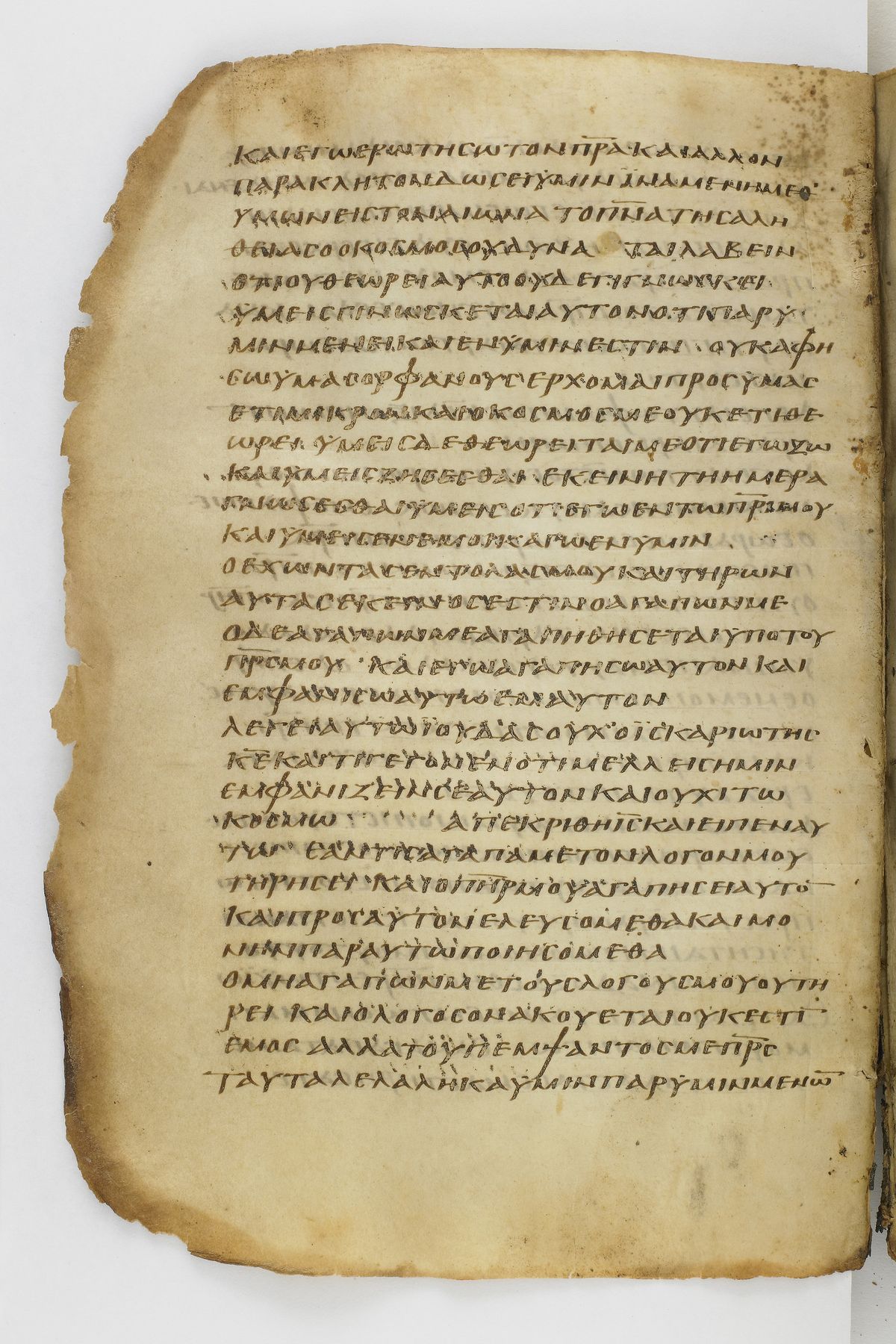
9λέγει αὐτῷ ὁ Ἰησοῦς· τοσούτῳ χρόνῳ μεθ’ ὑμῶν εἰμι, καὶ οὐκ ἔγνωκάς με, Φίλιππε; ὁ ἑωρακὼς ἐμὲ ἑώρακεν τὸν πατέρα· πῶς σὺ λέγεις· δεῖξον ἡμῖν τὸν πατέρα; 10οὐ πιστεύεις ὅτι ἐγὼ ἐν τῷ πατρὶ καὶ ὁ πατὴρ ἐν ἐμοί ἐστιν; τὰ ῥήματα ἃ ἐγὼ λέγω ὑμῖν ἀπ’ ἐμαυτοῦ οὐ λαλῶ· ὁ δὲ πατὴρ ἐν ἐμοὶ μένων ποιεῖ τὰ ἔργα αὐτοῦ. 11πιστεύετέ μοι ὅτι ἐγὼ ἐν τῷ πατρὶ καὶ ὁ πατὴρ ἐν ἐμοί· εἰ δὲ μή, διὰ τὰ ἔργα αὐτὰ πιστεύετε. 12ἀμὴν ἀμὴν λέγω ὑμῖν, ὁ πιστεύων εἰς ἐμέ, τὰ ἔργα ἃ ἐγὼ ποιῶ κἀκεῖνος ποιήσει, καὶ μείζονα τούτων ποιήσει· ὅτι ἐγὼ πρὸς τὸν πατέρα πορεύομαι· 13καὶ ὅ τι ἂν αἰτήσητε ἐν τῷ ὀνόματί μου τοῦτο ποιήσω, ἵνα δοξασθῇ ὁ πατὴρ ἐν τῷ υἱῷ· 14ἐάν τι αἰτήσητέ με ἐν τῷ ὀνόματί μου ἐγὼ ποιήσω. 15Ἐὰν ἀγαπᾶτέ με, τὰς ἐντολὰς τὰς ἐμὰς τηρήσετε· 16κἀγὼ ἐρωτήσω τὸν πατέρα καὶ ἄλλον παράκλητον δώσει ὑμῖν, ἵνα μεθ’ ὑμῶν ᾖ εἰς τὸν αἰῶνα,
9Jesus saith unto him, Have I been so long time with you, and yet hast thou not known me, Philip? he that hath seen me hath seen the Father; and how sayest thou then, Shew us the Father? 10Believest thou not that I am in the Father, and the Father in me? the words that I speak unto you I speak not of myself: but the Father that dwelleth in me, he doeth the works. 11Believe me that I am in the Father, and the Father in me: or else believe me for the very works’ sake. 12Verily, verily, I say unto you, He that believeth on me, the works that I do shall he do also; and greater works than these shall he do; because I go unto my Father. 13And whatsoever ye shall ask in my name, that will I do, that the Father may be glorified in the Son. 14If ye shall ask any thing in my name, I will do it. 15If ye love me, keep my commandments. 16And I will pray the Father, and he shall give you another Comforter, that he may abide with you for ever;
17τὸ πνεῦμα τῆς ἀληθείας, ὃ ὁ κόσμος οὐ δύναται λαβεῖν, ὅτι οὐ θεωρεῖ αὐτὸ οὐδὲ γινώσκει αὐτό· ὑμεῖς γινώσκετε αὐτό, ὅτι παρ’ ὑμῖν μένει καὶ ἐν ὑμῖν ἔσται. 18οὐκ ἀφήσω ὑμᾶς ὀρφανούς, ἔρχομαι πρὸς ὑμᾶς. 19ἔτι μικρὸν καὶ ὁ κόσμος με οὐκέτι θεωρεῖ· ὑμεῖς δὲ θεωρεῖτέ με, ὅτι ἐγὼ ζῶ καὶ ὑμεῖς ζήσετε. 20ἐν ἐκείνῃ τῇ ἡμέρᾳ γνώσεσθε ὑμεῖς ὅτι ἐγὼ ἐν τῷ πατρί μου καὶ ὑμεῖς ἐν ἐμοὶ κἀγὼ ἐν ὑμῖν. 21ὁ ἔχων τὰς ἐντολάς μου καὶ τηρῶν αὐτάς, ἐκεῖνός ἐστιν ὁ ἀγαπῶν με· ὁ δὲ ἀγαπῶν με ἀγαπηθήσεται ὑπὸ τοῦ πατρός μου, κἀγὼ ἀγαπήσω αὐτὸν καὶ ἐμφανίσω αὐτῷ ἐμαυτόν. 22Λέγει αὐτῷ Ἰούδας, οὐχ ὁ Ἰσκαριώτης· κύριε, καὶ τί γέγονεν ὅτι ἡμῖν μέλλεις ἐμφανίζειν σεαυτὸν καὶ οὐχὶ τῷ κόσμῳ; 23ἀπεκρίθη Ἰησοῦς καὶ εἶπεν αὐτῷ· ἐάν τις ἀγαπᾷ με, τὸν λόγον μου τηρήσει, καὶ ὁ πατήρ μου ἀγαπήσει αὐτὸν, καὶ πρὸς αὐτὸν ἐλευσόμεθα καὶ μονὴν παρ’ αὐτῷ ποιησόμεθα. 24ὁ μὴ ἀγαπῶν με τοὺς λόγους μου οὐ τηρεῖ· καὶ ὁ λόγος ὃν ἀκούετε οὐκ ἔστιν ἐμὸς ἀλλὰ τοῦ πέμψαντός με πατρός. 25Ταῦτα λελάληκα ὑμῖν παρ’ ὑμῖν μένων·
17Even the Spirit of truth; whom the world cannot receive, because it seeth him not, neither knoweth him: but ye know him; for he dwelleth with you, and shall be in you. 18I will not leave you comfortless: I will come to you. 19Yet a little while, and the world seeth me no more; but ye see me: because I live, ye shall live also. 20At that day ye shall know that I am in my Father, and ye in me, and I in you. 21He that hath my commandments, and keepeth them, he it is that loveth me: and he that loveth me shall be loved of my Father, and I will love him, and will manifest myself to him. 22Judas saith unto him, not Iscariot, Lord, how is it that thou wilt manifest thyself unto us, and not unto the world? 23Jesus answered and said unto him, If a man love me, he will keep my words: and my Father will love him, and we will come unto him, and make our abode with him. 24He that loveth me not keepeth not my sayings: and the word which ye hear is not mine, but the Father’s which sent me. 25These things have I spoken unto you, being yet present with you.
Cite
Source & Cross-References
- Source text: Codex Washingtonianus (Freer Gospels, GA 032) via Smithsonian/Freer IIIF + CSNTM verse index + Tischendorf + KJV — view original
- Critical edition: Tischendorf 8th edition (1869)
← previous · → next · v cycle view · l back to library