John, Chapter 16 (Codex Washingtonianus)
Introduction
John 16 from Codex Washingtonianus (the Freer Gospels, Gregory-Aland 032, Freer Gallery of Art F1906.274), a parchment codex of the four Gospels written in Egypt in the late 4th or early 5th century and bought by Charles Lang Freer from the dealer Ali Arabi at Giza in 1906. It is one of the oldest nearly complete Gospel books in existence. The Gospels stand in the so-called Western order, Matthew, John, Luke, Mark, and the text is famously block-mixed: the copyist drew on several exemplars of different textual character, so the text type changes in blocks within a single Gospel. After Mark 16:14 the codex carries the Freer Logion, a saying found in no other manuscript. Two passages are lost to damage: Mark 15:13-37 and John 14:26-16:6.
- Scan: each section is shown with the actual page of the codex that carries those verses, from the Freer Gallery's own photographs of F1906.274 served by the Smithsonian IIIF service (ids.si.edu). Which page holds which verse comes from the verse index of the Center for the Study of New Testament Manuscripts (CSNTM), whose photographs of the codex are the same shots; every CSNTM page was matched to its Smithsonian image by pixel comparison before use. Where a verse begins on one page and ends on the next, both pages are listed. Verses the index cannot place on a surviving page are not shown.
- Greek: Constantin von Tischendorf's Editio octava critica maior (1869-72, public domain), verbatim from bolls.life. This is a printed critical edition, not a transcription of Washingtonianus itself: the codex has many readings of its own, and where it differs from Tischendorf the manuscript reading can be checked on the page image. Numbering: Tischendorf omits a few verses that the KJV prints (they are in the English column only).
- English: the King James Version (1611, public domain), verbatim from bible-api.com. The KJV translates the later Byzantine text, so it will not always match the Greek shown or the reading of the codex.
Not in the codex (lost to damage): John 16:1-6.
How was this verified? (Provenance)
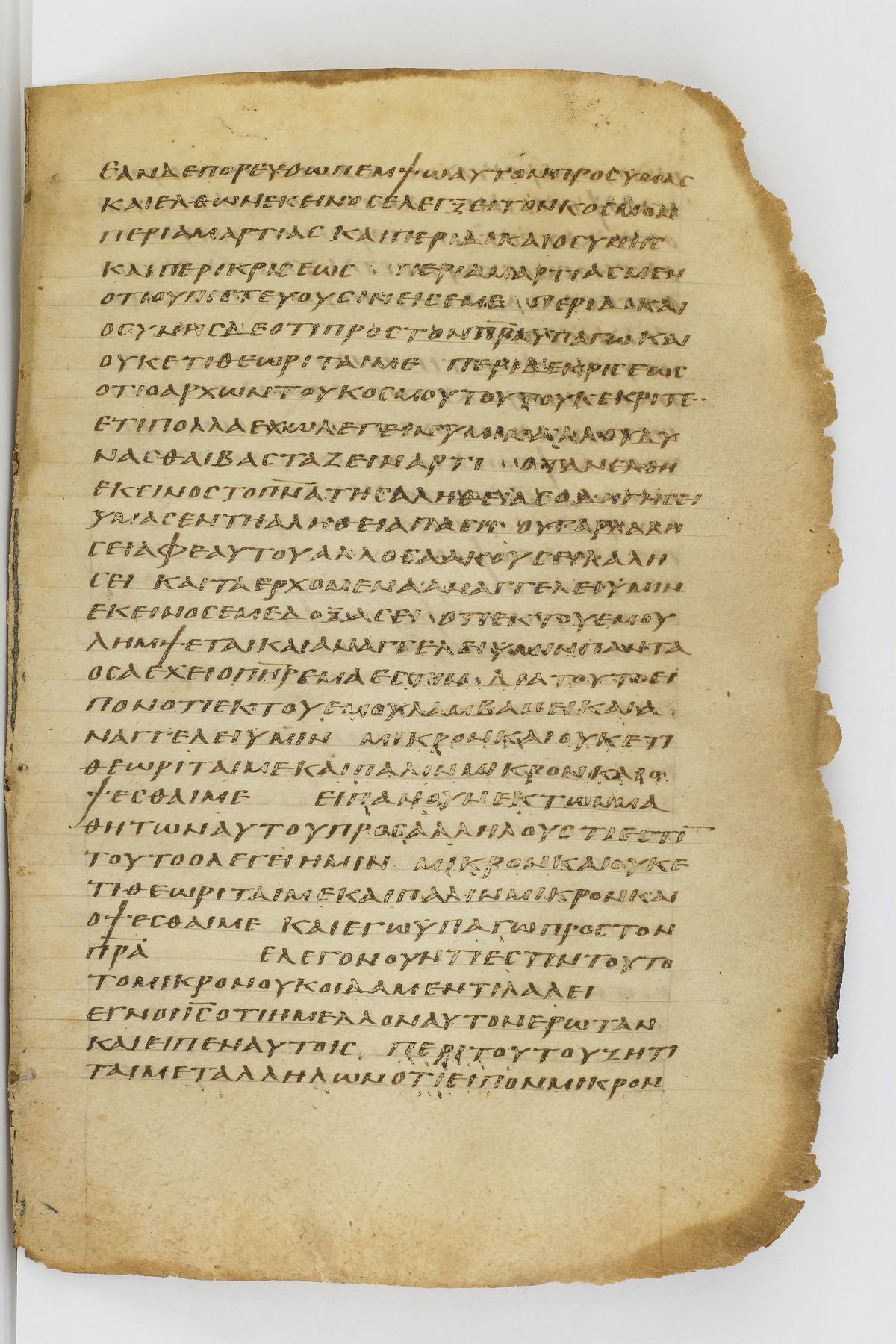
7ἀλλ’ ἐγὼ τὴν ἀλήθειαν λέγω ὑμῖν, συμφέρει ὑμῖν ἵνα ἐγὼ ἀπέλθω. ἐὰν γὰρ μὴ ἀπέλθω, ὁ παράκλητος οὐκ ἐλεύσεται πρὸς ὑμᾶς· ἐὰν δὲ πορευθῶ, πέμψω αὐτὸν πρὸς ὑμᾶς. 8καὶ ἐλθὼν ἐκεῖνος ἐλέγξει τὸν κόσμον περὶ ἁμαρτίας καὶ περὶ δικαιοσύνης καὶ περὶ κρίσεως· 9περὶ ἁμαρτίας μέν, ὅτι οὐ πιστεύουσιν εἰς ἐμέ· 10περὶ δικαιοσύνης δέ, ὅτι πρὸς τὸν πατέρα ὑπάγω καὶ οὐκέτι θεωρεῖτέ με· 11περὶ δὲ κρίσεως, ὅτι ὁ ἄρχων τοῦ κόσμου τούτου κέκριται. 12ἔτι πολλὰ ἔχω ὑμῖν λέγειν, ἀλλ’ οὐ δύνασθε βαστάζειν ἄρτι· 13ὅταν δὲ ἔλθῃ ἐκεῖνος, τὸ πνεῦμα τῆς ἀληθείας, ὁδηγήσει ὑμᾶς ἐν τῇ ἀληθείᾳ πάσῃ· οὐ γὰρ λαλήσει ἀφ’ ἑαυτοῦ, ἀλλ’ ὅσα ἀκούει λαλήσει, καὶ τὰ ἐρχόμενα ἀναγγελεῖ ὑμῖν. 14ἐκεῖνος ἐμὲ δοξάσει, ὅτι ἐκ τοῦ ἐμοῦ λήμψεται καὶ ἀναγγελεῖ ὑμῖν.
7Nevertheless I tell you the truth; It is expedient for you that I go away: for if I go not away, the Comforter will not come unto you; but if I depart, I will send him unto you. 8And when he is come, he will reprove the world of sin, and of righteousness, and of judgment: 9Of sin, because they believe not on me; 10Of righteousness, because I go to my Father, and ye see me no more; 11Of judgment, because the prince of this world is judged. 12I have yet many things to say unto you, but ye cannot bear them now. 13Howbeit when he, the Spirit of truth, is come, he will guide you into all truth: for he shall not speak of himself; but whatsoever he shall hear, that shall he speak: and he will shew you things to come. 14He shall glorify me: for he shall receive of mine, and shall shew it unto you.
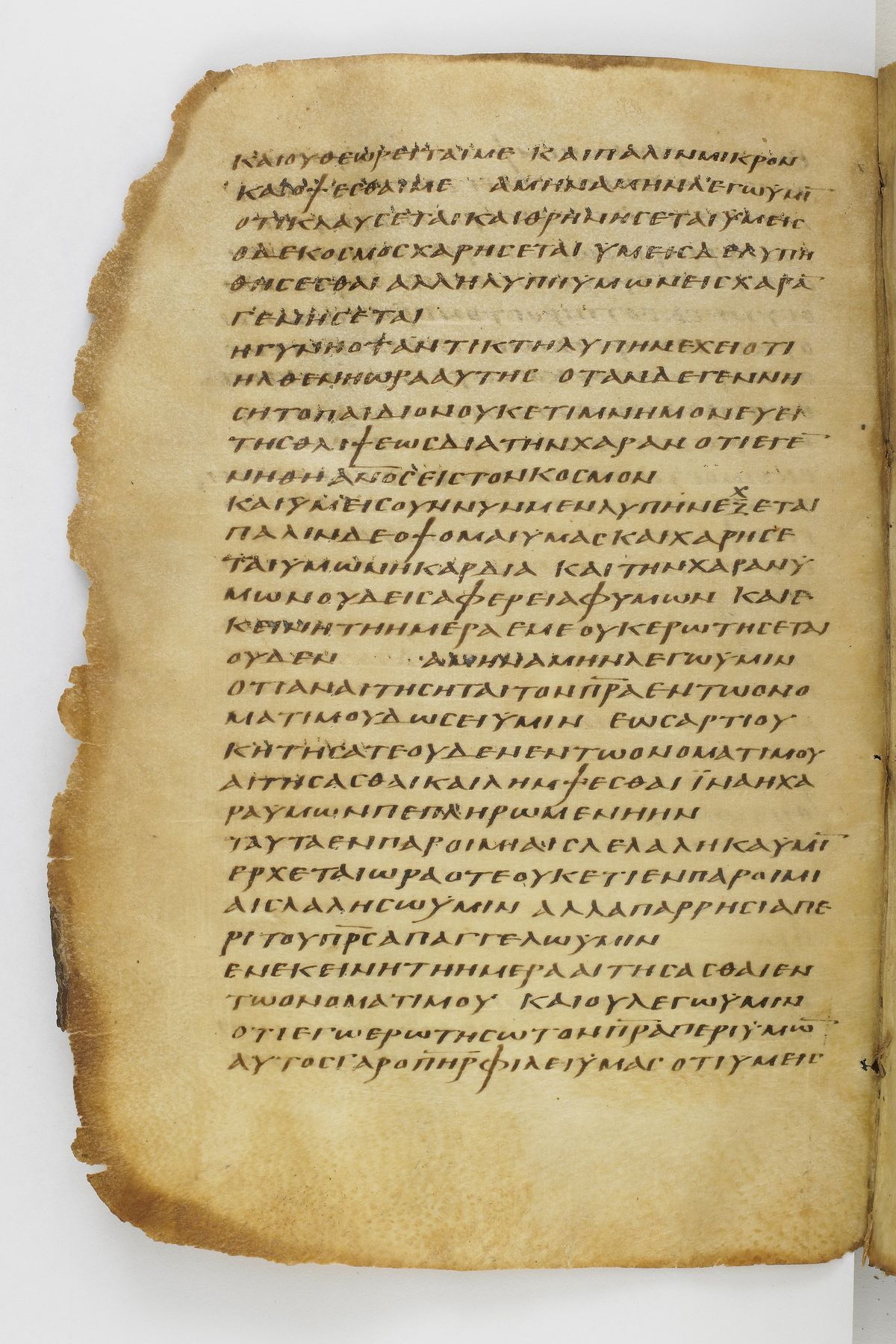
15πάντα ὅσα ἔχει ὁ πατὴρ ἐμά ἐστιν· διὰ τοῦτο εἶπον ὅτι ἐκ τοῦ ἐμοῦ λαμβάνει καὶ ἀναγγελεῖ ὑμῖν. 16μικρὸν καὶ οὐκέτι θεωρεῖτέ με, καὶ πάλιν μικρὸν καὶ ὄψεσθέ με. 17Εἶπον οὖν ἐκ τῶν μαθητῶν αὐτοῦ πρὸς ἀλλήλους· τί ἐστιν τοῦτο ὃ λέγει ἡμῖν· μικρὸν καὶ οὐ θεωρεῖτέ με, καὶ πάλιν μικρὸν καὶ ὄψεσθέ με; καί ὅτι ὑπάγω πρὸς τὸν πατέρα; 18ἔλεγον οὖν· τοῦτο τί ἐστιν ὃ λέγει, τὸ μικρόν; οὐκ οἴδαμεν τί λαλεῖ. 19ἔγνω Ἰησοῦς ὅτι ἤθελον αὐτὸν ἐρωτᾶν, καὶ εἶπεν αὐτοῖς· περὶ τούτου ζητεῖτε μετ’ ἀλλήλων ὅτι εἶπον, μικρὸν καὶ οὐ θεωρεῖτέ με, καὶ πάλιν μικρὸν καὶ ὄψεσθέ με; 20ἀμὴν ἀμὴν λέγω ὑμῖν ὅτι κλαύσετε καὶ θρηνήσετε ὑμεῖς, ὁ δὲ κόσμος χαρήσεται· ὑμεῖς λυπηθήσεσθε, ἀλλ’ ἡ λύπη ὑμῶν εἰς χαρὰν γενήσεται. 21ἡ γυνὴ ὅταν τίκτῃ λύπην ἔχει, ὅτι ἦλθεν ἡ ὥρα αὐτῆς· ὅταν δὲ γεννήσῃ τὸ παιδίον, οὐκέτι μνημονεύει τῆς θλίψεως διὰ τὴν χαρὰν ὅτι ἐγεννήθη ἄνθρωπος εἰς τὸν κόσμον. 22καὶ ὑμεῖς οὖν νῦν μὲν λύπην ἔχετε· πάλιν δὲ ὄψομαι ὑμᾶς, καὶ χαρήσεται ὑμῶν ἡ καρδία, καὶ τὴν χαρὰν ὑμῶν οὐδεὶς αἴρει ἀφ’ ὑμῶν.
15All things that the Father hath are mine: therefore said I, that he shall take of mine, and shall shew it unto you. 16A little while, and ye shall not see me: and again, a little while, and ye shall see me, because I go to the Father. 17Then said some of his disciples among themselves, What is this that he saith unto us, A little while, and ye shall not see me: and again, a little while, and ye shall see me: and, Because I go to the Father? 18They said therefore, What is this that he saith, A little while? we cannot tell what he saith. 19Now Jesus knew that they were desirous to ask him, and said unto them, Do ye enquire among yourselves of that I said, A little while, and ye shall not see me: and again, a little while, and ye shall see me? 20Verily, verily, I say unto you, That ye shall weep and lament, but the world shall rejoice: and ye shall be sorrowful, but your sorrow shall be turned into joy. 21A woman when she is in travail hath sorrow, because her hour is come: but as soon as she is delivered of the child, she remembereth no more the anguish, for joy that a man is born into the world. 22And ye now therefore have sorrow: but I will see you again, and your heart shall rejoice, and your joy no man taketh from you.
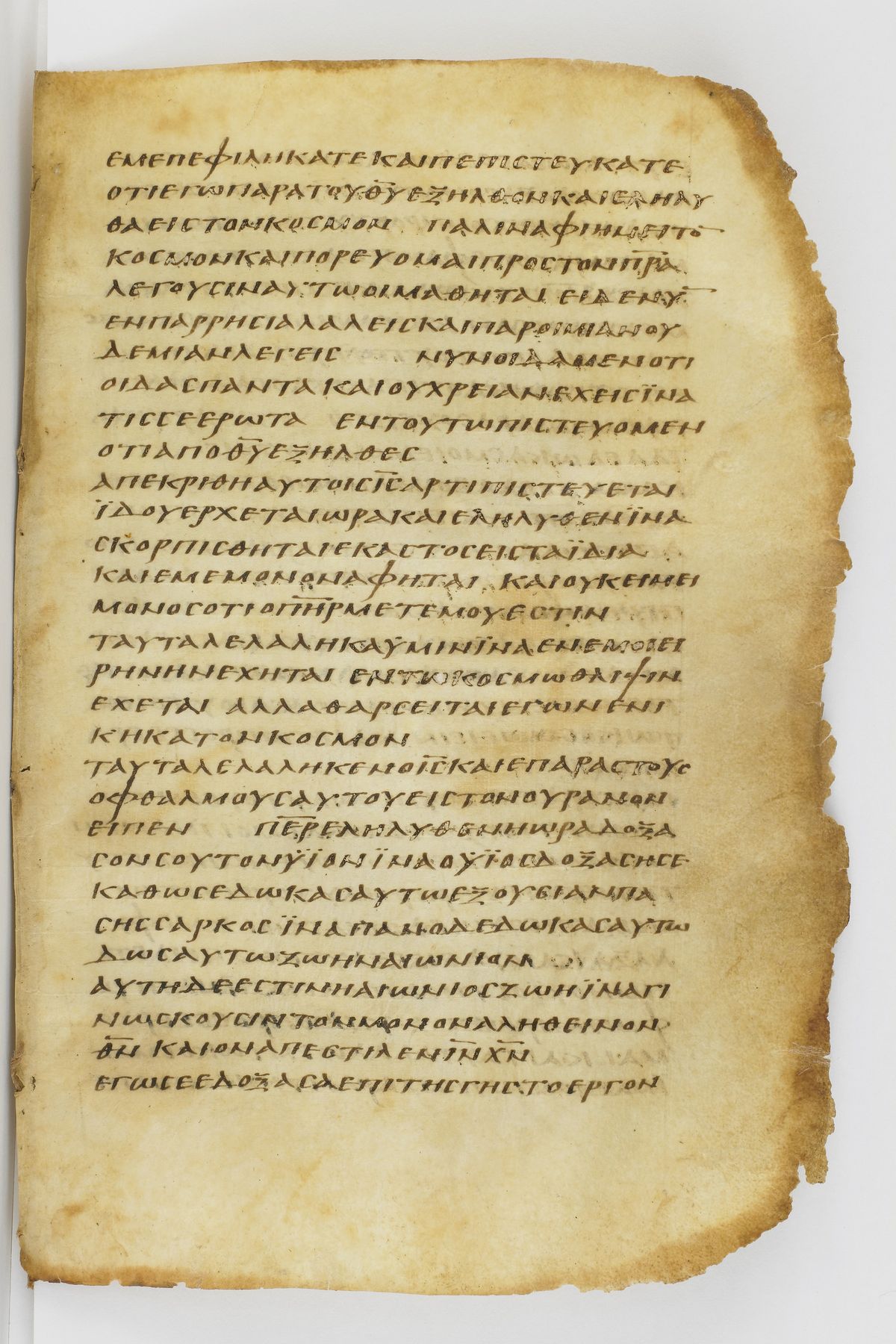
23καὶ ἐν ἐκείνῃ τῇ ἡμέρᾳ ἐμὲ οὐκ ἐρωτήσετε οὐδέν. ἀμὴν ἀμὴν λέγω ὑμῖν, ἄν τι αἰτήσητε τὸν πατέρα, δώσει ὑμῖν ἐν τῷ ὀνόματί μου. 24ἕως ἄρτι οὐκ ᾐτήσατε οὐδὲν ἐν τῷ ὀνόματί μου· αἰτεῖτε καὶ λήμψεσθε, ἵνα ἡ χαρὰ ὑμῶν ᾖ πεπληρωμένη. 25Ταῦτα ἐν παροιμίαις λελάληκα ὑμῖν· ἔρχεται ὥρα ὅτε οὐκέτι ἐν παροιμίαις λαλήσω ὑμῖν, ἀλλὰ παρρησίᾳ περὶ τοῦ πατρὸς ἀπαγγελῶ ὑμῖν. 26ἐν ἐκείνῃ τῇ ἡμέρᾳ ἐν τῷ ὀνόματί μου αἰτήσεσθε, καὶ οὐ λέγω ὑμῖν ὅτι ἐγὼ ἐρωτήσω τὸν πατέρα περὶ ὑμῶν· 27αὐτὸς γὰρ ὁ πατὴρ φιλεῖ ὑμᾶς, ὅτι ὑμεῖς ἐμὲ πεφιλήκατε καὶ πεπιστεύκατε ὅτι ἐγὼ παρὰ τοῦ θεοῦ ἐξῆλθον. 28ἐξῆλθον ἐκ τοῦ πατρὸς καὶ ἐλήλυθα εἰς τὸν κόσμον· πάλιν ἀφίημι τὸν κόσμον καὶ πορεύομαι πρὸς τὸν πατέρα. 29Λέγουσιν οἱ μαθηταὶ αὐτοῦ· ἴδε νῦν ἐν παρρησίᾳ λαλεῖς, καὶ παροιμίαν οὐδεμίαν λέγεις. 30νῦν οἴδαμεν ὅτι οἶδας πάντα καὶ οὐ χρείαν ἔχεις ἵνα τίς σε ἐρωτᾷ· ἐν τούτῳ πιστεύομεν ὅτι ἀπὸ θεοῦ ἐξῆλθες.
23And in that day ye shall ask me nothing. Verily, verily, I say unto you, Whatsoever ye shall ask the Father in my name, he will give it you. 24Hitherto have ye asked nothing in my name: ask, and ye shall receive, that your joy may be full. 25These things have I spoken unto you in proverbs: but the time cometh, when I shall no more speak unto you in proverbs, but I shall shew you plainly of the Father. 26At that day ye shall ask in my name: and I say not unto you, that I will pray the Father for you: 27For the Father himself loveth you, because ye have loved me, and have believed that I came out from God. 28I came forth from the Father, and am come into the world: again, I leave the world, and go to the Father. 29His disciples said unto him, Lo, now speakest thou plainly, and speakest no proverb. 30Now are we sure that thou knowest all things, and needest not that any man should ask thee: by this we believe that thou camest forth from God.
31ἀπεκρίθη αὐτοῖς Ἰησοῦς· ἄρτι πιστεύετε; 32ἰδοὺ ἔρχεται ὥρα καὶ ἐλήλυθεν ἵνα σκορπισθῆτε ἕκαστος εἰς τὰ ἴδια κἀμὲ μόνον ἀφῆτε· καὶ οὐκ εἰμὶ μόνος, ὅτι ὁ πατὴρ μετ’ ἐμοῦ ἐστιν. 33ταῦτα λελάληκα ὑμῖν ἵνα ἐν ἐμοὶ εἰρήνην ἔχητε. ἐν τῷ κόσμῳ θλῖψιν ἔχετε· ἀλλὰ θαρσεῖτε, ἐγὼ νενίκηκα τὸν κόσμον.
31Jesus answered them, Do ye now believe? 32Behold, the hour cometh, yea, is now come, that ye shall be scattered, every man to his own, and shall leave me alone: and yet I am not alone, because the Father is with me. 33These things I have spoken unto you, that in me ye might have peace. In the world ye shall have tribulation: but be of good cheer; I have overcome the world.
Cite
Source & Cross-References
- Source text: Codex Washingtonianus (Freer Gospels, GA 032) via Smithsonian/Freer IIIF + CSNTM verse index + Tischendorf + KJV — view original
- Critical edition: Tischendorf 8th edition (1869)
← previous · → next · v cycle view · l back to library