John, Chapter 19 (Codex Washingtonianus)
Introduction
John 19 from Codex Washingtonianus (the Freer Gospels, Gregory-Aland 032, Freer Gallery of Art F1906.274), a parchment codex of the four Gospels written in Egypt in the late 4th or early 5th century and bought by Charles Lang Freer from the dealer Ali Arabi at Giza in 1906. It is one of the oldest nearly complete Gospel books in existence. The Gospels stand in the so-called Western order, Matthew, John, Luke, Mark, and the text is famously block-mixed: the copyist drew on several exemplars of different textual character, so the text type changes in blocks within a single Gospel. After Mark 16:14 the codex carries the Freer Logion, a saying found in no other manuscript. Two passages are lost to damage: Mark 15:13-37 and John 14:26-16:6.
- Scan: each section is shown with the actual page of the codex that carries those verses, from the Freer Gallery's own photographs of F1906.274 served by the Smithsonian IIIF service (ids.si.edu). Which page holds which verse comes from the verse index of the Center for the Study of New Testament Manuscripts (CSNTM), whose photographs of the codex are the same shots; every CSNTM page was matched to its Smithsonian image by pixel comparison before use. Where a verse begins on one page and ends on the next, both pages are listed. For this chapter the page of each verse is taken from the transcription itself, which records where every page begins; CSNTM's index confirms which photograph shows that page.
- Greek: the manuscript's own text, from a diplomatic transcription (see Greek text below), with Tischendorf's 8th critical edition (1869) for comparison.
- English: the King James Version (1611, public domain), verbatim from bible-api.com. The KJV translates the later Byzantine text, so it will not always match the Greek shown or the reading of the codex.
Greek text: a diplomatic transcription of Codex Washingtonianus made by the International Greek New Testament Project (IGNTP), transcription of John in GA 032, version 2.1 (2013), published under a Creative Commons Attribution 4.0 licence. It gives the letters as the first scribe wrote them: no accents or breathings, the scribe's own spelling, and the sacred names in their contracted form (θς for θεος, ις for ιησους, κς for κυριος; the overline is not reproduced). A stroke ¯ after a letter (for example μενω¯, το¯) is the scribe's abbreviation for a final ν, kept as the transcription gives it. Corrections by later hands are not shown. Letters in square brackets are not legible on the page and were restored by the transcribers, a dot under a letter marks an uncertain reading, and [...] marks text lost to damage. Beneath each section, for comparison, is Tischendorf's 8th critical edition (1869). Where the two differ, the transcription is what the manuscript says. Each section is shown with the page on which the transcription places its verses.
How was this verified? (Provenance)
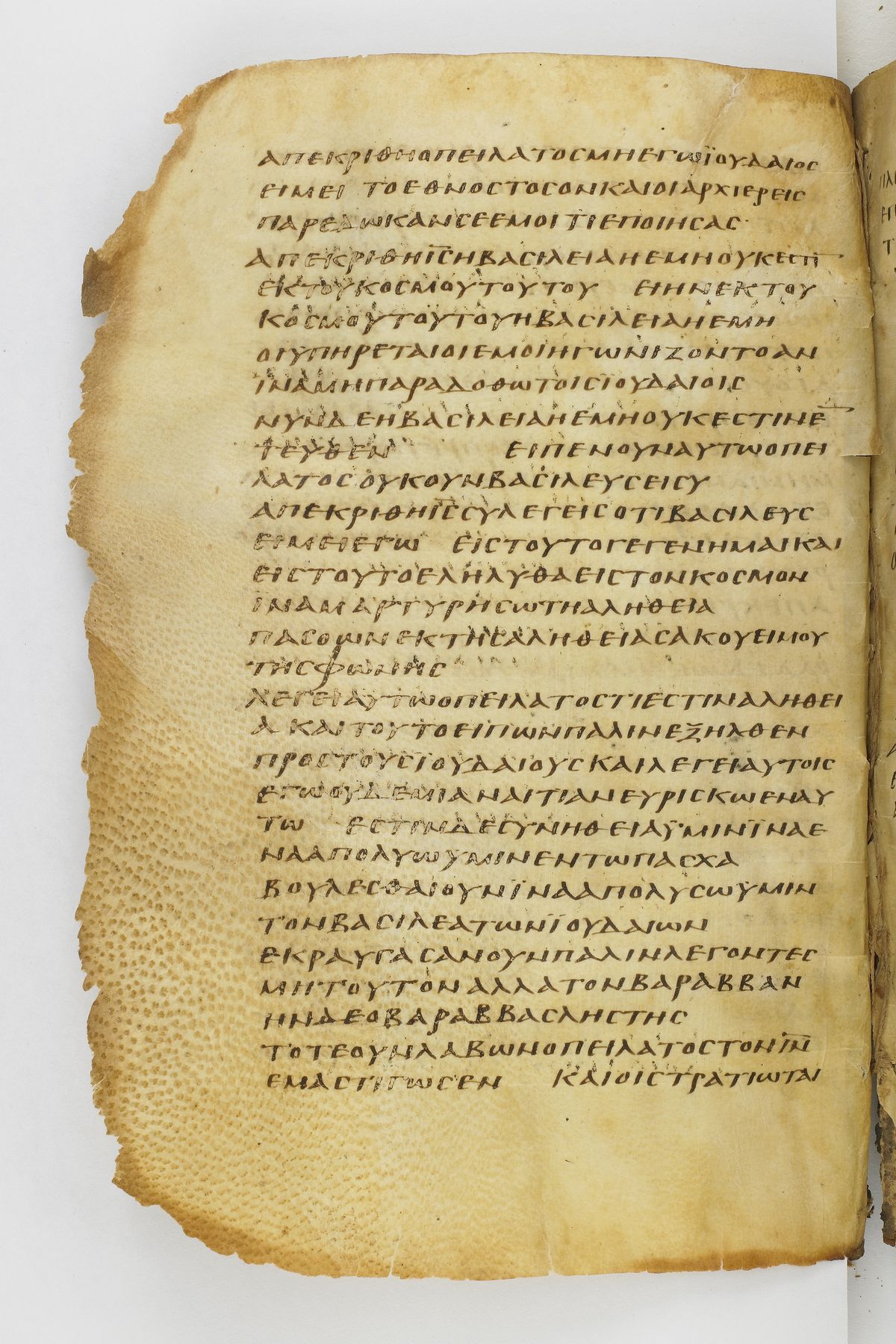
Where on the image
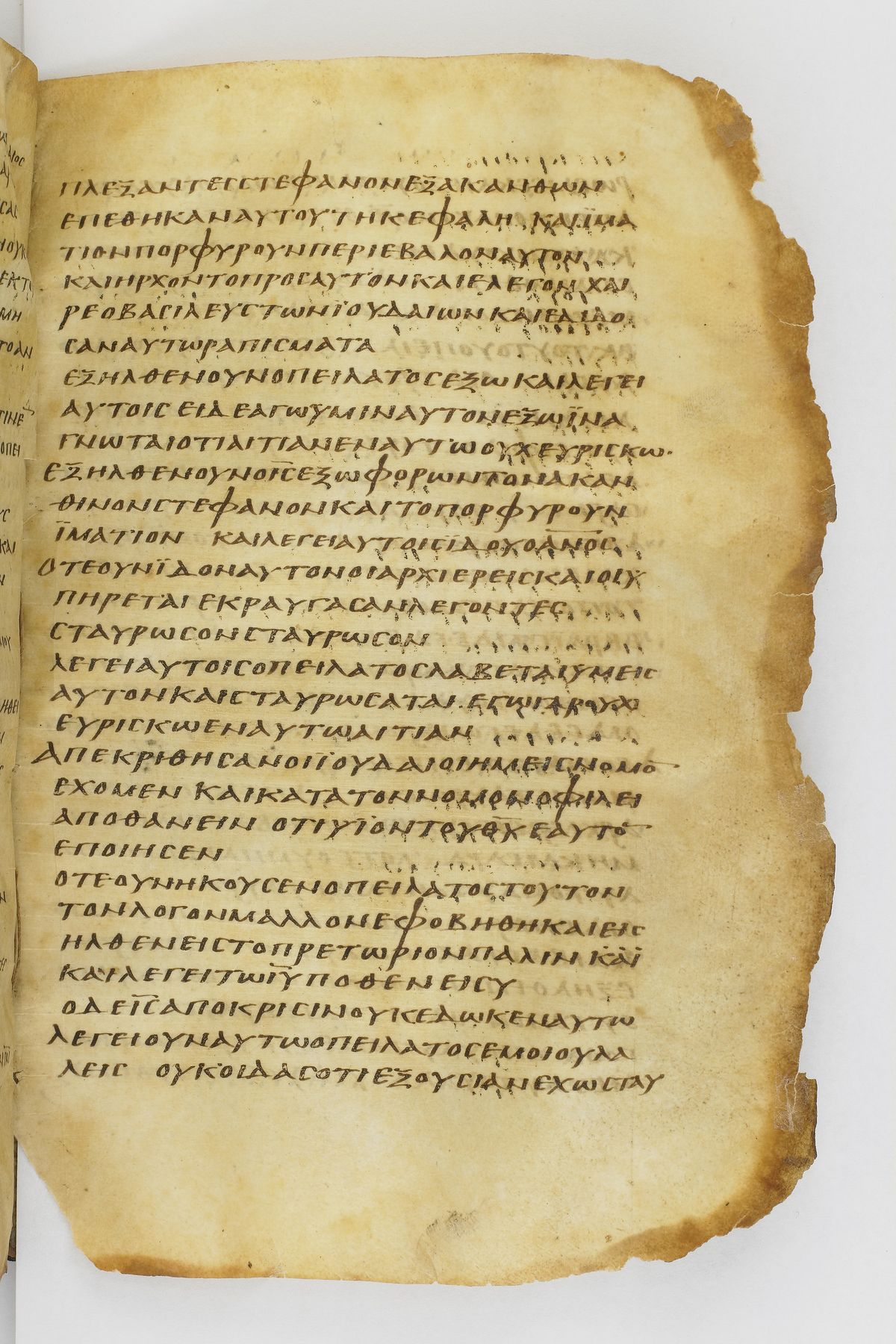
Page from the IGNTP transcription: verses 1-2 on fol. 91v, CSNTM GA_032_0182; verse 2 continues on fol. 92r, CSNTM GA_032_0183 (which begins 'πλεξαντες στεφανον εξ').
1τοτε ουν λαβων ο πειλατος τον ιν εμαστιγωσεν 2και οι στρατιωται πλεξαντες στεφανον εξ ακανθων επεθηκαν αυτου τη κεφαλη και ιματιον πορφυρουν περιεβαλον αυτον
Compare: Tischendorf 8th edition (1869)
1Τότε οὖν ἔλαβεν ὁ Πειλᾶτος τὸν Ἰησοῦν καὶ ἐμαστίγωσεν. 2καὶ οἱ στρατιῶται πλέξαντες στέφανον ἐξ ἀκανθῶν ἐπέθηκαν αὐτοῦ τῇ κεφαλῇ, καὶ ἱμάτιον πορφυροῦν περιέβαλον αὐτόν,
1Then Pilate therefore took Jesus, and scourged him. 2And the soldiers platted a crown of thorns, and put it on his head, and they put on him a purple robe,
Where on the image
Page from the IGNTP transcription: verses 3-10 on fol. 92r, CSNTM GA_032_0183; verse 10 continues on fol. 92v, CSNTM GA_032_0184 (which begins 'ρωσαι σε και').
3και ηρχοντο προς αυτον και ελεγον χαιρε ο βασιλευς των ιουδαιων και εδιδοσαν αυτω ραπισματα 4εξηλθεν ουν ο πειλατος εξω και λεγει αυτοις ειδε αγω υμιν αυτον εξω ινα γνωται οτι αιτιαν εν αυτω ουχ ευρισκω 5εξηλθεν ουν ο ις εξω φορων τον ακανθινον στεφανον και το πορφυρουν ιματιον και λεγει αυτοις ιδου ο ανος 6οτε ουν ιδον αυτον οι αρχιερεις και οι υπηρεται εκραυγασαν λεγοντες σταυρωσον σταυρωσον λεγει αυτοις ο πειλατος λαβεται υμεις αυτον και σταυρωσαται εγω γαρ ουχι ευρισκω εν αυτω αιτιαν 7Απεκριθησαν οι ιουδαιοι ημεις νομο¯ εχομεν και κατα τον νομον οφιλει αποθανειν οτι υιον του θυ εαυτο¯ εποιησεν 8οτε ουν ηκουσεν ο πειλατος τουτον τον λογον μαλλον εφοβηθη 9και εισηλθεν εις το πρετωριον παλιν και και λεγει τω ιυ ποθεν ει συ ο δε ις αποκρισιν ουκ εδωκεν αυτω 10λεγει ουν αυτω ο πειλατος εμοι ου λαλεις ουκ οιδας οτι εξουσιαν εχω σταυρωσαι σε και εξουσιαν εχω απολυσαι σε
Compare: Tischendorf 8th edition (1869)
3καὶ ἤρχοντο πρὸς αὐτὸν καὶ ἔλεγον· χαῖρε, ὁ βασιλεὺς τῶν Ἰουδαίων· καὶ ἐδίδοσαν αὐτῷ ῥαπίσματα. 4Ἐξῆλθεν πάλιν ὁ Πειλᾶτος ἔξω καὶ λέγει αὐτοῖς· ἴδε ἄγω ὑμῖν αὐτὸν ἔξω, ἵνα γνῶτε ὅτι αἰτίαν οὐχ εὑρίσκω. 5ἐξῆλθεν οὖν ὁ Ἰησοῦς ἔξω, φορῶν τὸν ἀκάνθινον στέφανον καὶ τὸ πορφυροῦν ἱμάτιον. καὶ λέγει αὐτοῖς· ἰδοὺ ὁ ἄνθρωπος. 6ὅτε οὖν ἴδον αὐτὸν οἱ ἀρχιερεῖς καὶ οἱ ὑπηρέται, ἐκραύγασαν· σταύρωσον σταύρωσον. λέγει αὐτοῖς ὁ Πειλᾶτος· λάβετε αὐτὸν ὑμεῖς καὶ σταυρώσατε, ἐγὼ γὰρ οὐχ εὑρίσκω ἐν αὐτῷ αἰτίαν. 7ἀπεκρίθησαν οἱ Ἰουδαῖοι· ἡμεῖς νόμον ἔχομεν, καὶ κατὰ τὸν νόμον ὀφείλει ἀποθανεῖν, ὅτι υἱὸν θεοῦ ἑαυτὸν ἐποίησεν. 8Ὅτε οὖν ἤκουσεν ὁ Πειλᾶτος τοῦτον τὸν λόγον, μᾶλλον ἐφοβήθη, 9καὶ εἰσῆλθεν εἰς τὸ πραιτώριον πάλιν καὶ λέγει τῷ Ἰησοῦ· πόθεν εἶ σύ; ὁ δὲ Ἰησοῦς ἀπόκρισιν οὐκ ἔδωκεν αὐτῷ. 10λέγει αὐτῷ ὁ Πειλᾶτος· ἐμοὶ οὐ λαλεῖς; οὐκ οἶδας ὅτι ἐξουσίαν ἔχω ἀπολῦσαί σε καὶ ἐξουσίαν ἔχω σταυρῶσαί σε;
3And said, Hail, King of the Jews! and they smote him with their hands. 4Pilate therefore went forth again, and saith unto them, Behold, I bring him forth to you, that ye may know that I find no fault in him. 5Then came Jesus forth, wearing the crown of thorns, and the purple robe. And Pilate saith unto them, Behold the man! 6When the chief priests therefore and officers saw him, they cried out, saying, Crucify him, crucify him. Pilate saith unto them, Take ye him, and crucify him: for I find no fault in him. 7The Jews answered him, We have a law, and by our law he ought to die, because he made himself the Son of God. 8When Pilate therefore heard that saying, he was the more afraid; 9And went again into the judgment hall, and saith unto Jesus, Whence art thou? But Jesus gave him no answer. 10Then saith Pilate unto him, Speakest thou not unto me? knowest thou not that I have power to crucify thee, and have power to release thee?
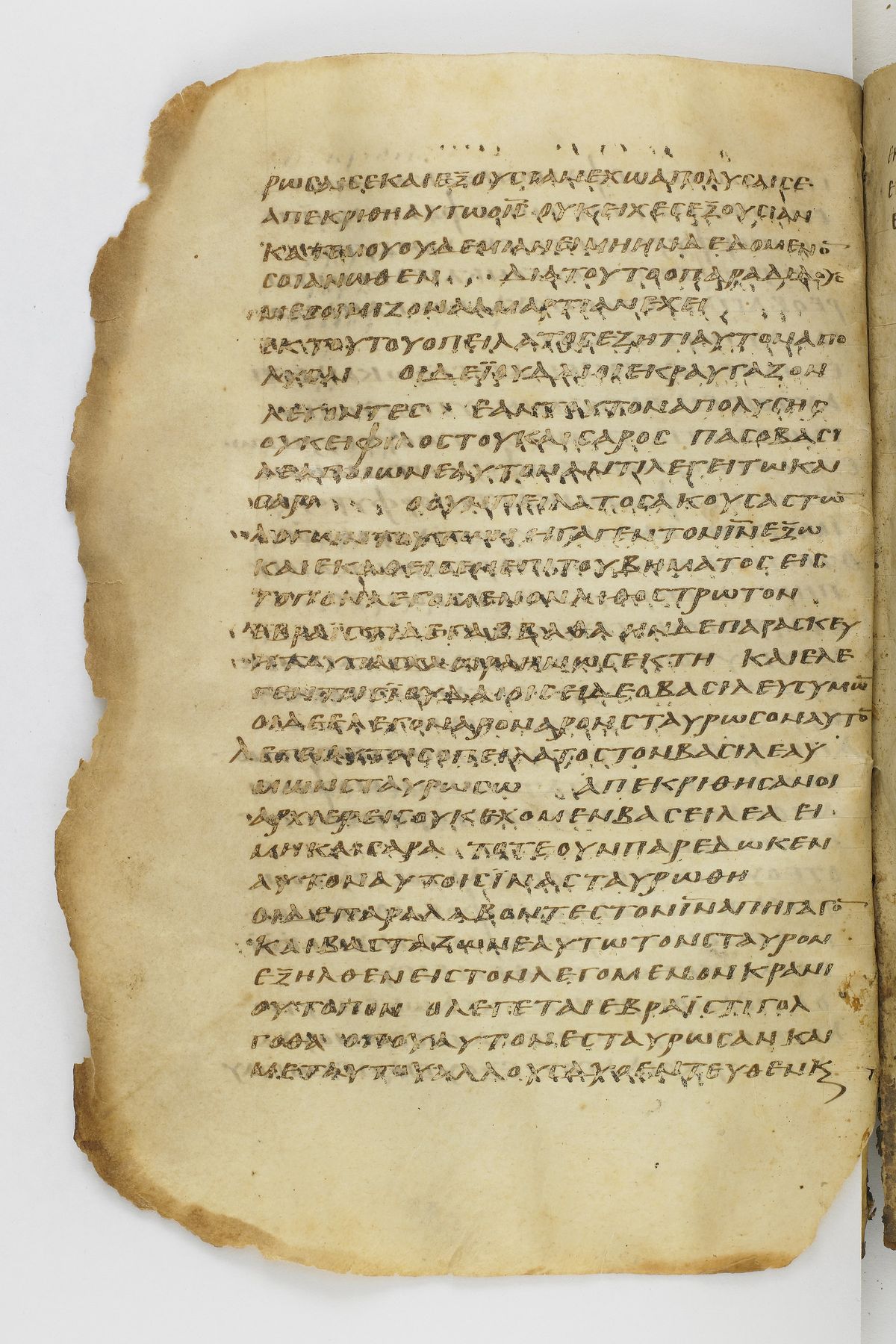
Where on the image
Page from the IGNTP transcription: verses 11-18 on fol. 92v, CSNTM GA_032_0184; verse 18 continues on CSNTM GA_032_0185 (which begins 'εντευθεν μεσον δε').
11απεκριθη αυτω ο ις ουκ ειχες εξουσιαν κατ εμου ουδεμιαν ει μη ην δεδομενο¯ σοι ανωθεν δια τουτο ο παραδιδους με σοι μιζονα αμαρτιαν εχει 12εκ τουτου ο πειλατος εζητι αυτον απολυσαι οι δε ιουδαιοι εκραυγαζον λεγοντες εαν τουτον απολυσης ουκ ει φιλος του καισαρος πας ο βασιλεα ποιων εαυτον αντιλεγει τω καισαρι 13ο ουν πειλατος ακουσας τω¯ λογων τουτων ηγαγεν τον ιν εξω και εκαθεισεν επι του βηματος εις τοπον λεγομενον λιθοστρωτον εβραιστι δε γαββαθα 14ην δε παρασκευη του πασχα ωρα ην ως εκτη και ελεγεν τοις ιουδαιοις ειδε ο βασιλευς υμω¯ 15οι δε ελεγον αρον αρον σταυρωσον αυτο¯ Λεγει αυτοις ο πειλατος τον βασιλεα υμων σταυρωσω απεκριθησαν οι αρχιερεις ουκ εχομεν βασιλεα ει μη καισαρα 16τοτε ουν παρεδωκεν αυτον αυτοις ινα σταυρωθη οι δε παραλαβοντες τον ιν απηγαγο¯ 17και βασταζων εαυτω τον σταυρον εξηλθεν εις τον λεγομενον κρανιου τοπον ο λεγεται εβραιστι γολγοθα 18οπου αυτον εσταυρωσαν και μετ αυτου αλλους δυο εντευθεν και εντευθεν μεσον δε τον ιν
Compare: Tischendorf 8th edition (1869)
11ἀπεκρίθη Ἰησοῦς· οὐκ ἔχεις ἐξουσίαν κατ’ ἐμοῦ οὐδεμίαν εἰ μὴ ἦν δεδομένον σοι ἄνωθεν· διὰ τοῦτο ὁ παραδούς μέ σοι μείζονα ἁμαρτίαν ἔχει. 12ἐκ τούτου ὁ Πειλᾶτος ἐζήτει ἀπολῦσαι αὐτόν· οἱ δὲ Ἰουδαῖοι ἐκραύγαζον λέγοντες· ἐὰν τοῦτον ἀπολύσῃς, οὐκ εἶ φίλος τοῦ Καίσαρος· πᾶς ὁ βασιλέα ἑαυτὸν ποιῶν ἀντιλέγει τῷ Καίσαρι. 13ὁ οὖν Πειλᾶτος ἀκούσας τῶν λόγων τούτων ἤγαγεν ἔξω τὸν Ἰησοῦν, καὶ ἐκάθισεν ἐπὶ βήματος εἰς τόπον λεγόμενον Λιθόστρωτον, Ἑβραϊστὶ δὲ Γαββαθᾶ. 14ἦν δὲ παρασκευὴ τοῦ πάσχα, ὥρα ἦν ὡς ἕκτη. καὶ λέγει τοῖς Ἰουδαίοις· ἴδε ὁ βασιλεὺς ὑμῶν. 15ἐκραύγασαν οὖν ἐκεῖνοι· ἆρον ἆρον, σταύρωσον αὐτόν. λέγει αὐτοῖς ὁ Πειλᾶτος· τὸν βασιλέα ὑμῶν σταυρώσω; ἀπεκρίθησαν οἱ ἀρχιερεῖς· οὐκ ἔχομεν βασιλέα εἰ μὴ Καίσαρα. 16τότε οὖν παρέδωκεν αὐτὸν αὐτοῖς ἵνα σταυρωθῇ. Παρέλαβον οὖν τὸν Ἰησοῦν, 17καὶ βαστάζων ἑαυτῷ τὸν σταυρὸν ἐξῆλθεν εἰς τὸν λεγόμενον Κρανίου τόπον, ὃ λέγεται Ἑβραϊστὶ Γολγοθᾶ, 18ὅπου αὐτὸν ἐσταύρωσαν, καὶ μετ’ αὐτοῦ ἄλλους δύο ἐντεῦθεν καὶ ἐντεῦθεν, μέσον δὲ τὸν Ἰησοῦν.
11Jesus answered, Thou couldest have no power at all against me, except it were given thee from above: therefore he that delivered me unto thee hath the greater sin. 12And from thenceforth Pilate sought to release him: but the Jews cried out, saying, If thou let this man go, thou art not Caesar’s friend: whosoever maketh himself a king speaketh against Caesar. 13When Pilate therefore heard that saying, he brought Jesus forth, and sat down in the judgment seat in a place that is called the Pavement, but in the Hebrew, Gabbatha. 14And it was the preparation of the passover, and about the sixth hour: and he saith unto the Jews, Behold your King! 15But they cried out, Away with him, away with him, crucify him. Pilate saith unto them, Shall I crucify your King? The chief priests answered, We have no king but Caesar. 16Then delivered he him therefore unto them to be crucified. And they took Jesus, and led him away. 17And he bearing his cross went forth into a place called the place of a skull, which is called in the Hebrew Golgotha: 18Where they crucified him, and two others with him, on either side one, and Jesus in the midst.
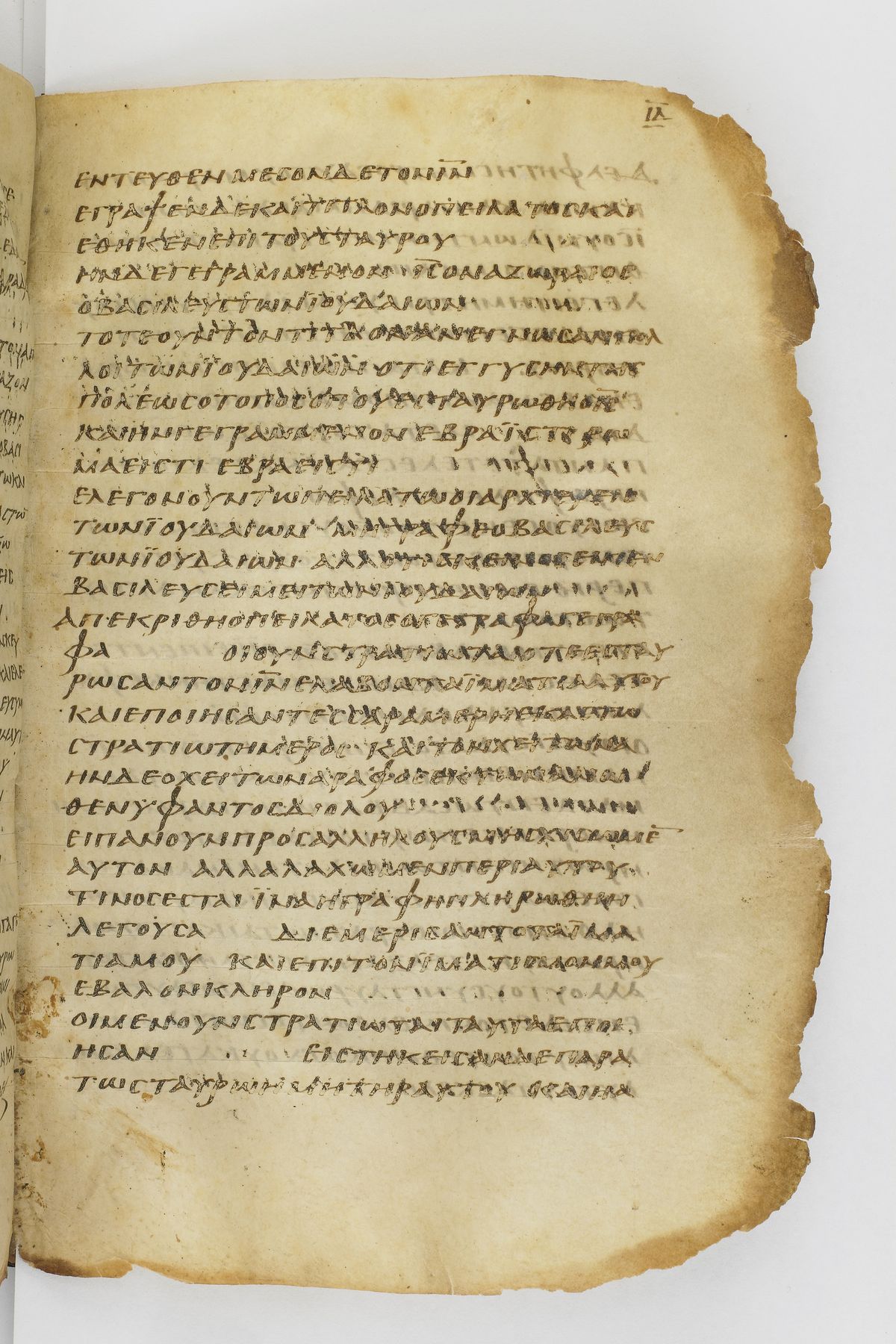
Where on the image
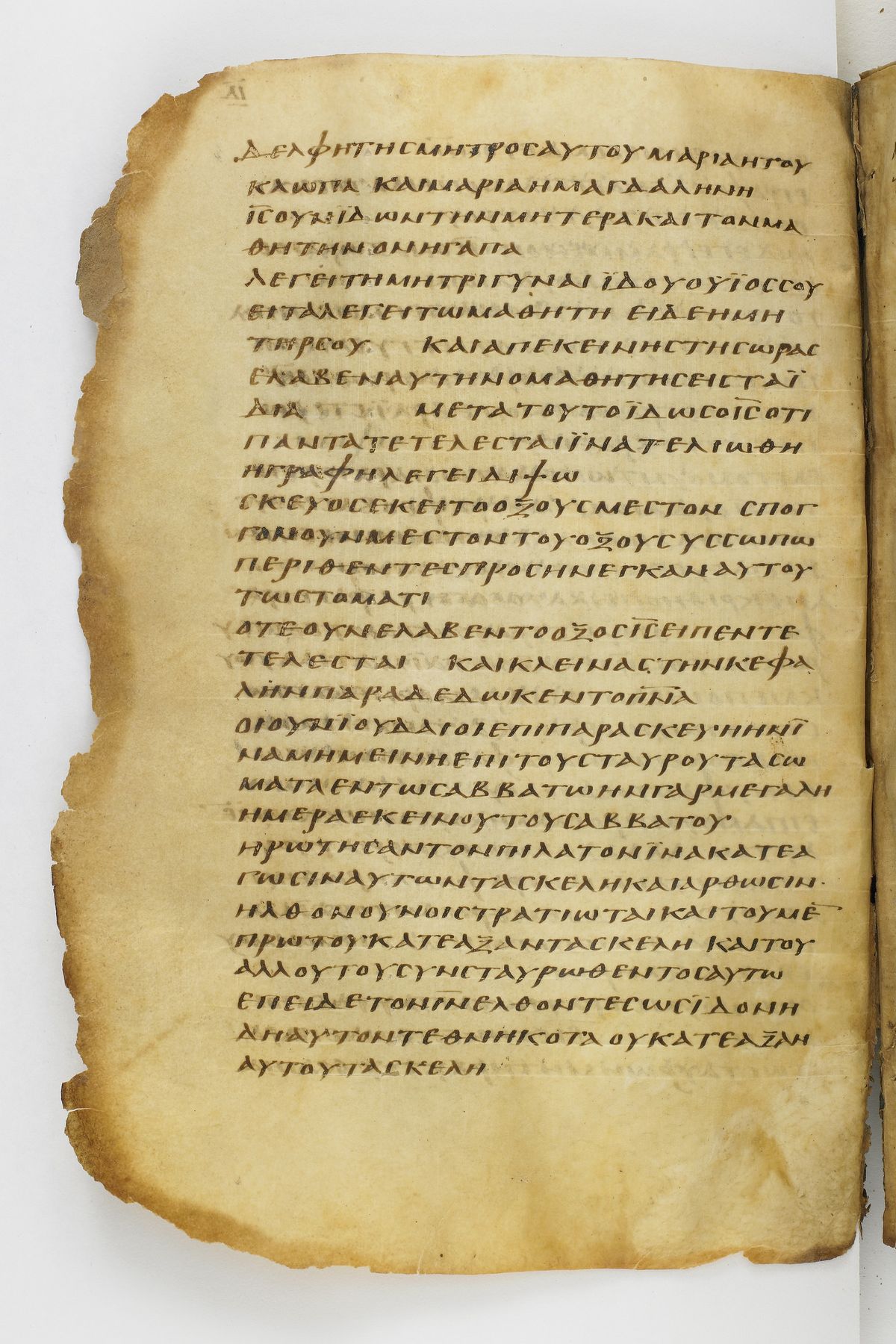
Page from the IGNTP transcription: verses 19-25 on CSNTM GA_032_0185; verse 25 continues on fol. 93v, CSNTM GA_032_0186 (which begins 'δελφη της μητρος').
19εγραψεν δε και τιτλον ο πειλατος και εθηκεν επι του σταυρου ην δε γεγραμμενον ις ο ναζωραιος ο βασιλευς των ιουδαιων 20τοτε ουν τον τιτλον ανεγνωσαν πολλοι των ιουδαιων οτι εγγυς ην της πολεως ο τοπος οπου εσταυρωθη ο ις και ην γεγραμμενον εβραιστι ρωμαειστι εβραειστι 21ελεγον ουν τω πειλατω οι αρχιερεις των ιουδαιων μη γραφε ο βασιλευς των ιουδαιων αλλ οτι εκεινος ειπεν βασιλευς ειμει των ιουδαιων 22Απεκριθη ο πειλατος ο γεγραφα γεγραφα 23οι ουν στρατιωται οτε εσταυρωσαν τον ιν ελαβον τα ιματια αυτου και εποιησαν τεσσαρα μερη εκαστω στρατιωτη μερος και τον χειτωνα ην δε ο χειτων αραφος εκ των ανωθεν υφαντος δι ολου 24ειπαν ουν προς αλληλους μη σχισωμε¯ αυτον αλλα λαχωμεν περι αυτου τινος εσται ινα η γραφη πληρωθη η λεγουσα διεμερισαντο τα ιματια μου και επι τον ιματισμον μου εβαλον κληρον οι μεν ουν στρατιωται ταυτα εποιησαν 25ειστηκεισαν δε παρα τω σταυρω η μητηρ αυτου και η αδελφη της μητρος αυτου μαρια η του κλωπα και μαρια η μαγδαληνη
Compare: Tischendorf 8th edition (1869)
19ἔγραψεν δὲ καὶ τίτλον ὁ Πειλᾶτος καὶ ἔθηκεν ἐπὶ τοῦ σταυροῦ· ἦν δὲ γεγραμμένον, Ἰησοῦς ὁ Ναζωραῖος ὁ βασιλεὺς τῶν Ἰουδαίων. 20τοῦτον οὖν τὸν τίτλον πολλοὶ ἀνέγνωσαν τῶν Ἰουδαίων, ὅτι ἐγγὺς ἦν ὁ τόπος τῆς πόλεως ὅπου ἐσταυρώθη ὁ Ἰησοῦς· καὶ ἦν γεγραμμένον Ἑβραϊστί, Ῥωμαϊστί, Ἑλληνιστί. 21ἔλεγον οὖν τῷ Πειλάτῳ οἱ ἀρχιερεῖς τῶν Ἰουδαίων· μὴ γράφε· ὁ βασιλεὺς τῶν Ἰουδαίων, ἀλλ’ ὅτι ἐκεῖνος εἶπεν· βασιλεύς εἰμι τῶν Ἰουδαίων. 22ἀπεκρίθη ὁ Πειλᾶτος· ὃ γέγραφα, γέγραφα. 23Οἱ οὖν στρατιῶται, ὅτε ἐσταύρωσαν τὸν Ἰησοῦν, ἔλαβον τὰ ἱμάτια αὐτοῦ, καὶ ἐποίησαν τέσσαρα μέρη, ἑκάστῳ στρατιώτῃ μέρος, καὶ τὸν χιτῶνα. ἦν δὲ ὁ χιτὼν ἄραφος, ἐκ τῶν ἄνωθεν ὑφαντὸς δι’ ὅλου. 24εἶπαν οὖν πρὸς ἀλλήλους· μὴ σχίσωμεν αὐτόν, ἀλλὰ λάχωμεν περὶ αὐτοῦ, τίνος ἔσται. ἵνα ἡ γραφὴ πληρωθῇ· διεμερίσαντο τὰ ἱμάτιά μου ἑαυτοῖς καὶ ἐπὶ τὸν ἱματισμόν μου ἔβαλον κλῆρον. Οἱ μὲν οὖν στρατιῶται ταῦτα ἐποίησαν. 25εἱστήκεισαν δὲ παρὰ τῷ σταυρῷ τοῦ Ἰησοῦ ἡ μήτηρ αὐτοῦ καὶ ἡ ἀδελφὴ τῆς μητρὸς αὐτοῦ, Μαρίαμ ἡ τοῦ Κλωπᾶ καὶ Μαρίαμ ἡ Μαγδαληνή.
19And Pilate wrote a title, and put it on the cross. And the writing was, JESUS OF NAZARETH THE KING OF THE JEWS. 20This title then read many of the Jews: for the place where Jesus was crucified was nigh to the city: and it was written in Hebrew, and Greek, and Latin. 21Then said the chief priests of the Jews to Pilate, Write not, The King of the Jews; but that he said, I am King of the Jews. 22Pilate answered, What I have written I have written. 23Then the soldiers, when they had crucified Jesus, took his garments, and made four parts, to every soldier a part; and also his coat: now the coat was without seam, woven from the top throughout. 24They said therefore among themselves, Let us not rend it, but cast lots for it, whose it shall be: that the scripture might be fulfilled, which saith, They parted my raiment among them, and for my vesture they did cast lots. These things therefore the soldiers did. 25Now there stood by the cross of Jesus his mother, and his mother’s sister, Mary the wife of Cleophas, and Mary Magdalene.
Where on the image
Page from the IGNTP transcription: verses 26-33 on fol. 93v, CSNTM GA_032_0186.
26ις ουν ιδων την μητερα και τον μαθητην ον ηγαπα λεγει τη μητρι γυναι ιδου ο υιος σου 27ειτα λεγει τω μαθητη ειδε η μητηρ σου και απ εκεινης της ωρας ελαβεν αυτην ο μαθητης εις τα ιδια 28μετα τουτο ιδως ο ις οτι παντα τετελεσται ινα τελιωθη η γραφη λεγει διψω 29σκευος εκειτο οξους μεστον σπογγον ουν μεστον του οξους υσσωπω περιθεντες προσηνεγκαν αυτου τω στοματι 30οτε ουν ελαβεν το οξος ις ειπεν τετελεσται και κλεινας την κεφαλην παραδεδωκεν το πνα 31οι ουν ιουδαιοι επι παρασκευη ην ινα μη μεινη επι του σταυρου τα σωματα εν τω σαββατω ην γαρ μεγαλη ημερα εκεινου του σαββατου ηρωτησαν τον πιλατον ινα κατεαγωσιν αυτων τα σκελη και αρθωσιν 32ηλθον ουν οι στρατιωται και του με¯ πρωτου κατεαξαν τα σκελη και του αλλου του συνσταυρωθεντος αυτω 33επει δε τον ιν ελθοντες ως ιδον ηδη αυτον τεθνηκοτα ου κατεαξαν αυτου τα σκελη
Compare: Tischendorf 8th edition (1869)
26Ἰησοῦς οὖν ἰδὼν τὴν μητέρα καὶ τὸν μαθητὴν παρεστῶτα ὃν ἠγάπα, λέγει τῇ μητρί· γύναι, ἴδε ὁ υἱός σου. 27εἶτα λέγει τῷ μαθητῇ· ἴδε ἡ μήτηρ σου. καὶ ἀπ’ ἐκείνης τῆς ὥρας ἔλαβεν αὐτὴν ὁ μαθητὴς εἰς τὰ ἴδια. 28Μετὰ τοῦτο εἰδὼς ὁ Ἰησοῦς ὅτι ἤδη πάντα τετέλεσται, ἵνα τελειωθῇ ἡ γραφή, λέγει· διψῶ. 29σκεῦος ἔκειτο ὄξους μεστόν· σπόγγον οὖν μεστὸν ὄξους ὑσσώπῳ περιθέντες προσήνεγκαν αὐτοῦ τῷ στόματι. 30ὅτε οὖν ἔλαβεν τὸ ὄξος εἶπεν· τετέλεσται, καὶ κλίνας τὴν κεφαλὴν παρέδωκεν τὸ πνεῦμα. 31Οἱ οὖν Ἰουδαῖοι, ἐπεὶ παρασκευὴ ἦν, ἵνα μὴ μείνῃ ἐπὶ τοῦ σταυροῦ τὰ σώματα ἐν τῷ σαββάτῳ, ἦν γὰρ μεγάλη ἡ ἡμέρα ἐκείνου τοῦ σαββάτου, ἠρώτησαν τὸν Πειλᾶτον ἵνα κατεαγῶσιν αὐτῶν τὰ σκέλη καὶ ἀρθῶσιν. 32ἦλθον οὖν οἱ στρατιῶται, καὶ τοῦ μὲν πρώτου κατέαξαν τὰ σκέλη καὶ τοῦ ἄλλου τοῦ συνσταυρωθέντος αὐτῷ· 33ἐπὶ δὲ τὸν Ἰησοῦν ἐλθόντες, ὡς εἶδον ἤδη αὐτὸν τεθνηκότα, οὐ κατέαξαν αὐτοῦ τὰ σκέλη,
26When Jesus therefore saw his mother, and the disciple standing by, whom he loved, he saith unto his mother, Woman, behold thy son! 27Then saith he to the disciple, Behold thy mother! And from that hour that disciple took her unto his own home. 28After this, Jesus knowing that all things were now accomplished, that the scripture might be fulfilled, saith, I thirst. 29Now there was set a vessel full of vinegar: and they filled a spunge with vinegar, and put it upon hyssop, and put it to his mouth. 30When Jesus therefore had received the vinegar, he said, It is finished: and he bowed his head, and gave up the ghost. 31The Jews therefore, because it was the preparation, that the bodies should not remain upon the cross on the sabbath day, (for that sabbath day was an high day,) besought Pilate that their legs might be broken, and that they might be taken away. 32Then came the soldiers, and brake the legs of the first, and of the other which was crucified with him. 33But when they came to Jesus, and saw that he was dead already, they brake not his legs:
Where on the image
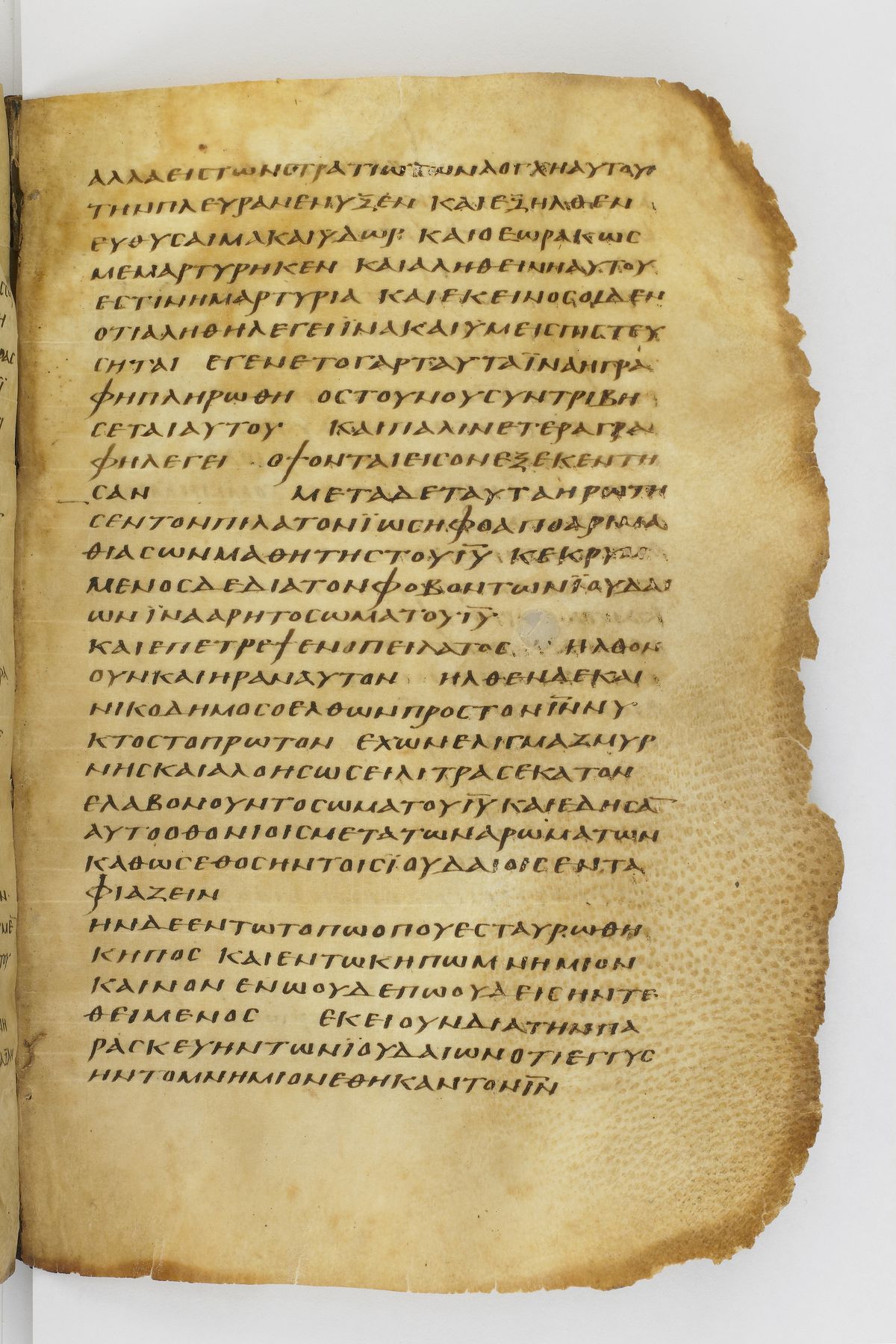
Page from the IGNTP transcription: verses 34-42 on fol. 94r, CSNTM GA_032_0187.
34αλλα εις των στρατιωτων λογχη αυτου την πλευραν ενυξεν και εξηλθεν ευθυς αιμα και υδωρ 35και ο εωρακως μεμαρτυρηκεν και αληθεινη αυτου εστιν η μαρτυρια και εκεινος οιδεν οτι αληθη λεγει ινα και υμεις πιστευσηται 36εγενετο γαρ ταυτα ινα η γραφη πληρωθη οστουν ου συντριβησεται αυτου 37και παλιν ετερα γραφη λεγει οψονται εις ον εξεκεντησαν 38μετα δε ταυτα ηρωτησεν τον πιλατον ιωσηφ ο απο αριμαθιας ων μαθητης του ιυ κεκρυμμενος δε δια τον φοβον των ιουδαιων ινα αρη το σωμα του ιυ και επετρεψεν ο πειλατος ηλθον ουν και ηραν αυτον 39ηλθεν δε και νικοδημος ο ελθων προς τον ιν νυκτος το πρωτον εχων ελιγμα ζμυρνης και αλοης ωσει λιτρας εκατον 40ελαβον ουν το σωμα του ιυ και εδησα¯ αυτο οθονιοις μετα των αρωματων καθως εθος ην τοις ιουδαιοις ενταφιαζειν 41ην δε εν τω τοπω οπου εσταυρωθη κηπος και εν τω κηπω μνημιον καινον εν ω ουδεπω ουδεις ην τεθειμενος 42εκει ουν δια την παρασκευην των ιουδαιων οτι εγγυς ην το μνημιον εθηκαν τον ιν
Compare: Tischendorf 8th edition (1869)
34ἀλλ’ εἷς τῶν στρατιωτῶν λόγχῃ αὐτοῦ τὴν πλευρὰν ἔνυξεν, καὶ ἐξῆλθεν εὐθὺς αἷμα καὶ ὕδωρ. 35καὶ ὁ ἑωρακὼς μεμαρτύρηκεν, καὶ ἀληθινὴ αὐτοῦ ἐστιν ἡ μαρτυρία, κἀκεῖνος οἶδεν ὅτι ἀληθῆ λέγει, ἵνα καὶ ὑμεῖς πιστεύητε. 36ἐγένετο γὰρ ταῦτα ἵνα ἡ γραφὴ πληρωθῇ· ὀστοῦν οὐ συντριβήσεται αὐτοῦ. 37καὶ πάλιν ἑτέρα γραφὴ λέγει· ὄψονται εἰς ὃν ἐξεκέντησαν. 38Μετὰ δὲ ταῦτα ἠρώτησεν τὸν Πειλᾶτον Ἰωσὴφ ὁ ἀπὸ Ἀριμαθαίας, ὢν μαθητὴς τοῦ Ἰησοῦ κεκρυμμένος δὲ διὰ τὸν φόβον τῶν Ἰουδαίων, ἵνα ἄρῃ τὸ σῶμα τοῦ Ἰησοῦ· καὶ ἐπέτρεψεν ὁ Πειλᾶτος. ἦλθεν οὖν καὶ ἦραν αὐτόν. 39ἦλθεν δὲ καὶ Νικόδημος, ὁ ἐλθὼν πρὸς αὐτὸν νυκτὸς τὸ πρῶτον, φέρων μίγμα σμύρνης καὶ ἀλόης ὡς λίτρας ἑκατόν. 40ἔλαβον οὖν τὸ σῶμα τοῦ Ἰησοῦ καὶ ἔδησαν αὐτὸ ὀθονίοις μετὰ τῶν ἀρωμάτων, καθὼς ἔθος ἐστὶν τοῖς Ἰουδαίοις ἐνταφιάζειν. 41ἦν δὲ ἐν τῷ τόπῳ ὅπου ἐσταυρώθη κῆπος, καὶ ἐν τῷ κήπῳ μνημεῖον καινόν, ἐν ᾧ οὐδέπω οὐδεὶς ἐτέθη· 42ἐκεῖ οὖν διὰ τὴν παρασκευὴν τῶν Ἰουδαίων, ὅτι ἐγγὺς ἦν τὸ μνημεῖον, ἔθηκαν τὸν Ἰησοῦν.
34But one of the soldiers with a spear pierced his side, and forthwith came there out blood and water. 35And he that saw it bare record, and his record is true: and he knoweth that he saith true, that ye might believe. 36For these things were done, that the scripture should be fulfilled, A bone of him shall not be broken. 37And again another scripture saith, They shall look on him whom they pierced. 38And after this Joseph of Arimathaea, being a disciple of Jesus, but secretly for fear of the Jews, besought Pilate that he might take away the body of Jesus: and Pilate gave him leave. He came therefore, and took the body of Jesus. 39And there came also Nicodemus, which at the first came to Jesus by night, and brought a mixture of myrrh and aloes, about an hundred pound weight. 40Then took they the body of Jesus, and wound it in linen clothes with the spices, as the manner of the Jews is to bury. 41Now in the place where he was crucified there was a garden; and in the garden a new sepulchre, wherein was never man yet laid. 42There laid they Jesus therefore because of the Jews’ preparation day; for the sepulchre was nigh at hand.
Cite
Sources
- Source: Codex Washingtonianus page images + IGNTP transcription (CC BY 4.0) + Tischendorf 8th edition + KJV (holding institution)
- Critical edition: Codex Washingtonianus transcription, IGNTP (CC BY 4.0); Tischendorf 8th edition for comparison
← previous · → next · v cycle view · l back to library