Mark, Chapter 2 (Codex Washingtonianus)
Introduction
Mark 2 from Codex Washingtonianus (the Freer Gospels, Gregory-Aland 032, Freer Gallery of Art F1906.274), a parchment codex of the four Gospels written in Egypt in the late 4th or early 5th century and bought by Charles Lang Freer from the dealer Ali Arabi at Giza in 1906. It is one of the oldest nearly complete Gospel books in existence. The Gospels stand in the so-called Western order, Matthew, John, Luke, Mark, and the text is famously block-mixed: the copyist drew on several exemplars of different textual character, so the text type changes in blocks within a single Gospel. After Mark 16:14 the codex carries the Freer Logion, a saying found in no other manuscript. Two passages are lost to damage: Mark 15:13-37 and John 14:26-16:6.
- Scan: each section is shown with the actual page of the codex that carries those verses, from the Freer Gallery's own photographs of F1906.274 served by the Smithsonian IIIF service (ids.si.edu). Which page holds which verse comes from the verse index of the Center for the Study of New Testament Manuscripts (CSNTM), whose photographs of the codex are the same shots; every CSNTM page was matched to its Smithsonian image by pixel comparison before use. Where a verse begins on one page and ends on the next, both pages are listed. For this chapter the page of each verse is taken from the transcription itself, which records where every page begins; CSNTM's index confirms which photograph shows that page.
- Greek: the manuscript's own text, from a diplomatic transcription (see Greek text below), with Tischendorf's 8th critical edition (1869) for comparison.
- English: the King James Version (1611, public domain), verbatim from bible-api.com. The KJV translates the later Byzantine text, so it will not always match the Greek shown or the reading of the codex.
Greek text: a diplomatic transcription of Codex Washingtonianus made by the Institut für Neutestamentliche Textforschung (INTF), Münster, for the New Testament Virtual Manuscript Room (NTVMR), published under a Creative Commons Attribution 4.0 licence. It gives the letters as the first scribe wrote them: no accents or breathings, the scribe's own spelling, and the sacred names in their contracted form (θς for θεος, ις for ιησους, κς for κυριος; the overline is not reproduced). Corrections by later hands are not shown. Letters in square brackets are not legible on the page and were restored by the transcribers, a dot under a letter marks an uncertain reading, and [...] marks text lost to damage. Beneath each section, for comparison, is Tischendorf's 8th critical edition (1869). Where the two differ, the transcription is what the manuscript says. Each section is shown with the page on which the transcription places its verses.
How was this verified? (Provenance)
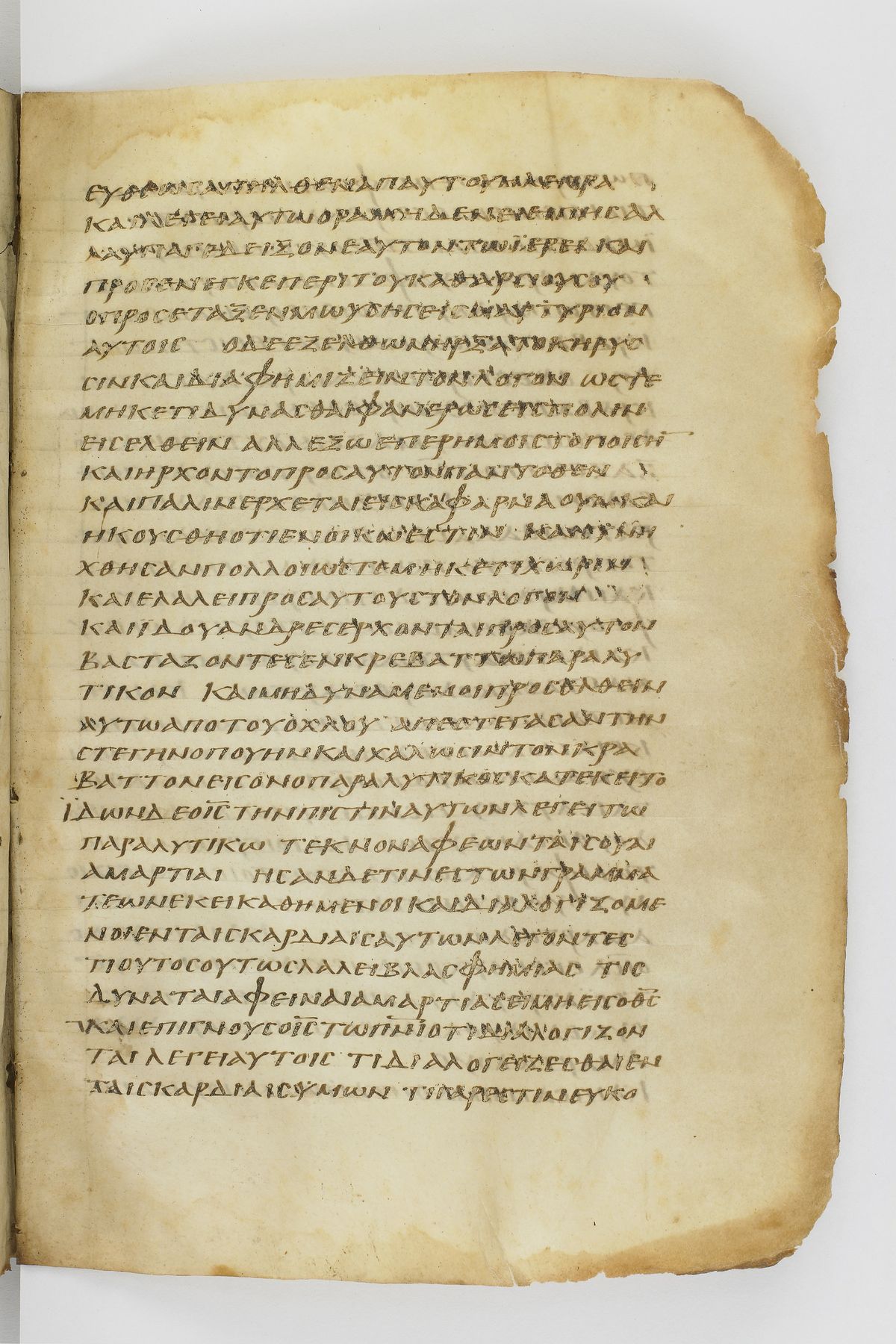
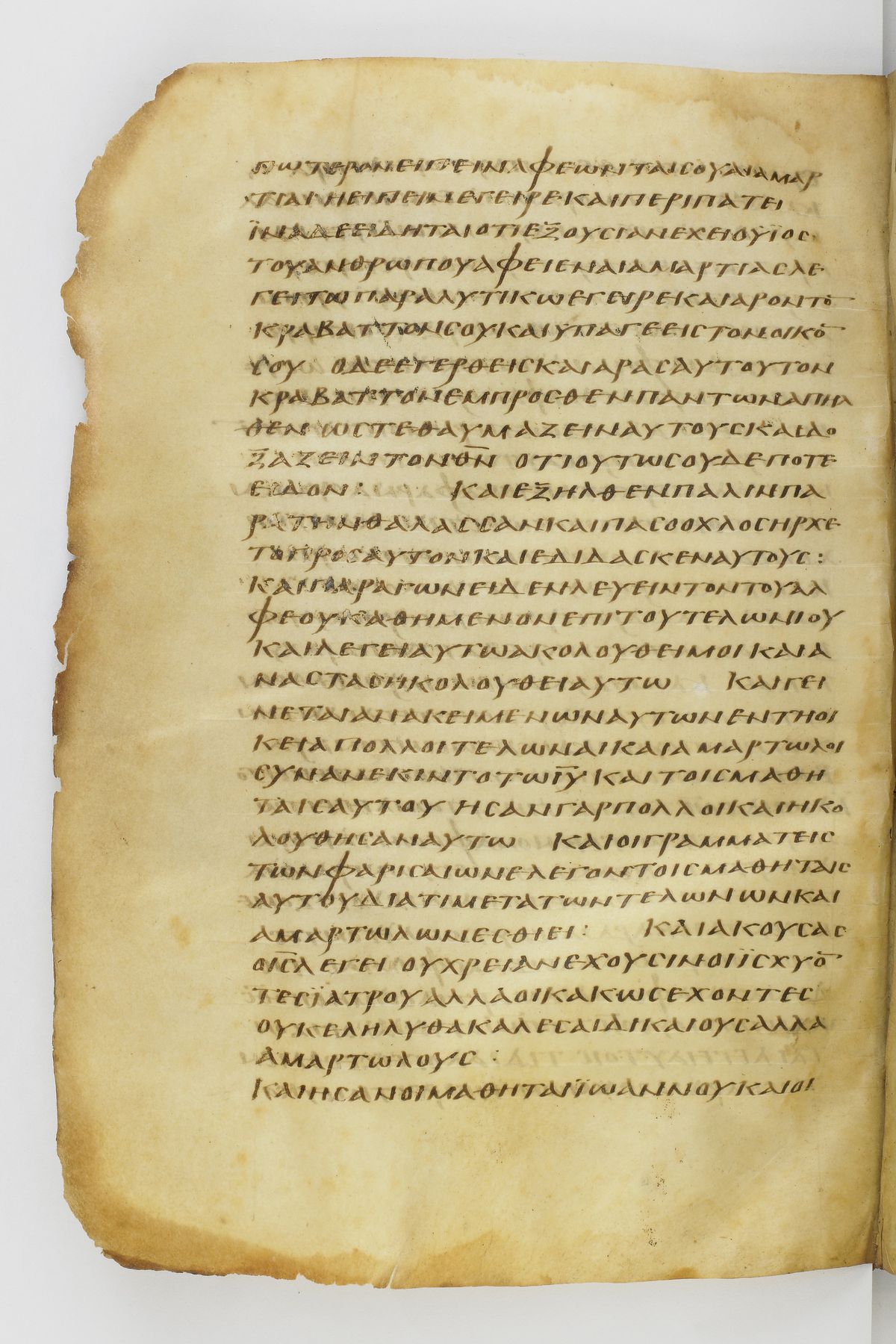
Where on the image
Page from the NTVMR transcription (docID 20032): verses 1-9 on CSNTM GA_032_0317; verse 9 continues on CSNTM GA_032_0318 (which begins 'πωτερον ειπειν αφεωνται').
1και παλιν ερχεται εις καφαρναουμ και ηκουσθη οτι εν οικω εστιν 2και συνηχθησαν πολλοι ωστε μηκετι χωριν και ελαλει προς αυτους τον λογον 3και ιδου ανδρες ερχονται προς αυτον βασταζοντες εν κρεβαττω παραλυτικον · 4και μη δυναμενοι προσελθειν αυτω απο του οχλου · απεστεγασαν την στεγην οπου ην και χαλωσιν τον κραβαττον εις ον ο παραλυτικος κατεκειτο 5ιδων δε ο ις την πιστιν αυτων λεγει τω παραλυτικω τεκνον αφεωνται σου αι αμαρτιαι 6ησαν δε τινες των γραμματεων εκει καθημενοι και διαλογιζομενοι εν ταις καρδιαις αυτων λεγοντες 7τι ουτος ουτως λαλει βλασφημιας τις δυναται αφειναι αμαρτιας ει μη εις ο θς 8και επιγνους ο ις τω πνι οτι διαλογιζονται λεγει αυτοις τι διαλογειζεσθαι εν ταις καρδιαις υμων 9τι γαρ εστιν ευκοπωτερον ειπειν αφεωνται σου αι αμαρτιαι η ειπειν εγειρε και περιπατει
Compare: Tischendorf 8th edition (1869)
1Καὶ εἰσελθὼν πάλιν εἰς Καφαρναοὺμ δι’ ἡμερῶν ἠκούσθη ὅτι ἐν οἴκῳ ἐστίν. 2καὶ συνήχθησαν πολλοὶ, ὥστε μηκέτι χωρεῖν μηδὲ τὰ πρὸς τὴν θύραν, καὶ ἐλάλει αὐτοῖς τὸν λόγον. 3καὶ ἔρχονται φέροντες πρὸς αὐτὸν παραλυτικὸν αἰρόμενον ὑπὸ τεσσάρων. 4καὶ μὴ δυνάμενοι προσενέγκαι αὐτῷ διὰ τὸν ὄχλον ἀπεστέγασαν τὴν στέγην ὅπου ἦν, καὶ ἐξορύξαντες χαλῶσι τὸν κράβαττον ὅπου ὁ παραλυτικὸς κατέκειτο. 5καὶ ἰδὼν ὁ Ἰησοῦς τὴν πίστιν αὐτῶν λέγει τῷ παραλυτικῷ· τέκνον, ἀφίενταί σου αἱ ἁμαρτίαι. 6ἦσαν δέ τινες τῶν γραμματέων ἐκεῖ καθήμενοι καὶ διαλογιζόμενοι ἐν ταῖς καρδίαις αὐτῶν· 7τί οὗτος οὕτως λαλεῖ; βλασφημεῖ· τίς δύναται ἀφιέναι ἁμαρτίας εἰ μὴ εἷς ὁ θεός; 8καὶ εὐθὺς ἐπιγνοὺς ὁ Ἰησοῦς τῷ πνεύματι αὐτοῦ ὅτι οὕτως διαλογίζονται ἐν ἑαυτοῖς λέγει αὐτοῖς· τί ταῦτα διαλογίζεσθε ἐν ταῖς καρδίαις ὑμῶν; 9τί ἐστιν εὐκοπώτερον, εἰπεῖν τῷ παραλυτικῷ· ἀφίενταί σου αἱ ἁμαρτίαι, ἢ εἰπεῖν· ἔγειρε καὶ ἆρον τὸν κράβαττόν σου καὶ ὕπαγε;
1And again he entered into Capernaum, after some days; and it was noised that he was in the house. 2And straightway many were gathered together, insomuch that there was no room to receive them, no, not so much as about the door: and he preached the word unto them. 3And they come unto him, bringing one sick of the palsy, which was borne of four. 4And when they could not come nigh unto him for the press, they uncovered the roof where he was: and when they had broken it up, they let down the bed wherein the sick of the palsy lay. 5When Jesus saw their faith, he said unto the sick of the palsy, Son, thy sins be forgiven thee. 6But there were certain of the scribes sitting there, and reasoning in their hearts, 7Why doth this man thus speak blasphemies? who can forgive sins but God only? 8And immediately when Jesus perceived in his spirit that they so reasoned within themselves, he said unto them, Why reason ye these things in your hearts? 9Whether is it easier to say to the sick of the palsy, Thy sins be forgiven thee; or to say, Arise, and take up thy bed, and walk?
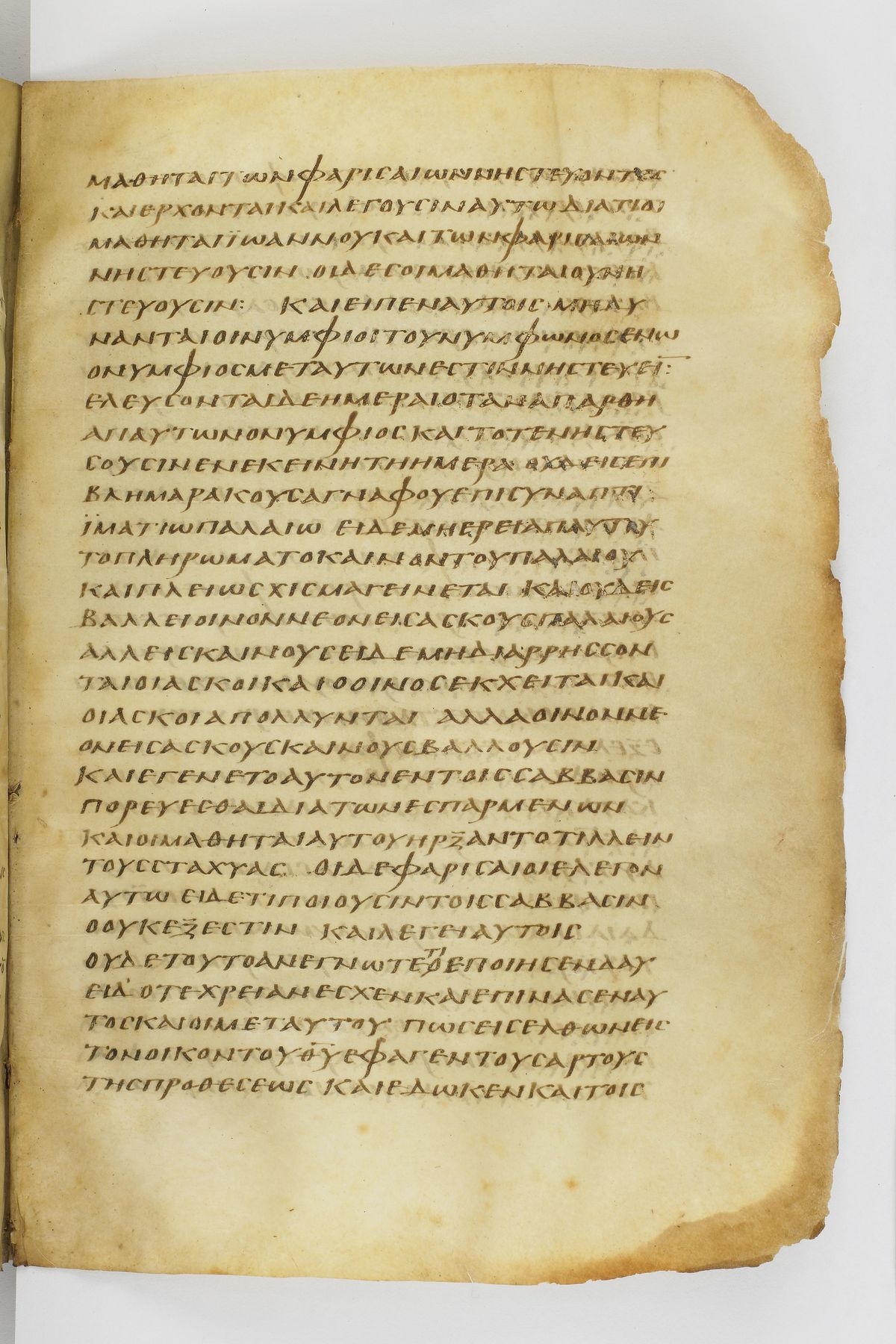
Where on the image
Page from the NTVMR transcription (docID 20032): verses 10-18 on CSNTM GA_032_0318; verse 18 continues on CSNTM GA_032_0319 (which begins 'μαθηται των φαρισαιων').
10ινα δε ειδηται οτι εξουσιαν εχει ο υιος του ανθρωπου αφειεναι αμαρτιας λεγει τω παραλυτικω 11εγειρε και αρον τον κραβαττον σου και υπαγε εις τον οικον σου · 12ο δε εγερθεις και αρας αυτου τον κραβαττον εμπροσθεν παντων απηλθεν ωστε θαυμαζειν αυτους και δοξαζειν τον θν οτι ουτως ουδεποτε ειδον : 13και εξηλθεν παλιν παρα την θαλασσαν και πας ο οχλος ηρχετο προς αυτον και εδιδασκεν αυτους : 14και παραγων ειδεν λευειν τον του αλφεου καθημενον επι του τελωνιου και λεγει αυτω ακολουθει μοι και αναστας ηκολουθει αυτω 15και γεινεται ανακειμενων αυτων εν τη οικεια πολλοι τελωναι και αμαρτωλοι συνανεκιντο τω ιυ και τοις μαθηταις αυτου ησαν γαρ πολλοι και ηκολουθησαν αυτω 16και οι γραμματεις των φαρισαιων ελεγον τοις μαθηταις αυτου δια τι μετα των τελωνων και αμαρτωλων εσθιει : 17και ακουσας ο ις λεγει ου χρειαν εχουσιν οι ισχυοντες ιατρου αλλα οι κακως εχοντες ουκ εληλυθα καλεσαι δικαιους αλλα αμαρτωλους : 18και ησαν οι μαθηται ιωαννου και οι μαθηται των φαρισαιων νηστευοντες και ερχονται και λεγουσιν αυτω δια τι οι μαθηται ιωαννου και των φαρισαιων νηστευουσιν οι δε σοι μαθηται ου νηστευουσιν :
Compare: Tischendorf 8th edition (1869)
10ἵνα δὲ εἰδῆτε ὅτι ἐξουσίαν ἔχει ὁ υἱὸς τοῦ ἀνθρώπου ἐπὶ τῆς γῆς ἀφιέναι ἁμαρτίας, λέγει τῷ παραλυτικῷ· 11σοὶ λέγω, ἔγειρε ἆρον τὸν κράβαττόν σου καὶ ὕπαγε εἰς τὸν οἶκόν σου. 12καὶ ἠγέρθη καὶ εὐθὺς ἄρας τὸν κράβαττον ἐξῆλθεν ἔμπροσθεν πάντων, ὥστε ἐξίστασθαι πάντας καὶ δοξάζειν τὸν θεὸν λέγοντας ὅτι οὕτως οὐδέποτε εἴδαμεν. 13Καὶ ἐξῆλθεν πάλιν εἴς τὴν θάλασσαν· καὶ πᾶς ὁ ὄχλος ἤρχετο πρὸς αὐτόν, καὶ ἐδίδασκεν αὐτούς. 14καὶ παράγων εἶδεν Λευεὶν τὸν τοῦ Ἁλφαίου καθήμενον ἐπὶ τὸ τελώνιον, καὶ λέγει αὐτῷ· ἀκολούθει μοι. καὶ ἀναστὰς ἠκολούθησεν αὐτῷ. 15καὶ γίνεται κατακεῖσθαι αὐτὸν ἐν τῇ οἰκίᾳ αὐτοῦ, καὶ πολλοὶ τελῶναι καὶ ἁμαρτωλοὶ συνανέκειντο τῷ Ἰησοῦ καὶ τοῖς μαθηταῖς αὐτοῦ· ἦσαν γὰρ πολλοὶ καὶ ἠκολούθουν αὐτῷ 16καὶ γραμματεῖς τῶν Φαρισαίων. καὶ ἰδόντες ὅτι ἤσθιεν μετὰ τῶν τελωνῶν καὶ ἁμαρτωλῶν, ἔλεγον τοῖς μαθηταῖς αὐτοῦ· ὅτι μετὰ τῶν τελωνῶν καὶ ἁμαρτωλῶν ἐσθίει καὶ πίνει; 17καὶ ἀκούσας ὁ Ἰησοῦς λέγει αὐτοῖς· οὐ χρείαν ἔχουσιν οἱ ἰσχύοντες ἰατροῦ ἀλλ’ οἱ κακῶς ἔχοντες· οὐκ ἦλθον καλέσαι δικαίους ἀλλὰ ἁμαρτωλούς. 18Καὶ ἦσαν οἱ μαθηταὶ Ἰωάννου καὶ οἱ Φαρισαῖοι νηστεύοντες. καὶ ἔρχονται καὶ λέγουσιν αὐτῷ· διατί οἱ μαθηταὶ Ἰωάννου καὶ οἱ μαθηταὶ τῶν Φαρισαίων νηστεύουσιν, οἱ δὲ σοὶ μαθηταὶ οὐ νηστεύουσιν;
10But that ye may know that the Son of man hath power on earth to forgive sins, (he saith to the sick of the palsy,) 11I say unto thee, Arise, and take up thy bed, and go thy way into thine house. 12And immediately he arose, took up the bed, and went forth before them all; insomuch that they were all amazed, and glorified God, saying, We never saw it on this fashion. 13And he went forth again by the sea side; and all the multitude resorted unto him, and he taught them. 14And as he passed by, he saw Levi the son of Alphaeus sitting at the receipt of custom, and said unto him, Follow me. And he arose and followed him. 15And it came to pass, that, as Jesus sat at meat in his house, many publicans and sinners sat also together with Jesus and his disciples: for there were many, and they followed him. 16And when the scribes and Pharisees saw him eat with publicans and sinners, they said unto his disciples, How is it that he eateth and drinketh with publicans and sinners? 17When Jesus heard it, he saith unto them, They that are whole have no need of the physician, but they that are sick: I came not to call the righteous, but sinners to repentance. 18And the disciples of John and of the Pharisees used to fast: and they come and say unto him, Why do the disciples of John and of the Pharisees fast, but thy disciples fast not?
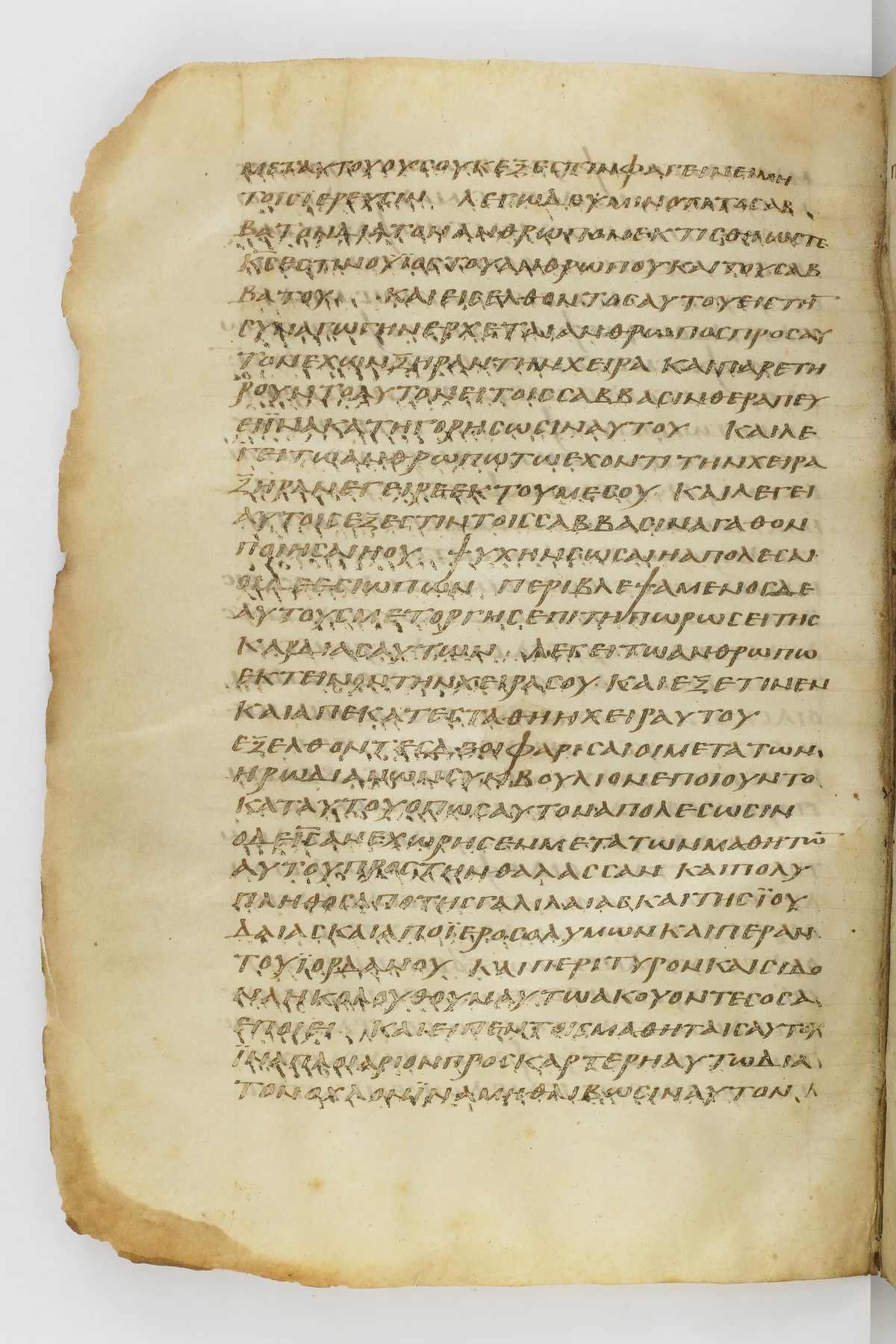
Where on the image
Page from the NTVMR transcription (docID 20032): verses 19-26 on CSNTM GA_032_0319; verse 26 continues on CSNTM GA_032_0320 (which begins 'μετ αυτου ους').
19και ειπεν αυτοις μη δυνανται οι νυμφιοι του νυμφωνος εν ω ο νυμφιος μετ αυτων εστιν νηστευειν : 20ελευσονται δε ημεραι οταν απαρθη απ αυτων ο νυμφιος και τοτε νηστευσουσιν εν εκεινη τη ημερα · 21ουδεις επιβλημα ρακους αγναφου επισυναπτι ιματιω παλαιω ει δε μη ερει απ αυτου το πληρωμα το καινον του παλαιου και πλειω σχισμα γεινεται 22και ουδεις βαλλει οινον νεον εις ασκους παλαιους αλλ εις καινους ει δε μη διαρρησσονται οι ασκοι και ο οινος εκχειται και οι ασκοι απολλυνται αλλα οινον νεον εις ασκους καινους βαλλουσιν 23και εγενετο αυτον εν τοις σαββασιν πορευεσθαι δια των εσπαρμενων και οι μαθηται αυτου ηρξαντο τιλλειν τους σταχυας . 24οι δε φαρισαιοι ελεγον αυτω ειδε τι ποιουσιν τοις σαββασιν ο ουκ εξεστιν 25και λεγει αυτοις ουδε τουτο ανεγνωτε ο εποιησεν δαυειδ οτε χρειαν εσχεν και επινασεν αυτος και οι μετ αυτου 26πως εισελθων εις τον οικον του θυ εφαγεν τους αρτους της προθεσεως και εδωκεν και τοις μετ αυτου ους ουκ εξεστιν φαγειν ει μη τοις ιερευσιν
Compare: Tischendorf 8th edition (1869)
19καὶ εἶπεν αὐτοῖς ὁ Ἰησοῦς, μὴ δύνανται οἱ υἱοὶ τοῦ νυμφῶνος ἐν ᾧ ὁ νυμφίος μετ’ αὐτῶν ἐστιν νηστεύειν; ὅσον χρόνον ἔχουσιν τὸν νυμφίον μετ’ αὐτῶν, οὐ δύνανται νηστεύειν· 20ἐλεύσονται δὲ ἡμέραι ὅταν ἀπαρθῇ ἀπ’ αὐτῶν ὁ νυμφίος, καὶ τότε νηστεύσουσιν ἐν ἐκείνῃ τῇ ἡμέρᾳ. 21Οὐδεὶς ἐπίβλημα ῥάκους ἀγνάφου ἐπιράπτει ἐπὶ ἱμάτιον παλαιόν· εἰ δὲ μή, αἴρει τὸ πλήρωμα ἀπ’ αὐτοῦ τὸ καινὸν τοῦ παλαιοῦ, καὶ χεῖρον σχίσμα γίνεται. 22καὶ οὐδεὶς βάλλει οἶνον νέον εἰς ἀσκοὺς παλαιούς· εἰ δὲ μή, ῥήξει ὁ οἶνος τοὺς ἀσκούς, καὶ ὁ οἶνος ἀπόλλυται καὶ οἱ ἀσκοί. 23Καὶ ἐγένετο αὐτὸν ἐν τοῖς σάββασιν παραπορεύεσθαι διὰ τῶν σπορίμων, καὶ οἱ μαθηταὶ αὐτοῦ ἤρξαντο ὁδὸν ποιεῖν τίλλοντες τοὺς στάχυας. 24καὶ οἱ Φαρισαῖοι ἔλεγον αὐτῷ· ἴδε τί ποιοῦσιν τοῖς σάββασιν ὃ οὐκ ἔξεστιν; 25καὶ λέγει αὐτοῖς· οὐδέποτε ἀνέγνωτε τί ἐποίησεν Δαυείδ, ὅτε χρείαν ἔσχεν καὶ ἐπείνασεν αὐτὸς καὶ οἱ μετ’ αὐτοῦ; 26πῶς εἰσῆλθεν εἰς τὸν οἶκον τοῦ θεοῦ ἐπὶ Ἀβιαθὰρ ἀρχιερέως καὶ τοὺς ἄρτους τῆς προθέσεως ἔφαγεν, οὓς οὐκ ἔξεστιν φαγεῖν εἰ μὴ τοὺς ἱερεῖς, καὶ ἔδωκεν καὶ τοῖς σὺν αὐτῷ οὖσιν;
19And Jesus said unto them, Can the children of the bridechamber fast, while the bridegroom is with them? as long as they have the bridegroom with them, they cannot fast. 20But the days will come, when the bridegroom shall be taken away from them, and then shall they fast in those days. 21No man also seweth a piece of new cloth on an old garment: else the new piece that filled it up taketh away from the old, and the rent is made worse. 22And no man putteth new wine into old bottles: else the new wine doth burst the bottles, and the wine is spilled, and the bottles will be marred: but new wine must be put into new bottles. 23And it came to pass, that he went through the corn fields on the sabbath day; and his disciples began, as they went, to pluck the ears of corn. 24And the Pharisees said unto him, Behold, why do they on the sabbath day that which is not lawful? 25And he said unto them, Have ye never read what David did, when he had need, and was an hungred, he, and they that were with him? 26How he went into the house of God in the days of Abiathar the high priest, and did eat the shewbread, which is not lawful to eat but for the priests, and gave also to them which were with him?
Where on the image
Page from the NTVMR transcription (docID 20032): verses 27-28 on CSNTM GA_032_0320.
27λεγω δε υμιν οτι το σαββατον δια τον ανθρωπον εκτισθη 28ωστε κς εστιν ο υιος του ανθρωπου και του σαββατου
Compare: Tischendorf 8th edition (1869)
27καὶ ἔλεγεν αὐτοῖς· τὸ σάββατον διὰ τὸν ἄνθρωπον ἐγένετο καὶ οὐχ ὁ ἄνθρωπος διὰ τὸ σάββατον· 28ὥστε κύριός ἐστιν ὁ υἱὸς τοῦ ἀνθρώπου καὶ τοῦ σαββάτου.
27And he said unto them, The sabbath was made for man, and not man for the sabbath: 28Therefore the Son of man is Lord also of the sabbath.
Cite
Sources
- Source: Codex Washingtonianus page images + NTVMR transcription (CC BY 4.0) + Tischendorf 8th edition + KJV (holding institution)
- Critical edition: Codex Washingtonianus transcription, NTVMR (INTF Münster, CC BY 4.0); Tischendorf 8th edition for comparison
← previous · → next · v cycle view · l back to library