Luke, Chapter 8 (Codex Alexandrinus)
Introduction
Luke 8 from Codex Alexandrinus (GA 02), a fifth-century Greek Bible held by the British Library (Royal MS 1 D. VIII). In the New Testament it is the chief witness to the Byzantine text in the Gospels and to the Alexandrian text in the rest of the New Testament. Its New Testament volume lacks Matthew 1:1-25:5, John 6:50-8:52 and 2 Corinthians 4:13-12:6.
This entry meets the strict three-criteria standard of the Theosis Library:
- Manuscript scan: the actual page(s) of Codex Alexandrinus containing this passage (folios 50v, 51r, 51v), reproduced from the British Museum's 1909 photographic facsimile edited by F. G. Kenyon, as digitised by the Getty Research Institute for the Internet Archive. The facsimile prints the verse range beneath each plate; that printed range was read for every page used and agrees with the INTF's NTVMR verse-level page index (CC BY 4.0). The page for each section now comes from the NTVMR transcription itself, which records the page and column on which every verse is written.
- Original text: the manuscript's own text, from a diplomatic transcription (see Greek text below), with Tischendorf's 8th critical edition (1869) for comparison.
- English translation: the King James Version (1611), retrieved verbatim from the public-domain bible-api.com endpoint.
Greek text: a diplomatic transcription of Codex Alexandrinus made by the Institut für Neutestamentliche Textforschung (INTF), Münster, for the New Testament Virtual Manuscript Room (NTVMR), published under a Creative Commons Attribution 4.0 licence. It gives the letters as the first scribe wrote them: no accents or breathings, the scribe's own spelling, and the sacred names in their contracted form (θς for θεος, ις for ιησους, κς for κυριος; the overline is not reproduced). Corrections by later hands are not shown. Letters in square brackets are not legible on the page and were restored by the transcribers, a dot under a letter marks an uncertain reading, and [...] marks text lost to damage. Beneath each section, for comparison, is Tischendorf's 8th critical edition (1869). Where the two differ, the transcription is what the manuscript says. Each section is shown with the page on which the transcription places its verses.
How was this verified? (Provenance)
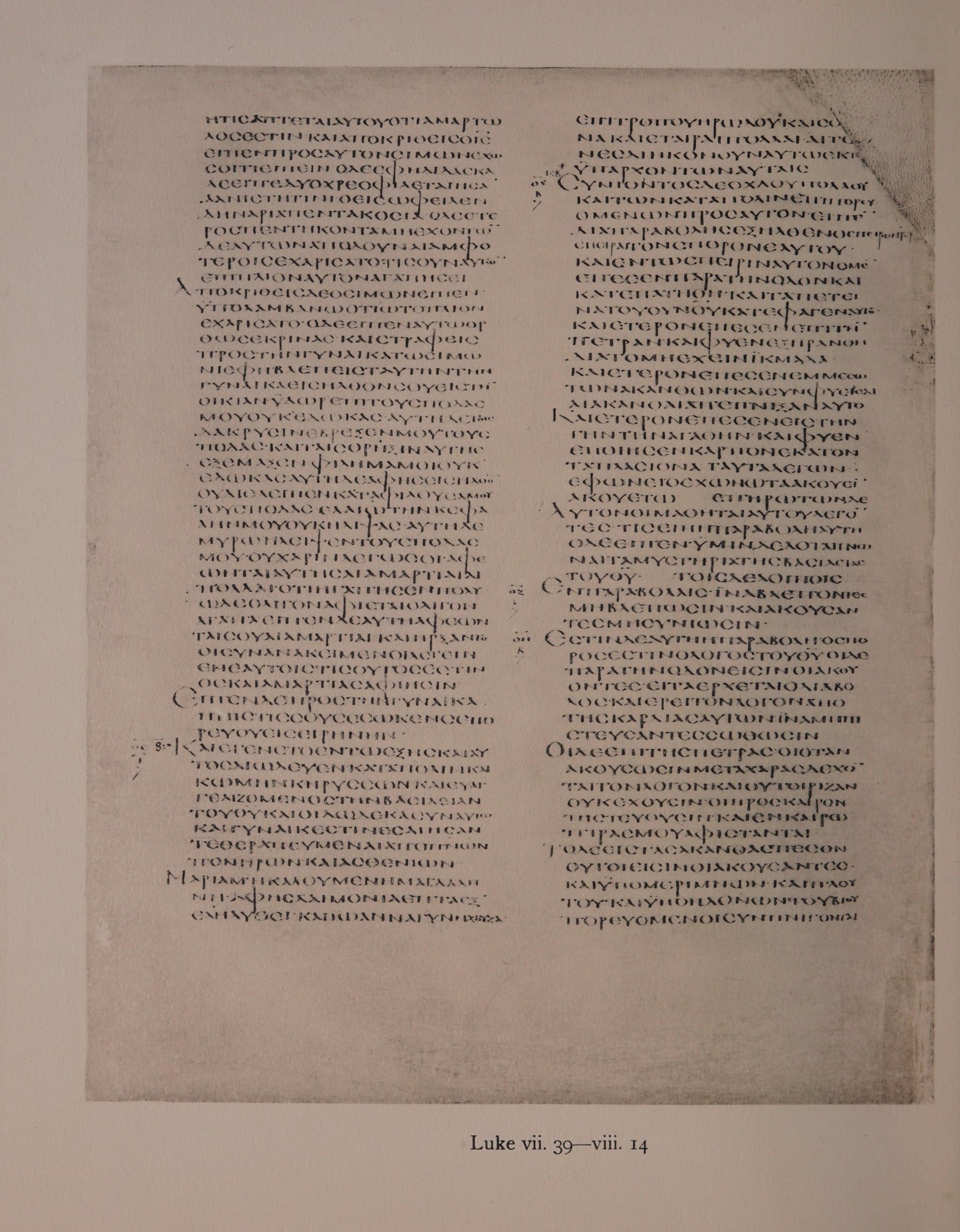
Where on the image
Page from the NTVMR transcription (docID 20002): verses 1-3 on fol. 50v (facsimile leaf 66), col. 1.
1και εγενετο εν τω εξης και αυτος διωδευεν · κατα πολιν και κωμην κηρυσσων και ευαγγελιζομενος την βασιλειαν του θυ · και οι δωδεκα συν αυτω · 2και γυναικες τινες αι ησαν τεθεραπευμεναι απο πνων πονηρων · και ασθενιων · μαριαμ · η καλουμενη μαγδαληνη · αφ ης δαιμονια επτα εξεληλυθει · 3και ιωαννα γυνη χουζα · επιτροπου ηρωδου · και σο[υσαν]να και εταιραι πολλαι · αιτε[ι]νες διηκονουν αυτω εκ τ[ων] υπαρχοντων αυταις
Compare: Tischendorf 8th edition (1869)
1Καὶ ἐγένετο ἐν τῷ καθεξῆς καὶ αὐτὸς διώδευεν κατὰ πόλιν καὶ κώμην κηρύσσων καὶ εὐαγγελιζόμενος τὴν βασιλείαν τοῦ θεοῦ, καὶ οἱ δώδεκα σὺν αὐτῷ, 2καὶ γυναῖκές τινες αἳ ἦσαν τεθεραπευμέναι ἀπὸ πνευμάτων πονηρῶν καὶ ἀσθενειῶν, Μαρία ἡ καλουμένη Μαγδαληνή, ἀφ’ ἧς δαιμόνια ἑπτὰ ἐξεληλύθει, 3καὶ Ἰωάννα γυνὴ Χουζᾶ ἐπιτρόπου Ἡρῴδου καὶ Σουσάννα καὶ ἕτεραι πολλαί, αἵτινες διηκόνουν αὐτοῖς ἐκ τῶν ὑπαρχόντων αὐταῖς.
1And it came to pass afterward, that he went throughout every city and village, preaching and shewing the glad tidings of the kingdom of God: and the twelve were with him, 2And certain women, which had been healed of evil spirits and infirmities, Mary called Magdalene, out of whom went seven devils, 3And Joanna the wife of Chuza Herod’s steward, and Susanna, and many others, which ministered unto him of their substance.
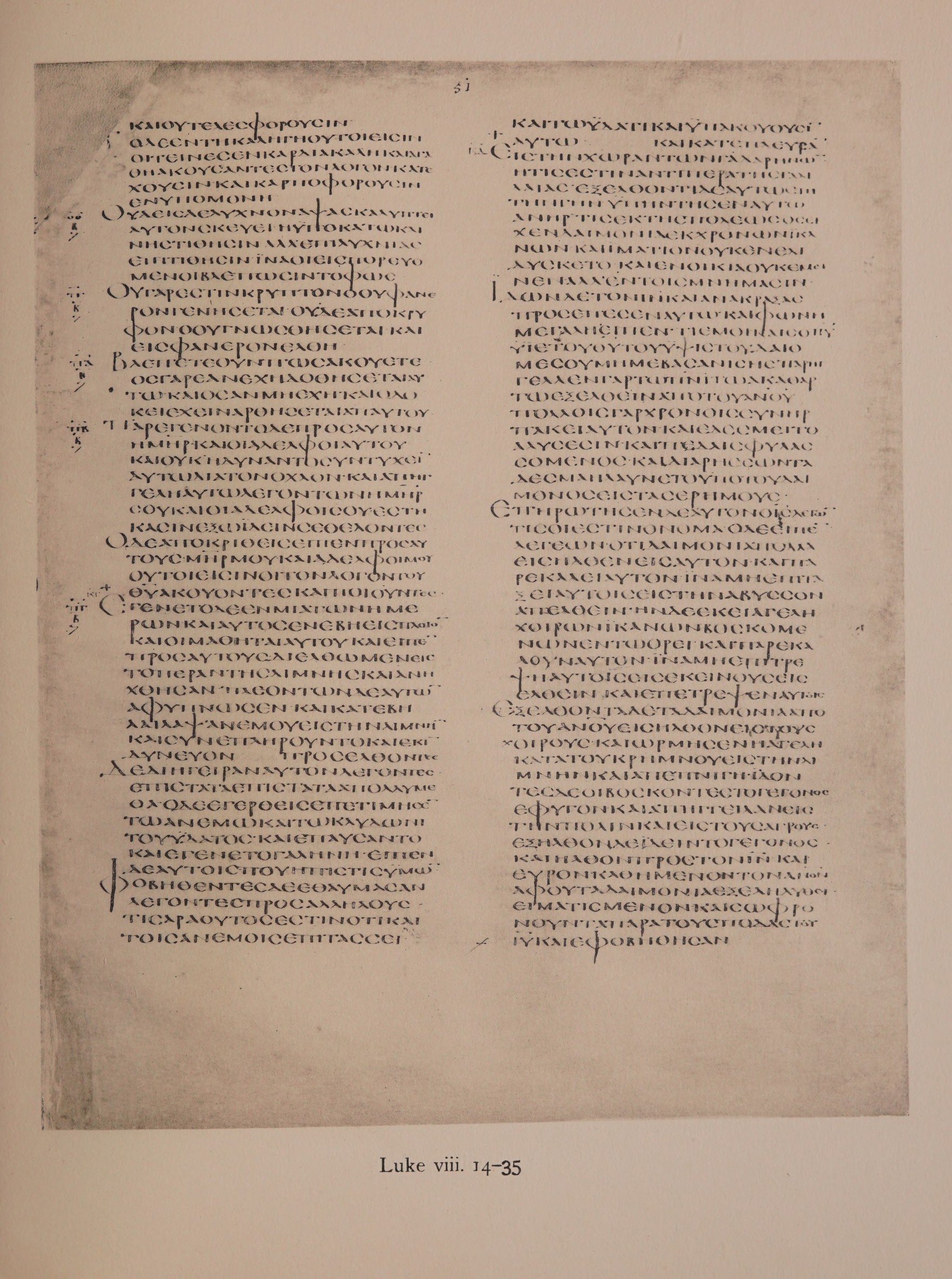
Where on the image
Page from the NTVMR transcription (docID 20002): verses 4-14 on fol. 50v (facsimile leaf 66), col. 2; verse 14 continues on fol. 51r (facsimile leaf 67), col. 1 (which begins 'και ου τελεσφορουσιν').
4συνιοντος δε οχλου πολλου και των κατα πολιν επιπορευομενων προς αυτον · ειπεν δια παραβολης 5εξηλθεν ο σπειρων τον σπορον εαυτου · και εν τω σπειριν αυτον ο μεν επεσεν παρα την οδον και κατεπατηθη · και τα πετεινα του ουνου κατεφαγεν αυτο · 6και ετερον επεσεν επι την πετραν · και φυεν εξηρανθη δια το μη εχειν ικμαδα · 7και ετερον επεσεν εμμεσω των ακανθων · και συνφυεισαι αι ακανθαι απεπνιξαν αυτο 8και ετερον επεσεν εις την γην την αγαθην · και φυεν εποιησεν καρπον εκατονταπλασιονα · ταυτα λεγων · εφωνει · ο εχων ωτα ακουειν ακουετω · 9επηρωτων δε αυτον οι μαθηται αυτου λεγοντες · τις ειη η παραβολη αυτη · 10ο δε ειπεν · υμιν δεδοται γνωναι τα μυστηρια της βασιλειας του θυ · τοις δε λοιποις εν παραβολαις · ινα βλεποντες μη βλεπωσιν · και ακουσαντες μη συνιωσιν · 11εστιν δε αυτη η παραβολη · ο σπορος εστιν ο λογος του θυ · 12οι δε παρα την οδον εισιν οι ακουοντες · ειτα ερχεται ο διαβολος · και ερει τον λογον απο της καρδιας αυτων · ινα μη πιστευσαντες σωθωσιν 13οι δε επι της πετρας · οι οταν ακουσωσιν μετα χαρας δεχονται τον λογον · και ουτοι ριζαν ουκ εχουσιν · οι προς καιρον πιστευουσιν · και εν καιρω πιρασμου αφιστανται · 14το δε εις τας ακανθας πεσον ουτοι εισιν οι ακουσαντες · και υπο μεριμνων · και πλουτου · και υπο ηδονων του βιου πορευομενοι συνπνιγονται και ου τελεσφορουσιν ·
Compare: Tischendorf 8th edition (1869)
4Συνιόντος δὲ ὄχλου πολλοῦ καὶ τῶν κατὰ πόλιν ἐπιπορευομένων πρὸς αὐτὸν εἶπεν διὰ παραβολῆς· 5ἐξῆλθεν ὁ σπείρων τοῦ σπεῖραι τὸν σπόρον αὐτοῦ. καὶ ἐν τῷ σπείρειν αὐτὸν ὃ μὲν ἔπεσεν παρὰ τὴν ὁδόν, καὶ κατεπατήθη καὶ τὰ πετεινὰ τοῦ οὐρανοῦ κατέφαγεν αὐτό· 6καὶ ἕτερον κατέπεσεν ἐπὶ τὴν πέτραν, καὶ φυὲν ἐξηράνθη διὰ τὸ μὴ ἔχειν ἰκμάδα· 7καὶ ἕτερον ἔπεσεν ἐν μέσῳ τῶν ἀκανθῶν, καὶ συμφυεῖσαι αἱ ἄκανθαι ἀπέπνιξαν αὐτό· 8καὶ ἕτερον ἔπεσεν εἰς τὴν γῆν τὴν ἀγαθήν, καὶ φυὲν ἐποίησεν καρπὸν ἑκατονταπλασίονα. ταῦτα λέγων ἐφώνει· ὁ ἔχων ὦτα ἀκούειν ἀκουέτω. 9Ἐπηρώτων δὲ αὐτὸν οἱ μαθηταὶ αὐτοῦ τίς αὕτη εἴη ἡ παραβολή. 10ὁ δὲ εἶπεν· ὑμῖν δέδοται γνῶναι τὰ μυστήρια τῆς βασιλείας τοῦ θεοῦ, τοῖς δὲ λοιποῖς ἐν παραβολαῖς, ἵνα βλέποντες μὴ βλέπωσιν καὶ ἀκούοντες μὴ συνιῶσιν. 11ἔστιν δὲ αὕτη ἡ παραβολή. ὁ σπόρος ἐστὶν ὁ λόγος τοῦ θεοῦ. 12οἱ δὲ παρὰ τὴν ὁδόν εἰσίν οἱ ἀκούσαντες, εἶτα ἔρχεται ὁ διάβολος καὶ αἴρει τὸν λόγον ἀπὸ τῆς καρδίας αὐτῶν, ἵνα μὴ πιστεύσαντες σωθῶσιν. 13οἱ δὲ ἐπὶ τὴν πέτραν οἳ ὅταν ἀκούσωσιν μετὰ χαρᾶς δέχονται τὸν λόγον, καὶ οὗτοι ῥίζαν οὐκ ἔχουσιν, οἳ πρὸς καιρὸν πιστεύουσιν καὶ ἐν καιρῷ πειρασμοῦ ἀφίστανται. 14τὸ δὲ εἰς τὰς ἀκάνθας πεσόν, οὗτοί εἰσίν οἱ ἀκούσαντες, καὶ ὑπὸ μεριμνῶν καὶ πλούτου καὶ ἡδονῶν τοῦ βίου πορευόμενοι συνπνίγονται καὶ οὐ τελεσφοροῦσιν.
4And when much people were gathered together, and were come to him out of every city, he spake by a parable: 5A sower went out to sow his seed: and as he sowed, some fell by the way side; and it was trodden down, and the fowls of the air devoured it. 6And some fell upon a rock; and as soon as it was sprung up, it withered away, because it lacked moisture. 7And some fell among thorns; and the thorns sprang up with it, and choked it. 8And other fell on good ground, and sprang up, and bare fruit an hundredfold. And when he had said these things, he cried, He that hath ears to hear, let him hear. 9And his disciples asked him, saying, What might this parable be? 10And he said, Unto you it is given to know the mysteries of the kingdom of God: but to others in parables; that seeing they might not see, and hearing they might not understand. 11Now the parable is this: The seed is the word of God. 12Those by the way side are they that hear; then cometh the devil, and taketh away the word out of their hearts, lest they should believe and be saved. 13They on the rock are they, which, when they hear, receive the word with joy; and these have no root, which for a while believe, and in time of temptation fall away. 14And that which fell among thorns are they, which, when they have heard, go forth, and are choked with cares and riches and pleasures of this life, and bring no fruit to perfection.
Where on the image
Page from the NTVMR transcription (docID 20002): verses 15-25 on fol. 51r (facsimile leaf 67), col. 1.
15το δε εν τη καλη γη ουτοι εισιν οιτεινες εν καρδια καλη και αγαθη ακουσαντες τον λογον κατεχουσιν · και καρποφορουσιν εν υπομονη · 16ουδεις δε λυχνον αψας καλυπτει αυτον σκευει · η υποκατω κλινης τιθησιν · αλλ επι λυχνιας επιτιθησιν · ινα οι εισπορευομενοι βλεπωσιν το φως · 17ου γαρ εστιν κρυπτον ο ου φανερον γενησεται · ουδε αποκρυφον · ο ου γνωσθησεται · και εις φανερον ελθη · 18βλεπετε ουν πως ακουετε ος γαρ εαν εχη δοθησεται αυτω · και ος αν μη εχη · και ο δοκει εχειν αρθησεται απ αυτου · 19παρεγενοντο δε προς αυτον η μηρ · και οι αδελφοι αυτου · και ουκ ηδυναντο συντυχειν αυτω δια τον οχλον · 20και απηγγελη αυτω λεγοντων η μηρ σου και οι αδελφοι σου εστηκασιν εξω ιδειν σε θελοντες 21ο δε αποκριθεις ειπεν προς αυτους · μηρ μου · και αδελφοι μου ουτοι εισιν οι τον λογον του θυ ακουοντες και ποιουντες · 22εγενετο δε εν μια των ημερων · και αυτος ενεβη εις πλοιον και οι μαθηται αυτου και ειπεν προς αυτους · διελθωμεν εις το περαν της λιμνης και ανηχθησαν · 23πλεοντων δε αυτων αφυπνωσεν · και κατεβη λαιλαψ · ανεμου εις την λιμνην και συνεπληρουντο και εκινδυνευον · 24προσελθοντες δε διηγειραν αυτον λεγοντες · επιστατα επιστατα απολλυμεθα · ο δε εγερθεις επετιμησεν τω ανεμω και τω κλυδωνι του υδατος · και επαυσαντο και εγενετο γαληνη · 25ειπεν δε αυτοις · που η πιστις υμων φοβηθεντες δε εθαυμασαν λεγοντες προς αλληλους τις αρα ουτος εστιν οτι και τοις ανεμοις επιτασσει · και τω υδατι και υπακουουσιν αυτω ·
Compare: Tischendorf 8th edition (1869)
15τὸ δὲ ἐν τῇ καλῇ γῇ, οὗτοί εἰσίν οἵτινες ἐν καρδίᾳ καλῇ καὶ ἀγαθῇ ἀκούσαντες τὸν λόγον κατέχουσιν καὶ καρποφοροῦσιν ἐν ὑπομονῇ. 16Οὐδεὶς δὲ λύχνον ἅψας καλύπτει αὐτὸν σκεύει ἢ ὑποκάτω κλίνης τίθησιν, ἀλλ’ ἐπὶ λυχνίας τίθησιν, ἵνα οἱ εἰσπορευόμενοι βλέπωσιν τὸ φῶς. 17οὐ γάρ ἐστιν κρυπτὸν ὃ οὐ φανερὸν γενήσεται, οὐδὲ ἀπόκρυφον ὃ οὐ μὴ γνωσθῇ καὶ εἰς φανερὸν ἔλθῃ. 18βλέπετε οὖν πῶς ἀκούετε· ὃς ἂν γὰρ ἔχῃ, δοθήσεται αὐτῷ, καὶ ὃς ἂν μὴ ἔχῃ, καὶ ὃ δοκεῖ ἔχειν ἀρθήσεται ἀπ’ αὐτοῦ. 19Παρεγένετο δὲ πρὸς αὐτὸν ἡ μήτηρ αὐτοῦ καὶ οἱ ἀδελφοὶ αὐτοῦ, καὶ οὐκ ἠδύναντο συντυχεῖν αὐτῷ διὰ τὸν ὄχλον. 20ἀπηγγέλη δὲ αὐτῷ ὅτι ἡ μήτηρ σου καὶ οἱ ἀδελφοί σου ἑστήκασιν ἔξω ἰδεῖν σε θέλοντες. 21ὁ δὲ ἀποκριθεὶς εἶπεν πρὸς αὐτούς· μήτηρ μου καὶ ἀδελφοί μου οὗτοί εἰσίν οἱ τὸν λόγον τοῦ θεοῦ ἀκούοντες καὶ ποιοῦντες. 22Ἐγένετο δὲ ἐν μιᾷ τῶν ἡμερῶν καὶ αὐτὸς ἐνέβη εἰς πλοῖον καὶ οἱ μαθηταὶ αὐτοῦ, καὶ εἶπεν πρὸς αὐτούς· διέλθωμεν εἰς τὸ πέραν τῆς λίμνης· καὶ ἀνήχθησαν. 23πλεόντων δὲ αὐτῶν ἀφύπνωσεν· καὶ κατέβη λαῖλαψ ἀνέμου εἰς τὴν λίμνην, καὶ συνεπληροῦντο καὶ ἐκινδύνευον. 24προσελθόντες δὲ διήγειραν αὐτὸν λέγοντες· ἐπιστάτα ἐπιστάτα, ἀπολλύμεθα. ὁ δὲ διεγερθεὶς ἐπετίμησεν τῷ ἀνέμῳ καὶ τῷ κλύδωνι τοῦ ὕδατος· καὶ ἐπαύσαντο, καὶ ἐγένετο γαλήνη. 25εἶπεν δὲ αὐτοῖς· ποῦ ἡ πίστις ὑμῶν; φοβηθέντες δὲ ἐθαύμασαν, λέγοντες πρὸς ἀλλήλους· τίς ἄρα οὗτός ἐστιν, ὅτι καὶ τοῖς ἀνέμοις ἐπιτάσσει καὶ τῷ ὕδατι, καὶ ὑπακούουσιν αὐτῷ;
15But that on the good ground are they, which in an honest and good heart, having heard the word, keep it, and bring forth fruit with patience. 16No man, when he hath lighted a candle, covereth it with a vessel, or putteth it under a bed; but setteth it on a candlestick, that they which enter in may see the light. 17For nothing is secret, that shall not be made manifest; neither any thing hid, that shall not be known and come abroad. 18Take heed therefore how ye hear: for whosoever hath, to him shall be given; and whosoever hath not, from him shall be taken even that which he seemeth to have. 19Then came to him his mother and his brethren, and could not come at him for the press. 20And it was told him by certain which said, Thy mother and thy brethren stand without, desiring to see thee. 21And he answered and said unto them, My mother and my brethren are these which hear the word of God, and do it. 22Now it came to pass on a certain day, that he went into a ship with his disciples: and he said unto them, Let us go over unto the other side of the lake. And they launched forth. 23But as they sailed he fell asleep: and there came down a storm of wind on the lake; and they were filled with water, and were in jeopardy. 24And they came to him, and awoke him, saying, Master, master, we perish. Then he arose, and rebuked the wind and the raging of the water: and they ceased, and there was a calm. 25And he said unto them, Where is your faith? And they being afraid wondered, saying one to another, What manner of man is this! for he commandeth even the winds and water, and they obey him.
Where on the image
Page from the NTVMR transcription (docID 20002): verses 26-35 on fol. 51r (facsimile leaf 67), col. 2.
26και κατεπλευραν εις την χωραν των γαδαρηνων ητις εστιν αντιπερα της γαλιλαιας · 27εξελθοντι δε αυτω επι την γην · υπηντησεν αυτω ανηρ · τις εκ της πολεως ος ειχεν δαιμονια εκ χρονων ικανων · και ιματιον ουκ ενεδιδυσκετο · και εν οικια ουκ εμεινεν · αλλ εν τοις μνημασιν · 28ιδων δε τον ιν και ανακραξας προσεπεσεν αυτω · και φωνη μεγαλη ειπεν · τι εμοι και σοι ιυ υιε του θυ του υψιστου δαιομε σου μη με βασανισης 29παρηγγελλεν γαρ τω πνι τω ακαθαρτω εξελθειν απο του ανου πολλοις γαρ χρονοις συνηρπακει αυτον · και εδεσμειτο αλυσεσιν · και πεδαις φυλασσομενος · και διαρησσων τα δεσμα ηλαυνετο υπο του δαιμονος εις τας ερημους · 30επηρωτησεν δε αυτον ο ις λεγων τι σοι εστιν ονομα · ο δε ειπεν λεγεων · οτι δαιμονια πολλα εισηλθεν εις αυτον · 31και παρεκαλει αυτον · ινα μη επιταξει αυτοις εις την αβυσσον απελθειν · 32ην δε εκει αγελη χοιρων ικανων βοσκομενων εν τω ορει · και παρεκαλουν αυτον · ινα μη επιτρεψη αυτοις εις εκεινους εισελθειν και επετρεψεν αυτοις 33εξελθοντα δε τα δαιμονια απο του ανου εισηλθον εις τους οιρους · και ωρμησεν η αγελη κατα του κρημνου εις την λιμνην και απεπνιγη · 34ιδοντες δε οι βοσκοντες το γεγονος εφυγον · και απηγγειλαν εις την πολιν και εις τους αγρους · 35εξηλθον δε ιδειν το γεγονος · και ηλθον προς τον ιν · και ευρον καθημενον τον ανον αφ ου τα δαιμονια εξεληλυθει · ειματισμενον · και σωφρονουντα παρα τους ποδας του ιυ και εφοβηθησαν
Compare: Tischendorf 8th edition (1869)
26Καὶ κατέπλευσαν εἰς τὴν χώραν τῶν Γεργεσηνῶν, ἥτις ἐστὶν ἀντιπέρα τῆς Γαλιλαίας. 27ἐξελθόντι δὲ αὐτῷ ἐπὶ τὴν γῆν ὑπήντησεν ἀνήρ τις ἐκ τῆς πόλεως ἔχων δαιμόνια, καὶ χρόνῳ ἱκανῷ οὐκ ἐνεδύσατο ἱμάτιον, καὶ ἐν οἰκίᾳ οὐκ ἔμενεν ἀλλ’ ἐν τοῖς μνήμασιν. 28ἰδὼν δὲ τὸν Ἰησοῦν ἀνακράξας προσέπεσεν αὐτῷ καὶ φωνῇ μεγάλῃ εἶπεν· τί ἐμοὶ καὶ σοί, Ἰησοῦ υἱὲ τοῦ θεοῦ τοῦ ὑψίστου; δέομαί σου, μή με βασανίσῃς. 29παρήγγελλεν γὰρ τῷ πνεύματι τῷ ἀκαθάρτῳ ἐξελθεῖν ἀπὸ τοῦ ἀνθρώπου· πολλοῖς γὰρ χρόνοις συνηρπάκει αὐτόν, καὶ ἐδεσμεύετο ἁλύσεσιν καὶ πέδαις φυλασσόμενος, καὶ διαρρήσσων τὰ δεσμὰ ἠλαύνετο ὑπὸ τοῦ δαιμονίου εἰς τὰς ἐρήμους. 30ἐπηρώτησεν δὲ αὐτὸν ὁ Ἰησοῦς λέγων· τί σοι ὄνομά ἐστιν; ὁ δὲ εἶπεν, λεγιών, ὅτι εἰσῆλθεν δαιμόνια πολλὰ εἰς αὐτόν. 31καὶ παρεκάλουν αὐτὸν ἵνα μὴ ἐπιτάξῃ αὐτοῖς εἰς τὴν ἄβυσσον ἀπελθεῖν. 32ἦν δὲ ἐκεῖ ἀγέλη χοίρων ἱκανῶν βοσκομένων ἐν τῷ ὄρει, καὶ παρεκάλεσαν αὐτὸν ἵνα ἐπιτρέψῃ αὐτοῖς εἰς ἐκείνους εἰσελθεῖν. καὶ ἐπέτρεψεν αὐτοῖς. 33ἐξελθόντα δὲ τὰ δαιμόνια ἀπὸ τοῦ ἀνθρώπου εἰσῆλθον εἰς τοὺς χοίρους, καὶ ὥρμησεν ἡ ἀγέλη κατὰ τοῦ κρημνοῦ εἰς τὴν λίμνην καὶ ἀπεπνίγη. 34ἰδόντες δὲ οἱ βόσκοντες τὸ γεγονὸς ἔφυγον καὶ ἀπήγγειλαν εἰς τὴν πόλιν καὶ εἰς τοὺς ἀγρούς. 35ἐξῆλθον δὲ ἰδεῖν τὸ γεγονός, καὶ ἦλθον πρὸς τὸν Ἰησοῦν, καὶ εὗρον καθήμενον τὸν ἄνθρωπον, ἀφ’ οὗ τὰ δαιμόνια ἐξῆλθεν, ἱματισμένον καὶ σωφρονοῦντα παρὰ τοὺς πόδας τοῦ Ἰησοῦ, καὶ ἐφοβήθησαν.
26And they arrived at the country of the Gadarenes, which is over against Galilee. 27And when he went forth to land, there met him out of the city a certain man, which had devils long time, and ware no clothes, neither abode in any house, but in the tombs. 28When he saw Jesus, he cried out, and fell down before him, and with a loud voice said, What have I to do with thee, Jesus, thou Son of God most high? I beseech thee, torment me not. 29(For he had commanded the unclean spirit to come out of the man. For oftentimes it had caught him: and he was kept bound with chains and in fetters; and he brake the bands, and was driven of the devil into the wilderness.) 30And Jesus asked him, saying, What is thy name? And he said, Legion: because many devils were entered into him. 31And they besought him that he would not command them to go out into the deep. 32And there was there an herd of many swine feeding on the mountain: and they besought him that he would suffer them to enter into them. And he suffered them. 33Then went the devils out of the man, and entered into the swine: and the herd ran violently down a steep place into the lake, and were choked. 34When they that fed them saw what was done, they fled, and went and told it in the city and in the country. 35Then they went out to see what was done; and came to Jesus, and found the man, out of whom the devils were departed, sitting at the feet of Jesus, clothed, and in his right mind: and they were afraid.
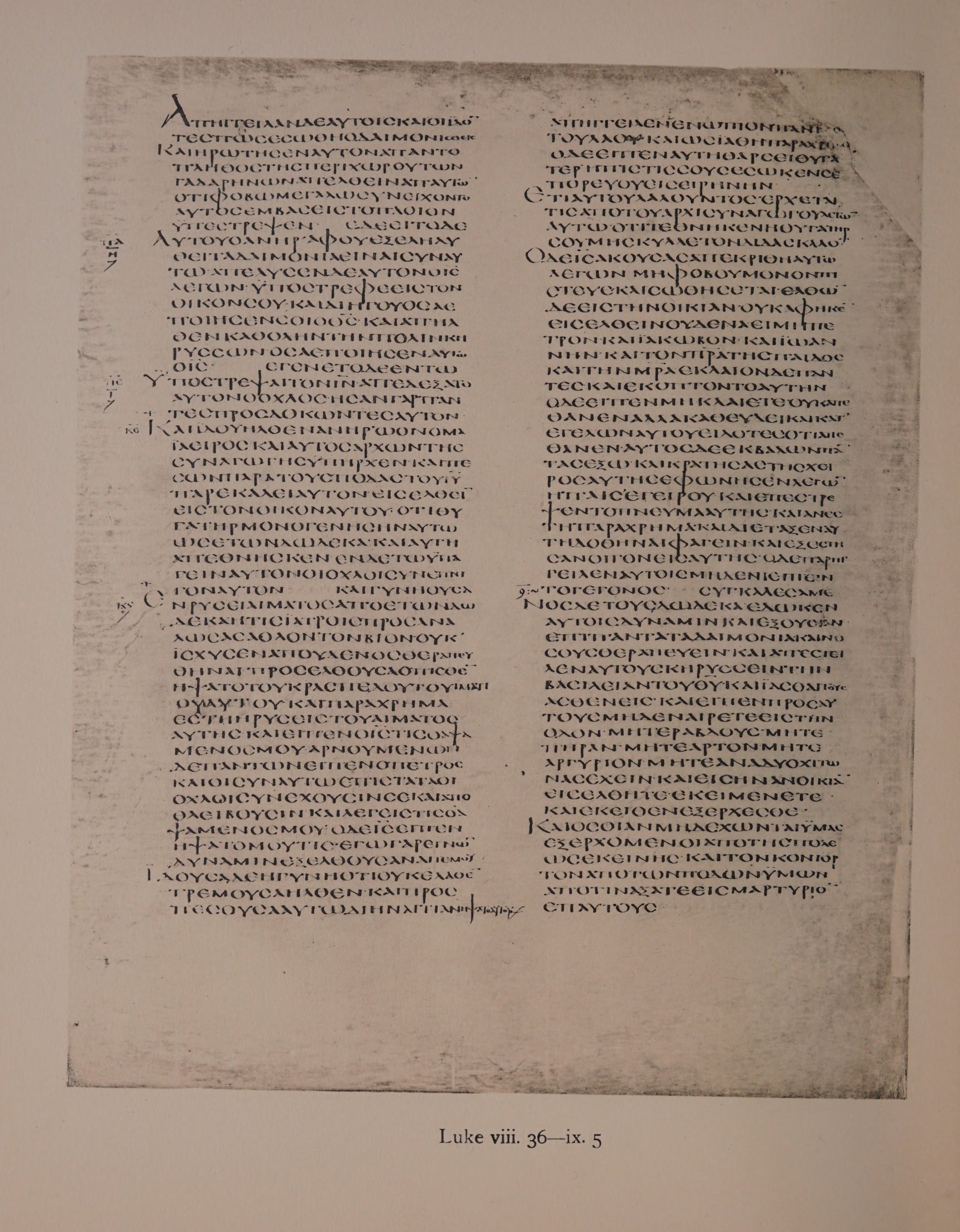
Where on the image
Page from the NTVMR transcription (docID 20002): verses 36-47 on fol. 51v (facsimile leaf 68), col. 1.
36απηγγειλαν δε αυτοις και οι ιδοντες πως εσωθη ο δαιμονισθεις 37και ηρωτησεν αυτον απαν το πληθος της περιχωρου των γαδαρηνων απελθειν απ αυτων οτι φοβω μεγαλω συνειχοντο αυτος εμβας εις το πλοιον υπεστρεψεν · 38εδεειτο δε αυτου ο ανηρ · αφ ου εξεληλυθει τα δαιμονια ειναι συν αυτω · απελυσεν δε αυτον ο ις λεγων · 39υποστρεφε εις τον οικον σου · και διηγου οσα εποιησεν σοι ο θς · και απηλθεν καθ ολην την πολιν κηρυσσων · οσα εποιησεν αυτω ο ις · 40εγενετο δε εν τω υποστρεψαι τον ιν · απεδεξατο αυτον ο οχλος · ησαν γαρ παντες προσδοκωντες αυτον · 41και ιδου ηλθεν ανηρ ω ονομα ιαειρος και αυτος αρχων της συναγωγης υπηρχεν · και πεσων παρα τους ποδας του ιυ παρεκαλει αυτον · εισελθειν εις τον οικον αυτου · 42οτι θυγατηρ μονογενης ην αυτω ως ετων δωδεκα · και αυτη απεθνησκεν εν δε τω υπαγειν αυτον οι οχλοι συνεπνιγον αυτον · 43και γυνη ουσα εν ρυσει αιματος απο ετων δωδεκα · ητις ιατροις προσαναλωσασα ολον τον βιον · ουκ ισχυσεν απ ουδενος θεραπευθηναι · 44προσελθουσα οπισθεν ηψατο του κρασπεδου του ιματιου και παραχρημα εστη η ρυσεις του αιματος αυτης · 45και ειπεν ο ις τις ο αψαμενος μου · αρνουμενων δε παντων ειπεν ο πετρος και οι συν αυτω επιστατα οι οχλοι συνεχουσιν σε · και αποθλειβουσιν · και λεγεις τις ο αψαμενος μου · 46ο δε ις ειπεν ηψατο μου τις · εγω γαρ εγνων δυναμιν εξελθουσαν απ εμου 47ιδουσα δε η γυνη οτι ουκ ελαθεν τρεμουσα ηλθεν · και προσπεσουσα αυτω δι ην αιτιαν απηγγειλεν ενωπιον παντο̣ς του λαου και ως ιαθη παραχρημα̣
Compare: Tischendorf 8th edition (1869)
36ἀπήγγειλαν δὲ αὐτοῖς οἱ ἰδόντες πῶς ἐσώθη ὁ δαιμονισθείς. 37καὶ ἠρώτησεν αὐτὸν ἅπαν τὸ πλῆθος τῆς περιχώρου τῶν Γεργεσηνῶν ἀπελθεῖν ἀπ’ αὐτῶν, ὅτι φόβῳ μεγάλῳ συνείχοντο· αὐτὸς δὲ ἐμβὰς εἰς πλοῖον ὑπέστρεψεν. 38ἐδέετο δὲ αὐτοῦ ὁ ἀνὴρ ἀφ’ οὗ ἐξεληλύθει τὰ δαιμόνια, εἶναι σὺν αὐτῷ· ἀπέλυσεν δὲ αὐτὸν λέγων· 39ὑπόστρεφε εἰς τὸν οἶκόν σου, καὶ διηγοῦ ὅσα σοι ἐποίησεν ὁ θεός. καὶ ἀπῆλθεν, καθ’ ὅλην τὴν πόλιν κηρύσσων ὅσα ἐποίησεν αὐτῷ ὁ Ἰησοῦς. 40Ἐγένετο δὲ ἐν τῷ ὑποστρέφειν τὸν Ἰησοῦν ἀπεδέξατο αὐτὸν ὁ ὄχλος· ἦσαν γὰρ πάντες προσδοκῶντες αὐτόν. 41καὶ ἰδοὺ ἦλθεν ἀνὴρ ᾧ ὄνομα Ἰάειρος, καὶ αὐτὸς ἄρχων τῆς συναγωγῆς ὑπῆρχεν· καὶ πεσὼν παρὰ τοὺς πόδας Ἰησοῦ παρεκάλει αὐτὸν εἰσελθεῖν εἰς τὸν οἶκον αὐτοῦ, 42ὅτι θυγάτηρ μονογενὴς ἦν αὐτῷ ὡς ἐτῶν δώδεκα καὶ αὐτὴ ἀπέθνῃσκεν. ἐν δὲ τῷ ὑπάγειν αὐτὸν οἱ ὄχλοι συνέπνιγον αὐτόν. 43καὶ γυνὴ οὖσα ἐν ῥύσει αἵματος ἀπὸ ἐτῶν δώδεκα, ἥτις ἰατροῖς προσαναλώσασα ὅλον τὸν βίον οὐκ ἴσχυσεν ἀπ’ οὐδενὸς θεραπευθῆναι, 44προσελθοῦσα ὄπισθεν ἥψατο τοῦ κρασπέδου τοῦ ἱματίου αὐτοῦ, καὶ παραχρῆμα ἔστη ἡ ῥύσις τοῦ αἵματος αὐτῆς. 45καὶ εἶπεν ὁ Ἰησοῦς· τίς ὁ ἁψάμενός μου; ἀρνουμένων δὲ πάντων εἶπεν ὁ Πέτρος καὶ οἱ σὺν αὐτῷ· ἐπιστάτα, οἱ ὄχλοι συνέχουσίν σε καὶ ἀποθλίβουσιν. 46ὁ δὲ Ἰησοῦς εἶπεν· ἥψατό μού τις· ἐγὼ γὰρ ἔγνων δύναμιν ἐξεληλυθυῖαν ἀπ’ ἐμοῦ. 47ἰδοῦσα δὲ ἡ γυνὴ ὅτι οὐκ ἔλαθεν, τρέμουσα ἦλθεν καὶ προσπεσοῦσα αὐτῷ δι’ ἣν αἰτίαν ἥψατο αὐτοῦ ἀπήγγειλεν ἐνώπιον παντὸς τοῦ λαοῦ, καὶ ὡς ἰάθη παραχρῆμα.
36They also which saw it told them by what means he that was possessed of the devils was healed. 37Then the whole multitude of the country of the Gadarenes round about besought him to depart from them; for they were taken with great fear: and he went up into the ship, and returned back again. 38Now the man out of whom the devils were departed besought him that he might be with him: but Jesus sent him away, saying, 39Return to thine own house, and shew how great things God hath done unto thee. And he went his way, and published throughout the whole city how great things Jesus had done unto him. 40And it came to pass, that, when Jesus was returned, the people gladly received him: for they were all waiting for him. 41And, behold, there came a man named Jairus, and he was a ruler of the synagogue: and he fell down at Jesus’ feet, and besought him that he would come into his house: 42For he had one only daughter, about twelve years of age, and she lay a dying. But as he went the people thronged him. 43And a woman having an issue of blood twelve years, which had spent all her living upon physicians, neither could be healed of any, 44Came behind him, and touched the border of his garment: and immediately her issue of blood stanched. 45And Jesus said, Who touched me? When all denied, Peter and they that were with him said, Master, the multitude throng thee and press thee, and sayest thou, Who touched me? 46And Jesus said, Somebody hath touched me: for I perceive that virtue is gone out of me. 47And when the woman saw that she was not hid, she came trembling, and falling down before him, she declared unto him before all the people for what cause she had touched him and how she was healed immediately.
Where on the image
Page from the NTVMR transcription (docID 20002): verses 48-56 on fol. 51v (facsimile leaf 68), col. 2.
48ο δε ειπεν αυτη θαρσει θυγατερ · η πιστις σου σεσωκεν σε πορευου εις ειρηνην · 49ετι αυτου λαλουντος · ερχεται τις απο του αρχισυναγωγου λεγων αυτω · οτι τεθνηκεν η θυγατηρ σου μη σκυλλε τον διδασκαλον · 50ο δε ις ακουσας απεκριθη αυτω λεγων · μη φοβου μονον πιστευε · και σωθησεται · 51ελθων δε εις την οικιαν · ουκ αφηκεν εισελθειν ουδενα ει μη πετρον · και ιακωβον · και ιωαννην · και τον πρα της παιδος και την μρα · 52εκλαιον δε παντες · και εκοπτοντο αυτην ο δε ειπεν μη κλαιετε · ουκ απεθανεν αλλα καθευδει · 53και κατεγελων αυτου ειδοτες οτι απεθανεν · 54αυτος δε εκβαλων παντας εξω · και κρατησας της χειρος αυτης εφωνησεν λεγων η παις εγειρου · 55και επεστρεψεν το πνευμα αυτης · και ανεστη παραχρημα · και διεταξεν αυτη δοθηναι φαγειν · 56και εξεστησαν οι γονεις αυτης · ο δε παρηγγειλεν αυτοις μηδενι ειπειν το γεγονος ·
Compare: Tischendorf 8th edition (1869)
48ὁ δὲ εἶπεν αὐτῇ· θυγάτερ, ἡ πίστις σου σέσωκέν σε· πορεύου εἰς εἰρήνην. 49Ἔτι αὐτοῦ λαλοῦντος ἔρχεταί τις παρὰ τοῦ ἀρχισυναγώγου λέγων ὅτι τέθνηκεν ἡ θυγάτηρ σου, μηκέτι σκύλλε τὸν διδάσκαλον. 50ὁ δὲ Ἰησοῦς ἀκούσας ἀπεκρίθη αὐτῷ· μὴ φοβοῦ· μόνον πίστευσον, καὶ σωθήσεται. 51ἐλθὼν δὲ εἰς τὴν οἰκίαν οὐκ ἀφῆκεν εἰσελθεῖν τινα σὺν αὐτῷ εἰ μὴ Πέτρον καὶ Ἰωάννην καὶ Ἰάκωβον καὶ τὸν πατέρα τῆς παιδὸς καὶ τὴν μητέρα. 52ἔκλαιον δὲ πάντες καὶ ἐκόπτοντο αὐτήν. ὁ δὲ εἶπεν· μὴ κλαίετε· οὐκ ἀπέθανεν ἀλλὰ καθεύδει. 53καὶ κατεγέλων αὐτοῦ, εἰδότες ὅτι ἀπέθανεν. 54αὐτὸς δὲ κρατήσας τῆς χειρὸς αὐτῆς ἐφώνησεν λέγων· ἡ παῖς, ἐγείρου. 55καὶ ἐπέστρεψεν τὸ πνεῦμα αὐτῆς, καὶ ἀνέστη παραχρῆμα, καὶ διέταξεν αὐτῇ δοθῆναι φαγεῖν. 56καὶ ἐξέστησαν οἱ γονεῖς αὐτῆς· ὁ δὲ παρήγγειλεν αὐτοῖς μηδενὶ εἰπεῖν τὸ γεγονός.
48And he said unto her, Daughter, be of good comfort: thy faith hath made thee whole; go in peace. 49While he yet spake, there cometh one from the ruler of the synagogue’s house, saying to him, Thy daughter is dead; trouble not the Master. 50But when Jesus heard it, he answered him, saying, Fear not: believe only, and she shall be made whole. 51And when he came into the house, he suffered no man to go in, save Peter, and James, and John, and the father and the mother of the maiden. 52And all wept, and bewailed her: but he said, Weep not; she is not dead, but sleepeth. 53And they laughed him to scorn, knowing that she was dead. 54And he put them all out, and took her by the hand, and called, saying, Maid, arise. 55And her spirit came again, and she arose straightway: and he commanded to give her meat. 56And her parents were astonished: but he charged them that they should tell no man what was done.
Cite
Sources
- Source: Codex Alexandrinus page images + NTVMR transcription (CC BY 4.0) + Tischendorf 8th edition + KJV (holding institution)
- Critical edition: Codex Alexandrinus transcription, NTVMR (INTF Münster, CC BY 4.0); Tischendorf 8th edition for comparison
← previous · → next · v cycle view · l back to library