Romans, Chapter 6 (Codex Alexandrinus)
Introduction
Romans 6 from Codex Alexandrinus (GA 02), a fifth-century Greek Bible held by the British Library (Royal MS 1 D. VIII). In the New Testament it is the chief witness to the Byzantine text in the Gospels and to the Alexandrian text in the rest of the New Testament. Its New Testament volume lacks Matthew 1:1-25:5, John 6:50-8:52 and 2 Corinthians 4:13-12:6.
This entry meets the strict three-criteria standard of the Theosis Library:
- Manuscript scan: the actual page(s) of Codex Alexandrinus containing this passage (folios 113r, 113v), reproduced from the British Museum's 1909 photographic facsimile edited by F. G. Kenyon, as digitised by the Getty Research Institute for the Internet Archive. The facsimile prints the verse range beneath each plate; that printed range was read for every page used and agrees with the INTF's NTVMR verse-level page index (CC BY 4.0). The page for each section now comes from the NTVMR transcription itself, which records the page and column on which every verse is written.
- Original text: the manuscript's own text, from a diplomatic transcription (see Greek text below), with Tischendorf's 8th critical edition (1869) for comparison.
- English translation: the King James Version (1611), retrieved verbatim from the public-domain bible-api.com endpoint.
Greek text: a diplomatic transcription of Codex Alexandrinus made by the Institut für Neutestamentliche Textforschung (INTF), Münster, for the New Testament Virtual Manuscript Room (NTVMR), published under a Creative Commons Attribution 4.0 licence. It gives the letters as the first scribe wrote them: no accents or breathings, the scribe's own spelling, and the sacred names in their contracted form (θς for θεος, ις for ιησους, κς for κυριος; the overline is not reproduced). Corrections by later hands are not shown. Letters in square brackets are not legible on the page and were restored by the transcribers, a dot under a letter marks an uncertain reading, and [...] marks text lost to damage. Beneath each section, for comparison, is Tischendorf's 8th critical edition (1869). Where the two differ, the transcription is what the manuscript says. Each section is shown with the page on which the transcription places its verses.
How was this verified? (Provenance)
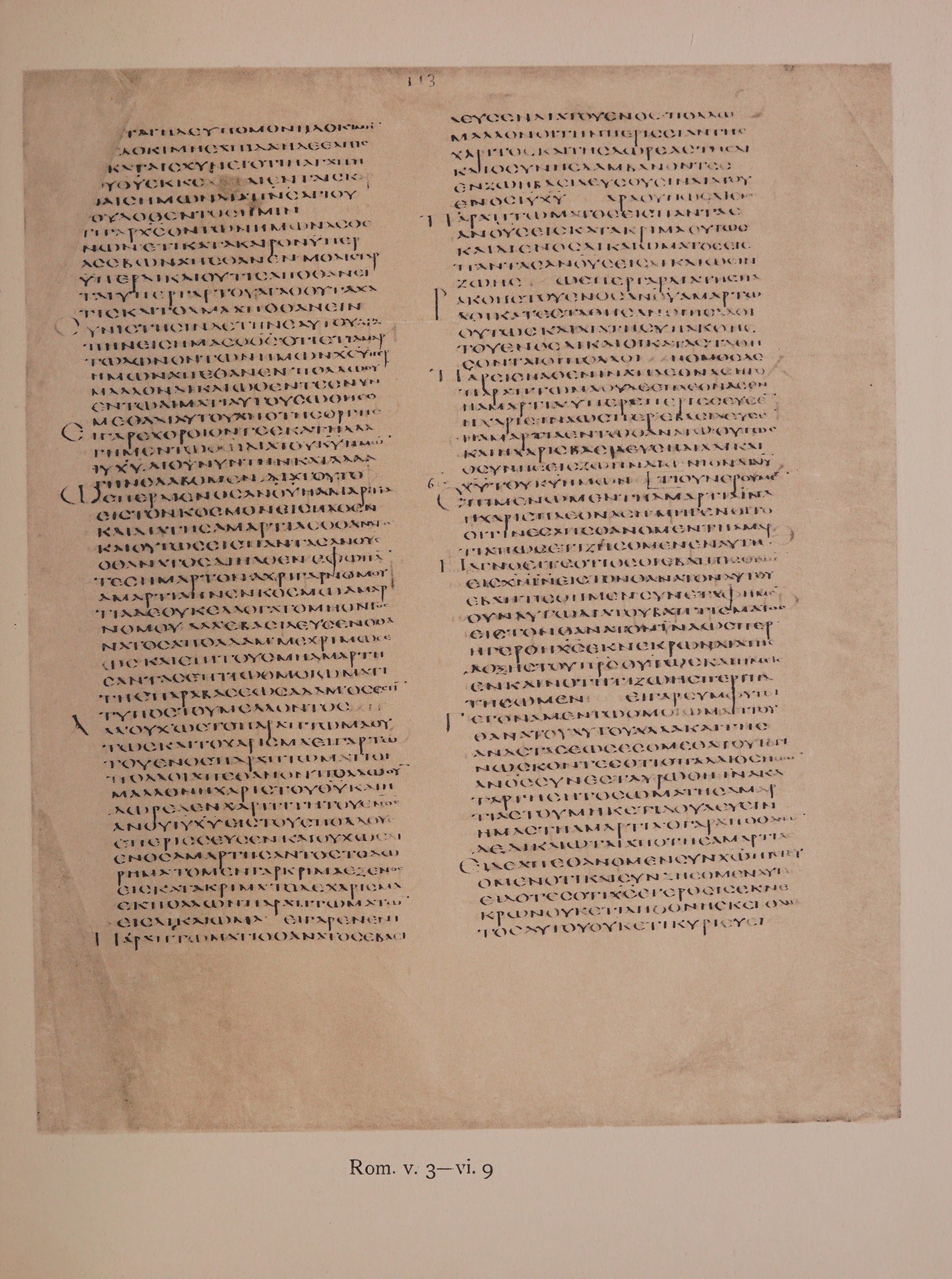
Where on the image
Page from the NTVMR transcription (docID 20002): verses 1-9 on fol. 113r (facsimile leaf 187), col. 2.
1τι ουν ερουμεν επιμενωμεν τη αμαρτια ινα η χαρις πλεοναση · 2μη γενοιτο οιτινες απεθανομεν τη αμαρτια πως ετι ζησομεν εν αυτη 3η αγνοειτε οτι οσοι εβαπτισθημεν εις χν ιν εις τον θανατον αυτου εβαπτισθημεν · 4συνεταφημεν ουν αυτω δια του βαπτισματος εις τον θανατον ινα ωσπερ · ηγερθη χς εκ νεκρων δια της δοξης του πρς ουτως και ημεις εν καινοτητι ζωης περιπατησωμεν · 5ει γαρ συμφυτοι γεγοναμεν τω ομοιωματι του θανατου αυτου αλλα και της αναστασεως εσομεθα 6τουτο γινωσκοντες οτι ο παλαιος ημων ανος συνεσταυρωθη ινα καταργηση το σωμα της αμαρτιας του μηκετι δουλευειν ημας τη αμαρτια · 7ο γαρ αποθανων δεδικαιωται απο της αμαρτιας 8ει δε απεθανομεν συν χω πιστευομεν οτι και συνζησομεν αυτω · 9ειδοτες οτι χς εγερθεις εκ νεκρων ουκετι αποθνησκει · θανατος αυτου ουκετι κυριευει ·
Compare: Tischendorf 8th edition (1869)
1Τί οὖν ἐροῦμεν; ἐπιμένωμεν τῇ ἁμαρτίᾳ, ἵνα ἡ χάρις πλεονάσῃ; 2μὴ γένοιτο· οἵτινες ἀπεθάνομεν τῇ ἁμαρτίᾳ, πῶς ἔτι ζήσομεν ἐν αὐτῇ; 3ἢ ἀγνοεῖτε ὅτι ὅσοι ἐβαπτίσθημεν εἰς Χριστὸν Ἰησοῦν εἰς τὸν θάνατον αὐτοῦ ἐβαπτίσθημεν; 4συνετάφημεν οὖν αὐτῷ διὰ τοῦ βαπτίσματος εἰς τὸν θάνατον, ἵνα ὥσπερ ἠγέρθη Χριστὸς ἐκ νεκρῶν διὰ τῆς δόξης τοῦ πατρός, οὕτως καὶ ἡμεῖς ἐν καινότητι ζωῆς περιπατήσωμεν. 5εἰ γὰρ σύμφυτοι γεγόναμεν τῷ ὁμοιώματι τοῦ θανάτου αὐτοῦ, ἀλλὰ καὶ τῆς ἀναστάσεως ἐσόμεθα· 6τοῦτο γινώσκοντες, ὅτι ὁ παλαιὸς ἡμῶν ἄνθρωπος συνεσταυρώθη, ἵνα καταργηθῇ τὸ σῶμα τῆς ἁμαρτίας, τοῦ μηκέτι δουλεύειν ἡμᾶς τῇ ἁμαρτίᾳ· 7ὁ γὰρ ἀποθανὼν δεδικαίωται ἀπὸ τῆς ἁμαρτίας. 8εἰ δὲ ἀπεθάνομεν σὺν Χριστῷ, πιστεύομεν ὅτι καὶ συζήσομεν αὐτῷ· 9εἰδότες ὅτι Χριστὸς ἐγερθεὶς ἐκ νεκρῶν οὐκέτι ἀποθνῄσκει, θάνατος αὐτοῦ οὐκέτι κυριεύει.
1What shall we say then? Shall we continue in sin, that grace may abound? 2God forbid. How shall we, that are dead to sin, live any longer therein? 3Know ye not, that so many of us as were baptized into Jesus Christ were baptized into his death? 4Therefore we are buried with him by baptism into death: that like as Christ was raised up from the dead by the glory of the Father, even so we also should walk in newness of life. 5For if we have been planted together in the likeness of his death, we shall be also in the likeness of his resurrection: 6Knowing this, that our old man is crucified with him, that the body of sin might be destroyed, that henceforth we should not serve sin. 7For he that is dead is freed from sin. 8Now if we be dead with Christ, we believe that we shall also live with him: 9Knowing that Christ being raised from the dead dieth no more; death hath no more dominion over him.
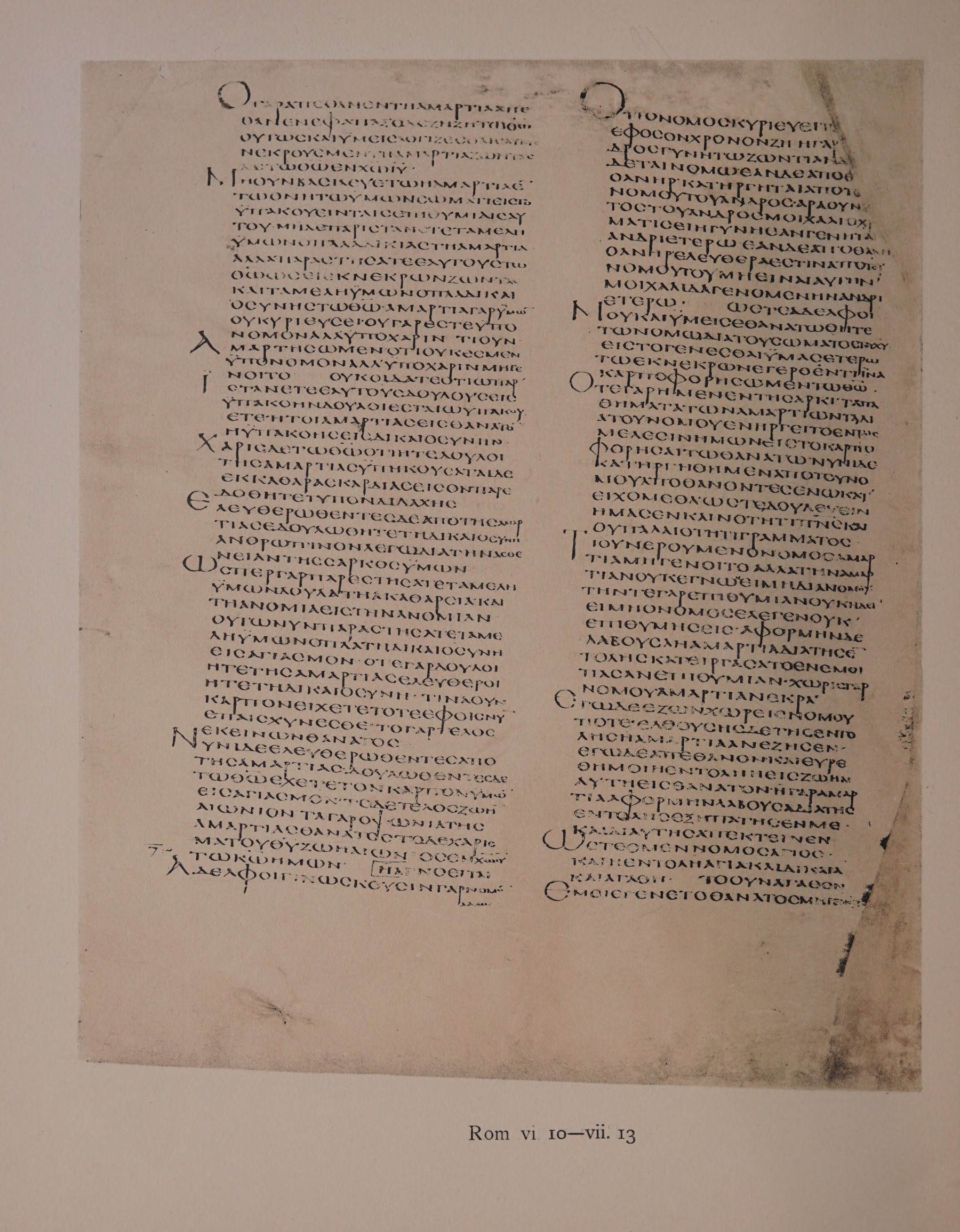
Where on the image
Page from the NTVMR transcription (docID 20002): verses 10-16 on fol. 113v (facsimile leaf 188), col. 1.
10ο γαρ απεθανεν τη αμαρτια απεθανεν εφαπαξ · ο δε ζη ζη τω θω 11ουτως και υμεις λογιζεσθαι εαυτους νεκρους μεν τη αμαρτια ζωντας δε τω θω εν χω ιυ · 12μη ουν βασιλευετω η αμαρτια εν τω θνητω υμων σωματι εις το υπακουειν ταις επιθυμιαις αυτου · 13μηδε παριστανετε τα μελη υμων οπλα αδικιας τη αμαρτια αλλα παραστησατε εαυτους τω θω ωσει εκ νεκρων ζωντας και τα μελη υμων οπλα δικαιοσυνης τω θω · 14αμαρτια γαρ υμων ου κυριευσει · ου γαρ εστε υπο νομον αλλ υπο χαριν 15τι ουν αμαρτησωμεν · οτι ουκ εσμεν υπο νομον αλλ υπο χαριν μη γενοιτο · 16ουκ οιδατε οτι ω παριστανετε εαυτους δουλους εις υπακοην δουλοι εσται ω υπακουετε · ητοι αμαρτιας εις θανατον η υπακοης εις δικαιοσυνην ·
Compare: Tischendorf 8th edition (1869)
10ὃ γὰρ ἀπέθανεν, τῇ ἁμαρτίᾳ ἀπέθανεν ἐφάπαξ· ὃ δὲ ζῇ, ζῇ τῷ θεῷ. 11οὕτως καὶ ὑμεῖς λογίζεσθε ἑαυτοὺς εἶναι νεκροὺς μὲν τῇ ἁμαρτίᾳ ζῶντας δὲ τῷ θεῷ ἐν Χριστῷ Ἰησοῦ. 12μὴ οὖν βασιλευέτω ἡ ἁμαρτία ἐν τῷ θνητῷ ὑμῶν σώματι εἰς τὸ ὑπακούειν ταῖς ἐπιθυμίαις αὐτοῦ, 13μηδὲ παριστάνετε τὰ μέλη ὑμῶν ὅπλα ἀδικίας τῇ ἁμαρτίᾳ, ἀλλὰ παραστήσατε ἑαυτοὺς τῷ θεῷ ὡσεὶ ἐκ νεκρῶν ζῶντας καὶ τὰ μέλη ὑμῶν ὅπλα δικαιοσύνης τῷ θεῷ· 14ἁμαρτία γὰρ ὑμῶν οὐ κυριεύσει, οὐ γάρ ἐστε ὑπὸ νόμον ἀλλὰ ὑπὸ χάριν. 15Τί οὖν; ἁμαρτήσωμεν ὅτι οὐκ ἐσμὲν ὑπὸ νόμον ἀλλὰ ὑπὸ χάριν; μὴ γένοιτο. 16οὐκ οἴδατε ὅτι ᾧ παριστάνετε ἑαυτοὺς δούλους εἰς ὑπακοήν, δοῦλοί ἐστε ᾧ ὑπακούετε, ἤτοι ἁμαρτίας εἰς θάνατον ἢ ὑπακοῆς εἰς δικαιοσύνην;
10For in that he died, he died unto sin once: but in that he liveth, he liveth unto God. 11Likewise reckon ye also yourselves to be dead indeed unto sin, but alive unto God through Jesus Christ our Lord. 12Let not sin therefore reign in your mortal body, that ye should obey it in the lusts thereof. 13Neither yield ye your members as instruments of unrighteousness unto sin: but yield yourselves unto God, as those that are alive from the dead, and your members as instruments of righteousness unto God. 14For sin shall not have dominion over you: for ye are not under the law, but under grace. 15What then? shall we sin, because we are not under the law, but under grace? God forbid. 16Know ye not, that to whom ye yield yourselves servants to obey, his servants ye are to whom ye obey; whether of sin unto death, or of obedience unto righteousness?
Where on the image
Page from the NTVMR transcription (docID 20002): verses 17-23 on fol. 113v (facsimile leaf 188), col. 1.
17χαρις δε τω θω οτι ητε δουλοι της αμαρτιας υπηκουσαται δε εκ καθαρας καρδιας εις ον παρεδοθητε τυπον διδαχης 18ελευθερωθεντες δε απο της αμαρτιας εδουλωθητε τη δικαιοσυνη 19ανθρωπινον λεγω δια την ασθενειαν της σαρκος υμων ωσπερ γαρ παρεστησατε τα μελη υμων δουλα τη ακαθαρσια · και τη ανομια εις την ανομιαν · ουτω νυν παραστησατε τα μελη υμων οπλα τη δικαιοσυνη εις αγιασμον · 20οτε γαρ δουλοι ητε της αμαρτιας ελευθεροι ητε τη δικαιοσυνη · 21τινα ουν καρπον ειχετε τοτε εφ οις νυν επαισχυνεσθε · το γαρ τελος εκεινων θανατος 22νυνι δε ελευθερωθεντες απο της αμαρτιας · δουλωθεντες δε τω θω εχετε τον καρπον υμων εις αγιασμον · το δε τελος ζωην αιωνιον · 23τα γαρ οψωνια της αμαρτιας θανατος το δε χαρισμα του θυ ζωη αιωνιος εν χω ιυ τω κω ημων ·
Compare: Tischendorf 8th edition (1869)
17χάρις δὲ τῷ θεῷ ὅτι ἦτε δοῦλοι τῆς ἁμαρτίας ὑπηκούσατε δὲ ἐκ καρδίας εἰς ὃν παρεδόθητε τύπον διδαχῆς, 18ἐλευθερωθέντες δὲ ἀπὸ τῆς ἁμαρτίας ἐδουλώθητε τῇ δικαιοσύνῃ· 19ἀνθρώπινον λέγω διὰ τὴν ἀσθένειαν τῆς σαρκὸς ὑμῶν. ὥσπερ γὰρ παρεστήσατε τὰ μέλη ὑμῶν δοῦλα τῇ ἀκαθαρσίᾳ καὶ τῇ ἀνομίᾳ εἰς τὴν ἀνομίαν, οὕτως νῦν παραστήσατε τὰ μέλη ὑμῶν δοῦλα τῇ δικαιοσύνῃ εἰς ἁγιασμόν. 20ὅτε γὰρ δοῦλοι ἦτε τῆς ἁμαρτίας, ἐλεύθεροι ἦτε τῇ δικαιοσύνῃ. 21τίνα οὖν καρπὸν εἴχετε τότε ἐφ’ οἷς νῦν ἐπαισχύνεσθε; τὸ γὰρ τέλος ἐκείνων θάνατος. 22νυνὶ δέ, ἐλευθερωθέντες ἀπὸ τῆς ἁμαρτίας δουλωθέντες δὲ τῷ θεῷ, ἔχετε τὸν καρπὸν ὑμῶν εἰς ἁγιασμόν, τὸ δὲ τέλος ζωὴν αἰώνιον. 23τὰ γὰρ ὀψώνια τῆς ἁμαρτίας θάνατος, τὸ δὲ χάρισμα τοῦ θεοῦ ζωὴ αἰώνιος ἐν Χριστῷ Ἰησοῦ τῷ κυρίῳ ἡμῶν.
17But God be thanked, that ye were the servants of sin, but ye have obeyed from the heart that form of doctrine which was delivered you. 18Being then made free from sin, ye became the servants of righteousness. 19I speak after the manner of men because of the infirmity of your flesh: for as ye have yielded your members servants to uncleanness and to iniquity unto iniquity; even so now yield your members servants to righteousness unto holiness. 20For when ye were the servants of sin, ye were free from righteousness. 21What fruit had ye then in those things whereof ye are now ashamed? for the end of those things is death. 22But now being made free from sin, and become servants to God, ye have your fruit unto holiness, and the end everlasting life. 23For the wages of sin is death; but the gift of God is eternal life through Jesus Christ our Lord.
Cite
Sources
- Source: Codex Alexandrinus page images + NTVMR transcription (CC BY 4.0) + Tischendorf 8th edition + KJV (holding institution)
- Critical edition: Codex Alexandrinus transcription, NTVMR (INTF Münster, CC BY 4.0); Tischendorf 8th edition for comparison
← previous · → next · v cycle view · l back to library