Book of the Dead, Spell 18: [The Book of performing the Days.] (papyrus of Iuefankh)
Introduction
The Book of the Dead, in Egyptian the spells for going forth by day, is a collection of funerary spells written on papyrus rolls and placed in burials from the New Kingdom to the Roman period. Each roll was made for one person, with spells taken from a large repertoire and illustrated with drawings (vignettes). This library gives one complete roll: the papyrus of Iuefankh in the Museo Egizio, Turin (Cat. 1791), written in the Ptolemaic period (332-30 BCE) and coming from Thebes. Richard Lepsius published it in 1842 and divided it into 165 chapters; his numbering is still the standard numbering of the spells, and it is used here.
Spell 18 (Birch: '[The Book of performing the Days.]') is on Lepsius's plates XI-XIII and on photograph 5 of the 31 Museo Egizio photographs of the roll.
The Egyptian is the transliteration of the Thesaurus Linguae Aegyptiae (edition by Burkhard Backes), with the column number of the spell before each column; the numbers are those of Lepsius's plates. On the papyrus the text runs in vertical columns of cursive hieroglyphs from right to left along the roll; titles and some words are written in red. Signs restored by the editor are in square brackets, signs the scribe left out in angle brackets, superfluous signs in braces and damaged signs in half brackets. The English is the translation by Samuel Birch, published in 1867 and made from Lepsius's copy of this papyrus, so the English and the Egyptian come from the same manuscript. It was the first complete English translation of the Book of the Dead; many passages are now understood differently. Birch's own square brackets give his alternatives and explanations. The photographs are by the Museo Egizio; each shows a stretch of the roll, and the note of each section says where the spell stands on it.
How was this verified? (Provenance)
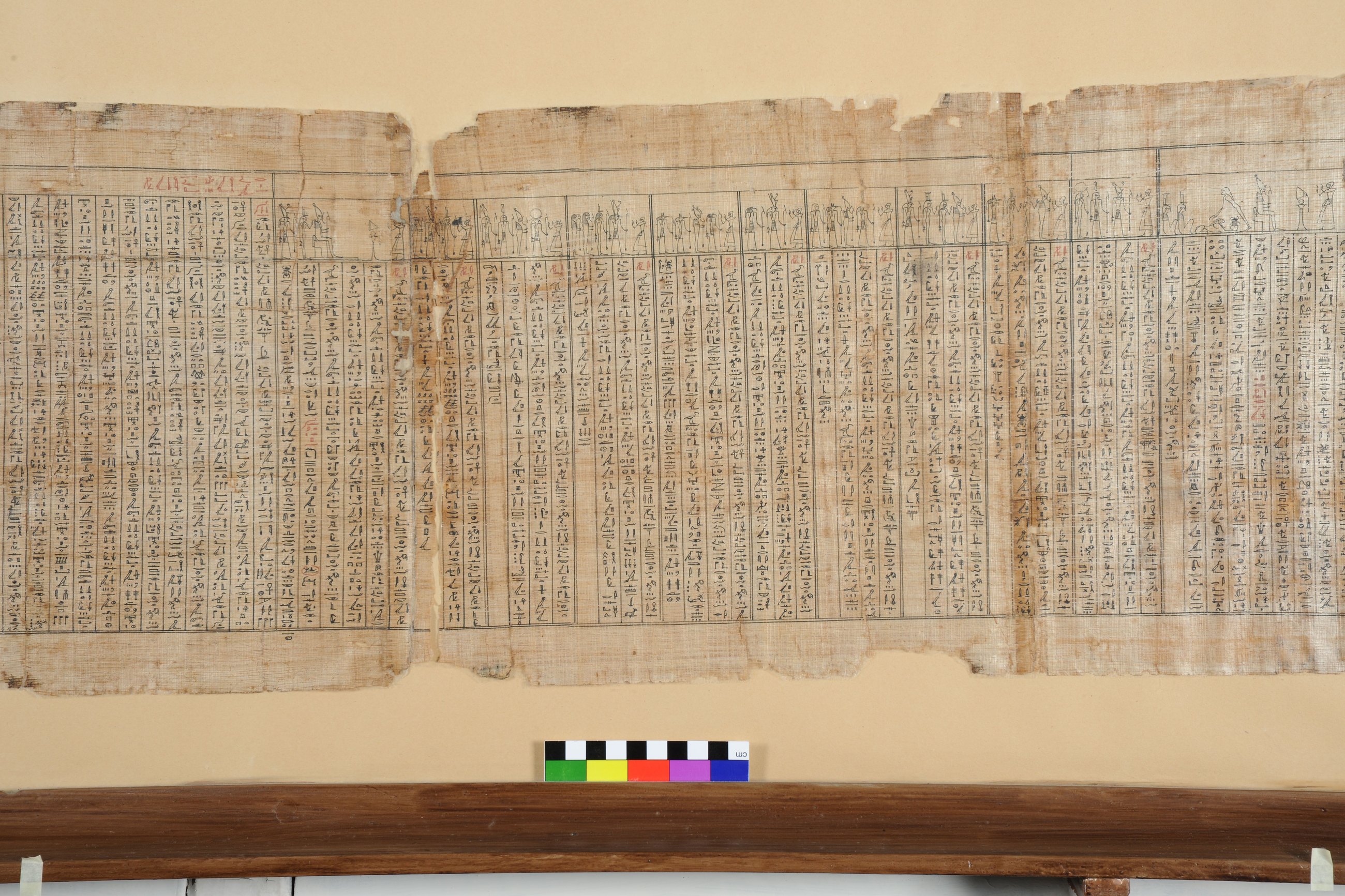
Where on the image
Turin 1791, Spell 18 (TLA Tb 018: columns 1-40; Lepsius 1842, pl. XI-XIII). Photograph 5 of 31 (Commons Book_of_the_Dead_of_Iuefankh,_papyrus_-_Museo_Egizio_Turin_C_1791_p030.jpg): the framed compartments of Spell 18 (gods above short columns) run from the frame line at 86% to 21% (Lepsius pl. XI-XIII). Checked by eye: the photographs were matched to Lepsius's plates by their vignettes, red titles and framed compartments, and the overlapping edges of neighbouring photographs were compared.
1j Ḏḥwtj smꜣꜥ-ḫrw Wsjr r ḫfti̯.pl =f smꜣꜥ=k-ḫrw Wsjr […] mꜣꜥ-ḫrw r ḫfti̯.pl =f mj smꜣꜥ Wsjr r ḫfti̯.pl =f
2m-bꜣḥ ḏꜣḏꜣ,t ꜥꜣ.t jm,j.w Rꜥ,w m-bꜣḥ ḏꜣḏꜣ,t ꜥꜣ.t jm,j.w Wsjr m-bꜣḥ ḏꜣḏꜣ,t ꜥꜣ.t jm,j.w Jwn,w grḥ pfy n
3〈j〉ḫ,t-ḫꜣwj hrw pfj n ꜥḥꜣ-ꜥ jri̯〈.t〉 zꜣw〈,t〉 sbj.w hrw pfj n sḥtm ḫfti̯.pl n.w nb-〈r-〉ḏr jm =f jr ḏꜣḏꜣ,t
4ꜥꜣ.t jm,j.w Jwn,w Jtm,w pw Šw pw Tfn,t pw jr zꜣw〈,t〉 sbj.pl sḥtm =tw zmꜣ,ypl Stš jm =f m ḥnq jri̯〈.t〉 =sn
5j Ḏḥwtj smꜣꜥ-ḫrw Wsjr r ḫfti̯.pl =f smꜣꜥ-ḫrw Wsjr […] mꜣꜥ-ḫrw r ḫfti̯.pl =f mj smꜣꜥ
6Wsjr r ḫfti̯.pl =f m-bꜣḥ ḏꜣḏꜣ,t ꜥꜣ.t jm,j.w Ꜣbḏ,w grḥ pfy n ḥ〈ꜣ〉b h〈ꜣ〉kr m ṯnw
7mt.pl m sjp ꜣḫ.w m ḫpr rf jhꜣb m ṯnw mt.pl jr ḏꜣḏꜣ,t
8ꜥꜣ.t jm,j.w Ꜣbḏ,w Wsjr Ꜣs,t Nb,t-ḥw,t Wpi̯-wꜣ,tpl pw
9j Ḏḥwtj smꜣꜥ-ḫrw Wsjr r ḫfti̯.pl =f smꜣꜥ-ḫrw Wsjr […] mꜣꜥ-ḫrw r ḫfti̯.pl =f mj
10smꜣꜥ Wsjr r ḫfti̯.pl =f m-bꜣḥ ḏꜣḏꜣ,t ꜥꜣ.t jm,j.w Ḏd,w grḥ pfy n sꜥḥꜥ ḏd jm,j Ḏd,w
11jr ḏꜣḏꜣ,t ꜥꜣ.t jm,j.w Ḏd,w Wsjr ꜣs,t Nb,t-ḥw,t Ḥr,w-nḏ-jti̯≡f Wsjr jr sꜥḥꜥ ḏd jm,j Ḏd,w
12qꜥḥ pw{y} n Ḥr,w ḫnt,j Ḫm jw =sn ḥꜣ Wsjr m{r}〈j〉 šs m ḥbs
13j Ḏḥwtj smꜣꜥ-ḫrw Wsjr r ḫfti̯.pl =f smꜣꜥ-ḫrw Wsjr […] mꜣꜥ-ḫrw r ḫfti̯.pl =f mj smꜣꜥ
14Wsjr r ḫfti̯.pl =f m-bꜣḥ ḏꜣḏꜣ,t ꜥꜣ.t jm,j.w wꜣ,t.pl mt.pl grḥ pfy n jri̯.t sjp m jw,tj.pl =sn
15jr ḏꜣḏꜣ,t ꜥꜣ.t jm,j.w wꜣ,t.pl mt.pl Ḏḥwtj Wsjr Jnp,w Jsdz jr sjp m jw,tj.pl =sn
16ḫnj =tw 〈j〉ḫ,t pw ḥr bꜣ.pl n.w ms,pl-bdš.pl
17j Ḏḥwtj smꜣꜥ-ḫrw Wsjr r ḫfti̯.pl =f smꜣꜥ-ḫrw Wsjr […] mꜣꜥ-ḫrw r ḫfti̯.pl =f mj smꜣꜥ Wsjr r ḫfti̯.pl =f
18m-bꜣḥ ḏꜣḏꜣ,t ꜥꜣ.t jm,j.w Ḫm grḥ pfy n 〈j〉ḫ,t-{ḥr-}ḫꜣwj m Ḫm jr ḏꜣḏꜣ,t ꜥꜣ.t jm,j.w Ḫm Ḥr,w pw jm,j Ḫm
19Ḏḥwtj pw n,tj m ḏꜣḏꜣ,t N-jr≡f jr grḥ pfy n 〈j〉ḫ,t-{ḥr-}ḫꜣwj m Ḫm ḥḏ-Tꜣ,du pw n qrs Wsjr nb-jmn,tt
20j Ḏḥwtj smꜣꜥ-ḫrw Wsjr r ḫfti̯.pl =f smꜣꜥ-ḫrw Wsjr […] mꜣꜥ-ḫrw r ḫfti̯.pl =f mj smꜣꜥ Wsjr r ḫfti̯.pl =f m-bꜣḥ
21ḏꜣḏꜣ,t ꜥꜣ.t jm,j.w ḫbs-tꜣ ꜥꜣ.t m Ḏd,w grḥ pfj n ḫbs-tꜣ m znf smꜣꜥ.n Wsjr r ḫfti̯.pl =f jr
22ḏꜣḏꜣ,t ꜥꜣ.t jm,j.w ḫbs-tꜣ ꜥꜣ.t m Ḏd,w Ḏḥwtj Wsjr Jnp,w Wpi̯-wꜣ,tpl pw jy〈.t〉 pw jri̯.tn zmꜣ,ypl Stš jri̯{.t} =sn
23ḫpr,w =sn m ꜥw,t.pl ꜥḥꜥ,n sft =sn m-bꜣḥ nꜣ nṯr.pl jpw ḏr-n,tj pri̯ znf jm =sn rḏi̯.ntw =w m sjp n jm,j.w Ḏd,w
24j Ḏḥwtj smꜣꜥ-ḫrw Wsjr r ḫfti̯.pl =f smꜣꜥ-ḫrw Wsjr […] mꜣꜥ-ḫrw r ḫfti̯.pl =f mj smꜣꜥ
25Wsjr r ḫfti̯.pl =f m-bꜣḥ ḏꜣḏꜣ,t ꜥꜣ.t jm,j.w Pi̯ Dp grḥ pfy n sꜥḥꜥ sn,〈t〉pl Ḥr,w smn jwꜥ{ꜥ}〈,w〉
26n Ḥr,w m 〈j〉ḫ,t jti̯ =f Wsjr jr ḏꜣḏꜣ,t ꜥꜣ.t jm,j.w Pi̯ Dp Ḥr,w pw ꜣs,t pw Jmsṯ Ḥpy jr sꜥḥꜥ
27sn,〈t〉pl Ḥr,w ḏd jn Stš pw n jm,j.w-ḫt =f smn sn,〈t〉pl r =s
28j Ḏḥwtj smꜣꜥ-ḫrw Wsjr r ḫfti̯.pl =f smꜣꜥ-ḫrw Wsjr […] mꜣꜥ-ḫrw r ḫfti̯.pl =f mj smꜣꜥ Wsjr r ḫfti̯.pl =f
29m-bꜣḥ ḏꜣḏꜣ,t ꜥꜣ.t jm,j.w N-jr≡f grḥ pfy n štꜣ ꜥꜣ jrw jr ḏꜣḏꜣ,t ꜥꜣ.t jm,j.w
30N-jr≡f Rꜥ,w Wsjr Šw Bꜣby pw jr grḥ pfy n štꜣ ꜥꜣ jrw wnn =tw ḥr qrs
31ḫpš mn〈,t〉.du ḏrw,w n.t Wsjr-Wnn-nfr,w mꜣꜥ-ḫrw ḏ,t
32j Ḏḥwtj smꜣꜥ-ḫrw Wsjr r ḫfti̯.pl =f smꜣꜥ-ḫrw Wsjr […] mꜣꜥ-ḫrw r ḫfti̯.pl =f mj smꜣꜥ Wsjr
33r ḫfti̯.pl =f m-bꜣḥ ḏꜣḏꜣ,t ꜥꜣ.t jm,j.w jdb,pl-rḫt,j grḥ pf n sḏr ꜣs,t rs.tw ḥr jri̯〈.t〉 j〈ꜣ〉kb,w ḥr sn =s
34Wsjr jr ḏꜣḏꜣ,t ꜥꜣ.t jm,j.w jdb,pl-rḫt,j Ꜣs,t pw Ḥr,w pw Jmsṯ pw
35j Ḏḥwtj smꜣꜥ-ḫrw Wsjr r ḫfti̯.pl =f smꜣꜥ-ḫrw Wsjr […] mꜣꜥ-ḫrw r ḫfti̯.pl =f mj smꜣꜥ
36Wsjr r ḫfti̯.pl =f m-bꜣḥ ḏꜣḏꜣ〈,t〉 ꜥꜣ.t jm,j Rʾ-sṯꜣ,w grḥ pfj n rḏi̯.n Jnp,w ꜥ.wj =f ḥr 〈j〉ḫ,t ḥꜣ Wsjr smꜣꜥ-ḫrw Ḥr,w r
37ḫfti̯.pl =f jr ḏꜣḏꜣ,t ꜥꜣ.t jm,j.w Rʾ-sṯꜣ,w Wsjr Ꜣs,t Ḥr,w pw jw Wsjr jb =f nḏm〈.w〉 jw jt{w}r,tdu ḥtp jb =f!! jwi̯ jrf
38Ḏḥwtj smꜣꜥ-ḫrw Wsjr r ḫfti̯.pl =f m-bꜣḥ ḏꜣḏꜣ,t ꜥꜣ.t n.t nṯr nb nṯr,t nb〈.t〉 m-bꜣḥ-ꜥ nb-〈r-〉ḏr dr ḫfti̯.pl n Wsjr
39[…] mꜣꜥ-ḫrw dr ḏw nb jr,j =f ḏd =tw rʾ pn wꜥb〈.w〉 pri̯〈.t〉 pw m hrw m-ḫt mnj jn z jri̯.t-ḫpr,w
40nb rḏḏ! jb =f jr gr〈,t〉 šdi̯.w rʾ pn ḥr =f wḏꜣ =f pw ḥr-tp tꜣ jw =f pri̯ =f m ḫ,t nb〈.t〉 nn spr.w sw 〈j〉ḫ,t-nb〈,t〉 bjn m šs-mꜣꜥ ḥḥ
below 40n zp
XVIII. [The Book of performing the Days.]
[Vignette. — Deceased adoring Turn, Shu, Tefnu.)
Oh Thoth, justifying Osiris against his enemies! justify the Osiris against his enemies like as thou hast justified Osiris against his enemies— before the Great Chiefs who belong to the Sun— before the Great Chiefs who belong to Osiris before the Great Chiefs who are in Annu [Heliopolis], the night [when] the Things are on the Altar, the day of the Battle made to subdue the scorners, the day of the Strangling of the accusers of the Universal Lord there. The Great Chiefs of Annu [Heliopolis] are Tum, Shu, Tefnu. The catching the scorners; and the strangling of the conspirators of Set there, is perceiving the wickedness they do.
[Vignette. — Deceased adoring Osiris, Isis, Nephthys, and Anubis.)
Before the Great Chiefs who are in Abydos, the night of the Haker Festival of counting the dead and judging Souls, when a call is made to count the dead. The Great Chiefs in Abydos are Osiris, Isis, Nephthys, and Ap-heru.
Vignette. — Deceased adoring Osiris, Isis, Nephthys, and Horus.)
Before the Great Chiefs belonging to Tattu, the night of setting up Tat in Tattu. The Great Chiefs in Tattu are Osiris, Isis, Nephthys, Horus, the sustainer of his father. The setting up the Tat in Tattu means the shoulder of Horus who dwells in S’Khem. They are behind Osiris wrapped up in bandages.
Vignette. — Deceased adoring Thoth, Osiris, Anup, and Astes.)
Before the Great Chiefs attached to the Paths of the Dead, the night of making the Judgment of their Nothingness. The Great Chiefs in the Paths of the Dead are Thoth, Osiris, Anup, Astes. The judgment THE EGYPTIAN FAITn. of their nothingness is the things taken out of the Souls of those born wicked.
Vignette. — Deceased adoring Horus and Thoth.)
Before the Great Chiefs in S’Khem, the night of the Things [placed] on the Altars in S’Khem. The Great Chiefs belonging to S’Khem are Horus who is in S’Khem, Thoth who is among the Chiefs of Anrutf. The night of the Things on the Altars in S’Khem is the lighting the Region of the coffin of Osiris, Lord of the West.
[Vignette. — Deceased adoring Thoth, Osiris, Anup, and Ap-heru.]
Before the Great Chiefs attached to the Festival of digging the Earth in Tattu, the night of manuring [?] with Blood, justifying Osiris against his enemies. The Great Chiefs in the great sacrifice [?] in Tattu are Thoth, Osiris, Anup. This means the approach made by the conspirators of Set, they make their transformation into goats. They [the Gods] slaughter them before the Chief Gods while the blood flows from them. It is done by the adjudgment of those belonging to Tattu.
Vignette. — Deceased adoring Horus, Isis, Amut, and Hapi.]
Before the Great Chiefs in the Hill of Tap, the night of setting up the Brethren ?] of Horus, and preparing the issue of Horus with the things of his father Osiris. The Great Chiefs who are in the Land of Tap are Horus, Isis, Amset, and Hapi. The setting up of the Brethren of Horus is what is said by Set to his followers: “Set up the brethren there!”
[Vignette. — Deceased adoring Ra, Osiris, Shu, and Aat.}
Before the Great Chiefs who belong to Anrutf, the night of the great Mystery of the Shapes. The Great Chiefs who are in Anrutf are Ra, Osiris, Shu, and Aat. The night of the Mystery of the great Shapes is when has been made the embalming of the thigh, leg, and foot [?] of Osiris, the good being, justified for ever. [Vignette. — Deceased adoring Isis, Horus, and Amut.]
Before the Great Chiefs who are in. the night of the Laying out by Isis, who rises to lament over her brother Osiris. The Great Chiefs in. .. are Isis, Horus, and Amset.
[Vignette.— Deceased adoring Osiris, Isis, and Horus.]
Before the Great Chiefs in Rusat, the night when Anup places his hands on the things behind Osiris, justifying Horus against his enemies. The Great Chiefs in Rusat are Osiris, Isis, and Horus. Osiris has been delighted, his heart has been filled with delight, his house is at peace. Let him go. Oh Thoth! justify Osiris against his enemies before the Great Chiefs of every God and Goddess — before the hand of the Universal Lord. He puts away all the enemies of the Osiris; he thrusts aside all the evil he has retained.
This chapter being said, a person comes forth pure from [as] the day after he has been laid out, making all the transmigrations to place his heart. Should this chapter have been attended to by him, he proceeds from above the earth; he comes forth from all flame; no evil thing approaches him in pure clothes for millions of ages.
Notes
- Birch's English was taken from three scans of Bunsen's Egypt's Place in Universal History, vol. V (1867), on the Internet Archive. The three OCR texts were aligned word by word and each word was settled by their agreement; running heads, page numbers, footnote markers and footnotes were removed. Some OCR errors may remain, chiefly in proper names.
- Birch uses the terms and name forms of his time: Hades, Aahlu (Elysium), Tum for Atum, Seb for Geb, Anup for Anubis, Phoenix or Bennu for the heron.
- Labels such as 'title line' or 'gate 1' before a line of the Egyptian translate the position labels of the TLA.
- The TLA has no hieroglyphic encoding for these texts, so only the transliteration is shown.
Cite
Sources
- Source: Papyrus of Iuefankh, Turin, Museo Egizio Cat. 1791 (Museo Egizio photographs, CC0) + TLA transliteration (ed. B. Backes, CC BY-SA 4.0) + English of Samuel Birch (1867, public domain) (holding institution)
- Critical edition: Thesaurus Linguae Aegyptiae, ed. Burkhard Backes (2018 data, AED-TEI)
← previous · → next · v cycle view · l back to library