Book of the Dead, Spell 142: Preparing the Dead, that he may go, walk, and come out as the Day ... (papyrus of Iuefankh)
Introduction
The Book of the Dead, in Egyptian the spells for going forth by day, is a collection of funerary spells written on papyrus rolls and placed in burials from the New Kingdom to the Roman period. Each roll was made for one person, with spells taken from a large repertoire and illustrated with drawings (vignettes). This library gives one complete roll: the papyrus of Iuefankh in the Museo Egizio, Turin (Cat. 1791), written in the Ptolemaic period (332-30 BCE) and coming from Thebes. Richard Lepsius published it in 1842 and divided it into 165 chapters; his numbering is still the standard numbering of the spells, and it is used here.
Spell 142 (Birch: 'The book of Preparing the Dead, that he may go, walk, and come out as the Day in all the Transformations he wishes knowing the Name of Osiris in all the Places where he wishes to be.') is on Lepsius's plate LIX and on photograph 23 of the 31 Museo Egizio photographs of the roll.
The Egyptian is the transliteration of the Thesaurus Linguae Aegyptiae (edition by Burkhard Backes), with the column number of the spell before each column; the numbers are those of Lepsius's plates. On the papyrus the text runs in vertical columns of cursive hieroglyphs from right to left along the roll; titles and some words are written in red. Signs restored by the editor are in square brackets, signs the scribe left out in angle brackets, superfluous signs in braces and damaged signs in half brackets. The English is the translation by Samuel Birch, published in 1867 and made from Lepsius's copy of this papyrus, so the English and the Egyptian come from the same manuscript. It was the first complete English translation of the Book of the Dead; many passages are now understood differently. Birch's own square brackets give his alternatives and explanations. The photographs are by the Museo Egizio; each shows a stretch of the roll, and the note of each section says where the spell stands on it.
How was this verified? (Provenance)
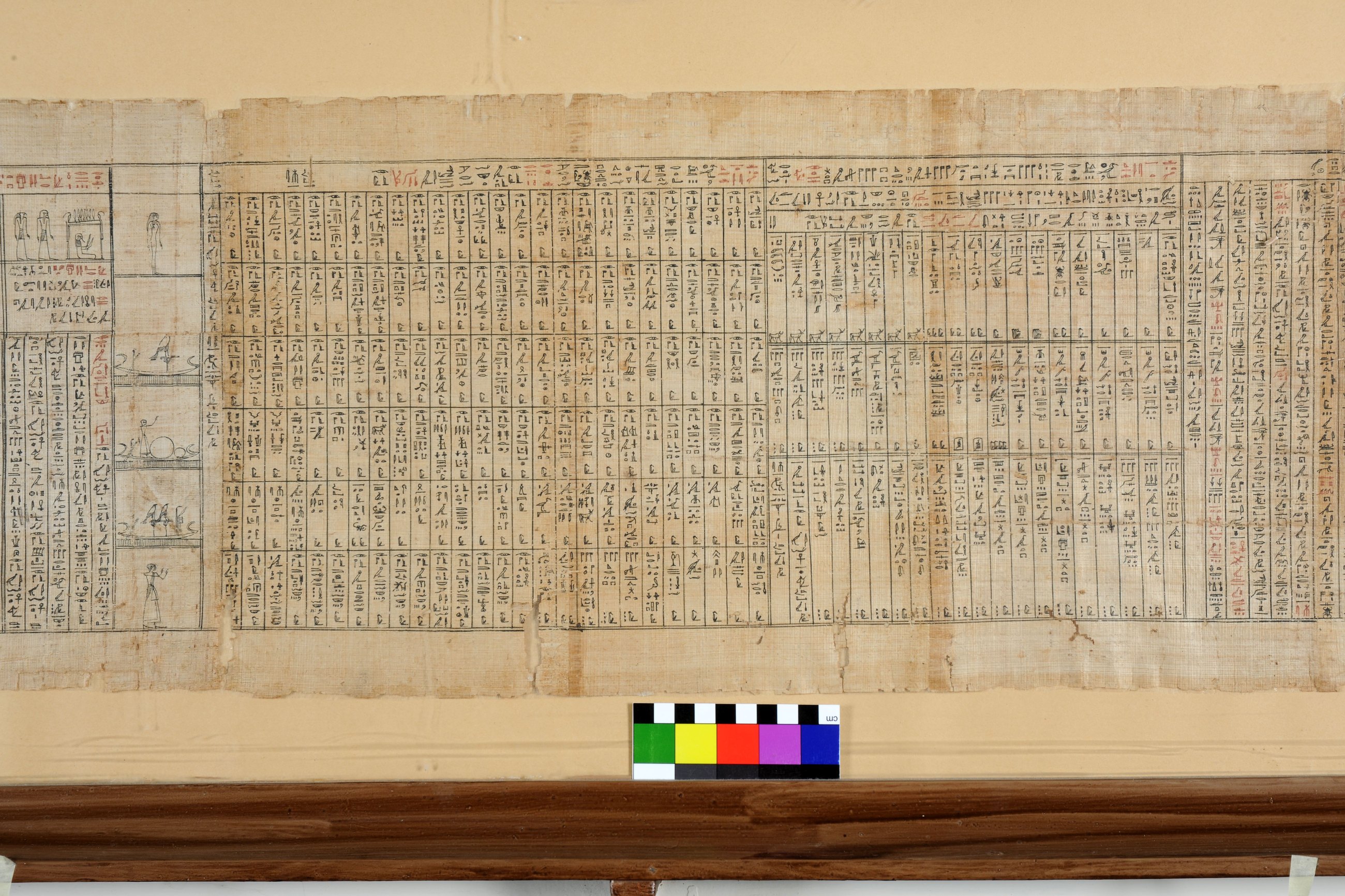
Where on the image
Turin 1791, Spell 142 (TLA Tb 142: title line, column 27; Lepsius 1842, pl. LIX). Photograph 23 of 31 (Commons Book_of_the_Dead_of_Iuefankh,_papyrus_-_Museo_Egizio_Turin_C_1791_p012.jpg): the three registers of short columns, each ending in a god sign, at 15-57% (Lepsius pl. LIX). Checked by eye: the photographs were matched to Lepsius's plates by their vignettes, red titles and framed compartments, and the overlapping edges of neighbouring photographs were compared.
titlemḏꜣ,t n.t sjqr ꜣḫ.w rḏi̯.t šmi̯ =f swsḫ nmt,t =f pri̯〈.t〉 m hrw m ḫpr,w nb mri̯.w =f rḫ rn.pl n.w Wsjr m s,t =f nb.t mrr! =f wnn =f jm ḏd-mdw jn Wsjr […] mꜣꜥ-ḫrw
1,1Wsjr-Wnn-nfr,w
2,1Wsjr ꜥnḫ,y
3,1Wsjr nb-ꜥnḫ
4,1Wsjr nb-〈r-〉ḏr
5,1Wsjr wpi̯ šꜥ,t Tꜣ,du
6,1Wsjr ḫnt,j Wn〈,t〉
7,1Wsjr ḫnt,j np〈r〉
8,1Wsjr s〈ꜣ〉ḥ
9,1Wsjr Zpꜣ šps bꜣ,pl-Jwn,w
10,1Wsjr ḫnt,j Ṯnn,t
11,1Wsjr m {sw}〈Rs〉-n,t
12,1Wsjr m Mḥn,t
13,1Wsjr nb ḥḥ.pl
14,1Wsjr zꜣ rp〈w〉,t.j
15,1Wsjr Ptḥ nb-ꜥnḫ
16,1Wsjr ḫnt〈,j〉 Rʾ-sṯꜣ,w
17,1Wsjr ḥqꜣ jdb.pl ḥr〈,j〉-jb Ḏd,w
18,1Wsjr ḥr〈,j〉-jb ḫꜣs,t.pl
19,1Wsjr bꜣ špsi̯ m Ḏd,w
20,1Wsjr m Ḥqꜣ-ꜥnḏ
21,1Wsjr m Ḥs〈r〉,t ky-ḏd zḥ-nṯr
22,1Wsjr nb tꜣ-ꜥnḫ
23,1Wsjr m Zꜣw
24,1Wsjr m Nḏ〈f〉,t
25,1Wsjr m rsj ky-ḏd m ḏꜣḏꜣ,t
26,1Wsjr m Pi̯
1,2Wsjr m Dp
2,2Wsjr m ⸢Nṯri̯⸣
3,2Wsjr m Zꜣw ẖr〈,j〉.t
4,2Wsjr m Zꜣw ḥr,j〈.t〉
5,2Wsjr m N-〈ꜣ〉r≡f
6,2Wsjr m bjk,du!!
7,2Wsjr Swn,w
8,2Wsjr m Rʾ-nn
9,2Wsjr m ꜥpr
10,2Wsjr m Qfn,w
11,2Wsjr m Zkr,y
12,2Wsjr m Pḏ
13,2Wsjr m ḥw,t =f m Rʾ-sṯꜣ,w
14,2Wsjr m Tꜣ-wr
15,2Wsjr m Ndy,t
16,2Wsjr ḫnt〈,j〉 nʾ,t =f
17,2Wsjr jty
18,2Wsjr m Psg〈-rʾ〉
19,2Wsjr m ḥw,t =f jm,j〈.t〉 Tꜣ-šmꜥ,w
20,2Wsjr m ḥw,t =f jm,j〈.t〉 Tꜣ-mḥw
21,2Wsjr m p,t
22,2Wsjr m tꜣ
23,2Wsjr m ns,t
24,2Wsjr m tꜣf-wr
25,2Wsjr Zkr m štꜣ,t
26,2Wsjr ḥqꜣ-ḏ,t m Jwn,w
1,3Wsjr wtṯ
2,3Wsjr m Sk,tt
3,3Wsjr m-{r}rw,t ṯꜣw
4,3Wsjr nb-ḏ,t
5,3Wsjr nb-nḥḥ
6,3Wsjr m dšr〈,t〉
7,3Wsjr m zš
8,3Wsjr Wḥꜣ,t rsj〈.t〉
9,3Wsjr Wḥꜣ,t mḥ,t〈j.t〉
10,3Wsjr m jꜣ,t wr.t
11,3Wsjr m ꜥpr,t
12,3Wsjr m šnw
13,3Wsjr m Ḥkn,w ky-ḏd Ḥsr,t
14,3Wsjr m Zkr
15,3Wsjr m Šꜣw
16,3Wsjr fꜣi̯ Ḥr,w
17,3Wsjr m w Pgꜣ
18,3Wsjr m Mꜣꜥ,tj
19,3Wsjr m Mnj
20,3Wsjr bꜣ,pl jti̯ =f
21,3Wsjr nb jdb.pl nsw,t-nṯr.pl
22,3Wsjr m Bn
23,3Wsjr Tꜣy〈,t〉
24,3Wsjr ḥr,j šꜥy =f
25,3Wsjr ḫnt〈,j〉 zḥ{,t} ḥm,t.pl =f
26,3Wsjr m ⸢sjꜣṯ⸣
1,4Wsjr m ⸢Sj,tjw⸣
2,4Wsjr m ꜣšr,w
3,4Wsjr m Tꜣ,du!! nb.w
4,4Wsjr ḫnt,j-š-pr-ꜥꜣ
5,4Wsjr m ḥw,t-bnbn
6,4Wsjr m Jwn,w
7,4Wsjr sr wr jm,j Jwn,w
8,4Wsjr m Ḥmꜣg
9,4Wsjr mks
10,4Wsjr m Pi̯ Nw,w
11,4Wsjr m ḥw,t-ꜥꜣ,t
12,4Wsjr nb-ꜥnḫ m Ꜣbḏ,w
13,4Wsjr nb-Ḏd,w
14,4Wsjr ḫnt,j gꜣu̯ s,t.pl
15,4Wsjr jty ḥr〈,j〉-jb jꜣb,tt
16,4Wsjr jty ḥr〈,j〉-jb ⸢štꜣ,t⸣
17,4Wsjr m ꜥnḫ m Ḥw,t-kꜣ-Ptḥ
18,4Wsjr nb-pḥ,tj ptpt sbj.pl
19,4Wsjr kꜣ ḥr〈,j〉-jb Km,t
20,4Wsjr jḥ,tj
21,4Wsjr zḥ
22,4Wsjr Rꜥ,w-Ḥr,w-ꜣḫ,tj
23,4Jtm,w kꜣ ẖ〈,t〉 psḏ,t-ꜥꜣ,t
24,4Wp-wꜣ,tpl šmꜥi̯ sḫm Tꜣ,du
25,4Wp-wꜣ,tpl mḥw sḫm p,t
26,4Ptḥ ḏd špsj s,t Rꜥ,w
1,5wꜥ,w sbq m ḥw,t-bnbn
2,5Gbb rpꜥ nṯr.pl
3,5Ḥr,w-wr
4,5Ḥr,w ḫntj-n-jr,tdu
5,5Ḥr,w zꜣ ꜣs,t
6,5Mn,w nswt Ḥr,w nḫt
7,5Jwn-mw,t≡f wꜥb pr-wr
8,5H̱nm,w Ḥr,w ḥtp
9,5Sḫꜣy〈,t〉-Ḥr,w
10,5Ḥr,w Ḫntj-ẖty
11,5Ḥr,w Ḏḥwtj
12,5Jni̯-ḥr,t
13,5Jnp,w ḫnt,j-zḥ-nṯr
14,5Nw,t
15,5ꜣs,t nṯri̯.t m rn〈.pl〉 =s nb.w
16,5⸢rʾ⸣ ⸢sḫꜣy⸣
17,5Šnty,t
18,5Ḥqꜣ,yt
19,5Nšm,t nb〈,t〉-ḏ,t
20,5Ni̯,t Srq,t
21,5Mꜣꜥ,t
22,5ꜣhy,t
23,5tꜣ 4 Msḫn,t jm,j.w〈t〉 ꜣbḏ,w
24,5Msḫn,t ꜥꜣ.t
25,5Msḫn,t sbq.t
26,5Msḫn,t mnḫ.t
1,6Msḫn,t nfr.t
2,6Jms,tj
3,6Ḥpy
4,6Dwꜣ-mw,t≡f
5,6Qbḥ-sn,pl≡f
6,6Jꜥrꜥ,t ḥr〈,j.t〉-jb ḥw,t-nṯr
7,6nṯr.pl sšmi̯ dꜣ,t
8,6nṯr.pl qr,tj
9,6nṯr.pl nṯr,t〈.pl〉 jm,j.w ꜣbḏ,w
10,6jtr,t-šmꜥ〈,t〉 jtr,t-mḥ〈,t〉
11,6jmꜣḫ,w.pl n.w Wsjr
12,6Wsjr-ḫnt,j-jmn,tt
13,6Wsjr m s,t〈.pl〉 =f nb.w
14,6Wsjr m s,t =f m Tꜣ-šmꜥ,w
15,6Wsjr m ꜥḥꜥ,t =f m Tꜣ-mḥw
16,6Wsjr m s,t nb〈.t〉 mri̯.y〈t〉 kꜣ =f jm
17,6Wsjr m zḥ〈.pl〉 =f nb.w
18,6Wsjr m qmꜣ〈.pl〉 =f nb.w
19,6Wsjr m rn〈.pl〉 =f nb.w
20,6Wsjr m grg〈,t〉 =f nb
21,6Wsjr m ḫꜥ,w.pl =f nb.w
22,6Wsjr m ẖkr.pl =f nb.w
23,6Wsjr m ꜥḥꜥ,t〈.pl〉 =f nb.w
24,6Ḥr,w-nḏ-ḥr-jti̯≡f m rn =f nb
25,6Jnp,w ḫnt〈,j〉-zḥ-nṯr m rn =f nb
26,6Jnp,w jm,j-wt nṯr.pl nṯr[.w,t] ⸢nb⸣ jm,j[.w] […]
27m ḏḏ! n Wsjr […] mꜣꜥ-ḫrw
CXLII. The book of Preparing the Dead, that he may go, walk, and come out as the Day in all the Transformations he wishes knowing the Name of Osiris in all the Places where he wishes to be.
Osiris, the good being.
Osiris, the living. Osiris the living Lord.
Osiris, Universal Lord.
Osiris, preparer of the spine of the Earth. [?]
Osiris dwelling in existence.
Osiris dwelling in grain.
Osiris, the Constellation [Orion].
Osiris the Great progenitor (?) of the Spirits of Heliopolis.
Osiris dwelling in Bounds (Tennt).
Osiris in the South.
Osiris in the North.
Osiris, Lord of millions.
Osiris, son of the leaders.
Osiris-Ptah, Lord of Life.
Osiris who dwells in Rusta.
Osiris, ruler of. .. places, dwelling in Tattu. Osiris who dwells in the midst of foreign lands. Osiris, the great Soul in Tattu.
Osiris in Aah.
Osiris in Hes or the divine abode.
Osiris, Lord of the Land of Life.
Osiris in Ssa [Sais].
Osiris in Negt.
Osiris in the South, or in Company.
Osiris in Tu.
Osiris in Tap.
Osiris in Neter (or as a God).
Osiris in Lower Ssa [Sais].
Osiris in Upper Ssa [Sais].
Osiris in Anrutf.
Osiris as the two Hawks.
Osiris in Sannu.
Osiris in the Gate of the House.
Osiris in Aper.
Osiris in Kafnu.
Osiris in Sekeri.
Osiris in Pet.
Osiris in his house in the Rusta.
Osiris in Taur.
Osiris in Neti.
Osiris in his city.
Osiris. .. [two crocodiles].
Osiris in Pekas.
Osiris in his house in the Land of the South. Osiris in his house in the Land of the North. Osiris in Heaven.
Osiris on Earth.
Osiris behind the throne.
Osiris in Atf-ur.
Osiris Socharis in the secret place.
Osiris, eternal ruler in Annu [Heliopolis]. Osiris, the issue.
Osiris in the Ark.
Osiris in Reru-tu.
Osiris, eternal ruler.
Osiris, Lord of the Age.
Osiris in Tesher.
Osiris in Sesh.
Osiris (of) the Southern Ut.
Osiris (of) the Northern Ut.
Osiris in Aa-ur.
Osiris in Aaper.
Osiris in Shennu.
Osiris in Heknu or in Heser.
Osiris in Sekar.
Osiris in Shau.
Osiris, bearer of Horus.
Osiris at the edge of the Gap (Peka).
Osiris as Truth.
Osiris in Mna [or] daily.
Osiris, the souls of his father.
Osiris, Lord of.. . places, King of the Gods. Osiris in Benru.
Osiris, the Threshold (Tai).
Osiris over his food.
Osiris who dwells in the residence of his Cows. Osiris in Sa.
Osiris in Sati.
Osiris in Ashru.
Osiris in all lands.
Osiris resident in the Pool of the great House. Osiris in the roofed House.
Osiris in Annu [Heliopolis].
Osiris, second chief in Annu.
Osiris in Hemka.
Osiris in Aksh.
Osiris in the region of Nu.
Osiris in the Great House. Osiris, living Lord in Abydos.
Osiris, Lord of Tattu.
Osiris dwelling in the thrones.
Osiris, chief, dweller of Abydos.
Osiris, chief dwelling in secret.
Osiris while living in Ptahka.
Osiris, capturing Lord, trampling the wicked. Osiris, the Bull, resident in Kam.
Osiris, the throat.
Osiris, the parlour.
Osiris, the Sun, Lord of the Horizons.
Turn, the bull of the other Great Gods. Ap-hern, Southern Paddle of the Earth. Ap-heru, Northern Paddle of the Heaven. Ptah, the great Tatt, the throne of the Sun. Sole type (?) in the roofed House.
Seb, leader of the Gods.
Horus the elder.
Horus who dwells in Skhem.
Horus, son of Isis.
Skem, the king, the powerful Horus.
Anmutf, the pure place of the Great House. Khnum, Horus the peaceful.
Horus Skhai.
Horus dwelling in Khati.
Horus-Thoth.
Han-har.
Anepu who dwells in the divine parlour. Nu-har.
The Goddess Isis in all her names.
Ru- Skhai.
Shenti.
Hekti.
The Barge of the Eternal Lord.
Neith and Selcis.
Truth.
The Cow [Athor]. The Four Places of New Birth in Abydos.
The great Place of Birth.
The Typical Place of New Birth.
The creative Place of New Birth.
The good Place of New Birth.
Amset, Hapi, Tuautmutf, Khabhsenuf.
The Uraei in the divine Abode.
The Gods, traversers of the Gate.
The Gods of the Orbit.
The Gods and Goddesses in Abydos.
The Southern and Northern Passage.
The blessed of Osiris.
Osiris who dwells in the West.
Osiris in all places.
Osiris in his place in the Land of the South.
Osiris in his place in the Land of the North.
Osiris in all the places in which his person wishes to be. Osiris in all Halls or festivals.
Osiris in all his creation.
Osiris in all his names.
Osiris in all his disguises.
Osiris in all his crowns.
Osiris in all his decorations.
Osiris in all places.
Horus, the sustainer of his father under all his names.
Anepu who dwells in the divine Hall in all his names. An up, attached to the embalming and the Gods and Goddesses.
Given by the Osiris.
Notes
- Birch's English was taken from three scans of Bunsen's Egypt's Place in Universal History, vol. V (1867), on the Internet Archive. The three OCR texts were aligned word by word and each word was settled by their agreement; running heads, page numbers, footnote markers and footnotes were removed. Some OCR errors may remain, chiefly in proper names.
- Birch uses the terms and name forms of his time: Hades, Aahlu (Elysium), Tum for Atum, Seb for Geb, Anup for Anubis, Phoenix or Bennu for the heron.
- Labels such as 'title line' or 'gate 1' before a line of the Egyptian translate the position labels of the TLA.
- The TLA has no hieroglyphic encoding for these texts, so only the transliteration is shown.
Cite
Sources
- Source: Papyrus of Iuefankh, Turin, Museo Egizio Cat. 1791 (Museo Egizio photographs, CC0) + TLA transliteration (ed. B. Backes, CC BY-SA 4.0) + English of Samuel Birch (1867, public domain) (holding institution)
- Critical edition: Thesaurus Linguae Aegyptiae, ed. Burkhard Backes (2018 data, AED-TEI)
← previous · → next · v cycle view · l back to library