Book of the Dead, Spell 144: Knowing the Names of the Seven Halls (papyrus of Iuefankh)
Introduction
The Book of the Dead, in Egyptian the spells for going forth by day, is a collection of funerary spells written on papyrus rolls and placed in burials from the New Kingdom to the Roman period. Each roll was made for one person, with spells taken from a large repertoire and illustrated with drawings (vignettes). This library gives one complete roll: the papyrus of Iuefankh in the Museo Egizio, Turin (Cat. 1791), written in the Ptolemaic period (332-30 BCE) and coming from Thebes. Richard Lepsius published it in 1842 and divided it into 165 chapters; his numbering is still the standard numbering of the spells, and it is used here.
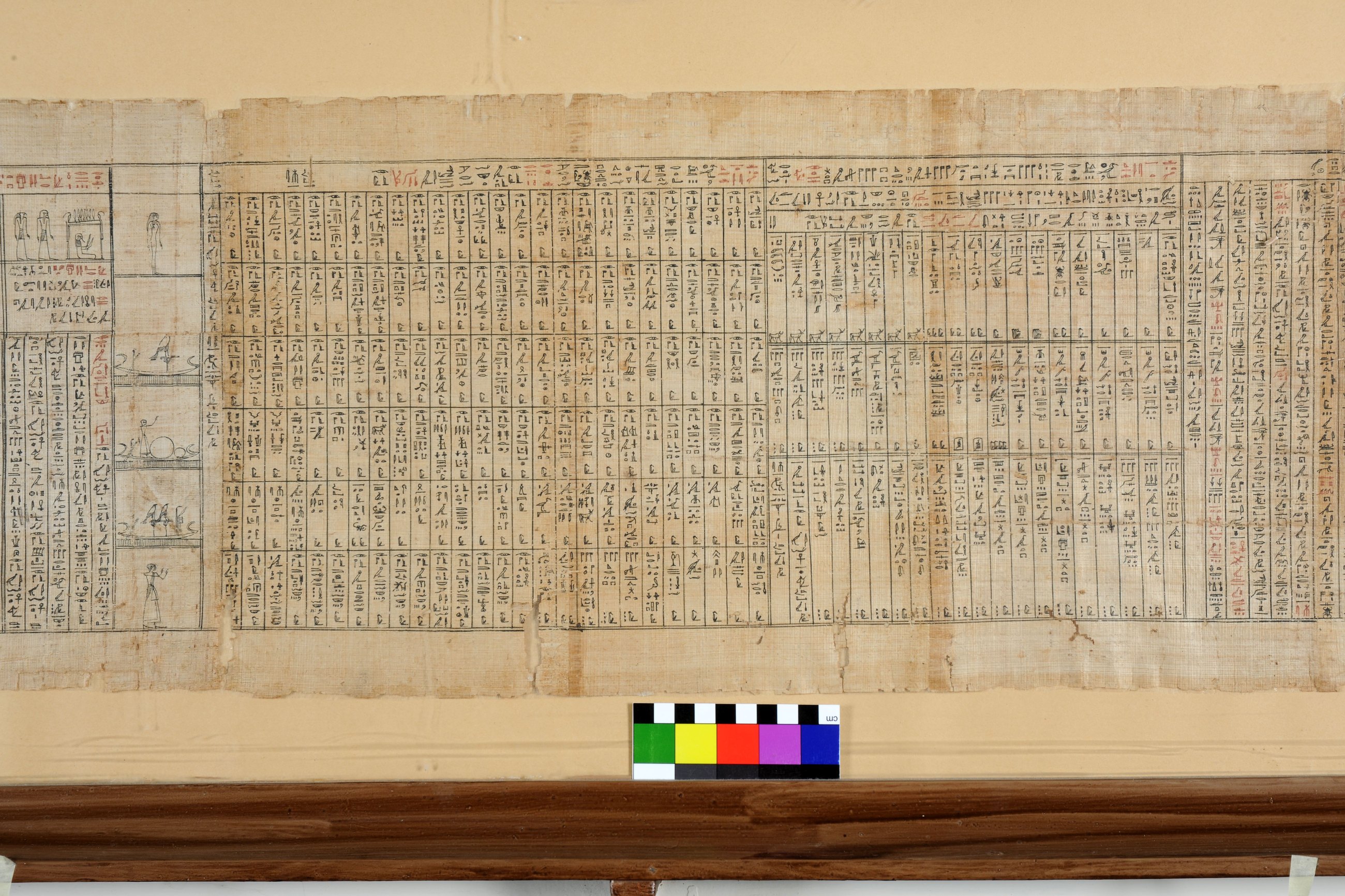
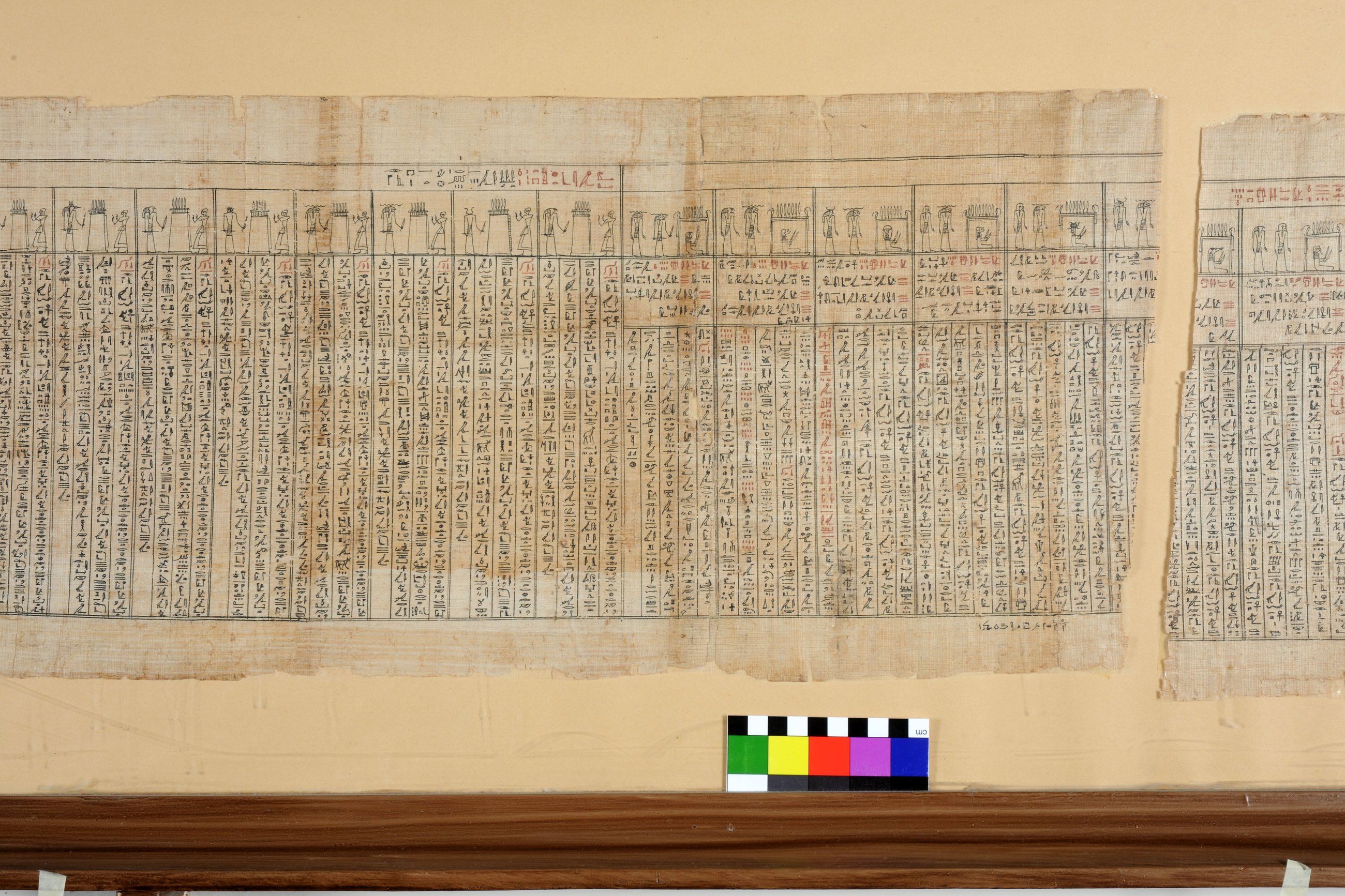
Spell 144 (Birch: 'The Knowing the Names of the Seven Halls.') is on Lepsius's plates LX-LXI and on photographs 23, 24 of the 31 Museo Egizio photographs of the roll. Birch prints the rubric at the end of this spell as a separate chapter (his CXLV); both parts are given here.
The Egyptian is the transliteration of the Thesaurus Linguae Aegyptiae (edition by Burkhard Backes), with the column number of the spell before each column; the numbers are those of Lepsius's plates. On the papyrus the text runs in vertical columns of cursive hieroglyphs from right to left along the roll; titles and some words are written in red. Signs restored by the editor are in square brackets, signs the scribe left out in angle brackets, superfluous signs in braces and damaged signs in half brackets. The English is the translation by Samuel Birch, published in 1867 and made from Lepsius's copy of this papyrus, so the English and the Egyptian come from the same manuscript. It was the first complete English translation of the Book of the Dead; many passages are now understood differently. Birch's own square brackets give his alternatives and explanations. The photographs are by the Museo Egizio; each shows a stretch of the roll, and the note of each section says where the spell stands on it.
How was this verified? (Provenance)
Where on the image
Turin 1791, Spell 144 (TLA Tb 144: title line, columns 1-35; Lepsius 1842, pl. LX-LXI). Photograph 23 of 31 (Commons Book_of_the_Dead_of_Iuefankh,_papyrus_-_Museo_Egizio_Turin_C_1791_p012.jpg): its red title and first gate compartment at 0-9% (Lepsius pl. LX); the narrow strip of small boats at 9-15% is the vignette of Spell 143, which has no text; it continues on photograph 24. Photograph 24 of 31 (Commons Book_of_the_Dead_of_Iuefankh,_papyrus_-_Museo_Egizio_Turin_C_1791_p011.jpg): a detached piece at the right-hand edge (88-100%) with its red title and first gates, and its gate compartments (guardians, the deceased kneeling in a shrine, short lines in red and black) at 46-82%. Checked by eye: the photographs were matched to Lepsius's plates by their vignettes, red titles and framed compartments, and the overlapping edges of neighbouring photographs were compared. The English is Birch's chapters CXLIV and CXLV (his CXLV is the rubric of this spell).
titlerḫ rn{n}.pl n.w jr,j〈.pl〉 ꜥry,t 7{,nw}
4 lines below gate 1jr,j ꜥry〈,t〉 tp〈,j〉.t sḫd ḥr ꜥšꜣ jrw.pl rn n zꜣw =s Smt〈j〉 rn n smj.w jm =s ꜣhꜣ{tw} ḫrw
4 lines below gate 2jr,j ꜥry〈,t〉 2,nw Dwn-ḥꜣ,t rn n zꜣw =s ⸢Sqdj⸣-ḥr rn n smj.w jm =s ꜣsb,w
4 lines below gate 3jr,j ꜥry〈,t〉 3,nw Wnm-ḥwꜣ,w-n-pḥ〈,wj〉≡f rn n zꜣw =s Rs-ḥr rn n smj.w jm =s ⸢wsꜥꜣ,w⸣
4 lines below gate 4jr,j ꜥry〈,t〉 4,nw Ḫsf-ḥr-ꜥšꜣ-ḫrw rn n zꜣw =s Rs-jb rn n smj.w jm =s ꜥꜣ ḥr ḫsf ꜣdj
4 lines below gate 5jr,j ꜥry〈,t〉 5,nw ꜥnḫ-m-fntj,pl rn n zꜣw =s Wšb rn n smj.w jm =s Nbi̯{.t}-ḥr khb.w ꜣ,t
5 lines below gate 6jr,j ꜥry〈,t〉 6,nw Jnktt khb.w ḫrw rn n zꜣw =s Jni̯-ḥr rn n smj.w jm =s Mds-ḥr jr,j p,t
4 lines below gate 7jr,j ꜥry〈,t〉 7,nw Mds sn rn n zꜣw =s ꜥꜣ-ḫrw rn n smj.w jm =s Ḫsf-ḫm,yw
1jrr!.pl m ḥḏ-tꜣ n ḥ〈ꜣ〉b ḏd-mdw jn Wsjr […] mꜣꜥ-ḫrw j jr,j ꜥry〈,t〉 7 jpw jri̯.w ꜥry〈,t〉
2ḥr Wsjr zꜣw.pl ꜥry〈,t〉 =sn j smj.w ẖr,t ḥr ꜥꜣ.du n Wsjr rꜥ,w-nb Wsjr
3[…] mꜣꜥ-ḫrw rḫ〈.w〉 ṯn rḫ〈.w〉 rn{n}〈.pl〉 =ṯn ntf msi̯ m Rʾ-sṯꜣ,w sšmi̯ nṯr.pl rḏi̯ sꜣḫ.w n nb-ꜣḫ,t
4ḥnꜥ sꜥḥ,w Wsjr […] mꜣꜥ-ḫrw m Pi̯ mj ꜥb,du Wsjr šzp.n Wsjr […] mꜣꜥ-ḫrw
5kꜣy m Rʾ-sṯꜣ,w sšmi̯ nṯr.pl ḥr ꜣḫ,t m šnw,yt ḥꜣ Wsjr 〈Wsjr〉 […] mꜣꜥ-ḫrw
6wꜥ,w m sšm〈,w〉 =sn Wsjr […] mꜣꜥ-ḫrw ꜣḫ{.t} nb ꜣḫ.w ꜣḫ jri̯.y =j Wsjr […] mꜣꜥ-ḫrw sw!! pwy
7wnn =f Wsjr […] mꜣꜥ-ḫrw jri̯ ꜣbd〈,w〉 smj.w m smd,t j dbn Wsjr […] mꜣꜥ-ḫrw
8jr,t-Ḥr,w rḏi̯.n Ḥr,w rḏi̯.n Ḏḥw,tj m grḥ ḏꜣi̯ =f p,t m mꜣꜥ-ḫrw m-ḥtp sqdi̯ =f m wjꜣ m =k Wsjr
9[…] mꜣꜥ-ḫrw pn rḏi̯〈.w〉 n wrr,t n ꜥꜣ ḥr mꜣꜥ,t bw,t Wsjr ḫbs-tꜣ!! mk〈,t〉 Wsjr […] mꜣꜥ-ḫrw
10mk〈,t〉 Ḥr,w-sms〈,w〉 Rꜥ,w jri̯ n =f jb =f nḏrj.w Wsjr […] mꜣꜥ-ḫrw ⸢〈j〉m⸣ nn ḫsf =f ḥr ꜥry〈,t〉 […]
11Wsjr […] mꜣꜥ-ḫrw ꜥpr Rw,tj Wsjr […] mꜣꜥ-ḫrw m šms,pl Ḫnt〈,j〉-jmn,tt m-ẖr〈,t〉-hrw
12n.t rꜥ,w-nb jw ꜣḥ,t.pl =f m sḫ,t-ḥtp m-m rḫ.pl rḫ.pl!! {j}m-m jri̯.yw 〈j〉ḫ,t
13n Wsjr 〈Wsjr〉 […] mꜣꜥ-ḫrw zẖꜣ〈,w〉 r-ꜥ Ḏḥwtj m-m jri̯.yw ḥtp jw wḏ.n Jnp,w jm,j.w
14ḥtp Wsjr […] mꜣꜥ-ḫrw m-ꜥ =f nn jṯi̯ sw m-ꜥ =f jn jm,j.w ḥꜣq wḏꜣ
15Wsjr […] mꜣꜥ-ḫrw mj ḏsr ꜣḫ,t n.t p,t sr Wsjr […] mꜣꜥ-ḫrw ḥr ꜥry〈,t〉
16ꜣḫ,t ḥꜥꜥ! jr =f nṯr.pl m ḫsf Wsjr […] mꜣꜥ-ḫrw jw sṯj nṯr r =f nn pḥ sw
17nbḏ nn ḫmi̯.y sw jr,j.pl ꜥry〈,t〉 Wsjr […] mꜣꜥ-ḫrw štꜣ-ḥr
18m-ẖnw ꜥḥ,t ḥr〈,j〉-jb ḫm n nṯr nb-dꜣ,t r nw sbꜣ.pl pḥ Wsjr […] mꜣꜥ-ḫrw
19jm =f m-ḫt Ḥw,t-Ḥr,w Wsjr […] mꜣꜥ-ḫrw jri̯ wꜣ,t s〈j〉ꜥr mꜣꜥ,t n Rꜥ,w
20dr pḥ〈,tj〉 ꜥꜣpp Wsjr […] mꜣꜥ-ḫrw wbꜣ bjꜣ ḫsf nšnj sꜥnḫ jz,ty
21Rꜥ,w s〈j〉ꜥr.w Wsjr […] mꜣꜥ-ḫrw pn ḥtp r b〈w〉 ẖr〈,j〉 =f rḏi̯.n Wsjr 〈j〉r〈i̯〉 wjꜣ šm〈,t〉
22nfr.t jri̯ wꜣ,t nfr.t n Wsjr […] mꜣꜥ-ḫrw pri̯ =f rf jw ḥr n Wsjr […] mꜣꜥ-ḫrw
23wr〈r〉 =f m wrr〈,t〉 ntf nb wsr,t Wsjr […] mꜣꜥ-ḫrw rḫ hꜣtj m
24ꜣḫ,t m wr js ḥr =ṯn ḫr =ṯn nhjs.pl jri̯ wꜣ,t n nb =ṯn Wsjr […] mꜣꜥ-ḫrw
25ḏd-mdw ḥr sšm,w pn n,tj m zẖꜣ,w zẖꜣ m ztj ḥr ḏꜣḏꜣ,t n wjꜣ-n-Rꜥ,w wdn.w
26n =ṯn tʾ ḥ〈n〉q,t ꜥꜣb,t ꜥꜣ.t snṯr ḥr sḏ,t m-bꜣḥ =sn sꜥnḫ ꜣḫ,w pn rḏi̯〈.w〉 m-bꜣḥ =sn
27ḏi̯! =k spr.w =f r sbꜣ nb m nn n nṯr.pl ḏd.t-mdw r rʾ n ꜥry〈,t〉.pl nb m wdn =f n wꜥ,w jm nb
28m ḫpš.pl kꜣ n jḥ dšr 〈j〉ꜥb n =sn 〈j〉ꜥb 7 〈j〉ꜥb n =sn znf 〈j〉wf ḥꜣ,tj tʾ-ḥḏ
2916 pzn 8 šns 8 ḫnf〈,w〉 8 ḥbnn,t 8 ḥ〈n〉q,t ḫpnj 8 dgꜣ.pl n.t zw〈,t〉
308 š n s〈j〉n mḥ〈.w〉 m jrṯ,t n.t ḥm,t ḥḏ.t sm,pl wꜣḏ b〈ꜣ〉q wꜣḏ msdm〈,t〉 n.t ḥꜣ,t snṯr ḥr
31sḏ,t ḏd.t-mdw zjn wꜥ,w-zp-2 m-ḫt jri̯.t jri̯.y m jrj〈.t〉 sšm〈,w〉 pn jw wnw,t
324.t pri̯〈.w〉 m hrw zꜣw ṯw wr zp-2 r ꜥḥꜥ,w m p,t jri̯ =k mḏꜣ,t
33tn nn rḏi̯.t mꜣꜣ sw jr,t nb〈.t〉 swsḫ šm〈,t〉 pw ꜣḫ,w m p,t
34tꜣ m ẖr,t-nṯr ḏr-n,tt ꜣḫ sw n ꜣḫ,w jri̯.y n =f jw ẖr,t jr =f r mn
35m hrw pn m šs-mꜣꜥ ḥḥ n zp
CXLIV. The Knowing the Names of the Seven Halls.
[Vignette — A Deity seated in a Hall with two Swords, a human-and Hawk-headed God.]
The guardian of the First Hall of the Overthrower of numerous Forms. The name of its guardian is Sut. The name written on it is Babble.
[Vignette.— Crocodile-headed God squatting with two Swords in the Hall; behind, Ram-and Cowheaded Gods.)
The Second Hall is of the Leaper to the Front [?] The name of its guardian is Fire-face. The name written on it is Destruction.
(Vignette. — Tortoise-headed God in the Hall; behind, Ram-headed and human Deity.]
The Third Hall of the Eater of Dirt. The name of its guardian is Vigilant. The name written on it is Usaau.
Vignette. — Ape-headed God in the Hall; behind, Ram-headed and human Deity.]
The guardian of the Fourth Hall, of the Stopper of many Words. The name of its guardian is Vigilant. The name written on it is the Great Stopper of the Vain.
[Vignette.— .... -headed Deity in Hall; behind, Ram-headed and Cow-headed Deity.]
The Fifth Hall is of Living off Worms. The name of its guardian is Consumer. The name written on it is Flame-face, Tosser in a moment.
[Vignette. — Ape-headed God in the Hall; behind, Ram-headed and Snake-headed Deity.]
The guardian of the Sixth Hall of. .. (Ank-ta) refut-ing words. The name of its guardian is Bring-face. The name written on it is Stone-face guarding the Heaven.
[Vignette.— Snake-headed God in the Hall; behind, two Ram-headed Deities, one holding two
Swords.]
The guardian of the Seventh Hall ... of those who are hard. The name of its guardian is Magnifier of Words. The name written on it is Stopper of the Broken Rejected].
CXLV. Things to be done on the Daylight of a Festival.
Hail, keepers of the Seven chief Staircases! made the staircases of Osiris, guarding their Halls. Oh! keeping the things which belong to the doors of Osiris daily. The Osiris knows you, he knows your names, born in Rusta when the Gods passed, making adoration to the Lord of the Horizon, with the body of the Osiris, in the region of Tu. The Osiris received the takers in Rusta when the Gods passed through the horizon in crowds; the Osiris follows one of their passages. The Osiris adores the Lord of Light, he adores what I do. The Osiris it is. He is the Osiris made on the month, perfected on the half month: Oh orb [?] of the Osiris, Eye of Horus! Horus placed (it), Thoth placed (it) on the night he crosses the heaven justified and at peace, he traverses in the boat. May that Osiris be made greater and greater through Truth! The Osiris hates the place. The Osiris takes care. Horus, the eldest of the Sun, takes care. He has his heart made over to him. The Osiris labours that he should not be detained in the Halls. The Lion-Gods equip the Osiris among the servants of him who dwells in the West at the end of every day daily. His fields are in the fields of Hetp.
May the wise know where the things of the Osiris are made. Thoth hath written the directions for the making of the food. A map has ordered those who belong to the food of the Osiris to [attend to] him. Do not take it from him [is said] by those who watch to capture. The Osiris is sound, like the rock of the horizon of the heaven. The Osiris is placed in the Halls of the horizon. The Gods holloa to him to stop the Osiris. The God threw dirt at him, the snare does not catch him, the Guardians of the Halls do not injure him for he is Hidden-face, within the palace and in the midst of the shrine of the God who is Lord of the Gate, at [as] the place of the gates. The Osiris is not caught by him nor Athor. The Osiris makes way, he sends Truth to the Sun, he corrects the Apophis. The Osiris passes through the clouds, turns back the opposers, gives life to the ministers of the Sun. The Osiris sends peace to the place which holds him. The Osiris has made a good passage in the boat. A good passage is given to the Osiris for him to come out. The face of the Osiris is rendered great by his crown. Lord of the Oar, the Osiris places himself knowing the address from the horizon to the chief. Raise your heads, pay ye attention, make way for your Lord.
Said over the passenger, who is in these pictures painted in yellow [?] and over the company of the boat of the Sun. Offer ye food and drink, and a great quantity of burning incense before them, it makes that Spirit alive. Placed before them, it lets him approach to every gate as these Gods.
Said at the gate of each Hall. Make an offering to each of them, of thighs and of the head of a red cow. Give meat to them, seven baskets full, and of the blood squeezed from the heart 100 drops, also sixteen pyramids of bread, eight biscuits, eight. .. shens, and eight. . shenf also eight pints of beer and eight quarts of flour, and a basin of. .. filled with the milk of a white cow, green herbs, green dates and grains of burning incense.
Said awhile after what is to be done for that passage of the boat at the fourth hour of coming out from the day; observe very carefully that time in the heaven. When thou hast made this roll let no eye see it. Then the Spirit extends his journey from the heaven and earth from the Hades. While the Spirit has attended to what he has to do, they are retaining it for him till he waits for that day in real linen for ever. [?]
Notes
- Birch's English was taken from three scans of Bunsen's Egypt's Place in Universal History, vol. V (1867), on the Internet Archive. The three OCR texts were aligned word by word and each word was settled by their agreement; running heads, page numbers, footnote markers and footnotes were removed. Some OCR errors may remain, chiefly in proper names.
- Birch uses the terms and name forms of his time: Hades, Aahlu (Elysium), Tum for Atum, Seb for Geb, Anup for Anubis, Phoenix or Bennu for the heron.
- Labels such as 'title line' or 'gate 1' before a line of the Egyptian translate the position labels of the TLA.
- The TLA has no hieroglyphic encoding for these texts, so only the transliteration is shown.
Cite
Sources
- Source: Papyrus of Iuefankh, Turin, Museo Egizio Cat. 1791 (Museo Egizio photographs, CC0) + TLA transliteration (ed. B. Backes, CC BY-SA 4.0) + English of Samuel Birch (1867, public domain) (holding institution)
- Critical edition: Thesaurus Linguae Aegyptiae, ed. Burkhard Backes (2018 data, AED-TEI)
← previous · → next · v cycle view · l back to library