Book of the Dead, Spell 145: Beginning of the Gates of the Aahlu [Elysium], or the Abode of Osiris (papyrus of Iuefankh)
Introduction
The Book of the Dead, in Egyptian the spells for going forth by day, is a collection of funerary spells written on papyrus rolls and placed in burials from the New Kingdom to the Roman period. Each roll was made for one person, with spells taken from a large repertoire and illustrated with drawings (vignettes). This library gives one complete roll: the papyrus of Iuefankh in the Museo Egizio, Turin (Cat. 1791), written in the Ptolemaic period (332-30 BCE) and coming from Thebes. Richard Lepsius published it in 1842 and divided it into 165 chapters; his numbering is still the standard numbering of the spells, and it is used here.
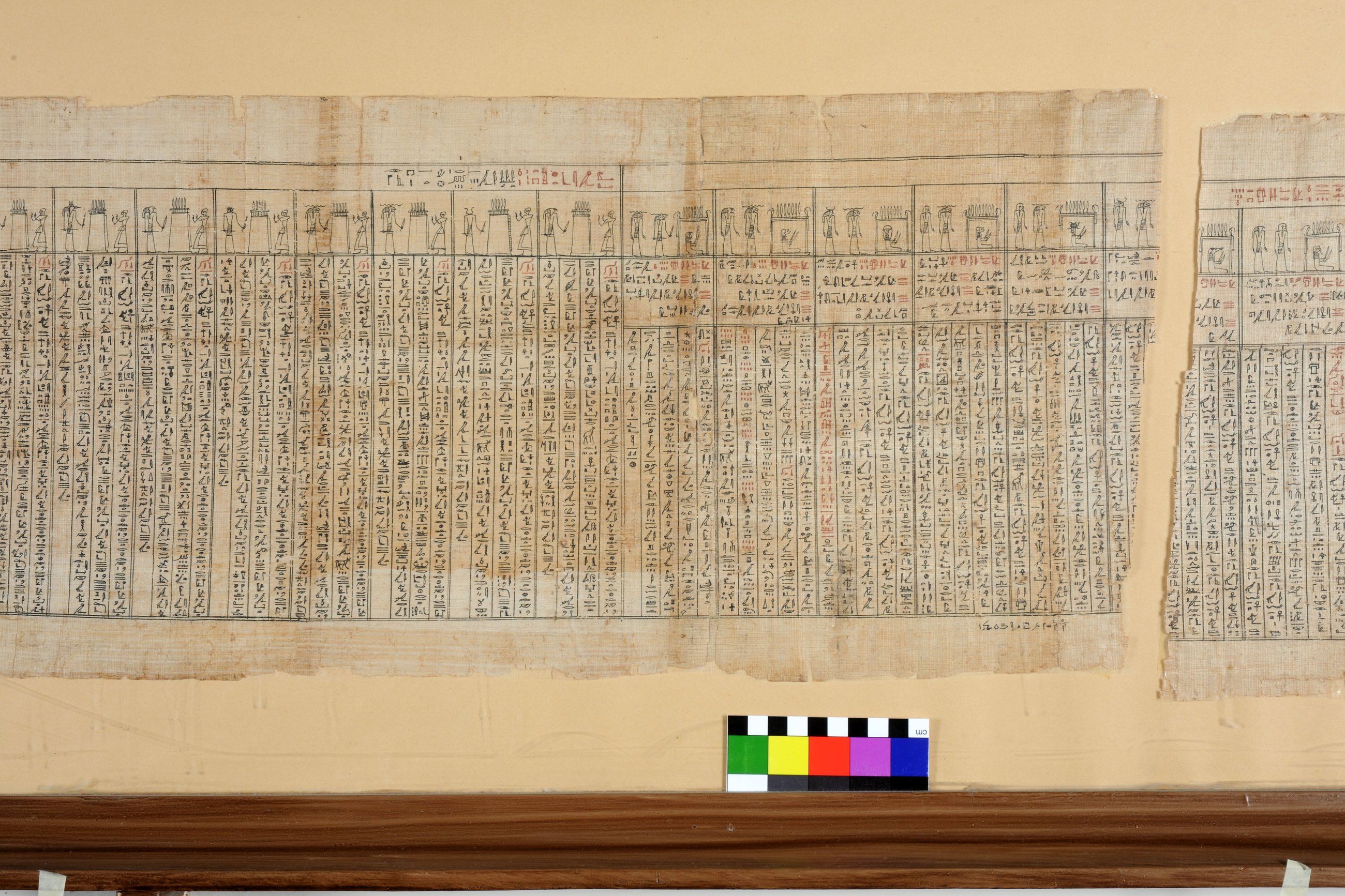
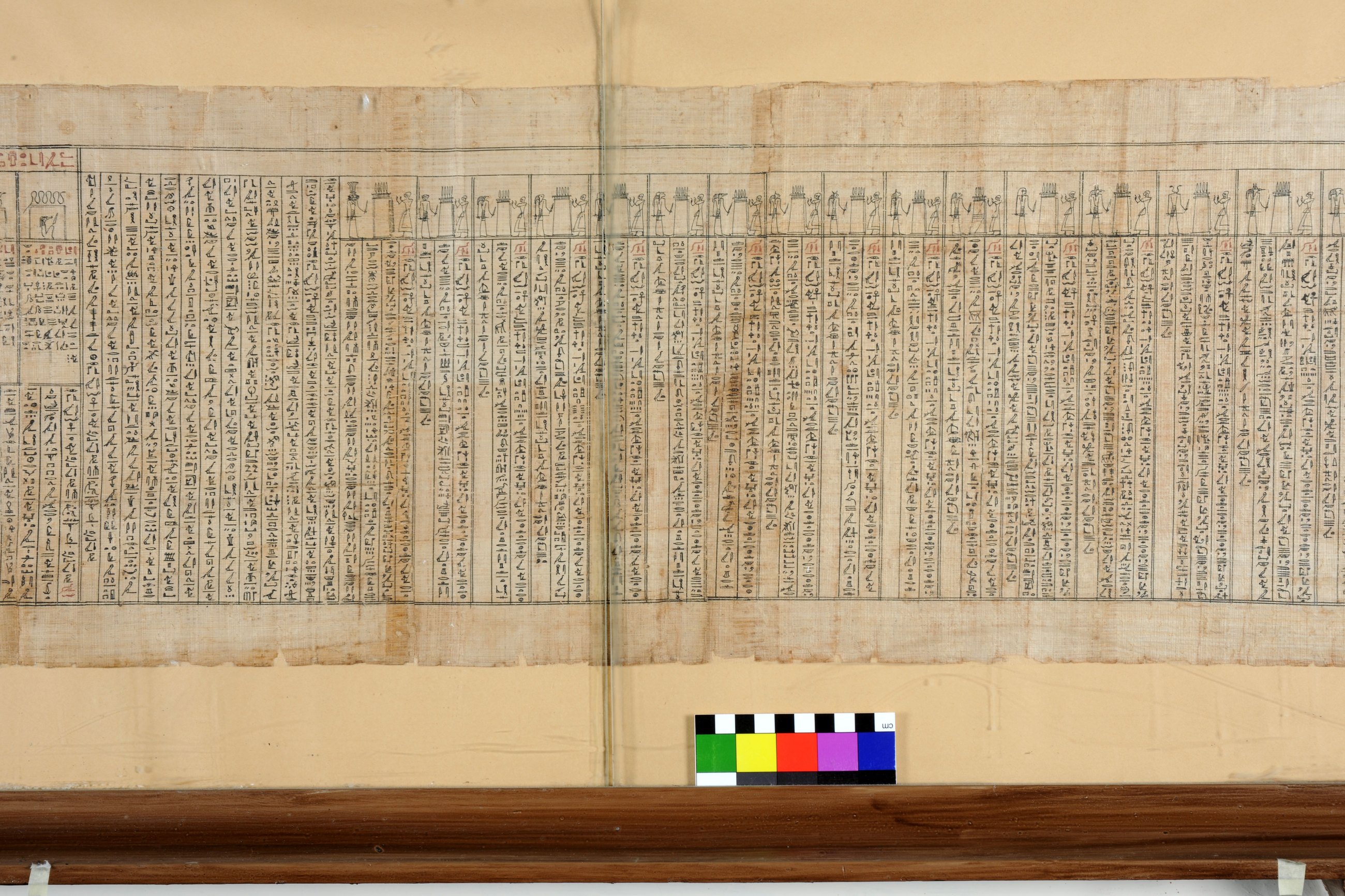
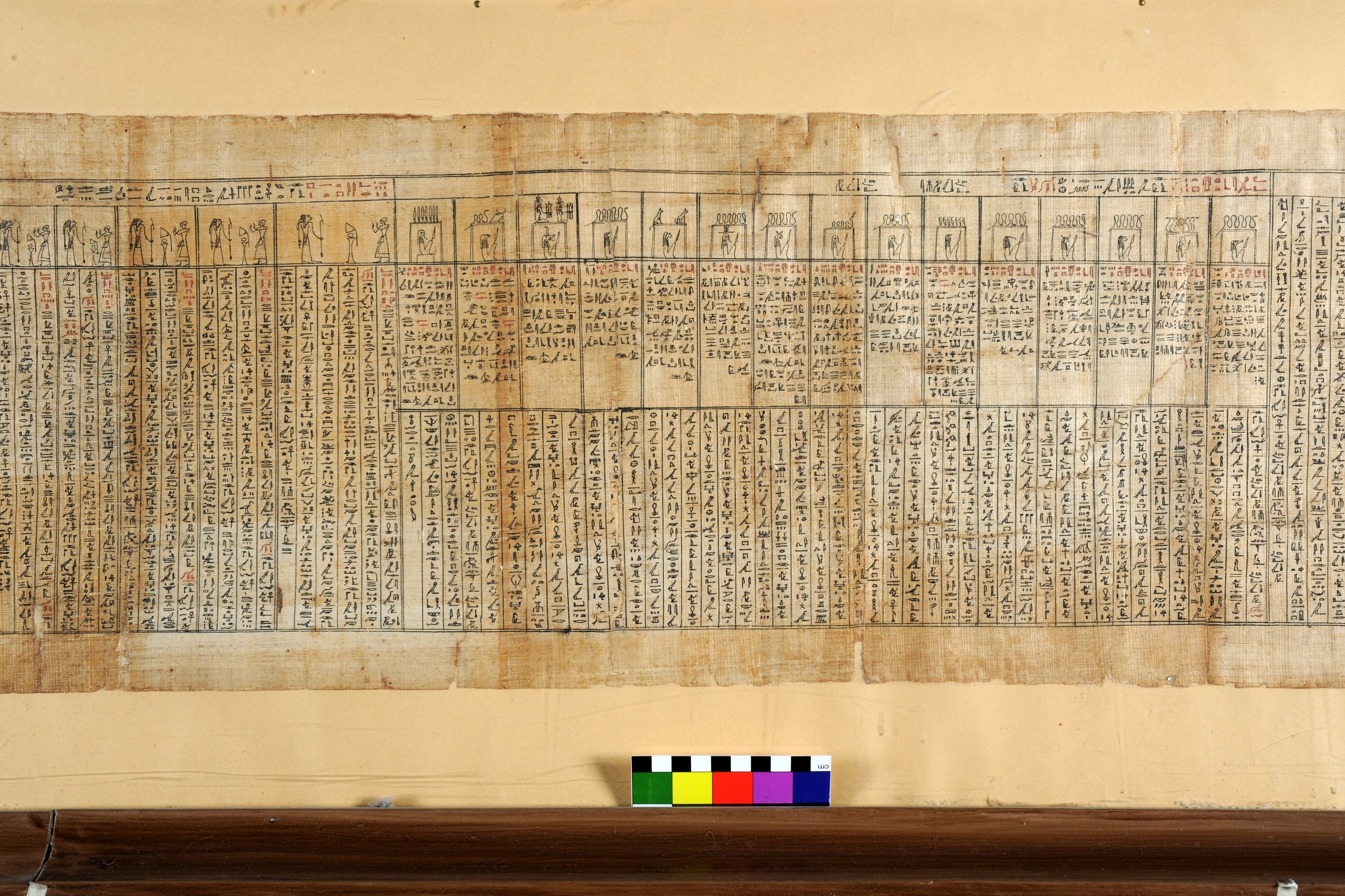
Spell 145 (Birch: 'The Beginning of the Gates of the Aahlu [Elysium], or the Abode of Osiris.') is on Lepsius's plates LXI-LXV and on photographs 24, 25, 26 of the 31 Museo Egizio photographs of the roll. The TLA divides this spell into four parts with continuous column numbers; they are given here together.
The Egyptian is the transliteration of the Thesaurus Linguae Aegyptiae (edition by Burkhard Backes), with the column number of the spell before each column; the numbers are those of Lepsius's plates. On the papyrus the text runs in vertical columns of cursive hieroglyphs from right to left along the roll; titles and some words are written in red. Signs restored by the editor are in square brackets, signs the scribe left out in angle brackets, superfluous signs in braces and damaged signs in half brackets. The English is the translation by Samuel Birch, published in 1867 and made from Lepsius's copy of this papyrus, so the English and the Egyptian come from the same manuscript. It was the first complete English translation of the Book of the Dead; many passages are now understood differently. Birch's own square brackets give his alternatives and explanations. The photographs are by the Museo Egizio; each shows a stretch of the roll, and the note of each section says where the spell stands on it.
How was this verified? (Provenance)
Where on the image
Turin 1791, Spell 145 (TLA Tb 145〈1〉, Tb 145〈2〉, Tb 145〈3〉, Tb 145〈4〉: title line, columns 1-87; Lepsius 1842, pl. LXI-LXV). Photograph 24 of 31 (Commons Book_of_the_Dead_of_Iuefankh,_papyrus_-_Museo_Egizio_Turin_C_1791_p011.jpg): red title at 28-46% and its gates (god, pylon, adoring man) at 0-46% (Lepsius pl. LXI-LXII); it continues on photographs 25 and 26. Photograph 25 of 31 (Commons Book_of_the_Dead_of_Iuefankh,_papyrus_-_Museo_Egizio_Turin_C_1791_p010.jpg): its gates fill 25-100% (Lepsius pl. LXII-LXIV) and its last columns 6-25%. Photograph 26 of 31 (Commons Book_of_the_Dead_of_Iuefankh,_papyrus_-_Museo_Egizio_Turin_C_1791_p09.jpg): its last columns at 90-100%. Checked by eye: the photographs were matched to Lepsius's plates by their vignettes, red titles and framed compartments, and the overlapping edges of neighbouring photographs were compared. Birch numbers this spell CXLVI (his numbers run one ahead of Lepsius's from 145 on).
titleḥꜣ,t-ꜥ-m sbḫ,t.pl n.w〈t〉 sḫ,t-jꜣl n.t pr,w Wsjr
1ḏd-mdw jn Wsjr […] mꜣꜥ-ḫrw j:nḏ-ḥr =ṯ j.n Ḥr,w sbḫ,t tp,j.t n.t wrḏ,w-jb jri̯ n =j wꜣ,t jw =j rḫ〈.kw〉 ṯn rḫ.kw rn =ṯ rḫ.kw
2rn n nṯr zꜣw =ṯ nb,t-sdꜣdꜣ qꜣi̯ znb ḥr〈,j.t〉-tp nb〈,t〉 ḫbḫb sr〈.t〉 md,t ḫsf〈.t〉 nšnj nḥm〈.t〉 ꜥwꜣi̯.y n jy n wꜣi̯ rn =ṯ
3n{r}jw rn n nṯr zꜣw =ṯ jw =j wꜥb.kw m mw jpw wꜥb Rꜥ,w jm =f kꜣf.ntw =f m gs jꜣb,tj n p,t jw =j wrḥ.kw
4m ḥꜣ,tj n.t ꜥš šṯ.kw m mnḫ,t ꜣms n =j m-ꜥ =j m ḥtj jzi̯ jr =k jw wꜥb ṯw
5ḏd-mdw jn Wsjr […] mꜣꜥ-ḫrw j:nḏ-ḥr =ṯ j.n Ḥr,w sbḫ,t sn,nw.t n.t wrḏ,w-jb jri̯ n =j wꜣ,t jw =j rḫ〈.kw〉 ṯn rḫ.kw rn =ṯ rḫ.kw
6rn n nṯr zꜣw =ṯ nb,t-p,t ḥnw,t-Tꜣ,du snrjw tꜣ m bw ẖ〈r,j〉 =ṯ rn =ṯ Ms Ptḥ rn n nṯr zꜣw =ṯ jw =j wꜥb.kw m mw jpw wꜥb Wsjr
7jm =f rḏi̯ n =f sk,tt ḥnꜥ mꜥnḏ,t m pri̯ =f ḥr jm,j-wr,t hꜣi̯ =f ḥr sbḫ,t.pl jw =j wrḥw.kw m sṯj-ḥꜣb
8sd.kw m sšd ꜣms =j m-ꜥ =j m bnbn jzi̯ jr =k jw =k wꜥb.tw
9ḏd-mdw jn Wsjr […] mꜣꜥ-ḫrw j:nḏ-ḥr =ṯ j.n Ḥr,w sbḫ,t ḫmt,nw.t n.t wrḏ,w-jb jri̯ n =j wꜣ,t jw =j rḫ〈.kw〉 ṯn rḫ.kw rn =ṯ rḫ.kw rn n nṯr
10zꜣw =ṯ nb〈,t〉 sbḫ,t.pl ꜥꜣ ꜥꜣb,t =k!! ḏḏ! n n,tj.w-jm sšmi̯〈.t〉 ꜥꜣb,t.pl =s nḏm〈.t〉 n nṯr.pl r-gs =s hrw pwy ḫntt.n nšm,t r ꜣbḏ,w rn =ṯ Bꜣq{.pl}
11rn n nṯr zꜣw =ṯ jw =j wꜥb.kw m mw jpn wꜥb Ptḥ jm =f m ḫntt =f rmni̯ Ḥnw hrw n wn-ḥr jw =j wrḥw.〈k〉w
12m ḥꜣ,tj n.t ḥkn,w m Ṯḥn,w sd.k〈w〉 m šs ꜣms =j m-ꜥ =j m ⸢jhmn⸣ jzi̯ jr =k jw =k wꜥb.tw
13ḏd-mdw jn Wsjr […] mꜣꜥ-ḫrw j:nḏ-ḥr =ṯ j.n Ḥr,w sbḫ,t 4,nw.t n.t wrḏ,w-jb jri̯ n =j wꜣ,t jw =j rḫ〈.kw〉 ṯn rḫ.kw rn =ṯ rḫ.kw rn n nṯr zꜣw =ṯ
14Sḫm〈.t〉 ds.pl ḥn,wt-Tꜣ,du ḥḏi̯〈.t〉 ḫfti̯.pl n.w wrḏ,w-jb jri̯.t smꜣjr šwi̯〈.t〉 m jw,y rn =ṯ ḥwi̯ ⸢ngꜣ⸣.pl rn n nṯr zꜣw =ṯ
15jw =j wꜥb.kw m mw jpw wꜥb Wnn-nfr,w mꜣꜥ-ḫrw jm =f m wpi̯ =f ḥnꜥ Stš m rḏi̯.n =tw mꜣꜥ-ḫrw Wnn-nfr,w mꜣꜥ-ḫrw jw =j wrḥw.kw
16m zwnj 〈j〉nn jw =j wr〈.kw〉 sd.kw m šs nw ky-ḏd ⸢p〈ꜣ〉⸣ ꜣms =j m-ꜥ =j m ⸢Tʾ-ꜣtwtw⸣ jzi̯ r =k jw =k wꜥb〈.tw〉
17ḏd-mdw jn Wsjr […] mꜣꜥ-ḫrw j:nḏ-ḥr =ṯ j.n Ḥr,w sbḫ,t 5,nw.t n.t wrḏ,w-jb jri̯ n =j wꜣ,t jw =j rḫ〈.kw〉 ṯn rḫ.kw rn =ṯ rḫ.kw rn n nṯr
18zꜣw =ṯ nb〈,t〉 ḫw{ꜣw}〈,t〉 nb〈,t〉 ḥkn,w qꜣi̯〈.t〉 nb〈,t〉-r-ḏr dbḥ,w ḏḏ!.tw n =s nn ꜥq js wn tp rn =ṯ rḏi̯ ḥn r rqꜣ.w rn n nṯr zꜣw =ṯ
19jw =j wꜥb.kw m mw jpn wꜥb Ḥr,w jm =f m jri̯ =f ẖr-ḥb zꜣ-mr≡f n jti̯ =f Wsjr jw =j wrḥw.kw m jbr n 〈j〉ḫ,t-nṯr ꜥn,t
20ḥr〈,j.t〉 =j n.t ꜣby jms m-ꜥ =j m ḥwi̯ ẖꜣk-jb.pl jzi̯ jr =k jw =k wꜥb.tw
21ḏd-mdw jn Wsjr […] mꜣꜥ-ḫrw j:nḏ-ḥr =ṯ j.n Ḥr,w sbḫ,t 6,nw〈.t〉 n.t wrḏ,w-jb jri̯ n =j wꜣ,t jw =j rḫ〈.kw〉 ṯn rḫ.kw rn =ṯ rḫ.kw rn n nṯr zꜣw =ṯ
22〈nb,t〉 k〈s,w〉 ⸢ꜥrq⸣ ꜥꜣ.t hmhm rn =ṯ n rḫ =tw qꜣ,w =s r wsḫ =s n gmi̯ =tw qdj.w =s ḏr zp-tp〈,j〉 nn rḫ =tw ṯnw =sn ḥr,j.w-ẖ,t =sn twt swḏꜣ
23n.t grḥ ⸢m⸣ =⸢s⸣ msi̯.n =tw ẖr-ḥꜣ,t wrḏ,w-jb rn =ṯ zmꜣ,tj rn n nṯr zꜣw =ṯ jw =j wꜥb.kw m mw jpn wꜥb Ḏḥw,tj jm =f m jri̯ =f ṯꜣ,t〈j〉 n Ḥr,w jw =j
24wrḥw.kw m ꜥgꜣ sd.kw m ṯzṯz ꜣms =j m-ꜥ =j m spd jzi̯ jr =k jw =k wꜥb.tw
25ḏd-mdw jn Wsjr […] mꜣꜥ-ḫrw j:nḏ-ḥr =ṯ j.n Ḥr,w sbḫ,t 7,nw〈.t〉 n.t wrḏ,w-jb jri̯ n =j wꜣ,t jw =j rḫ〈.kw〉 ṯn rḫ.kw rn =ṯ rḫ.kw rn n nṯr zꜣw =ṯ
26jgꜣp ḥbs bꜣg =s j〈ꜣ〉kb,wy mr,wt =s ḥꜣp ẖ,t rn =ṯ jm Ni̯,t rn n nṯr zꜣw =ṯ jw =j wꜥb.kw m mw jpn wꜥb
27ꜣs,t Nb,t-ḥw,t jm =f m bzi̯ =sn ḥntj ḥn{w}tj.pl =f r rʾ n wꜥb,t jw =j wrḥw.kw m ḥkn,w sd.kw m
28wnḫ ꜣms =j m-ꜥ =j m mjwḥ jzi̯ jr =k jw =k wꜥb.tw
29ḏd-mdw jn Wsjr […] mꜣꜥ-ḫrw j:nḏ-ḥr =ṯ j.n Ḥr,w sbḫ,t 8,nw.t n.t wrḏ,w-jb jri̯ n =j wꜣ,t jw =j rḫ〈.kw〉 ṯn rḫ.kw rn =ṯ rḫ.kw rn n nṯr zꜣw =ṯ jm,j〈.t〉
30nb =s wsr,t hru̯-jb nb,t msi̯〈.t〉 twt nb{,t} =s ky-ḏd bzi̯ pw ⸢zbi̯⸣ =s ḥḥ.pl n mḥ m mḏ,wj =s m qꜣ,w =s tp =s rn =ṯ Nḏs〈ḏ〉s rn n nṯr zꜣw =ṯ jw =j wꜥb.kw m mw jpn wꜥb
31Jnp,w jm =f m jri̯ =f m wti̯ ky-ḏd ẖr-ḥb n Wsjr jw =j wrḥw.kw m sfṯ sd.kw m sd n jdmj ꜣ{w}〈m〉s =j m-ꜥ =j m nn〈⸢,t⸣〉 ky-ḏd m jm,j{šs}.jw
32mjw jzi̯ jr =k jw =k wꜥb.tw
33ḏd-mdw jn Wsjr […] mꜣꜥ-ḫrw j:nḏ-ḥr =ṯ j.n Ḥr,w sbḫ,t 9,nw.t n.t wrḏ,w-jb jri̯ n =j wꜣ,t jw =j rḫ〈.kw〉 ṯn rḫ.kw rn =ṯ rḫ.kw rn n nṯr zꜣw =ṯ
34rkḥ bs =f {ꜣ}jw,tj ꜥḫm ḏꜣf ⸢sny⸣ =⸢s⸣ spd pꜥw ḫ〈ꜣ〉ḫ ḥr smꜣ n nḏnḏ jw,tj swꜣ ḥr =s n jhꜣ =s rn =ṯ snḏ n
35ꜥꜣ nhmhm =f ḫwi̯ ḏ,t =f rn n nṯr zꜣw =ṯ jw =j wꜥb.kw m mw jpn wꜥb Bꜣ-nb-Ḏd,t jm =f m ḫpd =f r ꜥ,t.pl =f nb〈.t〉 jw =j wrḥw.kw
36m ꜥnt.pl n ḥꜥ-nṯr ꜥnḫ〈,t〉 sd.kw m ⸢mr〈,t〉⸣ n.t ḥḏ,t nfr〈.t〉 ꜣms =j m-ꜥ =j m bnn jzi̯ jr =k jw =k wꜥb.tw
37ḏd-mdw jn Wsjr […] mꜣꜥ-ḫrw j:nḏ-ḥr =ṯ j.n Ḥr,w sbḫ,t 10,nw.t n.t wrḏ,w-jb jri̯ n =j wꜣ,t jw =j rḫ〈.kw〉 ṯn rḫ.kw rn =ṯ rḫ.kw rn n nṯr zꜣw =ṯ
38qꜣi̯〈.t〉 ꜥꜣ.du nhzi̯〈.t〉 dnj,wt šfi̯.t ḥr spr =tw r =s rn =ṯ sbḥ.w〈t〉 r qꜣ,w n ḫrw =s nrjw〈.t〉 ḫfti̯.pl nn ḏrjw n =s 〈n〉,tj m-ẖnw =s
39rn =ṯ sḫn wr rn n nṯr zꜣw =ṯ jw =j wꜥb.kw m mw jpn wꜥb Jsds jm =f m ꜥq =f r nḏ Stš jm =ṯ m-ẖnw ꜥ,t jmn.t
40jw =j wrḥw.kw m mrḥ〈,t〉 dšr〈.t〉 ꜣms =j m-ꜥ =j m jwꜥ n dšr ṯzm{.pl} tp〈,j〉 jzi̯ jr =k jw =k wꜥb.tw
41ḏd-mdw jn Wsjr […] mꜣꜥ-ḫrw j:nḏ-ḥr =ṯ j.n Ḥr,w sbḫ,t 11,nw.t n.t wrḏ,w-jb jri̯ n =j wꜣ,t jw =j rḫ〈.kw〉 ṯn rḫ.kw rn =ṯ
42rḫ.kw rn n n,tj m-ẖnw wḥm ds wbd sbj.w ḥr,j〈.t〉 n.t sbḫ,t nb〈.t〉 jri̯.t n =s hnw hrw
43n sḏm jw rn =ṯ jw =ṯ ẖr sjp n Ḥbs-bꜣg jzi̯ jr =k jw =k wꜥb.tw
44ḏd-mdw jn Wsjr […] mꜣꜥ-ḫrw j:nḏ-ḥr =ṯ j.n Ḥr,w sbḫ,t 12,nw〈.t〉 n.t wrḏ,w-jb jri̯ n =j wꜣ,t jw =j rḫ〈.kw〉 ṯn rḫ.kw rn =ṯ rḫ.kw
45rn n n,tj m-ẖnw =ṯ thi̯ =s Tꜣ,du sksk〈.t〉 jwi̯.pl m nhp,w qꜣ,y〈.t〉 nb〈,t〉 ꜣḫ,t sḏm〈.t〉 ḫrw nb =s rꜥ,w-nb rn =ṯ jw =ṯ ẖr
46sjp n Ḥbs-bꜣg jzi̯ jr =k jw =k wꜥb.tw
47ḏd-mdw jn Wsjr […] mꜣꜥ-ḫrw j:nḏ-ḥr =ṯ j.n Ḥr,w sbḫ,t 13,nw.t n.t wrḏ,w-jb jri̯ n =j wꜣ,t jw =j rḫ〈.kw〉 ṯn rḫ.kw
48rn =ṯ{n} rḫ.kw rn n n,tj m-ẖnw =ṯ sṯꜣ〈.t〉 psḏ,t ꜥ.wj =sn m jꜣ,w n-ḥr =s n sḥḏ Ḥꜥpi̯ m jm,j.pl =ṯ rn =ṯ jw =ṯ ẖr
49sjp n Ḥbs-bꜣg jzi̯ jr =k jw =k wꜥb.tw
50ḏd-mdw jn Wsjr […] mꜣꜥ-ḫrw j:nḏ-ḥr =ṯ j.n Ḥr,w sbḫ,t 14,nw.t n.t wrḏ,w-jb jri̯ n =j wꜣ,t jw =j rḫ〈.kw〉 ṯn rḫ.kw rn =ṯ rḫ.kw
51rn n n,tj m-ẖnw =ṯ wr〈.t〉 bꜣ,pl dšr.t gmḥ,w jꜣẖb,yt pri̯〈.t〉 m grḥ dr sbj.pl m qmꜣ =f!! n,tj ḏḏ!〈.w〉 〈m〉 ꜥ.wj =s n wrḏ,w-jb
52〈m〉 ꜣ,t =f n.t jy〈.t〉 šmi̯〈.t〉 rn =ṯ jw =ṯ ẖr sjp n Ḥbs-bꜣg jzi̯ jr =k jw =k wꜥb.tw
53ḏd-mdw jn Wsjr […] mꜣꜥ-ḫrw j:nḏ-ḥr =ṯ j.n Ḥr,w sbḫ,t 15,nw.t n.t wrḏ,w-jb jri̯ n =j wꜣ,t jw =j rḫ〈.kw〉 ṯn rḫ.kw rn =ṯ rḫ.kw
54rn n n,tj m-ẖnw =ṯ nb,t dndn ḫbtj〈.t〉 ḥr dšr,w jrr! n =s ⸢hnr.w⸣ r ꜥḫm.pl hrw sḏm jw.pl rn =ṯ jw =ṯ ẖr
55sjp n Ḥbs-bꜣg jzi̯ jr =k jw =k wꜥb.tw
56ḏd-mdw jn Wsjr […] mꜣꜥ-ḫrw j:nḏ-ḥr =ṯ j.n Ḥr,w sbḫ,t 16,nw.t n.t wrḏ,w-jb jri̯ n =j wꜣ,t jw =j rḫ〈.kw〉 ṯn rḫ.kw rn =ṯ rḫ.kw rn n n,tj m-ẖnw =ṯ
57nb,t nrw,t ḫꜣḫ ꜥ n sbj.w wbd =s m bs ḫft pri̯ =s qmꜣ sštꜣ tꜣ rn =ṯ jw =ṯ ẖr sjp n Ḥbs-bꜣg
58jzi̯ jr =k jw =k wꜥb.tw
59ḏd-mdw jn Wsjr […] mꜣꜥ-ḫrw j:nḏ-ḥr =ṯ j.n Ḥr,w sbḫ,t 17,nw.t n.t wrḏ,w-jb jri̯ n =j wꜣ,t jw =j rḫ〈.kw〉 ṯn rḫ.kw rn =ṯ rḫ.kw
60rn n n,tj m-ẖnw =ṯ ꜥꜣ,t m ꜣḫ,t nb〈,t〉 dšr,pl ḫb.t ḥr znf jꜣk{〈y〉-ḏ〈d〉}b,yt sḫm〈.t〉 nb,t wꜣ,w jw =ṯ ẖr sjp
61n Ḥbs-bꜣg jzi̯ jr =k jw =k wꜥb.tw
62ḏd-mdw jn Wsjr […] mꜣꜥ-ḫrw j:nḏ-ḥr =ṯ j.n Ḥr,w sbḫ,t 18,nw.t n.t wrḏ,w-jb jri̯ n =j wꜣ,t jw =j rḫ〈.kw〉 ṯn rḫ.kw rn =ṯ rḫ.kw
63rn n n,tj m-ẖnw =ṯ mri̯.wt tꜣ,w wꜥb〈.t〉 sḏm ꜣby jn mr,wt šꜥd tp jmꜣḫ.pl nb〈,t〉 ꜥḥ ky-ḏd m {sḥ}〈ḥz〉〈ꜣ〉,w
64m ḥsq sbj.pl m-mšr,w rn =ṯ jw =s!! ẖr sjp n Ḥbs-bꜣg jzi̯ jr =k jw =k wꜥb.tw
65ḏd-mdw jn Wsjr […] mꜣꜥ-ḫrw j:nḏ-ḥr =ṯ j.n Ḥr,w sbḫ,t 19,nw.t n.t wrḏ,w-jb jri̯ n =j wꜣ,t jw =j rḫ〈.kw〉 ṯn rḫ.kw rn =ṯ rḫ.kw
66rn n n,tj m-ẖnw =ṯ sr〈.t〉 nhp,w ky-ḏd 〈nhp,w〉 […] ꜥḥꜥ,t wrr.pl šmm nb〈,t〉 wsr,t.pl zẖꜣ.pl Ḏḥwtj ḏs =f rn =ṯ jw =ṯ ẖr sjp n Ḥbs-bꜣg
67jzi̯ jr =k jw =k wꜥb.tw
68ḏd-mdw jn Wsjr […] mꜣꜥ-ḫrw j:nḏ-ḥr =ṯ j.n Ḥr,w sbḫ,t 20,nw.t n.t wrḏ,w-jb jri̯ n =j wꜣ,t jw =j rḫ〈.kw〉 ṯn rḫ.kw rn =ṯ rḫ.kw
69rn n n,tj m-ẖnw =ṯ ⸢jnr⸣ nb =s sḫ〈,t〉{m} ḥbs〈.t〉 jmn qmꜣ.n =s jṯi̯〈.t〉 ḥꜣ,tj.pl wn〈.t〉 ḏs =s rn =ṯ jw =ṯ ẖr sjp
70n Ḥbs-bꜣg jzi̯ jr =k jw =k wꜥb.tw
71ḏd-mdw jn Wsjr […] mꜣꜥ-ḫrw j:nḏ-ḥr =ṯ j.n Ḥr,w sbḫ,t 21,nw.t n.t wrḏ,w-jb jri̯ n =j wꜣ,t jw =j rḫ〈.kw〉 ṯn rḫ.kw rn =ṯ
72rḫ.kw rn n nṯr zꜣw =ṯ dm〈.t〉 ds{.t} r md{,t}〈wi̯〉.pl rn =s 〈n〉ḥꜣ-ḥr ḫm〈.t〉 pnꜥ hꜣi̯〈.t〉 r nbj =s rn =ṯ jw =ṯ ẖr sštꜣ n nḏ zꜣw =ṯ ꜥmꜥm
73rn =f ḫpr =f n rd ꜥš.pl nn msi̯ šn.w n qmꜣ bjꜣ.pl ḥr ḫꜣs,t jw ḏꜣḏꜣ,t n.t sbḫ,t tn m nṯr 7 ḏn〈g〉 ky-ḏd ꜥḏ rn n
74ky 〈j〉m rʾ ky-ḏd ḥtp msi̯〈.t〉 rn n ky jm Ms-zp〈,t〉 rn n ky jm Wḏꜣ-rʾ rn n ky jm Wpi̯-wꜣ,tpl rn n ky jm B〈ꜣ〉q rn n ky jm Jnp,w rn n ky jm
75jri̯ n =j wꜣ,t jnk Mn,w Ḥr,w-nḏ-jti̯≡f jwꜥ n jti̯ =f Wnn-nfr,w jy.n =j ḏi̯ =j n jti̯ =j Wsjr sḫr.n =j ḫfti̯.pl =f nb.w jy.n =j mjn m mꜣꜥ-ḫrw nb-jmꜣḫ
76m pr,w jti̯ =j Jtm,w nb-Jwn,w Wsjr […] mꜣꜥ-ḫrw m p,t rsj jw jri̯.n =j mꜣꜥ,t n jri̯ s〈j〉 jri̯.n =j hꜣkr 〈n〉 nb =f sšmi̯ =j ḥ〈ꜣ〉b.pl jm,j =s ḏi̯!.n =j tʾ n nb,w ḫꜣw〈,t〉
77sšmi̯ =j dbḥ ḥtp tʾ ḥ〈n〉q,t jḥ.pl ꜣpd.pl n jti̯ =j Wsjr-wnn-nfr,w wnn =j r-ḏrjw n bꜣ ḏi̯ =j pri̯ bn,w r md,t jy.n =j mjn m ḥw,t-nṯr ḥr jri̯.t snṯr sšmi̯.n =j
78⸢šntj⸣ ḏꜣi̯.kw mw nšm〈,t〉 smꜣꜥ-ḫrw Wsjr-ḫnt,j-jmn,tt r ḫfti̯.pl =f ḏꜣi̯ =j ḫfti̯.pl =f nb.w r ḫb,t n.t jꜣb,tt nn pri̯ =sn ẖr zꜣw〈,t〉 Gbb
79jm sꜥḥꜥ =j n =f kfꜣ.yw hrw smꜣꜥ-ḫrw =f jy.n =j m zẖꜣ,w pg〈ꜣ〉.n =j ḏi̯ =j sḫm nṯr m rd.du =f jy.n =j m pr,w tp〈,j〉-ḏw≡f mꜣꜣ.n =j ḫnt,j-zḥ-nṯr
80jw =j ꜥq.kw r Rʾ-sṯꜣ,w jmn.n =j gmi̯.n =j tš〈.w〉 jw =j h〈ꜣ〉b.{tw}kw r N-〈ꜣ〉r≡f ḥbs.n =j n,tj ḥꜣww.pl
81jw =j ḫnti̯.kw r ꜣbḏ,w sꜣḫ{.t} =j Ḥw Sjꜣ jw =j ꜥq.kw r pr,w Jsds swhꜣ.n =j
82ḫꜣ,tjypl Sḫm,t m-ẖnw ḥw,t Ni̯,t ky-ḏd wr.pl jw =j ꜥq.kw r Rʾ-sṯꜣ,w jmn.n =j gmi̯.n =j tš〈.w〉 jw h〈ꜣi̯〉.n =j
83r N-〈ꜣ〉r≡f ḥbs.n =j n,tj ḥr ḥꜣw,w jw =j ḫnti̯.kw r ꜣbḏ,w sꜣḫ{.t}.n =j Ḥw Sjꜣ šzp =j ḫꜥ =j
84⸢ḫꜥy⸣ smḥ =j ḥr ns,t =j m s,t n〈.t〉 jti̯ =j pꜣw,tj.w tp〈,j.w〉 dwꜣ.n =j msḫn〈,t〉 n.t tꜣ-ḏsr jw rʾ =j qꜥ〈.w〉 ẖr
85mꜣꜥ,t smḥi̯.n =j ꜥḫḫꜣ.pl jy.n =j m ꜥḥ,t wꜣḏ =s ḥꜥ ḏi̯.n =j sqd,wt m wjꜣ n ḥꜣy〈,t〉 jri̯ ꜥnt,pl ḥm,t m
86šnw n rḫy〈,t〉 jw =j ꜥq.kw r pr,w Jsds swhꜣw.n =j ḫꜣ,tj.y Sḫm,t m-ẖnw ḥw,t-sr
87jw =k jy.tw ḥzi̯.tw m Ḏd,w Wsjr […] mꜣꜥ-ḫrw
CXLVI. The Beginning of the Gates of the Aahlu [Elysium], or the Abode of Osiris.
First Gate.
[Vignette. — The Deceased adoring a Hawk-headed Deity, holding in his Hands a Sword.]
Hail, says Horus, to the First Gate of the Meekhearted! I have made a path, I know thee, I know thy name, I know the name of thy guardian God. Terrible Mistress, high wall, crushing mistress, sparing of words, stopping the opposers, taking by stealth the Spirit of him who comes from a distance, is thy name. V ulture [Victory] is the name of the God who guards thee. I wash myself in the waters in which the Sun washes, when he has been taken from the East of the heaven. I have oiled myself with essence of cedar. I have wrapped myself in cloth of linen. I hold a stick of wood. Thou mayest go [says the God], thou art purified.
Second Gate.
Vignette. — Deceased adoring a Ham -headed God holding two Swords at the Gate.]
Hail, says Horus, to the Second Gate of the Meekhearted! I have made a path, I know thee. I know thy name, I know the name of the God who guards thee. Mistress of the Heaven, regent of the world, vanquishing the world by thy body, is thy name. The name of thy guardian is Born of Ptah. I have washed myself in the water in which Osiris washes. He made the ark and its barge in his coming forth out of the quarter, the Bull coming out of the Gates. I have anointed myself with perfume. I have wrapped myself in fine linen.
I hold a stick of palm wood. Thou mayest go, thou art purified.
Third Gate.
[Vignette. — Deceased adoring a Ram-headed -beaded Deity holding two Swords at the Gate.]
Hail, says Horus, to the Third Gate! I have made way. I know thee. I know thy name. I know the name of the God who guards thee. Mistress of Altars, great one of sacrifices, mistress of what is given to the Gods, letting the offerings pass, rejoicing the Gods the day the funeral boat departs to Abydos, is thy name. The Palm tree is the name of the God who guards thee. I have washed myself in the water in which Ptah washes when he returns to bed, turning back, the day of showing the face.[?] I am anointed in essence of the extract of. . clad in linen. I hold a stick to handle. Thou mayest go, thou art justified.
Fourth Gate.
Vignette. Deceased adoring a Ram-headed God holding two Swords at the Gate.]
Hail, says Horus, to the Fourth Gate of the Meekhearted! I have made way, I know thee, I myself know the name of the God who guards thee. He whose sword prevails, who stops the enemies of the meek-hearted, who binds those who fail through sin, is thy name. Smiter of Bulls is the name of the God guarding thee. I am washed with the same water in which Onnophris washes when he disputes with Seth, that justification should be made to Onnophris the justified. I have anointed myself with liquid san. I have clad myself with linen. I hold a stick of wood (Ta tutu). — Thou mayest go, thou art purified.
Fifth Gate.
[Vignette- — Deceased adoring a Baal-headed God holding two Swords at the Gate.)
Hail, says Horus, to the Fifth Gate of the Meekhearted! have made way. I know thee. I know thy name. I know the name of the God who guards thee Lord of Fire, Lord of loud speech, universal Lord, the. prayer which a person makes when he is upon earth that he should not enter thee, is thy name. Turner back of the Culpable is the name of the God who guards thee. I have washed in the water in which Horus washes, when he makes himself the undertaker [minister], the beloved son of his father Osiris. I have anointed myself with the unguent [?] of the Gods, daubing my face with the fat of a bull[?]. I hold the stick of a smiter of cowards [?] Thou mayest go thou art purified. Sixth Gate.
[Vignette. — Deceased adoring a Hawk -headed God holding two Swords at the Gate.]
Hail, says Horus, to the Sixth Gate of the Meekhearted! I have made a path. I know thee. I myself know thy name. I know the name of the God guarding thee. Capturer, greatest of roarers, is thy name. Whose length [or height] is unknown,’ whose breadth is unknown, whose first building is inconceivable, unknown is the number of their snakes, the Image of Night brought forth out of it, produced before the Meek-hearted, is its name. Conspirator is the name of its guardian. I have washed in the water in which Thoth washes when he makes the form ?] of Horus. I have anointed me with suet. I clothe myself in a tunic. I arm myself with a stick of wood. Thou mayest go, thou art purified.
Seventh Gate.
[ Vignette. — Deceased adoring a Jackal-headed God holding two Swords at the Gate.]
Hail, says Horus, to the Seventh Gate of the Meekhearted! I have made way. I know thee. I myself know thy name. I know the name of the God who guards thee. Injuring the clothed and naked, lamenting her beloved, hidden belly, is thy name. Belonging to Neith is the name of the God who guards thee. I am washed in the water in which Isis and Nephthys wash when they pass his opposition at the door of the pure place [of embalmment]. I have anointed myself with unguents. I am clad with clothes. I arm myself with a javelin. — Thou mayest go, thou art purified.
Eighth Gate.
[Vignette. — Deceased adoring a double Snake-headed God holding two Swords at the Gate.]
Hail, says Horus, to the Eighth Gate of the Meekhearted! I have made way. I know thee. I myself know thy name. I know the name of the God who guards thee. Attached to its Lord, having power to do all it wishes, giving birth to the type of its Lord, or who crosses the land, millions of cubits in depth and in length, is thy name. Little One is the name of thy guardian. I am washed in the water in which Anup, or the funeral priest of Osiris, washes when he makes the preparation of Osiris. I anoint myself with cedar oil. I dress myself in a mat. I take in the hand a .... or the skin of a cat. — Thou mayest go, thou art purified.
Ninth Gate.
[Vignette — Deceased adoring a Jackal-headed God holding two Swords at the Gate.)
Hail, says Horus, to the Ninth Gate of the Meekhearted I have made road. I have known thy name. I myself know the name of the God guarding thee. The Fire which burns inextinguishably, melting its reservoir [?], the heat which prepares annihilation, running to kill; no salvation, no passing over from its binding, is thy name. The Terror of the greatness of his roaring, he who destroys ? the body [mouth], is the name of the God guarding thee. I have washed myself in the water in which the Spirit of Tattu washes when he dips his hands in it. I have anointed myself with the ambrosia of life of the divine limbs. I have wrapped myself in a good white tunic. I hold a stick of a palm tree. — Thou mayest go, thou art purified.
Tenth Gate.
[Vignette Deceased adoring an Ape-headed God holding two Swords at the Gate.]
Hail, says Horus, to the Tenth Gate of the Meekhearted! I have come along. I know thee. I know thy name. I know the name of the God who guards thee. Tall Gates, exciter of spasms of terror to whoever has approached to it, is thy name. Scorning lofty words, vanquishing the accusers, not making an opening within it, is thy name. Great Clasper is the name of the God guarding thee. I have washed in the water in which Astes washes when he goes to defend Set in thee within the place of the Amenti. I have anointed myself with red wax. I have provided myself with the leg- bone of a red bird, and a dog’s head Thou mayest go, thou art purified.
Eleventh Gate.
[Vignette. — Deceased adoring an Ape-headed God holding two Swords at the Gate.]
Hail, says Horus, to the Eleventh Gate of the Meekhearted! I have made way. I know thee. I know thy name. I know the name which is within thee. Doubly sharp, melting the scorners, terror of every gate, repeller, the day of listening to lies, is thy name. Thou art under [holding] the judgment of the clothed and naked. Thou mayest go, thou art purified..
Twelfth Gate.
[Vignette. — Deceased adoring a Cat-headed God holding two Swords at the Gate.]
Hail, says Horus, to the Twelfth Gate of the Meekhearted! I have come along, I knew thee, I knew the name which is within thee. She who ravages the world, destroyer of those going in .... time, the Lord of Light, listening to the word of its Lord daily, is thy name. Thou art having the judgment of the clothed and naked Thou mayest go, thou art purified.
Thirteenth Gate.
[Vignette — Deceased adoring a Hare-headed God holding two Swords at the Gate.)
Hail, says Horus, to the Thirteenth Gate of the Meekhearted I have made a road. I have known thee through my knowledge of thy name. I know the name which is in the midst of thee. Conducting the Gods, raising up the arm to them in glorifying their face, illuminating the waters to them who belong to thee, is thy name Thou art holding the judgment of the clothed and the naked. Thou mayest go, thou art justified.
Fourteenth Gate.
[Vignette — Deceased adoring a Lion-headed God holding two Swords at the Gate.]
Hail, says Horus, to the Fourteenth Gate of the Meekhearted! I have made a road. I know thee through knowing thy name. I know the name which is within thee. Greatest of Spirits, red-haired, monster, coming from the night, correcting the wicked by creation of reptiles, giving her arms to the Meek-hearted at the moment of coming and going, is thy name. Thou art holding the judgment of the clothed and naked Thou mayest go, thou art purified.
Fifteenth Gate.
[Vignette. — Deceased adoring a Crocodileheaded God holding two Swords at the Gate.]
Hail, says Horus, to the Fifteenth Gate of the Meekhearted! I have made a path. I have known thee by my knowledge of thy name. I know the name which is within thee. Lord of Pride, trampling in gore, making ... to be extinguished the day of listening to lies. Thou art holding judgment of the clothed and naked. Thou mayest go, thou art purified.
Sixteenth Gate.
[Vignette. — Deceased adoring an Ape-headed God holding two Swords at the Gate
Hail, says Horus, to the Sixteenth Gate of the Meekhearted! I have made a path. I have known thee through knowing thy name. I know the name which is within thee. Victorious Lord, the Arm pursuing the profane, melting with flame when it comes forth making the mysteries of the earth, is thy name. Thou art holding a judgment of the clothed and naked.— Thou mayest go, thou art purified.
Seventeenth Gate.
[Vignette. — Deceased adoring a God holding two Swords at the Gate.]
Hail, says Horus, to the Seventeenth Gate of the Meekhearted! I have made a road. I know thee by knowing thy name. I know the name which is within thee. Greatest in the Horizon, Lord of gore, trampling in blood, monster, prevailer, mistress of dissolution. Thou art holding a judgment of the clothed and naked Thou mayest go, thou art purified.
Eighteenth Gate.
[Vignette. — Deceased adoring a Dog-headed God holding two Swords at the Gate.)
Hail, says Horus, to the Eighteenth Gate of the Meekhearted! I have made a path. I know thee through knowing thy name. I know the name which is within thee. Loving to destroy the pure, monster hearing what it has desired, cutting off the heads of the blessed, mistress of the place, or chopping up the profane at evening, is thy name. Thou art holding a judgment over the clothed and naked. Thou mayest go, thou art justified.
Nineteenth Gate.
[Vignette.— Deceased adoring an Ibis-headed God holding two Swords at the Gate.]
Hail, says Horus, to the Nineteenth Gate of the Meekhearted I have made a road. I know thee through knowing thy name. I know the name which is within thee. Preparing Lamentations, or Fire, abode of burning crowns, lord of power, the form written by Thoth himself, is thy name. Thou art holding judgment of the clothed and naked. Thou mayest go, thou art justified. Twentieth Gate.
[Vignette. — Deceased adoring a Baal-or Typhon-headed Deity holding two Swords at the Gate.)
Hail, says Horus, to the Twentieth Gate of the Meekhearted! I have made a path. I have known thee through knowing thy name. I know the name which is within thee. The stone [?] of its Lord, the field, the concealed hider who has created the taker of hearts, the opener of herself. Thou art having the judgment of the clothed and naked. Thou mayest go, thou art justified.
Twenty-first Gate.
Vignette. — Deceased adoring a Typhon-headed God holding two Swords at the Gate.]
Hail, says Horus, to the Twenty-first Gate of the Meek-hearted! I have made way. I have known thee through knowing thy name. I know the name of the God guarding thee. Sharp Blade against the words of its name, Foul-face not inverted, standing in its smoke, is thy name. Thou art holding the secrets [bolts] of the defender of the God guarding thee. Devourer is his name. He causes that no cedar grows, no plant is born, no flower is produced in that land. The Demons of that Gate are seven in number: Gen or Matkar is the name of one (1); Over the Gate, or the Peace of those born, is the name of another Attached to the production of time is the name of another (3); Attached to the sound mouth is the name of another (4); Attached to the direction, the Road, is the name of another (5); Belonging to the Palm tree is the name of another (6); Attached to Anup is the name of another (7). Let me make way.
I am Khem Horus, the defender of his father, the issue of his father Annefer. I have come. My father Osiris has allowed me to overthrow all his enemies. I have come like the Sun, justified, a blessed person in the house of my father Tum, Lord of Annu [Heliopolis], the Osiris in the Southern heaven. I have acted truly in what I have done. I have made the festivals of its master, I have conducted the festivals which belong to it. I have given bread to the Lords of the Altars. I have conducted flesh and food, bread and drink, to my father Unnefer. I was at the heels of the Soul. I make the Phenix come forth to my words. I have come like the Sun from the divine abode, in order to give incense. I have passed clad. I navigate the water, fording it. Justified is Osiris who dwells in the West against all his enemies. I send all his enemies to the block of the East. They do not come forth, being guarded by Seb there. I made the pursuers of the Sun to stand for him, the day of his justification. I have come with my book. I have spoiled. I have made the God stand on his legs. I have come from the house of him who is on the hill [Anubis]. I have seen him who dwells in the divine Hall. I have gone to the Rusta. I have hidden. I have found the crossing. I have ploughed at Anrutf. I have clothed those who are naked. I have stopped at Abydos, adoring Hu and Ka [Taste and Touch]. I have entered the house of Astes, I have scorned the watched of Pasht, or the Chiefs, in the house of Nit. [Repetition to “Hu and Ka” of passage “I have gone to the Rusta.”] I have taken my crown: when crowned, I place myself on my throne of my father and divine predecessors. I have adored the Place of New Birth of the Taser. My mouth speaks, having truth. I have drowned the Apophis. I have come from the place where it renews the limbs. I have had a conduct in the boat of the Lady. The fragrance comes forth from the hair of pure Spirits. [Repetition of “I have entered the house of Astes” to “Chiefs.”] Thou hast come as ordered in Tattu, oh the Osiris
Notes
- Birch's English was taken from three scans of Bunsen's Egypt's Place in Universal History, vol. V (1867), on the Internet Archive. The three OCR texts were aligned word by word and each word was settled by their agreement; running heads, page numbers, footnote markers and footnotes were removed. Some OCR errors may remain, chiefly in proper names.
- Birch uses the terms and name forms of his time: Hades, Aahlu (Elysium), Tum for Atum, Seb for Geb, Anup for Anubis, Phoenix or Bennu for the heron.
- Labels such as 'title line' or 'gate 1' before a line of the Egyptian translate the position labels of the TLA.
- The TLA has no hieroglyphic encoding for these texts, so only the transliteration is shown.
Cite
Sources
- Source: Papyrus of Iuefankh, Turin, Museo Egizio Cat. 1791 (Museo Egizio photographs, CC0) + TLA transliteration (ed. B. Backes, CC BY-SA 4.0) + English of Samuel Birch (1867, public domain) (holding institution)
- Critical edition: Thesaurus Linguae Aegyptiae, ed. Burkhard Backes (2018 data, AED-TEI)
← previous · → next · v cycle view · l back to library