Book of the Dead, Spell 147: The Staircases of the House of Osiris who dwells in the West, the Gods ... (papyrus of Iuefankh)
Introduction
The Book of the Dead, in Egyptian the spells for going forth by day, is a collection of funerary spells written on papyrus rolls and placed in burials from the New Kingdom to the Roman period. Each roll was made for one person, with spells taken from a large repertoire and illustrated with drawings (vignettes). This library gives one complete roll: the papyrus of Iuefankh in the Museo Egizio, Turin (Cat. 1791), written in the Ptolemaic period (332-30 BCE) and coming from Thebes. Richard Lepsius published it in 1842 and divided it into 165 chapters; his numbering is still the standard numbering of the spells, and it is used here.
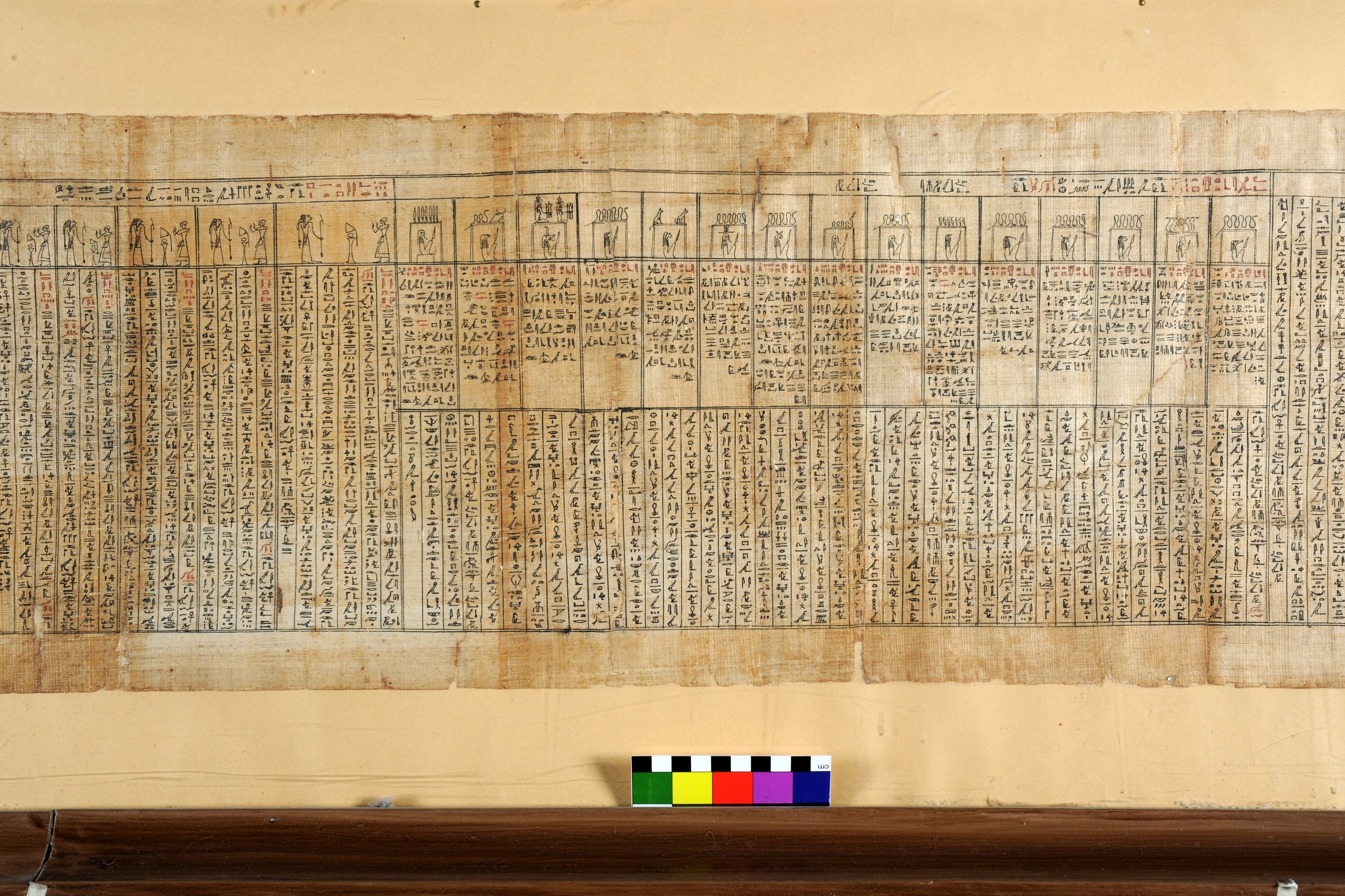
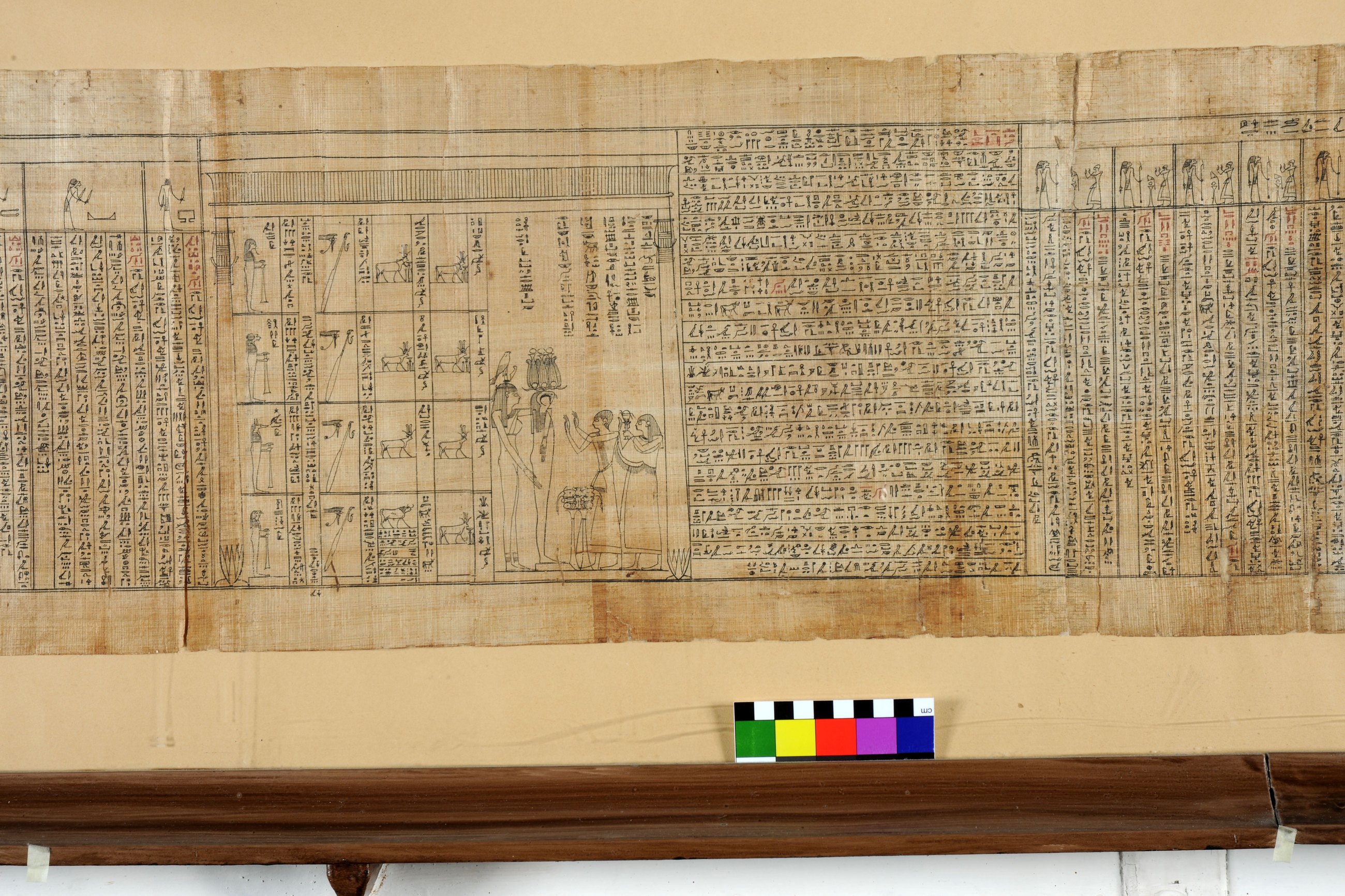
Spell 147 (Birch: 'The chapter of The Staircases of the House of Osiris who dwells in the West, the Gods in their Residences, they offer to them upon Earth.') is on Lepsius's plates LXVII-LXVIII and on photographs 26, 27 of the 31 Museo Egizio photographs of the roll.
The Egyptian is the transliteration of the Thesaurus Linguae Aegyptiae (edition by Burkhard Backes), with the column number of the spell before each column; the numbers are those of Lepsius's plates. On the papyrus the text runs in vertical columns of cursive hieroglyphs from right to left along the roll; titles and some words are written in red. Signs restored by the editor are in square brackets, signs the scribe left out in angle brackets, superfluous signs in braces and damaged signs in half brackets. The English is the translation by Samuel Birch, published in 1867 and made from Lepsius's copy of this papyrus, so the English and the Egyptian come from the same manuscript. It was the first complete English translation of the Book of the Dead; many passages are now understood differently. Birch's own square brackets give his alternatives and explanations. The photographs are by the Museo Egizio; each shows a stretch of the roll, and the note of each section says where the spell stands on it.
How was this verified? (Provenance)
Where on the image
Turin 1791, Spell 147 (TLA Tb 147: title line, columns 1-28; Lepsius 1842, pl. LXVII-LXVIII). Photograph 26 of 31 (Commons Book_of_the_Dead_of_Iuefankh,_papyrus_-_Museo_Egizio_Turin_C_1791_p09.jpg): red title at 4-28% and its doorways with gods and the adoring man at 0-29%; it continues on photograph 27. Photograph 27 of 31 (Commons Book_of_the_Dead_of_Iuefankh,_papyrus_-_Museo_Egizio_Turin_C_1791_p08.jpg): its doorways and columns at 76-100% (Lepsius pl. LXVIII). Checked by eye: the photographs were matched to Lepsius's plates by their vignettes, red titles and framed compartments, and the overlapping edges of neighbouring photographs were compared. Birch numbers this spell CXLVIII (his numbers run one ahead of Lepsius's from 145 on).
titlerʾ.pl n.w ꜥry,t〈.pl〉 n.t pr,w Wsjr-ḫnt,j-jmn,tt nṯr.pl jm,j〈.pl〉 qr,tj =sn n,tj wdn.w n =sn ḥr-tp tꜣ
1ꜥry,t tp〈,j〉.t rn n jr,j-ꜥꜣ =s sḫd ḥr.pl ꜥšꜣ jrw.pl rn n zꜣw =s {s}šm rn n smy.w jm =s swhꜣ ḫrw
2ḏd-mdw jn Wsjr […] mꜣꜥ-ḫrw ḫft spr.w =f r ꜥry〈,t〉 tn jnk ⸢〈j〉r〈,j〉⸣ wꜥ,w ky-ḏd wr jri̯ sšp =f jy.n =j ḫr =k Wsjr dwꜣ =j ṯw wꜥb rḏw =k
3sṯꜣ ky-ḏd jmi̯ =k jrr! ḫnnj jm =k jri̯.y rn n Rʾ-sṯꜣ,w r =f j:nḏ-ḥr =k Wsjr m wsr =k m sḫm =k m Rʾ-sṯꜣ,w ṯzi̯ ṯw Wsjr sḫm =k
4m wsr pwy m ꜣbḏ,w pri̯ =k r p,t ky-ḏd pẖr =k p,t n ẖnn! =k ḫft Rꜥ,w mꜣꜣ =k rḫy,t wꜥ,w pẖr =k Rꜥ,w m =k ḏd.n =j n =k Wsjr
5jnk sꜥḥ,w nṯr ky-ḏd jw ḏd.n =j ḫpr〈.w〉 nn ḫsf ḥr jnb,t ḏdb.w wpi̯.n =j wꜣ,t m Rʾ-sṯꜣ,w snḏm.n =j mn〈,w〉
6n Wsjr sḫpi̯.n =〈j〉 jꜣ,t jri̯ n =j wꜣ,t sšp n Wsjr […] mꜣꜥ-ḫrw
7ꜥry〈,t〉 sn,nw〈.t〉 rn n jr,j-ꜥꜣ =s Dwn-ḥꜣ,t rn n zꜣw =s S〈q〉d-ḥr rn n smj.w jm =s ꜣsb ḏd-mdw jn Wsjr […] mꜣꜥ-ḫrw
8ḫft spr r ꜥry〈,t〉 tn ḥmsi̯.n =j ḥr jrj tp ḫmt,pl jb =j wḏꜥ-md{,t}〈w〉 m sn,nw n Ḏḥwtj mk,t Wsjr […] mꜣꜥ-ḫrw mk,t
9n〈.t〉 Ḏḥwtj m gꜣḥ.w mꜣs,tj.w štꜣ.pl ꜥnḫ.w m mꜣꜥ,t =sn rnp,t.pl =sn rnp,t.pl 〈Wsjr〉 Wsjr […] mꜣꜥ-ḫrw wsr wdn.w ꜣ,t jri̯ wꜣ,t =f
10m sḏ,t jm =s jw =s 〈⸢ḥr⸣〉 jri̯ wt n Wsjr […] mꜣꜥ-ḫrw jri̯ n =j wꜣ,t ḏi̯ =k swꜣ =j šdi̯ mꜣꜣ wꜥ,w dbn Rꜥ,w m-ꜥ jrj.yw ḥtp.pl
11ꜥry〈,t〉 {4}〈3〉,nw〈.t〉 rn n jr,j-ꜥꜣ =s Wnm-m-ḥwꜣ,w-r-pḥ〈,wj〉≡f rn n zꜣw =s Rs-ḥr rn n smj.w jm =s ꜥꜣ ḏd-mdw jn Wsjr […]
12mꜣꜥ-ḫrw ḫft spr =f r ꜥry〈,t〉 tn jnk štꜣ {h}ꜣ〈g〉b,w wpi̯ rḥ,wj jwi̯.n =j dr.n =j ḏw.w ḥr Wsjr jnk wnḫ jꜣ,t pri̯ m wrr,t
13smn.n =j 〈j〉ḫ,t m ꜣbḏ,w wpi̯.n =j wꜣ,t m Rʾ-sṯꜣ,w snḏm.n =j mn,t n Wsjr sḫni̯ jꜣ,t =f jri̯.n =j wꜣ,t m jn,t wr.t
14jri̯ wꜣ,t sšp n Wsjr zš =f dr ꜣhꜣ snḏm =f mr n Wsjr […] mꜣꜥ-ḫrw ⸢nb-jmꜣḫ⸣ […]
15ꜥry〈,t〉 4,nw.t rn n jr,j-ꜥꜣ =s ꜥnḫ-m-fnṯ,pl rn n zꜣw =s šꜣwb.w rn n smj.w jm =s nbj{.t}-ḥr khꜣb.w
16ꜣ,t ḏd-mdw jn Wsjr […] mꜣꜥ-ḫrw ḫft spr =f r ꜥry〈,t〉 tn jni̯.n =j ꜥr,t.j jm,j.w Rʾ-sṯꜣ,w jni̯.n =j psḏ m Jwn,w dmḏ.n =j ꜥšꜣ,t
17jm =f ḫsf.n =j ꜥꜣpp psg.n =j nzp,pl jri̯ n =j wꜣ,t {m}m =ṯn jni̯ =j jnk wr jm,j nṯr.pl Wsjr […] mꜣꜥ-ḫrw jri̯ n =j wꜣ,t swꜣ{.n} =j
18ꜥry〈,t〉 5,nw〈.t〉 rn n jr,j-ꜥꜣ =s Ḫsf-ḥr-ꜥšꜣ-ḫrw rn n zꜣw =s ṯzi̯ ḥr rn n smj.w jm =s Ḫsf ꜣd〈,w〉 ḏd-mdw jn Wsjr […] 〈mꜣꜥ-ḫrw〉
19ḫft spr =f r ꜥry〈,t〉 tn jnk kꜣ wr zꜣ ⸢ḏr,t⸣ ⸢jrf⸣ m =ṯn mtr n =f jti̯ =f nb jm,j.pl wḏꜥ.n =j ꜣgb jm =f jw jni̯.n =j
20ꜥnḫ ꜥnḫ =f ḏ,t jri̯ n =j wꜣ,t jnk Rꜥ,w ky-ḏd Wsjr mri̯.w{t} ꜥnḫ =f ḏ,t Wsjr […] mꜣꜥ-ḫrw Wsjr-ḫnt〈,j〉-jmn,tt
21ꜥry〈,t〉 6,nw〈.t〉 rn n jr,j-ꜥꜣ =s tp〈,j〉 k,t tʾ nhz ḫrw rn n zꜣw =s Jni̯-ḥr rn n smj.w jm =s Mds-ḥr
22ḏd-mdw jn Wsjr […] mꜣꜥ-ḫrw ḫft spr =f r ꜥry〈,t〉 tn jy.n =j mjn zp-2 jri̯.n =j wꜣ,t m qmꜣ.n =j Jnp〈,w〉 jnk nb wrr,t ḫmt
23ḥkꜣ n nḏ =j mꜣꜥ,t nḏ ḥr jr,t =f šdi̯.n =j jr,t n〈.t〉 Wsjr n =f jri̯ n =j wꜣ,t swꜣ =j
24ꜥry〈,t〉 7,nw〈.t〉 rn n jr,j-ꜥꜣ =s Mds sn rn n zꜣw =s wꜥ,w ḫrw rn n smj.w jm =s Ḫsf-ḫm,ypl
25ḏd-mdw jn Wsjr […] mꜣꜥ-ḫrw ḫft spr =f r ꜥry〈,t〉 tn jy.n =j ḫr =k Wsjr wꜥb =j rḏw.w =k dwꜣ =j {n}〈ṯ〉w ṯzi̯ rḏw.w =k
26pẖr =k mꜣꜣ =k p,t ḫft Rꜥ,w mꜣꜣ =k rḫ〈y,t〉 wꜥ,w njs =k Rꜥ,w m sk,t〈t〉 p,t pẖr =f ꜣḫ,t ḏd =j mri̯.wt =f sꜥḥ wsr rn =f
27ḏd =j jni̯ mj ḏd ḫsf ḥr =k jri̯ wꜣ,t n Wsjr […] mꜣꜥ-ḫrw swꜣ =f jrj Wsjr jm nḏ.n =f Wsjr m mꜣꜥ-ḫrw dmḏ.n =f qs.pl =f sꜣq.n =f
28ḥꜥ =f ḏi̯.n =f tʾ ḥ〈n〉q,t ḥtp ḏf〈ꜣ〉 〈j〉ḫ,t-nb〈.t〉 nfr〈.t〉 n Wsjr […] mꜣꜥ-ḫrw
CXLVIII. The chapter of The Staircases of the House of Osiris who dwells in the West, the Gods in their Residences, they offer to them upon Earth.
Fjkst Staircase.
[Vignette. — Deceased offering to an Ape-headed God holding Sceptre and Life.]
The name of its doorkeeper is Inverter of millions of Forms. The name of its keeper is Fire-passer. What is written on it is Abuse.
The Osiris says when he approaches that hall: I am the only one or the great one making his light [hour]. I have come to thee, oh Osiris, adored and purified from evil! Hasten, or Do not make any delay. Do not pass the name of the Rusta to him.
Hail, oh Osiris! sustain thee by thy prevailing in Rusta. Osiris has been transported. Prevail thou by thy support which is in the East. Go forth to the heaven, or Go thou round to the heaven, in thy course when the Sun does, thou seest the pure Spirits each time thou goest round the Sun. May I say to thee, oh Osiris! I am the divine mummy? I have said the fact, not turned away from the cornice [precincts] of the prison. I have made my way in Rusta. I have alleviated the defects of Osiris. I have succeeded in crossing the place. I have made way. Lighted is Osiris.
Second Staircase.
[Vignette. — Deceased offering to an Ape-headed God holding Sceptre and Life.)
The name of its doorkeeper is Heart-vexer. The name of its guardian is Fire Face. The name written on it is Destroyer. Says the Osiris, when he approaches to that staircase: I have sat making my. .. heart, my words are judged as second to Thoth. The Osiris can do as Thoth did, when prostrating the hidden trackers, living by their truth: their years are the years of the Osiris. Supplying offerings constantly; he makes his path in flame there. It does not do ill to me, the Osiris, when I have made a road. Let me cross and manage to see the Only one, the Sun going round [to thee} giving him peace.
TmaD Staircase.
[Vignette. — Deceased offering to an Ape-headed God holding a Sceptre and Life.]
The name of its doorkeeper is Eater of his own Filth. The name of its guardian is Pride. [Vigilance.] The name written on it is Magnifier. The Osiris says when he approaches that staircase: I am the secret of the Ether, the leader of the twin Lion-Gods. I have come, I have corrected the faults of Osiris. I am the strap and the emblem coming [?J forth from the crown. I have prepared the things in Abydos, I have led the road from Rusta. I have alleviated the injuries of Osiris, retaining his place. I have way in the valley of Urtt. I have made road. Osiris has received his passage, correcting the defects, remedying for the Osiris his errors to every God and Goddess.
Fourth Staircase.
[Vignette. — Deceased offering to an Apeheaded God holding a Sceptre and Life.]
The name of its doorkeeper is Living off Reptiles. The name of its guardian is Purgation. The name written on it is Fire-face, snatcher of the moment. The Osiris says when he approaches that staircase: I have brought the loins from Rusta, I have brought the back from Annu [Heliopolis], I have assembled numbers there, I have stopped the Apep, I have stained [I have spat at] the blades, I have made a way, by means of ye, I have been brought, I am a chief among the Gods, I have made way, I have crossed.
Fifth Staircase.
[Vignette — Deceased offering to an Ape-headed God holding Sceptre and Life]
The name of its doorkeeper is Stopper of the Verbose. The name of its guardian is Extreme-faced. The name written on it is Stopper of the unprovided.[?] The Osiris says when he approaches that staircase: I am the great Bull the son made to him: allow ye that he should place his father the Lord of ... I have divided the cold from him, I have brought life, he lives for ever. I have made way, I am the Sun or Osiris the beloved, living for ever, the Osiris who dwells in the West.
Sixth Staircase.
Vignette. — Deceased adoring an Ape-headed God holding Sceptre and Life.]
The name of its doorkeeper is. .. Food, exciter of words. The name of its guardian is Bringer of Fire. The name written on it is [Hard] Stone-face. The Osiris says when he comes to that staircase: I have come like the Sun, I have made way by what Anup has done for me, 1 am the Lord of the Crown, having millions of charms for my assistance, he obtains assistance by his eye. I have united the eye of Osiris to him. I have a path by which I crossed.
Seventh Staircase.
[Vignette. — Deceased adoring an Ape-headed God holding Sceptre and Life.)
The name of its doorkeeper is Stoner[ Hardest] of them. The name of its guardian is One Word. The name written on it is Arrester of the Dead [condemned]. The Osiris says when he approaches that staircase: I have come to thee, oh Osiris! I wash off thy dirt, I adore for transporting away thy dirt. Thou goest round, thou secst the heaven when the Sun does, thou seest pure souls each time thou hailest the Sun in his ark of heaven. He goes round the horizon. I say what he wishes Mummy who prevails is his name. I say Leader of the Earth; also saying, Turn back thy face, give a way to the Osiris. lie crosses where Osiris does, he has defended Osiris by justification, he has collected his bones, he has laid out his muscles. He has given bread and drink, food and kuphi, and all thy good things to the Osiris.
Notes
- Birch's English was taken from three scans of Bunsen's Egypt's Place in Universal History, vol. V (1867), on the Internet Archive. The three OCR texts were aligned word by word and each word was settled by their agreement; running heads, page numbers, footnote markers and footnotes were removed. Some OCR errors may remain, chiefly in proper names.
- Birch uses the terms and name forms of his time: Hades, Aahlu (Elysium), Tum for Atum, Seb for Geb, Anup for Anubis, Phoenix or Bennu for the heron.
- Labels such as 'title line' or 'gate 1' before a line of the Egyptian translate the position labels of the TLA.
- The TLA has no hieroglyphic encoding for these texts, so only the transliteration is shown.
Cite
Sources
- Source: Papyrus of Iuefankh, Turin, Museo Egizio Cat. 1791 (Museo Egizio photographs, CC0) + TLA transliteration (ed. B. Backes, CC BY-SA 4.0) + English of Samuel Birch (1867, public domain) (holding institution)
- Critical edition: Thesaurus Linguae Aegyptiae, ed. Burkhard Backes (2018 data, AED-TEI)
← previous · → next · v cycle view · l back to library