Herodotus, Histories 2.111-123: Pheros, Proteus and Helen; Rhampsinitus
Introduction
Herodotus of Halicarnassus wrote the Histories in the third quarter of the 5th century BCE, an inquiry into the deeds of Greeks and barbarians and the causes of the wars between them, later divided into nine books. Book 2 is Herodotus' account of Egypt, written as background to Cambyses' invasion: the land and the Nile, the customs and religion of the Egyptians, and the history of their kings as the priests told it, down to Amasis.
The photographs are of Florence, Biblioteca Medicea Laurenziana, Plut. 70.3 (parchment, 10th century, 374 folios, 31 lines a page), Herodotus, Histories (codex A of the editors), the oldest surviving manuscript of the complete Histories, from the Teca Digitale of the Biblioteca Medicea Laurenziana. Each section below is the text of one page, or of the part of a page that falls within these chapters. The first and last words of every page were read on the photograph and located in the Greek, and every page break was checked against the next page; the notes quote these words. Readers' notes in the margins are not part of the text and are mentioned where they occur.
The Greek is the text printed in A. D. Godley's Loeb edition (1920-1925), from Perseus; it is the edited text, not a transcription of the manuscript, whose wording differs in places. The English is Godley's translation as printed, from Wikisource. Godley's English carries only chapter numbers; the section numbers shown in it were placed by comparison with the Perseus version of his translation. Each page's English is cut at the end of one of Godley's sentences, so it can begin or end a few lines away from the Greek of the page; each note gives the exact ranges.
This entry covers chapters 2.111-123, on fol. 81v to 86v.
How was this verified? (Provenance)
Where on the image
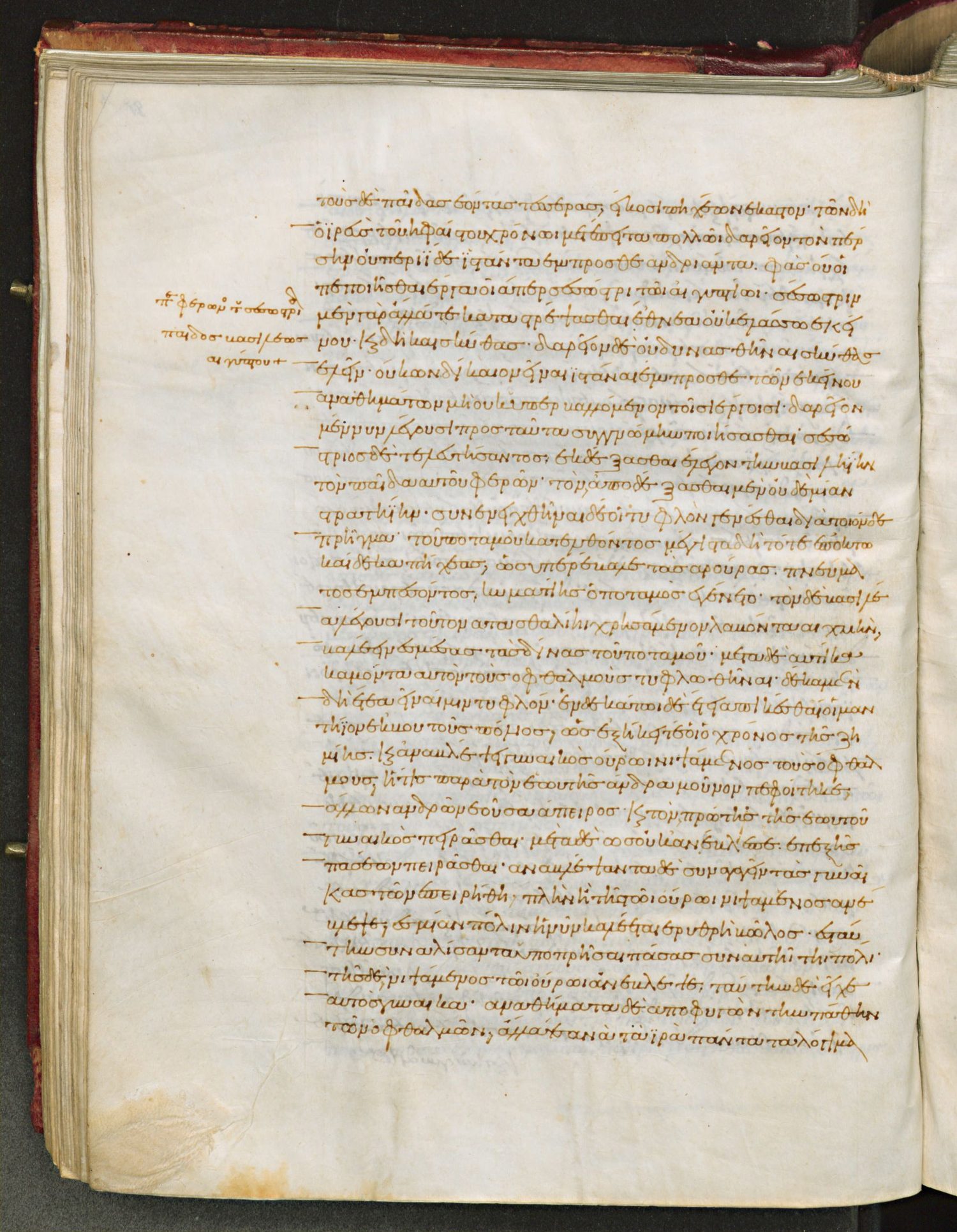
Laur. Plut. 70.3, fol. 81v: Greek here 2.111.1 to 2.111.4. Checked on the image (first and last words read and located in the Greek; each break checked against the neighbouring page): fol. 81v begins ‹τοὺς δὲ παῖδας ἐόντας› (2.110.1), ends ‹ἱρὰ πάντα τὰ λόγιμα› (2.111.4) (page breaks read on the image for the Herodotus on Egypt collection). English here: 2.111.1 to 2.111.4 (Godley's sentences for the sections whose Greek lies mostly on this page).
2.111.1Σεσώστριος δὲ τελευτήσαντος ἐκδέξασθαι ἔλεγον τὴν βασιληίην τὸν παῖδα αὐτοῦ Φερῶν, τὸν ἀποδέξασθαι μὲν οὐδεμίαν στρατηίην, συνενειχθῆναι δέ οἱ τυφλὸν γενέσθαι διὰ τοιόνδε πρῆγμα. τοῦ ποταμοῦ κατελθόντος μέγιστα δὴ τότε ἐπʼ ὀκτωκαίδεκα πήχεας, ὡς ὑπερέβαλε τὰς ἀρούρας, πνεύματος ἐμπεσόντος κυματίης ὁ ποταμὸς ἐγένετο· 2.111.2τὸν δὲ βασιλέα λέγουσι τοῦτον ἀτασθαλίῃ χρησάμενον, λαβόντα αἰχμὴν βαλεῖν ἐς μέσας τὰς δίνας τοῦ ποταμοῦ, μετὰ δὲ αὐτίκα καμόντα αὐτὸν τοὺς ὀφθαλμοὺς τυφλωθῆναι. δέκα μὲν δὴ ἔτεα εἶναί μιν τυφλόν, ἑνδεκάτῳ δὲ ἔτεϊ ἀπικέσθαι οἱ μαντήιον ἐκ Βουτοῦς πόλιος ὡς ἐξήκει τέ οἱ ὁ χρόνος τῆς ζημίης καὶ ἀναβλέψει γυναικὸς οὔρῳ νιψάμενος τοὺς ὀφθαλμούς, ἥτις παρὰ τὸν ἑωυτῆς ἄνδρα μοῦνον πεφοίτηκε, ἄλλων ἀνδρῶν ἐοῦσα ἄπειρος. 2.111.3καὶ τὸν πρώτης τῆς ἑωυτοῦ γυναικὸς πειρᾶσθαι, μετὰ δέ, ὡς οὐκ ἀνέβλεπε, ἐπεξῆς πασέων πειρᾶσθαι· ἀναβλέψαντα δὲ συναγαγεῖν τὰς γυναῖκας τῶν ἐπειρήθη, πλὴν ἢ τῆς τῷ οὔρῳ νιψάμενος ἀνέβλεψε, ἐς μίαν πόλιν, ἣ νῦν καλέεται Ἐρυθρὴ βῶλος· ἐς ταύτην συναλίσαντα ὑποπρῆσαι πάσας σὺν αὐτῇ τῇ πόλι· 2.111.4τῆς δὲ νιψάμενος τῷ οὔρῳ ἀνέβλεψε, ταύτην δὲ ἔσχε αὐτὸς γυναῖκα. ἀναθήματα δὲ ἀποφυγὼν τὴν πάθην τῶν ὀφθαλμῶν ἄλλα τε ἀνὰ τὰ ἱρὰ πάντα τὰ λόγιμα
2.111.1When Sesostris died, he was succeeded in the kingship (so said the priests) by his son Pheros. This king made no wars; and it happened that he became blind, for the following reason: the Nile came down in a flood such as never was before, rising to a height of eighteen cubits, and the water which overflowed the fields was roughened by a strong wind; 2.111.2then, it is said, the king was so infatuated that he took a spear and hurled it into the midst of the river eddies. Straightway after this he suffered from a disease of the eyes, and became blind. When he had been blind for ten years, an oracle from the city of Buto declared to him that the time of his punishment was drawing to an end, and that he should regain his sight by washing his eyes with the issue of a woman who had never had intercourse with any man but her own husband. 2.111.3Pheros made trial with his own wife first, and as he still remained blind, with all women, one after another. When he at last recovered sight, he took all the women of whom he had made trial, save only her who had made him to see again, and gathered them into one town, that which is now called “Red Clay”; where having collected them together he burnt them and the town; 2.111.4but the woman by whose means he had recovered sight he took to wife. Among the many offerings which he dedicated in all the noteworthy temples for his deliverance from blindness, most worthy of mention are the two marvellous stone obelisks which he set up in the temple of the Sun. Each of these is made of a single block, and is an hundred cubits high and eight cubits thick.
Where on the image
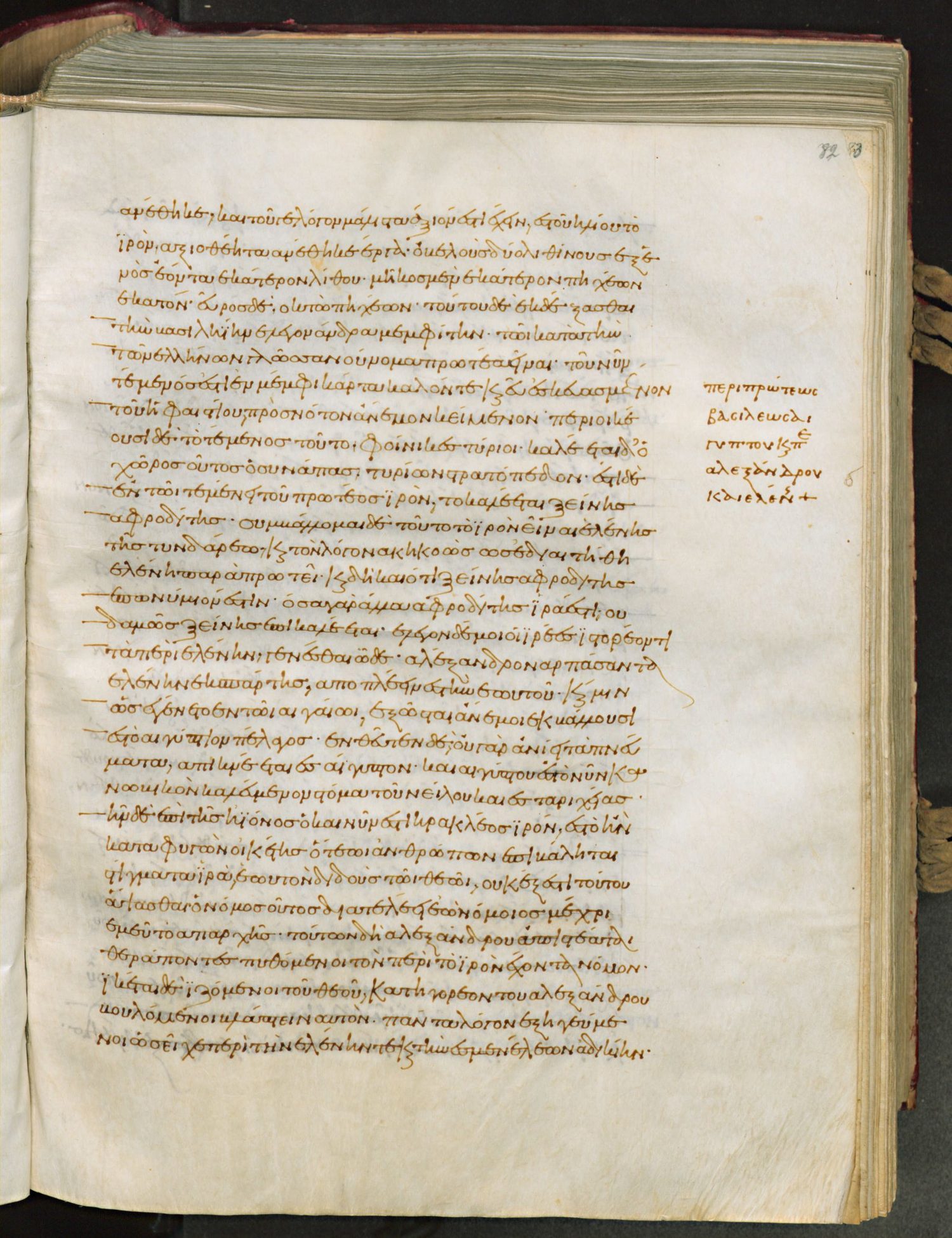
Laur. Plut. 70.3, fol. 82r: Greek here 2.111.4 to 2.113.3. Checked on the image (first and last words read and located in the Greek; each break checked against the neighbouring page): fol. 82r begins ‹ἀνέθηκε καὶ τοῦ γε› (2.111.4), ends ‹τὴν ἐς Μενέλεων ἀδικίην› (2.113.3) (page breaks read on the image for the Herodotus on Egypt collection). English here: 2.112.1 to 2.113.3 (Godley's sentences for the sections whose Greek lies mostly on this page).
2.111.4ἀνέθηκε καὶ τοῦ γε λόγον μάλιστα ἄξιον ἐστὶ ἔχειν, ἐς τοῦ Ἡλίου τὸ ἱρὸν ἀξιοθέητα ἀνέθηκε ἔργα, ὀβελοὺς δύο λιθίνους, ἐξ ἑνὸς ἐόντα ἑκάτερον λίθου, μῆκος μὲν ἑκάτερον πηχέων ἑκατόν, εὖρος δὲ ὀκτὼ πηχέων. 2.112.1τούτου δὲ ἐκδέξασθαι τὴν βασιληίην ἔλεγον ἄνδρα Μεμφίτην, τῷ κατὰ τὴν Ἑλλήνων γλῶσσαν οὔνομα Πρωτέα εἶναι· τοῦ νῦν τέμενος ἐστὶ ἐν Μέμφι κάρτα καλόν τε καὶ εὖ ἐσκευασμένον, τοῦ Ἡφαιστείου πρὸς νότον ἄνεμον κείμενον. 2.112.2περιοικέουσι δὲ τὸ τέμενος τοῦτο Φοίνικες Τύριοι, καλέεται δὲ ὁ χῶρος οὗτος ὁ συνάπας Τυρίων στρατόπεδον. ἔστι δὲ ἐν τῷ τεμένεϊ τοῦ Πρωτέος ἱρὸν τὸ καλέεται ξείνης Ἀφροδίτης· συμβάλλομαι δὲ τοῦτο τὸ ἱρὸν εἶναι Ἑλένης τῆς Τυνδάρεω, καὶ τὸν λόγον ἀκηκοὼς ὡς διαιτήθη Ἑλένη παρὰ Πρωτέι, καὶ δὴ καὶ ὅτι ξείνης Ἀφροδίτης ἐπώνυμον ἐστί· ὅσα γὰρ ἄλλα Ἀφροδίτης ἱρά ἐστι, οὐδαμῶς ξείνης ἐπικαλέεται. 2.113.1ἔλεγον δέ μοι οἱ ἱρέες ἱστορέοντι τὰ περὶ Ἑλένην γενέσθαι ὧδε. Ἀλέξανδρον ἁρπάσαντα Ἑλένην ἐκ Σπάρτης ἀποπλέειν ἐς τὴν ἑωυτοῦ· καί μιν, ὡς ἐγένετο ἐν τῷ Αἰγαίῳ, ἐξῶσται ἄνεμοι ἐκβάλλουσι ἐς τὸ Αἰγύπτιον πέλαγος, ἐνθεῦτεν δέ, οὐ γὰρ ἀνιεῖ τὰ πνεύματα, ἀπικνέεται ἐς Αἴγυπτον καὶ Αἰγύπτου ἐς τὸ νῦν Κανωβικὸν καλεύμενον στόμα τοῦ Νείλου καὶ ἐς Ταριχείας. 2.113.2ἦν δὲ ἐπὶ τῆς ἠιόνος τὸ καὶ νῦν ἐστι Ἡρακλέος ἱρόν, ἐς τὸ ἢν καταφυγὼν οἰκέτης ὅτευ ὦν ἀνθρώπων ἐπιβάληται στίγματα ἱρά, ἑωυτὸν διδοὺς τῷ θεῷ, οὐκ ἔξεστι τούτου ἅψασθαι. 2.113.3ὁ νόμος οὗτος διατελέει ἐὼν ὅμοιος μέχρι ἐμεῦ τῷ ἀπʼ ἀρχῆς· τοῦ ὦν δὴ Ἀλεξάνδρου ἀπιστέαται θεράποντες πυθόμενοι τὸν περὶ τὸ ἱρὸν ἔχοντα νόμον, ἱκέται δὲ ἱζόμενοι τοῦ θεοῦ κατηγόρεον τοῦ Ἀλεξάνδρου, βουλόμενοι βλάπτειν αὐτόν, πάντα λόγον ἐξηγεύμενοι ὡς εἶχε περὶ τὴν Ἑλένην τε καὶ τὴν ἐς Μενέλεων ἀδικίην·
2.112.1Pheros was succeeded (they said) by a man of Memphis, whose name in the Greek language was Proteus. This Proteus has a fair and well-adorned temple precinct at Memphis, lying to the south of the temple of Hephaestus. 2.112.2Round the precinct dwell Phoenicians of Tyre, and the whole place is called the Camp of the Tyrians. There is in the precinct of Proteus a temple entitled the temple of the Stranger Aphrodite; this I guess to be a temple of Helen, daughter of Tyndareus, partly because I have heard the story of Helen’s abiding with Proteus, and partly because it bears the name of the Stranger Aphrodite; for no other of Aphrodite’s temples is called by that name. 2.113.1When I enquired of the priests, they told me that this was the story of Helen:—After carrying off Helen from Sparta, Alexandrus sailed away for his own country; violent winds caught him in the Aegean, and drove him into the Egyptian sea; whence (the wind not abating) he came to Egypt, to the mouth of the Nile called the Canopic mouth, and to the Salting-places. 2.113.2Now there was on the coast (and still is) a temple of Heracles; where if a servant of any man take refuge and be branded with certain sacred marks in token that he delivers himself to the god, such an one may not be touched. This law continues to-day the same as it has ever been from the first. 2.113.3Hearing of the temple law, certain of Alexandrus’ servants separated themselves from him, threw themselves on the mercy of the god, and brought an accusation against Alexandrus with intent to harm him, telling all the story of Helen and the wrong done to Menelaus. They laid this accusation before the priests and the warden of the Nile mouth, whose name was Thonis.
Where on the image
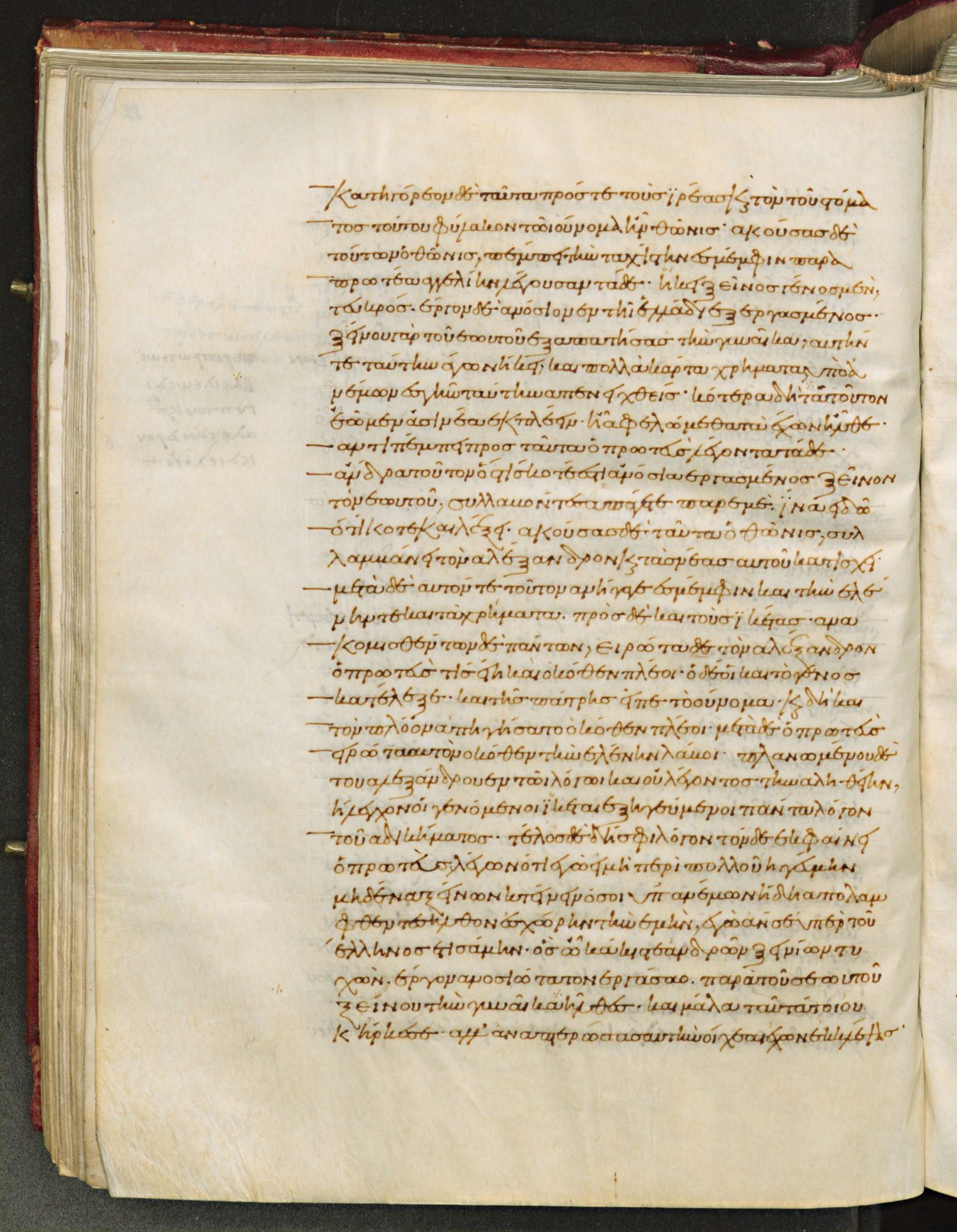
Laur. Plut. 70.3, fol. 82v: Greek here 2.113.3 to 2.115.4. Checked on the image (first and last words read and located in the Greek; each break checked against the neighbouring page): fol. 82v begins ‹κατηγόρεον δὲ ταῦτα πρός› (2.113.3), ends ‹αὐτὴν οἴχεαι ἔχων ἐκκλέψας› (2.115.4) (page breaks read on the image for the Herodotus on Egypt collection). English here: 2.114.1 to 2.115.4 (Godley's sentences for the sections whose Greek lies mostly on this page).
2.113.3κατηγόρεον δὲ ταῦτα πρός τε τοὺς ἱρέας καὶ τὸν στόματος τούτου φύλακον, τῷ οὔνομα ἦν Θῶνις. 2.114.1ἀκούσας δὲ τούτων ὁ Θῶνις πέμπει τὴν ταχίστην ἐς Μέμφιν παρὰ Πρωτέα ἀγγελίην λέγουσαν τάδε. 2.114.2ἥκει ξεῖνος γένος μὲν Τευκρός, ἔργον δὲ ἀνόσιον ἐν τῇ Ἑλλάδι ἐξεργασμένος· ξείνου γὰρ τοῦ ἑωυτοῦ ἐξαπατήσας τὴν γυναῖκα αὐτήν τε ταύτην ἄγων ἥκει καὶ πολλὰ κάρτα χρήματα, ὑπὸ ἀνέμων ἐς γῆν ταύτην ἀπενειχθείς. κότερα δῆτα τοῦτον ἐῶμεν ἀσινέα ἐκπλέειν ἢ ἀπελώμεθα τὰ ἔχων ἦλθε; 2.114.3ἀντιπέμπει πρὸς ταῦτα ὁ Πρωτεὺς λέγοντα τάδε. ἄνδρα τοῦτον, ὅστις κοτὲ ἐστὶ ἀνόσια ἐργασμένος ξεῖνον τὸν ἑωυτοῦ, συλλαβόντες ἀπάγετε παρʼ ἐμέ, ἵνα εἰδέω ὅ τι κοτὲ καὶ λέξει. 2.115.1ἀκούσας δὲ ταῦτα ὁ Θῶνις συλλαμβάνει τὸν Ἀλέξανδρον καὶ τὰς νέας αὐτοῦ κατίσχει, μετὰ δὲ αὐτόν τε τοῦτον ἀνήγαγε ἐς Μέμφιν καὶ τὴν Ἑλένην τε καὶ τὰ χρήματα, πρὸς δὲ καὶ τοὺς ἱκέτας. 2.115.2ἀνακομισθέντων δὲ πάντων, εἰρώτα τὸν Ἀλέξανδρον ὁ Πρωτεὺς τίς εἴη καὶ ὁκόθεν πλέοι. ὁ δέ οἱ καὶ τὸ γένος κατέλεξε καὶ τῆς πάτρης εἶπε τὸ οὔνομα, καὶ δὴ καὶ τὸν πλόον ἀπηγήσατο ὁκόθεν πλέοι. 2.115.3μετὰ δὲ ὁ Πρωτεὺς εἰρώτα αὐτὸν ὁκόθεν τὴν Ἑλένην λάβοι· πλανωμένου δὲ τοῦ Ἀλεξάνδρου ἐν τῷ λόγῳ καὶ οὐ λέγοντος τὴν ἀληθείην, ἤλεγχον οἱ γενόμενοι ἱκέται, ἐξηγεύμενοι πάντα λόγον τοῦ ἀδικήματος. 2.115.4τέλος δὲ δή σφι λόγον τόνδε ἐκφαίνει ὁ Πρωτεύς, λέγων ὅτι ἐγὼ εἰ μὴ περὶ πολλοῦ ἡγεύμην μηδένα ξείνων κτείνειν, ὅσοι ὑπʼ ἀνέμων ἤδη ἀπολαμφθέντες ἦλθον ἐς χώρην τὴν ἐμήν, ἐγὼ ἄν σε ὑπὲρ τοῦ Ἕλληνος ἐτισάμην, ὅς, ὦ κάκιστε ἀνδρῶν, ξεινίων τυχὼν ἔργον ἀνοσιώτατον ἐργάσαο· παρὰ τοῦ σεωυτοῦ ξείνου τὴν γυναῖκα ἦλθες. καὶ μάλα ταῦτά τοι οὐκ ἤρκεσε, ἀλλʼ ἀναπτερώσας αὐτὴν οἴχεαι ἔχων ἐκκλέψας.
2.114.1When Thonis heard it, he sent this message with all speed to Proteus at 2.114.2Memphis: “There has come hither a Teucrian stranger who has done great wrong in Hellas. He has deceived his host and robbed him of his wife, and brought her hither driven to your country by the wind, with very great store of wealth besides. Shall we suffer him to sail away unharmed, or take away from him that which he has brought?” 2.114.3Proteus sent back this message: “Whoever be this man who has done a wrong to his own host, seize him and bring him to me, that I may know what he will say.” 2.115.1Hearing this, Thonis seized Alexandrus and held his ships there, and presently brought him with Helen and all the wealth, and the suppliants therewith, to Memphis. 2.115.2All having come thither, Proteus asked Alexandrus who he was and whence he sailed; Alexandrus told him of his lineage and the name of his country, and of his voyage, whence he sailed. 2.115.3Then Proteus asked him whence he had taken Helen; Alexandrus made no straightforward or truthful answer; but the men who had taken refuge with the temple disproved his tale, and related the whole story of the wrongful act. 2.115.4When all was said, Proteus thus gave sentence:—“Were I not careful to slay no stranger who has ever been caught by the wind and driven to my coasts, I would have avenged that Greek upon you; seeing that, O basest of men! you have done foul wrong to him who hospitably entreated you, and have entered in to the wife of your own host.
Where on the image
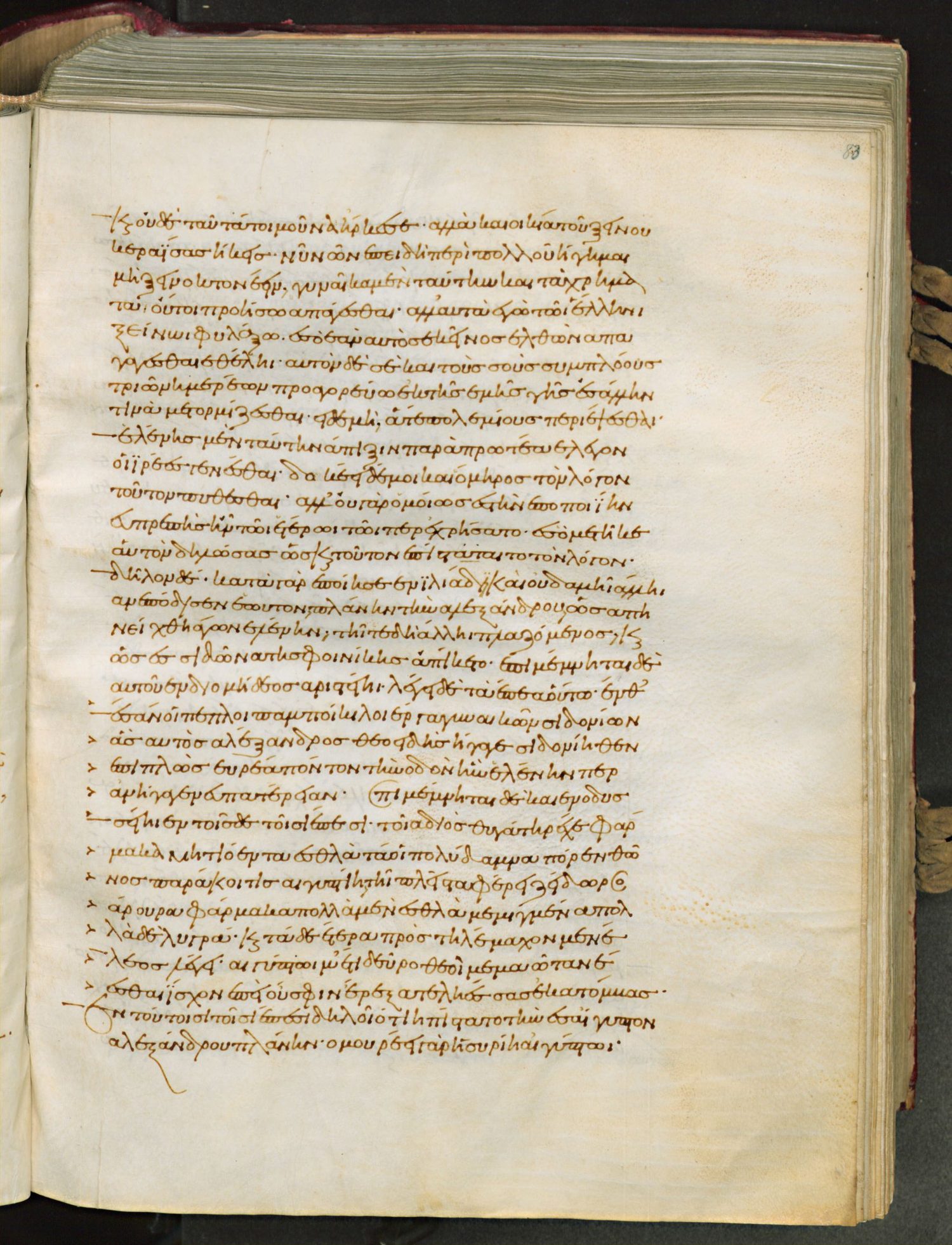
Laur. Plut. 70.3, fol. 83r: Greek here 2.115.5 to 2.116.6. Checked on the image (first and last words read and located in the Greek; each break checked against the neighbouring page): fol. 83r begins ‹καὶ οὐδὲ ταῦτά τοι› (2.115.5), ends ‹γὰρ ἡ Συρίη Αἰγύπτῳ› (2.116.6) (page breaks read on the image for the Herodotus on Egypt collection). English here: 2.115.5 to 2.116.6 (Godley's sentences for the sections whose Greek lies mostly on this page).
2.115.5καὶ οὐδὲ ταῦτά τοι μοῦνα ἤρκεσε, ἀλλὰ καὶ οἰκία τοῦ ξείνου κεραΐσας ἥκεις. 2.115.6νῦν ὦν ἐπειδὴ περὶ πολλοῦ ἥγημαι μὴ ξεινοκτονέειν, γυναῖκα μὲν ταύτην καὶ τὰ χρήματα οὔ τοι προήσω ἀπάγεσθαι, ἀλλʼ αὐτὰ ἐγὼ τῷ Ἕλληνι ξείνῳ φυλάξω, ἐς ὃ ἂν αὐτὸς ἐλθὼν ἐκεῖνος ἀπαγαγέσθαι ἐθέλῃ· αὐτὸν δέ σε καὶ τοὺς σοὺς συμπλόους τριῶν ἡμερέων προαγορεύω ἐκ τῆς ἐμῆς γῆς ἐς ἄλλην τινὰ μετορμίζεσθαι, εἰ δὲ μή, ἅτε πολεμίους περιέψεσθαι. 2.116.1Ἑλένης μὲν ταύτην ἄπιξιν παρὰ Πρωτέα ἔλεγον οἱ ἱρέες γενέσθαι· δοκέει δέ μοι καὶ Ὅμηρος τὸν λόγον τοῦτον πυθέσθαι· ἀλλʼ οὐ γὰρ ὁμοίως ἐς τὴν ἐποποιίην εὐπρεπὴς ἦν τῷ ἑτέρῳ τῷ περ ἐχρήσατο, ἑκὼν μετῆκε αὐτόν, δηλώσας ὡς καὶ τοῦτον ἐπίσταιτο τὸν λόγον· 2.116.2δῆλον δὲ κατὰ [γὰρ] ἐποίησε ἐν Ἰλιάδι (καὶ οὐδαμῇ ἄλλῃ ἀνεπόδισε ἑωυτόν) πλάνην τὴν Ἀλεξάνδρου, ὡς ἀπηνείχθη ἄγων Ἑλένην τῇ τε δὴ ἄλλῃ πλαζόμενος καὶ ὡς ἐς Σιδῶνα τῆς Φοινίκης ἀπίκετο. 2.116.3ἐπιμέμνηται δὲ αὐτοῦ ἐν Διομήδεος ἀριστείῃ· λέγει δὲ τὰ ἔπεα ὧδε.
ἔνθʼ ἔσαν οἱ πέπλοι παμποίκιλοι, ἔργα γυναικῶν
Σιδονίων, τὰς αὐτὸς Ἀλέξανδρος θεοειδής
ἤγαγε Σιδονίηθεν, ἐπιπλὼς εὐρέα πόντον,
τὴν ὁδὸν ἣν Ἑλένην περ ἀνήγαγεν εὐπατέρειαν. 2.116.4ἐπιμέμνηται δὲ καὶ ἐν Ὀδυσσείῃ ἐν τοῖσιδε τοῖσι ἔπεσι.
τοῖα Διὸς θυγάτηρ ἔχε φάρμακα μητιόεντα,
ἐσθλά, τά οἱ Πολύδαμνα πόρεν Θῶνος παράκοιτις
Αἰγυπτίη, τῇ πλεῖστα φέρει ζείδωρος ἄρουρα
φάρμακα, πολλὰ μὲν ἐσθλὰ μεμιγμένα, πολλὰ δὲ λυγρά. 2.116.5καὶ τάδε ἕτερα πρὸς Τηλέμαχον Μενέλεως λέγει.
Αἰγύπτῳ μʼ ἔτι δεῦρο θεοὶ μεμαῶτα νέεσθαι
ἔσχον, ἐπεὶ οὔ σφιν ἔρεξα τεληέσσας ἑκατόμβας. 2.116.6ἐν τούτοισι τοῖσι ἔπεσι δηλοῖ ὅτι ἠπίστατο τὴν ἐς Αἴγυπτον Ἀλεξάνδρου πλάνην· ὁμουρέει γὰρ ἡ Συρίη Αἰγύπτῳ,
2.115.5Nay, and this did not suffice you; you made her to fly with you and stole her away. Nor was even this enough, but you have come hither with the plunder of your host’s house. 2.115.6Now, therefore, since I am careful to slay no stranger, I will not suffer you to take away this woman and these possessions; I will keep them for the Greek stranger, till such time as he shall himself come to take them away; but as for you and the companions of your voyage, I warn you to depart from my country elsewhither within three days, else I will deal with you as with enemies.” 2.116.1This, by what the priests told me, was the manner of Helen’s coming to Proteus. And, to my thinking, Homer too knew this story; but seeing that it suited not so well with epic poetry as the tale of which he made use, he rejected it of set purpose, showing withal that he knew it. 2.116.2This is plain, from the passage in the Iliad (and nowhere else does he return to the story) where he relates the wanderings of Alexandrus, and shows how he with Helen was carried out of his course, among other places, to Sidon in Phoenice. 2.116.3This is in the story of the Feats of Diomedes, where the verses run as follows: There were the robes in his house, inwrought with manifold colours, Work of the women of Sidon, whom godlike Paris aforetime Brought from their eastern town, o’er wide seas voyaging thither, E’en when he won from her home fair Helen, the daughter of princes. 2.116.4He makes mention of it in the Odyssey also: Suchlike drugs of grace, for a healing cunningly mingled, Once in the land of Nile had the wife of Thon, Polydamna, Giv’n to the daughter of Zeus; for there of the country’s abundance, Potent to heal or to harm, are herbs full many engendered: 2.116.5and again Menelaus says to Telemachus: Eager was I to return, but the gods fast held me in Egypt, Wroth that I honoured them not nor offered a sacrifice duly. 2.116.6In these verses the poet shows that he knew of Alexandrus’ wanderings to Egypt; for Syria borders on Egypt, and the Phoenicians, to whom Sidon belongs, dwell in Syria.
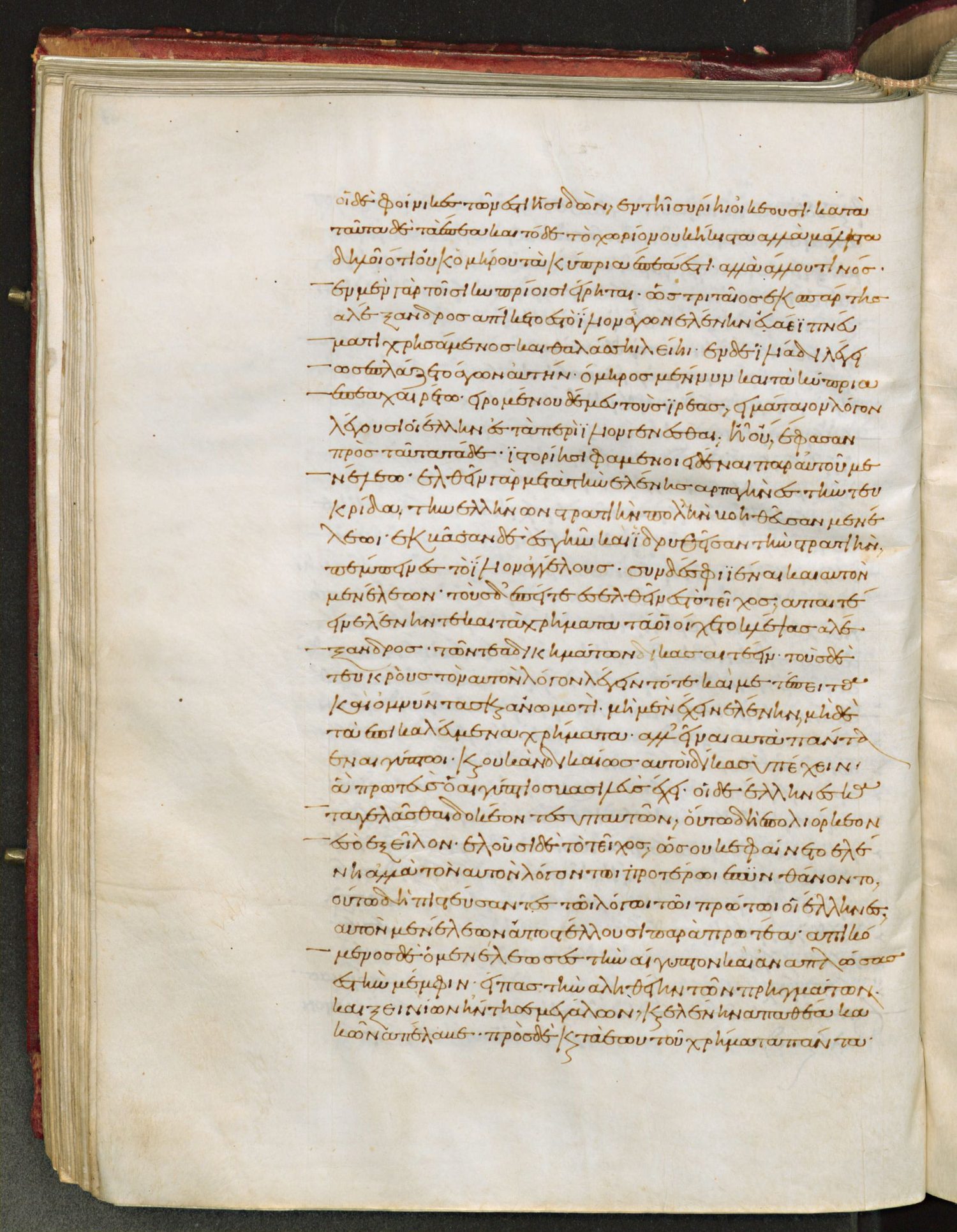
Where on the image
Laur. Plut. 70.3, fol. 83v: Greek here 2.116.6 to 2.119.1. Checked on the image (first and last words read and located in the Greek; each break checked against the neighbouring page): fol. 83v begins ‹οἱ δὲ Φοίνικες, τῶν› (2.116.6), ends ‹τὰ ἑωυτοῦ χρήματα πάντα› (2.119.1) (page breaks read on the image for the Herodotus on Egypt collection). English here: 2.117.1 to 2.119.1 (Godley's sentences for the sections whose Greek lies mostly on this page).
2.116.6οἱ δὲ Φοίνικες, τῶν ἐστὶ ἡ Σιδών, ἐν τῇ Συρίῃ οἰκέουσι. 2.117.1κατὰ ταῦτα δὲ τὰ ἔπεα καὶ τόδε τὸ χωρίον οὐκ ἥκιστα ἀλλὰ μάλιστα δηλοῖ ὅτι οὐκ Ὁμήρου τὰ Κύπρια ἔπεα ἐστὶ ἀλλʼ ἄλλου τινός. ἐν μὲν γὰρ τοῖσι Κυπρίοισι εἴρηται ὡς τριταῖος ἐκ Σπάρτης Ἀλέξανδρος ἀπίκετο ἐς τὸ Ἴλιον ἄγων Ἑλένην, εὐαέι τε πνεύματι χρησάμενος καὶ θαλάσσῃ λείῃ· ἐν δὲ Ἰλιάδι λέγει ὡς ἐπλάζετο ἄγων αὐτήν. 2.118.1Ὅμηρος μέν νυν καὶ τὰ Κύπρια ἔπεα χαιρέτω. εἰρομένου δέ μευ τοὺς ἱρέας εἰ μάταιον λόγον λέγουσι οἱ Ἕλληνες τὰ περὶ Ἴλιον γενέσθαι ἢ οὔ, ἔφασαν πρὸς ταῦτα τάδε, ἱστορίῃσι φάμενοι εἰδέναι παρʼ αὐτοῦ Μενέλεω. 2.118.2ἐλθεῖν μὲν γὰρ μετὰ τὴν Ἑλένης ἁρπαγὴν ἐς τὴν Τευκρίδα γῆν Ἑλλήνων στρατιὴν πολλὴν βοηθεῦσαν Μενέλεῳ, ἐκβᾶσαν δὲ ἐς γῆν καὶ ἱδρυθεῖσαν τὴν στρατιὴν πέμπειν ἐς τὸ Ἴλιον ἀγγέλους, σὺν δέ σφι ἰέναι καὶ αὐτὸν Μενέλεων· 2.118.3τοὺς δʼ ἐπείτε ἐσελθεῖν ἐς τὸ τεῖχος, ἀπαιτέειν Ἑλένην τε καὶ τὰ χρήματα τά οἱ οἴχετο κλέψας Ἀλέξανδρος, τῶν τε ἀδικημάτων δίκας αἰτέειν· τοὺς δὲ Τευκροὺς τὸν αὐτὸν λόγον λέγειν τότε καὶ μετέπειτα, καὶ ὀμνύντας καὶ ἀνωμοτί, μὴ μὲν ἔχειν Ἑλένην μηδὲ τὰ ἐπικαλεύμενα χρήματα, ἀλλʼ εἶναι αὐτὰ πάντα ἐν Αἰγύπτῳ, καὶ οὐκ ἂν δικαίως αὐτοὶ δίκας ὑπέχειν τῶν Πρωτεὺς ὁ Αἰγύπτιος βασιλεὺς ἔχει. 2.118.4οἱ δὲ Ἕλληνες καταγελᾶσθαι δοκέοντες ὑπʼ αὐτῶν οὕτω δὴ ἐπολιόρκεον, ἐς ὃ ἐξεῖλον· ἑλοῦσι δὲ τὸ τεῖχος ὡς οὐκ ἐφαίνετο ἡ Ἑλένη, ἀλλὰ τὸν αὐτὸν λόγον τῷ προτέρῳ ἐπυνθάνοντο, οὕτω δὴ πιστεύσαντες τῷ λόγῳ τῷ πρώτῳ οἱ Ἕλληνες αὐτὸν Μενέλεων ἀποστέλλουσι παρὰ Πρωτέα. 2.119.1ἀπικόμενος δὲ ὁ Μενέλεως ἐς τὴν Αἴγυπτον καὶ ἀναπλώσας ἐς τὴν Μέμφιν, εἴπας τὴν ἀληθείην τῶν πρηγμάτων, καὶ ξεινίων ἤντησε μεγάλων καὶ Ἑλένην ἀπαθέα κακῶν ἀπέλαβε, πρὸς δὲ καὶ τὰ ἑωυτοῦ χρήματα πάντα.
2.117.1These verses and this passage prove most clearly that the Cyprian poems are by the hand not of Homer but of another. For the Cyprian poems relate that Alexandrus reached Ilion with Helen in three days from Sparta, having a fair wind and a smooth sea; but according to the Iliad he wandered from his course in bringing her. 2.118.1Enough, then, of Homer and the Cyprian poems. But when I asked the priests whether the Greek account of the Trojan business were vain or true, they gave me the following answer, saying that they had inquired and knew what Menelaus himself had said:— 2.118.2After the rape of Helen, a great host of Greeks came to the Teucrian land on Menelaus’ behalf. Having there disembarked and encamped, they sent to Ilion messengers, of whom Menelaus himself was one. 2.118.3These, on coming within the city walls, demanded restitution of Helen and the possessions which Alexandrus had stolen from Menelaus and carried off, and reparation besides for the wrong done; but the Teucrians then and ever afterwards declared, with oaths and without, that neither Helen nor the goods claimed were with them, she and they being in Egypt; nor could they (so they said) justly make reparation for what was in the hands of the Egyptian king Proteus. 2.118.4But the Greeks thought that the Trojans mocked them, and therewith besieged the city, till they took it; and it was not till they took the fortress and found no Helen there, and heard the same declaration as before, that they gave credence to the Trojans’ first word and so sent Menelaus himself to Proteus. 2.119.1Menelaus then came to Egypt and went up the river to Memphis; there, telling the whole truth of what had happened, he was very hospitably entertained and received back Helen unharmed and all his possessions withal.
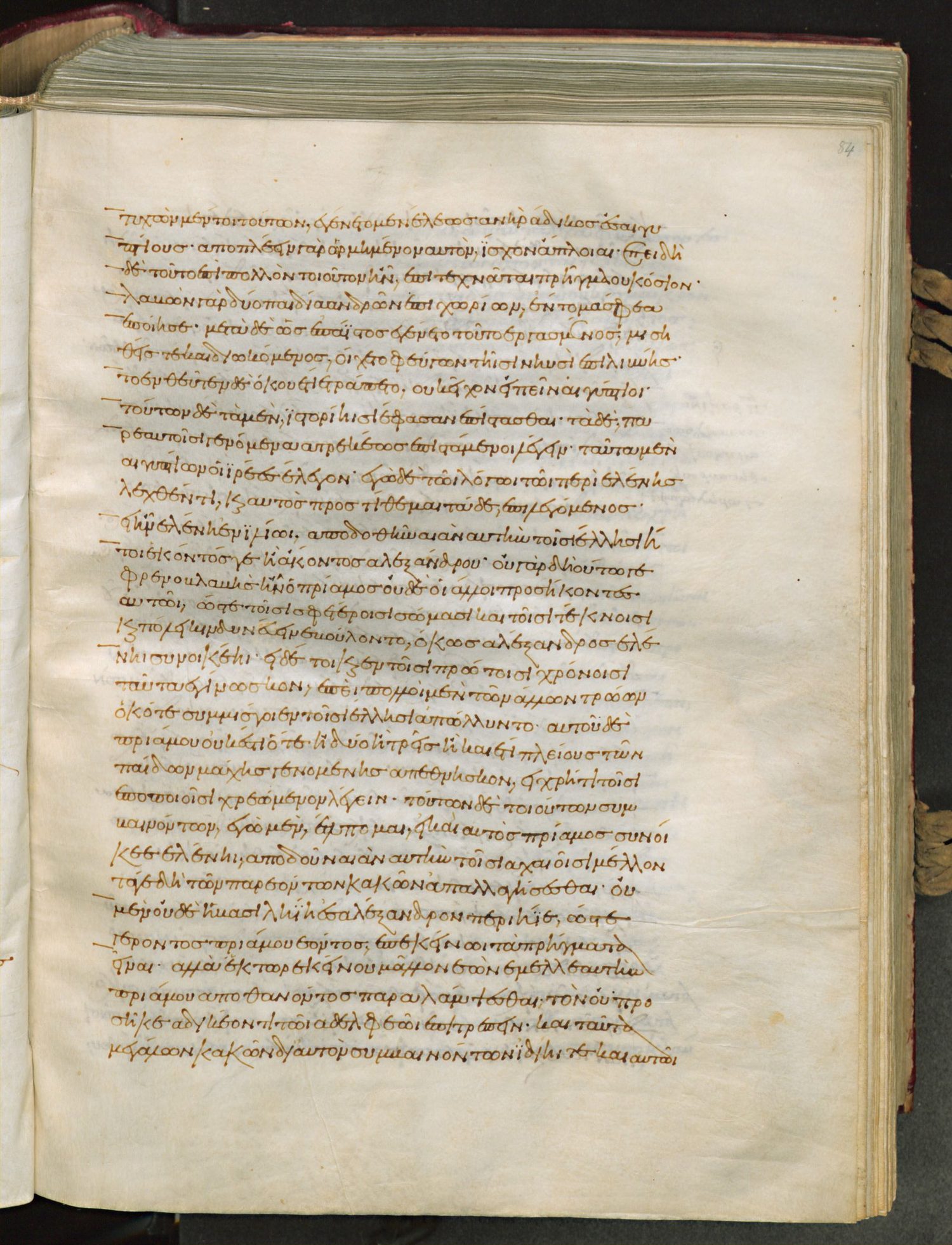
Where on the image
Laur. Plut. 70.3, fol. 84r: Greek here 2.119.2 to 2.120.4. Checked on the image (first and last words read and located in the Greek; each break checked against the neighbouring page): fol. 84r begins ‹τυχὼν μέντοι τούτων ἐγένετο› (2.119.2), ends ‹συμβαινόντων ἰδίῃ τε αὐτῷ› (2.120.4) (page breaks read on the image for the Herodotus on Egypt collection). English here: 2.119.2 to 2.120.4 (Godley's sentences for the sections whose Greek lies mostly on this page).
2.119.2τυχὼν μέντοι τούτων ἐγένετο Μενέλεως ἀνὴρ ἄδικος ἐς Αἰγυπτίους. ἀποπλέειν γὰρ ὁρμημένον αὐτὸν ἶσχον ἄπλοιαι· ἐπειδὴ δὲ τοῦτο ἐπὶ πολλὸν τοιοῦτον ἦν, ἐπιτεχνᾶται πρῆγμα οὐκ ὅσιον· 2.119.3λαβὼν γὰρ δύο παιδία ἀνδρῶν ἐπιχωρίων ἔντομα σφέα ἐποίησε. μετὰ δὲ ὡς ἐπάιστος ἐγένετο τοῦτο ἐργασμένος, μισηθείς τε καὶ διωκόμενος οἴχετο φεύγων τῇσι νηυσὶ ἐπὶ Λιβύης· τὸ ἐνθεῦτεν δὲ ὅκου ἔτι ἐτράπετο οὐκ εἶχον εἰπεῖν Αἰγύπτιοι. τούτων δὲ τὰ μὲν ἱστορίῃσι ἔφασαν ἐπίστασθαι, τὰ δὲ παρʼ ἑωυτοῖσι γενόμενα ἀτρεκέως ἐπιστάμενοι λέγειν. 2.120.1ταῦτα μὲν Αἰγυπτίων οἱ ἱρέες ἔλεγον· ἐγὼ δὲ τῷ λόγῳ τῷ περὶ Ἑλένης λεχθέντι καὶ αὐτὸς προστίθεμαι, τάδε ἐπιλεγόμενος, εἰ ἦν Ἑλένη ἐν Ἰλίῳ, ἀποδοθῆναι ἂν αὐτὴν τοῖσι Ἕλλησι ἤτοι ἑκόντος γε ἢ ἀέκοντος Ἀλεξάνδρου. 2.120.2οὐ γὰρ δὴ οὕτω γε φρενοβλαβὴς ἦν ὁ Πρίαμος οὐδὲ οἱ ἄλλοι οἱ προσήκοντες αὐτῷ, ὥστε τοῖσι σφετέροισι σώμασι καὶ τοῖσι τέκνοισι καὶ τῇ πόλι κινδυνεύειν ἐβούλοντο, ὅκως Ἀλέξανδρος Ἑλένῃ συνοικέῃ. 2.120.3εἰ δέ τοι καὶ ἐν τοῖσι πρώτοισι χρόνοισι ταῦτα ἐγίνωσκον, ἐπεὶ πολλοὶ μὲν τῶν ἄλλων Τρώων, ὁκότε συμμίσγοιεν τοῖσι Ἕλλησι, ἀπώλλυντο, αὐτοῦ δὲ Πριάμου οὐκ ἔστι ὅτε οὐ δύο ἢ τρεῖς ἢ καὶ ἔτι πλέους τῶν παίδων μάχης γινομένης ἀπέθνησκον, εἰ χρή τι τοῖσι ἐποποιοῖσι χρεώμενον λέγειν, τούτων δὲ τοιούτων συμβαινόντων ἐγὼ μὲν ἔλπομαι, εἰ καὶ αὐτὸς Πρίαμος συνοίκεε Ἑλένῃ, ἀποδοῦναι ἂν αὐτὴν τοῖσι Ἀχαιοῖσι, μέλλοντά γε δὴ τῶν παρεόντων κακῶν ἀπαλλαγήσεσθαι. 2.120.4οὐ μὲν οὐδὲ ἡ βασιληίη ἐς Ἀλέξανδρον περιήιε, ὥστε γέροντος Πριάμου ἐόντος ἐπʼ ἐκείνῳ τὰ πρήγματα εἶναι, ἀλλὰ Ἕκτωρ καὶ πρεσβύτερος καὶ ἀνὴρ ἐκείνου μᾶλλον ἐὼν ἔμελλε αὐτὴν Πριάμου ἀποθανόντος παραλάμψεσθαι, τὸν οὐ προσῆκε ἀδικέοντι τῷ ἀδελφεῷ ἐπιτρέπειν, καὶ ταῦτα μεγάλων κακῶν διʼ αὐτὸν συμβαινόντων ἰδίῃ τε αὐτῷ
2.119.2Yet, albeit so well entreated, Menelaus did the Egyptians a wrong. For when he would have sailed away he was stayed by stress of weather; and this hindrance continuing for long, he devised and did a forbidden deed, taking two children of the land and sacrificing them. 2.119.3When it was known that he had so done, the people hated and pursued him, and he fled away with his ships to Libya; and whither he thence betook himself the Egyptians could not say. The priests told me that they had learnt some of this tale by inquiry, but that they spoke with exact knowledge of what had happened in their own country. 2.120.1So much was told me by the Egyptian priests. For myself, I believe their story about Helen: for I reason thus—that had Helen been in Ilion, then with or without the will of Alexandrus she would have been given back to the Greeks. 2.120.2For surely neither was Priam so mad, nor those nearest to him, as to consent to risk their own persons and their children and their city, that Alexandrus might have Helen to wife. 2.120.3Even be it granted that they were so minded in the first days, yet when not only many of the Trojans were slain in fighting against the Greeks, but Priam himself lost by death two or three or even more of his sons in every battle (if the poets are to be trusted), in this turn of affairs, had Helen been Priam’s own wife, I cannot but think (for myself) that he would have restored her to the Greeks, if by so doing he could escape from the present evil plight. 2.120.4Nay, nor was Alexandrus next heir to the kingship, whereby he might have been the real ruler, Priam being old; it was Hector, an older and a more valiant man than Alexandrus, who was like to receive the royal power at Priam’s death; and it was none of Hector’s business to consent to his brother’s wrongdoing, least of all when that brother was the cause of great calamity to Hector himself and the whole of Troy beside.
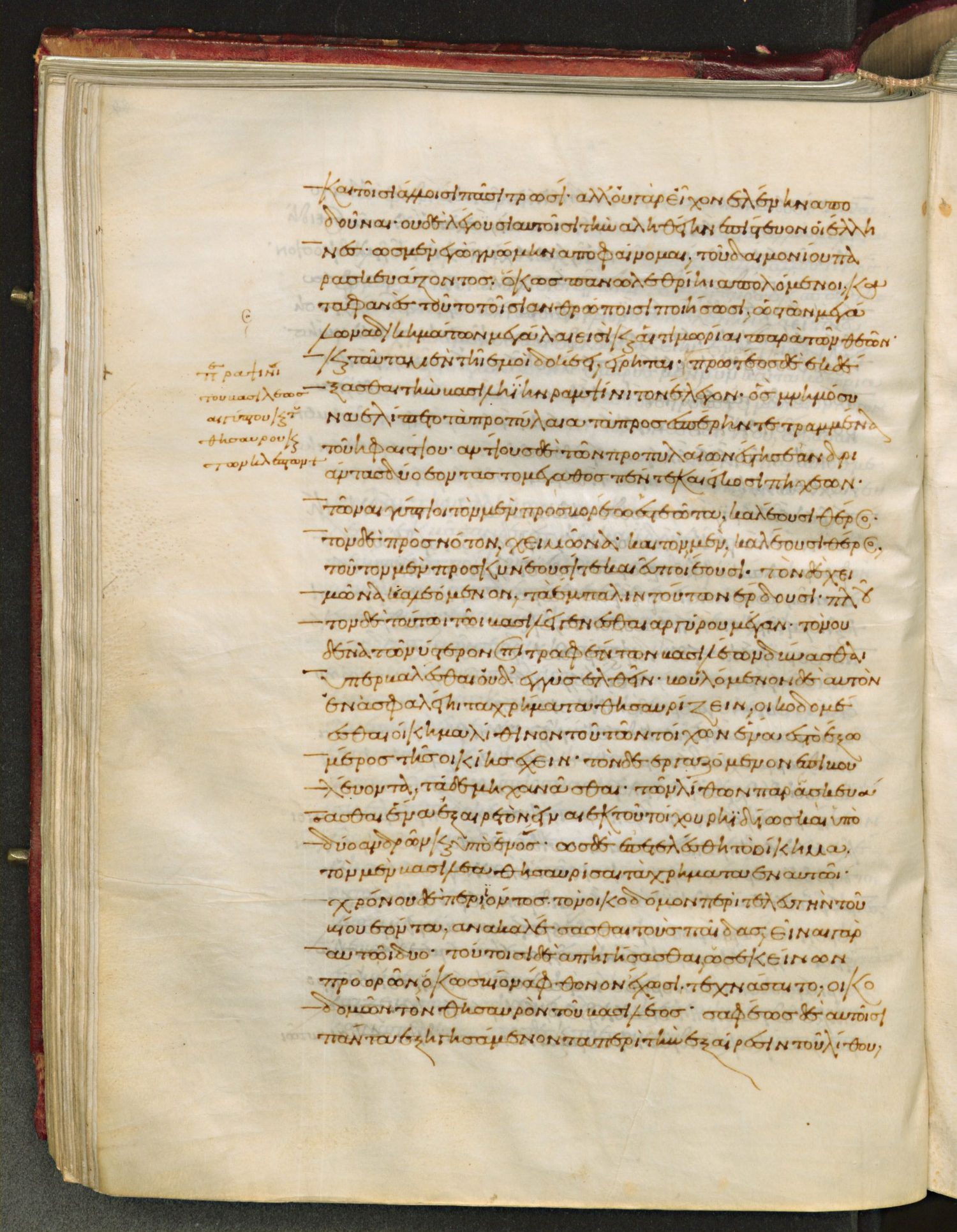
Where on the image
Laur. Plut. 70.3, fol. 84v: Greek here 2.120.4 to 2.121a.2. Checked on the image (first and last words read and located in the Greek; each break checked against the neighbouring page): fol. 84v begins ‹καὶ τοῖσι ἄλλοισι πᾶσι› (2.120.4), ends ‹τὴν ἐξαίρεσιν τοῦ λίθου› (2.121a.2) (page breaks read on the image for the Herodotus on Egypt collection). English here: 2.120.5 to 2.121a.2 (Godley's sentences for the sections whose Greek lies mostly on this page).
2.120.4καὶ τοῖσι ἄλλοισι πᾶσι Τρωσί. 2.120.5ἀλλʼ οὐ γὰρ εἶχον Ἑλένην ἀποδοῦναι, οὐδὲ λέγουσι αὐτοῖσι τὴν ἀληθείην ἐπίστευον οἱ Ἕλληνες, ὡς μὲν ἐγὼ γνώμην ἀποφαίνομαι, τοῦ δαιμονίου παρασκευάζοντος, ὅκως πανωλεθρίῃ ἀπολόμενοι καταφανὲς τοῦτο τοῖσι ἀνθρώποισι ποιήσωσι, ὡς τῶν μεγάλων ἀδικημάτων μεγάλαι εἰσὶ καὶ αἱ τιμωρίαι παρὰ τῶν θεῶν. καὶ ταῦτα μὲν τῇ ἐμοὶ δοκέει εἴρηται. 2.121.1Πρωτέος δὲ ἐκδέξασθαι τὴν βασιληίην Ῥαμψίνιτον ἔλεγον, ὃς μνημόσυνα ἐλίπετο τὰ προπύλαια τὰ πρὸς ἑσπέρην τετραμμένα τοῦ Ἡφαιστείου, ἀντίους δὲ τῶν προπυλαίων ἔστησε ἀνδριάντας δύο, ἐόντας τὸ μέγαθος πέντε καὶ εἴκοσι πηχέων, τῶν Αἰγύπτιοι τὸν μὲν πρὸς βορέω ἑστεῶτα καλέουσι θέρος, τὸν δὲ πρὸς νότον χειμῶνα· καὶ τὸν μὲν καλέουσι θέρος, τοῦτον μὲν προσκυνέουσί τε καὶ εὖ ποιέουσι, τὸν δὲ χειμῶνα καλεόμενον τὰ ἔμπαλιν τούτων ἔρδουσι 2.121a.1πλοῦτον δὲ τούτῳ τῷ βασιλέι γενέσθαι ἀργύρου μέγαν, τὸν οὐδένα τῶν ὕστερον ἐπιτραφέντων βασιλέων δύνασθαι ὑπερβαλέσθαι οὐδʼ ἐγγὺς ἐλθεῖν. βουλόμενον δὲ αὐτὸν ἐν ἀσφαλείῃ τὰ χρήματα θησαυρίζειν οἰκοδομέεσθαι οἴκημα λίθινον, τοῦ τῶν τοίχων ἕνα ἐς τὸ ἔξω μέρος τῆς οἰκίης ἔχειν. τὸν δὲ ἐργαζόμενον ἐπιβουλεύοντα τάδε μηχανᾶσθαι· τῶν λίθων παρασκευάσασθαι ἕνα ἐξαιρετὸν εἶναι ἐκ τοῦ τοίχου ῥηιδίως καὶ ὑπὸ δύο ἀνδρῶν καὶ ὑπὸ ἑνός. 2.121a.2ὡς δὲ ἐπετελέσθη τὸ οἴκημα, τὸν μὲν βασιλέα θησαυρίσαι τὰ χρήματα ἐν αὐτῷ· χρόνου δὲ περιιόντος τὸν οἰκοδόμον περὶ τελευτὴν τοῦ βίου ἐόντα ἀνακαλέσασθαι τοὺς παῖδας (εἶναι γὰρ αὐτῷ δύο), τούτοισι δὲ ἀπηγήσασθαι ὡς ἐκείνων προορῶν, ὅκως βίον ἄφθονον ἔχωσι, τεχνάσαιτο οἰκοδομέων τὸν θησαυρὸν τοῦ βασιλέος· σαφέως δὲ αὐτοῖσι πάντα ἐξηγησάμενον τὰ περὶ τὴν ἐξαίρεσιν τοῦ λίθου
2.120.5But matters fell out as they did because the Trojans had not Helen there to give back, yet though they spoke the truth the Greeks would not believe them; for, as I am convinced and declare, the powers above ordained that the utter destruction of Troy should prove in the sight of all men that the gods do greatly punish great wrongdoing. This is my own belief and thus I declare it. 2.121.1The next to reign after Proteus (they said) was Rhampsinitus. The memorial of his name left by him was the western forecourt of the temple of Hephaestus; before this he set two statues of twenty-five cubits’ height; the northernmost of these is called by the Egyptians Summer, and the southernmost Winter; that one which they call Summer they worship and entreat well, but do contrariwise to the statue called Winter. 2.121a.1This king (they told me) had great wealth of silver, so great that none of the later-born kings could surpass or nearly match it. That he might store his treasure safely, he made to be built a stone chamber, one of its walls abutting on the outer side of his palace. But the builder of it craftily contrived that one stone should be so placed as to be easily removed by two men or even by one. 2.121a.2So when the chamber was finished, the king stored his treasure in it. But as time went on, the builder, being now near his end, called to him his two sons and told them how he had provided an ample livelihood for them by the art with which he had built the king’s treasure-house; he made them clearly to understand concerning the removal of the stone, and gave the measurements which would find it; saying that if they kept these in mind they would be stewards of the king’s riches.
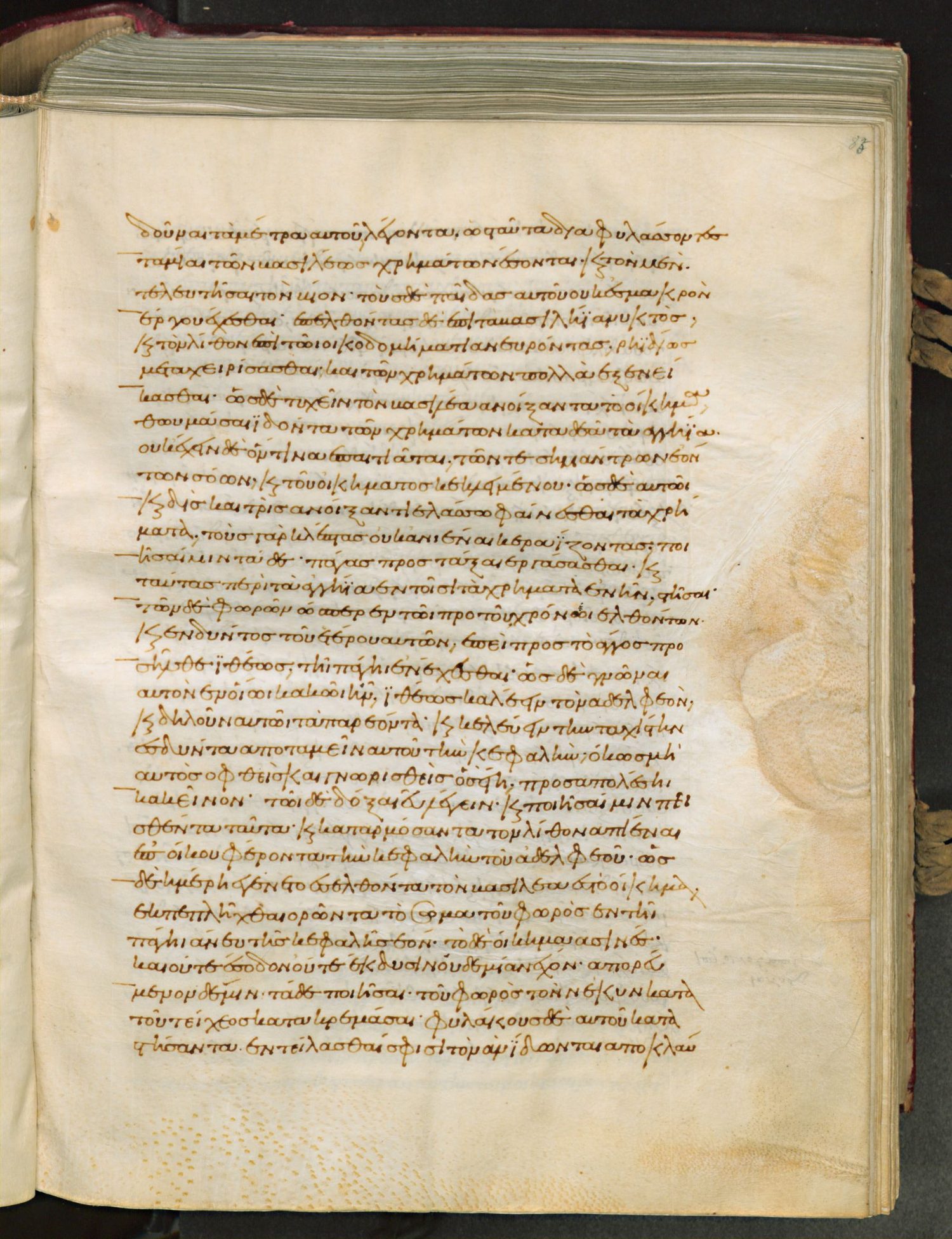
Where on the image
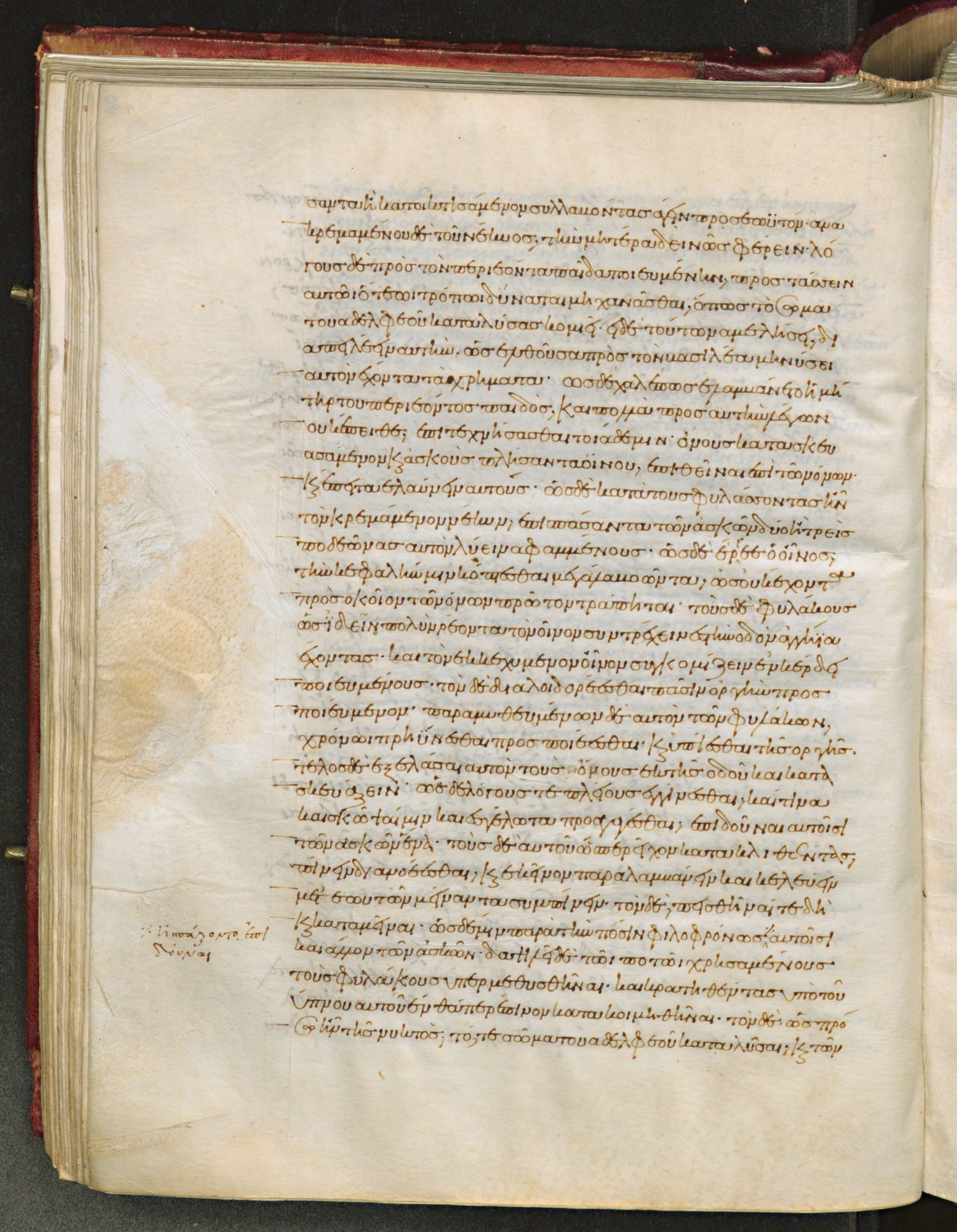
Laur. Plut. 70.3, fol. 85r: Greek here 2.121a.2 to 2.121c.1. Checked on the image (first and last words read and located in the Greek; each break checked against the neighbouring page): fol. 85r begins ‹δοῦναι τὰ μέτρα αὐτοῦ,› (2.121a.2), ends ‹τὸν ἂν ἴδωνται ἀποκλαύ-› (2.121c.1) (page breaks read on the image for the Herodotus on Egypt collection). English here: 2.121a.3 to 2.121c.1 (Godley's sentences for the sections whose Greek lies mostly on this page).
2.121a.2δοῦναι τὰ μέτρα αὐτοῦ, λέγοντα ὡς ταῦτα διαφυλάσσοντες ταμίαι τῶν βασιλέος χρημάτων ἔσονται. 2.121a.3καὶ τὸν μὲν τελευτῆσαι τὸν βίον, τοὺς δὲ παῖδας οὐκ ἐς μακρὴν ἔργου ἔχεσθαι, ἐπελθόντας δὲ ἐπὶ τὰ βασιλήια νυκτὸς καὶ τὸν λίθον ἐπὶ τῷ οἰκοδομήματι ἀνευρόντας ῥηιδίως μεταχειρίσασθαι καὶ τῶν χρημάτων πολλὰ ἐξενείκασθαι. 2.121b.1ὡς δὲ τυχεῖν τὸν βασιλέα ἀνοίξαντα τὸ οἴκημα, θωμάσαι ἰδόντα τῶν χρημάτων καταδεᾶ τὰ ἀγγήια, οὐκ ἔχειν δὲ ὅντινα ἐπαιτιᾶται, τῶν τε σημάντρων ἐόντων σόων καὶ τοῦ οἰκήματος κεκληιμένου. ὡς δὲ αὐτῷ καὶ δὶς καὶ τρὶς ἀνοίξαντι αἰεὶ ἐλάσσω φαίνεσθαι τὰ χρήματα (τοὺς γὰρ κλέπτας οὐκ ἀνιέναι κεραΐζοντας), ποιῆσαί μιν τάδε· πάγας προστάξαι ἐργάσασθαι καὶ ταύτας περὶ τὰ ἀγγήια ἐν τοῖσι τὰ χρήματα ἐνῆν στῆσαι. 2.121b.2τῶν δὲ φωρῶν ὥσπερ ἐν τῷ πρὸ τοῦ χρόνῳ ἐλθόντων καὶ ἐσδύντος τοῦ ἑτέρου αὐτῶν, ἐπεὶ πρὸς τὸ ἄγγος προσῆλθε, ἰθέως τῇ πάγῃ ἐνέχεσθαι. ὡς δὲ γνῶναι αὐτὸν ἐν οἵῳ κακῷ ἦν, ἰθέως καλέειν τὸν ἀδελφεὸν καὶ δηλοῦν αὐτῷ τὰ παρεόντα, καὶ κελεύειν τὴν ταχίστην ἐσδύντα ἀποταμεῖν αὐτοῦ τὴν κεφαλήν, ὅκως μὴ αὐτὸς ὀφθεὶς καὶ γνωρισθεὶς ὃς εἴη προσαπολέσῃ κἀκεῖνον. τῷ δὲ δόξαι εὖ λέγειν, καὶ ποιῆσαί μιν πεισθέντα ταῦτα, καὶ καταρμόσαντα τὸν λίθον ἀπιέναι ἐπʼ οἴκου, φέροντα τὴν κεφαλὴν τοῦ ἀδελφεοῦ. 2.121c.1ὡς δὲ ἡμέρη ἐγένετο, ἐσελθόντα τὸν βασιλέα ἐς τὸ οἴκημα ἐκπεπλῆχθαι ὁρῶντα τὸ σῶμα τοῦ φωρὸς ἐν τῇ πάγῃ ἄνευ τῆς κεφαλῆς ἐόν, τὸ δὲ οἴκημα ἀσινὲς καὶ οὔτε ἔσοδον οὔτε ἔκδυσιν οὐδεμίαν ἔχον. ἀπορεύμενον δέ μιν τάδε ποιῆσαι· τοῦ φωρὸς τὸν νέκυν κατὰ τοῦ τείχεος κατακρεμάσαι, φυλάκους δὲ αὐτοῦ καταστήσαντα ἐντείλασθαί σφι, τὸν ἂν ἴδωνται ἀποκλαύσαντα
2.121a.3So when he was dead, his sons set to work with no long delay: coming to the palace by night, they easily found and handled the stone in the building, and took away much of the treasure. 2.121b.1When the king opened the building, he was amazed to see the vessels lacking their full tale of treasure; yet he knew not whom to accuse, seeing that the seals were unbroken and the chamber fast shut. But when at the second and third opening of the chamber he saw the treasure grown ever less (for the thieves ceased not from plundering), he bid traps to be made and set about the vessels in which his riches lay. 2.121b.2The thieves came as they had done before, and one of them crept in; when he came near the vessel, at once he was caught and held in the trap. Seeing his evil plight, he straightway called to his brother, and, showing him how matters stood, “Creep in quickly,” said he, “and cut off my head, lest I be seen and recognised and so bring you too to ruin.” The brother consented and did this, thinking the counsel good. Then he set the stone in place again, and went away home, carrying his brother’s head. 2.121c.1When it was morning the king came to the chamber, and was amazed to see the thief’s headless body in the trap, yet the chamber unbroken, with no way of passing in or out; and he knew not what to do. But presently he hung the thief’s dead body on the outer wall, and set guards over it, charging them to seize and bring before him whomsoever they should see weeping or making lamentation.
Where on the image
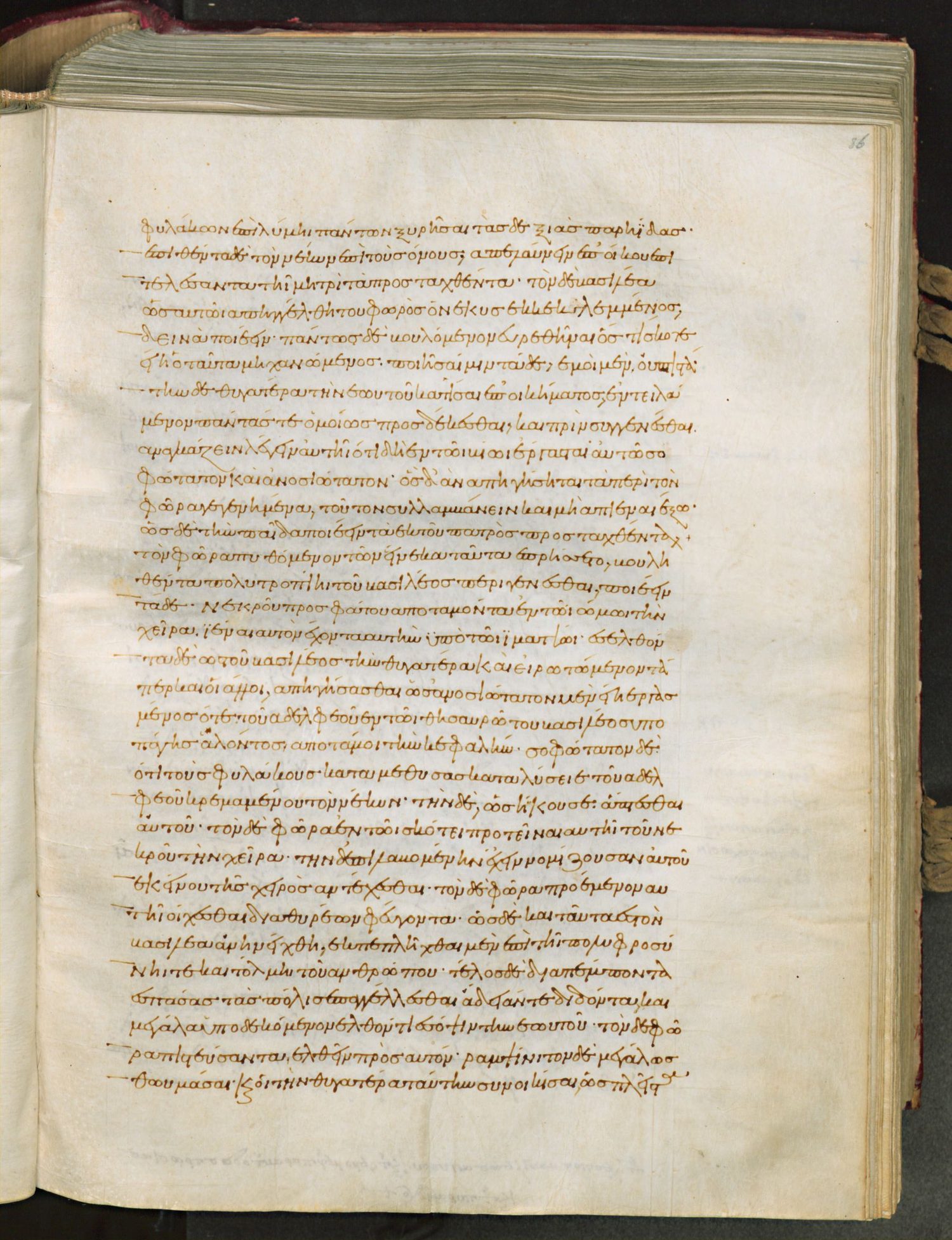
Laur. Plut. 70.3, fol. 85v: Greek here 2.121c.1 to 2.121d.6. Checked on the image (first and last words read and located in the Greek; each break checked against the neighbouring page): fol. 85v begins ‹-σαντα ἢ κατοικτισάμενον, συλλαβόντας› (2.121c.1), ends ‹ἀδελφεοῦ καταλῦσαι καὶ τῶν› (2.121d.6) (page breaks read on the image for the Herodotus on Egypt collection). The word ‹ἀποκλαύσαντα› is divided between fol. 85r and fol. 85v; it is given with fol. 85r. English here: 2.121c.2 to 2.121d.5 (Godley's sentences for the sections whose Greek lies mostly on this page).
2.121c.1ἢ κατοικτισάμενον, συλλαβόντας ἄγειν πρὸς ἑωυτόν. 2.121c.2ἀνακρεμαμένου δὲ τοῦ νέκυος τὴν μητέρα δεινῶς φέρειν, λόγους δὲ πρὸς τὸν περιεόντα παῖδα ποιευμένην προστάσσειν αὐτῷ ὅτεῳ τρόπῳ δύναται μηχανᾶσθαι ὅκως τὸ σῶμα τοῦ ἀδελφεοῦ καταλύσας κομιεῖ· εἰ δὲ τούτων ἀμελήσει, διαπειλέειν αὐτὴν ὡς ἐλθοῦσα πρὸς τὸν βασιλέα μηνύσει αὐτὸν ἔχοντα τὰ χρήματα. 2.121d.1ὡς δὲ χαλεπῶς ἐλαμβάνετο ἡ μήτηρ τοῦ περιεόντος παιδὸς καὶ πολλὰ πρὸς αὐτὴν λέγων οὐκ ἔπειθε, ἐπιτεχνήσασθαι τοιάδε μιν· ὄνους κατασκευασάμενον καὶ ἀσκοὺς πλήσαντα οἴνου ἐπιθεῖναι ἐπὶ τῶν ὄνων καὶ ἔπειτα ἐλαύνειν αὐτούς· ὡς δὲ κατὰ τοὺς φυλάσσοντας ἦν τὸν κρεμάμενον νέκυν, ἐπισπάσαντα τῶν ἀσκῶν δύο ἢ τρεῖς ποδεῶνας αὐτὸν λύειν ἀπαμμένους· 2.121d.2ὡς δὲ ἔρρεε ὁ οἶνος, τὴν κεφαλήν μιν κόπτεσθαι μεγάλα βοῶντα ὡς οὐκ ἔχοντα πρὸς ὁκοῖον τῶν ὄνων πρῶτον τράπηται. τοὺς δὲ φυλάκους ὡς ἰδεῖν πολλὸν ῥέοντα τὸν οἶνον, συντρέχειν ἐς τὴν ὁδὸν ἀγγήια ἔχοντας, καὶ τὸν ἐκκεχυμένον οἶνον συγκομίζειν ἐν κέρδεϊ ποιευμένους· 2.121d.3τὸν δὲ διαλοιδορέεσθαι πᾶσι ὀργὴν προσποιεύμενον, παραμυθευμένων δὲ αὐτὸν τῶν φυλάκων χρόνῳ πρηΰνεσθαι προσποιέεσθαι καὶ ὑπίεσθαι τῆς ὀργῆς, τέλος δὲ ἐξελάσαι αὐτὸν τοὺς ὄνους ἐκ τῆς ὁδοῦ καὶ κατασκευάζειν. 2.121d.4ὡς δὲ λόγους τε πλέους ἐγγίνεσθαι καί τινα καὶ σκῶψαι μιν καὶ ἐς γέλωτα προαγαγέσθαι, ἐπιδοῦναι αὐτοῖσι τῶν ἀσκῶν ἕνα· τοὺς δὲ αὐτοῦ ὥσπερ εἶχον κατακλιθέντας πίνειν διανοέεσθαι, καὶ ἐκεῖνον παραλαμβάνειν καὶ κελεύειν μετʼ ἑωυτῶν μείναντα συμπίνειν· τὸν δὲ πεισθῆναί τε δὴ καὶ καταμεῖναι. 2.121d.5ὡς δέ μιν παρὰ τὴν πόσιν φιλοφρόνως ἠσπάζοντο, ἐπιδοῦναι αὐτοῖσι καὶ ἄλλον τῶν ἀσκῶν· δαψιλέι δὲ τῷ ποτῷ χρησαμένους τοὺς φυλάκους ὑπερμεθυσθῆναι καὶ κρατηθέντας ὑπὸ τοῦ ὕπνου αὐτοῦ ἔνθα περ ἔπινον κατακοιμηθῆναι. 2.121d.6τὸν δέ, ὡς πρόσω ἦν τῆς νυκτός, τό τε σῶμα τοῦ ἀδελφεοῦ καταλῦσαι καὶ τῶν
2.121c.2But the thief’s mother, when the body had been so hung, was greatly moved: she talked with her surviving son, and bade him contrive by whatever means to loose and bring her his brother’s body, threatening that if he would not obey her she would go to the king and lay an information that he had the treasure. 2.121d.1So when she bitterly reproached him and for all he said he could not overpersuade her, the brother devised a plot: he got his asses and loaded them with skins full of wine and then drove them before him till he came near those who guarded the hanging body; then he pulled at the feet of two or three of the skins and loosed their fastenings; 2.121d.2and the wine so running out, he cried aloud and beat his head like one that knew not which of his asses he should deal with first. The guards, seeing the wine running freely, all took vessels and ran into the highway, where they caught the spilt wine, and thought 2.121d.3themselves lucky; the man pretended to be angry and reviled each and all of them; but the guards speaking peaceably to him, he presently made as if he were comforted and appeased, till at last he drove his asses aside from the highway and put his gear in order. 2.121d.4So the guards and he fell into talk, and one of them jesting with him, so that there was laughter, he gave them one of the skins: whereupon without more ado they sat down and began to drink, making him one of their company and bidding him stay and drink with them; and he consented and stayed. 2.121d.5They drank to him merrily, and he gave them yet another of the skins, till the guards grew very drunk with the abundance of liquor, and at last being overmastered by sleep lay down in the place where they had been drinking.
Where on the image
Laur. Plut. 70.3, fol. 86r: Greek here 2.121d.6 to 2.121f.2. Checked on the image (first and last words read and located in the Greek; each break checked against the neighbouring page): fol. 86r begins ‹φυλάκων ἐπὶ λύμῃ πάντων› (2.121d.6), ends ‹ταύτην συνοικίσαι ὡς πλεῖστα› (2.121f.2) (page breaks read on the image for the Herodotus on Egypt collection). English here: 2.121d.6 to 2.121f.2 (Godley's sentences for the sections whose Greek lies mostly on this page).
2.121d.6φυλάκων ἐπὶ λύμῃ πάντων ξυρῆσαι τὰς δεξιὰς παρηίδας, ἐπιθέντα δὲ τὸν νέκυν ἐπὶ τοὺς ὄνους ἀπελαύνειν ἐπʼ οἴκου, ἐπιτελέσαντα τῇ μητρὶ τὰ προσταχθέντα. 2.121e.1τὸν δὲ βασιλέα, ὡς αὐτῷ ἀπηγγέλθη τοῦ φωρὸς ὁ νέκυς ἐκκεκλεμμένος, δεινὰ ποιέειν· πάντως δὲ βουλόμενον εὑρεθῆναι ὅστις κοτὲ εἴη ὁ ταῦτα μηχανώμενος, ποιῆσαί μιν τάδε, ἐμοὶ μὲν οὐ πιστά· 2.121e.2τὴν θυγατέρα τὴν ἑωυτοῦ κατίσαι ἐπʼ οἰκήματος, ἐντειλάμενον πάντας τε ὁμοίως προσδέκεσθαι, καὶ πρὶν συγγενέσθαι, ἀναγκάζειν λέγειν αὐτῇ ὅ τι δὴ ἐν τῷ βίῳ ἔργασται αὐτῷ σοφώτατον καὶ ἀνοσιώτατον· ὃς δʼ ἂν ἀπηγήσηται τὰ περὶ τὸν φῶρα γεγενημένα, τοῦτον συλλαμβάνειν καὶ μὴ ἀπιέναι ἔξω. 2.121e.3ὡς δὲ τὴν παῖδα ποιέειν τὰ ἐκ τοῦ πατρὸς προσταχθέντα, τὸν φῶρα πυθόμενον τῶν εἵνεκα ταῦτα ἐπρήσσετο, βουληθέντα πολυτροπίῃ τοῦ βασιλέος περιγενέσθαι ποιέειν τάδε· 2.121e.4νεκροῦ προσφάτου ἀποταμόντα ἐν τῷ ὤμῳ τὴν χεῖρα ἰέναι αὐτὸν ἔχοντα αὐτὴν ὑπὸ τῷ ἱματίῳ. ἐσελθόντα δὲ ὡς τοῦ βασιλέος τὴν θυγατέρα καὶ εἰρωτώμενον τά περ καὶ οἱ ἄλλοι, ἀπηγήσασθαι ὡς ἀνοσιώτατον μὲν εἴη ἐργασμένος ὅτι τοῦ ἀδελφεοῦ ἐν τῷ θησαυρῷ τοῦ βασιλέος ὑπὸ πάγης ἁλόντος ἀποτάμοι τὴν κεφαλήν, σοφώτατον δὲ ὅτι τοὺς φυλάκους καταμεθύσας καταλύσειε τοῦ ἀδελφεοῦ κρεμάμενον τὸν νέκυν. 2.121e.5τὴν δὲ ὡς ἤκουσε ἅπτεσθαι αὐτοῦ. τὸν δὲ φῶρα ἐν τῷ σκότεϊ προτεῖναι αὐτῇ τοῦ νεκροῦ τὴν χεῖρα· τὴν δὲ ἐπιλαβομένην ἔχειν, νομίζουσαν αὐτοῦ ἐκείνου τῆς χειρὸς ἀντέχεσθαι· τὸν δὲ φῶρα προέμενον αὐτῇ οἴχεσθαι διὰ θυρέων φεύγοντα. 2.121f.1ὡς δὲ καὶ ταῦτα ἐς τὸν βασιλέα ἀνηνείχθη, ἐκπεπλῆχθαι μὲν ἐπὶ τῇ πολυφροσύνῃ τε καὶ τόλμῃ τοῦ ἀνθρώπου, τέλος δὲ διανέμοντα ἐς πάσας τὰς πόλις ἐπαγγέλλεσθαι ἀδείην τε διδόντα καὶ μεγάλα ὑποδεκόμενον ἐλθόντι ἐς ὄψιν τὴν ἑωυτοῦ. 2.121f.2τὸν δὲ φῶρα πιστεύσαντα ἐλθεῖν πρὸς αὐτόν, Ῥαμψίνιτον δὲ μεγάλως θωμάσαι, καί οἱ τὴν θυγατέρα ταύτην συνοικίσαι ὡς πλεῖστα
2.121d.6When the night was far spent, the thief cut down his brother’s body and then (first shaving all the guard’s right cheeks by way of insult) laid it on his asses and drove them home, having so fulfilled his mother’s commands for her. 2.121e.1When the king was told of the stealing away of the dead thief’s body he was very angry, and resolved by all means to find who it was that had plotted the deed. 2.121e.2So he bade his daughter (such is the story, but I myself do not believe it) to sit in a certain room and receive alike all who came; before she had intercourse with any, she should compel him to tell her what was the cleverest trick and the greatest crime of his life; then if any told her the story of the thief she must seize him and not suffer him to pass out. 2.121e.3The girl did as her father bade her. The thief, learning the purpose of the king’s act, was minded to get the better of him by ready cunning. 2.121e.4He therefore cut off the arm of a man newly dead at the shoulder, and went to the king’s daughter, carrying it under his cloak, and when asked the same question as the rest, he told her that his greatest crime was the cutting off of his brother’s head when the brother was caught in a trap in the king’s treasury, and his cleverest trick the release of his brother’s hanging body by making the guards drunk. 2.121e.5Hearing this, the princess would have laid hands on him, but the thief in the darkness giving her the dead man’s arm, she seized that, thinking that she was grasping the arm of the thief, who, having given it to her, made his escape by way of the door. 2.121f.1When this also came to the king’s ears, he was astonished at the man’s ingenuity and daring, and in the end, he sent a proclamation to every town, promising the thief impunity and a great reward if he would come into the king’s presence. 2.121f.2The thief trusted the king and came before him; Rhampsinitus admired him greatly and gave him his daughter to wife for his surpassing cleverness, for as the Egyptians (said he) excelled all others in craft, so did he excel the Egyptians.
Where on the image
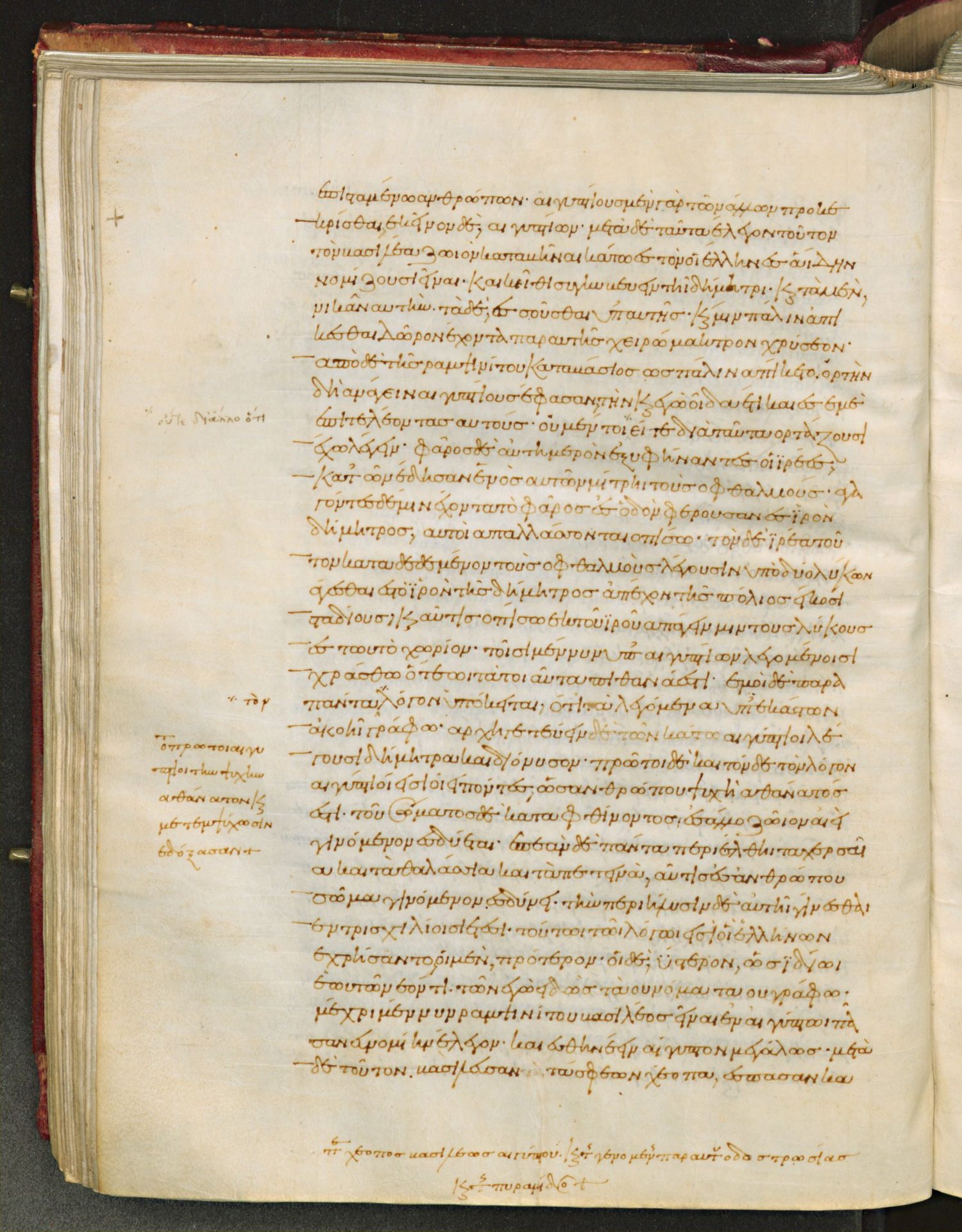
Laur. Plut. 70.3, fol. 86v: Greek here 2.121f.2 to 2.123.3. Checked on the image (first and last words read and located in the Greek; each break checked against the neighbouring page): fol. 86v begins ‹ἐπισταμένῳ ἀνθρώπων. Αἰγυπτίους μὲν› (2.121f.2), ends ‹Χέοπα ἐς πᾶσαν κα-› (2.124.1) (page breaks read on the image for the Herodotus on Egypt collection). English here: 2.122.1 to 2.123.3 (Godley's sentences for the sections whose Greek lies mostly on this page).
2.121f.2ἐπισταμένῳ ἀνθρώπων. Αἰγυπτίους μὲν γὰρ τῶν ἄλλων προκεκρίσθαι, ἐκεῖνον δὲ Αἰγυπτίων. 2.122.1μετὰ δὲ ταῦτα ἔλεγον τοῦτον τὸν βασιλέα ζωὸν καταβῆναι κάτω ἐς τὸν οἱ Ἕλληνες Ἅιδην νομίζουσι εἶναι, καὶ κεῖθι συγκυβεύειν τῇ Δήμητρι, καὶ τὰ μὲν νικᾶν αὐτὴν τὰ δὲ ἑσσοῦσθαι ὑπʼ αὐτῆς, καί μιν πάλιν ἀπικέσθαι δῶρον ἔχοντα παρʼ αὐτῆς χειρόμακτρον χρύσεον. 2.122.2ἀπὸ δὲ τῆς Ῥαμψινίτου καταβάσιος, ὡς πάλιν ἀπίκετο, ὁρτὴν δὴ ἀνάγειν Αἰγυπτίους ἔφασαν· τὴν καὶ ἐγὼ οἶδα ἔτι καὶ ἐς ἐμὲ ἐπιτελέοντας αὐτούς, οὐ μέντοι εἴ γε διὰ ταῦτα ὁρτάζουσι ἔχω λέγειν. 2.122.3φᾶρος δὲ αὐτημερὸν ἐξυφήναντες οἱ ἱρέες κατʼ ὦν ἔδησαν ἑνὸς ἑωυτῶν μίτρῃ τοὺς ὀφθαλμούς, ἀγαγόντες δέ μιν ἔχοντα τὸ φᾶρος ἐς ὁδὸν φέρουσαν ἐς ἱρὸν Δήμητρος αὐτοὶ ἀπαλλάσσονται ὀπίσω· τὸν δὲ ἱρέα τοῦτον καταδεδεμένον τοὺς ὀφθαλμοὺς λέγουσι ὑπὸ δύο λύκων ἄγεσθαι ἐς τὸ ἱρὸν τῆς Δήμητρος ἀπέχον τῆς πόλιος εἴκοσι σταδίους, καὶ αὖτις ὀπίσω ἐκ τοῦ ἱροῦ ἀπάγειν μιν τοὺς λύκους ἐς τὠυτὸ χωρίον. 2.123.1τοῖσι μέν νυν ὑπʼ Αἰγυπτίων λεγομένοισι χράσθω ὅτεῳ τὰ τοιαῦτα πιθανά ἐστι· ἐμοὶ δὲ παρὰ πάντα τὸν λόγον ὑπόκειται ὅτι τὰ λεγόμενα ὑπʼ ἑκάστων ἀκοῇ γράφω. ἀρχηγετέειν δὲ τῶν κάτω Αἰγύπτιοι λέγουσι Δήμητρα καὶ Διόνυσον. 2.123.2πρῶτοι δὲ καὶ τόνδε τὸν λόγον Αἰγύπτιοι εἰσὶ οἱ εἰπόντες, ὡς ἀνθρώπου ψυχὴ ἀθάνατος ἐστί, τοῦ σώματος δὲ καταφθίνοντος ἐς ἄλλο ζῷον αἰεὶ γινόμενον ἐσδύεται, ἐπεὰν δὲ πάντα περιέλθῃ τὰ χερσαῖα καὶ τὰ θαλάσσια καὶ τὰ πετεινά, αὖτις ἐς ἀνθρώπου σῶμα γινόμενον ἐσδύνει· τὴν περιήλυσιν δὲ αὐτῇ γίνεσθαι ἐν τρισχιλίοισι ἔτεσι. 2.123.3τούτῳ τῷ λόγῳ εἰσὶ οἳ Ἑλλήνων ἐχρήσαντο, οἳ μὲν πρότερον οἳ δὲ ὕστερον, ὡς ἰδίῳ ἑωυτῶν ἐόντι· τῶν ἐγὼ εἰδὼς τὰ οὐνόματα οὐ γράφω.
2.122.1After this (said the priests) this king went down alive to the place which the Greeks call Hades; there he played dice with Demeter, and after both winning and losing he returned back with a gift from her of a golden napkin. 2.122.2From this descent of Rhampsinitus the Egyptians were said by the priests to have kept a festival after his return, which to my own knowledge they celebrate to this day, but whether it be for that cause I cannot say. 2.122.3On the day of this festival the priests weave a cloth and bind it for a headgear on the eyes of one among themselves, whom they then lead, wearing the cloth, into a road that goes to the temple of Demeter; they themselves return back, but this priest with his eyes bandaged is guided (say they) by two wolves to Demeter’s temple, a distance of twenty furlongs from the city, and led back again from the temple by the wolves to the same place. 2.123.1These Egyptian stories are for the use of whosoever believes such tales: for myself, it is my rule throughout this history that I record whatever is told me as I have heard it. It is believed in Egypt that the rulers of the lower world are Demeter and Dionysus. 2.123.2Moreover, the Egyptians were the first to teach that the human soul is immortal, and at the death of the body enters into some other living thing then coming to birth; and after passing through all creatures of land, sea, and air (which cycle it completes in three thousand years) it enters once more into a human body at birth. 2.123.3Some of the Greeks, early and late, have used this doctrine as if it were their own; I know their names, but do not here record them.
Notes
- Greek: the text printed in A. D. Godley's Loeb edition, via Perseus (tlg0016.tlg001.perseus-grc2). Square brackets mark words the editor considers later additions; [...] marks a gap the editor indicates. Perseus note markers are omitted.
- English: A. D. Godley, Herodotus vol. 1 (1920) (Loeb Classical Library), as transcribed on Wikisource. Godley's footnotes are omitted.
- Section numbers in the English were placed by comparing Godley's text with the Perseus version of his translation; where a section begins inside one of Godley's sentences, the English is kept with the page that holds the start of that sentence.
Cite
Sources
- Source: Florence, Laur. Plut. 70.3 (10th c.) via BML Teca Digitale + Greek of Godley's Loeb (Perseus) + English of A. D. Godley (Loeb, Wikisource) (holding institution)
- Critical edition: Greek of A. D. Godley's Loeb edition (1920-1925), via Perseus
← previous · → next · v cycle view · l back to library