Herodotus, Histories 3.150-160: The revolt of Babylon and Zopyrus
Introduction
Herodotus of Halicarnassus wrote the Histories in the third quarter of the 5th century BCE, an inquiry into the deeds of Greeks and barbarians and the causes of the wars between them, later divided into nine books. Book 3 tells of Cambyses' conquest of Egypt and his madness, Polycrates of Samos, the rising of the Magi and the seven Persians who overthrew them, the accession of Darius and his provinces, and the revolt and recapture of Babylon.
The photographs are of Florence, Biblioteca Medicea Laurenziana, Plut. 70.3 (parchment, 10th century, 374 folios, 31 lines a page), Herodotus, Histories (codex A of the editors), the oldest surviving manuscript of the complete Histories, from the Teca Digitale of the Biblioteca Medicea Laurenziana. Each section below is the text of one page, or of the part of a page that falls within these chapters. The first and last words of every page were read on the photograph and located in the Greek, and every page break was checked against the next page; the notes quote these words. Readers' notes in the margins are not part of the text and are mentioned where they occur.
The Greek is the text printed in A. D. Godley's Loeb edition (1920-1925), from Perseus; it is the edited text, not a transcription of the manuscript, whose wording differs in places. The English is Godley's translation as printed, from Wikisource. Godley's English carries only chapter numbers; the section numbers shown in it were placed by comparison with the Perseus version of his translation. Each page's English is cut at the end of one of Godley's sentences, so it can begin or end a few lines away from the Greek of the page; each note gives the exact ranges.
This entry covers chapters 3.150-160, on fol. 144r to 146v.
How was this verified? (Provenance)
Where on the image
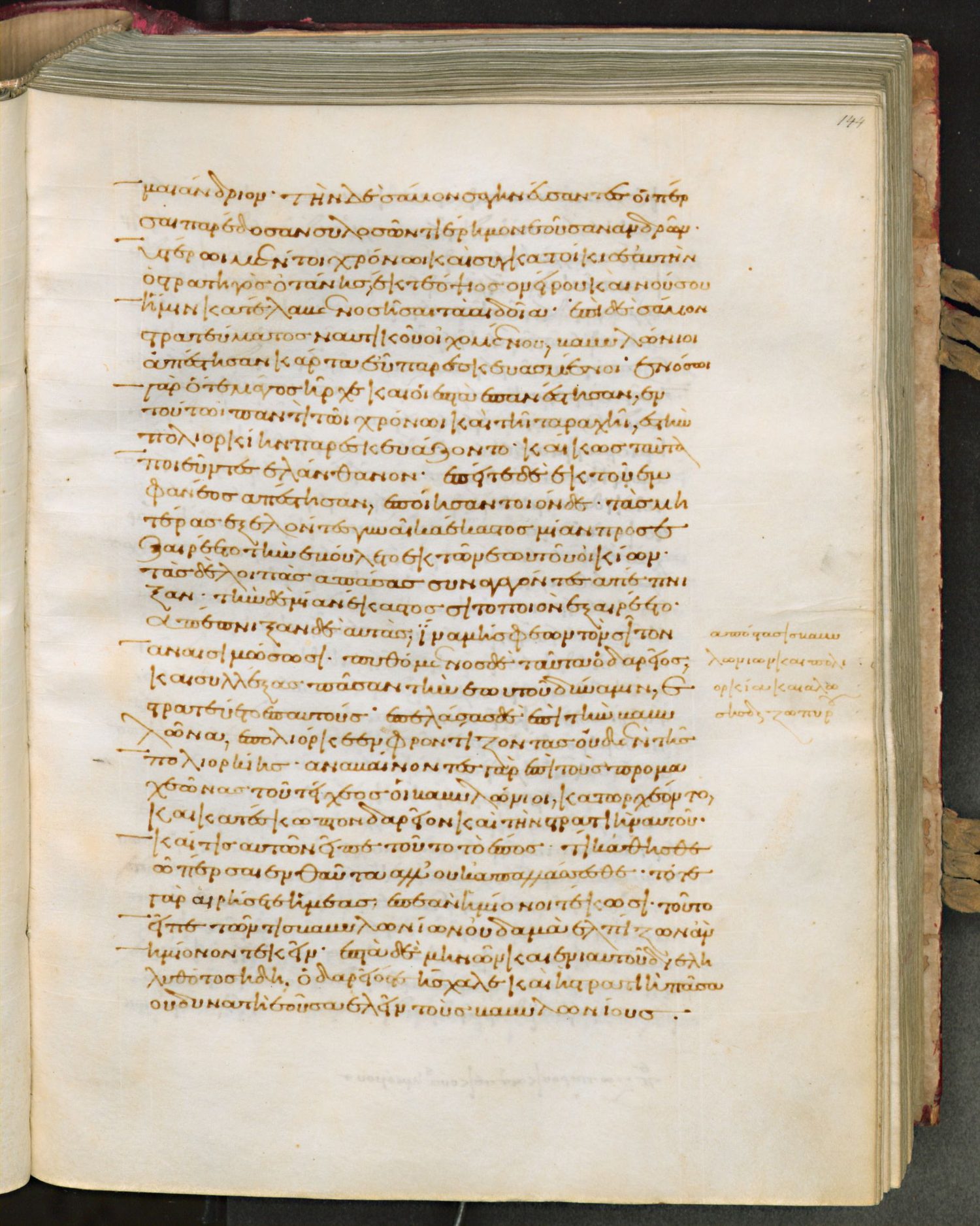
Laur. Plut. 70.3, fol. 144r: Greek here 3.150.1 to 3.152.1. Checked on the image (first and last words read and located in the Greek; each break checked against the neighbouring page): fol. 144r begins ‹Μαιάνδριον.τὴν δὲ Σάμον [σαγηνεύσαντες]› (3.148.2), ends ‹ἐοῦσα ἑλεῖν τοὺς Βαβυλωνίους› (3.152.1). English here: 3.150.1 to 3.151.2 (Godley's sentences for the sections whose Greek lies mostly on this page).
3.150.1ἐπὶ δὲ Σάμον στρατεύματος ναυτικοῦ οἰχομένου Βαβυλώνιοι ἀπέστησαν, κάρτα εὖ παρεσκευασμένοι· ἐν ὅσῳ γὰρ ὅ τε Μάγος ἦρχε καὶ οἱ ἑπτὰ ἐπανέστησαν, ἐν τούτῳ παντὶ τῷ χρόνῳ καὶ τῇ ταραχῇ ἐς τὴν πολιορκίην παρεσκευάζοντο. 3.150.2καί κως ταῦτα ποιεῦντες ἐλάνθανον. ἐπείτε δὲ ἐκ τοῦ ἐμφανέος ἀπέστησαν, ἐποίησαν τοιόνδε· τὰς μητέρας ἐξελόντες, γυναῖκα ἕκαστος μίαν προσεξαιρέετο τὴν ἐβούλετο ἐκ τῶν ἑωυτοῦ οἰκίων, τὰς δὲ λοιπὰς ἁπάσας συναγαγόντες ἀπέπνιξαν· τὴν δὲ μίαν ἕκαστος σιτοποιὸν ἐξαιρέετο· ἀπέπνιξαν δὲ αὐτάς, ἵνα μή σφεων τὸν σῖτον ἀναισιμώσωσι. 3.151.1πυθόμενος δὲ ταῦτα ὁ Δαρεῖος καὶ συλλέξας πᾶσαν τὴν ἑωυτοῦ δύναμιν ἐστρατεύετο ἐπʼ αὐτούς, ἐπελάσας δὲ ἐπὶ τὴν Βαβυλῶνα ἐπολιόρκεε φροντίζοντας οὐδὲν τῆς πολιορκίης. ἀναβαίνοντες γὰρ ἐπὶ τοὺς προμαχεῶνας τοῦ τείχεος οἱ Βαβυλώνιοι κατωρχέοντο καὶ κατέσκωπτον Δαρεῖον καὶ τὴν στρατιὴν αὐτοῦ, καί τις αὐτῶν εἶπε τοῦτο τὸ ἔπος. 3.151.2τί κάτησθε ὦ Πέρσαι ἐνθαῦτα, ἀλλʼ οὐκ ἀπαλλάσσεσθε; τότε γὰρ αἱρήσετε ἡμέας, ἐπεὰν ἡμίονοι τέκωσι. τοῦτο εἶπε τῶν τις Βαβυλωνίων οὐδαμὰ ἐλπίζων ἂν ἡμίονον τεκεῖν. 3.152.1ἑπτὰ δὲ μηνῶν καὶ ἐνιαυτοῦ διεληλυθότος ἤδη ὁ Δαρεῖός τε ἤσχαλλε καὶ ἡ στρατιὴ πᾶσα οὐ δυνατὴ ἐοῦσα ἑλεῖν τοὺς Βαβυλωνίους.
3.150.1When the fleet had gone to Samos, the Babylonians revolted; for which they had made very good preparation; for during the reign of the Magian, and the rebellion of the seven, they had taken advantage of the time and the disorders to prepare themselves against the siege; and (I cannot tell how) this was unknown. 3.150.2At the last they revolted openly and did this:—sending away all the mothers, they chose each one woman from his own household, whom he would, as a bread-maker; as for the rest, they gathered them together and strangled them, that they should not consume their bread. 3.151.1When Darius heard of this he mustered all his power and led it against Babylon, and he marched to the town and laid siege to it; but the townsmen cared nothing for what he did. They came up on to the bastions of the wall, and mocked Darius and his army with gesture and word; and this saying came from one of them: “Why sit you there, Persians, instead of departing? 3.151.2You will take our city when mules bear offspring.” This said the Babylonian, supposing that no mule would ever bear offspring.
Where on the image
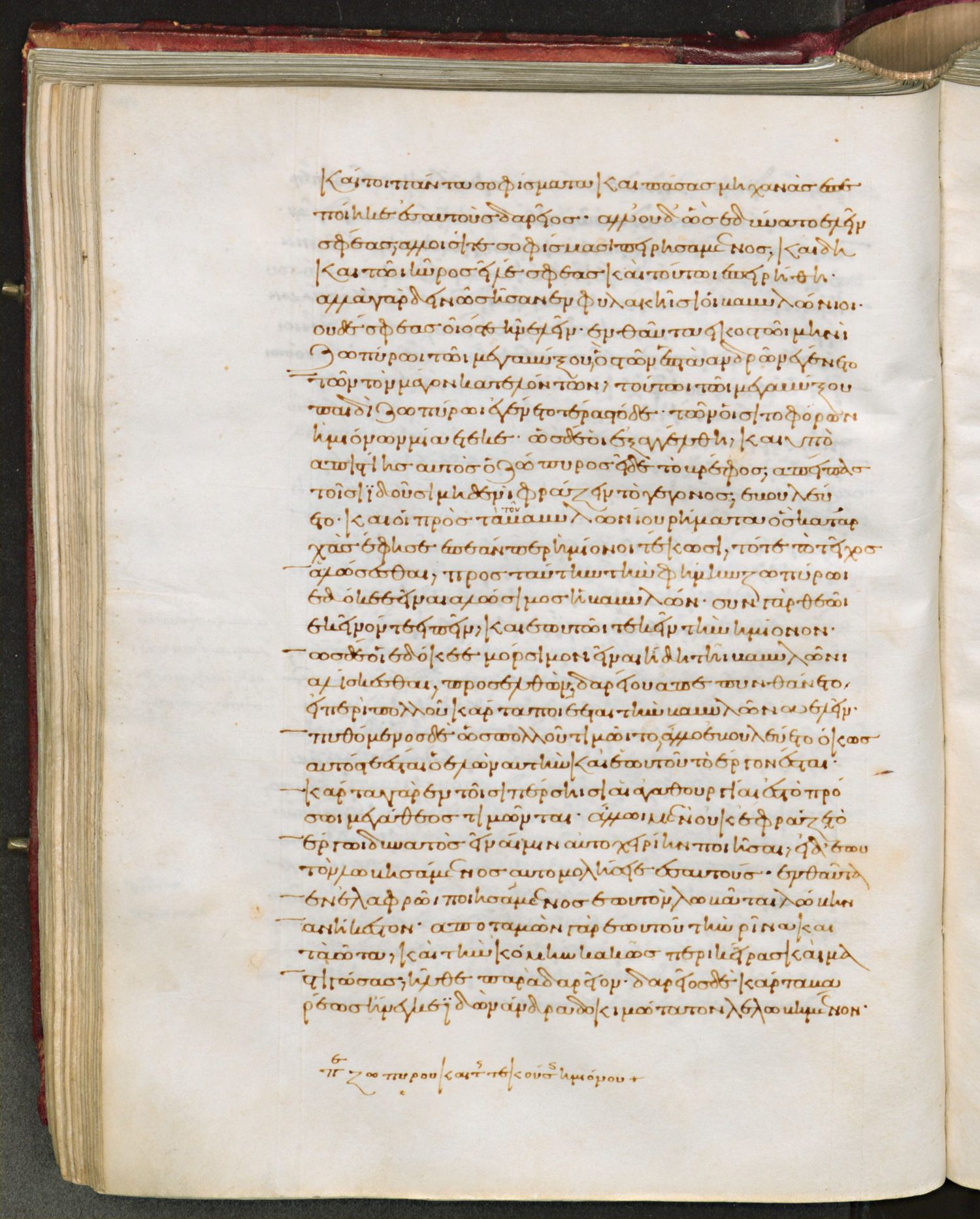
Laur. Plut. 70.3, fol. 144v: Greek here 3.152.1 to 3.155.1. Checked on the image (first and last words read and located in the Greek; each break checked against the neighbouring page): fol. 144v begins ‹καίτοι πάντα σοφίσματα καὶ› (3.152.1), ends ‹ἰδὼν ἄνδρα δοκιμώτατον λελωβημένον› (3.155.1). Below the text, a reader's note on Zopyrus. English here: 3.152.1 to 3.154.2 (Godley's sentences for the sections whose Greek lies mostly on this page).
3.152.1καίτοι πάντα σοφίσματα καὶ πάσας μηχανὰς ἐπεποιήκεε ἐς αὐτοὺς Δαρεῖος· ἀλλʼ οὐδʼ ὣς ἐδύνατο ἑλεῖν σφεας, ἄλλοισί τε σοφίσμασι πειρησάμενος, καὶ δὴ καὶ τῷ Κῦρος εἷλε σφέας, καὶ τούτῳ ἐπειρήθη. ἀλλὰ γὰρ δεινῶς ἦσαν ἐν φυλακῇσι οἱ Βαβυλώνιοι, οὐδὲ σφέας οἷός τε ἦν ἑλεῖν. 3.153.1ἐνθαῦτα εἰκοστῷ μηνὶ Ζωπύρῳ τῷ Μεγαβύζου, τούτου ὃς τῶν ἑπτὰ ἀνδρῶν ἐγένετο τῶν τὸν Μάγον κατελόντων, τούτῳ τῷ Μεγαβύζου παιδὶ Ζωπύρῳ ἐγένετο τέρας τόδε· τῶν οἱ σιτοφόρων ἡμιόνων μία ἔτεκε. ὡς δέ οἱ ἐξαγγέλθη καὶ ὑπὸ ἀπιστίης αὐτὸς ὁ Ζώπυρος εἶδε τὸ βρέφος, ἀπείπας τοῖσι ἰδοῦσι μηδενὶ φράζειν τὸ γεγονὸς ἐβουλεύετο. 3.153.2καί οἱ πρὸς τὰ τοῦ Βαβυλωνίου ῥήματα, ὃς κατʼ ἀρχὰς ἔφησε, ἐπεάν περ ἡμίονοι τέκωσι, τότε τὸ τεῖχος ἁλώσεσθαι, πρὸς ταύτην τὴν φήμην Ζωπύρῳ ἐδόκεε εἶναι ἁλώσιμος ἡ Βαβυλών· σὺν γὰρ θεῷ ἐκεῖνόν τε εἰπεῖν καὶ ἑωυτῷ τεκεῖν τὴν ἡμίονον. 3.154.1ὡς δέ οἱ ἐδόκεε μόρσιμον εἶναι ἤδη τῇ Βαβυλῶνι ἁλίσκεσθαι, προσελθὼν Δαρείου ἀπεπυνθάνετο εἰ περὶ πολλοῦ κάρτα ποιέεται τὴν Βαβυλῶνα ἑλεῖν. πυθόμενος δὲ ὡς πολλοῦ τιμῷτο, ἄλλο ἐβουλεύετο, ὅκως αὐτός τε ἔσται ὁ ἑλὼν αὐτὴν καὶ ἑωυτοῦ τὸ ἔργον ἔσται· κάρτα γὰρ ἐν τοῖσι Πέρσῃσι αἱ ἀγαθοεργίαι ἐς τὸ πρόσω μεγάθεος τιμῶνται. 3.154.2ἄλλῳ μέν νυν οὐκ ἐφράζετο ἔργῳ δυνατὸς εἶναί μιν ὑποχειρίην ποιῆσαι, εἰ δʼ ἑωυτὸν λωβησάμενος αὐτομολήσειε ἐς αὐτούς. ἐνθαῦτα ἐν ἐλαφρῷ ποιησάμενος ἑωυτὸν λωβᾶται λώβην ἀνήκεστον· ἀποταμὼν γὰρ ἑωυτοῦ τὴν ῥῖνα καὶ τὰ ὦτα καὶ τὴν κόμην κακῶς περικείρας καὶ μαστιγώσας ἦλθε παρὰ Δαρεῖον. 3.155.1Δαρεῖος δὲ κάρτα βαρέως ἤνεικε ἰδὼν ἄνδρα δοκιμώτατον λελωβημένον,
3.152.1A year and seven months passed and Darius and all his army were vexed by ever failing to take Babylon. Yet Darius had used every trick and every device against it. He essayed the stratagem whereby Cyrus took the city, and every other stratagem and device, yet with no success; for the Babylonians kept a marvellous strict watch and he could not take them. 3.153.1But in the twentieth month of the siege a miraculous thing befell Zopyrus, son of that Megabyzus who was one of the seven destroyers of the Magian: one of his food-carrying mules bore offspring. Zopyrus would not believe the news; but when he saw the foal for himself, he bade those who had seen it to tell no one; 3.153.2then taking counsel he bethought him of the Babylonian’s word at the beginning of the siege—that the city would be taken when mules bore offspring—and having this utterance in mind he conceived that Babylon might be taken; for the hand of heaven, he supposed, was in the man’s word and the birth from his own mule. 3.154.1Being then persuaded that Babylon was fated to fall, he came and inquired of Darius if he set great store by the taking of the city; and when he was assured that this was so, he next looked about for a plan whereby the city’s fall should be wrought by himself alone; for good service among the Persians is much honoured, and rewarded by high preferment. 3.154.2He could think of no way of mastering the city but to do violence to himself and then desert to the Babylonians; so he accounted it but a little thing to mishandle himself past cure; cutting off his nose and ears, shaving his head for a disfigurement, and scourging himself, he came in this guise before Darius.
Where on the image
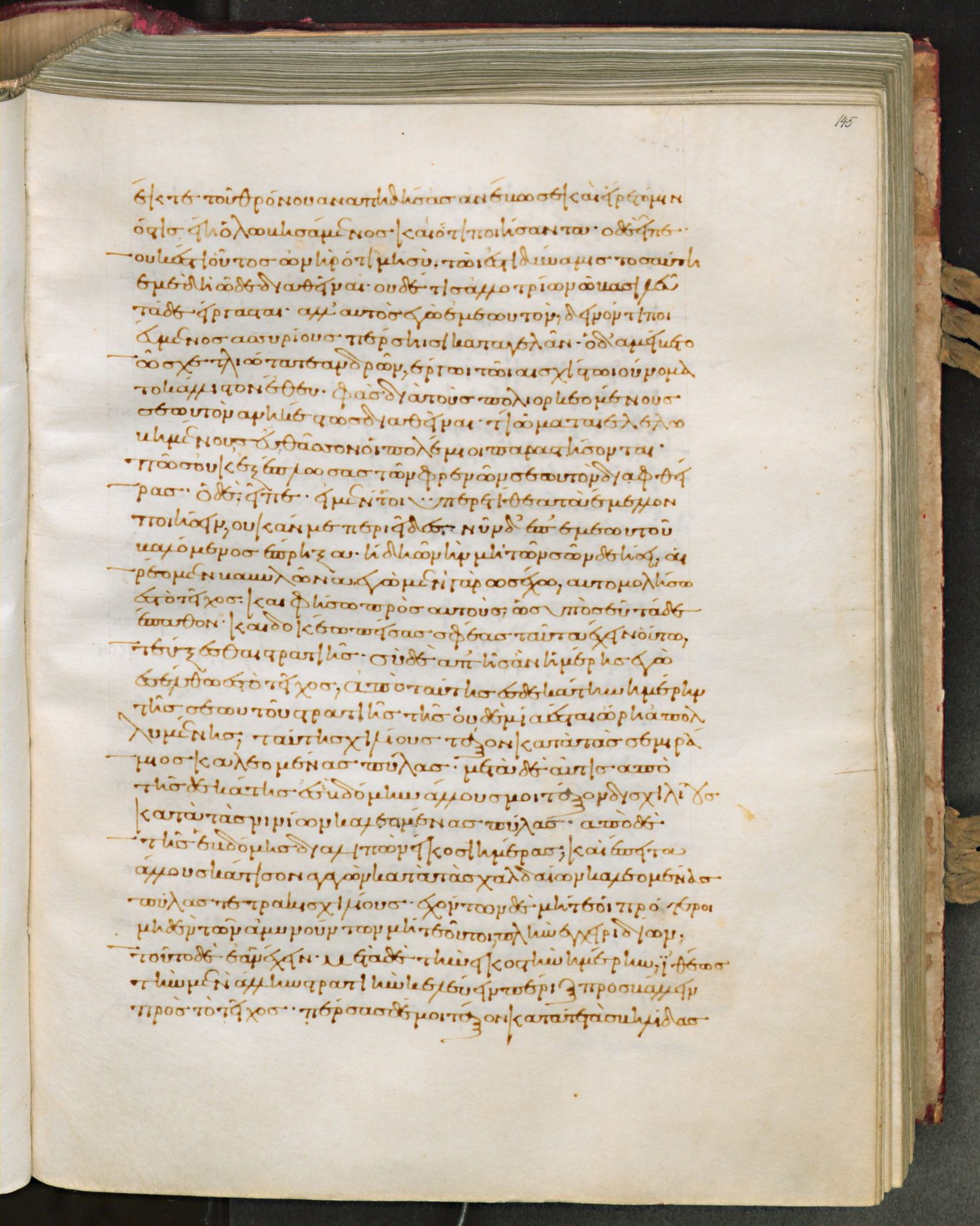
Laur. Plut. 70.3, fol. 145r: Greek here 3.155.1 to 3.155.6. Checked on the image (first and last words read and located in the Greek; each break checked against the neighbouring page): fol. 145r begins ‹ἔκ τε τοῦ θρόνου› (3.155.1), ends ‹κατά τε τὰς Βηλίδας› (3.155.6). English here: 3.155.1 to 3.155.5 (Godley's sentences for the sections whose Greek lies mostly on this page).
3.155.1ἔκ τε τοῦ θρόνου ἀναπηδήσας ἀνέβωσέ τε καὶ εἴρετό μιν ὅστις εἴη ὁ λωβησάμενος καὶ ὅ τι ποιήσαντα. 3.155.2ὁ δὲ εἶπε οὐκ ἔστι οὗτος ὡνήρ, ὅτι μὴ σύ, τῷ ἐστὶ δύναμις τοσαύτη ἐμὲ δὴ ὧδε διαθεῖναι· οὐδέ τις ἀλλοτρίων ὦ βασιλεῦ τάδε ἔργασται, ἀλλʼ αὐτὸς ἐγὼ ἐμεωυτόν, δεινόν τι ποιεύμενος Ἀσσυρίους Πέρσῃσι καταγελᾶν. 3.155.3ὃ δʼ ἀμείβετο ὦ σχετλιώτατε ἀνδρῶν, ἔργῳ τῷ αἰσχίστῳ οὔνομα τὸ κάλλιστον ἔθευ, φὰς διὰ τοὺς πολιορκεομένους σεωυτὸν ἀνηκέστως διαθεῖναι. τί δʼ, ὦ μάταιε, λελωβημένου σεῦ θᾶσσον οἱ πολέμιοι παραστήσονται; κῶς οὐκ ἐξέπλωσας τῶν φρενῶν σεωυτὸν διαφθείρας; 3.155.4ὁ δὲ εἶπε εἰ μέν τοι ὑπερετίθεα τὰ ἔμελλον ποιήσειν, οὐκ ἄν με περιεῖδες· νῦν δʼ ἐπʼ ἐμεωυτοῦ βαλόμενος ἔπρηξα. ἤδη ὦν ἢν μὴ τῶν σῶν δεήσῃ, αἱρέομεν Βαβυλῶνα. ἐγὼ μὲν γὰρ ὡς ἔχω αὐτομολήσω ἐς τὸ τεῖχος καὶ φήσω πρὸς αὐτοὺς ὡς ὑπὸ σεῦ τάδε ἔπαθον· καὶ δοκέω, πείσας σφέας ταῦτα ἔχειν οὕτω, τεύξεσθαι στρατιῆς. 3.155.5σὺ δέ, ἀπʼ ἧς ἂν ἡμέρης ἐγὼ ἐσέλθω ἐς τὸ τεῖχος, ἀπὸ ταύτης ἐς δεκάτην ἡμέρην τῆς σεωυτοῦ στρατιῆς, τῆς οὐδεμία ἔσται ὤρη ἀπολλυμένης, ταύτης χιλίους τάξον κατὰ τὰς Σεμιράμιος καλεομένας πύλας· μετὰ δὲ αὖτις ἀπὸ τῆς δεκάτης ἐς ἑβδόμην ἄλλους μοι τάξον δισχιλίους κατὰ τὰς Νινίων καλεομένας πύλας· ἀπὸ δὲ τῆς ἑβδόμης διαλείπειν εἴκοσι ἡμέρας, καὶ ἔπειτα ἄλλους κάτισον ἀγαγὼν κατὰ τὰς Χαλδαίων καλεομένας πύλας, τετρακισχιλίους. ἐχόντων δὲ μήτε οἱ πρότεροι μηδὲν τῶν ἀμυνεύντων μήτε οὗτοι, πλὴν ἐγχειριδίων· τοῦτο δὲ ἐᾶν ἔχειν. 3.155.6μετὰ δὲ τὴν εἰκοστὴν ἡμέρην ἰθέως τὴν μὲν ἄλλην στρατιὴν κελεύειν πέριξ προσβάλλειν πρὸς τὸ τεῖχος, Πέρσας δέ μοι τάξον κατά τε τὰς Βηλίδας
3.155.1The king was greatly moved at the sight of so notable a man thus mishandled. Leaping up with a cry from where he sat he asked Zopyrus who had done him this outrage and why. 3.155.2“There is no man,” answered Zopyrus, “save yourself, who could bring me to this plight; this, O King! is the work of none other but myself; for I could not bear that Persians should be mocked by Assyrians.” 3.155.3Darius answered, “Hard-hearted man; if you say that it is to win the city that you have maltreated yourself past cure, you do but give a fair name to a foul deed. Foolish man! think you that our enemies will yield the sooner for this violence done to you? Nay, you were clean out of your wits to destroy yourself thus.” 3.155.4“Had I told you,” said Zopyrus, “what I was minded to do, you would have forbidden it; as it is, I have considered with myself alone and done it. Now, then, matters so stand that if you but play your part Babylon is ours. I will in my present plight desert into the city, pretending to them that you have done this violence upon me; and I think that I shall persuade them that this is so, and thus gain the command of an army. 3.155.5Now, for your part, on the tenth day from my entering the city do you take a thousand men from that part of your army whereof you will least rue the loss, and post them before the gate called the gate of Semiramis; on the seventh day after that, post me again two thousand before the gate called the gate of the Ninevites; and when twenty days are past after that seventh, lead out four thousand more and post them before the Chaldean gate, as they call it; suffering neither these, nor the others that have come before them, to carry any weapons of war save daggers; leave them these.
Where on the image
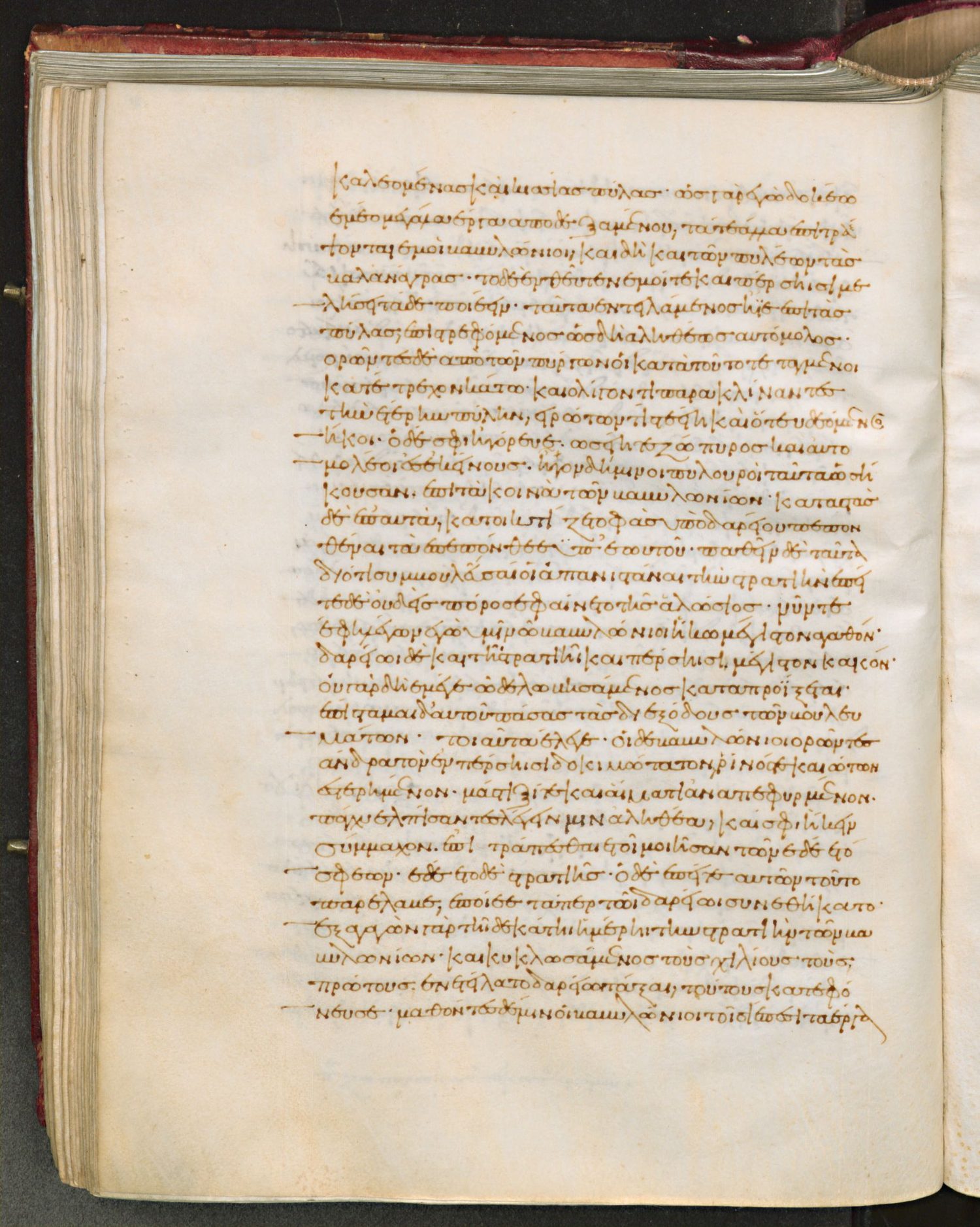
Laur. Plut. 70.3, fol. 145v: Greek here 3.155.6 to 3.157.3. Checked on the image (first and last words read and located in the Greek; each break checked against the neighbouring page): fol. 145v begins ‹καλεομένας καὶ Κισσίας πύλας.› (3.155.6), ends ‹τοῖσι ἔπεσι τὰ ἔργα› (3.157.3). English here: 3.155.6 to 3.157.2 (Godley's sentences for the sections whose Greek lies mostly on this page).
3.155.6καλεομένας καὶ Κισσίας πύλας. ὡς γὰρ ἐγὼ δοκέω, ἐμέο μεγάλα ἔργα ἀποδεξαμένου, τά τε ἄλλα ἐπιτρέψονται ἐμοὶ Βαβυλώνιοι καὶ δὴ καὶ τῶν πυλέων τὰς βαλανάγρας· τὸ δὲ ἐνθεῦτεν ἐμοί τε καὶ Πέρσῃσι μελήσει τὰ δεῖ ποιέειν. 3.156.1ταῦτα ἐντειλάμενος ἤιε ἐπὶ τὰς πύλας, ἐπιστρεφόμενος ὡς δὴ ἀληθέως αὐτόμολος. ὁρῶντες δὲ ἀπὸ τῶν πύργων οἱ κατὰ τοῦτο τεταγμένοι κατέτρεχον κάτω καὶ ὀλίγον τι παρακλίναντες τὴν ἑτέρην πύλην εἰρώτων τίς τε εἴη καὶ ὅτευ δεόμενος ἥκοι. ὁ δέ σφι ἠγόρευε ὡς εἴη τε Ζώπυρος καὶ αὐτομολέοι ἐς ἐκείνους. 3.156.2ἦγον δή μιν οἱ πυλουροί, ταῦτα ὡς ἤκουσαν, ἐπὶ τὰ κοινὰ τῶν Βαβυλωνίων· καταστὰς δὲ ἐπʼ αὐτὰ κατοικτίζετο, φὰς ὑπὸ Δαρείου πεπονθέναι τὰ ἐπεπόνθεε ὑπʼ ἑωυτοῦ, παθεῖν δὲ ταῦτα διότι συμβουλεῦσαι οἱ ἀπανιστάναι τὴν στρατιήν, ἐπείτε δὴ οὐδεὶς πόρος ἐφαίνετο τῆς ἁλώσιος. 3.156.3νῦν τε ἔφη λέγων ἐγὼ ὑμῖν ὦ Βαβυλώνιοι ἥκω μέγιστον ἀγαθόν, Δαρείῳ δὲ καὶ τῇ στρατιῇ καὶ Πέρσῃσι μέγιστον κακόν· οὐ γὰρ δὴ ἐμέ γε ὧδε λωβησάμενος καταπροΐξεται· ἐπίσταμαι δʼ αὐτοῦ πάσας τὰς διεξόδους τῶν βουλευμάτων. τοιαῦτα ἔλεγε. 3.157.1οἳ δὲ Βαβυλώνιοι ὁρῶντες ἄνδρα τὸν ἐν Πέρσῃσι δοκιμώτατον ῥινός τε καὶ ὤτων ἐστερημένον, μάστιξί τε καὶ αἵματι ἀναπεφυρμένον, πάγχυ ἐλπίσαντες λέγειν μιν ἀληθέα καί σφι ἥκειν σύμμαχον, ἐπιτρέπεσθαι ἕτοιμοι ἦσαν τῶν ἐδέετο σφέων· ἐδέετο δὲ στρατιῆς. 3.157.2ὁ δὲ ἐπείτε αὐτῶν τοῦτο παρέλαβε, ἐποίεε τά περ τῷ Δαρείῳ συνεθήκατο· ἐξαγαγὼν γὰρ τῇ δεκάτῃ ἡμέρῃ τὴν στρατιὴν τῶν Βαβυλωνίων καὶ κυκλωσάμενος τοὺς χιλίους, τοὺς πρώτους ἐνετείλατο Δαρείῳ τάξαι, τούτους κατεφόνευσε. 3.157.3μαθόντες δέ μιν οἱ Βαβυλώνιοι τοῖσι ἔπεσι τὰ ἔργα
3.155.6But immediately after the twentieth day bid the rest of your army to assault the whole circuit of the walls, and, I pray you, post the Persians before the gate of Belus and the gate called Cissian. For I think that I shall have achieved such exploits that the Babylonians will give into my charge the keys of their gates, and all else besides; and it will thenceforward be my business and the Persians’ to do what is needful.” 3.156.1With this charge, he went towards the city gate, turning and looking back as though he were in truth a deserter. When the watchers posted on the towers saw him, they ran down, and opening half the gate a little asked him who he was and for what purpose he was come; he told them that he was Zopyrus, come to them as a deserter. 3.156.2Hearing this the gate-wardens brought him before the general assembly of the Babylonians, where he bade them see his lamentable plight, saying of his own work that it was Darius’ doing, because that he had advised the king to lead his army away, seeing that they could find no way to take the city. 3.156.3“Now,” said he in his speech to them, “I am come greatly to aid you, men of Babylon, and greatly to harm Darius and his army and the Persians; not unpunished shall he go for the outrage he has wrought upon me; and I know all the plan and order of his counsels.” Thus he spoke. 3.157.1When the Babylonians saw the most honoured man in Persia with his nose and ears cut off and all bedabbled with blood from the scourging, they were fully persuaded that he spoke truth and was come to be their ally, and were ready to grant him all that he asked, which was, that he might have an army; 3.157.2and having received this from them he did according to his agreement with Darius. On the tenth day he led out the Babylonian army, and surrounded and put to the sword the thousand whom he had charged Darius to set first in the field.
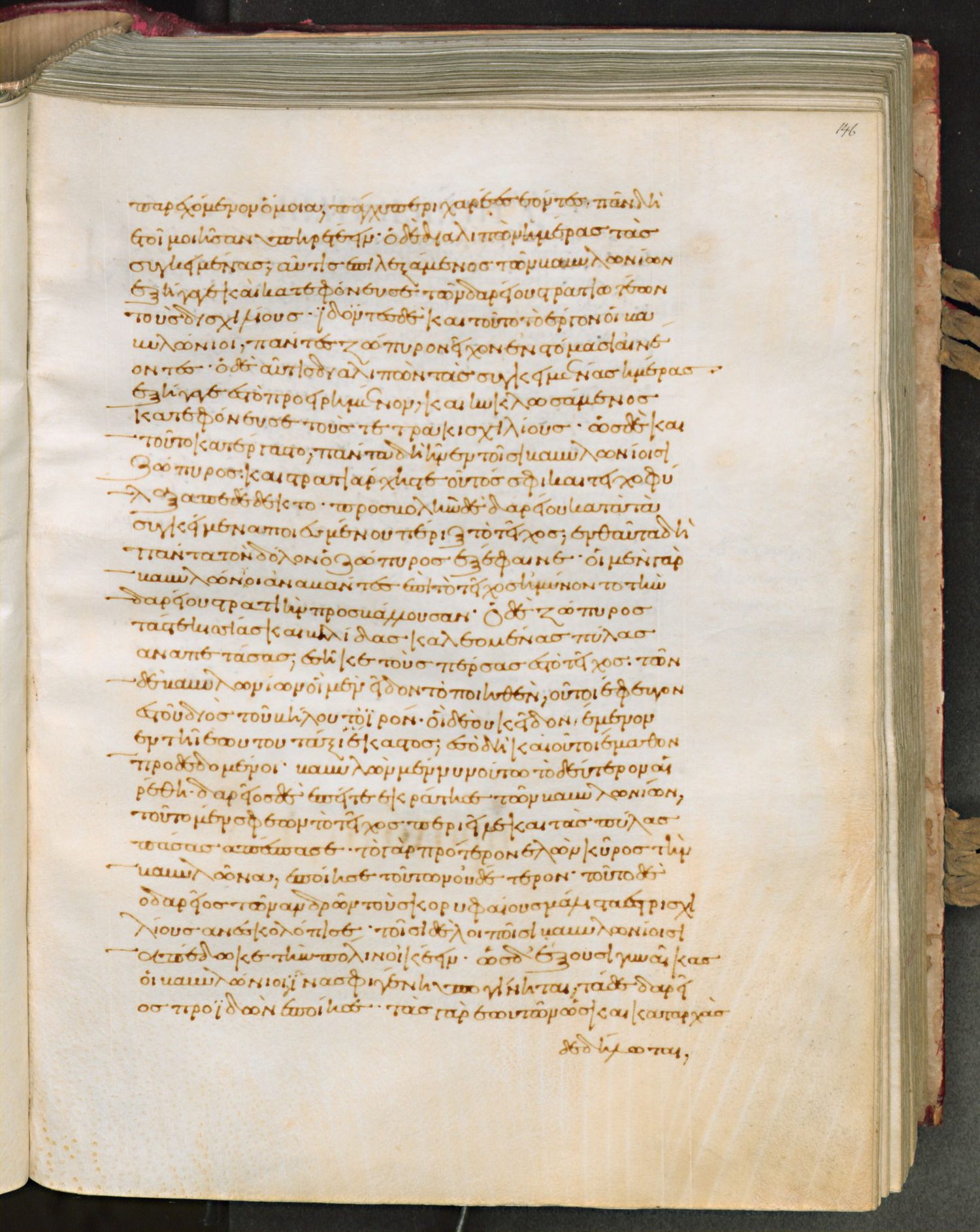
Where on the image
Laur. Plut. 70.3, fol. 146r: Greek here 3.157.3 to 3.157.4. Checked on the image (first and last words read and located in the Greek; each break checked against the neighbouring page): fol. 146r begins ‹παρεχόμενον ὅμοια, πάγχυ περιχαρέες› (3.157.3), ends ‹ἦν ἐν τοῖσι Βαβυλωνίοισι› (3.157.4). English here: 3.157.3 to 3.157.4 (Godley's sentences for the sections whose Greek lies mostly on this page).
3.157.3παρεχόμενον ὅμοια, πάγχυ περιχαρέες ἐόντες πᾶν δὴ ἕτοιμοι ἦσαν ὑπηρετέειν. ὁ δὲ διαλιπὼν ἡμέρας τὰς συγκειμένας, αὖτις ἐπιλεξάμενος τῶν Βαβυλωνίων ἐξήγαγε καὶ κατεφόνευσε τῶν Δαρείου στρατιωτέων τοὺς δισχιλίους. 3.157.4ἰδόντες δὲ καὶ τοῦτο τὸ ἔργον οἱ Βαβυλώνιοι πάντες Ζώπυρον εἶχον ἐν στόμασι αἰνέοντες. ὁ δὲ αὖτις διαλιπὼν τὰς συγκειμένας ἡμέρας ἐξήγαγε ἐς τὸ προειρημένον, καὶ κυκλωσάμενος κατεφόνευσε τοὺς τετρακισχιλίους. ὡς δὲ καὶ τοῦτο κατέργαστο, πάντα δὴ ἦν ἐν τοῖσι Βαβυλωνίοισι
3.157.3Seeing that his deeds answered his words, the Babylonians were overjoyed and ready to serve him in every way. When the agreed number of days was past, he led out again a chosen body of Babylonians, and slew the two thousand men of Darius’ army. 3.157.4When the Babylonians saw this second feat of arms, the praise of Zopyrus was in every man’s mouth. The agreed number of days being again past, he led out his men to the place he had named, where he surrounded the four thousand and put them to the sword. After this his third exploit, Zopyrus was the one man for Babylon: he was made the captain of their armies and the warden of their walls.
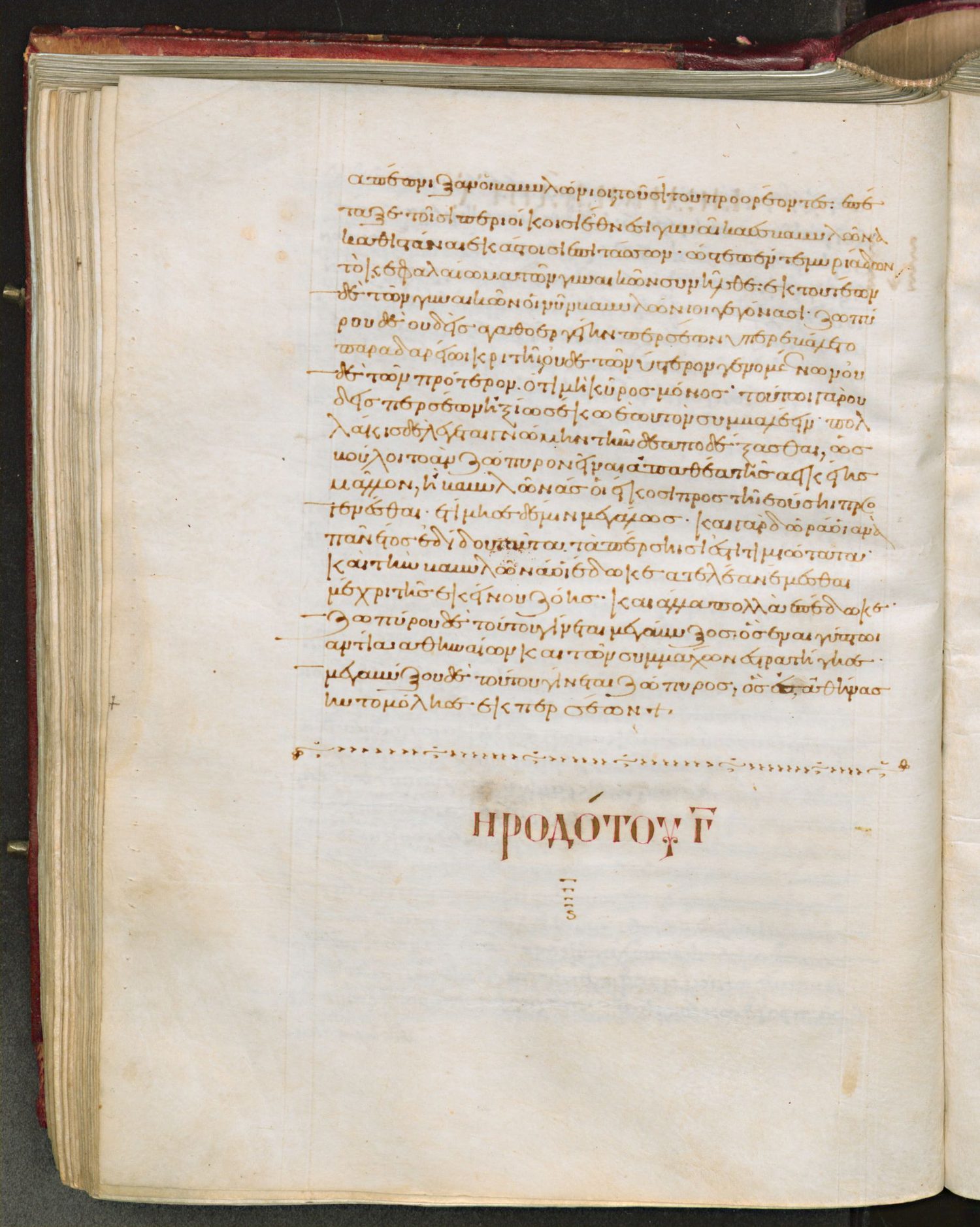
Where on the image
Laur. Plut. 70.3, fol. 146v: Greek here 3.157.4 to 3.160.2. Checked on the image (first and last words read and located in the Greek; each break checked against the neighbouring page): fol. 146v begins ‹Ζώπυρος, καὶ στρατάρχης τε› (3.157.4), ends ‹Ἀθήνας ηὐτομόλησε ἐκ Περσέων› (3.160.2). Book 3 ends in line 19; below it, a decorative line and the subscription Ἡροδότου γ´ in red. English here: 3.158.1 to 3.160.2 (Godley's sentences for the sections whose Greek lies mostly on this page).
3.157.4Ζώπυρος, καὶ στρατάρχης τε οὗτός σφι καὶ τειχοφύλαξ ἀπεδέδεκτο. 3.158.1προσβολὴν δὲ Δαρείου κατὰ τὰ συγκείμενα ποιευμένου πέριξ τὸ τεῖχος, ἐνθαῦτα δὴ πάντα τὸν δόλον ὁ Ζώπυρος ἐξέφαινε. οἱ μὲν γὰρ Βαβυλώνιοι ἀναβάντες ἐπὶ τὸ τεῖχος ἠμύνοντο τὴν Δαρείου στρατιὴν προσβάλλουσαν, ὁ δὲ Ζώπυρος τάς τε Κισσίας καὶ Βηλίδας καλεομένας πύλας ἀναπετάσας ἐσῆκε τοὺς Πέρσας ἐς τὸ τεῖχος. 3.158.2τῶν δὲ Βαβυλωνίων οἳ μὲν εἶδον τὸ ποιηθέν, οὗτοι μὲν ἔφευγον ἐς τοῦ Διὸς τοῦ Βήλου τὸ ἱρόν· οἳ δὲ οὐκ εἶδον, ἔμενον ἐν τῇ ἑωυτοῦ τάξι ἕκαστος, ἐς ὃ δὴ καὶ οὗτοι ἔμαθον προδεδομένοι. 3.159.1Βαβυλὼν μέν νυν οὕτω τὸ δεύτερον αἱρέθη. Δαρεῖος δὲ ἐπείτε ἐκράτησε τῶν Βαβυλωνίων, τοῦτο μὲν σφέων τὸ τεῖχος περιεῖλε καὶ τὰς πύλας πάσας ἀπέσπασε· τὸ γὰρ πρότερον ἑλὼν Κῦρος τὴν Βαβυλῶνα ἐποίησε τούτων οὐδέτερον· τοῦτο δὲ ὁ Δαρεῖος τῶν ἀνδρῶν τοὺς κορυφαίους μάλιστα ἐς τρισχιλίους ἀνεσκολόπισε, τοῖσι δὲ λοιποῖσι Βαβυλωνίοισι ἀπέδωκε τὴν πόλιν οἰκέειν. 3.159.2ὡς δʼ ἕξουσι γυναῖκας οἱ Βαβυλώνιοι ἵνα σφι γενεὴ ὑπογίνηται, τάδε Δαρεῖος προϊδὼν ἐποίησε· τὰς γὰρ ἑωυτῶν, ὡς καὶ κατʼ ἀρχὰς δεδήλωται, ἀπέπνιξαν οἱ Βαβυλώνιοι τοῦ σίτου προορέοντες· ἐπέταξε τοῖσι περιοίκοισι ἔθνεσι γυναῖκας ἐς Βαβυλῶνα κατιστάναι, ὅσας δὴ ἑκάστοισι ἐπιτάσσων, ὥστε πέντε μυριάδων τὸ κεφαλαίωμα τῶν γυναικῶν συνῆλθε· ἐκ τουτέων δὲ τῶν γυναικῶν οἱ νῦν Βαβυλώνιοι γεγόνασι. 3.160.1Ζωπύρου δὲ οὐδεὶς ἀγαθοεργίην Περσέων ὑπερεβάλετο παρὰ Δαρείῳ κριτῇ οὔτε τῶν ὕστερον γενομένων οὔτε τῶν πρότερον, ὅτι μὴ Κῦρος μοῦνος· τούτῳ γὰρ οὐδεὶς Περσέων ἠξίωσέ κω ἑωυτὸν συμβαλεῖν. πολλάκις δὲ Δαρεῖον λέγεται γνώμην τήνδε ἀποδέξασθαι, ὡς βούλοιτο ἂν Ζώπυρον εἶναι ἀπαθέα τῆς ἀεικείης μᾶλλον ἢ Βαβυλῶνάς οἱ εἴκοσι πρὸς τῇ ἐούσῃ προσγενέσθαι. 3.160.2ἐτίμησε δέ μιν μεγάλως· καὶ γὰρ δῶρά οἱ ἀνὰ πᾶν ἔτος ἐδίδου ταῦτα τὰ Πέρσῃσι ἐστὶ τιμιώτατα, καὶ τὴν Βαβυλῶνά οἱ ἔδωκε ἀτελέα νέμεσθαι μέχρι τῆς ἐκείνου ζόης, καὶ ἄλλα πολλὰ ἐπέδωκε. Ζωπύρου δὲ τούτου γίνεται Μεγάβυζος, ὃς ἐν Αἰγύπτῳ ἀντία Ἀθηναίων καὶ τῶν συμμάχων ἐστρατήγησε· Μεγαβύζου δὲ τούτου γίνεται Ζώπυρος, ὃς ἐς Ἀθήνας ηὐτομόλησε ἐκ Περσέων.
3.158.1So when Darius assaulted the whole circuit of the wall, according to the agreed plan, then Zopyrus’ treason was fully revealed. For while the townsmen were on the wall defending it against Darius’ assault, he opened the gates called Cissian and Belian, and let in the Persians within the walls. 3.158.2Those Babylonians who saw what he did fled to the temple of that Zeus whom they call Belus; those who had not seen it abode each in his place, till they too perceived how they had been betrayed. 3.159.1Thus was Babylon the second time taken. Having mastered the Babylonians, Darius destroyed their walls and reft away all their gates, neither of which things Cyrus had done at the first taking of Babylon; moreover he impaled about three thousand men that were chief among them; as for the rest, he gave them back their city to dwell in. 3.159.2Further, as the Babylonians, fearing for their food, had strangled their own women, as I have shown above, Darius provided that they should have wives to bear them children, by appointing that each of the neighbouring nations should send a certain tale of women to Babylon; the whole sum of the women thus collected was fifty thousand: these were the mothers of those who now inhabit the city. 3.160.1There never was in Darius’ judgment any Persian before or since who did better service than Zopyrus, save only Cyrus, with whom no Persian could compare himself. Many times Darius is said to have declared that he would rather have Zopyrus whole and not foully mishandled than twenty more Babylons. 3.160.2Very greatly the king honoured him; every year he sent Zopyrus such gifts as the Persians hold most precious, and suffered him to govern Babylon for all his life with no tribute to pay, giving him many other things besides. This Zopyrus was father of Megabyzus, who was general of an army in Egypt against the Athenians and their allies; and Megabyzus’ son was that Zopyrus who deserted from the Persians to Athens.
Notes
- Greek: the text printed in A. D. Godley's Loeb edition, via Perseus (tlg0016.tlg001.perseus-grc2). Square brackets mark words the editor considers later additions; [...] marks a gap the editor indicates. Perseus note markers are omitted.
- English: A. D. Godley, Herodotus vol. 2 (1921) (Loeb Classical Library), as transcribed on Wikisource. Godley's footnotes are omitted.
- Section numbers in the English were placed by comparing Godley's text with the Perseus version of his translation; where a section begins inside one of Godley's sentences, the English is kept with the page that holds the start of that sentence.
Cite
Sources
- Source: Florence, Laur. Plut. 70.3 (10th c.) via BML Teca Digitale + Greek of Godley's Loeb (Perseus) + English of A. D. Godley (Loeb, Wikisource) (holding institution)
- Critical edition: Greek of A. D. Godley's Loeb edition (1920-1925), via Perseus
← previous · → next · v cycle view · l back to library