Herodotus, Histories 3.61-79: The Magi and the seven conspirators
Introduction
Herodotus of Halicarnassus wrote the Histories in the third quarter of the 5th century BCE, an inquiry into the deeds of Greeks and barbarians and the causes of the wars between them, later divided into nine books. Book 3 tells of Cambyses' conquest of Egypt and his madness, Polycrates of Samos, the rising of the Magi and the seven Persians who overthrew them, the accession of Darius and his provinces, and the revolt and recapture of Babylon.
The photographs are of Florence, Biblioteca Medicea Laurenziana, Plut. 70.3 (parchment, 10th century, 374 folios, 31 lines a page), Herodotus, Histories (codex A of the editors), the oldest surviving manuscript of the complete Histories, from the Teca Digitale of the Biblioteca Medicea Laurenziana. Each section below is the text of one page, or of the part of a page that falls within these chapters. The first and last words of every page were read on the photograph and located in the Greek, and every page break was checked against the next page; the notes quote these words. Readers' notes in the margins are not part of the text and are mentioned where they occur.
The Greek is the text printed in A. D. Godley's Loeb edition (1920-1925), from Perseus; it is the edited text, not a transcription of the manuscript, whose wording differs in places. The English is Godley's translation as printed, from Wikisource. Godley's English carries only chapter numbers; the section numbers shown in it were placed by comparison with the Perseus version of his translation. Each page's English is cut at the end of one of Godley's sentences, so it can begin or end a few lines away from the Greek of the page; each note gives the exact ranges.
This entry covers chapters 3.61-79, on fol. 119r to 125v.
How was this verified? (Provenance)
Where on the image
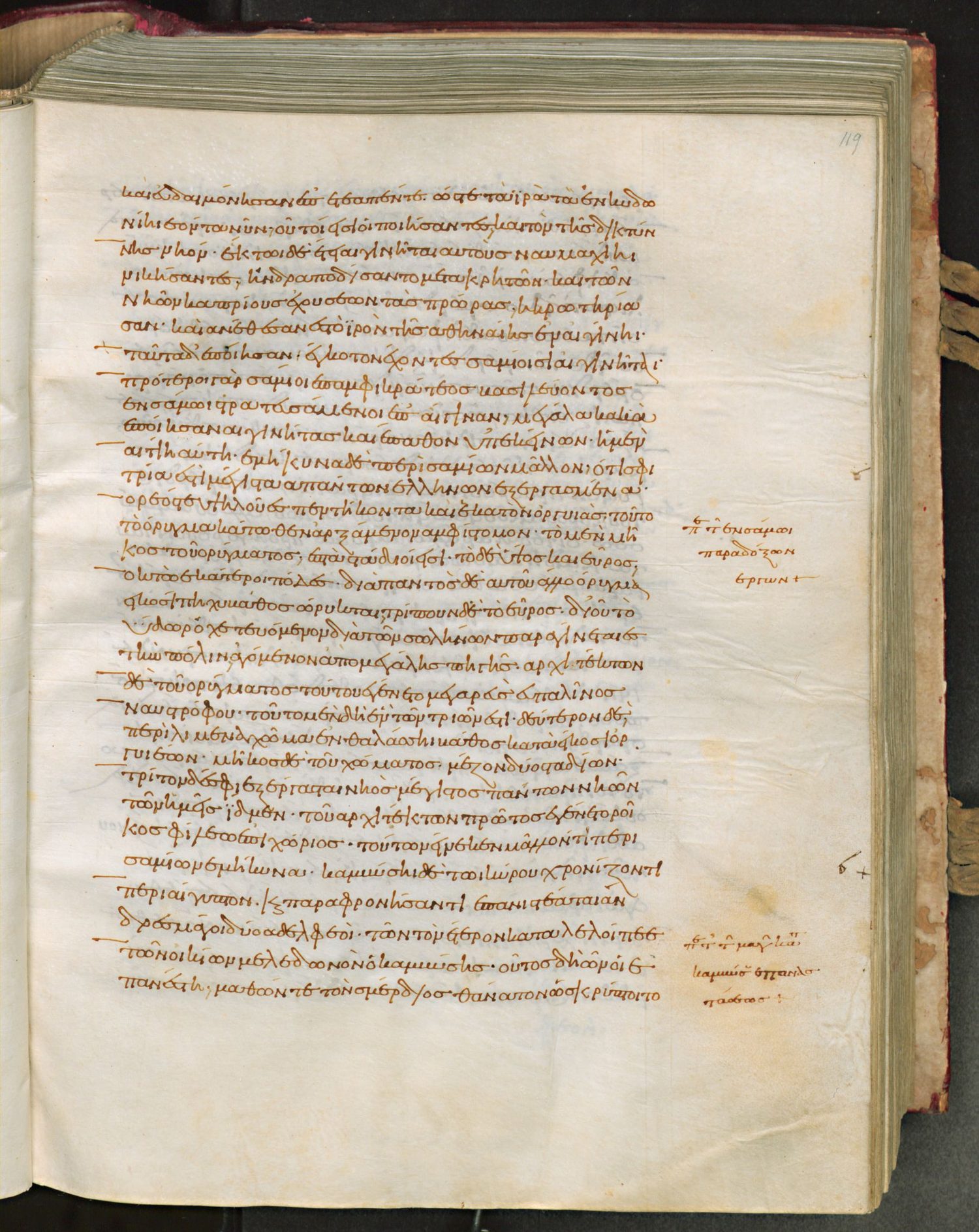
Laur. Plut. 70.3, fol. 119r: Greek here 3.61.1. Checked on the image (first and last words read and located in the Greek; each break checked against the neighbouring page): fol. 119r begins ‹καὶ εὐδαιμόνησαν ἐπʼ ἔτεα› (3.59.2), ends ‹Σμέρδιος θάνατον ὡς κρύπτοιτο› (3.61.1). English here: 3.61.1 (Godley's sentences for the sections whose Greek lies mostly on this page).
3.61.1Καμβύσῃ δὲ τῷ Κύρου χρονίζοντι περὶ Αἴγυπτον καὶ παραφρονήσαντι ἐπανιστέαται ἄνδρες Μάγοι δύο ἀδελφεοί, τῶν τὸν ἕτερον καταλελοίπεε τῶν οἰκίων μελεδωνὸν ὁ Καμβύσης. οὗτος δὴ ὦν οἱ ἐπανέστη μαθών τε τὸν Σμέρδιος θάνατον ὡς κρύπτοιτο
3.61.1Now after Cambyses son of Cyrus had lost his wits, while he still lingered in Egypt, two Magians, who were brothers, rebelled against him. One of them had been left by Cambyses to be steward of his house; this man now revolted from him, perceiving that the death of Smerdis was kept secret, and that few persons knew of it, most of them believing him to be still alive.
Where on the image
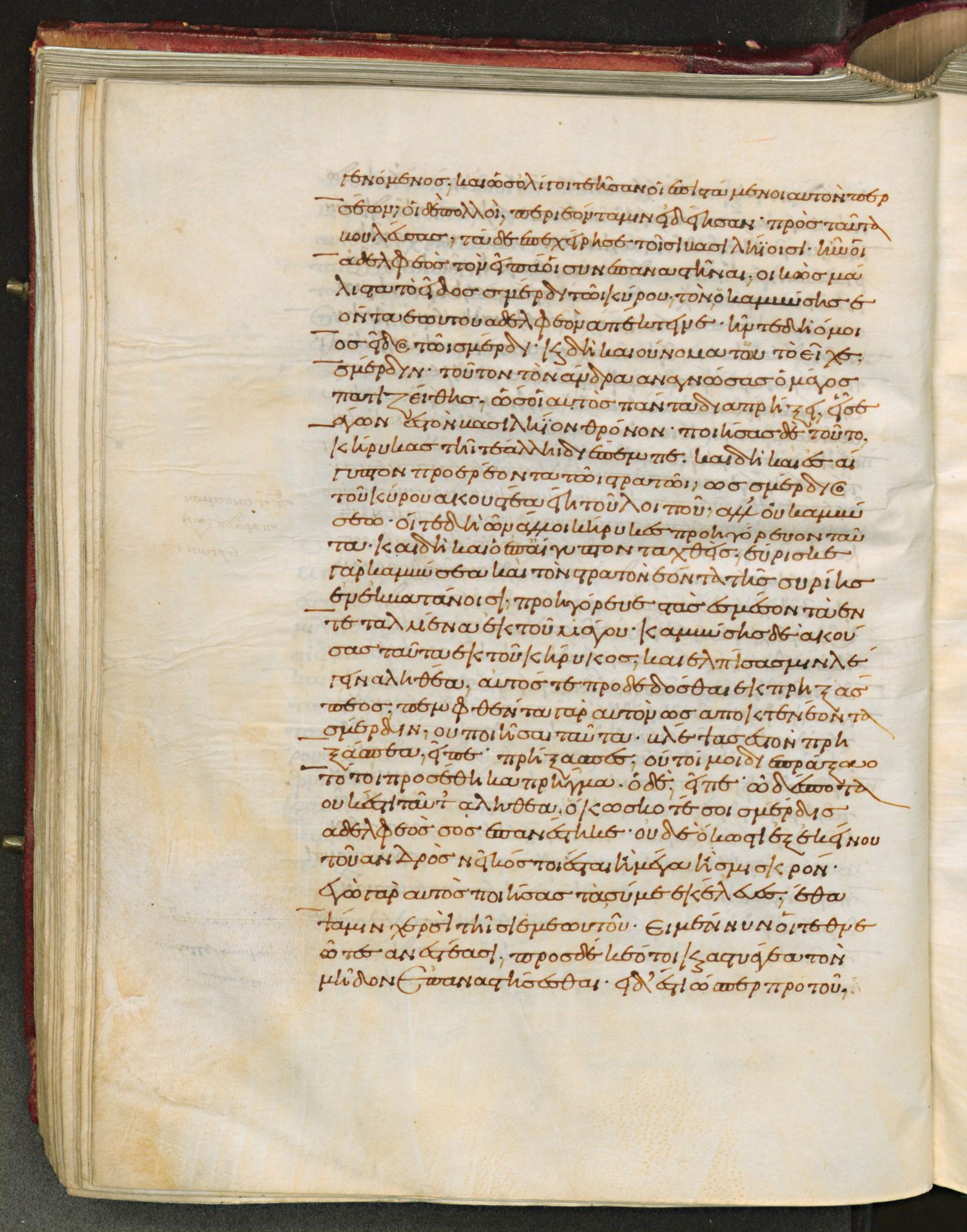
Laur. Plut. 70.3, fol. 119v: Greek here 3.61.1 to 3.62.4. Checked on the image (first and last words read and located in the Greek; each break checked against the neighbouring page): fol. 119v begins ‹γενόμενος, καὶ ὡς ὀλίγοι› (3.61.1), ends ‹ἔστι ὥσπερ πρὸ τοῦ› (3.62.4). English here: 3.61.2 to 3.62.3 (Godley's sentences for the sections whose Greek lies mostly on this page).
3.61.1γενόμενος, καὶ ὡς ὀλίγοι εἴησαν οἱ ἐπιστάμενοι αὐτὸν Περσέων, οἱ δὲ πολλοὶ περιεόντα μιν εἰδείησαν. 3.61.2πρὸς ταῦτα βουλεύσας τάδε ἐπεχείρησε τοῖσι βασιληίοισι. ἦν οἱ ἀδελφεός, τὸν εἶπά οἱ συνεπαναστῆναι, οἰκὼς μάλιστα τὸ εἶδος Σμέρδι τῷ Κύρου, τὸν ὁ Καμβύσης ἐόντα ἑωυτοῦ ἀδελφεὸν ἀπέκτεινε· ἦν τε δὴ ὅμοιος εἶδος τῷ Σμέρδι καὶ δὴ καὶ οὔνομα τὠυτὸ εἶχε Σμέρδιν. 3.61.3τοῦτον τὸν ἄνδρα ἀναγνώσας ὁ Μάγος Πατιζείθης ὥς οἱ αὐτὸς πάντα διαπρήξει, εἷσε ἄγων ἐς τὸν βασιλήιον θρόνον. ποιήσας δὲ τοῦτο κήρυκας τῇ τε ἄλλῃ διέπεμπε καὶ δὴ καὶ ἐς Αἴγυπτον προερέοντα τῷ στρατῷ ὡς Σμέρδιος τοῦ Κύρου ἀκουστέα εἴη τοῦ λοιποῦ ἀλλʼ οὐ Καμβύσεω. 3.62.1οἵ τε δὴ ὦν ἄλλοι κήρυκες προηγόρευον ταῦτα καὶ δὴ καὶ ὁ ἐπʼ Αἴγυπτον ταχθείς, εὕρισκε γὰρ Καμβύσεα καὶ τὸν στρατὸν ἐόντα τῆς Συρίης ἐν Ἀγβατάνοισι, προηγόρευε στὰς ἐς μέσον τὰ ἐντεταλμένα ἐκ τοῦ Μάγου. 3.62.2Καμβύσης δὲ ἀκούσας ταῦτα ἐκ τοῦ κήρυκος καὶ ἐλπίσας μιν λέγειν ἀληθέα αὐτός τε προδεδόσθαι ἐκ Πρηξάσπεος (πεμφθέντα γὰρ αὐτὸν ὡς ἀποκτενέοντα Σμέρδιν οὐ ποιῆσαι ταῦτα), βλέψας ἐς τὸν Πρηξάσπεα εἶπε Πρήξασπες, οὕτω μοι διεπρήξαο τό τοι προσέθηκα πρῆγμα; 3.62.3ὁ δὲ εἶπε ὦ δέσποτα, οὐκ ἔστι ταῦτα ἀληθέα, ὅκως κοτὲ σοὶ Σμέρδις ἀδελφεὸς σὸς ἐπανέστηκε, οὐδὲ ὅκως τι ἐξ ἐκείνου τοῦ ἀνδρὸς νεῖκός τοι ἔσται ἢ μέγα ἢ σμικρόν· ἐγὼ γὰρ αὐτός, ποιήσας τὰ σύ με ἐκέλευες, ἔθαψά μιν χερσὶ τῇσι ἐμεωυτοῦ. 3.62.4εἰ μέν νυν οἱ τεθνεῶτες ἀνεστᾶσι, προσδέκεό τοι καὶ Ἀστυάγεα τὸν Μῆδον ἐπαναστήσεσθαι· εἰ δʼ ἔστι ὥσπερ πρὸ τοῦ,
3.61.2Therefore he thus plotted to gain the royal power: he had a brother, his partner, as I said, in rebellion; this brother was very like in appearance to Cyrus’ son, Smerdis, brother of Cambyses and by him put to death; nor was he like him in appearance only, but he bore the same name also, Smerdis. 3.61.3Patizeithes the Magian persuaded this man that he, Patizeithes, would manage the whole business for him; he brought his brother and set him on the royal throne; which done, he sent heralds to all parts, one of whom was to go to Egypt and proclaim to the army that henceforth they must obey not Cambyses but Smerdis the son of Cyrus. 3.62.1So this proclamation was everywhere made; the herald appointed to go to Egypt, finding Cambyses and his army at Agbatana in Syria, came out before them all and proclaimed the message given him by the Magian. 3.62.2When Cambyses heard what the herald said, he supposed that it was truth, and that Prexaspes, when sent to kill Smerdis, had not so done but played Cambyses false; and he said, fixing his eyes on Prexaspes, “Is it thus, Prexaspes, that you did my behest?” 3.62.3“Nay,” said Prexaspes, “this is no truth, sire, that your brother Smerdis has rebelled against you; nor can it be that he will have any quarrel with you, small or great; I myself did your bidding, and mine own hands buried him.
Where on the image
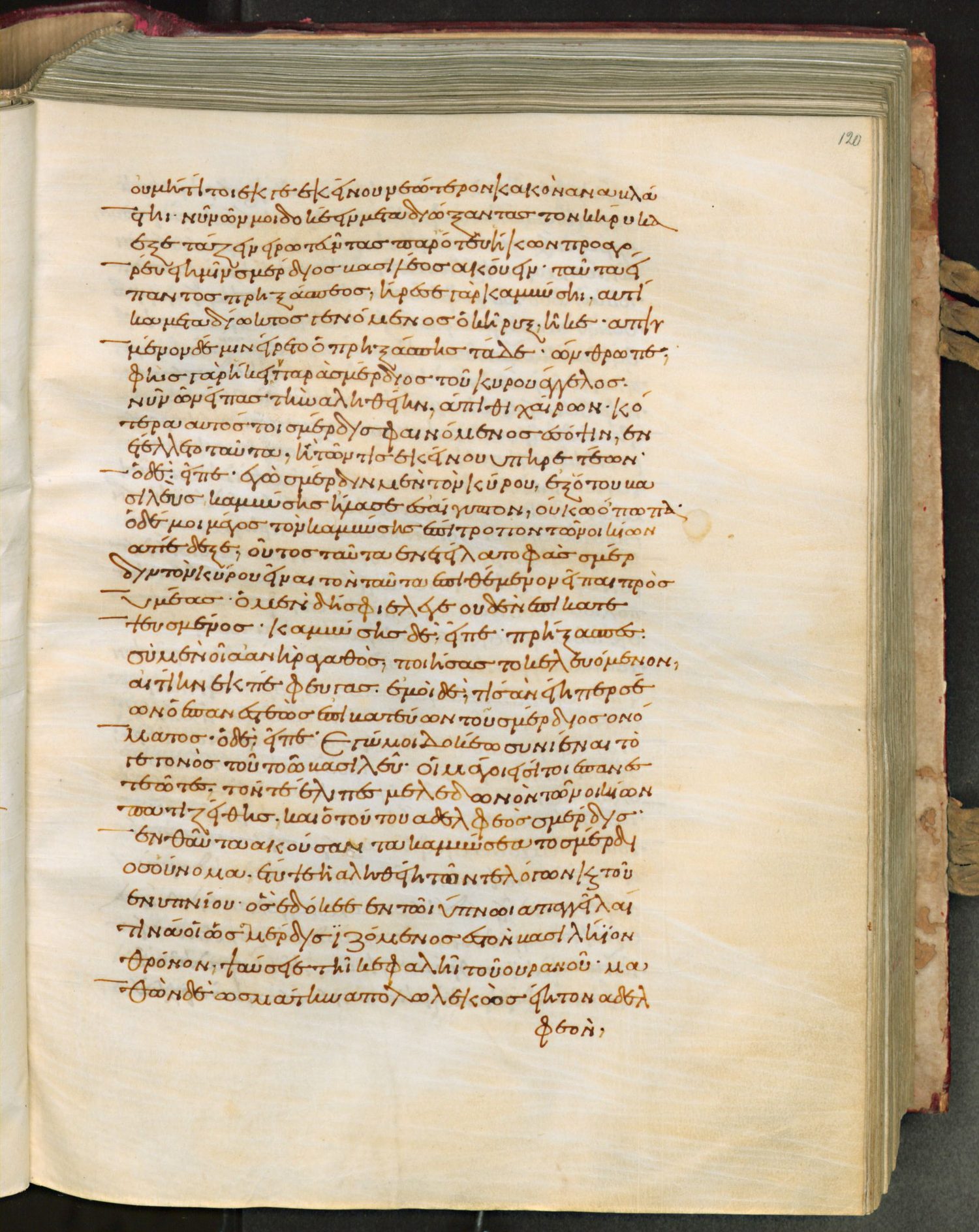
Laur. Plut. 70.3, fol. 120r: Greek here 3.62.4 to 3.64.2. Checked on the image (first and last words read and located in the Greek; each break checked against the neighbouring page): fol. 120r begins ‹οὐ μή τί τοι› (3.62.4), ends ‹ἀπολωλεκὼς εἴη τὸν ἀδελ-› (3.64.2). English here: 3.62.4 to 3.64.2 (Godley's sentences for the sections whose Greek lies mostly on this page).
3.62.4οὐ μή τί τοι ἔκ γε ἐκείνου νεώτερον ἀναβλάστῃ. νῦν ὦν μοι δοκέει μεταδιώξαντας τὸν κήρυκα ἐξετάζειν εἰρωτεῦντας παρʼ ὅτευ ἥκων προαγορεύει ἡμῖν Σμέρδιος βασιλέος ἀκούειν. 3.63.1ταῦτα εἴπαντος Πρηξάσπεος, ἤρεσε γὰρ Καμβύσῃ, αὐτίκα μεταδίωκτος γενόμενος ὁ κῆρυξ ἧκε· ἀπιγμένον δέ μιν εἴρετο ὁ Πρηξάσπης τάδε. ὤνθρωπε, φὴς γὰρ ἥκειν παρὰ Σμέρδιος τοῦ Κύρου ἄγγελος· νῦν ὦν εἴπας τὴν ἀληθείην ἄπιθι χαίρων, κότερα αὐτός τοι Σμέρδις φαινόμενος ἐς ὄψιν ἐνετέλλετο ταῦτα ἢ τῶν τις ἐκείνου ὑπηρετέων. 3.63.2ὅδὲ εἶπε ἐγὼ Σμέρδιν μὲν τὸν Κύρου, ἐξ ὅτευ βασιλεὺς Καμβύσης ἤλασε ἐς Αἴγυπτον, οὔκω ὄπωπα· ὁ δέ μοι Μάγος τὸν Καμβύσης ἐπίτροπον τῶν οἰκίων ἀπέδεξε, οὗτος ταῦτα ἐνετείλατο, φὰς Σμέρδιν τὸν Κύρου εἶναι τὸν ταῦτα ἐπιθέμενον εἶπαι πρὸς ὑμέας. 3.63.3ὃ μὲν δή σφι ἔλεγε οὐδὲν ἐπικατεψευσμένος, Καμβύσης δὲ εἶπε Πρήξασπες, σὺ μὲν οἷα ἀνὴρ ἀγαθὸς ποιήσας τὸ κελευόμενον αἰτίην ἐκπέφευγας· ἐμοὶ δὲ τίς ἂν εἴη Περσέων ὁ ἐπανεστεὼς ἐπιβατεύων τοῦ Σμέρδιος οὐνόματος; ὁ δὲ εἶπε 3.63.4ἐγώ μοι δοκέω συνιέναι τὸ γεγονὸς τοῦτο, ὦ βασιλεῦ· οἱ Μάγοι εἰσί τοι οἱ ἐπανεστεῶτες, τόν τε ἔλιπες μελεδωνὸν τῶν οἰκίων, Πατιζείθης, καὶ ὁ τούτου ἀδελφεὸς Σμέρδις. 3.64.1ἐνθαῦτα ἀκούσαντα Καμβύσεα τὸ Σμέρδιος οὔνομα ἔτυψε ἡ ἀληθείη τῶν τε λόγων καὶ τοῦ ἐνυπνίου· ὃς ἐδόκεε ἐν τῷ ὕπνῳ ἀπαγγεῖλαι τινά οἱ ὡς Σμέρδις ἱζόμενος ἐς τὸν βασιλήιον θρόνον ψαύσειε τῇ κεφαλῇ τοῦ οὐρανοῦ. 3.64.2μαθὼν δὲ ὡς μάτην ἀπολωλεκὼς εἴη τὸν ἀδελφεόν,
3.62.4If then the dead can rise, you may look to see Astyages the Mede rise up against you; but if nature’s order be not changed, assuredly no harm to you will arise from Smerdis. Now therefore this is my counsel, that we pursue after this herald and examine him, to know from whom he comes with his proclamation that we must obey Smerdis as our king.” 3.63.1Cambyses thought well of Prexaspes’ counsel; the herald was pursued and brought; and when he came, Prexaspes put this question to him: “Sirrah, you say that your message is from Cyrus’ son Smerdis; tell me this now, and you may go hence unpunished: was it Smerdis who himself appeared to you and gave you this charge, or was it one of his servants?” 3.63.2“Since King Cambyses marched to Egypt,” answered the herald, “I have never myself seen Smerdis the son of Cyrus; the Magian whom Cambyses made overseer of his house gave me the charge, saying that it was the will of Smerdis, son of Cyrus, that I should make it known to you.” 3.63.3So spoke the herald, telling the whole truth; and Cambyses said, “Prexaspes, I hold you innocent; you have done my bidding right loyally; but who can this Persian be who rebels against me and usurps the name of Smerdis?” 3.63.4Prexaspes replied, “I think, sire, that I understand what has been done here; the rebels are the Magians, Patizeithes whom you left steward of your house, and his brother Smerdis.” 3.64.1At the name of Smerdis, Cambyses was smitten to the heart by the truth of the word and the fulfilment of his dream; for he had dreamt that a message had come to him that Smerdis had sat on the royal throne with his head reaching to heaven; 3.64.2and perceiving that he had killed his brother to no purpose, he wept bitterly for Smerdis. Having wept his fill, in great grief for all his mishap, he leapt upon his horse, with intent to march forthwith to Susa against the Magian.
Where on the image
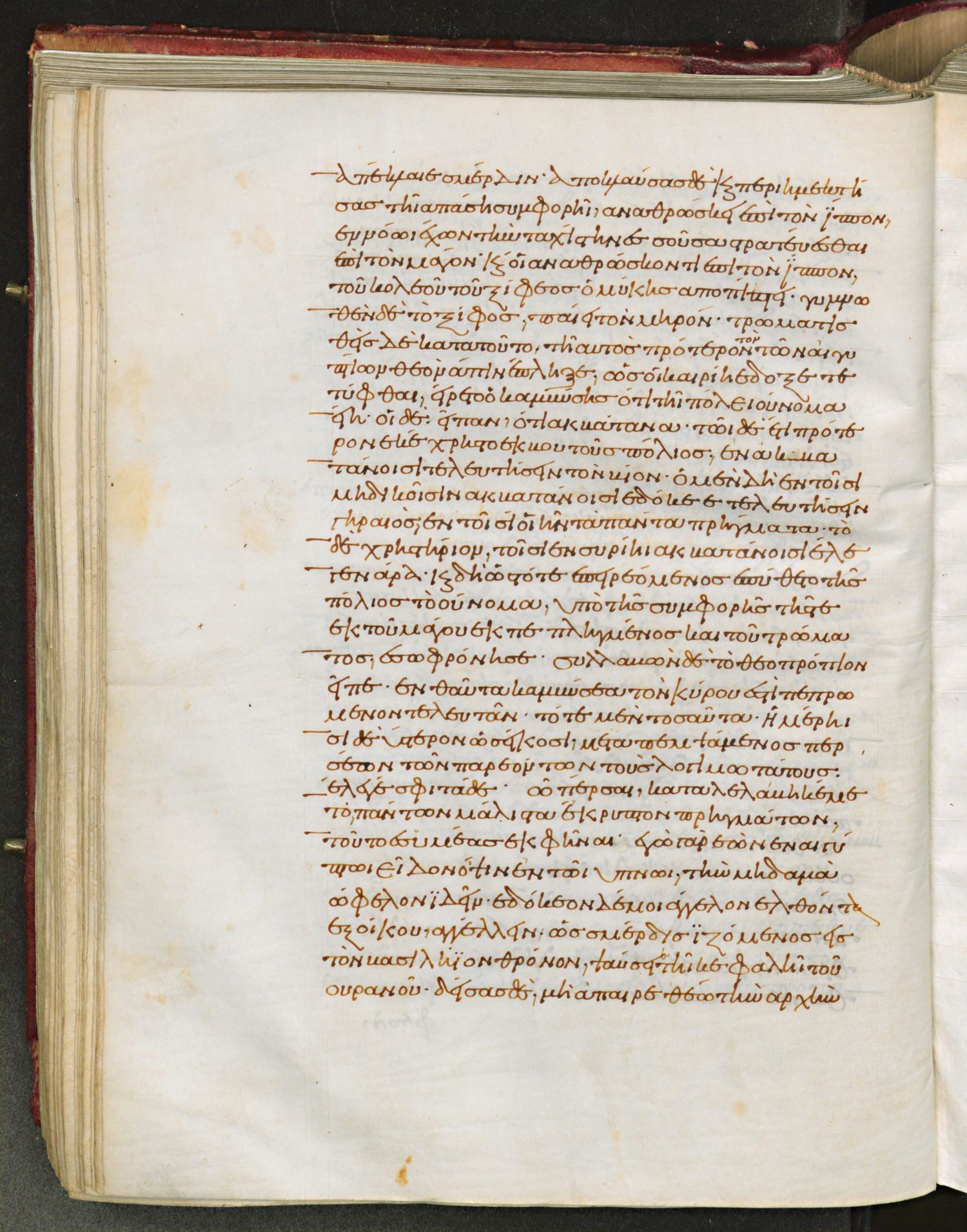
Laur. Plut. 70.3, fol. 120v: Greek here 3.64.2 to 3.65.3. Checked on the image (first and last words read and located in the Greek; each break checked against the neighbouring page): fol. 120v begins ‹-φεόν, ἀπέκλαιε Σμέρδιν· ἀποκλαύσας› (3.64.2), ends ‹μὴ ἀπαιρεθέω τὴν ἀρχὴν› (3.65.3). The word ‹ἀδελφεόν,› is divided between fol. 120r and fol. 120v; it is given with fol. 120r. English here: 3.64.3 to 3.65.2 (Godley's sentences for the sections whose Greek lies mostly on this page).
3.64.2ἀπέκλαιε Σμέρδιν· ἀποκλαύσας δὲ καὶ περιημεκτήσας τῇ ἁπάσῃ συμφορῇ ἀναθρώσκει ἐπὶ τὸν ἵππον, ἐν νόῳ ἔχων τὴν ταχίστην ἐς Σοῦσα στρατεύεσθαι ἐπὶ τὸν Μάγον. 3.64.3καί οἱ ἀναθρώσκοντι ἐπὶ τὸν ἵππον τοῦ κολεοῦ τοῦ ξίφεος ὁ μύκης ἀποπίπτει, γυμνωθὲν δὲ τὸ ξίφος παίει τὸν μηρόν· τρωματισθεὶς δὲ κατὰ τοῦτο τῇ αὐτὸς πρότερον τὸν τῶν Αἰγυπτίων θεὸν Ἆπιν ἔπληξε, ὥς οἱ καιρίῃ ἔδοξε τετύφθαι, εἴρετο ὁ Καμβύσης ὅ τι τῇ πόλι οὔνομα εἴη· οἳ δὲ εἶπαν ὅτι Ἀγβάτανα. 3.64.4τῷ δὲ ἔτι πρότερον ἐκέχρηστο ἐκ Βουτοῦς πόλιος ἐν Ἀγβατάνοισι τελευτήσειν τὸν βίον. ὃ μὲν δὴ ἐν τοῖσι Μηδικοῖσι Ἀγβατάνοισι ἐδόκεε τελευτήσειν γηραιός, ἐν τοῖσί οἱ ἦν τὰ πάντα πρήγματα· τὸ δὲ χρηστήριον ἐν τοῖσι ἐν Συρίῃ Ἀγβατάνοισι ἔλεγε ἄρα. 3.64.5καὶ δὴ ὡς τότε ἐπειρόμενος ἐπύθετο τῆς πόλιος τὸ οὔνομα, ὑπὸ τῆς συμφορῆς τῆς τε ἐκ τοῦ Μάγου ἐκπεπληγμένος καὶ τοῦ τρώματος ἐσωφρόνησε, συλλαβὼν δὲ τὸ θεοπρόπιον εἶπε ἐνθαῦτα Καμβύσεα τὸν Κύρου ἐστὶ πεπρωμένον τελευτᾶν. 3.65.1τότε μὲν τοσαῦτα. ἡμέρῃσι δὲ ὕστερον ὡς εἴκοσι μεταπεμψάμενος Περσέων τῶν παρεόντων τοὺς λογιμωτάτους ἔλεγέ σφι τάδε. ὦ Πέρσαι, καταλελάβηκέ με, τὸ πάντων μάλιστα ἔκρυπτον πρηγμάτων, τοῦτο ἐς ὑμέας ἐκφῆναι. 3.65.2ἐγὼ γὰρ ἐὼν ἐν Αἰγύπτῳ εἶδον ὄψιν ἐν τῷ ὕπνῳ, τὴν μηδαμὰ ὄφελον ἰδεῖν· ἐδόκεον δέ μοι ἄγγελον ἐλθόντα ἐξ οἴκου ἀγγέλλειν ὡς Σμέρδις ἱζόμενος ἐς τὸν βασιλήιον θρόνον ψαύσειε τῇ κεφαλῇ τοῦ οὐρανοῦ. 3.65.3δείσας δὲ μὴ ἀπαιρεθέω τὴν ἀρχὴν
3.64.3As he mounted, the cap slipped off the scabbard of his sword, and the naked blade struck his thigh, wounding him in the same part where he himself had once smitten the Egyptian god Apis; and believing the blow to be mortal, Cambyses asked what was the name of the town where he was. 3.64.4They told him it was Agbatana. Now a prophecy had ere this come to him from Buto, that he would end his life at Agbatana; Cambyses supposed this to signify that he would die in old age at the Median Agbatana, his capital city; but as the event proved, the oracle prophesied his death at Agbatana of Syria. 3.64.5So when he now enquired and learnt the name of the town, the shock of his wound, and of the misfortune that came to him from the Magian, brought him to his senses; he understood the prophecy and said: “Here Cambyses son of Cyrus is doomed to die.” 3.65.1At this time he said no more. But about twenty days after, he sent for the most honourable of the Persians that were about him, and thus addressed them: “Needs must, Persians! that I declare to you a matter which I kept most strictly concealed. 3.65.2When I was in Egypt, I saw in my sleep a vision that I would I had never seen; methought a messenger came from home to tell me that Smerdis had sat on the royal throne, his head reaching to heaven.
Where on the image
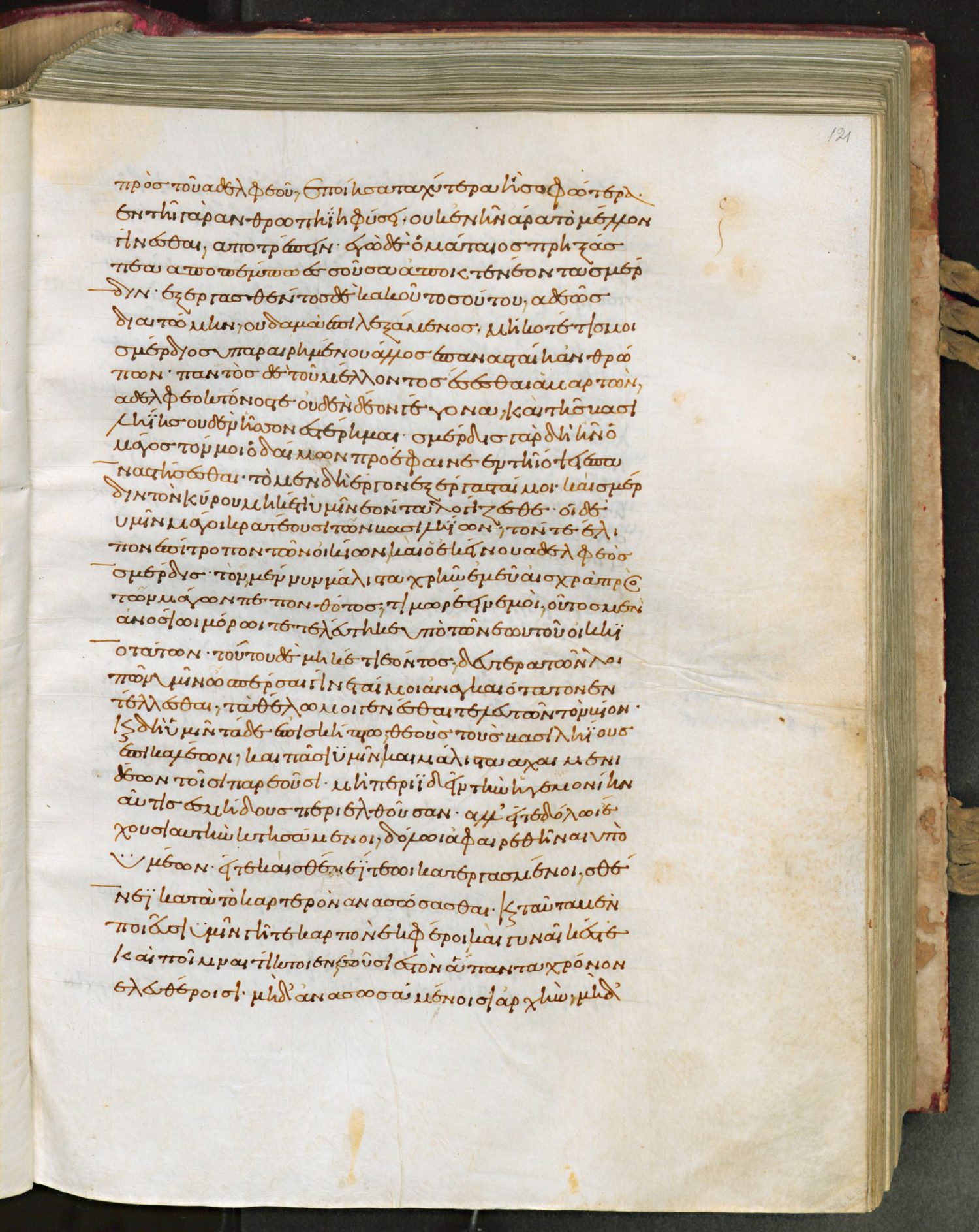
Laur. Plut. 70.3, fol. 121r: Greek here 3.65.3 to 3.65.7. Checked on the image (first and last words read and located in the Greek; each break checked against the neighbouring page): fol. 121r begins ‹πρὸς τοῦ ἀδελφεοῦ, ἐποίησα› (3.65.3), ends ‹τὴν ἀρχὴν μηδʼ ἐ-› (3.65.7). English here: 3.65.3 to 3.65.6 (Godley's sentences for the sections whose Greek lies mostly on this page).
3.65.3πρὸς τοῦ ἀδελφεοῦ, ἐποίησα ταχύτερα ἢ σοφώτερα· ἐν τῇ γὰρ ἀνθρωπηίῃ φύσι οὐκ ἐνῆν ἄρα τὸ μέλλον γίνεσθαι ἀποτρέπειν. ἐγὼ δὲ ὁ μάταιος Πρηξάσπεα ἀποπέμπω ἐς Σοῦσα ἀποκτενέοντα Σμέρδιν. ἐξεργασθέντος δὲ κακοῦ τοσούτου ἀδεῶς διαιτώμην, οὐδαμὰ ἐπιλεξάμενος μή κοτέ τίς μοι Σμέρδιος ὑπαραιρημένου ἄλλος ἐπανασταίη ἀνθρώπων. 3.65.4παντὸς δὲ τοῦ μέλλοντος ἔσεσθαι ἁμαρτὼν ἀδελφεοκτόνος τε οὐδὲν δέον γέγονα καὶ τῆς βασιληίης οὐδὲν ἧσσον ἐστέρημαι· Σμέρδις γὰρ δὴ ἦν ὁ Μάγος τόν μοι ὁ δαίμων προέφαινε ἐν τῇ ὄψι ἐπαναστήσεσθαι. 3.65.5τὸ μὲν δὴ ἔργον ἐξέργασταί μοι, καὶ Σμέρδιν τὸν Κύρου μηκέτι ὑμῖν ἐόντα λογίζεσθε· οἱ δὲ ὑμῖν Μάγοι κρατέουσι τῶν βασιληίων, τόν τε ἔλιπον ἐπίτροπον τῶν οἰκίων καὶ ὁ ἐκείνου ἀδελφεὸς Σμέρδις. τὸν μέν νυν μάλιστα χρῆν ἐμεῦ αἰσχρὰ πρὸς τῶν Μάγων πεπονθότος τιμωρέειν ἐμοί, οὗτος μὲν ἀνοσίῳ μόρῳ τετελεύτηκε ὑπὸ τῶν ἑωυτοῦ οἰκηιοτάτων· 3.65.6τούτου δὲ μηκέτι ἐόντος, δεύτερα τῶν λοιπῶν ὑμῖν ὦ Πέρσαι γίνεταί μοι ἀναγκαιότατον ἐντέλλεσθαι τὰ θέλω μοι γενέσθαι τελευτῶν τὸν βίον· καὶ δὴ ὑμῖν τάδε ἐπισκήπτω θεοὺς τοὺς βασιληίους ἐπικαλέων καὶ πᾶσι ὑμῖν καὶ μάλιστα Ἀχαιμενιδέων τοῖσι παρεοῦσι, μὴ περιιδεῖν τὴν ἡγεμονίην αὖτις ἐς Μήδους περιελθοῦσαν, ἀλλʼ εἴτε δόλῳ ἔχουσι αὐτὴν κτησάμενοι, δόλῳ ἀπαιρεθῆναι ὑπὸ ὑμέων, εἴτε καὶ σθένεϊ τεῷ κατεργασάμενοι, σθένεϊ κατὰ τὸ καρτερὸν ἀνασώσασθαι. 3.65.7καὶ ταῦτα μὲν ποιεῦσι ὑμῖν γῆ τε καρπὸν ἐκφέροι καὶ γυναῖκές τε καὶ ποῖμναι τίκτοιεν, ἐοῦσι ἐς τὸν ἅπαντα χρόνον ἐλευθέροισι· μὴ δὲ ἀνασωσαμένοισι τὴν ἀρχὴν μηδʼ
3.65.3Then I feared that my brother would take away from me my sovereignty, and I acted with more haste than wisdom; for (as I now see) no human power can turn fate aside; fool that I was! I sent Prexaspes to Susa to slay Smerdis. When that great wrong was done I lived without fear, for never did I think that when Smerdis was taken out of my way another man might rise against me. 3.65.4So did I wholly mistake what was to be; I have slain my brother when there was no need, and lost my kingship none the less; for the rebel foretold by heaven in the vision was Smerdis the Magian. 3.65.5Now I have done the deed, and I would have you believe that Smerdis Cyrus’ son no longer lives; you see the Magians masters of my royal estate, even him that I left steward of my house, and his brother Smerdis. So then, he that especially should have avenged the dishonour done me by the Magians lies foully slain by his nearest kinsman; 3.65.6and he being no longer in life, necessity constrains me, in his default, to charge you, men of Persia, with the last desire of my life. In the name of the gods of my royal house I charge all of you, but chiefly those Achaemenids that are here, not to suffer the sovereignty to fall again into Median hands; if they have won it by trickery, trick them of it again; if they have wrested it away by force, then do you by force and strength of hand recover it.
Where on the image
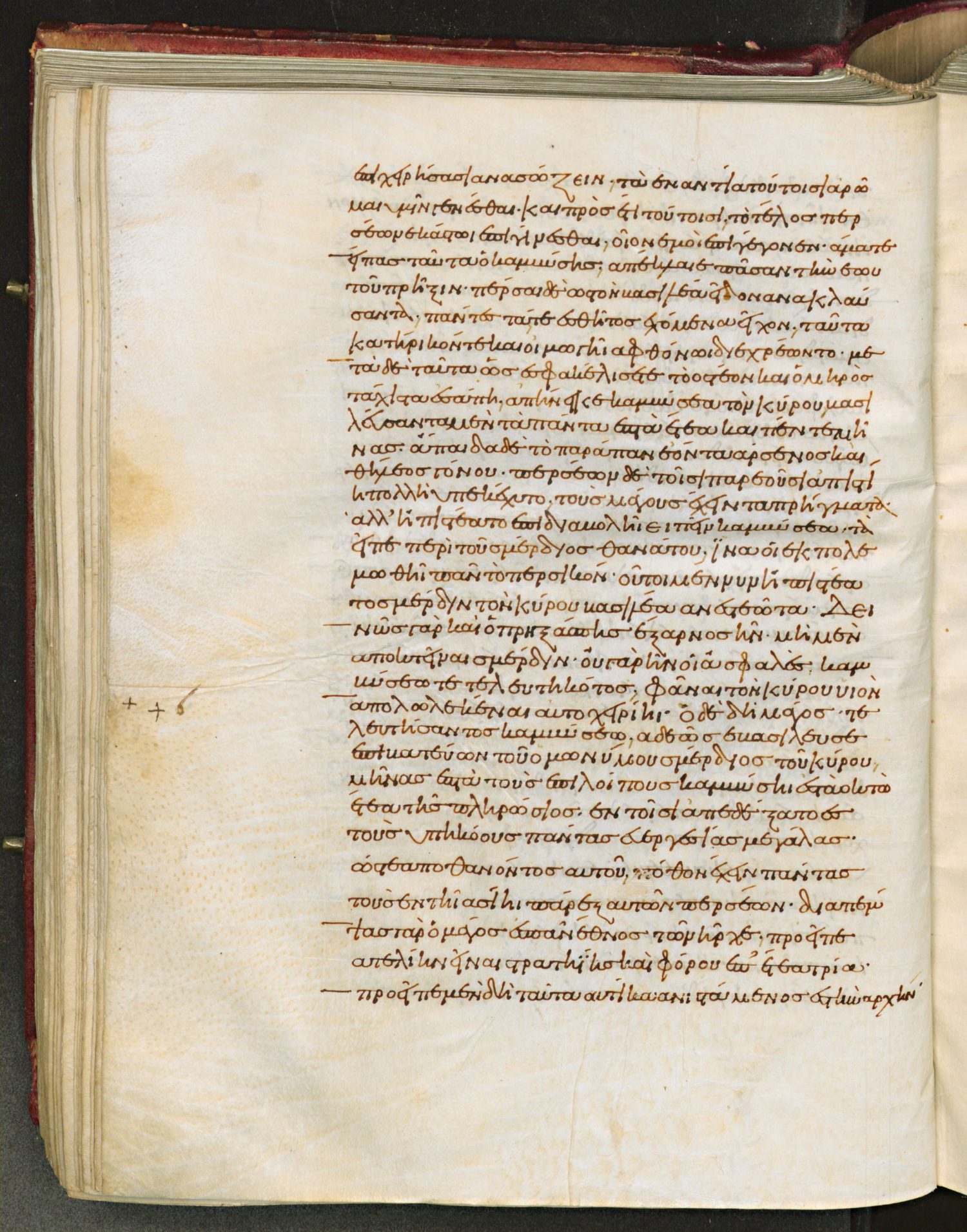
Laur. Plut. 70.3, fol. 121v: Greek here 3.65.7 to 3.68.1. Checked on the image (first and last words read and located in the Greek; each break checked against the neighbouring page): fol. 121v begins ‹ἐπιχειρήσασι ἀνασώζειν τὰ ἐναντία› (3.65.7), ends ‹ἐνιστάμενος ἐς τὴν ἀρχήν› (3.68.1). English here: 3.65.7 to 3.67.3 (Godley's sentences for the sections whose Greek lies mostly on this page).
3.65.7ἐπιχειρήσασι ἀνασώζειν τὰ ἐναντία τούτοισι ἀρῶμαι ὑμῖν γενέσθαι, καὶ πρὸς ἔτι τούτοισι τὸ τέλος Περσέων ἑκάστῳ ἐπιγενέσθαι οἷον ἐμοὶ ἐπιγέγονε. ἅμα τε εἴπας ταῦτα ὁ Καμβύσης ἀπέκλαιε πᾶσαν τὴν ἑωυτοῦ πρῆξιν. 3.66.1πέρσαι δὲ ὡς τὸν βασιλέα εἶδον ἀνακλαύσαντα πάντες τά τε ἐσθῆτος ἐχόμενα εἶχον, ταῦτα κατηρείκοντο καὶ οἰμωγῇ ἀφθόνῳ διεχρέωντο. 3.66.2μετὰ δὲ ταῦτα ὡς ἐσφακέλισέ τε τὸ ὀστέον καὶ ὁ μηρὸς τάχιστα ἐσάπη, ἀπήνεικε Καμβύσεα τὸν Κύρου, βασιλεύσαντα μὲν τὰ πάντα ἑπτὰ ἔτεα καὶ πέντε μῆνας, ἄπαιδα δὲ τὸ παράπαν ἐόντα ἔρσενος καὶ θήλεος γόνου. 3.66.3Περσέων δὲ τοῖσι παρεοῦσι ἀπιστίη πολλὴ ὑπεκέχυτο τοὺς Μάγους ἔχειν τὰ πρήγματα, ἀλλʼ ἠπιστέατο ἐπὶ διαβολῇ εἰπεῖν Καμβύσεα τὰ εἶπε περὶ τοῦ Σμέρδιος θανάτου, ἵνα οἱ ἐκπολεμωθῇ πᾶν τὸ Περσικόν. 3.67.1οὗτοι μέν νυν ἠπιστέατο Σμέρδιν τὸν Κύρου βασιλέα ἐνεστεῶτα· δεινῶς γὰρ καὶ ὁ Πρηξάσπης ἔξαρνος ἦν μὴ μὲν ἀποκτεῖναι Σμέρδιν· οὐ γὰρ ἦν οἱ ἀσφαλὲς Καμβύσεω τετελευτηκότος φάναι τὸν Κύρου υἱὸν ἀπολωλεκέναι αὐτοχειρίῃ. 3.67.2ὁ δὲ δὴ Μάγος τελευτήσαντος Καμβύσεω ἀδεῶς ἐβασίλευσε, ἐπιβατεύων τοῦ ὁμωνύμου Σμέρδιος τοῦ Κύρου, μῆνας ἑπτὰ τοὺς ἐπιλοίπους Καμβύσῃ ἐς τὰ ὀκτὼ ἔτεα τῆς πληρώσιος· 3.67.3ἐν τοῖσι ἀπεδέξατο ἐς τοὺς ὑπηκόους πάντας εὐεργεσίας μεγάλας, ὥστε ἀποθανόντος αὐτοῦ πόθον ἔχειν πάντας τοὺς ἐν τῇ Ἀσίῃ πάρεξ αὐτῶν Περσέων. διαπέμψας γὰρ ὁ Μάγος ἐς πᾶν ἔθνος τῶν ἦρχε προεῖπε ἀτελείην εἶναι στρατηίης καὶ φόρου ἐπʼ ἔτεα τρία. 3.68.1προεῖπε μὲν δὴ ταῦτα αὐτίκα ἐνιστάμενος ἐς τὴν ἀρχήν,
3.65.7And if you so do, may your land bring forth her fruits, and your women and your flocks and herds be blessed with offspring; but if you win not back the kingdom nor essay so to do, then I pray that all may go contrariwise for you, yea, that every Persian may meet an end such as mine.” With that Cambyses wept bitterly for all that had befallen him. 3.66.1When the Persians saw their king weep, they all rent the garments which they wore and lamented loud and long. 3.66.2But after this the bone became gangrened and mortification of the thigh set in rapidly; which took off Cambyses son of Cyrus, who had reigned in all seven years and five months, and left no issue at all, male or female. 3.66.3The Persians present fully disbelieved in their hearts that the Magians were masters of the kingdom; they supposed that Cambyses’ intent was to deceive them with his tale of Smerdis’ death, so that all Persia might be plunged into a war against him. So they believed that it was Cyrus’ son Smerdis who had been made king. For Prexaspes stoutly denied that he had killed Smerdis, since now that Cambyses was dead, it was not safe for him to say that he had slain the son of Cyrus with his own hands. 3.67.1Cambyses being dead, the Magian, pretending to be the Smerdis of like name, Cyrus’ son, reigned without fear for the seven months lacking to Cambyses’ full eight years of kingship. 3.67.3In this time he greatly benefited all his subjects, in so much that after his death all the Asiatics except the Persians wished him back; for he sent hither and thither to every nation of his dominions and proclaimed them for three years freed from service in arms and from tribute.
Where on the image
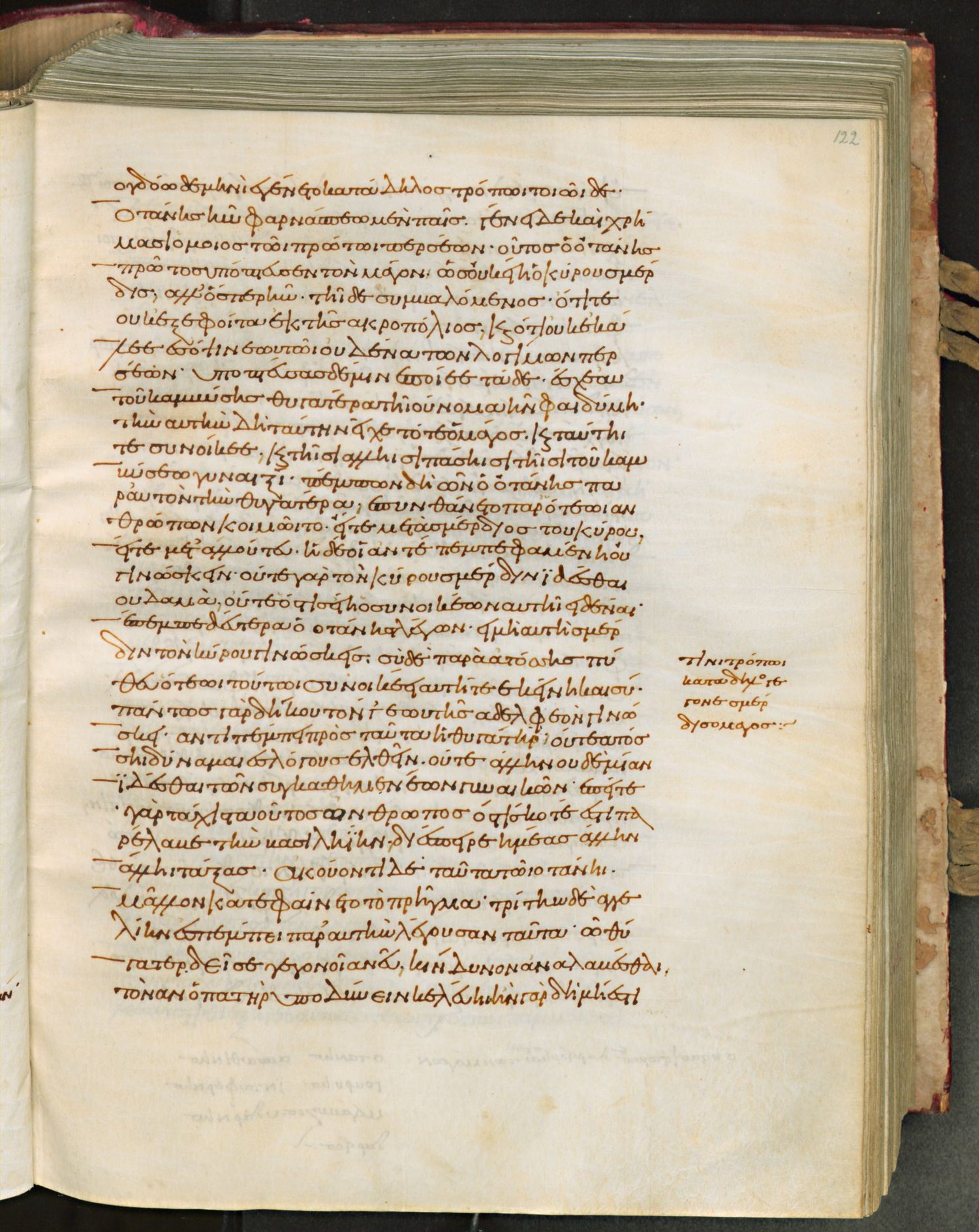
Laur. Plut. 70.3, fol. 122r: Greek here 3.68.1 to 3.69.2. Checked on the image (first and last words read and located in the Greek; each break checked against the neighbouring page): fol. 122r begins ‹ὀγδόῳ δὲ μηνὶ ἐγένετο› (3.68.1), ends ‹γὰρ δὴ μή ἐστι› (3.69.2). English here: 3.68.1 to 3.69.2 (Godley's sentences for the sections whose Greek lies mostly on this page).
3.68.1ὀγδόῳ δὲ μηνὶ ἐγένετο κατάδηλος τρόπῳ τοιῷδε. Ὀτάνης ἦν Φαρνάσπεω μὲν παῖς, γένεϊ δὲ καὶ χρήμασι ὅμοιος τῷ πρώτῳ Περσέων. 3.68.2οὗτος ὁ Ὀτάνης πρῶτος ὑπώπτευσε τὸν Μάγον ὡς οὐκ εἴη ὁ Κύρου Σμέρδις ἀλλʼ ὅς περ ἦν, τῇδε συμβαλόμενος, ὅτι τε οὐκ ἐξεφοίτα ἐκ τῆς ἀκροπόλιος καὶ ὅτι οὐκ ἐκάλεε ἐς ὄψιν ἑωυτῷ οὐδένα τῶν λογίμων Περσέων· 3.68.3ὑποπτεύσας δέ μιν ἐποίεε τάδε. ἔσχε αὐτοῦ Καμβύσης θυγατέρα, τῇ οὔνομα ἦν Φαιδύμη· τὴν αὐτὴν δὴ ταύτην εἶχε τότε ὁ Μάγος καὶ ταύτῃ τε συνοίκεε καὶ τῇσι ἄλλῃσι πάσῃσι τῇσι τοῦ Καμβύσεω γυναιξί. πέμπων δὴ ὦν ὁ Ὀτάνης παρὰ ταύτην τὴν θυγατέρα ἐπυνθάνετο παρʼ ὅτεῳ ἀνθρώπων κοιμῷτο, εἴτε μετὰ Σμέρδιος τοῦ Κύρου εἴτε μετὰ ἄλλου τευ. 3.68.4ἣ δέ οἱ ἀντέπεμπε φαμένη οὐ γινώσκειν· οὔτε γὰρ τὸν Κύρου Σμέρδιν ἰδέσθαι οὐδαμὰ οὔτε ὅστις εἴη ὁ συνοικέων αὐτῇ εἰδέναι. ἔπεμπε δεύτερα ὁ Ὀτάνης λέγων εἰ μὴ αὐτὴ Σμέρδιν τὸν Κύρου γινώσκεις, σὺ δὲ παρὰ Ἀτόσσης πύθευ ὅτεῳ τούτῳ συνοικέει αὐτή τε ἐκείνη καὶ σύ· πάντως γὰρ δή κου τόν γε ἑωυτῆς ἀδελφεὸν γινώσκει. ἀντιπέμπει πρὸς ταῦτα ἡ θυγάτηρ 3.68.5οὔτε Ἀτόσσῃ δύναμαι ἐς λόγους ἐλθεῖν οὔτε ἄλλην οὐδεμίαν ἰδέσθαι τῶν συγκατημενέων γυναικῶν. ἐπείτε γὰρ τάχιστα οὗτος ὥνθρωπος, ὅστις κοτὲ ἐστί, παρέλαβε τὴν βασιληίην, διέσπειρε ἡμέας ἄλλην ἄλλῃ τάξας. 3.69.1ἀκούοντι δὲ ταῦτα τῷ Ὀτάνῃ μᾶλλον κατεφαίνετο τὸ πρῆγμα. τρίτην δὲ ἀγγελίην ἐσπέμπει παρʼ αὐτὴν λέγουσαν ταῦτα. 3.69.2ὦ θύγατερ, δεῖ σε γεγονυῖαν εὖ κίνδυνον ἀναλαβέσθαι τὸν ἂν ὁ πατὴρ ὑποδύνειν κελεύῃ. εἰ γὰρ δὴ μή ἐστι
3.68.1Such was his proclamation at the beginning of his reign; but in the eighth month it was revealed who he was, and this is how it was done:—There was one Otanes, son of Pharnaspes, as well-born and rich a man as any Persian. 3.68.2This Otanes was the first to suspect that the Magian was not Cyrus’ son Smerdis but his true self; the reason was, that he never left the citadel nor summoned any notable Persian into his presence; and in his suspicion— 3.68.3Cambyses having married Otanes’ daughter Phaedyme, whom the Magian had now wedded, with all the rest of Cambyses’ wives—Otanes sent to this daughter, asking with whom she lay, Smerdis, Cyrus’ son, or another. 3.68.4She sent back a message that she did not know; for (said she) she had never seen Cyrus’ son Smerdis, nor knew who was her bedfellow. Then Otanes sent a second message, to this effect: “If you do not yourself know Cyrus’ son Smerdis, then ask Atossa who is this that is her lord and yours; for surely she knows her own 3.68.5brother.” 3.69.1To this his daughter replied: “I cannot get speech with Atossa, nor can I see any other of the women of the household; for no sooner had this man, whoever he is, made himself king, than he sent us to live apart, each in her appointed place.” When Otanes heard that, he saw more clearly how the matter stood; and he sent her this third message: “ 3.69.2Daughter, it is due to your noble birth that you should run any risk that your father bids you face. If this man be not Smerdis son of Cyrus, but another whom I suspect him to be, then he must not go unscathed, but be punished for sharing your bed and sitting on the throne of Persia.
Where on the image
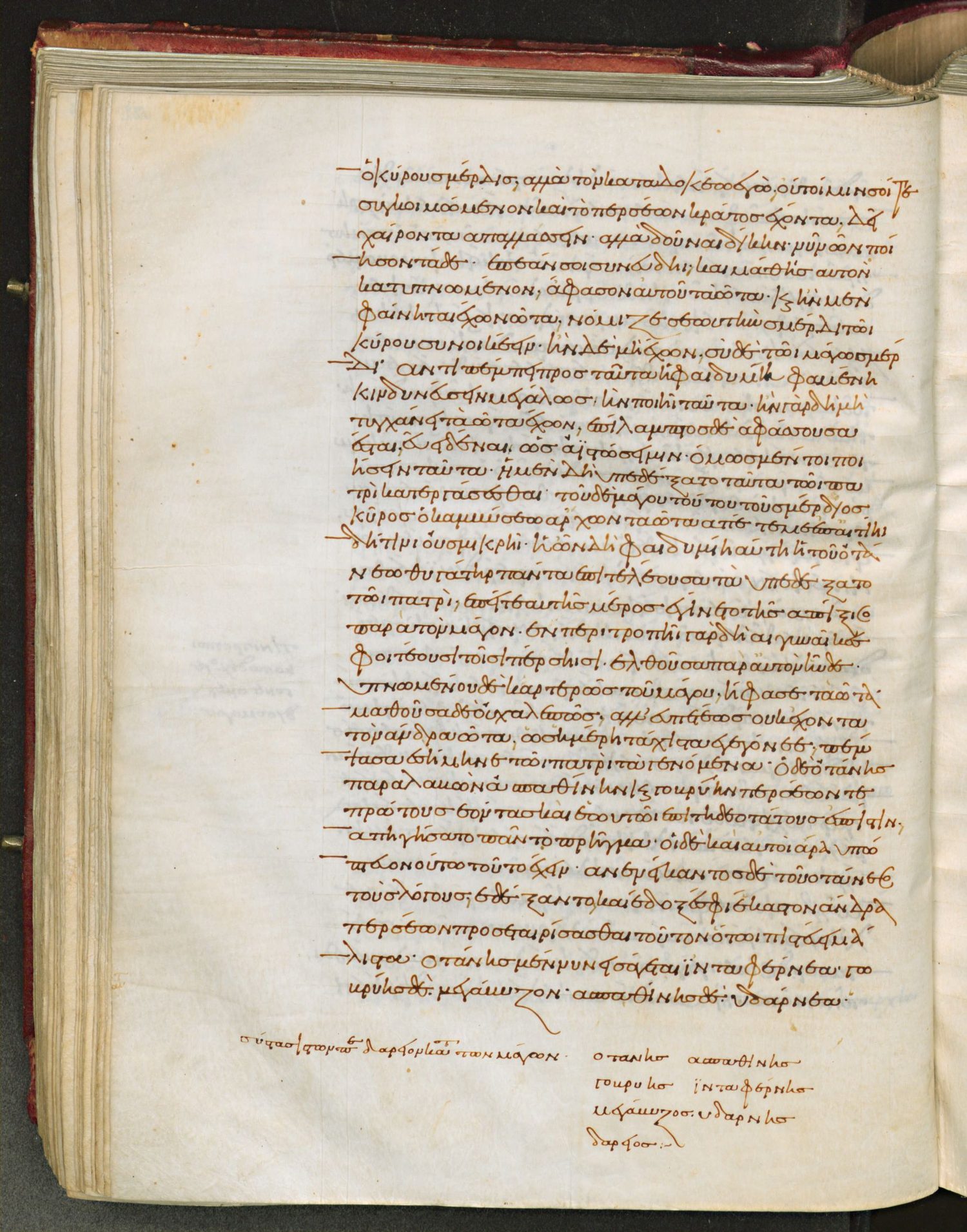
Laur. Plut. 70.3, fol. 122v: Greek here 3.69.2 to 3.70.2. Checked on the image (first and last words read and located in the Greek; each break checked against the neighbouring page): fol. 122v begins ‹ὁ Κύρου Σμέρδις ἀλλὰ› (3.69.2), ends ‹Μεγάβυζον, Ἀσπαθίνης δὲ Ὑδάρνεα› (3.70.2). Below the text, a reader's note lists the seven Persians who acted against the Magi. English here: 3.69.3 to 3.70.2 (Godley's sentences for the sections whose Greek lies mostly on this page).
3.69.2ὁ Κύρου Σμέρδις ἀλλὰ τὸν καταδοκέω ἐγώ, οὔτοι μιν σοί τε συγκοιμώμενον καὶ τὸ Περσέων κράτος ἔχοντα δεῖ χαίροντα ἀπαλλάσσειν, ἀλλὰ δοῦναι δίκην. 3.69.3νῦν ὦν ποίησον τάδε· ἐπεὰν σοὶ συνεύδῃ καὶ μάθῃς αὐτὸν κατυπνωμένον, ἄφασον αὐτοῦ τὰ ὦτα· καὶ ἢν μὲν φαίνηται ἔχων ὦτα, νόμιζε σεωυτὴν Σμέρδι τῷ Κύρου συνοικέειν, ἢν δὲ μὴ ἔχων, σὺ δὲ τῷ Μάγῳ Σμέρδι. 3.69.4ἀντιπέμπει πρὸς ταῦτα ἡ Φαιδύμη φαμένη κινδυνεύσειν μεγάλως, ἢν ποιέῃ ταῦτα· εἰ γὰρ δὴ μὴ τυγχάνει τὰ ὦτα ἔχων, ἐπίλαμπτος δὲ ἀφάσσουσα ἔσται, εὖ εἰδέναι ὡς ἀιστώσει μιν· ὅμως μέντοι ποιήσειν ταῦτα. 3.69.5ἣ μὲν δὴ ὑπεδέξατο ταῦτα τῷ πατρὶ κατεργάσεσθαι. τοῦ δὲ Μάγου τούτου τοῦ Σμέρδιος Κῦρος ὁ Καμβύσεω ἄρχων τὰ ὦτα ἀπέταμε ἐπʼ αἰτίῃ δή τινι οὐ σμικρῇ. 3.69.6ἡ ὦν δὴ Φαιδύμη αὕτη, ἡ τοῦ Ὀτάνεω θυγάτηρ, πάντα ἐπιτελέουσα τὰ ὑπεδέξατο τῷ πατρί, ἐπείτε αὐτῆς μέρος ἐγίνετο τῆς ἀπίξιος παρὰ τὸν Μάγον (ἐν περιτροπῇ γὰρ δὴ αἱ γυναῖκες φοιτέουσι τοῖσι Πέρσῃσι), ἐλθοῦσα παρʼ αὐτὸν ηὗδε, ὑπνωμένου δὲ καρτερῶς τοῦ Μάγου ἤφασε τὰ ὦτα. μαθοῦσα δὲ οὐ χαλεπῶς ἀλλʼ εὐπετέως οὐκ ἔχοντα τὸν ἄνδρα ὦτα, ὡς ἡμέρη τάχιστα ἐγεγόνεε, πέμψασα ἐσήμηνε τῷ πατρὶ τὰ γενόμενα. 3.70.1ὁ δὲ Ὀτάνης παραλαβὼν Ἀσπαθίνην καὶ Γοβρύην, Περσέων τε πρώτους ἐόντας καὶ ἑωυτῷ ἐπιτηδεοτάτους ἐς πίστιν, ἀπηγήσατο πᾶν τὸ πρῆγμα· οἳ δὲ καὶ αὐτοὶ ἄρα ὑπώπτευον οὕτω τοῦτο ἔχειν, ἀνενείκαντος δὲ τοῦ Ὀτάνεω τοὺς λόγους ἐδέξαντο, 3.70.2καὶ ἔδοξέ σφι ἕκαστον ἄνδρα Περσέων προσεταιρίσασθαι τοῦτον ὅτεῳ πιστεύει μάλιστα. Ὀτάνης μέν νυν ἐσάγεται Ἰνταφρένεα, Γοβρύης δὲ Μεγάβυζον, Ἀσπαθίνης δὲ Ὑδάρνεα.
3.69.3Now, therefore, when he lies with you and you see that he is asleep, do as I bid you and feel for his ears; if you see that he has ears, then you may think that it is Smerdis son of Cyrus who is your lord; but if he has none, it is Smerdis the Magian.” 3.69.4Phaedyme answered by messenger that she would run very great risk by so doing; for if it should turn out that he had no ears, and she were caught feeling for them, he would surely make an end of her; nevertheless she would do it. 3.69.5So she promised to achieve her father’s bidding. It is known that Cyrus son of Cambyses had in his reign cut off the ears of this Magian, Smerdis, for some grave reason—I know not what. 3.69.6So Phaedyme, daughter of Otanes, performed her promise to her father. When it was her turn to visit the Magian (as a Persian’s wives come in regular order to their lord), she came to his bed and felt for the Magian’s ears while he slumbered deeply; and having with no great difficulty assured herself that he had no ears, she sent and told this to her father as soon as it was morning. 3.70.1Otanes then took to himself two Persians of the highest rank whom he thought worthiest of trust, Aspathines and Gobryas, and told them the whole story. These, it would seem, had themselves suspected that it was so; and now they readily believed what Otanes revealed to them. 3.70.2They resolved that each should take into their fellowship that Persian whom he most trusted; Otanes brought in Intaphrenes, Gobryas brought Megabyzus and Aspathines Hydarnes; so they were six.
Where on the image
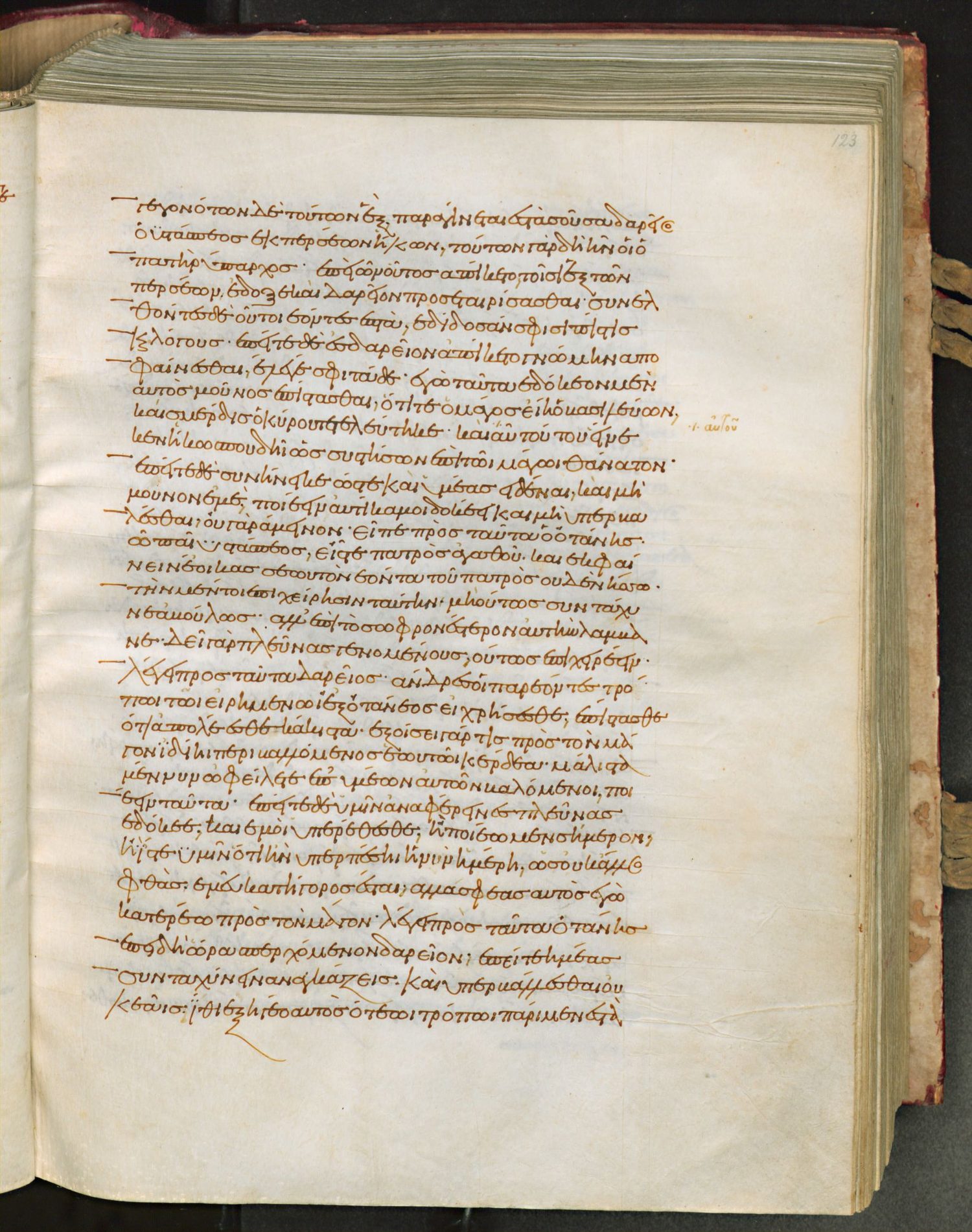
Laur. Plut. 70.3, fol. 123r: Greek here 3.70.3 to 3.72.1. Checked on the image (first and last words read and located in the Greek; each break checked against the neighbouring page): fol. 123r begins ‹γεγονότων δὲ τούτων ἓξ› (3.70.3), ends ‹τρόπῳ πάριμεν ἐς τὰ› (3.72.1). English here: 3.70.3 to 3.72.1 (Godley's sentences for the sections whose Greek lies mostly on this page).
3.70.3γεγονότων δὲ τούτων ἓξ παραγίνεται ἐς τὰ Σοῦσα Δαρεῖος ὁ Ὑστάσπεος ἐκ Περσέων ἥκων· τούτων γὰρ δὴ ἦν οἱ ὁ πατὴρ ὕπαρχος. ἐπεὶ ὦν οὗτος ἀπίκετο, τοῖσι ἓξ τῶν Περσέων ἔδοξε καὶ Δαρεῖον προσεταιρίσασθαι. 3.71.1συνελθόντες δὲ οὗτοι ἐόντες ἑπτὰ ἐδίδοσαν σφίσι πίστις καὶ λόγους. ἐπείτε δὲ ἐς Δαρεῖον ἀπίκετο γνώμην ἀποφαίνεσθαι, ἔλεγέ σφι τάδε. 3.71.2ἐγὼ ταῦτα ἐδόκεον μὲν αὐτὸς μοῦνος ἐπίστασθαι, ὅτι τε ὁ Μάγος εἴη ὁ βασιλεύων καὶ Σμέρδις ὁ Κύρου τετελεύτηκε· καὶ αὐτοῦ τούτου εἵνεκεν ἥκω σπουδῇ ὡς συστήσων ἐπὶ τῷ Μάγῳ θάνατον. ἐπείτε δὲ συνήνεικε ὥστε καὶ ὑμέας εἰδέναι καὶ μὴ μοῦνον ἐμέ, ποιέειν αὐτίκα μοι δοκέει καὶ μὴ ὑπερβάλλεσθαι· οὐ γὰρ ἄμεινον. 3.71.3εἶπε πρὸς ταῦτα ὁ Ὀτάνης ὦ παῖ Ὑστάσπεος, εἶς τε πατρὸς ἀγαθοῦ καὶ ἐκφαίνειν ἔοικας σεωυτὸν ἐόντα τοῦ πατρὸς οὐδὲν ἥσσω· τὴν μέντοι ἐπιχείρησιν ταύτην μὴ οὕτω συντάχυνε ἀβούλως, ἀλλʼ ἐπὶ τὸ σωφρονέστερον αὐτὴν λάμβανε· δεῖ γὰρ πλεῦνας γενομένους οὕτω ἐπιχειρέειν. 3.71.4λέγει πρὸς ταῦτα Δαρεῖος ἄνδρες οἱ παρεόντες, τρόπῳ τῷ εἰρημένῳ ἐξ Ὀτάνεω εἰ χρήσεσθε, ἐπίστασθε ὅτι ἀπολέεσθε κάκιστα· ἐξοίσει γάρ τις πρὸς τὸν Μάγον, ἰδίῃ περιβαλλόμενος ἑωυτῷ κέρδεα. 3.71.5μάλιστα μέν νυν ὠφείλετε ἐπʼ ὑμέων αὐτῶν βαλλόμενοι ποιέειν ταῦτα· ἐπείτε δὲ ὑμῖν ἀναφέρειν ἐς πλεῦνας ἐδόκεε καὶ ἐμοὶ ὑπερέθεσθε, ἢ ποιέωμεν σήμερον ἢ ἴστε ὑμῖν ὅτι ἢν ὑπερπέσῃ ἡ νῦν ἡμέρη, ὡς οὐκ ἄλλος φθὰς ἐμεῦ κατήγορος ἔσται, ἀλλά σφεα αὐτὸς ἐγὼ κατερέω πρὸς τὸν Μάγον. 3.72.1λέγει πρὸς ταῦτα Ὀτάνης, ἐπειδὴ ὥρα σπερχόμενον Δαρεῖον, ἐπείτε ἡμέας συνταχύνειν ἀναγκάζεις καὶ ὑπερβάλλεσθαι οὐκ ἐᾷς, ἴθι ἐξηγέο αὐτὸς ὅτεῳ τρόπῳ πάριμεν ἐς τὰ
3.70.3Now came to Susa Darius son of Hystaspes, from Persia, of which his father was vice-gerent; and on his coming the six Persians resolved to make Darius too their comrade. 3.71.1The seven then met and gave each other pledges and spoke together; and when it was Darius’ turn to declare his mind, he spoke as follows: “ 3.71.2I supposed that I alone knew that it was the Magian who is king and that Smerdis son of Cyrus is dead; and it is for this cause that I have made haste to come, that I might compass the Magian’s death; but since it has so fallen out that you too and not I alone know the truth, my counsel is for action forthwith, no delay; for evil will come of delay.” 3.71.3“Son of Hystaspes,” Otanes answered, “your father is a valiant man, and methinks you declare yourself as valiant as he; yet hasten not this enterprise thus inconsiderately; take the matter more prudently; we must wait to set about it till there are more of us.” 3.71.4To this Darius answered: “Sirs, if you do as Otanes counsels, you must all know that you will perish miserably; for someone will carry all to the Magian, desiring private reward for himself. Now, it had been best for you to achieve your end yourselves unaided; but seeing that it was 3.71.5your pleasure to impart your plot to others and that so you have trusted me with it, let us, I say, do the deed this day; if you let to-day pass, be assured that none will accuse you ere I do, for I will myself lay the whole matter before the Magian.” 3.72.1To this Otanes replied, seeing Darius’ vehemence, “Since you compel us to hasten and will brook no delay, tell us now yourself how we shall pass into the palace and assail the Magians. The place is beset all round by guards; this you know, for you have seen or heard of them; how shall we win past the guards?”
Where on the image
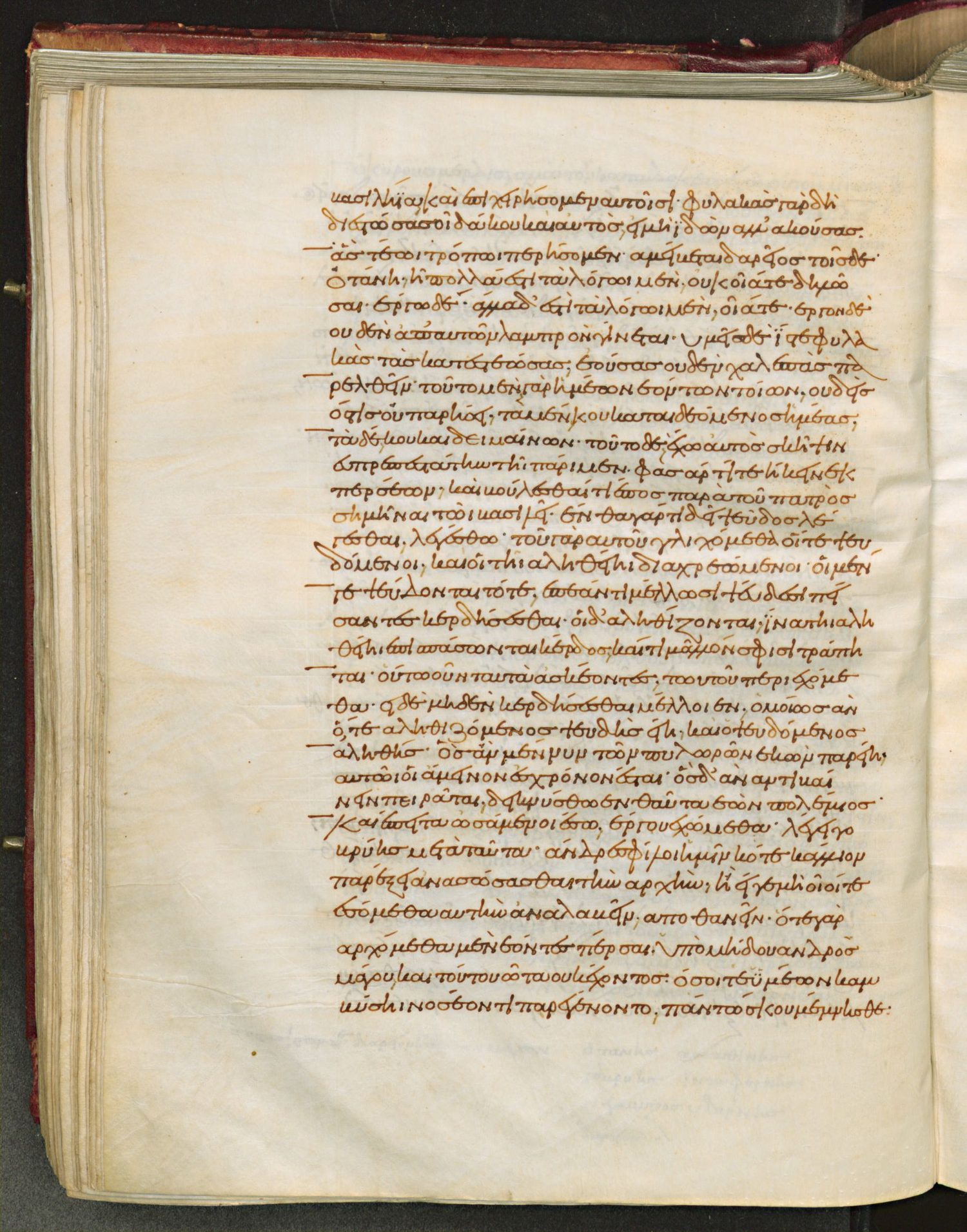
Laur. Plut. 70.3, fol. 123v: Greek here 3.72.1 to 3.73.2. Checked on the image (first and last words read and located in the Greek; each break checked against the neighbouring page): fol. 123v begins ‹βασιλήια καὶ ἐπιχειρήσομεν αὐτοῖσι.› (3.72.1), ends ‹παρεγένοντο, πάντως κου μέμνησθε› (3.73.2). English here: 3.72.2 to 3.73.1 (Godley's sentences for the sections whose Greek lies mostly on this page).
3.72.1βασιλήια καὶ ἐπιχειρήσομεν αὐτοῖσι. φυλακὰς γὰρ δὴ διεστεώσας οἶδάς κου καὶ αὐτός, εἰ μὴ ἰδών, ἀλλʼ ἀκούσας· τὰς τέῳ τρόπῳ περήσομεν; ἀμείβεται Δαρεῖος τοῖσιδε. 3.72.2Ὀτάνη, ἦ πολλά ἐστι τὰ λόγῳ μὲν οὐκ οἷά τε δηλῶσαι, ἔργῳ δέ· ἄλλα δʼ ἐστὶ τὰ λόγῳ μὲν οἷά τε, ἔργον δὲ οὐδὲν ἀπʼ αὐτῶν λαμπρὸν γίνεται. ὑμεῖς δὲ ἴστε φυλακὰς τὰς κατεστεώσας ἐούσας οὐδὲν χαλεπὰς παρελθεῖν. 3.72.3τοῦτο μὲν γὰρ ἡμέων ἐόντων τοιῶνδε οὐδεὶς ὅστις οὐ παρήσει, τὰ μέν κου καταιδεόμενος ἡμέας, τὰ δέ κου καὶ δειμαίνων· τοῦτο δὲ ἔχω αὐτὸς σκῆψιν εὐπρεπεστάτην τῇ πάριμεν, φὰς ἄρτι τε ἥκειν ἐκ Περσέων καὶ βούλεσθαί τι ἔπος παρὰ τοῦ πατρὸς σημῆναι τῷ βασιλέι. 3.72.4ἔνθα γάρ τι δεῖ ψεῦδος λέγεσθαι, λεγέσθω. τοῦ γὰρ αὐτοῦ γλιχόμεθα οἵ τε ψευδόμενοι καὶ οἱ τῇ ἀληθείῃ διαχρεώμενοι. οἳ μέν γε ψεύδονται τότε ἐπεάν τι μέλλωσι τοῖσι ψεύδεσι πείσαντες κερδήσεσθαι, οἳ δʼ ἀληθίζονται ἵνα τῇ ἀληθείῃ ἐπισπάσωνται κέρδος καί τι μᾶλλόν σφι ἐπιτράπηται. οὕτω οὐ ταὐτὰ ἀσκέοντες τὠυτοῦ περιεχόμεθα. 3.72.5εἰ δὲ μηδὲν κερδήσεσθαι μέλλοιεν, ὁμοίως ἂν ὅ τε ἀληθιζόμενος ψευδὴς εἴη καὶ ὁ ψευδόμενος ἀληθής. ὃς ἂν μέν νυν τῶν πυλουρῶν ἑκὼν παριῇ, αὐτῷ οἱ ἄμεινον ἐς χρόνον ἔσται· ὃς δʼ ἂν ἀντιβαίνειν πειρᾶται, δεικνύσθω ἐνθαῦτα ἐὼν πολέμιος, καὶ ἔπειτα ὠσάμενοι ἔσω ἔργου ἐχώμεθα. 3.73.1λέγει Γοβρύης μετὰ ταῦτα ἄνδρες φίλοι, ἡμῖν κότε κάλλιον παρέξει ἀνασώσασθαι τὴν ἀρχήν, ἢ εἴ γε μὴ οἷοί τε ἐσόμεθα αὐτὴν ἀναλαβεῖν, ἀποθανεῖν; ὅτε γε ἀρχόμεθα μὲν ἐόντες Πέρσαι ὑπὸ Μήδου ἀνδρὸς Μάγου, καὶ τούτου ὦτα οὐκ ἔχοντος. 3.73.2ὅσοι τε ὑμέων Καμβύσῃ νοσέοντι παρεγένοντο, πάντως κου μέμνησθε
3.72.2“Otanes,” answered Darius, “very many things can be done whereof the doing cannot be described in words; and sometimes a plan easy to make clear is yet followed by no deed of note. Right well you know that the guards who are set are easy to pass. 3.72.3For we being such as we are, there is none who will not grant us admittance, partly from reverence and partly too from fear; and further, I have myself the fairest pretext for entering, for I will say that I am lately come from Persia and have a message for the king from my father. Let lies be told where they are needful. All of us aim at the like end, whether we lie or speak truth; he that lies 3.72.4does it to win credence and so advantage by his deceit, and he that speaks truth hopes that truth will get him profit and greater trust; so we do but take different ways to the same goal. 3.72.5Were the hope of advantage taken away, the truth-teller were as ready to lie as the liar to speak truth. Now if any warder of the gate willingly suffer us to pass, it will be the better for him thereafter. But if any strives to withstand us let us mark him for an enemy, and so thrust ourselves in and begin our work.” 3.73.1Then said Gobryas, “Friends, when shall we have a better occasion to win back the kingship, or, if we cannot so do, to die? seeing that we who are Persians are ruled by a Mede, a Magian, and he a man that has no ears.
Where on the image
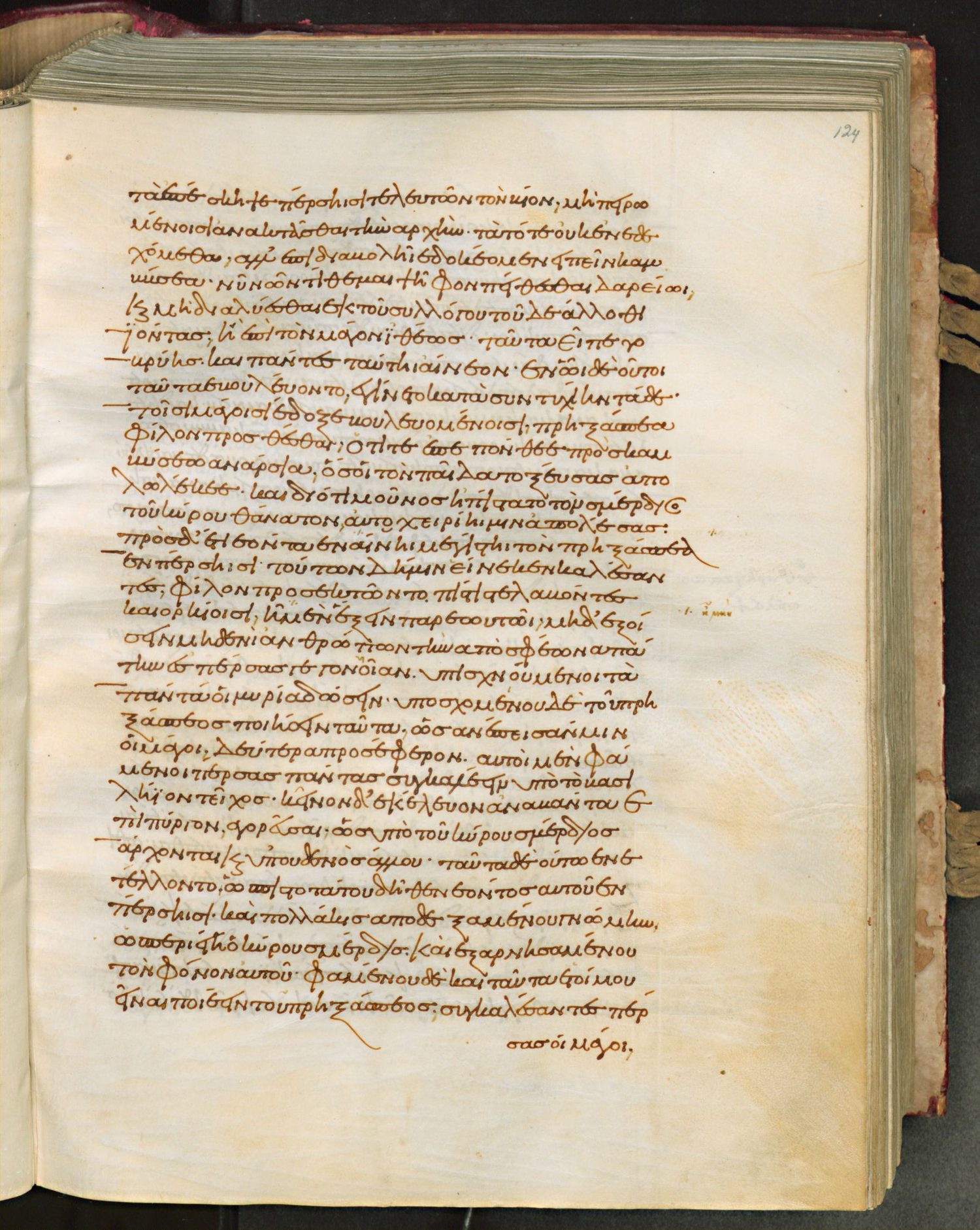
Laur. Plut. 70.3, fol. 124r: Greek here 3.73.2 to 3.75.1. Checked on the image (first and last words read and located in the Greek; each break checked against the neighbouring page): fol. 124r begins ‹τὰ ἐπέσκηψε Πέρσῃσι τελευτῶν› (3.73.2), ends ‹τοῦ Πρηξάσπεος, συγκαλέσαντες Πέρ-› (3.75.1). English here: 3.73.2 to 3.74.4 (Godley's sentences for the sections whose Greek lies mostly on this page).
3.73.2τὰ ἐπέσκηψε Πέρσῃσι τελευτῶν τὸν βίον μὴ πειρωμένοισι ἀνακτᾶσθαι τὴν ἀρχήν· τὰ τότε οὐκ ἐνεδεκόμεθα, ἀλλʼ ἐπὶ διαβολῇ ἐδοκέομεν εἰπεῖν Καμβύσεα. 3.73.3νῦν ὦν τίθεμαι ψῆφον πείθεσθαι Δαρείῳ καὶ μὴ διαλύεσθαι ἐκ τοῦ συλλόγου τοῦδε ἀλλʼ ἢ ἐπὶ τὸν Μάγον ἰθέως. ταῦτα εἶπε Γοβρύης, καὶ πάντες ταύτῃ αἴνεον. 3.74.1ἐν ᾧ δὲ οὗτοι ταῦτα ἐβουλεύοντο, ἐγίνετο κατὰ συντυχίην τάδε. τοῖσι Μάγοισι ἔδοξε βουλευομένοισι Πρηξάσπεα φίλον προσθέσθαι, ὅτι τε ἐπεπόνθεε πρὸς Καμβύσεω ἀνάρσια, ὅς οἱ τὸν παῖδα τοξεύσας ἀπολωλέκεε, καὶ διότι μοῦνος ἠπίστατο τὸν Σμέρδιος τοῦ Κύρου θάνατον αὐτοχειρίῃ μιν ἀπολέσας, πρὸς δʼ ἔτι ἐόντα ἐν αἴνῃ μεγίστῃ τὸν Πρηξάσπεα ἐν Πέρσῃσι. 3.74.2τούτων δή μιν εἵνεκεν καλέσαντες φίλον προσεκτῶντο πίστι τε λαβόντες καὶ ὁρκίοισι, ἦ μὲν ἕξειν παρʼ ἑωυτῷ μηδʼ ἐξοίσειν μηδενὶ ἀνθρώπων τὴν ἀπὸ σφέων ἀπάτην ἐς Πέρσας γεγονυῖαν, ὑπισχνεύμενοι τὰ πάντα οἱ μυρία δώσειν. 3.74.3ὑποσχομένου δὲ τοῦ Πρηξάσπεος ποιήσειν ταῦτα, ὡς ἀνέπεισάν μιν οἱ Μάγοι, δεύτερα προσέφερον, αὐτοὶ μὲν φάμενοι Πέρσας πάντας συγκαλέειν ὑπὸ τὸ βασιλήιον τεῖχος, κεῖνον δʼ ἐκέλευον ἀναβάντα ἐπὶ πύργον ἀγορεῦσαι ὡς ὑπὸ τοῦ Κύρου Σμέρδιος ἄρχονται καὶ ὑπʼ οὐδενὸς ἄλλου. 3.74.4ταῦτα δὲ οὕτω ἐνετέλλοντο ὡς πιστοτάτου δῆθεν ἐόντος αὐτοῦ ἐν Πέρσῃσι καὶ πολλάκις ἀποδεξαμένου γνώμην ὡς περιείη ὁ Κύρου Σμέρδις, καὶ ἐξαρνησαμένου τὸν φόνον αὐτοῦ. 3.75.1φαμένου δὲ καὶ ταῦτα ἑτοίμου εἶναι ποιέειν τοῦ Πρηξάσπεος, συγκαλέσαντες Πέρσας
3.73.2Those of you that were with Cambyses in his sickness cannot but remember the curse which with his last breath he laid on the Persians if they should not essay to win back the kingship; albeit we did not then believe Cambyses, but thought that he spoke to deceive us. 3.73.3Now therefore my vote is that we follow Darius’ plan, and not quit this council to do aught else but attack the Magian forthwith.” So spoke Gobryas; and they all consented to what he said. 3.74.1While they were thus planning, matters befell as I will show. The Magians had taken counsel and resolved to make a friend of Prexaspes, because he had been wronged by Cambyses (who had shot his son with an arrow) and because he alone knew of the death of Cyrus’ son Smerdis, having himself been the slayer; and further, because Prexaspes was very greatly esteemed by the Persians. 3.74.2Therefore they summoned him and, to gain his friendship, made him to pledge himself and swear that he would never reveal to any man their treacherous dealing with the Persians, but keep it to himself; and they promised to give him all things in great abundance. 3.74.3Prexaspes was persuaded and promised to do their will. Then the Magians made this second proposal to him, that they should summon a meeting of all Persians before the palace wall, and he should go up on to a tower and declare that it was Smerdis son of Cyrus and no other who was king of Persia. 3.74.4They gave him this charge, because they thought him to be the man most trusted by the Persians, and because he had oftentimes asserted that Cyrus’ son Smerdis was alive, and had denied the murder.
Where on the image
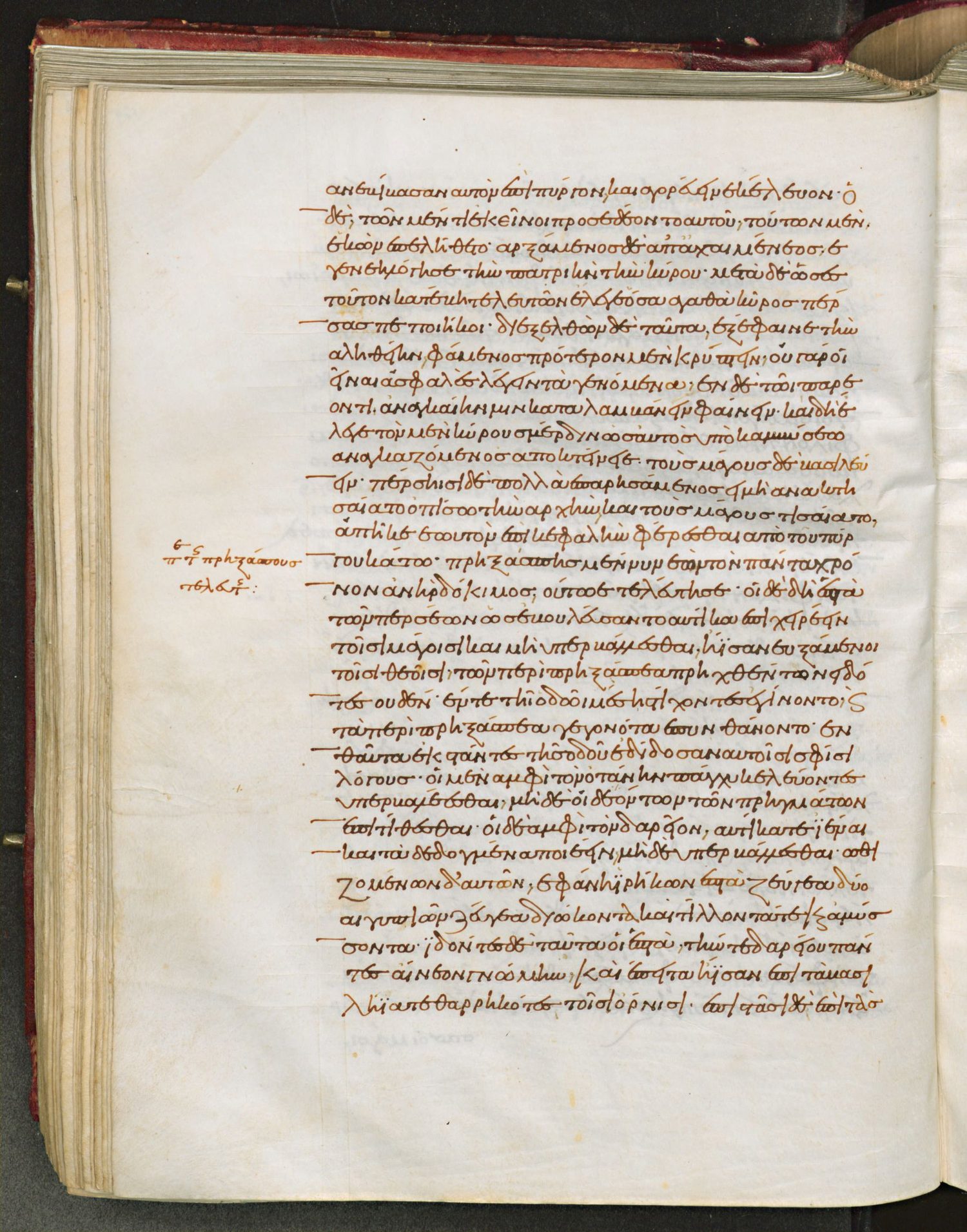
Laur. Plut. 70.3, fol. 124v: Greek here 3.75.1 to 3.77.1. Checked on the image (first and last words read and located in the Greek; each break checked against the neighbouring page): fol. 124v begins ‹-σας οἱ Μάγοι ἀνεβίβασαν› (3.75.1), ends ‹ὄρνισι.ἐπιστᾶσι δὲ ἐπὶ τὰς› (3.77.1). The word ‹Πέρσας› is divided between fol. 124r and fol. 124v; it is given with fol. 124r. English here: 3.75.1 to 3.76.3 (Godley's sentences for the sections whose Greek lies mostly on this page).
3.75.1οἱ Μάγοι ἀνεβίβασαν αὐτὸν ἐπὶ πύργον καὶ ἀγορεύειν ἐκέλευον. ὁ δὲ τῶν μὲν ἐκεῖνοι προσεδέοντο αὐτοῦ, τούτων μὲν ἑκὼν ἐπελήθετο, ἀρξάμενος δὲ ἀπʼ Ἀχαιμένεος ἐγενεηλόγησε τὴν πατριὴν τὴν Κύρου, μετὰ δὲ ὡς ἐς τοῦτον κατέβη τελευτῶν ἔλεγε ὅσα ἀγαθὰ Κῦρος Πέρσας πεποιήκοι, 3.75.2διεξελθὼν δὲ ταῦτα ἐξέφαινε τὴν ἀληθείην, φάμενος πρότερον μὲν κρύπτειν (οὐ γάρ οἱ εἶναι ἀσφαλὲς λέγειν τὰ γενόμενα), ἐν δὲ τῷ παρεόντι, ἀναγκαίην μιν καταλαμβάνειν φαίνειν. καὶ δὴ ἔλεγε τὸν μὲν Κύρου Σμέρδιν ὡς αὐτὸς ὑπὸ Καμβύσεω ἀναγκαζόμενος ἀποκτείνειε, τοὺς Μάγους δὲ βασιλεύειν. 3.75.3Πέρσῃσι δὲ πολλὰ ἐπαρησάμενος εἰ μὴ ἀνακτησαίατο ὀπίσω τὴν ἀρχὴν καὶ τοὺς Μάγους τισαίατο, ἀπῆκε ἑωυτὸν ἐπὶ κεφαλὴν φέρεσθαι ἀπὸ τοῦ πύργου κάτω. Πρηξάσπης μέν νυν ἐὼν τὸν πάντα χρόνον ἀνὴρ δόκιμος οὕτω ἐτελεύτησε. 3.76.1οἱ δὲ δὴ ἑπτὰ τῶν Περσέων ὡς ἐβουλεύσαντο αὐτίκα ἐπιχειρέειν τοῖσι Μάγοισι καὶ μὴ ὑπερβάλλεσθαι, ἤισαν εὐξάμενοι τοῖσι θεοῖσι, τῶν περὶ Πρηξάσπεα πρηχθέντων εἰδότες οὐδέν. 3.76.2ἔν τε δὴ τῇ ὁδῷ μέσῃ στείχοντες ἐγίνοντο καὶ τὰ περὶ Πρηξάσπεα γεγονότα ἐπυνθάνοντο. ἐνθαῦτα ἐκστάντες τῆς ὁδοῦ ἐδίδοσαν αὖτις σφίσι λόγους, οἳ μὲν ἀμφὶ τὸν Ὀτάνην πάγχυ κελεύοντες ὑπερβαλέσθαι μηδὲ οἰδεόντων τῶν πρηγμάτων ἐπιτίθεσθαι, οἳ δὲ ἀμφὶ τὸν Δαρεῖον αὐτίκα τε ἰέναι καὶ τὰ δεδογμένα ποιέειν μηδὲ ὑπερβάλλεσθαι. 3.76.3ὠθιζομένων δʼ αὐτῶν ἐφάνη ἰρήκων ἑπτὰ ζεύγεα δύο αἰγυπιῶν ζεύγεα διώκοντα καὶ τίλλοντά τε καὶ ἀμύσσοντα. ἰδόντες δὲ ταῦτα οἱ ἑπτὰ τήν τε Δαρείου πάντες αἴνεον γνώμην καὶ ἔπειτα ἤισαν ἐπὶ τὰ βασιλήια τεθαρσηκότες τοῖσι ὄρνισι. 3.77.1ἐπιστᾶσι δὲ ἐπὶ τὰς
3.75.1Prexaspes consented to do this also; the Magians summoned the Persians together, and brought him up on to a tower and bade him speak. Then, putting away from his mind all the Magians’ demands, he traced the lineage of Cyrus from Achaemenes downwards; when he came at last to the name of Cyrus, he recounted all the good which that king had done to 3.75.2Persia, after which recital he declared the truth; which, he said, he had till now concealed because he could not safely tell it, but was now constrained by necessity to reveal: “I,” said he, “was compelled by Cambyses to kill Smerdis son of Cyrus; it is the Magians who now rule you.” 3.75.3Then, invoking a terrible curse on the Persians if they failed to win back the throne and take vengeance on the Magians, he threw himself headlong down from the tower; thus honourably ended Prexaspes’ honourable life. 3.76.1The seven Persians, after counsel purposing to attack the Magians forthwith and delay no longer, prayed to the gods and set forth, knowing nothing of Prexaspes’ part in the business. 3.76.2But when they had gone half way they heard the story of him; whereat they went aside from the way and consulted together, Otanes’ friends being wholly for waiting and not attacking in the present ferment, but Darius’ party bidding to go forthwith and do their agreed purpose without delay. 3.76.3While they disputed, they saw seven pairs of hawks that chased and rent and tore two pairs of vultures; seeing which all the seven consented to Darius’ opinion, and went on to the palace, heartened by the sight of the birds.
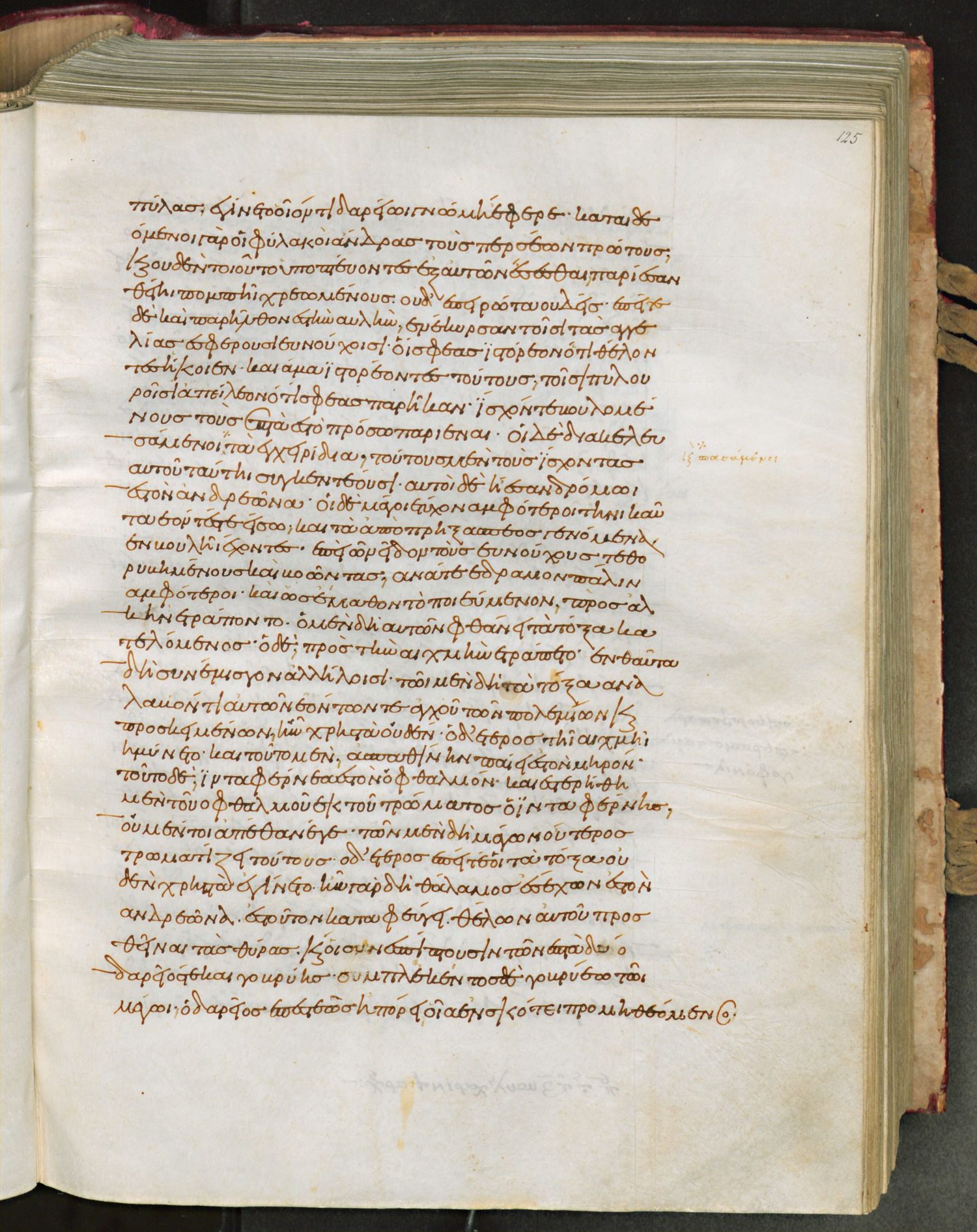
Where on the image
Laur. Plut. 70.3, fol. 125r: Greek here 3.77.1 to 3.78.4. Checked on the image (first and last words read and located in the Greek; each break checked against the neighbouring page): fol. 125r begins ‹πύλας ἐγίνετο οἷόν τι› (3.77.1), ends ‹οἷα ἐν σκότεϊ, προμηθεόμενος› (3.78.4). English here: 3.77.1 to 3.78.5 (Godley's sentences for the sections whose Greek lies mostly on this page).
3.77.1πύλας ἐγίνετο οἷόν τι Δαρείῳ ἡ γνώμη ἔφερε· καταιδεόμενοι γὰρ οἱ φύλακοι ἄνδρας τοὺς Περσέων πρώτους καὶ οὐδὲν τοιοῦτο ὑποπτεύοντες ἐξ αὐτῶν ἔσεσθαι, παρίεσαν θείῃ πομπῇ χρεωμένους, οὐδʼ ἐπειρώτα οὐδείς. 3.77.2ἐπείτε δὲ καὶ παρῆλθον ἐς τὴν αὐλήν, ἐνέκυρσαν τοῖσι τὰς ἀγγελίας ἐσφέρουσι εὐνούχοισι· οἵ σφεας ἱστόρεον ὅ τι θέλοντες ἥκοιεν, καὶ ἅμα ἱστορέοντες τούτους τοῖσι πυλουροῖσι ἀπείλεον ὅτι σφέας παρῆκαν, ἶσχόν τε βουλομένους τοὺς ἑπτὰ ἐς τὸ πρόσω παριέναι. 3.77.3οἳ δὲ διακελευσάμενοι καὶ σπασάμενοι τὰ ἐγχειρίδια τούτους μὲν τοὺς ἴσχοντας αὐτοῦ ταύτῃ συγκεντέουσι, αὐτοὶ δὲ ἤισαν δρόμῳ ἐς τὸν ἀνδρεῶνα. 3.78.1οἱ δὲ Μάγοι ἔτυχον ἀμφότεροι τηνικαῦτα ἐόντες τε ἔσω καὶ τὰ ἀπὸ Πρηξάσπεος γενόμενα ἐν βουλῇ ἔχοντες. ἐπεὶ ὦν εἶδον τοὺς εὐνούχους τεθορυβημένους τε καὶ βοῶντας, ἀνά τε ἔδραμον πάλιν ἀμφότεροι καὶ ὡς ἔμαθον τὸ ποιεύμενον πρὸς ἀλκὴν ἐτράποντο. 3.78.2ὃ μὲν δὴ αὐτῶν φθάνει τὰ τόξα κατελόμενος, ὁ δὲ πρὸς τὴν αἰχμὴν ἐτράπετο. ἐνθαῦτα δὴ συνέμισγον ἀλλήλοισι. τῷ μὲν δὴ τὰ τόξα ἀναλαβόντι αὐτῶν, ἐόντων τε ἀγχοῦ τῶν πολεμίων καὶ προσκειμένων, ἦν χρηστὰ οὐδέν· ὁ δʼ ἕτερος τῇ αἰχμῇ ἠμύνετο καὶ τοῦτο μὲν Ἀσπαθίνην παίει ἐς τὸν μηρόν, τοῦτο δὲ Ἰνταφρένεα ἐς τὸν ὀφθαλμόν· καὶ ἐστερήθη μὲν τοῦ ὀφθαλμοῦ ἐκ τοῦ τρώματος ὁ Ἰνταφρένης, οὐ μέντοι ἀπέθανέ γε. 3.78.3τῶν μὲν δὴ Μάγων οὕτερος τρωματίζει τούτους· ὁ δὲ ἕτερος, ἐπείτε οἱ τὰ τόξα οὐδὲν χρηστὰ ἐγίνετο, ἦν γὰρ δὴ θάλαμος ἐσέχων ἐς τὸν ἀνδρεῶνα, ἐς τοῦτον καταφεύγει, θέλων αὐτοῦ προσθεῖναι τὰς θύρας, καί οἱ συνεσπίπτουσι τῶν ἑπτὰ δύο, Δαρεῖός τε καὶ Γοβρύης. 3.78.4συμπλακέντος δὲ Γοβρύεω τῷ Μάγῳ ὁ Δαρεῖος ἐπεστεὼς ἠπόρεε οἷα ἐν σκότεϊ, προμηθεόμενος
3.77.1When they came to the gate, that happened which Darius had expected; the guards, out of regard for the chief men in Persia, and because they never suspected their design, suffered them without question to pass in under heaven’s guidance. 3.77.2Coming into the court, they met there the eunuchs who carry messages to the king; who asked the seven with what intent they had come, at the same time threatening the gate-wards for letting them pass, and barring the further passage of the seven. 3.77.3These gave each other the word, drew their daggers, and stabbing the eunuchs who barred their way, ran into the men’s apartment. 3.78.1It chanced that both the Magians were within, consulting together on the outcome of Prexaspes’ act. Seeing the eunuchs in confusion and hearing their cries they both sprang back: and when they saw what was afoot they set about defending themselves; 3.78.2one made haste to take down his bow, the other seized his spear; so the seven and the two met in fight. He that had caught up the bow found it availed him nothing, his enemies being so close and pressing him hard; but the other defended himself with his spear, smiting Aspathines in the thigh and Intaphrenes in the eye; Intaphrenes was not slain by the wound, but lost his eye. 3.78.3So these were wounded by one of the Magians; the other, his bow availing him nothing, fled into a chamber adjoining the men’s apartment and would have shut its door. 3.78.4Two of the seven, Darius and Gobryas, hurled themselves into the chamber with him. Gobryas and the Magian grappling together, Darius stood perplexed by the darkness, fearing to strike Gobryas; whereat 3.78.5Gobryas, seeing Darius stand idle, cried to know why he did not strike; “For fear of stabbing you,” quoth Darius. “Nay,” said Gobryas, “thrust with your sword, though it be through both of us.” So Darius thrust with his dagger, and by good luck it was the Magian that he stabbed.
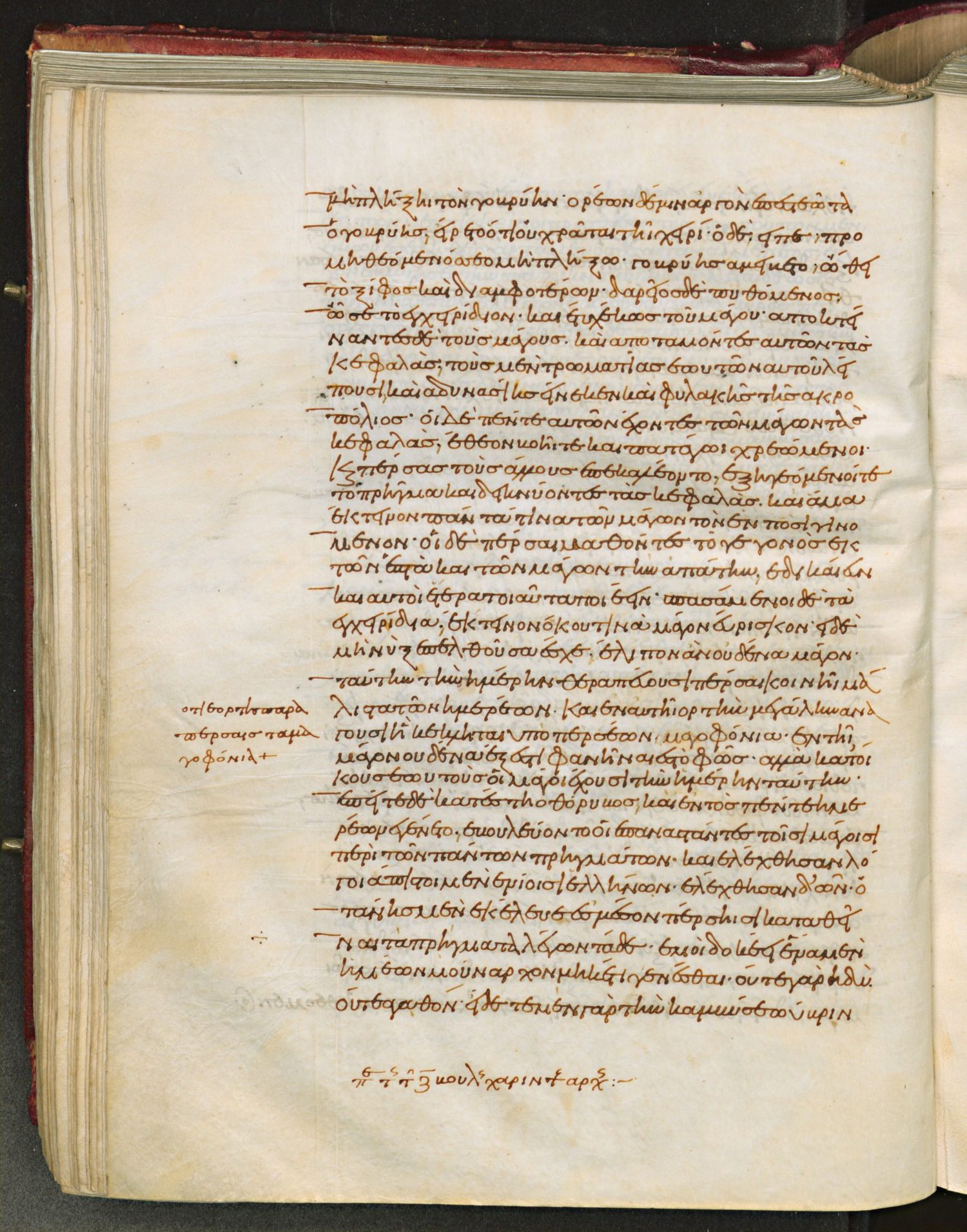
Where on the image
Laur. Plut. 70.3, fol. 125v: Greek here 3.78.4 to 3.79.3. Checked on the image (first and last words read and located in the Greek; each break checked against the neighbouring page): fol. 125v begins ‹μὴ πλήξῃ τὸν Γοβρύην.ὁρέων› (3.78.4), ends ‹γὰρ τὴν Καμβύσεω ὕβριν› (3.80.2). Below the text, a reader's note in the lower margin. English here: 3.79.1 to 3.79.3 (Godley's sentences for the sections whose Greek lies mostly on this page).
3.78.4μὴ πλήξῃ τὸν Γοβρύην. 3.78.5ὁρέων δέ μιν ἀργὸν ἐπεστεῶτα ὁ Γοβρύης εἴρετο ὅ τι οὐ χρᾶται τῇ χειρί· ὁ δὲ εἶπε Προμηθεόμενος σέο, μὴ πλήξω. Γοβρύης δὲ ἀμείβετο ὤθεε τὸ ξίφος καὶ διʼ ἀμφοτέρων. Δαρεῖος δὲ πειθόμενος ὦσέ τε τὸ ἐγχειρίδιον καὶ ἔτυχέ κως τοῦ Μάγου. 3.79.1ἀποκτείναντες δὲ τοὺς Μάγους καὶ ἀποταμόντες αὐτῶν τὰς κεφαλάς, τοὺς μὲν τρωματίας ἑωυτῶν αὐτοῦ λείπουσι καὶ ἀδυνασίης εἵνεκεν καὶ φυλακῆς τῆς ἀκροπόλιος, οἱ δὲ πέντε αὐτῶν ἔχοντες τῶν Μάγων τὰς κεφαλὰς ἔθεον βοῇ τε καὶ πατάγῳ χρεώμενοι, καὶ Πέρσας τοὺς ἄλλους ἐπεκαλέοντο ἐξηγεόμενοί τε τὸ πρῆγμα καὶ δεικνύοντες τὰς κεφαλάς, καὶ ἅμα ἔκτεινον πάντα τινὰ τῶν Μάγων τὸν ἐν ποσὶ γινόμενον. 3.79.2οἱ δὲ Πέρσαι μαθόντες τὸ γεγονὸς ἐκ τῶν ἑπτὰ καὶ τῶν Μάγων τὴν ἀπάτην, ἐδικαίευν καὶ αὐτοὶ ἕτερα τοιαῦτα ποιέειν, σπασάμενοι δὲ τὰ ἐγχειρίδια ἔκτεινον ὅκου τινὰ Μάγον εὕρισκον· εἰ δὲ μὴ νὺξ ἐπελθοῦσα ἔσχε, ἔλιπον ἂν οὐδένα Μάγον. 3.79.3ταύτην τὴν ἡμέρην θεραπεύουσι Πέρσαι κοινῇ μάλιστα τῶν ἡμερέων, καὶ ἐν αὐτῇ ὁρτὴν μεγάλην ἀνάγουσι, ἣ κέκληται ὑπὸ Περσέων μαγοφόνια· ἐν τῇ Μάγον οὐδένα ἔξεστι φανῆναι ἐς τὸ φῶς, ἀλλὰ κατʼ οἴκους ἑωυτοὺς οἱ Μάγοι ἔχουσι τὴν ἡμέρην ταύτην.
3.79.1Having killed the Magians and cut off their heads, they left their wounded where they were, by reason of their infirmity and to guard the citadel; the other five took the Magians’ heads and ran with much shouting and noise, calling all Persians to aid, telling what they had done and showing the heads; at the same time they killed every Magian that came in their way. 3.79.2The Persians, when they heard from the seven what had been done and how the Magians had tricked them, resolved to follow the example set, and drew their daggers and slew all the Magians they could find; and if nightfall had not stayed them they would not have left one Magian alive. 3.79.3This day is the greatest holy day that all Persians alike keep; they celebrate a great festival on it, which they call the Massacre of the Magians; while the festival lasts no Magian may come abroad, but during this day they remain in their houses.
Notes
- Greek: the text printed in A. D. Godley's Loeb edition, via Perseus (tlg0016.tlg001.perseus-grc2). Square brackets mark words the editor considers later additions; [...] marks a gap the editor indicates. Perseus note markers are omitted.
- English: A. D. Godley, Herodotus vol. 2 (1921) (Loeb Classical Library), as transcribed on Wikisource. Godley's footnotes are omitted.
- Section numbers in the English were placed by comparing Godley's text with the Perseus version of his translation; where a section begins inside one of Godley's sentences, the English is kept with the page that holds the start of that sentence.
Cite
Sources
- Source: Florence, Laur. Plut. 70.3 (10th c.) via BML Teca Digitale + Greek of Godley's Loeb (Perseus) + English of A. D. Godley (Loeb, Wikisource) (holding institution)
- Critical edition: Greek of A. D. Godley's Loeb edition (1920-1925), via Perseus
← previous · → next · v cycle view · l back to library