Herodotus, Histories 4.132-142: The Ionians at the Ister bridge; Darius' retreat
Introduction
Herodotus of Halicarnassus wrote the Histories in the third quarter of the 5th century BCE, an inquiry into the deeds of Greeks and barbarians and the causes of the wars between them, later divided into nine books. Book 4 tells of Darius' expedition against the Scythians, with Herodotus' account of Scythia, its peoples, rivers and customs, and of the shape of the world, and of the Persian expedition against Barca, with the history of Cyrene and a description of the peoples of Libya.
The photographs are of Florence, Biblioteca Medicea Laurenziana, Plut. 70.3 (parchment, 10th century, 374 folios, 31 lines a page), Herodotus, Histories (codex A of the editors), the oldest surviving manuscript of the complete Histories, from the Teca Digitale of the Biblioteca Medicea Laurenziana. Each section below is the text of one page, or of the part of a page that falls within these chapters. The first and last words of every page were read on the photograph and located in the Greek, and every page break was checked against the next page; the notes quote these words. Readers' notes in the margins are not part of the text and are mentioned where they occur.
The Greek is the text printed in A. D. Godley's Loeb edition (1920-1925), from Perseus; it is the edited text, not a transcription of the manuscript, whose wording differs in places. The English is Godley's translation as printed, from Wikisource. Godley's English carries only chapter numbers; the section numbers shown in it were placed by comparison with the Perseus version of his translation. Each page's English is cut at the end of one of Godley's sentences, so it can begin or end a few lines away from the Greek of the page; each note gives the exact ranges.
This entry covers chapters 4.132-142, on fol. 179v to 182r.
How was this verified? (Provenance)
Where on the image
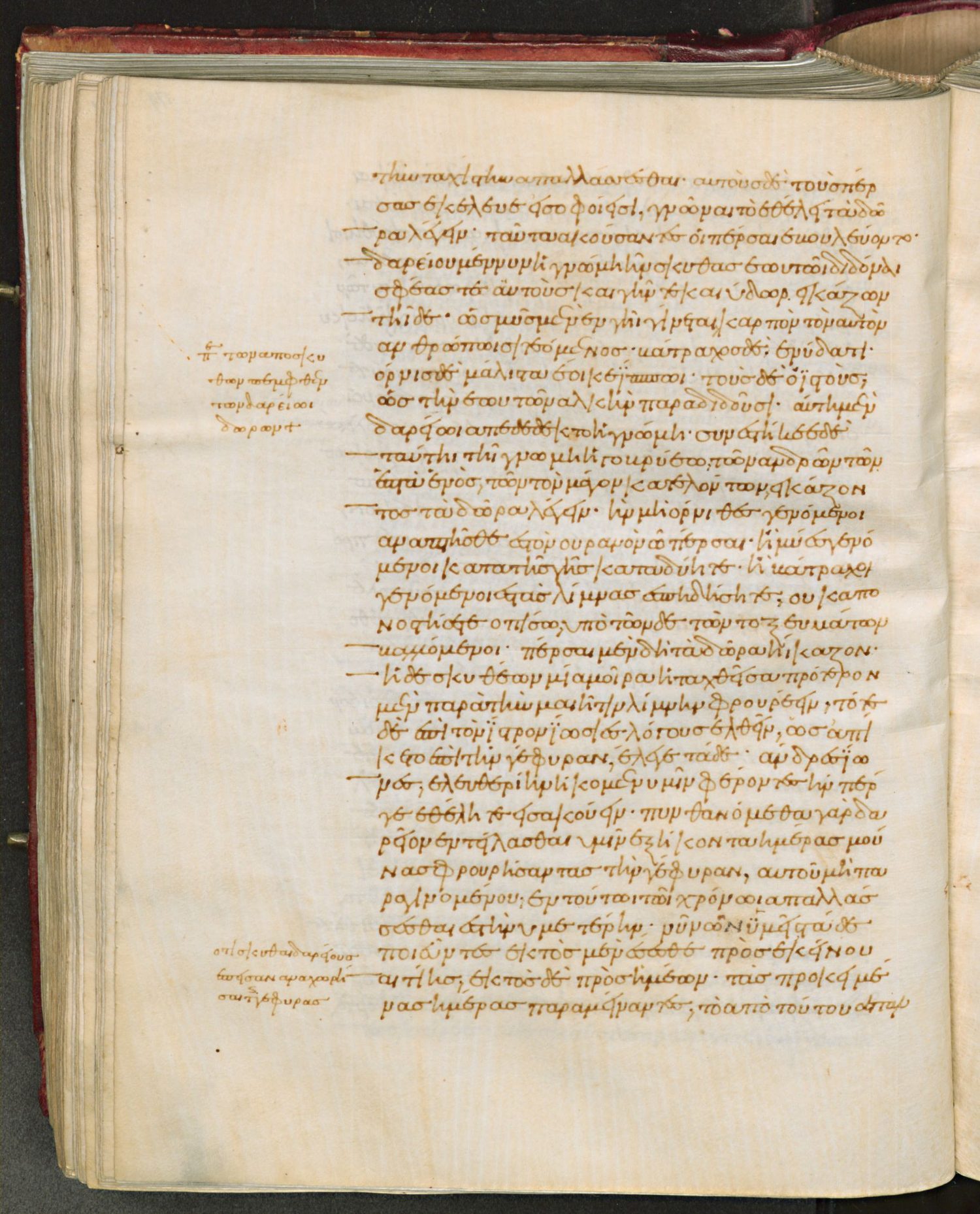
Laur. Plut. 70.3, fol. 179v: Greek here 4.132.1 to 4.133.3. Checked on the image (first and last words read and located in the Greek; each break checked against the neighbouring page): fol. 179v begins ‹τὴν ταχίστην ἀπαλλάσσεσθαι· αὐτοὺς› (4.131.2), ends ‹τὸ ἀπὸ τούτου ἀπαλ-› (4.133.3). English here: 4.132.1 to 4.133.3 (Godley's sentences for the sections whose Greek lies mostly on this page).
4.132.1ταῦτα ἀκούσαντες οἱ Πέρσαι ἐβουλεύοντο. Δαρείου μέν νυν ἡ γνώμη ἦν Σκύθας ἑωυτῷ διδόναι σφέας τε αὐτοὺς καὶ γῆν τε καὶ ὕδωρ, εἰκάζων τῇδε, ὡς μῦς μὲν ἐν γῇ γίνεται καρπὸν τὸν αὐτὸν ἀνθρώπῳ σιτεόμενος, βάτραχος δὲ ἐν ὕδατι, ὄρνις δὲ μάλιστα ἔοικε ἵππῳ, τοὺς δὲ ὀιστοὺς ὡς τὴν ἑωυτῶν ἀλκὴν παραδιδοῦσι. 4.132.2αὕτη μὲν Δαρείῳ ἀπεδέδεκτο ἡ γνώμη. συνεστήκεε δὲ ταύτῃ τῇ γνώμῃ ἡ Γοβρύεω, τῶν ἀνδρῶν τῶν ἑπτὰ ἑνὸς τῶν τὸν Μάγον κατελόντων, εἰκάζοντος τὰ δῶρα λέγειν 4.132.3ἢν μὴ ὄρνιθες γενόμενοι ἀναπτῆσθε ἐς τὸν οὐρανόν, ὦ Πέρσαι, ἢ μύες γενόμενοι κατὰ τῆς γῆς καταδύητε, ἢ βάτραχοι γενόμενοι ἐς τὰς λίμνας ἐσπηδήσητε, οὐκ ἀπονοστήσετε ὀπίσω ὑπὸ τῶνδε τῶν τοξευμάτων βαλλόμενοι. 4.133.1Πέρσαι μὲν δὴ τὰ δῶρα εἴκαζον. ἡ δὲ Σκυθέων μία μοῖρα ἡ ταχθεῖσα πρότερον μὲν παρὰ τὴν Μαιῆτιν λίμνην φρουρέειν, τότε δὲ ἐπὶ τὸν Ἴστρον Ἴωσι ἐς λόγους ἐλθεῖν, ὡς ἀπίκετο ἐπὶ τὴν γέφυραν, ἔλεγε τάδε. 4.133.2ἄνδρες Ἴωνες, ἐλευθερίην ἥκομεν ὑμῖν φέροντες, ἤν πέρ γε ἐθέλητε ἐσακούειν. πυνθανόμεθα γὰρ Δαρεῖον ἐντείλασθαι ὑμῖν ἑξήκοντα ἡμέρας μούνας φρουρήσαντας τὴν γέφυραν, αὐτοῦ μὴ παραγενομένου ἐν τούτῳ τῷ χρόνῳ, ἀπαλλάσσεσθαι ἐς τὴν ὑμετέρην. 4.133.3νῦν ὦν ὑμεῖς τάδε ποιεῦντες ἐκτὸς μὲν ἔσεσθε πρὸς ἐκείνου αἰτίης, ἐκτὸς δὲ πρὸς ἡμέων· τὰς προκειμένας ἡμέρας παραμείναντες τὸ ἀπὸ τούτου ἀπαλλάσσεσθε.
4.132.1The Persians hearing and taking counsel, Darius’ judgment was that the Scythians were surrendering to him themselves and their earth and their water; for he reasoned that a mouse is a creature found in the earth and eating the same produce as men, and a frog is a creature of the water and a bird most like to a horse; and the arrows (said he) signified that the Scythians surrendered their fighting power. 4.132.2This was the opinion declared by Darius; but the opinion of Gobryas, one of the seven who had slain the Magian, was contrary to it. 4.132.3He reasoned that the meaning of the gifts was, “Unless you become birds Persians, and fly up into the sky, or mice and hide you in the earth, or frogs and leap into the lakes, you will be shot by these arrows and never return home.” 4.133.1Thus the Persians reasoned concerning the gifts. But when the first division of the Scythians came to the bridge—that division which had first been appointed to stand on guard by the Maeetian lake and had now been sent to the Ister to speak with the Ionians—they said, “ 4.133.2Ionians, we are come to bring you freedom, if you will but listen to us. We learn that Darius has charged you to guard the bridge for sixty days only, and if he comes not within that time then to go away to your homes. 4.133.3Now therefore do that whereby you will be guiltless in his eyes as in ours: abide here for the days appointed, and after that depart.” So the Ionians promised to do this, and the Scythians made their way back with all speed.
Where on the image
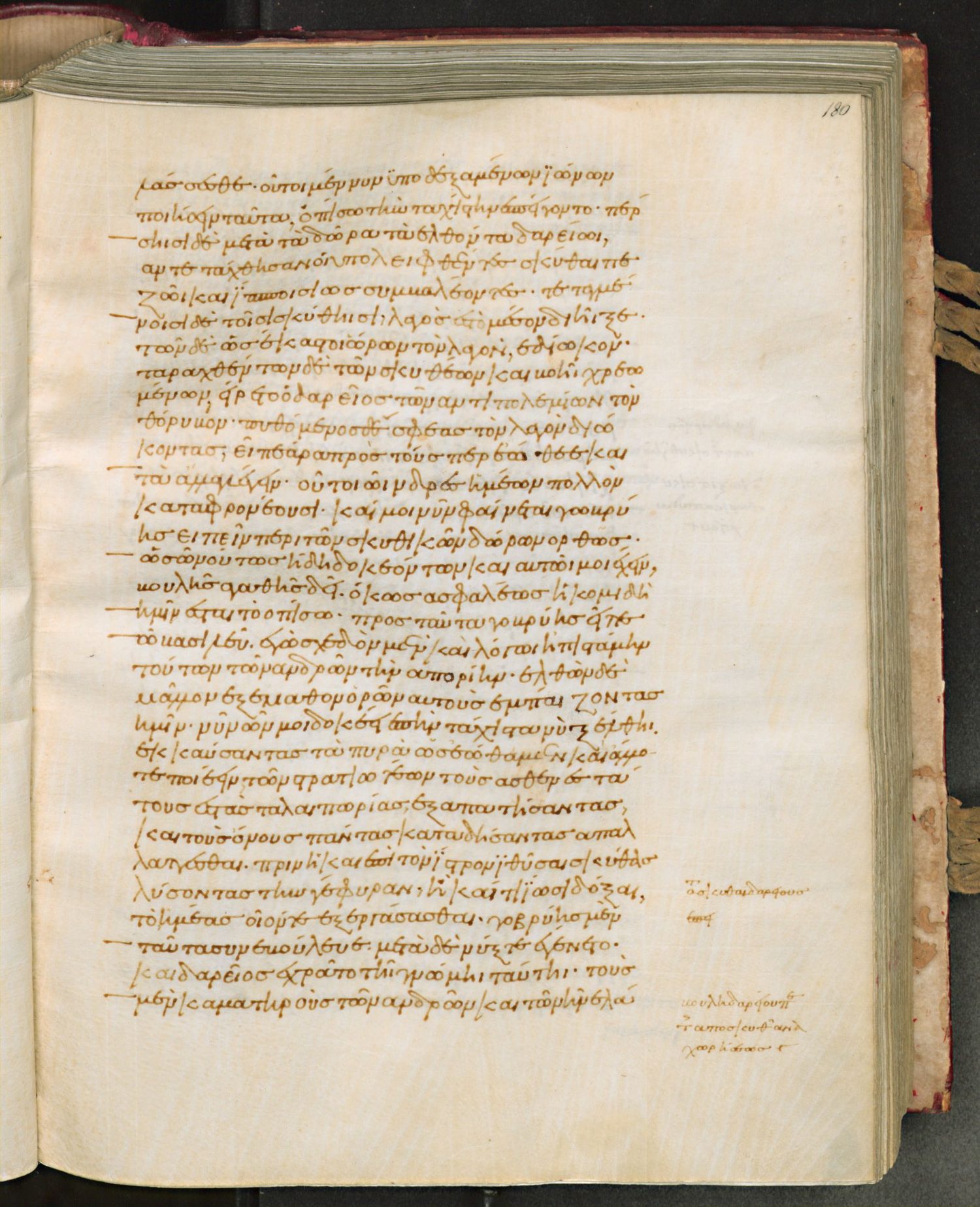
Laur. Plut. 70.3, fol. 180r: Greek here 4.133.3 to 4.135.1. Checked on the image (first and last words read and located in the Greek; each break checked against the neighbouring page): fol. 180r begins ‹-λάσσεσθε. οὗτοι μέν νυν› (4.133.3), ends ‹καὶ τῶν ἦν ἐλά-› (4.135.1). The word ‹ἀπαλλάσσεσθε.› is divided between fol. 179v and fol. 180r; it is given with fol. 179v. English here: 4.134.1 to 4.135.1 (Godley's sentences for the sections whose Greek lies mostly on this page).
4.133.3οὗτοι μέν νυν ὑποδεξαμένων Ἰώνων ποιήσειν ταῦτα ὀπίσω τὴν ταχίστην ἐπείγοντο. 4.134.1Πέρσῃσι δὲ μετὰ τὰ δῶρα ἐλθόντα Δαρείῳ ἀντετάχθησαν οἱ ὑπολειφθέντες Σκύθαι πεζῷ καὶ ἵπποισι ὡς συμβαλέοντες. τεταγμένοισι δὲ τοῖσι Σκύθῃσι λαγὸς ἐς τὸ μέσον διήιξε. τῶν δὲ ὡς ἕκαστοι ὥρων τὸν λαγὸν ἐδίωκον. ταραχθέντων δὲ τῶν Σκυθέων καὶ βοῇ χρεωμένων, εἴρετο ὁ Δαρεῖος τῶν ἀντιπολεμίων τὸν θόρυβον· πυθόμενος δὲ σφέας τὸν λαγὸν διώκοντας, εἶπε ἄρα πρὸς τούς περ ἐώθεε καὶ τὰ ἄλλα λέγειν 4.134.2οὗτοι ὧνδρες ἡμέων πολλὸν καταφρονέουσι, καί μοι νῦν φαίνεται Γοβρύης εἶπαι περὶ τῶν Σκυθικῶν δώρων ὀρθῶς. ὡς ὦν οὕτω ἤδη δοκεόντων καὶ αὐτῷ μοι ἔχειν, βουλῆς ἀγαθῆς δεῖ, ὅκως ἀσφαλέως ἡ κομιδὴ ἡμῖν ἔσται τὸ ὀπίσω. πρὸς ταῦτα Γοβρύης εἶπε ὦ βασιλεῦ, ἐγὼ σχεδὸν μὲν καὶ λόγῳ ἠπιστάμην τούτων τῶν ἀνδρῶν τὴν ἀπορίην, ἐλθὼν δὲ μᾶλλον ἐξέμαθον, ὁρέων αὐτοὺς ἐμπαίζοντας ἡμῖν. 4.134.3νῦν ὦν μοι δοκέει, ἐπεὰν τάχιστα νὺξ ἐπέλθῃ, ἐκκαύσαντας τὰ πυρὰ ὡς ἐώθαμεν καὶ ἄλλοτε ποιέειν, τῶν στρατιωτέων τοὺς ἀσθενεστάτους ἐς τὰς ταλαιπωρίας ἐξαπατήσαντας καὶ τοὺς ὄνους πάντας καταδήσαντας ἀπαλλάσσεσθαι, πρὶν ἢ καὶ ἐπὶ τὸν Ἴστρον ἰθῦσαι Σκύθας λύσοντας τὴν γέφυραν, ἢ καί τι Ἴωσι δόξαι τὸ ἡμέας οἷον τε ἔσται ἐξεργάσασθαι. 4.135.1Γοβρύης μὲν ταῦτα συνεβούλευε. μετὰ δὲ νύξ τε ἐγίνετο καὶ Δαρεῖος ἐχρᾶτο τῇ γνώμῃ ταύτῃ· τοὺς μὲν καματηροὺς τῶν ἀνδρῶν καὶ τῶν ἦν ἐλάχιστος
4.134.1But after the sending of the gifts to Darius, the Scythians who had remained there came out with foot and horse and offered battle to the Persians. But when the Scythian ranks were arrayed, a hare ran out between the armies; and every Scythian that saw it gave chase. So there was confusion and shouting among the Scythians; Darius asked what the enemy meant by this clamour; and when he heard that they were chasing the hare, then said he (it would seem) to those wherewith he was ever wont to speak, “ 4.134.2These fellows hold us in deep contempt; and I think now that Gobryas’ saying concerning the Scythian gifts was true. Seeing therefore that my own judgment of the matter is like his, we need to take sage counsel, whereby we shall have a safe return out of the country.” To this said Gobryas: “Sire, reason alone wellnigh showed me how hard it would be to deal with these Scythians; but when I came I was made the better aware of it, seeing that they do but make a sport of us. 4.134.3Now therefore my counsel is, that at nightfall we kindle our camp-fires according to our wont at other times, that we deceive those in our army who are least strong to bear hardship, and tether here all our asses, and so ourselves depart, before the Scythians can march straight to the Ister to break the bridge, or the Ionians take some resolve whereby we may well be ruined.” 4.135.1This was Gobryas’ advice, and at nightfall Darfus followed it. He left there in the camp the men who were worn out, and those whose loss imported least to him, and all the asses too tethered.
Where on the image
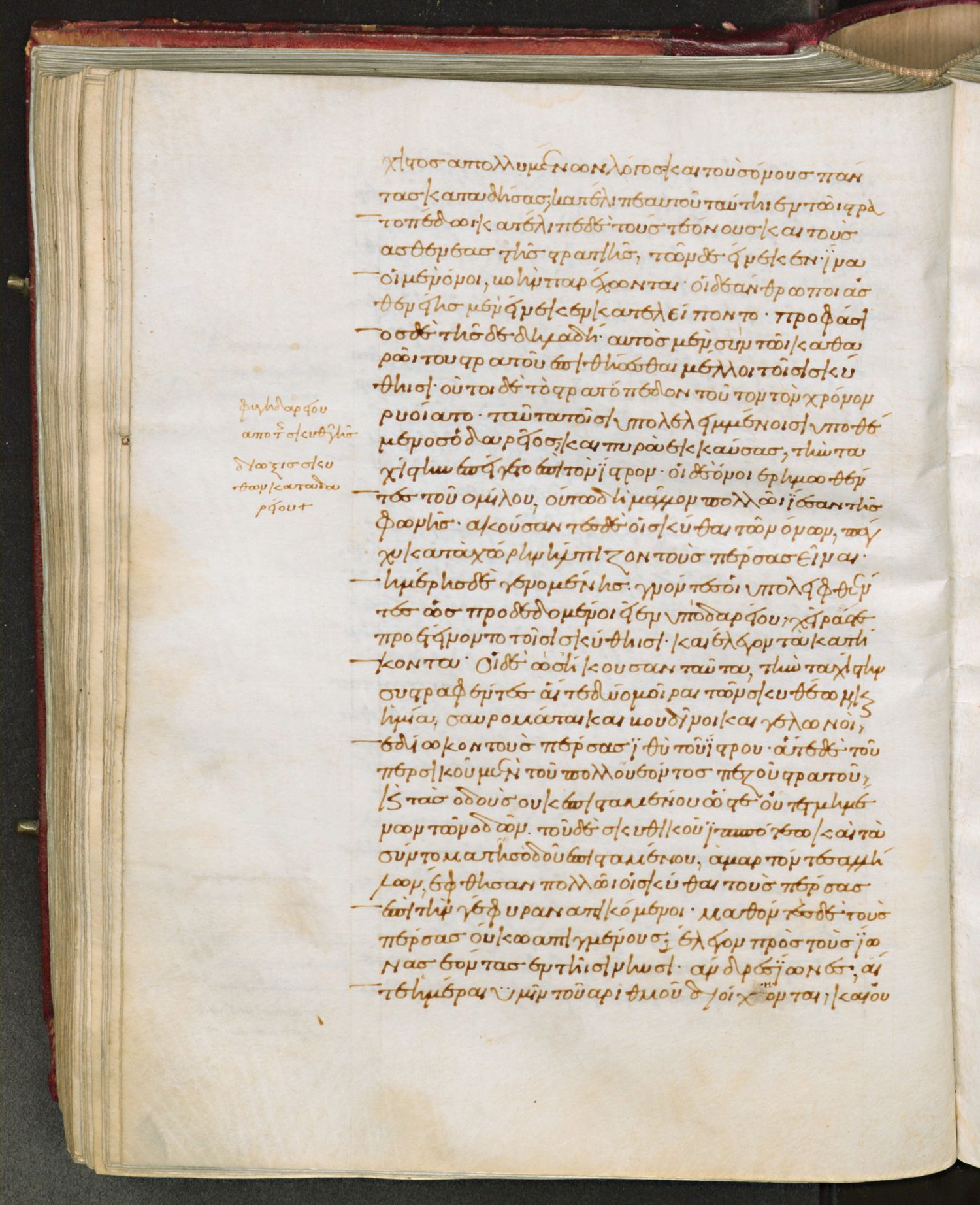
Laur. Plut. 70.3, fol. 180v: Greek here 4.135.1 to 4.136.3. Checked on the image (first and last words read and located in the Greek; each break checked against the neighbouring page): fol. 180v begins ‹-χιστος ἀπολλυμένων λόγος, καὶ› (4.135.1), ends ‹ἀριθμοῦ διοίχηνται καὶ οὐ› (4.136.3). The word ‹ἐλάχιστος› is divided between fol. 180r and fol. 180v; it is given with fol. 180r. English here: 4.135.2 to 4.136.3 (Godley's sentences for the sections whose Greek lies mostly on this page).
4.135.1ἀπολλυμένων λόγος, καὶ τοὺς ὄνους πάντας καταδήσας κατέλιπε αὐτοῦ ἐν τῷ στρατοπέδω. 4.135.2κατέλιπε δὲ τούς τε ὄνους καὶ τοὺς ἀσθενέας τῆς στρατιῆς τῶνδε εἵνεκεν, ἵνα οἱ μὲν ὄνοι βοὴν παρέχωνται· οἱ δὲ ἄνθρωποι ἀσθενείης μὲν εἵνεκεν κατελείποντο, προφάσιος δὲ τῆσδε δηλαδή, ὡς αὐτὸς μὲν σὺν τῷ καθαρῷ τοῦ στρατοῦ ἐπιθήσεσθαι μέλλοι τοῖσι Σκύθῃσι, οὗτοι δὲ τὸ στρατόπεδον τοῦτον τὸν χρόνον ῥυοίατο. 4.135.3ταῦτα τοῖσι ὑπολελειμμένοισι ὑποθέμενος ὁ Δαρεῖος καὶ πυρὰ ἐκκαύσας τὴν ταχίστην ἐπείγετο ἐπὶ τὸν Ἴστρον. οἱ δὲ ὄνοι ἐρημωθέντες τοῦ ὁμίλου οὕτω δὴ μᾶλλον πολλῷ ἵεσαν τῆς φωνῆς· ἀκούσαντες δὲ οἱ Σκύθαι τῶν ὄνων πάγχυ κατὰ χώρην ἤλπιζον τοὺς Πέρσας εἶναι. 4.136.1ἡμέρης δὲ γενομένης γνόντες οἱ ὑπολειφθέντες ὡς προδεδομένοι εἶεν ὑπὸ Δαρείου, χεῖράς τε προετείνοντο τοῖσι Σκύθῃσι καὶ ἔλεγον τὰ κατήκοντα· οἳ δὲ ὡς ἤκουσαν ταῦτα τὴν ταχίστην συστραφέντες, αἵ τε δύο μοῖραι τῶν Σκυθέων καὶ ἡ μία καὶ Σαυρομάται καὶ Βουδῖνοι καὶ Γελωνοί, ἐδίωκον τοὺς Πέρσας ἰθὺ τοῦ Ἴστρου. 4.136.2ἅτε δὲ τοῦ Περσικοῦ μὲν τοῦ πολλοῦ ἐόντος πεζοῦ στρατοῦ καὶ τὰς ὁδοὺς οὐκ ἐπισταμένου, ὥστε οὐ τετμημενέων τῶν ὁδῶν, τοῦ δὲ Σκυθικοῦ ἱππότεω καὶ τὰ σύντομα τῆς ὁδοῦ ἐπισταμένου, ἁμαρτόντες ἀλλήλων, ἔφθησαν πολλῷ οἱ Σκύθαι τοὺς Πέρσας ἐπὶ τὴν γέφυραν ἀπικόμενοι. 4.136.3μαθόντες δὲ τοὺς Πέρσας οὔκω ἀπιγμένους ἔλεγον πρὸς τοὺς Ἴωνας ἐόντας ἐν τῇσι νηυσί ἄνδρες Ἴωνες, αἵ τε ἡμέραι ὑμῖν τοῦ ἀριθμοῦ διοίχηνται καὶ οὐ
4.135.2The reason of his leaving the asses, and the infirm among his soldiers, was, as regarding the asses, that they might bray; as to the men, they were left by reason of their infirmity, but his pretext was, forsooth, that they should guard the camp while he attacked the Scythians with the sound part of his army. 4.135.3Giving this charge to those who were left behind, and lighting camp-fires, Darius made all speed to reach the Ister. When the asses found themselves deserted by the multitude, they brayed much the louder for that; and the Scythians by hearing them were fully persuaded that the Persians were still in the same place. 4.136.1But when day dawned the men left behind perceived that Darius had played them false, and they held out their hands to the Scythians and explained their position; who, when they heard, gathered their power with all speed, both the two divisions of their host and the one division that was with the Sauromatae and Budini and Geloni, and made straight for the Ister in pursuit of the Persians. 4.136.2But seeing that the Persian army was for the most part of footmen and knew not the roads (these not being marked), whereas the Scythians were horsemen and knew the short cuts, they kept wide of each other, and the Scythians came to the bridge much before the Persians. 4.136.3There, perceiving that the Persians were not yet come, they said to the Ionians, who were in their ships, “Now, Ionians, the numbered days are past and you do wrongly to remain still here.
Where on the image
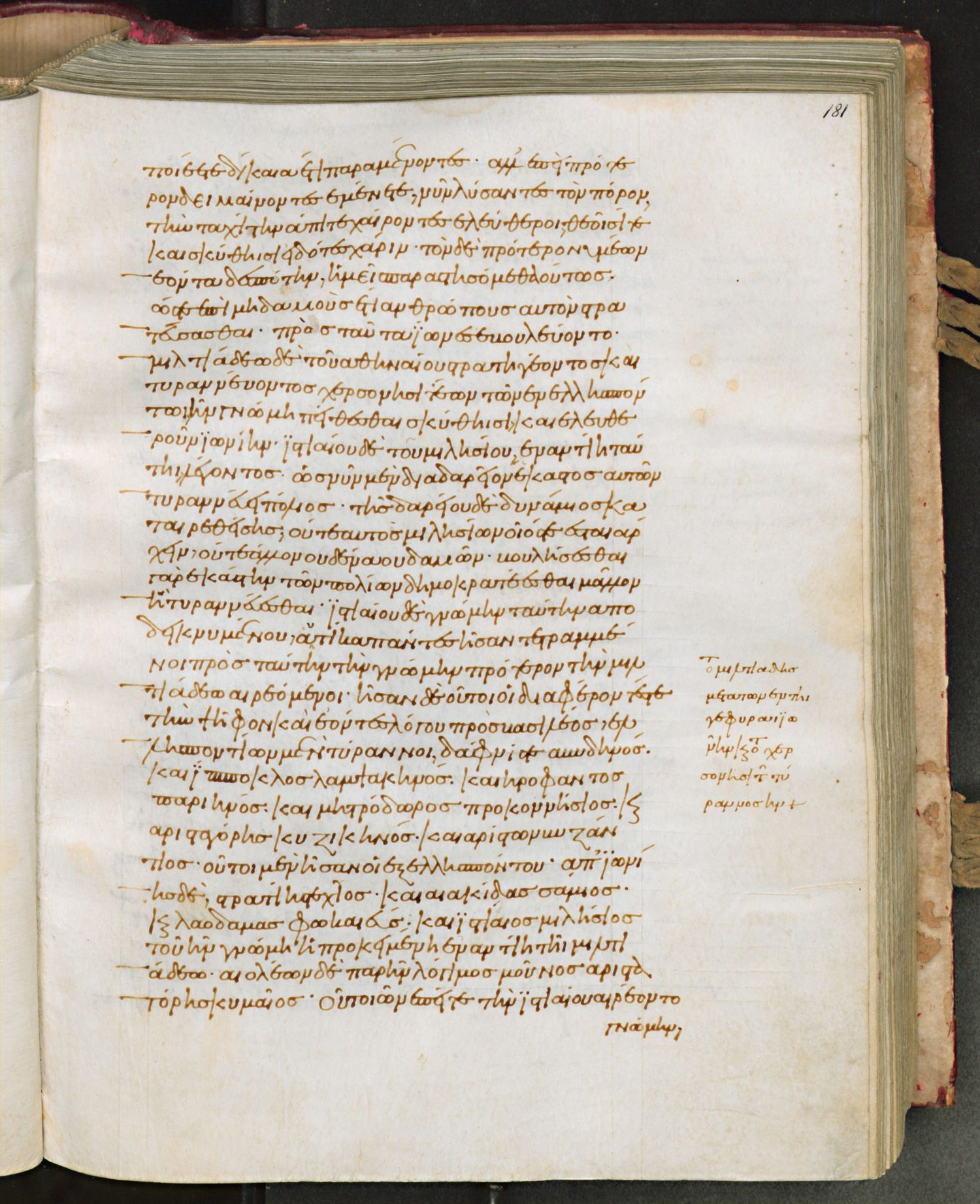
Laur. Plut. 70.3, fol. 181r: Greek here 4.136.3 to 4.139.1. Checked on the image (first and last words read and located in the Greek; each break checked against the neighbouring page): fol. 181r begins ‹ποιέετε δίκαια ἔτι παραμένοντες.ἀλλʼ› (4.136.3), ends ‹τὴν Ἱστιαίου αἱρέοντο γνώμην› (4.139.1). The last line holds only γνώμην. English here: 4.136.4 to 4.138.2 (Godley's sentences for the sections whose Greek lies mostly on this page).
4.136.3ποιέετε δίκαια ἔτι παραμένοντες. 4.136.4ἀλλʼ ἐπεὶ πρότερον δειμαίνοντες ἐμένετε, νῦν λύσαντες τὸν πόρον τὴν ταχίστην ἄπιτε χαίροντες ἐλεύθεροι, θεοῖσί τε καὶ Σκύθῃσι εἰδότες χάριν. τὸν δὲ πρότερον ἐόντα ὑμέων δεσπότην ἡμεῖς παραστησόμεθα οὕτω ὥστε ἐπὶ μηδαμοὺς ἔτι ἀνθρώπους αὐτὸν στρατεύσασθαι. 4.137.1πρὸς ταῦτα Ἴωνες ἐβουλεύοντο. Μιλτιάδεω μὲν τοῦ Ἀθηναίου, στρατηγέοντος καὶ τυραννεύοντος Χερσονησιτέων τῶν ἐν Ἑλλησπόντῳ, ἦν γνώμη πείθεσθαι Σκύθῃσι καὶ ἐλευθεροῦν Ἰωνίην, 4.137.2Ἱστιαίου δὲ τοῦ Μιλησίου ἐναντίη ταύτῃ, λέγοντος ὡς νῦν μὲν διὰ Δαρεῖον ἕκαστος αὐτῶν τυραννεύει πόλιος· τῆς Δαρείου δὲ δυνάμιος καταιρεθείσης οὔτε αὐτὸς Μιλησίων οἷος τε ἔσεσθαι ἄρχειν οὔτε ἄλλον οὐδένα οὐδαμῶν· βουλήσεσθαι γὰρ ἑκάστην τῶν πολίων δημοκρατέεσθαι μᾶλλον ἢ τυραννεύεσθαι. 4.137.3Ἰστιαίου δὲ γνώμην ταύτην ἀποδεικνυμένου αὐτίκα πάντες ἦσαν τετραμμένοι πρὸς ταύτην τὴν γνώμην, πρότερον τὴν Μιλτιάδεω αἱρεόμενοι. 4.138.1ἦσαν δὲ οὗτοι οἱ διαφέροντές τε τὴν ψῆφον καὶ ἐόντες λόγου πρὸς βασιλέος, Ἑλλησποντίων μὲν τύραννοι Δάφνις τε Ἀβυδηνὸς καὶ Ἵπποκλος Λαμψακηνὸς καὶ Ἡρόφαντος Παριηνὸς καὶ Μητρόδωρος Προκοννήσιος καὶ Ἀρισταγόρης Κυζικηνὸς καὶ Ἀρίστων Βυζάντιος. 4.138.2οὗτοι μὲν ἦσαν οἱ ἐξ Ἑλλησπόντου, ἀπʼ Ἰωνίης δὲ Στράττις τε Χῖος καὶ Αἰάκης Σάμιος καὶ Λαοδάμας Φωκαιεὺς καὶ Ἱστιαῖος Μιλήσιος, τοῦ ἦν γνώμη ἡ προκειμένη ἐναντίη τῇ Μιλτιάδεω. Αἰολέων δὲ παρῆν λόγιμος μοῦνος Ἀρισταγόρης, Κυμαῖος. 4.139.1οὗτοι ὦν ἐπείτε τὴν Ἱστιαίου αἱρέοντο γνώμην,
4.136.4Nay—for it is fear which has ere now kept you from departing—now break the bridge with all speed and go your ways in freedom and happiness, thanking the gods and the Scythians. As for him that was once your master, we will leave him in such plight that never again will he lead his army against any nation.” 4.137.1Thereupon the Ionians held a council. Miltiades the Athenian, general and despot of the Chersonesites of the Hellespont, gave counsel that they should do as the Scythians said and set Ionia free. 4.137.2But Histiaeus of Miletus held a contrary opinion. “Now,” said he, “it is by help of Darius that each of us is sovereign of his city; if Darius’ power be overthrown, we shall no longer be able to rule, neither I in Miletus nor any of you elsewhere; for all the cities will choose democracy rather than despotism.” 4.137.3When Histiaeus declared this opinion, all of them straightway inclined to it, albeit they had first sided with Miltiades. 4.138.1Those standing high in Darius’ favour who gave their vote were Daphnis of Abydos, Hippoclus of Lampsacus, Herophantus of Parium, Metrodorus of Proconnesus, Aristagoras of Cyzicus, Ariston of Byzantium, 4.138.2all from the Hellespont and despots of cities there; and from Ionia, Strattis of Chios, Aiaces of Samos, Laodamas of Phocaea, and Histiaeus of Miletus who opposed the plan of Miltiades. As for the Aeolians, their only notable man present was Aristagoras of Cymae.
Where on the image
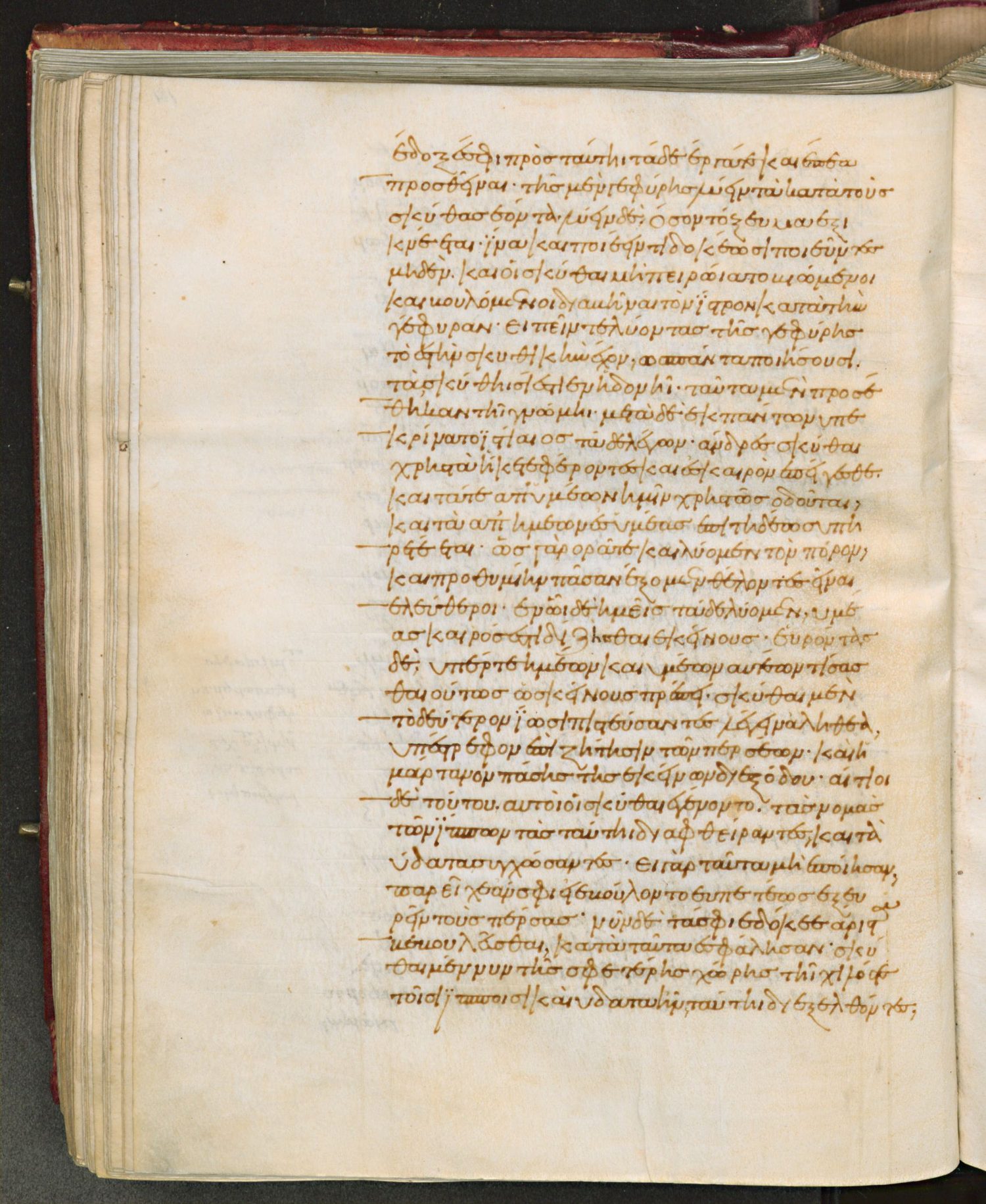
Laur. Plut. 70.3, fol. 181v: Greek here 4.139.1 to 4.140.3. Checked on the image (first and last words read and located in the Greek; each break checked against the neighbouring page): fol. 181v begins ‹ἔδοξε σφι πρὸς ταύτῃ› (4.139.1), ends ‹ὕδατα ἦν, ταύτῃ διεξιόντες› (4.140.3). English here: 4.139.1 to 4.140.2 (Godley's sentences for the sections whose Greek lies mostly on this page).
4.139.1ἔδοξε σφι πρὸς ταύτῃ τάδε ἔργα τε καὶ ἔπεα προσθεῖναι, τῆς μὲν γεφύρης λύειν τὰ κατὰ τοὺς Σκύθας ἐόντα, λύειν δὲ ὅσον τόξευμα ἐξικνέεται, ἵνα καὶ ποιέειν τι δοκέωσι ποιεῦντες μηδὲν καὶ οἱ Σκύθαι μὴ πειρῴατο βιώμενοι καὶ βουλόμενοι διαβῆναι τὸν Ἴστρον κατὰ τὴν γέφυραν, εἰπεῖν τε λύοντας τῆς γεφύρης τὸ ἐς τὴν Σκυθικὴν ἔχον ὡς πάντα ποιήσουσι τὰ Σκύθησι ἐστὶ ἐν ἡδονῇ. 4.139.2ταῦτα μὲν προσέθηκαν τῇ γνώμῃ. μετὰ δὲ ἐκ πάντων ὑπεκρίνατο Ἱστιαῖος τάδε λέγων. Ἄνδρες Σκύθαι, χρηστὰ ἥκετε φέροντες καὶ ἐς καιρὸν ἐπείγεσθε· καὶ τά τε ἀπʼ ὑμέων ἡμῖν χρηστῶς ὁδοῦται καὶ τὰ ἀπʼ ἡμέων ἐς ὑμέας ἐπιτηδέως ὑπηρετέεται. ὡς γὰρ ὁρᾶτε, καὶ λύομεν τὸν πόρον καὶ προθυμίην πᾶσαν ἕξομεν θέλοντες εἶναι ἐλεύθεροι. 4.139.3ἐν ᾧ δὲ ἡμεῖς τάδε λύομεν, ὑμέας καιρός ἐστι δίζησθαι ἐκείνους, εὑρόντας δὲ ὑπέρ τε ἡμέων καὶ ὑμέων αὐτῶν τίσασθαι οὕτω ὡς κείνους πρέπει. 4.140.1Σκύθαι μὲν τὸ δεύτερον Ἴωσι πιστεύσαντες λέγειν ἀληθέα ὑπέστρεφον ἐπὶ ζήτησιν τῶν Περσέων, καὶ ἡμάρτανον πάσης τῆς ἐκείνων διεξόδου. αἴτιοι δὲ τούτου αὐτοὶ οἱ Σκύθαι ἐγένοντο,τὰς νομὰς τῶν ἵππων τὰς ταύτῃ διαφθείραντες καὶ τὰ ὕδατα συγχώσαντες. 4.140.2εἰ γὰρ ταῦτα μὴ ἐποίησαν, παρεῖχε ἄν σφι, εἰ ἐβούλοντο, εὐπετέως ἐξευρεῖν τοὺς Πέρσας. νῦν δὲ τά σφι ἐδόκεε ἄριστα βεβουλεῦσθαι, κατὰ ταῦτα ἐσφάλησαν. 4.140.3Σκύθαι μέν νυν τῆς σφετέρης χώρης τῇ χιλός τε τοῖσι ἵπποισι καὶ ὕδατα ἦν, ταύτῃ διεξιόντες
4.139.1These then chose to follow Histiaeus’ counsel, and resolved to make it good by act and word: to break as much of the bridge as reached a bowshot from the Scythian bank, that so they might seem to do somewhat when in truth they did nothing, and that the Scythians might not essay to force a passage across the Ister by the bridge; and to say while they broke the portion of the bridge on the Scythian side, that they would do all that the Scythians desired. 4.139.2This resolve they added to their decision; and presently Histiaeus answered for them all, and said, “You have brought us good advice, Scythians, and your zeal is well timed; you do your part in guiding us aright and we do ours in serving your ends as need requires; for as you see, we are breaking the passage, and will use all diligence, so much do we desire our freedom. 4.139.3But while we break this bridge, now is the time for you to seek out the Persians, and when you have found them to take such vengeance on our and your behalf as they deserve.” 4.140.1So the Scythians trusted the Ionians’ word once more, and turned back to seek the Persians; but they mistook the whole way whereby their enemies returned. For this the Scythians themselves were to blame, inasmuch as they had destroyed the horses’ grazing-grounds in that region and choked the wells. 4.140.2Had they not so done, they could readily have found the Persians if they would. But as it was, that part of their plan which they had thought the best was the very cause of their ill-success.
Where on the image
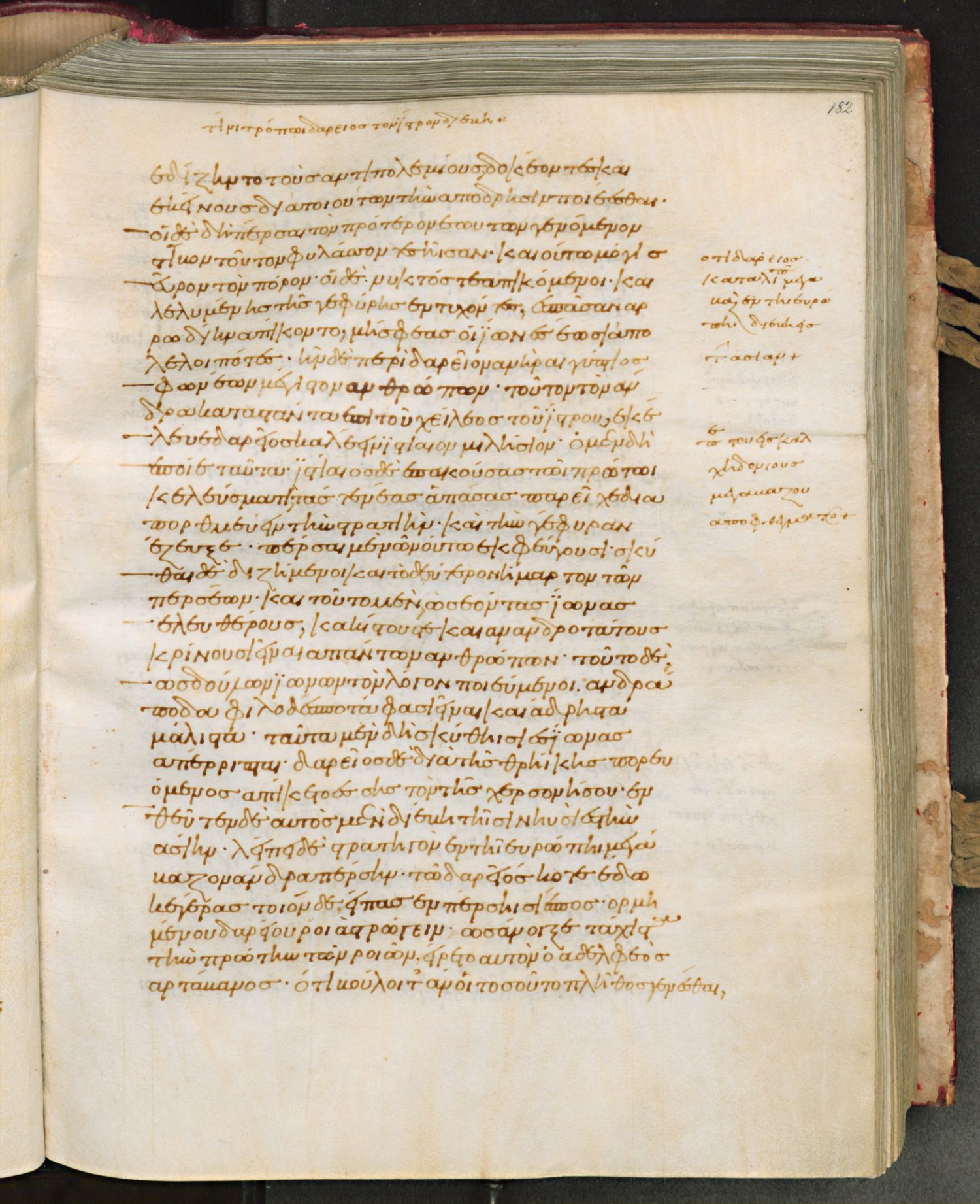
Laur. Plut. 70.3, fol. 182r: Greek here 4.140.3 to 4.142.1. Checked on the image (first and last words read and located in the Greek; each break checked against the neighbouring page): fol. 182r begins ‹ἐδίζηντο τοὺς ἀντιπολεμίους, δοκέοντες› (4.140.3), ends ‹οἱ τοσοῦτο πλῆθος γενέσθαι› (4.143.2). A reader's heading on how Darius crossed the Ister stands in the upper margin. English here: 4.140.3 to 4.142.1 (Godley's sentences for the sections whose Greek lies mostly on this page).
4.140.3ἐδίζηντο τοὺς ἀντιπολεμίους, δοκέοντες καὶ ἐκείνους διὰ τοιούτων τὴν ἀπόδρησιν ποιέεσθαι. οἱ δὲ δὴ Πέρσαι τὸν πρότερον ἑωυτῶν γενόμενον στίβον, τοῦτον φυλάσσοντες ἤισαν, καὶ οὕτω μόγις εὗρον τὸν πόρον. 4.140.4οἷα δὲ νυκτός τε ἀπικόμενοι καὶ λελυμένης τῆς γεφύρης ἐντυχόντες, ἐς πᾶσαν ἀρρωδίην ἀπίκοντο μή σφεας οἱ Ἴωνες ἔωσι ἀπολελοιπότες. 4.141.1ἦν δὲ περὶ Δαρεῖον ἀνὴρ Αἰγύπτιος φωνέων μέγιστον ἀνθρώπων· τοῦτον τὸν ἄνδρα καταστάντα ἐπὶ τοῦ χείλεος τοῦ Ἴστρου ἐκέλευε Δαρεῖος καλέειν Ἱστιαῖον Μιλήσιον. ὃ μὲν δὴ ἐποίεε ταῦτα, Ἱστιαῖος δὲ ἐπακούσας τῷ πρώτῳ κελεύσματι τάς τε νέας ἁπάσας παρεῖχε διαπορθμεύειν τὴν στρατιὴν καὶ τὴν γέφυραν ἔζευξε. 4.142.1Πέρσαι μὲν ὦν οὕτω ἐκφεύγουσι Σκύθαι δὲ διζήμενοι καὶ τὸ δεύτερον ἥμαρτον τῶν Περσέων, καὶ τοῦτο μὲν ὡς ἐόντας Ἴωνας ἐλευθέρους κακίστους τε καὶ ἀνανδροτάτους κρίνουσι εἶναι ἁπάντων ἀνθρώπων, τοῦτο δέ, ὡς δούλων ἐόντων τὸν λόγον ποιεύμενοι, ἀνδράποδα φιλοδέσποτα φασὶ εἶναι καὶ ἄδρηστα. ταῦτα μὲν δὴ Σκύθῃσι ἐς Ἴωνας ἀπέρριπται.
4.140.3So the Scythians went searching for their enemies through the parts of their own country where there was provender for horses and water, supposing that they too were aiming at such places in their flight; but the Persians ever kept to their own former tracks, and so with much ado they found the passage of the river. 4.140.4But inasmuch as they came to it at night and found the bridge broken, they were in great terror lest the Ionians had abandoned them. 4.141.1There was with Darius an Egyptian, whose voice was the loudest in the world; Darius bade this man stand on the Ister bank and call to Histiaeus the Milesian. This the Egyptian did; Histiaeus heard and obeyed the first shout, and sent all the ships to ferry the army over, and made the bridge anew. 4.142.1Thus the Persians escaped. The Scythians sought the Persians, but missed them again. Their judgment of the Ionians is that if they are regarded as free men they are the basest cravens in the world; but if they are to be reckoned as slaves, none would love their masters more, or less desire to escape. Thus have the Scythians taunted the Ionians.
Notes
- Greek: the text printed in A. D. Godley's Loeb edition, via Perseus (tlg0016.tlg001.perseus-grc2). Square brackets mark words the editor considers later additions; [...] marks a gap the editor indicates. Perseus note markers are omitted.
- English: A. D. Godley, Herodotus vol. 2 (1921) (Loeb Classical Library), as transcribed on Wikisource. Godley's footnotes are omitted.
- Section numbers in the English were placed by comparing Godley's text with the Perseus version of his translation; where a section begins inside one of Godley's sentences, the English is kept with the page that holds the start of that sentence.
Cite
Sources
- Source: Florence, Laur. Plut. 70.3 (10th c.) via BML Teca Digitale + Greek of Godley's Loeb (Perseus) + English of A. D. Godley (Loeb, Wikisource) (holding institution)
- Critical edition: Greek of A. D. Godley's Loeb edition (1920-1925), via Perseus
← previous · → next · v cycle view · l back to library