Herodotus, Histories 4.159-167: The kings of Cyrene
Introduction
Herodotus of Halicarnassus wrote the Histories in the third quarter of the 5th century BCE, an inquiry into the deeds of Greeks and barbarians and the causes of the wars between them, later divided into nine books. Book 4 tells of Darius' expedition against the Scythians, with Herodotus' account of Scythia, its peoples, rivers and customs, and of the shape of the world, and of the Persian expedition against Barca, with the history of Cyrene and a description of the peoples of Libya.
The photographs are of Florence, Biblioteca Medicea Laurenziana, Plut. 70.3 (parchment, 10th century, 374 folios, 31 lines a page), Herodotus, Histories (codex A of the editors), the oldest surviving manuscript of the complete Histories, from the Teca Digitale of the Biblioteca Medicea Laurenziana. Each section below is the text of one page, or of the part of a page that falls within these chapters. The first and last words of every page were read on the photograph and located in the Greek, and every page break was checked against the next page; the notes quote these words. Readers' notes in the margins are not part of the text and are mentioned where they occur.
The Greek is the text printed in A. D. Godley's Loeb edition (1920-1925), from Perseus; it is the edited text, not a transcription of the manuscript, whose wording differs in places. The English is Godley's translation as printed, from Wikisource. Godley's English carries only chapter numbers; the section numbers shown in it were placed by comparison with the Perseus version of his translation. Each page's English is cut at the end of one of Godley's sentences, so it can begin or end a few lines away from the Greek of the page; each note gives the exact ranges.
This entry covers chapters 4.159-167, on fol. 187r to 189v.
How was this verified? (Provenance)
Where on the image
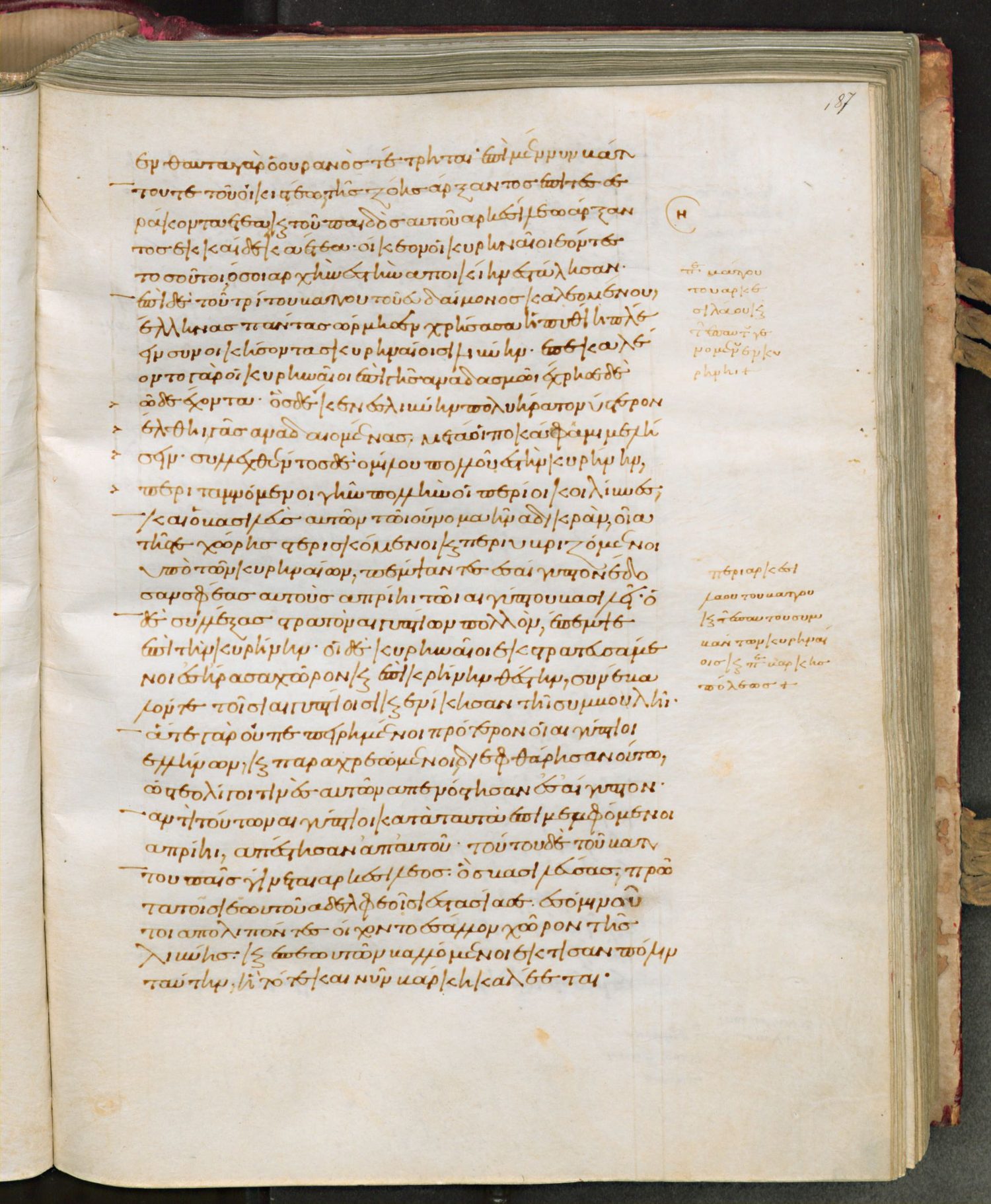
Laur. Plut. 70.3, fol. 187r: Greek here 4.159.1 to 4.160.1. Checked on the image (first and last words read and located in the Greek; each break checked against the neighbouring page): fol. 187r begins ‹ἐνθαῦτα γὰρ ὁ οὐρανὸς› (4.158.3), ends ‹καὶ νῦν Βάρκη κλέεται› (4.160.1). English here: 4.159.1 to 4.160.1 (Godley's sentences for the sections whose Greek lies mostly on this page).
4.159.1ἐπὶ μέν νυν Βάττου τε τοῦ οἰκιστέω τῆς ζόης, ἄρξαντος ἐπὶ τεσσεράκοντα ἔτεα, καὶ τοῦ παιδὸς αὐτοῦ Ἀρκεσίλεω ἄρξαντος ἑκκαίδεκα ἔτεα, οἴκεον οἱ Κυρηναῖοι ἐόντες τοσοῦτοι ὅσοι ἀρχὴν ἐς τὴν ἀποικίην ἐστάλησαν. 4.159.2ἐπὶ δὲ τοῦ τρίτου, Βάττου τοῦ εὐδαίμονος καλεομένου, Ἕλληνας πάντας ὥρμησε χρήσασα ἡ Πυθίη πλέειν συνοικήσοντας Κυρηναίοισι Λιβύην· ἐπεκαλέοντο γὰρ οἱ Κυρηναῖοι ἐπὶ γῆς ἀναδασμῷ· 4.159.3ἔχρησε δὲ ὧδε ἔχοντα.
ὃς δέ κεν ἐς Λιβύην πολυήρατον ὕστερον ἔλθῃ
γᾶς ἀναδαιομένας, μετὰ οἷ ποκα φαμὶ μελήσειν. 4.159.4συλλεχθέντος δὲ ὁμίλου πολλοῦ ἐς τὴν Κυρήνην, περιταμνόμενοι γῆν πολλὴν οἱ περίοικοι Λίβυες καὶ ὁ βασιλεὺς αὑτῶν τῷ οὔνομα ἦν Ἀδικράν, οἷα τῆς τε χώρης στερισκόμενοι καὶ περιυβριζόμενοι ὑπὸ τῶν Κυρηναίων, πέμψαντες ἐς Αἴγυπτον ἔδοσαν σφέας αὐτοὺς Ἀπρίῃ τῷ Αἰγύπτου βασιλέι. 4.159.5ὁ δὲ συλλέξας στρατὸν Αἰγυπτίων πολλὸν ἔπεμψε ἐπὶ τὴν Κυρήνην. οἱ δὲ Κυρηναῖοι ἐκστρατευσάμενοι ἐς Ἴρασα χῶρον καὶ ἐπὶ κρήνην Θέστην συνέβαλόν τε τοῖσι Αἰγυπτίοισι καὶ ἐνίκησαν τῇ συμβολῇ. 4.159.6ἅτε γὰρ οὐ πεπειρημένοι πρότερον οἱ Αἰγύπτιοι Ἑλλήνων καὶ παραχρεώμενοι διεφθάρησαν οὕτω ὥστε ὀλίγοι τινὲς αὐτῶν ἀπενόστησαν ἐς Αἴγυπτον. ἀντὶ τούτων Αἰγύπτιοι καὶ ταῦτα ἐπιμεμφόμενοι Ἀπρίῃ ἀπέστησαν ἀπʼ αὐτοῦ. 4.160.1τούτου δὲ τοῦ Βάττου παῖς γίνεται Ἀρκεσίλεως. ὃς βασιλεύσας πρῶτα τοῖσι ἑωυτοῦ ἀδελφεοῖσι ἐστασίασε, ἐς ὅ μιν οὗτοι ἀπολιπόντες οἴχοντο ἐς ἄλλον χῶρον τῆς Λιβύης καὶ ἐπʼ ἑωυτῶν βαλόμενοι ἔκτισαν πόλιν ταύτην ἣ τότε καὶ νῦν Βάρκη κλέεται·
4.159.1Now in the time of Battus the founder of the colony, who ruled for forty years, and of his son Arcesilaus who ruled for sixteen, the dwellers in Cyrene were no more in number than when they had first gone forth to the colony. 4.159.2But in the time of the third ruler, that Battus who was called the Fortunate, the Pythian priestess admonished all Greeks by an oracle to cross the sea and dwell in Libya with the Cyrenaeans; for the Cyrenaeans invited them, promising a distribution of land; 4.159.3and this was the oracle: “Whoso delayeth to go till the fields be fully divided
To the fair Libyan land, that man shall surely repent it.” 4.159.4So a great multitude gathered together at Cyrene, and cut off great tracts of land from the territory of the neighbouring Libyans. Then these with their king, whose name was Adicran, being robbed of their lands and violently entreated by the Cyrenaeans, sent to Egypt and put themselves in the hands of Apries, the king of that country. 4.159.5Apries mustered a great host of Egyptians and sent it against Cyrene; the Cyrenaeans marched out to the place Irasa and the spring Thestes, and there battled with the Egyptians and overcame them; 4.159.6for the Egyptians had as yet had no experience of Greeks, and despised their enemy; whereby they were so utterly destroyed that few of them returned to Egypt. For this mishap, and because they blamed Apries for it, the Egyptians revolted from him. 4.160.1This Battus had a son Arcesilaus; he at his first coming to reign quarrelled with his own brothers, till they left him and went away to another place in Libya, where they founded a city for themselves, which was then and is now called Barce; and while they were founding it, they persuaded the Libyans to revolt from the Cyrenaeans.
Where on the image
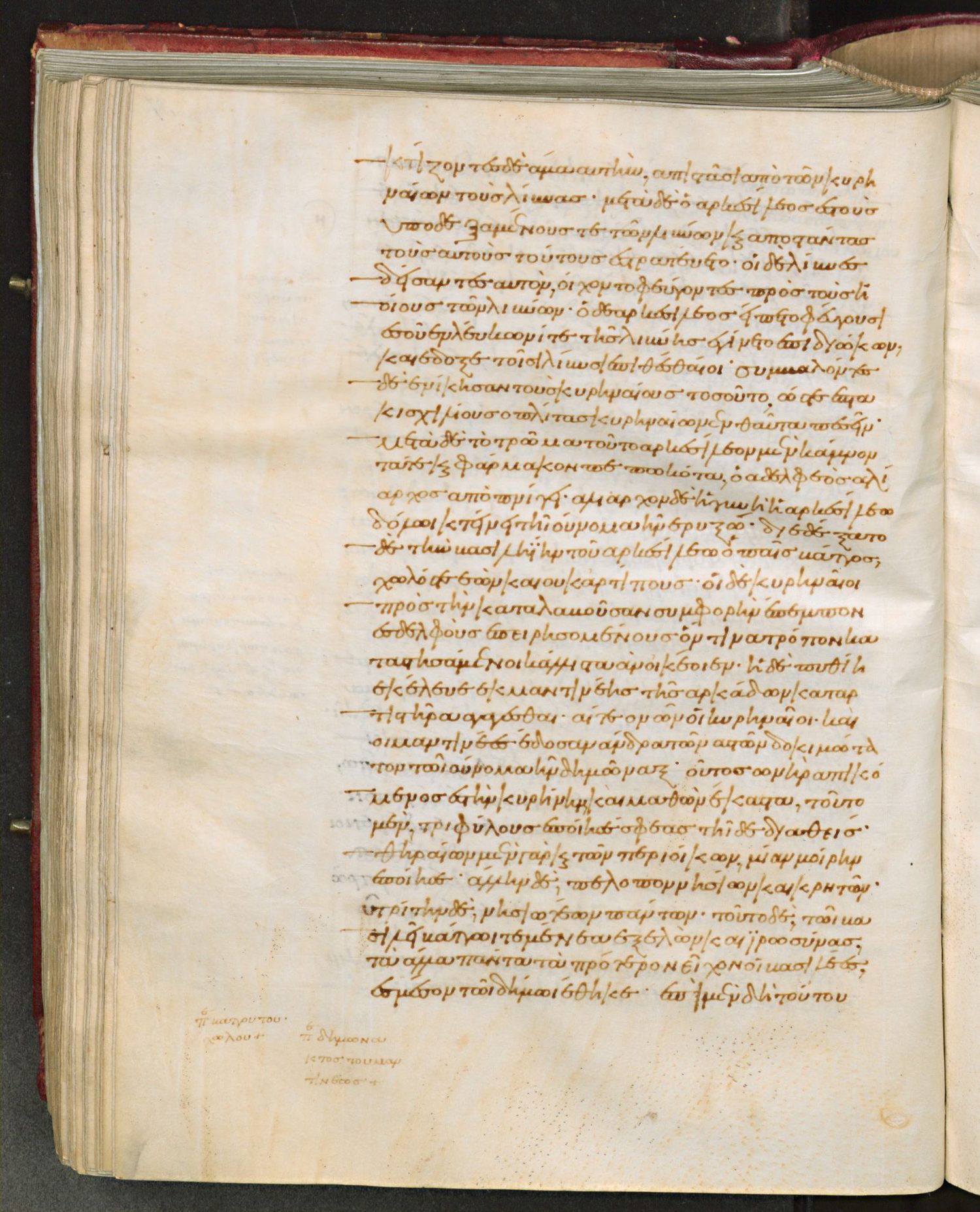
Laur. Plut. 70.3, fol. 187v: Greek here 4.160.1 to 4.162.1. Checked on the image (first and last words read and located in the Greek; each break checked against the neighbouring page): fol. 187v begins ‹κτίζοντες δὲ ἅμα αὐτὴν› (4.160.1), ends ‹ἔθηκε.ἐπὶ μὲν δὴ τούτου› (4.162.1). English here: 4.160.2 to 4.161.3 (Godley's sentences for the sections whose Greek lies mostly on this page).
4.160.1κτίζοντες δὲ ἅμα αὐτὴν ἀπιστᾶσι ἀπὸ τῶν Κυρηναίων τοὺς Λίβυας. 4.160.2μετὰ δὲ Ἀρκεσίλεως ἐς τοὺς ὑποδεξαμένους τε τῶν Λιβύων καὶ ἀποστάντας τοὺς αὐτοὺς τούτους ἐστρατεύετο· οἱ δὲ Λίβυες δείσαντες αὐτὸν οἴχοντο φεύγοντες πρὸς τοὺς ἠοίους τῶν Λιβύων. 4.160.3ὁ δὲ Ἀρκεσίλεως εἵπετο φεύγουσι, ἐς οὗ ἐν Λεύκωνί τε τῆς Λιβύης ἐγίνετο ἐπιδιώκων καὶ ἔδοξε τοῖσι Λίβυσι ἐπιθέσθαι οἱ. συμβαλόντες δὲ ἐνίκησαν τοὺς Κυρηναίους τοσοῦτο ὥστε ἑπτακισχιλίους ὁπλίτας Κυρηναίων ἐνθαῦτα πεσεῖν. 4.160.4μετὰ δὲ τὸ τρῶμα τοῦτο Ἀρκεσίλεων μὲν κάμνοντά τε καὶ φάρμακον πεπωκότα ὁ ἀδελφεὸς Ἁλίαρχος ἀποπνίγει, Ἁλίαρχον δὲ ἡ γυνὴ ἡ Ἀρκεσίλεω δόλῳ κτείνει, τῇ οὔνομα ἦν Ἐρυξώ. 4.161.1διεδέξατο δὲ τὴν βασιληίην τοῦ Ἀρκεσίλεω ὁ παῖς Βάττος, χωλός τε ἐὼν καὶ οὐκ ἀρτίπους. οἱ δὲ Κυρηναῖοι πρὸς τὴν καταλαβοῦσαν συμφορὴν ἔπεμπον ἐς Δελφοὺς ἐπειρησομένους ὅντινα τρόπον καταστησάμενοι κάλλιστα ἂν οἰκέοιεν. 4.161.2ἡ δὲ Πυθίη ἐκέλευε ἐκ Μαντινέης τῆς Ἀρκάδων καταρτιστῆρα ἀγαγέσθαι. αἴτεον ὦν οἱ Κυρηναῖοι, καὶ οἱ Μαντινέες ἔδοσαν ἄνδρα τῶν ἀστῶν δοκιμώτατον, τῷ οὔνομα ἦν Δημῶναξ. 4.161.3οὗτος ὦν ὡνὴρ ἀπικόμενος ἐς τὴν Κυρήνην καὶ μαθὼν ἕκαστα τοῦτο μὲν τριφύλους ἐποίησε σφεας, τῇδε διαθείς· Θηραίων μὲν καὶ τῶν περιοίκων μίαν μοῖραν ἐποίησε, ἄλλην δὲ Πελοποννησίων καὶ Κρητῶν, τρίτην δὲ νησιωτέων πάντων. τοῦτο δὲ τῷ βασιλέι Βάττῳ τεμένεα ἐξελὼν καὶ ἱρωσύνας, τὰ ἄλλα πάντα τὰ πρότερον εἶχον οἱ βασιλέες ἐς μέσον τῷ δήμῳ ἔθηκε. 4.162.1ἐπὶ μὲν δὴ τούτου
4.160.2Then Arcesilaus came with an army into the country of the Libyans who had received his brothers and had also revolted; and these fled in fear of him to the eastern Libyans. 4.160.3Arcesilaus followed their flight until he came in his pursuit to Leucon in Libya, where the Libyans resolved to attack him; they joined battle and so wholly overcame the Cyrenaeans that seven thousand Cyrenaean men-at-arms were there slain. 4.160.4After this disaster Arcesilaus, being sick and having drunk medicine, was strangled by his brother Haliarchus; Haliarchus was craftily slain by Arcesilaus’ wife Eryxo. 4.161.1Arcesilaus’ kingship passed to his son Battus, who was lame and infirm on his feet. The Cyrenaeans, in the affliction that had befallen them, sent to Delphi to enquire what ordering of their state should best give them prosperity; 4.161.2the priestess bade them bring a peacemaker from Mantinea in Arcadia. The Cyrenaeans then sending their request, the Mantineans gave them their most esteemed townsman, whose name was Demonax. 4.161.3When this man came to Cyrene and learnt all, he divided the people into three tribes; of which divisions the Theraeans and dispossessed Libyans were one, the Peloponnesians and Cretans the second, and all the islanders the third; moreover he set apart certain domains and priesthoods for their king Battus, but gave all the rest, which had belonged to the kings, to be now held by the people in common.
Where on the image
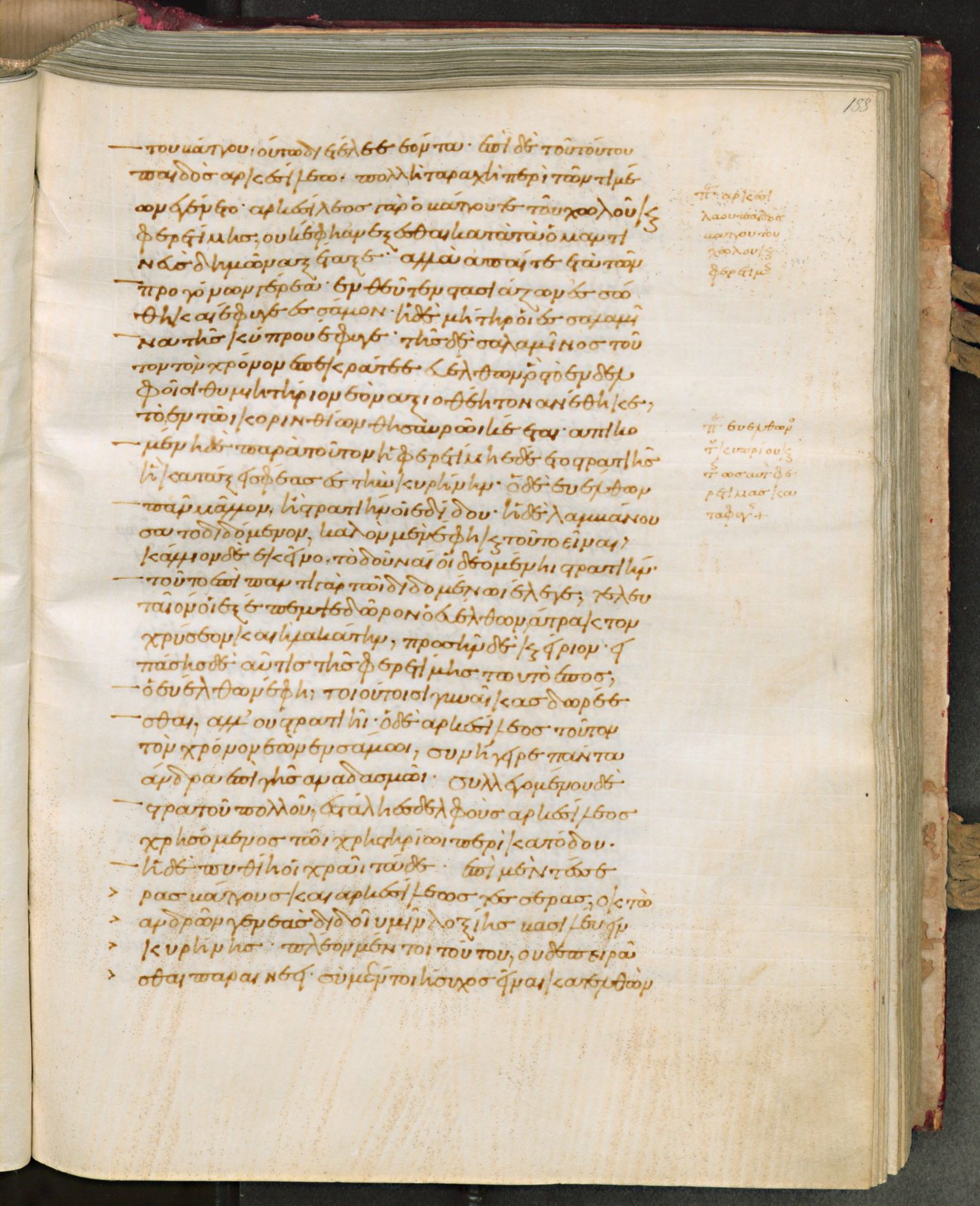
Laur. Plut. 70.3, fol. 188r: Greek here 4.162.1 to 4.163.3. Checked on the image (first and last words read and located in the Greek; each break checked against the neighbouring page): fol. 188r begins ‹τοῦ Βάττου οὕτω διετέλεε› (4.162.1), ends ‹μέντοι ἥσυχος εἶναι κατελθὼν› (4.163.3). English here: 4.162.1 to 4.163.2 (Godley's sentences for the sections whose Greek lies mostly on this page).
4.162.1τοῦ Βάττου οὕτω διετέλεε ἐόντα, ἐπὶ δὲ τοῦ τούτου παιδὸς Ἀρκεσίλεω πολλὴ ταραχὴ περὶ τῶν τιμέων ἐγένετο. 4.162.2Ἀρκεσίλεως γὰρ ὁ Βάττου τε τοῦ χωλοῦ καὶ Φερετίμης οὐκ ἔφη ἀνέξεσθαι κατὰ τὰ ὁ Μαντινεὺς Δημῶναξ ἔταξε, ἀλλὰ ἀπαίτεε τὰ τῶν προγόνων γέρεα. ἐνθεῦτεν στασιάζων ἑσσώθη καὶ ἔφυγε ἐς Σάμον, ἡ δὲ μήτηρ οἱ ἐς Σαλαμῖνα τῆς Κύπρου ἔφυγε. 4.162.3τῆς δὲ Σαλαμῖνος τοῦτον τὸν χρόνον ἐπεκράτεε Εὐέλθων, ὃς τὸ ἐν Δελφοῖσι θυμιητήριον, ἐὸν ἀξιοθέητον ἀνέθηκε, τὸ ἐν τῷ Κορινθίων θησαυρῷ κέεται. ἀπικομένη δὲ παρὰ τοῦτον ἡ Φερετίμη ἐδέετο στρατιῆς ἣ κατάξει σφέας ἐς τὴν Κυρήνην. 4.162.4ὁ δὲ Εὐέλθων πᾶν μᾶλλον ἢ στρατιήν οἱ ἐδίδου· ἣ δὲ λαμβάνουσα τὸ διδόμενον καλὸν μὲν ἔφη καὶ τοῦτο εἶναι, κάλλιον δὲ ἐκεῖνο, τὸ δοῦναί οἱ δεομένῃ στρατιήν. 4.162.5τοῦτο ἐπὶ παντὶ γὰρ τῷ διδομένῳ ἔλεγε, τελευταῖόν οἱ ἐξέπεμψε δῶρον ὁ Εὐέλθων ἄτρακτον χρύσεον καὶ ἠλακάτην, προσῆν δε καὶ εἴριον. ἐπειπάσης δὲ αὖτις τῆς Φερετίμης τὠυτὸ ἔπος, ὁ Εὐέλθων ἔφη τοιούτοισι γυναῖκας δωρέεσθαι ἀλλʼ οὐ στρατιῇ. 4.163.1ὁ δὲ Ἀρκεσίλεως τοῦτον τὸν χρόνον ἐὼν ἐν Σάμῳ συνήγειρε πάντα ἄνδρα ἐπὶ γῆς ἀναδασμῷ· συλλεγομένου δὲ στρατοῦ πολλοῦ, ἐστάλη ἐς Δελφοὺς Ἀρκεσίλεως χρησόμενος τῷ χρηστηρίῳ περὶ κατόδου. 4.163.2ἡ δὲ Πυθίη οἱ χρᾷ τάδε. 4.163.3ἐπὶ μὲν τέσσερας Βᾶττους καὶ Ἀρκεσίλεως τέσσερας, ὀκτὼ ἀνδρῶν γενεάς, διδοῖ ὑμῖν Λοξίης βασιλεύειν Κυρήνης, πλέον μέντοι τούτου οὐδὲ πειρᾶσθαι παραινέει. σὺ μέντοι ἥσυχος εἶναι κατελθὼν
4.162.1During the life of this Battus aforesaid these ordinances held good, but in the time of his son Arcesilaus there arose much contention concerning the king’s rights. 4.162.2Arcesilaus, son of the lame Battus and Pheretime, would not abide by the ordinances of Demonax, but demanded back the prerogative of his forefathers, and made himself head of a faction; but he was worsted and banished to Samos, and his mother fled to Salamis in Cyprus. 4.162.3Now Salamis at this time was ruled by Evelthon, who dedicated that marvellous censer at Delphi which stands in the treasury of the Corinthians. To him Pheretime came, asking him for an army which should bring her and her son back to Cyrene; but 4.162.4Evelthon being willing to give her all else, only not an army, when she took what he gave her she said that this was well, but it were better to give her an army at her request. 4.162.5This she would still say, whatever was the gift; at the last Evelthon sent her a golden spindle and distaff, and wool therewith; and Pheretime uttering the same words as before, he answered that these, and not armies, were gifts for women. 4.163.1Meanwhile Arcesilaus was in Samos, gathering all men that he could and promising them a new division of land; and while a great army was thus mustering, he made a journey to Delphi, to enquire of the oracle concerning his return. 4.163.2The priestess gave him this answer: “For the lives of four named Battus and four named Arcesilaus, to wit, for eight generations of men, Loxias grants to your house the kingship of Cyrene; more than this he counsels you not so much as to essay.
Where on the image
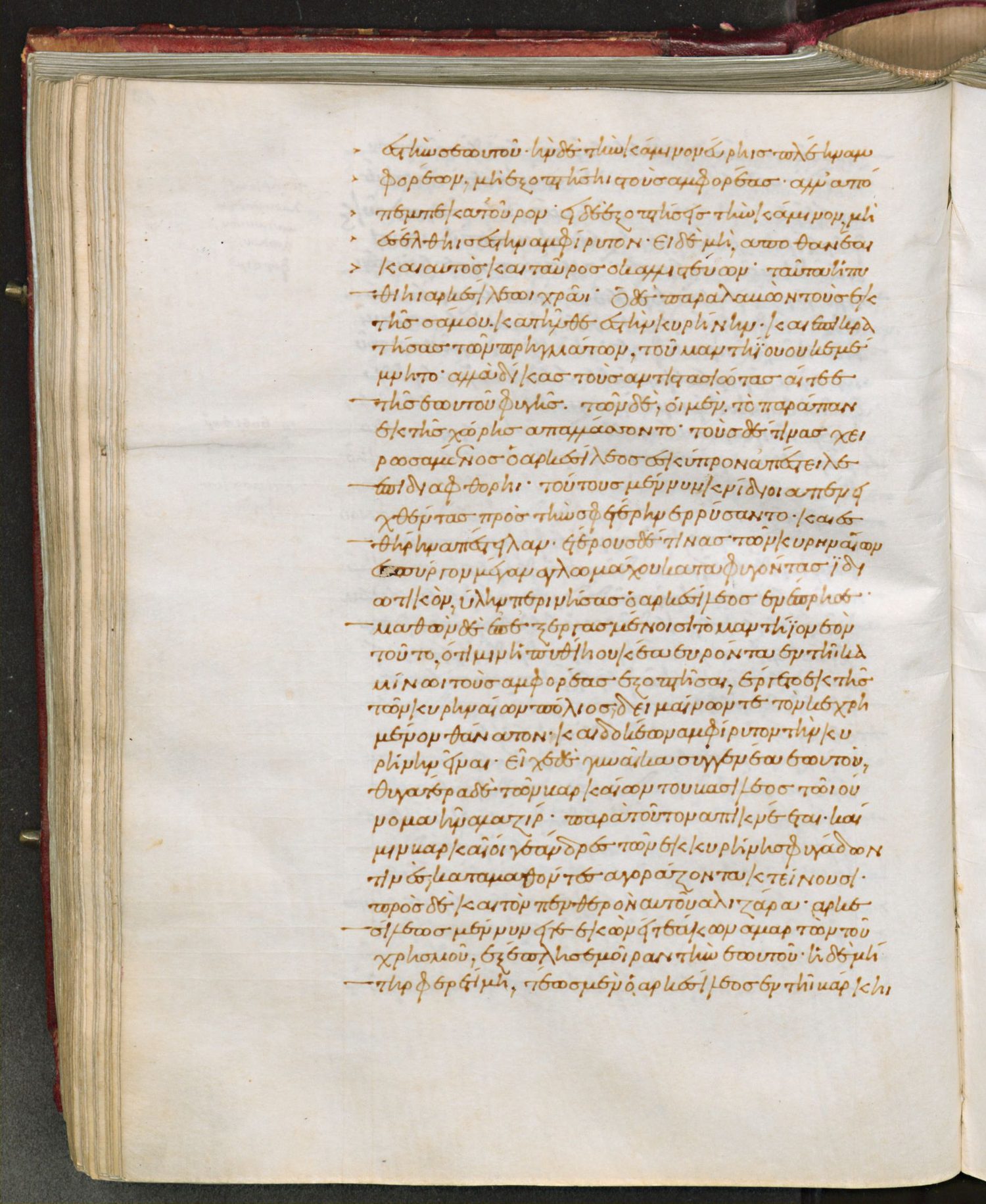
Laur. Plut. 70.3, fol. 188v: Greek here 4.163.3 to 4.165.1. Checked on the image (first and last words read and located in the Greek; each break checked against the neighbouring page): fol. 188v begins ‹ἐς τὴν σεωυτοῦ. ἢν› (4.163.3), ends ‹Ἀρκεσίλεως ἐν τῇ Βάρκῃ› (4.165.1). English here: 4.163.3 to 4.164.4 (Godley's sentences for the sections whose Greek lies mostly on this page).
4.163.3ἐς τὴν σεωυτοῦ. ἢν δὲ τὴν κάμινον εὕρῃς πλέην ἀμφορέων, μὴ ἐξοπτήσῃς τοὺς ἀμφορέας ἀλλʼ ἀπόπεμπε κατʼ οὖρον· εἰ δὲ ἐξοπτήσεις τὴν κάμινον,μὴ ἐσέλθῃς ἐς τὴν ἀμφίρρυτον· εἰ δὲ μὴ ἀποθανέαι καὶ αὐτὸς καὶ ταῦρος ὁ καλλιστεύων.
ταῦτα ἡ Πυθίη Ἀρκεσίλεῳ χρᾷ. 4.164.1ὁ δὲ παραλαβὼν τοὺς ἐκ τῆς Σάμου κατῆλθε ἐς τὴν Κυρήνην, καὶ ἐπικρατήσας τῶν πρηγμάτων τοῦ μαντηίου οὐκ ἐμέμνητο, ἀλλὰ δίκας τοὺς ἀντιστασιώτας αἴτεε τῆς ἑωυτοῦ φυγῆς. 4.164.2τῶν δὲ οἳ μὲν τὸ παράπαν ἐκ τῆς χώρης ἀπαλλάσσοντο, τοὺς δὲ τινὰς χειρωσάμενος ὁ Ἀρκεσίλεως ἐς Κύπρον ἀπέστειλε ἐπὶ διαφθορῇ. τούτους μέν νυν Κνίδιοι ἀπενειχθέντας πρὸς τὴν σφετέρην ἐρρύσαντο καὶ ἐς Θήρην ἀπέστειλαν· ἑτέρους δὲ τινὰς τῶν Κυρηναίων ἐς πύργον μέγαν Ἀγλωμάχου καταφυγόντας ἰδιωτικὸν ὕλην περινήσας ὁ Ἀρκεσίλεως ἐνέπρησε. 4.164.3μαθὼν δὲ ἐπʼ ἐξεργασμένοισι τὸ μαντήιον ἐὸν τοῦτο, ὅτι μιν ἡ Πυθίη οὐκ ἔα εὑρόντα ἐν τῇ καμίνῳ τοὺς ἀμφορέας ἐξοπτῆσαι, ἔργετο ἑκὼν τῆς τῶν Κυρηναίων πόλιος, δειμαίνων τε τὸν κεχρησμένον θάνατον καὶ δοκέων ἀμφίρρυτον τὴν Κυρήνην εἶναι. 4.164.4εἶχε δὲ γυναῖκα συγγενέα ἑωυτοῦ, θυγατέρα δὲ τῶν Βαρκαίων τοῦ βασιλέος, τῷ οὔνομα ἦν Ἀλάζειρ· παρὰ τοῦτον ἀπικνέεται, καί μιν Βαρκαῖοί τε ἄνδρες καὶ τῶν ἐκ Κυρήνης φυγάδων τινὲς καταμαθόντες ἀγοράζοντα κτείνουσι, πρὸς δὲ καὶ τὸν πενθερὸν αὐτοῦ Ἀλάζειρα. Ἀρκεσίλεως μέν νυν εἴτε ἑκὼν εἴτε ἀέκων ἁμαρτὼν τοῦ χρησμοῦ ἐξέπλησε μοῖραν τὴν ἑωυτοῦ. 4.165.1ἡ δὲ μήτηρ Φερετίμη, ἕως μὲν ὁ Ἀρκεσίλεως ἐν τῇ Βάρκῃ
4.163.3But thou, return to thy country and dwell there in peace. But if thou findest the oven full of earthen pots, bake not the pots, but let them go unscathed. And if thou bakest them in the oven, go not into the sea-girt place; for if thou dost, then shalt thou thyself be slain, and the bull too that is fairest of the herd.” This was the oracle given by the priestess to Arcesilaus. 4.164.1But he with the men from Samos returned to Cyrene, whereof having made himself master he forgot the oracle, and demanded justice upon his enemies for his banishment. 4.164.2Some of these departed altogether, out of the country; others Arcesilaus seized and sent away to Cyprus to be there slain. These were carried out of their course to Cnidus, where the Cnidians saved them and sent them to Thera. Others of the Cyrenaeans fled for refuge into a great tower that belonged to one Aglomachus, a private man, and Arcesilaus piled wood round it and burnt them there. 4.164.3Then, perceiving too late that this was the purport of the Delphic oracle which forbade him to bake the pots if he found them in the oven, he refrained of set purpose from going into the city of the Cyrenaeans, fearing the death prophesied and supposing the sea-girt place to be Cyrene. 4.164.4Now his wife was his own kinswoman, daughter of Alazir king of the Barcaeans, and Arcesilaus betook himself to Alazir; but men of Barce and certain of the exiles from Cyrene were aware of him and slew him as he walked in the town, and Alazir his father-in-law likewise. So Arcesilaus whether with or without intent missed the meaning of the oracle and fulfilled his destiny.
Where on the image
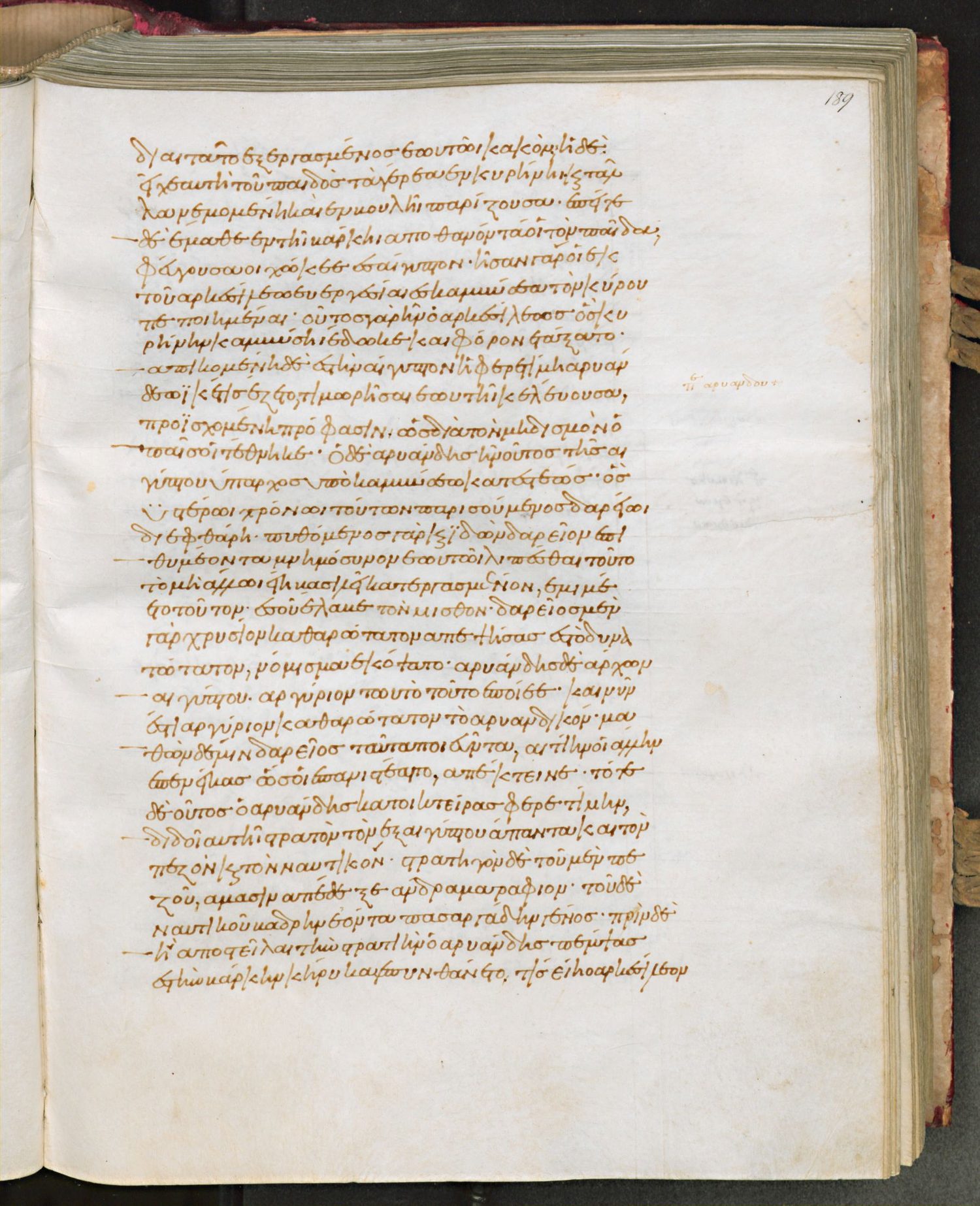
Laur. Plut. 70.3, fol. 189r: Greek here 4.165.1 to 4.167.2. Checked on the image (first and last words read and located in the Greek; each break checked against the neighbouring page): fol. 189r begins ‹διαιτᾶτο ἐξεργασμένος ἑωυτῷ κακόν,› (4.165.1), ends ‹τίς εἴη ὁ Ἀρκεσίλεων› (4.167.2). English here: 4.165.1 to 4.167.1 (Godley's sentences for the sections whose Greek lies mostly on this page).
4.165.1διαιτᾶτο ἐξεργασμένος ἑωυτῷ κακόν, ἣ δὲ εἶχε αὐτὴ τοῦ παιδὸς τὰ γέρεα ἐν Κυρήνῃ καὶ τἆλλα νεμομένη καὶ ἐν βουλῇ παρίζουσα. 4.165.2ἐπείτε δὲ ἔμαθε ἐν τῇ Βάρκῃ ἀποθανόντα οἱ τὸν παῖδα, φεύγουσα οἰχώκεε ἐς Αἴγυπτον. ἦσαν γάρ οἱ ἐκ τοῦ Ἀρκεσίλεω εὐεργεσίαι ἐς Καμβύσεα τὸν Κύρου πεποιημέναι· οὗτος γὰρ ἦν ὁ Ἀρκεσίλεως ὃς Κυρήνην Καμβύσῃ ἔδωκε καὶ φόρον ἐτάξατο. 4.165.3ἀπικομένη δὲ ἐς τὴν Αἴγυπτον ἡ Φερετίμη Ἀρυάνδεω ἱκέτις ἵζετο, τιμωρῆσαι ἑωυτῇ κελεύουσα, προϊσχομένη πρόφασιν ὡς διὰ τὸν μηδισμὸν ὁ παῖς οἱ τέθνηκε. 4.166.1ὁ δὲ Ἀρυάνδης ἦν οὗτος τῆς Αἰγύπτου ὕπαρχος ὑπὸ Καμβύσεω κατεστεώς, ὃς ὑστέρῳ χρόνῳ τούτων παρισούμενος Δαρείῳ διεφθάρη. πυθόμενος γὰρ καὶ ἰδὼν Δαρεῖον ἐπιθυμέοντα μνημόσυνον ἑωυτοῦ λιπέσθαι τοῦτο τὸ μὴ ἄλλῳ εἴη βασιλέι κατεργασμένον, ἐμιμέετο τοῦτον, ἐς οὗ ἔλαβε τὸν μισθόν. 4.166.2Δαρεῖος μὲν γὰρ χρυσίον καθαρώτατον ἀπεψήσας ἐς τὸ δυνατώτατον νόμισμα ἐκόψατο, Ἀρυάνδης δὲ ἄρχων Αἰγύπτου ἀργύριον τὠυτὸ τοῦτο ἐποίεε, καὶ νῦν ἐστὶ ἀργύριον καθαρώτατον τὸ Ἀρυανδικόν. μαθὼν δέ μιν Δαρεῖος ταῦτα ποιεῦντα, αἰτίην οἱ ἄλλην ἐπενείκας ὥς οἱ ἐπανίσταιτο, ἀπέκτεινε. 4.167.1τότε δὲ οὗτος ὁ Ἀρυάνδης κατοικτείρας Φερετίμην διδοῖ αὐτῇ στρατὸν τὸν ἐξ Αἰγύπτου ἅπαντα καὶ τὸν πεζὸν καὶ τὸν ναυτικόν· στρατηγὸν δὲ τοῦ μὲν πεζοῦ Ἄμασιν ἀπέδεξε ἄνδρα Μαράφιον, τοῦ δὲ ναυτικοῦ Βάδρην ἐόντα Πασαργάδην γένος. 4.167.2πρὶν δὲ ἢ ἀποστεῖλαι τὴν στρατιήν, ὁ Ἀρυάνδης πέμψας ἐς τὴν Βάρκην κήρυκα ἐπυνθάνετο τίς εἴη ὁ Ἀρκεσίλεων
4.165.1As long as Arcesilaus, after working his own destruction, was living at Barce, his mother Pheretime held her son’s prerogative at Cyrene, where she administered all his business and sat with others in council. 4.165.2But when she learnt of her son’s death at Barce, she made her escape away to Egypt, trusting to the good service which Arcesilaus had done Cambyses the son of Cyrus; for this was the Arcesilaus who gave Cyrene to Cambyses and agreed to pay tribute. 4.165.3So on her coming to Egypt Pheretime made supplication to Aryandes, demanding that he should avenge her, on the plea that her son had been killed for allying himself with the Medes. 4.166.1This Aryandes had been appointed by Cambyses viceroy of Egypt; at a later day he was put to death for making himself equal to Darius. For learning and seeing that Darius desired to leave such a memorial of himself as no king had ever wrought, Aryandes imitated him, till he got his reward; 4.166.2for Darius had coined money out of gold refined to an extreme purity, and Aryandes, then ruling Egypt, made a like silver coinage; and now there is no silver money so pure as is the Aryandic. But when Darius heard that Aryandes was so doing, he put him to death, not on this plea but as a rebel. 4.167.1At this time Aryandes, of whom I speak, took pity on Pheretime and gave her all the Egyptian land and sea forces, appointing Amasis, a Maraphian, general of the army, and Badres of the tribe of the Pasargadae admiral of the fleet.
Where on the image
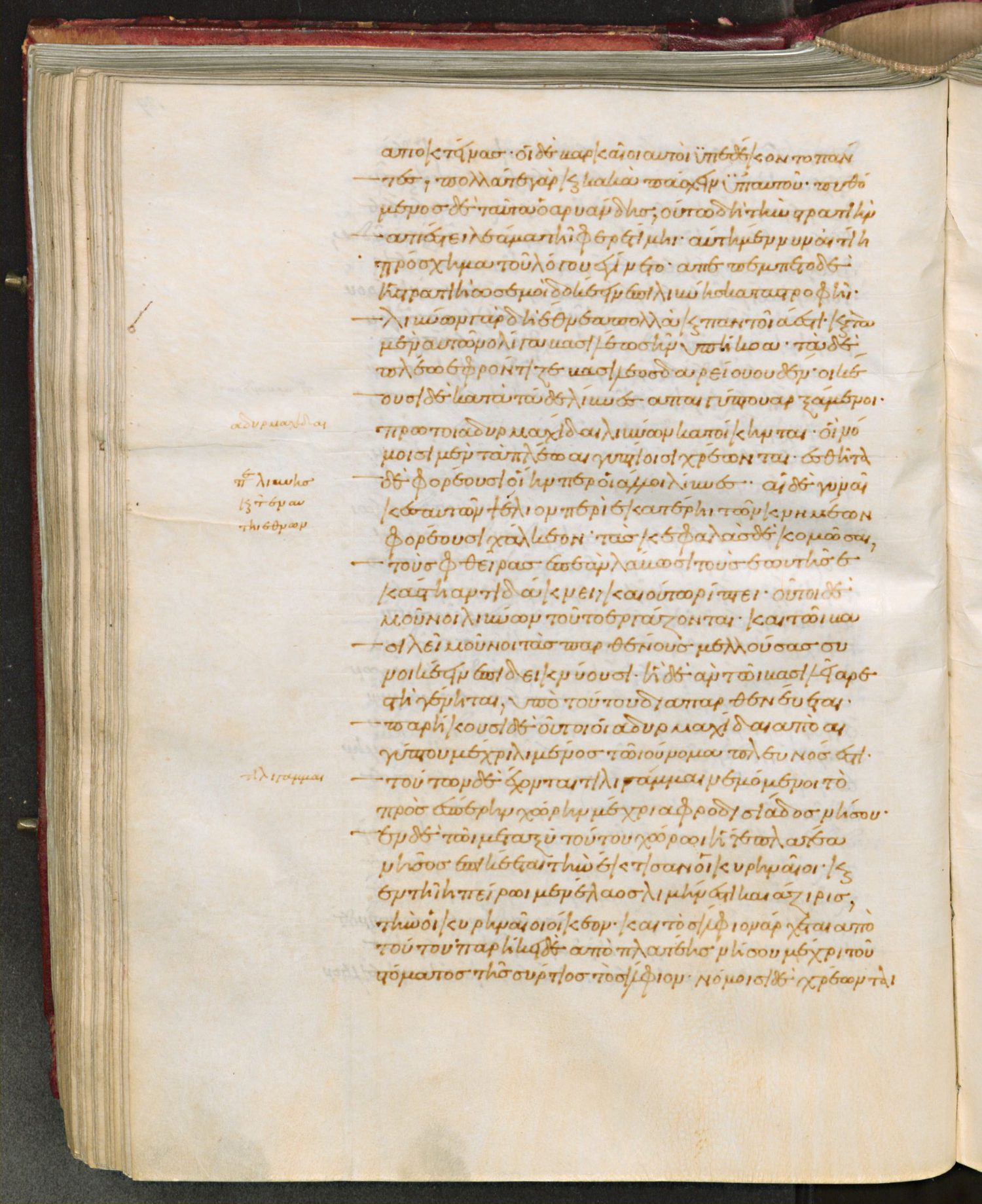
Laur. Plut. 70.3, fol. 189v: Greek here 4.167.2 to 4.167.3. Checked on the image (first and last words read and located in the Greek; each break checked against the neighbouring page): fol. 189v begins ‹ἀποκτείνας. οἱ δὲ Βαρκαῖοι› (4.167.2), ends ‹σίλφιον. νόμοισι δὲ χρέωνται› (4.169.2). English here: 4.167.2 to 4.167.3 (Godley's sentences for the sections whose Greek lies mostly on this page).
4.167.2ἀποκτείνας. οἱ δὲ Βαρκαῖοι αὐτοὶ ὑπεδέκοντο πάντες· πολλά τε γὰρ καὶ κακὰ πάσχειν ὑπʼ αὐτοῦ. πυθόμενος δὲ ταῦτα ὁ Ἀρυάνδης οὕτω δὴ τὴν στρατιὴν ἀπέστειλε ἅμα τῇ Φερετίμῃ. 4.167.3αὕτη μέν νυν αἰτίη πρόσχημα τοῦ στόλου ἐγίνετο, ἀπεπέμπετο δὲ ἡ στρατιή, ὡς ἐμοὶ δοκέειν, ἐπὶ Λιβύης καταστροφῇ. Λιβύων γὰρ δὴ ἔθνεα πολλὰ καὶ παντοῖα ἐστι, καὶ τὰ μὲν αὐτῶν ὀλίγα βασιλέος ἦν ὑπήκοα, τὰ δὲ πλέω ἐφρόντιζε Δαρείουοὐδέν.
4.167.2But before despatching the host Aryandes sent a herald to Barce to enquire who it was who had killed Arcesilaus. The Barcaeans answered that it was the deed of the whole city, for the many wrongs that Arcesilaus had done them; which when he heard, Aryandes then sent his armament with Pheretime. 4.167.3This was the alleged pretext; but, as I myself think, the armament was sent to subdue Libya. For the Libyan tribes are many and of divers kinds, and though a few of them were the king’s subjects the greater part cared nothing for Darius.
Notes
- Greek: the text printed in A. D. Godley's Loeb edition, via Perseus (tlg0016.tlg001.perseus-grc2). Square brackets mark words the editor considers later additions; [...] marks a gap the editor indicates. Perseus note markers are omitted.
- English: A. D. Godley, Herodotus vol. 2 (1921) (Loeb Classical Library), as transcribed on Wikisource. Godley's footnotes are omitted.
- Section numbers in the English were placed by comparing Godley's text with the Perseus version of his translation; where a section begins inside one of Godley's sentences, the English is kept with the page that holds the start of that sentence.
Cite
Sources
- Source: Florence, Laur. Plut. 70.3 (10th c.) via BML Teca Digitale + Greek of Godley's Loeb (Perseus) + English of A. D. Godley (Loeb, Wikisource) (holding institution)
- Critical edition: Greek of A. D. Godley's Loeb edition (1920-1925), via Perseus
← previous · → next · v cycle view · l back to library