Herodotus, Histories 5.17-27: Alexander of Macedon and the Persian envoys
Introduction
Herodotus of Halicarnassus wrote the Histories in the third quarter of the 5th century BCE, an inquiry into the deeds of Greeks and barbarians and the causes of the wars between them, later divided into nine books. Book 5 tells of the Persian advance in Thrace and Macedonia, the outbreak of the Ionian revolt under Aristagoras of Miletus, his appeals to Sparta and Athens, with Herodotus' accounts of Sparta and of Athens after the tyrants, and the burning of Sardis and the first years of the revolt.
The photographs are of Florence, Biblioteca Medicea Laurenziana, Plut. 70.3 (parchment, 10th century, 374 folios, 31 lines a page), Herodotus, Histories (codex A of the editors), the oldest surviving manuscript of the complete Histories, from the Teca Digitale of the Biblioteca Medicea Laurenziana. Each section below is the text of one page, or of the part of a page that falls within these chapters. The first and last words of every page were read on the photograph and located in the Greek, and every page break was checked against the next page; the notes quote these words. Readers' notes in the margins are not part of the text and are mentioned where they occur.
The Greek is the text printed in A. D. Godley's Loeb edition (1920-1925), from Perseus; it is the edited text, not a transcription of the manuscript, whose wording differs in places. The English is Godley's translation as printed, from Wikisource. Godley's English carries only chapter numbers; the section numbers shown in it were placed by comparison with the Perseus version of his translation. Each page's English is cut at the end of one of Godley's sentences, so it can begin or end a few lines away from the Greek of the page; each note gives the exact ranges.
This entry covers chapters 5.17-27, on fol. 201v to 204v.
How was this verified? (Provenance)
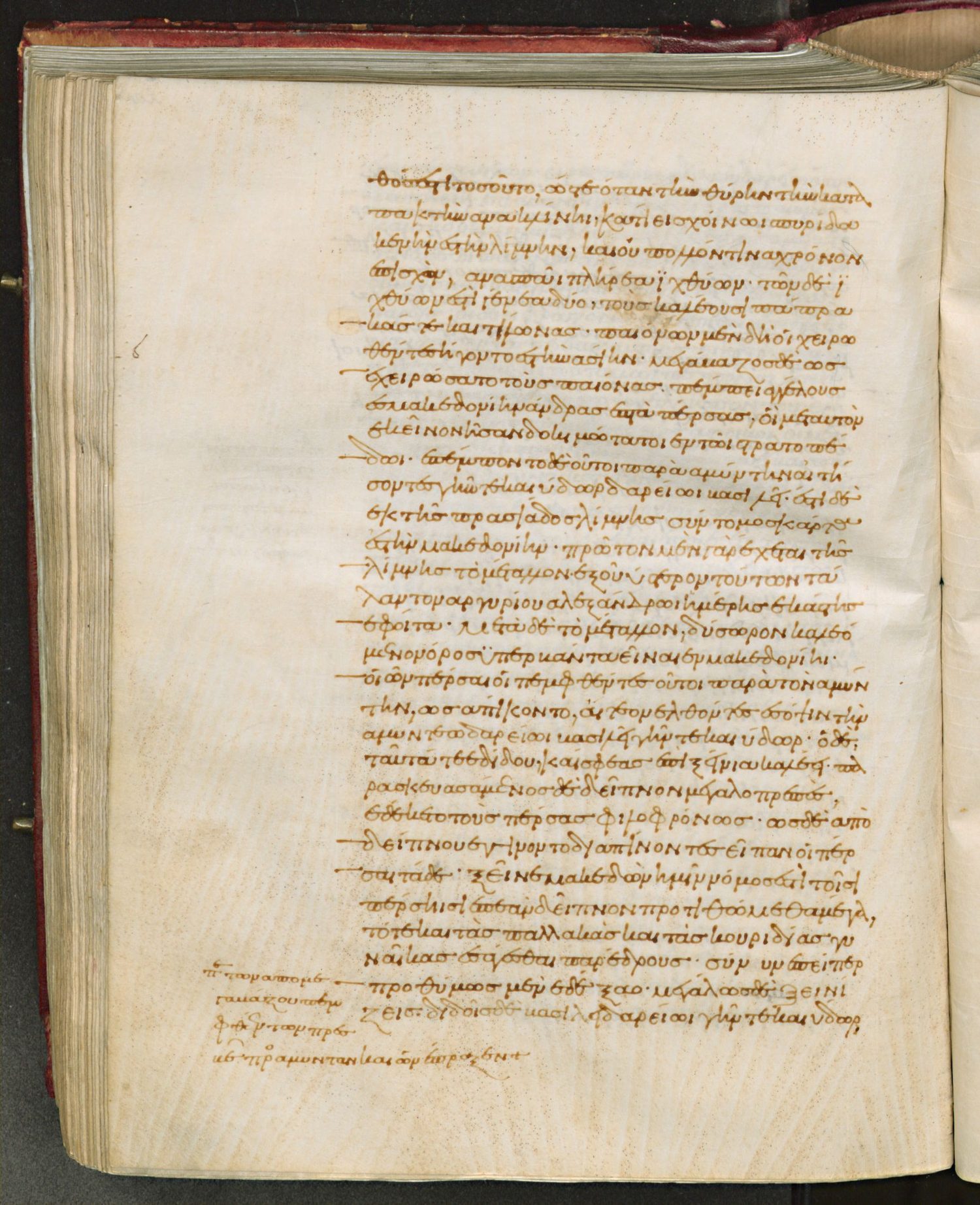
Where on the image
Laur. Plut. 70.3, fol. 201v: Greek here 5.17.1 to 5.18.2. Checked on the image (first and last words read and located in the Greek; each break checked against the neighbouring page): fol. 201v begins ‹-θος ἐστὶ τοσοῦτο ὥστε,› (5.16.4), ends ‹γῆν τε καὶ ὕδωρ› (5.18.2). The word ‹πλῆθος› is divided between fol. 201r and fol. 201v; it is given with fol. 201r. English here: 5.17.1 to 5.18.2 (Godley's sentences for the sections whose Greek lies mostly on this page).
5.17.1παιόνων μὲν δὴ οἱ χειρωθέντες ἤγοντο ἐς τὴν Ἀσίην. Μεγάβαζος δὲ ὡς ἐχειρώσατο τοὺς Παίονας, πέμπει ἀγγέλους ἐς Μακεδονίην ἄνδρας ἑπτὰ Πέρσας, οἳ μετʼ αὐτὸν ἐκεῖνον ἦσαν δοκιμώτατοι ἐν τῷ στρατοπέδῳ· ἐπέμποντο δὲ οὗτοι παρὰ Ἀμύντην αἰτήσοντες γῆν τε καὶ ὕδωρ Δαρείῳ βασιλέι. 5.17.2ἔστι δὲ ἐκ τῆς Πρασιάδος λίμνης σύντομος κάρτα ἐς τὴν Μακεδονίην· πρῶτον μὲν γὰρ ἔχεται τῆς λίμνης τὸ μέταλλον ἐξ οὗ ὕστερον τούτων τάλαντον ἀργυρίου Ἀλεξάνδρῳ ἡμέρης ἑκάστης ἐφοίτα, μετὰ δὲ τὸ μέταλλον Δύσωρον καλεόμενον ὄρος ὑπερβάντα εἶναι ἐν Μακεδονίν. 5.18.1οἱ ὦν Πέρσαι οἱ πεμφθέντες οὗτοι παρὰ τὸν Ἀμύντην ὡς ἀπίκοντο, αἴτεον ἐλθόντες ἐς ὄψιν τὴν Ἀμύντεω Δαρείῳ βασιλέι γῆν τε καὶ ὕδωρ. ὁ δὲ ταῦτά τε ἐδίδου καὶ σφεας ἐπὶ ξείνια καλέει, παρασκευασάμενος δὲ δεῖπνον μεγαλοπρεπὲς ἐδέκετο τοὺς Πέρσας φιλοφρόνως. 5.18.2ὡς δὲ ἀπὸ δείπνου ἐγένοντο, διαπίνοντες εἶπαν οἱ Πέρσαι τάδε. ξεῖνε Μακεδών, ἡμῖν νόμος ἐστὶ τοῖσι Πέρσῃσι, ἐπεὰν δεῖπνον προτιθώμεθα μέγα, τότε καὶ τὰς παλλακὰς καὶ τὰς κουριδίας γυναῖκας ἐσάγεσθαι παρέδρους. σύ νυν, ἐπεί περ προθύμως μὲν ἐδέξαο μεγάλως δὲ ξεινίζεις, διδοῖς δὲ βασιλέι Δαρείῳ γῆν τε καὶ ὕδωρ,
5.17.1So those of the Paeonians who were taken were carried into Asia. Then Megabazus, having made the Paeonians captive, sent as messengers into Macedonia the seven Persians who (after himself) were the most honourable in his army; these were sent to Amyntas to demand earth and water for Darius the king. 5.17.2Now there is a very straight way from the Prasiad lake to Macedonia; for first and near to the lake is that mine wherefrom later Alexander drew a daily revenue of a talent of silver, and when he has passed the mine a man need but cross the mountain called Dysorum to be in Macedonia. 5.18.1These Persians then who were sent, coming to Amyntas and being in his presence, demanded earth and water for Darius the king; which he gave, and invited them to be his guests; and he prepared a dinner of great splendour and received them hospitably. 5.18.2But after dinner, the Persians said to Amyntas as they sat drinking together, “Macedonian, our host, it is our Persian custom after the giving of any great banquet to bring in also the concubines and wedded wives to sit by the men. Do you then (since you have received us heartily and are nobly entertaining us, and are giving Darius our king earth and water) follow our custom.”
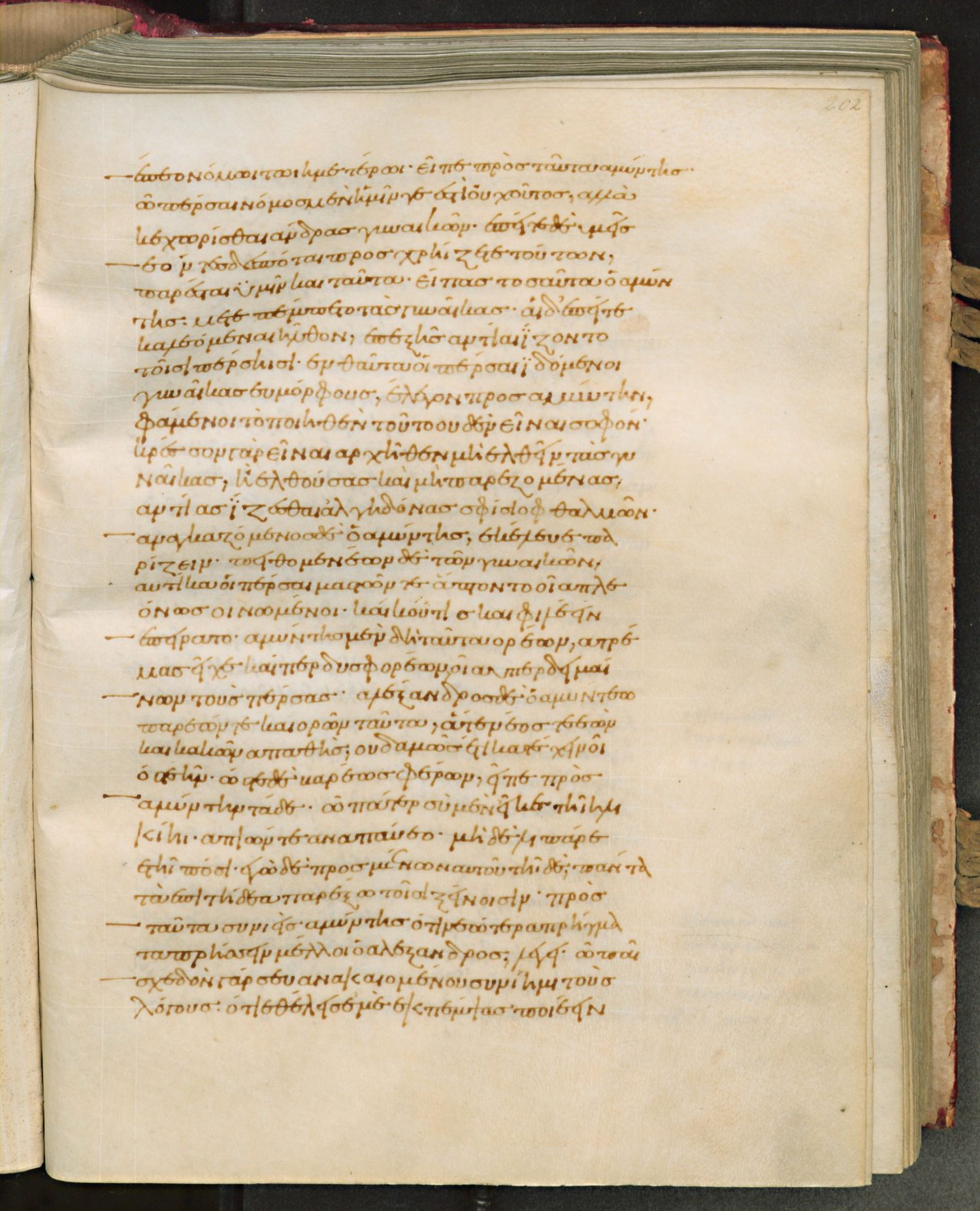
Where on the image
Laur. Plut. 70.3, fol. 202r: Greek here 5.18.2 to 5.19.2. Checked on the image (first and last words read and located in the Greek; each break checked against the neighbouring page): fol. 202r begins ‹ἕπεο νόμῳ τῷ ἡμετέρῳ.εἶπε› (5.18.2), ends ‹ἐθέλεις ἐμὲ ἐκπέμψας ποιέειν› (5.19.2). English here: 5.18.3 to 5.19.2 (Godley's sentences for the sections whose Greek lies mostly on this page).
5.18.2ἕπεο νόμῳ τῷ ἡμετέρῳ. 5.18.3εἶπε πρὸς ταῦτα Ἀμύντης ὦ Πέρσαι, νόμος μὲν ἡμῖν γε ἐστὶ οὐκ οὗτος, ἀλλὰ κεχωρίσθαι ἄνδρας γυναικῶν· ἐπείτε δὲ ὑμεῖς ἐόντες δεσπόται προσχρηίζετε τούτων, παρέσται ὑμῖν καὶ ταῦτα. εἴπας τοσαῦτα ὁ Ἀμύντης μετεπέμπετο τὰς γυναῖκας· αἳ δʼ ἐπείτε καλεόμεναι ἦλθον, ἐπεξῆς ἀντίαι ἵζοντο τοῖσι Πέρσῃσι. 5.18.4ἐνθαῦτα οἱ Πέρσαι ἰδόμενοι γυναῖκας εὐμόρφους ἔλεγον πρὸς Ἀμύντην φάμενοι τὸ ποιηθὲν τοῦτο οὐδὲν εἶναι σοφόν· κρέσσον γὰρ εἶναι ἀρχῆθεν μὴ ἐλθεῖν τὰς γυναῖκας ἢ ἐλθούσας καὶ μὴ παριζομένας ἀντίας ἵζεσθαι ἀλγηδόνας σφίσι ὀφθαλμῶν. 5.18.5ἀναγκαζόμενος δὲ ὁ Ἀμύντης ἐκέλευε παρίζειν· πειθομενέων δὲ τῶν γυναικῶν αὐτίκα οἱ Πέρσαι μαστῶν τε ἅπτοντο οἷα πλεόνως οἰνωμένοι, καί κού τις καὶ φιλέειν ἐπειρᾶτο. 5.19.1Ἀμύντης μὲν δὴ ταῦτα ὁρέων ἀτρέμας εἶχε, καίπερ δυσφορέων, οἷα ὑπερδειμαίνων τοὺς Πέρσας· Ἀλέξανδρος δὲ ὁ Ἀμύντεω παρεών τε καὶ ὁρέων ταῦτα, ἅτε νέος τε ἐὼν καὶ κακῶν ἀπαθής, οὐδαμῶς ἔτι κατέχειν οἷος τε ἦν, ὥστε δὲ βαρέως φέρων εἶπε πρὸς Ἀμύντην τάδε. ὦ πάτερ, σὺ μὲν εἶκε τῇ ἡλικίῃ ἀπιών τε ἀναπαύεο, μηδὲ λιπάρεε τῇ πόσι· ἐγὼ δὲ προσμένων αὐτοῦ τῇδε πάντα τὰ ἐπιτήδεα παρέξω τοῖσι ξείνοισι. 5.19.2πρὸς ταῦτα συνιεὶς Ἀμύντης ὅτι νεώτερα πρήγματα πρήσσειν μέλλοι ὁ Ἀλέξανδρος, λέγει ὦ παῖ, σχεδὸν γάρ σευ ἀνακαιομένου συνίημι τοὺς λόγους, ὅτι ἐθέλεις ἐμὲ ἐκπέμψας ποιέειν
5.18.3To this Amyntas replied: “No such custom, Persians, have we ourselves; with us, men and women sit apart; but seeing that you are our masters and would have this too, it shall be as you desire.” With that, Amyntas sent for the women; they came at call, and sat down over against the Persians. 5.18.4Then the Persians, seeing comely women before them, spoke to Amyntas and said that there was no sense in what he had done; it were better (they said) that the women had never come at all than that they should come and not sit beside the men, but sit opposite them to torment their eyes. 5.18.5Amyntas then, as needs must, bade the women sit beside them; which when they did, at once the Persians, flushed as they were with excess of wine, laid hands on the women’s breasts, and one or another would essay to kiss them. 5.19.1This Amyntas saw, but held his peace for all his anger, because he greatly feared the Persians. But Amyntas’ son Alexander, in his youth and ignorance of ill deeds, could by no means bear it longer, but said to Amyntas in great wrath: “My father, do you do as befits your age; leave us and take your rest, and continue not at the drinking; but I will stay here and give our guests all that is needful.” 5.19.2At this Amyntas saw that Alexander had some wild deed in mind, and, “My son,” he said, “you are angered, and if I guess your meaning aright you would send me away that you may do some violent deed; for my part, then, I entreat you—act not rashly by these men, lest you undo us, but bear patiently the sight of what they do. But if you would have me depart, to that I consent.”
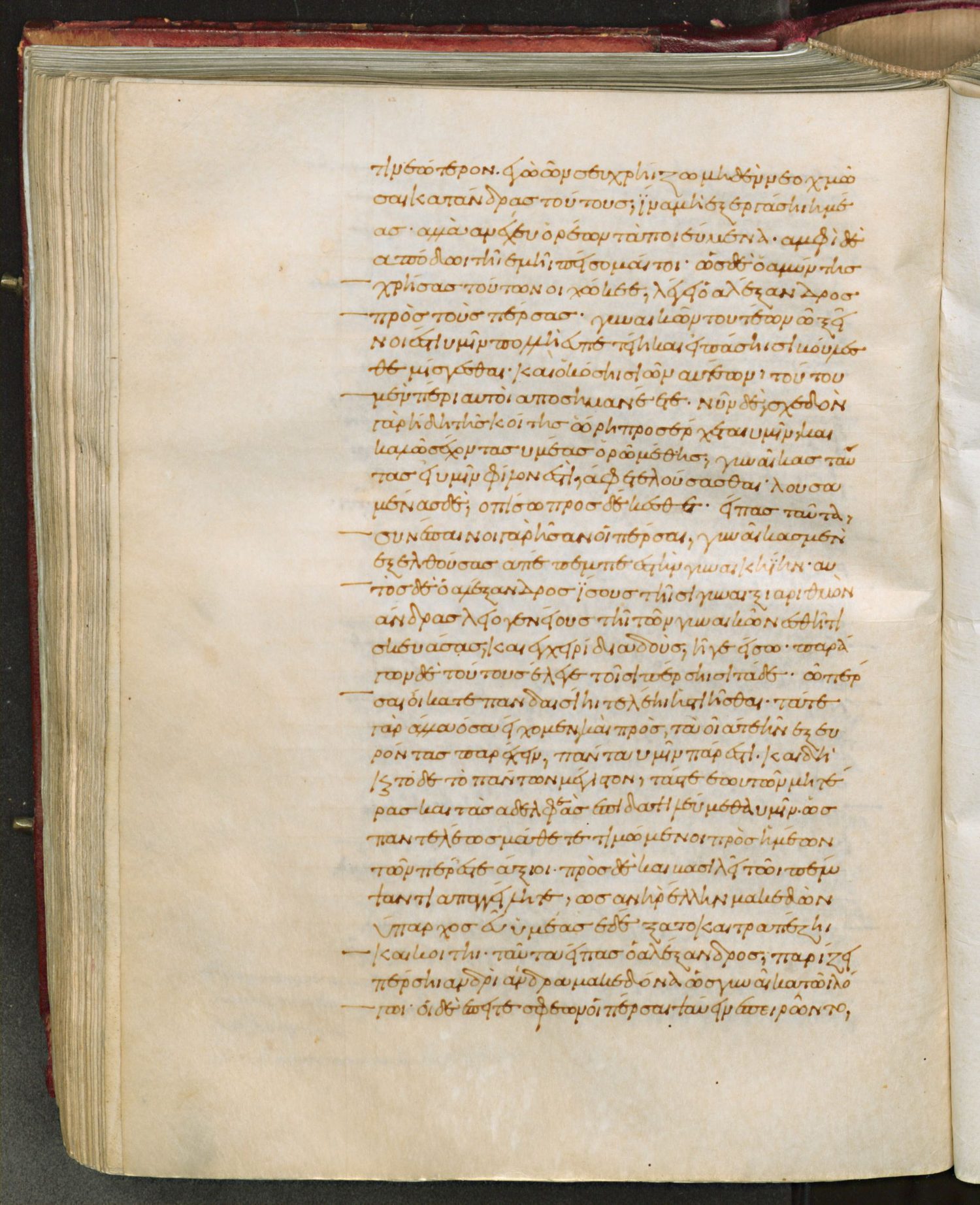
Where on the image
Laur. Plut. 70.3, fol. 202v: Greek here 5.19.2 to 5.20.5. Checked on the image (first and last words read and located in the Greek; each break checked against the neighbouring page): fol. 202v begins ‹τι νεώτερον· ἐγὼ ὦν› (5.19.2), ends ‹οἱ Πέρσαι ψαύειν ἐπειρῶντο› (5.20.5). English here: 5.20.1 to 5.20.5 (Godley's sentences for the sections whose Greek lies mostly on this page).
5.19.2τι νεώτερον· ἐγὼ ὦν σευ χρηίζω μηδὲν νεοχμῶσαι κατʼ ἄνδρας τούτους, ἵνα μὴ ἐξεργάσῃ ἡμέας, ἀλλὰ ἀνέχευ ὁρέων τὰ ποιεύμενα· ἀμφὶ δὲ ἀπόδῳ τῇ ἐμῇ πείσομαί τοι. 5.20.1ὡς δὲ ὁ Ἀμύντης χρηίσας τούτων οἰχώκεε, λέγει ὁ Ἀλέξανδρος πρὸς τοὺς Πέρσας γυναικῶν τουτέων, ὦ ξεῖνοι, ἔστι ὑμῖν πολλὴ εὐπετείη, καὶ εἰ πάσῃσι βούλεσθε μίσγεσθαι καὶ ὁκόσῃσι ὦν αὐτέων. 5.20.2τούτου μὲν πέρι αὐτοὶ ἀποσημανέετε· νῦν δέ, σχεδὸν γὰρ ἤδη τῆς κοίτης ὥρη προσέρχεται ὑμῖν καὶ καλῶς ἔχοντας ὑμέας ὁρῶ μέθης, γυναῖκας ταύτας, εἰ ὑμῖν φίλον ἐστί, ἄπετε λούσασθαι, λουσαμένας δὲ ὀπίσω προσδέκεσθε. 5.20.3εἴπας ταῦτα, συνέπαινοι γὰρ ἦσαν οἱ Πέρσαι, γυναῖκας μὲν ἐξελθούσας ἀπέπεμπε ἐς τὴν γυναικηίην, αὐτὸς δὲ ὁ Ἀλέξανδρος ἴσους τῇσι γυναιξὶ ἀριθμὸν ἄνδρας λειογενείους τῇ τῶν γυναικῶν ἐσθῆτι σκευάσας καὶ ἐγχειρίδια δοὺς ἦγε ἔσω, παράγων δὲ τούτους ἔλεγε τοῖσι Πέρσῃσι τάδε. 5.20.4ὦ Πέρσαι, οἴκατε πανδαισίῃ τελέῃ ἱστιῆσθαι· τά τε γὰρ ἄλλα ὅσα εἴχομεν, καὶ πρὸς τὰ οἷά τε ἦν ἐξευρόντας παρέχειν, πάντα ὑμῖν πάρεστι, καὶ δὴ καὶ τόδε τὸ πάντων μέγιστον, τάς τε ἑωυτῶν μητέρας καὶ τὰς ἀδελφεὰς ἐπιδαψιλευόμεθα ὑμῖν, ὡς παντελέως μάθητε τιμώμενοι πρὸς ἡμέων τῶν περ ἐστὲ ἄξιοι, πρὸς δὲ καὶ βασιλέι τῷ πέμψαντι ἀπαγγείλητε ὡς ἀνὴρ Ἕλλην Μακεδόνων ὕπαρχος εὖ ὑμέας ἐδέξατο καὶ τραπέζῃ καὶ κοίτῃ. 5.20.5ταῦτα εἴπας ὁ Ἀλέξανδρος παρίζει Πέρσῃ ἀνδρὶ ἄνδρα Μακεδόνα ὡς γυναῖκα τῷ λόγῳ· οἳ δέ, ἐπείτε σφέων οἱ Πέρσαι ψαύειν ἐπειρῶντο,
5.20.1Amyntas with this request having gone his ways, Alexander said to the Persians, “Sirs, you have full freedom to deal with these women, and may have intercourse with all or any of them. 5.20.2As to that, you will yourselves declare your pleasure; but now, as the hour of your rest draws nigh and I see that you are all well and truly drunk, suffer these women, so please you, to depart and wash; and when they have washed, look tor them to come to you again.” 5.20.3Having so said, the Persians consenting thereto, he sent the women, when they had gone out, away to their apartment; Alexander then took as many smooth-chinned men as there were women and attired them in the women’s dress and gave them daggers; these he brought in, and so doing he said to the 5.20.4Persians: “Methinks, men of Persia, you have feasted to your hearts’ content; all that we had and all besides that we could find to give you has been set before you; and now we make you a free gift of our best and choicest possession, our own mothers and sisters. Learn thereby that we accord you the full meed of honour that you deserve, and tell your king who sent you how his Greek viceroy of Macedonia has received you hospitably to board and bed.” 5.20.5With that, Alexander made his Macedonians to sit each next to a Persian, as though they were women; and when the Persians began to lay hands on them, they were despatched by the Macedonians.
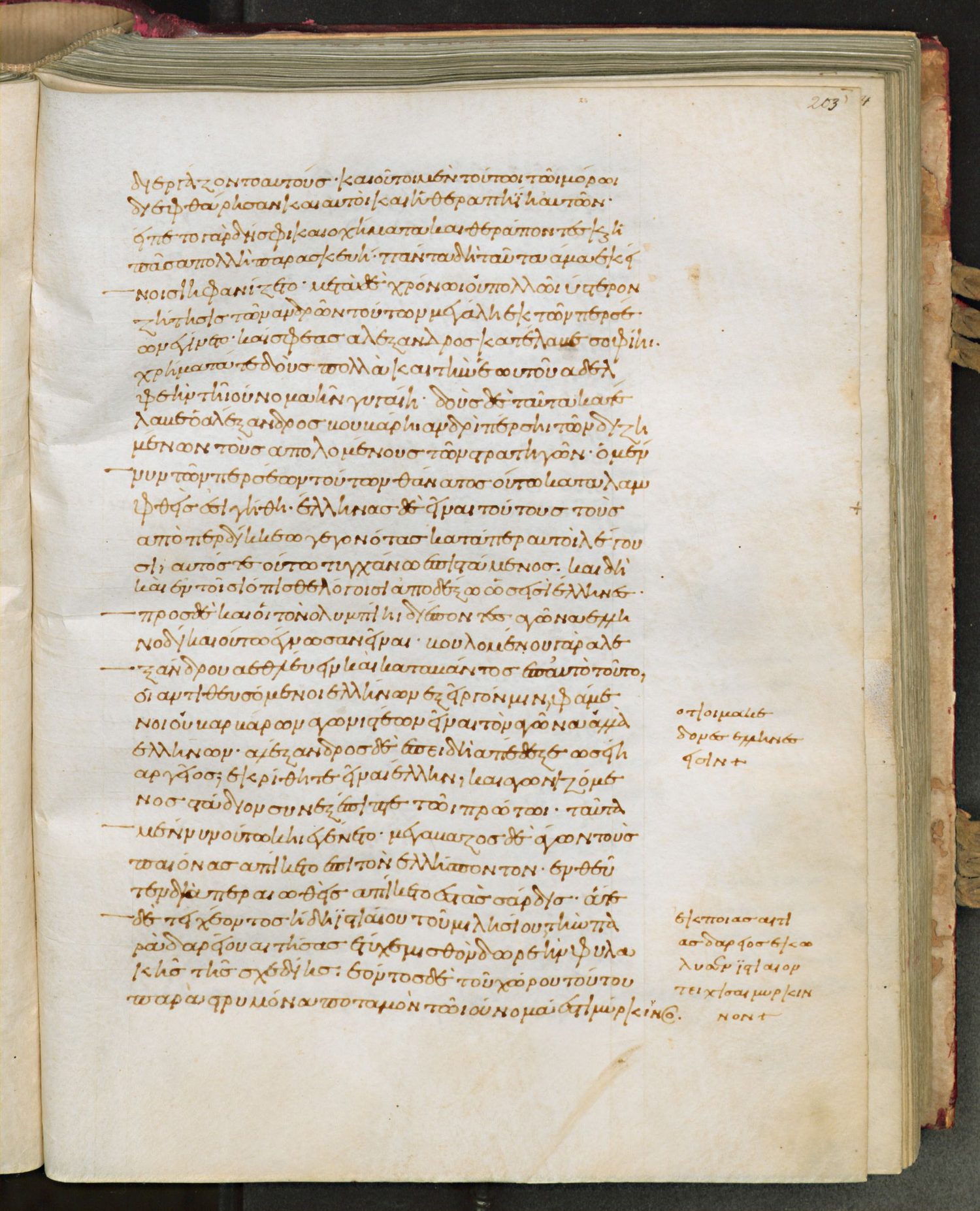
Where on the image
Laur. Plut. 70.3, fol. 203r: Greek here 5.20.5 to 5.23.1. Checked on the image (first and last words read and located in the Greek; each break checked against the neighbouring page): fol. 203r begins ‹διεργάζοντο αὐτούς.καὶ οὗτοι μὲν› (5.20.5), ends ‹τῷ οὔνομα ἐστὶ Μύρκινος› (5.23.1). English here: 5.21.1 to 5.23.1 (Godley's sentences for the sections whose Greek lies mostly on this page).
5.20.5διεργάζοντο αὐτούς. 5.21.1καὶ οὗτοι μὲν τούτῳ τῷ μόρῳ διεφθάρησαν, καὶ αὐτοὶ καὶ ἡ θεραπηίη αὐτῶν· εἵπετο γὰρ δή σφι καὶ ὀχήματα καὶ θεράποντες καὶ ἡ πᾶσα πολλὴ παρασκευή· πάντα δὴ ταῦτα ἅμα πᾶσι ἐκείνοισι ἠφάνιστο. 5.21.2μετὰ δὲ χρόνῳ οὐ πολλῷ ὕστερον ζήτησις τῶν ἀνδρῶν τούτων μεγάλη ἐκ τῶν Περσέων ἐγίνετο, καί σφεας Ἀλέξανδρος κατέλαβε σοφίῃ, χρήματά τε δοὺς πολλὰ καὶ τὴν ἑωυτοῦ ἀδελφεὴν τῇ οὔνομα ἦν Γυγαίη· δοὺς δὲ ταῦτα κατέλαβε ὁ Ἀλέξανδρος Βουβάρῃ ἀνδρὶ Πέρσῃ, τῶν διζημένων τοὺς ἀπολομένους τῷ στρατηγῷ. 5.22.1ὁ μέν νυν τῶν Περσέων τούτων θάνατος οὕτω καταλαμφθεὶς ἐσιγήθη. Ἕλληνας δὲ εἶναι τούτους τοὺς ἀπὸ Περδίκκεω γεγονότας, κατά περ αὐτοὶ λέγουσι, αὐτός τε οὕτω τυγχάνω ἐπιστάμενος καὶ δὴ καὶ ἐν τοῖσι ὄπισθε λόγοισι ἀποδέξω ὡς εἰσὶ Ἕλληνες, πρὸς δὲ καὶ οἱ τὸν ἐν Ὀλυμπίῃ διέποντες ἀγῶνα Ἑλληνοδίκαι οὕτω ἔγνωσαν εἶναι. 5.22.2Ἀλεξάνδρου γὰρ ἀεθλεύειν ἑλομένου καὶ καταβάντος ἐπʼ αὐτὸ τοῦτο, οἱ ἀντιθευσόμενοι Ἑλλήνων ἐξεῖργόν μιν, φάμενοι οὐ βαρβάρων ἀγωνιστέων εἶναι τὸν ἀγῶνα ἀλλὰ Ἑλλήνων· Ἀλέξανδρος δὲ ἐπειδὴ ἀπέδεξε ὡς εἴη Ἀργεῖος, ἐκρίθη τε εἶναι Ἕλλην καὶ ἀγωνιζόμενος στάδιον συνεξέπιπτε τῷ πρώτῳ. 5.23.1ταῦτα μέν νυν οὕτω κῃ ἐγένετο. Μεγάβαζος δὲ ἄγων τοὺς Παίονας ἀπίκετο ἐπὶ τὸν Ἑλλήποντον· ἐνθεῦτεν διαπεραιωθεὶς ἀπίκετο ἐς τὰς Σάρδις. ἅτε δὲ τειχέοντος ἤδη Ἱστιαίου τοῦ Μιλησίου τὴν παρὰ Δαρείου αἰτήσας ἔτυχε μισθὸν δωρεὴν φυλακῆς τῆς σχεδίης, ἐόντος δὲ τοῦ χώρου τούτου παρὰ Στρυμόνα ποταμὸν τῷ οὔνομα ἐστὶ Μύρκινος,
5.21.1This was the fate whereby they perished, they and all their retinue; for carnages too had come with them, and servants, and all the great train they had; the Macedonians made away with all that, as well as with all the envoys themselves. 5.21.2No long time afterwards the Persians made a great search for these men; but Alexander had cunning enough to put an end to it by the gift of a great sum and his own sister Gygaea to Bubares, a Persian, the general of those who sought for the slain men; by this gift he made an end of the search. 5.22.1Thus was the death of these Persians suppressed and hidden in silence. Now that these descendants of Perdiccas are Greeks, as they themselves say, I myself chance to know and will prove it in the later part of my history; and further, the Hellenodicae who have the ordering of the contest at Olympia determined that it is so. 5.22.2For when Alexander chose to contend and entered the lists for that purpose, the Greeks who were to run against him were for barring him from the race, saying that the contest should be for Greeks and not for foreigners; but Alexander proving himself to be an Argive, he was judged to be a Greek; so he contended in the furlong race and ran a dead heat for the first place. 5.23.1In some such wise these things fell out. But Megabazus came to the Hellespont, bringing with him the Paeonians; thence he crossed it and came to Sardis. Now as Histiaeus the Milesian was by this time fortifying the place which he had asked of Darius as his reward for guarding the bridge (this was a place called Myrcinus by the river Strymon), Megabazus had learnt what Histiaeus was about, and no sooner had he come to Sardis with the Paeonians than he said to Darius: “Sire, what is this that you have done?
Where on the image
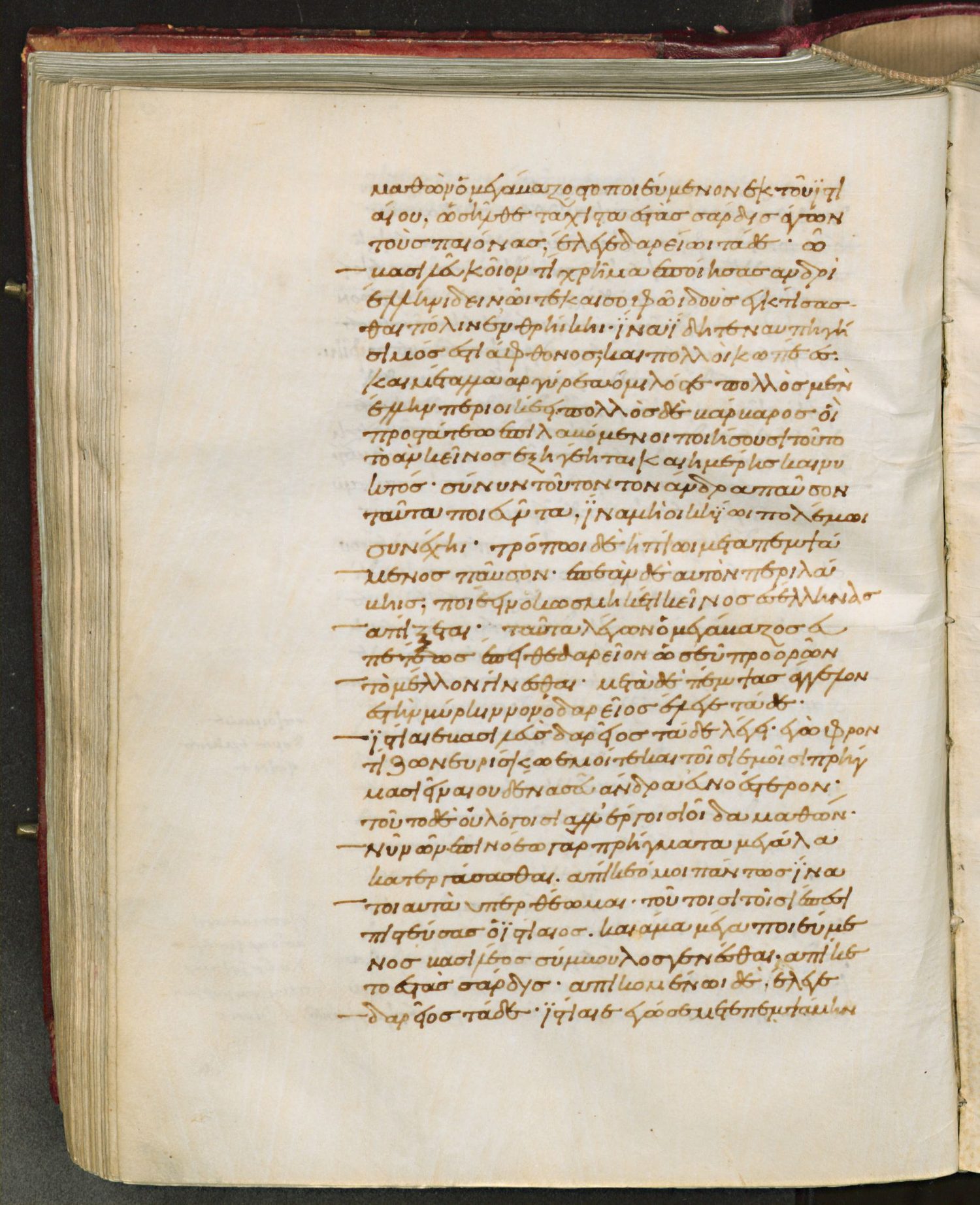
Laur. Plut. 70.3, fol. 203v: Greek here 5.23.1 to 5.24.3. Checked on the image (first and last words read and located in the Greek; each break checked against the neighbouring page): fol. 203v begins ‹μαθὼν ὁ Μεγάβαζος τὸ› (5.23.1), ends ‹Ἱστιαῖε, ἐγώ σε μετεπεμψάμην› (5.24.3). English here: 5.23.2 to 5.24.3 (Godley's sentences for the sections whose Greek lies mostly on this page).
5.23.1μαθὼν ὁ Μεγάβαζος τὸ ποιεύμενον ἐκ τοῦ Ἱστιαίου, ὡς ἦλθε τάχιστα ἐς τὰς Σάρδις ἄγων τοὺς Παίονας, ἔλεγε Δαρείῳ τάδε. 5.23.2ὦ βασιλεῦ, κοῖόν τι χρῆμα ἐποίησας, ἀνδρὶ Ἕλληνι δεινῷ τε καὶ σοφῷ δοὺς ἐγκτίσασθαι πόλιν ἐν Θρηίκῃ, ἵνα ἴδη τε ναυπηγήσιμος ἐστὶ ἄφθονος καὶ πολλοὶ κωπέες καὶ μέταλλα ἀργύρεα, ὅμιλός τε πολλὸς μὲν Ἕλλην περιοικέει πολλὸς δὲ βάρβαρος, οἳ προστάτεω ἐπιλαβόμενοι ποιήσουσι τοῦτο τὸ ἂν κεῖνος ἐξηγέηται καὶ ἡμέρης καὶ νυκτός. 5.23.3σύ νυν τοῦτον τὸν ἄνδρα παῦσον ταῦτα ποιεῦντα, ἵνα μὴ οἰκηίῳ πολέμῳ συνέχῃ· τρόπῳ δὲ ἠπίῳ μεταπεμψάμενος παῦσον. ἐπεὰν δὲ αὐτὸν περιλάβῃς, ποιέειν ὅκως μηκέτι κεῖνος ἐς Ἕλληνας ἀπίξεται. 5.24.1ταῦτα λέγων ὁ Μεγάβαζος εὐπετέως ἔπειθε Δαρεῖον ὡς εὖ προορῶν τὸ μέλλον γίνεσθαι. μετὰ δὲ πέμψας ἄγγελον ἐς τὴν Μύρκινον ὁ Δαρεῖος ἔλεγε τάδε. Ἱστιαῖε, βασιλεὺς Δαρεῖος τάδε λέγει. ἐγὼ φροντίζων εὑρίσκω ἐμοί τε καὶ τοῖσι ἐμοῖσι πρήγμασι εἶναι οὐδένα σεῦ ἄνδρα εὐνοέστερον· τοῦτο δὲ οὐ λόγοισι ἀλλʼ ἔργοισι οἶδα μαθών. 5.24.2νῦν ὦν, ἐπινοέω γὰρ πρήγματα μεγάλα κατεργάσασθαι, ἀπίκεό μοι πάντως, ἵνα τοι αὐτὰ ὑπερθέωμαι. τούτοισι τοῖσι ἔπεσι πιστεύσας ὁ Ἱστιαῖος, καὶ ἅμα μέγα ποιεύμενος βασιλέος σύμβουλος γενέσθαι, ἀπίκετο ἐς τὰς Σάρδις· 5.24.3ἀπικομένῳ δέ οἱ ἔλεγε Δαρεῖος τάδε. Ἱστιαῖε, ἐγώ σε μετεπεμψάμην
5.23.2You have given a clever and cunning Greek a city to build in Thrace, where are forests in plenty for ship-building, and much wood for oars, and mines of silver, and much people both Greek and foreign dwelling around, who when they have a champion to lead them will do all his behests by day or by night. 5.23.3Do you then stay this man from these his doings, lest you have a war on hand with your own subjects; but to this end bring him to you by gentle means; and when you have him safe, see to it that he never return to Hellas.” 5.24.1Darius was readily persuaded by this, for he thought that Megabazus foresaw the future aright; and presently he sent this message to Myrcinus: “These to Histiaeus from Darius the king:—My thoughts can show me no man who is a truer friend to me and mine; not words but deeds have proved this to me. 5.24.2Now therefore let nothing hinder you from coming to me, that I may disclose to you certain great purposes which I have in mind.” Trusting these words, and proud, moreover, that he should be the king’s counsellor, Histiaeus came to Sardis; and 5.24.3when he had come Darius said to him, “Histiaeus, I will tell you wherefore I sent for you. As soon as I returned from Scythia and you were gone from my sight, there was nothing whereof I had so immediate a desire as the seeing and speaking with you; for I knew that the most precious of all possessions is a wise and loyal friend; and I can witness of my own knowledge that you have dealt both wisely and loyally with me.
Where on the image
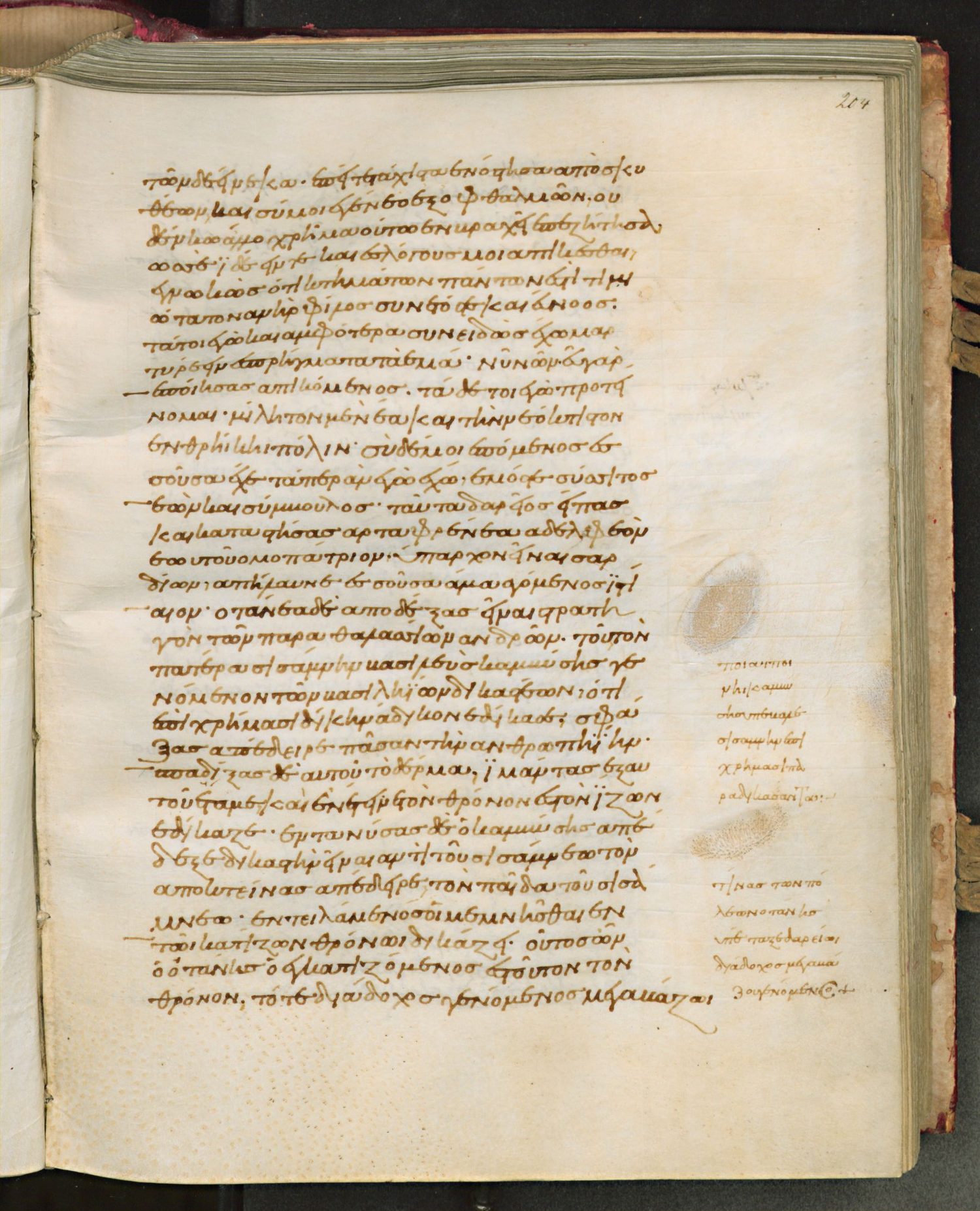
Laur. Plut. 70.3, fol. 204r: Greek here 5.24.3 to 5.26.1. Checked on the image (first and last words read and located in the Greek; each break checked against the neighbouring page): fol. 204r begins ‹τῶνδε εἵνεκεν. ἐπείτε τάχιστα› (5.24.3), ends ‹τότε διάδοχος γενόμενος Μεγαβάζῳ› (5.26.1). The last line ends Μεγαβάζῳ; a short reader's note stands in the right margin beside it. English here: 5.24.4 to 5.25.2 (Godley's sentences for the sections whose Greek lies mostly on this page).
5.24.3τῶνδε εἵνεκεν. ἐπείτε τάχιστα ἐνόστησα ἀπὸ Σκυθέων καὶ σύ μοι ἐγένεο ἐξ ὀφθαλμῶν, οὐδέν κω ἄλλο χρῆμα οὕτω ἐν βραχέι ἐπεζήτησα ὡς σὲ ἰδεῖν τε καὶ ἐς λόγους μοι ἀπικέσθαι, ἐγνωκὼς ὅτι κτημάτων πάντων ἐστὶ τιμιώτατον ἀνὴρ φίλος συνετός τε καὶ εὔνοος, τά τοι ἐγὼ καὶ ἀμφότερα συνειδὼς ἔχω μαρτυρέειν ἐς πρήγματα τὰ ἐμά. 5.24.4νῦν ὦν, εὖ γὰρ ἐποίησας ἀπικόμενος, τάδε τοι ἐγὼ προτείνομαι· Μίλητον μὲν ἔα καὶ τὴν νεόκτιστον ἐν Θρηίκῃ πόλιν, σὺ δέ μοι ἑπόμενος ἐς Σοῦσα ἔχε τά περ ἂν ἐγὼ ἔχω, ἐμός τε σύσσιτος ἐὼν καὶ σύμβουλος. 5.25.1ταῦτα Δαρεῖος εἴπας, καὶ καταστήσας Ἀρταφρένεα ἀδελφεὸν ἑωυτοῦ ὁμοπάτριον ὕπαρχον εἶναι Σαρδίων, ἀπήλαυνε ἐς Σοῦσα ἅμα ἀγόμενος Ἱστιαῖον, Ὀτάνεα δὲ ἀποδέξας στρατηγὸν εἶναι τῶν παραθαλασσίων ἀνδρῶν· τοῦ τὸν πατέρα Σισάμνην βασιλεὺς Καμβύσης γενόμενον τῶν βασιληίων δικαστέων, ὅτι ἐπὶ χρήμασι δίκην ἄδικον ἐδίκασε, σφάξας ἀπέδειρε πᾶσαν τὴν ἀνθρωπέην, σπαδίξας δὲ αὐτοῦ τὸ δέρμα ἱμάντας ἐξ αὐτοῦ ἔταμε καὶ ἐνέτεινε τὸν θρόνον ἐς τὸν ἵζων ἐδίκαζε· 5.25.2ἐντανύσας δὲ ὁ Καμβύσης ἀπέδεξε δικαστὴν εἶναι ἀντὶ τοῦ Σισάμνεω, τὸν ἀποκτείνας ἀπέδειρε, τὸν παῖδα τοῦ Σισάμνεω, ἐντειλάμενός οἱ μεμνῆσθαι ἐν τῷ κατίζων θρόνῳ δικάζει. 5.26.1οὗτος ὦν ὁ Ὀτάνης ὁ ἐγκατιζόμενος ἐς τοῦτον τὸν θρόνον, τότε διάδοχος γενόμενος Μεγαβάζῳ
5.24.4Now therefore, seeing that you have done well in coming hither, I make you this proposal:—leave Miletus and your newly founded Thracian city, and follow me to Susa, to have there all that is mine and to share my table and my counsels.” 5.25.1So said Darius; and appointing Artaphrenes his father’s son to be viceroy of Sardis, he rode away to Susa, taking Histiaeus with him. But first he made Otanes governor of the people on the sea-coast. Otanes’ father Sisamnes had been one of the royal judges; Cambyses had cut his throat and flayed off all his skin because he had been bribed to give an unjust judgment; and he had then cut leather strips of the skin which had been torn away and covered therewith the seat whereon Sisamnes had sat to give judgment; 5.25.2which having done, Cambyses appointed the son of this slain and flayed Sisamnes to be judge in his place, admonishing him to remember what was the judgment-seat whereon he sat.
Where on the image
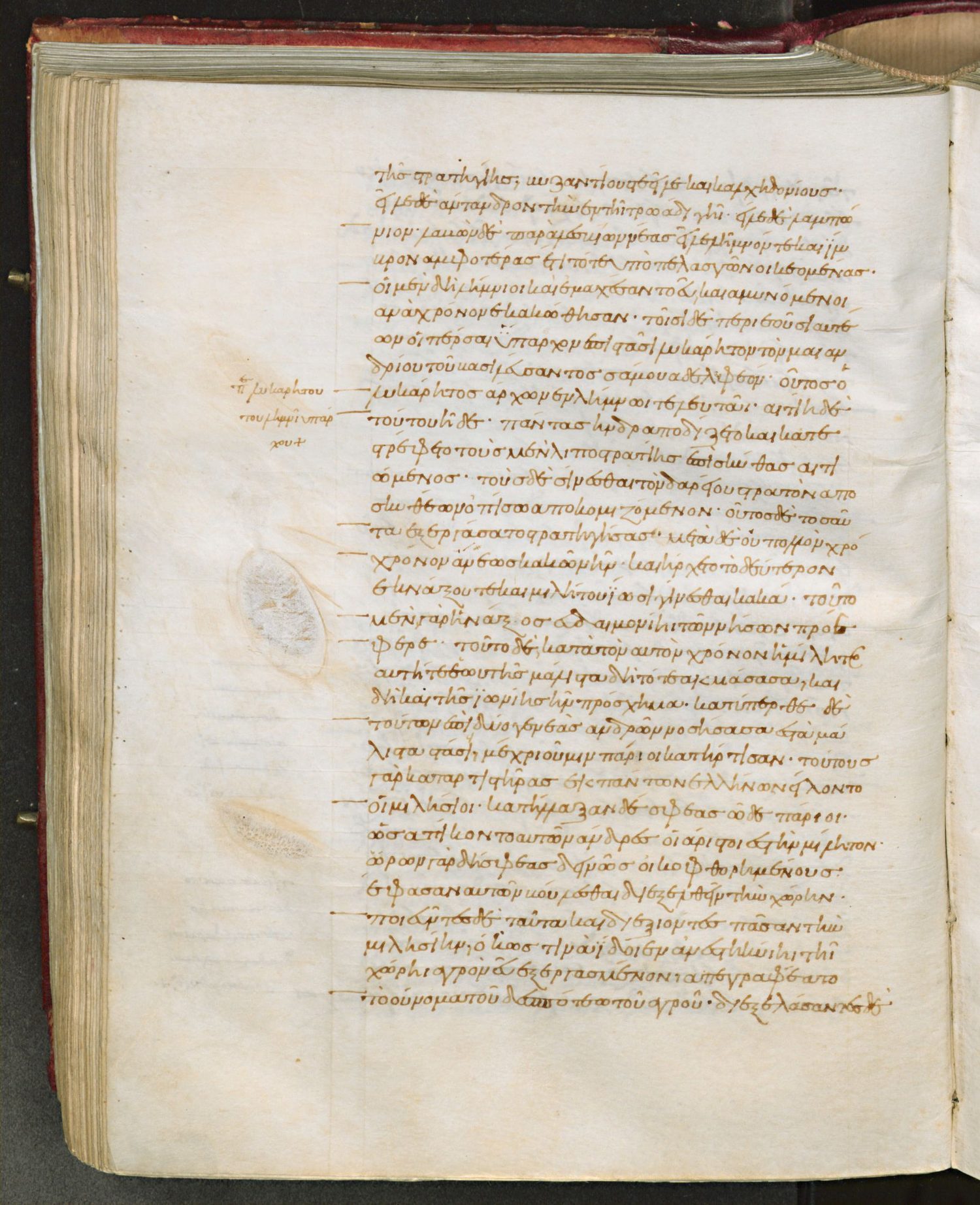
Laur. Plut. 70.3, fol. 204v: Greek here 5.26.1 to 5.27.2. Checked on the image (first and last words read and located in the Greek; each break checked against the neighbouring page): fol. 204v begins ‹τῆς στρατηγίης, Βυζαντίους τε› (5.26.1), ends ‹δεσπότεω τοῦ ἀγροῦ.διεξελάσαντες δὲ› (5.29.2). English here: 5.26.1 to 5.27.2 (Godley's sentences for the sections whose Greek lies mostly on this page).
5.26.1τῆς στρατηγίης, Βυζαντίους τε εἷλε καὶ Καλχηδονίους, εἷλε δὲ Ἄντανδρον τὴν ἐν τῇ Τρῳάδι γῇ, εἷλε δὲ Λαμπώνιον, λαβὼν δὲ παρὰ Λεσβίων νέας εἷλε Λῆμνόν τε καὶ Ἴμβρον, ἀμφοτέρας ἔτι τότε ὑπὸ Πελασγῶν οἰκεομένας. 5.27.1οἱ μὲν δὴ Λήμνιοι καὶ ἐμαχέσαντο εὖ καὶ ἀμυνόμενοι ἀνὰ χρόνον ἐκακώθησαν, τοῖσι δὲ περιεοῦσι αὐτῶν οἱ Πέρσαι ὕπαρχον ἐπιστᾶσι Λυκάρητον τὸν Μαιανδρίου τοῦ βασιλεύσαντος Σάμου ἀδελφεόν. 5.27.2οὗτος ὁ Λυκάρητος ἄρχων ἐν Λήμνῳ τελευτᾷ. αἰτίη δὲ τούτου ἥδε· πάντας ἠνδραποδίζετο καὶ κατεστρέφετο τοὺς μὲν λιποστρατίης ἐπὶ Σκύθας αἰτιώμενος, τοὺς δὲ σίνασθαι τὸν Δαρείου στρατὸν ἀπὸ Σκυθέων ὀπίσω ἀποκομιζόμενον.
5.26.1This Otanes then, who sat upon that seat, was now made successor to Megabazus in his governorship; he took Byzantium and Calchedon, and Antandrus in the Troad, and Lamponium; and he conquered with ships that he got from the Lesbians Lemnos and Imbros, both then still inhabited by Pelasgians. 5.27.1The Lemnians fought well and defended themselves, till at last they were brought to evil plight, and the Persians set a governor over those that were left of them, Lycaretus the brother of Maeandrius who had been king of Samos. 5.27.2This Lycaretus came to his end while ruling in Lemnos; this was because he strove to enslave and subdue all the people, accusing some of shunning service against the Scythians, and others of plundering Darius’ army on its way back from Scythia.
Notes
- Greek: the text printed in A. D. Godley's Loeb edition, via Perseus (tlg0016.tlg001.perseus-grc2). Square brackets mark words the editor considers later additions; [...] marks a gap the editor indicates. Perseus note markers are omitted.
- English: A. D. Godley, Herodotus vol. 3 (1922) (Loeb Classical Library), as transcribed on Wikisource. Godley's footnotes are omitted.
- Section numbers in the English were placed by comparing Godley's text with the Perseus version of his translation; where a section begins inside one of Godley's sentences, the English is kept with the page that holds the start of that sentence.
Cite
Sources
- Source: Florence, Laur. Plut. 70.3 (10th c.) via BML Teca Digitale + Greek of Godley's Loeb (Perseus) + English of A. D. Godley (Loeb, Wikisource) (holding institution)
- Critical edition: Greek of A. D. Godley's Loeb edition (1920-1925), via Perseus
← previous · → next · v cycle view · l back to library