Herodotus, Histories 5.28-38: The expedition to Naxos and the beginning of the Ionian revolt
Introduction
Herodotus of Halicarnassus wrote the Histories in the third quarter of the 5th century BCE, an inquiry into the deeds of Greeks and barbarians and the causes of the wars between them, later divided into nine books. Book 5 tells of the Persian advance in Thrace and Macedonia, the outbreak of the Ionian revolt under Aristagoras of Miletus, his appeals to Sparta and Athens, with Herodotus' accounts of Sparta and of Athens after the tyrants, and the burning of Sardis and the first years of the revolt.
The photographs are of Florence, Biblioteca Medicea Laurenziana, Plut. 70.3 (parchment, 10th century, 374 folios, 31 lines a page), Herodotus, Histories (codex A of the editors), the oldest surviving manuscript of the complete Histories, from the Teca Digitale of the Biblioteca Medicea Laurenziana. Each section below is the text of one page, or of the part of a page that falls within these chapters. The first and last words of every page were read on the photograph and located in the Greek, and every page break was checked against the next page; the notes quote these words. Readers' notes in the margins are not part of the text and are mentioned where they occur.
The Greek is the text printed in A. D. Godley's Loeb edition (1920-1925), from Perseus; it is the edited text, not a transcription of the manuscript, whose wording differs in places. The English is Godley's translation as printed, from Wikisource. Godley's English carries only chapter numbers; the section numbers shown in it were placed by comparison with the Perseus version of his translation. Each page's English is cut at the end of one of Godley's sentences, so it can begin or end a few lines away from the Greek of the page; each note gives the exact ranges.
This entry covers chapters 5.28-38, on fol. 204v to 208r.
How was this verified? (Provenance)
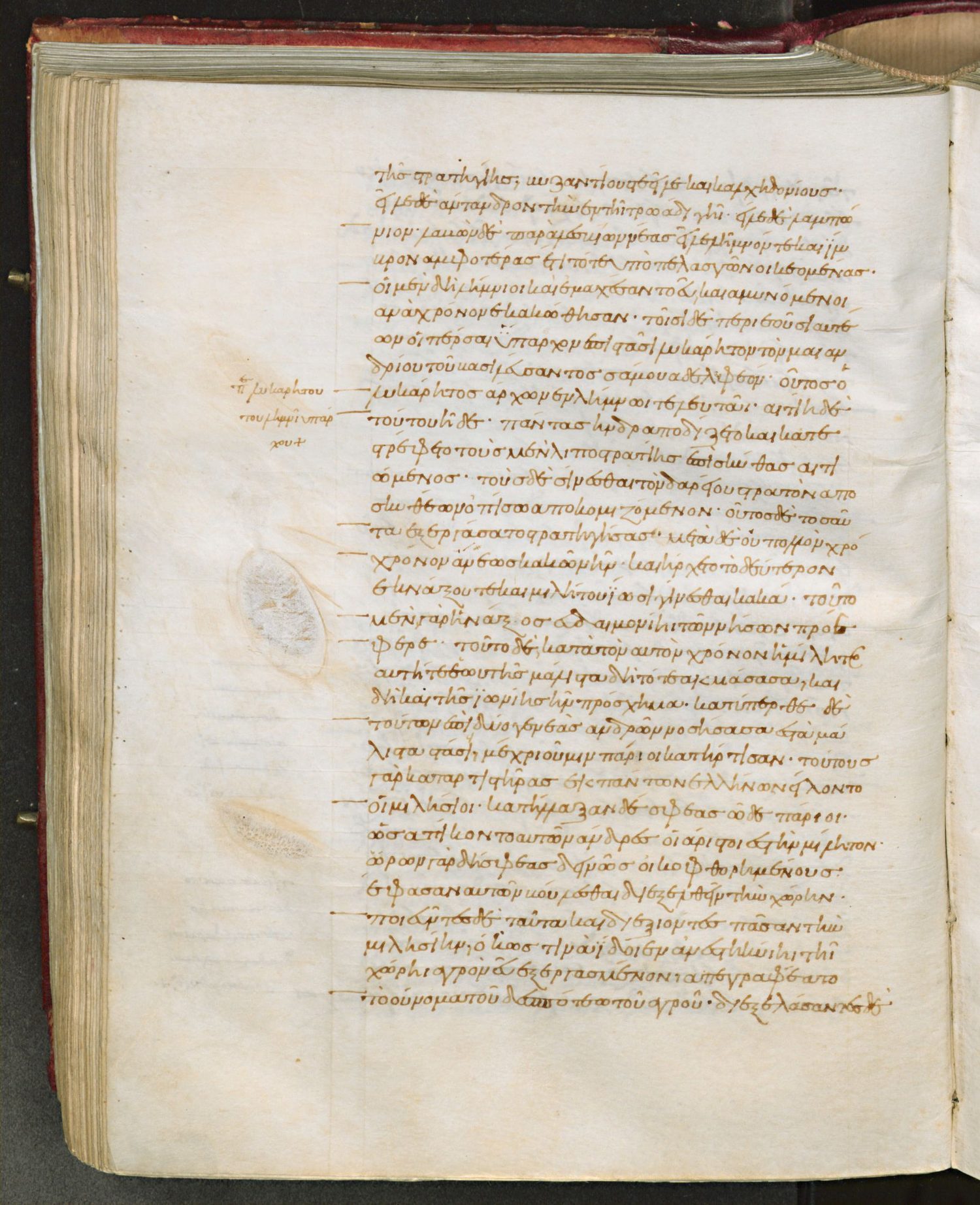
Where on the image
Laur. Plut. 70.3, fol. 204v: Greek here 5.28.1 to 5.29.2. Checked on the image (first and last words read and located in the Greek; each break checked against the neighbouring page): fol. 204v begins ‹τῆς στρατηγίης, Βυζαντίους τε› (5.26.1), ends ‹δεσπότεω τοῦ ἀγροῦ.διεξελάσαντες δὲ› (5.29.2). English here: 5.28.1 to 5.29.1 (Godley's sentences for the sections whose Greek lies mostly on this page).
5.28.1οὗτος δὲ τοσαῦτα ἐξεργάσατο στρατηγήσας. μετὰ δὲ οὐ πολλὸν χρόνον ἄνεσις κακῶν ἦν, καὶ ἤρχετο τὸ δεύτερον ἐκ Νάξου τε καὶ Μιλήτου Ἴωσι γίνεσθαι κακά. τοῦτο μὲν γὰρ ἡ Νάξος εὐδαιμονίῃ τῶν νήσων προέφερε, τοῦτο δὲ κατὰ τὸν αὐτὸν χρόνον ἡ Μίλητος αὐτή τε ἑωυτῆς μάλιστα δὴ τότε ἀκμάσασα καὶ δὴ καὶ τῆς Ἰωνίης ἦν πρόσχημα, κατύπερθε δὲ τούτων ἐπὶ δύο γενεὰς ἀνδρῶν νοσήσασα ἐς τὰ μάλιστα στάσι, μέχρι οὗ μιν Πάριοι κατήρτισαν· τούτους γὰρ καταρτιστῆρας ἐκ πάντων Ἑλλήνων εἵλοντο οἱ Μιλήσιοι. 5.29.1κατήλλαξαν δὲ σφέας ὧδε Πάριοι. ὡς ἀπίκοντο αὐτῶν ἄνδρες οἱ ἄριστοι ἐς τὴν Μίλητον, ὥρων γὰρ δή σφεας δεινῶς οἰκοφθορημένους, ἔφασαν αὐτῶν βούλεσθαι διεξελθεῖν τὴν χώρην· ποιεῦντες δὲ ταῦτα καὶ διεξιόντες πᾶσαν τὴν Μιλησίην, ὅκως τινὰ ἴδοιεν ἐν ἀνεστηκυίῃ τῇ χώρῃ ἀγρὸν εὖ ἐξεργασμένον, ἀπεγράφοντο τὸ οὔνομα τοῦ δεσπότεω τοῦ ἀγροῦ. 5.29.2διεξελάσαντες δὲ
5.28.1All this Otanes achieved when he had been made governor. Thereafter, when there had been no long surcease of evils, trouble began to come on the Ionians from Naxos and Miletus once more. For Naxos surpassed all the other islands in prosperity, and at about the same time Miletus was then at the height of her fortunes, insomuch that she was the chief ornament of Ionia; but for two generations before this she had been very greatly troubled by faction, till the Parians made peace among them, being chosen out of all Greeks by the Milesians to be peace-makers. 5.29.1The Parians reconciled them in this manner:—Their best men came to Miletus, and seeing the Milesian households sadly wasted, said that they desired to go about their country. Doing this, and visiting all the territory of Miletus, whenever they found any well-tilled farm in the desolation of the land, they wrote down the name of the owner of that farm.
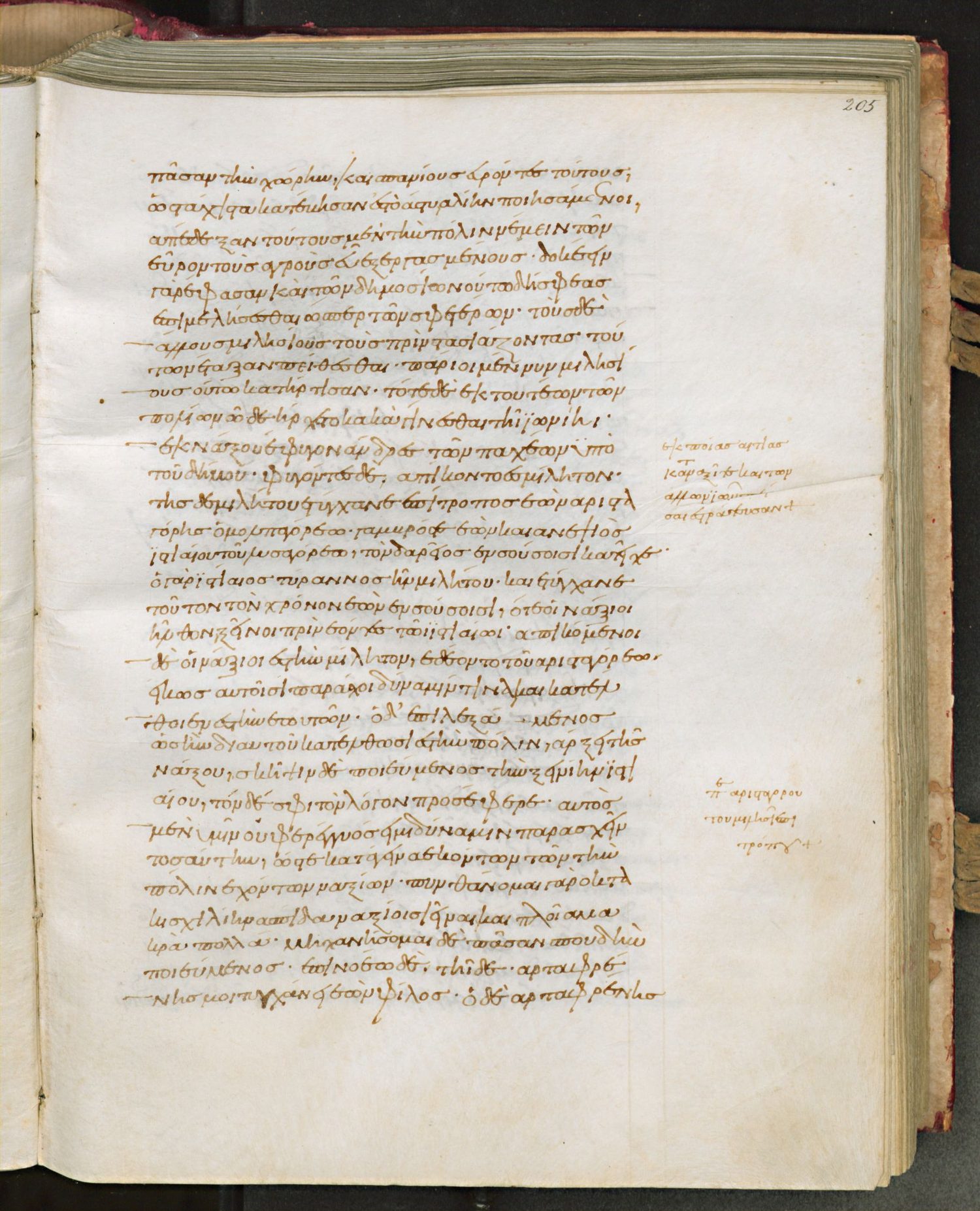
Where on the image
Laur. Plut. 70.3, fol. 205r: Greek here 5.29.2 to 5.30.5. Checked on the image (first and last words read and located in the Greek; each break checked against the neighbouring page): fol. 205r begins ‹πᾶσαν τὴν χώρην καὶ› (5.29.2), ends ‹φίλος· ὁ δὲ Ἀρταφρένης› (5.30.5). English here: 5.29.2 to 5.30.4 (Godley's sentences for the sections whose Greek lies mostly on this page).
5.29.2πᾶσαν τὴν χώρην καὶ σπανίους εὑρόντες τούτους, ὡς τάχιστα κατέβησαν ἐς τὸ ἄστυ, ἁλίην ποιησάμενοι ἀπέδεξαν τούτους μὲν πόλιν νέμειν τῶν εὗρον τοὺς ἀγροὺς εὖ ἐξεργασμένους· δοκέειν γὰρ ἔφασαν καὶ τῶν δημοσίων οὕτω δή σφεας ἐπιμελήσεσθαι ὥσπερ τῶν σφετέρων· τοὺς δὲ ἄλλους Μιλησίους τοὺς πρὶν στασιάζοντας τούτων ἔταξαν πείθεσθαι. 5.30.1Πάριοι μέν νυν Μιλησίους οὕτω κατήρτισαν. τότε δὲ ἐκ τουτέων τῶν πολίων ὧδε ἤρχετο κακὰ γίνεσθαι τῇ Ἰωνίῃ. ἐκ Νάξου ἔφυγον ἄνδρες τῶν παχέων ὑπὸ τοῦ δήμου, φυγόντες δὲ ἀπίκοντο ἐς Μίλητον. 5.30.2τῆς δὲ Μιλήτου ἐτύγχανε ἐπίτροπος ἐὼν Ἀρισταγόρης ὁ Μολπαγόρεω, γαμβρός τε ἐὼν καὶ ἀνεψιὸς Ἱστιαίου τοῦ Λυσαγόρεω, τὸν ὁ Δαρεῖος ἐν Σούσοισι κατεῖχε· ὁ γὰρ Ἱστιαῖος τύραννος ἦν Μιλήτου καὶ ἐτύγχανε τοῦτον τὸν χρόνον ἐὼν ἐν Σούσοισι, ὅτε οἱ Νάξιοι ἦλθον ξεῖνοι πρὶν ἐόντες τῷ Ἱστιαίῳ. 5.30.3ἀπικόμενοι δὲ οἱ Νάξιοι ἐς τὴν Μίλητον ἐδέοντο τοῦ Ἀρισταγόρεω, εἴ κως αὐτοῖσι παράσχοι δύναμίν τινα καὶ κατέλθοιεν ἐς τὴν ἑωυτῶν. ὁ δὲ ἐπιλεξάμενος ὡς ἢν διʼ αὐτοῦ κατέλθωσι ἐς τὴν πόλιν, ἄρξει τῆς Νάξου, σκῆψιν δὲ ποιεύμενος τὴν ξεινίην τὴν Ἱστιαίου, τόνδε σφι λόγον προσέφερε. 5.30.4αὐτὸς μὲν ὑμῖν οὐ φερέγγυός εἰμι δύναμιν παρασχεῖν τοσαύτην ὥστε κατάγειν ἀεκόντων τῶν τὴν πόλιν ἐχόντων Ναξίων· πυνθάνομαι γὰρ ὀκτακισχιλίην ἀσπίδα Ναξίοισι εἶναι καὶ πλοῖα μακρὰ πολλά· μηχανήσομαι δὲ πᾶσαν σπουδὴν ποιεύμενος. 5.30.5ἐπινοέω δὲ τῇδε. Ἀρταφρένης μοι τυγχάνει ἐὼν φίλος· ὁ δὲ Ἀρταφρένης
5.29.2Then, having travelled over the whole country and found but few such men, no sooner had they returned to the city than they assembled the people and appointed as rulers of the state those whose lands they had found well tilled; for these (they said) were like to take as good care of public affairs as they had of their own; and they ordained that the rest of the Milesians who had been at feud should obey these men. 5.30.1Thus the Parians made peace in Miletus. But now these cities began to bring trouble upon Ionia, and thus it befel:—Certain men of substance, being banished from Naxos by the commonalty, betook themselves to Miletus. 5.30.2Now it chanced that the deputy ruling Miletus was Aristagoras son of Molpagoras, son-in-law and cousin of that Histiaeus son of Lysagoras whom Darius kept with him at Susa; for Histiaeus was despot of Miletus, and was at Susa when the Naxians came; and they had been guests and friends of Histiaeus. 5.30.3The Naxians then on their coming to Miletus asked of Aristagoras if haply he could give them some power and so they might return to their own country. Considering that if by his means they were restored to their city he would be ruler of Naxos, and making a pretext of their friendship with Histiaeus, he made them this proposal: “ 5.30.4For myself, it lies not in my rights to give you such a power as will restore you, against the will of the Naxians who hold your city; for I am assured that the Naxians have eight thousand men that bear shields, and many ships of war; but I will use all diligence to contrive the matter.
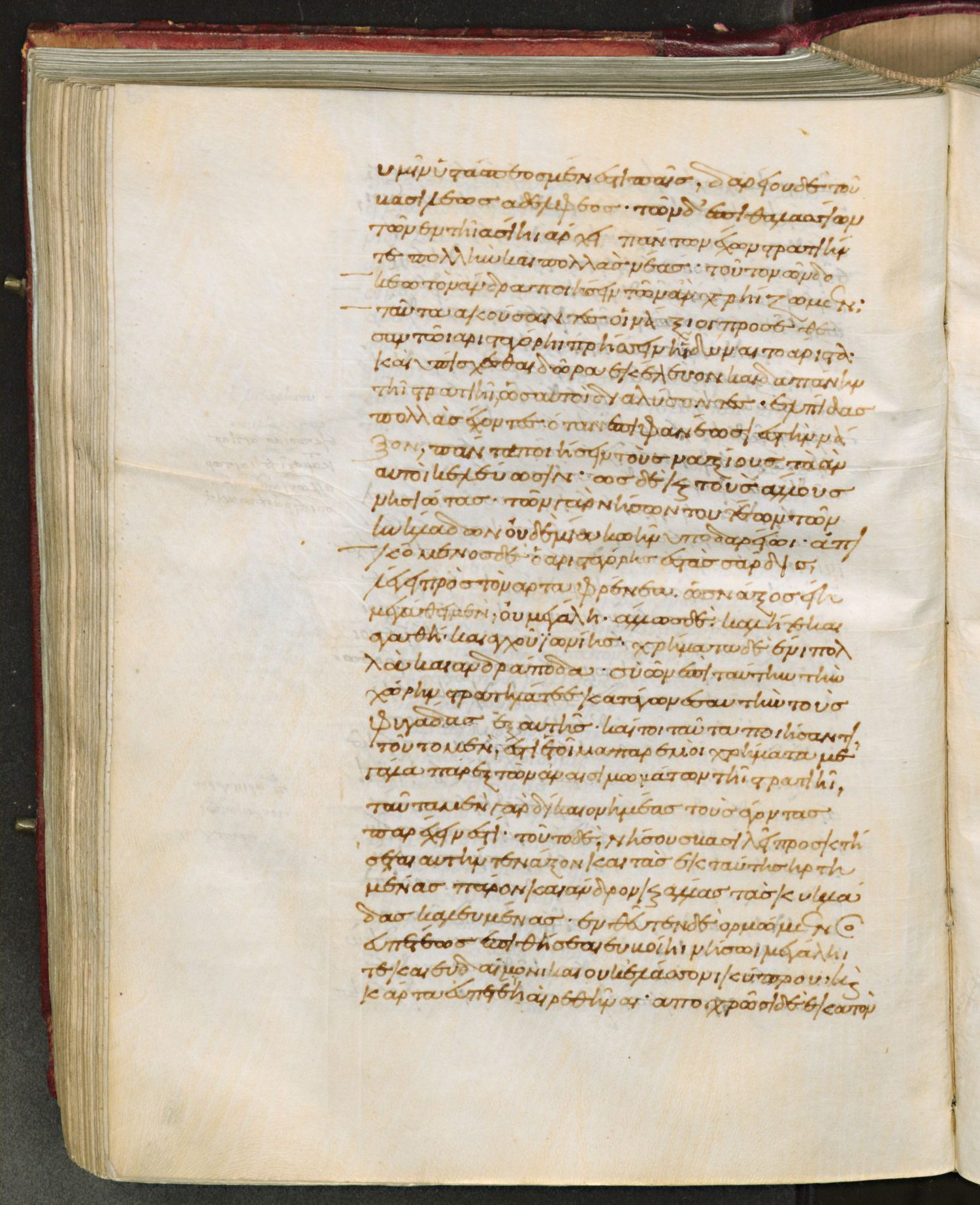
Where on the image
Laur. Plut. 70.3, fol. 205v: Greek here 5.30.5 to 5.31.3. Checked on the image (first and last words read and located in the Greek; each break checked against the neighbouring page): fol. 205v begins ‹ὑμῖν Ὑστάσπεος μὲν ἐστὶ› (5.30.5), ends ‹αἱρεθῆναι. ἀποχρῶσι δὲ ἑκατὸν› (5.31.3). English here: 5.30.5 to 5.31.3 (Godley's sentences for the sections whose Greek lies mostly on this page).
5.30.5ὑμῖν Ὑστάσπεος μὲν ἐστὶ παῖς, Δαρείου δὲ τοῦ βασιλέος ἀδελφεός, τῶν δʼ ἐπιθαλασσίων τῶν ἐν τῇ Ἀσίῇ ἄρχει πάντων, ἔχων στρατιήν τε πολλὴν καὶ πολλὰς νέας. τοῦτον ὦν δοκέω τὸν ἄνδρα ποιήσειν τῶν ἂν χρηίζωμεν. 5.30.6ταῦτα ἀκούσαντες οἱ Νάξιοι προσέθεσαν τῷ Ἀρισταγόρῃ πρήσσειν τῇ δύναιτο ἄριστα, καὶ ὑπίσχεσθαι δῶρα ἐκέλευον καὶ δαπάνην τῇ στρατιῇ ὡς αὐτοὶ διαλύσοντες, ἐλπίδας πολλὰς ἔχοντες, ὅταν ἐπιφανέωσι ἐς τὴν Νάξον, πάντα ποιήσειν τοὺς Ναξίους τὰ ἂν αὐτοὶ κελεύωσι, ὣς δὲ καὶ τοὺς ἄλλους νησιώτας. τῶν γὰρ νήσων τουτέων τῶν Κυκλάδων οὐδεμία κω ἦν ὑπὸ Δαρείῳ. 5.31.1ἀπικόμενος δὲ ὁ Ἀρισταγόρης ἐς τὰς Σάρδις λέγει πρὸς τὸν Ἀρταφρένεα ὡς Νάξος εἴη νῆσος μεγάθεϊ μὲν οὐ μεγάλη, ἄλλως δὲ καλή τε καὶ ἀγαθὴ καὶ ἀγχοῦ Ἰωνίης, χρήματα δὲ ἔνι πολλὰ καὶ ἀνδράποδα. σὺ ὦν ἐπὶ ταύτην τὴν χώρην στρατηλάτεε, κατάγων ἐς αὐτὴν τοὺς φυγάδας ἐξ αὐτῆς. 5.31.2καί τοι ταῦτα ποιήσαντι τοῦτο μὲν ἐστὶ ἕτοιμα παρʼ ἐμοὶ χρήματα μεγάλα πάρεξ τῶν ἀναισιμωμάτων τῇ στρατιῇ· ταῦτα μὲν γὰρ δίκαιον ἡμέας τοὺς ἄγοντας παρέχειν ἐστί· τοῦτο δὲ νήσους βασιλέι προσκτήσεαι αὐτήν τε Νάξον καὶ τὰς ἐκ ταύτης ἠρτημένας, Πάρον καὶ Ἄνδρον καὶ ἄλλας τὰς Κυκλάδας καλευμένας. 5.31.3ἐνθεῦτεν δὲ ὁρμώμενος εὐπετέως ἐπιθήσεαι Εὐβοίῃ νήσῳ μεγάλῃ τε καὶ εὐδαίμονι, οὐκ ἐλάσσονι Κύπρου καὶ κάρτα εὐπετέι αἱρεθῆναι. ἀποχρῶσι δὲ ἑκατὸν
5.30.5And this is my plan. Artaphrenes is my friend; now know, that Artaphrenes is Hystaspes’ son and brother to Darius the king; he is governor of all the sea-coast peoples of Asia and has a great army and many ships; this man then will, I think, do whatever we desire.” 5.30.6Hearing this, the Naxians left the matter for Aristagoras to deal with as best he could, bidding him promise gifts and the costs of the army, for which they would themselves be chargeable; for they had great hope that when they should appear off Naxos the Naxians would obey all their commands, and that the rest of the islanders would do likewise. For as yet none of these Cyclades islands was subject to Darius. 5.31.1Aristagoras came to Sardis and told Artaphrenes that Naxos was indeed an island of no great size, but for the rest a fair and a good land and near to Ionia, with much wealth withal and many slaves therein. “Do you therefore send an armament against that country, bringing back the men who have been banished thence. 5.31.2And if you so do, I have a great sum at your service, over and above the costs of the armament; for it is but just that we, who bring you, should be chargeable for that; and further, you will win new dominions for the king, Naxos itself and the islands which are its dependants, Paros, Andros, and the rest of those that are called Cyclades. 5.31.3Making these your starting-point, you will easily attack Euboea, which is a great and a wealthy island, no smaller than Cyprus and very easy to take. An hundred ships suffice for the conquest of all these.”
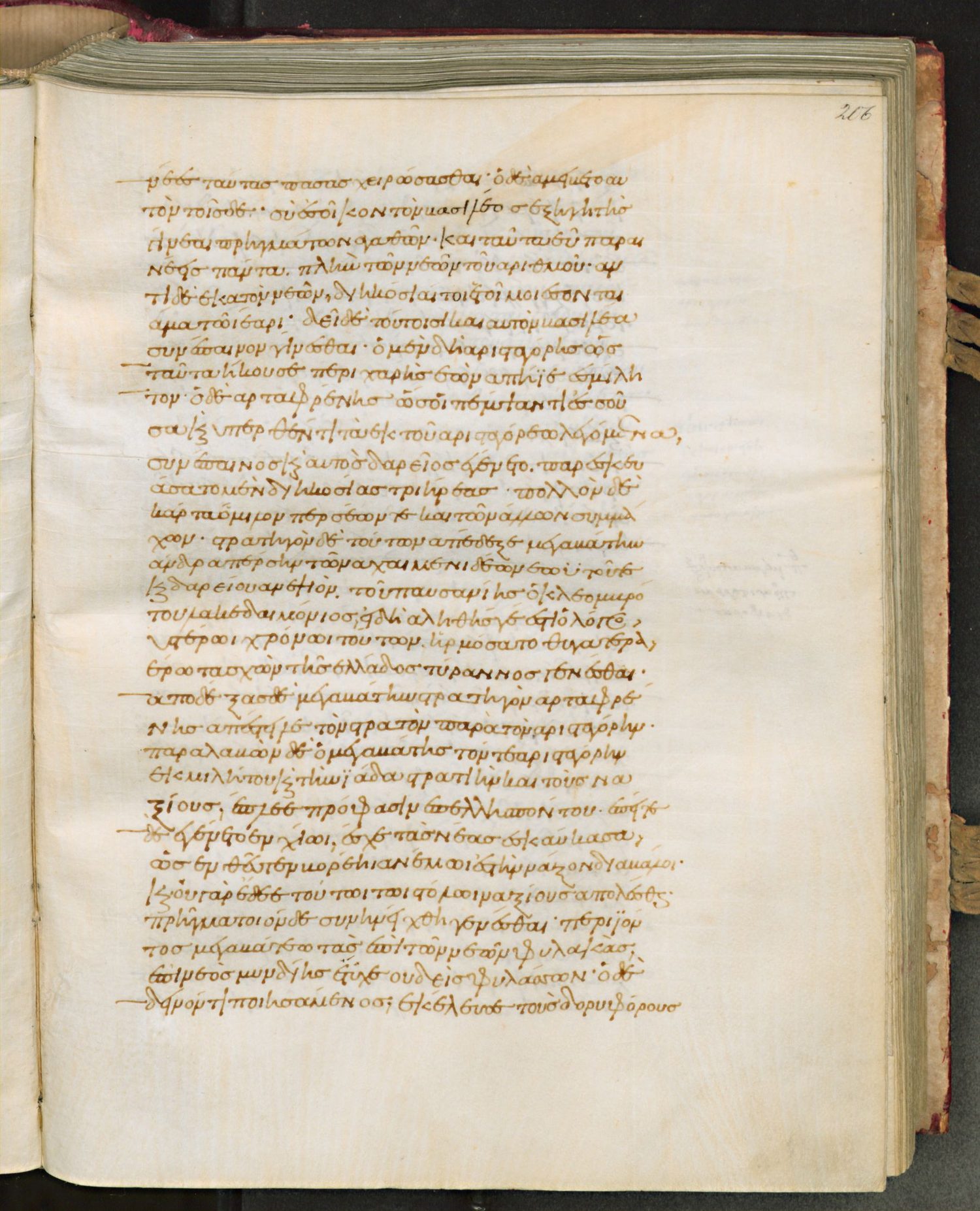
Where on the image
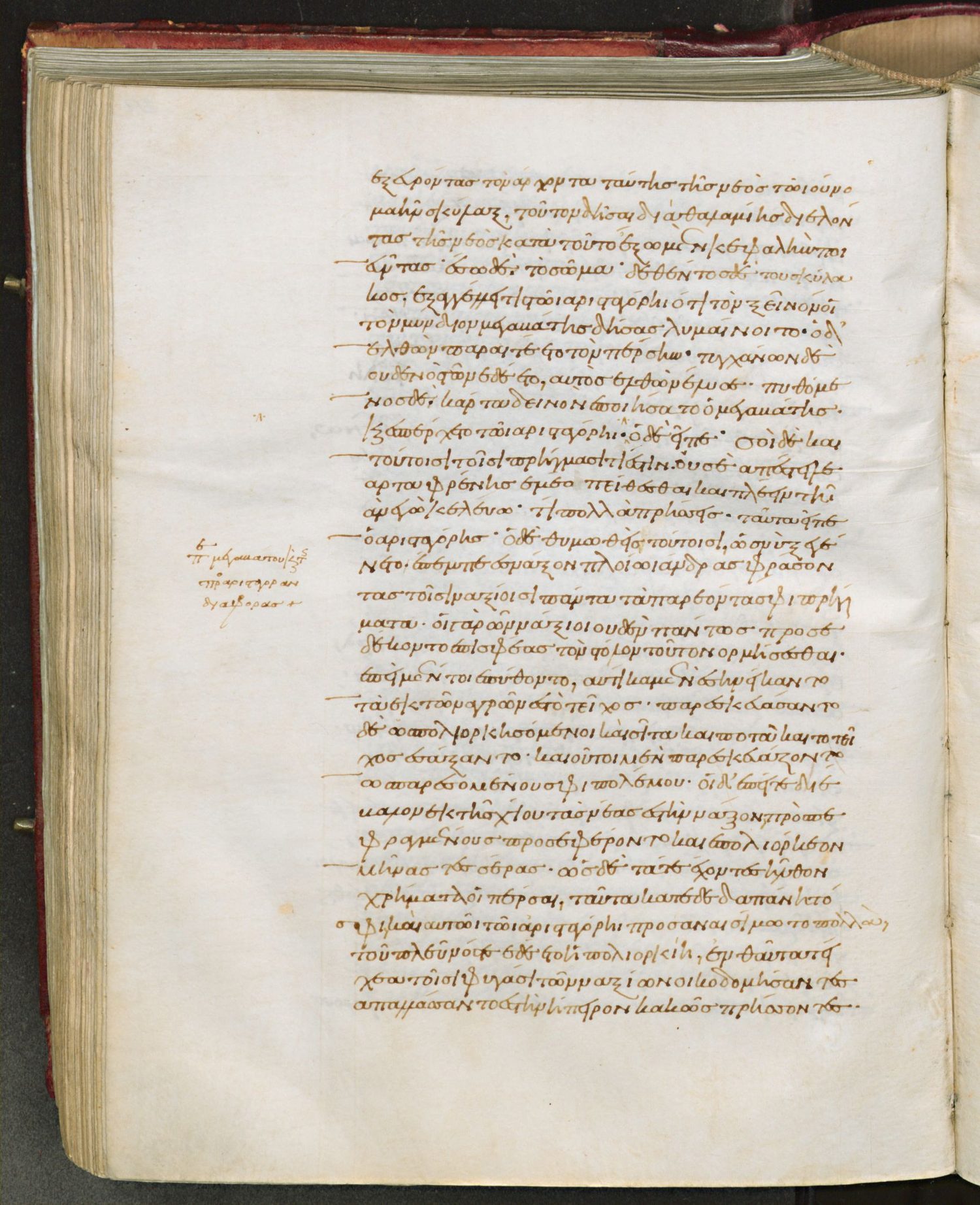
Laur. Plut. 70.3, fol. 206r: Greek here 5.31.3 to 5.33.2. Checked on the image (first and last words read and located in the Greek; each break checked against the neighbouring page): fol. 206r begins ‹νέες ταύτας πάσας χειρώσασθαι.› (5.31.3), ends ‹ποιησάμενος ἐκέλευσε τοὺς δορυφόρους› (5.33.2). English here: 5.31.4 to 5.33.2 (Godley's sentences for the sections whose Greek lies mostly on this page).
5.31.3νέες ταύτας πάσας χειρώσασθαι. ὁ δὲ ἀμείβετο αὐτὸν τοῖσιδε. 5.31.4σὺ ἐς οἶκον τὸν βασιλέος ἐξηγητὴς γίνεαι πρηγμάτων ἀγαθῶν, καὶ ταῦτα εὖ παραινέεις πάντα, πλὴν τῶν νεῶν τοῦ ἀριθμοῦ· ἀντὶ δὲ ἑκατὸν νεῶν διηκόσιαί τοι ἕτοιμοι ἔσονται ἅμα τῷ ἔαρι. δεῖ δὲ τούτοισι καὶ αὐτὸν βασιλέα συνέπαινον γίνεσθαι. 5.32.1ὁ μὲν δὴ Ἀρισταγόρης ὡς ταῦτα ἤκουσε, περιχαρὴς ἐὼν ἀπήιε ἐς Μίλητον. ὁ δὲ Ἀρταφρένης, ὥς οἱ πέμψαντι ἐς Σοῦσα καὶ ὑπερθέντι τὰ ἐκ τοῦ Ἀρισταγόρεω λεγόμενα συνέπαινος καὶ αὐτὸς Δαρεῖος ἐγένετο, παρεσκευάσατο μὲν διηκοσίας τριήρεας, πολλὸν δὲ κάρτα ὅμιλον Περσέων τε καὶ τῶν ἄλλων συμμάχων, στρατηγὸν δὲ τούτων ἀπέδεξε Μεγαβάτην ἄνδρα Πέρσην τῶν Ἀχαιμενιδέων, ἑωυτοῦ τε καὶ Δαρείου ἀνεψιόν, τοῦ Παυσανίης ὁ Κλεομβρότου Λακεδαιμόνιος, εἰ δὴ ἀληθής γε ἐστὶ ὁ λόγος, ὑστέρῳ χρόνῳ τούτων ἡρμόσατο θυγατέρα, ἔρωτα σχὼν τῆς Ἑλλάδος τύραννος γενέσθαι. ἀποδέξας δὲ Μεγαβάτην στρατηγὸν Ἀρταφρένης ἀπέστειλε τὸν στρατὸν παρὰ τὸν Ἀρισταγόρεα. 5.33.1παραλαβὼν δὲ ὁ Μεγαβάτης τόν τε Ἀρισταγόρεα ἐκ τῆς Μιλήτου καὶ τὴν Ἰάδα στρατιὴν καὶ τοὺς Ναξίους ἔπλεε πρόφασιν ἐπʼ Ἑλλησπόντου, ἐπείτε δὲ ἐγένετο ἐν Χίῳ, ἔσχε τὰς νέας ἐς Καύκασα, ὡς ἐνθεῦτεν βορέῃ ἀνέμῳ ἐς τὴν Νάξον διαβάλοι. 5.33.2καὶ οὐ γὰρ ἔδεε τούτῳ τῷ στόλῳ Ναξίους ἀπολέσθαι, πρῆγμα τοιόνδε συνηνείχθη γενέσθαι. περιιόντος Μεγαβάτεω τὰς ἐπὶ τῶν νεῶν φυλακάς, ἐπὶ νεὸς Μυνδίης ἔτυχε οὐδεὶς φυλάσσων· ὁ δὲ δεινόν τι ποιησάμενος ἐκέλευσε τοὺς δορυφόρους
5.31.4“This plan which you set forth,” Artaphrenes answered, “is profitable for the king’s house, and all this your counsel is good, save as to the number of the ships; not one hundred but two hundred ships shall be ready for you when the spring comes. But the king too must himself consent to this.” 5.32.1When Aristagoras heard that, he went away to Miletus in great joy. Artaphrenes sent a messenger to Susa with the news of what Aristagoras said; and Darius himself too consenting to the plan, he equipped two hundred triremes and a very great company of Persians and their allies besides, and appointed for their general Megabates, a Persian of the Achaemenid family, cousin to himself and to Darius; this was he whose daughter (if indeed the tale be true) Pausanias the Lacedaemonian, son of Cleombrotus, at a later day betrothed to himself, being ambitious of the sovereignty of Hellas. Having appointed Megabates general, Artaphrenes sent his army away to Aristagoras. 5.33.1Then Megabates brought Aristagoras from Miletus, and the Ionian army, and the Naxians, and pretended to make sail to the Hellespont; but when he came to Chios he put in with his ships at Caucasa, that he might cross with a north wind to Naxos. 5.33.2But, since it was not written that the Naxians were to be destroyed by this armament, this befel which I here relate. For when Megabates went his rounds among the ships’ watches, it chanced that on a ship of Myndus there was no watch kept; whereat Megabates, being very angry, bade his guards find the captain of this ship (whose name was Scylax) and thrust him partly through an oar-hole of the ship and bind him there, in such fashion that his head was outside the ship and his body inside.
Where on the image
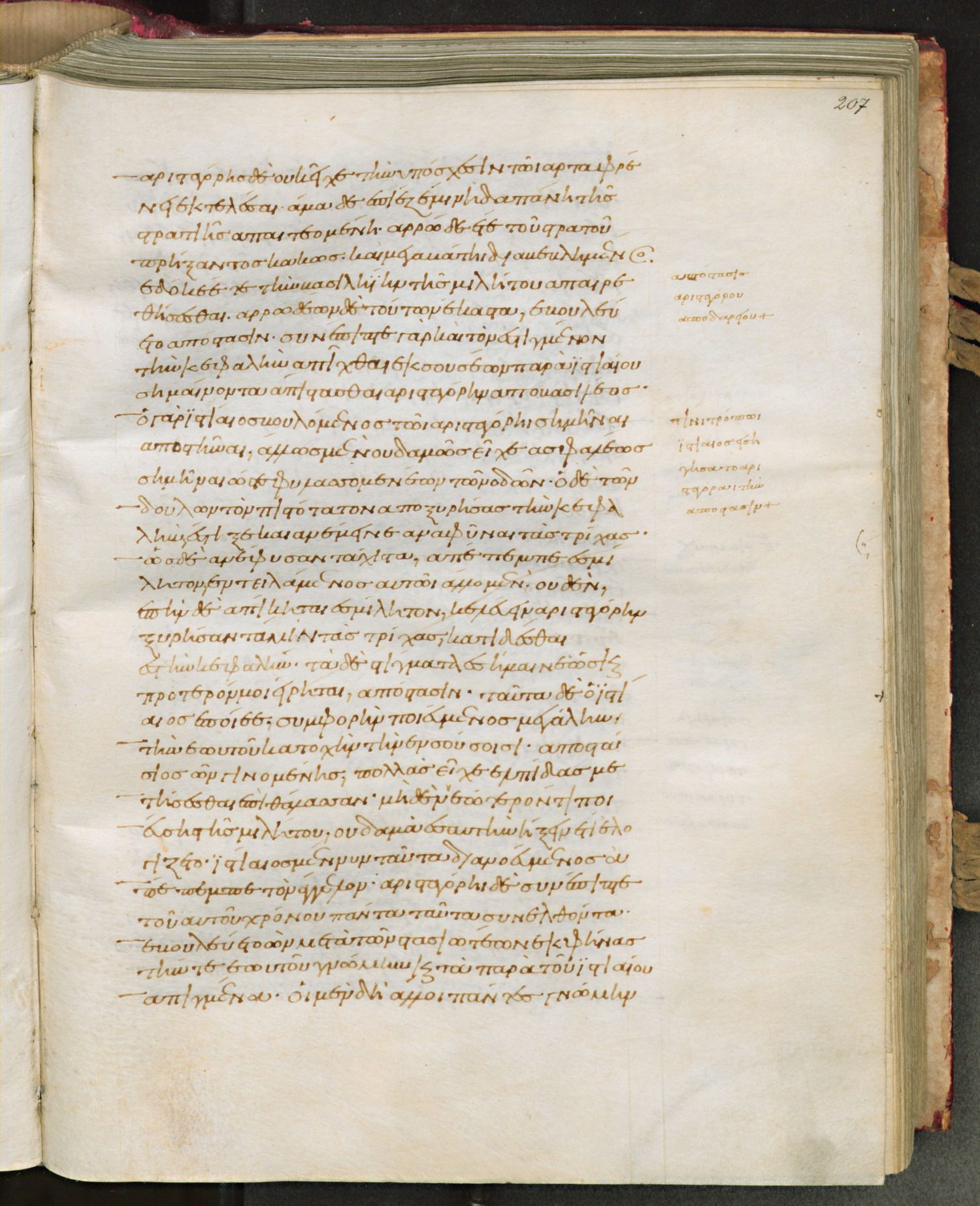
Laur. Plut. 70.3, fol. 206v: Greek here 5.33.2 to 5.34.3. Checked on the image (first and last words read and located in the Greek; each break checked against the neighbouring page): fol. 206v begins ‹ἐξευρόντας τὸν ἄρχοντα ταύτης› (5.33.2), ends ‹τὴν ἤπειρον κακῶς πρήσσοντες› (5.34.3). English here: 5.33.3 to 5.34.3 (Godley's sentences for the sections whose Greek lies mostly on this page).
5.33.2ἐξευρόντας τὸν ἄρχοντα ταύτης τῆς νεός, τῷ οὔνομα ἦν Σκύλαξ, τοῦτον δῆσαι διὰ θαλαμίης διελόντας τῆς νεὸς κατὰ τοῦτο, ἔξω μὲν κεφαλὴν ποιεῦντας ἔσω δὲ τὸ σῶμα. 5.33.3δεθέντος δὲ τοῦ Σκύλακος, ἐξαγγέλλει τις τῷ Ἀρισταγόρῃ ὅτι τὸν ξεῖνόν οἱ τὸν Μύνδιον Μεγαβάτης δήσας λυμαίνοιτο. ὃ δʼ ἐλθὼν παραιτέετο τὸν Πέρσην, τυγχάνων δὲ οὐδενὸς τῶν ἐδέετο, αὐτὸς ἐλθὼν ἔλυσε. πυθόμενος δὲ κάρτα δεινὸν ἐποιήσατο ὁ Μεγαβάτης καὶ ἐσπέρχετο τῷ Ἀρισταγόρῃ, 5.33.4ὁ δὲ εἶπε σοὶ δὲ καὶ τούτοισι τοῖσι πρήγμασι τί ἐστι; οὐ σὲ ἀπέστειλε Ἀρταφρένης ἐμέο πείθεσθαι καὶ πλέειν τῇ ἂν ἐγὼ κελεύω; τί πολλὰ πρήσσεις; ταῦτα εἶπε ὁ Ἀρισταγόρης. ὁ δὲ θυμωθεὶς τούτοισι, ὡς νὺξ ἐγένετο, ἔπεμπε ἐς Νάξον πλοίῳ ἄνδρας φράσοντας τοῖσι Ναξίοισι πάντα τὰ παρεόντα σφι πρήγματα. 5.34.1οἱ γὰρ ὦν Νάξιοι οὐδὲν πάντως προσεδέκοντο ἐπὶ σφέας τὸν στόλον τοῦτον ὁρμήσεσθαι. ἐπεὶ μέντοι ἐπύθοντο, αὐτίκα μὲν ἐσηνείκαντο τὰ ἐκ τῶν ἀγρῶν ἐς τὸ τεῖχος, παρεσκευάσαντο δὲ ὡς πολιορκησόμενοι καὶ σῖτα καὶ ποτά, καὶ τὸ τεῖχος ἐσάξαντο. 5.34.2καὶ οὗτοι μὲν παρεσκευάζοντο ὡς παρεσομένου σφι πολέμου· οἳ δʼ ἐπείτε διέβαλον ἐκ τῆς Χίου τὰς νέας ἐς τὴν Νάξον, πρὸς πεφραγμένους προσεφέροντο καὶ ἐπολιόρκεον μῆνας τέσσερας. 5.34.3ὡς δὲ τά τε ἔχοντες ἦλθον χρήματα οἱ Πέρσαι, ταῦτα κατεδεδαπάνητό σφι, καὶ αὐτῷ τῷ Ἀρισταγόρῃ προσαναισίμωτο πολλά, τοῦ πλεῦνός τε ἐδέετο ἡ πολιορκίη, ἐνθαῦτα τείχεα τοῖσι φυγάσι τῶν Ναξίων οἰκοδομήσαντες ἀπαλλάσσοντο ἐς τὴν ἤπειρον κακῶς πρήσσοντες.
5.33.3So Scylax was bound; and one brought word to Aristagoras, that his Myndian friend was bound and despitefully entreated by Megabates. Aristagoras went then and pleaded with the Persian for Scylax, but obtained nothing that he requested; whereupon he came and released the man himself. When Megabates learnt this, he was very angry, and was violent against Aristagoras. 5.33.4But Aristagoras said, “But you—what have you to do with these matters? Did not Artaphrenes send you to obey me and to sail whithersoever I bid you? Why are you so meddlesome?” So said Aristagoras; Megabates, enraged by this, sent men at nightfall in a boat to Naxos, to tell the Naxians of the trouble in store for them. 5.34.1For the Naxians had no suspicion at all that it was they who were to be attacked by that armament. Howbeit, when they learnt the truth, straightway they brought within their walls all that was in their fields, and stored both meat and drink against a siege, and strengthened their walls. 5.34.2So they made all preparations to face the onset of war; and when their enemies had brought their ships over from Chios to Naxos, it was a city fortified that they attacked, and for four months they besieged it. 5.34.3Then, when the Persians had expended all the money with which they had come, and Aristagoras himself had spent much beside, and ever more was needful for the siege, they built a stronghold for the banished Naxians, and betook themselves to the mainland in very evil case.
Where on the image
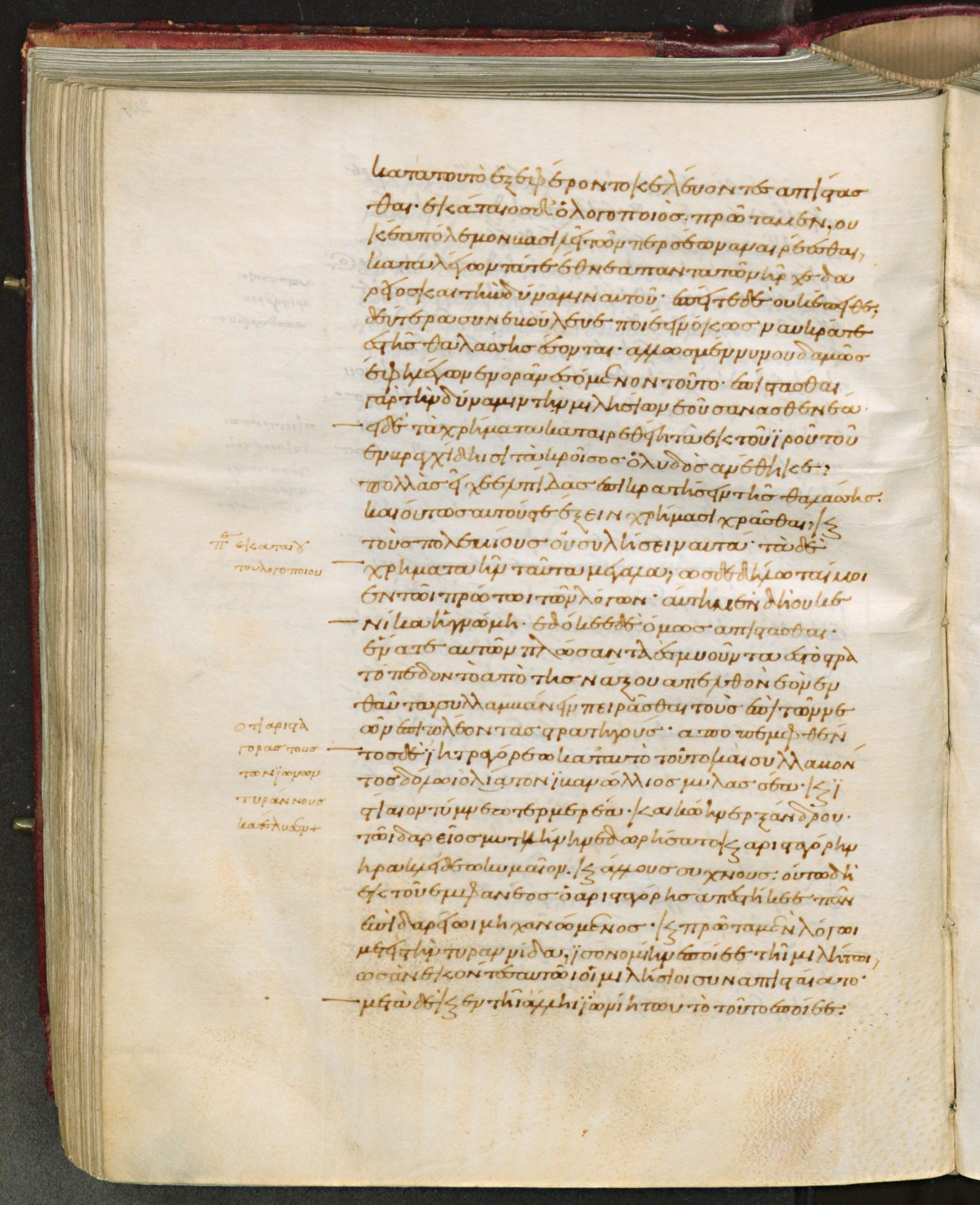
Laur. Plut. 70.3, fol. 207r: Greek here 5.35.1 to 5.36.2. Checked on the image (first and last words read and located in the Greek; each break checked against the neighbouring page): fol. 207r begins ‹Ἀρισταγόρης δὲ οὐκ εἶχε› (5.35.1), ends ‹δὴ ἄλλοι πάντες γνώμην› (5.36.2). English here: 5.35.1 to 5.36.1 (Godley's sentences for the sections whose Greek lies mostly on this page).
5.35.1Ἀρισταγόρης δὲ οὐκ εἶχε τὴν ὑπόσχεσιν τῷ Ἀρταφρένεϊ ἐκτελέσαι· ἅμα δὲ ἐπίεζέ μιν ἡ δαπάνη τῆς στρατιῆς ἀπαιτεομένη, ἀρρώδεέ τε τοῦ στρατοῦ πρήξαντος κακῶς καὶ Μεγαβάτῃ διαβεβλημένος, ἐδόκεέ τε τὴν βασιληίην τῆς Μιλήτου ἀπαιρεθήσεσθαι. 5.35.2ἀρρωδέων δὲ τούτων ἕκαστα ἐβουλεύετο ἀπόστασιν· συνέπιπτε γὰρ καὶ τὸν ἐστιγμένον τὴν κεφαλὴν ἀπῖχθαι ἐκ Σούσων παρὰ Ἱστιαίου, σημαίνοντα ἀπίστασθαι Ἀρισταγόρην ἀπὸ βασιλέος. 5.35.3ὁ γὰρ Ἱστιαῖος βουλόμενος τῷ Ἀρισταγόρῃ σημῆναι ἀποστῆναι ἄλλως μὲν οὐδαμῶς εἶχε ἀσφαλέως σημῆναι ὥστε φυλασσομενέων τῶν ὁδῶν, ὁ δὲ τῶν δούλων τὸν πιστότατον ἀποξυρήσας τὴν κεφαλὴν ἔστιξε καὶ ἀνέμεινε ἀναφῦναι τὰς τρίχας, ὡς δὲ ἀνέφυσαν τάχιστα, ἀπέπεμπε ἐς Μίλητον ἐντειλάμενος αὐτῷ ἄλλο μὲν οὐδέν, ἐπεὰν δὲ ἀπίκηται ἐς Μίλητον, κελεύειν Ἀρισταγόρην ξυρήσαντά μιν τὰς τρίχας κατιδέσθαι ἐς τὴν κεφαλήν. τὰ δὲ στίγματα ἐσήμαινε, ὡς καὶ πρότερόν μοι εἴρηται, ἀπόστασιν. 5.35.4ταῦτα δὲ ὁ Ἱστιαῖος ἐποίεε συμφορὴν ποιεύμενος μεγάλην τὴν ἑωυτοῦ κατοχὴν τὴν ἐν Σούσοισι· ἀποστάσιος ὦν γινομένης πολλὰς εἶχε ἐλπίδας μετήσεσθαι ἐπὶ θάλασσαν, μὴ δὲ νεώτερόν τι ποιεύσης τῆς Μιλήτου οὐδαμὰ ἐς αὐτὴν ἥξειν ἔτι ἐλογίζετο. 5.36.1Ἱστιαῖος μέν νυν ταῦτα διανοεύμενος ἀπέπεμπε τὸν ἄγγελον, Ἀρισταγόρῃ δὲ συνέπιπτε τοῦ αὐτοῦ χρόνου πάντα ταῦτα συνελθόντα. ἐβουλεύετο ὦν μετὰ τῶν στασιωτέων, ἐκφήνας τήν τε ἑωυτοῦ γνώμην καὶ τὰ παρὰ τοῦ Ἱστιαίου ἀπιγμένα. 5.36.2οἱ μὲν δὴ ἄλλοι πάντες γνώμην
5.35.1Aristagoras had no way of fulfilling his promise to Artaphrenes; he was hard pressed by demands for the costs of the armament, and he feared what might come of the ill-success of the army and Megabates’ displeasure against him; it was like, he thought, that his lordship of Miletus would be taken away from him. 5.35.2With all these fears in his mind, he began to plan revolt; for it chanced that at that very time there came from Susa Histiaeus’ messenger, the man with the marked head, signifying that Aristagoras should revolt from the king. 5.35.3For Histiaeus desired to signify to Aristagoras that he should revolt; and having no other safe way of so doing (for the roads were guarded) he shaved and pricked marks on the head of his trustiest slave, and waited till the hair grew again; as soon as it was grown, he sent the man to Miletus with no other message save that when he came to Miletus he must bid Aristagoras shave his hair and examine his head. The writing pricked thereon signified revolt, as I have already said. 5.35.4This Histiaeus did, because he sorely misliked his enforced sojourn at Susa; now he had a good hope that if there were a revolt he would be sent away to the sea-coast; but if Miletus remained at peace, he reckoned that he would return thither no more. 5.36.1With this intent, then, Histiaeus sent his messenger, and it chanced that all these things came upon Aristagoras at one and the same time. He took counsel therefore with those of his faction, and declared his own opinion and what had come to him from Histiaeus.
Where on the image
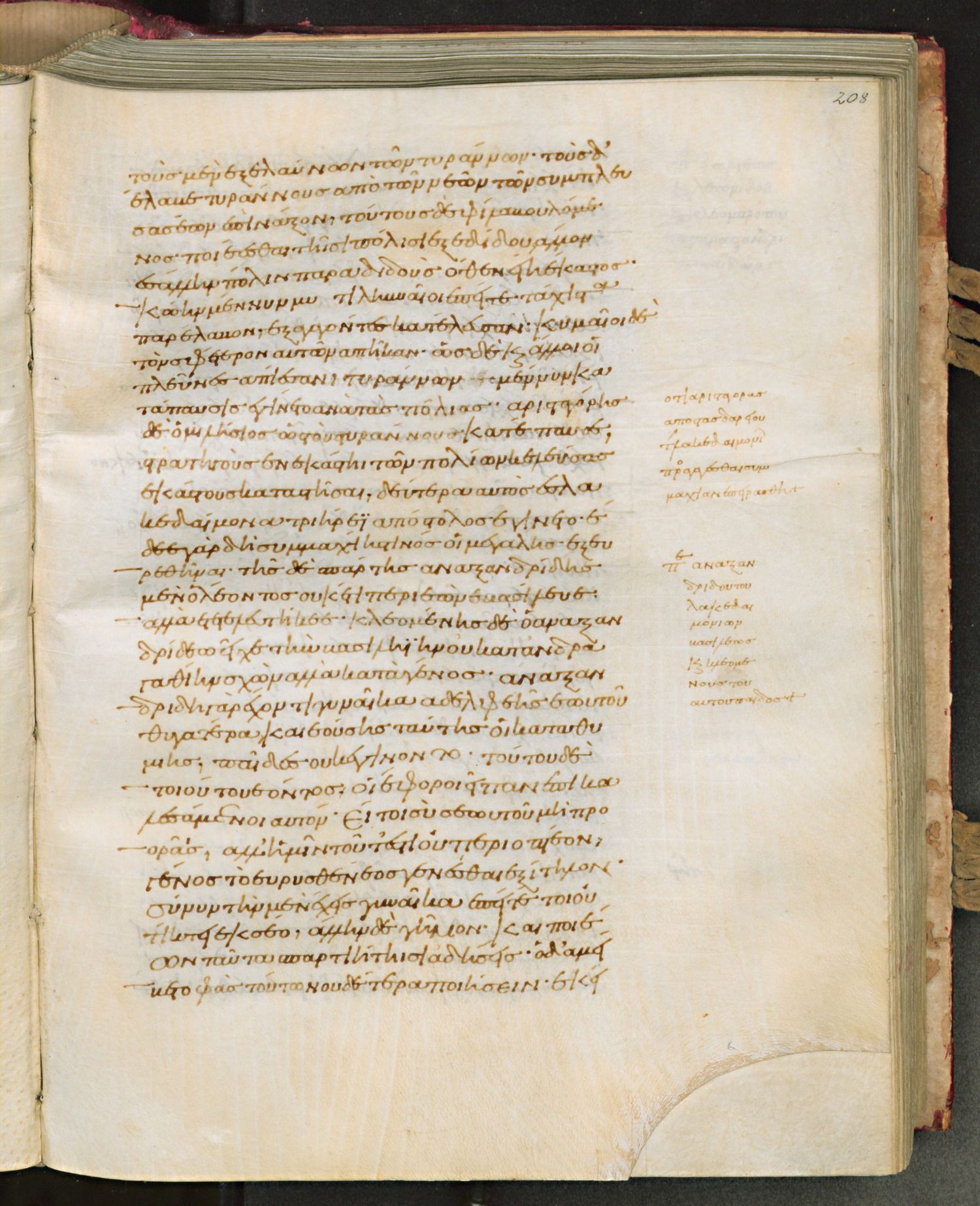
Laur. Plut. 70.3, fol. 207v: Greek here 5.36.2 to 5.37.2. Checked on the image (first and last words read and located in the Greek; each break checked against the neighbouring page): fol. 207v begins ‹κατὰ τὠυτὸ ἐξεφέροντο, κελεύοντες› (5.36.2), ends ‹Ἰωνίῃ τὠυτὸ τοῦτο ἐποίεε› (5.37.2). English here: 5.36.2 to 5.37.1 (Godley's sentences for the sections whose Greek lies mostly on this page).
5.36.2κατὰ τὠυτὸ ἐξεφέροντο, κελεύοντες ἀπίστασθαι· Ἑκαταῖος δʼ ὁ λογοποιὸς πρῶτα μὲν οὐκ ἔα πόλεμον βασιλέι τῶν Περσέων ἀναιρέεσθαι, καταλέγων τά τε ἔθνεα πάντα τῶν ἦρχε Δαρεῖος καὶ τὴν δύναμιν αὐτοῦ. ἐπείτε δὲ οὐκ ἔπειθε, δεύτερα συνεβούλευε ποιέειν ὅκως ναυκρατέες τῆς θαλάσσης ἔσονται. 5.36.3ἄλλως μέν νυν οὐδαμῶς ἔφη λέγων ἐνορᾶν ἐσόμενον τοῦτο· ἐπίστασθαι γὰρ τὴν δύναμιν τῶν Μιλησίων ἐοῦσαν ἀσθενέα· εἰ δὲ τὰ χρήματα καταιρεθείη τὰ ἐκ τοῦ ἱροῦ τοῦ ἐν Βραγχίδῃσι, τὰ Κροῖσος ὁ Λυδὸς ἀνέθηκε, πολλὰς εἶχε ἐλπίδας ἐπικρατήσειν τῆς θαλάσσης, καὶ οὕτω αὐτούς τε ἕξειν τοῖσι χρήμασι χρᾶσθαι καὶ τοὺς πολεμίους οὐ συλήσειν αὐτά. 5.36.4τὰ δὲ χρήματα ἦν ταῦτα μεγάλα, ὡς δεδήλωταί μοι ἐν τῷ πρώτῳ τῶν λόγων. αὕτη μὲν δὴ οὐκ ἐνίκα ἡ γνώμη, ἐδόκεε δὲ ὅμως ἀπίστασθαι, ἕνα τε αὐτῶν πλώσαντα ἐς Μυοῦντα ἐς τὸ στρατόπεδον τὸ ἀπὸ τῆς Νάξου ἀπελθόν, ἐὸν ἐνθαῦτα, συλλαμβάνειν πειρᾶσθαι τοὺς ἐπὶ τῶν νεῶν ἐπιπλέοντας στρατηγούς. 5.37.1ἀποπεμφθέντος δὲ Ἰητραγόρεω κατʼ αὐτὸ τοῦτο καὶ συλλαβόντος δόλῳ Ὀλίατον Ἰβανώλλιος Μυλασσέα καὶ Ἱστιαῖον Τύμνεω Τερμερέα καὶ Κώην Ἐρξάνδρου, τῷ Δαρεῖος Μυτιλήνην ἐδωρήσατο, καὶ Ἀρισταγόρην Ἡρακλείδεω Κυμαῖον καὶ ἄλλους συχνούς, οὕτω δὴ ἐκ τοῦ ἐμφανέος ὁ Ἀρισταγόρης ἀπεστήκεε, πᾶν ἐπὶ Δαρείῳ μηχανώμενος. 5.37.2καὶ πρῶτα μὲν λόγῳ μετεὶς τὴν τυραννίδα ἰσονομίην ἐποίεε τῇ Μιλήτῳ, ὡς ἂν ἑκόντες αὐτῷ οἱ Μιλήσιοι συναπισταίατο, μετὰ δὲ καὶ ἐν τῇ ἄλλῃ Ἰωνίῃ τὠυτὸ τοῦτο ἐποίεε,
5.36.2All the rest spoke their minds to the same effect, favouring revolt, save only Hecataeus the historian; he advised them that they would be best guided not to make war on the king of Persia, recounting to them the tale of the nations subject to Darius, and all his power. But when they would not be persuaded by him, he counselled them that their next best plan was to make themselves masters of the seas. 5.36.3This, said he in his speech, he could see no way of accomplishing save one: Miletus, he knew, was a city of no great wealth; but if they took away from the temple at Branchidae the treasure which Croesus the Lydian had dedicated there, he had good hope that they would gain the mastery of the sea, and so they would have the use of that treasure and their enemies could not plunder it. 5.36.4The treasure was very great, as I have shown in the first book of my history. This counsel was not approved; nevertheless, they resolved that they would revolt, and that one of themselves should sail to Myus, to the army which had left Naxos and was there, and essay to seize the generals who were aboard the ships. 5.37.1Iatragoras, being sent for this very purpose, craftily seized Oliatus of Mylasa son of Ibanollis, and Histiaeus of Termera son of Tymnes, and Coes son of Erxandrus,—to whom Darius gave Mytilene,—and Aristagoras of Cyme, son of Heraclides, and many others besides; which done, Aristagoras revolted openly, devising all he could to Darius’ hurt.
Where on the image
Laur. Plut. 70.3, fol. 208r: Greek here 5.37.2 to 5.38.2. Checked on the image (first and last words read and located in the Greek; each break checked against the neighbouring page): fol. 208r begins ‹τοὺς μὲν ἐξελαύνων τῶν› (5.37.2), ends ‹τούτων οὐδέτερα ποιήσειν, ἐκ-› (5.39.2). English here: 5.37.2 to 5.38.2 (Godley's sentences for the sections whose Greek lies mostly on this page).
5.37.2τοὺς μὲν ἐξελαύνων τῶν τυράννων, τοὺς δʼ ἔλαβε τυράννους ἀπὸ τῶν νεῶν τῶν συμπλευσασέων ἐπὶ Νάξον, τούτους δὲ φίλα βουλόμενος ποιέεσθαι τῇσι πόλισι ἐξεδίδου, ἄλλον ἐς ἄλλην πόλιν παραδιδούς, ὅθεν εἴη ἕκαστος. 5.38.1Κώην μέν νυν Μυτιληναῖοι ἐπείτε τάχιστα παρέλαβον, ἐξαγαγόντες κατέλευσαν, Κυμαῖοι δὲ τὸν σφέτερον αὐτῶν ἀπῆκαν· ὣς δὲ καὶ ἄλλοι οἱ πλεῦνες ἀπίεσαν. 5.38.2τυράννων μέν νυν κατάπαυσις ἐγίνετο ἀνὰ τὰς πόλιας, Ἀρισταγόρης δὲ ὁ Μιλήσιος ὡς τοὺς τυράννους κατέπαυσε, στρατηγοὺς ἐν ἑκάστῃ τῶν πολίων κελεύσας ἑκάστους καταστῆσαι, δεύτερα αὐτὸς ἐς Λακεδαίμονα τριήρεϊ ἀπόστολος ἐγίνετο· ἔδεε γὰρ δὴ συμμαχίης τινός οἱ μεγάλης ἐξευρεθῆναι.
5.37.2And first he made a pretence of giving up his despotism and gave Miletus equality of government, that so the Milesians might readily join in his revolt; then he did likewise in the rest of Ionia; some of the despots he banished; as for those despots whom he had taken out of the ships that sailed with him against Naxos, he gave them over and delivered them each and all to their own cities severally, for he wished to please the cities. 5.38.1So Coes, when the Mytilenaeans received him, was taken out by them and stoned; but the Cymaeans let their own man go, and so did most of the others. 5.38.2Thus an end was made of despots in the cities. Aristagoras of Miletus, having made an end of the despots, bade all to set up governors in each city; and next he went on an embassy in a trireme to Lacedaemon; for it was needful that he should find some strong ally.
Notes
- Greek: the text printed in A. D. Godley's Loeb edition, via Perseus (tlg0016.tlg001.perseus-grc2). Square brackets mark words the editor considers later additions; [...] marks a gap the editor indicates. Perseus note markers are omitted.
- English: A. D. Godley, Herodotus vol. 3 (1922) (Loeb Classical Library), as transcribed on Wikisource. Godley's footnotes are omitted.
- Section numbers in the English were placed by comparing Godley's text with the Perseus version of his translation; where a section begins inside one of Godley's sentences, the English is kept with the page that holds the start of that sentence.
Cite
Sources
- Source: Florence, Laur. Plut. 70.3 (10th c.) via BML Teca Digitale + Greek of Godley's Loeb (Perseus) + English of A. D. Godley (Loeb, Wikisource) (holding institution)
- Critical edition: Greek of A. D. Godley's Loeb edition (1920-1925), via Perseus
← previous · → next · v cycle view · l back to library