Herodotus, Histories 6.61-72: Demaratus and Leotychides
Introduction
Herodotus of Halicarnassus wrote the Histories in the third quarter of the 5th century BCE, an inquiry into the deeds of Greeks and barbarians and the causes of the wars between them, later divided into nine books. Book 6 tells of the end of the Ionian revolt at Lade and Miletus, the first Persian expeditions against Greece under Mardonius and under Datis and Artaphrenes, the quarrels of Sparta, Athens and Aegina, and the battle of Marathon.
The photographs are of Florence, Biblioteca Medicea Laurenziana, Plut. 70.3 (parchment, 10th century, 374 folios, 31 lines a page), Herodotus, Histories (codex A of the editors), the oldest surviving manuscript of the complete Histories, from the Teca Digitale of the Biblioteca Medicea Laurenziana. Each section below is the text of one page, or of the part of a page that falls within these chapters. The first and last words of every page were read on the photograph and located in the Greek, and every page break was checked against the next page; the notes quote these words. Readers' notes in the margins are not part of the text and are mentioned where they occur.
The Greek is the text printed in A. D. Godley's Loeb edition (1920-1925), from Perseus; it is the edited text, not a transcription of the manuscript, whose wording differs in places. The English is Godley's translation as printed, from Wikisource. Godley's English carries only chapter numbers; the section numbers shown in it were placed by comparison with the Perseus version of his translation. Each page's English is cut at the end of one of Godley's sentences, so it can begin or end a few lines away from the Greek of the page; each note gives the exact ranges.
This entry covers chapters 6.61-72, on fol. 246v to 249r.
How was this verified? (Provenance)
Where on the image
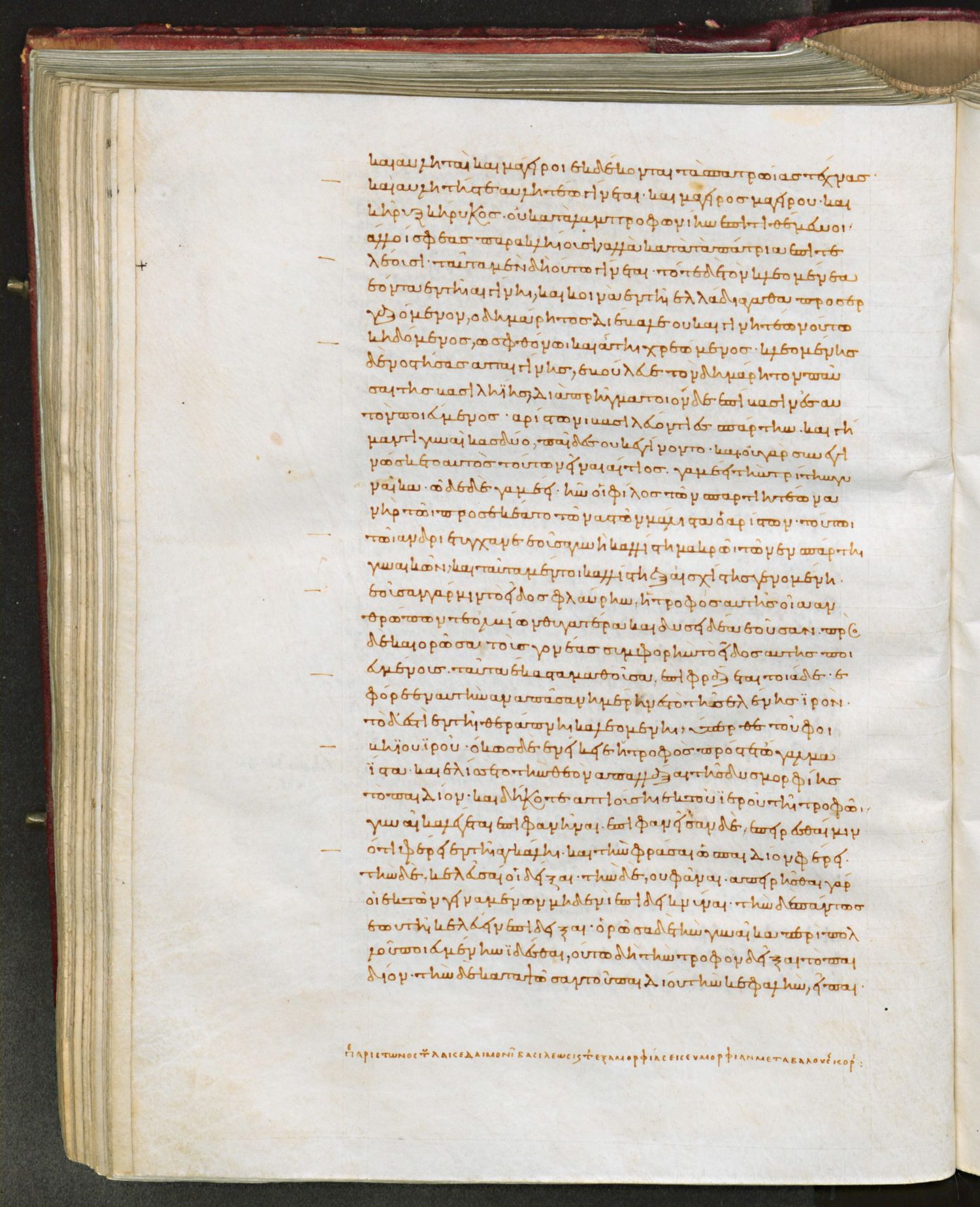
Laur. Plut. 70.3, fol. 246v: Greek here 6.61.1 to 6.61.5. Checked on the image (first and last words read and located in the Greek; each break checked against the neighbouring page): fol. 246v begins ‹καὶ αὐληταὶ καὶ μάγειροι› (6.60.1), ends ‹παιδίου τὴν κεφαλὴν εἶπαι› (6.61.5). English here: 6.61.1 to 6.61.4 (Godley's sentences for the sections whose Greek lies mostly on this page).
6.61.1ταῦτα μὲν δὴ οὕτω γίνεται. τότε δὲ τὸν Κλεομένεα ἐόντα ἐν τῇ Αἰγίνῃ καὶ κοινὰ τῇ Ἑλλάδι ἀγαθὰ προεργαζόμενον ὁ Δημάρητος διέβαλε, οὐκ Αἰγινητέων οὕτω κηδόμενος ὡς φθόνῳ καὶ ἄγῃ χρεώμενος. Κλεομένης δὲ νοστήσας ἀπʼ Αἰγίνης ἐβούλευε τὸν Δημάρητον παῦσαι τῆς βασιληίης, διὰ πρῆγμα τοιόνδε ἐπίβασιν ἐς αὐτὸν ποιεύμενος. Ἀρίστωνι βασιλεύοντι ἐν Σπάρτῃ καὶ γήμαντι γυναῖκας δύο παῖδες οὐκ ἐγίνοντο. 6.61.2καὶ οὐ γὰρ συνεγινώσκετο αὐτὸς τούτων εἶναι αἴτιος, γαμέει τρίτην γυναῖκα· ὧδε δὲ γαμέει. ἦν οἱ φίλος τῶν Σπαρτιητέων ἀνήρ, τῷ προσέκειτο τῶν ἀστῶν μάλιστα ὁ Ἀρίστων. τούτῳ τῷ ἀνδρὶ ἐτύγχανε ἐοῦσα γυνὴ καλλίστη μακρῷ τῶν ἐν Σπάρτῃ γυναικῶν, καὶ ταῦτα μέντοι καλλίστη ἐξ αἰσχίστης γενομένη. 6.61.3ἐοῦσαν γάρ μιν τὸ εἶδος φλαύρην ἡ τροφὸς αὐτῆς, οἷα ἀνθρώπων τε ὀλβίων θυγατέρα καὶ δυσειδέα ἐοῦσαν, πρὸς δὲ καὶ ὁρῶσα τοὺς γονέας συμφορὴν τὸ εἶδος αὐτῆς ποιευμένους, ταῦτα ἕκαστα μαθοῦσα ἐπιφράζεται τοιάδε· ἐφόρεε αὐτὴν ἀνὰ πᾶσαν ἡμέρην ἐς τὸ τῆς Ἑλένης ἱρόν. τὸ δʼ ἐστὶ ἐν τῇ Θεράπνῃ καλεομένῃ ὕπερθε τοῦ Φοιβηίου ἱροῦ. ὅκως δὲ ἐνείκειε ἡ τροφός, πρός τε τὤγαλμα ἵστα καὶ ἐλίσσετο τὴν θεὸν ἀπαλλάξαι τῆς δυσμορφίης τὸ παιδίον. 6.61.4καὶ δή κοτε ἀπιούσῃ ἐκ τοῦ ἱροῦ τῇ τροφῷ γυναῖκα λέγεται ἐπιφανῆναι, ἐπιφανεῖσαν δὲ ἐπειρέσθαι μιν ὅ τι φέρει ἐν τῇ ἀγκάλῃ, καὶ τὴν φράσαι ὡς παιδίον φορέει, τὴν δὲ κελεῦσαί οἱ δέξαι, τὴν δὲ οὐ φάναι· ἀπειρῆσθαι γάρ οἱ ἐκ τῶν γειναμένων μηδενὶ ἐπιδεικνύναι· τὴν δὲ πάντως ἑωυτῇ κελεύειν ἐπιδέξαι. 6.61.5ὁρῶσαν δὲ τὴν γυναῖκα περὶ πολλοῦ ποιευμένην ἰδέσθαι, οὕτω δὴ τὴν τροφὸν δέξαι τὸ παιδίον· τὴν δὲ καταψῶσαν τοῦ παιδίου τὴν κεφαλὴν εἶπαι
6.61.1Such is the way of these matters. But at the time whereof I speak, while Cleomenes was in Aegina, there working for what should be afterwards the common advantage of Hellas, Demaratus spread ill reports of him, less because he cared for the Aeginetans, than out of jealousy and malice. When Cleomenes returned back from Aegina, he planned to depose Demaratus from his kingship; for what cause he thus assailed him I will now show. Ariston, king of Sparta, had married two wives, but no children were born to him. 6.61.2Believing that he himself was not in fault, he married a third wife; and this was how it came about. There was a certain Spartan who was Ariston’s nearest and dearest friend. This man had a wife who was by far the fairest of Spartan women, yet albeit she was now the fairest she had been most ill-favoured. 6.61.3For, she being of mean aspect, her nurse having in mind that the daughter of a wealthy house was so uncomely, and that her parents took her appearance much to heart, bethought her for these reasons of a plan, and carried the child every day to the shrine of Helen, which is in the place called Therapne, above the temple of Phoebus. Thither the nurse would bear the child, and set her by the image, and pray the goddess to deliver her from her ill looks. 6.61.4Now on a day, as the nurse was departing out of the temple, a woman (it is said) appeared to her, and asked her what she bore in her arms. “It is a child,” said the nurse. “Show it to me,” said the woman. “That,” quoth the nurse, “I cannot do; for I am forbidden by the parents to show it to any.” “Nay,” said the woman, “but you must by all means show me the child.”
Where on the image
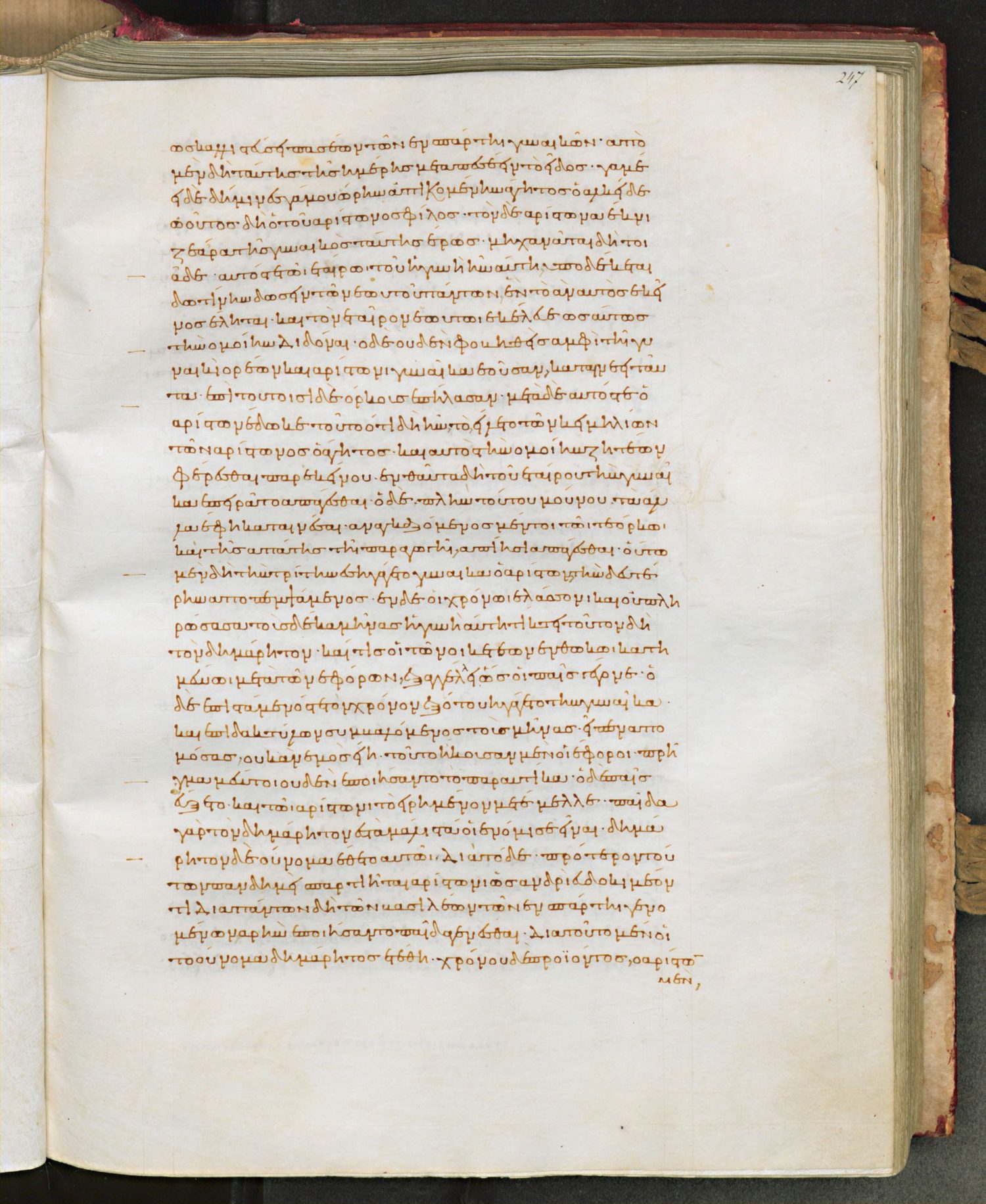
Laur. Plut. 70.3, fol. 247r: Greek here 6.61.5 to 6.64.1. Checked on the image (first and last words read and located in the Greek; each break checked against the neighbouring page): fol. 247r begins ‹ὡς καλλιστεύσει πασέων τῶν› (6.61.5), ends ‹δὲ προϊόντος Ἀρίστων μὲν› (6.64.1). The last word (μὲν) is written below the end of the last line. English here: 6.61.5 to 6.63.3 (Godley's sentences for the sections whose Greek lies mostly on this page).
6.61.5ὡς καλλιστεύσει πασέων τῶν ἐν Σπάρτῃ γυναικῶν. ἀπὸ μὲν δὴ ταύτης τῆς ἡμέρης μεταπεσεῖν τὸ εἶδος. γαμέει δὲ δή μιν ἐς γάμου ὥρην ἀπικομένην Ἄγητος ὁ Ἀλκείδεω, οὗτος δὴ ὁ τοῦ Ἀρίστωνος φίλος. 6.62.1τὸν δὲ Ἀρίστωνα ἔκνιζε ἄρα τῆς γυναικὸς ταύτης ὁ ἔρως· μηχανᾶται δὴ τοιάδε· αὐτός τε τῷ ἑταίρῳ, τοῦ ἦν ἡ γυνὴ αὕτη, ὑποδέκεται δωτίνην δώσειν τῶν ἑωυτοῦ πάντων ἕν, τὸ ἂν αὐτὸς ἐκεῖνος ἕληται, καὶ τὸν ἑταῖρον ἑωυτῷ ἐκέλευε ὡσαύτως τὴν ὁμοίην διδόναι· ὁ δὲ οὐδὲν φοβηθεὶς ἀμφὶ τῇ γυναικί, ὁρέων ἐοῦσαν καὶ Ἀρίστωνι γυναῖκα, καταινέει ταῦτα· ἐπὶ τούτοισι δὲ ὅρκους ἐπήλασαν. 6.62.2μετὰ δὲ αὐτός τε ὁ Ἀρίστων ἔδωκε τοῦτο, ὅ τι δὴ ἦν, τὸ εἵλετο τῶν κειμηλίων τῶν Ἀρίστωνος ὁ Ἄγητος, καὶ αὐτὸς τὴν ὁμοίην ζητέων φέρεσθαι παρʼ ἐκείνου, ἐνθαῦτα δὴ τοῦ ἑταίρου τὴν γυναῖκα ἐπειρᾶτο ἀπάγεσθαι. ὁ δὲ πλὴν τούτου μούνου τὰ ἄλλα ἔφη καταινέσαι· ἀναγκαζόμενος μέντοι τῷ τε ὅρκῳ καὶ τῆς ἀπάτης τῇ παραγωγῇ ἀπιεῖ ἀπάγεσθαι. 6.63.1οὕτω μὲν δὴ τὴν τρίτην ἐσηγάγετο γυναῖκα ὁ Ἀρίστων, τὴν δευτέρην ἀποπεμψάμενος. ἐν δέ οἱ χρόνῳ ἐλάσσονι καὶ οὐ πληρώσασα τοὺς δέκα μῆνας ἡ γυνὴ αὕτη τίκτει τοῦτον δὴ τὸν Δημάρητον. 6.63.2καί τίς οἱ τῶν οἰκετέων ἐν θώκῳ κατημένῳ μετὰ τῶν ἐφόρων ἐξαγγέλλει ὥς οἱ παῖς γέγονε. ὁ δὲ ἐπιστάμενός τε τὸν χρόνον τῷ ἠγάγετο τὴν γυναῖκα καὶ ἐπὶ δακτύλων συμβαλλόμενος τοὺς μῆνας, εἶπε ἀπομόσας οὐκ ἂν ἐμὸς εἴη. τοῦτο ἤκουσαν μὲν οἱ ἔφοροι, πρῆγμα μέντοι οὐδὲν ἐποιήσαντο τὸ παραυτίκα. ὁ δὲ παῖς ηὔξετο, καὶ τῷ Ἀρίστωνι τὸ εἰρημένον μετέμελε· παῖδα γὰρ τὸν Δημάρητον ἐς τὰ μάλιστά οἱ ἐνόμισε εἶναι. 6.63.3Δημάρητον δὲ αὐτῷ οὔνομα ἔθετο διὰ τόδε· πρότερον τούτων πανδημεὶ Σπαρτιῆται Ἀρίστωνι, ὡς ἀνδρὶ εὐδοκιμέοντι διὰ πάντων δὴ τῶν βασιλέων τῶν ἐν Σπάρτῃ γενομένων, ἀρὴν ἐποιήσαντο παῖδα γενέσθαι. 6.64.1διὰ τοῦτο μέν οἱ τὸ οὔνομα Δημάρητος ἐτέθη· χρόνου δὲ προϊόντος Ἀρίστων μὲν
6.61.5So when the nurse saw that the woman was very desirous to see the child, she did then show it; whereupon the woman stroked the child’s head, and said that this should be the fairest of all Spartan ladies. From that day, it is said, the child’s appearance changed; and when she came to marriageable age she was wedded to that friend of Ariston, Agetus son of Alcidas. 6.62.1But Ariston, it would seem, conceived a passion for this woman; and this was his device to get her. He promised his friend, the husband of this woman, that he would make him a present of some one of his possessions, whatever the friend himself should choose, on condition that his friend should give him a recompense in like manner. Having no fear for his wife,—seeing that Ariston had a wife also,—Agetus consented thereto; and they swore an oath upon it. 6.62.2Then Ariston gave Agetus whatsoever it was that he chose out of Ariston’s treasures; for himself, as the recompense that he was fain to win from Agetus, he essayed to take away his friend’s wife. Agetus said he would consent to all else, save only that; howbeit he was compelled by his oath and the trick whereby he was deceived, and suffered Ariston to take her. 6.63.1Thus Ariston brought home his third wife, having divorced the second; and in a shorter time than the full ten months his wife bore him a child, the Demaratus aforesaid. 6.63.2He was sitting in council with the ephors when one of his household came to tell him that a son was born to him; and knowing the time of his marriage, he reckoned the months on his fingers and said, with an oath, “The boy cannot be mine.” The ephors heard that; but for the nonce they took no account of it. As the boy grew, Ariston repented him of what he had said; for he believed Demaratus to be in very truth his son. 6.63.3He called him Demaratus, because ere this the whole “people” of the Spartans had “prayed” that Ariston might have a son, he being held in greater honour than any king of Sparta.
Where on the image
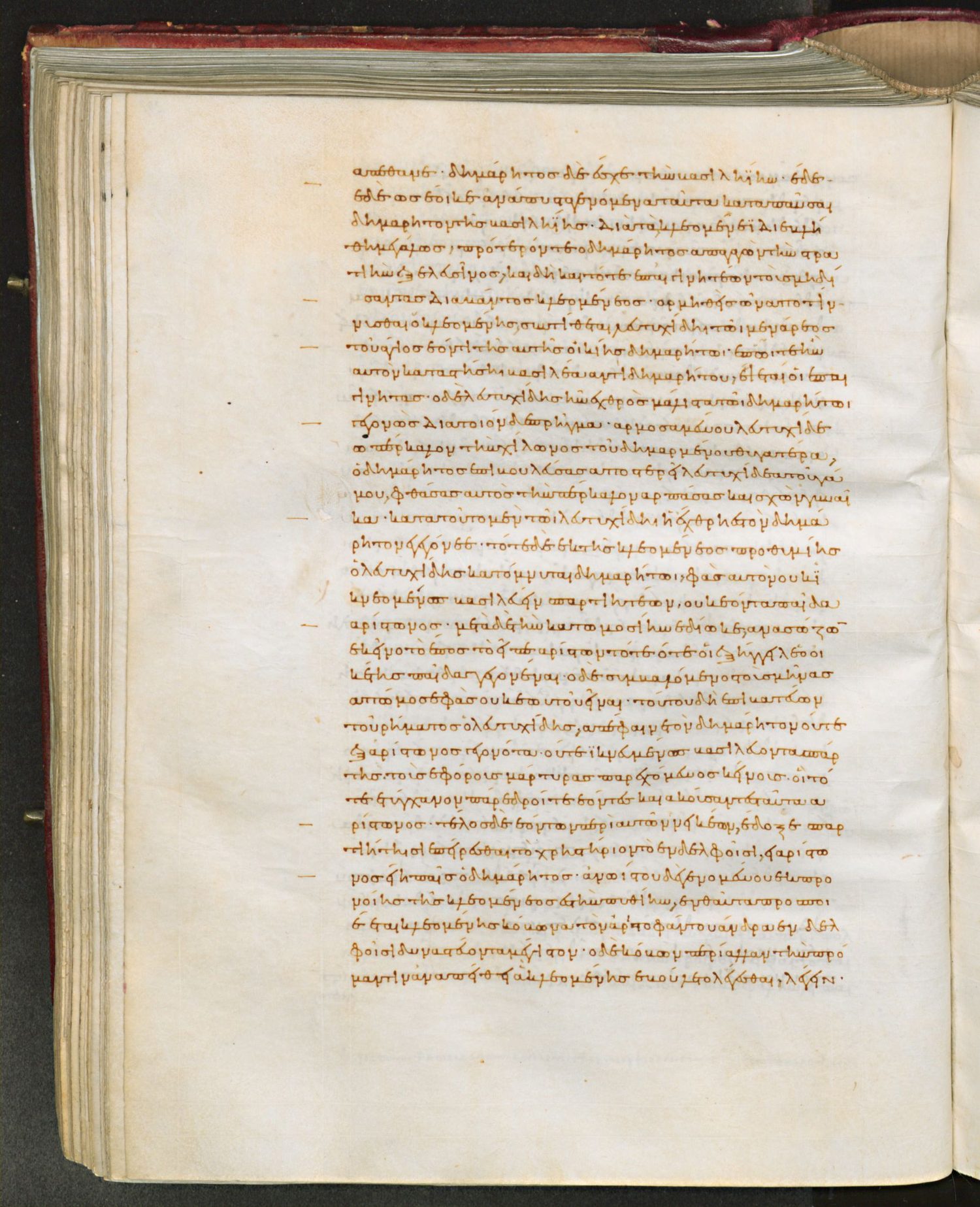
Laur. Plut. 70.3, fol. 247v: Greek here 6.64.1 to 6.66.2. Checked on the image (first and last words read and located in the Greek; each break checked against the neighbouring page): fol. 247v begins ‹ἀπέθανε, Δημάρητος δὲ ἔσχε› (6.64.1), ends ‹Κλεομένης ἐβούλετο λέγεσθαι λέγειν› (6.66.2). English here: 6.64.1 to 6.66.2 (Godley's sentences for the sections whose Greek lies mostly on this page).
6.64.1ἀπέθανε, Δημάρητος δὲ ἔσχε τὴν βασιληίην. ἔδεε δέ, ὡς ἔοικε, ἀνάπυστα γενόμενα ταῦτα καταπαῦσαι Δημάρητον τῆς βασιληίης διὰ τὰ […] Κλεομένεϊ διεβλήθη μεγάλως πρότερόν τε ὁ Δημάρητος ἀπαγαγὼν τὴν στρατιὴν ἐξ Ἐλευσῖνος, καὶ δὴ καὶ τότε ἐπʼ Αἰγινητέων τοὺς μηδίσαντας διαβάντος Κλεομένεος. 6.65.1ὁρμηθεὶς ὦν ἀποτίνυσθαι ὁ Κλεομένης συντίθεται Λευτυχίδῃ τῷ Μενάρεος τοῦ Ἄγιος, ἐόντι οἰκίης τῆς αὐτῆς Δημαρήτῳ, ἐπʼ ᾧ τε, ἢν αὐτὸν καταστήσῃ βασιλέα ἀντὶ Δημαρήτου, ἕψεταί οἱ ἐπʼ Αἰγινήτας. 6.65.2ὁ δὲ Λευτυχίδης ἦν ἐχθρὸς τῷ Δημαρήτῳ μάλιστα γεγονὼς διὰ πρῆγμα τοιόνδε· ἁρμοσαμένου Λευτυχίδεω Πέρκαλον τὴν Χίλωνος τοῦ Δημαρμένου θυγατέρα, ὁ Δημάρητος ἐπιβουλεύσας ἀποστερέει Λευτυχίδεα τοῦ γάμου, φθάσας αὐτὸς τὴν Πέρκαλον ἁρπάσας καὶ σχὼν γυναῖκα. 6.65.3κατὰ τοῦτο μὲν τῷ Λευτυχίδῃ ἡ ἔχθρη ἡ ἐς τὸν Δημάρητον ἐγεγόνεε, τότε δὲ ἐκ τῆς Κλεομένεος προθυμίης ὁ Λευτυχίδης κατόμνυται Δημαρήτῳ, φὰς αὐτὸν οὐκ ἱκνεομένως βασιλεύειν Σπαρτιητέων οὐκ ἐόντα παῖδα Ἀρίστωνος· μετὰ δὲ τὴν κατωμοσίην ἐδίωκε, ἀνασώζων ἐκεῖνο τὸ ἔπος τὸ εἶπε Ἀρίστων τότε ὅτε οἱ ἐξήγγειλε ὁ οἰκέτης παῖδα γεγονέναι, ὁ δὲ συμβαλόμενος τοὺς μῆνας ἀπώμοσε φὰς οὐκ ἑωυτοῦ μιν εἶναι. 6.65.4τούτου δὴ ἐπιβατεύων τοῦ ῥήματος ὁ Λευτυχίδης ἀπέφαινε τὸν Δημάρητον οὔτε ἐξ Ἀρίστωνος γεγονότα οὔτε ἱκνευμένως βασιλεύοντα Σπάρτης, τοὺς ἐφόρους μάρτυρας παρεχόμενος κείνους οἳ τότε ἐτύγχανον πάρεδροί τε ἐόντες καὶ ἀκούσαντες ταῦτα Ἀρίστωνος. 6.66.1τέλος δὲ ἐόντων περὶ αὐτῶν νεικέων, ἔδοξε Σπαρτιήτῃσι ἐπειρέσθαι τὸ χρηστήριον τὸ ἐν Δελφοῖσι εἰ Ἀρίστωνος εἴη παῖς ὁ Δημάρητος. 6.66.2ἀνοίστου δὲ γενομένου ἐκ προνοίης τῆς Κλεομένεος ἐς τὴν Πυθίην, ἐνθαῦτα προσποιέεται Κλεομένης Κόβωνα τὸν Ἀριστοφάντου, ἄνδρα ἐν Δελφοῖσι δυναστεύοντα μέγιστον, ὁ δὲ Κόβων Περίαλλαν τὴν πρόμαντιν ἀναπείθει τὰ Κλεομένης ἐβούλετο λέγεσθαι λέγειν.
6.64.1For that cause the name Demaratus was given to the boy; and as time went on Ariston died, and Demaratus obtained his kingship. But fate (it would seem) willed that these matters should be discovered and lose Demaratus his kingship for some such reason as this. Cleomenes had been bitterly at enmity with Demaratus ere this, when Demaratus led his army away from Eleusis, and as bitterly now when he himself had crossed over to punish those Aeginetans who espoused the Persian cause. 6.65.1Being therefore desirous of revenge, Cleomenes made an agreement with a man of Demaratus’ family, Leutychides son of Menares, who was the son of Agis, that if he made Leutychides king in Demaratus’ stead, Leutychides should go with him against the Aeginetans. 6.65.2Now Leutychides was a mortal foe of Demaratus; for he having been betrothed to Percalus, daughter of Chilon the son of Demarmenus, Demaratus had plotted and robbed Leutychides of his bride, carrying her off before the marriage and wedding her himself. 6.65.3Such was the reason of Leutychides’ feud with Demaratus; and now by Cleomenes’ instigation he brought an accusation against Demaratus, alleging him to be no rightful king of Sparta, seeing that he was not the son of Ariston; which accusation being laid he impeached Demaratus in court, ever keeping in mind what Ariston had said when the servant brought news of the birth of a son, and on a reckoning of the months he swore that the boy was none of his. 6.65.4On that saying Leutychides took his stand, and strove to prove that Demaratus was no son of Ariston or rightful king of Sparta, by calling as witnesses those ephors who had then been sitting in council and heard Ariston say that. 6.66.1At the last, the matter being in dispute, the Spartans resolved to enquire of the Delphic oracle if Demaratus were the son of Ariston. 6.66.2This was reported to the Pythian priestess by the instigation of Cleomenes; who then gained the aid of Cobon son of Aristophantus, a man of very great power at Delphi; and Cobon over-persuaded Perialla, the prophetess, to say what Cleomenes desired to be said.
Where on the image
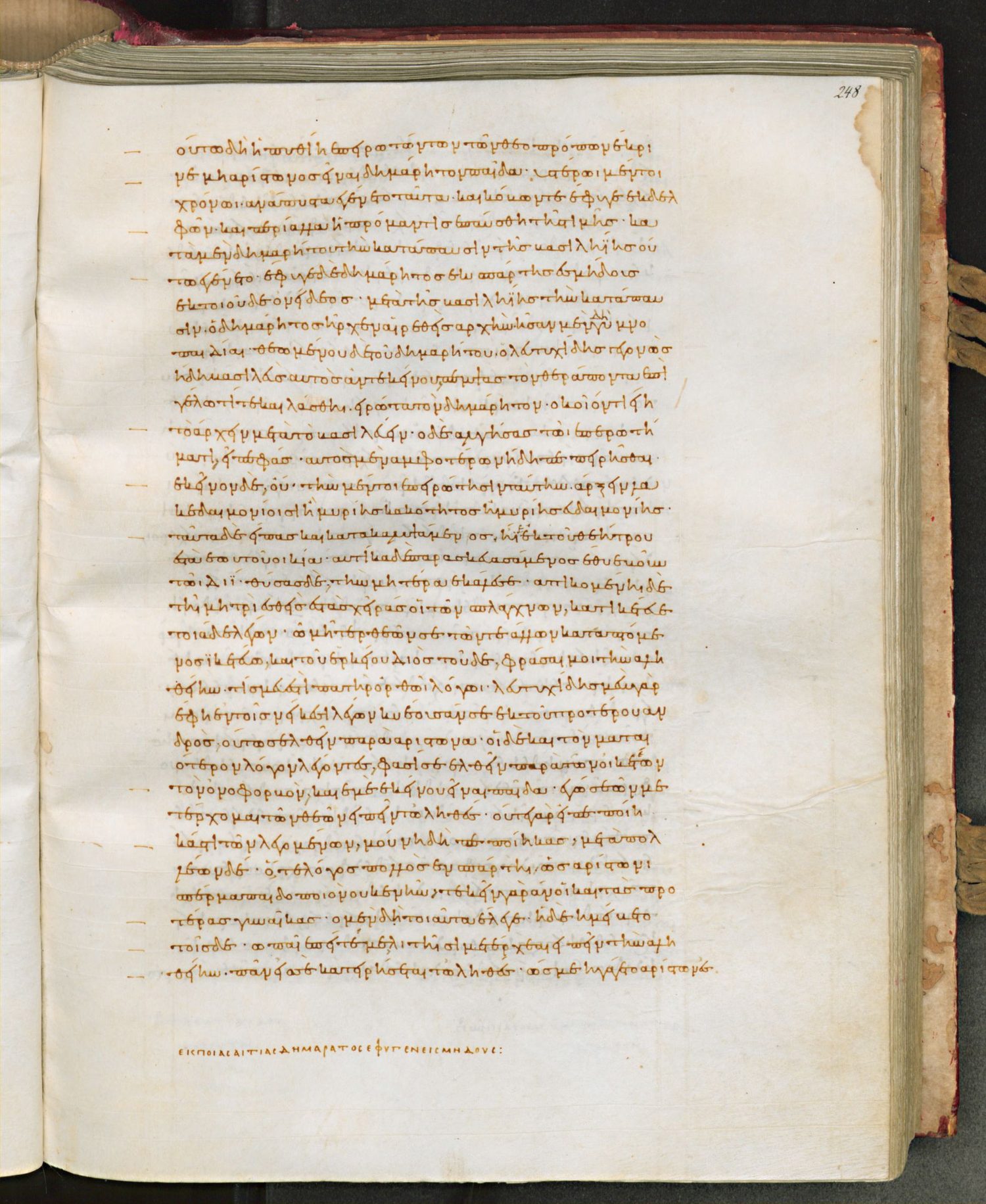
Laur. Plut. 70.3, fol. 248r: Greek here 6.66.3 to 6.69.1. Checked on the image (first and last words read and located in the Greek; each break checked against the neighbouring page): fol. 248r begins ‹οὕτω δὴ ἡ Πυθίη› (6.66.3), ends ‹ὥς με ἠγάγετο Ἀρίστων› (6.69.1). English here: 6.66.3 to 6.69.1 (Godley's sentences for the sections whose Greek lies mostly on this page).
6.66.3οὕτω δὴ ἡ Πυθίη ἐπειρωτώντων τῶν θεοπρόπων ἔκρινε μὴ Ἀρίστωνος εἶναι Δημάρητον παῖδα. ὑστέρῳ μέντοι χρόνῳ ἀνάπυστα ἐγένετο ταῦτα, καὶ Κόβων τε ἔφυγε ἐκ Δελφῶν καὶ Περίαλλα ἡ πρόμαντις ἐπαύσθη τῆς τιμῆς. 6.67.1κατὰ μὲν δὴ Δημαρήτου τὴν κατάπαυσιν τῆς βασιληίης οὕτω ἐγένετο, ἔφυγε δὲ Δημάρητος ἐκ Σπάρτης ἐς Μήδους ἐκ τοιοῦδε ὀνείδεος. μετὰ τῆς βασιληίης τὴν κατάπαυσιν ὁ Δημάρητος ἦρχε αἱρεθεὶς ἀρχήν. 6.67.2ἦσαν μὲν δὴ γυμνοπαιδίαι, θεωμένου δὲ τοῦ Δημαρήτου ὁ Λευτυχίδης γεγονὼς ἤδη βασιλεὺς αὐτὸς ἀντʼ ἐκείνου, πέμψας τὸν θεράποντα ἐπὶ γέλωτί τε καὶ λάσθῃ εἰρώτα τὸν Δημάρητον ὁκοῖόν τι εἴη τὸ ἄρχειν μετὰ τὸ βασιλεύειν. 6.67.3ὁ δὲ ἀλγήσας τῷ ἐπειρωτήματι εἶπε φὰς αὐτὸς μὲν ἀμφοτέρων ἤδη πεπειρῆσθαι, κεῖνον δὲ οὔ, τὴν μέντοι ἐπειρώτησιν ταύτην ἄρξειν Λακεδαιμονίοισι ἢ μυρίης κακότητος ἢ μυρίης εὐδαιμονίης. ταῦτα δὲ εἴπας καὶ κατακαλυψάμενος ἤιε ἐκ τοῦ θεήτρου ἐς τὰ ἑωυτοῦ οἰκία, αὐτίκα δὲ παρασκευασάμενος ἔθυε τῷ Διὶ βοῦν, θύσας δὲ τὴν μητέρα ἐκάλεσε. 6.68.1ἀπικομένῃ δὲ τῇ μητρὶ ἐσθεὶς ἐς τὰς χεῖράς οἱ τῶν σπλάγχνων κατικέτευε, τοιάδε λέγων. ὦ μῆτερ, θεῶν σε τῶν τε ἄλλων καταπτόμενος ἱκετεύω καὶ τοῦ ἑρκείου Διὸς τοῦδε φράσαι μοι τὴν ἀληθείην, τίς μευ ἐστὶ πατὴρ ὀρθῷ λόγῳ. 6.68.2Λευτυχίδης μὲν γὰρ ἔφη ἐν τοῖσι νείκεσι λέγων κυέουσάν σε ἐκ τοῦ προτέρου ἀνδρὸς οὕτω ἐλθεῖν παρὰ Ἀρίστωνα· οἱ δὲ καὶ τὸν ματαιότερον λόγον λέγοντες φασί σε ἐλθεῖν παρὰ τῶν οἰκετέων τὸν ὀνοφορβόν, καὶ ἐμὲ ἐκείνου εἶναι παῖδα. 6.68.3ἐγώ σε ὦν μετέρχομαι τῶν θεῶν εἰπεῖν τὠληθές· οὔτε γάρ, εἴ περ πεποίηκάς τι τῶν λεγομένων, μούνη δὴ πεποίηκας, μετὰ πολλέων δέ· ὅ τε λόγος πολλὸς ἐν Σπάρτῃ ὡς Ἀρίστωνι σπέρμα παιδοποιὸν οὐκ ἐνῆν· τεκεῖν γὰρ ἄν οἱ καὶ τὰς προτέρας γυναῖκας. 6.69.1ὃ μὲν δὴ τοιαῦτα ἔλεγε, ἣ δὲ ἀμείβετο τοῖσιδε. ὦ παῖ, ἐπείτε με λιτῇσι μετέρχεαι εἰπεῖν τὴν ἀληθείην, πᾶν ἐς σὲ κατειρήσεται τὠληθές. ὥς με ἠγάγετο Ἀρίστων
6.66.3On this the priestess, when the messengers enquired of her, gave judgment that Demaratus was not the son of Ariston. But at a later day these doings were discovered; Cobon was banished from Delphi and Perialla the prophetess was deprived of her honourable office. 6.67.1This then was how Demaratus was deposed from his kingship; and he betook himself from Sparta into banishment among the Medes by reason of a reproach of which I will now tell. After he was deposed, Demaratus held an office whereto he had been elected. 6.67.2Now while the festival of the Naked Men was celebrating, and Demaratus watching it, Leutychides, having by this time been made king in his place, sent his servant to ask Demaratus by way of mere mockery and insult how he liked his office after being a king. 6.67.3Wroth at that question, Demaratus made answer that he had made trial of both states, which Leutychides had not; but of that question (he said) ’twas likelier that huge calamity would come upon Lacedaemon than huge prosperity. Thus he spoke, and covering his head he quitted the theatre and went to his own house; there he made ready and sacrificed an ox to Zeus; after which sacrifice he called to him his mother. 6.68.1She came, and he put a part of the entrails in her hands, and said in entreaty: “My mother, I entreat you in the name of the gods, but especially Zeus of the household in whose presence we stand: tell me now truly, who was in very deed my father. 6.68.2For Leutychides said in those disputes, that you had a son in you by your first husband when you came to Ariston; and others there are that have a yet more random tale, saying that you consorted with one of the household that was the ass-keeper, and that it is his son that I am. 6.68.3Therefore I entreat you by the gods to tell me the truth; for if you have done aught such as they say of you, not you only but many other women have done the like; and it is currently reported at Sparta that Ariston had it not in him to be a father, else would his former wives have borne him children.” 6.69.1Thus he spoke, and thus she answered him: “My son, since you pray and entreat me to tell you the truth, the whole truth shall be told to you. On the third night after Ariston had brought me to his house, there came to me an appearance like to Ariston, and lay with me, and then put on me the garlands which he had.
Where on the image
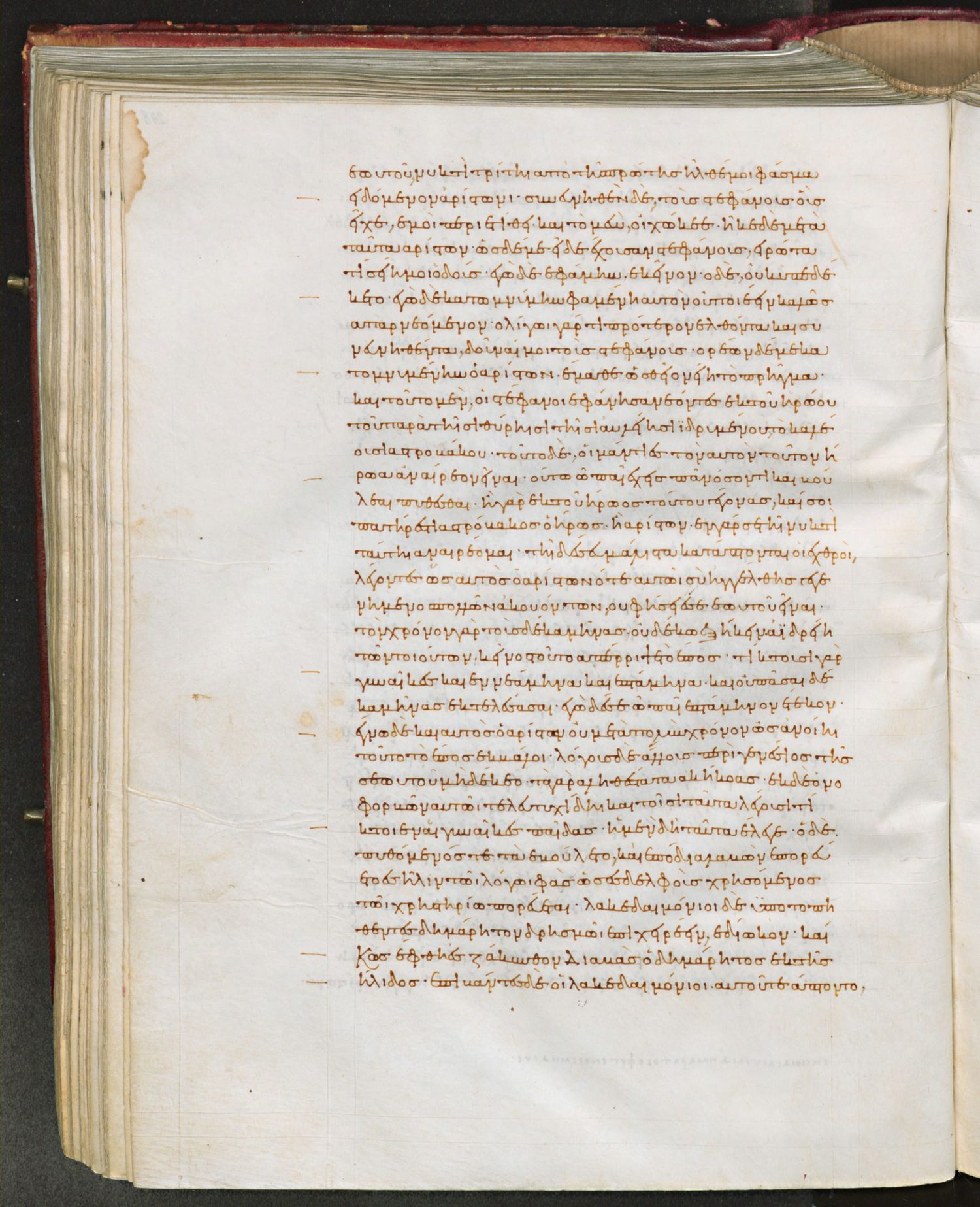
Laur. Plut. 70.3, fol. 248v: Greek here 6.69.1 to 6.70.2. Checked on the image (first and last words read and located in the Greek; each break checked against the neighbouring page): fol. 248v begins ‹ἐς ἑωυτοῦ, νυκτὶ τρίτῃ› (6.69.1), ends ‹Λακεδαιμόνιοι αὐτοῦ τε ἅπτοντο› (6.70.2). English here: 6.69.2 to 6.70.2 (Godley's sentences for the sections whose Greek lies mostly on this page).
6.69.1ἐς ἑωυτοῦ, νυκτὶ τρίτῃ ἀπὸ τῆς πρώτης ἦλθέ μοι φάσμα εἰδόμενον Ἀρίστωνι, συνευνηθὲν δὲ τοὺς στεφάνους τοὺς εἶχε ἐμοὶ περιετίθεε. 6.69.2καὶ τὸ μὲν οἰχώκεε, ἧκε δὲ μετὰ ταῦτα Ἀρίστων. ὡς δέ με εἶδε ἔχουσαν στεφάνους, εἰρώτα τίς εἴη μοι ὁ δούς· ἐγὼ δὲ ἐφάμην ἐκεῖνον, ὁ δὲ οὐκ ὑπεδέκετο. ἐγὼ δὲ κατωμνύμην φαμένη αὐτὸν οὐ ποιέειν καλῶς ἀπαρνεόμενον· ὀλίγῳ γὰρ τι πρότερον ἐλθόντα καὶ συνευνηθέντα δοῦναί μοι τοὺς στεφάνους. 6.69.3ὁρέων δέ με κατομνυμένην ὁ Ἀρίστων ἔμαθε ὡς θεῖον εἴη τὸ πρῆγμα. καὶ τοῦτο μὲν οἱ στέφανοι ἐφάνησαν ἐόντες ἐκ τοῦ ἡρωίου τοῦ παρὰ τῇσι θύρῃσι τῇσι αὐλείῃσι ἱδρυμένου, τὸ καλέουσι Ἀστροβάκου, τοῦτο δὲ οἱ μάντιες τὸν αὐτὸν τοῦτον ἥρωα ἀναίρεον εἶναι. 6.69.4οὕτω ὦ παῖ ἔχεις πᾶν, ὅσον τι καὶ βούλεαι πυθέσθαι· ἢ γὰρ ἐκ τοῦ ἥρωος τούτου γέγονας, καί τοι πατήρ ἐστι Ἀστρόβακος ὁ ἥρως, ἢ Ἀρίστων· ἐν γάρ σε τῇ νυκτὶ ταύτῃ ἀναιρέομαι. τῇ δέ σευ μάλιστα κατάπτονται οἱ ἐχθροί, λέγοντες ὡς αὐτὸς ὁ Ἀρίστων, ὅτε αὐτῷ σὺ ἠγγέλθης γεγενημένος, πολλῶν ἀκουόντων οὐ φήσειέ σε ἑωυτοῦ εἶναι ʽτὸν χρόνον γάρ, τοὺς δέκα μῆνας, οὐδέκω ἐξήκειν̓, ἀιδρείῃ τῶν τοιούτων κεῖνος τοῦτο ἀπέρριψε τὸ ἔπος. 6.69.5τίκτουσι γὰρ γυναῖκες καὶ ἐννεάμηνα καὶ ἑπτάμηνα, καὶ οὐ πᾶσαι δέκα μῆνας ἐκτελέσασαι· ἐγὼ δὲ σὲ ὦ παῖ ἑπτάμηνον ἔτεκον. ἔγνω δὲ καὶ αὐτὸς ὁ Ἀρίστων οὐ μετὰ πολλὸν χρόνον ὡς ἀνοίῃ τὸ ἔπος ἐκβάλοι τοῦτο. λόγους δὲ ἄλλους περὶ γενέσιος τῆς σεωυτοῦ μὴ δέκεο· τὰ γὰρ ἀληθέστατα πάντα ἀκήκοας. ἐκ δὲ ὀνοφορβῶν αὐτῷ τε Λευτυχίδῃ καὶ τοῖσι ταῦτα λέγουσι τίκτοιεν αἱ γυναῖκες παῖδας. 6.70.1ἣ μὲν δὴ ταῦτα ἔλεγε, ὁ δὲ πυθόμενός τε τὰ ἐβούλετο καὶ ἐπόδια λαβὼν ἐπορεύετο ἐς Ἦλιν, τῷ λόγῳ φὰς ὡς ἐς Δελφοὺς χρησόμενος τῷ χρηστηρίῳ πορεύεται. Λακεδαιμόνιοι δὲ ὑποτοπηθέντες Δημάρητον δρησμῷ ἐπιχειρέειν ἐδίωκον. 6.70.2καί κως ἔφθη ἐς Ζάκυνθον διαβὰς ὁ Δημάρητος ἐκ τῆς Ἤλιδος· ἐπιδιαβάντες δὲ οἱ Λακεδαιμόνιοι αὐτοῦ τε ἅπτοντο
6.69.2So when that figure was gone, presently Ariston came to me. Seeing the garlands on me, he asked me who had given them; I said they were his gift, but he denied it. Then I said, and swore it, that he did not well to deny it; for, I told him, he had come but a little while ago and lain with me and so given me the garlands. 6.69.3When Ariston saw that I swore to that, he perceived that the hand of heaven was in the matter; and not only were the garlands plainly seen to have come from the hero’s shrine they call Astrobaeus’ shrine, that stands by the door of the courtyard, but the diviners declared that it was that same hero, Astrobacus, that had visited me. 6.69.4Thus, my son, you have all that you desire to know; for either you are the son of that hero, and the hero Astrobacus is your father, or Ariston is; for on that night did I conceive you. But as touching the plea that they most urge against you, namely, that Ariston himself, when your birth was announced to him, said in the hearing of many that you were not his son, the full ten months’ time being not completed: that was an idle word that he spoke, as not knowing the truth of such matters; for not all women complete the full ten months’ time, but 6.69.5some bear children after nine months, or even after seven; and you, my son, were born after seven months. It was not long ere Ariston himself came to know that this was a foolish word that had escaped him. Give no credence to any other tales concerning your birth; for this is very truth that I have told you; and for Leutychides himself and those that tell such tales, may they be cuckolded by their ass-keepers.” 6.70.1Thus his mother spoke. Demaratus, having learnt what he desired, took provision for the way and journeyed to Elis, pretending that he journeyed to Delphi to enquire of the oracle. But the Lacedaemonians suspected that he planned to escape, and pursued after him; 6.70.2Demaratus was by some means beforehand with them and crossed the sea from Elis to Zacynthus; the Lacedaemonians crossed over after him and strove to lay hands on him, carrying off his servants. Then, the Zacynthians refusing to give him up, he crossed thence to Asia and betook himself to king Darius, who received him royally and gave him lands and cities.
Where on the image
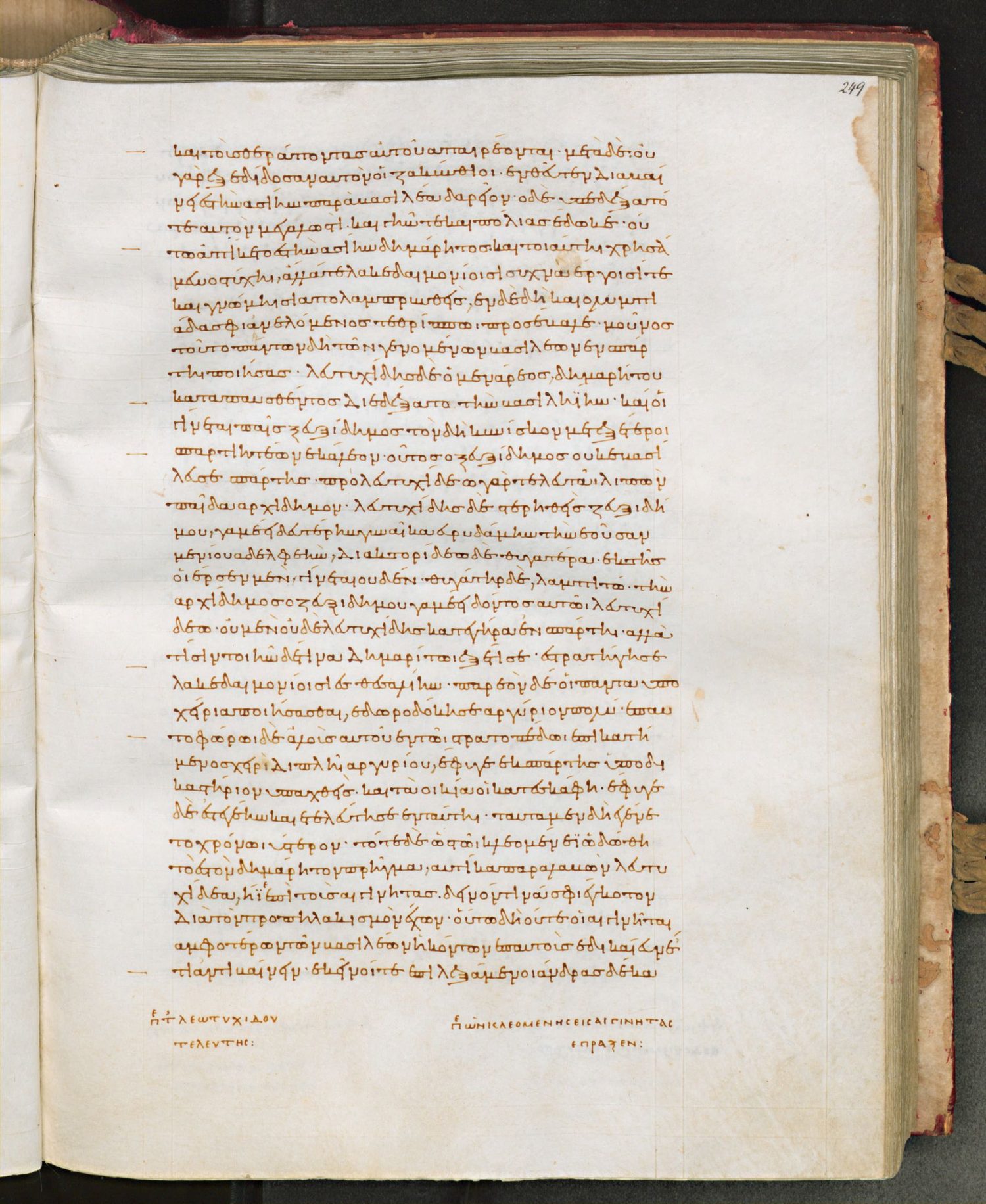
Laur. Plut. 70.3, fol. 249r: Greek here 6.70.2 to 6.72.2. Checked on the image (first and last words read and located in the Greek; each break checked against the neighbouring page): fol. 249r begins ‹καὶ τοὺς θεράποντας αὐτοῦ› (6.70.2), ends ‹τε ἐπιλεξάμενοι ἄνδρας δέκα› (6.73.2). English here: 6.70.3 to 6.72.2 (Godley's sentences for the sections whose Greek lies mostly on this page).
6.70.2καὶ τοὺς θεράποντας αὐτοῦ ἀπαιρέονται. μετὰ δέ, οὐ γὰρ ἐξεδίδοσαν αὐτὸν οἱ Ζακύνθιοι, ἐνθεῦτεν διαβαίνει ἐς τὴν Ἀσίην παρὰ βασιλέα Δαρεῖον. ὁ δὲ ὑπεδέξατό τε αὐτὸν μεγαλωστὶ καὶ γῆν τε καὶ πόλιας ἔδωκε. 6.70.3οὕτω ἀπίκετο ἐς τὴν Ἀσίην Δημάρητος καὶ τοιαύτῃ χρησάμενος τύχῃ, ἄλλα τε Λακεδαιμονίοισι συχνὰ ἔργοισί τε καὶ γνώμῃσι ἀπολαμπρυνθείς, ἐν δὲ δὴ καὶ Ὀλυμπιάδα σφι ἀνελόμενος τεθρίππῳ προσέβαλε, μοῦνος τοῦτο πάντων δὴ τῶν γενομένων βασιλέων ἐν Σπάρτῃ ποιήσας. 6.71.1Λευτυχίδης δὲ ὁ Μενάρεος Δημαρήτου καταπαυσθέντος διεδέξατο τὴν βασιληίην, καί οἱ γίνεται παῖς Ζευξίδημος, τὸν δὴ Κυνίσκον μετεξέτεροι Σπαρτιητέων ἐκάλεον. οὗτος ὁ Ζευξίδημος οὐκ ἐβασίλευσε Σπάρτης· πρὸ Λευτυχίδεω γὰρ τελευτᾷ, λιπὼν παῖδα Ἀρχίδημον. 6.71.2Δευτυχίδης δὲ στερηθεὶς Ζευξιδήμου γαμέει δευτέρην γυναῖκα Εὐρυδάμην τὴν ἐοῦσαν Μενίου ἀδελφεὴν Διακτορίδεω δὲ θυγατέρα, ἐκ τῆς οἱ ἔρσεν μὲν γίνεται οὐδέν, θυγάτηρ δὲ Λαμπιτώ, τὴν Ἀρχίδημος ὁ Ζευξιδήμου γαμέει δόντος αὐτῷ Λευτυχίδεω. 6.72.1οὐ μὲν οὐδὲ Λευτυχίδης κατεγήρα ἐν Σπάρτῃ, ἀλλὰ τίσιν τοιήνδε τινὰ Δημαρήτῳ ἐξέτισε. ἐστρατήγησε Λακεδαιμονίοισι ἐς Θεσσαλίην, παρεὸν δέ οἱ πάντα ὑποχείρια ποιήσασθαι ἐδωροδόκησε ἀργύριον πολλόν· 6.72.2ἐπʼ αὐτοφώρῳ δὲ ἁλοὺς αὐτοῦ ἐν τῷ στρατοπέδῳ, ἐπικατήμενος χειρίδι πλέῃ ἀργυρίου, ἔφυγε ἐκ Σπάρτης ὑπὸ δικαστήριον ὑπαχθείς, καὶ τὰ οἰκία οἱ κατεσκάφη· ἔφυγε δὲ ἐς Τεγέην καὶ ἐτελεύτησε ἐν ταύτῃ.
6.70.3Thus and after such adventures came Demaratus to Asia, a man that had gained much renown in Lacedaemon by his many achievements and his wisdom, but most by making over to the state the victory in a chariot-race that he had won at Olympia; he was the only king of Sparta who did this. 6.71.1Demaratus being deposed, Leutychides son of Menares succeeded to his kingship; and there was born to him a son, Zeuxidemus, called by some of the Spartans Cyniscus. This Zeuxidemus never came to be king of Sparta; for he died in Leutychides’ lifetime, leaving a son, Archidemus. 6.71.2Having thus lost Zeuxidemus, Leutychides married a second wife, Eurydame, sister of Menius and daughter of Diactorides; by her he had no male issue, but a daughter, Lampito, to whom Archidemus son of Zeuxidemus was married by Leutychides. 6.72.1But neither did Leutychides himself win to old age in Sparta; he was punished for his dealing with Demaratus, as I will show: he led a Lacedaemonian army to Thessaly, and when he might have subdued all the country he took a great bribe; 6.72.2and being caught in the very act of hoarding a sleeve full of silver there in the camp, he was brought before a court and banished from Sparta, and his house destroyed; and he went into exile at Tegea and there died.
Notes
- Greek: the text printed in A. D. Godley's Loeb edition, via Perseus (tlg0016.tlg001.perseus-grc2). Square brackets mark words the editor considers later additions; [...] marks a gap the editor indicates. Perseus note markers are omitted.
- English: A. D. Godley, Herodotus vol. 3 (1922) (Loeb Classical Library), as transcribed on Wikisource. Godley's footnotes are omitted.
- Section numbers in the English were placed by comparing Godley's text with the Perseus version of his translation; where a section begins inside one of Godley's sentences, the English is kept with the page that holds the start of that sentence.
Cite
Sources
- Source: Florence, Laur. Plut. 70.3 (10th c.) via BML Teca Digitale + Greek of Godley's Loeb (Perseus) + English of A. D. Godley (Loeb, Wikisource) (holding institution)
- Critical edition: Greek of A. D. Godley's Loeb edition (1920-1925), via Perseus
← previous · → next · v cycle view · l back to library