Apollonius of Rhodes, Argonautica 4.592-626: the Eridanus, amber, and Apollo's tears among the Hyperboreans
Introduction
Apollonius of Rhodes wrote the Argonautica in Alexandria in the 3rd century BCE. In book 4 the Argo, sailing home by the rivers of Europe, enters the Eridanus, where Phaethon fell burning from the chariot of the Sun and his sisters, turned into poplars, weep tears of amber. The Celts tell another story: that these are the tears of Apollo, shed when he left heaven for the sacred race of the Hyperboreans, banished by Zeus in his anger over the death of his son Asclepius (lines 611-617).
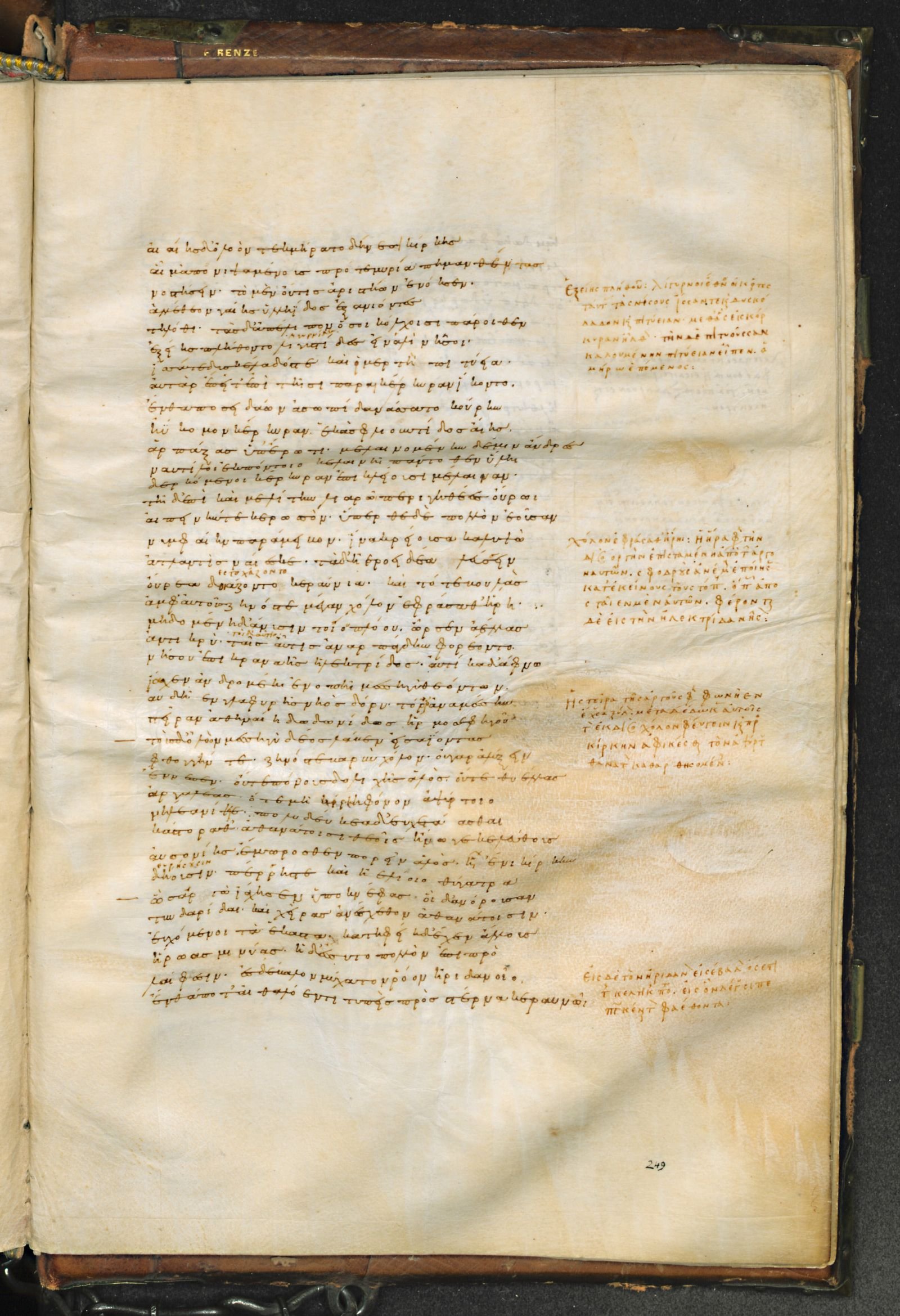
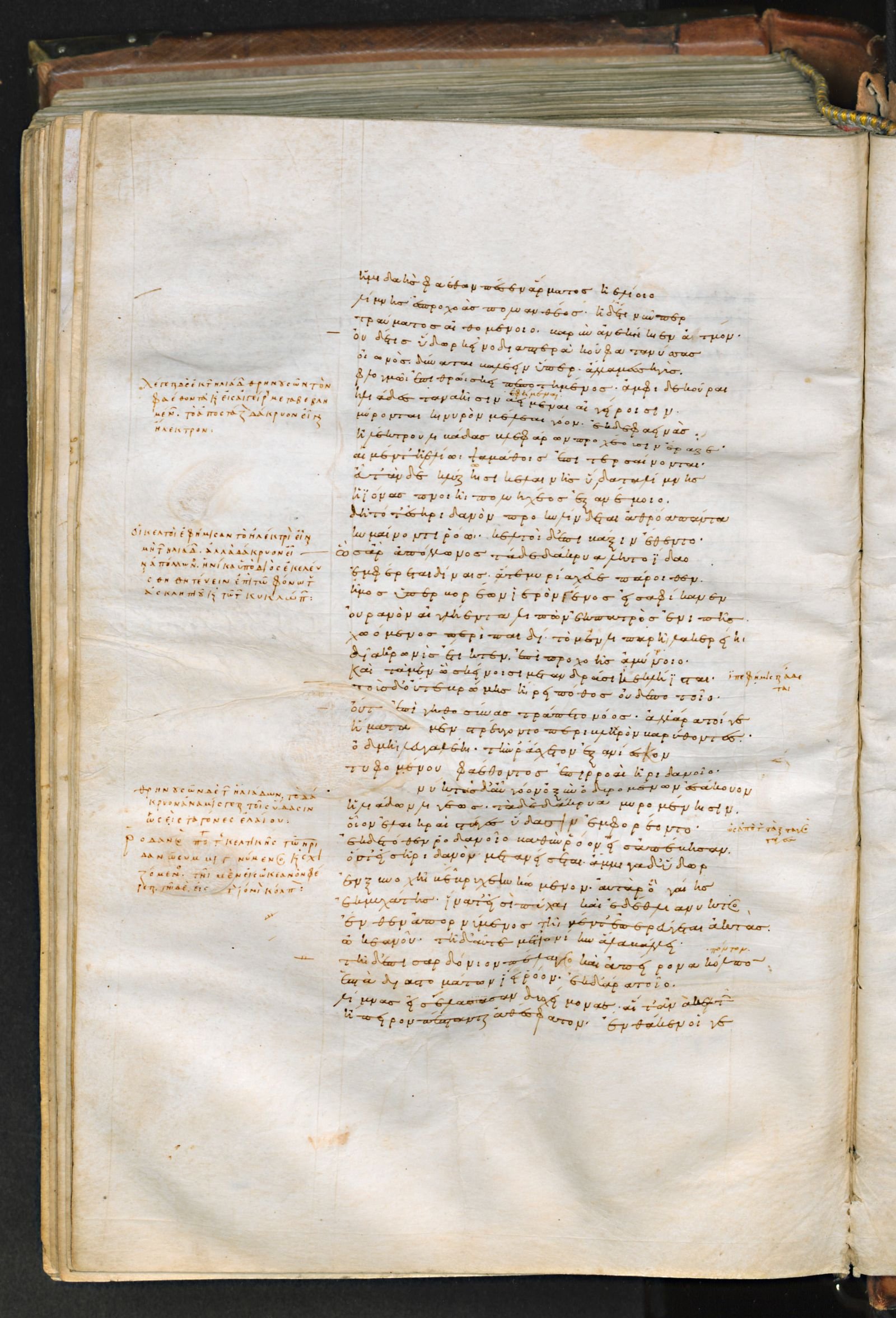
The manuscript is Florence, Biblioteca Medicea Laurenziana, Plut. 32.9 (L), the famous 10th-century codex of Aeschylus, Sophocles and Apollonius, the oldest manuscript of the Argonautica. One column of 39 lines a page; 4.592-626 run from fol. 249r line 34 to fol. 249v line 29.
How was this verified? (Provenance)
Where on the image
Lines 4.592-626 stand on Florence, Laur. Plut. 32.9 (L), fol. 249r-249v. Checked on the images: 249r: the page has one column of 39 lines, line 1 = 4.559 ‹αἰαίης δ' ὀλοὸν τεκμήρατο›, so 4.592-597 are lines 34-39 (line 34 = 592 ‹ἰάχησεν ὑπὸ κνέφας· οἱ δ' ἀνόρουσαν›, marked with a stroke in the margin; line 36 = 594 ‹εὐχόμενοι τὰ ἕκαστα›, line 39 = 597 ‹ἔνθα ποτ' αἰθαλόεντι›); 249v: line 1 = 598 ‹ἡμιδαὴς φαέθων πέσεν ἅρματος ἠελίοιο›; line 14 = 611 ‹κελτοὶ δ'›; line 17 = 614 ‹ἦμος ὑπερβορέων ἱερὸν γένος›; the passage ends at line 29 = 626 ‹οἷον ἐλαιηραὶ στάγες ὕδασιν ἐμφορέοντο›
592ὧς Ἀργὼ ἰάχησεν ὑπὸ κνέφας· οἱ δʼ ἀνόρουσαν
593Τυνδαρίδαι, καὶ χεῖρας ἀνέσχεθον ἀθανάτοισιν
594εὐχόμενοι τὰ ἕκαστα· κατηφείη δʼ ἔχεν ἄλλους
595ἥρωας Μινύας. ἡ δʼ ἔσσυτο πολλὸν ἐπιπρὸ
596λαίφεσιν, ἐς δʼ ἔβαλον μύχατον ῥόον Ἠριδανοῖο·
597ἔνθα ποτʼ αἰθαλόεντι τυπεὶς πρὸς στέρνα κεραυνῷ
598ἡμιδαὴς Φαέθων πέσεν ἅρματος Ἠελίοιο
599λίμνης ἐς προχοὰς πολυβενθέος· ἡ δʼ ἔτι νῦν περ
600τραύματος αἰθομένοιο βαρὺν ἀνακηκίει ἀτμόν.
601οὐδέ τις ὕδωρ κεῖνο διὰ πτερὰ κοῦφα τανύσσας
602οἰωνὸς δύναται βαλέειν ὕπερ· ἀλλὰ μεσηγὺς
603φλογμῷ ἐπιθρώσκει πεποτημένος. ἀμφὶ δὲ κοῦραι
604Ἡλιάδες ταναῇσιν ἐελμέναι αἰγείροισιν,
605μύρονται κινυρὸν μέλεαι γόον· ἐκ δὲ φαεινὰς
606ἠλέκτρου λιβάδας βλεφάρων προχέουσιν ἔραζε,
607αἱ μέν τʼ ἠελίῳ ψαμάθοις ἔπι τερσαίνονται·
608εὖτʼ ἂν δὲ κλύζῃσι κελαινῆς ὕδατα λίμνης
609ἠιόνας πνοιῇ πολυηχέος ἐξ ἀνέμοιο,
610δὴ τότʼ ἐς Ἠριδανὸν προκυλίνδεται ἀθρόα πάντα
611κυμαίνοντι ῥόῳ. Κελτοὶ δʼ ἐπὶ βάξιν ἔθεντο,
612ὡς ἄρʼ Ἀπόλλωνος τάδε δάκρυα Λητοΐδαο
613ἐμφέρεται δίναις, ἅ τε μυρία χεῦε πάροιθεν,
614ἦμος Ὑπερβορέων ἱερὸν γένος εἰσαφίκανεν,
615οὐρανὸν αἰγλήεντα λιπὼν ἐκ πατρὸς ἐνιπῆς,
616χωόμενος περὶ παιδί, τὸν ἐν λιπαρῇ Λακερείῃ
617δῖα Κορωνὶς ἔτικτεν ἐπὶ προχοῇς Ἀμύροιο.
618καὶ τὰ μὲν ὧς κείνοισι μετʼ ἀνδράσι κεκλήισται.
619τοὺς δʼ οὔτε βρώμης ᾕρει πόθος, οὐδὲ ποτοῖο,
620οὔτʼ ἐπὶ γηθοσύνας τράπετο νόος. ἀλλʼ ἄρα τοίγε
621ἤματα μὲν στρεύγοντο περιβληχρὸν βαρύθοντες
622ὀδμῇ λευγαλέῃ, τήν ῥʼ ἄσχετον ἐξανίεσκον
623τυφομένου Φαέθοντος ἐπιρροαὶ Ἠριδανοῖο·
624νύκτας δʼ αὖ γόον ὀξὺν ὀδυρομένων ἐσάκουον
625Ἡλιάδων λιγέως· τὰ δὲ δάκρυα μυρομένῃσιν
626οἷον ἐλαιηραὶ στάγες ὕδασιν ἐμφορέοντο.
Thus Argo cried through the darkness; and the sons of Tyndareus uprose, and lifted their hands to the immortals praying for each boon: but dejection held the rest of the Minyan heroes. And far on sped Argo under sail, and entered deep into the stream of Eridanus; where once, smitten on the breast by the blazing bolt, Phaethon half-consumed fell from the chariot of Helios into the opening of that deep lake; and even now it belcheth up heavy steam clouds from the smouldering wound. And no bird spreading its light wings can cross that water; but in mid-course it plunges into the flame, fluttering. And all around the maidens, the daughters of Helios, enclosed in tall poplars, wretchedly wail a piteous plaint; and from their eyes they shed on the ground bright drops of amber. These are dried by the sun upon the sand; but whenever the waters of the dark lake flow over the strand before the blast of the wailing wind, then they roll on in a mass into Eridanus with swelling tide. But the Celts have attached this story to them, that these are the tears of Leto’s son, Apollo, that are borne along by the eddies, the countless tears that he shed aforetime when he came to the sacred race of the Hyperboreans and left shining heaven at the chiding of his father, being in wrath concerning his son whom divine Coronis bare in bright Lacereia at the mouth of Amyrus. And such is the story told among these men. But no desire for food or drink seized the heroes nor were their thoughts turned to joy. But they were sorely afflicted all day, heavy and faint at heart, with the noisome stench, hard to endure, which the streams of Eridanus sent forth from Phaethon still burning; and at night they heard the piercing lament of the daughters of Helios, wailing with shrill voice; and, as they lamented, their tears were borne on the water like drops of oil.
Notes
- Seaton's prose paragraph renders lines 592-626 as a whole, so the passage is one section linked to every page that carries it; the scan_note gives the lines on each page.
Cite
Sources
- Source: Florence, Laur. Plut. 32.9 (L), fol. 249r-249v via Teca digitale BML + Mooney's Greek (Perseus) + Seaton's English (1912, Project Gutenberg) (holding institution)
- Critical edition: Perseus editions named per passage
← previous · → next · v cycle view · l back to library