Callimachus, Hymn to Delos 275-299: the offerings of the Hyperboreans
Introduction
Callimachus of Cyrene wrote his Hymn to Delos in Alexandria in the 3rd century BCE. Near its end he tells how every year all cities send tithes and choirs to Delos, among them the peoples beyond the north wind, a very long-lived race. Their offerings of corn-sheaves pass through the Pelasgians of Dodona, the Malian land and Euboea; they were first brought from the Arimaspians by Upis, Loxo and Hecaerge, daughters of Boreas, who never went home, and in whose honour the girls and boys of Delos still offer their hair.
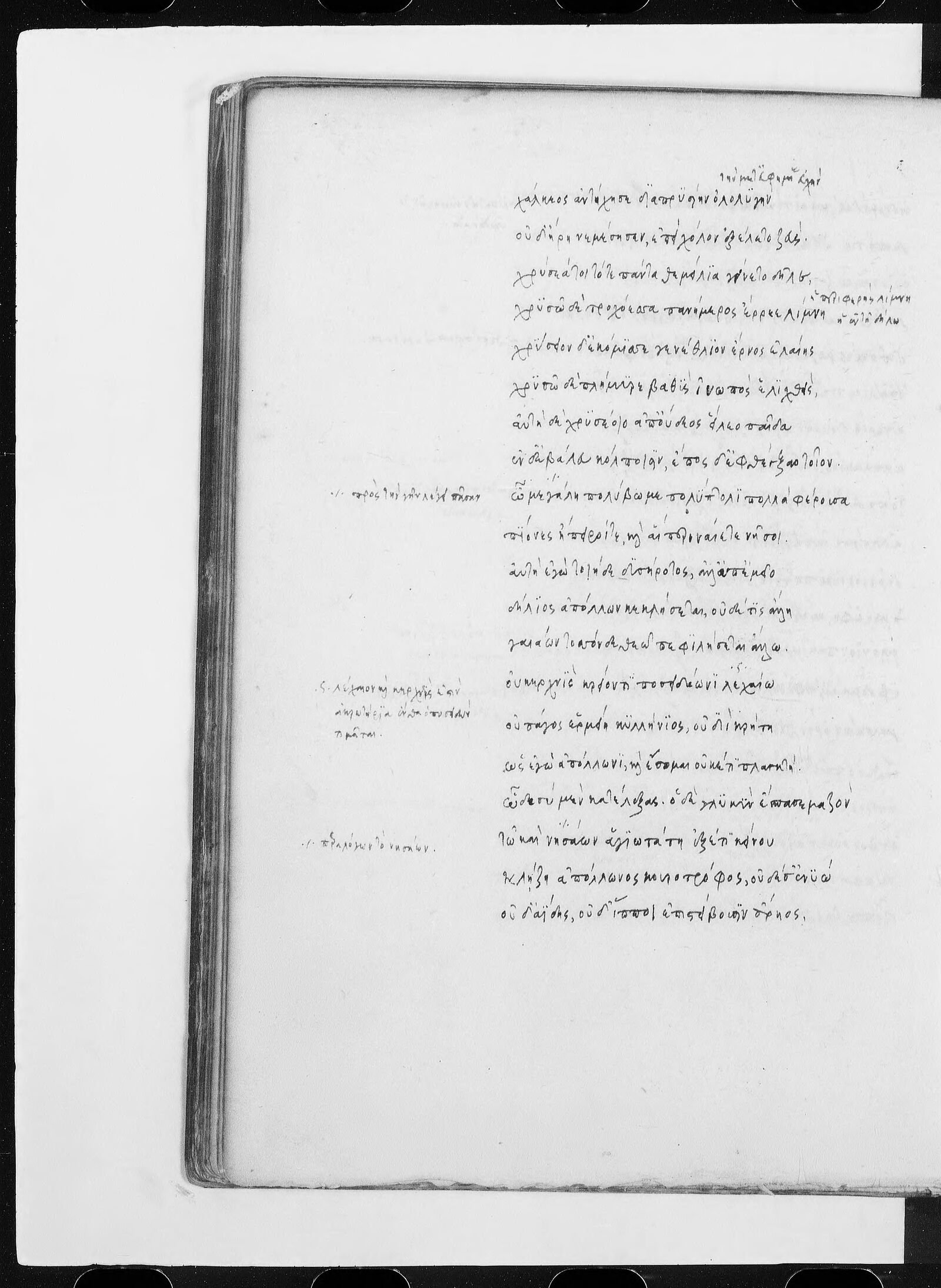
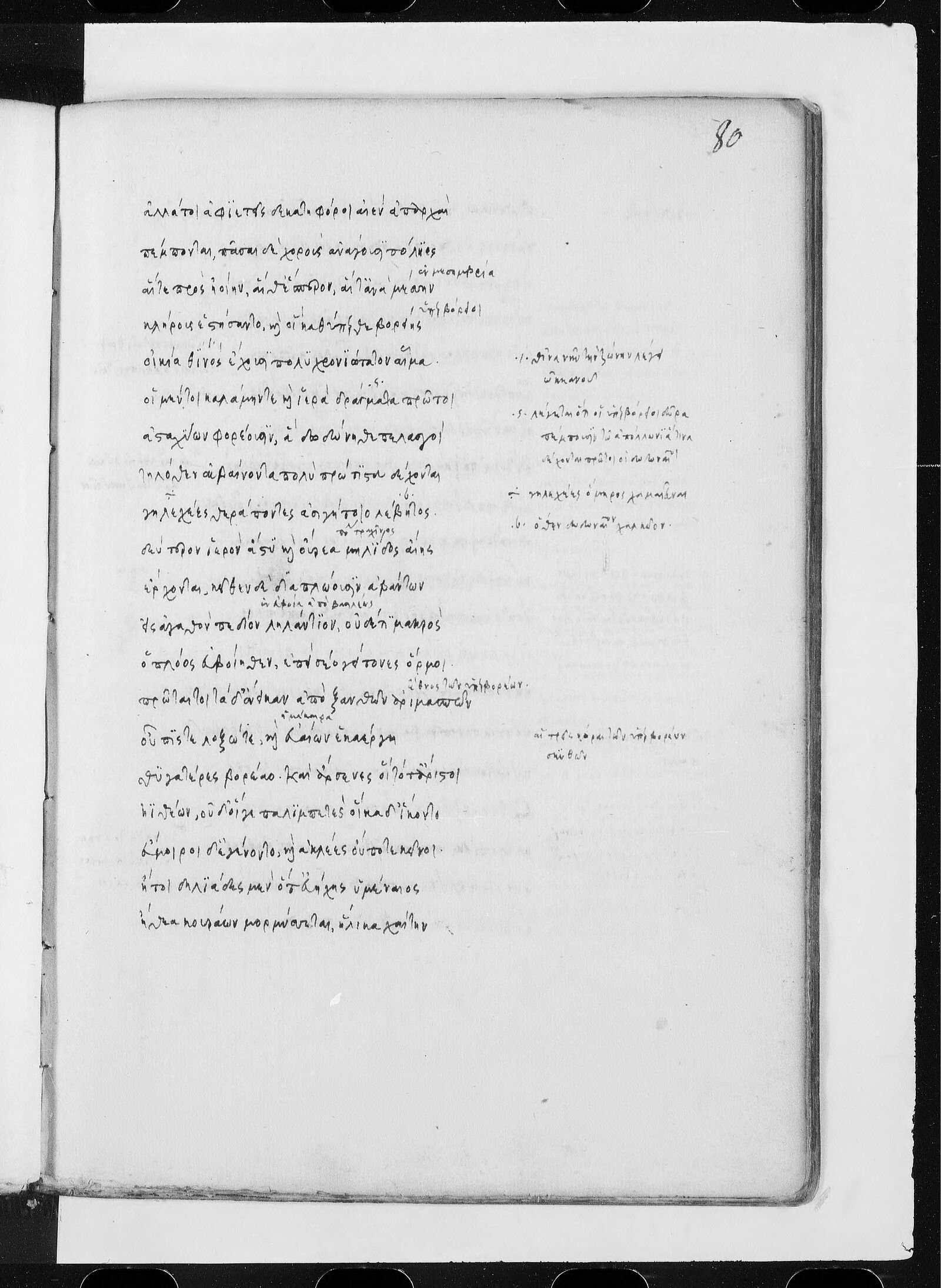
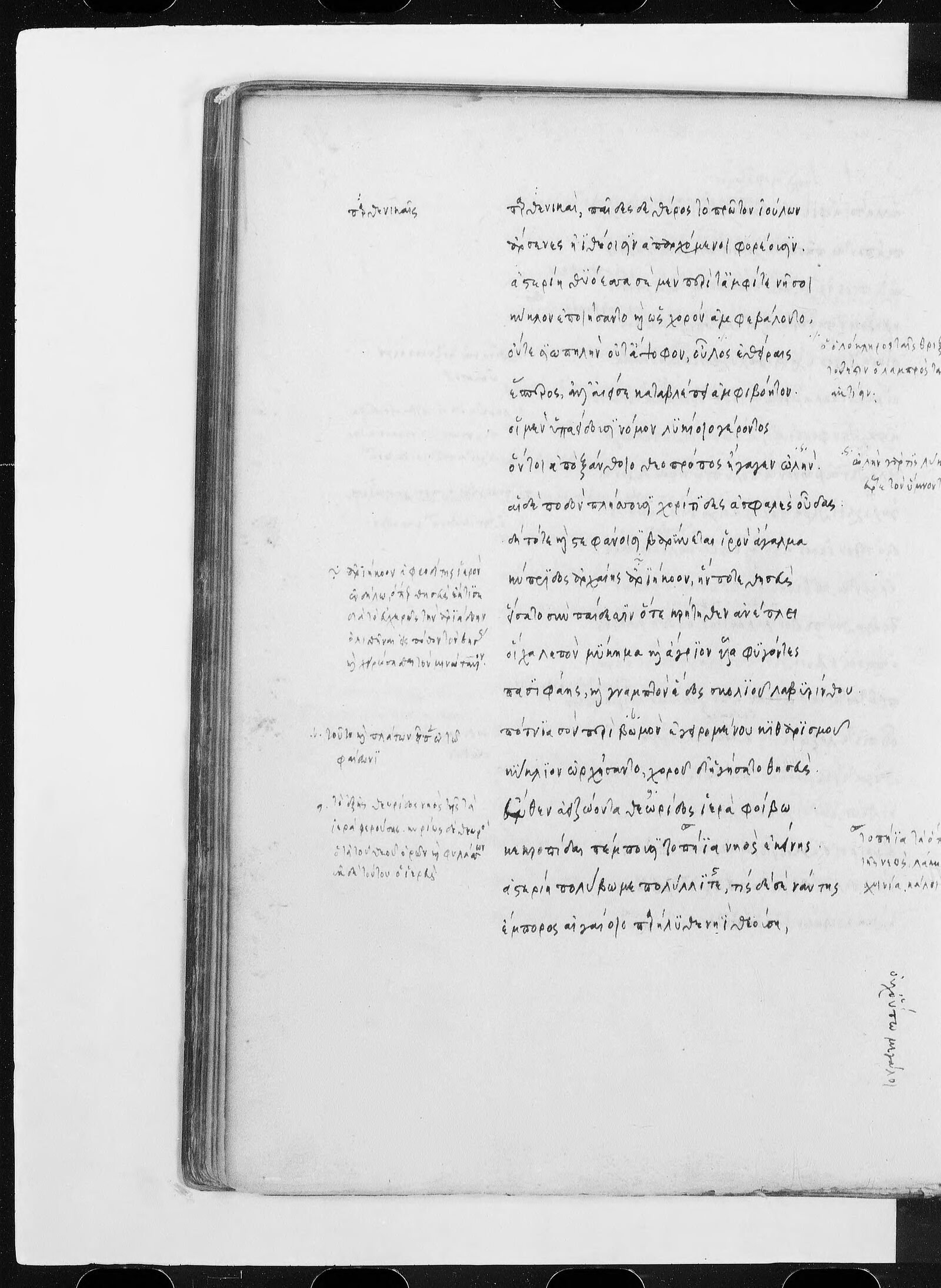
The manuscripts of Callimachus' hymns are all of the 15th century or later. The one shown is Paris, BnF, grec 2763, copied about 1470-1500 by Niccolò Leonico Tomeo, with the hymns on fol. 61r-88v (images from the BnF's microfilm, each a two-page opening, cropped here to the page). Lines 275-299 run from the foot of fol. 79v over 80r to the top of 80v. The Ambrosian manuscript B 98 sup. was also checked but is published with a no-download restriction.
How was this verified? (Provenance)
Where on the image
Lines 275-299 stand on Paris, BnF, grec 2763, fol. 79v-80v. Checked on the images: 79v: the last three lines of the page are 275-277, ‹τῷ καὶ νήσων ἁγιωτάτη ἐξέτι κείνου› to ‹οὐδ' ἀΐδης, οὐδ' ἵπποι ἐπιστείβουσιν ἄρηος›; 80r: the page begins with 278, ‹ἀλλά τοι ἀμφιετεῖς δεκατηφόροι αἰὲν ἀπαρχαί›; line 4 is 281 ‹κλήρους ἐστήσαντο, καὶ οἳ καθύπερθε βορείης›; the last line is 297, ‹ἤθεα κουράων μορμύσσεται, ἥλικα χαίτην›; 80v: the first two lines are 298-299, ‹παρθενικαῖς, παῖδες δὲ θέρος› and ‹ἄρσενες ἠιθέοισιν ἀπαρχόμενοι φορέουσιν›, followed by 300 ‹Ἀστερίη θυόεσσα›
275τῶι καὶ νησάων ἁγιωτάτη ἐξέτι κείνου
276κλήζηι, Ἀπόλλωνος κουροτρόφος· οὐδέ σʼ Ἐνυώ
277οὐδʼ Ἀίδης οὐδʼ ἵπποι ἐπιστείβουσιν Ἄρηος·
278ἀλλά τοι ἀμφιετεῖς δεκατηφόροι αἰὲν ἀπαρχαί
279πέμπονται, πᾶσαι δὲ χοροὺς ἀνάγουσι πόληες,
280αἵ τε πρὸς ἠοίην αἵ θʼ ἕσπερον αἵ τʼ ἀνὰ μέσσην
281κλήρους ἐστήσαντο, καὶ οἳ καθύπερθε βορείης
282οἰκία θινὸς ἔχουσι, πολυχρονιώτατον αἷμα.
283οἳ μέν τοι καλάμην τε καὶ ἱερὰ δράγματα πρῶτοι
284ἀσταχύων φορέουσιν· ἃ Δωδώνηθι Πελασγοί
285τηλόθεν ἐκβαίνοντα πολὺ πρώτιστα δέχονται,
286γηλεχέες θεράποντες ἀσιγήτοιο λέβητος·
287δεύτερον Ἱερὸν ἄστυ καὶ οὔρεα Μηλίδος αἴης
288ἔρχονται· κεῖθεν δὲ διαπλώουσιν Ἀβάντων
289εἰς ἀγαθὸν πεδίον Ληλάντιον· οὐδʼ ἔτι μακρός
290ὁ πλόος Εὐβοίηθεν, ἐπεὶ σέο γείτονες ὅρμοι.
291πρῶταί τοι τάδʼ ἔνεικαν ἀπὸ ξανθῶν Ἀριμασπῶν
292Οὖπίς τε Λοξώ τε καὶ εὐαίων Ἑκαέργη,
293θυγατέρες Βορέαο, καὶ ἄρσενες οἳ τότʼ ἄριστοι
294ἠιθέων· οὐδʼ οἵ γε παλιμπετὲς οἴκαδʼ ἵκοντο,
295εὔμοιροι δʼ ἐγένοντο, καὶ ἀκλέες οὔποτʼ ἐκεῖνοι.
296ἦ τοι Δηλιάδες μέν, ὅτʼ εὐήχης ὑμέναιος
297ἤθεα κουράων μορμύσσεται, ἥλικα χαίτην
298παρθενικαῖς, παῖδες δὲ θέρος τὸ πρῶτον ἰούλων
299ἄρσενες ἠιθέοισιν ἀπαρχόμενοι φορέουσιν.
Wherefore from that day thou art famed as the most holy of islands, nurse of Apollo’s youth. On thee treads not Enyo nor Hades nor the horses of Ares; but every year tithes of first-fruits are sent to thee: to thee all cities lead up choirs, both those cities which have cast their lots toward the East and those toward the West and those in the South, and the peoples which have their homes above the Northern shore, a very long-lived race. These first bring thee cornstalks and holy sheaves of corn-ears, which the Pelasgians of Dodona, who couch upon the ground, servants of the caldron which is never silent—far first receive, as these offerings enter their country from afar. Next they come to the Holy town and mountains of the Malian land; and thence they sail across to the goodly Lelantian plain of the Abantes; and then not long is the voyage from Euboea, since thy havens are nigh thereto. The first to bring thee these offerings from the fair-haired Arimaspi were Upis and Loxo and happy Hecaerge, daughters of Boreas, and those who then were the best of the young men. And they returned not home again, but a happy fate was theirs, and they shall never be without their glory. Verily the girls of Delos, when the sweet-sounding marriage hymn affrights the maidens’ quarters, bring offerings of their maiden hair to the maidens, while the boys offer to the young men the first harvest of the down upon their cheeks.
Notes
- Mair's English is one paragraph for lines 275-299, so the passage is one section linked to every page that carries it.
- Five slips in the theoi.com transcription were corrected to the printed 1921 text (e.g. 'returned not home', 'sweet-sounding'); Mair's notes are omitted.
Cite
Sources
- Source: Paris, BnF, grec 2763, fol. 79v-80v via Gallica (BnF) + Wilamowitz's Greek (1897, Perseus) + A. W. Mair's English (1921) (holding institution)
- Critical edition: Perseus editions named per passage
← previous · → next · v cycle view · l back to library