Diodorus of Sicily, Library 2.47: Hecataeus on the Hyperboreans, their island and Apollo's round temple
Introduction
Diodorus of Sicily compiled his Library of History between about 60 and 30 BCE. At 2.47, after Asia's northern lands, he gives the fullest ancient description of the Hyperboreans, taken from Hecataeus of Abdera (c. 300 BCE) and others: an island in the ocean beyond the land of the Celts, no smaller than Sicily, fertile, with two harvests a year; Leto was born there, so Apollo is honoured above all gods, in a magnificent precinct and a notable temple, spherical in shape; a city of harpers sings his praise. The Hyperboreans are friends of the Greeks, especially the Athenians and Delians; Abaris came from them to Greece; the moon seen from the island looks close; the god visits every nineteen years, the cycle of Meton, and dances from the spring equinox to the rising of the Pleiades; its rulers, the Boreadae, descend from Boreas.
The manuscript is Vatican, Biblioteca Apostolica Vaticana, Vat. gr. 130, a 10th-century copy of books 1-5 of the Library made by the priest Ioannes (siglum C), the oldest manuscript of these books with published images (the early 10th-century Naples manuscript has none online). The Vatican Library's images are black-and-white (made from microfilm), each showing an opening of two pages; they are cropped here to the single page. Each page has 28 lines. 2.47 runs from fol. 114v line 20 to fol. 115v line 15.
How was this verified? (Provenance)
Where on the image
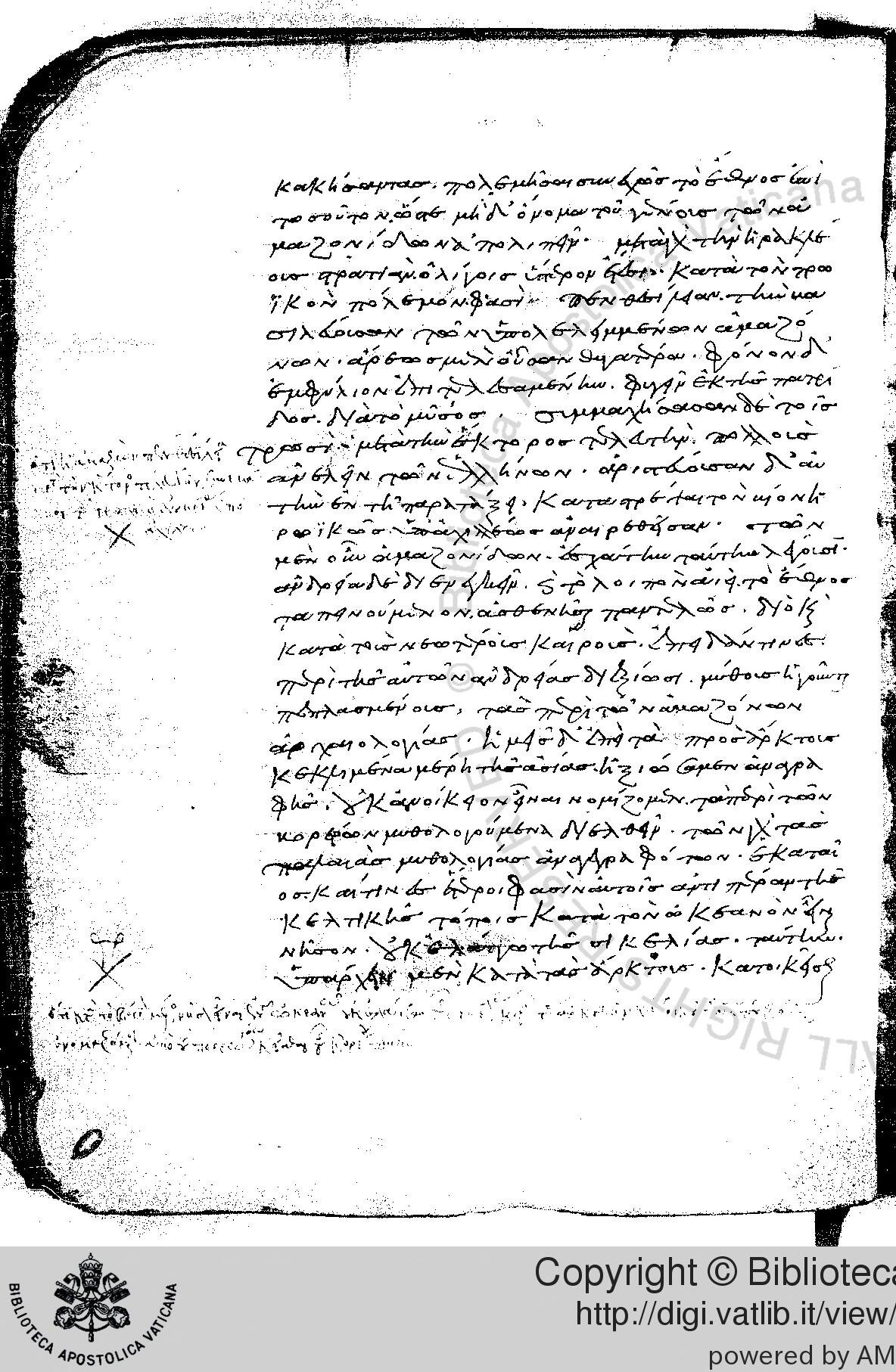
2.47.1 begins at fol. 114v line 20, ‹ἀρχαιολογίας. ἡμεῖς δ' ἐπεὶ τὰ πρὸς ἄρκτους› (the page begins in 2.46); fol. 115r begins ‹δ' ὑπὸ τῶν ὀνομαζομένων ὑπερβορέων›; the section ends in line 5. Read on the DigiVatLib images (image 118).
2.47.1ἡμεῖς δʼ ἐπεὶ τὰ πρὸς ἄρκτους κεκλιμένα μέρη τῆς Ἀσίας ἠξιώσαμεν ἀναγραφῆς, οὐκ ἀνοίκειον εἶναι νομίζομεν τὰ περὶ τῶν Ὑπερβορέων μυθολογούμενα διελθεῖν. τῶν γὰρ τὰς παλαιὰς μυθολογίας ἀναγεγραφότων Ἑκαταῖος καί τινες ἕτεροί φασιν ἐν τοῖς ἀντιπέρας τῆς Κελτικῆς τόποις κατὰ τὸν ὠκεανὸν εἶναι νῆσον οὐκ ἐλάττω τῆς Σικελίας. ταύτην ὑπάρχειν μὲν κατὰ τὰς ἄρκτους, κατοικεῖσθαι δὲ ὑπὸ τῶν ὀνομαζομένων Ὑπερβορέων ἀπὸ τοῦ πορρωτέρω κεῖσθαι τῆς βορείου πνοῆς· οὖσαν δʼ αὐτὴν εὔγειόν τε καὶ πάμφορον, ἔτι δʼ εὐκρασίᾳ διαφέρουσαν, διττοὺς κατʼ ἔτος ἐκφέρειν καρπούς.
2.47.1Now for our part, since we have seen fit to make mention of the regions of Asia which lie to the north, we feel that it will not be foreign to our purpose to discuss the legendary accounts of the Hyperboreans. Of those who have written about the ancient myths, Hecataeus and certain others say that in the regions beyond the land of the Celts there lies in the ocean an island no smaller than Sicily. This island, the account continues, is situated in the north and is inhabited by the Hyperboreans, who are called by that name because their home is beyond the point whence the north wind (Boreas) blows; and the island is both fertile and productive of every crop, and since it has an unusually temperate climate it produces two harvests each year.
Where on the image
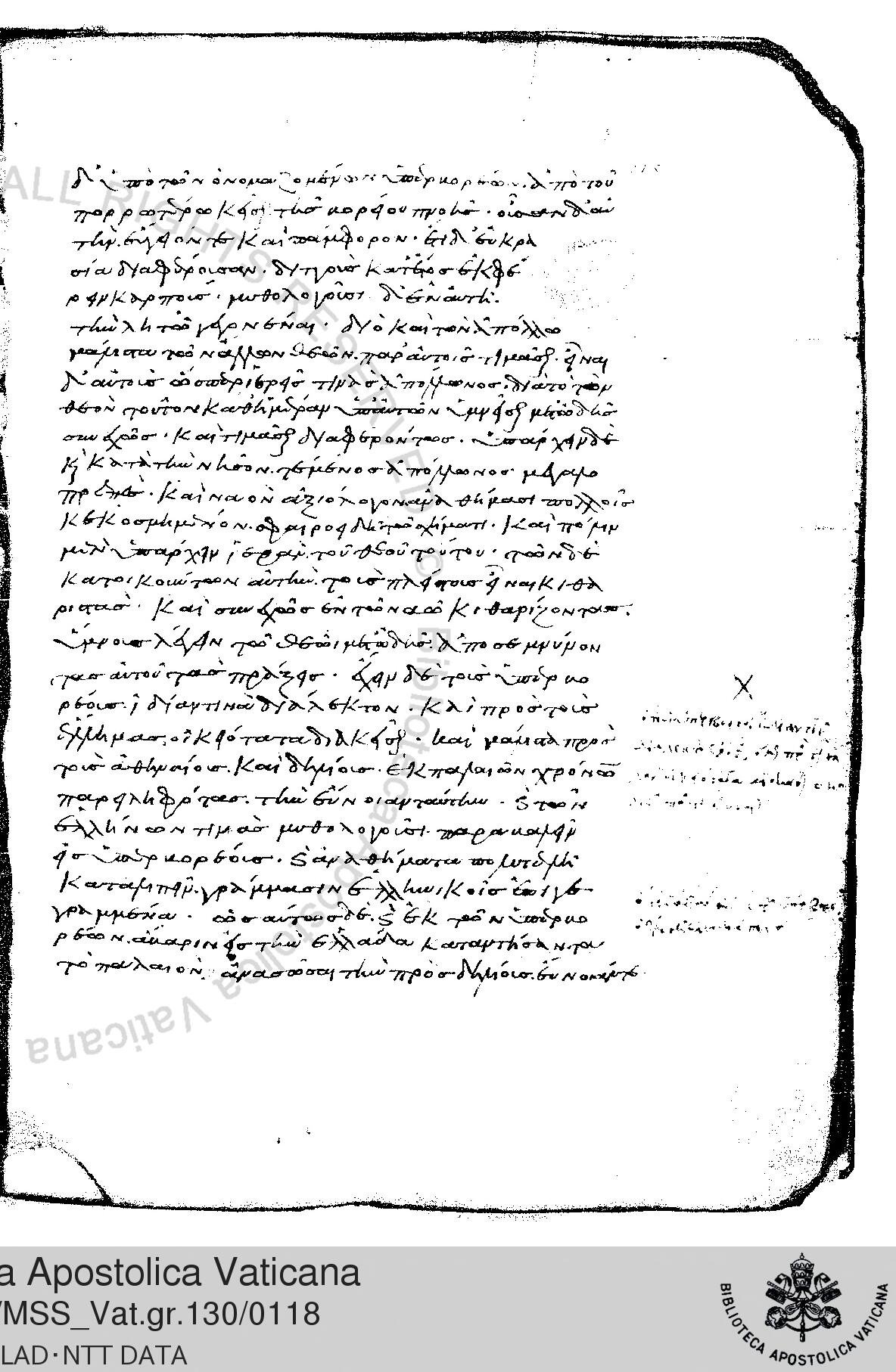
2.47.2 begins in fol. 115r line 5, ‹μυθολογοῦσι δ' ἐν αὐτῇ›, and ends in line 13 with ‹σφαιροειδῆ τῷ σχήματι› (the round temple). Read on the DigiVatLib image 118.
2.47.2μυθολογοῦσι δʼ ἐν αὐτῇ τὴν Λητὼ γεγονέναι· διὸ καὶ τὸν Ἀπόλλω μάλιστα τῶν ἄλλων θεῶν παρʼ αὐτοῖς τιμᾶσθαι· εἶναι δʼ αὐτοὺς ὥσπερ ἱερεῖς τινας Ἀπόλλωνος διὰ τὸ τὸν θεὸν τοῦτον καθʼ ἡμέραν ὑπʼ αὐτῶν ὑμνεῖσθαι μετʼ ᾠδῆς συνεχῶς καὶ τιμᾶσθαι διαφερόντως. ὑπάρχειν δὲ καὶ κατὰ τὴν νῆσον τέμενός τε Ἀπόλλωνος μεγαλοπρεπὲς καὶ ναὸν ἀξιόλογον ἀναθήμασι πολλοῖς κεκοσμημένον, σφαιροειδῆ τῷ σχήματι.
2.47.2Moreover, the following legend is told concerning it: Leto was born on this island, and for that reason Apollo is honoured among them above all other gods; and the inhabitants are looked upon as priests of Apollo, after a manner, since daily they praise this god continuously in song and honour him exceedingly. And there is also on the island both a magnificent sacred precinct of Apollo and a notable temple which is adorned with many votive offerings and is spherical in shape.
Where on the image
2.47.3 begins in fol. 115r line 13, ‹καὶ πόλιν›, and ends in line 18. Read on the DigiVatLib image 118.
2.47.3καὶ πόλιν μὲν ὑπάρχειν ἱερὰν τοῦ θεοῦ τούτου, τῶν δὲ κατοικούντων αὐτὴν τοὺς πλείστους εἶναι κιθαριστάς, καὶ συνεχῶς ἐν τῷ ναῷ κιθαρίζοντας ὕμνους λέγειν τῷ θεῷ μετʼ ᾠδῆς, ἀποσεμνύνοντας αὐτοῦ τὰς πράξεις.
2.47.3Furthermore, a city is there which is sacred to this god, and the majority of its inhabitants are players on the cithara; and these continually play on this instrument in the temple and sing hymns of praise to the god, glorifying his deeds.
Where on the image
2.47.4 begins in fol. 115r line 18, ‹ἔχειν δὲ τοὺς ὑπερβο-›, and ends in line 26. Read on the DigiVatLib image 118.
2.47.4ἔχειν δὲ τοὺς Ὑπερβορέους ἰδίαν τινὰ διάλεκτον, καὶ πρὸς τοὺς Ἕλληνας οἰκειότατα διακεῖσθαι, καὶ μάλιστα πρὸς τοὺς Ἀθηναίους καὶ Δηλίους, ἐκ παλαιῶν χρόνων παρειληφότας τὴν εὔνοιαν ταύτην. καὶ τῶν Ἑλλήνων τινὰς μυθολογοῦσι παραβαλεῖν εἰς Ὑπερβορέους, καὶ ἀναθήματα πολυτελῆ καταλιπεῖν γράμμασιν Ἑλληνικοῖς ἐπιγεγραμμένα.
2.47.4The Hyperboreans also have a language, we informed, which is peculiar to them, and are most friendly disposed towards the Greeks, and especially towards the Athenians and the Delians, who have inherited this good-will from most ancient times. The myth also relates that certain Greeks visited the Hyperboreans and left behind them there costly votive offerings bearing inscriptions in Greek letters.
Where on the image
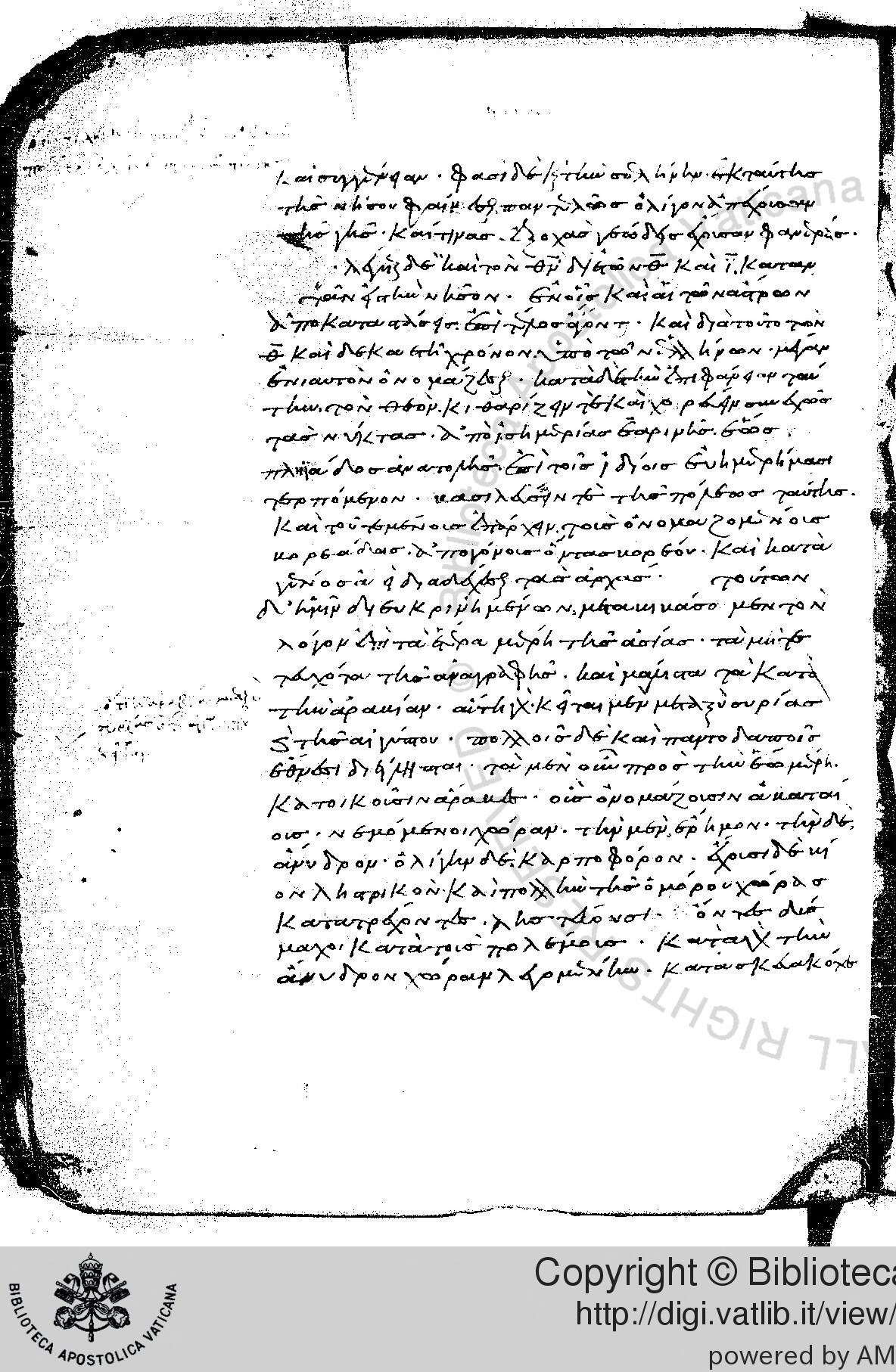
2.47.5 begins in fol. 115r line 26, ‹ὡσαύτως δὲ καὶ ἐκ τῶν ὑπερβο-›; fol. 115v begins ‹καὶ συγγένειαν. φασὶ δὲ καὶ τὴν σελήνην›; the section ends in line 4. Read on the DigiVatLib images 118-119.
2.47.5ὡσαύτως δὲ καὶ ἐκ τῶν Ὑπερβορέων Ἄβαριν εἰς τὴν Ἑλλάδα καταντήσαντα τὸ παλαιὸν ἀνασῶσαι τὴν πρὸς Δηλίους εὔνοιάν τε καὶ συγγένειαν. φασὶ δὲ καὶ τὴν σελήνην ἐκ ταύτης τῆς νήσου φαίνεσθαι παντελῶς ὀλίγον ἀπέχουσαν τῆς γῆς καί τινας ἐξοχὰς γεώδεις ἔχουσαν ἐν αὐτῇ φανεράς.
2.47.5And in the same way Abaris, a Hyperborean, came to Greece in ancient times and renewed the good-will and kinship of his people to the Delians. They say also that the moon, as viewed from this island, appears to be but a little distance from the earth and to have upon it prominences, like those of the earth, which are visible to the eye.
Where on the image
2.47.6 begins at fol. 115v line 4, ‹λέγεται δὲ καὶ τὸν θεὸν δι' ἐτῶν ιθ'› (the nineteen years written as a numeral), 2.47.7 in line 8, ‹κατὰ δὲ τὴν ἐπιφάνειαν›, and the chapter ends in line 15, ‹διαδέχεσθαι τὰς ἀρχάς›, followed by 2.48. Read on the DigiVatLib image 119.
2.47.6λέγεται δὲ καὶ τὸν θεὸν δι’ ἐτῶν ἐννεακαίδεκα καταντᾶν εἰς τὴν νῆσον, ἐν οἷς αἱ τῶν ἄστρων ἀποκαταστάσεις ἐπὶ τέλος ἄγονται· καὶ διὰ τοῦτο τὸν ἐννεακαιδεκαετῆ χρόνον ὑπὸ τῶν Ἑλλήνων Μέτωνος ἐνιαυτὸν ὀνομάζεσθαι. 2.47.7κατὰ δὲ τὴν ἐπιφάνειαν ταύτην τὸν θεὸν κιθαρίζειν τε καὶ χορεύειν συνεχῶς τὰς νύκτας ἀπὸ ἰσημερίας ἐαρινῆς ἕως πλειάδος ἀνατολῆς ἐπὶ τοῖς ἰδίοις εὐημερήμασι τερπόμενον. βασιλεύειν δὲ τῆς πόλεως ταύτης καὶ τοῦ τεμένους ἐπάρχειν τοὺς ὀνομαζομένους Βορεάδας, ἀπογόνους ὄντας Βορέου, καὶ κατὰ γένος ἀεὶ διαδέχεσθαι τὰς ἀρχάς.
2.47.6The account is also given that the god visits the island every nineteen years, the period in which the return of the stars to the same place in the heavens is accomplished; and for this reason the nineteen-year period is called by the Greeks the "year of Meton." At the time of this appearance of the god he both plays on the cithara and dances continuously the night through from the vernal equinox until the rising of the Pleiades, expressing in this manner his delight in his successes. And the kings of this city and the supervisors of the sacred precinct are called Boreadae, since they are descendants of Boreas, and the succession to these positions is always kept in their family.
Notes
- Vogel's Greek divides 2.47 into seven sub-sections, Oldfather's English into six; the last English section covers Greek 6-7.
- English from Bill Thayer's LacusCurtius transcription of Oldfather, with his note markers removed; 2.47.4 reads 'we informed' in that transcription and is left as it stands.
- Greek: Teubner text via Perseus, not a transcription of the manuscript.
Cite
Sources
- Source: Vat. gr. 130 via DigiVatLib + Vogel's Greek (Perseus) + Oldfather's English (Loeb 1935, LacusCurtius) (holding institution)
- Critical edition: Perseus editions named per passage
← previous · → next · v cycle view · l back to library