Herodotus, Histories 4.32-36: the Hyperboreans and their offerings to Delos
Introduction
In Histories 4.32-36 Herodotus collects what was said about the Hyperboreans. The Scythians know nothing of them, though Hesiod and the epic Epigoni mention them (4.32). The Delians tell most: offerings wrapped in wheat straw travel from the Hyperboreans through Scythia to the Adriatic, Dodona, the Malian gulf, Euboea and Tenos to Delos (4.33). The Hyperboreans first sent two maidens, Hyperoche and Laodice, with five escorts who never returned, and the Delians still cut their hair for them (4.33-34); earlier still Arge and Opis came with the gods themselves (4.35). Herodotus declines to tell the story of Abaris, who carried an arrow round the earth without eating, and ends by laughing at the round maps of his day (4.36).
The manuscript is Florence, Biblioteca Medicea Laurenziana, Plut. 70.3, the oldest manuscript of the Histories (siglum A), 10th century. 4.32-36 run from fol. 154r line 26 to fol. 155v line 11.
How was this verified? (Provenance)
Where on the image
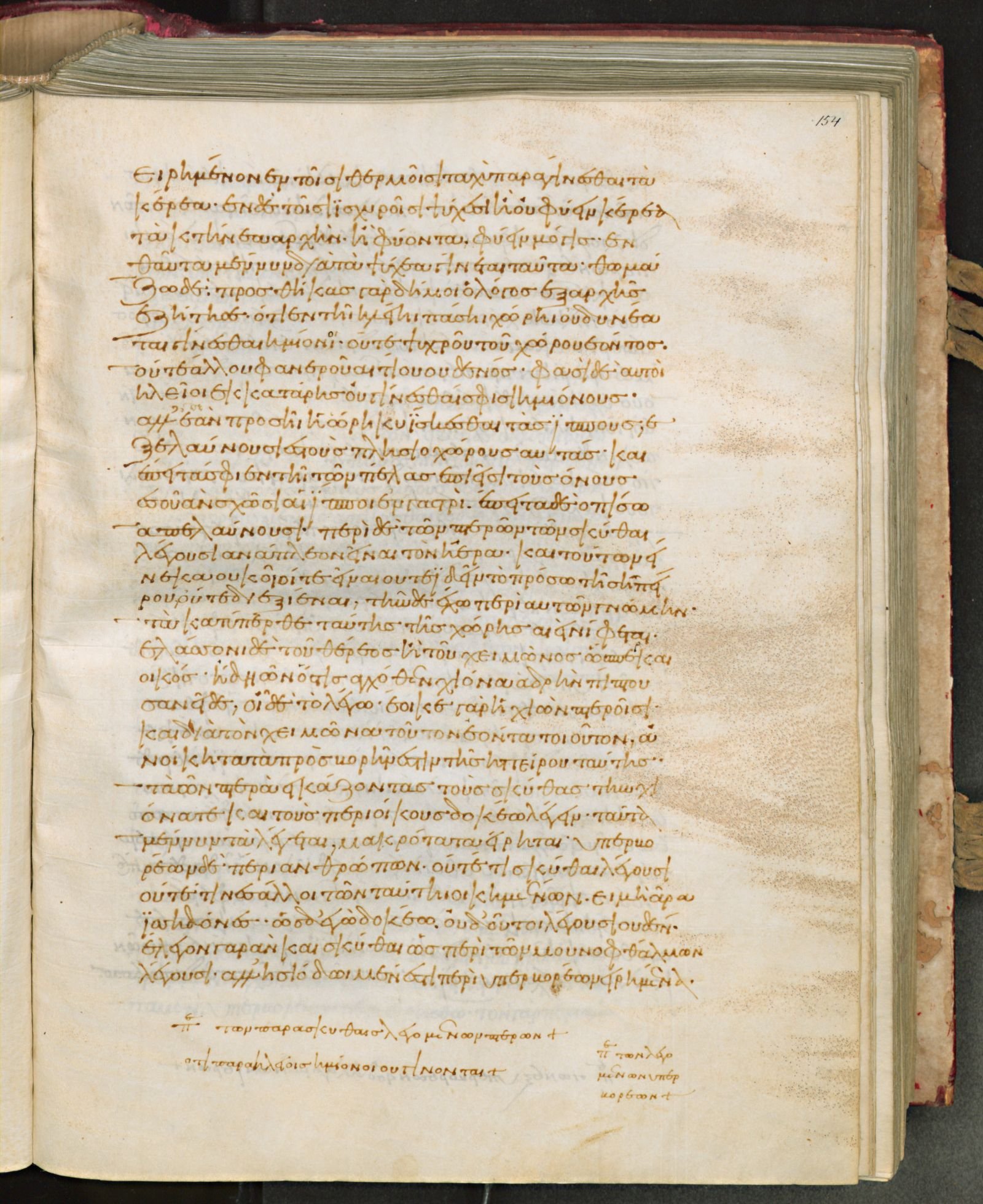
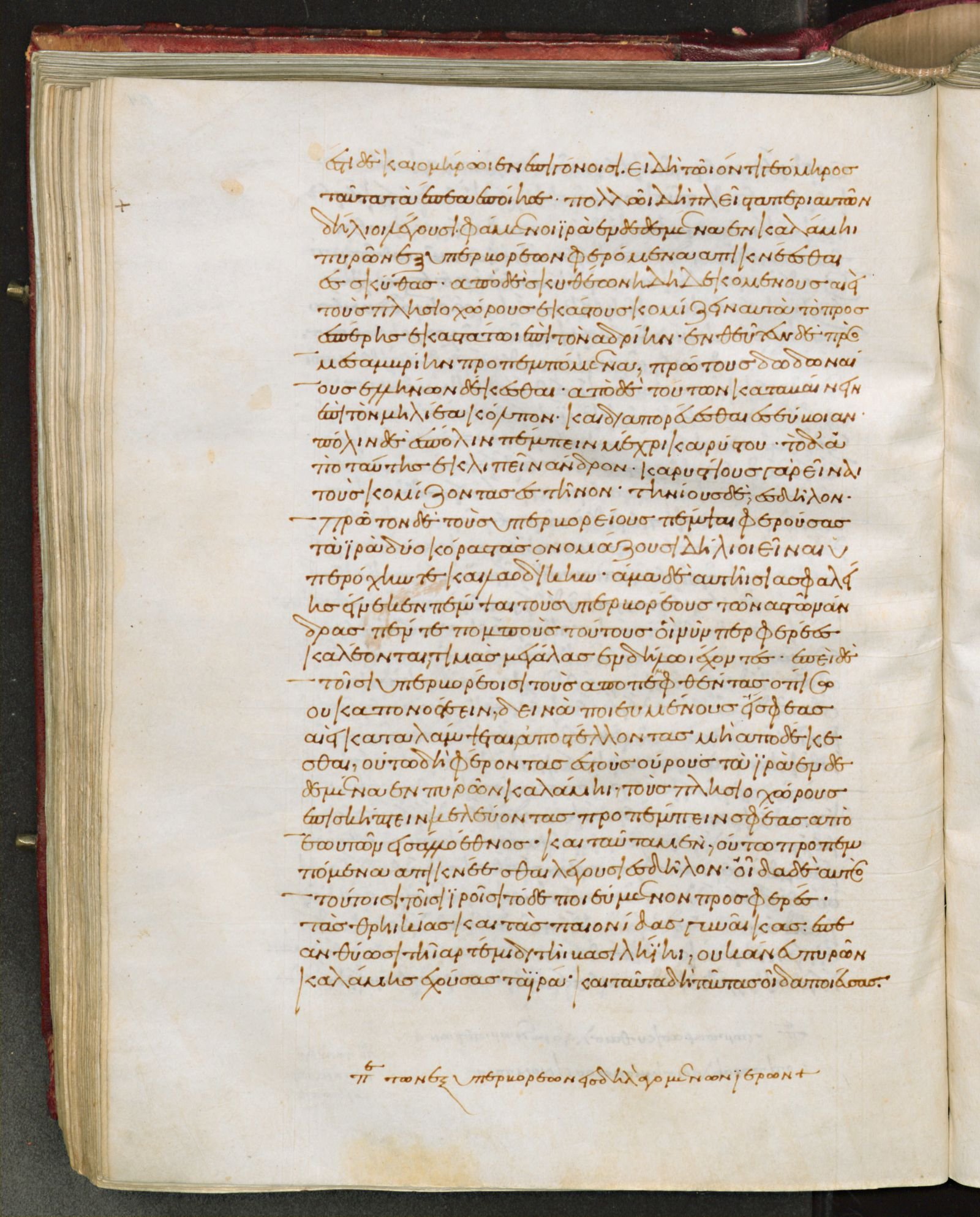
4.32 begins at fol. 154r line 26, ‹ὑπερβο-|ρέων δὲ πέρι ἀνθρώπων›, after ‹μακρότατα εἴρηται›; fol. 154v begins ‹ἔστι δὲ καὶ ὁμήρῳ ἐν ἐπιγόνοισι›; the chapter ends at 154v line 2, ‹ταῦτα τὰ ἔπεα ἐποίησε›. Read on the BML images (line-numbered full pages and crops).
32.1Ὑπερβορέων δὲ πέρι ἀνθρώπων οὔτε τι Σκύθαι λέγουσι οὐδὲν οὔτε τινὲς ἄλλοι τῶν ταύτῃ οἰκημένων, εἰ μὴ ἄρα Ἰσσηδόνες. ὡς δὲ ἐγὼ δοκέω, οὐδʼ οὗτοι λέγουσι οὐδέν· ἔλεγον γὰρ ἂν καὶ Σκύθαι, ὡς περὶ τῶν μουνοφθάλμων λέγουσι. ἀλλʼ Ἡσιόδῳ μὲν ἐστὶ περὶ Ὑπερβορέων εἰρημένα, ἔστι δὲ καὶ Ὁμήρῳ ἐν Ἐπιγόνοισι, εἰ δὴ τῷ ἐόντι γε Ὅμηρος ταῦτα τὰ ἔπεα ἐποίησε.
About a Hyperborean people the Scythians report nothing, nor do any of those who dwell in this region, unless it be the Issedonians: but in my opinion neither do these report anything; for if they did the Scythians also would report it, as they do about the one-eyed people. Hesiod however has spoken of Hyperboreans, and so also has Homer in the poem of the "Epigonoi," at least if Homer was really the composer of that Epic.
Where on the image
4.33 begins at fol. 154v line 2, ‹πολλῷ δέ τι πλεῖστα περὶ αὐτῶν δήλιοι λέγουσι›, and ends at line 31, the last line of the page, ‹καλάμης ἐχούσας τὰ ἱρά›. Read on the BML images (line-numbered full pages and crops).
33.1πολλῷ δέ τι πλεῖστα περὶ αὐτῶν Δήλιοι λέγουσι, φάμενοι ἱρὰ ἐνδεδεμένα ἐν καλάμῃ πυρῶν ἐξ Ὑπερβορέων φερόμενα ἀπικνέεσθαι ἐς Σκύθας, ἀπὸ δὲ Σκυθέων ἤδη δεκομένους αἰεὶ τοὺς πλησιοχώρους ἑκάστους κομίζειν αὐτὰ τὸ πρὸς ἑσπέρης ἑκαστάτω ἐπὶ τὸν Ἀδρίην, 33.2ἐνθεῦτεν δὲ πρὸς μεσαμβρίην προπεμπόμενα πρώτους Δωδωναίους Ἑλλήνων δέκεσθαι, ἀπὸ δὲ τούτων καταβαίνειν ἐπὶ τὸν Μηλιέα κόλπον καὶ διαπορεύεσθαι ἐς Εὔβοιαν, πόλιν τε ἐς πόλιν πέμπειν μέχρι Καρύστου, τὸ δʼ ἀπὸ ταύτης ἐκλιπεῖν Ἄνδρον· Καρυστίους γὰρ εἶναι τοὺς κομίζοντας ἐς Τῆνον, Τηνίους δὲ ἐς Δῆλον. 33.3ἀπικνέεσθαι μέν νυν οὕτω ταῦτα τὰ ἱρὰ λέγουσι ἐς Δῆλον· πρῶτον δὲ τοὺς Ὑπερβορέους πέμψαι φερούσας τὰ ἱρὰ δὺο κόρας, τὰς ὀνομάζουσι Δήλιοι εἶναι Ὑπερόχην τε καὶ Λαοδίκην· ἅμα δὲ αὐτῇσι ἀσφαλείης εἵνεκεν πέμψαι τοὺς Ὑπερβορέους τῶν ἀστῶν ἄνδρας πέντε πομπούς, τούτους οἳ νῦν Περφερέες καλέονται τιμὰς μεγάλας ἐν Δήλῳ ἔχοντες. 33.4ἐπεὶ δὲ τοῖσι Ὑπερβορέοισι τοὺς ἀποπεμφθέντας ὀπίσω οὐκ ἀπονοστέειν, δεινὰ ποιευμένους εἰ σφέας αἰεὶ καταλάμψεται ἀποστέλλοντας μὴ ἀποδέκεσθαι, οὕτω δὴ φέροντας ἐς τοὺς οὔρους τὰ ἱρὰ ἐνδεδεμένα ἐν πυρῶν καλάμῃ τοὺς πλησιοχώρους ἐπισκήπτειν κελεύοντας προπέμπειν σφέα ἀπὸ ἑωυτῶν ἐς ἄλλο ἔθνος. 33.5καὶ ταῦτα μὲν οὕτω προπεμπόμενα ἀπικνέεσθαι λέγουσι ἐς Δῆλον. οἶδα δὲ αὐτὸς τούτοισι τοῖσι ἱροῖσι τόδε ποιεύμενον προσφερές, τὰς Θρηικίας καὶ τὰς Παιονίδας γυναῖκας, ἐπεὰν θύωσι τῇ Ἀρτέμιδι τῇ βασιλείῃ, οὐκ ἄνευ πυρῶν καλάμης ἐχούσας τὰ ἱρά.
But much more about them is reported by the people of Delos than by any others. For these say that sacred offerings bound up in wheat straw are carried from the land of the Hyperboreans and come to the Scythians, and then from the Scythians the neighbouring nations in succession receive them and convey them Westwards, finally as far as the Adriatic: thence they are sent forward towards the South, and the people of Dodona receive them first of all the Hellenes, and from these they come down to the Malian gulf and are passed over to Euboea, where city sends them on to city till they come to Carystos. After this Andros is left out, for the Carystians are those who bring them to Tenos, and the Tenians to Delos. Thus they say that these sacred offerings come to Delos; but at first, they say, the Hyperboreans sent two maidens bearing the sacred offerings, whose names, say the Delians, were Hyperoche and Laodike, and with them for their protection the Hyperboreans sent five men of their nation to attend them, those namely who are now called Perphereës and have great honours paid to them in Delos. Since however the Hyperboreans found that those who were sent away did not return back, they were troubled to think that it would always befall them to send out and not to receive back; and so they bore the offerings to the borders of their land bound up in wheat straw, and laid a charge upon their neighbours, bidding them send these forward from themselves to another nation. These things then, they say, come to Delos being thus sent forward; and I know of my own knowledge that a thing is done which has resemblance to these offerings, namely that the women of Thrace and Paionia, when they sacrifice to Artemis "the Queen," do not make their offerings without wheat straw.
Where on the image
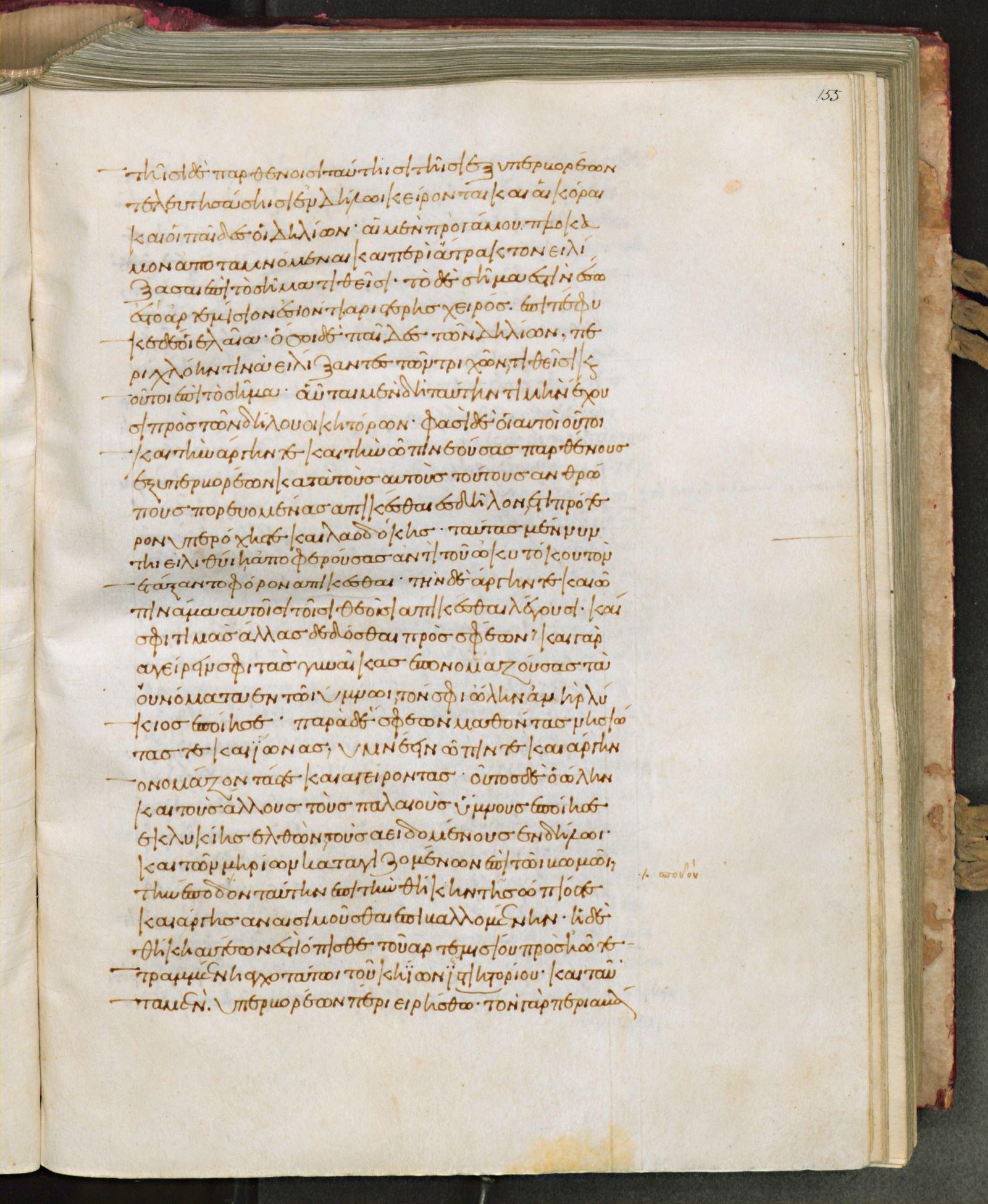
4.34 begins at fol. 154v line 31, ‹καὶ ταῦτα δὴ ταύτας οἶδα ποιεύσας›; fol. 155r begins ‹τῇσι δὲ παρθένοισι ταύτῃσι τῇσι ἐξ ὑπερβορέων›; the chapter ends at 155r line 9, ‹οὗτοι ἐπὶ τὸ σῆμα›. Read on the BML images (line-numbered full pages and crops).
34.1καὶ ταῦτα μὲν δὴ ταύτας οἶδα ποιεύσας· τῇσι δὲ παρθένοισι ταύτῃσι τῇσι ἐξ Ὑπερβορέων τελευτησάσῃσι ἐν Δήλῳ κείρονται καὶ αἱ κόραι καὶ οἱ παῖδες οἱ Δηλίων· αἱ μὲν πρὸ γάμου πλόκαμον ἀποταμνόμεναι καὶ περὶ ἄτρακτον εἱλίξασαι ἐπὶ τὸ σῆμα τιθεῖσι 34.2ʽτὸ δὲ σῆμα ἐστὶ ἔσω ἐς τὸ Ἀρτεμίσιον ἐσιόντι ἀριστερῆς χειρός, ἐπιπέφυκε δέ οἱ ἐλαίἠ, ὅσοι δὲ παῖδες τῶν Δηλίων, περὶ χλόην τινὰ εἱλίξαντες τῶν τριχῶν τιθεῖσι καὶ οὗτοι ἐπὶ τὸ σῆμα.
These I know do as I have said; and for those maidens from the Hyperboreans, who died in Delos, both the girls and the boys of the Delians cut off their hair: the former before marriage cut off a lock and having wound it round a spindle lay it upon the tomb (now the tomb is on the left hand as one goes into the temple of Artemis, and over it grows an olive-tree), and all the boys of the Delians wind some of their hair about a green shoot of some tree, and they also place it upon the tomb.
Where on the image
4.35 begins at fol. 155r line 9, ‹αὗται μὲν δὴ ταύτην τιμὴν ἔχουσι›, and ends at line 30, ‹ἀγχοτάτω τοῦ κηΐων ἱστιητορίου›. Read on the BML images (line-numbered full pages and crops).
35.1αὗται μὲν δὴ ταύτην τιμὴν ἔχουσι πρὸς τῶν Δήλου οἰκητόρων. φασὶ δὲ οἱ αὐτοὶ οὗτοι καὶ τὴν Ἄργην τε καὶ τὴν Ὦπιν ἐούσας παρθένους ἐξ Ὑπερβορέων κατὰ τοὺς αὐτοὺς τούτους ἀνθρώπους πορευομένας ἀπικέσθαι ἐς Δῆλον ἔτι πρότερον Ὑπερόχης τε καὶ Λαοδίκης. 35.2ταύτας μέν νυν τῇ Εἰλειθυίῃ ἀποφερούσας ἀντὶ τοῦ ὠκυτόκου τὸν ἐτάξαντο φόρον ἀπικέσθαι, τὴν δὲ Ἄργην τε καὶ τὴν Ὦπιν ἅμα αὐτοῖσι θεοῖσι ἀπικέσθαι λέγουσι καὶ σφι τιμὰς ἄλλας δεδόσθαι πρὸς σφέων· 35.3καὶ γὰρ ἀγείρειν σφι τὰς γυναῖκας ἐπονομαζούσας τὰ οὐνόματα ἐν τῷ ὕμνῳ τόν σφι Ὠλὴν ἀνὴρ Λύκιος ἐποίησε, παρὰ δὲ σφέων μαθόντας νησιώτας τε καὶ Ἴωνας ὑμνέειν Ὦπίν τε καὶ Ἄργην ὀνομάζοντάς τε καὶ ἀγείροντας ʽοὗτος δὲ ὁ Ὠλὴν καὶ τοὺς ἄλλους τοὺς παλαιοὺς ὕμνους ἐποίησε ἐκ Λυκίης ἐλθὼν τοὺς ἀειδομένους ἐν Δήλᾠ, 35.4καὶ τῶν μηρίων καταγιζομένων ἐπὶ τῷ βωμῷ τὴν σποδὸν ταύτην ἐπὶ τὴν θήκην τῆς Ὤπιός τε καὶ Ἄργης ἀναισιμοῦσθαι ἐπιβαλλομένην. ἡ δὲ θήκη αὐτέων ἐστὶ ὄπισθε τοῦ Ἀρτεμισίου, πρὸς ἠῶ τετραμμένη, ἀγχοτάτω τοῦ Κηίων ἱστιητορίου.
The maidens, I say, have this honour paid them by the dwellers in Delos: and the same people say that Arge and Opis also, being maidens, came to Delos, passing from the Hyperboreans by the same nations which have been mentioned, even before Hyperoche and Laodike. These last, they say, came bearing for Eileithuia the tribute which they had laid upon themselves for the speedy birth, but Arge and Opis came with the divinities themselves, and other honours have been assigned to them by the people of Delos: for the women, they say, collect for them, naming them by their names in the hymn which Olen a man of Lykia composed in their honour; and both the natives of the other islands and the Ionians have learnt from them to sing hymns naming Opis and Arge and collecting:—now this Olen came from Lukia and composed also the other ancient hymns which are sung in Delos:—and moreover they say that when the thighs of the victim are consumed upon the altar, the ashes of them are used to cast upon the grave of Opis and Arge. Now their grave is behind the temple of Artemis, turned towards the East, close to the banqueting hall of the Keïeans.
Where on the image
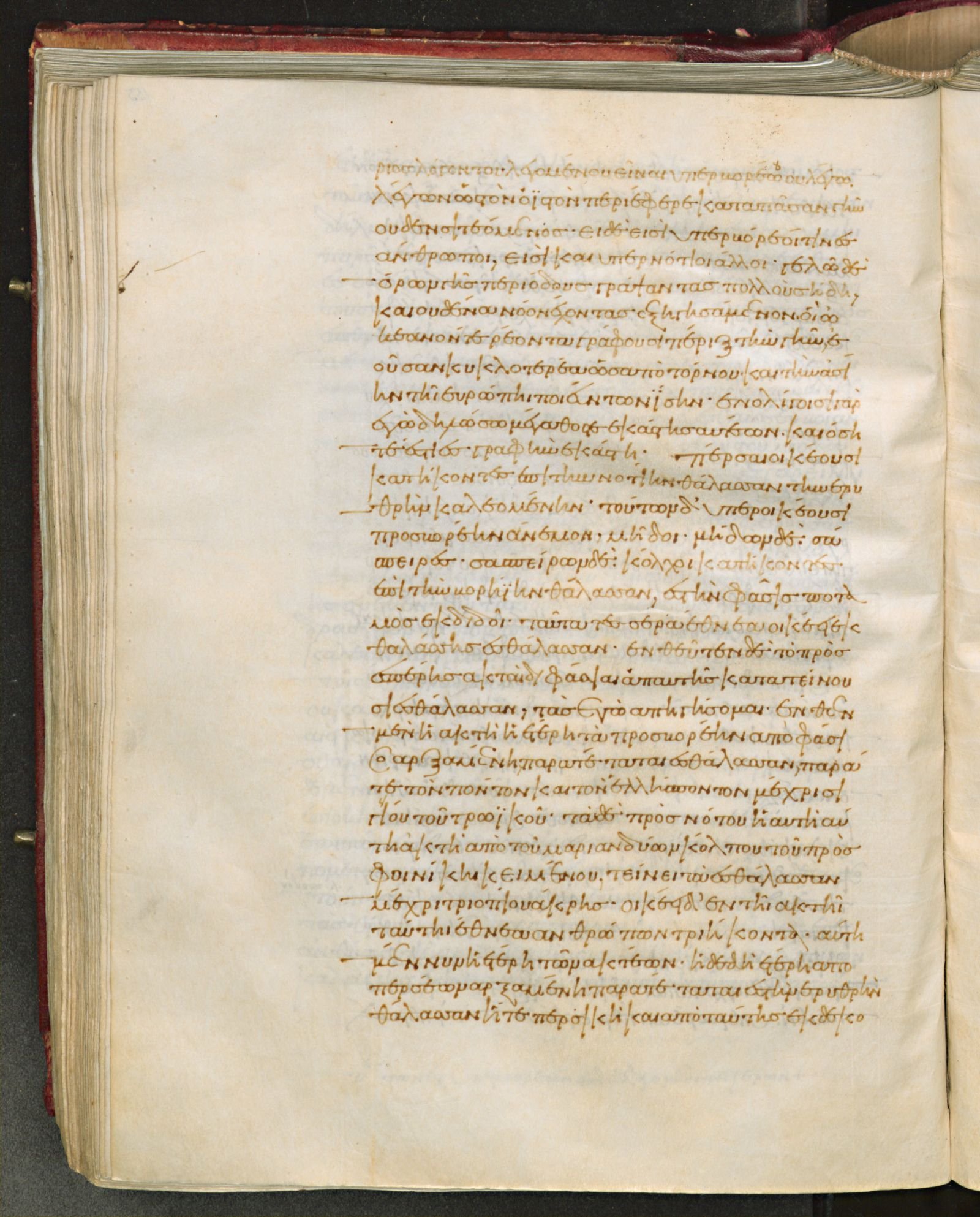
4.36 begins at fol. 155r line 30, ‹καὶ ταῦτα μὲν ὑπερβορέων πέρι εἰρήσθω›; fol. 155v begins ‹-ριος λόγον τοῦ λεγομένου εἶναι ὑπερβορέου› (the end of Ἀβάριος); the chapter ends at 155v line 11, ‹ἐς γραφὴν ἑκάστη›. Read on the BML images (line-numbered full pages and crops).
36.1καὶ ταῦτα μὲν Ὑπερβορέων πέρι εἰρήσθω· τὸν γὰρ περὶ Ἀβάριος λόγον τοῦ λεγομένου εἶναι Ὑπερβορέου οὐ λέγω, ὡς τὸν ὀιστὸν περιέφερε κατὰ πᾶσαν γῆν οὐδὲν σιτεόμενος. εἰ δὲ εἰσὶ ὑπερβόρεοι τινὲς ἄνθρωποι, εἰσὶ καὶ ὑπερνότιοι ἄλλοι. 36.2γελῶ δὲ ὁρέων γῆς περιόδους γράψαντας πολλοὺς ἤδη καὶ οὐδένα νοονεχόντως ἐξηγησάμενον· οἳ Ὠκεανόν τε ῥέοντα γράφουσι πέριξ τὴν γῆν ἐοῦσαν κυκλοτερέα ὡς ἀπὸ τόρνου, καὶ τὴν Ἀσίην τῇ Εὐρώπῃ ποιεύντων ἴσην. ἐν ὀλίγοισι γὰρ ἐγὼ δηλώσω μέγαθός τε ἑκάστης αὐτέων καὶ οἵη τις ἐστὶ ἐς γραφὴν ἑκάστη.
Let this suffice which has been said of the Hyperboreans; for the tale of Abaris, who is reported to have been a Hyperborean, I do not tell, namely how he carried the arrow about all over the earth, eating no food. If however there are any Hyperboreans, it follows that there are also Hypernotians; and I laugh when I see that, though many before this have drawn maps of the Earth, yet no one has set the matter forth in an intelligent way; seeing that they draw Ocean flowing round the Earth, which is circular exactly as if drawn with compasses, and they make Asia equal in size to Europe. In a few words I shall declare the size of each division and of what nature it is as regards outline.
Notes
- Greek: A. D. Godley's Loeb text (1920), via Perseus, not a transcription of the manuscript.
- English: G. C. Macaulay (1890), from Project Gutenberg; his footnote numbers are removed. Godley's own English on Perseus is a modernized revision and is not used.
- Sections follow Herodotus' chapters; the small numbers in the Greek are the sub-sections of the modern editions.
Cite
Sources
- Source: Florence, Laur. Plut. 70.3 (Herodotus A, 10th c.) fol. 154r-155v via Teca digitale BML + Godley's Greek (Perseus) + Macaulay's English (1890, Project Gutenberg) (holding institution)
- Critical edition: Perseus editions named per passage
← previous · → next · v cycle view · l back to library